The thought of an interview can be nerve-wracking, but the right preparation can make all the difference. Explore this comprehensive guide to Press Troubleshooting interview questions and gain the confidence you need to showcase your abilities and secure the role.
Questions Asked in Press Troubleshooting Interview
Q 1. Describe your experience troubleshooting common printing press issues.
My experience in troubleshooting printing press issues spans over 15 years, encompassing various press types – from sheetfed offset to web offset and even some digital presses. I’ve encountered and resolved a wide range of problems, from simple paper jams to complex color registration issues. My approach is always systematic, starting with a thorough visual inspection, followed by targeted diagnostics based on the specific symptoms. For instance, I once diagnosed a recurring misregistration issue on a six-color press by tracing the problem to a slightly warped impression cylinder, requiring precision adjustments and ultimately saving thousands in wasted materials.
I’m proficient in identifying and addressing issues related to ink supply, dampening systems, plate mounting, and press automation. I use a combination of preventative maintenance schedules and reactive troubleshooting to minimize downtime and maximize press efficiency.
Q 2. How do you diagnose and resolve paper jams in different types of presses?
Diagnosing and resolving paper jams requires a methodical approach that varies slightly depending on the press type. The first step is always safety – ensuring the press is powered down and locked out before accessing any internal components. Then, I visually inspect the paper path to locate the jam. Sheetfed presses often jam at the feeder, the grippers, or the delivery. Web presses, on the other hand, can jam anywhere along the long paper path, from the unwind to the folder.
- Sheetfed Presses: A jam in the feeder usually involves misaligned paper or a malfunctioning feeder mechanism; I’d check the feeder guides and the vacuum system. Gripper jams typically point to incorrect gripper settings or damaged paper. Delivery jams often result from misaligned output guides or a paper pile-up.
- Web Presses: In web presses, jams often occur due to web breaks, tension issues, or misaligned rollers. Finding the exact location requires systematically checking each section of the press, starting from the unwind. I use a combination of visual inspection and understanding of the press’s mechanics to pinpoint the cause.
Once the jam’s location is identified, I carefully remove the jammed paper, making sure not to damage any press components. The next step is to identify and fix the root cause. Is it a simple paper misalignment, or is there a more serious mechanical problem that needs addressing?
Q 3. What are the common causes of ink density problems, and how do you rectify them?
Ink density problems, often manifesting as light or heavy ink coverage, are common in printing. Several factors can cause this:
- Ink Supply: Insufficient ink viscosity, incorrect ink fountain settings, or clogged ink ducts can result in light ink. Conversely, excessive ink viscosity or improperly adjusted fountain rollers might lead to heavy inking.
- Dampening System: An improperly balanced dampening system can affect ink transfer. Too much water can cause the ink to feather and look light, while insufficient water can lead to ink piling up, resulting in heavy inking.
- Plate Issues: Scratched or worn printing plates can lead to inconsistent ink transfer and density variations.
- Roller Conditions: Hardened, damaged, or improperly cleaned rollers will also cause inconsistent ink transfer.
Rectifying ink density issues involves a systematic approach. I’d start by checking the ink fountain settings and the ink’s viscosity. Then, I would inspect the dampening system for proper balance and water distribution. Plate condition and roller maintenance are also crucial aspects to verify. Sometimes, a simple cleaning of the rollers and adjustment of the ink fountain can resolve the issue. In other cases, a plate replacement or roller refurbishment may be necessary.
Q 4. Explain your process for identifying and resolving registration issues on a printing press.
Registration problems, where colors or images aren’t perfectly aligned, are a major concern in multi-color printing. My process for identifying and resolving registration issues involves several key steps:
- Visual Inspection: I start with a careful visual inspection of printed sheets to pinpoint the misregistration. This helps determine which colors are misaligned and the extent of the problem.
- Measurement: Precise measurements are then taken to quantify the misregistration. This might involve using a specialized gauge or measuring tools to determine the exact shift in registration.
- Press Component Check: I then examine the press components related to registration, including the impression cylinders, sidelays, and lateral adjustments. I also check the plate mounting for accurate positioning and alignment.
- Systematic Adjustment: Based on the measurements and visual assessment, I systematically adjust the press components to correct the misregistration. This is a delicate process requiring precision and patience.
- Testing and Refinement: After making adjustments, I run test sheets to verify the corrections. This iterative process continues until perfect registration is achieved.
Identifying the root cause of misregistration is crucial. It could be as simple as a slight misalignment of a cylinder or as complex as a mechanical problem within the press itself. My experience allows me to quickly diagnose and effectively remedy most registration issues.
Q 5. How do you maintain press rollers and ensure optimal ink transfer?
Proper roller maintenance is essential for optimal ink transfer and print quality. The condition of the rollers – the ink rollers, dampening rollers, and blanket rollers – directly impacts the evenness and density of the ink transfer. My routine involves:
- Regular Cleaning: Regular cleaning using appropriate solvents removes dried ink and other debris, preventing buildup that can affect ink transfer. I use different cleaning methods depending on the type of roller.
- Condition Assessment: I regularly inspect the rollers for signs of wear and tear, such as hardening, cracking, or pitting. Damaged rollers need to be replaced or refurbished.
- Proper Storage: When not in use, rollers should be stored correctly to prevent deterioration. This usually involves wrapping them in protective material.
- Micrometer Adjustments: Precise adjustments of roller pressure and spacing are vital to ensure even ink distribution. This is a delicate balance and is often press specific.
Maintaining rollers involves more than just cleaning; it requires understanding their function within the press and how their condition impacts print quality. Neglected rollers lead to inconsistent ink transfer and reduced print quality, hence careful and timely maintenance is critical.
Q 6. Describe your experience with color calibration and profile management.
Color calibration and profile management are critical for consistent and accurate color reproduction. My experience includes working with various color management systems and software, including spectrophotometers and densitometers. I’m proficient in creating and using ICC profiles to ensure accurate color matching between the digital design and the final printed output.
The process involves:
- Profiling: Creating ICC profiles for the press and substrates using a spectrophotometer or densitometer to capture the color characteristics of the printing system.
- Calibration: Regular calibration of the spectrophotometer or densitometer ensures the accuracy of color measurements.
- Color Matching: Using software to match the designed color values to the press’s capabilities, minimizing discrepancies between the digital and printed colors.
- Proofing: Using soft proofing and hard proofing methods to verify color accuracy before large-scale printing.
Color calibration isn’t a one-time task; it’s an ongoing process that requires regular monitoring and adjustments to maintain color consistency over time. Changes in ink, paper, or environmental conditions can impact color accuracy, necessitating recalibration.
Q 7. What safety procedures do you follow when working on a printing press?
Safety is paramount when working on a printing press. My safety procedures follow a strict protocol that prioritizes preventing accidents and injuries:
- Lockout/Tagout (LOTO): Before performing any maintenance or repair, I always follow LOTO procedures to ensure the press is completely powered down and locked out, preventing accidental starts.
- Personal Protective Equipment (PPE): I consistently wear appropriate PPE, including safety glasses, gloves, and hearing protection, depending on the task.
- Press Familiarization: Thorough understanding of the press’s operation and safety features is essential before working on it. I always ensure that I’m familiar with any press-specific safety protocols.
- Awareness of Moving Parts: I’m always aware of moving parts and potential hazards when working on or near the press.
- Emergency Procedures: I’m familiar with the emergency procedures and know how to respond to various situations, including power failures, ink spills, or other unforeseen events.
Following these safety procedures isn’t optional; it’s crucial for preventing accidents and ensuring a safe working environment for myself and others.
Q 8. How do you troubleshoot problems with the feeder system of a printing press?
Troubleshooting a printing press feeder involves a systematic approach. Think of the feeder as a delicate dance – each sheet needs to be precisely fed to avoid jams or misregistration. I start by visually inspecting the entire system, checking for obvious issues like paper jams, misaligned guides, or damaged suction cups. Then, I move to a more detailed examination.
Paper Path Obstructions: Are there any wrinkles, creases, or dust build-up in the paper path that could be causing jams? I meticulously clean the path and adjust paper guides to ensure proper alignment.
Suction Problems: If the suction cups aren’t gripping the paper properly, it could be due to low air pressure, clogged filters, or worn-out cups. I check the air compressor, clean or replace the filters, and inspect the suction cups for damage. Sometimes, simply replacing a worn-out suction cup solves the problem immediately.
Sensor Issues: The feeder relies on sensors to detect the presence of paper. If these sensors are malfunctioning, the feeder might not register the sheets correctly, leading to jams or misfeeds. I check the sensor alignment and functionality, using a multimeter to verify proper signal transmission if needed.
Mechanical Issues: Problems can stem from worn gears, belts, or rollers within the feeder mechanism. I carefully inspect these components for wear and tear and replace or adjust them as necessary. Listening carefully for unusual noises is also key.
Finally, I’d run test prints with different paper stocks to rule out any paper-specific issues.
Q 9. What are the signs of a worn or damaged blanket cylinder, and how do you address them?
A worn blanket cylinder manifests in several ways, akin to a worn tire on a car. You’ll notice a decline in print quality, quite often as a gradual deterioration.
Scratches and Pits: These show up as imperfections on the printed image, often repeating across many sheets.
Blanket Stretch: This leads to inconsistent print registration – colors are slightly off, and images are blurry or slightly misaligned. Imagine trying to print with a stretched canvas; your results wouldn’t be precise.
Reduced Ink Transfer: A worn blanket transfers ink less effectively, leading to faded or light prints. It’s like using a worn paintbrush – the strokes are less vibrant.
Mottle and Fuzzy Edges: A damaged blanket might cause uneven ink distribution, leading to a mottled appearance or fuzzy edges on the printed image.
Addressing these issues requires careful assessment. Minor scratches can sometimes be buffed out, but significant damage usually calls for blanket replacement. Regular cleaning and proper blanket maintenance, such as careful handling and appropriate storage, are crucial for extending their lifespan.
Q 10. How do you handle situations where multiple press components malfunction simultaneously?
Multiple simultaneous malfunctions on a printing press can be daunting, but a structured approach is vital. My strategy involves a methodical breakdown, similar to a detective solving a crime. I’d employ a systematic process to pinpoint the root cause(s):
Prioritize: First, identify the most critical malfunction impacting production. Which fault is causing the biggest disruption? Addressing that one first will often shed light on others.
Isolate: Once the primary problem is identified, focus on isolating the affected component(s). This might involve checking for loose connections, faulty wiring, or other mechanical issues in that specific area.
Document: Keep detailed notes of each step and findings, including error codes and observations. This aids in troubleshooting and prevents repetition of errors in the future. Think of it as your case file.
Check Interdependencies: Recognize that one malfunction might trigger others. For example, a paper jam might damage a sensor, which in turn might stop the ink supply. This interconnectedness necessitates a holistic approach.
Troubleshooting Tools: Utilize diagnostic tools such as multimeters, pressure gauges, and other specialized equipment appropriate for the press type. These tools are invaluable in pinpointing the exact problem.
Sometimes, I involve additional expertise if the situation demands specialized knowledge outside of my immediate expertise.
Q 11. Explain your experience troubleshooting problems related to moisture control during printing.
Moisture control is paramount in printing, especially offset. Too much or too little moisture directly impacts the ink-water balance on the press, significantly affecting print quality. My experience covers a range of scenarios.
Humidity Levels: I’ve encountered situations where high humidity causes excessive ink drying and issues like picking (ink lifting from the paper) or set-off (ink transferring to the back of the sheet). In these instances, I adjust the dampening system and ensure adequate ventilation in the pressroom to control humidity.
Dampening Solution: The composition and concentration of the dampening solution (water with isopropyl alcohol and sometimes other additives) are crucial. I’ve adjusted the solution’s pH and alcohol content to fine-tune the ink-water balance, ensuring proper ink transfer without excessive moisture.
Dampening Rollers: Worn or damaged dampening rollers can cause uneven moisture distribution, leading to print quality problems. Regular cleaning and replacement of these rollers are crucial.
Paper Characteristics: The paper’s absorbency plays a big role. I have experience working with different paper stocks and adjusting the dampening accordingly. Highly absorbent paper, for example, might require less dampening.
Monitoring moisture levels using various instruments like hygrometers is essential. Understanding the interaction between ink, water, and paper is key to achieving consistent print quality under different environmental conditions.
Q 12. What are the typical causes of slurring or smearing on a printed output, and how do you fix them?
Slurring or smearing on printed output is a common problem, often indicating issues in the ink-paper interaction or press settings. Think of it like smudging a drawing – something’s disrupting the clean transfer of ink.
Ink Viscosity: If the ink is too thin, it can smear easily. This could be due to incorrect ink formulation, temperature fluctuations, or improper mixing. I’d adjust ink viscosity by adding appropriate additives.
Ink Temperature: Extreme temperatures can affect ink viscosity, leading to smearing. I ensure the ink is at the optimal temperature for the press and the type of ink being used.
Excessive Dampening: Too much moisture on the printing plate can dilute the ink, causing smearing. I’d check and adjust the dampening system to achieve the correct ink-water balance.
Blanket Condition: A worn or damaged blanket can cause ink smearing. Inspecting and potentially replacing the blanket is crucial.
Pressure Settings: Incorrect impression cylinder pressure can also contribute to ink smearing. I’d adjust the pressure to ensure proper ink transfer without excessive pressure that could cause smearing.
Addressing these issues often involves a combination of adjusting ink viscosity, dampening, and press settings. A systematic approach to check each potential cause is usually effective.
Q 13. How familiar are you with different types of printing presses (offset, flexo, digital)?
My experience encompasses various printing presses, each with its own set of complexities and challenges. I’m proficient with offset, flexographic (flexo), and digital printing presses.
Offset: I have extensive experience with sheetfed and web offset presses, understanding their intricate workings, including dampening systems, inking units, and delivery systems. This experience includes troubleshooting various aspects, from paper jams to color registration issues.
Flexo: I’m familiar with the nuances of flexographic printing, including an understanding of anilox rollers, plate mounting, and ink transfer mechanisms. My work here has involved optimizing print quality and resolving issues related to ink consistency and dot gain.
Digital: I have experience with various digital printing technologies, including inkjet and toner-based systems. This includes troubleshooting issues related to printhead nozzles, toner fusing, and image quality on various substrates.
Each press type has its own unique characteristics and challenges; however, many fundamental troubleshooting principles remain consistent across them.
Q 14. Describe your experience working with different types of inks and coatings.
My experience includes working with a broad range of inks and coatings, each with its own properties and requirements. It’s crucial to understand the interplay between ink, substrate, and environmental conditions.
UV Inks: I’m experienced with UV curing inks, understanding their fast-drying nature and the associated curing equipment. This includes managing issues with ink viscosity, curing intensity, and potential hazards related to UV exposure.
Water-Based Inks: I’ve worked with water-based inks, which are eco-friendly but can present challenges in terms of drying times and their sensitivity to humidity. Troubleshooting here often involves adjusting the drying conditions and ink formulation.
Solvent-Based Inks: I’m familiar with working with solvent-based inks, particularly their strong odors and the need for proper ventilation and safety precautions. Addressing issues often involves understanding the specific solvents used and their compatibility with different substrates.
Coatings: My experience includes various coatings such as aqueous, UV, and varnish coatings. I understand their properties, application methods, and how they impact the overall print finish and durability. Troubleshooting coating issues might involve adjustments to application speed, viscosity, or curing conditions.
Understanding the specific properties of each ink and coating type is vital for maintaining high print quality and efficiently resolving any arising issues. Safety protocols are also always top priority.
Q 15. How do you troubleshoot issues related to misaligned or damaged print plates?
Misaligned or damaged print plates are a common source of print defects. Troubleshooting begins with a visual inspection. Look for obvious damage like scratches, dents, or cracks on the plate surface. Misalignment manifests as blurry images, incorrect registration (colors not lining up), or images shifted off-center.
Troubleshooting Steps:
- Visual Inspection: Carefully examine the plate under good lighting for any physical damage.
- Registration Check: Using a registration gauge or a simple ruler, measure the precise alignment of the plate’s printed content to the press’s guides. Any discrepancy indicates misalignment.
- Plate Mounting: Check the plate is correctly and securely mounted onto the printing cylinder. Loose or incorrectly mounted plates are prime culprits for misalignment.
- Press Settings: Verify the press’s settings, ensuring they match the plate specifications. Incorrect settings can exacerbate existing misalignments.
- Plate Remake: If the plate is damaged beyond repair, it needs to be remade. This often involves working closely with prepress to ensure the new plate is free of defects.
Example: Once, we had a situation where a seemingly minor scratch on a print plate caused significant ghosting and smearing in the final print. A simple replacement resolved the issue immediately. Another time, inconsistent pressure on the plate caused misregistration, easily corrected by adjusting the press’s impression cylinder pressure.
Career Expert Tips:
- Ace those interviews! Prepare effectively by reviewing the Top 50 Most Common Interview Questions on ResumeGemini.
- Navigate your job search with confidence! Explore a wide range of Career Tips on ResumeGemini. Learn about common challenges and recommendations to overcome them.
- Craft the perfect resume! Master the Art of Resume Writing with ResumeGemini’s guide. Showcase your unique qualifications and achievements effectively.
- Don’t miss out on holiday savings! Build your dream resume with ResumeGemini’s ATS optimized templates.
Q 16. What are your preferred methods for documenting troubleshooting procedures?
Thorough documentation is crucial for efficient troubleshooting and preventative maintenance. I use a combination of methods:
- Digital Logs: I maintain detailed digital logs using a dedicated software program. These logs include timestamps, descriptions of the problem, steps taken to resolve it, and the final outcome. Including images or videos of the issue helps others understand the situation.
- Checklists: For routine checks and preventative maintenance, I use pre-designed checklists to ensure consistency and thoroughness. This helps to catch potential issues early on before they become major problems.
- Standard Operating Procedures (SOPs): I develop and maintain SOPs for common press issues. These detailed procedures help streamline the troubleshooting process for both myself and others on the team.
Example: For a recurring paper jam, I documented the specific location of the jam, the type of paper causing the problem, and adjustments made to the feed rollers. This made subsequent troubleshooting far more efficient. These logs are also useful for identifying trends and potential causes of recurring problems.
Q 17. Describe your experience with preventative maintenance on printing presses.
Preventative maintenance is paramount to minimizing downtime and maximizing print quality. My approach is proactive and systematic:
- Regular Cleaning: Daily cleaning of ink rollers, dampening rollers, and blankets removes buildup that can cause issues like streaks and smears. I also regularly clean the inking system.
- Lubrication: Scheduled lubrication of moving parts helps reduce friction and wear, extending the life of the press. This needs to be done according to manufacturer’s recommendations.
- Roller Inspection: Regularly inspecting the rollers for wear and tear helps prevent unexpected failures. Replacing worn rollers prevents poor ink transfer and print quality problems.
- Sensor Checks: I regularly check and calibrate sensors and controls to ensure they’re functioning correctly. Faulty sensors can lead to malfunctions and production errors.
- Scheduled Maintenance: Following the manufacturer’s recommended maintenance schedule for major components prevents bigger breakdowns. This could involve replacing parts or doing more thorough inspections.
Example: I noticed a slight decrease in print sharpness, which was traced back to roller wear. Replacing the affected rollers immediately prevented a more serious print quality issue. This proactive maintenance saved us time and avoided substantial costs down the line.
Q 18. How do you prioritize multiple press malfunctions when time is critical?
When faced with multiple press malfunctions under time constraints, prioritization is critical. My approach uses a combination of factors:
- Impact Assessment: I assess the impact of each malfunction on production. Problems affecting a larger number of jobs or causing significant delays are prioritized.
- Severity Level: I categorize malfunctions by their severity. For example, a complete press shutdown takes precedence over a minor print defect.
- Ease of Resolution: I prioritize issues that are quicker and easier to resolve. Quick wins can help alleviate immediate pressures.
- Resource Availability: I factor in the availability of parts, tools, and personnel. If a solution requires specialized expertise, I’ll plan that accordingly.
Example: Imagine a scenario where we have both a paper jam and a malfunctioning ink pump. The paper jam immediately halts production, so I address that first. The ink pump issue, while important, can wait until the paper jam is resolved, minimizing total downtime.
Q 19. What software or tools do you use to diagnose printing press problems?
I utilize a range of software and tools for diagnosing printing press problems, depending on the press type and the nature of the problem:
- Press Control Systems: Most modern presses have built-in diagnostic tools and software interfaces providing real-time data on press performance and potential issues.
- Data Acquisition Systems: Dedicated systems can capture data from various press sensors, allowing for detailed analysis of performance trends and identification of subtle anomalies.
- Specialized Software: Certain software programs are designed to diagnose specific press issues, such as color management tools to analyze color discrepancies.
- Multimeters and other testing instruments: For electrical issues, I use multimeters, oscilloscopes and other similar test equipment.
Example: Our press’s control system displays ink density readings. Consistent low readings in one color alerted me to a possible ink supply problem before it caused major issues.
Q 20. How do you interpret press performance data to identify potential issues?
Interpreting press performance data is essential for proactive maintenance and quality control. I look for trends and anomalies in several key metrics:
- Ink Density: Consistent variations in ink density across runs can indicate issues with ink supply, roller wear, or incorrect press settings.
- Waste: High waste levels suggest problems such as paper jams, misfeeds, or inaccurate cutting.
- Speed and Efficiency: Drops in press speed or overall efficiency could signal mechanical problems, requiring a closer inspection.
- Color Consistency: Analyzing color data across runs identifies variations and potential problems with color registration, ink balance, or substrate issues.
Example: A gradual decline in press speed over several runs pointed towards a problem in a specific press component, which allowed us to address the issue before it led to a complete breakdown. Analyzing color data alerted us to a potential issue with the ink supply for a specific color, allowing us to prevent inconsistent colors on the final print.
Q 21. Explain your experience with different types of paper and its impact on printing quality.
Different types of paper significantly impact printing quality. Understanding paper properties is crucial for optimal results:
- Paper Weight and Caliper: Heavier paper may need adjustments to the press’s impression settings to avoid excessive pressure or damage.
- Paper Finish: Glossy paper requires different ink settings and may show different results compared to matte or uncoated papers. Glossy papers often require special inks.
- Paper Moisture Content: High moisture can lead to stretching and misregistration, while low moisture can cause static and paper jams.
- Paper Type: Different paper types (e.g., offset, coated, uncoated) have varying properties influencing ink absorption, drying time, and overall print quality.
Example: I once had to adjust the press significantly to accommodate a high-end, thick, coated stock. The impression, ink flow, and drying time all needed adjustments to prevent smudging and achieve the desired print quality. Choosing the wrong paper for the print job can directly affect the final output and even cause the job to fail.
Q 22. How do you handle situations where a press malfunction causes a production delay?
Press malfunctions leading to production delays require a systematic approach. My first step is always safety; ensuring the press is shut down and secured to prevent injury. Then, I immediately assess the situation: What stopped the press? What is the error message (if any)? What’s the potential impact on the production schedule?
Next, I utilize a structured troubleshooting process. This often involves checking the obvious first – things like paper jams, ink issues (low ink, clogged rollers), or power supply problems. If these initial checks are negative, I consult the press’s operating manual and diagnostic system (more on this later).
Simultaneously, I communicate the problem to relevant personnel: my supervisor, the production manager, and potentially the client, providing regular updates on the progress of troubleshooting. We may need to initiate contingency plans, such as using a backup press or rescheduling jobs. Effective communication prevents the delay from escalating into a major crisis.
Once the root cause is identified and resolved, I ensure the press performs a successful test run before resuming full production. A post-incident review is crucial to identify areas for improvement in preventative maintenance or operator training to minimize the likelihood of similar disruptions in the future.
Q 23. What is your approach to training new press operators on troubleshooting techniques?
Training new press operators on troubleshooting is a crucial aspect of maintaining efficient and safe operations. My approach combines classroom instruction with hands-on experience. Classroom training starts with the fundamentals of press mechanics, safety procedures, and common press problems.
- Safety First: Emphasis is placed on proper lockout/tagout procedures before attempting any repairs.
- Basic Diagnostics: Operators learn how to interpret error messages displayed on the press console and understand their significance.
- Systematic Troubleshooting: I teach a structured methodology, such as a decision tree or flow chart, to guide operators through problem-solving systematically.
Hands-on training involves working alongside experienced operators, allowing new trainees to witness practical troubleshooting under supervision. They gradually assume more responsibility as their skills develop. Simulated malfunction scenarios are created in a safe environment to practice troubleshooting and problem-solving techniques. Regular evaluations and feedback sessions ensure continued skill development and competence.
Q 24. How do you manage relationships with vendors and suppliers to resolve parts issues?
Maintaining positive relationships with vendors and suppliers is vital for resolving parts issues quickly and effectively. I maintain clear communication channels, detailing the exact part needed, the press model, and the serial number to avoid delays. I proactively request quotes from multiple suppliers to ensure competitive pricing and availability.
For urgent situations, I prioritize relationships with reliable vendors who have a history of fast turnaround times. I also maintain detailed records of past part orders and supplier performance, facilitating efficient future procurement. If a part is back-ordered, I collaborate with the vendor to explore alternative solutions, such as using a substitute part or expediting the order. Clear documentation of all communications and agreements prevents misunderstandings and disputes.
Q 25. Describe your experience using a press’s built-in diagnostics system.
Modern presses often incorporate sophisticated built-in diagnostic systems that provide invaluable assistance during troubleshooting. These systems typically display error codes, sensor readings, and other data that pinpoint potential problems. My experience with these systems is extensive; I’m proficient in interpreting these codes and using the information to identify the root cause of malfunctions. For example, a specific error code might indicate a faulty sensor, low ink level, or a problem with the registration system.
Beyond error codes, many systems allow for more detailed diagnostics, including real-time monitoring of various press parameters. This capability helps in proactive maintenance and predicting potential issues before they lead to production downtime. I regularly utilize these features for preventative maintenance scheduling and to improve the overall efficiency and reliability of the printing press.
Q 26. How do you stay updated on the latest technologies and troubleshooting techniques in the printing industry?
Staying updated on the latest technologies and troubleshooting techniques is crucial in this rapidly evolving industry. I actively participate in industry conferences, workshops, and training programs offered by press manufacturers. I subscribe to industry-specific journals and online resources to keep abreast of new advancements.
Furthermore, I actively network with other printing professionals through online forums and professional organizations to share knowledge and best practices. I also prioritize hands-on experience with new equipment and technologies whenever possible, allowing me to learn quickly and apply new skills directly.
Q 27. Explain your experience with troubleshooting issues related to automated press controls.
Troubleshooting issues related to automated press controls requires a solid understanding of PLC (Programmable Logic Controller) programming, sensor technology, and control systems. My experience includes diagnosing issues with faulty sensors, malfunctioning actuators, and programming errors within the PLC. I’m proficient in using diagnostic tools to monitor signals, identify faulty components, and trace problems within the control system.
A common example would be a problem with the automated sheet feeder. If sheets are misaligned or jamming, I systematically check the feeder’s sensors, vacuum system, and the PLC program that controls its operation. Using diagnostic software, I can analyze the signals from the sensors to see if they’re providing accurate data. If a sensor is faulty or the programming is incorrect, I’m skilled in making the necessary corrections or replacements.
Q 28. Describe a situation where you had to troubleshoot a complex press problem; explain your approach and the outcome.
One particularly challenging situation involved a recurring issue with intermittent color registration problems on a high-speed web press. The problem was sporadic, making it difficult to pinpoint the cause. Initially, we suspected various issues including ink viscosity, incorrect roller settings, and even problems with the dampening system. We systematically eliminated each possibility, adjusting settings and conducting numerous test runs. The problem remained elusive.
After several days of intensive troubleshooting, utilizing the press’s diagnostic system, we discovered that a slightly loose connection in the control panel was causing intermittent interference in the signals to the registration motors. This subtle connection issue caused the erratic registration problems. Once we secured the connection, the problem was completely resolved. This experience highlighted the importance of a systematic approach and the value of thoroughly examining every possible element, even seemingly insignificant ones. The outcome was a significant improvement in the quality and efficiency of the printing process.
Key Topics to Learn for Press Troubleshooting Interview
- Understanding Press Mechanisms: Gain a comprehensive understanding of the mechanical, electrical, and hydraulic systems within printing presses. This includes familiarity with different press types (offset, flexographic, digital).
- Identifying and Diagnosing Malfunctions: Learn to systematically identify the root cause of press malfunctions through observation, data analysis (e.g., ink density readings, register measurements), and troubleshooting procedures.
- Safety Procedures and Regulations: Demonstrate knowledge of safety protocols for operating and maintaining printing presses, adhering to industry standards and regulations.
- Preventive Maintenance: Explain the importance of regular maintenance schedules and procedures to minimize downtime and prolong the lifespan of the press equipment. Discuss common maintenance tasks and their purpose.
- Color Management and Ink Systems: Understand the principles of color management, ink mixing, and the impact of ink properties on print quality. Be prepared to discuss troubleshooting issues related to color inconsistencies or ink problems.
- Paper Handling and Feed Systems: Explain how paper feed systems work, common issues encountered (e.g., jams, misfeeds), and effective troubleshooting techniques. Demonstrate knowledge of different paper types and their impact on press operation.
- Problem-Solving Methodologies: Showcase your ability to approach troubleshooting systematically, using logical reasoning and elimination techniques to isolate and resolve complex issues. Be ready to discuss your problem-solving process.
- Electrical and Hydraulic Systems Troubleshooting: Demonstrate understanding of basic electrical and hydraulic principles as they relate to press operation and maintenance. Be prepared to discuss common issues and solutions.
Next Steps
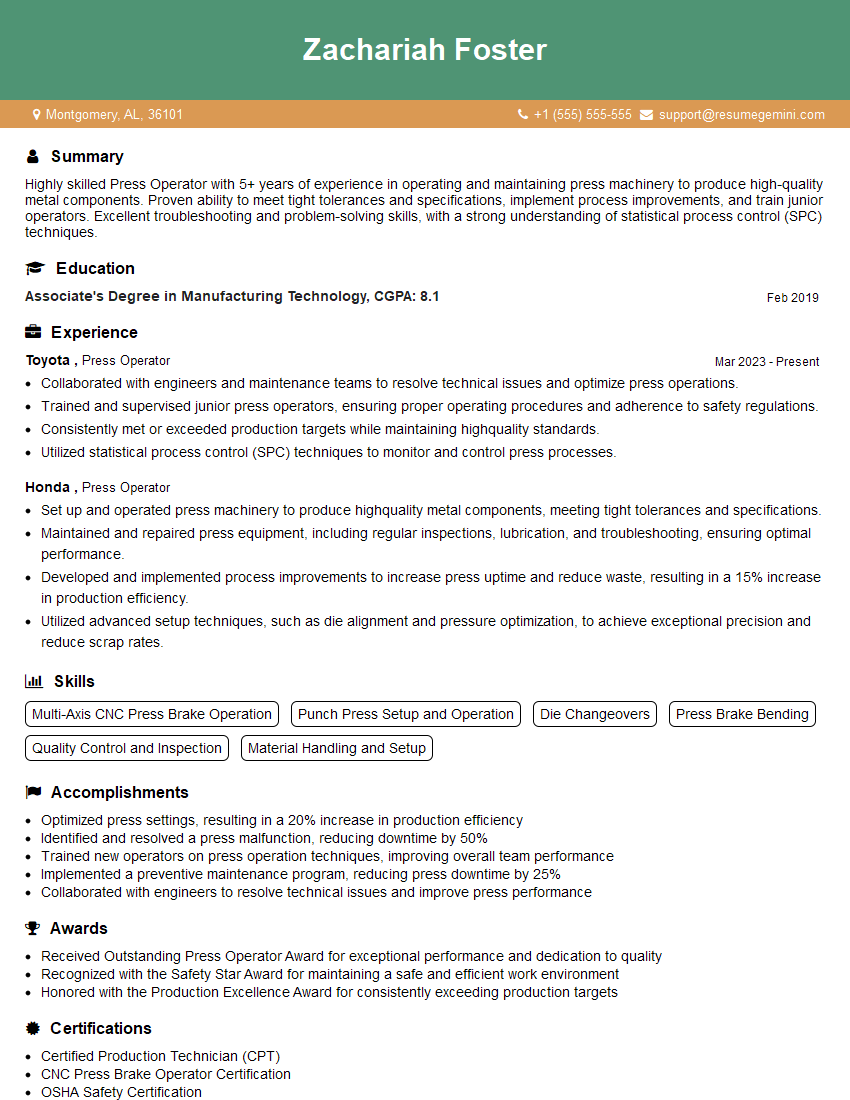
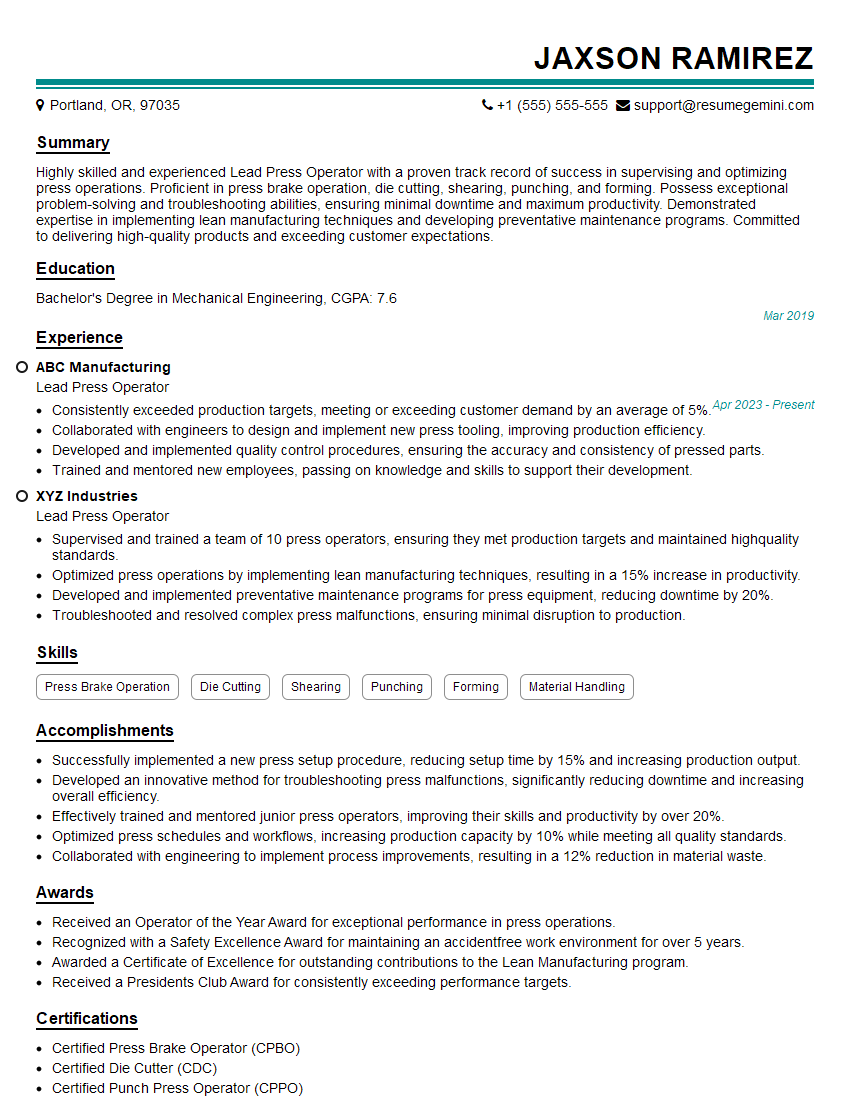
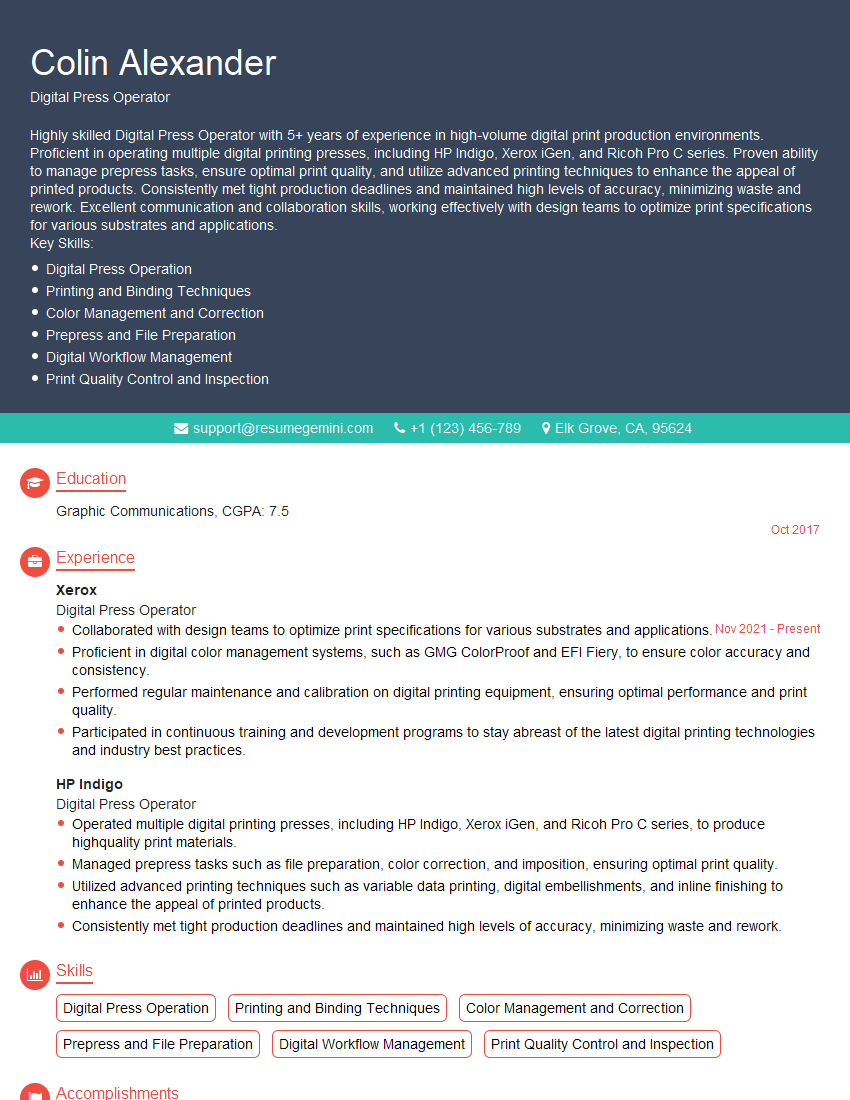
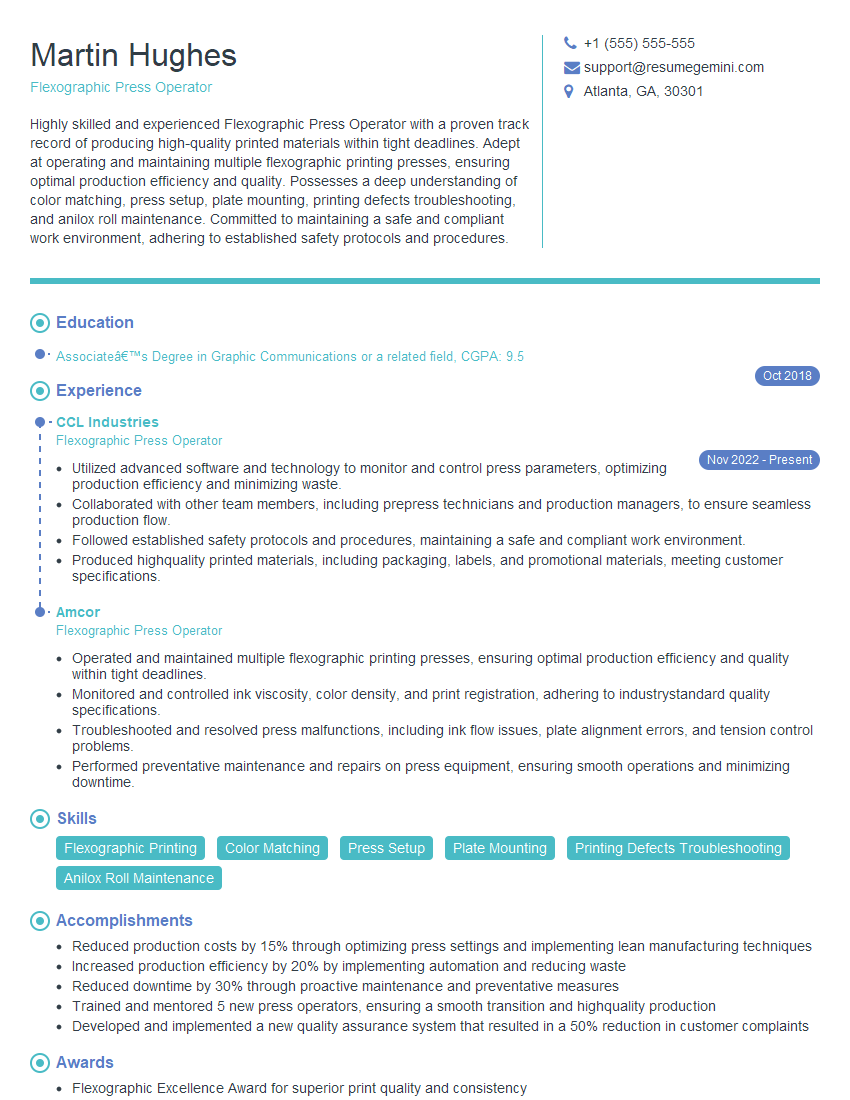
Mastering Press Troubleshooting is crucial for career advancement in the printing industry, opening doors to senior roles and higher earning potential. A strong, ATS-friendly resume is your key to unlocking these opportunities. To create a resume that truly highlights your skills and experience, we recommend using ResumeGemini. ResumeGemini provides a powerful and user-friendly platform to build professional resumes, and we offer examples of resumes tailored to Press Troubleshooting to help guide you. Invest in your future – build a resume that makes you stand out!
Explore more articles
Users Rating of Our Blogs
Share Your Experience
We value your feedback! Please rate our content and share your thoughts (optional).
What Readers Say About Our Blog
Attention music lovers!
Wow, All the best Sax Summer music !!!
Spotify: https://open.spotify.com/artist/6ShcdIT7rPVVaFEpgZQbUk
Apple Music: https://music.apple.com/fr/artist/jimmy-sax-black/1530501936
YouTube: https://music.youtube.com/browse/VLOLAK5uy_noClmC7abM6YpZsnySxRqt3LoalPf88No
Other Platforms and Free Downloads : https://fanlink.tv/jimmysaxblack
on google : https://www.google.com/search?q=22+AND+22+AND+22
on ChatGPT : https://chat.openai.com?q=who20jlJimmy20Black20Sax20Producer
Get back into the groove with Jimmy sax Black
Best regards,
Jimmy sax Black
www.jimmysaxblack.com
Hi I am a troller at The aquatic interview center and I suddenly went so fast in Roblox and it was gone when I reset.
Hi,
Business owners spend hours every week worrying about their website—or avoiding it because it feels overwhelming.
We’d like to take that off your plate:
$69/month. Everything handled.
Our team will:
Design a custom website—or completely overhaul your current one
Take care of hosting as an option
Handle edits and improvements—up to 60 minutes of work included every month
No setup fees, no annual commitments. Just a site that makes a strong first impression.
Find out if it’s right for you:
https://websolutionsgenius.com/awardwinningwebsites
Hello,
we currently offer a complimentary backlink and URL indexing test for search engine optimization professionals.
You can get complimentary indexing credits to test how link discovery works in practice.
No credit card is required and there is no recurring fee.
You can find details here:
https://wikipedia-backlinks.com/indexing/
Regards
NICE RESPONSE TO Q & A
hi
The aim of this message is regarding an unclaimed deposit of a deceased nationale that bears the same name as you. You are not relate to him as there are millions of people answering the names across around the world. But i will use my position to influence the release of the deposit to you for our mutual benefit.
Respond for full details and how to claim the deposit. This is 100% risk free. Send hello to my email id: lukachachibaialuka@gmail.com
Luka Chachibaialuka
Hey interviewgemini.com, just wanted to follow up on my last email.
We just launched Call the Monster, an parenting app that lets you summon friendly ‘monsters’ kids actually listen to.
We’re also running a giveaway for everyone who downloads the app. Since it’s brand new, there aren’t many users yet, which means you’ve got a much better chance of winning some great prizes.
You can check it out here: https://bit.ly/callamonsterapp
Or follow us on Instagram: https://www.instagram.com/callamonsterapp
Thanks,
Ryan
CEO – Call the Monster App
Hey interviewgemini.com, I saw your website and love your approach.
I just want this to look like spam email, but want to share something important to you. We just launched Call the Monster, a parenting app that lets you summon friendly ‘monsters’ kids actually listen to.
Parents are loving it for calming chaos before bedtime. Thought you might want to try it: https://bit.ly/callamonsterapp or just follow our fun monster lore on Instagram: https://www.instagram.com/callamonsterapp
Thanks,
Ryan
CEO – Call A Monster APP
To the interviewgemini.com Owner.
Dear interviewgemini.com Webmaster!
Hi interviewgemini.com Webmaster!
Dear interviewgemini.com Webmaster!
excellent
Hello,
We found issues with your domain’s email setup that may be sending your messages to spam or blocking them completely. InboxShield Mini shows you how to fix it in minutes — no tech skills required.
Scan your domain now for details: https://inboxshield-mini.com/
— Adam @ InboxShield Mini
support@inboxshield-mini.com
Reply STOP to unsubscribe
Hi, are you owner of interviewgemini.com? What if I told you I could help you find extra time in your schedule, reconnect with leads you didn’t even realize you missed, and bring in more “I want to work with you” conversations, without increasing your ad spend or hiring a full-time employee?
All with a flexible, budget-friendly service that could easily pay for itself. Sounds good?
Would it be nice to jump on a quick 10-minute call so I can show you exactly how we make this work?
Best,
Hapei
Marketing Director
Hey, I know you’re the owner of interviewgemini.com. I’ll be quick.
Fundraising for your business is tough and time-consuming. We make it easier by guaranteeing two private investor meetings each month, for six months. No demos, no pitch events – just direct introductions to active investors matched to your startup.
If youR17;re raising, this could help you build real momentum. Want me to send more info?
Hi, I represent an SEO company that specialises in getting you AI citations and higher rankings on Google. I’d like to offer you a 100% free SEO audit for your website. Would you be interested?
Hi, I represent an SEO company that specialises in getting you AI citations and higher rankings on Google. I’d like to offer you a 100% free SEO audit for your website. Would you be interested?