Unlock your full potential by mastering the most common Print Finishing and Binding interview questions. This blog offers a deep dive into the critical topics, ensuring you’re not only prepared to answer but to excel. With these insights, you’ll approach your interview with clarity and confidence.
Questions Asked in Print Finishing and Binding Interview
Q 1. What are the different types of bookbinding?
Bookbinding encompasses a variety of methods used to physically assemble pages into a book. The choice of binding depends on factors like the number of pages, budget, desired aesthetic, and intended use. Here are some common types:
- Perfect Binding: Used for paperback books, magazines, and journals. Pages are glued together along the spine.
- Saddle Stitch Binding: Suitable for booklets with a low page count (typically under 64 pages). Pages are folded and stapled along the spine.
- Wire-O Binding: Creates a professional, lay-flat book. Pages are punched with holes and bound using double-loop wire.
- Spiral Binding (Coil Binding): Common for reports, calendars, and notebooks. Pages are punched and bound with a plastic or metal comb.
- Case Binding: A high-end binding method used for hardback books. Sections of pages are sewn together, glued to cover boards, and then covered with a cloth or leather casing.
- Concertina Binding (Accordion Binding): Pages are folded in a zig-zag pattern to create a continuous, foldable structure.
Each method offers unique benefits and drawbacks, influencing the final product’s durability, appearance, and cost.
Q 2. Explain the process of perfect binding.
Perfect binding is a cost-effective method ideal for paperback books and magazines. The process involves several steps:
- Gathering and Collating: The printed sheets are folded and gathered into sections, ensuring the correct page order.
- Three-Knife Trimming: The edges of the gathered sheets are trimmed for a neat appearance.
- Spine Roughening: The spine is roughened using a sanding machine to create a better surface for adhesive.
- Applying Adhesive: A hot melt adhesive is applied to the spine. The amount of adhesive is critical for a strong, yet flexible, bind.
- Folding and Pressing: The glued spine is pressed firmly to ensure a strong bond.
- Cover Attachment: The cover is wrapped around the book block and adhered to the spine.
- Trimming and Finishing: The final book is trimmed to size, and any additional finishing processes, such as embossing or spot UV, are applied.
Think of it like carefully gluing the pages together and then wrapping them in a protective cover. The result is a relatively inexpensive and durable binding suitable for high-volume printing.
Q 3. Describe the process of saddle stitching.
Saddle stitch binding is a simple and economical method suitable for brochures, booklets, and magazines with a low page count. The process is straightforward:
- Folding: The printed sheets are folded in half or multiple times, depending on the page count.
- Gathering: The folded sheets are collated in the correct order.
- Stitching: Wire staples are inserted through the folded spine, securing the pages together. The staples are usually positioned near the center fold.
Imagine folding a piece of paper multiple times and then using a stapler to hold it all together. This binding method is fast and efficient for low-page-count projects but is unsuitable for books with many pages due to its lack of durability.
Q 4. What are the advantages and disadvantages of wire-O binding?
Wire-O binding, also known as double-loop wire binding, is a popular choice for calendars, notebooks, and documents that need to lay flat. It offers several advantages:
- Lay-flat design: The pages turn easily and lie completely flat, enhancing usability.
- Professional appearance: It gives a polished and professional look.
- Durability: It’s relatively durable and can withstand repeated use.
However, there are also disadvantages:
- Cost: It’s generally more expensive than saddle stitching or perfect binding.
- Page limitations: It’s typically not suitable for very thick documents.
- Bulkier spine: The wire spine adds to the overall thickness of the document.
Choosing Wire-O depends on balancing the need for a high-quality, lay-flat book against budget constraints and page count.
Q 5. How does spiral binding work?
Spiral binding, also known as coil binding, uses a plastic or metal coil to bind pages together. The process involves:
- Punching: Holes are punched along the spine of the document.
- Coil Insertion: A plastic or metal coil is inserted through the punched holes.
- Crimping: The ends of the coil are crimped to secure it in place.
This method is quick, simple, and relatively inexpensive. It’s frequently used for reports, notebooks, and documents where easy page turning is crucial. Think of it as using a plastic or metal comb to hold the pages together – simple, effective, and allows for pages to lie flat.
Q 6. What is case binding and when is it used?
Case binding is a high-quality, durable binding method primarily used for hardback books. It’s a more complex process compared to other methods:
- Section Sewing: The pages are gathered into sections and sewn together using thread. This creates a strong, durable spine.
- Adhesive Binding: The sewn sections are glued to cover boards (thick pieces of cardboard).
- Covering: The cover boards are then covered with cloth, leather, or other materials.
- Head and Tail Bands: Decorative head and tail bands are added to reinforce the spine.
- Case Making: The cover is constructed separately and then glued to the book block.
Case binding is used for books intended for long-term use and preservation, such as textbooks, novels, and high-quality publications. Its durability and professional appearance justify the higher cost compared to other binding methods. Imagine the construction of a well-built house – each part is carefully assembled to create a solid, long-lasting structure.
Q 7. Explain the role of die-cutting in print finishing.
Die-cutting is a crucial print finishing technique used to create custom shapes and designs in paper, cardstock, and other materials. A steel die is used to cut, emboss, or deboss the material, creating intricate shapes or patterns. Examples include:
- Custom shapes: Creating non-rectangular shapes for business cards, invitations, or packaging.
- Embossing and debossing: Adding raised or indented designs to enhance the look and feel of a product.
- Window cuts: Creating cut-out windows in packaging or cards to reveal the product inside.
Die-cutting adds a unique touch to printed materials, making them more visually appealing and memorable. It’s frequently used in packaging, promotional materials, and luxury products to create a high-quality finish. Imagine crafting unique shapes and textures like a skilled sculptor working with paper.
Q 8. What are common folding techniques used in print finishing?
Folding is a crucial step in print finishing, preparing pages for binding and creating the desired final format. Several techniques exist, each chosen based on the project’s requirements and the desired final look.
- Parallel Fold: The most common, where sheets are folded in half repeatedly, creating panels running parallel to each other. Think of a standard newspaper or brochure.
- Right Angle Fold (or Half Fold): A simple fold in half, creating a single panel. Perfect for leaflets or invitations.
- Letter Fold: A more complex fold involving three folds, often used for creating multiple panels from a single sheet. Think of a tri-fold brochure.
- Roll Fold: Pages are folded in a zig-zag pattern, frequently used for maps or larger documents requiring compact storage.
- Gate Fold: A sophisticated fold that creates a large panel, then folds it inwards in a gate-like shape. This often creates a dramatic reveal and is used for high-end brochures or invitations.
The choice of folding technique impacts the final product’s size, shape, and overall aesthetics. For example, a gate fold is often reserved for premium products due to its complexity and visual impact, while a simple parallel fold suits high-volume printing for things like newspapers.
Q 9. Describe the process of laminating.
Laminating is a process that applies a protective film to printed materials, enhancing durability, water resistance, and the overall visual appeal. It involves passing the printed sheets through a laminator machine, which melts and fuses a thin plastic film onto the paper’s surface. The process involves feeding the printed material into the machine, passing it between heated rollers where the film adheres, and then collecting the laminated sheets. This creates a glossy or matte finish, depending on the film type used.
Imagine it like wrapping a precious gift – the lamination acts as a protective layer, preventing scratches, tears, and general wear and tear.
Q 10. What types of lamination are available?
Several types of lamination are available, each serving a specific purpose:
- Gloss Lamination: Offers a high-gloss, shiny finish, perfect for eye-catching brochures or marketing materials.
- Matte Lamination: Provides a smooth, non-reflective finish, suitable for applications where glare is undesirable, such as photographs or documents requiring easy readability.
- Satin Lamination: A compromise between gloss and matte, offering a subtle sheen.
- UV Coating: A liquid coating applied using a UV curing process. It’s more durable than traditional lamination, but is typically more expensive. It doesn’t add a significant thickness like film lamination does.
The choice depends largely on the project’s intended use and desired aesthetic. Gloss lamination is visually striking but can reflect light, while matte lamination is more practical for documents meant to be read easily.
Q 11. How do you ensure quality control in print finishing?
Quality control in print finishing is critical for producing a consistently high-quality final product. This involves a multi-stage process:
- Pre-Press Checks: Verification of the printed sheets for color accuracy, image sharpness, and the presence of any defects before any finishing is done.
- In-Process Monitoring: Regular checks during the folding, lamination, and binding processes to identify and correct any irregularities immediately. This often involves visual inspection and spot-checking.
- Post-Finishing Inspection: A thorough examination of the finished product to ensure consistency in quality, the absence of defects (like misfolds or incorrectly bound pages), and adherence to specifications. This often involves checking a statistically significant sample size.
- Using standardized testing methods and measurement tools to ensure accurate and objective assessments of the final products.
Imagine baking a cake; you wouldn’t just throw all the ingredients together without checking the measurements and consistency at each step. Similarly, continuous monitoring ensures the final product meets the quality standards.
Q 12. What are common issues encountered during the binding process?
Binding presents unique challenges. Common issues include:
- Improperly folded sheets: Leading to inconsistent page alignment and a messy final product.
- Loose or misaligned signatures (sets of folded pages): This causes pages to fall out.
- Uneven glue application: Resulting in weak binding or pages coming loose over time.
- Incorrect spine preparation: For example, inadequate scoring (creating grooves in the spine for easier folding) leading to cracking or uneven binding.
These problems can lead to costly rework and dissatisfied customers. Preventing them requires meticulous attention to detail throughout the process.
Q 13. How do you troubleshoot a jammed binding machine?
Troubleshooting a jammed binding machine depends on the type of machine and the nature of the jam. However, a general approach includes:
- Turn off and disconnect the power: Safety first!
- Inspect the machine: Carefully examine the feeding mechanism, rollers, and binding area for obstructions. Look for wrinkles in paper or any foreign objects.
- Remove the jam: Gently remove any jammed material, ensuring you don’t damage the machine’s components.
- Check for paper misalignment: Ensure the paper is properly fed and aligned in the machine.
- Check settings: Review machine settings to ensure they are appropriate for the job being done (such as paper type and thickness).
- Refer to the machine’s manual: This often includes detailed troubleshooting guides for specific problems.
- Contact a qualified technician: If the problem persists, it’s best to seek professional help to avoid further damage.
Think of it like clearing a blocked drain – you need a systematic approach to identify and address the problem effectively.
Q 14. What safety precautions are essential in a bindery?
Safety is paramount in a bindery. Essential precautions include:
- Proper training: All personnel should receive comprehensive training on the operation and safety procedures of all machinery.
- Personal Protective Equipment (PPE): Use of safety glasses, gloves, and hearing protection when operating machinery or handling materials.
- Machine guards: Ensuring all machine guards are in place and functioning correctly to prevent accidental injury.
- Emergency shut-off procedures: Knowing the location and operation of emergency stop buttons and power switches.
- Clean and organized workspace: Maintaining a tidy work area reduces the risk of accidents caused by tripping or falling.
- Regular machine maintenance: Prevents malfunctions and reduces the risk of accidents.
- Following all relevant health and safety regulations: This is crucial for preventing injuries and ensuring compliance.
A safe bindery is a productive bindery. Prioritizing safety measures protects employees and ensures a smooth and efficient operation.
Q 15. What is the difference between a guillotine and a three-knife trimmer?
Both guillotine and three-knife trimmers are used for cutting paper stacks to precise sizes, but they differ significantly in their cutting mechanisms and capabilities. A guillotine trimmer uses a single, heavy blade that descends from the top to slice through the paper stack. Think of it like a giant paper cutter you might find in an office, but much larger and more powerful, capable of handling hundreds of sheets at once. This method is efficient for straight cuts and is commonly used for large-format printing.
A three-knife trimmer, on the other hand, employs three independently controlled blades that simultaneously cut the paper from three sides (typically two long sides and one short side). This allows for more accurate trimming of three-sided stacks and is particularly useful for handling smaller, more delicate papers or jobs requiring precise register (alignment).
In essence, the choice between these trimmers depends on the job’s requirements. Guillotines are faster and more cost-effective for large-volume, straightforward cuts, while three-knife trimmers offer superior precision and efficiency for smaller projects or those with tighter tolerances. Imagine needing to perfectly trim a brochure – a three-knife trimmer would be preferred, but for cutting a stack of posters, a guillotine would be more efficient.
Career Expert Tips:
- Ace those interviews! Prepare effectively by reviewing the Top 50 Most Common Interview Questions on ResumeGemini.
- Navigate your job search with confidence! Explore a wide range of Career Tips on ResumeGemini. Learn about common challenges and recommendations to overcome them.
- Craft the perfect resume! Master the Art of Resume Writing with ResumeGemini’s guide. Showcase your unique qualifications and achievements effectively.
- Don’t miss out on holiday savings! Build your dream resume with ResumeGemini’s ATS optimized templates.
Q 16. Explain the importance of pre-flighting in print finishing.
Preflighting in print finishing is crucial for ensuring a smooth and efficient production process. It’s essentially a quality control check performed before the actual printing and finishing stages. Think of it as a pre-flight check for an airplane; you wouldn’t want to take off without making sure everything is in working order.
The preflighting process involves verifying several aspects of the print file, including:
- Color profiles: Ensuring consistency and accuracy across different devices.
- Image resolution: Checking that images are of sufficient quality for the intended printing method.
- Font embedding: Verifying that all necessary fonts are included in the file.
- Bleed and margins: Confirming proper setup to avoid unwanted white spaces or cutting issues.
- File format: Ensuring compatibility with the printing and finishing equipment.
- Imposition: Checking the arrangement of pages to optimize printing efficiency.
By identifying potential problems early in the workflow, preflighting prevents costly errors, production delays, and potential re-prints, ultimately saving time and money. For example, discovering a missing font during preflighting allows you to address the issue before the job goes to press, preventing a complete standstill.
Q 17. How do you calculate the cost of different finishing options?
Calculating the cost of different finishing options requires a detailed breakdown of several factors. It’s not simply a matter of adding up the material costs; there’s more to consider. Let’s examine the process:
- Material Costs: This includes the cost of paper, board, adhesives, coatings, and other consumables used in the finishing process.
- Labor Costs: This encompasses the time spent by operators on each stage of finishing, from trimming to binding.
- Machine Costs: The cost of operating finishing equipment, including depreciation, maintenance, and energy consumption, needs to be factored in (this is usually calculated per hour or per job).
- Waste Factor: An allowance needs to be made for potential waste, especially for complex finishing processes or those requiring multiple steps.
- Overhead Costs: Includes rent, utilities, and other indirect costs associated with running the finishing operation (often calculated as a percentage).
A cost estimation formula might look something like this: Total Cost = (Material Cost + Labor Cost + Machine Cost + Waste Factor + Overhead Costs) * Quantity. For instance, you would need to account for the additional cost of a sophisticated binding style like perfect binding versus the simpler saddle stitch. This needs to be compared to customer demand and profitability.
Q 18. What software are you familiar with for print finishing workflows?
My experience encompasses a wide range of software used in print finishing workflows. These tools are crucial for managing and automating different processes, streamlining communication, and ensuring accurate results. Some key software packages I’m familiar with include:
- Esko Suite: A comprehensive suite of software for prepress and packaging workflows, including ArtiosCAD (for die-cutting), Automation Engine (for workflow automation), and other solutions that support the entire finishing process.
- Adobe Acrobat Pro: Essential for PDF creation, editing, and preflighting, ensuring files meet the necessary specifications before going to print.
- QuarkXPress and InDesign: Used for page layout and design, these programs enable creation of print-ready files compliant with finishing requirements.
- Various MIS (Management Information Systems): These software solutions help manage projects, track costs, and schedule finishing jobs efficiently; the specifics depend on the company.
Proficiency in these programs allows for efficient project management, better quality control, and improved communication between design, pre-press, and finishing departments.
Q 19. What are some common finishing materials used in the industry?
The print finishing industry utilizes a diverse range of materials, depending on the project’s requirements and desired aesthetic. Some common examples include:
- Paper boards: Used for covers, box making, and other applications requiring durability and stiffness. Different grades offer varying thicknesses and finishes.
- Cover stocks: Heavier-weight papers with a range of textures and finishes, used for book covers, brochures, and other applications requiring a premium look and feel.
- Adhesives: Various types of glue and adhesives are used for binding, mounting, and other processes requiring the bonding of materials. The choice depends on the materials being bonded and the required strength of the bond.
- Foil and laminates: Used to enhance the visual appeal and durability of printed pieces, adding gloss, texture, or protective layers.
- Threads and ribbons: Used for stitching, binding, or decorative purposes.
- Packaging materials: Such as corrugated cardboard, plastic films, and bubble wrap, to protect finished products during shipping and handling.
The selection of these materials depends heavily on the application, budget, and desired final product quality. For example, a high-end book might use a special archival-quality paper board and a premium adhesive, while a simple leaflet could use lower-cost materials.
Q 20. How do you handle a large-scale finishing project?
Handling a large-scale finishing project requires meticulous planning and execution. It’s a coordinated effort, not a solo act! My approach involves these key steps:
- Project Breakdown: Dividing the project into manageable sub-tasks, assigning responsibilities to specific team members.
- Resource Allocation: Ensuring adequate personnel, equipment, and materials are available to meet the deadlines.
- Workflow Optimization: Streamlining processes to minimize bottlenecks and maximize efficiency. This may involve adjusting machine settings or utilizing automation where possible.
- Quality Control: Implementing regular quality checks at various stages of the finishing process to ensure consistency and accuracy.
- Inventory Management: Careful tracking of materials to avoid shortages and minimize waste.
- Communication: Maintaining clear and consistent communication with the client and all team members.
For example, when handling a large print run of books, we’d schedule different finishing operations in sequence (e.g., trimming, folding, stitching, and casing-in) to optimize throughput and ensure timely completion. Effective communication ensures everyone understands their role and any potential issues are addressed proactively.
Q 21. How do you manage deadlines and prioritize tasks in a busy bindery?
Managing deadlines and prioritizing tasks in a busy bindery requires a combination of organizational skills, efficient workflow management, and proactive problem-solving. I typically use these strategies:
- Job Scheduling Software: Utilizing specialized software to schedule jobs effectively, taking into account machine availability, material requirements, and deadlines.
- Prioritization Matrix: Employing a system to prioritize jobs based on urgency, complexity, and client importance (e.g., using a Kanban board or similar system).
- Team Communication: Maintaining open and transparent communication among team members to ensure everyone is aware of deadlines and potential challenges.
- Contingency Planning: Identifying potential bottlenecks or delays and developing backup plans to mitigate their impact.
- Regular Progress Reviews: Conducting periodic reviews to track progress, identify areas for improvement, and make necessary adjustments.
For instance, if a rush order comes in, we’d use a prioritization matrix to assess its urgency and resource requirements and re-allocate tasks to accommodate it without delaying other crucial projects. This often involves teamwork and prioritizing specific tasks.
Q 22. Describe your experience with different types of paper and their suitability for various finishing techniques.
Choosing the right paper is crucial for successful print finishing. Different papers have varying weights, textures, and compositions, impacting their suitability for different techniques. For instance, a lightweight paper like 20lb bond might be fine for simple folding but would likely tear during complex die-cutting or embossing. Heavier stocks, like 80lb cover, are ideal for these techniques due to their greater durability.
- Uncoated papers: These are absorbent and work well with techniques like letterpress printing, embossing, and foil stamping, as they provide excellent texture and ink absorption. However, they might not be suitable for high-resolution inkjet printing or processes requiring a smooth surface.
- Coated papers: Coated papers, like gloss or matte, offer a smooth surface perfect for high-quality printing and sharp images. They’re excellent for processes like UV coating and varnishing, producing a vibrant, protective finish. But they can be challenging for some embossing techniques as the coating can crack or peel.
- Specialty papers: Consider textured papers for unique effects, or recycled papers for environmentally conscious projects. Understanding each paper’s specific properties, including its fiber content, caliper, and surface finish, is key. For example, working with handmade papers often requires careful handling and adjusted finishing techniques due to their variations in thickness and consistency.
My experience encompasses working with a wide variety of papers, from delicate tissue papers for intricate folding to robust card stocks for complex die-cutting jobs. I always assess the project’s requirements and select the most appropriate paper to ensure a high-quality final product.
Q 23. What are the environmental considerations in print finishing?
Environmental considerations in print finishing are paramount. We must minimize waste and choose sustainable practices. This begins with responsible paper sourcing – opting for recycled content, Forest Stewardship Council (FSC) certified papers, and minimizing paper usage through efficient design and layout.
- Waste reduction: Implementing efficient cutting and trimming processes minimizes paper waste. Careful pre-flighting and imposition reduce errors and rework.
- Solvent-based vs. water-based: Choosing water-based adhesives and coatings instead of solvent-based options significantly reduces volatile organic compound (VOC) emissions.
- Energy efficiency: Utilizing energy-efficient equipment and optimizing machine settings reduces energy consumption.
- Responsible disposal: Proper disposal of waste materials, including paper scraps, inks, and solvents, according to local regulations is crucial.
- Supplier selection: Selecting suppliers committed to sustainable practices throughout their supply chain ensures responsible sourcing.
In my work, I actively seek out and implement these eco-friendly strategies, often collaborating with clients to integrate sustainable materials and techniques into their projects.
Q 24. How do you ensure consistent quality across large print runs?
Maintaining consistent quality across large print runs requires meticulous attention to detail throughout the entire process. This involves careful pre-press checks, rigorous quality control during printing, and precise finishing techniques.
- Pre-press quality control: Thorough checks of the digital files (bleed, color profiles, resolution) ensure that the images are properly prepared for the printing and finishing stages.
- Color management: Consistent color management, through profiling and calibration, ensures accurate color reproduction across the entire run.
- Regular machine calibration: Regular calibration and maintenance of printing and finishing equipment are crucial to maintain consistent results.
- In-process checks: Regular spot checks during printing and finishing are performed to quickly identify any deviations from the expected quality.
- Documentation and tracking: Detailed records of the entire production process, including machine settings, materials used, and quality checks, are maintained for traceability and quality assurance.
For example, when producing a large number of brochures, I might implement a system of random sampling to ensure consistent folding, stitching, and trimming throughout the run. Any inconsistencies are immediately addressed to prevent defects from propagating through the entire production.
Q 25. Explain your experience with different types of finishing equipment.
My experience spans a broad range of print finishing equipment, including:
- Folding Machines: I’m proficient with various folding machine types, from simple folder-inserters to sophisticated machines capable of complex folds (e.g., gate folds, parallel folds). I understand their limitations and capabilities in processing different paper types and weights.
- Binding Machines: I have experience with various binding methods including saddle-stitch, perfect binding, wire-O binding, and case binding. Each method has its specific advantages and limitations in terms of cost, speed, and final product aesthetics. For example, saddle-stitch binding is cost-effective for smaller booklets, while perfect binding is ideal for larger volumes with a more professional look.
- Cutting and Trimming Machines: I’m familiar with guillotines, three-knife trimmers, and automated cutting systems. Precision cutting is crucial to maintaining consistent sizing and avoiding defects.
- Die-cutting and Embossing Machines: I have hands-on experience operating these machines, creating unique shapes and textures. This requires a precise understanding of the die creation process and machine setup.
- Finishing equipment (additional): This includes laminators (UV and aqueous), punching machines, and other specialized equipment used for adding finishing touches like foil stamping and spot UV coating.
My experience extends to both manual and automated equipment, and I’m adept at troubleshooting and optimizing the operation of each.
Q 26. Describe your problem-solving approach when dealing with finishing equipment malfunctions.
My problem-solving approach when dealing with finishing equipment malfunctions follows a structured methodology:
- Safety First: Immediately power down the equipment and ensure the safety of myself and others.
- Identify the Problem: Carefully observe the malfunctioning equipment to identify the specific issue. This might involve listening for unusual noises, checking for error messages, or examining the output for defects.
- Consult Documentation: Refer to the equipment’s manual or troubleshooting guides for potential solutions. Many issues have known fixes and preventative maintenance procedures.
- Systematic Troubleshooting: Follow a systematic approach to troubleshooting. This could involve checking power supplies, inspecting belts and rollers, and testing sensors. Sometimes the issue is a simple fix – a clogged roller, for instance.
- Seek External Assistance: If I cannot resolve the problem, I contact the equipment manufacturer or a qualified technician for assistance.
- Record Findings: Document the issue, troubleshooting steps, and resolution for future reference. This contributes to preventative maintenance and efficient problem-solving in the future.
For instance, if a folding machine is producing misfolded pieces, I’d systematically check the feeder, the folding rollers, and the delivery system, making adjustments as needed. If the problem persists, I’d contact the manufacturer’s support team.
Q 27. How do you maintain and perform preventative maintenance on bindery equipment?
Regular preventative maintenance is critical for ensuring the longevity and efficient operation of bindery equipment. My approach includes:
- Daily checks: Daily inspections include checking for loose parts, debris, and any signs of wear or damage. I also regularly clean the machines to remove excess paper dust and debris.
- Scheduled maintenance: I follow a scheduled maintenance plan, which might involve lubricating moving parts, replacing worn rollers, and cleaning or replacing critical components according to the manufacturer’s recommendations.
- Operator training: Proper operator training helps prevent machine damage due to incorrect operation. Operators are instructed in safe operating procedures and regular cleaning routines.
- Record keeping: Meticulous record-keeping of all maintenance tasks, including dates, parts replaced, and any issues encountered, helps track maintenance history and identify potential recurring problems.
- Calibration and adjustments: Regular calibration of cutting, folding, and binding systems is essential for maintaining accuracy and precision. Adjustments might be necessary to fine-tune machine settings for different paper weights and thicknesses.
This systematic approach not only extends the life of the equipment but also minimizes downtime and ensures consistent, high-quality output. Neglecting preventative maintenance can lead to costly repairs and production delays.
Q 28. What are your salary expectations for this role?
My salary expectations are commensurate with my experience and skills in print finishing and binding. Considering my extensive knowledge and expertise in various finishing techniques, equipment maintenance, and quality control, I am seeking a competitive salary range of [Insert Salary Range] annually. This is based on my research of industry standards for similar roles in this region and considers my proven track record of delivering high-quality results and exceeding expectations in previous roles.
Key Topics to Learn for Your Print Finishing and Binding Interview
- Paper Handling and Selection: Understanding different paper types, weights, and finishes; their suitability for various binding methods and print techniques. Practical application: Knowing which paper is best for a specific project based on budget and desired aesthetic.
- Binding Techniques: Mastery of various binding methods – saddle stitch, perfect binding, wire-o, coil binding, case binding – including their strengths, weaknesses, and appropriate applications. Practical application: Recommending the optimal binding solution for a client’s project based on quantity, budget, and design.
- Finishing Processes: Expertise in cutting, creasing, scoring, perforating, embossing, debossing, and laminating. Understanding the impact of each process on the final product’s quality and presentation. Practical application: Troubleshooting issues arising during these processes and suggesting solutions.
- Print Finishing Equipment: Familiarity with common print finishing machinery (e.g., cutting machines, folding machines, binding machines). Understanding their operation, maintenance, and troubleshooting. Practical application: Identifying potential equipment malfunctions and suggesting preventative maintenance.
- Quality Control and Inspection: Developing a keen eye for detail to identify defects and inconsistencies in finished products. Implementing quality control measures throughout the finishing process. Practical application: Implementing efficient quality checks to minimize errors and ensure client satisfaction.
- Workflow and Production Management: Understanding the workflow involved in print finishing and binding, from pre-press to final delivery. Optimizing processes for efficiency and cost-effectiveness. Practical application: Managing multiple projects simultaneously, prioritizing tasks, and meeting deadlines.
- Health and Safety: Adherence to safety regulations and procedures related to print finishing machinery and materials. Practical application: Safe handling of materials and equipment to prevent accidents.
Next Steps
Mastering Print Finishing and Binding opens doors to exciting career opportunities with growth potential in production management, quality control, or specialized finishing techniques. To stand out to potential employers, it’s crucial to have a strong, ATS-friendly resume that highlights your skills and experience. ResumeGemini is a trusted resource for building professional resumes that make a lasting impression. We provide examples of resumes tailored specifically to the Print Finishing and Binding industry to help you showcase your expertise effectively. Take the next step towards your dream career today!

Print Production Manager Resume Sample
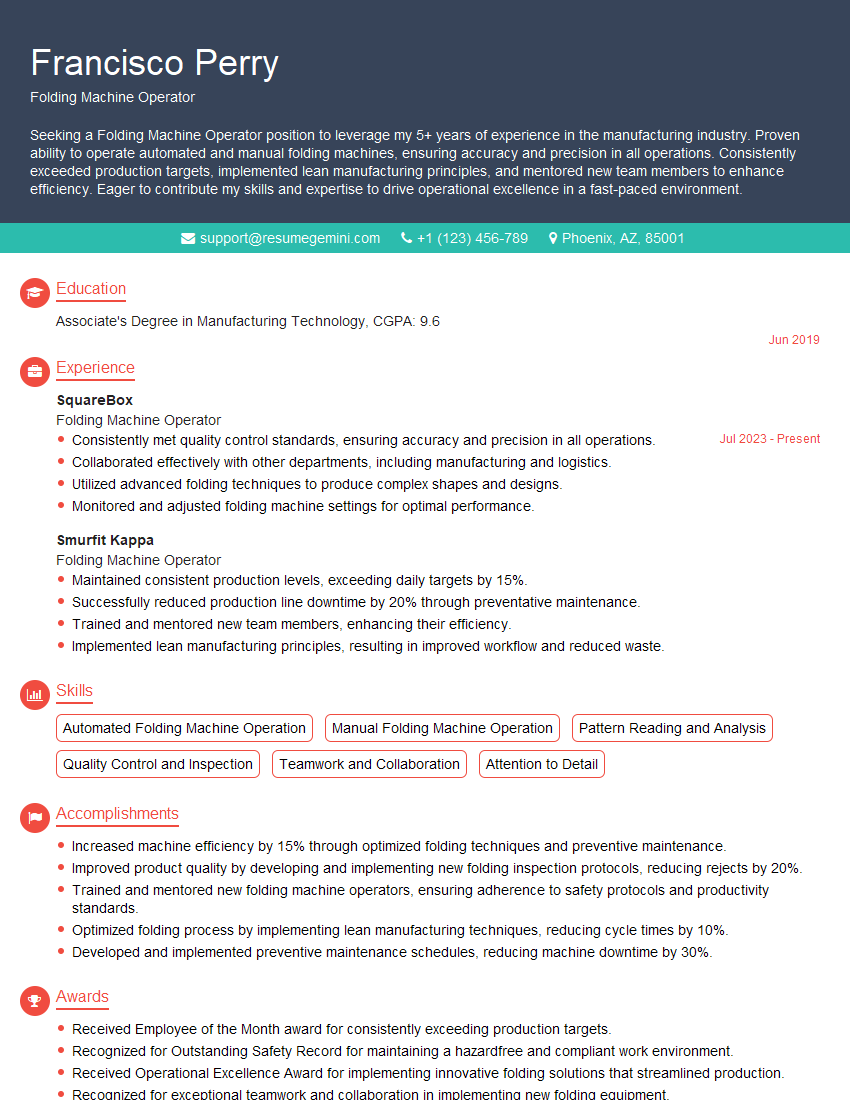
Folding Machine Operator Resume Sample
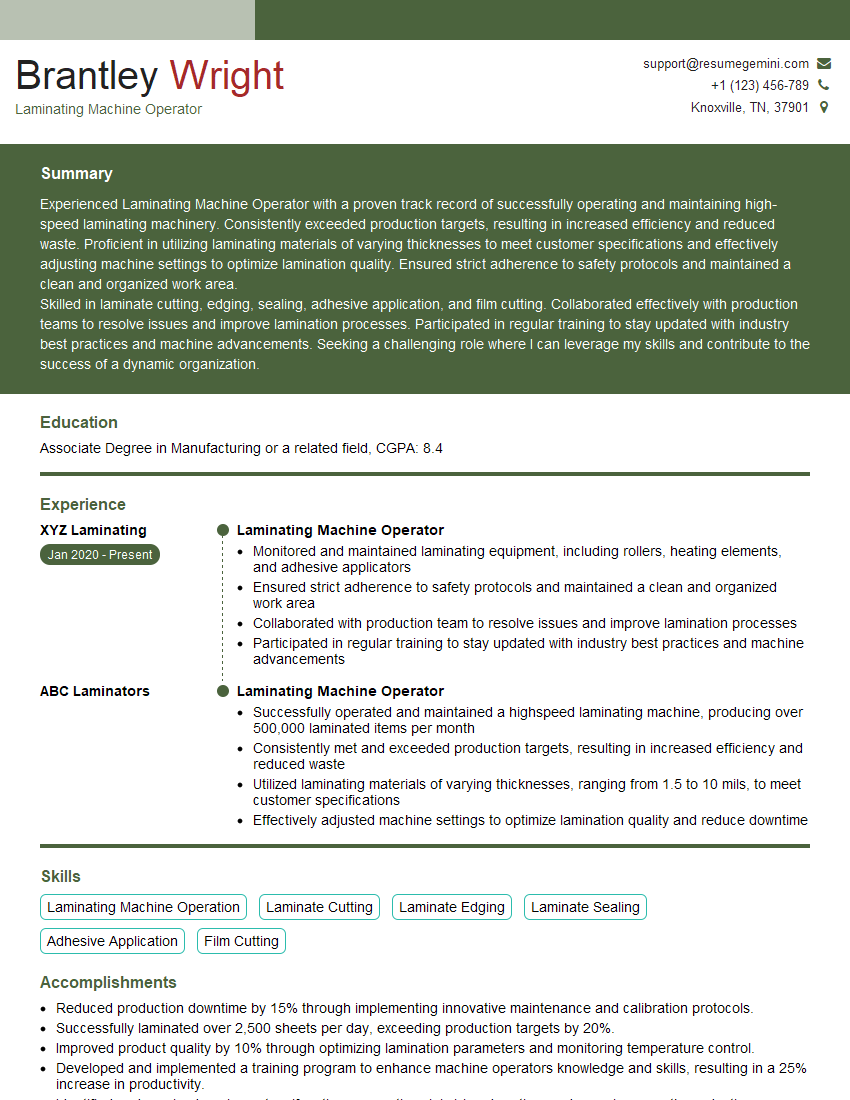
Laminating Machine Operator Resume Sample
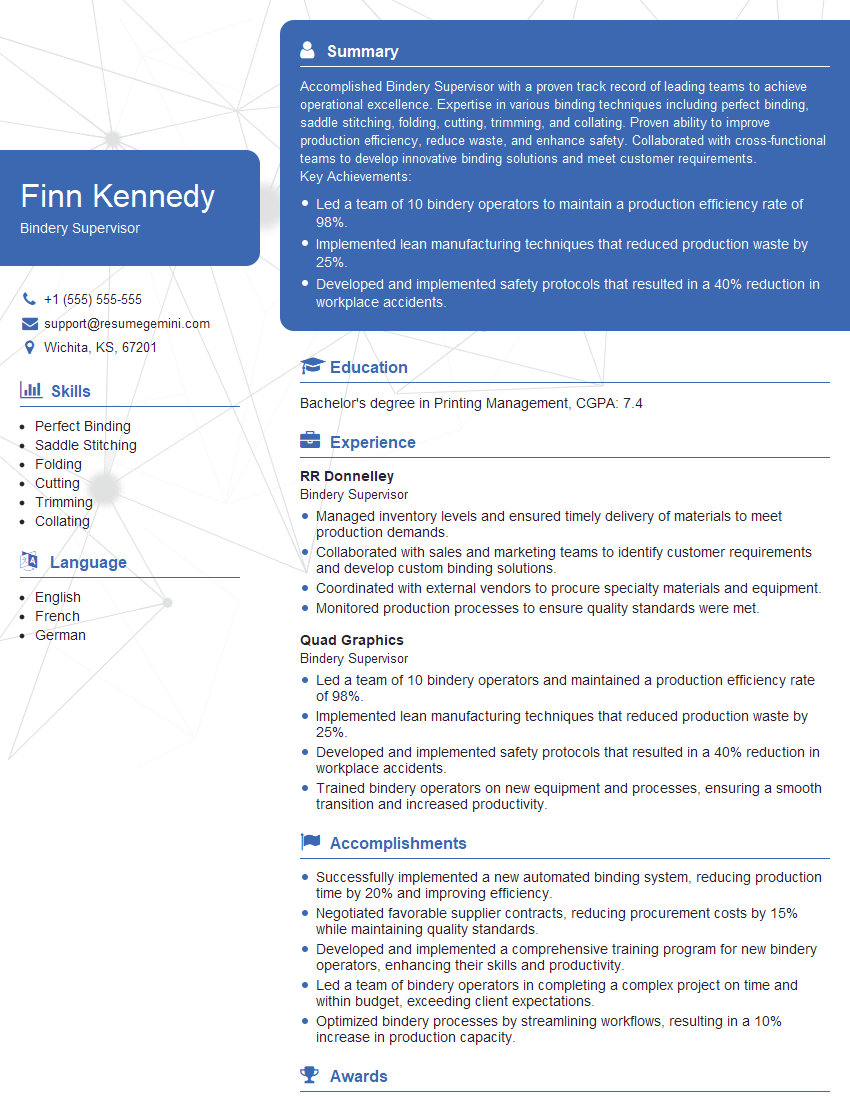
Bindery Supervisor Resume Sample
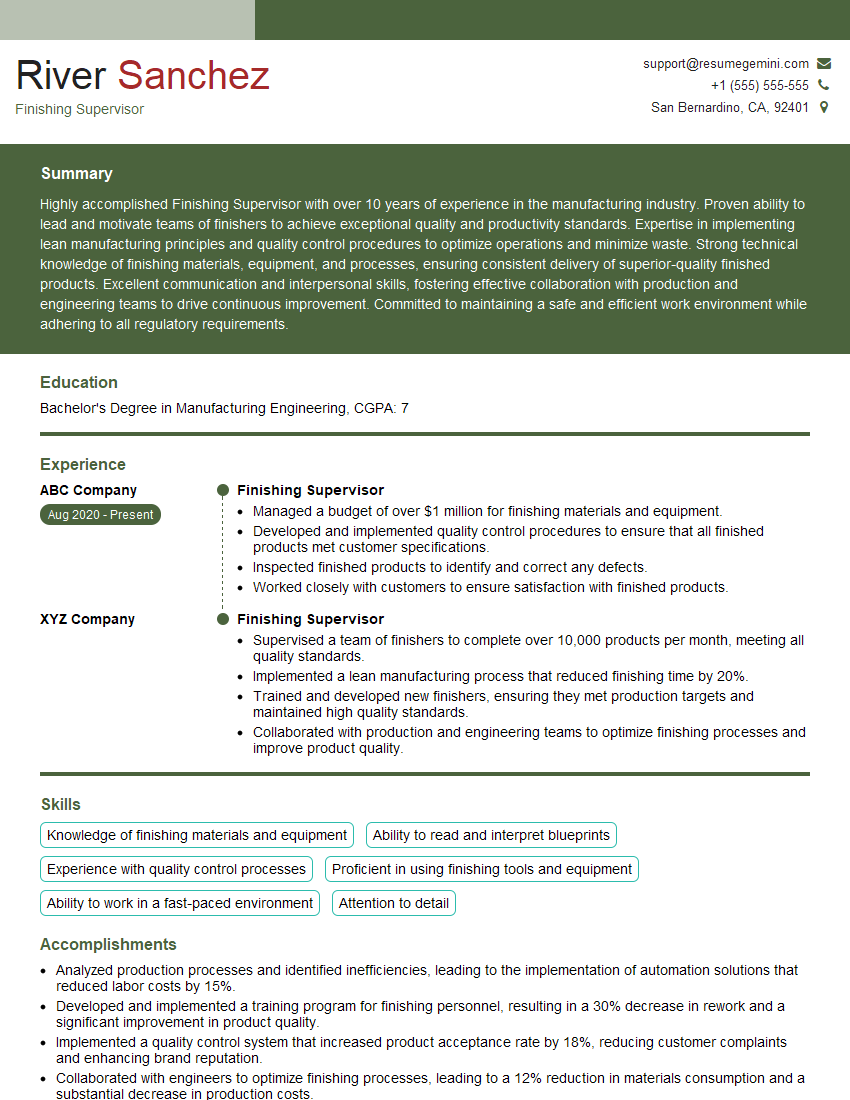
Finishing Supervisor Resume Sample
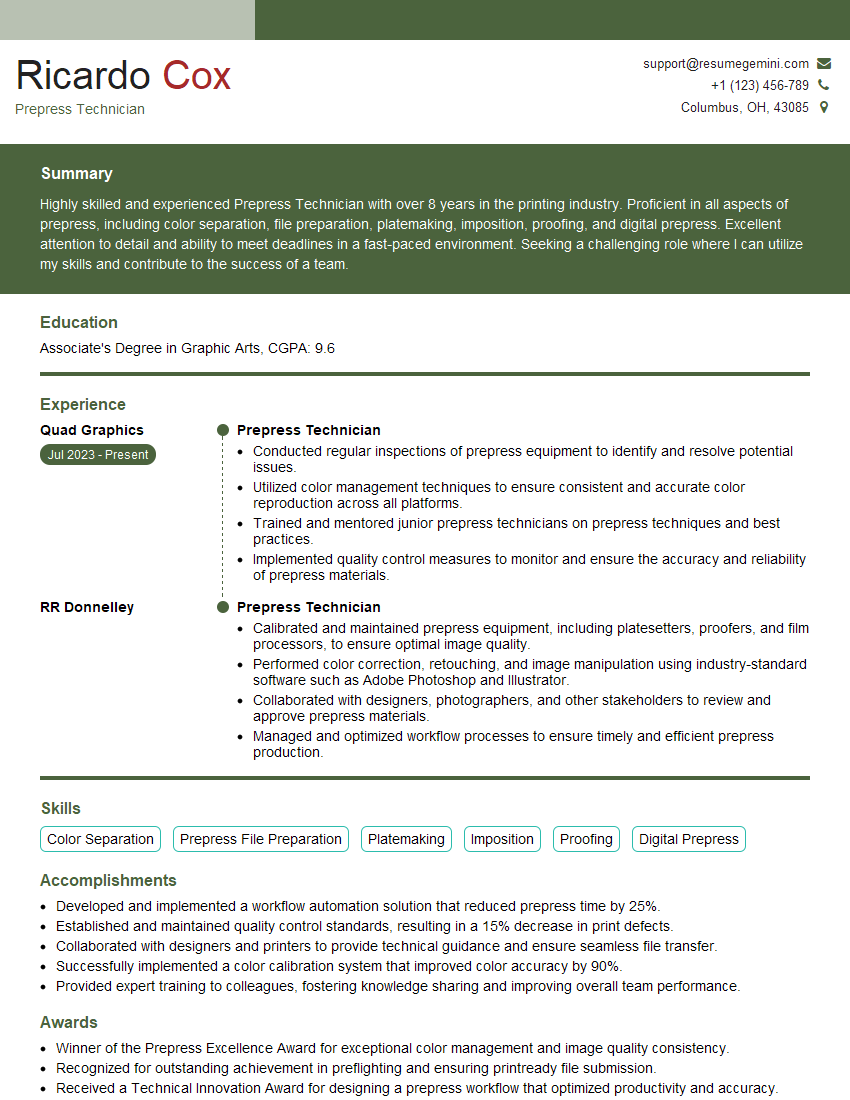
Prepress Technician Resume Sample
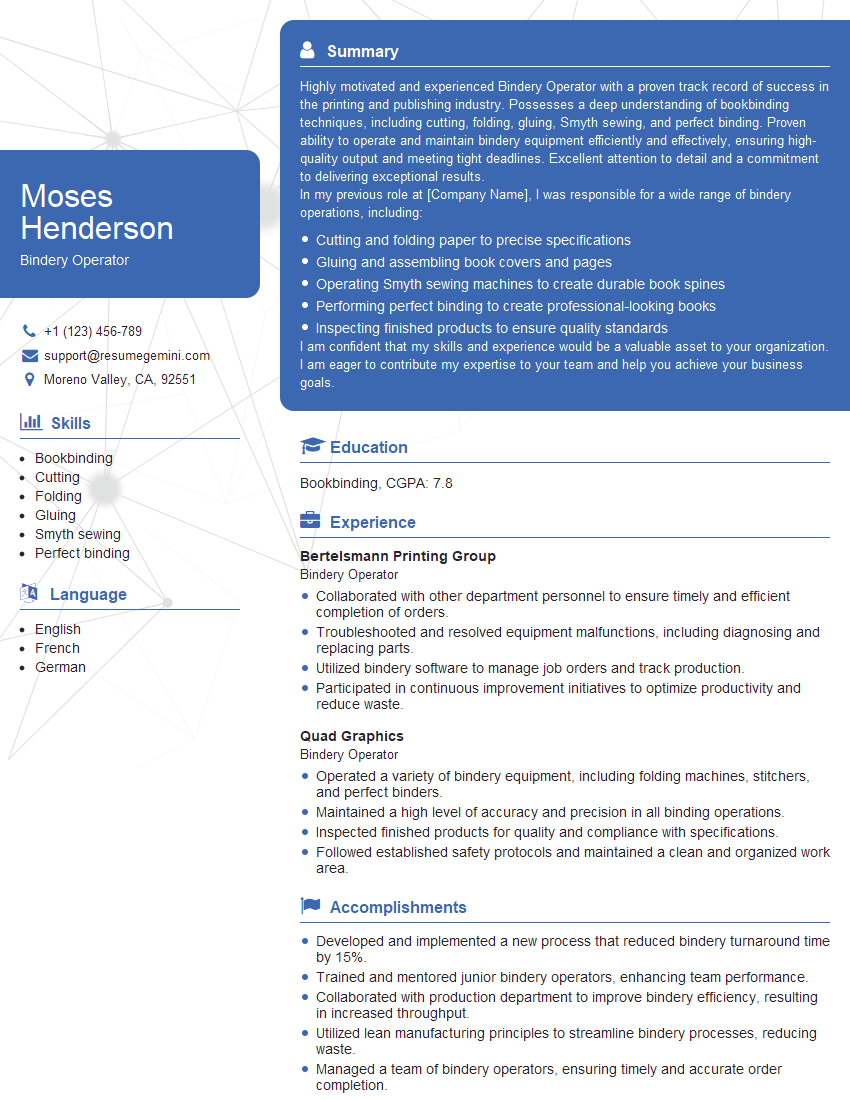
Bindery Operator Resume Sample
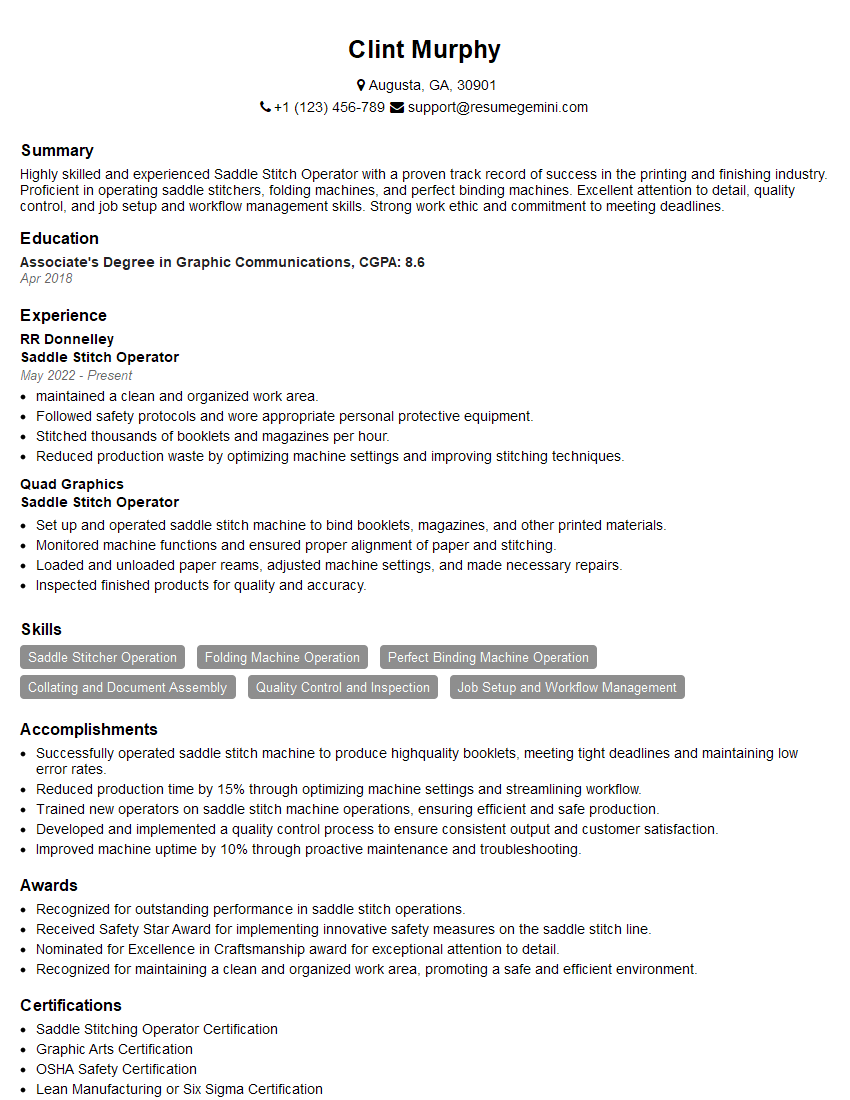
Saddle Stitch Operator Resume Sample
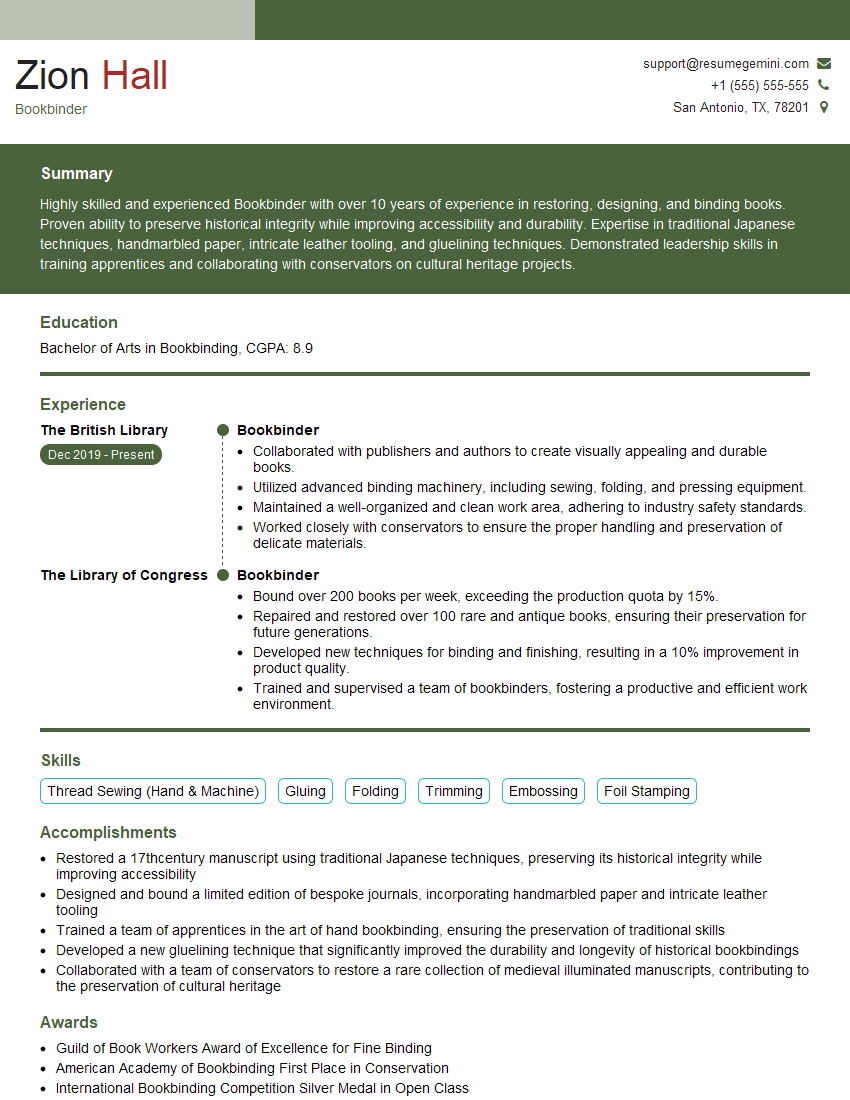
Bookbinder Resume Sample
Explore more articles
Users Rating of Our Blogs
Share Your Experience
We value your feedback! Please rate our content and share your thoughts (optional).
What Readers Say About Our Blog
Attention music lovers!
Wow, All the best Sax Summer music !!!
Spotify: https://open.spotify.com/artist/6ShcdIT7rPVVaFEpgZQbUk
Apple Music: https://music.apple.com/fr/artist/jimmy-sax-black/1530501936
YouTube: https://music.youtube.com/browse/VLOLAK5uy_noClmC7abM6YpZsnySxRqt3LoalPf88No
Other Platforms and Free Downloads : https://fanlink.tv/jimmysaxblack
on google : https://www.google.com/search?q=22+AND+22+AND+22
on ChatGPT : https://chat.openai.com?q=who20jlJimmy20Black20Sax20Producer
Get back into the groove with Jimmy sax Black
Best regards,
Jimmy sax Black
www.jimmysaxblack.com
Hi I am a troller at The aquatic interview center and I suddenly went so fast in Roblox and it was gone when I reset.
Hi,
Business owners spend hours every week worrying about their website—or avoiding it because it feels overwhelming.
We’d like to take that off your plate:
$69/month. Everything handled.
Our team will:
Design a custom website—or completely overhaul your current one
Take care of hosting as an option
Handle edits and improvements—up to 60 minutes of work included every month
No setup fees, no annual commitments. Just a site that makes a strong first impression.
Find out if it’s right for you:
https://websolutionsgenius.com/awardwinningwebsites
Hello,
we currently offer a complimentary backlink and URL indexing test for search engine optimization professionals.
You can get complimentary indexing credits to test how link discovery works in practice.
No credit card is required and there is no recurring fee.
You can find details here:
https://wikipedia-backlinks.com/indexing/
Regards
NICE RESPONSE TO Q & A
hi
The aim of this message is regarding an unclaimed deposit of a deceased nationale that bears the same name as you. You are not relate to him as there are millions of people answering the names across around the world. But i will use my position to influence the release of the deposit to you for our mutual benefit.
Respond for full details and how to claim the deposit. This is 100% risk free. Send hello to my email id: lukachachibaialuka@gmail.com
Luka Chachibaialuka
Hey interviewgemini.com, just wanted to follow up on my last email.
We just launched Call the Monster, an parenting app that lets you summon friendly ‘monsters’ kids actually listen to.
We’re also running a giveaway for everyone who downloads the app. Since it’s brand new, there aren’t many users yet, which means you’ve got a much better chance of winning some great prizes.
You can check it out here: https://bit.ly/callamonsterapp
Or follow us on Instagram: https://www.instagram.com/callamonsterapp
Thanks,
Ryan
CEO – Call the Monster App
Hey interviewgemini.com, I saw your website and love your approach.
I just want this to look like spam email, but want to share something important to you. We just launched Call the Monster, a parenting app that lets you summon friendly ‘monsters’ kids actually listen to.
Parents are loving it for calming chaos before bedtime. Thought you might want to try it: https://bit.ly/callamonsterapp or just follow our fun monster lore on Instagram: https://www.instagram.com/callamonsterapp
Thanks,
Ryan
CEO – Call A Monster APP
To the interviewgemini.com Owner.
Dear interviewgemini.com Webmaster!
Hi interviewgemini.com Webmaster!
Dear interviewgemini.com Webmaster!
excellent
Hello,
We found issues with your domain’s email setup that may be sending your messages to spam or blocking them completely. InboxShield Mini shows you how to fix it in minutes — no tech skills required.
Scan your domain now for details: https://inboxshield-mini.com/
— Adam @ InboxShield Mini
support@inboxshield-mini.com
Reply STOP to unsubscribe
Hi, are you owner of interviewgemini.com? What if I told you I could help you find extra time in your schedule, reconnect with leads you didn’t even realize you missed, and bring in more “I want to work with you” conversations, without increasing your ad spend or hiring a full-time employee?
All with a flexible, budget-friendly service that could easily pay for itself. Sounds good?
Would it be nice to jump on a quick 10-minute call so I can show you exactly how we make this work?
Best,
Hapei
Marketing Director
Hey, I know you’re the owner of interviewgemini.com. I’ll be quick.
Fundraising for your business is tough and time-consuming. We make it easier by guaranteeing two private investor meetings each month, for six months. No demos, no pitch events – just direct introductions to active investors matched to your startup.
If youR17;re raising, this could help you build real momentum. Want me to send more info?
Hi, I represent an SEO company that specialises in getting you AI citations and higher rankings on Google. I’d like to offer you a 100% free SEO audit for your website. Would you be interested?
Hi, I represent an SEO company that specialises in getting you AI citations and higher rankings on Google. I’d like to offer you a 100% free SEO audit for your website. Would you be interested?