Every successful interview starts with knowing what to expect. In this blog, we’ll take you through the top Process Improvements interview questions, breaking them down with expert tips to help you deliver impactful answers. Step into your next interview fully prepared and ready to succeed.
Questions Asked in Process Improvements Interview
Q 1. Describe your experience with Lean methodologies.
Lean methodologies focus on eliminating waste and maximizing value from the customer’s perspective. My experience spans several years, encompassing various implementations across different industries. I’ve worked extensively with Lean tools such as Value Stream Mapping, 5S, Kanban, and Kaizen events. For example, in a previous role, we used Value Stream Mapping to visualize the entire process of order fulfillment. This revealed significant bottlenecks in the packaging stage, leading to delays and increased costs. By implementing Kaizen events focusing on workflow optimization and improved equipment layout, we reduced lead times by 30% and lowered operational costs by 15%.
I understand the core principles of Lean – identifying and eliminating Muda (waste) in its seven forms: Transportation, Inventory, Motion, Waiting, Overproduction, Over-processing, and Defects. My practical application of Lean principles involves not just identifying waste but also empowering teams to actively participate in its elimination through continuous improvement initiatives.
Q 2. Explain the DMAIC methodology.
DMAIC is a data-driven methodology used for process improvement, particularly within Six Sigma. It stands for Define, Measure, Analyze, Improve, and Control.
Define: Clearly defining the problem, project goals, and customer requirements. This involves establishing a baseline and quantifying the impact of the problem.
Measure: Collecting data to understand the current process performance. This stage often involves using statistical tools to determine key metrics and establish a baseline for improvement.
Analyze: Identifying the root causes of the problem using statistical methods and root cause analysis techniques. Tools like Fishbone diagrams, Pareto charts, and process capability analysis are frequently employed.
Improve: Developing and implementing solutions to address the root causes identified in the analysis phase. This could involve process redesign, technology upgrades, or training programs.
Control: Establishing monitoring systems to ensure the improvements are sustained over time and prevent the problem from recurring. Control charts and other statistical process control tools are commonly used here.
For example, in a previous project, we used DMAIC to reduce the defect rate in a manufacturing process. We defined the problem as excessive defects, measured the current defect rate, analyzed the data to pinpoint the root causes (faulty equipment and operator error), implemented improvements (equipment maintenance and operator retraining), and finally established a control chart to track the defect rate and ensure continued improvement.
Q 3. What is your experience with Six Sigma tools and techniques?
My experience with Six Sigma tools and techniques is extensive. I’m proficient in using a range of statistical tools, including:
- Control Charts (e.g., X-bar and R charts, p-charts, c-charts): For monitoring process stability and identifying special cause variation.
- Hypothesis Testing: To determine the statistical significance of observed differences.
- Regression Analysis: To model relationships between variables and predict process outcomes.
- Design of Experiments (DOE): To systematically investigate the effects of multiple factors on a process.
- Process Capability Analysis (Cp, Cpk): To assess the ability of a process to meet specifications.
- Failure Mode and Effects Analysis (FMEA): To identify potential failure modes and their effects on the process.
I’ve applied these tools in diverse settings, from optimizing manufacturing processes to improving customer service response times. My approach involves not only applying the right tool but also clearly interpreting the results and translating them into actionable insights.
Q 4. How would you identify a process improvement opportunity?
Identifying process improvement opportunities requires a systematic approach. I typically begin by:
- Gathering data: Analyzing key performance indicators (KPIs) to identify areas with significant room for improvement. This might involve reviewing metrics like cycle times, defect rates, customer satisfaction scores, and operational costs.
- Observing processes firsthand: Spending time on the shop floor or in the office to understand the workflow, identify bottlenecks, and observe areas where inefficiencies exist. This often involves shadowing employees and engaging in Gemba walks.
- Gathering employee feedback: Employees are often the closest to the process and can offer valuable insights into areas needing improvement. Surveys, interviews, and brainstorming sessions are valuable tools.
- Analyzing customer feedback: Understanding customer needs and expectations is critical. Analyzing customer complaints, surveys, and feedback can reveal areas where the process falls short.
- Benchmarking: Comparing the process against industry best practices or the performance of similar processes in other organizations.
By combining these approaches, I can identify the most impactful process improvement opportunities.
Q 5. Describe a time you improved a process. What were the results?
In a previous role, we were experiencing significant delays in our order fulfillment process. Customer satisfaction was declining, and operational costs were increasing. I led a team that used DMAIC to address this issue. We:
- Defined the problem as excessive order fulfillment lead times and identified the target reduction of 25%.
- Measured the current lead times, identifying key bottlenecks using process mapping.
- Analyzed the data using Pareto charts to pinpoint the root causes (inefficient inventory management and slow shipping processes).
- Improved the process by implementing a new inventory management system and negotiating better shipping rates with our logistics provider.
- Controlled the improved process using control charts to monitor lead times and ensure sustainability.
The results were significant. We achieved a 30% reduction in lead times, a 15% increase in customer satisfaction, and a 10% decrease in order fulfillment costs. This project showcased the effectiveness of a systematic approach to process improvement and the importance of data-driven decision-making.
Q 6. What is your experience with root cause analysis?
Root cause analysis is a crucial step in any process improvement initiative. It involves systematically identifying the underlying causes of a problem, not just the surface-level symptoms. I have extensive experience using various root cause analysis techniques, including:
- 5 Whys: A simple yet effective technique involving repeatedly asking “Why?” to drill down to the root cause.
- Fishbone Diagrams (Ishikawa Diagrams): A visual tool for brainstorming potential causes grouped by category (e.g., People, Machines, Methods, Materials, Environment).
- Fault Tree Analysis: A deductive technique that uses a tree-like diagram to identify the combinations of events that can lead to a failure.
- Pareto Analysis: Identifying the vital few causes that account for the majority of the problems.
My approach to root cause analysis emphasizes collaboration and data-driven insights. I involve relevant stakeholders to gather diverse perspectives and use data analysis to validate the identified root causes before implementing solutions.
Q 7. How do you prioritize process improvement projects?
Prioritizing process improvement projects requires a balanced approach considering several factors. I typically use a framework that incorporates:
- Impact: How significant is the potential improvement (cost savings, efficiency gains, customer satisfaction)?
- Feasibility: How realistic is it to implement the improvement given available resources and constraints?
- Urgency: How quickly does the improvement need to be implemented? This might be driven by customer demands, regulatory requirements, or internal deadlines.
- Alignment with strategic goals: Does the project contribute to the overall strategic objectives of the organization?
I often use a matrix or scoring system to quantify these factors, allowing for a more objective prioritization. For instance, a project with high impact, high feasibility, and high urgency would be prioritized over a project with low impact and low feasibility, even if it aligns with strategic goals.
Q 8. How do you measure the success of a process improvement initiative?
Measuring the success of a process improvement initiative requires a multifaceted approach, going beyond simple anecdotal evidence. We need to define clear, measurable, achievable, relevant, and time-bound (SMART) goals *before* initiating any changes. Success is then measured against these pre-defined targets.
Key metrics typically include:
- Cycle Time Reduction: How much faster is the process now compared to before? For example, if we reduced order fulfillment time from 7 days to 3 days, that’s a significant improvement.
- Cost Reduction: Did the improvements lead to lower operational costs? This could involve reduced material waste, lower labor costs, or decreased energy consumption. For instance, streamlining a manufacturing process might reduce defects and thus save on rework costs.
- Defect Rate Reduction: A lower defect rate shows improved quality and efficiency. Let’s say we reduced customer complaints from 10% to 2% – that’s a strong indicator of success.
- Throughput Improvement: Are we processing more units or requests per unit of time? Consider increasing the number of customer service calls handled per hour after implementing a new call routing system.
- Customer Satisfaction: Ultimately, the goal is often to improve the customer experience. We can use surveys, feedback forms, or Net Promoter Score (NPS) to measure satisfaction.
- Employee Satisfaction: Improved processes can lead to happier and more engaged employees. Measuring employee morale and productivity is crucial.
It’s important to track these metrics *both* before and after implementing the improvements to quantify the impact. Regular monitoring allows for course correction and ensures the initiative stays on track.
Q 9. Explain your understanding of Kaizen.
Kaizen, a Japanese term meaning ‘continuous improvement,’ is a philosophy that emphasizes incremental, ongoing improvements in all areas of a business. It’s not about revolutionary changes, but rather a series of small, manageable improvements made consistently over time.
Kaizen involves everyone in the organization, from top management to frontline workers, and encourages teamwork and problem-solving. The focus is on identifying waste (muda) in processes and eliminating it. These wastes can include defects, overproduction, waiting, non-utilized talent, transportation, inventory, and motion.
In practice, Kaizen often involves using tools like 5S (Sort, Set in Order, Shine, Standardize, Sustain), Gemba walks (going to the place where the work is done to observe the process firsthand), and regular meetings to identify areas for improvement and implement changes. The iterative nature of Kaizen allows for continuous refinement and adaptation to changing circumstances. For example, a team might identify that a particular step in a manufacturing process takes too long. They might propose, test and implement a smaller change like rearranging the workspace to reduce wasted movement or switching to a more efficient tool which in turn increases productivity.
Q 10. What is your experience with process mapping?
Process mapping is a fundamental technique I use to visually represent the steps involved in a business process. I have extensive experience creating various types of process maps, including flowcharts, swim lane diagrams, and value stream maps. These visual representations help us understand the current state of a process, identify bottlenecks, and reveal opportunities for improvement.
For example, I recently mapped the customer onboarding process for a SaaS company. The swim lane diagram clearly showed the handoffs between different departments (sales, marketing, customer success) and identified a significant delay in the account activation phase. This allowed us to streamline the process, resulting in faster onboarding and increased customer satisfaction.
My experience encompasses various mapping software such as Lucidchart, Visio and draw.io, allowing me to adapt to different company preferences and requirements. Beyond creating the maps themselves, I’m proficient at facilitating workshops to collaboratively develop maps and gain buy-in from stakeholders.
Q 11. Describe your experience with Value Stream Mapping.
Value stream mapping (VSM) is a lean process improvement technique that goes beyond simply documenting the steps in a process. It focuses on identifying all activities involved in delivering value to the customer and highlighting those that don’t add value (waste).
My experience with VSM involves facilitating workshops to create current-state maps, which visually represent the flow of materials and information. We identify areas of waste, such as excessive inventory, long lead times, and unnecessary steps. Then, we create a future-state map, which depicts the improved process after implementing changes to eliminate waste and improve flow.
For instance, in a manufacturing setting, I used VSM to analyze the production process of a specific product. The current-state map revealed significant inventory buildup between certain steps. By redesigning the process to implement a pull system (Kanban) and reducing batch sizes, we were able to significantly reduce lead times and inventory costs in the future state map. VSM is particularly useful for identifying and eliminating bottlenecks, which are the steps that limit the overall process speed.
Q 12. How do you handle resistance to change during process improvement?
Resistance to change is a common challenge in process improvement initiatives. Addressing this requires a proactive and empathetic approach.
My strategy involves:
- Communication and Education: Clearly communicate the reasons for the change, the benefits it will bring, and how it will affect individuals. Address concerns and provide reassurance.
- Involvement and Participation: Involve stakeholders in the process improvement process from the beginning. This fosters ownership and reduces resistance.
- Training and Support: Provide adequate training and support to help people adapt to the new process. This minimizes disruption and increases confidence.
- Incentives and Recognition: Reward people for embracing the change and contributing to its success. This reinforces positive behavior.
- Addressing Concerns: Actively listen to and address concerns and objections. Be prepared to compromise and adjust the plan as needed.
- Championing the Change: Having strong leadership support is crucial in driving the change initiative and overcoming resistance.
For example, during a recent implementation of a new CRM system, I organized training sessions, created user guides, and held regular Q&A sessions to address concerns. This collaborative approach resulted in smoother adoption and minimized disruption.
Q 13. What are some common process improvement metrics you use?
The specific metrics I use depend on the context of the process improvement initiative. However, some common metrics include:
- Cycle Time: The total time taken to complete a process from start to finish.
- Throughput: The rate at which the process produces outputs.
- Defect Rate: The percentage of outputs that are defective.
- Lead Time: The time it takes for a request to be fulfilled.
- Cost per Unit: The cost of producing one unit of output.
- Customer Satisfaction (CSAT): Measured through surveys and feedback.
- First Pass Yield (FPY): The percentage of units that pass inspection on the first attempt.
- Process Efficiency: The ratio of value-added time to total time.
- Inventory Turnover: The rate at which inventory is sold and replenished.
These metrics, when tracked over time, provide valuable insights into process performance and the effectiveness of improvement initiatives. It’s crucial to choose metrics that are relevant to the specific goals of the initiative and that can be easily measured and tracked.
Q 14. Describe your experience with data analysis in process improvement.
Data analysis is crucial for effective process improvement. My experience involves using data to identify areas for improvement, measure the impact of changes, and track progress over time.
I’m proficient in using various statistical tools and techniques, including:
- Descriptive Statistics: Calculating measures of central tendency (mean, median, mode), variability (standard deviation, range), and distribution to understand the characteristics of the data.
- Inferential Statistics: Using hypothesis testing and regression analysis to draw conclusions about the population based on sample data.
- Control Charts: Monitoring process stability and identifying potential sources of variation.
- Root Cause Analysis: Using data to identify the underlying causes of problems, such as the 5 Whys technique or fishbone diagrams.
I utilize various software packages, including Excel, R, and SQL, to analyze data and create insightful visualizations. For example, I recently analyzed customer support data to identify the most common types of customer issues and the time it took to resolve them. This analysis revealed that a significant portion of calls were related to a specific software bug. Addressing this bug resulted in a reduction in call volume and resolution time.
Data-driven decision making is essential for ensuring that process improvements are truly effective and deliver the intended results.
Q 15. How do you ensure buy-in from stakeholders during process improvement projects?
Securing stakeholder buy-in is crucial for successful process improvement. It’s not just about informing them; it’s about actively engaging them and making them feel ownership in the process. I approach this through a multi-faceted strategy:
Early and Frequent Communication: I start by clearly outlining the problem, the proposed solution, and the potential benefits early on. Regular updates throughout the project keep stakeholders informed and engaged.
Collaborative Planning: I involve key stakeholders in the planning stages, incorporating their input and addressing their concerns. This makes them feel valued and invested in the outcome.
Data-Driven Demonstrations: Using data to showcase the current inefficiencies and the projected improvements provides tangible evidence of the project’s value. For example, I might demonstrate how streamlining a specific workflow could reduce processing time by 20%, leading to cost savings or improved customer satisfaction.
Addressing Concerns Proactively: Anticipating potential resistance and addressing concerns proactively is vital. This might involve holding Q&A sessions, addressing individual anxieties, and providing clear answers to their questions.
Celebrating Successes: Acknowledging and celebrating milestones along the way reinforces the value of the project and motivates stakeholders to continue their involvement.
In a recent project optimizing the order fulfillment process for an e-commerce company, I used a combination of these techniques. By demonstrating projected cost savings through reduced handling time and improved inventory management, along with incorporating feedback from warehouse managers and customer service representatives, I secured their buy-in and fostered a collaborative environment that led to a successful implementation.
Career Expert Tips:
- Ace those interviews! Prepare effectively by reviewing the Top 50 Most Common Interview Questions on ResumeGemini.
- Navigate your job search with confidence! Explore a wide range of Career Tips on ResumeGemini. Learn about common challenges and recommendations to overcome them.
- Craft the perfect resume! Master the Art of Resume Writing with ResumeGemini’s guide. Showcase your unique qualifications and achievements effectively.
- Don’t miss out on holiday savings! Build your dream resume with ResumeGemini’s ATS optimized templates.
Q 16. Explain your understanding of process automation.
Process automation involves using technology to handle repetitive, rule-based tasks automatically, reducing human intervention and improving efficiency. This can encompass various technologies, including Robotic Process Automation (RPA), workflow management systems, and AI-powered tools.
RPA, for example, uses software robots to mimic human actions, such as data entry, form filling, and report generation. Imagine a scenario where an employee spends hours each day manually entering data from invoices into a spreadsheet. RPA could automate this task, freeing up the employee for more strategic work.
Workflow management systems streamline the flow of information and tasks, automating approvals, notifications, and routing. Think of an approval process for purchase orders: a workflow system can automatically route the order for approval based on pre-defined rules, notifying relevant individuals and tracking its progress.
AI-powered tools can further enhance automation by enabling intelligent decision-making and adaptive processes. For example, AI can be used to automate customer service responses or to predict and prevent potential process bottlenecks.
Effective process automation requires careful planning and consideration of factors such as the feasibility of automation, the cost of implementation, and the potential impact on employees. Successful automation often leads to significant improvements in speed, accuracy, and cost-effectiveness. However, it is critical to ensure proper change management to help affected employees adapt to the new processes.
Q 17. What are some common pitfalls to avoid in process improvement?
Several common pitfalls can hinder process improvement initiatives. Avoiding these requires careful planning and execution:
Lack of clear objectives: Without well-defined goals, the project lacks direction and measurement becomes difficult. Start with a clear statement of the problem and the desired outcomes.
Insufficient stakeholder involvement: Ignoring the perspectives and input of those directly involved can lead to resistance and ultimately failure. Actively engage stakeholders throughout the process.
Ignoring data: Reliance on assumptions rather than data-driven insights can result in ineffective solutions. Use data to identify bottlenecks, measure improvements, and justify decisions.
Over-complicating the process: Aim for simplicity and efficiency. Overly complex solutions can be difficult to implement and maintain.
Lack of change management: Failing to address the impact on employees and provide adequate training can lead to resistance and decreased adoption.
Not measuring results: Without proper monitoring and evaluation, it is impossible to determine the success of the improvements. Establish key performance indicators (KPIs) to track progress and demonstrate impact.
For instance, in one project, the failure to adequately train employees on a new workflow system resulted in a slow adoption rate and hampered the intended efficiency gains. A successful process improvement needs to address the human element as much as the technical aspects.
Q 18. How do you balance short-term gains with long-term sustainability in process improvement?
Balancing short-term gains with long-term sustainability requires a strategic approach that considers both immediate needs and future scalability. This involves prioritizing improvements that deliver quick wins while simultaneously building a foundation for lasting change.
Quick Wins: Focus on low-hanging fruit – easy-to-implement changes that deliver immediate improvements. This builds momentum and demonstrates early success, motivating stakeholders and securing buy-in. For example, automating a repetitive data entry task can be a quick win, demonstrating immediate efficiency gains.
Long-Term Sustainability: Simultaneously, address underlying systemic issues that contribute to long-term inefficiencies. This might involve process redesign, technology implementation, or changes to organizational structures. A well-designed, automated workflow system is an example of a long-term sustainable improvement.
Prioritization Matrix: A prioritization matrix can help visualize and prioritize projects based on their impact and ease of implementation. Projects with high impact and low effort should be prioritized for quick wins, while those with high impact and high effort require careful planning and execution for long-term sustainability. This allows for a balanced approach achieving short-term success while laying the groundwork for lasting change.
Q 19. What is your experience with different process improvement frameworks?
I have extensive experience with various process improvement frameworks, including Lean, Six Sigma, and Agile. Each offers a unique approach, and I select the most suitable one depending on the specific context and objectives of the project.
Lean: Focuses on eliminating waste and maximizing value. I’ve used Lean principles to streamline workflows, reduce lead times, and improve overall efficiency in manufacturing and service environments. Tools like value stream mapping are invaluable in this approach.
Six Sigma: Emphasizes data-driven decision-making and reducing variation. I’ve successfully applied DMAIC (Define, Measure, Analyze, Improve, Control) to tackle complex problems and achieve significant quality improvements. This framework is particularly effective in resolving quality issues and reducing defects.
Agile: Promotes iterative development and flexibility. I’ve utilized Agile methodologies in software development and other projects requiring adaptation and continuous improvement. The iterative nature of Agile allows for flexibility and responsiveness to changing requirements.
My experience allows me to blend and adapt these frameworks as needed, drawing upon the strengths of each to tailor solutions to specific projects. For instance, I might combine Lean principles for process simplification with Six Sigma data analysis to quantify the impact of the improvements.
Q 20. Describe your experience with using technology to improve processes.
Technology plays a vital role in process improvement. I have extensive experience leveraging various technologies to enhance processes, including workflow management systems, RPA, data analytics tools, and project management software.
Workflow management systems have been crucial in automating approvals, notifications, and task routing, resulting in significant improvements in efficiency and transparency. For example, automating the approval process for purchase orders using a workflow system reduces delays and improves accountability.
RPA has automated repetitive tasks such as data entry and report generation, freeing up employees to focus on higher-value activities. In a recent project, RPA automated the reconciliation of bank statements, significantly reducing processing time and errors.
Data analytics tools are essential for identifying process bottlenecks and measuring the impact of improvements. Using data visualization dashboards, I’ve been able to clearly communicate the results of process improvement initiatives and demonstrate the return on investment.
Project management software like Jira or Asana provide essential tools for tracking progress, managing tasks, and collaborating effectively with teams. This facilitates efficient project execution and ensures transparency amongst all stakeholders.
Q 21. How do you effectively communicate process improvement results to stakeholders?
Effectively communicating process improvement results is crucial for demonstrating value and securing continued support. My approach emphasizes clarity, conciseness, and data visualization:
Data-Driven Reporting: I present results using clear and concise data visualizations such as charts, graphs, and dashboards. This makes it easier for stakeholders to understand the impact of the improvements.
Storytelling: I frame the results within a compelling narrative, highlighting the challenges faced, the solutions implemented, and the achieved outcomes. This makes the data more relatable and engaging.
Key Performance Indicators (KPIs): I focus on communicating key metrics that directly relate to stakeholder interests. For example, I might showcase improvements in efficiency, cost savings, customer satisfaction, or quality.
Interactive Presentations: I use interactive presentations and Q&A sessions to answer stakeholder questions and address any concerns.
Executive Summaries: I provide concise executive summaries that highlight the key findings and recommendations.
For example, in a recent presentation, I used a visually engaging dashboard to show the reduction in processing time for customer orders after implementing a new workflow system. The data clearly demonstrated the impact of the improvements, reinforcing the success of the project and demonstrating its positive effects on efficiency and customer satisfaction.
Q 22. What is your experience with change management methodologies?
My experience with change management methodologies is extensive, encompassing both the theoretical understanding and practical application of various frameworks. I’ve worked extensively with ADKAR (Awareness, Desire, Knowledge, Ability, Reinforcement), Kotter’s 8-Step Process, and the Prosci methodology. Each approach offers a unique perspective on managing the human aspects of change, crucial for successful process improvement. For example, ADKAR helps to focus on individual readiness for change, ensuring buy-in at all levels, whereas Kotter’s model provides a structured approach to creating urgency and building a coalition for change. My choice of methodology depends on the specific context of the project, considering factors such as organizational culture, project complexity, and the level of resistance to change anticipated.
I’ve successfully implemented these methodologies in diverse settings – from streamlining workflows in a manufacturing environment to implementing a new CRM system in a sales team. In each case, carefully tailoring the approach to the specific organizational context was key to achieving buy-in and sustaining improvements.
Q 23. Describe a situation where you had to adapt your process improvement approach.
In one project, we aimed to implement a lean methodology to optimize a warehouse’s picking process. Initially, we followed a traditional Kaizen approach, focusing on small, incremental improvements. However, we encountered significant resistance from experienced warehouse staff who were hesitant to adopt new methods. This forced us to adapt our approach. We shifted to a more participatory model, involving the staff directly in identifying and solving problems. We held workshops, actively listened to their concerns, and incorporated their suggestions into the process improvements. This collaborative approach transformed the initial resistance into enthusiasm. The result was not only a more efficient picking process but also a more engaged and satisfied workforce. This experience underscored the importance of flexibility and adaptability in process improvement methodologies and prioritizing human factors over rigid adherence to a specific framework.
Q 24. How do you ensure the sustainability of a process improvement after implementation?
Ensuring the sustainability of process improvements after implementation requires a multi-faceted approach that goes beyond simply deploying a new system or workflow. It’s about embedding the changes into the organization’s DNA. This involves several key steps:
- Training and Coaching: Thorough training and ongoing coaching for staff are crucial to ensure they understand and utilize the new processes effectively. This includes providing ongoing support and resources.
- Monitoring and Measurement: Regular monitoring and measurement of key performance indicators (KPIs) are essential to track progress and identify any potential deviations. This ensures that the improvements are delivering the expected benefits. A dashboard visualizing key metrics is highly effective.
- Process Documentation and Standardization: Comprehensive documentation of the improved processes ensures consistency and facilitates training new employees. Standardization minimizes variations and prevents drift back to older, less efficient practices.
- Change Ownership and Accountability: Identifying clear owners and establishing accountability for the continued maintenance of the improved processes ensures long-term success. This can be facilitated by incorporating the new processes into regular team meetings and performance reviews.
- Continuous Improvement Culture: Finally, fostering a culture of continuous improvement encourages ongoing refinement and adaptation of processes, even after initial implementation. This ensures that improvements are not static, but rather evolve to meet changing needs.
Imagine it like building a house – you need not only a strong foundation (initial implementation) but also ongoing maintenance (monitoring) and renovations (continuous improvement) to keep it standing strong and functional for years to come.
Q 25. What are your strengths and weaknesses in process improvement?
My strengths lie in my analytical skills, ability to collaborate effectively with cross-functional teams, and my proactive approach to problem-solving. I can quickly identify bottlenecks and inefficiencies within complex processes. I thrive in collaborative environments and excel at building consensus. Furthermore, I’m adept at translating complex data into actionable insights, facilitating data-driven decision-making.
One area where I am actively working on improvement is delegation. While I can manage multiple projects effectively, I sometimes tend to retain more control than necessary, potentially hindering team member development. I’m actively addressing this by consciously delegating more tasks and providing clear guidance and support to my team members. This allows me to focus on higher-level strategic tasks while empowering others to take ownership of their work.
Q 26. What are your salary expectations for this role?
My salary expectations are commensurate with my experience and the responsibilities of this role. I’m open to discussing a competitive compensation package that reflects my value and aligns with industry standards for similar positions. I’d be happy to provide a more specific range after learning more about the details of the compensation and benefits plan for this position.
Q 27. Do you have any questions for me?
Yes, I have a few questions. I’d be interested in learning more about the specific challenges the team is currently facing in terms of process improvement. Understanding the current priorities of the company and the team would help me to understand how my skills and experience can best contribute to your success. I’d also like to know more about the team culture and the opportunities for professional development within the organization.
Q 28. What is your preferred project management methodology?
My preferred project management methodology is Agile, specifically Scrum. I find its iterative approach, emphasis on collaboration, and adaptability to changing requirements well-suited for process improvement projects. The iterative nature of Scrum allows for frequent feedback loops, enabling quick adjustments and reducing the risk of deviations from the intended goals. The daily stand-up meetings, sprint reviews, and retrospectives promote transparency, accountability, and continuous improvement, all critical for successful process optimization. However, I am proficient in other methodologies like Waterfall and Kanban and can adapt my approach depending on project specifics and client preferences.
Key Topics to Learn for Process Improvements Interview
- Lean Principles: Understanding and applying Lean methodologies like Value Stream Mapping, Kaizen, and 5S to identify and eliminate waste in processes. Practical application: Analyzing a current process to identify bottlenecks and suggest improvements using a value stream map.
- Six Sigma: Mastering DMAIC (Define, Measure, Analyze, Improve, Control) or DMADV (Define, Measure, Analyze, Design, Verify) methodologies for process optimization and defect reduction. Practical application: Describing a project where you used Six Sigma to reduce process variation and improve efficiency.
- Process Mapping & Analysis: Developing and interpreting process flowcharts, swim lane diagrams, and other visual tools to understand process steps, dependencies, and potential areas for improvement. Practical application: Explaining how you would use process mapping to identify the root cause of a recurring problem.
- Data Analysis & Metrics: Using data to track process performance, identify trends, and measure the effectiveness of improvement initiatives. Practical application: Discussing key performance indicators (KPIs) and how you would use them to monitor process improvements.
- Change Management: Understanding how to effectively implement process changes while minimizing disruption and ensuring stakeholder buy-in. Practical application: Describing a situation where you successfully implemented a process change and managed stakeholder expectations.
- Root Cause Analysis (RCA): Utilizing tools like the 5 Whys, Fishbone diagrams, and Pareto charts to identify the underlying causes of process problems. Practical application: Explaining how you would use RCA to determine the root cause of a defect in a manufacturing process.
- Automation & Technology: Exploring the role of technology in automating processes and improving efficiency. Practical application: Discussing how automation could be used to streamline a specific process.
Next Steps
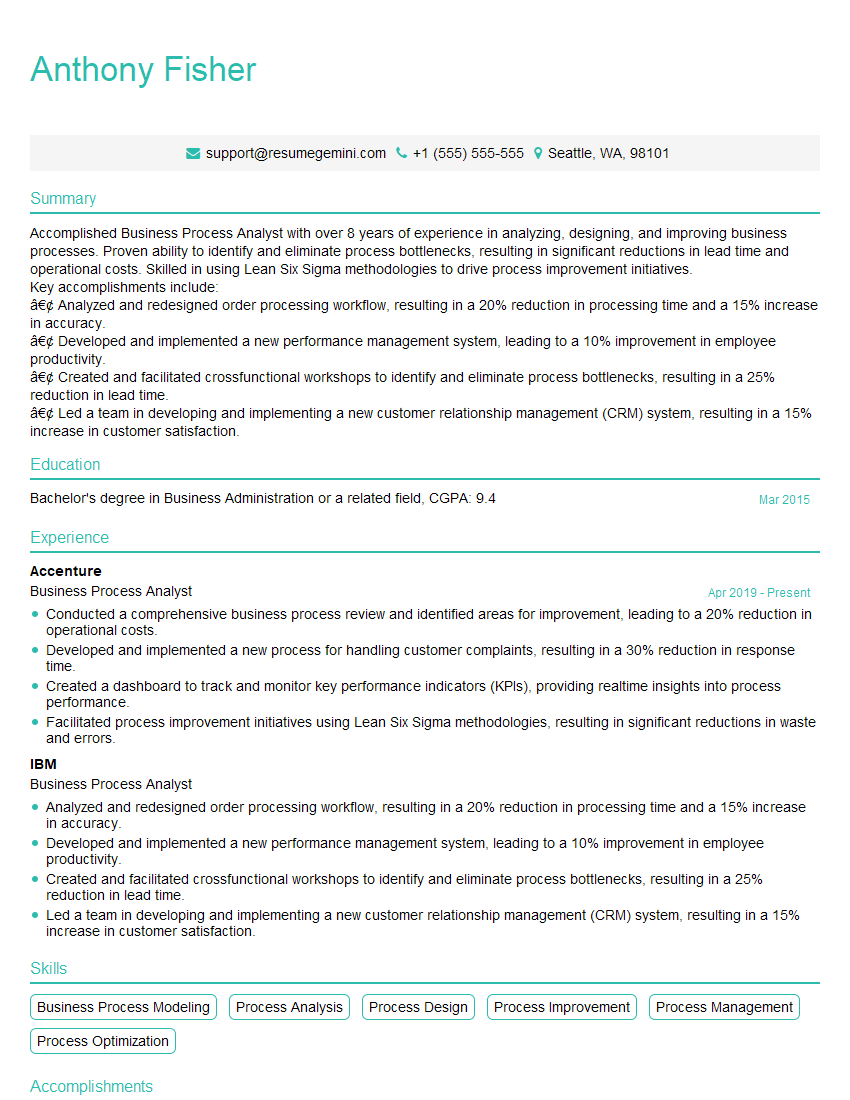
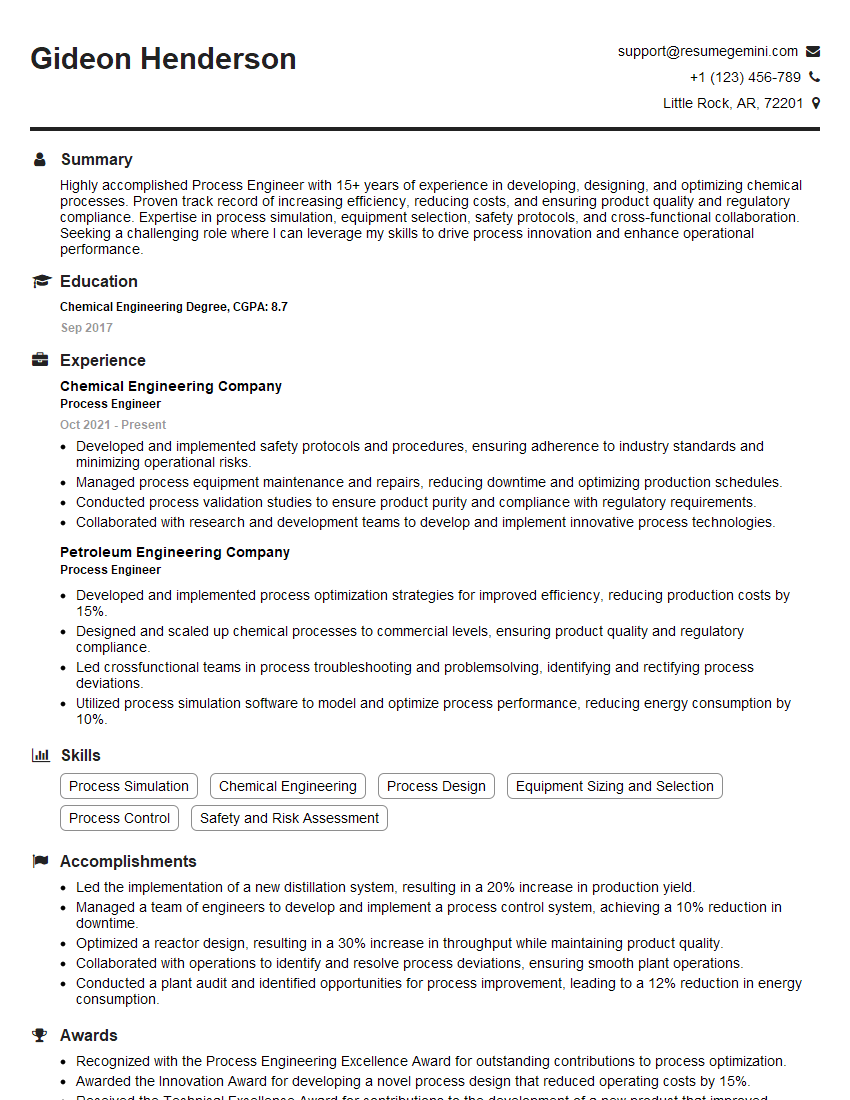
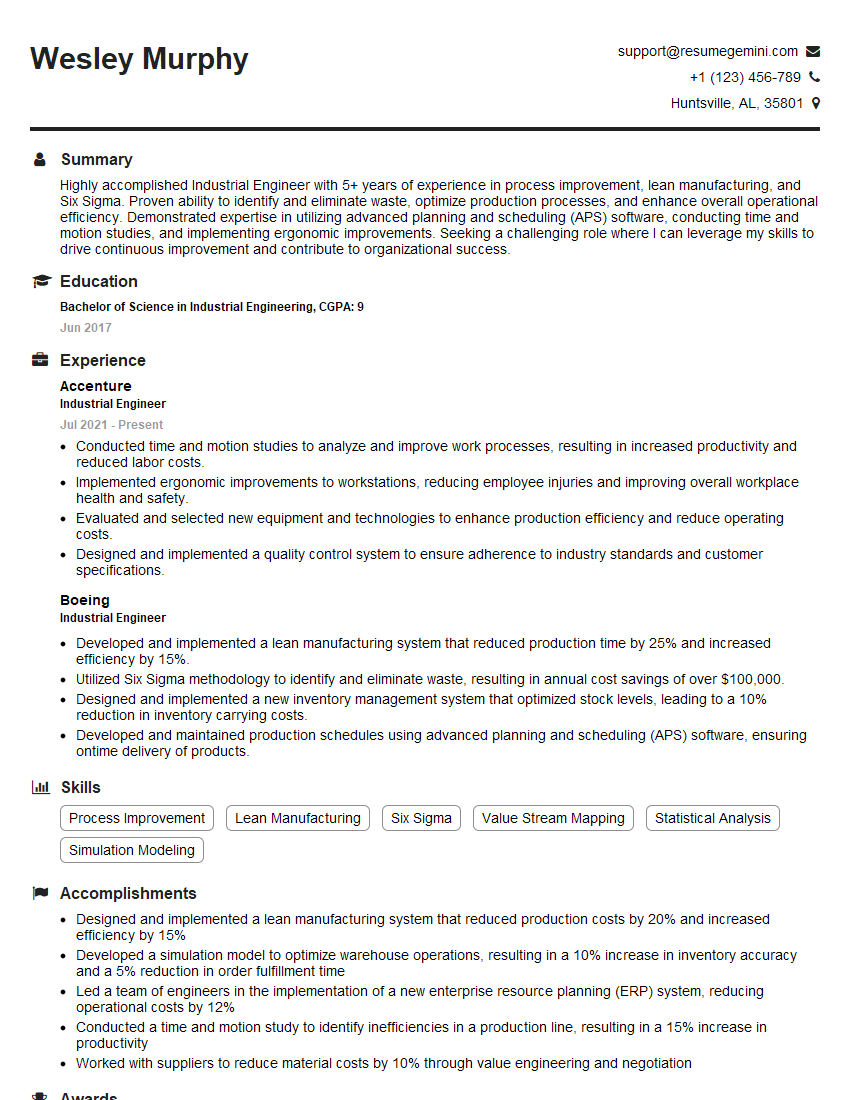
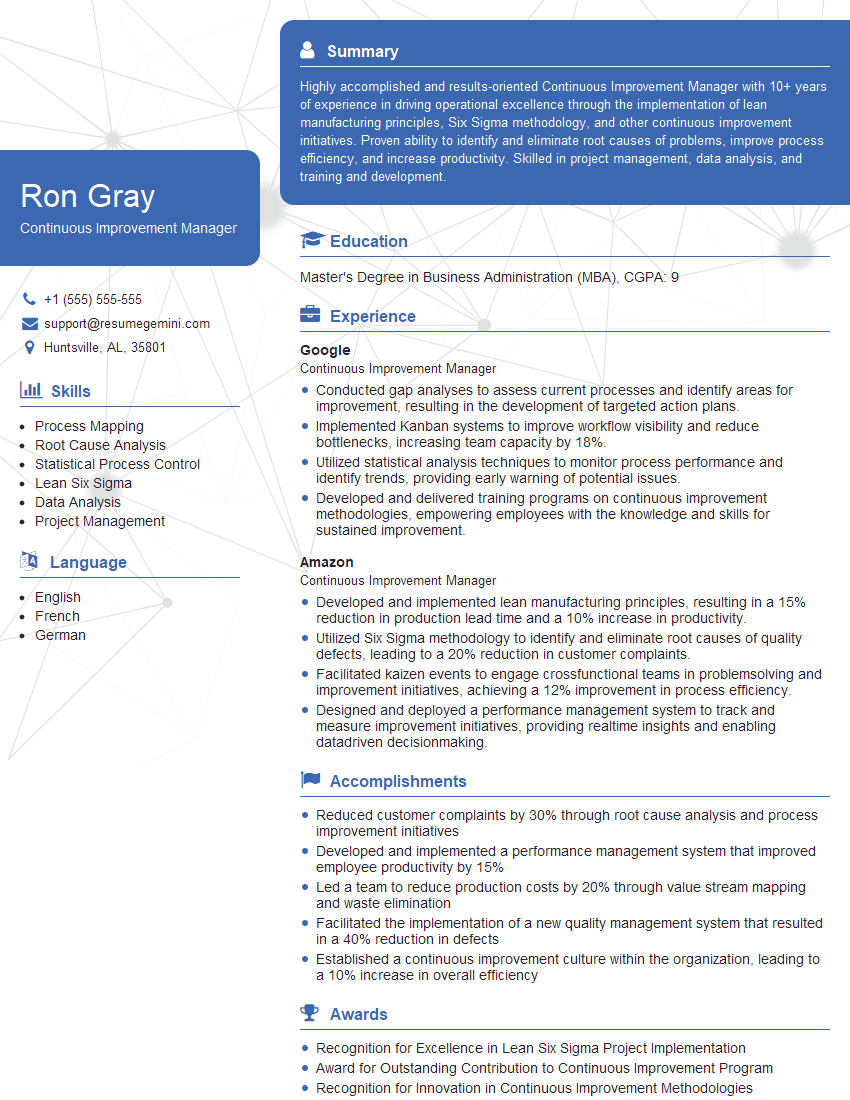
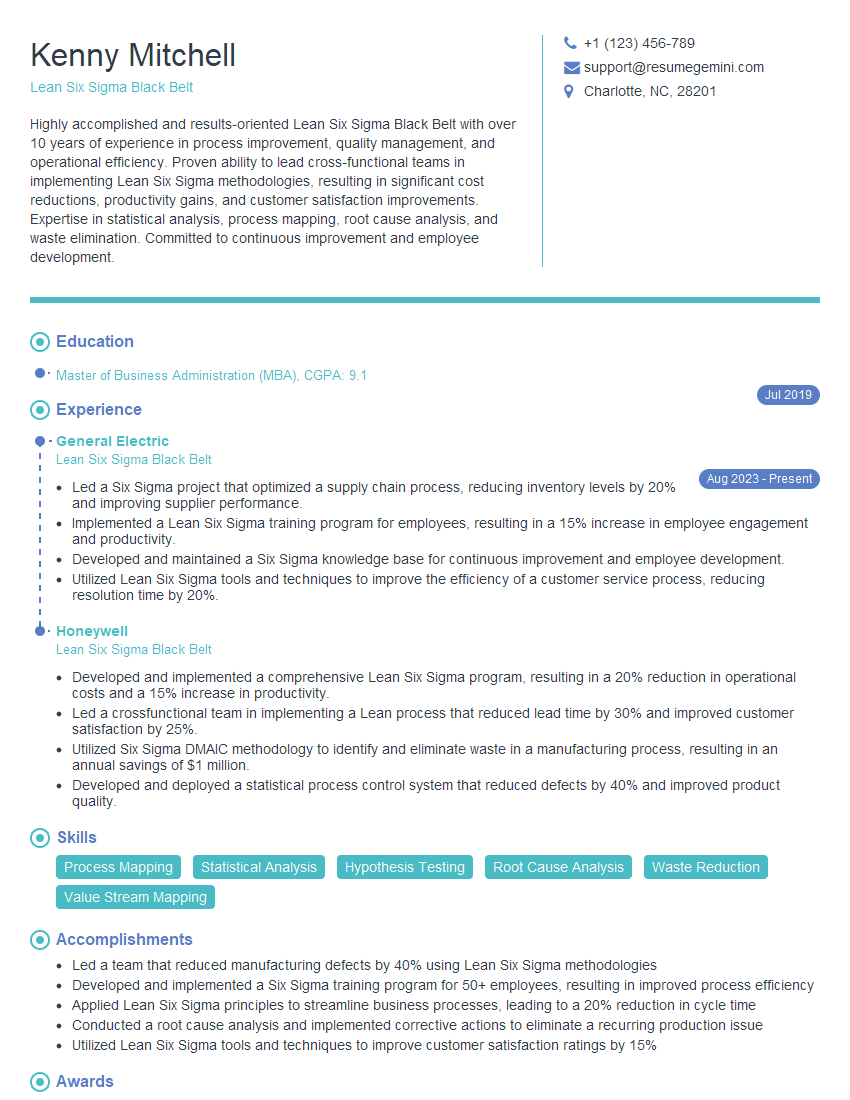
Mastering process improvement techniques is crucial for career advancement, opening doors to leadership roles and higher earning potential. A strong, ATS-friendly resume is your key to unlocking these opportunities. To make your resume shine and stand out from the competition, leverage the power of ResumeGemini. ResumeGemini provides a user-friendly platform to craft a professional resume tailored to your skills and experience. Examples of resumes specifically designed for Process Improvement roles are available to help you get started.
Explore more articles
Users Rating of Our Blogs
Share Your Experience
We value your feedback! Please rate our content and share your thoughts (optional).
What Readers Say About Our Blog
Hello,
we currently offer a complimentary backlink and URL indexing test for search engine optimization professionals.
You can get complimentary indexing credits to test how link discovery works in practice.
No credit card is required and there is no recurring fee.
You can find details here:
https://wikipedia-backlinks.com/indexing/
Regards
NICE RESPONSE TO Q & A
hi
The aim of this message is regarding an unclaimed deposit of a deceased nationale that bears the same name as you. You are not relate to him as there are millions of people answering the names across around the world. But i will use my position to influence the release of the deposit to you for our mutual benefit.
Respond for full details and how to claim the deposit. This is 100% risk free. Send hello to my email id: [email protected]
Luka Chachibaialuka
Hey interviewgemini.com, just wanted to follow up on my last email.
We just launched Call the Monster, an parenting app that lets you summon friendly ‘monsters’ kids actually listen to.
We’re also running a giveaway for everyone who downloads the app. Since it’s brand new, there aren’t many users yet, which means you’ve got a much better chance of winning some great prizes.
You can check it out here: https://bit.ly/callamonsterapp
Or follow us on Instagram: https://www.instagram.com/callamonsterapp
Thanks,
Ryan
CEO – Call the Monster App
Hey interviewgemini.com, I saw your website and love your approach.
I just want this to look like spam email, but want to share something important to you. We just launched Call the Monster, a parenting app that lets you summon friendly ‘monsters’ kids actually listen to.
Parents are loving it for calming chaos before bedtime. Thought you might want to try it: https://bit.ly/callamonsterapp or just follow our fun monster lore on Instagram: https://www.instagram.com/callamonsterapp
Thanks,
Ryan
CEO – Call A Monster APP
To the interviewgemini.com Owner.
Dear interviewgemini.com Webmaster!
Hi interviewgemini.com Webmaster!
Dear interviewgemini.com Webmaster!
excellent
Hello,
We found issues with your domain’s email setup that may be sending your messages to spam or blocking them completely. InboxShield Mini shows you how to fix it in minutes — no tech skills required.
Scan your domain now for details: https://inboxshield-mini.com/
— Adam @ InboxShield Mini
Reply STOP to unsubscribe
Hi, are you owner of interviewgemini.com? What if I told you I could help you find extra time in your schedule, reconnect with leads you didn’t even realize you missed, and bring in more “I want to work with you” conversations, without increasing your ad spend or hiring a full-time employee?
All with a flexible, budget-friendly service that could easily pay for itself. Sounds good?
Would it be nice to jump on a quick 10-minute call so I can show you exactly how we make this work?
Best,
Hapei
Marketing Director
Hey, I know you’re the owner of interviewgemini.com. I’ll be quick.
Fundraising for your business is tough and time-consuming. We make it easier by guaranteeing two private investor meetings each month, for six months. No demos, no pitch events – just direct introductions to active investors matched to your startup.
If youR17;re raising, this could help you build real momentum. Want me to send more info?
Hi, I represent an SEO company that specialises in getting you AI citations and higher rankings on Google. I’d like to offer you a 100% free SEO audit for your website. Would you be interested?
Hi, I represent an SEO company that specialises in getting you AI citations and higher rankings on Google. I’d like to offer you a 100% free SEO audit for your website. Would you be interested?
good