Interviews are more than just a Q&A session—they’re a chance to prove your worth. This blog dives into essential Produce Merchandising interview questions and expert tips to help you align your answers with what hiring managers are looking for. Start preparing to shine!
Questions Asked in Produce Merchandising Interview
Q 1. What are the key factors you consider when determining optimal produce pricing?
Optimal produce pricing is a delicate balance between maximizing profit and ensuring competitiveness. It’s not just about slapping a price tag on; it’s a strategic decision influenced by many factors. I consider these key elements:
- Cost of Goods Sold (COGS): This includes the purchase price from suppliers, transportation costs, and any handling fees. Understanding COGS is foundational to setting a profitable price.
- Market Prices: I constantly monitor competitor pricing for similar produce items. This helps me understand the prevailing market rates and avoid being undercut or pricing myself out of sales.
- Demand & Seasonality: High-demand items, especially during peak seasons, allow for slightly higher margins. Conversely, less popular items might require promotional pricing to move inventory.
- Perceived Value: Consumers associate quality and freshness with higher prices. Beautiful displays and excellent produce quality justify a premium price point. I often use a ‘price-value’ matrix to explore these relationships.
- Waste Factor: My pricing strategy always accounts for potential spoilage. Overpricing produce that is likely to spoil quickly can lead to significant losses.
- Promotional Opportunities: I regularly incorporate promotional pricing, such as ‘buy one, get one’ deals or discounts on bulk purchases, to boost sales volume and clear out excess inventory.
For example, during the peak summer season, the price of locally sourced tomatoes might be slightly higher due to high demand. However, if a large shipment arrives with some minor blemishes, I might offer a discount to clear the inventory before it spoils.
Q 2. Explain your process for managing produce inventory to minimize waste.
Managing produce inventory to minimize waste requires a multi-pronged approach that blends forecasting, FIFO (First-In, First-Out) rotation, and vigilant monitoring. My process involves:
- Accurate Forecasting: I analyze historical sales data, current trends, and upcoming events (like holidays) to predict demand. This helps me order the right quantities and avoid overstocking.
- FIFO Inventory Management: This involves rotating stock, placing older items at the front and newer items at the back. This ensures that produce with shorter shelf lives gets sold first.
- Regular Stock Checks: Daily checks of inventory allow me to identify items nearing their expiration dates, enabling me to adjust pricing or promote them to sell faster.
- Temperature Control: Maintaining appropriate temperatures in storage areas is crucial for extending shelf life. This is particularly important for highly perishable items like leafy greens and berries.
- Proper Handling & Storage: Produce should be stored correctly, following best practices for each type of fruit or vegetable to prevent bruising, wilting, and premature spoilage. For example, storing bananas away from other fruits helps extend their lifespan.
- Donation & Composting: Items past their peak quality but still edible can be donated to local food banks. Spoiled produce that’s unusable should be composted to minimize landfill waste.
Imagine a scenario with a large shipment of strawberries. Using sales data and weather forecasts, I anticipate demand. Daily checks ensure the older strawberries are sold first. Any that are nearing the end of their life are discounted or donated to avoid waste.
Q 3. How do you identify and address spoilage issues within the produce department?
Addressing spoilage involves proactive measures and immediate responses. My approach is:
- Root Cause Analysis: When spoilage occurs, I thoroughly investigate the cause. This could involve examining storage conditions, transportation issues, or quality control problems at the source. Was there a temperature fluctuation? Were the products damaged during transport?
- Inventory Tracking & Reporting: Maintaining detailed records of inventory levels and spoilage rates helps pinpoint problem areas. This information informs ordering practices and storage procedures.
- Supplier Communication: If spoilage is due to quality issues from the supplier, I address it directly, potentially negotiating for replacements or price adjustments.
- Staff Training: Proper handling, storage, and rotation training for my team is essential. Regular reviews and refresher courses help reduce errors.
- Visual Inspection & Quality Checks: Regular checks for signs of spoilage, such as bruising, mold, or wilting, prevent affected items from reaching customers.
For example, if we experience consistent spoilage of leafy greens, we might investigate our refrigeration unit’s temperature settings or review handling practices to ensure they’re not being damaged.
Q 4. Describe your experience with creating visually appealing and effective produce displays.
Visually appealing produce displays significantly influence purchasing decisions. My approach combines several key principles:
- Color Coordination: Arranging produce by color creates visual harmony and attracts attention. Think vibrant reds and oranges together, contrasted by greens and yellows.
- Variety & Abundance: Displays should showcase a wide variety of produce, presented in generous quantities to suggest freshness and ample availability.
- Strategic Placement: High-demand items should be placed at eye level, while less popular items might be placed in easily accessible locations.
- Signage & Labeling: Clear and attractive signage with enticing descriptions and pricing is essential. Proper labeling, including origin and variety, adds value.
- Theme-Based Displays: Creating displays focused on specific themes, like ‘Summer Salads’ or ‘BBQ Essentials,’ adds intrigue and inspires purchases.
- Height & Depth: Varying the heights and depths of displays adds visual interest and maximizes space utilization.
For example, a summer salad display might feature colorful tomatoes, cucumbers, and bell peppers arranged artistically, with signage suggesting recipes or pairings.
Q 5. What strategies do you employ to ensure the freshness and quality of produce?
Maintaining freshness and quality demands continuous attention to detail. My strategies include:
- Source Selection: Partnering with reliable suppliers who prioritize quality and sustainable practices is paramount. This includes frequent communication about quality concerns.
- Proper Transportation: Ensuring produce is transported under optimal temperature and humidity conditions prevents damage and preserves freshness.
- Rapid Turnover: A fast inventory turnover rate minimizes the time produce spends on shelves, preventing spoilage and maintaining freshness.
- Temperature Management: Maintaining precise temperatures at all stages, from receiving to display, is crucial for preserving quality.
- Humidity Control: Optimal humidity levels prevent wilting and maintain the crispness of leafy greens and other produce.
- Regular Cleaning & Sanitation: Maintaining a clean and sanitary environment in both storage and display areas prevents contamination and spoilage.
For example, I might request that our supplier use refrigerated trucks for transporting highly perishable items like berries to preserve their quality.
Q 6. How do you handle customer complaints regarding produce quality or pricing?
Handling customer complaints is a crucial aspect of maintaining customer satisfaction. My approach emphasizes empathy, efficiency, and resolution:
- Active Listening: I listen attentively to the customer’s complaint, allowing them to fully express their concerns.
- Empathetic Response: I acknowledge their frustration and express understanding for their dissatisfaction.
- Thorough Investigation: I examine the issue carefully, checking the produce and the associated documentation to determine the cause of the complaint.
- Fair Resolution: I offer a fair resolution, which may include a refund, replacement, or store credit, depending on the nature of the complaint.
- Feedback Incorporation: I use customer feedback to identify areas for improvement in our processes, products, or services.
For instance, if a customer complains about bruised apples, I would apologize, offer a refund or replacement, and note the issue for internal review of our handling practices.
Q 7. Explain your experience with ordering and receiving produce shipments.
My experience in ordering and receiving produce shipments is extensive. It’s a crucial process requiring accuracy, efficiency, and attention to detail:
- Order Placement: Orders are placed based on forecasted demand, taking into account seasonal variations, promotional activities, and historical sales data. I frequently use computerized inventory management systems to optimize orders.
- Supplier Relationships: Maintaining strong relationships with reliable suppliers is critical for securing consistent quality and timely delivery.
- Inspection Upon Arrival: Upon arrival, I carefully inspect the shipment for damage, spoilage, or discrepancies in quantity or quality. Any issues are immediately reported to the supplier.
- Temperature Verification: I check the temperature of the shipment upon arrival to ensure it has been transported under optimal conditions.
- Documentation: Accurate documentation of the order, delivery, and inspection is essential for tracking and resolving any potential problems.
- Stock Rotation: Newly received produce is promptly rotated into inventory, following FIFO principles to minimize waste.
For example, if a shipment arrives with damaged lettuce, I immediately contact the supplier, document the damage with photos, and negotiate a replacement or credit.
Q 8. What metrics do you use to evaluate the success of your produce merchandising efforts?
Evaluating the success of produce merchandising requires a multifaceted approach, going beyond simply looking at sales figures. I use a combination of key performance indicators (KPIs) to paint a complete picture. These include:
- Sales per square foot: This metric directly measures the profitability of the produce section’s space. A high sales per square foot indicates efficient use of space and high-demand products.
- Shrinkage rate: This is the percentage of produce lost due to spoilage, theft, or damage. Lower shrinkage indicates better inventory management and reduced waste.
- Inventory turnover: This shows how quickly produce is sold. A high turnover rate means fresh produce is constantly moving, reducing spoilage and maximizing profits. We aim for a turnover rate above a certain threshold, which varies based on the product (e.g., leafy greens have a faster turnover than root vegetables).
- Customer satisfaction scores (CSAT): Collecting feedback through surveys or comment cards helps gauge customer perception of the produce quality, freshness, and overall shopping experience. This is crucial for building loyalty and repeat business.
- Waste reduction percentage: Tracking the weight of produce discarded versus the weight received helps measure the effectiveness of waste reduction strategies. Aiming for continual improvement in this area demonstrates sustainability efforts.
- Markdowns: Analyzing markdown percentages (discounts given to sell nearing-expiration produce) helps identify areas where inventory management can be improved, or seasonal pricing strategies need adjustments.
By monitoring these KPIs, I can pinpoint areas of strength and weakness, identify trends, and make data-driven decisions to optimize the produce merchandising strategy. For example, a low sales per square foot for a specific product might prompt a price adjustment or a repositioning of that item within the display.
Q 9. How do you stay updated on current trends and best practices in produce merchandising?
Staying current in produce merchandising requires a proactive approach involving several avenues:
- Industry publications and websites: I regularly read trade magazines like Progressive Grocer and The Packer, and follow reputable online resources focusing on retail trends and produce industry news. This keeps me informed of emerging trends in consumer preferences, new technologies, and best practices.
- Industry conferences and events: Attending conferences like the PMA Fresh Summit provides valuable opportunities to network with other professionals, learn about new products and techniques, and gain insights from industry experts. These events often feature workshops and presentations on the latest merchandising strategies.
- Supplier relationships: Maintaining strong relationships with our produce suppliers is key. They often provide valuable insights into seasonal availability, new varieties, and market trends. Direct communication with growers is invaluable in understanding product availability and predicting price fluctuations.
- Competitor analysis: Regularly visiting competitor stores allows me to observe their merchandising techniques, product selection, and pricing strategies. This helps identify areas where we can improve and stay competitive.
- Data analytics: Our retail software provides valuable data on sales, inventory, and customer behavior. Analyzing this data helps identify trends and adjust merchandising plans accordingly.
By utilizing these diverse resources, I ensure I remain at the forefront of produce merchandising trends and adapt our strategies to meet evolving consumer demands and market dynamics.
Q 10. Describe your experience with managing a team in a produce department.
I’ve managed produce teams ranging from 5 to 15 members, fostering a collaborative and efficient work environment. My approach emphasizes:
- Clear communication: Regular team meetings, individual check-ins, and open communication channels ensure everyone is informed and aligned on goals and priorities. I encourage active participation and feedback from team members.
- Delegation and empowerment: I delegate tasks based on individual strengths and provide opportunities for team members to take ownership and develop their skills. This fosters a sense of responsibility and improves overall team morale.
- Training and development: Providing ongoing training on proper produce handling, food safety, and merchandising techniques ensures the team consistently delivers high-quality service and maintains optimal product standards.
- Performance management: Regular performance evaluations provide constructive feedback, identify areas for improvement, and recognize outstanding contributions. This creates a culture of accountability and continuous growth.
- Team building: Organizing team-building activities fosters camaraderie and strengthens collaboration within the team, creating a supportive and productive atmosphere.
In one instance, I mentored a junior team member who was struggling with inventory management. By providing customized training, mentorship, and consistent feedback, I helped them overcome their challenges and become a valuable asset to the team, exceeding expectations within a year.
Q 11. How do you ensure compliance with food safety regulations in your produce handling?
Ensuring food safety compliance in produce handling is paramount. We follow a rigorous program adhering to all relevant regulations, including:
- Temperature control: Maintaining proper refrigeration temperatures throughout the supply chain is crucial to prevent bacterial growth. We use temperature monitoring devices and regular checks to ensure compliance.
- Proper hygiene practices: All team members are trained on proper handwashing techniques, sanitation procedures, and personal hygiene protocols to minimize contamination risks.
- FIFO (First-In, First-Out) method: This inventory management system ensures that older produce is used or sold before newer stock, minimizing spoilage and reducing waste.
- Pest control: We employ a proactive pest control program to prevent infestations and maintain a clean and sanitary environment.
- Regular sanitation: The produce area undergoes regular cleaning and sanitation, including disinfection of surfaces, equipment, and refrigeration units.
- Traceability: We maintain detailed records of all produce received, stored, and sold, allowing for quick identification and removal of potentially contaminated products in case of a recall.
We conduct regular internal audits and participate in external inspections to ensure our compliance with all applicable food safety regulations. This commitment to food safety protects our customers and maintains our reputation for quality and trustworthiness.
Q 12. What is your experience with using retail software for managing produce inventory?
I have extensive experience using various retail software systems for managing produce inventory, including SAP Retail, Oracle Retail, and Microsoft Dynamics 365 Commerce. These systems allow for:
- Automated ordering: Based on sales data and projected demand, the software can automatically generate purchase orders, ensuring optimal inventory levels and minimizing stockouts.
- Real-time inventory tracking: The systems provide a real-time view of inventory levels, allowing for accurate forecasting and efficient stock management.
- Demand forecasting: By analyzing historical sales data and incorporating external factors like seasonality and promotions, these systems can generate accurate demand forecasts to optimize ordering and reduce waste.
- Price management: The software supports dynamic pricing, allowing for adjustments based on demand, competition, and product shelf life.
- Reporting and analytics: These systems generate detailed reports on key performance indicators, providing valuable insights into sales trends, waste, and overall efficiency.
I am proficient in using these tools to analyze data, optimize inventory levels, and improve the overall efficiency of the produce department. For instance, I once used SAP Retail to identify a pattern of overstocking on a particular fruit due to inaccurate demand forecasting. By adjusting the forecasting parameters, we reduced waste by 15% within three months.
Q 13. How do you balance customer demand with minimizing waste and maximizing profits?
Balancing customer demand with waste minimization and profit maximization is a core challenge in produce merchandising. My approach involves a multi-pronged strategy:
- Accurate demand forecasting: Utilizing historical sales data, seasonal trends, and promotional events, I create accurate demand forecasts. This allows for optimized ordering, reducing overstocking and minimizing waste.
- Strategic pricing and promotions: Using dynamic pricing, we can adjust prices based on demand and product shelf life. Promotions can boost sales of nearing-expiration produce, reducing waste and boosting revenue.
- Effective display and merchandising: Attractive displays, proper product rotation (FIFO), and clear signage highlight fresh, high-demand items, encouraging sales and reducing spoilage.
- Collaboration with suppliers: Working closely with suppliers allows for better communication regarding product availability, ensuring timely delivery and reducing the risk of stockouts.
- Waste reduction initiatives: Implementing strategies like donating excess produce to food banks or using composted waste for gardening reduces waste and supports sustainability initiatives. We also explore innovative solutions like using near-expiry produce in prepared foods or smoothies.
For example, during a period of unexpectedly high demand for a particular type of lettuce, I worked with our supplier to secure additional shipments and adjusted the pricing strategy to capitalize on the surge in demand while ensuring sufficient stock to meet customer needs.
Q 14. How do you handle seasonal changes in produce availability and demand?
Handling seasonal changes in produce availability and demand requires a proactive and flexible approach:
- Seasonal planning: Months in advance, I develop a seasonal merchandising plan that anticipates changes in produce availability and consumer demand. This plan includes product sourcing strategies, pricing adjustments, and promotional activities.
- Supplier relationships: Maintaining strong relationships with suppliers allows for reliable access to seasonal produce and ensures we can adapt to changing market conditions.
- Product diversification: Offering a variety of seasonal produce ensures a consistent supply of fresh products throughout the year, minimizing reliance on any single item.
- Promotional strategies: Targeted promotions can stimulate demand for seasonal items and help move products quickly, reducing waste.
- Flexible inventory management: We adjust our inventory management system to accommodate variations in product lifecycles, ensuring that we have appropriate stock levels throughout the year.
- Menu planning (if applicable): If the retail location also includes a food service component, the seasonal produce availability is factored into menu planning and culinary preparations.
For instance, during the peak summer months, we focus on promoting locally sourced berries and stone fruits, adjusting our displays, promotional offers, and even creating in-store recipe cards featuring these seasonal ingredients. This allows us to capitalize on seasonal demand, minimize spoilage, and promote local growers.
Q 15. What is your understanding of organic and locally sourced produce?
Organic produce is grown without the use of synthetic pesticides, herbicides, fertilizers, or genetically modified organisms (GMOs). It adheres to strict USDA guidelines, ensuring a natural and environmentally friendly growing process. Locally sourced produce, on the other hand, refers to fruits and vegetables grown within a specific geographic region, typically reducing transportation time and distance, thereby minimizing environmental impact and often improving freshness. The benefits of both overlap, as locally grown produce can also be organic. For example, a small farm near the city might cultivate organically grown tomatoes, offering both local and organic options to consumers. Choosing between organic and locally sourced often comes down to prioritizing freshness versus minimizing environmental impact and pesticide exposure.
Understanding consumer preferences for both is crucial. Many shoppers are willing to pay a premium for organic produce due to health and environmental concerns. Others prioritize local sourcing to support regional farmers and reduce their carbon footprint. A successful produce merchandiser caters to both preferences by offering a balanced selection of both organic and locally sourced items.
Career Expert Tips:
- Ace those interviews! Prepare effectively by reviewing the Top 50 Most Common Interview Questions on ResumeGemini.
- Navigate your job search with confidence! Explore a wide range of Career Tips on ResumeGemini. Learn about common challenges and recommendations to overcome them.
- Craft the perfect resume! Master the Art of Resume Writing with ResumeGemini’s guide. Showcase your unique qualifications and achievements effectively.
- Don’t miss out on holiday savings! Build your dream resume with ResumeGemini’s ATS optimized templates.
Q 16. How do you approach cross-merchandising to increase sales in the produce department?
Cross-merchandising in the produce department strategically places complementary items together to encourage impulse purchases and increase overall sales. For instance, placing guacamole near avocados or salsa near tomatoes naturally suggests related products and drives sales of both. Another effective strategy is to place dips near various types of vegetables for snacking, or fruit near yogurt and granola for a quick and healthy breakfast suggestion.
The key is understanding consumer behavior and creating appealing visual connections. I use techniques like thematic displays (e.g., a ‘Taco Tuesday’ display with avocados, tomatoes, onions, and cilantro) or recipe cards next to related produce. Data analytics also plays a vital role; by tracking which items are frequently purchased together, I can optimize product placement for maximum cross-selling opportunities.
Q 17. Describe your experience with shrink management in the produce department.
Shrink management in produce is critical. It refers to minimizing losses due to spoilage, damage, or theft. My approach is multi-pronged, starting with careful stock rotation using FIFO (First-In, First-Out) method. This ensures that older produce is sold before it spoils. I also pay close attention to proper temperature control, humidity levels, and storage techniques specific to each type of produce. Regular quality checks throughout the day help identify and remove damaged or deteriorating items promptly.
Beyond that, I analyze shrink data to identify problem areas. Is a particular fruit consistently spoiling? Perhaps the temperature in that section needs adjustment or a different packaging method is needed. Is theft a concern? Improved security measures may be required. By meticulously tracking shrink causes and implementing corrective actions, I effectively minimize losses and maximize profitability.
Q 18. How do you identify and address potential supply chain disruptions?
Identifying and addressing supply chain disruptions is paramount. I use a proactive approach, focusing on diversification of suppliers and building strong relationships with multiple sources. This minimizes reliance on a single provider, mitigating risks associated with weather events, transportation issues, or supplier problems. I also closely monitor industry news and weather forecasts to anticipate potential disruptions and adjust purchasing accordingly.
For example, if a hurricane threatens a major citrus-growing region, I would proactively adjust my orders, perhaps sourcing oranges from alternative suppliers further afield. Having contingency plans in place ensures business continuity during unpredictable events. Open communication with suppliers and timely adjustments to purchase orders are essential to mitigating the effects of disruptions.
Q 19. What are your preferred methods for communicating with produce suppliers?
Communication with suppliers is critical for maintaining a smooth supply chain. I prefer a combination of methods. Regular phone calls allow for immediate clarification and relationship building. I use email for formal communication, order confirmations, and addressing specific issues with documentation. For tracking inventory and order management, I utilize online portals provided by larger suppliers, offering real-time data visibility. The choice of method depends on the urgency and nature of the communication.
Building strong personal relationships is key. Understanding their challenges, including weather patterns and harvest seasons, enables better planning and collaboration. Clear, consistent, and respectful communication fosters mutual trust and ensures a reliable flow of high-quality produce.
Q 20. Describe your experience with different types of produce displays and their effectiveness.
I’ve experience with various produce display types, each impacting sales differently. Traditional shelving provides maximum space but can be visually monotonous. Island displays create visual focal points and offer more opportunities for cross-merchandising. Pyramid displays are attention-grabbing but can quickly look messy if not maintained meticulously.
Cooler displays are crucial for temperature-sensitive produce like leafy greens, while open-air displays are suitable for fruits like apples and oranges. I’ve found that well-designed displays that highlight seasonal items, feature attractive signage, and showcase high-quality produce consistently lead to higher sales. Data tracking on sales per display type helps determine the most effective layout for specific products and seasonal changes.
Q 21. How do you train new employees on proper produce handling and display techniques?
Training new employees on proper produce handling and display techniques starts with a comprehensive orientation. This includes topics like food safety, proper handling of produce (washing, sorting, removing damaged items), temperature control, and FIFO methodology. I use hands-on training, demonstrating proper techniques and allowing new employees to practice under supervision. We cover various display types, explaining the rationale behind each.
Regular quality checks and feedback sessions form an integral part of the training. I emphasize the importance of maintaining display standards and minimizing shrink. Using visual aids like diagrams and checklists makes it easier for them to grasp and remember key procedures. Continuous training and mentoring ensure they consistently deliver high-quality standards.
Q 22. What are your strategies for improving customer satisfaction in the produce department?
Improving customer satisfaction in the produce department hinges on providing a consistently excellent shopping experience. This involves several key strategies:
- Product Quality and Freshness: Maintaining the highest quality produce is paramount. This means meticulous attention to proper storage, handling, and rotation (FIFO – First In, First Out) to minimize spoilage and ensure customers always find vibrant, appealing produce. I actively monitor ripeness levels, removing any past-prime items promptly. For example, I’d reject a shipment of bananas showing excessive browning.
- Attractive Merchandising: The visual appeal of the produce display is critical. I utilize techniques like color blocking, strategic placement of signage, and creating eye-catching displays that highlight seasonal items or promotions. Think of a vibrant rainbow display with colorful peppers and tomatoes, creating a sense of abundance and freshness.
- Exceptional Customer Service: Proactive engagement with customers is essential. I’m always available to answer questions, provide recommendations, or assist with selection. A simple “Can I help you find something?” goes a long way. Offering samples of unusual fruits or vegetables can encourage trial and boost sales.
- Cleanliness and Organization: A clean, well-organized department creates a positive shopping experience. This includes regularly cleaning shelves, removing damaged produce, and ensuring clear signage. I’d implement a regular cleaning schedule and assign staff roles for maintenance.
- Feedback and Improvement: Actively soliciting customer feedback through surveys or informal interactions allows for continuous improvement. This feedback can be used to address concerns and refine strategies.
Q 23. How do you handle out-of-stock situations for popular produce items?
Handling out-of-stock situations for popular produce items requires a proactive and multi-pronged approach:
- Accurate Forecasting and Ordering: Precise demand forecasting is crucial. I leverage historical sales data, current trends, and upcoming events (like holidays) to optimize ordering quantities. I would analyze past sales data to predict demand accurately and avoid understocking.
- Effective Communication with Suppliers: Maintaining strong relationships with suppliers ensures timely delivery and quick resolution of supply issues. In case of an unexpected shortage, I would immediately contact the supplier to expedite the next order.
- Alternative Solutions: While waiting for restocking, I might offer customers suitable substitutes or promote similar items. If avocados are out, I’d suggest mangoes or other tropical fruits.
- Transparency and Communication: Keeping customers informed about the out-of-stock situation is vital. I’d put up clear signage indicating the expected restocking date.
- Back-up Plan: I would source produce from alternative suppliers as a contingency to avoid being totally out of stock, particularly for high-demand items.
Q 24. What is your experience with loss prevention measures related to produce theft?
Produce theft is a significant concern, and I have extensive experience implementing various loss prevention measures:
- Strategic Product Placement: Placing higher-value or easily stolen items in more visible areas deters theft. High-theft items like organic berries could be placed near staff workstations.
- Employee Training: Thorough employee training on loss prevention techniques is critical. This includes recognizing potential theft indicators and reporting suspicious activities.
- Improved Surveillance: Employing surveillance cameras in strategic locations acts as a significant deterrent. Clearly visible cameras can discourage theft.
- Inventory Management: Implementing a robust inventory management system allows for the early detection of discrepancies and helps identify potential theft patterns. Regular stock checks should be done at the end of each shift.
- Collaboration with Security: Working closely with store security to address suspicious activity and report incidents promptly is vital for minimizing losses.
Furthermore, a strong focus on creating a positive and respectful work environment can help minimize internal theft. Engaged employees are less likely to engage in dishonest practices.
Q 25. Describe your experience working with different types of produce (e.g., leafy greens, fruits, etc.).
My experience encompasses a wide range of produce, including leafy greens, fruits, and vegetables. I understand the unique handling and storage requirements of each category:
- Leafy Greens: These require careful handling to prevent bruising and wilting. Proper refrigeration and humidity control are essential. I regularly inspect for signs of spoilage and promptly remove any damaged leaves. I would also know the differences between different types of lettuce (e.g. romaine, butterhead) and their storage needs.
- Fruits: Fruits vary greatly in their ripening processes and storage needs. I’m familiar with the optimal conditions for storing various fruits, from delicate berries to sturdy citrus fruits. Knowing the optimal ripening temperature is crucial.
- Vegetables: Vegetables also have diverse storage needs, ranging from root vegetables that require cool, dry conditions to delicate tomatoes that need warmer temperatures. I’d prioritize proper ventilation to avoid rot.
My expertise extends to recognizing the quality indicators for each type of produce, such as color, texture, and firmness. This allows me to make informed decisions regarding ordering, display, and pricing.
Q 26. How do you prioritize tasks and manage your time effectively in a fast-paced produce department?
Prioritizing tasks and managing time effectively in a fast-paced produce department requires a structured approach:
- Prioritization Matrix: I use a prioritization matrix (such as Eisenhower Matrix) to categorize tasks based on urgency and importance. This ensures I focus on high-impact tasks first.
- Daily Planning: I start each day with a detailed plan, outlining key tasks and allocating time slots. This allows for efficient workflow.
- Delegation: Effectively delegating tasks to team members ensures workload distribution and maximizes efficiency. I would clearly define roles and responsibilities.
- Time Blocking: Allocating specific time blocks for different activities, such as receiving deliveries, prepping displays, or cleaning, enhances focus and minimizes interruptions.
- Regular Stock Checks: Regular stock checks and inventory management allow me to immediately address shortages and potential spoilage.
Flexibility is also key. Unforeseen events often occur, so I must be prepared to adjust my schedule accordingly.
Q 27. What are some examples of innovative ideas you’ve implemented to improve produce sales or reduce waste?
I’ve implemented several innovative ideas to improve produce sales and reduce waste:
- Pre-cut and Prepared Produce: Introducing pre-cut fruit and vegetable trays catered to busy lifestyles increases convenience and sales. This also reduces consumer waste from purchasing larger quantities than needed.
- Recipe Cards and Displays: Providing recipe cards featuring seasonal produce encourages purchases and inspires customers to try new ingredients. I would strategically place the recipe cards near the corresponding produce items.
- Promotional Displays and Bundles: Creating attractive displays and offering bundled deals on seasonal or complementary items boosts sales and reduces waste by moving excess stock quickly.
- Waste Reduction Program: Implementing a comprehensive waste reduction program includes donating unsold produce to local charities, using food scraps for compost, and accurately tracking waste to identify areas for improvement. I would collaborate with the store’s sustainability team to enhance this program.
- Seasonal Focus and Local Sourcing: Highlighting seasonal produce and partnering with local farmers promotes freshness, reduces transportation costs, and supports the local community. This is always a great talking point with customers.
Key Topics to Learn for Your Produce Merchandising Interview
- Product Knowledge: Deep understanding of various produce types, their seasons, origins, and quality characteristics. This includes recognizing ripeness indicators and identifying potential spoilage.
- Pricing & Promotion Strategies: Analyzing market trends to optimize pricing, understanding the impact of promotional displays and discounts, and forecasting demand to minimize waste.
- Inventory Management: Implementing effective inventory control systems, including ordering, receiving, stocking, and managing shelf life to prevent losses. This involves understanding stock rotation (FIFO) and minimizing shrink.
- Visual Merchandising & Display: Creating visually appealing and effective displays to maximize sales. Understanding principles of color, organization, and signage to attract customers.
- Loss Prevention: Identifying and minimizing sources of produce loss, including spoilage, theft, and damage. Implementing strategies to improve efficiency and reduce waste.
- Customer Service & Communication: Effectively communicating with customers about produce, answering questions, and providing recommendations. Building rapport and providing excellent service.
- Supply Chain Management (Basic): Understanding the flow of produce from farm to store, including transportation, storage, and handling. This includes awareness of ethical sourcing and sustainability practices.
- Data Analysis (Basic): Utilizing sales data to identify trends, assess the performance of different displays and promotions, and make informed decisions about inventory and pricing.
Next Steps: Unlock Your Produce Merchandising Career
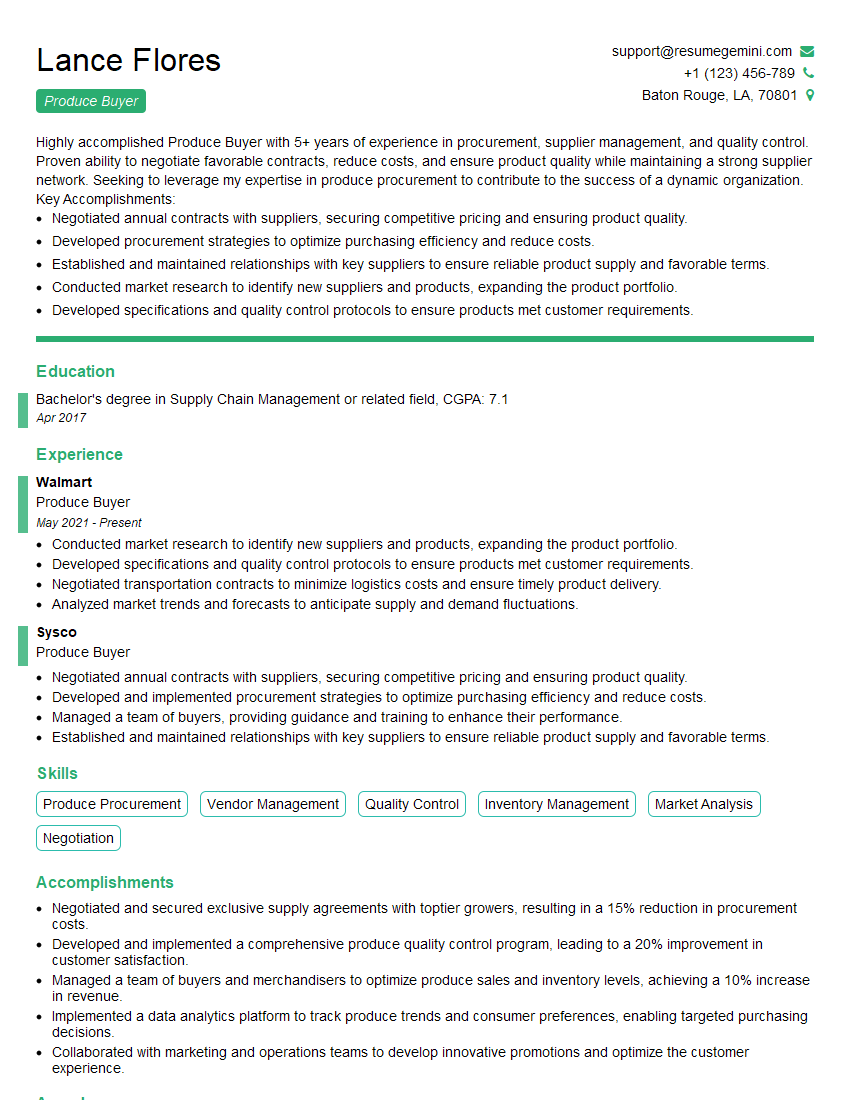
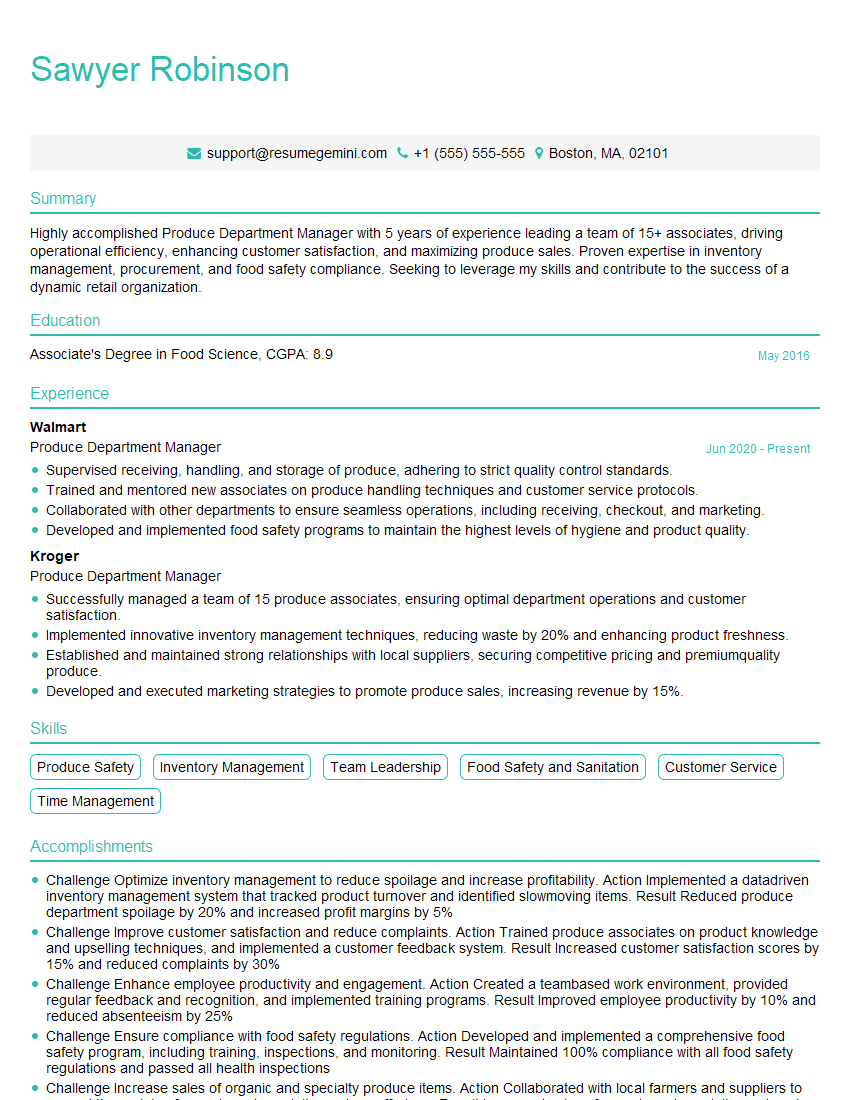
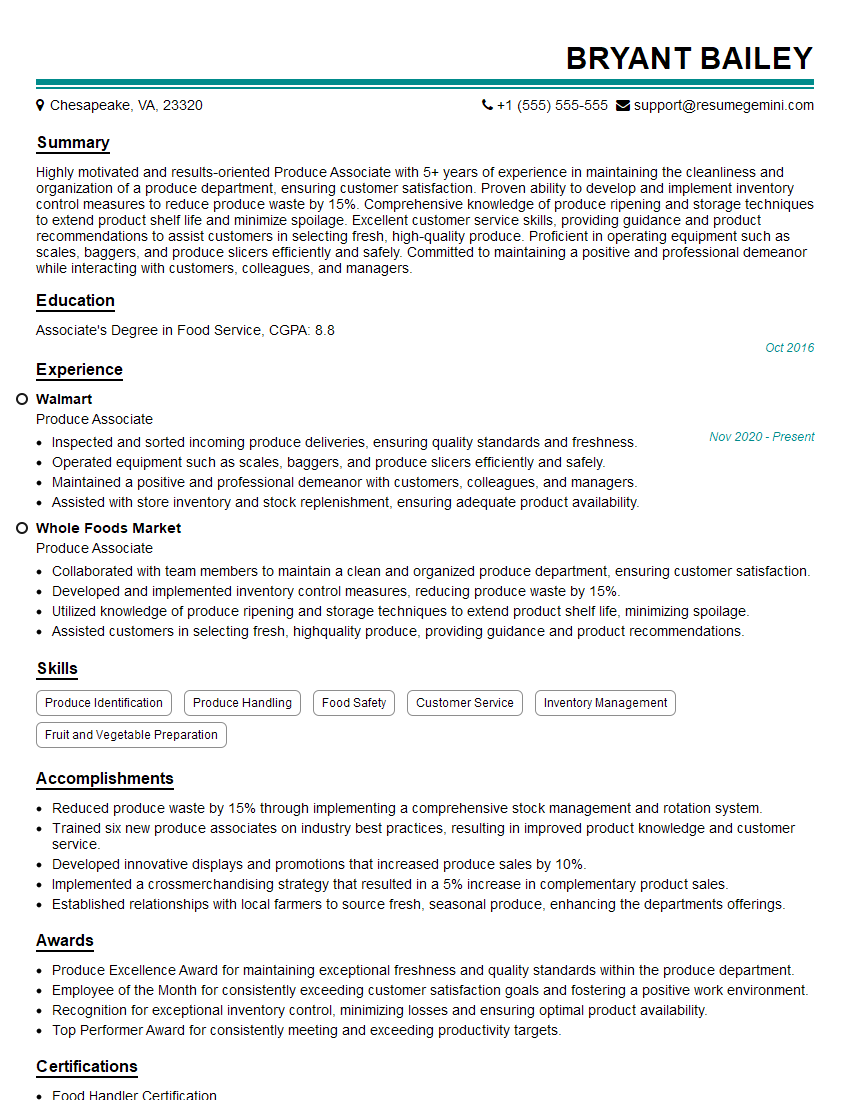
Mastering Produce Merchandising opens doors to exciting career opportunities, offering growth potential and the chance to contribute significantly to a company’s success. A strong resume is your key to unlocking these opportunities. To maximize your chances, create an ATS-friendly resume that highlights your skills and experience effectively. We strongly recommend using ResumeGemini, a trusted resource for building professional and impactful resumes. ResumeGemini provides examples of resumes tailored specifically to the Produce Merchandising field, helping you present your qualifications in the best possible light. Invest the time to build a compelling resume – it’s your first impression and a crucial step in landing your dream job.

Explore more articles
Users Rating of Our Blogs
Share Your Experience
We value your feedback! Please rate our content and share your thoughts (optional).
What Readers Say About Our Blog
Attention music lovers!
Wow, All the best Sax Summer music !!!
Spotify: https://open.spotify.com/artist/6ShcdIT7rPVVaFEpgZQbUk
Apple Music: https://music.apple.com/fr/artist/jimmy-sax-black/1530501936
YouTube: https://music.youtube.com/browse/VLOLAK5uy_noClmC7abM6YpZsnySxRqt3LoalPf88No
Other Platforms and Free Downloads : https://fanlink.tv/jimmysaxblack
on google : https://www.google.com/search?q=22+AND+22+AND+22
on ChatGPT : https://chat.openai.com?q=who20jlJimmy20Black20Sax20Producer
Get back into the groove with Jimmy sax Black
Best regards,
Jimmy sax Black
www.jimmysaxblack.com
Hi I am a troller at The aquatic interview center and I suddenly went so fast in Roblox and it was gone when I reset.
Hi,
Business owners spend hours every week worrying about their website—or avoiding it because it feels overwhelming.
We’d like to take that off your plate:
$69/month. Everything handled.
Our team will:
Design a custom website—or completely overhaul your current one
Take care of hosting as an option
Handle edits and improvements—up to 60 minutes of work included every month
No setup fees, no annual commitments. Just a site that makes a strong first impression.
Find out if it’s right for you:
https://websolutionsgenius.com/awardwinningwebsites
Hello,
we currently offer a complimentary backlink and URL indexing test for search engine optimization professionals.
You can get complimentary indexing credits to test how link discovery works in practice.
No credit card is required and there is no recurring fee.
You can find details here:
https://wikipedia-backlinks.com/indexing/
Regards
NICE RESPONSE TO Q & A
hi
The aim of this message is regarding an unclaimed deposit of a deceased nationale that bears the same name as you. You are not relate to him as there are millions of people answering the names across around the world. But i will use my position to influence the release of the deposit to you for our mutual benefit.
Respond for full details and how to claim the deposit. This is 100% risk free. Send hello to my email id: [email protected]
Luka Chachibaialuka
Hey interviewgemini.com, just wanted to follow up on my last email.
We just launched Call the Monster, an parenting app that lets you summon friendly ‘monsters’ kids actually listen to.
We’re also running a giveaway for everyone who downloads the app. Since it’s brand new, there aren’t many users yet, which means you’ve got a much better chance of winning some great prizes.
You can check it out here: https://bit.ly/callamonsterapp
Or follow us on Instagram: https://www.instagram.com/callamonsterapp
Thanks,
Ryan
CEO – Call the Monster App
Hey interviewgemini.com, I saw your website and love your approach.
I just want this to look like spam email, but want to share something important to you. We just launched Call the Monster, a parenting app that lets you summon friendly ‘monsters’ kids actually listen to.
Parents are loving it for calming chaos before bedtime. Thought you might want to try it: https://bit.ly/callamonsterapp or just follow our fun monster lore on Instagram: https://www.instagram.com/callamonsterapp
Thanks,
Ryan
CEO – Call A Monster APP
To the interviewgemini.com Owner.
Dear interviewgemini.com Webmaster!
Hi interviewgemini.com Webmaster!
Dear interviewgemini.com Webmaster!
excellent
Hello,
We found issues with your domain’s email setup that may be sending your messages to spam or blocking them completely. InboxShield Mini shows you how to fix it in minutes — no tech skills required.
Scan your domain now for details: https://inboxshield-mini.com/
— Adam @ InboxShield Mini
Reply STOP to unsubscribe
Hi, are you owner of interviewgemini.com? What if I told you I could help you find extra time in your schedule, reconnect with leads you didn’t even realize you missed, and bring in more “I want to work with you” conversations, without increasing your ad spend or hiring a full-time employee?
All with a flexible, budget-friendly service that could easily pay for itself. Sounds good?
Would it be nice to jump on a quick 10-minute call so I can show you exactly how we make this work?
Best,
Hapei
Marketing Director
Hey, I know you’re the owner of interviewgemini.com. I’ll be quick.
Fundraising for your business is tough and time-consuming. We make it easier by guaranteeing two private investor meetings each month, for six months. No demos, no pitch events – just direct introductions to active investors matched to your startup.
If youR17;re raising, this could help you build real momentum. Want me to send more info?
Hi, I represent an SEO company that specialises in getting you AI citations and higher rankings on Google. I’d like to offer you a 100% free SEO audit for your website. Would you be interested?
Hi, I represent an SEO company that specialises in getting you AI citations and higher rankings on Google. I’d like to offer you a 100% free SEO audit for your website. Would you be interested?