The thought of an interview can be nerve-wracking, but the right preparation can make all the difference. Explore this comprehensive guide to Produce Supervision interview questions and gain the confidence you need to showcase your abilities and secure the role.
Questions Asked in Produce Supervision Interview
Q 1. Describe your experience managing produce inventory and minimizing waste.
Managing produce inventory effectively and minimizing waste requires a multi-pronged approach combining careful forecasting, efficient stock rotation, and proactive spoilage prevention. I’ve found success using a combination of methods.
Demand Forecasting: I meticulously analyze historical sales data to predict future demand. This allows for optimized ordering, reducing the risk of overstocking which leads to spoilage.
FIFO (First-In, First-Out): This is crucial. We always ensure that the oldest produce is used or sold before the newer stock. This prevents items from sitting too long and deteriorating. We implement visual cues like date labels and strategically place older items at the front of shelves.
Inventory Management System: Using a digital inventory system allows for real-time tracking of stock levels and expiration dates. This provides alerts when items are approaching their best-by date, triggering promotions or internal use to avoid waste.
Donation Programs: Partnering with local food banks or charities provides an avenue for donating slightly bruised or blemished produce that is still safe for consumption, rather than discarding it.
For example, in my previous role, implementing a more robust forecasting system combined with the FIFO method resulted in a 15% reduction in produce waste within six months. We also saw increased profitability due to reduced losses.
Q 2. How do you ensure the quality and freshness of produce throughout its shelf life?
Maintaining produce quality and freshness hinges on meticulous attention to detail throughout the supply chain, from receiving to display. My strategy involves several key steps:
Proper Storage: Different produce requires specific storage conditions (temperature, humidity). We maintain a strictly controlled environment in our storage areas, using refrigeration and humidity controls tailored to each type of fruit or vegetable.
Temperature Monitoring: Regular temperature checks are performed throughout the day to ensure consistency and identify potential issues. We use digital thermometers and log all readings.
Rotation and Handling: Strict FIFO is followed during storage and display. Produce is handled gently to prevent bruising or damage. Overripe items are promptly removed and replaced.
Proper Packaging: Using appropriate packaging materials helps maintain freshness and reduce damage during transportation and display.
Monitoring for Spoilage Indicators: Regular visual inspections are key. We look for signs of discoloration, wilting, or other indicators of spoilage.
For instance, we discovered that storing leafy greens in a high-humidity environment significantly extended their shelf life, leading to less waste and higher customer satisfaction.
Q 3. Explain your approach to maintaining optimal produce display and merchandising.
Optimal produce display and merchandising significantly impact sales and customer perception. My approach focuses on creating a visually appealing and informative display.
Strategic Placement: High-demand items are placed at eye level and in high-traffic areas. Seasonal items are prominently displayed to highlight current offerings.
Visual Appeal: Produce is arranged neatly and attractively, using color coordination and varying heights to create visual interest. We use appropriate signage and lighting to highlight key features.
Signage and Labeling: Clear and concise signage helps customers easily identify items, their origin, and pricing. We utilize attractive labels to enhance the presentation.
Cleanliness: Maintaining a clean and organized display is paramount. Spills are immediately cleaned, and shelves are kept free of debris.
Cross-Merchandising: We often place complementary items together, such as herbs and vegetables or fruits and dips, to encourage impulse purchases.
I once redesigned a produce section in a store, incorporating these merchandising techniques. The result was a 20% increase in sales within a month.
Q 4. What methods do you use to prevent and control produce spoilage?
Preventing and controlling produce spoilage requires a proactive approach at every stage. This includes:
Proper Receiving and Inspection: Thoroughly inspecting deliveries upon arrival to reject damaged or substandard produce.
Temperature Control: Maintaining optimal storage temperatures throughout the supply chain.
Rotation: Employing FIFO methods to minimize the time produce spends in storage.
Sanitation: Maintaining a clean and sanitary work environment to prevent contamination.
Pest Control: Implementing effective pest control measures to prevent infestation.
Proper Handling: Training staff on proper produce handling techniques to minimize bruising and damage.
We also utilize techniques such as controlled atmosphere storage for certain produce items, extending shelf life significantly.
Q 5. How do you manage staff in a fast-paced produce department?
Managing a fast-paced produce department requires strong leadership, clear communication, and effective delegation. I prioritize:
Clear Roles and Responsibilities: Each team member understands their specific tasks and duties.
Effective Training: Staff receives thorough training on produce handling, quality control, and customer service.
Open Communication: Regular team meetings are held to address concerns, share updates, and provide feedback.
Delegation and Empowerment: I delegate tasks appropriately and empower team members to take ownership of their work.
Motivation and Recognition: I acknowledge and appreciate the hard work and dedication of my team.
For instance, I implemented a system of daily checklists and performance tracking to ensure consistency and accountability within my team, which improved efficiency by 10%.
Q 6. Describe your experience with receiving and inspecting produce deliveries.
Receiving and inspecting produce deliveries is a critical step in maintaining quality and preventing spoilage. My approach involves:
Verification: Checking the delivery against the purchase order to ensure the correct quantity and type of produce has been received.
Inspection: Carefully examining each item for damage, bruising, or signs of spoilage. We use standardized quality checklists.
Temperature Check: Verifying that the produce has been transported and stored at the correct temperature.
Documentation: Maintaining detailed records of all deliveries, including inspection results and any discrepancies.
Rejection: Rejecting any produce that does not meet our quality standards.
We use a digital system to track deliveries, automatically generating reports that highlight any potential issues or inconsistencies over time.
Q 7. How do you handle customer complaints regarding produce quality or freshness?
Handling customer complaints professionally and efficiently is crucial for maintaining customer satisfaction. My approach is to:
Listen Empathetically: Actively listen to the customer’s concerns without interruption.
Apologize Sincerely: Express sincere apologies for any inconvenience or dissatisfaction.
Investigate the Issue: Thoroughly investigate the complaint to determine the cause of the problem.
Offer a Resolution: Provide a fair and reasonable resolution, such as a refund, replacement, or discount.
Follow Up: Follow up with the customer to ensure they are satisfied with the resolution.
For example, if a customer complains about bruised apples, I’ll examine the apples, offer a replacement or refund, and use this as an opportunity to improve handling and storage procedures to prevent similar issues in the future.
Q 8. What are your strategies for managing produce pricing and promotions?
Managing produce pricing and promotions requires a multifaceted approach that balances maximizing profit with attracting customers. It’s a delicate dance between understanding market trends, competitor pricing, and the specific characteristics of each produce item.
My strategy begins with meticulous cost analysis. I track every expense, from initial purchasing to spoilage, to accurately determine the true cost of each item. This informs my pricing strategy, ensuring profitability while remaining competitive. For example, if a particular fruit is in high supply, I might lower the price to encourage sales and prevent waste. Conversely, if a unique, high-demand item arrives, I’ll price it accordingly, maximizing profit margins.
Promotions are carefully planned and targeted. I use a combination of methods: seasonal displays showcasing peak-season produce, bundle deals to encourage larger purchases, and targeted discounts on items nearing their expiration date (while still maintaining food safety standards). Data analysis plays a crucial role. I carefully track the success of each promotion, adjusting strategies based on sales performance to optimize future campaigns. This ensures I’m not only making money but also minimizing waste and maximizing customer satisfaction. For instance, if a ‘buy-one-get-one’ deal on avocados performs exceptionally well, I’ll replicate this strategy with other popular items.
Q 9. How familiar are you with food safety regulations and best practices related to produce?
Food safety is paramount in produce supervision. I am intimately familiar with regulations like the FDA Food Code and HACCP (Hazard Analysis and Critical Control Points) principles. This includes understanding safe handling procedures from farm to table, preventing cross-contamination, and monitoring temperature control rigorously.
My knowledge extends to understanding the specific hazards associated with different produce types. For example, leafy greens require extra vigilance to prevent contamination from soil or pathogens. Similarly, proper washing and handling are critical for reducing the risk of E. coli or Salmonella. I’m proficient in implementing and enforcing cleaning and sanitation protocols, ensuring staff is trained in proper handwashing, equipment sanitization, and the importance of preventing cross-contamination between raw and ready-to-eat produce.
Regular audits and inspections are a crucial part of maintaining compliance. I ensure that all staff members participate in food safety training, and I conduct regular inspections to identify and correct any potential hazards promptly. Record-keeping is also essential; detailed logs of temperatures, cleaning procedures, and supplier information are maintained to ensure traceability and accountability.
Q 10. What are your methods for tracking and analyzing produce sales data?
Tracking and analyzing produce sales data is essential for making informed decisions. I rely on a combination of point-of-sale (POS) systems and inventory management software. This provides a comprehensive overview of sales trends, identifying best-selling items, slow-moving inventory, and potential areas for improvement.
My analysis goes beyond simple sales figures. I look for patterns and trends. For instance, I might notice increased sales of certain fruits during specific holidays or decreased sales of others during extreme weather. This information guides my ordering strategies, allowing me to anticipate demand and minimize waste. I also use data to evaluate the effectiveness of promotions and make adjustments for optimal results. Data visualization tools, such as charts and graphs, help me communicate these findings effectively to other members of the team.
Regular reporting is crucial. I generate weekly and monthly reports summarizing sales data, identifying trends, and highlighting areas requiring attention. These reports are vital for inventory management, pricing strategies, and overall operational efficiency.
Q 11. How do you identify and address potential food safety hazards in produce handling?
Identifying and addressing potential food safety hazards requires a proactive approach. It begins with understanding the inherent risks associated with each stage of the produce handling process, from receiving to display. This includes factors such as proper temperature control, preventing cross-contamination, and ensuring appropriate sanitation practices.
My methodology involves several key steps:
- Visual Inspection: Upon receiving produce, I conduct a thorough visual inspection to identify any signs of damage, spoilage, or contamination.
- Temperature Monitoring: Maintaining proper temperature throughout the supply chain is crucial. I regularly monitor temperatures using calibrated thermometers and take corrective action if necessary.
- Rotation and FIFO (First-In, First-Out): Implementing a FIFO system ensures that older produce is used before newer stock, minimizing waste and preventing spoilage.
- Sanitation Practices: Strict sanitation protocols are enforced, including regular cleaning and sanitizing of equipment, work surfaces, and storage areas.
- Staff Training: Thorough staff training on food safety procedures and proper handling techniques is essential to prevent contamination.
In case of a potential hazard, I follow established protocols for reporting and containment, and I collaborate with the relevant authorities as needed to prevent any potential health risks.
Q 12. Explain your experience with ordering and forecasting produce needs.
Ordering and forecasting produce needs requires a blend of historical data, current trends, and predictive analysis. My experience involves using sophisticated inventory management systems to track sales data, predict future demand, and optimize ordering quantities.
I start by analyzing historical sales data to identify seasonal trends, peak demand periods, and average consumption rates for each item. This forms the baseline for my forecasting. However, I don’t rely solely on past data. I also factor in external factors, such as upcoming holidays, promotional campaigns, and local events, which can significantly impact demand. For instance, increased demand for watermelon is anticipated during summer months, while certain types of produce might see a surge during Thanksgiving.
The forecasting process also involves careful consideration of lead times and potential supply chain disruptions. I work closely with suppliers to establish reliable delivery schedules and proactively address any potential challenges that could affect supply. The goal is to balance inventory levels to meet customer demands without excessive waste due to spoilage.
Q 13. How do you ensure proper sanitation and hygiene in the produce department?
Ensuring proper sanitation and hygiene in the produce department is a continuous process involving comprehensive measures. It starts with establishing and consistently enforcing stringent hygiene standards for all staff members.
My approach involves:
- Handwashing: Designated handwashing stations with soap and hand sanitizer are readily available, and staff is trained to wash their hands frequently.
- Equipment Cleaning: All equipment, including cutting boards, knives, and display cases, are cleaned and sanitized regularly, often using a multiple-step process.
- Surface Cleaning: Work surfaces, floors, and storage areas are cleaned and disinfected throughout the day to prevent cross-contamination.
- Pest Control: Regular pest control measures are implemented to prevent infestation.
- Waste Management: Proper waste disposal procedures are in place to prevent contamination and maintain cleanliness.
- Temperature Control: Cold storage areas are maintained at the appropriate temperatures to prevent spoilage and bacterial growth.
Regular inspections and audits ensure that these standards are consistently maintained, and staff training and ongoing education help reinforce the importance of hygiene practices.
Q 14. Describe your experience with different types of produce and their storage requirements.
My experience encompasses a wide range of produce, from leafy greens and delicate berries to robust root vegetables and tropical fruits. I understand the unique characteristics and storage requirements of each type. Knowing this is crucial for maintaining quality and minimizing waste.
For example, leafy greens require cool, humid conditions to maintain their freshness. Berries are highly perishable and require careful handling and quick refrigeration. Root vegetables, on the other hand, can be stored at cooler temperatures with good ventilation. Tropical fruits often require warmer temperatures to prevent chilling injury. I utilize appropriate storage facilities, such as refrigerators, coolers, and controlled-atmosphere storage units, where necessary, to maintain the optimal conditions for each produce type.
This knowledge also guides my purchasing decisions. I understand the seasonal availability of various fruits and vegetables and order accordingly, prioritizing quality and freshness. This detailed understanding of different produce types and their unique needs is crucial for minimizing waste and maintaining high-quality offerings.
Q 15. How do you train and supervise employees on proper produce handling techniques?
Training produce employees on proper handling is crucial for maintaining quality and safety. My approach is multifaceted, combining classroom instruction with hands-on practice and ongoing mentorship.
- Initial Training: New hires receive comprehensive training covering topics such as proper sanitation (handwashing, glove use), safe knife handling, temperature control (understanding the cold chain), FIFO (First-In, First-Out) inventory management, and identification of spoilage indicators. We use visual aids like charts and videos to reinforce key concepts.
- On-the-Job Training: Experienced team members mentor new hires, providing real-time feedback and guidance on techniques. This allows for immediate application of learned skills.
- Regular Refresher Training: We conduct regular refresher courses to address new regulations, best practices, and address any identified weaknesses in technique. This keeps everyone up-to-date and ensures consistent quality.
- Performance Feedback: Regular performance reviews incorporate assessments of produce handling skills, providing opportunities for improvement and highlighting best practices. I use a standardized checklist to evaluate employees on key aspects such as hygiene and handling procedures.
For example, we recently implemented a new training module focusing on recognizing and preventing cross-contamination during the preparation of ready-to-eat produce items.
Career Expert Tips:
- Ace those interviews! Prepare effectively by reviewing the Top 50 Most Common Interview Questions on ResumeGemini.
- Navigate your job search with confidence! Explore a wide range of Career Tips on ResumeGemini. Learn about common challenges and recommendations to overcome them.
- Craft the perfect resume! Master the Art of Resume Writing with ResumeGemini’s guide. Showcase your unique qualifications and achievements effectively.
- Don’t miss out on holiday savings! Build your dream resume with ResumeGemini’s ATS optimized templates.
Q 16. What are your strategies for managing peak demand periods in the produce department?
Managing peak demand, like holiday seasons or special events, requires careful planning and proactive strategies. My approach focuses on anticipating needs, optimizing staffing, and streamlining processes.
- Demand Forecasting: We analyze historical sales data to predict peak demand periods and prepare accordingly. This allows for strategic ordering of inventory and staffing adjustments.
- Staffing Optimization: We utilize a flexible scheduling system that allows for efficient staffing levels during peak and off-peak times. This may involve cross-training employees to handle different tasks and increasing part-time staff.
- Inventory Management: We work closely with our suppliers to ensure a sufficient supply of produce during peak periods. We utilize techniques like pre-cutting and packaging certain items to minimize preparation time during peak hours.
- Process Optimization: We streamline processes to reduce bottlenecks and improve efficiency during peak demand. This could involve reorganizing the department layout to improve workflow.
- Customer Service Focus: We emphasize excellent customer service during peak times to manage customer expectations and ensure positive shopping experiences.
For instance, during the Thanksgiving rush, we pre-cut pumpkins and pre-packaged pie ingredients to reduce wait times for customers.
Q 17. How do you ensure compliance with weight and measure regulations for produce?
Compliance with weight and measure regulations is paramount. We employ a multi-pronged approach to ensure accuracy and fairness.
- Calibration of Scales: All scales used for weighing produce are regularly calibrated and certified to meet legal standards. We maintain detailed records of these calibrations.
- Employee Training: Employees receive thorough training on proper weighing techniques, including zeroing scales, using appropriate units of measurement, and accurately handling tare weights (the weight of the container).
- Random Checks and Audits: We conduct random checks and audits to verify the accuracy of weighing procedures. Discrepancies are immediately addressed and corrected.
- Clear Labeling and Pricing: All produce items are clearly labeled with the unit price and weight or count as applicable. Price changes are promptly updated to reflect accurate pricing.
- Consumer Protection: We are proactive in addressing customer concerns regarding weight and pricing. A clear and visible policy on weighing discrepancies is displayed for customer reference.
We recently implemented a new software system that integrates with our scales, automatically recording weights and preventing potential errors.
Q 18. Describe your experience with using produce-specific software or technology.
I have extensive experience with various produce-specific software and technology, including inventory management systems, point-of-sale (POS) systems, and temperature monitoring devices.
- Inventory Management Systems: I’ve worked with systems that track inventory levels, predict demand, and automate ordering processes, minimizing waste and stockouts. These systems help us optimize stock rotation and reduce spoilage. For example, one system we used alerted us to slow-moving items, enabling timely price adjustments or promotions to increase sales before spoilage.
- Point-of-Sale (POS) Systems: I’m proficient in using POS systems to accurately record sales data, track pricing, and generate reports for analysis. This provides valuable insights into customer purchasing patterns and helps in optimizing inventory levels.
- Temperature Monitoring Systems: I’ve used technology like temperature loggers and sensors to continuously monitor the temperature of refrigerated produce storage areas. This ensures produce is maintained within optimal temperature ranges, extending its shelf life and preventing spoilage. Alerts notify us immediately if temperatures deviate from the set parameters.
These technologies have significantly improved our efficiency, reduced waste, and enhanced our ability to provide high-quality produce to our customers.
Q 19. How do you deal with damaged or substandard produce?
Handling damaged or substandard produce requires a systematic approach to minimize losses and maintain quality standards.
- Prompt Identification: Damaged or substandard produce is identified promptly upon receipt or during routine inspections. This involves checking for bruises, discoloration, wilting, or other signs of spoilage.
- Segregation and Disposal: Damaged produce is immediately segregated from fresh stock to prevent cross-contamination. Disposal is conducted in accordance with health and safety regulations. This often involves composting or donating edible but less-than-perfect produce to food banks.
- Root Cause Analysis: We investigate the cause of damage or substandard quality. This may involve reviewing transportation procedures, storage conditions, or supplier practices. Corrective actions are implemented to prevent future incidents.
- Inventory Adjustment: Damaged produce is accurately recorded and adjustments are made to inventory records. This ensures accurate tracking and prevents discrepancies. This data is also used to identify trends and address supply chain issues.
- Loss Prevention: We analyze loss data to identify recurring issues and develop strategies for loss prevention. This may involve improving handling procedures, modifying storage conditions, or adjusting ordering practices.
For example, after a batch of bruised apples, we reviewed our unloading and handling processes, resulting in fewer damages and less waste.
Q 20. What are your methods for rotating stock to minimize waste and maintain freshness?
Rotating stock is essential for minimizing waste and maintaining freshness. We strictly adhere to the FIFO (First-In, First-Out) method.
- FIFO Implementation: Older stock is placed in front of newer stock, ensuring that items with the earliest expiration dates are used or sold first. This is strictly followed for all produce items.
- Regular Stock Rotation: We conduct regular stock rotations throughout the day, particularly during peak hours when demand is higher. This involves moving older stock to the front and organizing shelves to facilitate easy access.
- Clear Labeling and Dating: Produce items are clearly labeled with their expiration dates or sell-by dates. This aids in monitoring stock rotation and minimizing waste. Using electronic date labels can make this process even more efficient and accurate.
- Regular Stock Checks: We perform regular stock checks to identify items nearing their expiration dates. These items are often marked down to encourage sales and prevent spoilage.
- Data Analysis: We track sales and waste data to identify slow-moving items or patterns of spoilage. This allows us to fine-tune ordering and rotation strategies.
By consistently applying FIFO and monitoring stock closely, we significantly reduce waste and ensure customers consistently receive the freshest produce.
Q 21. How do you handle employee absences or unexpected shortages in the produce department?
Unexpected absences or shortages require a flexible and adaptable approach. We have several strategies to manage these situations.
- Cross-Training: Employees are cross-trained to handle multiple tasks within the department. This ensures that someone can cover for an absent colleague.
- Flexible Scheduling: We maintain a flexible scheduling system that allows for easy adjustments in case of unforeseen circumstances. Part-time or temporary staff can be called upon to fill in gaps.
- Prioritization: During shortages, we prioritize tasks based on customer demand and urgency. Essential tasks are completed first, even if it means temporarily postponing less critical ones.
- Communication: Open communication between team members is crucial. Employees are encouraged to inform their supervisors of any absences or potential problems in advance. This allows for proactive planning and problem-solving.
- Contingency Planning: We regularly review our staffing and operational plans to identify potential weaknesses and develop contingency plans to mitigate risks associated with unexpected events. This might involve having a list of reliable temporary workers readily available.
For instance, when a key team member unexpectedly called in sick, the cross-trained staff were able to maintain operations smoothly with minimal disruption to customer service.
Q 22. What experience do you have with organic or specialty produce?
My experience with organic and specialty produce spans over eight years, encompassing all aspects from sourcing and receiving to merchandising and inventory management. I’ve worked with a wide variety of items, including heirloom tomatoes, exotic mushrooms, and unique varieties of leafy greens. In my previous role at [Previous Company Name], I was responsible for increasing the organic produce section’s sales by 15% year-over-year through targeted marketing, improved display strategies, and careful selection of high-quality, in-season products. I’m particularly adept at understanding the nuances of handling organic produce – from ensuring proper certification verification to understanding the more delicate handling requirements compared to conventionally grown produce.
For example, I implemented a new system for tracking the origin and certification of all organic produce, which not only improved our compliance but also enhanced customer confidence. This involved creating a detailed spreadsheet system to track every shipment, from farm to shelf, ensuring that all documentation was readily available. I also trained staff on the specific handling requirements for different organic items, such as avoiding cross-contamination and understanding optimal storage temperatures to minimize spoilage.
Q 23. How do you balance customer service with operational efficiency in the produce department?
Balancing customer service and operational efficiency in the produce department is a constant tightrope walk. It’s about creating a seamless customer experience without sacrificing speed and minimizing waste. I achieve this through a combination of proactive planning and effective teamwork.
- Proactive Planning: This includes carefully forecasting demand based on historical data, seasonality, and upcoming promotions. Accurate forecasting minimizes waste from overstocking and prevents stockouts, leading to happy customers and minimized losses.
- Effective Teamwork: I empower my team to make decisions and solve problems quickly. Clear communication and well-defined roles ensure everyone knows their responsibilities, promoting efficiency. For example, I implemented a system where staff members are responsible for checking for spoilage and removing damaged goods at the start of each shift, proactively managing inventory levels. This quick action ensures a fresh and appealing display throughout the day.
- Customer Focus: I emphasize the importance of greeting customers, providing product information, and addressing their concerns promptly. A friendly and knowledgeable team can make all the difference in turning a quick transaction into a positive experience.
Think of it like a well-oiled machine – every part works together smoothly, ensuring the customer has a great experience while minimizing wasted resources.
Q 24. Explain your experience with loss prevention strategies within the produce section.
Loss prevention in the produce department is crucial, as produce is highly perishable. My strategies focus on several key areas:
- Inventory Management: Implementing a robust inventory control system, including regular stock checks, FIFO (First-In, First-Out) methods, and accurate tracking of spoilage, ensures that we minimize waste. I’ve used software to help with this in the past, and it significantly reduced waste.
- Employee Training: I provide comprehensive training on proper produce handling, storage, and display techniques. This helps prevent damage and spoilage. I also stress the importance of reporting any unusual activity or potential theft.
- Security Measures: While not always feasible, depending on the store’s layout and resources, strategically placed cameras and careful monitoring can deter theft.
- Merchandising: Proper merchandising techniques, including clear and attractive displays, can significantly reduce theft by making it more difficult to conceal items and making customers feel more accountable.
For instance, at my previous role, we successfully reduced produce shrink by 10% in six months by implementing a combination of these strategies. This involved a thorough review of our inventory management system, improved staff training on handling produce, and the introduction of a new display strategy that minimized hiding spaces for potential thieves.
Q 25. Describe your experience with managing budgets and controlling costs within the produce department.
Managing budgets and controlling costs in the produce department requires a keen eye for detail and a proactive approach. My experience includes:
- Budgeting: I’m proficient in developing and managing departmental budgets, forecasting costs based on historical data, projected sales, and market trends. This includes considering factors like spoilage, labor costs, and purchasing prices.
- Cost Control: I actively seek ways to reduce costs without compromising quality or customer satisfaction. This includes negotiating favorable prices with suppliers, optimizing inventory levels to minimize spoilage, and managing labor costs efficiently.
- Data Analysis: I use data analysis techniques to identify areas where cost savings can be achieved. For example, analyzing sales data to identify slow-moving items allows for adjustments to purchasing strategies, minimizing waste. Tracking spoilage rates helps identify areas needing improved handling techniques or storage practices.
In one instance, I successfully reduced the produce department’s operating costs by 8% by negotiating better pricing with suppliers, implementing a more efficient inventory management system, and streamlining our ordering process.
Q 26. How do you stay informed about current trends and best practices in the produce industry?
Staying informed about current trends and best practices in the produce industry is critical. My approach is multi-faceted:
- Industry Publications: I regularly read trade publications such as The Packer and Progressive Grocer to stay updated on industry news, emerging trends, and best practices.
- Industry Events: I attend industry conferences and trade shows to network with other professionals and learn about new technologies and techniques.
- Supplier Relationships: I maintain strong relationships with our suppliers to learn about new products, sustainable farming practices, and market trends.
- Online Resources: I utilize online resources, such as industry websites and webinars, to access the latest information and research.
This continuous learning ensures that I’m always adapting my strategies and implementing the most effective methods for managing the produce department.
Q 27. What is your approach to managing employee performance and providing feedback?
My approach to managing employee performance is based on open communication, regular feedback, and a focus on professional development. I believe in creating a supportive environment where employees feel valued and empowered.
- Regular Check-ins: I conduct regular one-on-one meetings with each team member to discuss their progress, address any concerns, and provide constructive feedback.
- Performance Reviews: Formal performance reviews provide a structured opportunity for more in-depth feedback and goal setting. These reviews are not just about evaluating past performance, but also about planning for future growth.
- Training and Development: I invest in training and development opportunities for my team members to enhance their skills and knowledge. This not only improves their individual performance but also benefits the entire team.
- Recognition and Rewards: I recognize and reward employees for their hard work and achievements. This can be anything from a simple “thank you” to a formal recognition program.
I find that a coaching style, focused on helping employees improve and reach their full potential, leads to a more engaged and productive team.
Q 28. Describe your experience with implementing new procedures or improving processes within the produce department.
I have extensive experience in implementing new procedures and improving processes within the produce department. My approach is data-driven and focuses on measurable improvements.
- Identifying Areas for Improvement: I begin by identifying areas where inefficiencies exist. This often involves analyzing data on spoilage, labor costs, customer feedback, and sales figures.
- Developing Solutions: Once the problem areas are identified, I develop solutions to address the issues. This may involve implementing new technologies, changing existing procedures, or redesigning work flows.
- Implementation and Monitoring: I work with my team to implement the new procedures and monitor their effectiveness. This involves tracking key metrics to measure the impact of the changes.
- Refinement and Optimization: Based on the results of the monitoring, I refine and optimize the new procedures to maximize their effectiveness.
For example, at [Previous Company Name], I implemented a new inventory management system that reduced waste by 12% and improved order accuracy. This involved introducing barcode scanning technology, implementing a FIFO system, and providing thorough training to all staff members.
Key Topics to Learn for Produce Supervision Interview
- Produce Quality and Handling: Understanding quality standards, assessing ripeness and maturity, proper handling techniques to minimize spoilage, and implementing effective quality control measures.
- Inventory Management: Tracking inventory levels, forecasting demand, minimizing waste through effective stock rotation (FIFO/FEFO), and optimizing storage conditions to extend shelf life.
- Team Management and Leadership: Motivating and supervising a team, delegating tasks effectively, resolving conflicts, providing constructive feedback, and ensuring adherence to safety and hygiene protocols.
- Ordering and Procurement: Analyzing sales data to predict demand, negotiating with suppliers, managing purchase orders, ensuring timely delivery, and maintaining strong supplier relationships.
- Food Safety and Hygiene: Implementing and maintaining strict hygiene standards, complying with food safety regulations (e.g., HACCP), preventing cross-contamination, and ensuring proper sanitation practices.
- Loss Prevention and Reduction: Identifying and addressing sources of waste and spoilage, implementing strategies to minimize shrink, and analyzing loss data to improve efficiency.
- Budgeting and Cost Control: Managing departmental budgets, tracking expenses, identifying cost-saving opportunities, and optimizing resource allocation.
- Technology and Systems: Familiarity with inventory management software, ordering systems, and other relevant technologies used in produce supervision.
Next Steps
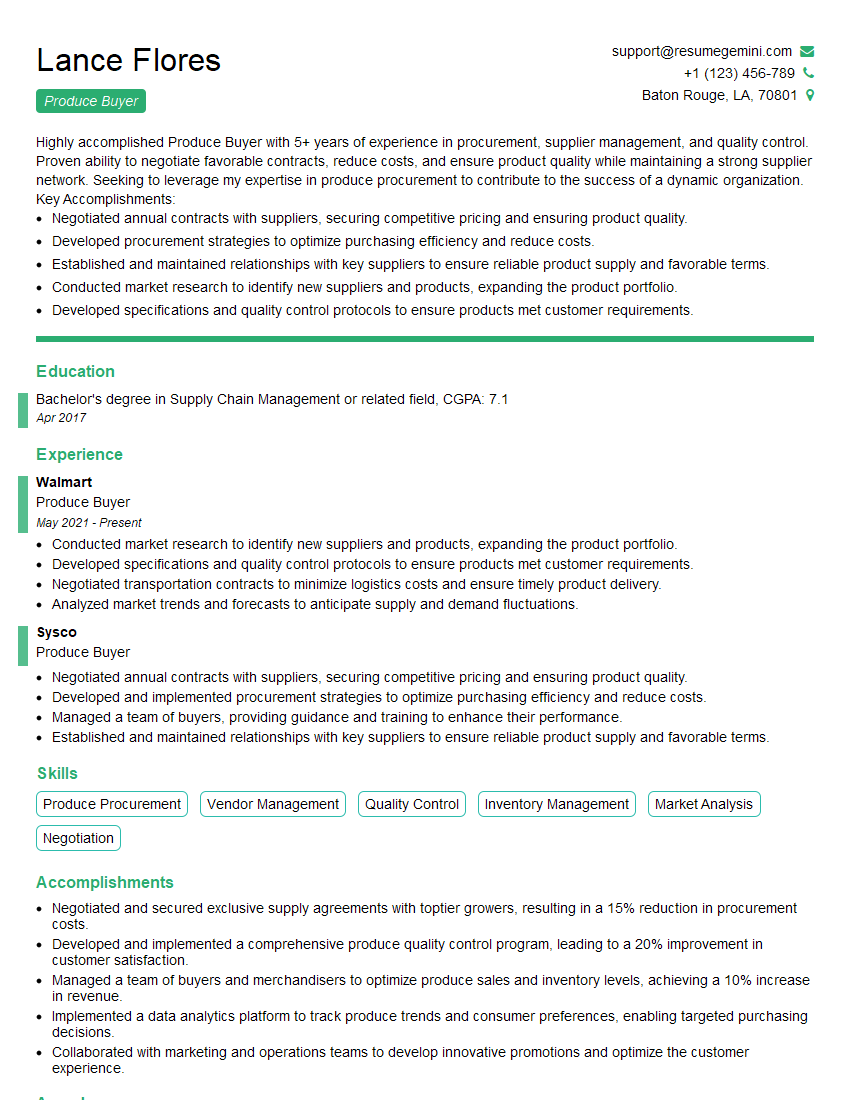
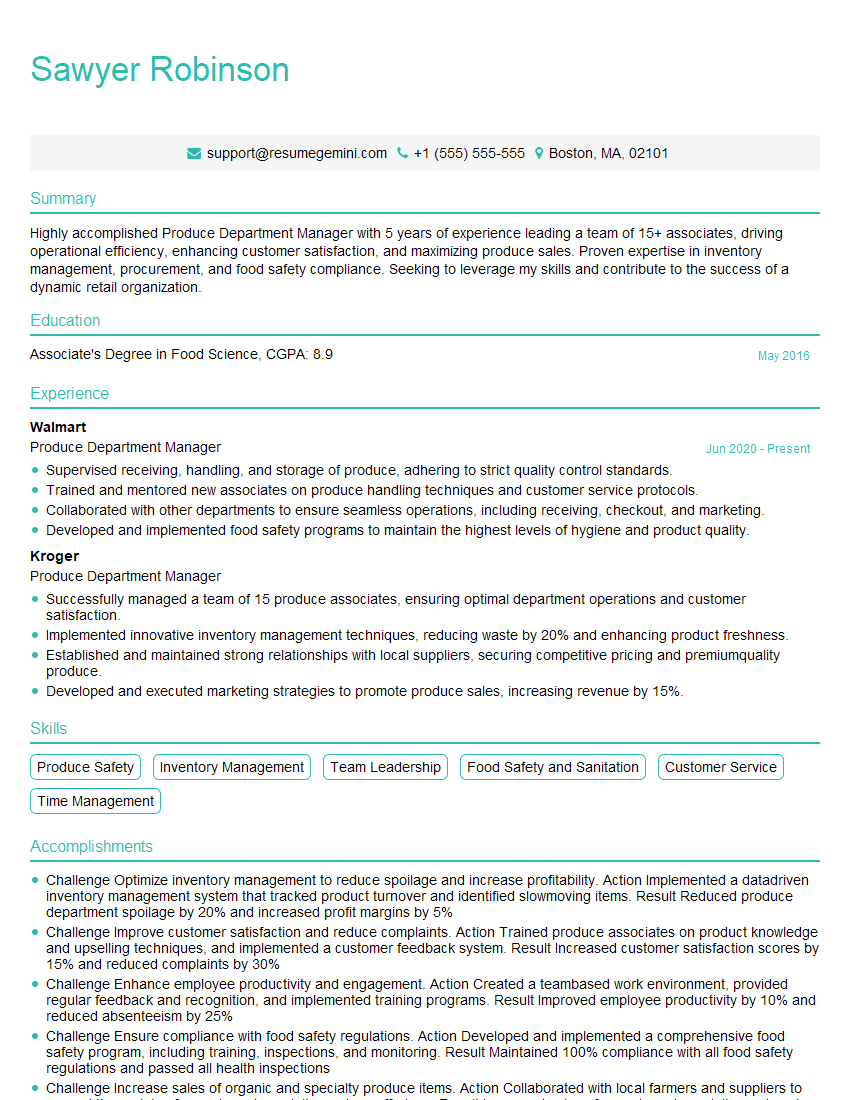
Mastering Produce Supervision opens doors to exciting career advancements, offering increased responsibility, higher earning potential, and opportunities for leadership development. A strong resume is your key to unlocking these opportunities. To ensure your qualifications shine, create an ATS-friendly resume that highlights your skills and experience effectively. ResumeGemini is a trusted resource to help you build a professional and impactful resume that grabs recruiters’ attention. Examples of resumes tailored to Produce Supervision are available to guide you, further enhancing your job search success.
Explore more articles
Users Rating of Our Blogs
Share Your Experience
We value your feedback! Please rate our content and share your thoughts (optional).
What Readers Say About Our Blog
Attention music lovers!
Wow, All the best Sax Summer music !!!
Spotify: https://open.spotify.com/artist/6ShcdIT7rPVVaFEpgZQbUk
Apple Music: https://music.apple.com/fr/artist/jimmy-sax-black/1530501936
YouTube: https://music.youtube.com/browse/VLOLAK5uy_noClmC7abM6YpZsnySxRqt3LoalPf88No
Other Platforms and Free Downloads : https://fanlink.tv/jimmysaxblack
on google : https://www.google.com/search?q=22+AND+22+AND+22
on ChatGPT : https://chat.openai.com?q=who20jlJimmy20Black20Sax20Producer
Get back into the groove with Jimmy sax Black
Best regards,
Jimmy sax Black
www.jimmysaxblack.com
Hi I am a troller at The aquatic interview center and I suddenly went so fast in Roblox and it was gone when I reset.
Hi,
Business owners spend hours every week worrying about their website—or avoiding it because it feels overwhelming.
We’d like to take that off your plate:
$69/month. Everything handled.
Our team will:
Design a custom website—or completely overhaul your current one
Take care of hosting as an option
Handle edits and improvements—up to 60 minutes of work included every month
No setup fees, no annual commitments. Just a site that makes a strong first impression.
Find out if it’s right for you:
https://websolutionsgenius.com/awardwinningwebsites
Hello,
we currently offer a complimentary backlink and URL indexing test for search engine optimization professionals.
You can get complimentary indexing credits to test how link discovery works in practice.
No credit card is required and there is no recurring fee.
You can find details here:
https://wikipedia-backlinks.com/indexing/
Regards
NICE RESPONSE TO Q & A
hi
The aim of this message is regarding an unclaimed deposit of a deceased nationale that bears the same name as you. You are not relate to him as there are millions of people answering the names across around the world. But i will use my position to influence the release of the deposit to you for our mutual benefit.
Respond for full details and how to claim the deposit. This is 100% risk free. Send hello to my email id: lukachachibaialuka@gmail.com
Luka Chachibaialuka
Hey interviewgemini.com, just wanted to follow up on my last email.
We just launched Call the Monster, an parenting app that lets you summon friendly ‘monsters’ kids actually listen to.
We’re also running a giveaway for everyone who downloads the app. Since it’s brand new, there aren’t many users yet, which means you’ve got a much better chance of winning some great prizes.
You can check it out here: https://bit.ly/callamonsterapp
Or follow us on Instagram: https://www.instagram.com/callamonsterapp
Thanks,
Ryan
CEO – Call the Monster App
Hey interviewgemini.com, I saw your website and love your approach.
I just want this to look like spam email, but want to share something important to you. We just launched Call the Monster, a parenting app that lets you summon friendly ‘monsters’ kids actually listen to.
Parents are loving it for calming chaos before bedtime. Thought you might want to try it: https://bit.ly/callamonsterapp or just follow our fun monster lore on Instagram: https://www.instagram.com/callamonsterapp
Thanks,
Ryan
CEO – Call A Monster APP
To the interviewgemini.com Owner.
Dear interviewgemini.com Webmaster!
Hi interviewgemini.com Webmaster!
Dear interviewgemini.com Webmaster!
excellent
Hello,
We found issues with your domain’s email setup that may be sending your messages to spam or blocking them completely. InboxShield Mini shows you how to fix it in minutes — no tech skills required.
Scan your domain now for details: https://inboxshield-mini.com/
— Adam @ InboxShield Mini
support@inboxshield-mini.com
Reply STOP to unsubscribe
Hi, are you owner of interviewgemini.com? What if I told you I could help you find extra time in your schedule, reconnect with leads you didn’t even realize you missed, and bring in more “I want to work with you” conversations, without increasing your ad spend or hiring a full-time employee?
All with a flexible, budget-friendly service that could easily pay for itself. Sounds good?
Would it be nice to jump on a quick 10-minute call so I can show you exactly how we make this work?
Best,
Hapei
Marketing Director
Hey, I know you’re the owner of interviewgemini.com. I’ll be quick.
Fundraising for your business is tough and time-consuming. We make it easier by guaranteeing two private investor meetings each month, for six months. No demos, no pitch events – just direct introductions to active investors matched to your startup.
If youR17;re raising, this could help you build real momentum. Want me to send more info?
Hi, I represent an SEO company that specialises in getting you AI citations and higher rankings on Google. I’d like to offer you a 100% free SEO audit for your website. Would you be interested?
Hi, I represent an SEO company that specialises in getting you AI citations and higher rankings on Google. I’d like to offer you a 100% free SEO audit for your website. Would you be interested?