Unlock your full potential by mastering the most common Produce Troubleshooting interview questions. This blog offers a deep dive into the critical topics, ensuring you’re not only prepared to answer but to excel. With these insights, you’ll approach your interview with clarity and confidence.
Questions Asked in Produce Troubleshooting Interview
Q 1. Describe your experience identifying and resolving issues related to produce spoilage.
Identifying and resolving produce spoilage requires a keen eye for detail and a systematic approach. It starts with understanding the root causes: improper temperature control, damage during handling, excessive moisture, or pest infestation. My experience involves visually inspecting produce for signs of decay – discoloration, wilting, soft spots, or unusual odors. I then trace back the product’s journey, from harvesting to storage and display, looking for weak links in the cold chain. For example, I once discovered that inconsistent refrigeration temperatures in a specific section of our warehouse were causing rapid spoilage of leafy greens. By implementing temperature monitoring and adjusting the refrigeration settings, we significantly reduced spoilage rates. We also utilize FIFO (First In, First Out) inventory management to minimize the risk of produce staying too long on shelves. Addressing spoilage isn’t just about throwing out damaged goods; it’s about preventing it through proactive measures and identifying underlying problems in our handling and storage processes.
Q 2. Explain your process for inspecting incoming produce shipments for quality and safety.
Inspecting incoming produce shipments is crucial for maintaining quality and safety. My process begins with a thorough review of accompanying documentation, verifying the source, variety, quantity, and expected arrival condition. Then, a visual inspection follows. I check for physical damage, signs of disease or pest infestation, proper packaging and labeling, and adherence to temperature requirements (e.g., checking the temperature of refrigerated trucks using a calibrated thermometer). I also assess the overall freshness and appearance. If any discrepancies are found – bruising, unusual discoloration, or temperature deviations – I immediately flag the shipment and notify the supplier. Sampling might be done, depending on the produce type, to ensure the internal quality matches the external appearance. Documentation of all findings, including photos, is crucial for traceability and record-keeping purposes. This meticulous process safeguards our customers by ensuring only high-quality, safe produce makes its way onto our shelves. For example, a recent shipment of strawberries showed signs of mold upon arrival. We immediately rejected it and contacted the supplier to initiate a root cause analysis to prevent future incidents.
Q 3. How do you identify and address common produce pests and diseases?
Identifying and addressing produce pests and diseases requires a multi-pronged approach combining preventative measures and prompt action. Visual inspection is key, looking for signs like discoloration, holes in leaves, insect frass (droppings), or the pests themselves. We use various identification resources, including online databases and expert consultation, to pinpoint the specific pest or disease. Effective control involves implementing Integrated Pest Management (IPM) strategies, focusing on minimizing pesticide use while maximizing effectiveness. This can involve using biological controls (introducing beneficial insects), improving sanitation practices (regular cleaning and disinfection), and employing physical barriers (insect netting). For example, we once experienced a significant aphid infestation on a batch of broccoli. We swiftly implemented a combination of insecticidal soap treatment and the introduction of ladybugs (a natural aphid predator) which effectively controlled the infestation while avoiding potentially harmful chemical pesticides. Careful monitoring and record-keeping are essential to prevent future outbreaks.
Q 4. What methods do you use to maintain optimal temperature and humidity levels for different types of produce?
Maintaining optimal temperature and humidity levels is paramount for extending the shelf life of produce. Different types of produce have varying requirements. Leafy greens, for instance, need higher humidity and cooler temperatures than stone fruits. We utilize a combination of technologies including temperature-controlled storage rooms, humidity-controlled packaging (e.g., modified atmosphere packaging), and regular monitoring with calibrated sensors. Temperature and humidity data loggers are strategically placed within storage areas to record conditions 24/7. The data helps us fine-tune the environment and identify any potential issues. For example, we found that bananas ripened more quickly in areas with slightly higher ethylene gas levels. By adjusting airflow and employing ethylene-absorbing filters, we were able to better manage the ripening process and reduce waste.
Q 5. Describe your experience with implementing and maintaining food safety protocols in a produce environment.
Implementing and maintaining food safety protocols is non-negotiable in a produce environment. We adhere strictly to HACCP (Hazard Analysis and Critical Control Points) principles, identifying potential hazards at each stage of the supply chain. This involves establishing critical control points (CCPs) such as temperature control, sanitation, pest control, and employee hygiene. We have comprehensive Standard Operating Procedures (SOPs) in place, covering everything from handwashing protocols to proper cleaning and sanitizing procedures for equipment. Regular employee training is crucial, ensuring everyone understands their role in maintaining food safety. We conduct internal audits and undergo third-party inspections to ensure compliance with relevant food safety regulations and standards (e.g., GFSI benchmarks). Maintaining meticulous records is also essential for traceability, enabling us to quickly identify the source of any potential contamination. For example, our SOPs require all employees handling produce to wear gloves and hairnets, reducing the risk of contamination.
Q 6. How do you handle situations where there is a potential food safety hazard related to produce?
Handling potential food safety hazards requires immediate and decisive action. The first step is to contain the hazard, preventing further contamination. This could involve isolating the affected produce, removing it from the distribution chain, and thoroughly cleaning and sanitizing any affected areas. We then initiate a thorough investigation to determine the source and extent of the hazard. Depending on the severity, we may conduct a recall of affected products, working closely with regulatory agencies and our customers to ensure transparency and safety. Documenting the entire process, including the steps taken to mitigate the hazard and prevent recurrence, is essential. For example, if a batch of lettuce showed signs of E. coli contamination, we’d immediately initiate a recall and work with the authorities to trace the origin of the contamination, implementing corrective measures to prevent it from happening again. Proactive communication is crucial throughout the process.
Q 7. Explain your experience with implementing and maintaining inventory management systems for produce.
Effective inventory management is vital for minimizing waste and maximizing profitability in the produce industry. We utilize a combination of manual and automated systems. Manual tracking involves daily checks of stock levels, using a first-in, first-out (FIFO) rotation to ensure older produce is used before newer stock. We also employ inventory management software that integrates with our point-of-sale (POS) system, providing real-time data on stock levels and sales. This software allows us to track expiry dates, predict demand, optimize ordering, and minimize losses due to spoilage. Regular inventory reconciliation ensures accuracy and prevents discrepancies. Data analysis helps us to understand sales trends, identify slow-moving items, and adjust our ordering strategies accordingly. For example, by analyzing sales data, we identified a consistent overstocking of certain produce types. We adjusted our orders based on this data, reducing waste and improving our bottom line. The software also sends alerts when stock levels are low, helping prevent shortages.
Q 8. How do you manage produce waste and reduce loss?
Minimizing produce waste is crucial for profitability and sustainability. My approach is multifaceted, focusing on prevention throughout the supply chain. It starts with careful forecasting based on historical sales data and anticipated demand. This prevents overstocking, a major contributor to spoilage.
- Strategic Sourcing: I prioritize suppliers with robust quality control measures and efficient harvesting practices, minimizing damage during transport.
- First In, First Out (FIFO): Implementing a strict FIFO system ensures that older produce is sold before newer stock, reducing the risk of spoilage. We clearly label and date all incoming produce to facilitate this.
- Proper Storage: Utilizing appropriate temperature and humidity controls in storage is vital. For instance, leafy greens thrive in high humidity and cooler temperatures, while tropical fruits require warmer conditions. We use specialized refrigeration units designed to maintain optimal environmental settings for each product type.
- Creative Repurposing: Produce nearing its expiration date can often be used creatively. For example, slightly bruised apples can be used for applesauce or juice, and slightly overripe bananas are perfect for smoothies or banana bread. This extends the shelf life and reduces waste.
- Donation and Composting: Any remaining unsalvageable produce is donated to local food banks or composted, diverting waste from landfills and supporting local communities.
By integrating these strategies, we’ve seen a significant reduction in waste, resulting in cost savings and a positive environmental impact. For example, in my previous role, we reduced waste by 15% within six months through these initiatives.
Q 9. Describe your experience with different produce storage techniques and technologies.
My experience spans a wide range of produce storage techniques, from traditional methods to advanced technologies. Understanding the specific needs of different produce items is paramount.
- Controlled Atmosphere Storage (CAS): This technology modifies the atmosphere within storage facilities to slow down respiration rates and extend the shelf life of fruits and vegetables. It precisely controls oxygen, carbon dioxide, and nitrogen levels. I have extensive experience with setting up and monitoring CAS systems for various produce, like apples and pears.
- Refrigerated Storage: This is the most common method, requiring careful temperature management depending on the produce type. I’ve worked with both conventional refrigeration and specialized units that maintain optimal humidity levels.
- Modified Atmosphere Packaging (MAP): MAP uses packaging films with different gas permeabilities to alter the internal atmosphere around the product, slowing down respiration and preventing microbial growth. This is particularly effective for leafy greens and some fruits.
- Hydrocooling: This technique rapidly cools produce by immersing it in cold water, rapidly reducing its temperature and extending its shelf life. This is commonly used for leafy greens and some vegetables.
Choosing the right storage technique involves considering factors such as the type of produce, its susceptibility to decay, and the desired shelf life extension. For instance, delicate herbs might benefit from MAP, while hardy root vegetables may only require proper cold storage.
Q 10. How do you ensure accurate and efficient labeling and pricing of produce items?
Accurate and efficient labeling and pricing are critical for customer satisfaction and avoiding potential legal issues. My approach involves a combination of technology and meticulous attention to detail.
- Electronic Point of Sale (EPOS) Systems: I use EPOS systems that automatically update prices and provide real-time inventory tracking. This eliminates manual price adjustments and reduces human error. Integration with scales ensures accurate weight-based pricing.
- Clear and Concise Labeling: Labels must clearly state the product name, price per unit, weight or quantity, country of origin (if required), and any relevant allergy information. We use easily readable fonts and visually appealing designs to enhance customer experience.
- Price Monitoring: I regularly monitor competitor prices to ensure our pricing is competitive yet profitable. We use market data analysis tools to predict price fluctuations and adjust pricing strategically.
- Regular Audits: Periodic audits of price tags and labels ensure consistency and accuracy throughout the store, correcting any discrepancies promptly.
By implementing these strategies, we ensure that customers receive clear, accurate information and that our pricing aligns with market conditions and internal profitability goals. This minimizes customer complaints and ensures a smooth checkout process.
Q 11. Explain your knowledge of different types of produce and their specific handling requirements.
My understanding of produce extends to various categories, each with unique handling requirements. Knowing these requirements is crucial for maintaining quality and freshness.
- Fruits: Fruits vary greatly in their ripening processes and storage needs. For example, climacteric fruits (like bananas and avocados) continue to ripen after harvest, requiring careful temperature and humidity control. Non-climacteric fruits (like strawberries and grapes) ripen best on the vine and need gentle handling to prevent damage.
- Vegetables: Vegetables, too, have diverse needs. Leafy greens are highly perishable and require cold storage with high humidity. Root vegetables, on the other hand, can tolerate slightly warmer temperatures but require proper ventilation to prevent spoilage.
- Herbs: Fresh herbs are extremely delicate and prone to wilting. Proper handling, including immediate refrigeration and appropriate packaging, is crucial to maintain their quality.
I also understand the importance of proper sanitation and hygiene procedures throughout the handling process, from receiving produce to displaying it for sale. This prevents cross-contamination and maintains food safety.
Q 12. How do you troubleshoot issues related to produce ripening and maturation?
Troubleshooting ripening and maturation issues requires understanding the physiological processes involved and identifying potential contributing factors. This often involves a combination of observation, testing, and adjusting storage conditions.
- Monitoring Ripening Stages: Regularly assessing the ripening stage of produce through visual inspection and tactile assessment (firmness) allows for early detection of problems. Color changes, texture shifts, and aroma are all indicators.
- Temperature and Humidity Adjustments: Adjusting storage temperatures and humidity can significantly influence ripening rates. If produce is ripening too quickly, lowering the temperature might be necessary. Conversely, if ripening is too slow, increasing temperature (within safe limits) can be considered.
- Ethylene Management: Ethylene gas is a natural plant hormone that accelerates ripening. Controlling ethylene levels through specialized storage techniques or using ethylene absorbents can prevent premature ripening or uneven maturation.
- Identifying Pathogens: Early detection of pathogens (bacteria, fungi) through visual inspection and laboratory testing is crucial. This helps prevent widespread spoilage and requires quick action such as removing affected produce and implementing sanitation protocols.
For example, if a batch of bananas is ripening too fast, I would check the storage temperature, look for potential ethylene sources, and consider moving the bananas to a cooler location. If decay is observed, I would promptly remove the affected fruit to prevent the spread of pathogens.
Q 13. Describe your experience with using various quality control testing methods for produce.
Various quality control methods are used throughout the produce handling process to ensure consistent quality and freshness.
- Visual Inspection: This is the most fundamental method, assessing produce for physical defects like bruises, discoloration, or signs of pest damage. This is often done at multiple stages – upon receipt, during storage, and before display.
- Sensory Evaluation: This involves checking for appropriate aroma, texture, and taste to identify any signs of spoilage or off-flavors. Trained staff can effectively perform these evaluations.
- Firmness Testing: Penetrometers or similar instruments measure the firmness of fruits and vegetables, providing objective data about their maturity and quality. This is particularly useful for assessing the ripeness of fruits.
- Microbial Testing: Laboratory tests can detect the presence of harmful bacteria or fungi, ensuring food safety and preventing potential outbreaks. This is commonly conducted on a sample basis.
The choice of method depends on the type of produce, the stage of the supply chain, and the specific quality attributes being assessed. I use a combination of methods to get a comprehensive view of produce quality.
Q 14. How do you address customer complaints regarding the quality or freshness of produce?
Addressing customer complaints regarding produce quality and freshness requires a professional and empathetic approach. My process focuses on resolving the issue and preventing future occurrences.
- Active Listening: I begin by carefully listening to the customer’s complaint, understanding their concerns, and acknowledging their frustration. Empathy is key.
- Visual Inspection: I personally inspect the produce in question to assess its condition and determine if the complaint is valid. Photos are sometimes helpful to document the issue.
- Offering a Resolution: Depending on the situation, I offer appropriate compensation, such as a refund, replacement, or store credit. The goal is to make the customer feel valued and satisfied.
- Feedback and Improvement: I document the complaint and analyze it to identify potential root causes. This feedback helps improve our processes, storage methods, or supplier relationships to prevent similar issues in the future.
For instance, if a customer complains about wilted spinach, I would first apologize for the inconvenience, then examine the spinach to confirm the issue. I would then offer a refund or replacement and record the incident to investigate the potential causes of wilting within our refrigeration system or supply chain.
Q 15. How do you manage and resolve conflicts between different departments related to produce handling?
Resolving interdepartmental conflicts regarding produce handling requires a collaborative and communicative approach. Think of it like a well-orchestrated symphony – each section (department) plays a vital role, and harmony depends on clear communication and mutual respect. I begin by facilitating open dialogue, bringing together representatives from all relevant departments – receiving, storage, processing, and sales. We jointly identify the root cause of the conflict, focusing on objective data like delivery schedules, storage capacity, and sales forecasts. For example, if the receiving department consistently complains about insufficient storage space impacting timely unloading, we would analyze storage utilization patterns, explore optimizing space allocation, or assess the need for additional storage capacity. Once the root cause is identified, we collaboratively brainstorm solutions, prioritizing those that address the needs of all stakeholders. This approach helps foster a sense of shared ownership and accountability, preventing future conflicts. We then establish clear roles, responsibilities, and communication protocols to maintain ongoing cooperation and address emerging issues promptly.
Career Expert Tips:
- Ace those interviews! Prepare effectively by reviewing the Top 50 Most Common Interview Questions on ResumeGemini.
- Navigate your job search with confidence! Explore a wide range of Career Tips on ResumeGemini. Learn about common challenges and recommendations to overcome them.
- Craft the perfect resume! Master the Art of Resume Writing with ResumeGemini’s guide. Showcase your unique qualifications and achievements effectively.
- Don’t miss out on holiday savings! Build your dream resume with ResumeGemini’s ATS optimized templates.
Q 16. Describe your experience with training staff on proper produce handling and safety procedures.
Training staff on proper produce handling and safety is paramount. I employ a multi-faceted approach combining classroom instruction with hands-on practical training. The classroom sessions cover topics such as proper hygiene practices (handwashing, sanitation), safe handling techniques to prevent contamination (FIFO – First In, First Out, temperature control), and the identification of spoilage indicators. We use engaging visuals, videos, and interactive exercises to ensure effective knowledge retention. For instance, we might role-play scenarios illustrating correct procedures for handling potentially hazardous materials or responding to spills. The practical training involves shadowing experienced staff, followed by supervised independent practice. I also utilize checklists and standardized operating procedures to ensure consistency and adherence to safety protocols. Regular assessments and feedback sessions track employee understanding and identify areas requiring further reinforcement. This continuous improvement loop ensures that our staff consistently adheres to best practices, minimizing risks and maximizing product quality.
Q 17. What are your strategies for optimizing the shelf life of various produce items?
Optimizing shelf life for various produce items involves a holistic approach, focusing on factors like proper storage conditions, pre-harvest practices, and post-harvest handling. For instance, leafy greens benefit significantly from controlled-atmosphere storage (CAS), which modifies the gas composition to slow down respiration and extend shelf life. Think of it like slowing down their metabolism. Similarly, maintaining proper humidity levels is critical for fruits and vegetables, preventing dehydration and wilting. For items like bananas, proper ripening protocols are essential; these involve controlling ethylene gas levels, the natural hormone that triggers ripening. We monitor temperature and humidity continuously using sensors and logging systems. Regular quality checks involve examining produce for signs of spoilage and implementing prompt removal of damaged or deteriorating items. This proactive approach ensures product quality and minimizes waste. By applying these tailored strategies based on the specific needs of each product, we significantly extend the shelf life and maintain freshness, reducing waste and improving profitability.
Q 18. How do you stay up-to-date on industry best practices related to produce handling and safety?
Staying current with industry best practices requires a proactive approach involving continuous learning and networking. I regularly subscribe to relevant industry publications and journals, attending webinars and conferences to stay abreast of the latest research, technologies, and regulations. This involves attending trade shows, participating in professional organizations like the Produce Marketing Association (PMA), and engaging with experts through online forums and workshops. Furthermore, I actively seek out opportunities for professional development, including certifications in food safety and quality management. Keeping up with changes in food safety regulations, for example, is crucial for maintaining compliance and protecting consumers. By maintaining this proactive approach to learning, I ensure that our operations are aligned with the latest best practices, improving efficiency and safeguarding quality.
Q 19. Describe your experience with implementing preventative measures to minimize produce waste.
Minimizing produce waste is a key focus, demanding a multi-pronged strategy targeting every stage of the supply chain. We utilize predictive analytics to forecast demand more accurately, optimizing procurement and reducing overstocking. Implementation of FIFO (First In, First Out) storage practices ensures that older produce is used before newer stock. Regular inventory checks and quality assessments allow for early identification and salvage of items at risk of spoilage. These items can often be used in value-added products like juices or sauces. We also actively promote the use of imperfect produce through internal programs or donations to local charities. Collaborating with suppliers to optimize harvesting and packaging practices, minimizing damage during transit, is vital. Implementing these practices not only reduces waste but also contributes to environmental sustainability and bottom-line profitability. Think of it as a commitment to reducing our environmental footprint while also improving financial performance.
Q 20. How do you manage and control pest infestations in a produce storage facility?
Controlling pest infestations requires a proactive integrated pest management (IPM) approach. This strategy prioritizes prevention through rigorous sanitation, maintaining a clean and well-maintained storage facility. We use regular inspections, checking for signs of infestation. Traps are strategically placed to monitor pest activity and aid in early detection. If an infestation occurs, we employ a targeted approach involving appropriate pest control methods, prioritizing least-toxic options like pheromone traps or biological controls before resorting to chemical pesticides. All pest control measures are carefully documented and aligned with regulations to ensure food safety. Regular training of staff on pest identification and control procedures is essential. This preventative and proactive approach ensures the health and safety of our produce and employees while minimizing environmental impact. The goal isn’t to eliminate all pests, but rather to keep their numbers under control to a level that doesn’t compromise produce quality.
Q 21. Explain your knowledge of different types of produce packaging and their impact on shelf life.
Produce packaging significantly impacts shelf life. Different packaging materials offer varying levels of protection against physical damage, moisture loss, and microbial growth. For example, modified atmosphere packaging (MAP) extends the shelf life of many fruits and vegetables by altering the gas composition within the package. Think of it as creating a mini-controlled atmosphere environment for each piece of produce. Similarly, using breathable films allows for gas exchange while providing protection. We carefully choose packaging materials based on the specific needs of each product, considering factors like permeability, barrier properties, and cost-effectiveness. Sustainable packaging options, such as biodegradable or compostable materials, are increasingly prioritized, reflecting our commitment to environmental responsibility. By making informed choices about packaging, we enhance the quality and freshness of the produce, extending its shelf life and reducing waste. This also translates to a positive impact on our company’s sustainability goals.
Q 22. Describe your experience with using technology to track and monitor produce quality and inventory.
Throughout my career, I’ve leveraged technology extensively to optimize produce quality and inventory management. This involves utilizing a range of tools, from simple spreadsheets to sophisticated software solutions. For instance, I’ve implemented inventory management systems that track produce from the moment it arrives at our facility, recording details such as supplier, quantity, date received, and lot number. This allows for precise traceability, essential for recalls if necessary. Beyond basic inventory, we also utilize temperature monitoring systems with sensors placed strategically throughout our storage facilities. These systems provide real-time data, often transmitted wirelessly to a central dashboard, alerting us immediately to any temperature deviations that could compromise produce quality. This data isn’t just passively monitored; it’s integrated into predictive analytics models that help us optimize our storage strategies and predict potential spoilage before it happens. Furthermore, we use image recognition software to automatically assess the quality of incoming produce, flagging anything that doesn’t meet our standards. This automation significantly improves efficiency and reduces human error. Finally, data-driven insights from these systems allow us to refine our purchasing strategies, improving yield and minimizing waste.
Q 23. How do you assess and manage the risk of produce contamination?
Assessing and managing the risk of produce contamination is paramount. Our approach is multifaceted and starts with a robust supplier selection process. We rigorously vet suppliers, auditing their facilities and practices to ensure adherence to strict food safety standards like GlobalG.A.P. Once produce arrives, we employ a multi-stage inspection process. This involves visual inspection for obvious signs of damage or contamination, followed by testing for microbial contamination using established methods like plate counts and PCR testing. We maintain strict hygiene protocols throughout our facilities, including regular sanitization and employee training on safe handling practices. Our temperature control systems mentioned previously play a critical role in minimizing the risk of bacterial growth. We also conduct regular environmental monitoring of our facilities, testing air and surface samples to identify any potential sources of contamination. Finally, a robust traceability system allows us to quickly identify and isolate the source of any contamination should an incident occur, minimizing its impact. Think of it like a layered security system – each layer provides an additional level of protection against contamination.
Q 24. How do you work with suppliers to ensure the quality and safety of incoming produce?
Building strong relationships with reliable suppliers is fundamental to ensuring the quality and safety of incoming produce. We begin by establishing clear, documented specifications outlining our requirements for each type of produce, including quality standards, acceptable pesticide residues, and traceability information. We conduct regular audits of our suppliers’ facilities to verify compliance with these specifications and industry best practices. Open communication is vital; we maintain regular contact with our suppliers, sharing information and addressing any concerns promptly. We often collaborate with suppliers to implement improvements in their practices, such as introducing new technologies to enhance traceability or improve their food safety programs. Data sharing is another key aspect; we receive detailed information on the origin, handling, and transportation of the produce, allowing us to track potential risks throughout the supply chain. This collaborative approach allows us to build trust and ensure a consistent supply of high-quality, safe produce.
Q 25. Describe your experience in developing and implementing quality control procedures for a specific type of produce.
Let’s take strawberries as an example. For strawberries, we developed a quality control program focusing on three key areas: pre-harvest, harvest, and post-harvest. Pre-harvest, we work closely with our growers to implement best practices in soil management, irrigation, and pest control, aiming to minimize the use of pesticides while maintaining high yields. During harvest, we specify strict guidelines on picking methods to prevent bruising and damage. This includes training and certification for harvesters. Post-harvest, our quality control measures are intensified. We have established specific protocols for washing, sorting, and chilling the strawberries immediately after arrival to maintain their freshness and extend shelf life. We use a colorimeter to objectively assess the ripeness and color of each batch, ensuring consistent quality. Regular sensory evaluations are also conducted by trained personnel to identify any subtle off-flavors or texture issues. Data from each stage of the process is meticulously recorded and analyzed to constantly refine our procedures and identify areas for improvement. This continuous improvement approach is key to maintaining the highest quality strawberries for our customers.
Q 26. Explain how you would identify the root cause of a significant produce spoilage incident.
Identifying the root cause of a significant spoilage incident requires a systematic approach. First, we would carefully document the specifics of the incident: which produce was affected, the extent of spoilage, the storage conditions, and the date of arrival. Then, we meticulously trace the produce back through our supply chain using the lot numbers and tracking information. This might involve reviewing supplier records, transport logs, and internal handling records. We would then conduct environmental testing in the affected storage area to check for contamination sources and compare the temperature logs with our established parameters. Microbial testing of the spoiled produce would be conducted to identify the specific pathogens involved. By carefully analyzing all this data, we could usually pinpoint the root cause. For instance, a recurring spoilage incident in a specific location might point to a problem with the refrigeration unit, while a widespread issue across multiple lots could indicate a problem at the source (supplier). A detailed root cause analysis report will then be generated and corrective actions implemented to prevent recurrence.
Q 27. What are your methods for verifying the accuracy of temperature records for produce storage?
Verifying the accuracy of temperature records is crucial. We utilize calibrated data loggers strategically placed throughout our storage facilities to monitor temperature continuously. These loggers are regularly calibrated against traceable standards, and their calibration certificates are carefully maintained. We also conduct periodic spot checks using independent thermometers to verify the readings of the data loggers. Any discrepancies are thoroughly investigated. The data loggers are tamper-evident, and the data is stored securely and backed up regularly. We routinely examine the temperature data for any anomalies, patterns, or deviations that might indicate problems with our refrigeration system or handling practices. A rigorous process ensures the integrity of our temperature records, providing an accurate reflection of our produce’s storage conditions.
Q 28. Describe your experience with regulatory compliance related to produce safety and handling.
Regulatory compliance is a cornerstone of our operations. We maintain up-to-date knowledge of all applicable food safety regulations, including FDA and USDA guidelines. This involves regular training for our staff on these regulations and implementing procedures to ensure compliance. We maintain detailed records of all our procedures, testing results, and supplier certifications to ensure traceability. We actively participate in industry initiatives aimed at promoting food safety and undergo regular inspections by regulatory authorities. Our quality management system is designed to meet the requirements of relevant standards like SQF (Safe Quality Food) or BRC (British Retail Consortium) providing further assurance of compliance and continuous improvement. Proactive compliance minimizes risks and builds trust with our customers and regulatory agencies.
Key Topics to Learn for Produce Troubleshooting Interview
- Produce Handling and Storage: Understanding proper temperature control, humidity levels, and storage techniques to prevent spoilage and maintain quality. Practical application: Analyzing a scenario where produce has gone bad and determining the likely cause based on storage practices.
- Quality Control and Assessment: Methods for visually inspecting produce for defects, assessing ripeness, and identifying signs of disease or pest infestation. Practical application: Describing your experience in sorting and grading produce based on established quality standards.
- Pest and Disease Identification and Management: Recognizing common pests and diseases affecting various produce types and applying appropriate control measures. Practical application: Explaining your approach to dealing with a specific pest or disease outbreak, including preventative measures.
- Post-Harvest Physiology: Understanding the biological processes that occur after harvesting and how they affect produce quality and shelf life. Practical application: Discussing the impact of ethylene gas on ripening and spoilage.
- Equipment Troubleshooting: Diagnosing and resolving mechanical issues related to produce handling equipment (e.g., conveyors, sorting machines, refrigeration systems). Practical application: Describing your experience in maintaining and repairing specific equipment used in produce handling.
- Food Safety and Sanitation: Implementing and maintaining sanitation protocols to prevent contamination and ensure food safety. Practical application: Explaining your knowledge of HACCP principles and their application in a produce handling environment.
- Waste Reduction and Efficiency: Identifying and implementing strategies to minimize waste throughout the produce handling process. Practical application: Discussing strategies you’ve used to reduce food waste, such as improved inventory management.
Next Steps
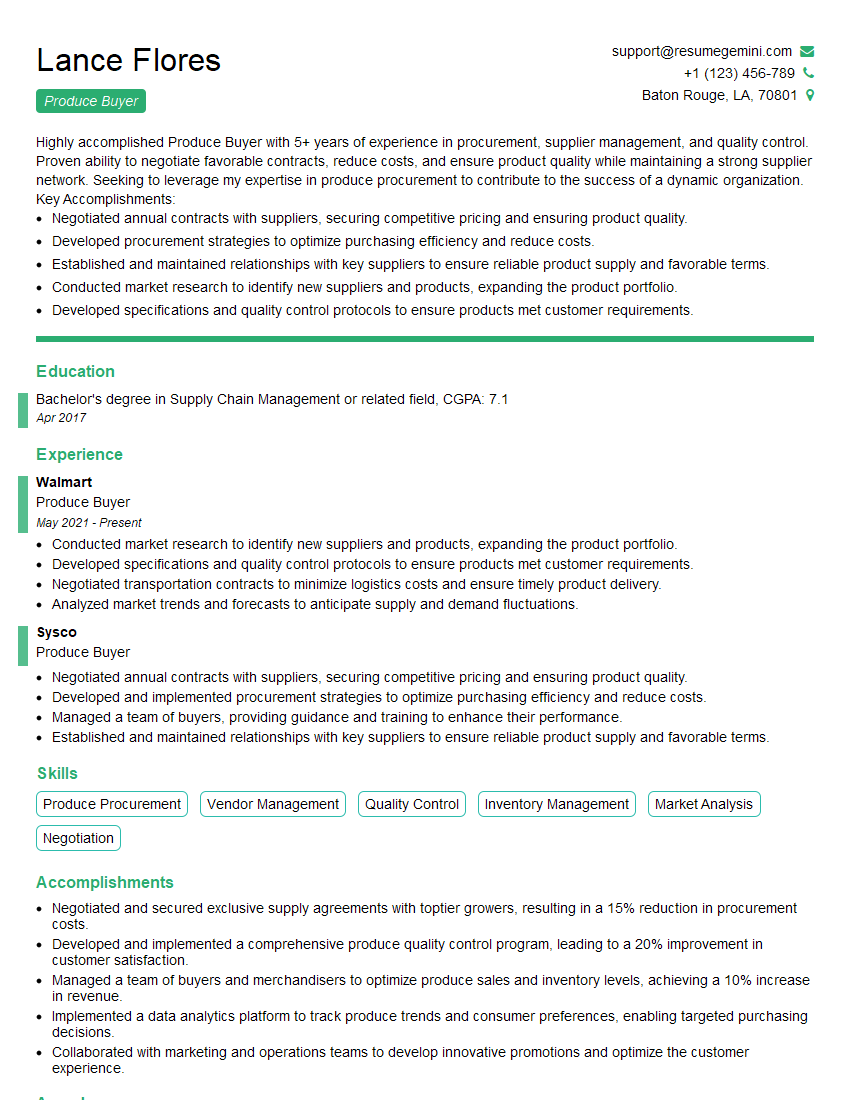
Mastering Produce Troubleshooting is crucial for career advancement in the food industry, opening doors to specialized roles and increased earning potential. An ATS-friendly resume is vital for getting your application noticed by recruiters. To significantly boost your job prospects, leverage ResumeGemini to create a professional and impactful resume that highlights your skills and experience effectively. ResumeGemini provides examples of resumes tailored specifically to Produce Troubleshooting positions, giving you a head start in crafting a winning application.
Explore more articles
Users Rating of Our Blogs
Share Your Experience
We value your feedback! Please rate our content and share your thoughts (optional).
What Readers Say About Our Blog
Attention music lovers!
Wow, All the best Sax Summer music !!!
Spotify: https://open.spotify.com/artist/6ShcdIT7rPVVaFEpgZQbUk
Apple Music: https://music.apple.com/fr/artist/jimmy-sax-black/1530501936
YouTube: https://music.youtube.com/browse/VLOLAK5uy_noClmC7abM6YpZsnySxRqt3LoalPf88No
Other Platforms and Free Downloads : https://fanlink.tv/jimmysaxblack
on google : https://www.google.com/search?q=22+AND+22+AND+22
on ChatGPT : https://chat.openai.com?q=who20jlJimmy20Black20Sax20Producer
Get back into the groove with Jimmy sax Black
Best regards,
Jimmy sax Black
www.jimmysaxblack.com
Hi I am a troller at The aquatic interview center and I suddenly went so fast in Roblox and it was gone when I reset.
Hi,
Business owners spend hours every week worrying about their website—or avoiding it because it feels overwhelming.
We’d like to take that off your plate:
$69/month. Everything handled.
Our team will:
Design a custom website—or completely overhaul your current one
Take care of hosting as an option
Handle edits and improvements—up to 60 minutes of work included every month
No setup fees, no annual commitments. Just a site that makes a strong first impression.
Find out if it’s right for you:
https://websolutionsgenius.com/awardwinningwebsites
Hello,
we currently offer a complimentary backlink and URL indexing test for search engine optimization professionals.
You can get complimentary indexing credits to test how link discovery works in practice.
No credit card is required and there is no recurring fee.
You can find details here:
https://wikipedia-backlinks.com/indexing/
Regards
NICE RESPONSE TO Q & A
hi
The aim of this message is regarding an unclaimed deposit of a deceased nationale that bears the same name as you. You are not relate to him as there are millions of people answering the names across around the world. But i will use my position to influence the release of the deposit to you for our mutual benefit.
Respond for full details and how to claim the deposit. This is 100% risk free. Send hello to my email id: lukachachibaialuka@gmail.com
Luka Chachibaialuka
Hey interviewgemini.com, just wanted to follow up on my last email.
We just launched Call the Monster, an parenting app that lets you summon friendly ‘monsters’ kids actually listen to.
We’re also running a giveaway for everyone who downloads the app. Since it’s brand new, there aren’t many users yet, which means you’ve got a much better chance of winning some great prizes.
You can check it out here: https://bit.ly/callamonsterapp
Or follow us on Instagram: https://www.instagram.com/callamonsterapp
Thanks,
Ryan
CEO – Call the Monster App
Hey interviewgemini.com, I saw your website and love your approach.
I just want this to look like spam email, but want to share something important to you. We just launched Call the Monster, a parenting app that lets you summon friendly ‘monsters’ kids actually listen to.
Parents are loving it for calming chaos before bedtime. Thought you might want to try it: https://bit.ly/callamonsterapp or just follow our fun monster lore on Instagram: https://www.instagram.com/callamonsterapp
Thanks,
Ryan
CEO – Call A Monster APP
To the interviewgemini.com Owner.
Dear interviewgemini.com Webmaster!
Hi interviewgemini.com Webmaster!
Dear interviewgemini.com Webmaster!
excellent
Hello,
We found issues with your domain’s email setup that may be sending your messages to spam or blocking them completely. InboxShield Mini shows you how to fix it in minutes — no tech skills required.
Scan your domain now for details: https://inboxshield-mini.com/
— Adam @ InboxShield Mini
support@inboxshield-mini.com
Reply STOP to unsubscribe
Hi, are you owner of interviewgemini.com? What if I told you I could help you find extra time in your schedule, reconnect with leads you didn’t even realize you missed, and bring in more “I want to work with you” conversations, without increasing your ad spend or hiring a full-time employee?
All with a flexible, budget-friendly service that could easily pay for itself. Sounds good?
Would it be nice to jump on a quick 10-minute call so I can show you exactly how we make this work?
Best,
Hapei
Marketing Director
Hey, I know you’re the owner of interviewgemini.com. I’ll be quick.
Fundraising for your business is tough and time-consuming. We make it easier by guaranteeing two private investor meetings each month, for six months. No demos, no pitch events – just direct introductions to active investors matched to your startup.
If youR17;re raising, this could help you build real momentum. Want me to send more info?
Hi, I represent an SEO company that specialises in getting you AI citations and higher rankings on Google. I’d like to offer you a 100% free SEO audit for your website. Would you be interested?
Hi, I represent an SEO company that specialises in getting you AI citations and higher rankings on Google. I’d like to offer you a 100% free SEO audit for your website. Would you be interested?