Cracking a skill-specific interview, like one for Product Regulatory Affairs, requires understanding the nuances of the role. In this blog, we present the questions you’re most likely to encounter, along with insights into how to answer them effectively. Let’s ensure you’re ready to make a strong impression.
Questions Asked in Product Regulatory Affairs Interview
Q 1. Explain the difference between pre-market and post-market regulatory activities.
Pre-market and post-market regulatory activities represent distinct phases in a product’s lifecycle, focusing on different aspects of compliance and safety. Pre-market activities encompass all regulatory processes undertaken before a product is launched into the market. This includes activities like developing the regulatory strategy, conducting pre-clinical and clinical trials (for pharmaceuticals and medical devices), preparing and submitting regulatory applications (e.g., IND, NDA, PMA), and obtaining necessary approvals or clearances. Think of it as getting the green light before the race begins.
Post-market activities, on the other hand, occur after a product is on the market. These activities are crucial for ensuring continued compliance, monitoring product safety and efficacy, and addressing any post-market issues that may arise. Examples include post-market surveillance, pharmacovigilance (for pharmaceuticals), adverse event reporting, responding to regulatory inspections, and implementing corrective and preventive actions (CAPAs). This is like maintaining the car after you bought it; regular check-ups and maintenance are essential.
- Pre-market Example: Submitting a detailed New Drug Application (NDA) to the FDA, including comprehensive clinical trial data, demonstrating the safety and efficacy of a new drug.
- Post-market Example: Implementing a robust pharmacovigilance system to track and analyze adverse events reported after a drug is launched into the market, and submitting periodic safety update reports to the regulatory authorities.
Q 2. Describe your experience with FDA regulations (21 CFR Part 820, etc.).
I have extensive experience with FDA regulations, particularly 21 CFR Part 820, which outlines the Quality System Regulation (QSR) for medical devices. My experience includes:
- Developing and implementing quality systems compliant with 21 CFR Part 820, including documentation control, design control, CAPA processes, and complaint handling.
- Conducting internal audits to ensure ongoing compliance with the regulations.
- Supporting regulatory inspections by the FDA, including providing documentation and responding to observations.
- Participating in the design and implementation of traceability systems for medical devices, ensuring complete and accurate tracking of product history.
I am also familiar with other relevant FDA regulations, including those pertaining to Good Manufacturing Practices (GMP) for pharmaceuticals and other relevant sections of Title 21 of the Code of Federal Regulations.
For example, in a previous role, I was instrumental in guiding a company through a successful FDA inspection, addressing all observations and achieving a positive outcome. This involved meticulous preparation, thorough documentation review, and effective communication with the FDA inspectors.
Q 3. How do you ensure compliance with GMP and GLP guidelines?
Ensuring compliance with Good Manufacturing Practices (GMP) and Good Laboratory Practices (GLP) is paramount for ensuring product quality and safety. My approach is multifaceted and includes:
- Developing and implementing comprehensive standard operating procedures (SOPs) that align with GMP and GLP guidelines.
- Conducting regular internal audits to identify any deviations from these SOPs and implement corrective actions.
- Maintaining detailed and accurate records of all manufacturing and testing processes.
- Ensuring proper training of personnel on GMP and GLP principles and procedures.
- Collaborating with quality control and quality assurance teams to monitor product quality and identify potential issues.
For instance, in my experience, I’ve implemented a robust CAPA system that not only addressed immediate issues but also prevented future recurrences. This involved root cause analysis, corrective action implementation, and effective verification processes.
Q 4. What is your experience with regulatory submissions (e.g., IND, NDA, PMA)?
I possess significant experience with regulatory submissions, including INDs (Investigational New Drug applications), NDAs (New Drug Applications), and PMAs (Premarket Approvals) for medical devices. My experience encompasses:
- Preparing and submitting complete and accurate regulatory documentation, ensuring compliance with all applicable regulations and guidelines.
- Managing the entire submission process, from initial planning to final submission and follow-up.
- Responding to regulatory agency queries and requests for additional information in a timely and efficient manner.
- Tracking the status of submissions and proactively addressing potential issues.
For example, I successfully led the NDA submission for a novel oncology drug, navigating complex regulatory requirements and successfully obtaining approval from the FDA. This involved extensive coordination with cross-functional teams, meticulous documentation, and proactive communication with the regulatory agency.
Q 5. How familiar are you with ISO 13485 and ISO 9001 standards?
I am very familiar with ISO 13485:2016 (Medical devices – Quality management systems – Requirements for regulatory purposes) and ISO 9001:2015 (Quality management systems – Requirements). My understanding extends beyond theoretical knowledge; I’ve been directly involved in:
- Implementing and maintaining ISO 13485 compliant quality management systems within medical device companies.
- Conducting internal audits to ensure ongoing compliance with both ISO 13485 and ISO 9001 standards.
- Supporting external audits conducted by notified bodies.
- Understanding the interrelation between ISO standards and regulatory requirements, such as FDA QSR.
In a past project, I helped a medical device manufacturer achieve ISO 13485 certification, leading to enhanced credibility and market access. This involved comprehensive gap analysis, implementation of corrective actions, and effective documentation of the quality management system.
Q 6. Describe your experience with regulatory inspections.
I have extensive experience with regulatory inspections, both from the perspective of the company being inspected and the regulatory agency. This experience has given me a comprehensive understanding of the process, including:
- Preparing for inspections by ensuring all required documents are readily available and compliant.
- Managing the inspection process, including facilitating communication between inspectors and company personnel.
- Responding to inspection observations in a timely and appropriate manner.
- Implementing corrective and preventive actions to address any identified deficiencies.
For example, during an FDA inspection of a pharmaceutical manufacturing facility, I successfully guided the team through the process, ensuring complete transparency and addressing all inspector concerns promptly. This resulted in a successful inspection with minimal observations.
Q 7. Explain your understanding of risk management in regulatory affairs.
Risk management is an integral part of regulatory affairs. It’s about proactively identifying, assessing, and mitigating potential risks that could impact product safety, efficacy, compliance, or market access. My approach to risk management involves:
- Identifying potential risks throughout the product lifecycle, from research and development to post-market surveillance. This includes regulatory risks (e.g., changes in regulations), technical risks (e.g., manufacturing defects), and business risks (e.g., market competition).
- Assessing the likelihood and severity of these risks using various risk assessment methodologies, such as Failure Mode and Effects Analysis (FMEA).
- Developing and implementing risk mitigation strategies to reduce the likelihood or severity of identified risks. This could involve design changes, process improvements, enhanced testing, or improved communication strategies.
- Monitoring the effectiveness of risk mitigation strategies and updating them as needed.
In practice, I’ve utilized FMEA to identify and mitigate potential risks associated with the design and manufacturing of medical devices, ensuring that appropriate controls were in place to prevent failures and maintain product safety.
Q 8. How do you handle regulatory changes and updates?
Handling regulatory changes effectively requires a proactive and systematic approach. Think of it like navigating a constantly shifting landscape; you need a reliable map and a compass. My strategy involves several key steps:
- Establish a robust monitoring system: I subscribe to reputable regulatory databases and newsletters (e.g., FDA, EMA, Health Canada websites) and utilize specialized software to track changes in regulations relevant to our product portfolio. This ensures I’m alerted to upcoming changes or updates promptly.
- Conduct thorough impact assessments: Once a change is identified, I assess its impact on our products and processes. This involves reviewing product labels, technical files, and manufacturing processes to determine any necessary updates or modifications.
- Develop and implement mitigation plans: Based on the impact assessment, I develop a plan to address the changes. This might include updating labels, revising technical documentation, resubmitting notifications, or adjusting manufacturing processes. Clear timelines and responsibilities are crucial.
- Collaborate effectively: Regulatory changes often impact multiple teams (e.g., R&D, manufacturing, marketing). I actively collaborate with these teams to ensure a coordinated and effective response. This includes providing training and clear communication to ensure everyone is informed and aligned.
- Maintain comprehensive records: I meticulously document all regulatory changes, our assessments, and the actions taken. This is crucial for traceability and audit purposes.
For example, when the EU’s Medical Device Regulation (MDR) came into effect, we had to conduct a thorough review of all our medical devices, update our technical documentation to meet the new requirements, and obtain new certificates. This involved a significant team effort, but our proactive monitoring and well-defined processes enabled a smooth transition.
Q 9. What is your experience with the different stages of product lifecycle management from a regulatory perspective?
My experience spans all phases of product lifecycle management (PLM) from a regulatory perspective. It’s crucial to think of regulatory compliance as an integrated part of the entire process, not just an afterthought.
- Research & Development (R&D): I work closely with R&D teams from the initial concept stage to ensure that regulatory considerations (e.g., safety, efficacy, labeling requirements) are integrated into the design and development process. This helps to prevent costly revisions later.
- Pre-market Submission and Approval: I prepare and submit all necessary regulatory documentation to obtain approvals from relevant authorities. This includes preparing technical files, conducting risk assessments, and managing interactions with regulatory agencies.
- Manufacturing and Quality Control: I ensure that manufacturing processes comply with relevant Good Manufacturing Practices (GMP) and other regulations. This involves reviewing manufacturing procedures, conducting audits, and managing quality control documentation.
- Post-market Surveillance: After product launch, I monitor product performance and report any adverse events or safety concerns to regulatory agencies as required. This includes managing post-market surveillance activities, conducting periodic reviews, and addressing any identified issues.
- Product Lifecycle End: I manage the regulatory aspects of product discontinuation, including notifying relevant authorities and managing any required documentation.
For instance, in the pharmaceutical industry, I’ve been involved in preparing Investigational New Drug (IND) applications and New Drug Applications (NDA) for new drug candidates, ensuring compliance throughout the entire process.
Q 10. Describe a challenging regulatory situation you’ve faced and how you resolved it.
One challenging situation involved a recall of a medical device due to a manufacturing defect. The defect was subtle, making early detection difficult. The key here was a rapid, transparent response.
- Immediate Containment: We immediately ceased production and distribution of the affected product. This was a critical first step to prevent further harm.
- Root Cause Analysis: A comprehensive investigation was launched to identify the root cause of the defect. We used a structured approach (e.g., fishbone diagrams, 5 Whys) to systematically analyze the manufacturing process.
- Corrective and Preventive Actions (CAPA): Based on the root cause analysis, we implemented corrective actions to rectify the immediate defect and preventive actions to prevent similar defects from recurring in the future. This included retraining staff, upgrading equipment, and revising manufacturing procedures.
- Regulatory Notification: We immediately notified the relevant regulatory authorities, providing detailed information about the defect, the recall plan, and the corrective actions being taken. Transparency was essential.
- Communication and Transparency: We communicated proactively with our customers and stakeholders, ensuring clear and concise information about the recall. This built trust and minimized negative impact.
The successful resolution of this situation emphasized the importance of a proactive approach to quality control and a rapid, transparent response to unexpected issues.
Q 11. How do you stay current with evolving regulatory requirements?
Staying current with regulatory requirements is an ongoing process. It’s like keeping your software updated—regular maintenance is essential.
- Regulatory Databases and Newsletters: I subscribe to regulatory databases (e.g., FDA’s website, EMA’s website) and newsletters that provide updates on changes and new regulations. This proactive monitoring is key.
- Industry Associations and Conferences: I actively participate in industry associations and attend conferences. This helps me network with other professionals and stay abreast of emerging trends and challenges.
- Regulatory Consultants and Experts: When faced with complex or unclear regulatory requirements, I consult with regulatory experts or specialists to obtain clarification and guidance.
- Internal Training and Knowledge Sharing: I ensure my team receives regular training on current regulations and best practices. This creates a strong foundation of shared knowledge within the organization.
For example, attending conferences and workshops helps me stay informed about emerging technologies and their regulatory implications. This enables me to guide our product development accordingly.
Q 12. What is your experience with international regulatory harmonization?
International regulatory harmonization is the process of creating consistent regulatory requirements across different countries. While full harmonization is a long-term goal, progress is being made, which simplifies global product launches.
My experience involves navigating the differences between various regulatory frameworks (e.g., FDA in the US, EMA in the EU, Health Canada). This requires a deep understanding of the specific requirements of each region. For example, the requirements for clinical trials and post-market surveillance can differ significantly across countries.
I have experience using strategies like the use of Mutual Recognition Agreements (MRAs) and other international cooperation mechanisms to streamline the regulatory process and reduce duplication of efforts. Understanding the nuances of these agreements is critical for efficient global product registration.
Q 13. Explain your understanding of labeling and packaging regulations.
Labeling and packaging regulations are crucial for consumer safety and product information accuracy. These regulations vary significantly depending on the product type and the target market. It’s like providing a crucial passport for your product to enter a market.
My understanding encompasses:
- Content Requirements: This includes legally mandated information such as product name, ingredients, manufacturer information, net weight, warnings, and usage instructions. The specific requirements vary drastically, depending on whether you are selling cosmetics, food, drugs or medical devices.
- Format and Presentation: Regulations often dictate the font size, language, and placement of information on the label. For example, certain warnings may need to be prominently displayed.
- Packaging Materials: Regulations may restrict the use of certain materials, particularly those that could contaminate the product or pose a risk to consumers (e.g., restrictions on the use of certain plastics in food packaging).
- Artwork and Design: Some jurisdictions have specific requirements regarding the design and appearance of labels, aimed at avoiding misleading or deceptive claims.
Non-compliance with labeling and packaging regulations can lead to product recalls, fines, or even legal action. Therefore, meticulous attention to detail is necessary.
Q 14. How do you manage regulatory documentation?
Effective regulatory documentation management is vital for demonstrating compliance and ensuring traceability. This involves creating a well-organized and easily accessible system.
- Document Control System: I utilize a document control system (often a software solution) to manage regulatory documents. This system tracks document versions, ensures that only the most up-to-date versions are used, and maintains an audit trail of all changes.
- Electronic Document Management: I prefer electronic document management to facilitate easy access, version control, and searchability. This reduces the risk of misplacing critical documents.
- Secure Storage: All regulatory documents are stored securely, both electronically and in some cases physically, to protect confidential information and ensure data integrity.
- Regular Audits and Reviews: Regular audits and reviews are conducted to ensure that the documentation system is functioning correctly, documents are current and complete, and all regulatory requirements are met. This helps identify potential gaps proactively.
Think of it like maintaining a meticulously organized library; you need a cataloging system, secure shelving, and regular inventory checks to ensure that every book (document) is in its place and accessible when needed.
Q 15. What is your experience with adverse event reporting?
Adverse event reporting is the process of documenting and communicating any unexpected or unintended adverse reaction to a medical product. This includes drugs, medical devices, biologics, and even dietary supplements. My experience encompasses the entire lifecycle, from initial case receipt and assessment through causality assessment, regulatory reporting, and internal tracking. I’ve been involved in the detailed investigation of serious adverse events, utilizing tools like MedDRA coding to ensure consistent and accurate reporting to health authorities like the FDA (in the US) or the EMA (in Europe). For example, I once investigated a potential link between a new drug and a rare type of liver damage. This involved meticulously reviewing patient medical records, performing literature reviews to assess the plausibility of a causal relationship, and finally generating a comprehensive report to satisfy regulatory requirements and inform risk management strategies.
I am proficient in using various reporting systems and databases, ensuring timely and accurate submission of reports, adhering to strict deadlines and regulatory guidelines. This includes utilizing systems for managing individual case safety reports (ICSRs), aggregated reports and periodic safety update reports (PSURs).
Career Expert Tips:
- Ace those interviews! Prepare effectively by reviewing the Top 50 Most Common Interview Questions on ResumeGemini.
- Navigate your job search with confidence! Explore a wide range of Career Tips on ResumeGemini. Learn about common challenges and recommendations to overcome them.
- Craft the perfect resume! Master the Art of Resume Writing with ResumeGemini’s guide. Showcase your unique qualifications and achievements effectively.
- Don’t miss out on holiday savings! Build your dream resume with ResumeGemini’s ATS optimized templates.
Q 16. Describe your understanding of vigilance systems.
Vigilance systems are the backbone of post-market safety monitoring for medical products. These systems are designed to collect, assess, and act upon reports of adverse events. They are crucial for detecting safety signals, estimating risks, and implementing corrective actions to protect patients. My understanding encompasses the design, implementation, and maintenance of these systems. This involves defining the processes for receiving and reviewing adverse event reports, implementing appropriate data management and analysis procedures, and establishing communication channels with regulatory agencies. A well-designed vigilance system uses both internal and external data sources (e.g., spontaneous reports, literature monitoring, and clinical trial data).
For instance, I helped develop and improve a company’s pharmacovigilance system by integrating advanced data analytics tools to identify potential safety signals more effectively. This resulted in faster detection of emerging safety concerns and proactive regulatory communication.
Q 17. How familiar are you with the process of obtaining regulatory approvals?
I have extensive experience with obtaining regulatory approvals for various medical products. This involves understanding the specific requirements of each regulatory agency, preparing comprehensive submissions, and managing the interactions with regulatory reviewers. The process typically involves a multi-stage process, beginning with pre-submission meetings to discuss the regulatory strategy and the required data package, followed by formal submission of the application (e.g., NDA, MAA, 510(k)). This includes managing the scientific review of the data and responding to queries and requests from regulatory agencies until final approval is granted.
I’ve been involved in securing approvals for various products, including novel drugs, medical devices, and biologics. In one particular project, we successfully navigated a complex regulatory landscape by effectively addressing the reviewers’ concerns through a collaborative approach. This demonstrates my ability to interpret regulatory guidelines, anticipate potential issues, and communicate effectively with regulatory bodies.
Q 18. Explain your understanding of the different types of regulatory submissions.
Regulatory submissions vary significantly depending on the product type (drug, device, biologic) and the stage of product lifecycle (pre-market, post-market). There are submissions for initial marketing authorization (e.g., New Drug Application (NDA) for drugs, Marketing Authorization Application (MAA) for Europe, 510(k) for medical devices), supplements to existing approvals (e.g., variations, supplements), and post-market submissions such as periodic safety update reports (PSURs), and variations to address post market issues. Each submission type has very specific requirements regarding content, format, and timelines.
NDA/MAA: Comprehensive submission for initial marketing authorization of a new drug.510(k): Submission for premarket notification of a medical device.PSUR: Periodic safety update report, summarizing post-market safety data.Variations: Changes made to an already approved product.
Understanding these nuances is crucial for efficient and successful regulatory interactions.
Q 19. Describe your experience with regulatory agency interactions.
My experience with regulatory agency interactions spans many years and diverse product categories. I am adept at building and maintaining strong working relationships with regulatory reviewers. This involves clear, concise, and timely communication. I understand how to effectively present complex scientific data, addressing potential concerns proactively and professionally. This often includes responding to requests for information (RFIs) or deficiency letters in a timely and thorough manner. The ability to understand their perspective and preemptively address potential concerns is essential.
For example, in one instance, we successfully addressed a critical question raised by a regulatory agency during the review of a new drug application, avoiding potential delays in the approval process. This involved assembling a strong team, performing additional analyses, and preparing a comprehensive response that satisfied all regulatory requirements.
Q 20. What is your experience with post-market surveillance activities?
Post-market surveillance is a critical component of ensuring the ongoing safety and efficacy of medical products. My experience in this area includes the design and implementation of surveillance plans, data collection, analysis, and reporting of findings to regulatory authorities. This includes utilizing various data sources such as spontaneous adverse event reports, literature monitoring, and post-market clinical studies. Effective post-market surveillance involves establishing robust systems for detecting, investigating, and mitigating safety signals. It is also vital to ensure compliance with ongoing regulatory requirements.
One example is implementing a risk management plan for a medical device after it received market authorization. This included actively monitoring safety reports, conducting post-market clinical studies, and updating the product labeling as needed to reflect new safety information. This demonstrated my commitment to patient safety and my ability to proactively manage product safety risks throughout the product life cycle.
Q 21. How do you prioritize competing regulatory tasks?
Prioritizing competing regulatory tasks requires a structured and methodical approach. I use a risk-based prioritization system, considering factors such as regulatory deadlines, potential impact on patients, and the likelihood of regulatory repercussions for non-compliance. This involves clearly identifying and documenting all outstanding tasks, assigning each a priority level based on its urgency and importance, and establishing realistic timelines for completion. Effective time management and delegation skills are also essential.
I often use tools such as Gantt charts to visualize project timelines and ensure all tasks are completed on time. Moreover, effective communication with stakeholders is crucial to managing expectations and ensuring alignment on priorities. In a fast-paced environment, flexibility and adaptability are essential to manage unexpected changes.
Q 22. Explain your experience with the use of regulatory information management systems.
My experience with regulatory information management systems (RIMS) spans several years and various platforms. A RIMS is crucial for efficiently managing the vast amount of regulatory data involved in product development and lifecycle management. I’ve worked with both commercially available systems like Veeva Vault and custom-built solutions. My expertise includes data entry, data integrity management, ensuring compliance with 21 CFR Part 11 (where applicable), and leveraging the system’s functionalities for tasks like document control, change management, and reporting. For example, in a previous role, I utilized Veeva Vault to manage thousands of documents related to medical device submissions, significantly reducing the time spent on manual document searches and version control. This improved efficiency allowed us to focus more on strategic regulatory activities. I also have experience implementing and optimizing RIMS workflows, streamlining processes, and training colleagues on best practices for data management within the system.
In another project, I was responsible for migrating regulatory data from an older system to a new, more robust RIMS. This involved careful data validation and mapping to ensure data integrity throughout the transition. My experience also includes designing and implementing custom reports to track regulatory milestones and compliance metrics, which were instrumental in proactive risk management and strategic decision-making.
Q 23. How do you communicate complex regulatory information to non-technical audiences?
Communicating complex regulatory information to non-technical audiences requires a clear, concise, and relatable approach. I avoid jargon whenever possible, using simple language and analogies to explain technical concepts. Visual aids like flowcharts, diagrams, and infographics are incredibly effective in simplifying complex information. For instance, when explaining the process of obtaining a medical device approval, I often use a visual roadmap to illustrate the various stages, timelines, and regulatory submissions involved. This makes the process easier to understand for stakeholders who are not familiar with the regulatory landscape.
I also tailor my communication style to the audience. When speaking to executive leadership, I focus on high-level summaries and key implications. When addressing a team, I engage in more detail and encourage questions. Furthermore, I always ensure that my communication is accurate and avoids oversimplification that could lead to misinterpretations. Regular feedback sessions and post-communication summaries help confirm understanding and address any remaining questions.
Q 24. Describe your experience with conducting regulatory gap assessments.
Conducting regulatory gap assessments is a critical part of ensuring compliance. It involves a systematic review of a product or process to identify any discrepancies between current practices and applicable regulations. This process typically begins by clearly identifying all relevant regulations and standards. Then, a detailed comparison is made between the regulatory requirements and the company’s current operations. Any identified gaps are documented and prioritized based on their potential risk. This is followed by developing and implementing corrective action plans to address the gaps, ensuring compliance.
For example, during a recent regulatory gap assessment for a new medical device, we identified a gap in our post-market surveillance plan. Our assessment highlighted the need for enhanced data collection procedures to ensure long-term monitoring of device performance and safety. We promptly developed and implemented a revised post-market surveillance plan to address this gap, ensuring compliance with relevant regulations and minimizing potential risks.
I use a structured approach, involving checklists, templates, and risk matrices to ensure thoroughness and consistency in my gap assessments. Collaboration with cross-functional teams is essential to gather comprehensive information and ensure buy-in for implemented solutions.
Q 25. How familiar are you with the principles of quality management systems (QMS)?
I am very familiar with the principles of quality management systems (QMS), specifically ISO 9001 and 13485 (for medical devices). Understanding QMS is fundamental to regulatory compliance. I have practical experience working within organizations that have implemented these standards, and I understand the core elements including risk management, internal audits, corrective and preventive actions (CAPA), document control, and management review.
My understanding goes beyond simply knowing the standards; I know how to apply these principles to daily operations and regulatory submissions. For instance, I have personally been involved in developing and executing internal audits to ensure compliance with QMS requirements and identifying areas for improvement. I’ve also participated in root cause analysis and CAPA activities to address non-conformances and prevent their recurrence.
The ability to demonstrate robust QMS implementation is crucial for demonstrating compliance with regulatory authorities and for maintaining a strong reputation for quality.
Q 26. Explain your experience with developing and implementing regulatory strategies.
Developing and implementing regulatory strategies requires a comprehensive understanding of the regulatory landscape and a proactive approach to risk management. My experience involves collaborating with cross-functional teams to develop strategies aligned with business objectives and regulatory requirements. This includes anticipating regulatory changes and adapting strategies accordingly.
For example, I was instrumental in developing a regulatory strategy for the launch of a novel medical device in several international markets. This involved careful analysis of regulatory pathways in each target market, considering differences in requirements and timelines. We also anticipated potential regulatory hurdles and developed contingency plans to minimize delays and ensure a successful product launch. The strategy included identifying and securing necessary approvals, compliance testing, and post-market surveillance plans.
A key aspect of effective regulatory strategy is the ability to balance compliance requirements with business goals to optimize timelines and resource allocation. I emphasize clear communication and data-driven decision-making throughout the process.
Q 27. What is your experience with working with cross-functional teams on regulatory matters?
I have extensive experience working with cross-functional teams on regulatory matters. Effective collaboration is crucial for navigating complex regulatory landscapes. I’ve worked closely with teams including R&D, engineering, quality assurance, marketing, and legal to ensure alignment on regulatory strategies and compliance. My approach emphasizes clear communication, proactive engagement, and a shared understanding of regulatory requirements and their implications for the product development and lifecycle.
In a recent project involving a product recall, I successfully coordinated a cross-functional team to manage the recall process. This involved close collaboration with legal, manufacturing, and customer service to ensure a timely and compliant response, minimizing disruption and protecting the company’s reputation. Strong communication and collaborative problem-solving were critical to the success of this project.
I am adept at facilitating consensus amongst diverse teams, resolving conflicts, and keeping everyone focused on the shared goal of regulatory compliance.
Q 28. Describe your experience in preparing and responding to regulatory inquiries.
Preparing for and responding to regulatory inquiries requires meticulous record-keeping, a strong understanding of relevant regulations, and the ability to communicate clearly and concisely. I have extensive experience preparing and submitting responses to regulatory agencies (e.g., FDA, EMA, etc.), addressing their questions and providing supporting documentation. This often requires careful analysis of regulatory requirements, internal processes, and product-specific data.
For example, I have successfully responded to several FDA inquiries regarding post-market surveillance data for a medical device. This involved gathering and reviewing relevant data, preparing a comprehensive response addressing all aspects of their inquiry, and ensuring the response was both accurate and aligned with applicable regulations.
Timely and accurate responses are crucial for maintaining a positive relationship with regulatory agencies and minimizing potential risks. My approach emphasizes thorough investigation, clear documentation, and professional communication to ensure effective and compliant responses.
Key Topics to Learn for Product Regulatory Affairs Interview
- Regulatory Landscape: Understanding the complexities of regulations (e.g., FDA, EMA, Health Canada) relevant to your industry and product type. This includes navigating different regulatory pathways and timelines.
- Product Lifecycle Management: Applying regulatory knowledge throughout the entire product lifecycle, from initial concept and development to post-market surveillance and potential recalls. Practical application involves anticipating potential regulatory hurdles and proactively mitigating risks.
- Compliance & Documentation: Mastering the creation and maintenance of comprehensive regulatory documentation, including submissions, reports, and internal processes. This includes understanding Good Documentation Practices (GDP) and ensuring regulatory compliance at all stages.
- Risk Management: Identifying and assessing potential regulatory risks associated with product development, manufacturing, and distribution. Practical applications involve developing risk mitigation strategies and implementing effective quality control measures.
- Quality Systems & Auditing: Understanding and applying relevant quality systems (e.g., ISO 13485, GMP) and their importance in regulatory compliance. This includes preparing for and participating in regulatory audits.
- Global Regulatory Strategies: Navigating the complexities of international regulations and harmonization efforts. Practical application involves adapting product development and documentation to meet diverse regulatory requirements across different markets.
- Technical Writing & Communication: Clearly and concisely communicating complex regulatory information to both technical and non-technical audiences. This involves preparing compelling regulatory submissions and effectively responding to agency requests.
Next Steps
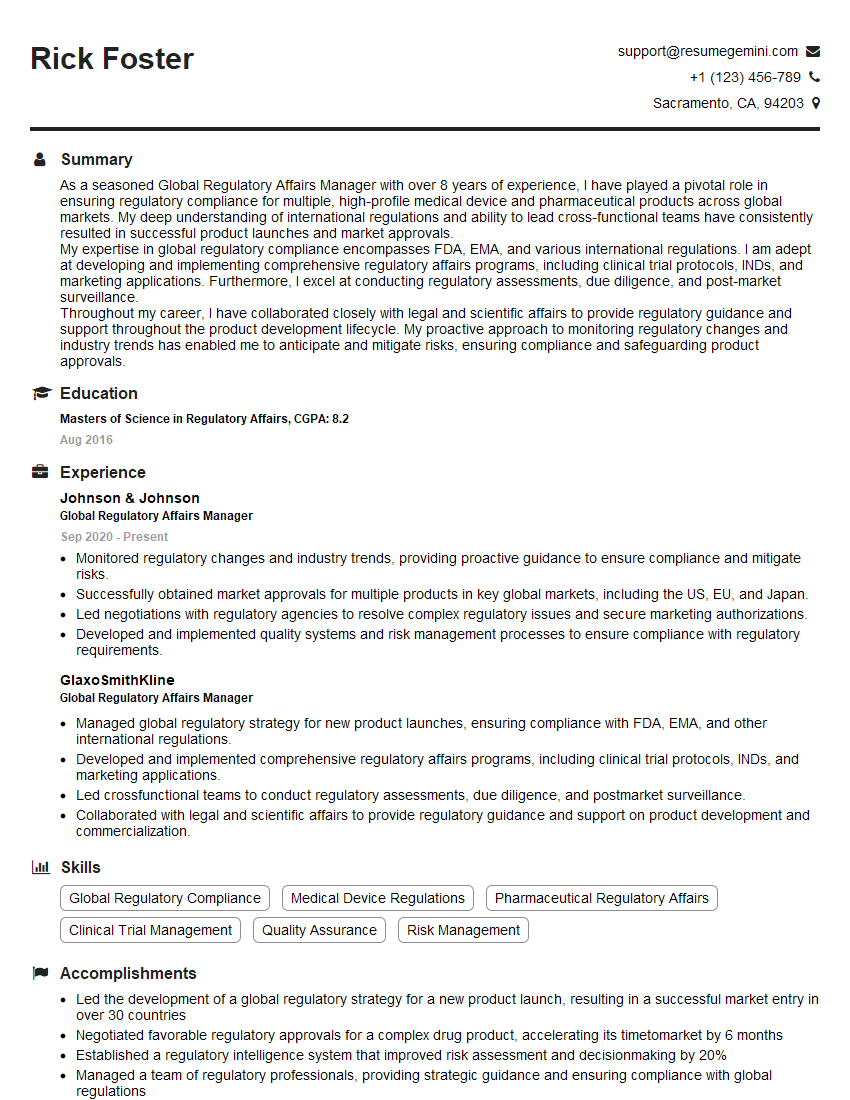
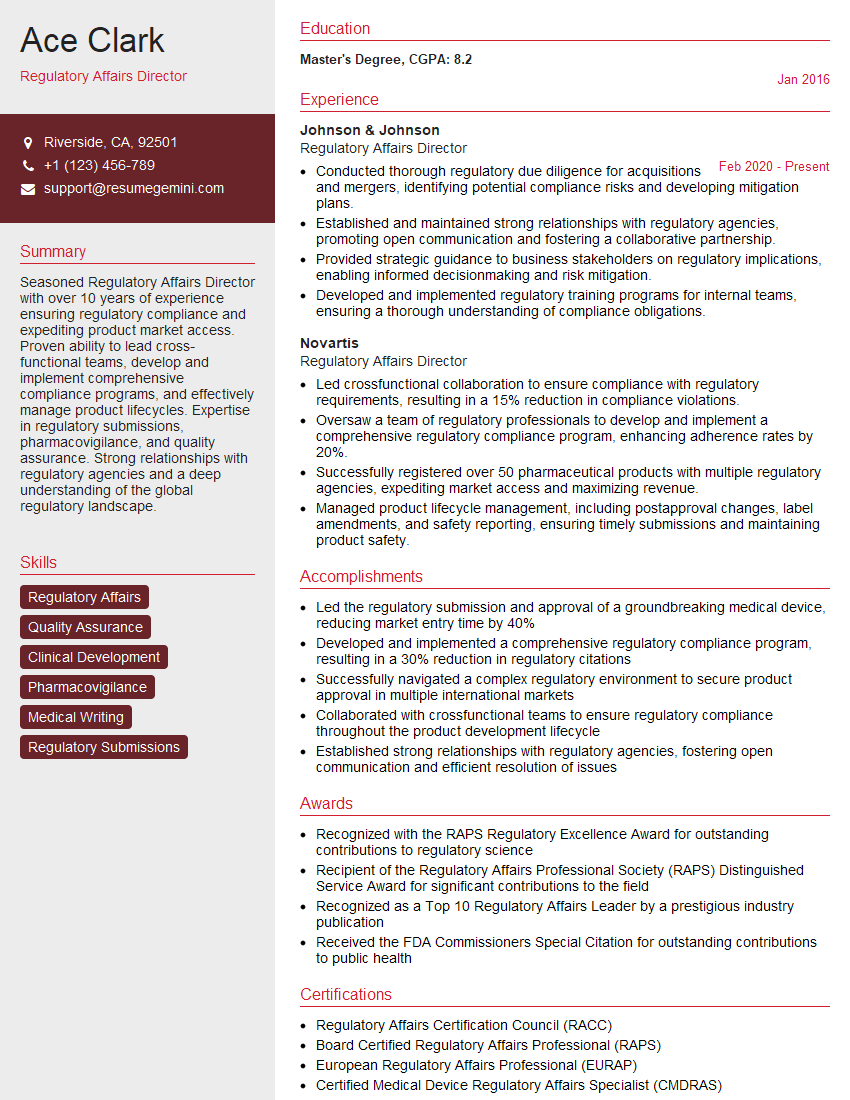
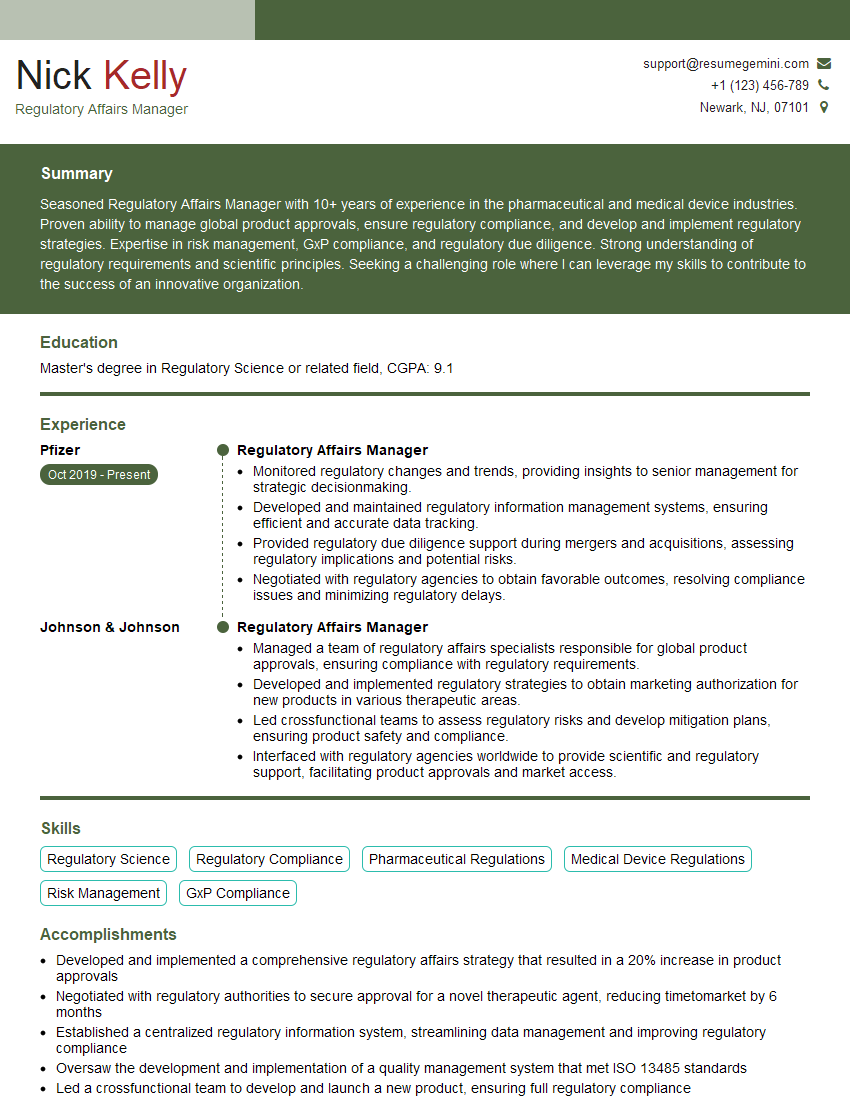
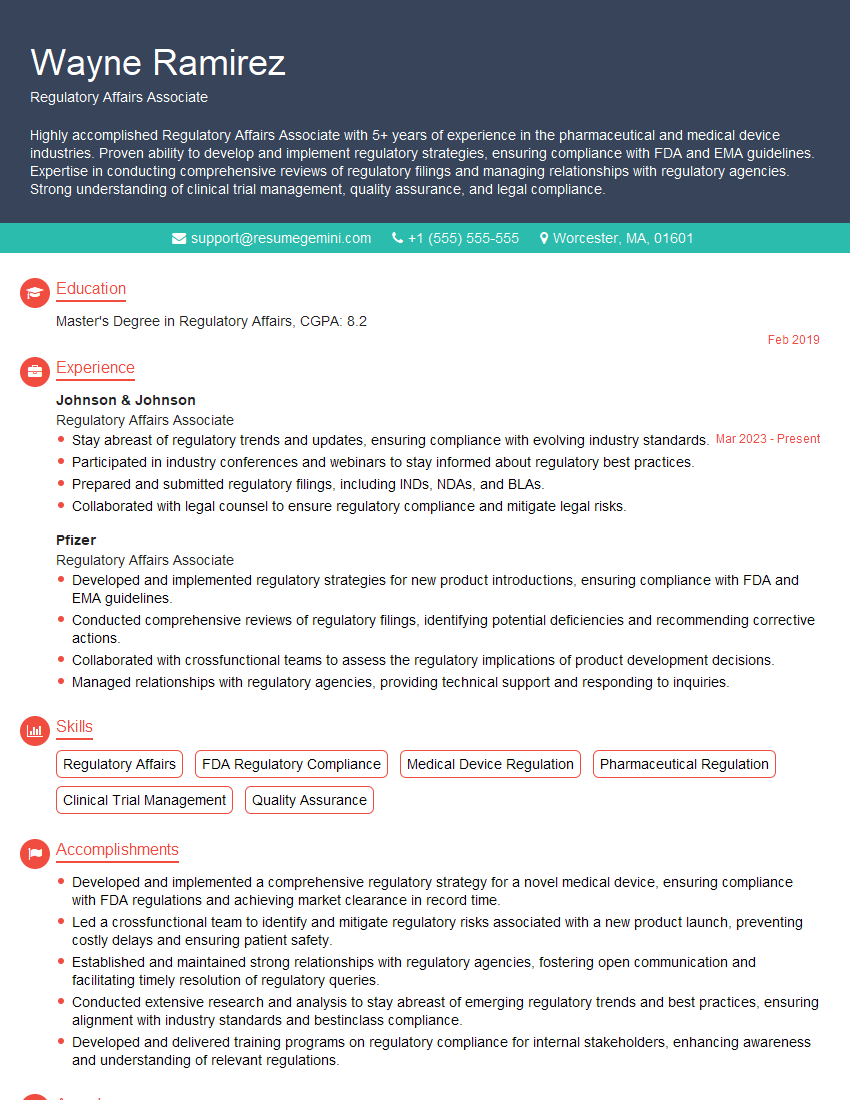
Mastering Product Regulatory Affairs opens doors to exciting and impactful career opportunities within the pharmaceutical, medical device, and other regulated industries. A strong understanding of regulatory requirements is crucial for ensuring product safety and market access. To significantly enhance your job prospects, it’s vital to create an ATS-friendly resume that showcases your expertise effectively. We highly recommend using ResumeGemini, a trusted resource for building professional resumes, to craft a compelling document that highlights your skills and experience. Examples of resumes tailored to Product Regulatory Affairs are available to guide you through the process.

Explore more articles
Users Rating of Our Blogs
Share Your Experience
We value your feedback! Please rate our content and share your thoughts (optional).
What Readers Say About Our Blog
Attention music lovers!
Wow, All the best Sax Summer music !!!
Spotify: https://open.spotify.com/artist/6ShcdIT7rPVVaFEpgZQbUk
Apple Music: https://music.apple.com/fr/artist/jimmy-sax-black/1530501936
YouTube: https://music.youtube.com/browse/VLOLAK5uy_noClmC7abM6YpZsnySxRqt3LoalPf88No
Other Platforms and Free Downloads : https://fanlink.tv/jimmysaxblack
on google : https://www.google.com/search?q=22+AND+22+AND+22
on ChatGPT : https://chat.openai.com?q=who20jlJimmy20Black20Sax20Producer
Get back into the groove with Jimmy sax Black
Best regards,
Jimmy sax Black
www.jimmysaxblack.com
Hi I am a troller at The aquatic interview center and I suddenly went so fast in Roblox and it was gone when I reset.
Hi,
Business owners spend hours every week worrying about their website—or avoiding it because it feels overwhelming.
We’d like to take that off your plate:
$69/month. Everything handled.
Our team will:
Design a custom website—or completely overhaul your current one
Take care of hosting as an option
Handle edits and improvements—up to 60 minutes of work included every month
No setup fees, no annual commitments. Just a site that makes a strong first impression.
Find out if it’s right for you:
https://websolutionsgenius.com/awardwinningwebsites
Hello,
we currently offer a complimentary backlink and URL indexing test for search engine optimization professionals.
You can get complimentary indexing credits to test how link discovery works in practice.
No credit card is required and there is no recurring fee.
You can find details here:
https://wikipedia-backlinks.com/indexing/
Regards
NICE RESPONSE TO Q & A
hi
The aim of this message is regarding an unclaimed deposit of a deceased nationale that bears the same name as you. You are not relate to him as there are millions of people answering the names across around the world. But i will use my position to influence the release of the deposit to you for our mutual benefit.
Respond for full details and how to claim the deposit. This is 100% risk free. Send hello to my email id: lukachachibaialuka@gmail.com
Luka Chachibaialuka
Hey interviewgemini.com, just wanted to follow up on my last email.
We just launched Call the Monster, an parenting app that lets you summon friendly ‘monsters’ kids actually listen to.
We’re also running a giveaway for everyone who downloads the app. Since it’s brand new, there aren’t many users yet, which means you’ve got a much better chance of winning some great prizes.
You can check it out here: https://bit.ly/callamonsterapp
Or follow us on Instagram: https://www.instagram.com/callamonsterapp
Thanks,
Ryan
CEO – Call the Monster App
Hey interviewgemini.com, I saw your website and love your approach.
I just want this to look like spam email, but want to share something important to you. We just launched Call the Monster, a parenting app that lets you summon friendly ‘monsters’ kids actually listen to.
Parents are loving it for calming chaos before bedtime. Thought you might want to try it: https://bit.ly/callamonsterapp or just follow our fun monster lore on Instagram: https://www.instagram.com/callamonsterapp
Thanks,
Ryan
CEO – Call A Monster APP
To the interviewgemini.com Owner.
Dear interviewgemini.com Webmaster!
Hi interviewgemini.com Webmaster!
Dear interviewgemini.com Webmaster!
excellent
Hello,
We found issues with your domain’s email setup that may be sending your messages to spam or blocking them completely. InboxShield Mini shows you how to fix it in minutes — no tech skills required.
Scan your domain now for details: https://inboxshield-mini.com/
— Adam @ InboxShield Mini
support@inboxshield-mini.com
Reply STOP to unsubscribe
Hi, are you owner of interviewgemini.com? What if I told you I could help you find extra time in your schedule, reconnect with leads you didn’t even realize you missed, and bring in more “I want to work with you” conversations, without increasing your ad spend or hiring a full-time employee?
All with a flexible, budget-friendly service that could easily pay for itself. Sounds good?
Would it be nice to jump on a quick 10-minute call so I can show you exactly how we make this work?
Best,
Hapei
Marketing Director
Hey, I know you’re the owner of interviewgemini.com. I’ll be quick.
Fundraising for your business is tough and time-consuming. We make it easier by guaranteeing two private investor meetings each month, for six months. No demos, no pitch events – just direct introductions to active investors matched to your startup.
If youR17;re raising, this could help you build real momentum. Want me to send more info?
Hi, I represent an SEO company that specialises in getting you AI citations and higher rankings on Google. I’d like to offer you a 100% free SEO audit for your website. Would you be interested?
Hi, I represent an SEO company that specialises in getting you AI citations and higher rankings on Google. I’d like to offer you a 100% free SEO audit for your website. Would you be interested?