Interviews are opportunities to demonstrate your expertise, and this guide is here to help you shine. Explore the essential Product Safety Testing and Analysis interview questions that employers frequently ask, paired with strategies for crafting responses that set you apart from the competition.
Questions Asked in Product Safety Testing and Analysis Interview
Q 1. Explain the difference between hazard analysis and risk assessment.
Hazard analysis and risk assessment are closely related but distinct processes in product safety. Think of it like this: hazard analysis identifies what could go wrong, while risk assessment determines how likely it is to go wrong and how severe the consequences would be.
Hazard Analysis: This is the systematic identification of potential hazards associated with a product. A hazard is anything with the potential to cause harm. For example, a sharp edge on a toy is a hazard, a malfunctioning electrical component in an appliance is a hazard, and the improper handling of chemicals is a hazard. Techniques include Failure Modes and Effects Analysis (FMEA) and Hazard and Operability Study (HAZOP).
Risk Assessment: This takes the hazards identified in the hazard analysis and evaluates the likelihood and severity of harm. It involves determining the probability of the hazard occurring and the potential consequences (e.g., injury, property damage, environmental impact). Risk is often expressed quantitatively as a combination of likelihood and severity. For instance, a small, sharp edge on a toy might have a high likelihood of causing a minor cut (low severity), while a faulty electrical appliance might have a lower likelihood of causing a shock but a much higher severity (potential electrocution).
In short: Hazard analysis finds the potential problems; risk assessment evaluates the seriousness of those problems.
Q 2. Describe your experience with different safety testing standards (e.g., IEC 60950, UL, ISO).
My experience encompasses a wide range of safety testing standards, including IEC 60950 (now largely superseded by IEC 62368-1), UL standards (covering various product categories, such as UL 60950-1, now also largely superseded by UL 62368-1), and ISO standards (like ISO 13485 for medical devices). I’ve worked extensively with standards related to electrical safety, mechanical safety, fire safety, and electromagnetic compatibility (EMC).
For example, with IEC 62368-1 (and its UL equivalent), I’ve conducted tests on electronic products to verify their safety concerning electrical hazards, including dielectric strength, insulation resistance, and creepage distance. With UL standards related to specific appliances, I’ve managed testing for flammability, mechanical strength, and other product-specific safety aspects. My experience with ISO 13485 includes auditing and implementing quality management systems for medical devices, ensuring compliance with stringent safety and regulatory requirements.
I’m proficient in using various test equipment, interpreting test results, and writing comprehensive safety reports. I’m also familiar with the different certification processes involved with these standards, understanding the implications of variations across regions and jurisdictions.
Q 3. How do you determine the appropriate safety testing methods for a specific product?
Selecting appropriate safety testing methods involves a multi-step process. First, I carefully analyze the product’s intended use, target market, and any relevant regulations or standards. Next, I identify all potential hazards associated with the product, considering both normal and foreseeable misuse. This hazard identification forms the basis for choosing the specific test methods.
For instance, a children’s toy will require testing for things like small parts that could be choking hazards, while an electrical appliance will require tests for electrical safety, such as dielectric strength and insulation resistance. The applicable standards, like UL, IEC, or ISO, typically dictate the specific tests needed. Finally, I consider factors such as cost and time constraints while ensuring all critical safety aspects are adequately addressed. The goal is always to select the most efficient and effective combination of test methods that provide sufficient evidence of safety.
A thorough understanding of relevant standards and a solid foundation in engineering principles are crucial for this process. I frequently consult industry best practices and collaborate with experts in various engineering fields to ensure thoroughness and completeness of testing.
Q 4. What are the key components of a comprehensive product safety plan?
A comprehensive product safety plan should incorporate several key components:
- Hazard Analysis and Risk Assessment: Identifying potential hazards and evaluating associated risks.
- Safety Requirements Specification: Clearly defining safety requirements based on identified hazards and relevant standards.
- Design for Safety: Incorporating safety features into the product design to mitigate identified risks.
- Testing and Verification: Conducting appropriate testing and verification activities to ensure compliance with safety requirements.
- Corrective and Preventive Actions (CAPA): Establishing a system for addressing safety concerns and preventing recurrence of problems.
- Documentation: Maintaining thorough documentation throughout the entire product lifecycle, including test results, design specifications, and risk assessments.
- Training: Ensuring that personnel involved in product design, manufacturing, and testing receive adequate training on safety procedures and regulations.
- Continuous Improvement: Regularly reviewing and improving the product safety plan to address emerging risks and industry best practices.
A well-defined product safety plan is essential for ensuring product safety and compliance with regulations, minimizing liabilities, and building consumer trust.
Q 5. How do you handle conflicting safety requirements from different standards or regulations?
Conflicting safety requirements from different standards or regulations are a common challenge. My approach is methodical and prioritizes safety above all else. First, I document all conflicting requirements, specifying the source of each (e.g., specific standard, regulation, or client specification). Then, I carefully analyze the rationale behind each requirement, understanding its purpose and the potential consequences of non-compliance.
I will then seek clarification from the relevant authorities or standards organizations, if necessary. Often, seemingly conflicting requirements can be reconciled by carefully reviewing the intent of the regulations. Sometimes, a hierarchy of standards exists, where one supersedes another. In other cases, the conflicting requirements might apply to different aspects of the product or its intended use, allowing for separate compliance strategies. If the conflicts cannot be resolved through interpretation, I will usually propose a solution that provides the highest level of safety, documenting the rationale for the chosen approach and reporting this to the relevant stakeholders.
Ultimately, the goal is to achieve a design that meets the spirit of all applicable regulations and standards, even if minor deviations from the letter of some are necessary for full compliance with others.
Q 6. Describe your experience with failure analysis techniques.
My experience with failure analysis techniques is extensive. I employ a variety of methods depending on the nature of the failure and the available information. These include:
- Visual Inspection: A fundamental starting point, often revealing obvious causes like cracks, fractures, or burn marks.
- Dimensional Measurement: Using calipers, micrometers, or coordinate measuring machines (CMMs) to check for deviations from specifications.
- Destructive Testing: Techniques such as cross-sectioning, tensile testing, and impact testing to assess material properties and failure mechanisms.
- Non-destructive Testing (NDT): Methods like X-ray inspection, ultrasonic testing, and liquid penetrant inspection to detect internal flaws without damaging the component.
- Chemical Analysis: Using techniques like spectroscopy and chromatography to identify material composition and degradation products.
- Electrical Testing: Measuring parameters such as resistance, capacitance, and inductance to pinpoint electrical failures.
I’ve used these techniques to investigate failures in a wide range of products, from simple mechanical components to complex electronic systems. The results of these analyses provide crucial insights into the root cause of failure, helping to prevent future incidents.
Q 7. Explain your understanding of root cause analysis and its application in product safety.
Root cause analysis (RCA) is a systematic approach to identifying the underlying causes of a problem or failure, rather than just addressing the symptoms. In product safety, RCA is crucial for preventing similar failures in the future. It’s not just about fixing a broken part; it’s about understanding why it broke.
I frequently use various RCA techniques, including the ‘5 Whys’ method (repeatedly asking ‘why’ to drill down to the root cause), fishbone diagrams (identifying contributing factors), and Fault Tree Analysis (FTA) (mapping out potential failure pathways). For example, if a product overheats, the ‘5 Whys’ might lead us from ‘the product overheated’ to ‘a faulty resistor caused excessive current’ to ‘the resistor was improperly soldered’ to ‘the soldering process lacked adequate quality control’ to ‘inadequate training was provided to the assembly team’. The root cause, then, is inadequate training.
The application of RCA in product safety involves identifying the underlying causes of failures, implementing corrective actions to prevent recurrence, and improving design and manufacturing processes to enhance product reliability and safety. This systematic approach transforms incident investigation from a reactive measure to a proactive strategy for continuous improvement.
Q 8. How do you prioritize safety risks when multiple hazards exist?
Prioritizing safety risks when multiple hazards exist is crucial for effective product safety management. We use a risk assessment methodology, often based on a combination of severity, probability, and detectability of each hazard. This is frequently visualized using a risk matrix.
Severity considers the potential harm caused by the hazard (e.g., minor injury, serious injury, fatality). Probability assesses how likely the hazard is to occur (e.g., frequent, occasional, rare). Detectability evaluates the ease of identifying and mitigating the hazard before it leads to an incident (e.g., easily detectable during testing, difficult to detect).
Each hazard is assigned a score based on these three factors. We then rank the hazards based on their overall risk score, prioritizing those with the highest scores for immediate attention and mitigation. For example, a hazard with high severity, high probability, and low detectability would be ranked highest and addressed first, even if other hazards exist.
This process ensures that resources are focused on the most critical risks, leading to a safer product. Regularly reviewing and updating the risk assessment as the product develops is essential to catch new or evolving hazards.
Q 9. Explain your experience with different types of safety testing (e.g., mechanical, electrical, chemical).
My experience encompasses a wide range of safety testing methodologies, including mechanical, electrical, and chemical testing. In mechanical testing, I’ve conducted drop tests, impact tests, and tensile strength tests to assess the product’s ability to withstand physical stress. For instance, I’ve worked on evaluating the durability of a children’s toy by subjecting it to repeated drops from various heights. This helps ensure it won’t break easily and cause harm.
Electrical testing involves assessing the product’s compliance with electrical safety standards. This includes tests such as insulation resistance, dielectric strength, and ground continuity. In one project, we identified a potential short circuit in a power supply, preventing a potentially dangerous situation.
Chemical testing covers aspects such as material compatibility, flammability, and toxicity. For example, we’ve tested the leaching of chemicals from children’s toys to ensure they don’t contain hazardous substances that could pose a health risk. My experience also includes using various analytical techniques like Gas Chromatography-Mass Spectrometry (GC-MS) to identify chemical components.
Q 10. How do you ensure the accuracy and reliability of your safety testing results?
Ensuring the accuracy and reliability of safety testing results is paramount. We achieve this through several key practices:
- Calibration and Maintenance: All testing equipment undergoes regular calibration and maintenance to guarantee accurate measurements. Calibration certificates are meticulously maintained and reviewed.
- Standard Operating Procedures (SOPs): We adhere to strict SOPs for each test, ensuring consistency and minimizing human error. These SOPs document every step, from sample preparation to data analysis.
- Multiple Testing and Statistical Analysis: We often conduct multiple tests on multiple samples to obtain statistically significant results. Statistical analysis techniques are then employed to evaluate the data’s validity and reliability. This helps rule out anomalies and ensures the results are representative.
- Traceability: A comprehensive chain of custody is maintained for all samples and test results, ensuring transparency and facilitating investigations if necessary.
- Quality Control: Regular internal audits and quality control checks are implemented to ensure that testing procedures are followed consistently and meet the highest standards.
By rigorously following these procedures, we can confidently present accurate and reliable data supporting our safety conclusions.
Q 11. Describe your experience with data analysis and reporting in product safety.
Data analysis and reporting are integral parts of my role. After conducting safety tests, I use various statistical software packages to analyze the collected data. This involves calculating mean values, standard deviations, and performing statistical tests to determine whether the results meet safety requirements. I often use tools such as Minitab or JMP for this.
Reporting is structured clearly and concisely, incorporating visual aids such as graphs and charts to effectively communicate complex data. My reports include a detailed summary of the testing methods, results, conclusions, and recommendations for any necessary corrective actions. The audience and their technical expertise are always considered when tailoring the report’s content and complexity.
For example, a report for management would focus on high-level summaries and risk implications, while a report for engineers would provide detailed technical analysis and specific recommendations for design modifications. Data is presented in a way that allows stakeholders to quickly understand the key safety findings and make informed decisions.
Q 12. How do you communicate safety concerns and findings to different stakeholders (e.g., engineers, management, customers)?
Communicating safety concerns and findings effectively to different stakeholders requires tailoring the message to their respective expertise and needs.
- Engineers: I communicate using technical language, presenting detailed data and analysis to support specific recommendations for design improvements or modifications. I often use technical reports, presentations, and diagrams to clearly convey findings.
- Management: I focus on the overall risk implications, providing concise summaries of findings and proposed mitigation strategies. I prioritize communicating the potential business impact and associated costs and benefits of different courses of action.
- Customers: When communicating with customers, I use plain language, avoiding technical jargon. I focus on explaining the safety aspects in a way that is easy to understand, ensuring clarity and building trust. I emphasize actions taken to ensure product safety and address any concerns.
Transparency and open communication are crucial. Proactively identifying and addressing potential concerns, even before they become major issues, fosters trust and strengthens relationships with all stakeholders.
Q 13. Explain your experience with regulatory compliance procedures.
I have extensive experience with regulatory compliance procedures, primarily focusing on [mention specific standards, e.g., UL, IEC, ISO, FDA, etc.]. My work involves understanding and applying relevant regulations to ensure that products meet all safety requirements before they are released to the market. This includes:
- Interpreting Regulations: I thoroughly understand the requirements of the applicable standards and regulations. This involves staying updated on any amendments or new standards.
- Test Plan Development: Based on the product and the relevant regulations, I develop comprehensive test plans that ensure complete coverage of all safety requirements.
- Test Execution and Documentation: I meticulously execute the tests and maintain thorough documentation of the processes and results. This documentation serves as evidence of compliance.
- Report Generation: Following testing, I create detailed reports that summarize the results, demonstrating compliance or identifying areas requiring improvement.
- Corrective Actions: If non-compliance is identified, I collaborate with engineers to develop and implement corrective actions. These actions are then verified through additional testing.
My work ensures that products are not only safe but also meet all legal and regulatory obligations, minimizing legal risks and protecting the company’s reputation.
Q 14. How do you stay up-to-date on the latest safety standards and regulations?
Staying current on the latest safety standards and regulations is crucial in this field. I utilize several strategies:
- Subscription to Regulatory Bodies: I subscribe to relevant regulatory bodies (e.g., UL, IEC, ANSI) to receive updates and notifications on changes to standards.
- Professional Organizations: Active participation in professional organizations such as [mention specific organizations] allows access to webinars, conferences, and publications that inform on current developments in product safety.
- Industry Publications and Journals: I regularly read industry publications and journals that specialize in product safety, staying abreast of the latest research, best practices, and case studies.
- Networking: Attending industry events and networking with other professionals provides valuable insights and opportunities to learn from the experiences of others.
- Online Resources: Utilizing reputable online resources to access the latest standards and regulatory information is also an essential part of my process.
Continuous learning ensures my knowledge remains up-to-date, enabling me to provide effective and relevant expertise in product safety testing and analysis.
Q 15. Describe a time you had to identify and resolve a safety issue in a product.
During my time at Acme Corporation, we were developing a new children’s toy – a motorized car with intricate moving parts. During routine testing, we discovered that under certain conditions, a small, easily accessible component could detach and present a choking hazard. This was a critical safety issue, especially given the target demographic.
To resolve this, we implemented a multi-pronged approach. First, we conducted a thorough failure mode and effects analysis (FMEA) to identify all potential failure points and their associated risks. This highlighted the detachment mechanism as the primary concern. Next, we explored several design modifications. We considered using stronger adhesives, redesigned the component’s attachment points, and even explored completely redesigning the component for improved robustness. After rigorous testing, we opted for a redesign that involved using more robust materials and a secure locking mechanism, eliminating the risk of detachment. Finally, we updated our product documentation and implemented additional quality control measures during the manufacturing process.
This experience reinforced the importance of proactive safety testing and the value of a systematic approach to problem-solving. It showed how even seemingly minor components can pose significant safety risks and the need for rigorous testing across all phases of product development.
Career Expert Tips:
- Ace those interviews! Prepare effectively by reviewing the Top 50 Most Common Interview Questions on ResumeGemini.
- Navigate your job search with confidence! Explore a wide range of Career Tips on ResumeGemini. Learn about common challenges and recommendations to overcome them.
- Craft the perfect resume! Master the Art of Resume Writing with ResumeGemini’s guide. Showcase your unique qualifications and achievements effectively.
- Don’t miss out on holiday savings! Build your dream resume with ResumeGemini’s ATS optimized templates.
Q 16. What are your experiences with different types of safety testing equipment?
My experience encompasses a wide range of safety testing equipment, including both standard and specialized tools. I’m proficient in using material testing machines for tensile strength, impact resistance, and fatigue testing. I’ve extensively used environmental chambers to simulate diverse conditions like extreme temperatures, humidity, and pressure to evaluate product durability and reliability under various stresses. This is critical for assessing product integrity and longevity. Furthermore, I have hands-on experience with electrical safety testing equipment, including insulation resistance testers, hipot testers, and ground continuity testers, all essential for ensuring electrical products meet safety standards.
Beyond this, I’m familiar with more specialized equipment such as flammability testers (e.g., UL 94), chemical analysis tools (for material composition and potential toxicity), and acoustic chambers for noise level testing. The specific equipment utilized heavily depends on the product being tested and the relevant safety standards.
Q 17. How do you manage risk associated with outsourced testing?
Outsourcing testing introduces inherent risks. To mitigate these, I employ a robust risk management strategy focused on thorough due diligence, clear communication, and rigorous oversight. Before selecting a testing partner, I meticulously assess their capabilities, certifications (e.g., ISO 17025 accreditation), and track record. A thorough review of their quality management system is essential.
We use detailed service level agreements (SLAs) that explicitly define the scope of work, deliverables, timelines, and key performance indicators (KPIs). These SLAs also stipulate procedures for dispute resolution and handling non-conformances. Regular communication with the testing lab, including progress reports and review of interim results, ensures transparency and allows for proactive identification and resolution of any issues. Finally, a comprehensive audit of the outsourced testing results, including their methodology and documentation, is always conducted to verify the accuracy and validity of the findings.
Q 18. Describe your experience with designing safety into products (DfS).
Design for Safety (DfS) is a core principle in my approach to product development. It’s about proactively integrating safety considerations into every stage of the design process, from initial concept to final manufacturing. This is far more effective and cost-efficient than trying to address safety issues retrospectively.
For example, in a recent project involving the design of a power tool, we incorporated features like ergonomic handles to reduce the risk of repetitive strain injuries, integrated safety interlocks to prevent accidental activation, and used robust materials to minimize the risk of breakage. We also performed rigorous simulations and prototyping to validate the design’s safety performance. This proactive approach ensures that the product is inherently safe, minimizing the need for extensive testing later on.
DfS isn’t just about avoiding hazards; it’s also about creating products that are intuitive and easy to use safely. Clear labeling, appropriate warnings, and user manuals are vital components.
Q 19. How do you balance safety considerations with product cost and performance?
Balancing safety, cost, and performance requires a careful and often iterative process. It’s not about compromising safety; it’s about finding the optimal balance that ensures the product is both safe and commercially viable. This often involves a cost-benefit analysis, weighing the cost of implementing safety features against the potential costs of product failure or liability.
For example, while using higher-grade materials might increase the initial cost, it can significantly reduce the risk of failures and subsequent warranty claims, potentially saving money in the long run. Similarly, investing in thorough testing and simulation might seem expensive upfront, but it can help identify and resolve safety issues early on, preventing costly recalls or legal disputes later.
This necessitates strong collaboration between engineering, design, manufacturing, and legal teams. It’s a continuous process of evaluation and optimization, aiming to achieve the highest safety standards within acceptable cost and performance parameters.
Q 20. What are your experiences with conducting safety audits?
I have extensive experience conducting safety audits, both internal and external. These audits involve a systematic evaluation of a product’s design, manufacturing process, and overall safety performance against relevant standards and regulations. My approach includes a review of design documentation, manufacturing processes, testing data, and quality control procedures. I also conduct on-site inspections to assess the physical environment and identify any potential safety hazards.
The goal of a safety audit is to identify potential safety issues and recommend improvements. This involves reviewing product specifications, assembly procedures, and quality control processes. I use checklists and standardized auditing procedures to ensure a thorough and objective evaluation. After the audit, a detailed report is prepared with specific findings, recommendations, and corrective actions.
One significant audit involved a factory producing electrical appliances. The audit revealed a lack of proper grounding in their assembly process, posing a serious electrical shock risk. My report detailed the shortcomings and recommended improvements, leading to significant upgrades in their manufacturing process.
Q 21. Describe your familiarity with various safety testing methodologies such as FMEA, FTA, or HAZOP.
I’m proficient in various safety testing methodologies, including Failure Mode and Effects Analysis (FMEA), Fault Tree Analysis (FTA), and Hazard and Operability Study (HAZOP). These techniques are crucial for proactively identifying and mitigating potential hazards throughout the product lifecycle.
FMEA is a systematic approach to identifying potential failure modes, their effects, and their severity, occurrence, and detectability. It allows us to prioritize risks and implement preventative measures. FTA is a deductive technique used to analyze the causes of a system failure. It helps identify the root causes of potential hazards. HAZOP is a systematic and comprehensive hazard identification technique used to analyze process systems for potential deviations from normal operation, identifying hazards associated with these deviations.
For example, during the design of a pressure vessel, we used HAZOP to systematically review all aspects of the process, identifying potential deviations like overpressure or leaks. This allowed us to implement safety features like pressure relief valves and leak detection systems to mitigate these potential hazards.
Q 22. How do you validate the effectiveness of safety mechanisms implemented in a product?
Validating the effectiveness of safety mechanisms requires a multi-faceted approach. It’s not enough to simply assume a mechanism works; we need rigorous testing to prove it.
Firstly, we define the potential hazards the mechanism is designed to mitigate. For example, if we’re testing an automatic shutoff mechanism in a power tool, the hazard is the user’s hand being injured by the rotating blade. We then design tests that simulate real-world scenarios, pushing the mechanism to its limits. This might involve repeatedly triggering the safety mechanism under varying conditions – different operating temperatures, different levels of force, even deliberate attempts to bypass the safety feature.
Secondly, we use a combination of testing methods. This could include:
- Functional testing: Does the mechanism actually work as intended? We would measure the time it takes for the mechanism to activate, its reliability under stress, etc.
- Stress testing: Can the mechanism withstand repeated use and extreme conditions? This is about robustness and durability.
- Failure mode and effects analysis (FMEA): We systematically identify potential failure points in the mechanism and evaluate the severity of the consequences if a failure occurs.
Finally, we document everything – test plans, procedures, results, and any deviations from the plan. This documentation is crucial for demonstrating compliance with safety standards and regulations. Imagine testing a child’s toy – meticulous record-keeping allows us to prove the toy is safe for its intended age group and won’t pose a choking hazard.
Q 23. Explain your experience with documenting safety testing procedures and results.
My experience in documenting safety testing procedures and results is extensive. I’ve worked with various documentation systems, from simple spreadsheets to sophisticated laboratory information management systems (LIMS). The key is consistency and accuracy. Each test procedure needs a clear, unambiguous description, including the test method, equipment used, acceptance criteria, and any safety precautions. Results are meticulously recorded, with any deviations from expected results carefully noted and investigated.
Consider a recent project where we were testing the flammability of a new material for a children’s toy. Our documentation included:
- Test plan: Outlining the specific tests to be performed (e.g., ASTM D6413 for small-scale flammability).
- Standard operating procedures (SOPs): Detailing the exact steps taken during each test.
- Data sheets: Recording the raw data from each test, such as temperature readings, burn rates, etc.
- Test reports: Summarizing the findings, drawing conclusions, and recommending actions if necessary.
This rigorous documentation process not only ensures transparency and traceability but is also essential for regulatory compliance and potential legal defense should an issue arise. We always adhere to Good Documentation Practices (GDP), maintaining version control, and using clear and concise language that’s understandable to anyone reviewing the documents.
Q 24. How do you handle situations where test results are inconclusive?
Inconclusive test results are a common challenge in product safety testing. They don’t mean the product is automatically unsafe, but they signal the need for further investigation. My approach involves a structured process:
- Review the testing methodology: Was the testing procedure adequate? Were there any potential sources of error or bias? Did we use the correct standards or best practices?
- Repeat the tests: If possible, repeat the tests under the same conditions to check for reproducibility. If the results remain inconclusive, we consider varying test conditions slightly to identify any trends.
- Explore alternative testing methods: Sometimes, a different testing approach can shed light on the issue. If the initial method didn’t provide the clarity needed, consider utilizing a complementary method.
- Consult with other experts: Seek advice from colleagues or external consultants with expertise in relevant areas. A fresh perspective can help to identify factors that were initially overlooked.
- Document all findings: Thorough documentation, even including the inconclusive results and the steps taken to resolve the uncertainty, is essential. This is crucial for transparency and for future decision-making.
For example, if we have inconclusive results on a chemical migration test for food contact material, we may need to refine the extraction procedure, explore using more sensitive analytical techniques (such as LC-MS), or consult with a toxicologist to assess the potential health risks.
Q 25. Describe a time you had to deal with conflicting expert opinions on a safety issue.
I once encountered conflicting expert opinions on the safety of a novel material used in a medical device. One expert believed the material’s degradation products could be harmful, based on in vitro testing. Another argued that in vivo studies were needed to demonstrate actual toxicity in a living organism.
To resolve this conflict, I facilitated a meeting where both experts presented their findings and rationale. We then collaboratively identified the gaps in each expert’s assessment. This process involved:
- Identifying the core points of disagreement: Pinpointing the specific aspects where opinions diverged.
- Analyzing the data: Examining both in vitro and existing in vivo data objectively to identify potential flaws or biases.
- Designing further tests: Determining what additional testing was necessary to bridge the knowledge gap and reach a consensus. This might include conducting further in vivo tests or more extensive in vitro studies.
- Reaching a consensus: Establishing a clear, evidence-based conclusion that addressed both perspectives.
The outcome was a revised safety assessment that incorporated both experts’ input. The process taught me the value of open communication, collaborative problem-solving, and relying on solid scientific evidence rather than individual preferences or biases.
Q 26. Explain your understanding of different types of product recalls and their implications.
Product recalls are a serious matter, signifying a significant safety risk. There are different classifications, each with its own implications:
- Class I Recall: This is the most serious, where there’s a reasonable probability that the product will cause serious adverse health consequences or death. Think of a faulty heart pacemaker or a contaminated food product – immediate action is necessary.
- Class II Recall: These involve products that might cause temporary or medically reversible adverse health consequences. For example, a toy with small parts that could pose a choking hazard. The recall is less urgent than a Class I, but still needs swift action.
- Class III Recall: This involves products that are unlikely to cause adverse health consequences. It might be a minor labeling issue or a packaging defect. The recall is typically less costly and less disruptive.
The implications of a recall are far-reaching: financial losses due to product returns, damage to reputation, potential legal repercussions, and the effort needed to coordinate the recall and correct the problem. In each case, the severity dictates the level of urgency and the resources needed for effective remediation. It’s critical to be proactive in implementing recall strategies, clearly communicating with customers, and taking steps to ensure the issue doesn’t happen again.
Q 27. What are your experiences with conducting post-market surveillance for product safety?
Post-market surveillance is crucial for ensuring continued product safety after a product has been released into the market. My experience involves collecting and analyzing data from various sources to identify potential safety issues.
Methods I’ve used include:
- Monitoring adverse event reports: This involves tracking reports of injuries or malfunctions associated with the product. These reports can come from various sources, including healthcare providers, consumers, and regulatory agencies.
- Analyzing field data: We collect data from the use of the product in the field, for example, through warranty claims, product returns, or customer feedback surveys. This can reveal patterns of failures or issues that may not be apparent from laboratory testing.
- Conducting periodic inspections: On-site inspections of production facilities or distribution centers can identify manufacturing defects or issues with handling and storage.
- Literature reviews: Staying abreast of scientific publications and regulatory updates can highlight potential hazards.
In a recent project involving a medical device, we used a combination of these methods to identify a previously unforeseen issue related to the device’s long-term durability. This early identification allowed us to proactively address the problem, preventing potential harm to patients and avoiding a costly recall.
Q 28. How would you approach building a new product safety testing program for a company?
Building a robust product safety testing program requires a phased approach:
- Risk Assessment: Thoroughly analyze the potential hazards associated with the product and its intended use. This involves identifying the target users, potential misuse scenarios, and potential consequences of failures.
- Standard Selection: Choose relevant safety standards and regulations that apply to the product. This will vary greatly depending on the product type and the target market. Examples include ISO, ASTM, and other industry-specific standards, as well as compliance regulations from governing bodies.
- Testing Methodology Development: Design a comprehensive testing program that addresses all identified hazards, employing appropriate methods such as mechanical testing, chemical analysis, electrical testing, and others.
- Laboratory Accreditation (if needed): For certain product types, obtaining accreditation from a recognized body, like an ISO 17025 accredited lab, adds credibility and demonstrates compliance.
- Documentation System: Implement a clear and organized system for documenting test procedures, results, and any corrective actions. The system should ensure traceability and compliance with regulatory requirements.
- Training and Personnel: Train personnel on proper testing techniques, data analysis, and report writing. Experienced and knowledgeable personnel are critical to a successful program.
- Continuous Improvement: Regularly review and update the testing program to adapt to changes in technology, standards, and market demands.
This structured approach will ensure the program is thorough, compliant, and effective in identifying and mitigating potential safety hazards. The program should be considered a continuous process, not a one-time project, constantly evolving to meet the evolving challenges in product safety.
Key Topics to Learn for Product Safety Testing and Analysis Interview
- Risk Assessment and Management: Understanding methodologies like FMEA (Failure Mode and Effects Analysis) and HAZOP (Hazard and Operability Study) for proactively identifying and mitigating potential hazards in product design and operation. Practical application: Demonstrate your ability to apply these methodologies to a hypothetical product scenario.
- Testing Standards and Regulations: Familiarity with relevant international and regional safety standards (e.g., IEC, UL, ISO) and regulatory compliance requirements. Practical application: Discuss experience with specific standards and how you ensured compliance during testing procedures.
- Testing Methodologies: Proficiency in various testing techniques, including destructive and non-destructive testing methods, environmental testing (temperature, humidity, vibration), and electrical safety testing. Practical application: Explain your experience with different testing equipment and the interpretation of results.
- Data Analysis and Reporting: Ability to collect, analyze, and interpret test data; generate clear and concise reports summarizing findings and recommendations. Practical application: Describe your experience in creating comprehensive test reports and presenting findings to stakeholders.
- Root Cause Analysis: Expertise in identifying the root cause of product failures through systematic problem-solving techniques. Practical application: Illustrate your ability to troubleshoot a complex product failure scenario and explain your approach.
- Communication and Collaboration: Effectively communicating technical information to both technical and non-technical audiences; collaborating effectively with cross-functional teams. Practical application: Discuss scenarios where you’ve collaborated with engineers, designers, and management to resolve safety issues.
Next Steps
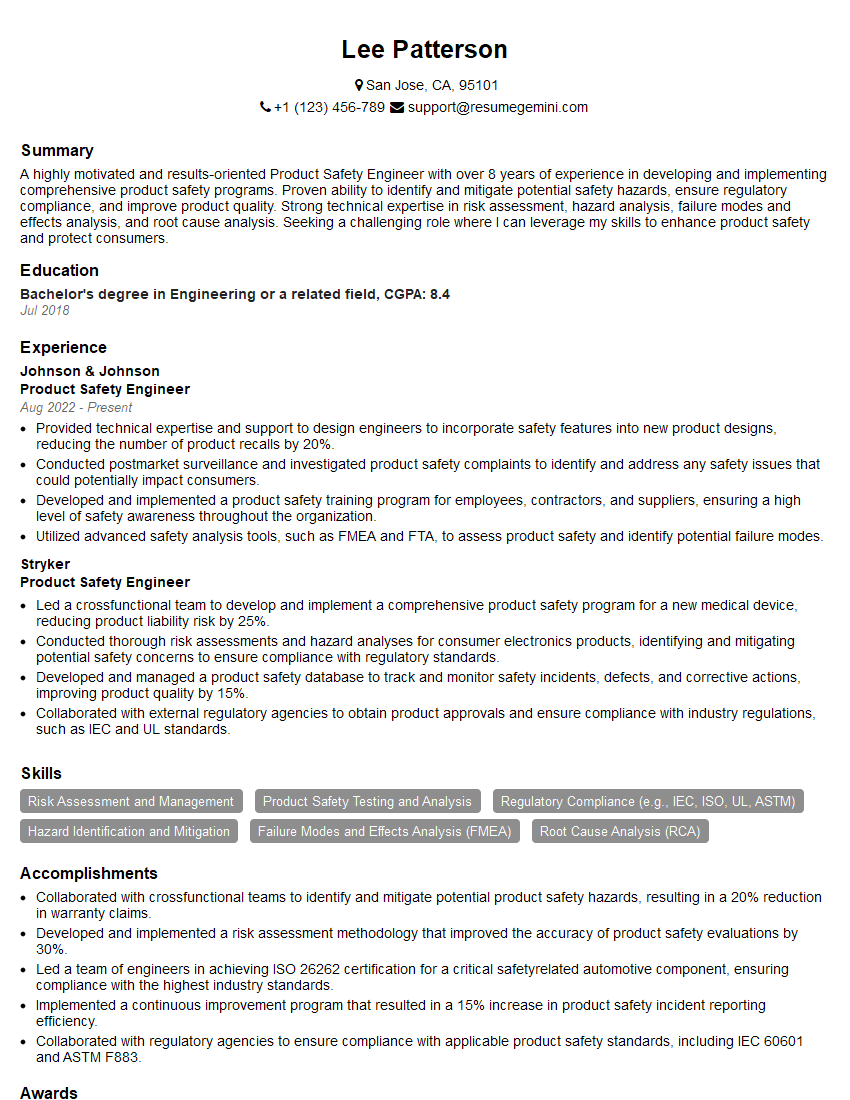
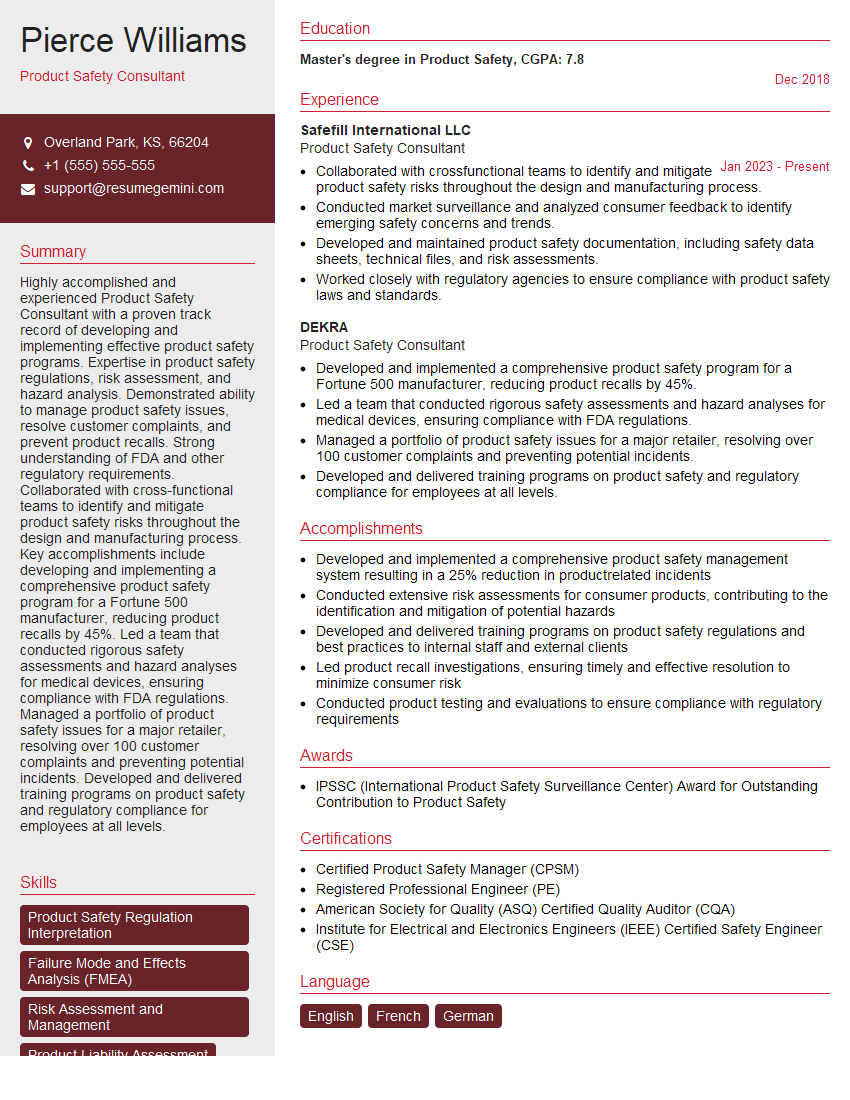
Mastering Product Safety Testing and Analysis is crucial for a successful and rewarding career. This field offers exciting opportunities for growth and contributes significantly to ensuring product safety and consumer protection. To maximize your job prospects, it’s vital to present your skills and experience effectively through a well-crafted, ATS-friendly resume. ResumeGemini is a trusted resource that can help you build a professional resume that showcases your qualifications and gets noticed by recruiters. Examples of resumes tailored to Product Safety Testing and Analysis are available to guide you. Invest time in creating a compelling resume – it’s your first impression on potential employers.
Explore more articles
Users Rating of Our Blogs
Share Your Experience
We value your feedback! Please rate our content and share your thoughts (optional).
What Readers Say About Our Blog
Attention music lovers!
Wow, All the best Sax Summer music !!!
Spotify: https://open.spotify.com/artist/6ShcdIT7rPVVaFEpgZQbUk
Apple Music: https://music.apple.com/fr/artist/jimmy-sax-black/1530501936
YouTube: https://music.youtube.com/browse/VLOLAK5uy_noClmC7abM6YpZsnySxRqt3LoalPf88No
Other Platforms and Free Downloads : https://fanlink.tv/jimmysaxblack
on google : https://www.google.com/search?q=22+AND+22+AND+22
on ChatGPT : https://chat.openai.com?q=who20jlJimmy20Black20Sax20Producer
Get back into the groove with Jimmy sax Black
Best regards,
Jimmy sax Black
www.jimmysaxblack.com
Hi I am a troller at The aquatic interview center and I suddenly went so fast in Roblox and it was gone when I reset.
Hi,
Business owners spend hours every week worrying about their website—or avoiding it because it feels overwhelming.
We’d like to take that off your plate:
$69/month. Everything handled.
Our team will:
Design a custom website—or completely overhaul your current one
Take care of hosting as an option
Handle edits and improvements—up to 60 minutes of work included every month
No setup fees, no annual commitments. Just a site that makes a strong first impression.
Find out if it’s right for you:
https://websolutionsgenius.com/awardwinningwebsites
Hello,
we currently offer a complimentary backlink and URL indexing test for search engine optimization professionals.
You can get complimentary indexing credits to test how link discovery works in practice.
No credit card is required and there is no recurring fee.
You can find details here:
https://wikipedia-backlinks.com/indexing/
Regards
NICE RESPONSE TO Q & A
hi
The aim of this message is regarding an unclaimed deposit of a deceased nationale that bears the same name as you. You are not relate to him as there are millions of people answering the names across around the world. But i will use my position to influence the release of the deposit to you for our mutual benefit.
Respond for full details and how to claim the deposit. This is 100% risk free. Send hello to my email id: lukachachibaialuka@gmail.com
Luka Chachibaialuka
Hey interviewgemini.com, just wanted to follow up on my last email.
We just launched Call the Monster, an parenting app that lets you summon friendly ‘monsters’ kids actually listen to.
We’re also running a giveaway for everyone who downloads the app. Since it’s brand new, there aren’t many users yet, which means you’ve got a much better chance of winning some great prizes.
You can check it out here: https://bit.ly/callamonsterapp
Or follow us on Instagram: https://www.instagram.com/callamonsterapp
Thanks,
Ryan
CEO – Call the Monster App
Hey interviewgemini.com, I saw your website and love your approach.
I just want this to look like spam email, but want to share something important to you. We just launched Call the Monster, a parenting app that lets you summon friendly ‘monsters’ kids actually listen to.
Parents are loving it for calming chaos before bedtime. Thought you might want to try it: https://bit.ly/callamonsterapp or just follow our fun monster lore on Instagram: https://www.instagram.com/callamonsterapp
Thanks,
Ryan
CEO – Call A Monster APP
To the interviewgemini.com Owner.
Dear interviewgemini.com Webmaster!
Hi interviewgemini.com Webmaster!
Dear interviewgemini.com Webmaster!
excellent
Hello,
We found issues with your domain’s email setup that may be sending your messages to spam or blocking them completely. InboxShield Mini shows you how to fix it in minutes — no tech skills required.
Scan your domain now for details: https://inboxshield-mini.com/
— Adam @ InboxShield Mini
support@inboxshield-mini.com
Reply STOP to unsubscribe
Hi, are you owner of interviewgemini.com? What if I told you I could help you find extra time in your schedule, reconnect with leads you didn’t even realize you missed, and bring in more “I want to work with you” conversations, without increasing your ad spend or hiring a full-time employee?
All with a flexible, budget-friendly service that could easily pay for itself. Sounds good?
Would it be nice to jump on a quick 10-minute call so I can show you exactly how we make this work?
Best,
Hapei
Marketing Director
Hey, I know you’re the owner of interviewgemini.com. I’ll be quick.
Fundraising for your business is tough and time-consuming. We make it easier by guaranteeing two private investor meetings each month, for six months. No demos, no pitch events – just direct introductions to active investors matched to your startup.
If youR17;re raising, this could help you build real momentum. Want me to send more info?
Hi, I represent an SEO company that specialises in getting you AI citations and higher rankings on Google. I’d like to offer you a 100% free SEO audit for your website. Would you be interested?
Hi, I represent an SEO company that specialises in getting you AI citations and higher rankings on Google. I’d like to offer you a 100% free SEO audit for your website. Would you be interested?