Unlock your full potential by mastering the most common Proficient in loading and unloading logs efficiently interview questions. This blog offers a deep dive into the critical topics, ensuring you’re not only prepared to answer but to excel. With these insights, you’ll approach your interview with clarity and confidence.
Questions Asked in Proficient in loading and unloading logs efficiently Interview
Q 1. Describe the safe operating procedures for a log loader.
Safe operation of a log loader hinges on a multifaceted approach encompassing pre-operational checks, adherence to operating procedures, and a strong safety culture. Before starting, a thorough inspection is crucial. This involves checking fluid levels (hydraulic oil, engine oil), ensuring brakes are functioning correctly, verifying the structural integrity of the loader arm and grapple, and confirming that all safety devices – such as emergency stops and warning lights – are in working order.
During operation, maintaining a safe speed is paramount, avoiding jerky movements that could lead to log slippage or equipment damage. Always be aware of your surroundings, including the terrain and the presence of other personnel or equipment. Never operate the loader under the influence of drugs or alcohol. Communication is key; use hand signals or two-way radios to coordinate with ground crews. Finally, regular maintenance and timely repairs are critical to preventing accidents.
For example, I once noticed a slight leak in the hydraulic system during a pre-operational check. Addressing this minor issue before beginning work prevented a potentially significant breakdown and safety hazard later.
Q 2. What are the different types of log loaders and their applications?
Log loaders come in various types, each suited to specific applications. Grapple loaders are the most common, using a grapple to lift and move logs. These are versatile and handle a wide range of log sizes and species. Their application spans from harvesting in the forest to unloading at mills. Forwarders are designed for transporting logs from the felling site to a central loading point. They have a large carrying capacity and are particularly useful in challenging terrain. Wheel loaders are frequently used for loading logs onto trucks and are well-suited for larger operations with paved or well-maintained access roads. Finally, some specialized loaders exist such as cable loaders commonly used in steep terrain where other types may struggle. The choice of loader depends on factors such as terrain, log size, and operational scale.
Q 3. Explain the process of securing logs during transportation.
Securing logs during transport is vital to prevent shifting and potential accidents. The primary method involves using proper binding techniques, typically with chains or straps. Logs should be evenly distributed on the transport vehicle to maintain balance and avoid overloading any single area. Chains should be properly tightened and secured to prevent slippage. Consider using dunnage (wood or other materials) to fill gaps and prevent shifting. The load must comply with regulations regarding weight limits and height restrictions. It’s also crucial to ensure that the vehicle itself is suitable for carrying the load and that the driver is aware of load-related safety precautions. Over-tightening chains should be avoided to prevent damage to the logs and vehicle.
For instance, I once encountered a load where logs were improperly secured. A few extra chains and strategic placement of dunnage prevented a potential disaster during transit.
Q 4. How do you ensure efficient log unloading at a mill?
Efficient log unloading at a mill requires meticulous planning and coordination. The process begins with pre-planning, assessing the logs and their arrangement on the transport vehicle. Using appropriate equipment (e.g., cranes, loaders), the logs should be unloaded systematically, avoiding piling them haphazardly, which could lead to damage or delays. Proper placement of logs ensures smooth flow through the milling process, minimizing downtime and maximizing efficiency. Communication between the unloading crew, mill workers, and truck drivers is crucial. The unloading area should be organized and well-maintained to prevent accidents and ensure a safe working environment.
For example, in one mill I worked with, we implemented a new unloading procedure which reduced unloading time by 15% by optimizing log placement and equipment usage.
Q 5. What safety precautions are necessary when unloading logs?
Safety during log unloading is paramount. Always wear appropriate Personal Protective Equipment (PPE), including safety helmets, high-visibility clothing, safety boots, and gloves. Be aware of potential hazards such as falling logs, moving equipment, and uneven terrain. Establish clear communication protocols between workers to prevent accidents. Designated safe zones should be established to keep personnel away from the unloading area. Regular equipment inspections and maintenance are crucial to prevent malfunctions that could lead to accidents. Never work under a suspended load or near unstable stacks of logs. Adherence to all company safety policies and procedures is non-negotiable.
Q 6. Describe your experience with different log handling equipment.
My experience encompasses operating various log handling equipment, including grapple loaders, wheel loaders, and forwarders from various manufacturers. I am proficient in operating machines of different sizes and capacities. My expertise extends to both hydraulic and mechanical systems, with a solid understanding of their maintenance and repair requirements. I have hands-on experience in using different grapple types, optimizing their use for various log sizes and conditions. Moreover, I’m familiar with utilizing various attachment options such as forks and specialized grabs.
For example, my experience operating a John Deere grapple loader in a high-volume logging operation allowed me to master efficient log handling techniques in challenging conditions. I subsequently transitioned to using a smaller Komatsu wheel loader in a more confined mill setting, quickly adapting to its specific operational characteristics.
Q 7. How do you identify and address potential hazards during log handling?
Identifying and addressing potential hazards during log handling is an ongoing process. This starts with a pre-operational risk assessment, identifying potential hazards like unstable terrain, damaged equipment, poor visibility, and inadequate communication. Regular inspections of the equipment, logs, and the work area are critical. Observing procedures, including safe operating techniques, helps minimize risks. Furthermore, promptly reporting any unsafe conditions or near misses allows immediate corrective actions. Continuous training and refresher courses to reinforce safe working practices are essential. Open communication fosters a proactive safety culture where everyone feels empowered to identify and report potential hazards.
For example, I once noticed a significant crack on a grapple, leading me to immediately halt operations and report the damage, preventing a potential equipment failure and subsequent injury.
Q 8. What is your experience with log sorting and stacking procedures?
Log sorting and stacking are crucial for efficient transportation and minimizing waste. My experience encompasses sorting logs by species, diameter, and length, ensuring proper segregation for different processing needs. Stacking follows specific guidelines to maximize stability and prevent damage. For example, I’ve worked with both manual stacking, where we layer logs carefully, ensuring smaller logs are on top and larger ones form the base, creating a pyramid-like structure for stability. I’ve also utilized mechanized stacking methods involving loaders equipped with grapples, employing techniques to avoid overhang and maintain consistent stack height. My experience spans various log types, from hardwood to softwood, and I adapt my techniques based on the individual log characteristics and the intended destination.
- Species Segregation: Separating different species prevents cross-contamination and ensures proper processing downstream.
- Diameter Sorting: Grouping logs by diameter optimizes space utilization in transport and processing.
- Length Sorting: Similar lengths improve stacking stability and reduce handling complexities.
Q 9. Explain the importance of proper log stacking for stability and safety.
Proper log stacking is paramount for both stability and safety. An improperly stacked pile is a significant hazard, prone to collapse, which can cause damage to equipment, injury to personnel, and even block roadways. Think of it like building a house – a solid foundation is essential. In log stacking, that foundation is created by using larger diameter logs at the base, gradually decreasing the size towards the top. This creates a stable pyramid-shaped stack that distributes weight evenly. Furthermore, proper stacking avoids overhang, minimizing the risk of logs rolling off and causing accidents. Each layer should be compact to prevent shifting. I’ve seen firsthand the devastation caused by a poorly stacked pile—not just in material losses, but also in the risk to human life. My procedures always prioritize safety by ensuring appropriate stacking techniques are followed diligently.
Q 10. How do you optimize log loading to maximize truck capacity?
Optimizing log loading for maximum truck capacity involves strategic planning and skilled execution. It’s not just about cramming logs in; it’s about efficient space utilization while maintaining stability and safety. This involves careful consideration of log dimensions, weight distribution, and the truck’s physical constraints. I utilize different loading patterns depending on log size and shape. For example, I might use a layered approach for shorter logs or interlocking patterns for longer ones. The goal is to fill the space as completely as possible without creating any unstable overhang or exceeding the truck’s weight limit. Using advanced loading techniques, I can increase efficiency by as much as 15-20% compared to less organized methods. I always check weight distribution and secure the load with straps to prevent shifting during transport.
Q 11. What are the common causes of log loading/unloading accidents?
Log loading and unloading accidents stem from a variety of causes, many of which are preventable. Common culprits include:
- Improper stacking and securing: Unstable piles can collapse, causing injury or damage.
- Equipment malfunction: Faulty loaders, grapples, or trucks can lead to accidents. Regular maintenance and pre-trip inspections are vital.
- Lack of training and experience: Inexperienced operators may not understand the risks involved or proper safety procedures.
- Unsafe working conditions: Poor lighting, uneven terrain, or obstructed views can contribute to accidents.
- Ignoring safety protocols: Failing to wear protective gear or adhere to safety regulations increases risks dramatically.
For example, I’ve witnessed an accident caused by a faulty grapple hook that unexpectedly released a load of logs. Thankfully, safety protocols and training prevented severe injury in that instance. However, it underscored the critical importance of regular maintenance and thorough pre-trip inspections.
Q 12. How do you prevent damage to logs during handling?
Preventing log damage during handling requires careful attention to detail throughout the process. Gentle handling is key, beginning with the initial felling and extraction. Using appropriate equipment, such as padded grapples and specialized slings, helps prevent surface scratching and bruising. Careful maneuvering during loading and unloading minimizes the risk of impact damage. Avoiding abrupt movements and ensuring smooth transitions significantly reduce the likelihood of logs being damaged. Proper stacking techniques, as mentioned earlier, also contribute to damage prevention by maintaining structural stability and minimizing potential points of contact. For example, I’ve incorporated techniques that use padded grapple arms to prevent bark damage, especially on high-value logs. This adds a little to the time taken but significantly reduces losses due to damage.
Q 13. What is your experience with different types of log grapple attachments?
My experience encompasses various log grapple attachments, from the simple single-claw grapples to more sophisticated rotating and multiple-claw models. Single-claw grapples are efficient for smaller logs, but multiple-claw grapples provide better control and stability for larger, heavier loads. Rotating grapples offer improved maneuverability, allowing for more precise placement of logs during loading and stacking. I’ve worked with hydraulically driven grapples, which offer precise control over the gripping force, minimizing the risk of damage. The choice of grapple depends heavily on the size and type of logs being handled, as well as the specific requirements of the loading and unloading operation. For example, when working with delicate logs, we utilize padded grapples to prevent bark damage.
Q 14. Describe your experience with pre-trip inspections of log handling equipment.
Pre-trip inspections of log handling equipment are a non-negotiable part of my routine. These inspections are critical for safety and operational efficiency. My inspection checklist includes:
- Hydraulic system: Checking for leaks, proper fluid levels, and smooth operation.
- Grapple functionality: Ensuring the grapple opens and closes smoothly and securely.
- Structural integrity: Inspecting the loader arms, boom, and chassis for any signs of damage or wear.
- Safety features: Checking emergency shut-offs, lights, and horns.
- Tires and brakes: Verifying tire pressure and brake functionality.
I meticulously document all findings, reporting any issues to the supervisor immediately. A thorough pre-trip inspection not only prevents accidents but also minimizes downtime caused by equipment malfunction. Skipping this step can be costly in terms of safety and productivity. I consider it a crucial element of responsible operation.
Q 15. How do you handle unexpected equipment malfunctions during log handling?
Unexpected equipment malfunctions are a serious concern in log handling, potentially leading to delays, damage, or injury. My approach prioritizes safety and efficiency. First, I immediately shut down the malfunctioning equipment and ensure the safety of myself and my crew. This involves establishing a safe perimeter and communicating the situation clearly. Second, I assess the nature of the malfunction. Is it a minor issue that can be quickly addressed with onboard tools, or does it require a more substantial repair? I’ve encountered everything from hydraulic leaks to engine stalls, each requiring a different response. For minor issues, I have the skill to perform basic troubleshooting and repairs, drawing on my years of experience. For example, a clogged hydraulic filter can be replaced relatively quickly, minimizing downtime. However, for major malfunctions – say, a broken winch cable – I immediately contact the maintenance team or supervisor and follow established protocols for reporting and repair requests. I’ve found effective communication during emergencies is crucial. Keeping everyone informed and working collaboratively reduces stress and improves the efficiency of the repair process. Finally, once repairs are complete, and safety is confirmed, we resume operations.
Career Expert Tips:
- Ace those interviews! Prepare effectively by reviewing the Top 50 Most Common Interview Questions on ResumeGemini.
- Navigate your job search with confidence! Explore a wide range of Career Tips on ResumeGemini. Learn about common challenges and recommendations to overcome them.
- Craft the perfect resume! Master the Art of Resume Writing with ResumeGemini’s guide. Showcase your unique qualifications and achievements effectively.
- Don’t miss out on holiday savings! Build your dream resume with ResumeGemini’s ATS optimized templates.
Q 16. Describe your experience with maintaining accurate log inventory records.
Maintaining accurate log inventory is paramount for efficient operations and financial accountability. My experience involves utilizing both physical and digital methods to track logs. Physically, I carefully record the species, diameter, length, and quantity of each log load, often using tally sheets or dedicated logging software on tablets. I meticulously check measurements to ensure accuracy. This detailed approach avoids discrepancies and ensures proper billing and resource management. Digital methods further streamline the process. I’m proficient in using various software programs that allow for real-time inventory updates, helping to monitor stock levels and forecast future needs. These systems can generate reports on various aspects of the inventory, such as the total volume of logs of a specific species or the average length. This helps to optimize resource allocation and improve decision-making, preventing costly overstocking or shortages. I always cross-check my physical counts with digital records to maintain a high level of accuracy.
Q 17. How do you communicate effectively with other crew members during log handling operations?
Effective communication is crucial for safety and efficiency in log handling. I use a multi-pronged approach, combining visual signals with clear verbal communication. Before any operation begins, we have a briefing where we discuss the plan, emphasizing safety procedures and potential hazards. During operations, I rely heavily on hand signals, particularly in noisy environments where shouting might be ineffective or create confusion. For example, the use of a hand signal to indicate a moving log is universally understood and eliminates misunderstandings. For more complex instructions or changes in the plan, I use clear and concise verbal communication, ensuring everyone understands their role and responsibilities. If working with a team that includes bilingual members, I take extra care to ensure understanding. I have found that regular and clear communication prevents misunderstandings, which can lead to accidents or inefficiencies. I also actively encourage feedback from my crew members. Open communication allows for identifying potential hazards early and adjusting the approach as needed.
Q 18. What is your understanding of load limits and weight distribution for log trucks?
Understanding load limits and weight distribution is non-negotiable for safe and legal log transportation. Exceeding weight limits can lead to serious accidents, damage to roads and equipment, and hefty fines. I’m thoroughly familiar with local and national regulations regarding weight restrictions. This includes understanding gross vehicle weight (GVW) limits, axle weight limits, and the permissible load for different types of trucks and trailers. I know how to use weight scales to accurately determine the weight of a log load, ensuring it does not exceed the legal limits. Proper weight distribution is just as important. Logs should be evenly distributed to maintain the truck’s center of gravity, preventing instability and rollovers. I carefully arrange the logs on the trailer, prioritizing weight distribution to minimize stress on the vehicle and ensure safe handling. I also account for the type of terrain and road conditions, as hilly or uneven terrain may require adjustments to weight distribution for better stability. Regular checks of the load securing mechanisms, like chains and binders, are essential to avoid shifts during transit.
Q 19. Explain the process of using chokers and binders for securing logs.
Chokers and binders are essential tools for safely securing logs during transportation. Chokers are loops of cable or chain used to grasp and hold individual logs. Binders, on the other hand, are short lengths of chain or strap used to tighten and secure the chokers to the truck or trailer. The process typically starts with carefully positioning the logs on the trailer, arranging them to distribute weight evenly. Then, we use chokers to wrap around the logs, ensuring a firm grip. It’s crucial to use the correct type and size of chokers for the size and weight of the logs. Once the chokers are in place, we use binders to tighten them against the trailer, making sure the logs are firmly secured. We use a criss-cross pattern for securing the logs on the trailer for stability. Each choker and binder is secured with appropriate mechanisms, and we always double-check to ensure that the logs are adequately restrained before beginning the journey. Regular inspections of the securing mechanisms during transportation are essential to ensure continued safety.
Q 20. How do you adapt your techniques to handle logs of varying sizes and types?
Handling logs of varying sizes and types requires adaptability and careful planning. Different species have different densities and strengths, impacting handling techniques. For example, smaller, lighter logs may require different choker placement than larger, heavier ones. I’ve worked with everything from small pulpwood logs to massive timber, adjusting my methods accordingly. With smaller logs, I can often use manual methods to stack them, but larger logs necessitate the use of machinery like loaders and cranes. I carefully assess the size, weight, and shape of each log before deciding on the appropriate handling method. My experience enables me to choose the right equipment and adjust techniques to ensure both efficiency and safety. For instance, very long logs may require special attention to prevent overhang, possibly needing additional support or securing methods. I always prioritize safe handling practices, regardless of the size or type of log.
Q 21. Describe your experience with working in different weather conditions.
Working in diverse weather conditions is a common aspect of log handling. I’ve operated in extreme heat, freezing cold, heavy rain, and even snow. My approach emphasizes safety and preparedness. In extreme heat, I ensure adequate hydration and take breaks to avoid heatstroke. I use appropriate personal protective equipment (PPE) to shield against the sun. In freezing temperatures, I dress in layers to stay warm and use appropriate equipment to manage ice and snow. We assess the ground conditions for potential hazards due to frost or ice. In rain or snow, visibility is reduced and ground conditions can become treacherous. I slow down operations and use extra caution. I have experience using specialized equipment designed to handle these conditions, which can significantly enhance our safety and efficiency. We never compromise safety; if conditions are too hazardous, we will postpone operations until it’s safe to resume.
Q 22. How do you prioritize safety while maintaining efficiency during log handling?
Safety is paramount in log handling. It’s not just about following regulations; it’s about creating a safety-first culture. My approach involves a multi-pronged strategy: pre-planning, proper equipment, and consistent vigilance.
Pre-planning: Before any lift, I assess the log’s weight, size, and condition. I ensure the chosen equipment is appropriate and the lifting area is clear of obstructions. This includes identifying potential hazards like uneven ground or overhead power lines.
Proper Equipment: I thoroughly inspect all equipment—cranes, loaders, grapple attachments—before use, checking for any damage or malfunction. I insist on using properly maintained equipment, correctly sized for the load, and using all necessary safety devices like harnesses and load binders.
Consistent Vigilance: Throughout the operation, I maintain constant awareness of my surroundings and the load. I communicate clearly with my team and other workers to prevent accidents. I adhere strictly to all safety procedures, and I’m never afraid to stop work if I perceive a risk.
For example, during a recent job involving unusually large logs, I insisted on using a larger crane and extra securing straps. This added a few minutes to the operation but significantly reduced the risk of an accident.
Q 23. What is your experience with using different types of lifting equipment?
My experience encompasses a wide range of lifting equipment, including:
- Hydraulic loaders: I’m proficient in operating various models, from smaller skid steers to large articulated loaders. I understand their limitations and operating parameters, ensuring safe and efficient load handling within their capabilities.
- Cranes (various types): I’m experienced with both mobile and stationary cranes, including tower cranes and rough-terrain cranes. My knowledge includes understanding safe lifting capacities, load charts, and proper rigging techniques.
- Grapples and other specialized attachments: I’ve worked extensively with log grapples of various designs, ensuring correct attachment to the lifting equipment and understanding the limitations of each type.
- Forklifts (for smaller logs): While less common for large logs, I am skilled in operating forklifts for smaller loads, ensuring proper load balancing and stability.
I’m comfortable adapting to different equipment based on the job requirements and always prioritize safe operation within the equipment’s limitations.
Q 24. Describe your experience with dealing with damaged or defective logs.
Damaged or defective logs require careful handling to prevent further damage or injury. My approach is to:
Identify and Assess: First, I carefully inspect the log for cracks, splits, or other defects that might compromise its stability. I consider the extent of the damage and its implications for handling.
Develop a Safe Handling Plan: Based on the assessment, I develop a plan to handle the defective log safely. This might involve using additional support, choosing a different lifting technique, or using specialized equipment. If the damage is significant, I may request guidance from a supervisor.
Communicate: I clearly communicate the plan to my team and ensure everyone understands the risks and precautions. I may implement extra safety measures or modify the work environment to minimize potential hazards.
Documentation: I document the damage, the handling plan, and any modifications made to the operation. This is critical for safety records and potential liability issues.
For instance, if a log is severely cracked, I might use additional slings to distribute the load more evenly and prevent further splitting during lifting.
Q 25. How do you ensure the proper maintenance and upkeep of log handling equipment?
Regular maintenance is crucial for safe and efficient log handling. My approach includes:
Daily Inspections: Before each shift, I conduct a thorough visual inspection of all equipment. I check for hydraulic leaks, worn parts, loose connections, and any signs of damage. I document any findings and report them immediately.
Scheduled Maintenance: I follow the manufacturer’s recommended maintenance schedule for all equipment. This includes regular lubrication, filter changes, and more comprehensive inspections and repairs as needed. I understand the importance of keeping detailed maintenance logs.
Reporting Malfunctions: If I identify any malfunctions or safety concerns, I report them immediately to my supervisor and cease operation until repairs are made. This prevents potential accidents and ensures the equipment’s continued safe operation.
Think of it like this: a well-maintained vehicle is safer and more efficient than one neglected. The same principle applies to log handling equipment.
Q 26. What are your strategies for managing time effectively during peak log handling periods?
Peak periods demand efficient strategies. My approach involves:
Prioritization: I prioritize tasks based on urgency and importance, focusing on critical deliveries and high-priority orders first. This might involve working closely with dispatchers to optimize routes and schedules.
Teamwork and Coordination: Effective communication and coordination within the team are vital. Clear roles and responsibilities are established to avoid bottlenecks and ensure smooth workflow. This includes efficient handover between different loading and unloading points.
Process Optimization: I constantly look for ways to streamline operations, such as improving the layout of the loading area, using optimized lifting techniques, and implementing improved communication channels.
Flexibility and Adaptability: Unexpected delays or issues are inevitable. My ability to adapt to changing circumstances, to re-prioritize tasks, and to problem-solve quickly is critical to maintaining efficiency.
During a recent storm, when access roads became muddy, we adjusted our lifting techniques to mitigate the risk of equipment getting stuck. We also used our radio communications effectively to coordinate movement.
Q 27. Explain your understanding of relevant safety regulations and standards.
My understanding of safety regulations and standards is extensive. I’m familiar with:
OSHA (Occupational Safety and Health Administration) standards: I am well-versed in the relevant OSHA regulations pertaining to crane operation, rigging, personal protective equipment (PPE), and hazard communication.
ANSI (American National Standards Institute) standards: I understand the ANSI standards related to safe crane operation and the maintenance and inspection of lifting equipment.
Company-Specific Safety Policies: I always adhere to our company’s specific safety policies and procedures, which may include additional requirements or best practices beyond the general regulations.
I regularly review these regulations and standards to stay updated on best practices and to ensure compliance. Safety is not just a set of rules; it’s a mindset and a commitment to continuous improvement.
Q 28. Describe a situation where you had to solve a problem related to log handling.
During a particularly challenging job involving a steep incline and muddy terrain, we encountered a problem with a log becoming wedged between two other logs on the trailer. This prevented us from securely loading the remaining logs.
To solve this, I first assessed the situation, determining that simply trying to force the wedged log would risk further damage or create an unsafe condition. Instead, I proposed using a combination of a smaller forklift and strategically placed crowbars to carefully lever the wedged log free. This required careful coordination with my team and a methodical approach to avoid any sudden movements.
By using this measured approach, we were able to free the log without causing any damage or injury, allowing us to complete the loading safely and efficiently. It highlighted the importance of careful planning, adapting to unexpected situations, and collaborative problem-solving in log handling.
Key Topics to Learn for Proficient in loading and unloading logs efficiently Interview
- Safety Procedures and Regulations: Understanding and adhering to all relevant safety protocols, including proper lifting techniques, use of personal protective equipment (PPE), and hazard identification to prevent accidents and injuries.
- Equipment Operation and Maintenance: Familiarity with various loading and unloading equipment (forklifts, cranes, loaders etc.), their safe operation, and basic maintenance checks to ensure efficient and safe operation.
- Log Handling Techniques: Mastering techniques for safely securing and handling logs of varying sizes and weights, minimizing damage and maximizing efficiency. This includes understanding log types and their unique handling requirements.
- Logistics and Organization: Optimizing workflow to maximize efficiency. This includes understanding loading sequences, space optimization within vehicles, and efficient stacking techniques to prevent shifting during transport.
- Inventory Management and Tracking: Accurately tracking log inventory, ensuring accurate counts, and maintaining clear records for efficient stock management and reporting.
- Problem-Solving and Troubleshooting: Ability to identify and resolve issues that may arise during loading and unloading, such as equipment malfunctions or unexpected log conditions. This includes understanding preventative maintenance.
- Teamwork and Communication: Effectively communicating with colleagues and supervisors, working collaboratively within a team to achieve shared goals safely and efficiently.
Next Steps
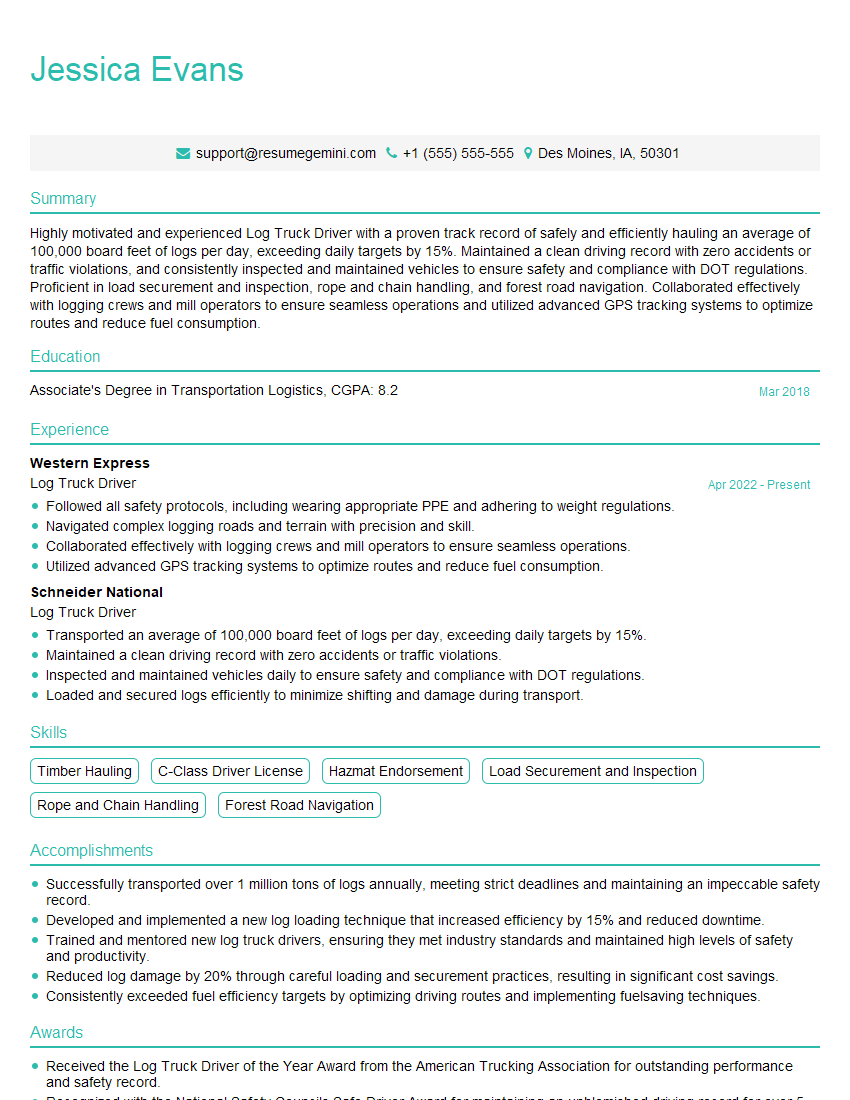
Mastering efficient log loading and unloading techniques is crucial for career advancement in the forestry and transportation industries. It demonstrates valuable skills in safety, logistics, and practical problem-solving. To significantly increase your job prospects, focus on creating an ATS-friendly resume that highlights these crucial skills. ResumeGemini is a trusted resource that can help you build a professional and impactful resume, ensuring your qualifications stand out. Examples of resumes tailored to showcasing proficiency in log loading and unloading are available to guide you through the process.



Explore more articles
Users Rating of Our Blogs
Share Your Experience
We value your feedback! Please rate our content and share your thoughts (optional).
What Readers Say About Our Blog
Hello,
we currently offer a complimentary backlink and URL indexing test for search engine optimization professionals.
You can get complimentary indexing credits to test how link discovery works in practice.
No credit card is required and there is no recurring fee.
You can find details here:
https://wikipedia-backlinks.com/indexing/
Regards
NICE RESPONSE TO Q & A
hi
The aim of this message is regarding an unclaimed deposit of a deceased nationale that bears the same name as you. You are not relate to him as there are millions of people answering the names across around the world. But i will use my position to influence the release of the deposit to you for our mutual benefit.
Respond for full details and how to claim the deposit. This is 100% risk free. Send hello to my email id: [email protected]
Luka Chachibaialuka
Hey interviewgemini.com, just wanted to follow up on my last email.
We just launched Call the Monster, an parenting app that lets you summon friendly ‘monsters’ kids actually listen to.
We’re also running a giveaway for everyone who downloads the app. Since it’s brand new, there aren’t many users yet, which means you’ve got a much better chance of winning some great prizes.
You can check it out here: https://bit.ly/callamonsterapp
Or follow us on Instagram: https://www.instagram.com/callamonsterapp
Thanks,
Ryan
CEO – Call the Monster App
Hey interviewgemini.com, I saw your website and love your approach.
I just want this to look like spam email, but want to share something important to you. We just launched Call the Monster, a parenting app that lets you summon friendly ‘monsters’ kids actually listen to.
Parents are loving it for calming chaos before bedtime. Thought you might want to try it: https://bit.ly/callamonsterapp or just follow our fun monster lore on Instagram: https://www.instagram.com/callamonsterapp
Thanks,
Ryan
CEO – Call A Monster APP
To the interviewgemini.com Owner.
Dear interviewgemini.com Webmaster!
Hi interviewgemini.com Webmaster!
Dear interviewgemini.com Webmaster!
excellent
Hello,
We found issues with your domain’s email setup that may be sending your messages to spam or blocking them completely. InboxShield Mini shows you how to fix it in minutes — no tech skills required.
Scan your domain now for details: https://inboxshield-mini.com/
— Adam @ InboxShield Mini
Reply STOP to unsubscribe
Hi, are you owner of interviewgemini.com? What if I told you I could help you find extra time in your schedule, reconnect with leads you didn’t even realize you missed, and bring in more “I want to work with you” conversations, without increasing your ad spend or hiring a full-time employee?
All with a flexible, budget-friendly service that could easily pay for itself. Sounds good?
Would it be nice to jump on a quick 10-minute call so I can show you exactly how we make this work?
Best,
Hapei
Marketing Director
Hey, I know you’re the owner of interviewgemini.com. I’ll be quick.
Fundraising for your business is tough and time-consuming. We make it easier by guaranteeing two private investor meetings each month, for six months. No demos, no pitch events – just direct introductions to active investors matched to your startup.
If youR17;re raising, this could help you build real momentum. Want me to send more info?
Hi, I represent an SEO company that specialises in getting you AI citations and higher rankings on Google. I’d like to offer you a 100% free SEO audit for your website. Would you be interested?
Hi, I represent an SEO company that specialises in getting you AI citations and higher rankings on Google. I’d like to offer you a 100% free SEO audit for your website. Would you be interested?
good