Feeling uncertain about what to expect in your upcoming interview? We’ve got you covered! This blog highlights the most important Project Coordination and Implementation interview questions and provides actionable advice to help you stand out as the ideal candidate. Let’s pave the way for your success.
Questions Asked in Project Coordination and Implementation Interview
Q 1. Describe your experience with project scheduling methodologies (e.g., Agile, Waterfall, Kanban).
My experience spans various project scheduling methodologies, each suited to different project types and complexities. Waterfall, a traditional approach, is ideal for projects with well-defined requirements and minimal anticipated changes. It follows a sequential process: initiation, planning, execution, monitoring & controlling, and closure. I’ve used this successfully for software deployments with stable specifications. Agile, conversely, embraces iterative development and flexibility, making it perfect for projects requiring adaptability and frequent feedback. I’ve employed Scrum, a popular Agile framework, in web development projects where user input and evolving requirements were crucial. This involves sprints (short development cycles) with daily stand-ups for communication and progress tracking. Kanban, another Agile method, focuses on visualizing workflow and limiting work in progress. I’ve found it beneficial for managing tasks within larger projects, ensuring a smooth and efficient flow of work. The choice of methodology depends on the project’s characteristics; my expertise allows me to select and implement the most effective approach.
Q 2. How do you prioritize competing project demands and deadlines?
Prioritizing competing demands requires a structured approach. I typically use a combination of techniques. First, I clearly define project goals and objectives, assigning weights to reflect their relative importance. Then, I assess each task’s urgency and impact, often using a prioritization matrix (e.g., Eisenhower Matrix – Urgent/Important). This helps categorize tasks as: Do, Decide, Delegate, or Delete. Dependencies between tasks are also considered – critical path analysis is employed to identify the sequence of tasks that directly impacts the project’s completion date. Finally, I communicate the prioritization rationale to stakeholders, ensuring transparency and buy-in. For instance, in one project with multiple deadlines, we prioritized bug fixes impacting critical functionalities over features with lower impact, ensuring timely delivery of the core product.
Q 3. Explain your approach to risk management in project implementation.
My approach to risk management is proactive and systematic. It starts with risk identification – brainstorming potential issues, reviewing past project experiences, and analyzing project documentation. Next, I assess each risk’s likelihood and impact, using qualitative or quantitative methods. This helps prioritize which risks require immediate attention. Then, I develop mitigation strategies for high-priority risks, defining contingency plans and assigning responsibilities. This might include allocating extra time buffers, securing backup resources, or developing alternative solutions. Regular monitoring is crucial; I track potential risks throughout the project lifecycle, updating the risk register and adapting strategies as needed. For instance, in a recent project with a reliance on external vendors, we factored in potential delays due to their performance into our schedule and developed contingency plans to manage those delays, ensuring the project stayed on track.
Q 4. What tools and software are you proficient in for project coordination (e.g., MS Project, Jira, Asana)?
I’m proficient in several project coordination tools, each offering unique functionalities. Microsoft Project is invaluable for creating detailed project schedules, tracking progress, and managing resources. Jira is my go-to for Agile project management, facilitating task management, bug tracking, and sprint planning. Asana excels at team collaboration and task assignment, offering excellent visual representations of workflows. I also have experience with other tools like Trello and Monday.com, adapting my tool selection to the project’s specific needs and team preferences. My skill isn’t just about knowing the software but using it strategically to improve communication, productivity, and visibility within the project.
Q 5. How do you ensure effective communication among project stakeholders?
Effective communication is the cornerstone of successful project coordination. My approach involves establishing clear communication channels and protocols from the project’s outset. This includes regular meetings (stand-ups, status updates), email updates, and the use of project management tools to facilitate communication and information sharing. I tailor my communication style to the audience; technical details for the team, concise summaries for senior management. I encourage open dialogue and feedback from all stakeholders, using surveys, feedback sessions, and informal check-ins to ensure everyone feels heard. Transparency is key; I proactively share project updates, challenges, and decisions to maintain trust and build a collaborative environment. For instance, I established a dedicated Slack channel for one project, which facilitated real-time communication and problem-solving.
Q 6. Describe a time you had to manage a project scope change. What was your approach?
In a previous project, we experienced a significant scope change midway through development. A key stakeholder requested the addition of a new feature impacting the user interface. My approach involved a structured response. First, I documented the change request formally, clearly outlining the new requirements and its implications. Then, I conducted a thorough impact assessment, analyzing the effects on the schedule, budget, and resources. We presented these findings to the stakeholders, transparently discussing the trade-offs of incorporating the new feature (potential delays vs. added value). After reaching a consensus, we formally updated the project plan, incorporating the new feature and adjusting the timeline and budget accordingly. Effective communication and collaboration were critical during this process, ensuring everyone was aware of the adjustments and their implications.
Q 7. How do you track project progress and identify potential delays?
Tracking project progress and identifying potential delays involves a multi-faceted approach. I utilize project management software to monitor task completion, resource allocation, and milestone achievements. Regular progress reports, both quantitative (e.g., % complete) and qualitative (e.g., addressing challenges), are generated and shared with stakeholders. Critical path analysis helps identify tasks that are crucial to the project’s timeline; any delay in these tasks directly impacts the overall project completion date. Regularly reviewing burn-down charts helps track progress against the planned schedule, indicating potential variances. I also actively seek feedback from the team to identify any unseen roadblocks or challenges, enabling proactive mitigation of potential delays. Proactive monitoring, coupled with timely adjustments, is essential for staying on track.
Q 8. How do you handle conflict resolution within a project team?
Conflict resolution is crucial for a project’s success. My approach is proactive and focuses on understanding the root cause, not just the symptoms. I start by creating a safe and respectful environment where team members feel comfortable expressing their concerns. I use active listening to understand each perspective, ensuring everyone feels heard.
Next, I facilitate a collaborative discussion, guiding the team towards a mutually agreeable solution. This may involve brainstorming alternative approaches, compromising, or mediating between conflicting viewpoints. For example, in a recent project, two team members disagreed on the best approach to software testing. Instead of imposing a solution, I facilitated a discussion where they presented their arguments, identified the strengths and weaknesses of each approach, and collaboratively developed a hybrid solution that incorporated the best elements of both. Finally, I document the agreed-upon solution and ensure everyone understands their roles and responsibilities in implementing it. Follow-up is key to ensure the solution is working and address any lingering issues.
Q 9. What is your experience with budget management and tracking in projects?
Budget management is a critical aspect of my project coordination responsibilities. I have extensive experience using various budgeting tools and techniques. My approach begins with a detailed budget breakdown during the project planning phase, clearly outlining all anticipated costs – from personnel and materials to software licenses and travel. I use project management software like Microsoft Project or Jira to track expenses against the budget in real-time.
Regular monitoring and reporting are vital. I provide regular updates to stakeholders, highlighting any variances from the planned budget. This involves analyzing actual costs against projected costs, identifying potential cost overruns, and proactively implementing corrective actions. For instance, if I notice material costs are exceeding the budget, I explore alternative suppliers or streamline the material usage process. This proactive approach prevents minor issues from escalating into major budget crises. I also maintain a detailed audit trail of all financial transactions, ensuring transparency and accountability.
Q 10. Describe your process for documenting project requirements and deliverables.
Thorough documentation is the cornerstone of successful project delivery. My process starts with clearly defined project requirements, gathered through stakeholder interviews, workshops, and document reviews. These requirements are meticulously documented in a requirements specification document, using a clear and concise format. This document includes functional requirements (what the system should do), non-functional requirements (performance, security, etc.), and acceptance criteria (how we’ll know if it’s done right).
Similarly, deliverables are carefully defined and documented, outlining what each deliverable entails, its expected quality, and the deadlines for completion. I use tools like project management software, wikis, or shared document repositories to ensure all documentation is centrally located, version-controlled, and easily accessible to the entire team. This centralized approach prevents misunderstandings and ensures consistency in the understanding of requirements and deliverables across the project team and stakeholders. For example, using a mind-map helps visualize complex interdependencies between requirements and deliverables.
Q 11. How do you ensure project quality control?
Ensuring project quality is a continuous process, integrated throughout the project lifecycle. My approach involves implementing a multi-layered quality control system. This begins with establishing clear quality standards and metrics during the project planning phase. These standards are then embedded into each phase of the project, from requirements gathering to testing and deployment.
Regular quality checks and reviews are conducted at various stages. This may involve code reviews, design reviews, testing (unit, integration, system, user acceptance testing), and regular progress meetings. I employ various quality control methodologies, including checklists, inspection techniques, and formal testing procedures. In case of deviations from the quality standards, corrective actions are identified and implemented promptly, with proper documentation of the issue, the corrective action taken, and the verification of its effectiveness. This proactive approach minimizes risks, reduces defects, and ensures the final product meets the specified quality criteria.
Q 12. Explain your understanding of critical path analysis.
Critical Path Analysis (CPA) is a project management technique used to identify the longest sequence of dependent tasks in a project, determining the minimum project duration. This longest sequence is the critical path. Any delay in tasks on the critical path directly impacts the project’s overall completion time.
I use CPA to create a project schedule, identify potential bottlenecks, and allocate resources effectively. It helps prioritize tasks and identify which tasks need close monitoring to avoid delays. For example, if task A must be completed before task B, and task B before task C, and each takes a certain amount of time, CPA helps visualize and calculate the total time required for the project and highlights any dependencies that might delay the project’s completion. I typically use project management software with built-in CPA capabilities to create and update the project schedule and monitor progress against the critical path.
Q 13. What metrics do you use to measure project success?
Project success is measured across multiple dimensions, not solely on budget and schedule adherence. I use a balanced scorecard approach, considering several key metrics:
- On-time delivery: Meeting project deadlines.
- On-budget delivery: Staying within the allocated budget.
- Scope adherence: Delivering all planned features and functionalities.
- Quality: Meeting pre-defined quality standards and user satisfaction.
- Stakeholder satisfaction: Meeting the expectations and needs of all stakeholders.
- Return on Investment (ROI): Measuring the overall value delivered by the project.
These metrics are tracked throughout the project lifecycle and reported regularly to stakeholders. This data-driven approach allows for continuous improvement and facilitates informed decision-making.
Q 14. How do you handle unexpected project challenges or roadblocks?
Unexpected challenges are inevitable in project management. My approach emphasizes proactive risk management and a structured response to unforeseen circumstances. I begin by quickly assessing the impact of the challenge on the project’s timeline, budget, and scope. Then, I gather information, involving the relevant stakeholders to understand the root cause of the problem.
Next, I develop and evaluate several potential solutions, considering their feasibility, cost, and potential impact. I choose the most effective solution and communicate it clearly to the team and stakeholders. The implementation of the solution is closely monitored, and adjustments are made as needed. Finally, I conduct a post-incident review to learn from the experience and identify improvements to prevent similar challenges in the future. For example, if a key vendor delays delivery, I might explore alternative suppliers, adjust the project schedule, or redesign components to mitigate the impact. Documentation throughout this process is vital, providing a record of the challenge, the chosen solution, and the lessons learned.
Q 15. Describe your experience with project closure procedures.
Project closure is more than just wrapping up; it’s a methodical process ensuring all loose ends are tied, lessons are learned, and the project’s success is formally documented. It involves a series of steps to ensure a smooth transition and minimize any lingering issues.
- Final Product/Service Delivery: This includes final testing, sign-off from stakeholders, and deployment or handover of the project deliverables. For example, in a software development project, this might involve deploying the software to a production environment and verifying its functionality.
- Documentation Completion: All project documents, including the final report, user manuals, and training materials, need to be finalized and stored securely. This ensures that future maintenance or troubleshooting can be done efficiently. I’ve personally used a project management system that auto-generates much of this documentation, minimizing manual effort.
- Financial Closure: Invoices are reconciled, payments are finalized, and a final budget report is prepared, identifying variances and highlighting areas of cost-effectiveness or areas needing improvement in future projects. This involves meticulous record-keeping and auditing.
- Team Demobilization: The project team is formally dissolved, and individual roles are handed over, knowledge is transferred appropriately, and a final team evaluation may be conducted.
- Post-Implementation Review (PIR): A critical step involves conducting a post-implementation review, analyzing what worked well, what went wrong, and identifying areas for improvement in future projects. This ensures continuous learning and improvement within the organization.
In one project, involving the rollout of a new CRM system, meticulous closure procedures ensured a seamless transition for our client, resulting in minimal disruption to their operations and positive feedback.
Career Expert Tips:
- Ace those interviews! Prepare effectively by reviewing the Top 50 Most Common Interview Questions on ResumeGemini.
- Navigate your job search with confidence! Explore a wide range of Career Tips on ResumeGemini. Learn about common challenges and recommendations to overcome them.
- Craft the perfect resume! Master the Art of Resume Writing with ResumeGemini’s guide. Showcase your unique qualifications and achievements effectively.
- Don’t miss out on holiday savings! Build your dream resume with ResumeGemini’s ATS optimized templates.
Q 16. How do you manage project documentation and archiving?
Effective project documentation and archiving are crucial for project success and future reference. My approach is centered around a system of organization and digital management.
- Centralized Repository: I always utilize a centralized document repository (like SharePoint or a cloud-based solution) to store all project-related documents, ensuring version control and easy access for the team. This minimizes confusion and ensures everyone is working with the most up-to-date information.
- Clear Naming Conventions: Implementing a standardized and clear naming convention for files and folders is essential for quick retrieval of information. This makes searching much easier. For example, using the format ‘Project Name_Document Type_Date’ ensures consistency and clarity.
- Metadata Tagging: Thorough metadata tagging of documents ensures that they are easily searchable and categorized. Keywords and relevant information are added, enabling efficient searching and filtering.
- Regular Backups: Regular backups are crucial for protecting against data loss. I ensure that the project documents are backed up on multiple locations, both on-site and off-site, to ensure data safety and redundancy.
- Archiving Policy: A clear archiving policy should be established defining how long documents should be retained. This policy must comply with the organization’s record management requirements and relevant legal or regulatory guidelines.
For instance, in a large construction project, having a well-organized archive proved invaluable when resolving a minor dispute years after project completion; the archived documents clearly established the agreed-upon specifications.
Q 17. What is your experience with different project lifecycle methodologies?
My experience encompasses several project lifecycle methodologies, each with its own strengths and weaknesses. Understanding the context and selecting the right methodology is vital for project success.
- Waterfall: A linear approach, suitable for projects with well-defined requirements and minimal anticipated changes. I’ve used it successfully in projects with fixed scope and predictable timelines, like building a small, self-contained software module.
- Agile (Scrum, Kanban): Iterative and incremental, ideal for projects with evolving requirements or where flexibility is crucial. I’ve successfully led teams through several Agile projects, adapting the framework to the specific project needs. For example, employing Kanban in a content creation project allowed us to adapt efficiently to changing marketing priorities.
- Hybrid Methodologies: Often, a blended approach is optimal, combining elements of different methodologies. This approach allows teams to leverage the strengths of each approach and overcome their weaknesses. For example, in a large software development project, we might use Agile for the development phase and Waterfall for the deployment phase to manage dependencies.
My adaptability allows me to select and adapt the most suitable methodology based on the project’s complexity, stakeholder involvement, and other variables.
Q 18. How do you contribute to team morale and productivity?
Team morale and productivity are intrinsically linked. A motivated and engaged team is far more productive. My approach focuses on fostering a positive and collaborative work environment.
- Open Communication: I promote open and transparent communication, ensuring everyone is informed and feels heard. Regular team meetings, feedback sessions, and informal check-ins are essential.
- Recognition and Appreciation: Recognizing and appreciating individual and team accomplishments is crucial for boosting morale. Celebrating successes, both big and small, fosters a sense of camaraderie and shared achievement. This might include a team lunch or a public acknowledgment of achievements.
- Delegation and Empowerment: I delegate tasks effectively, providing team members with opportunities to take ownership and develop their skills. This fosters a sense of responsibility and trust. I believe in empowering my team to make decisions within their scope of responsibilities.
- Conflict Resolution: Addressing conflicts promptly and fairly is vital for maintaining a positive work environment. Promoting respectful communication and finding solutions collaboratively avoids resentment. I have experience mediating between team members and finding mutually agreeable solutions.
- Work-Life Balance: Promoting a healthy work-life balance is essential to preventing burnout and maintaining high morale. Encouraging breaks, time off, and a realistic workload are important.
In a recent project, proactive team building activities and regular feedback sessions resulted in a team exceeding its targets and maintaining high morale throughout the demanding project lifecycle.
Q 19. Describe your experience with change management within a project.
Change management is an inherent part of project life. Effective change management minimizes disruption and ensures the project remains on track. My approach involves a structured process.
- Change Request Process: Establishing a formal change request process is crucial. All proposed changes are documented, reviewed, assessed for impact, and approved or rejected systematically. This maintains transparency and control.
- Impact Assessment: Thoroughly assessing the impact of proposed changes on the project schedule, budget, and scope is essential. This involves considering potential risks and benefits.
- Communication Plan: Effective communication is crucial throughout the change management process. Stakeholders need to be informed promptly of proposed changes and their implications. This includes providing regular updates and addressing any concerns.
- Risk Mitigation: Identifying and mitigating potential risks associated with changes is vital. This might involve contingency planning or adjusting the project schedule or budget.
- Documentation: All changes, including their approval process and any consequential adjustments, need to be meticulously documented. This provides a clear audit trail and supports future reference.
For example, in a website redesign project, a client requested a significant change mid-project. By using a structured change management process, we successfully implemented the change while minimizing disruption to the overall project timeline and budget.
Q 20. How do you ensure compliance with relevant regulations and standards in project implementation?
Compliance is paramount in project implementation. My approach involves proactively identifying, understanding, and adhering to all relevant regulations and standards.
- Identify Applicable Regulations: First, we identify all applicable regulations, industry standards, and legal requirements relevant to the project. This might include health and safety regulations, environmental protection laws, data privacy regulations, or specific industry codes of practice.
- Integrate Compliance into Project Plan: Compliance requirements are integrated into the project plan from the outset, ensuring they are addressed throughout the project lifecycle. This includes allocating resources, defining responsibilities, and setting timelines for compliance activities.
- Regular Audits and Reviews: Regular audits and reviews are conducted to ensure ongoing compliance. This involves checking adherence to regulations, reviewing documentation, and identifying any potential non-compliance issues.
- Training and Awareness: Providing training and awareness sessions to the project team on relevant regulations and compliance procedures is crucial. This ensures everyone understands their responsibilities and how to comply with the standards.
- Documentation of Compliance: Maintaining detailed records of all compliance activities is essential. This includes documenting training records, audit findings, and any corrective actions taken.
In a recent project involving the development of a medical device, strict adherence to FDA regulations and ISO 13485 standards was crucial. A rigorous compliance program ensured the project met all regulatory requirements throughout the development and deployment process.
Q 21. What is your experience with resource allocation and management?
Resource allocation and management are critical for project success. My experience involves a structured and strategic approach.
- Resource Identification: The first step involves identifying all resources required for the project, including personnel, equipment, materials, and budget. This involves understanding the project’s needs and aligning them with available resources.
- Resource Allocation: Resources are allocated based on their skills, availability, and project needs. This might involve assigning tasks to individuals, allocating budget to specific activities, or scheduling the use of equipment.
- Resource Leveling: Resource leveling techniques are used to optimize resource utilization and minimize conflicts. This ensures that resources are used efficiently and that no single resource is overloaded.
- Monitoring and Control: Regular monitoring and control of resource utilization is crucial. This involves tracking progress, identifying potential issues, and taking corrective action as needed. Tools like Gantt charts are used to visualize and track resource allocation.
- Reporting: Regular reporting on resource utilization is essential for stakeholders. This provides insight into resource allocation effectiveness, potential bottlenecks, and areas needing improvement.
In a large-scale software development project, effective resource allocation ensured optimal team utilization, allowing the project to remain on schedule and within budget. We used a resource management tool to allocate developers and testers effectively across different sprints.
Q 22. How do you handle stakeholder expectations and communication?
Managing stakeholder expectations and communication is crucial for project success. It’s about proactively understanding their needs, keeping them informed, and addressing concerns transparently. I approach this using a multi-faceted strategy.
Proactive Communication Planning: Before the project even begins, I create a communication plan that outlines who needs what information, how often, and through which channels (e.g., regular meetings, email updates, project management software). This ensures everyone is on the same page from the start.
Regular Stakeholder Engagement: I schedule regular meetings with key stakeholders to provide updates, discuss progress, and address any issues. These meetings aren’t just one-way information dumps; they’re opportunities for open dialogue and feedback.
Transparent Reporting: I use clear and concise reports that highlight key milestones, risks, and potential delays. I avoid technical jargon and focus on presenting information in a way that’s easily understood by everyone, regardless of their technical background.
Issue Management: When issues arise, I address them promptly and transparently. I communicate the problem, the potential impact, and the steps being taken to resolve it. This helps maintain trust and manage expectations.
Active Listening: I make sure to actively listen to stakeholder concerns and feedback. This demonstrates respect and helps build stronger relationships. I might even use techniques like a stakeholder register to track their priorities and concerns.
For example, on a recent software implementation project, I held weekly stand-up meetings with the client, providing visual dashboards to track progress and highlight potential roadblocks. This proactive communication ensured that they were always informed and felt involved throughout the process.
Q 23. Describe a time you had to make a difficult decision in a project setting.
In a previous project, we were developing a new mobile application with a tight deadline. We encountered a critical bug in the final stages of testing that threatened to delay the launch. The decision was whether to release the app with the bug (risking reputational damage) or delay the launch (potentially impacting marketing and sales).
After carefully weighing the options and consulting with the development team, marketing, and senior management, I decided to delay the launch. Although it was a difficult decision, we prioritized quality over speed. We communicated the delay transparently to stakeholders, outlining the reasons and the revised timeline. This fostered trust and ultimately resulted in a smoother and more successful launch once the bug was fixed.
The key was to apply a structured decision-making process: clearly define the problem, list the potential solutions, assess the risks and benefits of each, and involve relevant stakeholders in the decision-making process. Documentation played a critical role in justifying my decision and outlining the process to stakeholders.
Q 24. How do you identify and mitigate potential risks in a project?
Risk management is a crucial aspect of project coordination. My approach involves a proactive and iterative process.
Risk Identification: I use brainstorming sessions, checklists, and SWOT (Strengths, Weaknesses, Opportunities, Threats) analysis to identify potential risks. This often involves input from the entire project team and stakeholders.
Risk Assessment: For each identified risk, I assess its likelihood and potential impact on the project. I might use a risk matrix to visualize this.
Risk Response Planning: Based on the assessment, I develop mitigation strategies for each risk. This might involve developing contingency plans, allocating additional resources, or implementing preventative measures.
Risk Monitoring and Control: I regularly monitor the identified risks throughout the project lifecycle, tracking their status and adjusting the mitigation strategies as needed. Regular updates and re-assessments keep the risks under control.
For example, on a construction project, a major risk was inclement weather delaying the work. We mitigated this by creating a detailed weather contingency plan, including alternative work schedules and procurement of appropriate protective materials. Regular monitoring of the weather forecast allowed us to proactively adjust our plans and minimize delays.
Q 25. What is your experience with project reporting and presentations?
I have extensive experience in creating and delivering project reports and presentations. My approach is tailored to the audience and the purpose of the report or presentation.
Data Collection and Analysis: I gather relevant data from various sources (project management software, team reports, etc.) and analyze it to identify key trends and insights.
Report/Presentation Structure: I structure reports and presentations using a clear and logical framework, including an executive summary, key findings, supporting data, and recommendations.
Visualizations: I utilize charts, graphs, and other visual aids to present data effectively and make it easily digestible. I avoid overwhelming the audience with unnecessary information.
Delivery: I practice my presentations beforehand and strive to deliver them in a confident and engaging manner. I’m comfortable answering questions and handling feedback.
I’m proficient in using various presentation software (e.g., PowerPoint, Google Slides) and project management software (e.g., Microsoft Project, Jira) to create professional and informative reports and presentations. For example, I’ve regularly presented project updates to executive boards using compelling visuals and data-driven insights.
Q 26. How familiar are you with project post-implementation reviews?
Project post-implementation reviews (PIRs) are critical for learning from past experiences and improving future projects. A PIR is a structured process to evaluate the project’s success against its objectives, identify lessons learned, and suggest improvements. My experience with PIRs is extensive, including facilitation, documentation, and implementation of corrective actions.
Data Gathering: I collect data from various sources, including project documentation, team feedback, stakeholder interviews, and performance metrics.
Analysis: I analyze the gathered data to identify areas of success and failure, pinpoint contributing factors, and extract key lessons learned.
Reporting: I compile a comprehensive report that documents the project’s performance, key findings, and recommendations for improvement. This report is often presented to stakeholders and used to inform future projects.
Action Planning: I facilitate the development of an action plan based on the PIR findings. This involves identifying specific actions to address shortcomings and implement best practices.
For instance, during a recent project, our PIR revealed a communication bottleneck that delayed decision-making. We used this finding to revise our communication plan for future projects, resulting in improved collaboration and efficiency.
Q 27. Describe your experience with vendor management in project implementation.
Vendor management is a crucial aspect of many projects. My experience spans various aspects, from selection to contract negotiation and performance monitoring.
Vendor Selection: I use a structured process to select vendors, including defining requirements, evaluating proposals, and conducting due diligence. This involves assessing factors such as experience, capabilities, and financial stability.
Contract Negotiation: I negotiate contracts that clearly define scope of work, timelines, payment terms, and service level agreements (SLAs). I ensure that the contracts protect the project’s interests while maintaining a positive working relationship with the vendor.
Performance Monitoring: I establish clear performance indicators (KPIs) and regularly monitor the vendor’s performance against those indicators. I maintain open communication with the vendor to address any issues promptly.
Relationship Management: I foster a strong working relationship with vendors through regular communication, collaboration, and mutual respect.
For example, on a large-scale IT project, I managed multiple vendors providing different services. By establishing clear contracts and regularly monitoring their performance, I ensured that they delivered their services on time and within budget, leading to a successful project outcome. Regular meetings and transparent communication were key to managing relationships and navigating inevitable challenges.
Q 28. How do you balance short-term and long-term project goals?
Balancing short-term and long-term goals is a critical skill in project management. It requires a strategic approach that considers both immediate needs and the overall objectives.
Prioritization: I prioritize tasks and activities based on their impact on both short-term and long-term goals. This often involves using techniques like MoSCoW (Must have, Should have, Could have, Won’t have) to categorize requirements.
Resource Allocation: I allocate resources strategically to support both short-term deliverables and long-term objectives. This might involve prioritizing certain resources for critical short-term tasks while ensuring that sufficient resources are allocated to long-term initiatives.
Flexibility: I build flexibility into the project plan to accommodate unexpected changes and prioritize tasks based on emerging needs. This requires regular review and adaptation of the project plan.
Communication: I maintain transparent communication with stakeholders regarding the balance between short-term and long-term goals. This helps manage expectations and build consensus.
For instance, during a product development project, we needed to release a minimum viable product (MVP) quickly (short-term goal) while simultaneously building a robust platform for future scalability (long-term goal). We carefully prioritized features for the MVP, ensured that the underlying architecture supported future expansion, and maintained open communication with stakeholders about this balance.
Key Topics to Learn for Project Coordination and Implementation Interview
- Project Scope Management: Defining clear project objectives, deliverables, and timelines. Practical application: Developing a detailed work breakdown structure (WBS) and communicating it effectively to stakeholders.
- Risk Management: Identifying, assessing, and mitigating potential project risks. Practical application: Creating a risk register and developing contingency plans for various scenarios.
- Resource Allocation & Management: Efficiently assigning and managing project resources (human, financial, material). Practical application: Utilizing project management software to track resource utilization and optimize allocation.
- Communication & Stakeholder Management: Establishing clear communication channels and managing expectations with stakeholders. Practical application: Holding regular status meetings, distributing progress reports, and proactively addressing concerns.
- Project Scheduling & Monitoring: Creating and maintaining project schedules, tracking progress, and identifying potential delays. Practical application: Using Gantt charts or other visual tools to monitor progress and adjust schedules as needed.
- Budget Management & Control: Tracking project expenses against the budget and managing variances. Practical application: Implementing cost control measures and reporting on budget performance.
- Project Closure & Documentation: Completing project documentation, conducting post-project reviews, and archiving project materials. Practical application: Creating a final project report summarizing achievements, challenges, and lessons learned.
- Agile Methodologies (Optional): Understanding and applying agile principles in project coordination and implementation. Practical application: Experience with Scrum or Kanban methodologies.
Next Steps
Mastering Project Coordination and Implementation is crucial for career advancement in today’s dynamic project-driven environment. Strong project management skills are highly sought after, opening doors to leadership roles and increased earning potential. To significantly boost your job prospects, it’s essential to create a compelling and ATS-friendly resume that showcases your abilities effectively. ResumeGemini is a trusted resource to help you build a professional and impactful resume, highlighting your project coordination and implementation expertise. Examples of resumes tailored to this field are available to guide you. Invest time in crafting a strong resume; it’s your first impression to potential employers.
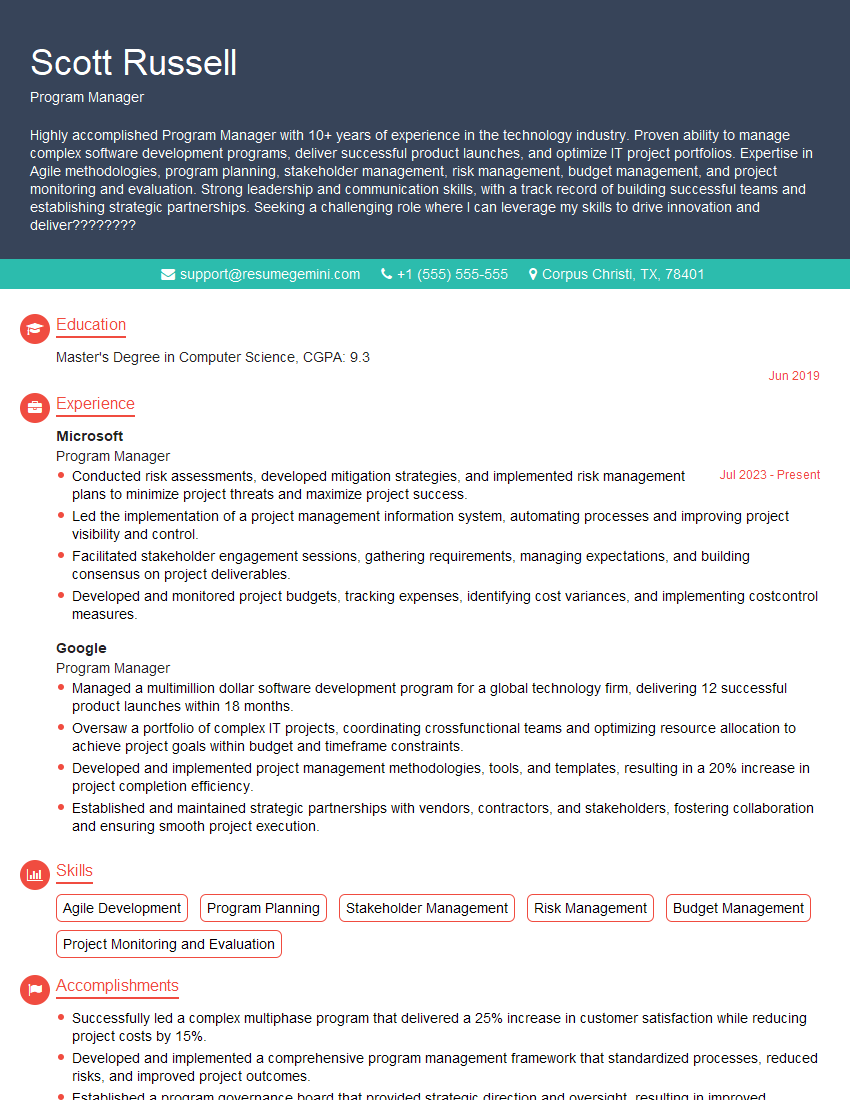
Program Manager Resume Sample
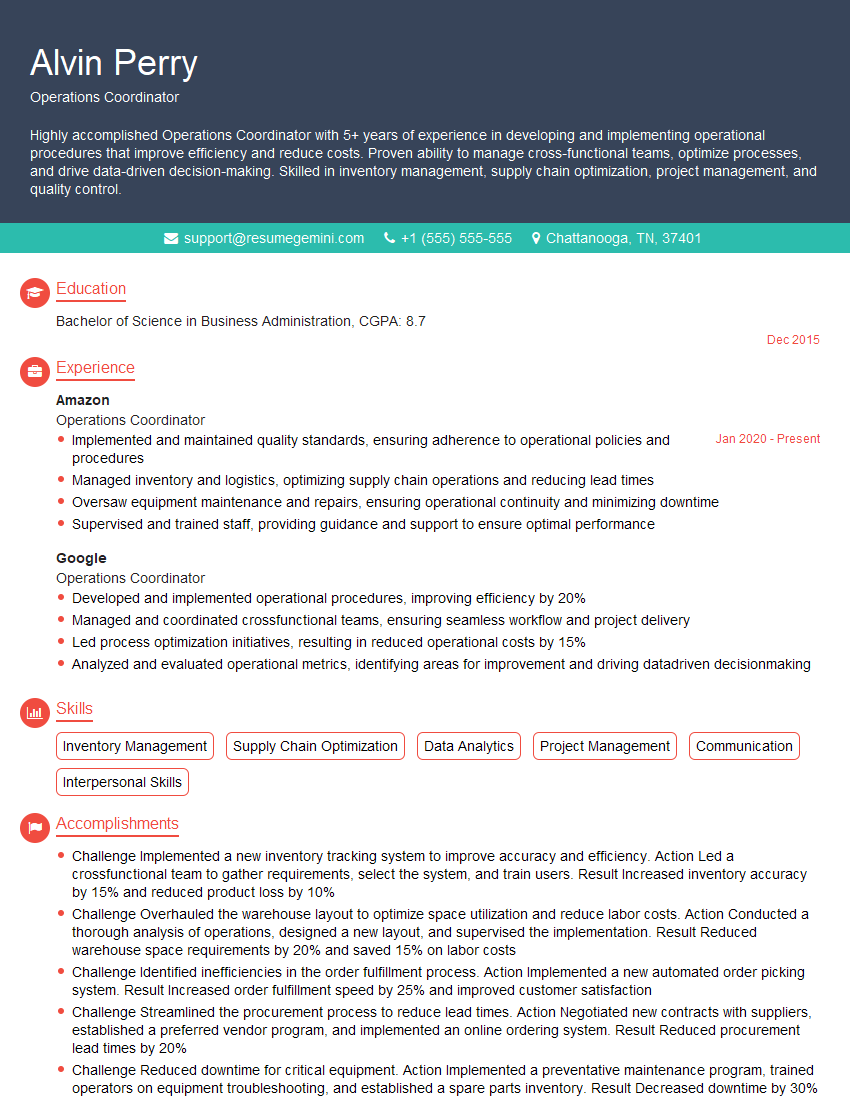
Operations Coordinator Resume Sample

Production Coordinator Resume Sample
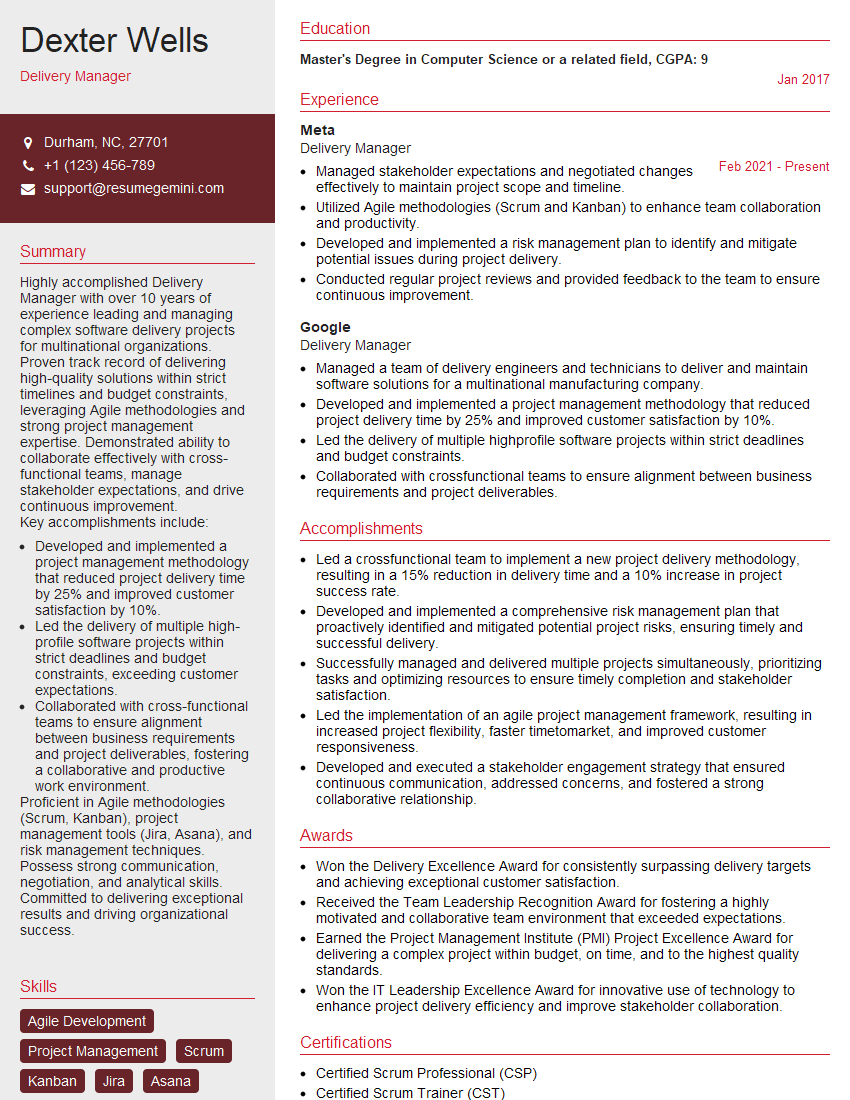
Delivery Manager Resume Sample
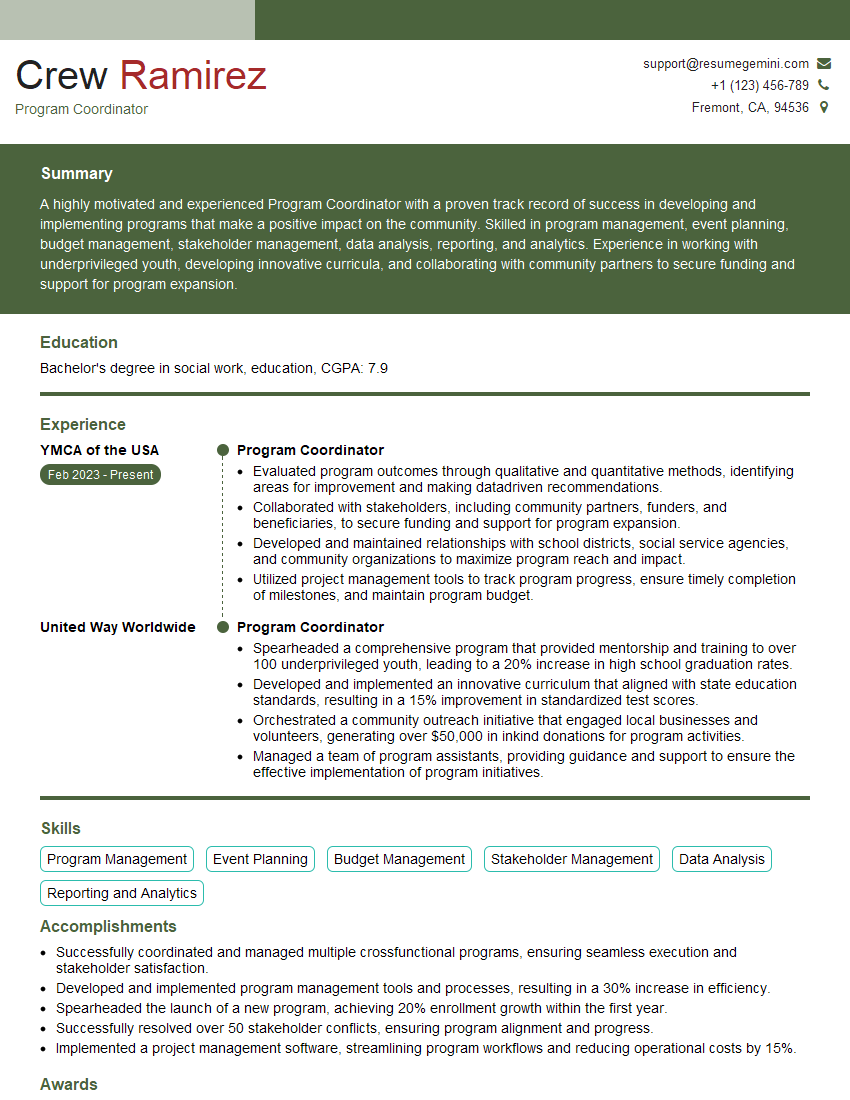
Program Coordinator Resume Sample
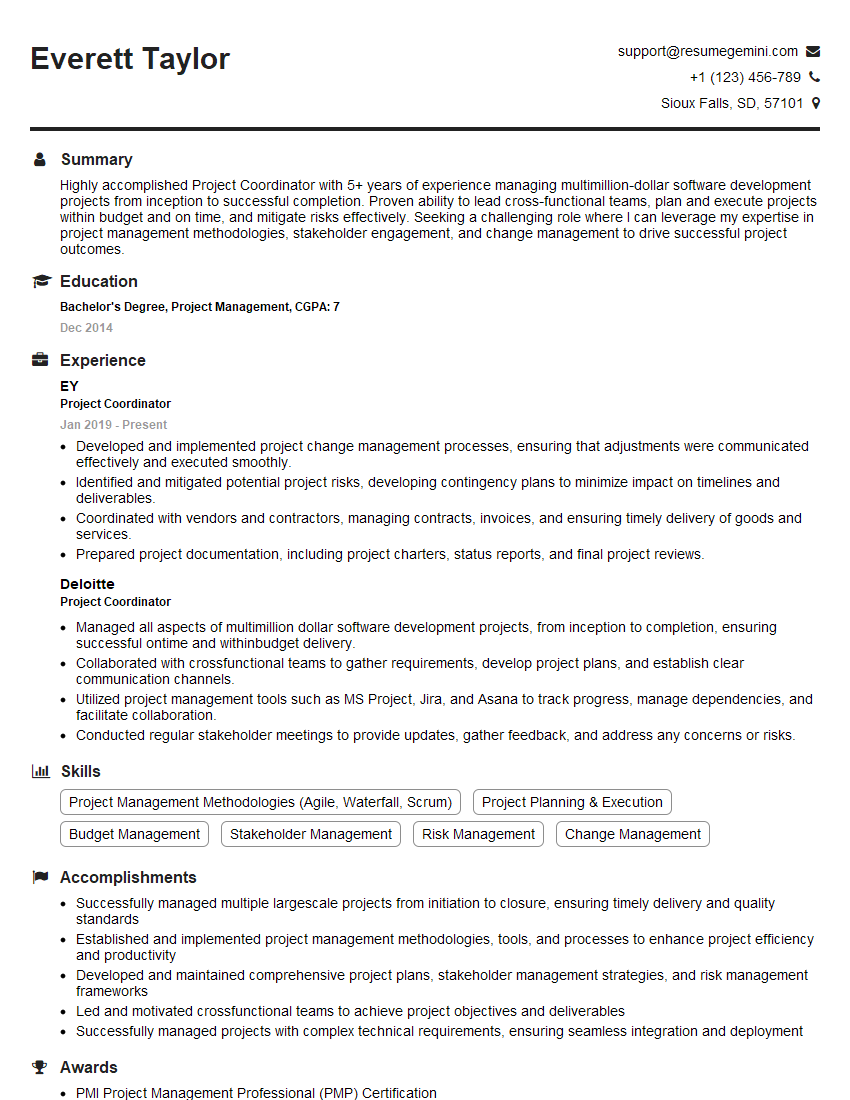
Project Coordinator Resume Sample
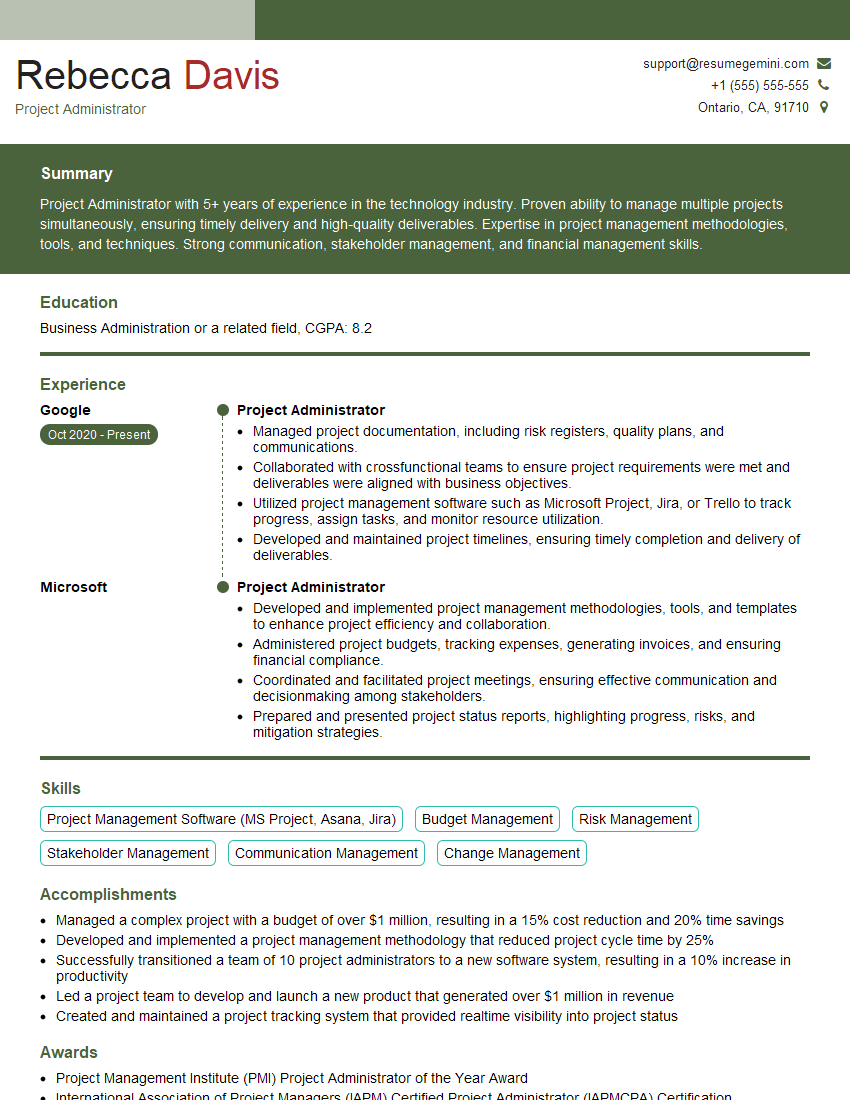
Project Administrator Resume Sample
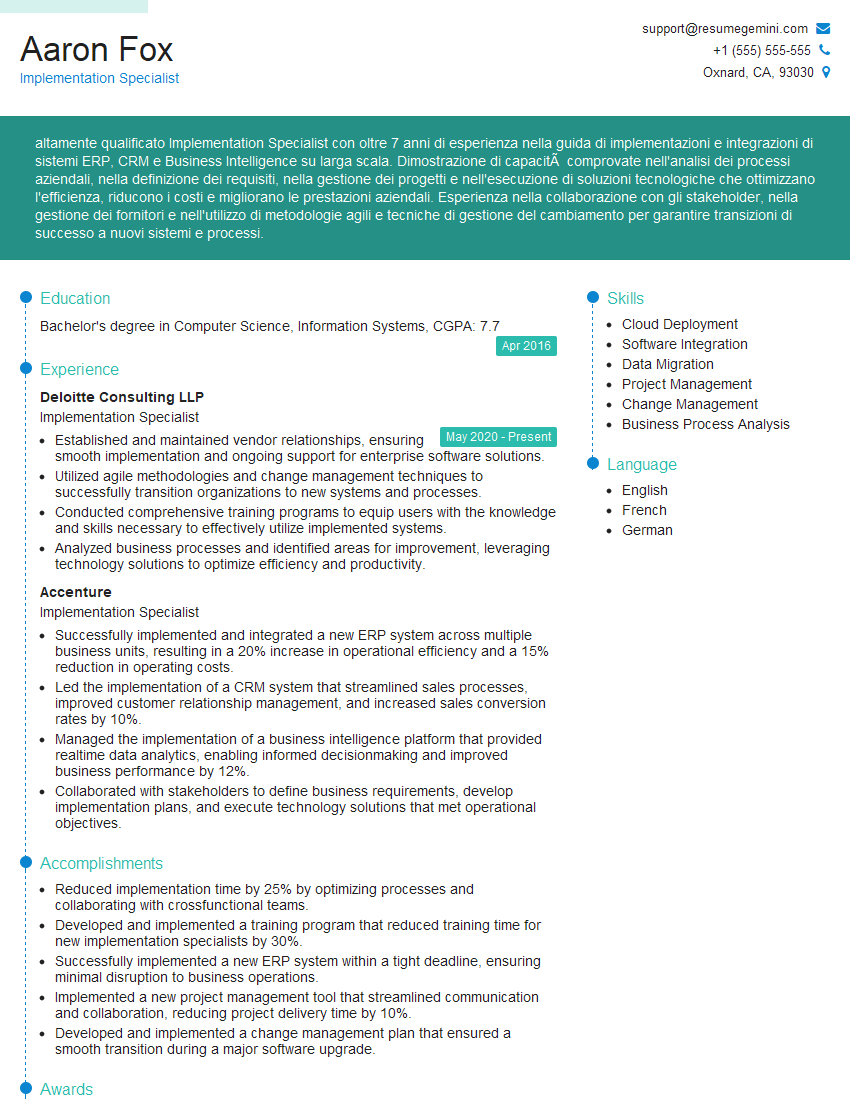
Implementation Specialist Resume Sample
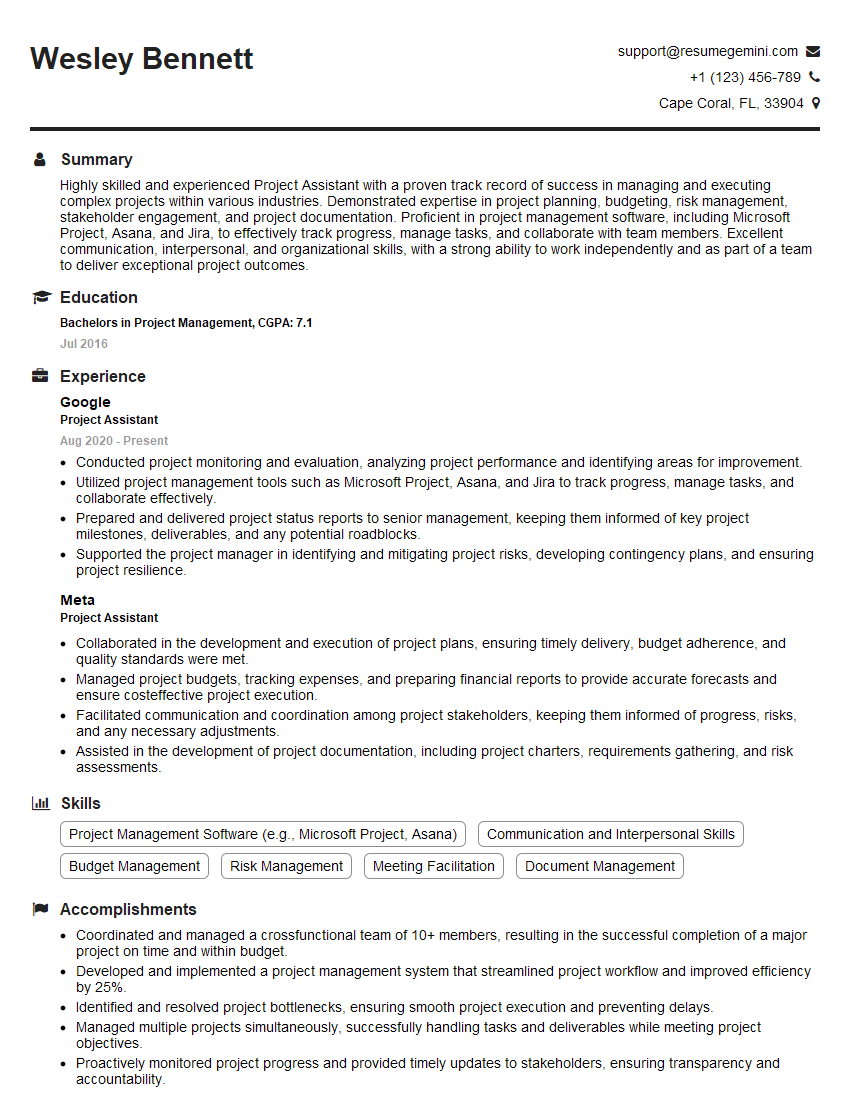
Project Assistant Resume Sample
Explore more articles
Users Rating of Our Blogs
Share Your Experience
We value your feedback! Please rate our content and share your thoughts (optional).
What Readers Say About Our Blog
Hello,
we currently offer a complimentary backlink and URL indexing test for search engine optimization professionals.
You can get complimentary indexing credits to test how link discovery works in practice.
No credit card is required and there is no recurring fee.
You can find details here:
https://wikipedia-backlinks.com/indexing/
Regards
NICE RESPONSE TO Q & A
hi
The aim of this message is regarding an unclaimed deposit of a deceased nationale that bears the same name as you. You are not relate to him as there are millions of people answering the names across around the world. But i will use my position to influence the release of the deposit to you for our mutual benefit.
Respond for full details and how to claim the deposit. This is 100% risk free. Send hello to my email id: [email protected]
Luka Chachibaialuka
Hey interviewgemini.com, just wanted to follow up on my last email.
We just launched Call the Monster, an parenting app that lets you summon friendly ‘monsters’ kids actually listen to.
We’re also running a giveaway for everyone who downloads the app. Since it’s brand new, there aren’t many users yet, which means you’ve got a much better chance of winning some great prizes.
You can check it out here: https://bit.ly/callamonsterapp
Or follow us on Instagram: https://www.instagram.com/callamonsterapp
Thanks,
Ryan
CEO – Call the Monster App
Hey interviewgemini.com, I saw your website and love your approach.
I just want this to look like spam email, but want to share something important to you. We just launched Call the Monster, a parenting app that lets you summon friendly ‘monsters’ kids actually listen to.
Parents are loving it for calming chaos before bedtime. Thought you might want to try it: https://bit.ly/callamonsterapp or just follow our fun monster lore on Instagram: https://www.instagram.com/callamonsterapp
Thanks,
Ryan
CEO – Call A Monster APP
To the interviewgemini.com Owner.
Dear interviewgemini.com Webmaster!
Hi interviewgemini.com Webmaster!
Dear interviewgemini.com Webmaster!
excellent
Hello,
We found issues with your domain’s email setup that may be sending your messages to spam or blocking them completely. InboxShield Mini shows you how to fix it in minutes — no tech skills required.
Scan your domain now for details: https://inboxshield-mini.com/
— Adam @ InboxShield Mini
Reply STOP to unsubscribe
Hi, are you owner of interviewgemini.com? What if I told you I could help you find extra time in your schedule, reconnect with leads you didn’t even realize you missed, and bring in more “I want to work with you” conversations, without increasing your ad spend or hiring a full-time employee?
All with a flexible, budget-friendly service that could easily pay for itself. Sounds good?
Would it be nice to jump on a quick 10-minute call so I can show you exactly how we make this work?
Best,
Hapei
Marketing Director
Hey, I know you’re the owner of interviewgemini.com. I’ll be quick.
Fundraising for your business is tough and time-consuming. We make it easier by guaranteeing two private investor meetings each month, for six months. No demos, no pitch events – just direct introductions to active investors matched to your startup.
If youR17;re raising, this could help you build real momentum. Want me to send more info?
Hi, I represent an SEO company that specialises in getting you AI citations and higher rankings on Google. I’d like to offer you a 100% free SEO audit for your website. Would you be interested?
Hi, I represent an SEO company that specialises in getting you AI citations and higher rankings on Google. I’d like to offer you a 100% free SEO audit for your website. Would you be interested?
good