Preparation is the key to success in any interview. In this post, we’ll explore crucial Quantitative Risk Assessment (QRA) interview questions and equip you with strategies to craft impactful answers. Whether you’re a beginner or a pro, these tips will elevate your preparation.
Questions Asked in Quantitative Risk Assessment (QRA) Interview
Q 1. Explain the difference between inherent risk and residual risk.
Inherent risk represents the total risk present in an activity or organization before any risk mitigation strategies are implemented. Think of it as the ‘raw’ risk. Residual risk, on the other hand, is the risk that remains after controls and mitigation measures have been put in place. It’s the risk we can’t completely eliminate.
Example: Imagine a bank. Inherent risk might include the possibility of loan defaults, fraud, or market downturns. After implementing measures like credit scoring, fraud detection systems, and diversification strategies, the remaining risk is the residual risk. Even with controls, some level of risk always persists.
Q 2. Describe your experience with different risk quantification methods (e.g., Monte Carlo simulation, historical simulation).
I have extensive experience with various risk quantification methods. Monte Carlo simulation is a cornerstone of my practice. It uses random sampling to model the probability distribution of risk factors and generates a large number of possible outcomes. This allows us to estimate the likelihood and magnitude of various potential losses.
Historical simulation leverages past data to project future risk. By analyzing historical events and their associated outcomes, we can create a probability distribution for future events. However, this method heavily relies on the assumption that past events are a good predictor of future events, which isn’t always true.
I’ve also worked with other techniques, such as the analytic hierarchy process (AHP) for qualitative aspects and scenario analysis to examine the impact of specific, often extreme, events. The choice of method depends heavily on the context and the data available.
Q 3. How do you validate a quantitative risk model?
Validating a quantitative risk model is crucial for ensuring its accuracy and reliability. This involves a multi-step process:
- Backtesting: Comparing the model’s predictions against actual historical data to assess its predictive power. This helps identify potential biases or weaknesses in the model.
- Sensitivity analysis: Examining how changes in input variables (e.g., market volatility, interest rates) affect the model’s outputs. This reveals the model’s robustness and highlights key risk drivers.
- Stress testing: Subjecting the model to extreme scenarios (e.g., a major market crash, a severe natural disaster) to evaluate its performance under adverse conditions. This assesses the model’s resilience.
- Expert review: Getting feedback from experienced risk professionals helps identify potential flaws in the model’s logic, assumptions, or data.
- Internal consistency checks: Examining whether different parts of the model are consistent with each other and adhere to accepted financial principles.
Validation is an iterative process, often involving refinements and recalibrations to enhance the model’s accuracy and reliability.
Q 4. What are the key assumptions underlying your preferred risk modeling technique?
My preferred technique, Monte Carlo simulation, relies on several key assumptions:
- Independence of variables: The model assumes that the risk factors are independent or that their dependencies can be accurately modeled. If variables are highly correlated, the simulation might underestimate or overestimate the overall risk.
- Accuracy of input distributions: The accuracy of the results depends heavily on the accuracy of the probability distributions assigned to the input variables. Incorrect or incomplete data will lead to unreliable results.
- Stationarity of distributions: The model assumes that the probability distributions of the risk factors remain relatively stable over the time horizon considered. If these distributions change significantly, the model’s accuracy will decrease.
- Model specification: The accuracy of the simulation depends on the accuracy of the underlying model itself; incorrect modeling can lead to incorrect outcomes.
Addressing these assumptions through thorough data analysis, sensitivity analysis, and expert review is crucial for building a robust and reliable model.
Q 5. How do you handle data limitations or uncertainties in quantitative risk assessment?
Data limitations and uncertainties are common challenges in QRA. Strategies for handling them include:
- Data augmentation: Using techniques to increase the size of the available data set, such as bootstrapping or using proxy variables.
- Sensitivity analysis: Evaluating the impact of data uncertainties on the model’s output. This helps to understand the range of possible outcomes.
- Bayesian methods: Incorporating prior knowledge or expert judgment to inform the model’s parameters, particularly when data is scarce.
- Scenario analysis: Exploring the impact of different assumptions or data scenarios on the risk assessment.
- Robust optimization: Developing models that are less sensitive to changes in the input data.
The best approach depends on the nature and extent of the data limitations and the specific context of the risk assessment.
Q 6. Explain the concept of Value at Risk (VaR) and its limitations.
Value at Risk (VaR) is a statistical measure that quantifies the potential loss in value of an asset or portfolio over a specific time horizon and confidence level. For example, a VaR of $1 million at a 95% confidence level over one year means there is a 5% chance that the portfolio will lose more than $1 million in one year.
Limitations of VaR:
- Non-normality of returns: VaR often assumes that asset returns are normally distributed, which is not always the case, especially during market crises.
- Limited information about tail risk: VaR focuses on a specific percentile of losses, providing limited information about extreme losses in the tail of the distribution. It doesn’t capture the severity of losses beyond the VaR threshold.
- Difficulty in calibration: Accurately estimating VaR requires reliable data and appropriate models, which can be challenging, particularly for complex portfolios.
- Model risk: The choice of the underlying model impacts the VaR calculation; different models may yield significantly different results.
Despite its limitations, VaR remains a widely used risk management tool, often used in conjunction with other risk measures to provide a more comprehensive risk assessment.
Q 7. Describe your experience with stress testing and scenario analysis.
Stress testing and scenario analysis are crucial components of a comprehensive risk assessment. Stress testing involves subjecting a model or portfolio to extreme, but plausible, scenarios to assess its resilience. Scenario analysis involves exploring the potential impact of various scenarios, including those that are less likely but potentially catastrophic.
Example: In a banking context, stress testing might involve simulating a severe recession, a sudden drop in interest rates, or a large-scale default event. Scenario analysis could involve examining the impact of a pandemic, a significant geopolitical event, or the introduction of new regulations. The results from stress testing and scenario analysis inform the development of robust risk mitigation strategies.
My experience includes conducting both quantitative and qualitative stress tests and scenario analyses for various financial institutions and other sectors. This involved collaborating with subject matter experts and using a range of modeling techniques to ensure a comprehensive assessment of potential risks.
Q 8. How do you communicate complex quantitative risk findings to non-technical audiences?
Communicating complex quantitative risk findings to a non-technical audience requires translating technical jargon into plain language and using visual aids. Instead of focusing on complex statistical models, the emphasis should be on the implications of the findings. For instance, instead of saying “the 99th percentile VaR is $10 million,” I would say something like, “There’s a 1% chance we could lose $10 million or more.”
I often use analogies and storytelling to make the information relatable. Imagine explaining the risk of a flood – instead of using probability distributions, I’d discuss the likelihood of a flood causing damage, the potential extent of that damage, and the steps we can take to mitigate it. Visual tools like charts, graphs, and heat maps are essential. A simple bar chart showing the likelihood of different loss scenarios is much more accessible than a complex table of numbers. Finally, focusing on the key takeaways and recommendations makes the information actionable and relevant to the audience.
For example, I once presented a risk assessment to a board of directors. Instead of diving into statistical models, I focused on three key scenarios: a best-case, a most-likely case, and a worst-case scenario, highlighting the potential impact on profitability and the strategies to mitigate potential losses. This approach made the complex information easily digestible and helped the board make informed decisions.
Q 9. Explain the concept of Expected Shortfall (ES) and its advantages over VaR.
Value at Risk (VaR) tells us the minimum loss we expect at a given confidence level over a specific time horizon. Expected Shortfall (ES), also known as Conditional VaR, goes a step further. It calculates the expected loss *given* that the loss exceeds the VaR threshold. Think of VaR as a wall – it tells you how high the water might rise. ES tells you the average depth of the water *if* it actually rises above that wall.
ES has several advantages over VaR. VaR is insensitive to the shape of the distribution beyond the VaR threshold. ES, by considering the entire tail of the distribution, gives a more comprehensive picture of extreme losses. This is particularly crucial for risk management decisions because it captures the severity of losses in the tail, which are often of greater concern. Mathematically, ES is a coherent risk measure, meaning it satisfies several desirable properties such as sub-additivity, which VaR does not.
For example, imagine two investment portfolios. Both have the same VaR at the 95% confidence level, but one has a much heavier tail. VaR might suggest they are equally risky, while ES would reveal that the portfolio with the heavier tail has a significantly higher expected loss in the worst-case scenarios. This makes ES a more robust tool for risk management.
Q 10. What is backtesting and why is it important in risk management?
Backtesting involves comparing a model’s predictions to actual historical data to evaluate its accuracy. In risk management, we use backtesting to assess the performance of risk models like VaR or Expected Shortfall. It helps us understand how well the model has performed in the past and whether it accurately reflects real-world risks. Think of it as a reality check for our models.
Backtesting is crucial because it identifies model deficiencies and biases. If a model consistently overestimates or underestimates risk, it needs to be adjusted or replaced. For example, a VaR model that consistently underestimates market risk might lead to insufficient capital reserves and increased vulnerability to market shocks. Regular backtesting provides a continuous feedback loop, allowing us to refine the model and improve its accuracy over time. This involves defining metrics to assess model performance, like the number of exceptions (instances where actual losses exceeded the predicted VaR), and using statistical tests to determine if the observed exceptions are within acceptable bounds. A high number of exceptions can suggest a misspecified model that needs review and recalibration.
Q 11. Describe your experience with different types of risk (market, credit, operational, etc.).
My experience encompasses a wide range of risk types, including market risk, credit risk, operational risk, and liquidity risk. Market risk, the risk of losses due to adverse changes in market prices, has been a core focus. I’ve worked extensively with models evaluating interest rate risk, equity risk, and foreign exchange risk. Credit risk, the risk of borrowers defaulting on their obligations, involves understanding credit ratings, default probabilities, and exposure calculations. I’ve built models for credit portfolio management and stress testing credit exposures. Operational risk, the risk of losses due to internal failures or external events, requires a different approach. This involves identifying and analyzing operational weaknesses through hazard analysis, failure mode and effects analysis (FMEA), and incident reporting systems. Finally, liquidity risk, the risk of being unable to meet immediate financial obligations, often demands swift response and contingency planning.
For example, in a previous role, I developed a comprehensive risk management framework for a financial institution that incorporated all these risk types. This involved integrating various models, stress testing the entire portfolio under different economic scenarios, and establishing clear reporting and escalation procedures.
Q 12. How do you identify and measure correlations between different risk factors?
Identifying and measuring correlations between different risk factors is essential for accurate risk assessment and diversification. Correlation measures the degree to which two or more variables move together. A positive correlation means they tend to move in the same direction, while a negative correlation suggests they move in opposite directions. A correlation of zero means they are unrelated.
We use various statistical methods to measure correlation, the most common being the Pearson correlation coefficient. This coefficient ranges from -1 (perfect negative correlation) to +1 (perfect positive correlation). We often use correlation matrices to visualize the relationships between multiple risk factors. For example, a correlation matrix might show a high positive correlation between interest rate risk and bond portfolio risk, while a negative correlation might exist between equity risk and gold prices.
However, it’s crucial to remember that correlation is not causation. Two factors might be correlated due to a third, unseen factor. Also, correlations can change over time. Therefore, we need to regularly update our correlation estimates based on recent historical data. We often use techniques like copulas to model the dependence between risk factors more accurately, particularly for non-linear relationships that Pearson’s coefficient might not capture effectively.
Q 13. Explain the concept of regulatory capital and its calculation.
Regulatory capital is the minimum amount of capital a financial institution must hold to cover potential losses, as mandated by regulatory bodies like the Basel Committee on Banking Supervision. It’s designed to protect depositors and maintain the stability of the financial system. The calculation of regulatory capital is complex and depends on several factors, including the type of institution, the nature of its assets and liabilities, and the applicable regulatory framework (e.g., Basel III).
The calculation typically involves several steps: first, identifying and measuring different risk exposures (market, credit, operational, etc.). Next, applying risk weights to these exposures, based on their perceived riskiness. This converts the exposures into risk-weighted assets (RWAs). Finally, the institution must hold regulatory capital equal to a certain percentage of its RWAs. This percentage varies based on the type of risk and the institution’s risk profile. For instance, a bank with a high concentration of risky loans would need to hold a higher percentage of regulatory capital than a bank with a more diversified portfolio.
The specific formulas and methodologies for calculating regulatory capital are detailed in various regulatory documents. Compliance requires sophisticated systems and expertise in regulatory requirements to ensure the institution maintains adequate capital levels and meets all reporting obligations.
Q 14. What is the role of scenario analysis in regulatory compliance?
Scenario analysis plays a vital role in regulatory compliance by helping institutions assess their resilience under various adverse conditions. Regulators often mandate stress testing exercises, where institutions must model their financial performance under severe but plausible scenarios, such as a significant economic downturn, a major market crash, or a widespread pandemic. These scenarios are not necessarily the most probable, but they are designed to identify potential vulnerabilities and assess the adequacy of their risk management framework and capital levels.
By conducting scenario analysis, institutions can identify potential weaknesses in their risk management systems and take corrective actions. The findings of the scenario analysis are typically reported to regulators, allowing for a better understanding of the institution’s risk profile and helping them to ensure the institution is adequately capitalized and prepared to withstand potential shocks. It’s a crucial tool for both regulatory compliance and internal risk management.
For example, regulators might require banks to conduct scenario analysis under scenarios like a sharp increase in interest rates or a sudden decline in real estate prices. This ensures they have the necessary capital and operational strategies to withstand such events and maintain stability.
Q 15. How do you incorporate qualitative factors into a quantitative risk assessment?
Quantitative Risk Assessment (QRA) thrives on numerical data, but the real world is rarely so neat. Qualitative factors, like expert opinions or subjective judgments about event likelihood, are crucial for a complete picture. We incorporate these by using techniques like expert elicitation, where we structure interviews with experts to quantify their assessments. For example, instead of saying ‘a low probability event,’ we might ask an expert to assign a probability score on a scale of 1 to 10. These scores can then be incorporated into the QRA model using techniques like Bayesian analysis, which allows us to combine subjective prior beliefs (from qualitative data) with objective evidence (from quantitative data). We might also use qualitative factors to adjust the severity of consequences, reflecting factors like societal impact or reputational damage, which are difficult to fully quantify.
For example, in assessing the risk of a data breach, quantitative data might include the number of records compromised and associated fines. However, qualitative factors such as reputational damage, loss of customer trust, and potential legal challenges should also be incorporated through scoring or weighting systems, ultimately feeding into a holistic risk score.
Career Expert Tips:
- Ace those interviews! Prepare effectively by reviewing the Top 50 Most Common Interview Questions on ResumeGemini.
- Navigate your job search with confidence! Explore a wide range of Career Tips on ResumeGemini. Learn about common challenges and recommendations to overcome them.
- Craft the perfect resume! Master the Art of Resume Writing with ResumeGemini’s guide. Showcase your unique qualifications and achievements effectively.
- Don’t miss out on holiday savings! Build your dream resume with ResumeGemini’s ATS optimized templates.
Q 16. Describe your experience with using statistical software (e.g., R, Python, SAS).
I’m proficient in several statistical software packages, with extensive experience using R and Python for QRA. In R, I’ve leveraged packages like ggplot2 for data visualization, dplyr for data manipulation, and specialized packages for statistical modeling like survival for time-to-event analysis, which can be critical for assessing risks over time. In Python, I frequently use libraries like pandas, NumPy, and Scikit-learn for data analysis, statistical modeling (including Monte Carlo simulations), and machine learning techniques for predictive modeling in risk assessment. My experience with SAS is primarily focused on data manipulation and report generation.
For example, I recently used Python’s SciPy library to conduct a Monte Carlo simulation to estimate the probability of exceeding a certain threshold for project cost overruns, incorporating uncertainties in labor costs, material costs, and project duration.
#Example Python code snippet (Monte Carlo Simulation) import numpy as np # Define distributions for parameters labor_costs = np.random.normal(loc=100000, scale=10000, size=10000) material_costs = np.random.normal(loc=50000, scale=5000, size=10000) # ... other parameters ... # Calculate total cost for each simulation total_cost = labor_costs + material_costs + ... #Analyze results and calculate probability of exceeding threshold.Q 17. How do you manage data quality and integrity in risk modeling?
Data quality is paramount in QRA. Garbage in, garbage out, as they say. My approach involves several key steps: First, a thorough data audit to identify inconsistencies, missing values, and outliers. Data cleaning techniques, such as imputation for missing values (using methods appropriate to the data distribution) and outlier analysis and treatment, are crucial. Second, I utilize data validation techniques to ensure data conforms to expected ranges and formats. Third, I establish robust data governance procedures, including version control and documentation, to maintain data integrity and traceability. This also includes clear definition of data sources and methodologies to ensure transparency and reproducibility. Fourth, I use visualization techniques to check for anomalies that might not be captured through automated checks.
Imagine assessing the risk of equipment failure. Inconsistent recording of maintenance logs can dramatically skew your results. My approach ensures accurate and reliable data before any modeling begins, mitigating the risk of inaccurate conclusions.
Q 18. Explain your understanding of different types of risk models (e.g., parametric, non-parametric).
Risk models can be broadly categorized as parametric and non-parametric. Parametric models assume the data follows a specific probability distribution (e.g., normal, lognormal). This allows us to use statistical parameters (like mean and standard deviation) to characterize the risk and make predictions. They’re efficient but require strong assumptions about the data. Non-parametric models make fewer assumptions about the underlying data distribution. Techniques like kernel density estimation or bootstrapping are used instead to estimate probabilities and uncertainties. These methods are more flexible but might require larger datasets.
For example, a parametric model might assume that the return on investment follows a normal distribution, allowing for easy calculation of Value at Risk (VaR). A non-parametric model, like a historical simulation, would directly use historical returns to estimate the VaR, without assuming any particular distribution.
Q 19. How do you measure the accuracy and reliability of a risk model?
Measuring the accuracy and reliability of a risk model is a crucial, ongoing process. We use several approaches: Backtesting involves comparing the model’s predictions against actual historical data to assess its predictive power. This provides insights into the model’s performance under various conditions. Sensitivity analysis identifies the most influential variables in the model and how much uncertainty they contribute to the overall prediction. Stress testing pushes the model to its limits by examining its behavior under extreme scenarios. This helps gauge its robustness. Model validation techniques like goodness-of-fit tests (for parametric models) are used to verify whether the assumptions of the model are justified. Finally, we conduct model comparison (if more than one model is used) to determine which model performs better under different criteria.
For instance, if we built a model to predict default risk on loans, backtesting would involve comparing the model’s predicted default rates to the actual default rates over a given historical period. A low accuracy would indicate a need for model refinement.
Q 20. What are some common pitfalls to avoid in quantitative risk assessment?
Several common pitfalls plague QRA: Data limitations: incomplete or inaccurate data can lead to inaccurate results. Oversimplification: ignoring complex dependencies between variables can lead to underestimation of risk. Confirmation bias: favoring data supporting pre-existing beliefs. Ignoring uncertainty: Not fully accounting for uncertainty in input parameters. Using inappropriate models: selecting models that don’t match the data or the research question. Lack of transparency: poor documentation can hinder the reproducibility and review of the analysis. Overreliance on single models: Using a single model without exploring alternatives can lead to narrow perspectives and inaccurate risk assessment.
A common example is ignoring tail risk—the possibility of extremely unlikely events with catastrophic consequences. Using solely historical data might lead to underestimating this risk, which can be mitigated with stress tests incorporating relevant expert judgment and literature.
Q 21. How do you handle model limitations and uncertainties?
All models are wrong, but some are useful. Acknowledging model limitations is crucial. We address this by explicitly stating the model’s assumptions, limitations, and the uncertainties associated with input data and the model structure itself. Sensitivity analysis helps quantify the impact of these uncertainties on the overall results. We might employ ensemble methods, combining predictions from multiple models to gain a more robust and less biased overall risk assessment. Presenting results with confidence intervals or probability distributions highlights the level of uncertainty inherent in the assessment. Transparency is key; clearly documenting all assumptions, limitations, and uncertainties allows for informed decision-making.
For instance, in a climate change risk model, we would explicitly state uncertainties related to future greenhouse gas emissions and their impact on sea-level rise, presenting results with associated confidence intervals, allowing decision-makers to understand the range of potential outcomes.
Q 22. Describe your experience with risk reporting and dashboards.
Risk reporting and dashboards are crucial for visualizing and communicating risk information effectively to stakeholders. My experience involves developing and maintaining interactive dashboards using tools like Tableau and Power BI, showcasing key risk metrics, trends, and potential impacts. These dashboards aren’t just static reports; they incorporate interactive elements such as drill-downs, allowing users to explore data at various levels of detail. For example, in a previous role, I developed a dashboard that tracked project risks, allowing project managers to monitor progress against risk mitigation strategies and identify potential delays or cost overruns in real-time. The dashboard included heatmaps illustrating the severity and likelihood of risks, enabling quick identification of high-priority concerns. In addition to dashboards, I’ve created comprehensive risk reports tailored to specific audiences, including executive summaries for senior management and more detailed analyses for risk committees. This ensures transparency and facilitates informed decision-making.
Q 23. How do you contribute to the continuous improvement of risk management processes?
Continuous improvement in risk management is an ongoing process. My contribution involves several key aspects. Firstly, I actively participate in regular reviews of our risk management framework, identifying areas for optimization and suggesting improvements based on best practices and emerging industry standards. Secondly, I champion the use of data analytics to identify patterns and trends in risk events. This data-driven approach allows us to proactively address potential vulnerabilities and refine our risk mitigation strategies. For instance, by analyzing historical data on project delays, we were able to identify a correlation between specific project characteristics and the likelihood of delays. This allowed us to develop more robust project planning processes and implement proactive risk mitigation measures. Finally, I encourage a culture of continuous learning and feedback within the team. Regular training sessions, knowledge sharing, and post-incident analyses are key to fostering a culture of continuous improvement.
Q 24. What is your experience with risk appetite frameworks?
Risk appetite frameworks define the level and types of risk an organization is willing to accept in pursuit of its objectives. My experience includes working with various frameworks, including those based on qualitative assessments (e.g., defining risk tolerance in terms of high, medium, and low) and quantitative assessments (e.g., defining acceptable levels of expected loss). I understand the importance of aligning the risk appetite framework with the organization’s strategic goals and risk tolerance. In practice, this involves translating the organization’s strategic objectives into specific risk thresholds and criteria for evaluating projects and initiatives. For example, in a previous role, we developed a risk appetite framework for a financial institution that incorporated both qualitative and quantitative elements. The framework specified acceptable levels of credit risk, market risk, and operational risk, using both qualitative descriptions and quantitative metrics (e.g., Value at Risk). This ensured a consistent and transparent approach to risk management across the organization.
Q 25. Explain your understanding of key risk indicators (KRIs).
Key Risk Indicators (KRIs) are metrics that provide early warning signals of potential problems. They are forward-looking and designed to identify emerging risks before they escalate into significant issues. My understanding of KRIs extends beyond simply monitoring them; it involves selecting appropriate KRIs aligned with the organization’s strategic objectives and risk appetite. This selection process requires a thorough understanding of the organization’s operations and the potential risks it faces. Effective KRIs are specific, measurable, achievable, relevant, and time-bound (SMART). For example, a KRI for a manufacturing company might be the rate of defective products. A significant increase in this KRI could signal potential problems with the production process, allowing for timely intervention. I also have experience in developing automated reporting and alert systems for KRIs, ensuring that relevant stakeholders are promptly notified of any significant deviations from acceptable thresholds.
Q 26. How do you use quantitative risk assessment to support decision-making?
Quantitative Risk Assessment (QRA) uses numerical data to analyze and evaluate risks. I use QRA techniques, such as Monte Carlo simulation and decision tree analysis, to provide a data-driven perspective on potential risks and their potential impacts. For example, in a project with uncertain cost and schedule estimates, I would use Monte Carlo simulation to generate a probability distribution of the project’s total cost and duration, enabling a better understanding of the potential range of outcomes and informing decisions regarding resource allocation and project planning. This provides a more objective basis for decision-making compared to solely relying on qualitative assessments. The results of QRA are then used to inform strategic decisions, such as resource allocation, investment choices, and mitigation strategies. For example, the results of a QRA might indicate that the potential losses associated with a specific risk are too high, leading to a decision to abandon the project or implement more stringent mitigation measures.
Q 27. Describe a time you had to explain a complex risk issue to senior management.
In a previous role, we discovered a significant vulnerability in our data security infrastructure. Explaining this complex issue to senior management required a clear, concise, and non-technical approach. I started by presenting the issue in simple terms, using analogies to explain technical concepts. I used visuals, such as charts and diagrams, to illustrate the potential impact of the vulnerability, quantifying the potential financial losses and reputational damage. I then presented several mitigation strategies, outlining the costs and benefits of each. Finally, I presented a clear recommendation with a detailed plan of action, emphasizing the urgency of the situation. The clear communication and data-driven approach were key to securing buy-in from senior management for the proposed mitigation strategies. The outcome was swift implementation of enhanced security measures, effectively mitigating the risk.
Q 28. What are some emerging trends in quantitative risk assessment?
Several emerging trends are shaping the future of quantitative risk assessment. One significant trend is the increasing use of artificial intelligence (AI) and machine learning (ML) for risk prediction and modelling. AI and ML can analyze vast datasets to identify patterns and correlations that might be missed by traditional methods, leading to more accurate risk assessments. Another key trend is the growing integration of QRA with other risk management disciplines, such as operational risk management and cybersecurity risk management. This holistic approach provides a more comprehensive understanding of organizational risks. Finally, there is a growing emphasis on incorporating climate change risks into QRA. This is particularly relevant for industries that are highly sensitive to environmental changes. These trends are driving significant advancements in the field, leading to more sophisticated and effective risk management practices.
Key Topics to Learn for Quantitative Risk Assessment (QRA) Interview
- Probability Distributions: Understanding and applying various distributions (Normal, Lognormal, Poisson, etc.) to model risk factors. Practical application includes accurately assessing the likelihood of different loss scenarios.
- Statistical Modeling Techniques: Mastering regression analysis, time series analysis, and Monte Carlo simulations for risk quantification. Practical application includes developing predictive models for portfolio risk or operational risk.
- Risk Measures: Calculating and interpreting Value at Risk (VaR), Expected Shortfall (ES), and other key risk metrics. Practical application involves effectively communicating risk levels to stakeholders.
- Scenario Analysis and Stress Testing: Developing and applying various stress testing methodologies to assess the resilience of systems under extreme conditions. Practical application includes evaluating the impact of market crashes or operational failures.
- Data Analysis and Visualization: Proficiently cleaning, analyzing, and visualizing large datasets to identify trends and patterns relevant to risk assessment. Practical application includes presenting findings clearly and concisely to non-technical audiences.
- Regulatory Frameworks: Understanding relevant regulatory requirements (e.g., Basel III, Solvency II) and their impact on QRA methodologies. Practical application includes ensuring compliance and mitigating regulatory risk.
- Model Validation and Risk Management Frameworks: Understanding the principles of model validation and the importance of a robust risk management framework. Practical application includes building confidence in the accuracy and reliability of risk assessments.
Next Steps
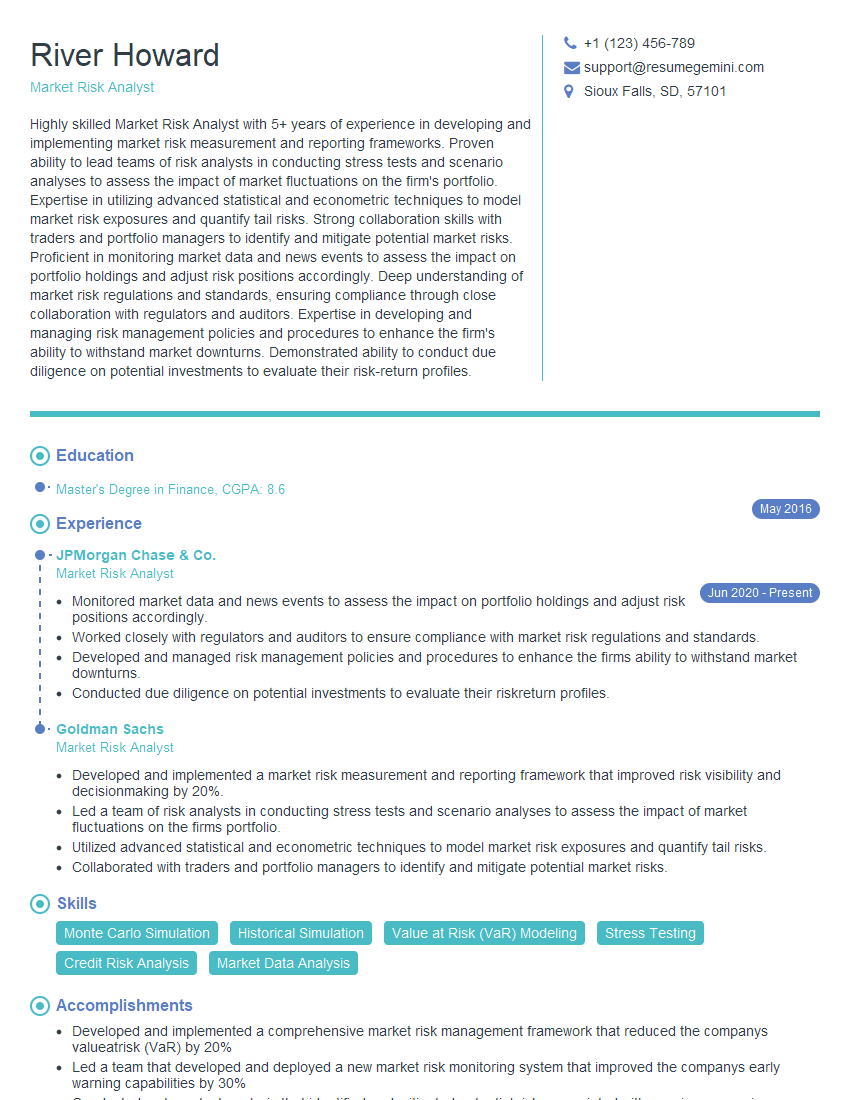
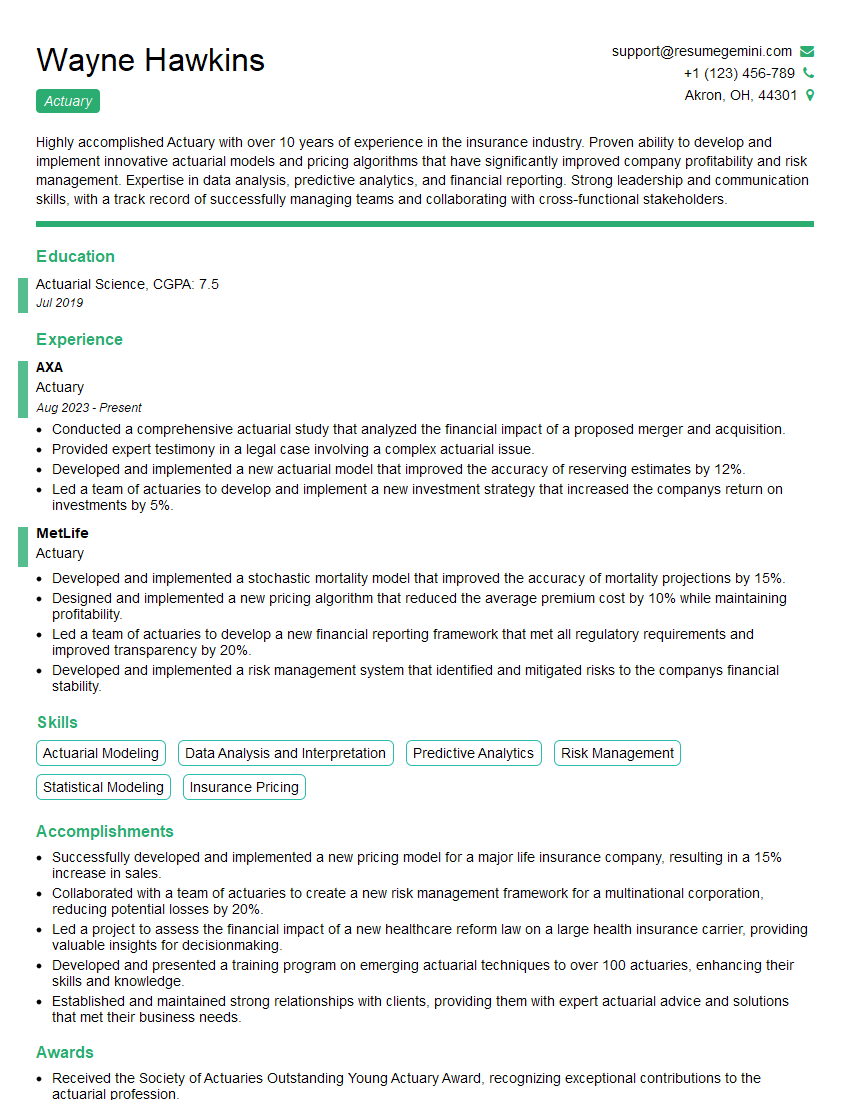
Mastering Quantitative Risk Assessment (QRA) opens doors to exciting and rewarding career opportunities in finance, insurance, and other high-impact industries. A strong understanding of QRA principles is highly sought after, significantly enhancing your career prospects and earning potential. To maximize your chances of landing your dream role, it’s crucial to present your skills and experience effectively through an ATS-friendly resume. ResumeGemini is a trusted resource that can help you create a compelling and impactful resume tailored to the specific requirements of QRA roles. Examples of resumes optimized for Quantitative Risk Assessment positions are available to help guide your process.
Explore more articles
Users Rating of Our Blogs
Share Your Experience
We value your feedback! Please rate our content and share your thoughts (optional).
What Readers Say About Our Blog
Attention music lovers!
Wow, All the best Sax Summer music !!!
Spotify: https://open.spotify.com/artist/6ShcdIT7rPVVaFEpgZQbUk
Apple Music: https://music.apple.com/fr/artist/jimmy-sax-black/1530501936
YouTube: https://music.youtube.com/browse/VLOLAK5uy_noClmC7abM6YpZsnySxRqt3LoalPf88No
Other Platforms and Free Downloads : https://fanlink.tv/jimmysaxblack
on google : https://www.google.com/search?q=22+AND+22+AND+22
on ChatGPT : https://chat.openai.com?q=who20jlJimmy20Black20Sax20Producer
Get back into the groove with Jimmy sax Black
Best regards,
Jimmy sax Black
www.jimmysaxblack.com
Hi I am a troller at The aquatic interview center and I suddenly went so fast in Roblox and it was gone when I reset.
Hi,
Business owners spend hours every week worrying about their website—or avoiding it because it feels overwhelming.
We’d like to take that off your plate:
$69/month. Everything handled.
Our team will:
Design a custom website—or completely overhaul your current one
Take care of hosting as an option
Handle edits and improvements—up to 60 minutes of work included every month
No setup fees, no annual commitments. Just a site that makes a strong first impression.
Find out if it’s right for you:
https://websolutionsgenius.com/awardwinningwebsites
Hello,
we currently offer a complimentary backlink and URL indexing test for search engine optimization professionals.
You can get complimentary indexing credits to test how link discovery works in practice.
No credit card is required and there is no recurring fee.
You can find details here:
https://wikipedia-backlinks.com/indexing/
Regards
NICE RESPONSE TO Q & A
hi
The aim of this message is regarding an unclaimed deposit of a deceased nationale that bears the same name as you. You are not relate to him as there are millions of people answering the names across around the world. But i will use my position to influence the release of the deposit to you for our mutual benefit.
Respond for full details and how to claim the deposit. This is 100% risk free. Send hello to my email id: lukachachibaialuka@gmail.com
Luka Chachibaialuka
Hey interviewgemini.com, just wanted to follow up on my last email.
We just launched Call the Monster, an parenting app that lets you summon friendly ‘monsters’ kids actually listen to.
We’re also running a giveaway for everyone who downloads the app. Since it’s brand new, there aren’t many users yet, which means you’ve got a much better chance of winning some great prizes.
You can check it out here: https://bit.ly/callamonsterapp
Or follow us on Instagram: https://www.instagram.com/callamonsterapp
Thanks,
Ryan
CEO – Call the Monster App
Hey interviewgemini.com, I saw your website and love your approach.
I just want this to look like spam email, but want to share something important to you. We just launched Call the Monster, a parenting app that lets you summon friendly ‘monsters’ kids actually listen to.
Parents are loving it for calming chaos before bedtime. Thought you might want to try it: https://bit.ly/callamonsterapp or just follow our fun monster lore on Instagram: https://www.instagram.com/callamonsterapp
Thanks,
Ryan
CEO – Call A Monster APP
To the interviewgemini.com Owner.
Dear interviewgemini.com Webmaster!
Hi interviewgemini.com Webmaster!
Dear interviewgemini.com Webmaster!
excellent
Hello,
We found issues with your domain’s email setup that may be sending your messages to spam or blocking them completely. InboxShield Mini shows you how to fix it in minutes — no tech skills required.
Scan your domain now for details: https://inboxshield-mini.com/
— Adam @ InboxShield Mini
support@inboxshield-mini.com
Reply STOP to unsubscribe
Hi, are you owner of interviewgemini.com? What if I told you I could help you find extra time in your schedule, reconnect with leads you didn’t even realize you missed, and bring in more “I want to work with you” conversations, without increasing your ad spend or hiring a full-time employee?
All with a flexible, budget-friendly service that could easily pay for itself. Sounds good?
Would it be nice to jump on a quick 10-minute call so I can show you exactly how we make this work?
Best,
Hapei
Marketing Director
Hey, I know you’re the owner of interviewgemini.com. I’ll be quick.
Fundraising for your business is tough and time-consuming. We make it easier by guaranteeing two private investor meetings each month, for six months. No demos, no pitch events – just direct introductions to active investors matched to your startup.
If youR17;re raising, this could help you build real momentum. Want me to send more info?
Hi, I represent an SEO company that specialises in getting you AI citations and higher rankings on Google. I’d like to offer you a 100% free SEO audit for your website. Would you be interested?
Hi, I represent an SEO company that specialises in getting you AI citations and higher rankings on Google. I’d like to offer you a 100% free SEO audit for your website. Would you be interested?