Cracking a skill-specific interview, like one for Radiation Detection Instrumentation, requires understanding the nuances of the role. In this blog, we present the questions you’re most likely to encounter, along with insights into how to answer them effectively. Let’s ensure you’re ready to make a strong impression.
Questions Asked in Radiation Detection Instrumentation Interview
Q 1. Explain the principles of Geiger-Müller counters.
Geiger-Müller counters are perhaps the most iconic radiation detectors, known for their simple design and ease of use. They operate on the principle of gas ionization. A Geiger-Müller tube consists of a cylindrical cathode and a thin wire anode sealed within a gas-filled chamber. When ionizing radiation (alpha, beta, or gamma) enters the tube, it interacts with the gas molecules, creating ion pairs (positive ions and electrons).
This ionization triggers an avalanche effect. The electrons accelerate towards the anode due to the high voltage applied across the tube, colliding with more gas molecules and creating more ion pairs. This cascading effect results in a large, easily detectable electrical pulse. Essentially, a single ionizing event generates a large, uniform signal regardless of the energy of the incoming radiation. This makes them excellent for detecting the presence of radiation but less precise for determining the energy of the radiation.
Practical Application: Geiger counters are frequently used in radiation monitoring, such as environmental monitoring, nuclear safety, and even some medical applications. Their simplicity, portability, and relatively low cost make them ideal for quick radiation surveys.
Q 2. Describe the operation of a scintillation detector.
Scintillation detectors work on the principle of luminescence. When ionizing radiation interacts with a scintillating material (a crystal, liquid, or plastic), it excites the atoms in the material. As these atoms return to their ground state, they emit photons of light. The number of photons emitted is proportional to the energy deposited by the radiation.
These photons are then detected by a photomultiplier tube (PMT) or a photodiode. The PMT converts the light pulses into electrical signals, which are then amplified and processed to determine the energy and intensity of the radiation. Different scintillators are chosen based on the type of radiation being detected and the energy range of interest. For example, NaI(Tl) is a common scintillator for gamma-ray detection.
Practical Application: Scintillation detectors are widely used in various fields, including medical imaging (PET scans, gamma cameras), nuclear physics research, and high-energy physics experiments. Their ability to provide energy information makes them particularly useful for identifying different radioactive isotopes.
Q 3. What are the different types of radiation detectors and their applications?
Many different radiation detectors exist, each optimized for specific applications. Here are a few key types:
- Geiger-Müller Counters: Excellent for detecting the presence of radiation, simple, and portable (as discussed above).
- Scintillation Detectors: Provide energy information about the radiation, used extensively in medical imaging and research.
- Semiconductor Detectors: Offer very high energy resolution, crucial for precise measurements and isotope identification (discussed further below).
- Ionization Chambers: Measure the total charge produced by ionization, used in radiation dosimetry and environmental monitoring.
- Proportional Counters: Provide better energy resolution than Geiger-Müller counters but less than semiconductor detectors. They are used in various applications where a balance between energy resolution and simplicity is needed.
The choice of detector depends heavily on the application. For example, a Geiger counter might be suitable for a quick radiation survey, while a high-resolution semiconductor detector is necessary for analyzing the complex spectrum of a nuclear sample.
Q 4. How does a semiconductor detector work?
Semiconductor detectors, such as those made from high-purity germanium (HPGe) or silicon, rely on the creation of electron-hole pairs when radiation interacts with the semiconductor material. The incident radiation excites electrons from the valence band to the conduction band, leaving behind holes.
A reverse bias voltage applied across the detector creates an electric field that sweeps these charge carriers to the electrodes. The number of electron-hole pairs created is directly proportional to the energy deposited by the radiation. This charge is then measured, providing a highly precise measurement of the radiation’s energy.
Practical Application: Semiconductor detectors are renowned for their excellent energy resolution, making them essential in applications requiring precise energy measurements, such as nuclear safeguards, environmental monitoring, and material analysis. Their ability to differentiate between isotopes with very similar energies is invaluable in many scientific and industrial settings.
Q 5. Explain the concept of energy resolution in radiation detection.
Energy resolution in radiation detection refers to the detector’s ability to distinguish between radiation events with slightly different energies. It’s typically expressed as the full width at half maximum (FWHM) of a peak in the energy spectrum. A smaller FWHM indicates better energy resolution.
Imagine trying to sort marbles of slightly different sizes. A detector with good energy resolution is like having a very precise measuring tool that can easily separate marbles with even tiny size differences. A detector with poor energy resolution struggles to differentiate between closely sized marbles.
Practical Application: High energy resolution is crucial for applications that involve complex radiation spectra, such as identifying different radioactive isotopes in a sample or studying the energy levels of excited nuclei. It allows for a more detailed analysis of the radiation being measured.
Q 6. What is dead time in radiation detection and how does it affect measurements?
Dead time in radiation detection refers to the period after a radiation event where the detector is unable to register another event. This is because the detector needs time to process the signal from the previous event and reset itself. It’s like a camera that needs a moment to process a picture before it can take the next one.
Dead time affects measurements by causing count rate loss. If the radiation intensity is high, a significant number of events might occur during the dead time and go undetected. This leads to an underestimation of the actual count rate. Corrections for dead time are essential for accurate measurements, especially at high count rates. Various techniques are employed to compensate for this effect.
Practical Application: Accurate dead time correction is critical in applications where precise radiation measurements are needed, like environmental monitoring and nuclear safety. Failure to account for dead time can lead to inaccurate assessments of radiation levels and potentially significant errors in interpreting the data.
Q 7. Describe different methods for shielding against radiation.
Shielding against radiation is crucial for protecting personnel and equipment from harmful radiation. The effectiveness of shielding depends on the type of radiation and its energy. Different materials are used to attenuate different types of radiation.
- Lead: Effective for shielding against gamma rays and X-rays. The high atomic number of lead causes increased interactions with photons, leading to absorption.
- Concrete: A common and cost-effective shield for gamma rays and neutrons. The thickness of concrete needed depends on the energy of the radiation and the required level of attenuation.
- Water: Useful for shielding against neutrons. Water effectively slows down (moderates) neutrons through collisions with hydrogen atoms, making them easier to absorb.
- Steel: Used to shield against beta particles and some gamma rays. The higher density of steel compared to other materials enhances its shielding capability.
The design of radiation shielding involves careful consideration of factors such as the type and energy of the radiation, the required level of attenuation, and the cost-effectiveness of the shielding material. In many cases, multiple shielding materials are combined to optimize protection against various types of radiation.
Q 8. How do you calibrate a radiation detection instrument?
Calibrating a radiation detection instrument ensures accurate measurements by comparing its readings to known radiation sources. This process involves exposing the instrument to calibrated sources of known activity (e.g., gamma sources with certified emission rates) and adjusting the instrument’s response to match the known values. There are several methods, depending on the type of instrument.
For example, with a Geiger-Müller counter, calibration often involves adjusting the sensitivity so that the instrument registers the correct count rate for a known source. More sophisticated instruments, such as scintillation detectors or HPGe detectors, require more complex calibration procedures which may involve spectrum analysis and peak fitting to determine the detector’s efficiency at various energies. These calibrations often need to account for geometric factors and background radiation.
The calibration process typically involves:
- Using certified radioactive sources with traceable activity.
- Measuring the instrument’s response to these sources.
- Comparing the measured response to the known activity.
- Adjusting the instrument’s settings (if possible) to match the known values.
- Documenting the entire calibration procedure, including date, time, sources used, and the instrument’s response.
Regular calibration, typically annually or more frequently depending on usage and regulatory requirements, is crucial to ensure the accuracy and reliability of radiation measurements. Failure to calibrate can lead to significant errors with potentially serious consequences in radiation safety and environmental monitoring.
Q 9. Explain the concept of background radiation and its impact on measurements.
Background radiation refers to the naturally occurring ionizing radiation present in our environment. It comes from various sources, including cosmic rays, terrestrial radiation from radioactive isotopes in the soil and rocks, and naturally occurring radioactive materials (NORM) in our bodies. This radiation is always present, and its intensity varies depending on location and altitude.
Background radiation significantly impacts measurements because it adds to the radiation from the source being measured. If not accounted for, background radiation can lead to overestimation of the actual radiation level from the source of interest. To mitigate this, background radiation is usually measured separately, then subtracted from the total measurement to obtain the net radiation level from the source. This background subtraction is a critical step in accurate radiation measurements.
Imagine trying to weigh an apple on a scale that already has a few pebbles on it. The pebbles represent background radiation. You need to first weigh the pebbles (measure background) to know the true weight of the apple (radiation source) by subtracting the pebbles’ weight from the total weight.
Q 10. What are the common sources of error in radiation measurements?
Several factors can introduce errors into radiation measurements. These can be broadly categorized as:
- Instrument Errors: These include detector malfunction, incorrect calibration, improper instrument settings, and drift in detector response over time. For example, a faulty Geiger-Müller tube might produce erratic readings.
- Statistical Errors: Radiation detection is a statistical process, meaning the number of detected events fluctuates randomly. This leads to inherent uncertainty, especially at low count rates. The Poisson distribution is often used to model these fluctuations.
- Geometric Errors: Incorrect source-detector geometry can lead to inaccurate measurements. For instance, the distance between the source and the detector needs to be precisely known and controlled.
- Environmental Errors: Factors like temperature, pressure, and humidity can affect instrument performance. Some detectors are highly sensitive to environmental changes.
- Sample Preparation Errors: In many applications, the sample being measured needs to be carefully prepared to ensure accurate and representative results. For example, uneven distribution of radioactive material in a sample can lead to errors.
- Background Radiation Errors: Inaccurate measurement or subtraction of background radiation is a significant source of error, as previously discussed.
Careful instrument maintenance, proper calibration procedures, statistical analysis of data, and controlled experimental conditions are essential to minimize these errors.
Q 11. How do you assess the uncertainty in radiation measurements?
Uncertainty assessment in radiation measurements is crucial for evaluating the reliability of the results. It considers both random and systematic errors. Random errors, caused by statistical fluctuations, are quantified using the standard deviation of the measurements. Systematic errors, stemming from instrument limitations or methodological flaws, are more challenging to quantify and require careful analysis of potential sources of error.
The uncertainty is often expressed as a confidence interval around the measured value. For example, a measurement might be reported as 100 counts per minute ± 5 counts per minute (95% confidence interval). This indicates that there’s a 95% probability that the true value lies within the range of 95 to 105 counts per minute. The uncertainty estimation should encompass all significant sources of error, including those related to the detector, the source, and the measurement process.
Propagation of uncertainty calculations (using formulas accounting for the combination of different error sources) are crucial for complex measurements involving multiple steps or calculations. Software packages and spreadsheets can assist in performing these calculations.
Q 12. Explain the different types of radiation and their interactions with matter.
Ionizing radiation includes alpha, beta, and gamma radiation, as well as X-rays and neutrons. They differ in their mass, charge, and penetrating power, leading to varied interactions with matter.
- Alpha particles (α): These are relatively massive, positively charged particles (Helium nuclei). They have low penetrating power, easily stopped by a sheet of paper or the outer layer of skin. They cause significant ionization density along their path.
- Beta particles (β): These are high-energy electrons or positrons. They have higher penetrating power than alpha particles, able to penetrate several millimeters of aluminum. Their ionization density is less than alpha particles.
- Gamma rays (γ): These are high-energy photons (electromagnetic radiation). They have the highest penetrating power, requiring thick shielding like lead or concrete. They interact with matter primarily through photoelectric effect, Compton scattering, and pair production.
- X-rays: Similar to gamma rays, but typically lower energy and produced by electronic transitions within atoms rather than nuclear processes.
- Neutrons (n): These are uncharged particles. Their interaction with matter primarily involves nuclear reactions (elastic and inelastic scattering), often leading to the production of secondary radiation such as gamma rays.
The interaction of radiation with matter depends on the type of radiation and the material’s composition and density. Understanding these interactions is vital for designing appropriate radiation shielding and detectors.
Q 13. Describe the principles of radiation dosimetry.
Radiation dosimetry involves measuring the amount of ionizing radiation absorbed by a material or a person. The goal is to quantify the potential biological effects of radiation exposure. Several units are used to describe radiation dose.
- Absorbed dose (Gray, Gy): Represents the energy deposited per unit mass of the absorbing material. 1 Gy = 1 joule/kilogram.
- Equivalent dose (Sievert, Sv): Considers the type of radiation and its biological effectiveness. It accounts for the fact that different types of radiation have varying abilities to cause damage to living tissue. The equivalent dose is calculated by multiplying the absorbed dose by a radiation weighting factor (WR).
- Effective dose (Sievert, Sv): Takes into account the absorbed dose, the type of radiation, and the sensitivity of different organs and tissues. It is the weighted sum of equivalent doses to various organs and tissues, accounting for their different radiosensitivities.
Dosimetry is crucial in radiation protection, medical radiation therapy, and environmental monitoring. Various dosimeters, such as film badges, thermoluminescent dosimeters (TLDs), and electronic personal dosimeters, are used to measure radiation exposure.
Q 14. What are the regulatory requirements for handling radioactive materials?
Regulatory requirements for handling radioactive materials vary depending on the country and the type and quantity of material. However, some common principles apply globally. These regulations aim to protect workers, the public, and the environment from the hazards of ionizing radiation.
Generally, regulations include:
- Licensing and registration: Possessing or using radioactive materials often requires licenses and registrations from the relevant regulatory authorities.
- Safety training and certification: Personnel working with radioactive materials must receive adequate training and certification to ensure safe handling practices.
- Radiation protection measures: Strict procedures for handling, storage, transportation, and disposal of radioactive materials must be followed. This includes using appropriate shielding, personal protective equipment (PPE), and monitoring systems.
- Radiation monitoring and surveys: Regular radiation monitoring and surveys are required to assess radiation levels and ensure compliance with safety limits.
- Waste management: Radioactive waste must be managed according to strict regulations, which often include storage, treatment, and disposal in licensed facilities.
- Record keeping and reporting: Detailed records of radiation exposures, inventory of radioactive materials, and any incidents or accidents must be maintained and reported to the regulatory authorities.
Non-compliance with these regulations can lead to significant penalties, including fines and legal action. International organizations like the IAEA (International Atomic Energy Agency) play a vital role in developing and promoting radiation safety standards worldwide. National agencies, such as the NRC (Nuclear Regulatory Commission) in the US, provide specific regulations and oversight within each country.
Q 15. What safety precautions are necessary when working with radiation detection equipment?
Working with radiation detection equipment demands strict adherence to safety protocols to minimize exposure risk. These precautions begin with proper training and understanding of the specific equipment and the radiation sources involved. Key safety measures include:
- Distance: The intensity of radiation decreases rapidly with distance. Maintaining a safe distance from the source is paramount. Think of it like a campfire – you’re much safer further away.
- Time: Minimize the time spent near radiation sources. A shorter exposure period translates directly to a lower dose received.
- Shielding: Use appropriate shielding materials, such as lead or concrete, to absorb radiation and reduce exposure. Different materials are more effective against different types of radiation.
- Personal Protective Equipment (PPE): This includes lab coats, gloves, and in some cases, specialized dosimeters to monitor personal radiation exposure. Dosimeters provide a record of the accumulated radiation dose.
- Monitoring: Regularly monitor radiation levels using survey meters to ensure safety standards are being maintained. This allows for immediate intervention if levels become unexpectedly high.
- Emergency Procedures: Familiarize yourself with emergency procedures in case of accidental spills or equipment malfunctions. This includes knowing where emergency showers and eyewashes are located, as well as reporting procedures.
Regular safety checks and compliance with established safety protocols are crucial to ensure the well-being of personnel and prevent radiation accidents.
Career Expert Tips:
- Ace those interviews! Prepare effectively by reviewing the Top 50 Most Common Interview Questions on ResumeGemini.
- Navigate your job search with confidence! Explore a wide range of Career Tips on ResumeGemini. Learn about common challenges and recommendations to overcome them.
- Craft the perfect resume! Master the Art of Resume Writing with ResumeGemini’s guide. Showcase your unique qualifications and achievements effectively.
- Don’t miss out on holiday savings! Build your dream resume with ResumeGemini’s ATS optimized templates.
Q 16. How do you interpret radiation detection data?
Interpreting radiation detection data requires a methodical approach. The process usually involves several steps:
- Data Acquisition: This involves obtaining the raw data from the radiation detection instrument. This might be counts per minute (CPM), counts per second (CPS), or energy spectra.
- Background Subtraction: The background radiation level needs to be subtracted from the measured values to isolate the radiation from the source of interest. Background radiation is always present from natural sources.
- Data Correction: Corrections may be needed for factors such as instrument efficiency, dead time, and geometry. Efficiency accounts for the percentage of radiation that is actually detected, dead time accounts for the time the detector takes to recover after each event, and geometry accounts for how the sample is positioned relative to the detector.
- Analysis: The corrected data can then be analyzed to determine the type and amount of radiation present. This often involves comparing the observed data to known standards and reference materials.
- Interpretation: The final step involves drawing conclusions based on the analyzed data. This might involve identifying specific radionuclides, quantifying radiation levels, and assessing potential hazards.
Different types of detectors and data analysis techniques might be used depending on the type of radiation being measured and the objectives of the measurement. Statistical analysis often plays a critical role in determining the uncertainty associated with the measurements.
Q 17. Explain the differences between alpha, beta, and gamma radiation.
Alpha, beta, and gamma radiation are all forms of ionizing radiation, meaning they have enough energy to ionize atoms, but they differ significantly in their properties:
- Alpha Radiation: Consists of two protons and two neutrons (a helium nucleus). Alpha particles are relatively large and heavily charged, making them highly ionizing but with a short range in matter. They are easily stopped by a sheet of paper or even the outer layer of skin. However, if ingested or inhaled, they can cause significant internal damage.
- Beta Radiation: Consists of high-energy electrons or positrons. Beta particles are much smaller and lighter than alpha particles, possessing a moderate ionizing power and a longer range in matter. They can penetrate a few millimeters of aluminum. They can pose a greater external radiation hazard than alpha particles.
- Gamma Radiation: Is a form of electromagnetic radiation, similar to X-rays but with higher energy. Gamma rays have low ionizing power but a very long range in matter, requiring thick shielding materials, such as lead or concrete, for protection. They are the most penetrating of the three types of radiation.
The differences in their properties determine the types of detectors and shielding needed for safe handling and measurement.
Q 18. What is the purpose of a pulse height analyzer?
A pulse height analyzer (PHA) is an essential component of many radiation detection systems. Its primary purpose is to sort and count radiation events based on their energy. Think of it as a sophisticated sorting machine for radiation pulses.
When radiation interacts with a detector, it produces pulses of varying amplitudes (heights). These amplitudes are directly proportional to the energy of the incident radiation. The PHA separates these pulses according to their height, creating an energy spectrum. This spectrum shows the number of events detected at each energy level, allowing for identification of different radionuclides based on their characteristic emission energies.
For example, a specific radionuclide might emit gamma rays at characteristic energies of 662 keV (Cesium-137) and 1461 keV (Potassium-40). A PHA can measure the number of pulses at these energies, thus helping to identify and quantify these isotopes in a sample.
Q 19. Describe the working principle of a proportional counter.
A proportional counter is a gas-filled radiation detector that operates on the principle of gas ionization. When ionizing radiation enters the detector, it ionizes the gas molecules within the detector volume, creating ion pairs (electrons and positive ions).
The key feature of a proportional counter is that the applied voltage is carefully chosen to create gas multiplication. This means that the initial ion pairs created by the radiation are accelerated by the electric field, causing them to collide with other gas molecules and create more ion pairs. The number of ion pairs created is proportional to the energy of the incident radiation.
This results in a measurable electrical pulse whose amplitude is directly proportional to the energy deposited in the detector. This proportionality allows for energy discrimination, which is crucial in differentiating various types of radiation or radionuclides.
Proportional counters are frequently used for detecting alpha and beta particles, but can also be adapted to detect soft X-rays.
Q 20. How do you identify different radionuclides using radiation detection techniques?
Identifying different radionuclides relies on their unique nuclear signatures. Radiation detection techniques exploit these signatures to differentiate between various isotopes.
- Energy Spectroscopy: Using a detector coupled with a pulse height analyzer, we measure the energy of emitted gamma rays or X-rays. Each radionuclide has a characteristic gamma-ray or X-ray energy spectrum, acting like a fingerprint. This is the most common method.
- Decay Schemes: Analyzing the decay characteristics, such as half-life, helps to pinpoint the radionuclide. For example, the characteristic half-life of Iodine-131 is 8 days.
- Coincidence Counting: Some radionuclides undergo decay processes involving the simultaneous emission of two or more particles (e.g., gamma-gamma coincidence). Detecting these coincidences can aid in identification.
- Chemical Separation: In some cases, separating the radioactive element chemically from a sample before measuring its radiation can aid in the identification process. This is particularly useful when dealing with complex mixtures of radionuclides.
Sophisticated software packages, along with databases containing spectral libraries, are widely used to assist in identifying radionuclides from the collected energy spectra.
Q 21. What is the difference between activity and dose?
Activity and dose are two related but distinct concepts in radiation protection:
- Activity: Refers to the rate at which a radioactive source decays. It’s measured in Becquerels (Bq), where 1 Bq is equal to one nuclear decay per second. It describes how many atoms are decaying per unit time. Think of it as the intensity of the source.
- Dose: Refers to the amount of energy deposited by ionizing radiation in a material, such as human tissue. Dose is expressed in several units, including Gray (Gy) and Sievert (Sv). Gray measures the absorbed energy per unit mass, while Sievert accounts for the biological effectiveness of different types of radiation. Dose describes the effect of the radiation on the material.
For instance, a source with high activity might deliver a low dose if it’s shielded or kept far away. Conversely, a source with lower activity could still deliver a high dose if it’s close and unshielded. The dose is what matters in terms of health effects, and it’s dependent on the activity, exposure time, distance and shielding.
Q 22. Explain the concept of half-life.
Half-life is the time it takes for half of the atoms in a radioactive sample to decay. Imagine you have a bag of 1000 radioactive marbles. Each marble has a chance of disappearing (decaying) over time. The half-life is the time it takes until you only have 500 marbles left. After another half-life, you’ll have 250, then 125, and so on. This is an exponential decay process, not a linear one. It’s crucial for determining the remaining activity of a radioactive source and for safety calculations in handling radioactive materials. Different isotopes have vastly different half-lives, ranging from fractions of a second to billions of years. For example, Iodine-131, used in thyroid scans, has a half-life of about 8 days, while Uranium-238 has a half-life of over 4 billion years.
Q 23. Describe the different types of radiation detectors used in nuclear medicine.
Nuclear medicine utilizes a variety of radiation detectors, each with its strengths and weaknesses. Common types include:
- Scintillation detectors: These are widely used, relying on a scintillator crystal (like Sodium Iodide) that emits light when struck by radiation. This light is then converted into an electrical signal, which is processed to determine the radiation’s energy and intensity. They are relatively inexpensive, offer good energy resolution, and are efficient at detecting gamma rays. Examples include detectors used in gamma cameras and PET scanners.
- Semiconductor detectors: These detectors, like High-Purity Germanium (HPGe) detectors, utilize a semiconductor material that produces electron-hole pairs when radiation interacts with it. The number of pairs is proportional to the radiation’s energy, enabling precise energy measurements. They offer excellent energy resolution, vital for identifying specific radionuclides in a mixture. However, they require cryogenic cooling (liquid nitrogen) and are more expensive than scintillation detectors.
- Gas-filled detectors: These detectors, such as ionization chambers and proportional counters, contain a gas that ionizes when radiation passes through. The resulting ions are collected to produce an electrical signal. They’re used for monitoring radiation levels in various settings, offering simpler detection but less precise energy determination than scintillation or semiconductor detectors. They are often utilized in radiation survey meters.
Q 24. What are the advantages and disadvantages of different radiation detection methods?
The choice of radiation detection method depends on the application and desired characteristics. Here’s a comparison:
- Scintillation detectors: Advantages – relatively inexpensive, good efficiency for gamma rays, reasonably good energy resolution. Disadvantages – size can be limiting for some applications, energy resolution not as precise as semiconductor detectors.
- Semiconductor detectors: Advantages – excellent energy resolution, precise identification of radionuclides. Disadvantages – require cryogenic cooling, more expensive.
- Gas-filled detectors: Advantages – simple, rugged, relatively inexpensive. Disadvantages – lower efficiency, poor energy resolution compared to other types.
For example, in a nuclear power plant, gas-filled detectors might be used for continuous monitoring of ambient radiation levels, while semiconductor detectors would be better suited for precise isotopic analysis of samples.
Q 25. How do you handle a radiation spill or emergency?
Handling a radiation spill or emergency requires immediate and decisive action, prioritizing safety. The response follows a structured approach:
- Evacuation and Isolation: Immediately evacuate personnel from the affected area, establishing a perimeter to prevent further exposure.
- Assessment: Assess the type and extent of the spill using appropriate radiation detection instruments. Identify the radionuclide involved, if possible.
- Containment: Contain the spill to prevent further spread. This might involve absorption, covering the area, or other appropriate techniques depending on the nature of the spill.
- Decontamination: Decontaminate affected personnel and equipment using specialized procedures and materials. This may involve washing, scrubbing, or the use of specialized cleaning agents.
- Waste Disposal: Dispose of contaminated materials according to relevant regulations. This usually involves packaging, labeling, and transporting the waste to a licensed disposal facility.
- Documentation: Meticulously document all aspects of the event, including personnel involved, actions taken, and radiation levels measured.
Emergency response plans should be developed and regularly practiced to ensure effective and coordinated action during such events.
Q 26. Describe your experience with specific radiation detection instruments.
I have extensive experience with various radiation detection instruments, including:
- NaI(Tl) scintillation detectors: I’ve utilized these in numerous applications, from gamma spectroscopy to environmental monitoring. I’m proficient in calibrating and optimizing these systems for various energy ranges.
- HPGe detectors: I have experience in operating and maintaining cryogenically cooled HPGe detectors for high-resolution gamma spectrometry. This includes troubleshooting cooling system issues and optimizing energy resolution parameters.
- Ludlum Model 3 survey meters: I am familiar with using this and similar survey meters for routine radiation surveys and emergency response situations. I understand their limitations and know how to interpret the readings accurately.
My experience also includes data acquisition and analysis using various software packages designed for radiation spectrometry. I can confidently interpret complex spectra to identify and quantify different radionuclides.
Q 27. Explain the principles of radiation spectrometry.
Radiation spectrometry involves measuring the energy distribution of ionizing radiation. The principle is based on the fact that different types of radiation (alpha, beta, gamma, etc.) and different isotopes emit radiation with specific characteristic energies. By measuring the energy of the detected radiation, we can identify the radioactive isotopes present and quantify their amounts. This is achieved using detectors like scintillation or semiconductor detectors, capable of distinguishing different energy levels of radiation. The detector converts the radiation energy into an electrical signal, which is then processed to create an energy spectrum. Peaks in this spectrum correspond to specific radioactive isotopes, allowing for their identification and quantification. The process often involves calibration using known radioactive sources to accurately determine the energy scale and detector efficiency.
Q 28. How would you troubleshoot a malfunctioning radiation detector?
Troubleshooting a malfunctioning radiation detector requires a systematic approach:
- Visual Inspection: Begin by visually inspecting the detector for any obvious physical damage, loose connections, or leaks (in gas-filled detectors).
- Calibration Check: Verify the detector’s calibration using known sources. A calibration error can lead to inaccurate readings.
- High Voltage Check (if applicable): Check the high voltage supply for proper operation. Incorrect voltage can significantly affect the detector’s performance.
- Signal Path Verification: Inspect the signal path from the detector to the data acquisition system. Check for proper connections and signal integrity.
- Software Check: If the issue is related to data acquisition or processing, check the software for errors or misconfigurations.
- Environmental Factors: Consider environmental factors like temperature or humidity, which might affect detector performance.
- Component Replacement (if necessary): If the problem persists, specific components may need to be replaced, potentially requiring specialized knowledge and tools. This could involve replacing the preamplifier, high-voltage supply, or even the detector itself.
Keeping detailed records of calibration, maintenance, and troubleshooting steps is crucial for efficiently addressing future issues.
Key Topics to Learn for Radiation Detection Instrumentation Interview
- Radiation Interactions with Matter: Understand the fundamental principles of how different types of radiation (alpha, beta, gamma, neutron) interact with various detector materials. This includes concepts like ionization, excitation, and scattering.
- Detector Types and Principles: Gain a comprehensive knowledge of different radiation detectors, including Gas-filled detectors (Ionization chambers, Proportional counters, Geiger-Müller tubes), Scintillation detectors, Semiconductor detectors (e.g., HPGe, CdZnTe), and Neutron detectors. Focus on their operating principles, strengths, and limitations.
- Signal Processing and Electronics: Familiarize yourself with the electronics used in radiation detection systems, including preamplifiers, amplifiers, pulse shaping circuits, and multi-channel analyzers (MCAs). Understand how these components contribute to accurate signal detection and analysis.
- Data Acquisition and Analysis: Learn about methods for acquiring and analyzing radiation data, including spectroscopy, pulse height analysis, and various data processing techniques. Be prepared to discuss the interpretation of spectral data and identifying different radioactive isotopes.
- Radiation Safety and Shielding: Understand the importance of radiation safety protocols and the principles of radiation shielding. Be familiar with different shielding materials and their effectiveness against various types of radiation.
- Calibration and Quality Control: Learn about the methods used for calibrating radiation detectors and ensuring the quality and accuracy of measurements. Understand the importance of regular maintenance and testing.
- Practical Applications: Explore the diverse applications of radiation detection instrumentation in various fields, such as nuclear medicine, environmental monitoring, nuclear security, industrial gauging, and research. Be ready to discuss specific examples and their associated challenges.
- Troubleshooting and Problem Solving: Develop your ability to troubleshoot common issues in radiation detection systems. This includes identifying sources of noise, understanding detector malfunctions, and interpreting anomalous data.
Next Steps
Mastering Radiation Detection Instrumentation opens doors to exciting and impactful careers in diverse fields. A strong understanding of these principles is highly valued by employers. To maximize your job prospects, it’s crucial to present your skills effectively through a well-crafted, ATS-friendly resume. ResumeGemini is a trusted resource that can help you build a professional resume that highlights your expertise and catches the attention of recruiters. Examples of resumes tailored to Radiation Detection Instrumentation are available to guide you through this process. Invest in your future – invest in your resume.

Nuclear Engineer Resume Sample

Health Physicist Resume Sample

Environmental Health and Safety Specialist Resume Sample
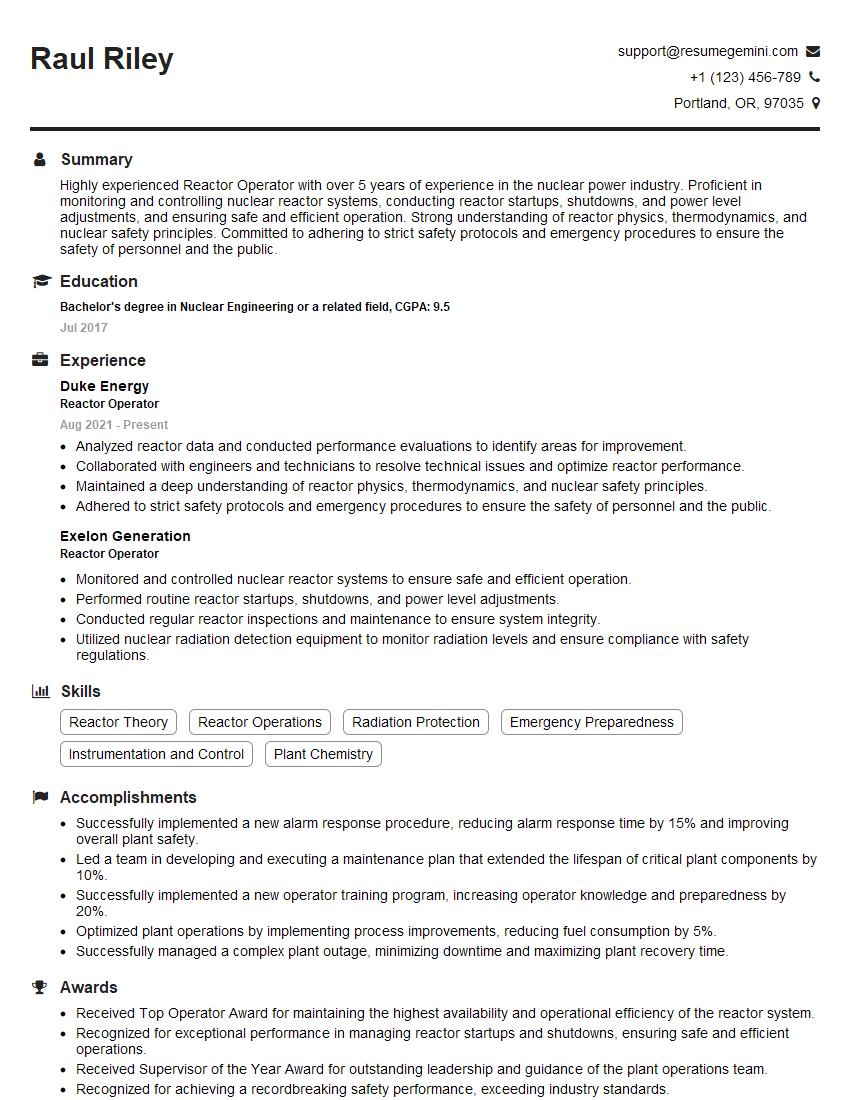
Reactor Operator Resume Sample

Dosimetrist Resume Sample

Radiation Therapist Resume Sample
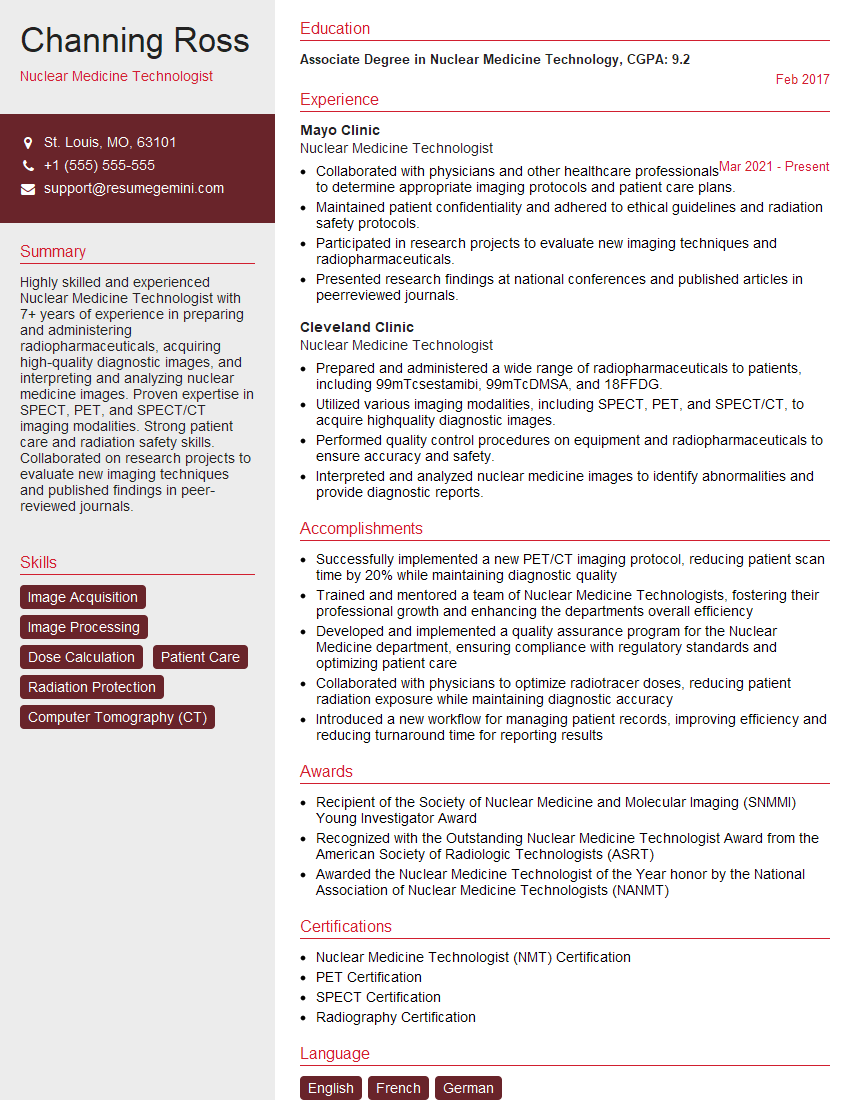
Nuclear Medicine Technologist Resume Sample

Radiation Safety Officer Resume Sample

Radiation Protection Specialist Resume Sample
Explore more articles
Users Rating of Our Blogs
Share Your Experience
We value your feedback! Please rate our content and share your thoughts (optional).
What Readers Say About Our Blog
Attention music lovers!
Wow, All the best Sax Summer music !!!
Spotify: https://open.spotify.com/artist/6ShcdIT7rPVVaFEpgZQbUk
Apple Music: https://music.apple.com/fr/artist/jimmy-sax-black/1530501936
YouTube: https://music.youtube.com/browse/VLOLAK5uy_noClmC7abM6YpZsnySxRqt3LoalPf88No
Other Platforms and Free Downloads : https://fanlink.tv/jimmysaxblack
on google : https://www.google.com/search?q=22+AND+22+AND+22
on ChatGPT : https://chat.openai.com?q=who20jlJimmy20Black20Sax20Producer
Get back into the groove with Jimmy sax Black
Best regards,
Jimmy sax Black
www.jimmysaxblack.com
Hi I am a troller at The aquatic interview center and I suddenly went so fast in Roblox and it was gone when I reset.
Hi,
Business owners spend hours every week worrying about their website—or avoiding it because it feels overwhelming.
We’d like to take that off your plate:
$69/month. Everything handled.
Our team will:
Design a custom website—or completely overhaul your current one
Take care of hosting as an option
Handle edits and improvements—up to 60 minutes of work included every month
No setup fees, no annual commitments. Just a site that makes a strong first impression.
Find out if it’s right for you:
https://websolutionsgenius.com/awardwinningwebsites
Hello,
we currently offer a complimentary backlink and URL indexing test for search engine optimization professionals.
You can get complimentary indexing credits to test how link discovery works in practice.
No credit card is required and there is no recurring fee.
You can find details here:
https://wikipedia-backlinks.com/indexing/
Regards
NICE RESPONSE TO Q & A
hi
The aim of this message is regarding an unclaimed deposit of a deceased nationale that bears the same name as you. You are not relate to him as there are millions of people answering the names across around the world. But i will use my position to influence the release of the deposit to you for our mutual benefit.
Respond for full details and how to claim the deposit. This is 100% risk free. Send hello to my email id: lukachachibaialuka@gmail.com
Luka Chachibaialuka
Hey interviewgemini.com, just wanted to follow up on my last email.
We just launched Call the Monster, an parenting app that lets you summon friendly ‘monsters’ kids actually listen to.
We’re also running a giveaway for everyone who downloads the app. Since it’s brand new, there aren’t many users yet, which means you’ve got a much better chance of winning some great prizes.
You can check it out here: https://bit.ly/callamonsterapp
Or follow us on Instagram: https://www.instagram.com/callamonsterapp
Thanks,
Ryan
CEO – Call the Monster App
Hey interviewgemini.com, I saw your website and love your approach.
I just want this to look like spam email, but want to share something important to you. We just launched Call the Monster, a parenting app that lets you summon friendly ‘monsters’ kids actually listen to.
Parents are loving it for calming chaos before bedtime. Thought you might want to try it: https://bit.ly/callamonsterapp or just follow our fun monster lore on Instagram: https://www.instagram.com/callamonsterapp
Thanks,
Ryan
CEO – Call A Monster APP
To the interviewgemini.com Owner.
Dear interviewgemini.com Webmaster!
Hi interviewgemini.com Webmaster!
Dear interviewgemini.com Webmaster!
excellent
Hello,
We found issues with your domain’s email setup that may be sending your messages to spam or blocking them completely. InboxShield Mini shows you how to fix it in minutes — no tech skills required.
Scan your domain now for details: https://inboxshield-mini.com/
— Adam @ InboxShield Mini
support@inboxshield-mini.com
Reply STOP to unsubscribe
Hi, are you owner of interviewgemini.com? What if I told you I could help you find extra time in your schedule, reconnect with leads you didn’t even realize you missed, and bring in more “I want to work with you” conversations, without increasing your ad spend or hiring a full-time employee?
All with a flexible, budget-friendly service that could easily pay for itself. Sounds good?
Would it be nice to jump on a quick 10-minute call so I can show you exactly how we make this work?
Best,
Hapei
Marketing Director
Hey, I know you’re the owner of interviewgemini.com. I’ll be quick.
Fundraising for your business is tough and time-consuming. We make it easier by guaranteeing two private investor meetings each month, for six months. No demos, no pitch events – just direct introductions to active investors matched to your startup.
If youR17;re raising, this could help you build real momentum. Want me to send more info?
Hi, I represent an SEO company that specialises in getting you AI citations and higher rankings on Google. I’d like to offer you a 100% free SEO audit for your website. Would you be interested?
Hi, I represent an SEO company that specialises in getting you AI citations and higher rankings on Google. I’d like to offer you a 100% free SEO audit for your website. Would you be interested?