Preparation is the key to success in any interview. In this post, we’ll explore crucial Radiation Dosimetry and Monitoring interview questions and equip you with strategies to craft impactful answers. Whether you’re a beginner or a pro, these tips will elevate your preparation.
Questions Asked in Radiation Dosimetry and Monitoring Interview
Q 1. Explain the principles of radiation dosimetry.
Radiation dosimetry is the science of measuring the dose of ionizing radiation absorbed by a material or a biological entity. It’s crucial for assessing the potential health effects of exposure to radiation. The fundamental principle rests on the fact that ionizing radiation interacts with matter, depositing energy. This energy deposition can cause ionization and excitation of atoms, leading to potential biological damage. Dosimetry aims to quantify this energy deposition in a way that is relevant to biological effects.
There are several approaches to dosimetry, including direct measurement using detectors placed near the source or within the body (in vivo dosimetry), and indirect measurement using computational models or biological markers. For instance, a thermoluminescent dosimeter (TLD) measures the amount of light emitted when heated, which is proportional to the absorbed radiation dose. Similarly, a Geiger counter detects ionizations caused by radiation, providing a measure of radiation intensity.
Q 2. Describe different types of radiation detectors and their applications.
Various radiation detectors are used, each with specific advantages and applications. They are often categorized based on their detection mechanism.
- Gas-filled detectors (e.g., Geiger-Müller counters, ionization chambers): These detectors utilize the ionization of gas molecules by radiation. Geiger counters are excellent for detecting even low levels of radiation but provide limited energy information. Ionization chambers are better suited for measuring higher radiation levels and provide more precise dose measurements.
- Scintillation detectors: These detectors rely on the emission of light by certain materials (scintillators) when radiation interacts with them. The light is then detected by a photomultiplier tube, providing information about both the energy and intensity of the radiation. Scintillation detectors are widely used in medical imaging and nuclear security applications.
- Semiconductor detectors (e.g., HPGe detectors): These detectors utilize the creation of electron-hole pairs in semiconductor materials due to radiation interaction. They offer excellent energy resolution and are used extensively in nuclear spectroscopy and environmental monitoring. Think of how they’re vital in determining the exact composition of radioactive waste.
- Thermoluminescent dosimeters (TLDs): These passive detectors store energy from radiation interaction, which is released as light upon heating. They are frequently used for personnel monitoring, providing a cumulative dose measurement over time.
The choice of detector depends on the type and energy of radiation being measured, the required accuracy, and the application. For example, a Geiger counter would be suitable for rapid detection of radioactive contamination, while an HPGe detector is better for precise identification of radionuclides.
Q 3. What are the units used to measure radiation dose?
Several units are used to quantify radiation dose, each reflecting different aspects of the radiation’s interaction with matter. The most common include:
- Gray (Gy): The SI unit of absorbed dose. One gray represents the absorption of one joule of radiation energy per kilogram of material. Think of it as the amount of energy deposited per unit mass.
- Sievert (Sv): The SI unit of equivalent dose and effective dose. It accounts for the type of radiation and its biological effectiveness. Different types of radiation have different abilities to cause damage; this is factored in when calculating the Sievert. A Sievert considers the type of radiation (alpha, beta, gamma, etc.) and the relative biological effectiveness (RBE) of that radiation.
- Becquerel (Bq): The SI unit of radioactivity, representing one nuclear disintegration per second. This measures the rate of radioactive decay, not the absorbed dose. This is the ‘source strength’ while Gray and Sievert measure the effect of the radiation.
- Rad and rem (older units): While largely replaced by Gray and Sievert, you may still encounter these units in older literature. 1 Gray = 100 rad, and 1 Sievert = 100 rem.
Q 4. How do you calculate effective dose?
Effective dose considers both the absorbed dose and the relative sensitivity of different organs and tissues to radiation. It’s calculated by weighting the equivalent dose to each organ or tissue by a tissue weighting factor (wT), which reflects its radiosensitivity. The formula is:
Effective Dose (E) = Σ wT x HT
Where:
Eis the effective dose in Sieverts (Sv)wTis the tissue weighting factor for tissue T (dimensionless)HTis the equivalent dose in Sieverts (Sv) to tissue T
The summation is taken over all tissues T. The tissue weighting factors are established by international organizations like ICRP (International Commission on Radiological Protection), and they reflect the relative risk of cancer and other stochastic effects from irradiation of different tissues. For example, the weighting factor for the bone marrow is higher than that of the skin because bone marrow is more sensitive to radiation.
Q 5. Explain the concept of ALARA (As Low As Reasonably Achievable).
ALARA, or As Low As Reasonably Achievable, is a fundamental principle of radiation protection. It emphasizes that all radiation exposure should be kept as low as possible, consistent with social and economic factors. This doesn’t mean zero exposure – that’s often impractical – but it guides practices to minimize unnecessary exposure.
ALARA is implemented through a combination of strategies:
- Time: Minimize the time spent near radiation sources.
- Distance: Increase the distance from radiation sources (radiation intensity decreases with the square of the distance).
- Shielding: Utilize appropriate shielding materials (e.g., lead, concrete) to attenuate radiation.
For instance, in a nuclear power plant, ALARA principles guide the design of shielding around reactors and the development of work procedures to minimize worker exposure. In medical imaging, ALARA principles encourage the use of optimized techniques to reduce patient radiation dose while maintaining image quality.
Q 6. What are the regulatory requirements for radiation protection in your area?
Regulatory requirements for radiation protection vary depending on the country and the specific application. However, many jurisdictions base their regulations on the recommendations of international organizations like the International Commission on Radiological Protection (ICRP) and the International Atomic Energy Agency (IAEA). These guidelines typically cover:
- Dose limits: Setting limits on the amount of radiation exposure permitted for radiation workers and the public.
- Safety standards: Establishing safety standards for the design, operation, and maintenance of radiation facilities and equipment.
- Training and certification: Mandating training and certification programs for personnel working with radiation.
- Record-keeping and reporting: Requiring detailed records of radiation exposure levels and any incidents involving radiation exposure.
- Emergency preparedness: Outlining procedures for responding to radiation accidents and emergencies.
Specific regulations will vary, and often incorporate the ALARA principle which necessitates continuous improvement in safety practices and technologies. For example, in the USA, the Nuclear Regulatory Commission (NRC) sets the regulatory requirements, while the Environmental Protection Agency (EPA) handles regulations on releases of radioactive materials to the environment.
Q 7. Describe different types of personal dosimeters and their limitations.
Several types of personal dosimeters are used to monitor individual radiation exposure. These include:
- Film badges: These passive detectors use photographic film to record radiation exposure. They are relatively inexpensive but have limited sensitivity and energy dependence.
- Thermoluminescent dosimeters (TLDs): These are reusable devices that measure cumulative exposure over a period. They are more sensitive than film badges and provide better energy response.
- Optically stimulated luminescence dosimeters (OSLDs): These detectors use aluminum oxide to record radiation exposure. They offer high sensitivity and excellent energy response, superior to film and often surpassing TLDs.
- Electronic personal dosimeters (EPDs): These real-time monitoring devices provide immediate readings of radiation exposure. They offer greater sensitivity and accuracy than passive detectors, but they require batteries and may be more susceptible to environmental factors.
Limitations: All dosimeters have limitations. Film badges have lower sensitivity and energy dependence. TLDs can be affected by environmental factors like high temperatures. OSLDs, while more sensitive, still have a limited dynamic range. EPDs are prone to damage, malfunction, and require calibration. It’s also crucial to remember that personal dosimeters primarily measure external exposure and may not accurately reflect internal exposure from ingested or inhaled radionuclides.
Q 8. How do you interpret a personal dosimeter report?
Interpreting a personal dosimeter report involves understanding the different radiation types measured and the units used to express the dose. These reports typically show the deep dose equivalent (DDE), which represents the effective dose to your internal organs, and the shallow dose equivalent (SDE), reflecting the dose to the skin. Units are usually in millisieverts (mSv). A typical report will include the cumulative dose for a given period (e.g., a month or a year), along with the readings from various detectors on the dosimeter itself. For example, a report might show a DDE of 2 mSv and an SDE of 5 mSv over a month. This indicates a low level of radiation exposure, well below regulatory limits. Looking for any significant changes in dose from previous periods is crucial. A sudden spike warrants an investigation into potential exposures. You should always compare your reading to the regulatory limits for your profession and understand the significance of the doses reported in relation to those limits. Understanding your occupational dose history is important for long-term health monitoring.
Q 9. Explain the difference between external and internal radiation exposure.
The key difference lies in where the radiation originates. External radiation exposure occurs when a source of radiation outside the body emits ionizing radiation that interacts with your body’s tissues. Think of a medical X-ray; the radiation originates from the machine and passes through your body. Internal radiation exposure, on the other hand, happens when radioactive material is ingested, inhaled, or enters through a wound, becoming incorporated into the body’s tissues. For example, exposure to radon gas in a home can lead to internal radiation exposure, as radon decays and releases alpha particles directly within the lungs. Internal exposure is generally considered more dangerous because the radiation source is in direct contact with the body’s tissues, leading to a higher level of energy deposition. The biological effects can be more severe and sustained over a longer period.
Q 10. Describe methods for contamination control and decontamination.
Contamination control and decontamination are critical in radiation safety. Contamination control focuses on preventing the spread of radioactive material. This involves using appropriate personal protective equipment (PPE) like gloves, gowns, respirators, and shoe covers; employing controlled areas with access restrictions; and utilizing proper handling techniques for radioactive materials. For example, in a nuclear medicine lab, all work surfaces should be covered with absorbent paper that can be easily discarded as radioactive waste. Decontamination involves removing radioactive material from surfaces, equipment, or personnel. This can include methods such as washing with water and detergents, using specific cleaning agents designed to remove specific isotopes, and using specialized equipment such as HEPA vacuum cleaners. In a spill scenario, the immediate action would be to cordon off the area, use absorbent materials to contain the spill, and then carefully decontaminate the affected area following established protocols. Monitoring instruments will be used throughout the process to ensure thorough decontamination.
Q 11. What are the potential health effects of radiation exposure?
The health effects of radiation exposure depend on several factors: the type and energy of the radiation, the dose received, the duration of exposure, and the part of the body exposed. Low doses may cause no noticeable effects, while high doses can lead to a range of consequences. These include acute effects, such as radiation sickness (nausea, vomiting, fatigue) at high doses and long-term effects like an increased risk of cancer, cataracts, and genetic damage. The risk of cancer increases with radiation dose, but even small increases in risk are important to consider in occupational settings. For example, prolonged exposure to low levels of radon gas can increase the risk of lung cancer. The severity and nature of effects are dose-dependent, with higher doses leading to more severe and quicker responses. Understanding the dose-response relationship is central to radiation protection.
Q 12. Explain the concept of radiation shielding and its principles.
Radiation shielding uses materials to reduce the intensity of radiation reaching personnel or sensitive equipment. The effectiveness of shielding depends on the type of radiation. For example, lead is highly effective against gamma rays and X-rays, whereas concrete or water offers good shielding from neutrons. The principle is based on the interaction of radiation with matter; radiation energy is absorbed or scattered by the shielding material, reducing the intensity of the radiation passing through. The thickness of the shielding material required varies depending on the radiation intensity, energy, and the required level of protection. Consider a nuclear reactor; the reactor core is surrounded by thick concrete walls and other materials to shield workers and the environment from the intense radiation produced by fission reactions. The choice of shielding material is crucial and depends on the type and energy of radiation involved.
Q 13. How do you assess radiation risk?
Radiation risk assessment involves determining the probability of harmful health effects from radiation exposure. This includes estimating the dose received by individuals and assessing the potential health consequences based on this dose. It considers the type and energy of radiation, exposure duration, and the biological sensitivity of the exposed individuals. For example, a risk assessment for a medical X-ray procedure would involve calculating the dose delivered to the patient and comparing that dose to the benefits of the diagnostic information obtained. The assessment should weigh the risk against the benefits, and the results should be used to optimize the radiation protection measures in place. This may involve implementing ALARA (As Low As Reasonably Achievable) principles to minimize radiation exposure.
Q 14. Describe various radiation monitoring techniques.
Various radiation monitoring techniques are used to measure radiation levels in the environment and assess exposure. These techniques can be broadly categorized into direct and indirect methods. Direct methods directly measure the radiation using instruments like Geiger-Müller counters (for detecting beta and gamma radiation), scintillation detectors (for measuring various types of radiation), and ionization chambers (for measuring radiation exposure). Indirect methods measure the effects of radiation, such as thermoluminescent dosimeters (TLDs), which store energy from radiation and release it as light when heated, giving an indirect measure of the absorbed dose. Other methods include using film badges and personal dosimeters. The choice of technique depends on the type of radiation being measured, the level of accuracy required, and the application. For example, in a nuclear power plant, various monitoring techniques would be used simultaneously to ensure comprehensive radiation safety monitoring of workers and the environment.
Q 15. What are the safety precautions to be taken while handling radioactive materials?
Handling radioactive materials demands rigorous adherence to safety protocols. The overarching principle is to minimize exposure – both external and internal – through ALARA (As Low As Reasonably Achievable) practices. This involves a multi-layered approach.
Time: Minimize the duration spent near the source. The shorter the exposure time, the lower the dose received. Imagine it like sunbathing – a short sunbath is fine, but prolonged exposure leads to sunburn. Similarly, less time near a radioactive source means less radiation exposure.
Distance: Increase the distance from the radioactive source. Radiation intensity decreases rapidly with distance, following an inverse square law. Think of a light bulb; the light is much brighter close to the bulb but significantly dimmer further away. The same applies to radiation.
Shielding: Utilize appropriate shielding materials to absorb or attenuate radiation. Lead, concrete, and even water are effective shielding materials, chosen based on the type and energy of the radiation. Different shielding materials are suitable for different types of radiation.
Personal Protective Equipment (PPE): Always wear appropriate PPE, such as lead aprons, gloves, and dosimeters. Dosimeters track your personal radiation exposure, offering crucial data for monitoring and safety assessments.
Engineering Controls: Work in areas with adequate ventilation systems to prevent the inhalation of radioactive particles. Proper containment and secure storage of radioactive materials are crucial to prevent accidental spills or releases. Remember, prevention is key.
Administrative Controls: Strict adherence to established procedures, regular monitoring, and comprehensive training programs are non-negotiable. Thorough documentation and record-keeping are essential for accountability and regulatory compliance.
For example, in a nuclear medicine lab, we use lead shielding around our sources, wear lead aprons and gloves, and rigorously follow procedures for handling and disposing of radioactive waste.
Career Expert Tips:
- Ace those interviews! Prepare effectively by reviewing the Top 50 Most Common Interview Questions on ResumeGemini.
- Navigate your job search with confidence! Explore a wide range of Career Tips on ResumeGemini. Learn about common challenges and recommendations to overcome them.
- Craft the perfect resume! Master the Art of Resume Writing with ResumeGemini’s guide. Showcase your unique qualifications and achievements effectively.
- Don’t miss out on holiday savings! Build your dream resume with ResumeGemini’s ATS optimized templates.
Q 16. How do you manage radiation emergencies?
Radiation emergencies demand a rapid, coordinated response, prioritizing the safety of personnel and the public. My experience involves a structured approach:
Immediate Actions: Evacuate personnel from the affected area, ensuring they are downwind and at a safe distance. This is the most immediate action to save lives.
Assessment and Monitoring: Deploy radiation monitoring equipment (e.g., Geiger counters, survey meters) to assess the extent of contamination and radiation levels. This data informs decision-making regarding the necessary actions.
Containment and Decontamination: Implement measures to contain the spread of contamination, including securing the source and decontaminating affected areas and personnel. Decontamination procedures are specific to the type of radioactive material.
Medical Treatment: Provide appropriate medical treatment to individuals exposed to radiation, taking into account the dose received and the type of radiation involved. This may include administering potassium iodide (KI) for thyroid protection in specific circumstances.
Reporting and Investigation: Report the incident to the relevant authorities and conduct a thorough investigation to determine the root cause and prevent similar incidents in the future.
During a simulated emergency drill at my previous facility, we practiced each step. The speed and precision of our coordinated response were instrumental in successfully resolving the situation. This exercise highlighted the importance of proper training and preparedness in radiation emergency management.
Q 17. Explain the importance of radiation safety training.
Radiation safety training is paramount for anyone working with or near radioactive materials. It’s not just about following rules; it’s about fostering a safety culture.
Knowledge of Radiation Hazards: Training equips individuals with the knowledge of different types of radiation, their biological effects, and the associated health risks. Understanding the ‘why’ behind safety protocols is crucial for compliance.
Safe Handling Procedures: Training provides detailed instruction on safe handling procedures, including the use of appropriate PPE, emergency response protocols, and waste disposal techniques.
Dosimetry and Monitoring: Individuals learn about radiation monitoring techniques, the interpretation of dosimetry data, and the importance of regular monitoring to track personal radiation exposure.
Emergency Response: Training covers emergency response procedures, including evacuation plans, decontamination methods, and reporting requirements.
Regulatory Compliance: Training ensures compliance with relevant regulations and legal requirements.
A comprehensive program not only reduces risks but cultivates a responsible approach to radiation safety, building a culture of proactive prevention. For example, our facility conducts regular refresher training to reinforce best practices and to adapt to new technologies and guidelines.
Q 18. Describe your experience with radiation monitoring equipment.
My experience with radiation monitoring equipment spans various types, including:
Geiger-Müller counters: Used for detecting and measuring beta and gamma radiation. These are widely used for area monitoring and contamination surveys. Their simplicity and portability make them valuable tools.
Scintillation detectors: These are more sensitive and can measure a wider range of radiation types, including alpha particles. They are often used in laboratories and research settings for precise measurements.
Survey meters: These instruments measure radiation levels in a given area and are used for environmental monitoring. They give a reading of the ambient radiation level.
Dosimeters (personal and environmental): I have experience with both types – personal dosimeters measure an individual’s cumulative radiation exposure, while environmental dosimeters measure radiation levels in a specific location over time.
I am proficient in calibrating, maintaining, and troubleshooting these instruments, ensuring accurate and reliable data. For instance, during a recent site survey, the calibration of a Geiger-Müller counter was crucial in determining the actual radiation levels and designing appropriate safety measures.
Q 19. What software or tools are you proficient with for radiation dosimetry?
My proficiency includes several software packages commonly used in radiation dosimetry. These include:
RADCALC: This software is commonly used for dose calculations and assessments, helping to interpret dosimeter readings and estimate radiation exposures.
MCNP (Monte Carlo N-Particle Transport Code): This advanced simulation tool allows us to model radiation transport through various materials, aiding in the design of shielding and other safety measures.
Specialized Dosimetry Databases: I have experience using several databases designed for storing and managing large dosimetry datasets, facilitating analyses and reporting.
Spreadsheet Software (Excel, Google Sheets): I routinely use spreadsheets for data analysis, creating graphs and charts to visualize dosimetry results and to manage dosimeter data effectively.
Proficiency in these tools is essential for accurate analysis, interpretation, and reporting of dosimetry data, and ensuring compliance with regulations.
Q 20. How do you ensure the accuracy and reliability of dosimetry data?
Ensuring the accuracy and reliability of dosimetry data is crucial for protecting worker health and maintaining regulatory compliance. This involves a multi-pronged approach:
Instrument Calibration: Regular calibration of radiation monitoring equipment is essential to ensure accurate readings. We adhere to strict calibration schedules and maintain detailed calibration records.
Quality Control Procedures: Implementing stringent quality control procedures, including regular checks of equipment performance and data validation, ensures data integrity. Blind tests and intercomparisons with other laboratories are important for ensuring data quality.
Data Validation: We rigorously check for outliers and inconsistencies in the data, and investigate any anomalies to determine their cause. Statistical analysis methods are used to assess data quality.
Traceability: Maintaining a clear chain of custody for all dosimeters and samples guarantees traceability of the data and allows for audits.
Proper Handling and Storage: Correct handling and storage of dosimeters are vital to prevent damage and ensure accurate readings. This prevents artifacts in the data.
For example, we participate in intercomparison exercises with other dosimetry laboratories to verify the accuracy of our measurements and identify any systematic errors in our procedures. The emphasis is on continuous improvement of our processes to guarantee the accuracy and reliability of our data.
Q 21. Explain the difference between absorbed dose and equivalent dose.
While both absorbed dose and equivalent dose measure radiation exposure, they differ significantly in their scope:
Absorbed Dose: This refers to the amount of energy deposited by ionizing radiation per unit mass of a material (e.g., tissue). The unit is Gray (Gy). It simply describes the energy absorbed, without considering the biological effects.
Equivalent Dose: This accounts for the different biological effects of various types of radiation. It is calculated by multiplying the absorbed dose by a radiation weighting factor (WR), which reflects the relative biological effectiveness of the radiation. The unit is Sievert (Sv). This gives a measure of the biological effect.
Imagine hitting a target with different types of projectiles: Absorbed dose is simply the amount of energy transferred to the target regardless of the projectile type. Equivalent dose considers that a high-speed bullet (alpha particle) will cause more damage than a pellet (beta particle) even if both transfer the same amount of energy. The radiation weighting factor adjusts for this difference in biological effects.
For radiation protection, the equivalent dose is a more relevant measure because it directly relates to the potential biological damage caused by radiation. For instance, a 1 Gy absorbed dose of alpha particles has a much higher equivalent dose (20 Sv) than a 1 Gy absorbed dose of gamma rays (1 Sv), reflecting the greater biological damage caused by alpha particles.
Q 22. Describe your experience with different types of radiation sources.
My experience encompasses a wide range of radiation sources, both natural and artificial. Natural sources include terrestrial gamma radiation (from isotopes in the soil and rocks), cosmic radiation (from space), and radon gas (a radioactive decay product of uranium). Working with these sources involves understanding their inherent variability and utilizing appropriate monitoring techniques like gamma spectrometry and radon detectors. Artificial sources are far more diverse. I’ve worked extensively with sealed sources, such as those used in industrial gauging or medical treatments (e.g., brachytherapy). These require strict adherence to safety protocols due to their potential for leakage or damage. I’ve also been involved with projects utilizing X-ray machines, linear accelerators in radiotherapy, and research reactors, each demanding distinct safety measures and monitoring strategies. Understanding the energy spectrum, activity, and type of radiation emitted is critical for selecting proper shielding and monitoring equipment.
- Sealed Sources: Cobalt-60 and Iridium-192 are common examples used in industrial radiography and medical applications. These sources are highly regulated and require specialized handling and storage.
- X-ray Machines: These produce X-rays for medical imaging and industrial purposes. The radiation levels and types depend heavily on the machine’s settings and shielding.
- Particle Accelerators: These machines accelerate charged particles, such as electrons or protons, to high energies, producing various types of radiation including X-rays and neutrons. Safety considerations are paramount due to the high energy levels.
Q 23. How do you maintain radiation safety records?
Maintaining accurate and comprehensive radiation safety records is paramount. This involves a multi-faceted approach. First, we use individual dosimeters, both passive (e.g., thermoluminescent dosimeters or TLDs, optically stimulated luminescence dosimeters or OSLDs) and active (e.g., electronic personal dosimeters), to track individual exposures. The data from these dosimeters are meticulously recorded and analyzed, comparing them against regulatory limits. Second, area monitoring with fixed instruments (e.g., Geiger-Müller counters, ionization chambers) provides data on environmental radiation levels. These readings are logged regularly and mapped to identify high-exposure zones. Third, we maintain detailed records of all radiation sources, including their location, activity, and shielding. These records are essential for regulatory compliance, accident investigation, and ongoing safety assessments. Finally, a robust software system is essential for managing, analyzing, and reporting all radiation safety data, generating reports for regulatory bodies and internal audits.
Think of it like a meticulous accounting system but for radiation. Every transaction (exposure) is logged, analyzed, and reconciled against pre-defined limits (budget).
Q 24. Describe a challenging situation you faced related to radiation safety and how you resolved it.
During a routine inspection of a decommissioned industrial X-ray machine, we discovered unexpectedly high radiation levels near the machine’s housing. Initial readings were several times above background. We immediately secured the area, evacuating personnel. The initial challenge was identifying the source of the elevated radiation; a thorough survey showed unexpected residual contamination inside the housing despite prior decommissioning efforts. The resolution involved a multi-step process: first, a detailed assessment using various radiation detection instruments, including a high-sensitivity Geiger counter and a gamma spectrometer, to pinpoint the exact location and energy of the residual radiation. We then developed a remediation plan involving carefully removing the contaminated components (following strict ALARA principles – As Low As Reasonably Achievable), carefully disposing of them as radioactive waste according to regulations, and ensuring thorough decontamination of the area, followed by a post-remediation survey to verify that radiation levels were within safe limits. Thorough documentation of all procedures and findings was crucial for compliance and future reference. The entire process highlighted the importance of thorough decommissioning protocols and regular inspections to prevent such incidents.
Q 25. What are the limitations of current radiation dosimetry methods?
Current radiation dosimetry methods, while advanced, have limitations. One key limitation is the difficulty in accurately measuring the dose to specific organs, especially for non-uniform radiation fields. Dosimeters typically measure the average dose to the body, while internal organ doses may vary considerably. Another limitation is the energy dependence of many detectors. Some dosimeters respond differently to different radiation energies, leading to potential underestimation or overestimation of the dose. Additionally, the accurate measurement of low doses is challenging due to the inherent statistical fluctuations in radiation detection. Furthermore, the assessment of mixed radiation fields (e.g., photons and neutrons) presents complexities, requiring specialized instruments and techniques for accurate measurements. The development of more sophisticated techniques, like Monte Carlo simulations and advanced microdosimetry, is addressing some of these issues, but challenges remain in achieving highly accurate and comprehensive dosimetry across a wide range of radiation types and exposure scenarios.
Q 26. How do you stay updated on the latest advancements in radiation protection?
Staying abreast of advancements in radiation protection is a continuous process. I actively participate in professional organizations like the Health Physics Society, attending their conferences and webinars. I regularly read peer-reviewed journals, such as the Health Physics Journal and Radiation Protection Dosimetry. I also follow regulatory updates from organizations like the Nuclear Regulatory Commission (NRC) and the International Atomic Energy Agency (IAEA). Online resources and professional networking platforms provide access to the latest research findings, new technologies, and evolving best practices. Participating in training courses and workshops helps maintain and upgrade my practical skills and knowledge of the latest instrumentation and techniques.
Q 27. Describe your understanding of radiation biology.
Radiation biology explores the effects of ionizing radiation on living organisms at the molecular, cellular, and organismal levels. Understanding this is crucial in radiation protection. Ionizing radiation damages biological molecules like DNA, causing strand breaks, base alterations, and other structural changes. These damages can lead to cell death, mutations, or cancerous transformations. The severity of these effects depends on several factors including the type and energy of radiation, the dose, and the dose rate. The biological effects can be direct (direct interaction of radiation with DNA) or indirect (interaction of radiation with water molecules, creating free radicals that then damage DNA). Repair mechanisms exist within cells to mend radiation damage, but if the damage is too extensive, it can lead to irreversible consequences. Understanding these mechanisms is critical for assessing risk and establishing appropriate radiation protection standards. For instance, this knowledge allows us to assess the potential risks associated with specific radiation exposure scenarios and determine the appropriate protective measures.
Q 28. Explain the process of calibration and quality control for radiation detection instruments.
Calibration and quality control are fundamental to ensuring the accuracy and reliability of radiation detection instruments. Calibration involves comparing the instrument’s readings to traceable standards with known radiation output. This ensures that the instrument is reading accurately and consistently. The process involves exposing the instrument to a known radiation source (often from a calibrated source) and comparing its reading to the expected value. Any discrepancies are corrected through adjustments or recalibration. Quality control involves a broader range of checks, including regular performance checks (using internal check sources), evaluating the linearity and energy response of the instrument, assessing the stability of the instrument’s performance over time, and verifying the proper functioning of all components. This is often done through regular maintenance, including cleaning, testing, and repair. Detailed records of calibration and quality control procedures are meticulously maintained, documenting all findings and ensuring that instruments are kept in optimal operating condition. These procedures are crucial to ensuring accurate radiation measurements and maintaining confidence in the results obtained. In essence, it’s like regularly servicing your car – ensuring it remains in peak performance to provide accurate measurements.
Key Topics to Learn for Radiation Dosimetry and Monitoring Interview
Ace your interview by mastering these fundamental concepts and applications within Radiation Dosimetry and Monitoring. Remember, a strong understanding of both theory and practical application is key.
- Radiation Detection Principles: Understanding different types of radiation detectors (e.g., Geiger-Müller counters, ionization chambers, scintillation detectors) and their operational principles. Consider the advantages and limitations of each.
- Dosimetry Techniques: Familiarize yourself with various dosimetry methods, including personal dosimetry (e.g., film badges, thermoluminescent dosimeters), environmental monitoring techniques, and calibration procedures. Be prepared to discuss the accuracy and limitations of different techniques.
- Radiation Protection Regulations and Standards: Demonstrate knowledge of relevant safety regulations and standards (e.g., ALARA principle, regulatory limits) and their practical implementation in various settings (e.g., nuclear power plants, medical facilities, research laboratories).
- Data Analysis and Interpretation: Practice interpreting dosimetry data, identifying trends, and drawing meaningful conclusions. Be prepared to discuss statistical methods used in radiation dosimetry and their implications.
- Radiation Biology and its relevance to Dosimetry: Understand the biological effects of ionizing radiation and how this knowledge informs dosimetry practices and safety protocols.
- Emergency Response and Preparedness: Explore procedures for handling radiation emergencies and the role of dosimetry in assessing and mitigating risks.
- Specific Applications: Be ready to discuss practical applications of radiation dosimetry and monitoring in your field of interest (e.g., medical imaging, nuclear medicine, environmental monitoring). Think about specific examples from your experience.
Next Steps
Mastering Radiation Dosimetry and Monitoring opens doors to a rewarding career in a vital and impactful field. To maximize your job prospects, creating a strong, ATS-friendly resume is crucial. This ensures your qualifications are effectively communicated to potential employers. We highly recommend using ResumeGemini to build a professional and impactful resume that highlights your skills and experience. ResumeGemini provides examples of resumes tailored to Radiation Dosimetry and Monitoring professionals, helping you present your qualifications effectively and confidently. Take the next step towards your dream career today!
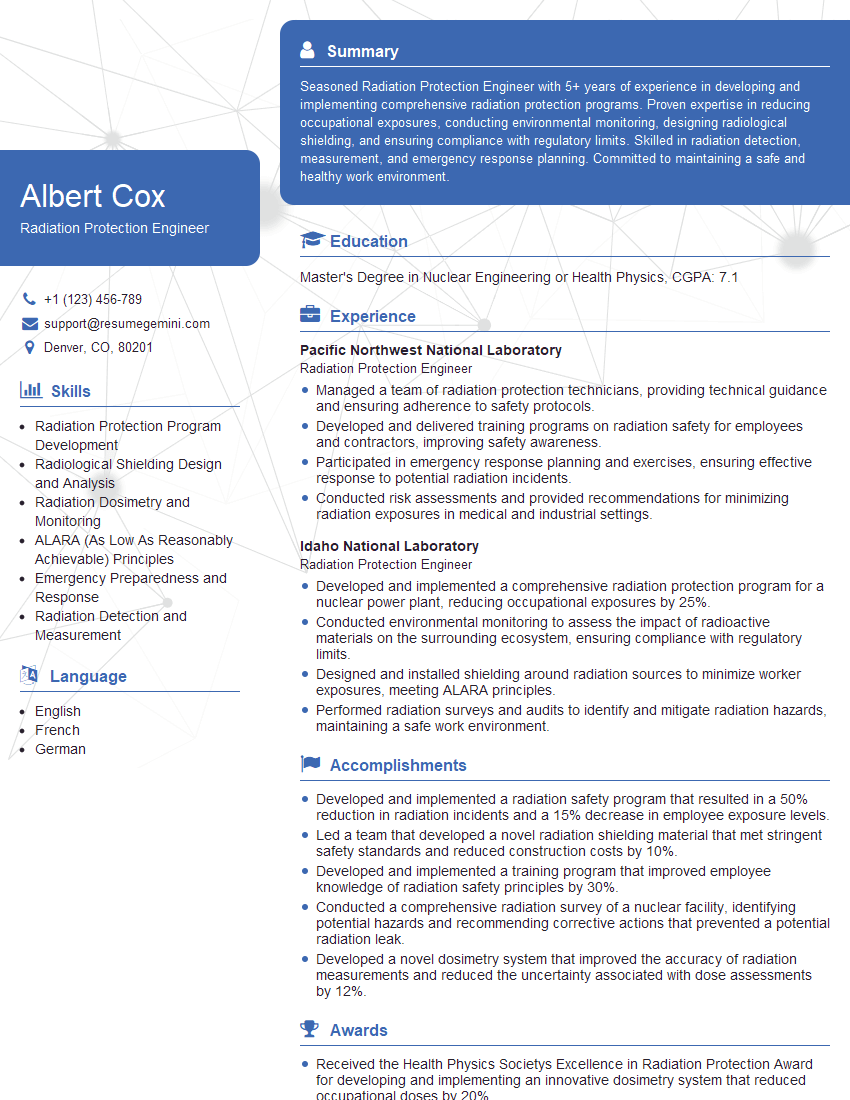
Radiation Protection Engineer Resume Sample

Nuclear Engineer Resume Sample

Nuclear Safety Engineer Resume Sample
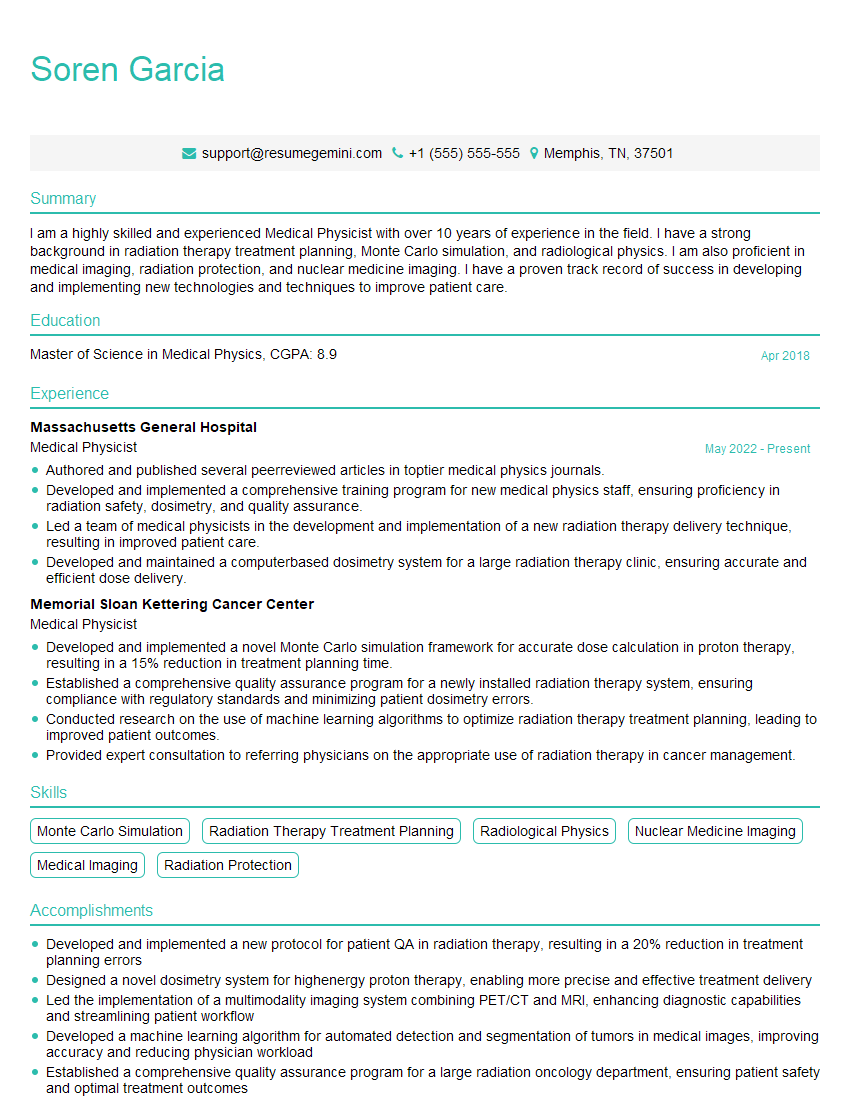
Medical Physicist Resume Sample
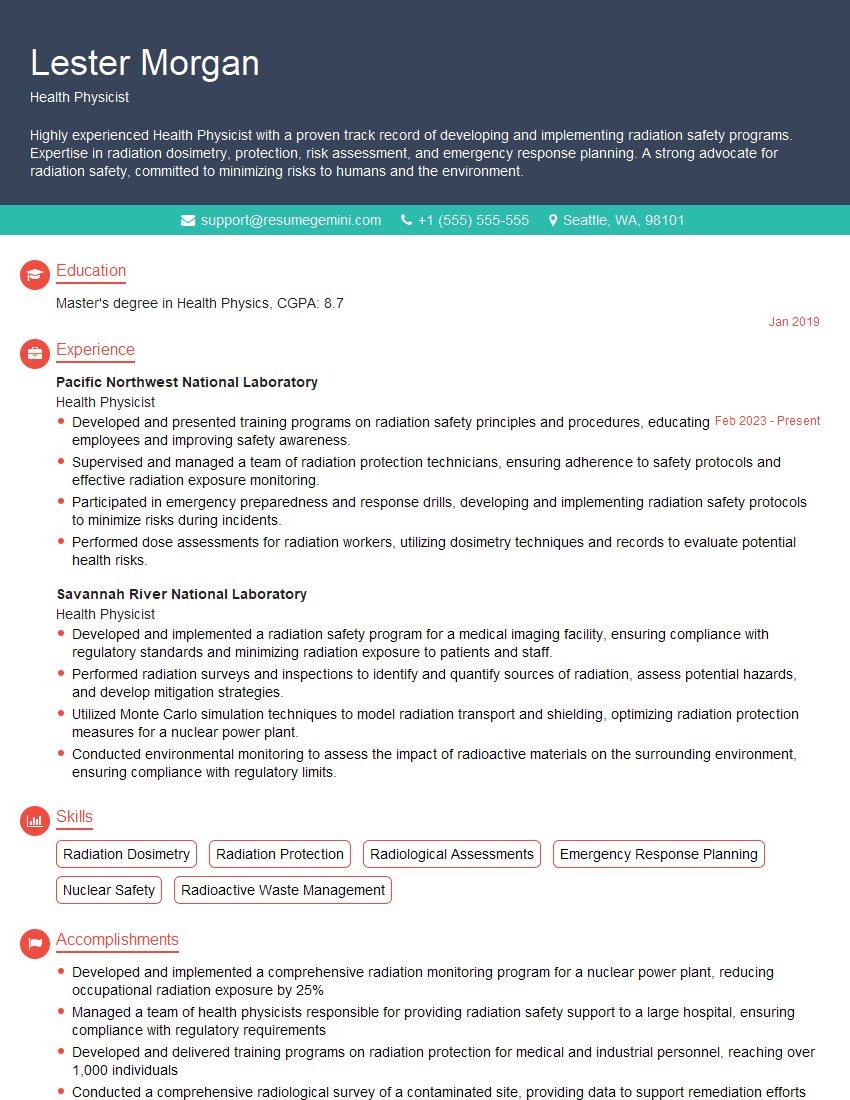
Health Physicist Resume Sample

Dosimetrist Resume Sample

Medical Dosimetrist Resume Sample
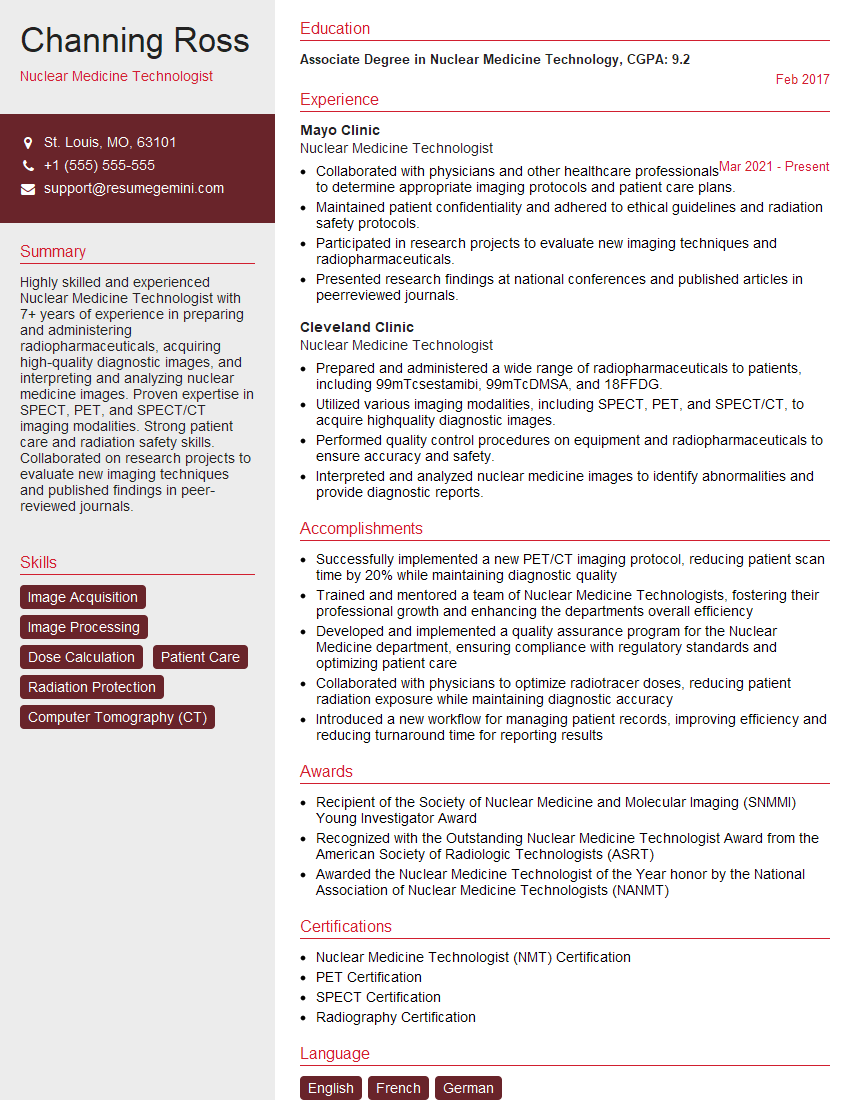
Nuclear Medicine Technologist Resume Sample

Radiation Safety Officer Resume Sample
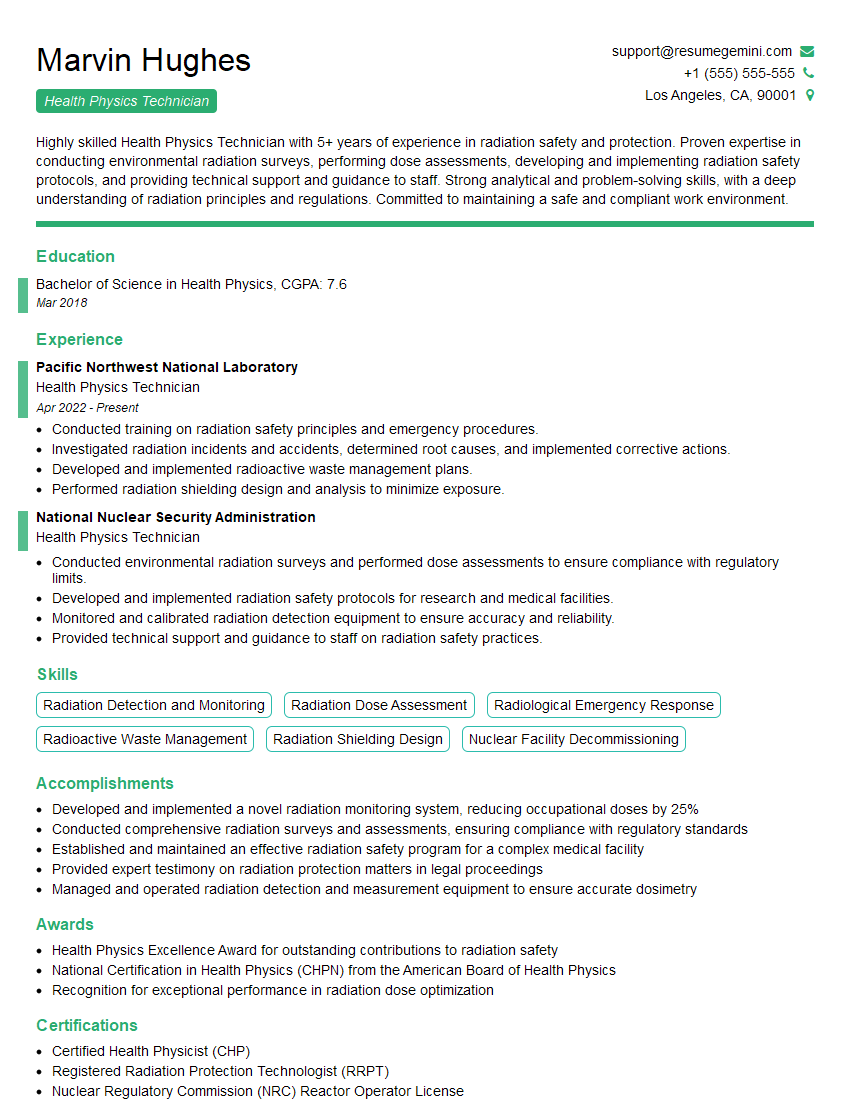
Health Physics Technician Resume Sample
Explore more articles
Users Rating of Our Blogs
Share Your Experience
We value your feedback! Please rate our content and share your thoughts (optional).
What Readers Say About Our Blog
Attention music lovers!
Wow, All the best Sax Summer music !!!
Spotify: https://open.spotify.com/artist/6ShcdIT7rPVVaFEpgZQbUk
Apple Music: https://music.apple.com/fr/artist/jimmy-sax-black/1530501936
YouTube: https://music.youtube.com/browse/VLOLAK5uy_noClmC7abM6YpZsnySxRqt3LoalPf88No
Other Platforms and Free Downloads : https://fanlink.tv/jimmysaxblack
on google : https://www.google.com/search?q=22+AND+22+AND+22
on ChatGPT : https://chat.openai.com?q=who20jlJimmy20Black20Sax20Producer
Get back into the groove with Jimmy sax Black
Best regards,
Jimmy sax Black
www.jimmysaxblack.com
Hi I am a troller at The aquatic interview center and I suddenly went so fast in Roblox and it was gone when I reset.
Hi,
Business owners spend hours every week worrying about their website—or avoiding it because it feels overwhelming.
We’d like to take that off your plate:
$69/month. Everything handled.
Our team will:
Design a custom website—or completely overhaul your current one
Take care of hosting as an option
Handle edits and improvements—up to 60 minutes of work included every month
No setup fees, no annual commitments. Just a site that makes a strong first impression.
Find out if it’s right for you:
https://websolutionsgenius.com/awardwinningwebsites
Hello,
we currently offer a complimentary backlink and URL indexing test for search engine optimization professionals.
You can get complimentary indexing credits to test how link discovery works in practice.
No credit card is required and there is no recurring fee.
You can find details here:
https://wikipedia-backlinks.com/indexing/
Regards
NICE RESPONSE TO Q & A
hi
The aim of this message is regarding an unclaimed deposit of a deceased nationale that bears the same name as you. You are not relate to him as there are millions of people answering the names across around the world. But i will use my position to influence the release of the deposit to you for our mutual benefit.
Respond for full details and how to claim the deposit. This is 100% risk free. Send hello to my email id: [email protected]
Luka Chachibaialuka
Hey interviewgemini.com, just wanted to follow up on my last email.
We just launched Call the Monster, an parenting app that lets you summon friendly ‘monsters’ kids actually listen to.
We’re also running a giveaway for everyone who downloads the app. Since it’s brand new, there aren’t many users yet, which means you’ve got a much better chance of winning some great prizes.
You can check it out here: https://bit.ly/callamonsterapp
Or follow us on Instagram: https://www.instagram.com/callamonsterapp
Thanks,
Ryan
CEO – Call the Monster App
Hey interviewgemini.com, I saw your website and love your approach.
I just want this to look like spam email, but want to share something important to you. We just launched Call the Monster, a parenting app that lets you summon friendly ‘monsters’ kids actually listen to.
Parents are loving it for calming chaos before bedtime. Thought you might want to try it: https://bit.ly/callamonsterapp or just follow our fun monster lore on Instagram: https://www.instagram.com/callamonsterapp
Thanks,
Ryan
CEO – Call A Monster APP
To the interviewgemini.com Owner.
Dear interviewgemini.com Webmaster!
Hi interviewgemini.com Webmaster!
Dear interviewgemini.com Webmaster!
excellent
Hello,
We found issues with your domain’s email setup that may be sending your messages to spam or blocking them completely. InboxShield Mini shows you how to fix it in minutes — no tech skills required.
Scan your domain now for details: https://inboxshield-mini.com/
— Adam @ InboxShield Mini
Reply STOP to unsubscribe
Hi, are you owner of interviewgemini.com? What if I told you I could help you find extra time in your schedule, reconnect with leads you didn’t even realize you missed, and bring in more “I want to work with you” conversations, without increasing your ad spend or hiring a full-time employee?
All with a flexible, budget-friendly service that could easily pay for itself. Sounds good?
Would it be nice to jump on a quick 10-minute call so I can show you exactly how we make this work?
Best,
Hapei
Marketing Director
Hey, I know you’re the owner of interviewgemini.com. I’ll be quick.
Fundraising for your business is tough and time-consuming. We make it easier by guaranteeing two private investor meetings each month, for six months. No demos, no pitch events – just direct introductions to active investors matched to your startup.
If youR17;re raising, this could help you build real momentum. Want me to send more info?
Hi, I represent an SEO company that specialises in getting you AI citations and higher rankings on Google. I’d like to offer you a 100% free SEO audit for your website. Would you be interested?
Hi, I represent an SEO company that specialises in getting you AI citations and higher rankings on Google. I’d like to offer you a 100% free SEO audit for your website. Would you be interested?