The right preparation can turn an interview into an opportunity to showcase your expertise. This guide to Recording and Sound Design interview questions is your ultimate resource, providing key insights and tips to help you ace your responses and stand out as a top candidate.
Questions Asked in Recording and Sound Design Interview
Q 1. Explain the difference between condenser and dynamic microphones.
Condenser and dynamic microphones are two fundamentally different types of microphones, each with its own strengths and weaknesses. The key difference lies in how they convert sound waves into electrical signals.
Condenser microphones use a capacitor—two electrically charged plates—to generate a signal. One plate is a fixed backplate, while the other is a thin diaphragm that vibrates in response to sound waves. These vibrations change the capacitance between the plates, resulting in a varying electrical signal. Condenser mics are known for their high sensitivity, wide frequency response, and ability to capture subtle nuances in sound. They are often preferred for recording vocals, acoustic instruments, and delicate sounds. However, they typically require phantom power (48V) to operate.
Dynamic microphones, on the other hand, use a moving coil within a magnetic field. Sound waves cause the coil to vibrate, which induces an electrical signal. Dynamic mics are more rugged, less sensitive to handling noise, and don’t require external power. They are ideal for recording loud instruments like drums, amplifiers, and live performances where feedback is a concern. Their frequency response is generally narrower than condensers, resulting in a slightly less detailed sound.
Think of it like this: a condenser mic is like a high-resolution camera, capturing every detail, while a dynamic mic is like a sturdy point-and-shoot, reliable and great for everyday use, but possibly less nuanced.
Q 2. Describe your experience with various audio editing software (e.g., Pro Tools, Logic Pro, Ableton Live).
I have extensive experience with several leading Digital Audio Workstations (DAWs). My primary DAW is Pro Tools, which I’ve used extensively for professional projects ranging from studio recording to post-production for film and television. I’m proficient in its advanced features, including automation, MIDI editing, and its powerful mixing and mastering capabilities. I particularly appreciate its stability and comprehensive plugin support.
I also have significant experience with Logic Pro X, known for its intuitive interface and extensive virtual instruments. I find Logic’s ease of use makes it excellent for composing and arranging music, and its integration with other Apple products is a significant advantage. Finally, I utilize Ableton Live for tasks involving looping, sampling, and live performance. Its session view and flexible workflow are invaluable for creating and manipulating audio in real-time.
My proficiency in these DAWs allows me to seamlessly adapt to various project needs and client preferences. I’m equally comfortable working on large-scale orchestral recordings as I am with smaller, more intimate projects.
Q 3. What are your preferred methods for noise reduction and audio restoration?
Noise reduction and audio restoration are crucial skills. My preferred methods combine both spectral and time-domain techniques. I typically begin with preventative measures during recording, such as minimizing background noise and using appropriate microphone techniques. In post-production, I often use a combination of techniques:
- Spectral editing: This involves visually identifying and removing noise frequencies using tools like spectral editing in Pro Tools or RX. This is effective for consistent background hums or hisses.
- Noise reduction plugins: I rely heavily on high-quality noise reduction plugins such as iZotope RX, which offers advanced algorithms to intelligently differentiate between noise and the desired audio signal. These plugins are particularly useful for removing random noise like clicks and pops.
- Declicking and decrackling: These processes are particularly important for older recordings. I frequently use specialized tools within RX or other restoration plugins to address these artifacts. This often requires careful manual editing.
- Adaptive filtering: This technique can be useful for removing consistent, repeating noises, like air conditioner hums, by creating a filter that targets specific frequencies.
The key is a careful, iterative approach. I always prioritize minimal processing to maintain the integrity of the original audio while targeting specific noise issues.
Q 4. How do you handle phase cancellation issues during mixing?
Phase cancellation occurs when two or more identical signals arrive at a mixing point out of sync, resulting in a reduction or complete loss of the signal’s energy. This typically manifests as a thin, weak sound, or a loss of bass frequencies.
Handling phase cancellation requires a multifaceted approach:
- Careful microphone placement: Avoiding placing microphones too close together, especially when recording the same sound source from different angles, minimizes phase issues. Using coincident stereo techniques (like XY or M/S) can also greatly improve phase coherence.
- Phase correlation meters: DAWs often have phase correlation meters that visually display the phase relationship between different channels. This allows me to identify potential problems early on.
- Polarity inversion: If phase cancellation is detected, inverting the polarity of one of the conflicting signals (flipping the phase) can sometimes solve the problem. This technique works by flipping one of the waves and lining it up with the other.
- EQ and filtering: If phase cancellation is severe, subtle EQ adjustments can help alleviate the problem by reducing frequencies that are heavily affected by phase issues.
- Time alignment: If signals are off slightly because of different distances from a microphone to a sound source, you can use delay plugins to align the timing.
Addressing phase problems often requires careful listening and experimentation. There’s no one-size-fits-all solution, and the best approach depends on the specific situation and the audio material.
Q 5. Explain the concept of EQ and its application in sound design.
EQ, or equalization, is the process of adjusting the balance of frequencies within an audio signal. It’s a fundamental tool in sound design, used to shape the timbre of instruments, enhance clarity, or fix problematic frequencies.
EQ involves boosting or cutting specific frequency bands using filters such as high-pass, low-pass, band-pass, and notch filters. High-pass filters remove low frequencies, low-pass filters remove high frequencies, band-pass filters isolate a specific range, and notch filters remove a narrow band of frequencies (often used for removing hum or feedback).
Applications in sound design are numerous:
- Sculpting instrument sounds: EQ can be used to brighten a dull-sounding guitar, add warmth to a bassline, or remove muddiness from a vocal track.
- Creating space in a mix: By strategically cutting frequencies that are congested in a mix, EQ creates space for other instruments to shine. This often involves a process called ‘de-essing’ where sibilant sounds are reduced.
- Correcting frequency imbalances: EQ can compensate for deficiencies in recordings or playback systems.
- Creating unique sonic characteristics: Extreme EQ settings can be used to create dramatic effects or distinctive textures. For example, a sharp high-frequency boost can make a sound brighter and thinner.
EQ is an art as much as it is a science, and experience and a good ear are vital for its successful application.
Q 6. Describe your experience with spatial audio and immersive sound technologies.
I have considerable experience working with spatial audio and immersive sound technologies, including binaural recording, Ambisonics, and object-based audio. I’ve worked on projects utilizing various 3D audio formats such as Dolby Atmos and Sony 360 Reality Audio.
Binaural recording, using microphones positioned like human ears, creates a very realistic and immersive listening experience. Ambisonics involves capturing sound from multiple microphones, encoding it into a format that can be decoded and reproduced on various speaker configurations or headphones. This provides flexibility in playback. Object-based audio allows for greater control over the placement and movement of individual sound objects within the 3D sound field, increasing the level of control and precision for the sound designer.
My experience includes creating immersive soundscapes for video games, virtual reality applications, and interactive installations. Understanding the principles of psychoacoustics (how our brains perceive sound in space) is crucial for creating effective and believable spatial audio. The use of head-related transfer functions (HRTFs) in binaural recordings is essential to creating the illusion of sound coming from specific locations.
Q 7. What are your preferred techniques for creating realistic sound effects?
Creating realistic sound effects involves a blend of recording, processing, and creative manipulation. My approach involves several key techniques:
- Field recording: Gathering real-world sounds using high-quality microphones is crucial. I have a library of thousands of field recordings which form the basis for many of my sound effects.
- Sound manipulation and synthesis: I utilize various audio processing techniques such as pitch shifting, time stretching, reverb, delay, and filtering to transform recorded sounds into new, imaginative ones. Synthesis plugins can create sounds that are hard to capture in the field.
- Layering and blending: Combining several sounds, often recorded from different sources, to build complexity and realism. This may involve layering sounds of different volumes and frequencies.
- Understanding sound physics: A thorough understanding of how sound behaves in the real world guides my design choices. This knowledge includes how distance affects sound and how surfaces influence reflections.
- Experimentation: Often, the most successful sound effects are born through experimentation. I often play around with various plugins and techniques to find unexpected or unique outcomes.
For example, to create the sound of a spaceship, I might combine the recordings of jet engines, wind, electrical buzzing, and metallic scrapes, processing them with reverb and other effects to give the illusion of space and distance. The goal is to create believable, not simply technically perfect, audio.
Q 8. How do you approach designing sounds for different game genres (e.g., RPG, FPS, Strategy)?
Designing sounds for different game genres requires a deep understanding of each genre’s core mechanics and player expectations. The sonic palette must support the game’s atmosphere and gameplay.
- RPGs: Often prioritize epic orchestral scores and atmospheric soundscapes. I’d focus on creating rich, immersive environments with layered sounds to evoke emotion and enhance storytelling. Think of the mystical ambiance of a forest or the imposing grandeur of a castle. Sound design would include detailed environmental sounds (wind, rustling leaves, water), evocative musical cues tied to events and character actions, and distinct character voices to reflect their personalities and roles.
- FPSs: Require immediate and visceral feedback. Precision and clarity are paramount. Weapon sounds need to be punchy and impactful, delivering clear feedback to the player about damage and weapon type. Environmental sounds should enhance immersion but not distract from core gameplay. Designing clear and distinct footstep sounds for different surfaces is crucial for positional audio. I might utilize techniques like LFE (low-frequency effects) to amplify the impact of explosions and gunfire.
- Strategy Games: Often demand a broader soundscape, balancing detailed unit sounds with broader, atmospheric elements. Unit sounds need to clearly communicate their type and status (e.g., health, attack type). Ambiance plays a critical role, establishing the feel of the setting – whether a futuristic battlefield or a medieval kingdom. Strategic elements, like construction and unit deployment, need distinct sound effects to provide auditory feedback. I would carefully consider the pacing and rhythm of the sound design to match the strategic gameplay.
The key is to tailor the sound design to the specific needs and feel of each genre, always keeping the player experience at the forefront.
Q 9. Explain the importance of room acoustics in recording and how you address them.
Room acoustics are incredibly important in recording because they significantly impact the sound’s character. The room’s size, shape, materials, and even the presence of furniture all affect how sound waves reflect, absorb, and diffuse. This influences the overall timbre, clarity, and presence of the recorded audio.
Addressing room acoustics involves a multi-faceted approach:
- Room Treatment: This includes using acoustic panels and bass traps to absorb unwanted reflections and reduce standing waves (areas of excessive resonance). Strategically placed diffusers help scatter sound waves, creating a more natural and evenly distributed sound field.
- Microphone Placement: Careful microphone placement can minimize the influence of unwanted room reflections. Close miking minimizes room sound, while distant miking incorporates more room ambience. Experimentation is key to finding the best position for each instrument or sound source.
- Digital Signal Processing (DSP): Software plugins like reverb and EQ can be used to subtly shape the sound and compensate for room issues. However, this should be done judiciously; it’s always preferable to address issues physically when possible. Over-reliance on DSP can often mask issues instead of solving them.
For example, recording a voiceover in a live room might require strategically placing absorption panels to prevent echoes, while recording a drum kit might demand a more reflective space to capture the natural reverberation of the instruments.
Q 10. Describe your workflow for a typical sound design project.
My workflow for a typical sound design project typically involves these stages:
- Concept & Research: I start by carefully reviewing the project brief, understanding the game’s vision, and identifying the specific sound needs. This might include reviewing concept art, gameplay footage, and discussing the desired atmosphere with the game developers.
- Sound Gathering & Recording: I then gather sounds, either by recording my own using a variety of microphones and techniques or sourcing sounds from libraries. This stage requires experimentation and creative problem solving to ensure I have the right sounds to match the vision.
- Sound Editing & Processing: This involves cleaning up raw recordings, manipulating individual sounds through editing tools, applying effects like EQ, compression, and reverb, and creating unique sound variations.
- Sound Design & Synthesis: This is where I begin building the sounds using synthesizers, samplers and other tools. This stage heavily depends on the specific needs of the project, ranging from creating realistic sounds (e.g., environmental sounds) to abstract ones (e.g., UI sounds).
- Implementation & Integration: Once the individual sounds are complete, they are implemented into the game engine. This might involve working with the game engine’s audio middleware. I frequently need to adjust and tweak the sounds based on how they interact within the game environment.
- Testing & Iteration: Throughout the entire process, testing and refinement are critical. I will constantly review the sound design in its context within the game, making iterative adjustments to ensure the sounds feel appropriate, impactful, and fully integrated.
This is a flexible workflow that adjusts based on the project’s requirements, but these stages represent a core set of activities.
Q 11. What are the key differences between mixing and mastering?
Mixing and mastering are distinct but interconnected stages in audio post-production. They both involve adjusting levels and frequencies but serve different purposes.
- Mixing: Focuses on balancing individual tracks within a project (e.g., instruments, vocals, effects) to create a cohesive and well-balanced sound. This involves adjusting volume levels, equalization, panning, and adding effects (reverb, delay, compression) to create the desired sonic image.
- Mastering: Is the final stage, dealing with the entire mixed project as a single entity. Mastering engineers focus on optimizing the audio for a specific playback medium (e.g., streaming, CD, vinyl) – ensuring that the overall sound is loud, clear, and has a consistent sonic character across all playback systems. This process often includes subtle adjustments to dynamics, EQ, stereo width, and loudness maximization (though with careful attention to avoiding artifacts from excessive loudness).
Think of mixing as building a house; you’re carefully arranging each component (room, walls, furniture) to achieve a perfect interior. Mastering is then the landscaping, ensuring the property is optimized for its location and setting. The process is crucial for achieving the best possible final product.
Q 12. How do you manage large audio projects and maintain organization?
Managing large audio projects necessitates meticulous organization. I use a combination of strategies:
- Clear File Structure: I establish a well-defined folder structure, using clear and consistent naming conventions. This often mirrors the game’s structure, with separate folders for different game areas, characters, or sound categories.
- Metadata & Tagging: I meticulously tag all audio files using metadata, including descriptions, keywords, and game-specific identifiers. This makes searching and finding specific sounds much easier.
- Database Software: For very large projects, dedicated audio database programs offer robust search functionality, allowing quick retrieval of sounds based on metadata.
- Version Control: Using version control systems ensures that I can track changes, revert to earlier versions if necessary, and collaborate effectively with others.
- Cloud Storage: Cloud-based storage solutions provide both backup and easy access to files from multiple locations.
Consistent and careful file management reduces frustration, improves efficiency and prevents errors.
Q 13. Describe your experience with different microphone techniques (e.g., close miking, distant miking, stereo recording).
Microphone techniques significantly influence the captured sound.
- Close Miking: Involves placing the microphone very close to the sound source (e.g., instrument, voice). This minimizes room ambience, captures a detailed and intimate sound, and reduces background noise. Ideal for capturing the nuances of an instrument or creating a controlled, clean recording.
- Distant Miking: Places the microphone further from the source, capturing more of the room’s natural ambience and reverberation. This creates a sense of space and airiness, ideal for capturing the natural resonance of a room or creating a more spacious and immersive recording.
- Stereo Recording: Utilizes two or more microphones to capture a stereo sound image, providing width and depth. Common techniques include XY (coincident pair), AB (spaced pair), and MS (mid-side). The choice of technique depends on the desired stereo effect – wide, narrow, or something in between. XY is good for a tight stereo image while AB provides a wider, more spacious feel. MS offers control over width after the recording.
Selecting the right microphone technique is crucial for achieving the desired sonic quality. My approach always considers the specific requirements of the project and the artistic goals.
Q 14. Explain your understanding of signal flow in a recording studio.
Understanding signal flow in a recording studio is crucial for effective sound recording and processing. It refers to the path an audio signal takes from its source to the final output.
A typical signal flow might look like this:
- Sound Source: This could be an instrument, voice, or a computer-generated sound.
- Microphone (if applicable): Converts acoustic energy into an electrical signal.
- Preamplifier: Boosts the weak signal from the microphone, increasing its level and impedance.
- Signal Processor (optional): This could include compressors, equalizers, or other effects that shape the signal’s tone, dynamics, or character. Often incorporated through plugins.
- Analog-to-Digital Converter (ADC): Converts the analog signal into a digital format for computer processing.
- Digital Audio Workstation (DAW): Software where the digital audio is recorded, edited, and mixed. Further processing with plugins will take place here.
- Digital-to-Analog Converter (DAC): Converts the digital signal back into an analog format for playback or recording to other mediums.
- Output Device: Speakers, headphones, or recording device receive the final processed signal.
A thorough understanding of this signal path allows for informed decisions about equipment selection, signal processing, and troubleshooting any technical issues.
Q 15. How familiar are you with various audio formats (e.g., WAV, AIFF, MP3)?
I’m intimately familiar with a wide range of audio formats, each with its own strengths and weaknesses. Understanding these differences is crucial for making informed decisions throughout the production process.
- WAV (Waveform Audio File Format): A lossless format, meaning no audio data is discarded during encoding. This preserves the highest audio fidelity and is ideal for archiving master recordings and professional work where quality is paramount. Think of it like a pristine original photograph – no information is lost.
- AIFF (Audio Interchange File Format): Another lossless format, very similar to WAV, but primarily used on Apple systems. It shares the same high-fidelity benefits as WAV.
- MP3 (MPEG Audio Layer III): A lossy format, meaning data is compressed by discarding some audio information deemed less perceptible to the human ear. This results in smaller file sizes, ideal for streaming and distribution but at the cost of some audio quality. Think of it as a JPEG image – smaller file size, some details sacrificed.
Choosing the right format depends on the specific application. For final mastering, WAV or AIFF are preferred. For online distribution where file size matters, MP3 is a practical choice, often using a variable bit rate (VBR) to optimize quality and file size.
Career Expert Tips:
- Ace those interviews! Prepare effectively by reviewing the Top 50 Most Common Interview Questions on ResumeGemini.
- Navigate your job search with confidence! Explore a wide range of Career Tips on ResumeGemini. Learn about common challenges and recommendations to overcome them.
- Craft the perfect resume! Master the Art of Resume Writing with ResumeGemini’s guide. Showcase your unique qualifications and achievements effectively.
- Don’t miss out on holiday savings! Build your dream resume with ResumeGemini’s ATS optimized templates.
Q 16. What are your troubleshooting strategies for common recording issues (e.g., feedback, hum, distortion)?
Troubleshooting recording issues requires a systematic approach. My strategy involves isolating the problem, then systematically eliminating potential causes. Let’s look at common issues and their solutions:
- Feedback: This high-pitched squeal is caused by a microphone picking up its own amplified output. Solutions include: reducing microphone gain, moving the microphone further from the loudspeaker, using directional microphones to minimize pickup from the source, and employing physical barriers (like acoustic screens) between the microphone and speakers.
- Hum: A low-frequency, often consistent, buzzing sound is typically caused by electrical interference (ground loops). This can often be fixed by: using balanced cables and connections, ensuring proper grounding, using a DI box to isolate the instrument from the ground, or using a noise gate to reduce the hum after recording.
- Distortion: This harsh, unpleasant sound is caused by an audio signal exceeding the amplifier’s or microphone’s capabilities. To solve this: reduce the input gain (especially when recording loud sources like drums or amplified instruments), use compression to control dynamics, ensure that you’re using equipment which is appropriately rated for the signal levels involved and use higher quality components.
Often, a combination of techniques is necessary. For example, persistent hum might require both balanced cables and a noise gate for effective removal.
Q 17. Explain the concept of dynamic range and its importance in audio production.
Dynamic range refers to the difference between the quietest and loudest parts of an audio signal. It’s measured in decibels (dB). A wide dynamic range implies a large difference, encompassing subtle details and powerful peaks. A narrow dynamic range means the quiet and loud parts are closer together.
In audio production, dynamic range is crucial for achieving a natural and immersive sound. A wide dynamic range allows for a more realistic portrayal of the acoustic space and the subtle nuances in the instruments or voice. Music with a compressed dynamic range (often used in popular music) can sound louder but often lacks depth and detail. Imagine comparing a live orchestra recording to a heavily compressed pop track – the former preserves the delicate interplay of instruments and the power of crescendos much more effectively. Conversely, a compressed track can be good for broadcast media, as it offers a consistent loudness without the dynamic peaks and troughs which could affect the experience of the listener.
Q 18. Describe your experience with audio metering and its role in achieving professional results.
Audio metering is essential for achieving professional results. Meters visually represent the level of the audio signal, helping prevent clipping (distortion from exceeding the maximum level) and ensure optimal loudness. I use a variety of meters depending on the task:
- Peak Meters: Show the highest level of the signal. Essential for preventing clipping and ensuring the recording doesn’t exceed the maximum level.
- RMS (Root Mean Square) Meters: Measure the average power of the signal over time. Important for maintaining consistent loudness and preventing unintended fluctuations.
- Loudness Meters (e.g., LUFS): Specifically designed to measure perceived loudness, ensuring consistency across different platforms and media.
By carefully monitoring these meters, I ensure the recording is neither too quiet nor too loud, optimizing the audio quality and preventing distortion or unwanted artifacts. Consistent metering is key to achieving a professional, polished sound across a project or even across a large set of projects, ensuring they have a consistent listening experience for the end user.
Q 19. How do you collaborate effectively with other members of a sound team (e.g., composers, directors)?
Effective collaboration is fundamental in sound design. I believe in open communication, active listening, and a clear understanding of everyone’s role.
With composers, I’ll discuss the desired mood and style early in the process. This might involve reviewing the score, discussing specific instrumentation and looking at how the sounds should shape the narrative. Regular feedback sessions are key to ensuring the sound design complements the composition rather than clashing.
With directors, I’ll work closely to understand their artistic vision and translate that into the sonic landscape. We’ll discuss scene-specific sound ideas and ensure the sound design effectively enhances the emotional impact of the visual elements. I present multiple options and iterate based on the director’s feedback. Clear and consistent communication is key to successful collaboration.
Q 20. What is your understanding of the principles of psychoacoustics?
Psychoacoustics is the study of the perception of sound. Understanding these principles is crucial for making informed decisions in sound design. For example:
- Masking: Louder sounds can mask quieter sounds. This is used to bury unwanted noises or to create sonic space. Knowing this allows me to strategically layer sounds, so the important elements cut through, while others are subtly present.
- The Haas Effect (Precedence Effect): The brain prioritizes the first sound to arrive, even if subsequent sounds are slightly louder or clearer. This is heavily leveraged when creating surround sound or spatial audio, creating realistic positional sounds. If the sounds arriving from multiple speakers are not well-timed, the effect is lost and creates an unnatural feeling for the listener.
- Critical Bands: The human ear doesn’t perceive all frequencies equally. Knowing this allows for more effective equalisation and effects processing, focusing on frequencies which will have the greatest impact on the listener’s perception.
By understanding psychoacoustics, I can create soundscapes that are more immersive, realistic, and emotionally engaging. I can design sounds which are effective and engaging, by focusing on those aspects of the sound which the human brain is most sensitive to.
Q 21. Describe your experience with Foley recording.
Foley recording involves creating sound effects to synchronize with visuals. I have extensive experience in Foley recording, from designing and creating the recording space, selecting props and performing the recording, through to editing and mixing the sound effects into the final mix.
My process typically begins with a careful review of the footage to identify the specific sounds required. I gather an array of props – from everyday objects to specialized equipment – that can create the desired sounds. This often involves a great deal of creativity and improvisation. Then I create the sounds using various techniques, including performing actions with the props, modifying existing recordings, and carefully editing the sounds to perfect the timing and impact. Often, the process involves subtle adjustments and creative layering. For example, creating the sounds of footsteps might involve using various surfaces, shoe types, and even microphone techniques to create variation and create a more realistic end result.
Foley is crucial for enhancing realism and immersion in film and video, adding layers of detail that elevate the viewing experience.
Q 22. Explain your experience with ADR (Automated Dialogue Replacement) techniques.
ADR, or Automated Dialogue Replacement, is the process of re-recording dialogue in post-production. This is crucial when on-set audio is unusable due to background noise, poor microphone placement, or actor performance issues. My experience encompasses a wide range of projects, from independent films where I’ve worked closely with actors in a dedicated ADR booth, to large-scale animation projects requiring precise synchronization with lip movements. I’m proficient in various software, including Pro Tools and Nuendo, and adept at utilizing techniques like pre-layering and pitch correction to seamlessly integrate the new dialogue into the existing scene. For instance, on a recent animated feature, we had to replace a child actor’s lines due to changes in the script. Using Pro Tools’ élastique time-stretching and pitch-shifting tools, I was able to match the new recording to the original lip movements flawlessly, ensuring a natural and believable performance.
My workflow typically starts with carefully analyzing the problematic audio, identifying the sections needing replacement, and preparing a clean reference track. Then, I work with the actor in a controlled environment to capture clear, unblemished recordings. The final stage involves meticulous editing and mixing, paying close attention to maintaining consistency in vocal tone, delivery, and room ambience. Careful attention to detail is paramount; small things like breath sounds and subtle intonation shifts can significantly impact realism.
Q 23. What are your preferred methods for creating believable ambience?
Creating believable ambience is all about capturing the essence of a location or environment. My preferred methods involve a combination of field recordings and sound design. I always strive for authenticity, whenever possible. I’ll often spend time on location, recording the subtle nuances of the environment using high-quality microphones. This could involve capturing the rustling of leaves, the distant hum of traffic, or the creaking of a wooden floor – all elements that contribute to a realistic soundscape. This provides a foundation on which I build using synthesis and processing. For instance, while recording a scene set in a bustling marketplace, I might record the ambient sounds of the market separately, bringing them into the final mix to establish atmosphere. This is combined with detailed sound design, for example, recreating the sounds of footsteps on different surfaces using layered samples and effect processing.
When field recordings aren’t feasible, I rely on highly realistic synthesized sounds and effects. I utilize sophisticated sound libraries, virtual instruments, and plugins to meticulously craft believable ambiences. This allows me to tailor the soundscape specifically to the director’s vision, even when there’s a need for something creatively unusual, or beyond the capability of available recordings.
Q 24. How do you ensure consistency in sound across different platforms and devices?
Maintaining sound consistency across different platforms is essential for a cohesive listening experience. This involves mastering the audio to a specific loudness standard, such as LUFS (Loudness Units relative to Full Scale), to prevent discrepancies in perceived volume across devices. I also carefully analyze the frequency response and dynamics of the audio, ensuring that crucial details are not lost or distorted when played back on various devices with different playback systems. I use a combination of dynamic range processing and limiting to achieve a consistent sound across various platforms, while ensuring that the creative intent is maintained. For example, low-frequency rumble may sound great on a high-quality subwoofer, but may overload lower quality speakers. Careful monitoring and testing on a range of devices is crucial. Specific attention needs to be placed on preventing the loss of subtle detail in the high frequencies, as these frequencies are the most likely to be affected by different playback systems.
Furthermore, I utilize high-resolution audio formats during the production process, to preserve as much sonic information as possible before any compression or downsampling is needed for final delivery to various platforms. This minimizes loss of quality during the distribution process. By combining thoughtful mixing and mastering techniques with careful consideration of the limitations of different playback devices, I aim to deliver a consistent, high-quality audio experience to every listener, regardless of their listening setup.
Q 25. Describe your experience with surround sound mixing techniques.
Surround sound mixing presents unique challenges and opportunities. My experience includes working with various surround sound formats, such as 5.1, 7.1, and Dolby Atmos. Understanding how sound behaves in a three-dimensional space is paramount. I leverage panning, delay, and reverb effects to precisely place sounds within the soundscape. This allows me to create immersive and engaging experiences for the listener. For instance, in a scene featuring a helicopter flying overhead, I might place the main helicopter sound in the center channel, with subtle engine sounds panning left and right to enhance the feeling of movement and scale. I may also utilize height channels (in formats like Dolby Atmos) to add the characteristic whirring sound as it moves overhead, enriching the three-dimensional soundscape.
When working with Dolby Atmos, I utilize object-based audio, which means I can position individual sounds and manipulate them independently within the three-dimensional environment. This allows for a high degree of creativity and flexibility, as sounds can move freely within the environment, providing a truly immersive soundscape and providing the user with a truly dynamic auditory experience. My workflow involves careful planning and placement of audio objects, frequently using visualization tools to ensure that the sound design complements and enhances the overall narrative and visuals.
Q 26. How do you handle client feedback and revisions effectively?
Handling client feedback is a crucial aspect of the sound design process. My approach emphasizes clear communication and collaboration. I always begin by carefully listening to and understanding the client’s feedback. This often involves discussing their concerns or suggestions in detail. It’s important to avoid making assumptions and instead seek clarification where needed. I will then translate their feedback into actionable steps in my workflow.
I view revisions as opportunities to refine and improve the audio. My approach is always iterative and collaborative. I’ll present revisions alongside the original mix, providing explanations for the changes and encouraging further feedback. If necessary, I might present different versions exploring different approaches. Transparency and clear communication are key to ensuring the client understands the changes being made and are satisfied with the final outcome. Documenting changes is also critical; this allows for easy traceability of all revisions, ensuring accountability and streamlining the revision process.
Q 27. What are your goals and aspirations in the field of recording and sound design?
My goals and aspirations center on pushing the boundaries of immersive audio and creating truly evocative soundscapes. I’m particularly interested in exploring new technologies, such as spatial audio and interactive sound design, to create more engaging and personalized listening experiences. I want to continue to improve my technical skills and expand my knowledge of different sound design techniques. I am also passionate about mentoring aspiring sound designers, sharing my knowledge and helping others develop their skills. Ultimately, I strive to create audio experiences that transport listeners to other worlds, enhance their emotional connection to stories, and leave a lasting impact. This is best achieved by combining technical expertise with creative vision, resulting in audio that truly elevates the content it supports.
Key Topics to Learn for Recording and Sound Design Interview
- Microphones & Microphone Techniques: Understanding polar patterns, microphone placement for various instruments and vocalists, and the impact of proximity effect on sound quality. Practical application: Explain your approach to miking a drum kit for a specific genre (e.g., jazz, rock, pop).
- Signal Flow & Audio Routing: Knowledge of the path a signal takes from source to output, including preamps, equalizers, compressors, and other processing units. Practical application: Describe your workflow for setting up a multitrack recording session and managing signal levels.
- Digital Audio Workstations (DAWs): Proficiency in at least one DAW (Pro Tools, Logic Pro X, Ableton Live, etc.). Practical application: Detail your experience with editing, mixing, and mastering audio within your chosen DAW. Explain your proficiency with features like automation and MIDI.
- Acoustic Treatment & Room Acoustics: Understanding the principles of sound absorption, diffusion, and reflection. Practical application: Describe how you would treat a room to minimize unwanted reflections and improve sound quality for recording.
- Audio Effects Processing: Competence in utilizing equalizers, compressors, reverbs, delays, and other effects to shape and enhance sound. Practical application: Explain how you would use EQ to sculpt a vocal track or use reverb to create a specific atmosphere.
- Mixing & Mastering Techniques: Understanding the principles of balancing levels, panning, stereo imaging, and achieving a polished final product. Practical application: Describe your approach to achieving a cohesive and impactful mix.
- Sound Design Fundamentals: Creating and manipulating sounds using synthesis, sampling, and sound manipulation techniques. Practical application: Discuss your experience with creating unique sound effects or atmospheric textures.
- Audio Post-Production: Experience in dialogue editing, sound effects editing, and Foley recording. Practical application: Explain your workflow for cleaning up dialogue tracks and adding realistic sound effects to a video project.
Next Steps
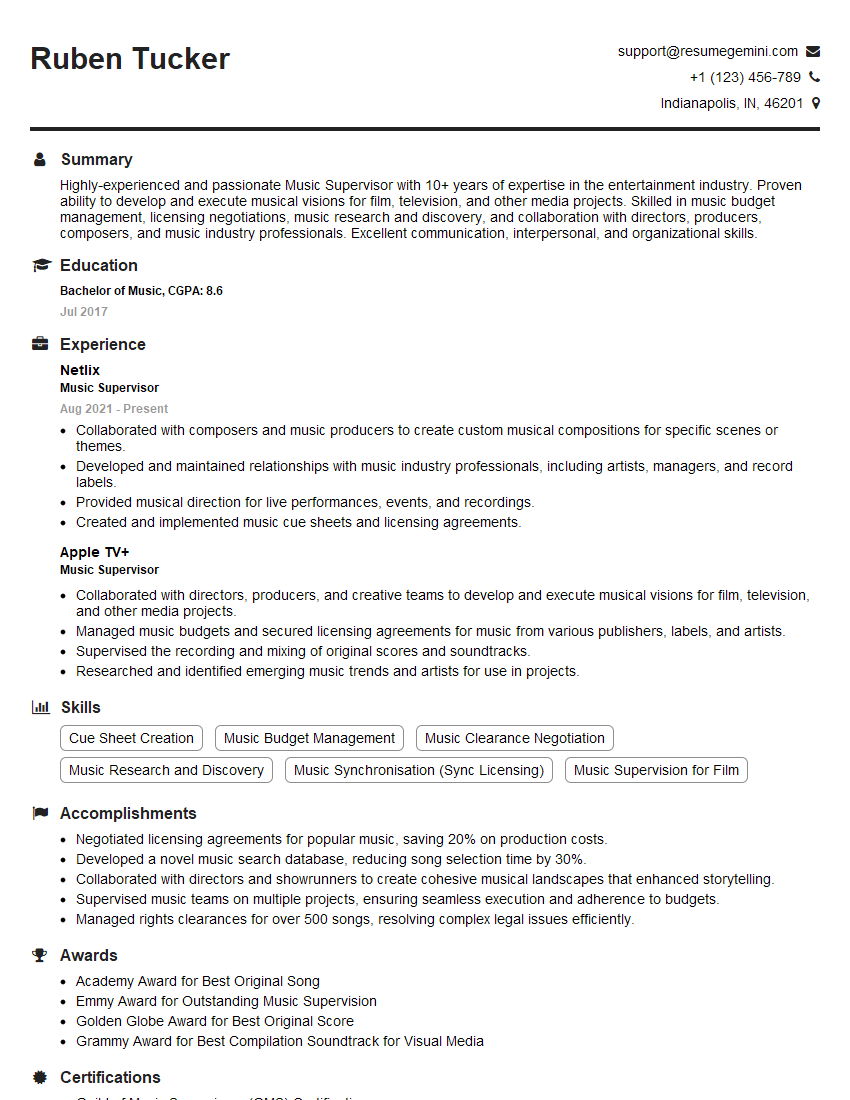
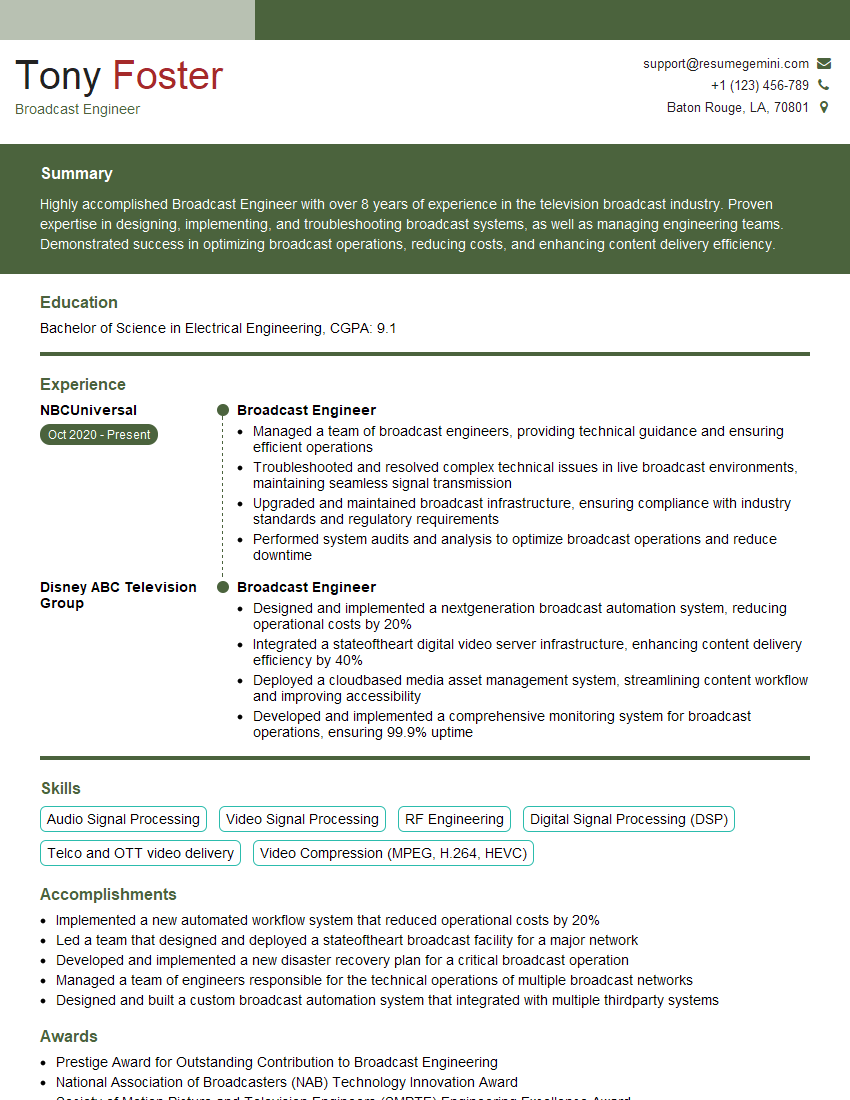
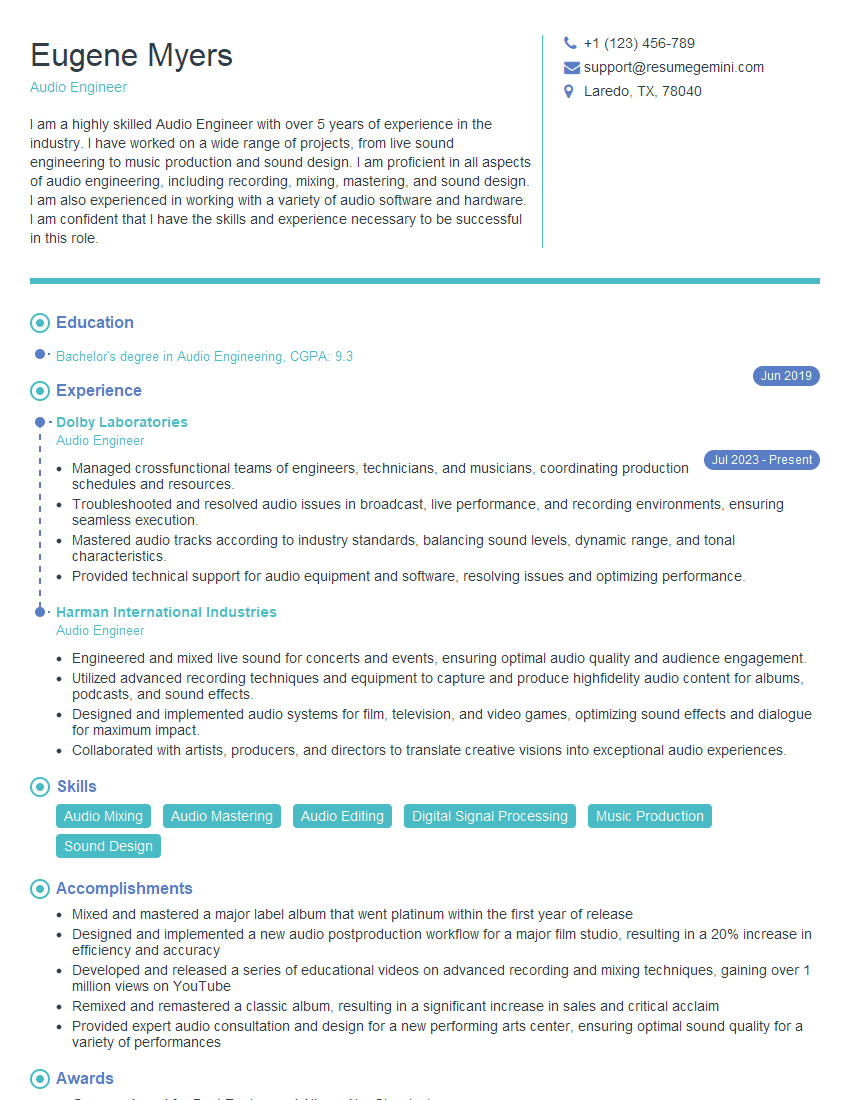
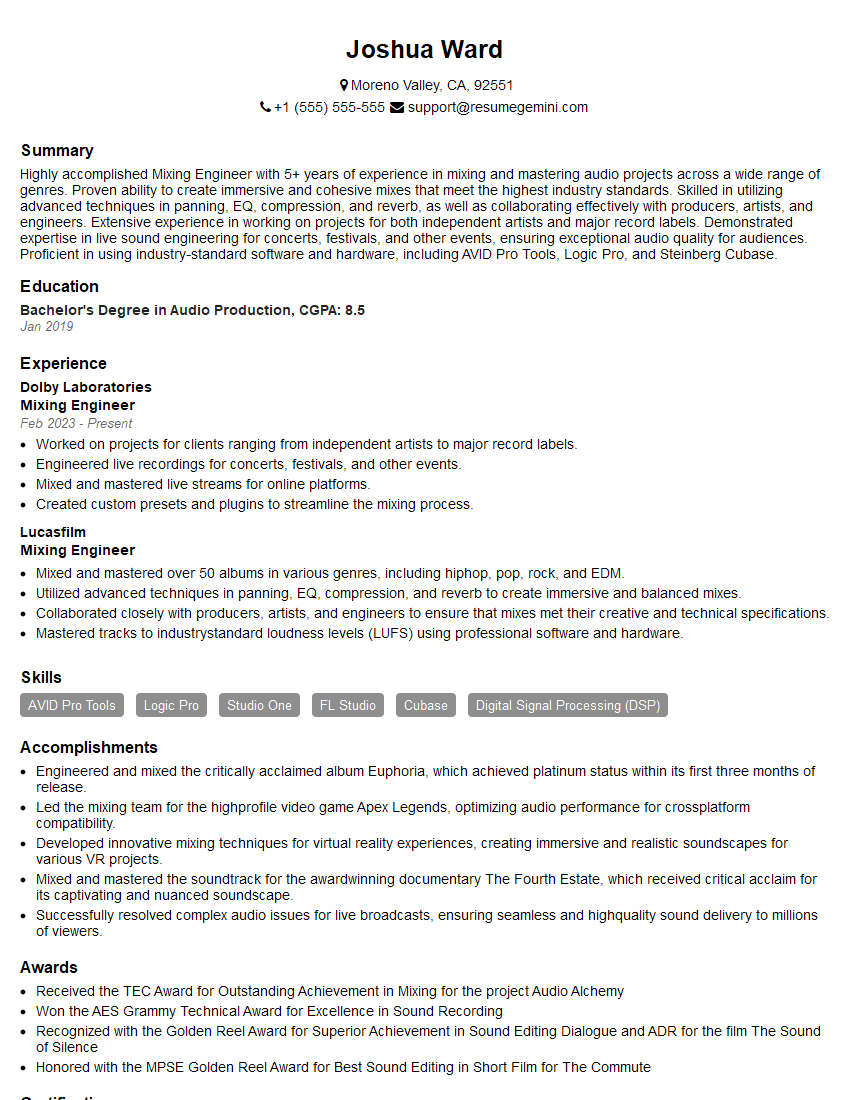
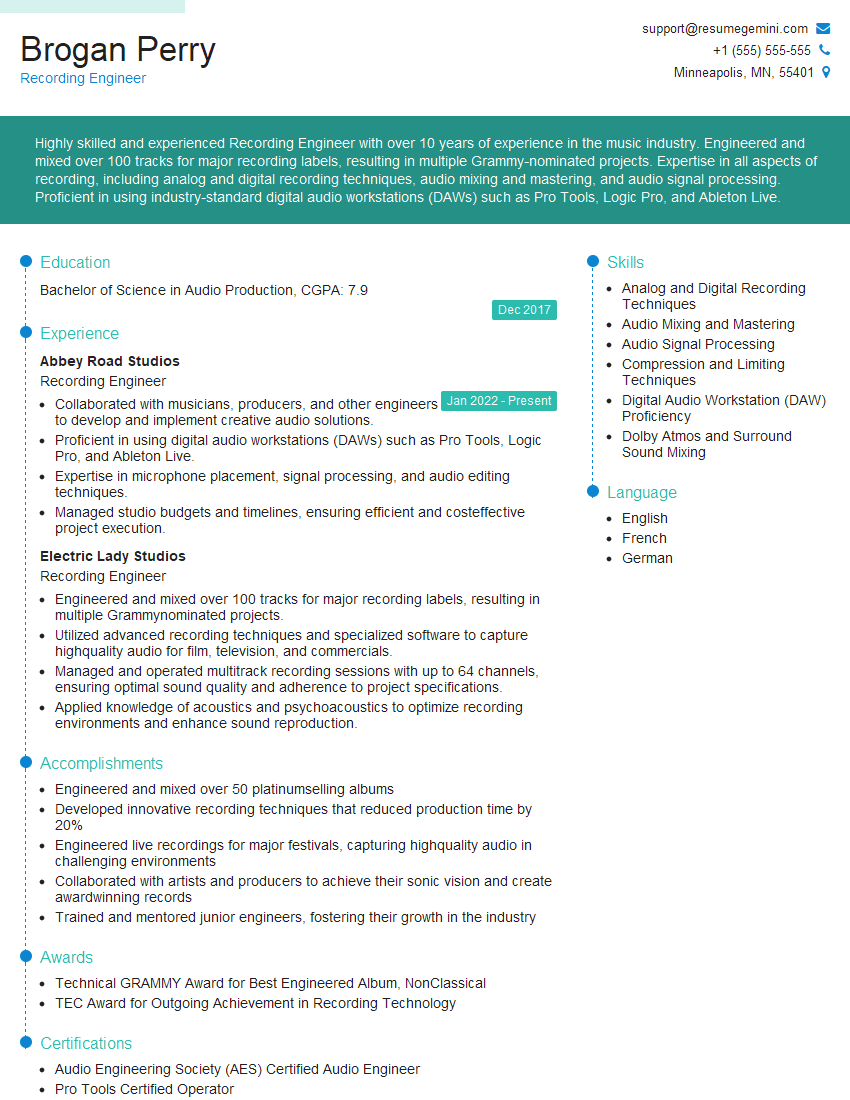
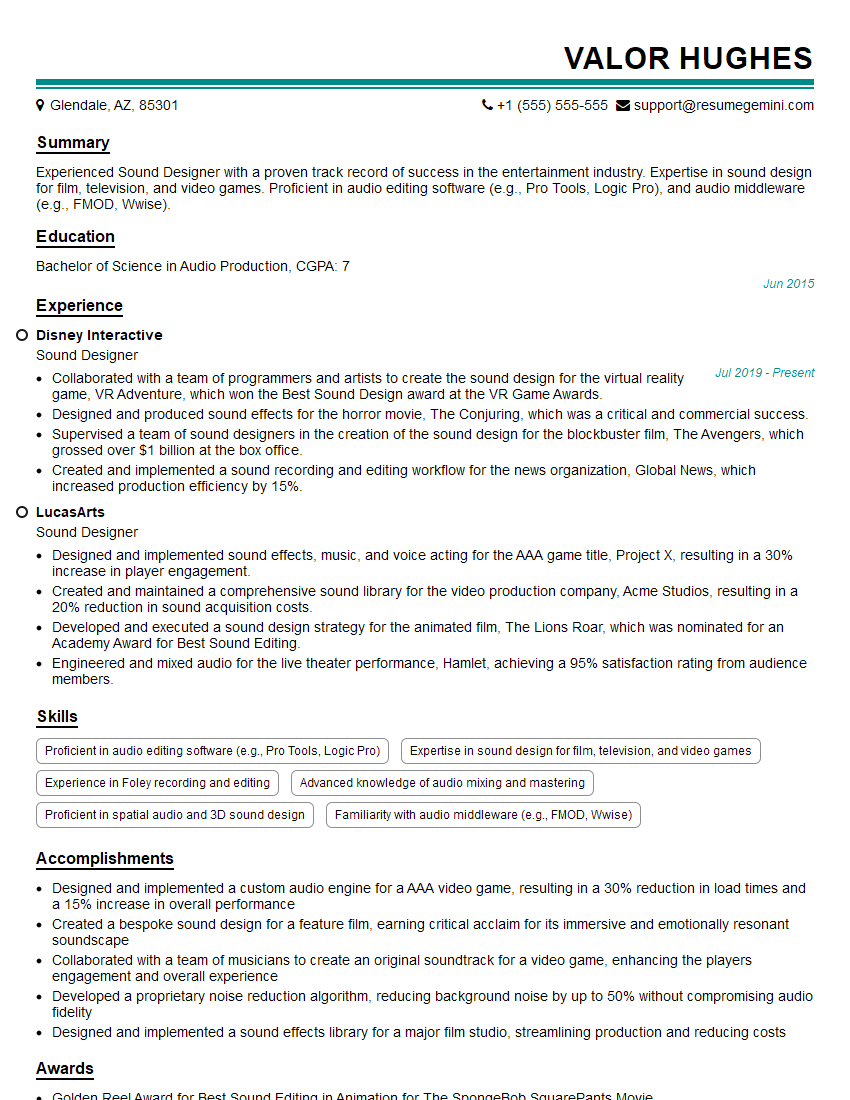
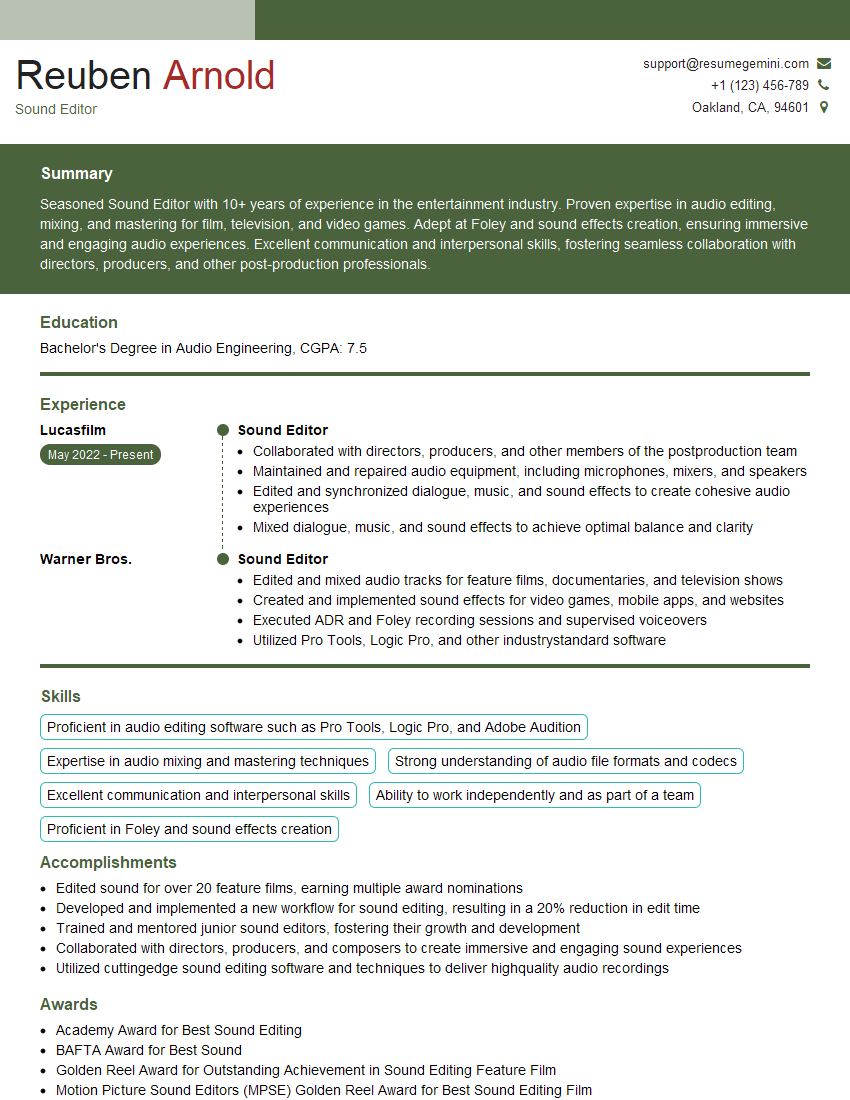
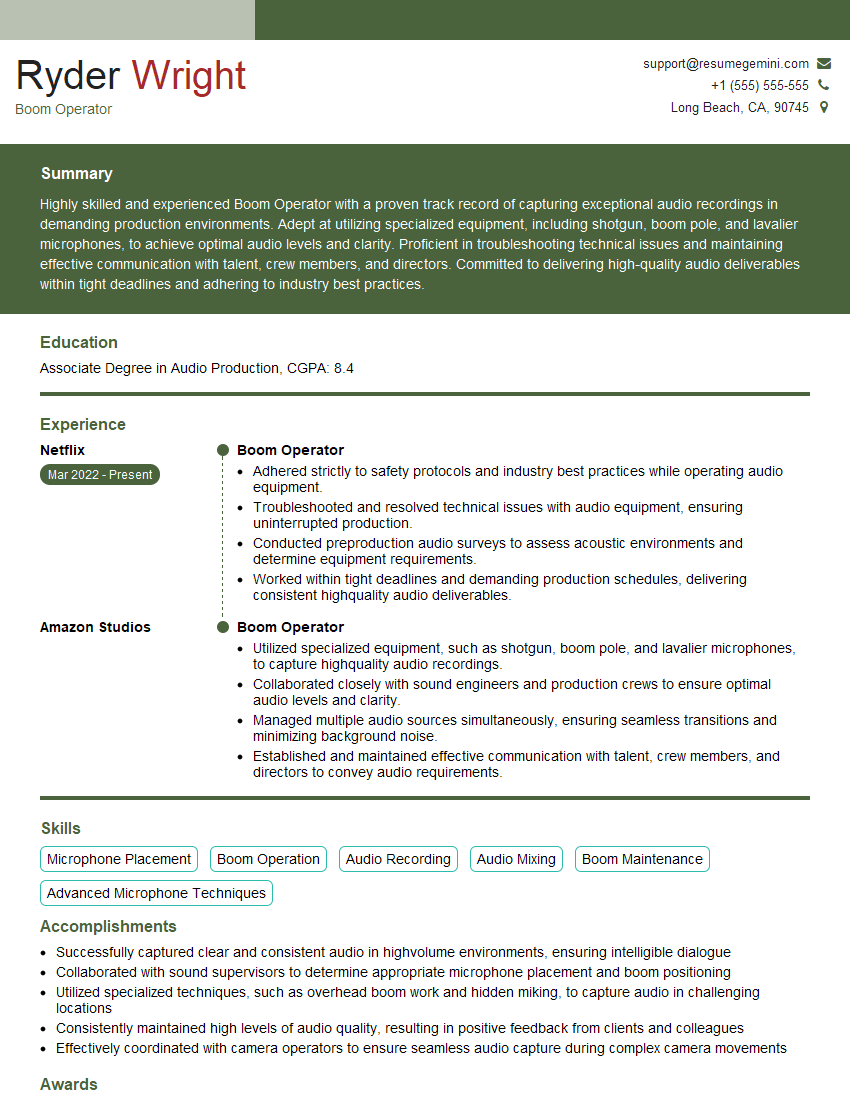
Mastering Recording and Sound Design opens doors to diverse and rewarding careers in music production, film/video post-production, game audio, and more. To maximize your job prospects, creating a strong, ATS-friendly resume is crucial. ResumeGemini is a trusted resource that can help you build a professional resume that highlights your skills and experience effectively. Examples of resumes tailored to Recording and Sound Design are available to guide you through the process.
Explore more articles
Users Rating of Our Blogs
Share Your Experience
We value your feedback! Please rate our content and share your thoughts (optional).
What Readers Say About Our Blog
Hello,
we currently offer a complimentary backlink and URL indexing test for search engine optimization professionals.
You can get complimentary indexing credits to test how link discovery works in practice.
No credit card is required and there is no recurring fee.
You can find details here:
https://wikipedia-backlinks.com/indexing/
Regards
NICE RESPONSE TO Q & A
hi
The aim of this message is regarding an unclaimed deposit of a deceased nationale that bears the same name as you. You are not relate to him as there are millions of people answering the names across around the world. But i will use my position to influence the release of the deposit to you for our mutual benefit.
Respond for full details and how to claim the deposit. This is 100% risk free. Send hello to my email id: [email protected]
Luka Chachibaialuka
Hey interviewgemini.com, just wanted to follow up on my last email.
We just launched Call the Monster, an parenting app that lets you summon friendly ‘monsters’ kids actually listen to.
We’re also running a giveaway for everyone who downloads the app. Since it’s brand new, there aren’t many users yet, which means you’ve got a much better chance of winning some great prizes.
You can check it out here: https://bit.ly/callamonsterapp
Or follow us on Instagram: https://www.instagram.com/callamonsterapp
Thanks,
Ryan
CEO – Call the Monster App
Hey interviewgemini.com, I saw your website and love your approach.
I just want this to look like spam email, but want to share something important to you. We just launched Call the Monster, a parenting app that lets you summon friendly ‘monsters’ kids actually listen to.
Parents are loving it for calming chaos before bedtime. Thought you might want to try it: https://bit.ly/callamonsterapp or just follow our fun monster lore on Instagram: https://www.instagram.com/callamonsterapp
Thanks,
Ryan
CEO – Call A Monster APP
To the interviewgemini.com Owner.
Dear interviewgemini.com Webmaster!
Hi interviewgemini.com Webmaster!
Dear interviewgemini.com Webmaster!
excellent
Hello,
We found issues with your domain’s email setup that may be sending your messages to spam or blocking them completely. InboxShield Mini shows you how to fix it in minutes — no tech skills required.
Scan your domain now for details: https://inboxshield-mini.com/
— Adam @ InboxShield Mini
Reply STOP to unsubscribe
Hi, are you owner of interviewgemini.com? What if I told you I could help you find extra time in your schedule, reconnect with leads you didn’t even realize you missed, and bring in more “I want to work with you” conversations, without increasing your ad spend or hiring a full-time employee?
All with a flexible, budget-friendly service that could easily pay for itself. Sounds good?
Would it be nice to jump on a quick 10-minute call so I can show you exactly how we make this work?
Best,
Hapei
Marketing Director
Hey, I know you’re the owner of interviewgemini.com. I’ll be quick.
Fundraising for your business is tough and time-consuming. We make it easier by guaranteeing two private investor meetings each month, for six months. No demos, no pitch events – just direct introductions to active investors matched to your startup.
If youR17;re raising, this could help you build real momentum. Want me to send more info?
Hi, I represent an SEO company that specialises in getting you AI citations and higher rankings on Google. I’d like to offer you a 100% free SEO audit for your website. Would you be interested?
Hi, I represent an SEO company that specialises in getting you AI citations and higher rankings on Google. I’d like to offer you a 100% free SEO audit for your website. Would you be interested?
good