Unlock your full potential by mastering the most common Robotics and Remote Handling interview questions. This blog offers a deep dive into the critical topics, ensuring you’re not only prepared to answer but to excel. With these insights, you’ll approach your interview with clarity and confidence.
Questions Asked in Robotics and Remote Handling Interview
Q 1. Explain the difference between Cartesian and articulated robots.
Cartesian and articulated robots represent two fundamental robot architectures, differing significantly in their structure and movement capabilities. Think of it like comparing a crane to a human arm.
Cartesian robots, also known as gantry robots, move along three linear axes (X, Y, Z) like a Cartesian coordinate system. Their movements are straightforward and easy to predict. Imagine a printer head moving across a sheet of paper – that’s a Cartesian robot in action. They are ideal for pick-and-place operations where precision and repeatability are crucial, such as in CNC machining or automated assembly lines.
Articulated robots, on the other hand, use rotary joints to achieve movement. These joints typically resemble a human arm, with multiple segments connected by revolute joints. This allows for a much wider range of motion and dexterity. Industrial robots in automotive manufacturing, welding, and painting are often articulated robots. Their flexibility is key to handling complex tasks in cluttered environments.
In summary, Cartesian robots excel in simple, precise movements along straight lines, while articulated robots provide greater flexibility and reach for more complex tasks. The choice between them depends entirely on the application’s requirements.
Q 2. Describe different types of robot end-effectors and their applications.
Robot end-effectors are the tools attached to the robot’s wrist, performing the actual task. They are as diverse as the tasks themselves. Some common types include:
- Grippers: These are used to grasp and manipulate objects. Two-fingered grippers are common and simple, while multi-fingered grippers offer greater dexterity and adaptability to handle various shapes and sizes. Vacuum grippers are used for picking up flat objects or those with specific surface properties.
- Welding tools: These include arc welding torches, spot welding guns, and laser welding systems. They require precise positioning and control to ensure high-quality welds.
- Painting tools: These are spray guns designed to precisely apply paint or other coatings. They often incorporate sensors for feedback on paint flow and coverage.
- Tools for material removal: Examples include milling cutters, grinding wheels, and sanding tools used in machining operations. Precise control and force feedback are crucial here.
- Specialized tools: These are highly application-specific, including tools for inserting components, applying adhesives, performing inspections (e.g., cameras, sensors), or even microsurgery tools in the medical field.
The choice of end-effector depends heavily on the specific task. For instance, a delicate assembly task would require a precise multi-fingered gripper, while a heavy-duty task like handling large metal parts would need a robust gripper with a high clamping force.
Q 3. What are the advantages and disadvantages of using remote handling systems?
Remote handling systems allow human operators to control robotic systems from a safe distance, crucial in hazardous environments like nuclear power plants, deep-sea exploration, and space exploration. However, there are inherent advantages and disadvantages:
Advantages:
- Safety: The most significant advantage. Operators are protected from dangerous conditions like radiation, extreme temperatures, or toxic substances.
- Accessibility: Allows operation in remote or otherwise inaccessible locations.
- Precision: With advanced control systems, remote handling can achieve high precision.
- Versatility: A single operator can control multiple robots or manipulate different tools remotely.
Disadvantages:
- Time delay: Communication delays can hinder precise control, especially in long-distance operations.
- Cost: Remote handling systems are complex and expensive to develop and maintain.
- Operator training: Operators require specialized training to operate and maintain the system effectively.
- Limited dexterity: Current technology often limits the dexterity and sensitivity compared to direct human manipulation.
- Technological complexity: System failures can result in significant disruptions and require advanced troubleshooting capabilities.
The decision to use remote handling systems involves weighing these advantages and disadvantages carefully considering the specific application and safety requirements.
Q 4. Explain the concept of robot kinematics and dynamics.
Robot kinematics and dynamics are fundamental concepts in robotics dealing with the robot’s movement and forces. Think of kinematics as describing ‘where’ the robot is and ‘where’ it’s going, while dynamics considers ‘how’ it gets there.
Kinematics focuses on the geometric relationship between the robot’s joints and its end-effector. It involves calculating the position and orientation of the end-effector based on the joint angles (forward kinematics) and determining the required joint angles to reach a desired position and orientation (inverse kinematics). This is crucial for path planning and trajectory generation.
Dynamics considers the forces and torques involved in the robot’s motion. It incorporates factors like inertia, gravity, friction, and external forces acting on the robot. Dynamic modeling is necessary for precise control, especially in tasks involving high speeds or heavy payloads. It’s essential for designing controllers that can accurately compensate for these forces and ensure smooth, controlled movement.
For example, in a robotic arm used for welding, kinematics would determine the joint angles needed to position the welding torch at the required location. Dynamics would then analyze the forces required to move the arm smoothly and accurately, considering the weight of the arm and the welding torch.
Q 5. How do you ensure the safety of a robotic system in an industrial environment?
Ensuring the safety of a robotic system in an industrial environment is paramount and involves a multi-faceted approach. Safety is not just an add-on; it’s integral to the design and operation of the system.
- Risk assessment: A thorough risk assessment identifies potential hazards and assesses the severity and likelihood of accidents. This helps prioritize safety measures.
- Safety features: These include emergency stop buttons, light curtains, safety scanners, pressure sensors, and interlocks to prevent unintended movements or interactions.
- Redundancy: Implementing redundant systems, such as backup power supplies or controllers, can help mitigate failures.
- Protective guarding: Physical barriers or fences can prevent access to hazardous areas during robot operation.
- Speed and force limiting: Controlling the robot’s speed and force prevents collisions and injuries.
- Proper programming and testing: Thorough testing and simulation before deployment are crucial to identify and address potential issues.
- Operator training: Operators need comprehensive training on safe operation procedures and emergency protocols.
- Regular maintenance and inspection: Regular inspections ensure that safety systems are functioning correctly.
- Compliance with safety standards: Adhering to relevant safety standards and regulations (e.g., ISO 10218) ensures legal compliance and minimizes risks.
Safety is a continuous process, not a one-time event. Regular reviews and updates of safety procedures are essential to adapt to changing conditions and technological advancements.
Q 6. Describe your experience with robot programming languages (e.g., ROS, RAPID).
My experience encompasses several robot programming languages, each with its strengths and weaknesses.
ROS (Robot Operating System): ROS is a powerful and versatile framework widely used in research and industry. I have extensively used ROS for developing complex robotic systems involving multiple sensors, actuators, and algorithms. Its modularity and flexibility allow for efficient development and integration of different components. For example, I utilized ROS to create a multi-robot system for warehouse automation, using ROS nodes for navigation, object recognition, and task coordination. #include
RAPID (ABB RobotStudio): RAPID is the proprietary language for ABB robots, known for their extensive use in industrial applications. I’ve programmed ABB robots for tasks like welding, painting, and material handling. RAPID’s focus on industrial applications provides strong support for precise motion control and real-time performance. I’ve used it to develop complex robot programs with intricate motion sequences and error handling routines. For instance, I optimized a welding program using RAPID, significantly reducing cycle time and improving weld quality.
My proficiency extends to other languages like Python for scripting and high-level control, and C++ for low-level control and optimization.
Q 7. Explain different robot control architectures (e.g., joint-level, task-level).
Robot control architectures define how commands are generated and executed. Two prominent architectures are joint-level and task-level control.
Joint-level control, also known as low-level control, directly controls the individual joints of the robot. Each joint is commanded independently, specifying the desired joint angles or velocities. This is simpler to implement but can be challenging to manage for complex tasks requiring coordinated movement of multiple joints. A simple example is controlling a robotic arm to move each joint to a specific angle.
Task-level control, or high-level control, focuses on specifying the desired task or outcome rather than individual joint movements. The control system automatically calculates the required joint movements to achieve the specified task. This approach simplifies programming and allows for more sophisticated functionalities like obstacle avoidance and path planning. An example is instructing a robot to ‘pick up the red block’ without specifying the individual joint movements.
Other control architectures include hybrid control, which combines aspects of joint-level and task-level control; and force/torque control, which allows for interaction with the environment by controlling forces and torques rather than only positions.
The choice of architecture depends on the complexity of the task, the desired level of control, and the available computational resources. Simple tasks might only need joint-level control, while complex tasks requiring adaptation and interaction with the environment necessitate task-level or hybrid control.
Q 8. How do you troubleshoot robotic system malfunctions?
Troubleshooting robotic system malfunctions requires a systematic approach. I typically start with a thorough examination of the error messages and logs generated by the robot’s control system. This often points to the source of the problem – whether it’s a software bug, a hardware failure, or a communication issue.
Next, I’ll isolate the faulty component using a combination of techniques, including visual inspection, sensor readings, and specialized diagnostic tools. For example, if a robot arm is not moving correctly, I might check the motor current, encoder readings, and the integrity of the cabling. If the problem lies in the software, I might use debugging tools to step through the code and identify the point of failure.
Finally, I’ll implement a fix, which could involve anything from replacing a faulty component to updating the software. Throughout the process, thorough documentation is key, ensuring the issue, troubleshooting steps, and the solution are all clearly recorded to aid future maintenance and debugging. I also emphasize preventative maintenance to minimize future malfunctions – regular calibration, software updates, and safety checks are crucial in maintaining robot reliability.
Q 9. What are the challenges of integrating robots into existing systems?
Integrating robots into existing systems presents significant challenges. One major hurdle is compatibility. Older systems may not have the necessary communication protocols or interfaces to seamlessly integrate with modern robots. This often necessitates extensive modification of existing infrastructure or the development of custom interfaces.
Safety is another critical concern. Existing systems might not have been designed with robots in mind, potentially creating safety hazards. Therefore, a comprehensive safety assessment and the implementation of robust safety mechanisms (e.g., emergency stops, light curtains) are essential.
Finally, the integration process can be complex and time-consuming, requiring specialized skills and expertise in both robotics and the existing system’s technology. It involves careful planning, meticulous execution, and thorough testing to ensure proper functionality and reliability after integration. For instance, I once integrated a robotic arm into a legacy manufacturing line. The biggest challenge was adapting the robot’s control system to the line’s existing Programmable Logic Controller (PLC) using custom communication protocols, requiring significant software development and testing.
Q 10. Explain the concept of force/torque sensing in robotics.
Force/torque sensing is crucial for robots to interact safely and effectively with their environment. A force/torque sensor measures the forces and torques applied to the robot’s end-effector (the tool or hand at the end of the robot arm). This information is vital for tasks requiring delicate manipulation, such as assembly or surgery, where precise control and force feedback are essential.
These sensors are typically comprised of strain gauges or other transducers that measure the deformation of a material under load. The measured deformation is then converted into force and torque values. This data is fed back into the robot’s control system, allowing it to adjust its movements based on the sensed forces and torques. For example, in a robotic surgery application, a force/torque sensor enables the surgeon to feel the resistance of tissues, preventing accidental damage. Similarly, in assembly tasks, it allows the robot to adapt to variations in part positioning and avoid excessive force that might damage the parts being assembled.
Q 11. Describe different types of sensors used in robotics and their applications.
Robotics utilizes a wide array of sensors to perceive and interact with the environment. Some common examples include:
- Cameras (Vision Sensors): Provide visual information, essential for navigation, object recognition, and inspection tasks. Different types exist, including RGB cameras for color imaging, depth cameras for 3D information, and specialized cameras for specific wavelengths (e.g., infrared).
- Proximity Sensors: Detect the presence of objects without physical contact. These are often used for obstacle avoidance, end-of-arm tooling detection and safety purposes.
- Laser Scanners (LiDAR): Create 3D maps of the environment by emitting laser beams and measuring the time of flight. Crucial for autonomous navigation and mapping.
- Ultrasonic Sensors: Emit sound waves and measure the time it takes for them to reflect back, providing distance measurements. Frequently used in robot navigation and obstacle avoidance.
- Inertial Measurement Units (IMUs): Measure acceleration and angular velocity, aiding in robot localization and motion tracking.
- Force/Torque Sensors (as discussed above): Measure forces and torques applied to the end-effector.
- Encoders: Measure the position and speed of motors and joints within a robot.
The choice of sensors depends heavily on the specific robotic application. For example, an autonomous vehicle might rely on LiDAR and cameras for navigation, while a robotic arm used for delicate assembly would require force/torque and proximity sensors.
Q 12. How do you design a robust remote handling system for hazardous environments?
Designing a robust remote handling system for hazardous environments requires careful consideration of several factors. Redundancy is paramount. Critical components should be duplicated or triplicated to ensure continued operation even if one component fails. For example, using multiple communication channels or having backup power supplies.
The system must be highly reliable and capable of operating in extreme conditions, such as high temperatures, radiation, or corrosive chemicals. Materials selection plays a vital role here – selecting materials resistant to the specific hazards of the environment. Effective shielding and robust construction are also crucial to protect the system from damage.
Force feedback is essential, allowing the operator to ‘feel’ what the robot is doing, even at a distance. This increases the dexterity and precision of the operator’s control. Intuitive interfaces and controls are needed to enable efficient operation, even under stressful conditions. Furthermore, fail-safe mechanisms should be implemented to prevent accidents and protect the operator, including emergency stop buttons and automated safety systems. For instance, I have worked on systems for handling nuclear waste where redundancy, radiation hardening, and remote visual feedback were critical design elements.
Q 13. Explain your experience with vision systems and their integration into robots.
I have extensive experience integrating vision systems into robots, ranging from simple object recognition tasks to complex scene understanding. This involves selecting appropriate cameras (resolution, field of view, lighting considerations), processing the camera data using computer vision algorithms, and integrating the results with the robot’s control system.
Common computer vision techniques I’ve utilized include feature extraction (e.g., SIFT, SURF), object detection (e.g., YOLO, Faster R-CNN), and image segmentation. For example, in a pick-and-place application, a vision system identifies objects on a conveyor belt, determining their position and orientation. This information is then used to direct the robot arm to accurately grasp and move the object. The integration requires careful calibration of the camera and robot coordinate systems and robust error handling to manage noisy image data and unexpected situations.
I’ve also worked on projects employing advanced vision techniques such as 3D reconstruction and simultaneous localization and mapping (SLAM), enabling robots to operate autonomously in dynamic environments. The efficiency and reliability of the integration heavily depend on the choice of algorithms, the hardware capabilities, and efficient data management strategies.
Q 14. Describe your experience with path planning algorithms for robots.
Path planning algorithms are crucial for enabling robots to navigate and complete tasks effectively. They determine the optimal sequence of movements for a robot to reach a destination or accomplish a task, while avoiding obstacles and adhering to constraints.
I’m experienced with various path planning algorithms, including:
- A* Search: A graph search algorithm that efficiently finds the shortest path between two points. Commonly used in robotics for both global and local planning.
- Rapidly-exploring Random Trees (RRT): A probabilistic algorithm particularly suitable for high-dimensional spaces and complex environments. It efficiently explores the search space, building a tree of possible paths.
- Potential Fields: A method that treats obstacles as repulsive forces and the goal as an attractive force, guiding the robot towards the goal while avoiding obstacles.
The selection of an algorithm depends on the specific application. Factors considered include the complexity of the environment, the robot’s kinematic constraints, the desired path optimality (shortest distance, minimum time, etc.), and computational resources. I have often used RRT* for complex environments and A* for simpler ones, while potential field methods can be useful for real-time obstacle avoidance. For instance, in a warehouse setting, A* might be used to plan the global path from one location to another, while a potential field method can handle real-time obstacle avoidance during execution.
Q 15. What are the ethical considerations of using robots in various applications?
The ethical considerations surrounding robot usage are multifaceted and demand careful attention. We must consider potential job displacement caused by automation, the responsible development and deployment of autonomous weapons systems, and the impact on human-robot interaction. For example, in healthcare, algorithmic bias in robotic surgery systems could lead to unequal outcomes for different patient demographics. Similarly, using robots in elder care raises questions about privacy and the potential for dehumanization. A robust ethical framework should involve ongoing dialogue between engineers, ethicists, policymakers, and the public to ensure that robots are developed and used responsibly, prioritizing human well-being and societal benefit.
In my own work, we’ve grappled with these issues through rigorous risk assessments and the development of safety protocols that prioritize human oversight and transparency in our robotic systems. We also incorporate ethical considerations into our design process, ensuring user privacy and data security are paramount.
Career Expert Tips:
- Ace those interviews! Prepare effectively by reviewing the Top 50 Most Common Interview Questions on ResumeGemini.
- Navigate your job search with confidence! Explore a wide range of Career Tips on ResumeGemini. Learn about common challenges and recommendations to overcome them.
- Craft the perfect resume! Master the Art of Resume Writing with ResumeGemini’s guide. Showcase your unique qualifications and achievements effectively.
- Don’t miss out on holiday savings! Build your dream resume with ResumeGemini’s ATS optimized templates.
Q 16. Explain different types of robot actuators and their characteristics.
Robot actuators are the ‘muscles’ that enable movement. Several types exist, each with unique characteristics:
- Electric Motors: These are prevalent due to their precision, controllability, and relatively low maintenance. Stepper motors offer precise angular movements, ideal for applications like precise positioning in assembly lines. Servo motors provide more power and speed, useful in robotic arms for heavy lifting.
- Hydraulic Actuators: These use pressurized fluids to generate force. They are powerful and suitable for heavy-duty tasks, but slower and less precise than electric motors. Think of large industrial robots used in construction or demolition.
- Pneumatic Actuators: Compressed air drives these actuators. They are relatively inexpensive and simple, ideal for quick, simple movements, but lack the precision and control of electric motors. A common example is the gripping mechanism in a simple robotic arm used for pick-and-place operations.
- Piezoelectric Actuators: These use the piezoelectric effect, where a material changes shape when an electric field is applied. They offer incredibly fine movements, suitable for nano-manipulation in microsurgery or precision assembly.
The choice of actuator depends greatly on the specific application requirements, balancing factors like power, precision, speed, cost, and environmental considerations.
Q 17. How do you address latency issues in teleoperation systems?
Latency – the delay between command and response – is a major challenge in teleoperation. Several strategies mitigate this:
- Predictive Control: Using models of the robot and its environment, the system predicts the robot’s future state and preemptively adjusts commands. This reduces the impact of delays on operator perception.
- Network Optimization: Employing high-bandwidth, low-latency communication networks such as dedicated fiber optic links improves data transmission speed. Careful network design and protocols minimize packet loss and jitter.
- Data Compression: Reducing the amount of data transmitted can significantly improve speed. Advanced compression techniques are vital for efficient teleoperation.
- Haptic Feedback: Providing the operator with force feedback from the robot helps compensate for delays. This allows for a more intuitive sense of the robot’s actions, even with latency.
- Advanced Control Algorithms: Implementing control algorithms that are robust to latency, such as those incorporating state estimation and prediction, is crucial.
In a project involving underwater ROVs (Remotely Operated Vehicles), we implemented a combination of predictive control and haptic feedback, drastically reducing the effects of significant underwater communication latency. The improvement in operator performance and safety was substantial.
Q 18. What are the different types of robot grippers and their suitability for different tasks?
Robot grippers are essential for manipulation and vary widely in design and function:
- Parallel Grippers: These use two or more fingers that move simultaneously to grasp an object. Simple, reliable, and cost-effective for handling cylindrical or rectangular objects.
- Three-fingered Grippers: Offer more dexterity than two-fingered grippers, allowing for more complex manipulation and handling of irregularly shaped objects.
- Adaptive Grippers: These can adjust their shape to conform to the object being grasped, providing a secure grip for a wide range of objects. Examples include vacuum grippers and soft robotic grippers made from flexible materials.
- Magnetic Grippers: Ideal for metallic objects, offering a strong and reliable grip. But they’re limited to ferromagnetic materials.
- Vacuum Grippers: Use suction to hold objects, effective for smooth, flat surfaces. They are often used in automated pick-and-place applications.
The suitability of a gripper depends on factors like object shape, size, weight, material, and the overall task requirements. In one project involving delicate fruit picking, we opted for soft robotic grippers to prevent damage to the fruit during handling.
Q 19. Explain your experience with robot calibration and maintenance.
Robot calibration and maintenance are critical for ensuring accuracy and reliability. Calibration involves precisely measuring and correcting errors in the robot’s position, orientation, and kinematic parameters. This often involves using specialized tools and software to perform geometric and sensor calibrations. Methods such as laser tracking systems, or even more simple techniques like using calibrated checkerboards and computer vision algorithms are employed. We use a structured approach including pre-defined tolerances to assure accuracy.
Maintenance includes regular inspections, lubrication of joints, replacement of worn parts, and software updates. Predictive maintenance techniques, involving sensor data analysis to anticipate potential failures, are increasingly common. Proper documentation and meticulous record-keeping are essential to ensuring the long-term performance and safety of robotic systems.
In my previous role, I led a team responsible for the calibration and maintenance of a fleet of industrial robots in a manufacturing plant. Implementing a preventative maintenance schedule significantly reduced downtime and improved the overall efficiency of the production line.
Q 20. How do you handle unexpected errors or failures in a robotic system?
Handling unexpected errors and failures requires a multi-layered approach:
- Error Detection and Diagnosis: Robust monitoring systems continuously track the robot’s performance, identifying anomalies and potential failures early on. This often uses sensor data and state estimation.
- Fault Tolerance: Designing systems that can continue operating despite partial failures is crucial. Redundancy in actuators or sensors can ensure operation even if some components fail.
- Emergency Stops and Safety Protocols: Safe shutdown mechanisms are vital to prevent accidents. These can involve physical emergency stops, software-based fault detection and recovery mechanisms, and potentially external safety systems.
- Recovery Strategies: Procedures for recovering from errors, such as automatic reboots, task restarts, or operator intervention, are necessary to minimize downtime.
- Data Logging and Analysis: Detailed logs of robot operations, errors, and recovery actions are vital for post-incident analysis and improvement of system robustness.
During a field deployment of a robotic system for hazardous material cleanup, a sensor failure occurred. Our pre-programmed recovery strategy involved switching to a redundant sensor and automatically adjusting the robot’s trajectory based on the available data. This prevented mission failure and ensured the safety of personnel.
Q 21. Describe your experience with simulation software for robotics.
Simulation software plays a vital role in robotics development, allowing for testing and refinement of algorithms and designs before deployment. I’ve extensive experience using various simulation platforms, including Gazebo, ROS (Robot Operating System) based simulators, and specialized packages for specific applications.
Simulations enable us to create realistic virtual environments, including objects, obstacles, and sensor models, allowing for testing under various conditions before real-world implementation. This reduces development time, minimizes risks, and allows for thorough testing of control algorithms and safety protocols. We also use simulations for training robotic systems using reinforcement learning and other advanced techniques.
For instance, in a recent project involving the development of a mobile manipulator robot for warehouse applications, we extensively used Gazebo to simulate the robot’s navigation and manipulation tasks within a virtual warehouse environment. This enabled us to identify and resolve many issues in the algorithms and system design before deploying the robot in the actual warehouse. This saved considerable time and resources.
Q 22. How do you ensure the reliability and redundancy of a remote handling system?
Ensuring reliability and redundancy in remote handling systems is paramount, especially in hazardous or critical environments where human intervention is impossible or risky. We achieve this through a multi-layered approach focusing on both hardware and software redundancy.
Hardware Redundancy: This involves employing duplicate or backup components for critical systems. For instance, a robotic arm might have redundant actuators, sensors, and power supplies. If one component fails, the backup immediately takes over, ensuring continuous operation. This is often implemented using techniques like N+1 redundancy (one extra component). Think of it like having a spare tire in your car – you don’t need it until you do.
Software Redundancy: This incorporates multiple independent software modules executing the same task. Each module is designed to perform checks on the outputs of the others, detecting inconsistencies or errors. A consensus algorithm can be used to determine the correct action. Consider a fail-safe mechanism that automatically stops the robot if discrepancies between software modules exceed a threshold.
Communication Redundancy: Utilizing multiple communication channels for data transmission between the robot and the control station is crucial. If one channel fails, another can take over seamlessly. This often involves using different communication protocols simultaneously (e.g., Ethernet and Wi-Fi). We might use a combination of wired and wireless methods to add robustness.
Fail-Safe Mechanisms: These are critical safety features that automatically halt operations if a system malfunction is detected. Examples include emergency stops, power-off switches, and software-based limits to prevent the robot from exceeding operational bounds.
In a nuclear waste handling scenario, redundant systems are absolutely non-negotiable. A single failure could have catastrophic consequences. Therefore, thorough testing and validation are crucial in proving the system’s reliability under various failure conditions.
Q 23. Explain the concept of impedance control in robotics.
Impedance control is a sophisticated robotic control technique that focuses on managing the interaction between the robot and its environment. Instead of simply controlling the robot’s position or velocity, impedance control regulates its ‘mechanical impedance,’ which is a measure of how much the robot resists external forces and motions. This allows the robot to adapt gracefully to unexpected disturbances or contact with objects.
Imagine trying to move a heavy box. If you push too hard, you might injure yourself. Impedance control in a robot is like having a ‘sense of touch’ – the robot adjusts its force based on the resistance it encounters. This is particularly important for tasks requiring interaction with the environment, such as assembly, polishing, or surgery.
Mathematically, impedance control often involves specifying a desired impedance relationship (e.g., a desired stiffness or damping) between the robot and the environment. This relationship is then used to generate appropriate control signals to achieve the desired behavior. The control system continuously monitors the robot’s interaction forces and adjusts its movements accordingly.
For instance, a robotic arm assembling a circuit board needs to apply just the right amount of force to insert components without damaging them. Impedance control allows the robot to react to unexpected variations in the parts’ positions or orientations, ensuring a successful assembly.
Q 24. Describe your experience with different communication protocols used in robotics.
My experience encompasses a broad range of communication protocols employed in robotics, each with its strengths and weaknesses. The choice of protocol depends heavily on factors like bandwidth requirements, latency tolerance, reliability needs, and the physical environment.
Ethernet/IP: This is a widely used industrial protocol, known for its high bandwidth and robust error detection. It’s ideal for applications demanding high-speed data transfer, such as those involving complex sensor data or high-resolution camera feeds.
CAN bus (Controller Area Network): This protocol is particularly suitable for real-time applications with multiple sensors and actuators because it offers deterministic timing and good noise immunity. It is frequently found in automotive robotics and industrial automation.
PROFINET: A highly robust Ethernet-based industrial communication protocol providing real-time capabilities and diagnostics. It’s often chosen for complex manufacturing setups requiring high-speed data transfer and real-time control.
Wireless Protocols (Wi-Fi, Bluetooth, Zigbee): These offer flexibility but often face challenges with latency, bandwidth limitations, and signal interference. They are suitable for low-bandwidth sensor data or for situations where physical cabling is impractical. For remote handling in hazardous environments, robust wireless protocols with redundancy are necessary.
Proprietary Protocols: In specialized applications, custom communication protocols might be developed to optimize performance or integrate with existing systems. This is often found in highly specialized remote handling applications.
In a project involving underwater robotics, we utilized a combination of Ethernet for high-bandwidth video streaming and acoustic communication for long-range control in environments where electromagnetic signals are attenuated.
Q 25. How do you design a human-robot interface for intuitive and safe operation?
Designing an intuitive and safe human-robot interface (HRI) is critical for effective and secure collaboration. The design must consider both the operator’s skill level and the specific task. It needs to be easy to learn and use, minimize errors, and provide clear feedback to the operator.
Intuitive Control Schemes: Rather than using complex textual commands, I favor employing intuitive control methods, such as virtual reality (VR) interfaces or haptic feedback devices. VR allows for immersive teleoperation, providing the operator with a realistic sense of the robot’s position and actions in its environment. Haptic feedback provides a sense of touch, which is crucial for tasks requiring precise manipulation.
Visual Feedback: Clear and high-quality visual feedback is critical. This includes high-resolution cameras and appropriate graphical displays that present relevant information concisely. Overlays showing robot pose, sensor data, and task status are invaluable.
Safety Mechanisms: Safety interlocks, emergency stops, and speed limits are essential features to prevent accidents. Software-based monitoring systems can also detect unusual behavior and take appropriate action to safeguard the operator and the environment. For example, a system might automatically halt the robot’s operation if it detects an obstacle in its path.
Adaptive Interfaces: The interface must adapt to the operator’s experience. Beginner-level users might require simpler interfaces with fewer control options, while more advanced operators may need access to more fine-grained control parameters.
User Testing and Feedback: Iterative design is crucial. Prototypes should be tested extensively with operators to ensure that the design is effective and intuitive. Feedback should be actively solicited and incorporated into the design process.
In one project involving surgical robotics, we utilized a combination of VR and haptic feedback to enable surgeons to perform minimally invasive procedures with high precision and control.
Q 26. Explain your experience with different types of robotic manipulators.
My experience encompasses various robotic manipulators, each suited to different tasks and environments. The selection depends on factors like payload capacity, reach, dexterity, and the required precision.
Serial Manipulators: These are the most common type, comprising a series of links connected by joints. They are versatile but can face limitations in dexterity in certain configurations. Industrial robotic arms used in manufacturing are prime examples.
Parallel Manipulators: These have multiple kinematic chains connecting the base to the end-effector, often exhibiting higher stiffness and speed compared to serial manipulators. They are commonly found in applications requiring high precision and speed, such as pick-and-place operations.
SCARA (Selective Compliance Assembly Robot Arm) Robots: These are a type of parallel manipulator known for their compliance in the XY plane and rigidity in the Z-axis. They are well-suited for assembly tasks.
Anthropomorphic Robots: These manipulators mimic human arms, usually with seven degrees of freedom, providing a high level of dexterity. They are increasingly used in tasks requiring fine manipulation, such as handling delicate objects or performing complex assembly.
Custom Manipulators: For specialized applications, custom-designed manipulators are developed to meet unique requirements. This is frequently the case in remote handling for challenging environments such as nuclear reactors or deep-sea exploration.
During a project focused on deep-sea exploration, we developed a custom manipulator with a specialized end-effector to collect sediment samples from the ocean floor, requiring a robust design to withstand extreme pressures and temperatures.
Q 27. What are the key performance indicators (KPIs) for evaluating a robotic system?
Key Performance Indicators (KPIs) for evaluating a robotic system vary depending on the specific application. However, some general KPIs are always relevant.
Accuracy and Precision: How close the robot comes to its target position and how consistent its performance is. This is crucial for tasks requiring high accuracy, such as precision assembly or surgery.
Repeatability: The robot’s ability to return to the same position repeatedly. This is important for consistent and reliable operation.
Payload Capacity: The maximum weight the robot can lift and manipulate successfully. This is critical for material handling applications.
Speed and Throughput: How quickly the robot can complete a task. This is important for maximizing productivity.
Reliability and Uptime: The system’s ability to operate without failure. This is critical for reducing downtime and maintenance costs.
Mean Time Between Failures (MTBF): The average time between system failures. A high MTBF indicates high reliability.
Safety: The system’s ability to operate without causing harm to humans or the environment. This is a critical consideration for all robotic applications.
Cost-Effectiveness: The overall cost of the system, including initial investment, maintenance, and operating expenses.
In a manufacturing setting, throughput and reliability are often prioritized, while in a surgical environment, accuracy, precision, and safety are of utmost importance. A well-defined set of KPIs, tailored to the specific application, is crucial for evaluating the success of a robotic system.
Key Topics to Learn for Robotics and Remote Handling Interview
- Kinematics and Dynamics: Understand robot arm configurations, forward and inverse kinematics, and dynamic modeling for precise control and motion planning. Consider practical applications like trajectory generation and obstacle avoidance.
- Control Systems: Master PID control, adaptive control, and force/torque control techniques crucial for precise manipulation and interaction with the environment. Explore applications in teleoperation and autonomous control.
- Sensors and Perception: Familiarize yourself with various sensors (e.g., cameras, lidar, force/torque sensors) and their integration for environment perception and robot state estimation. Understand the challenges and solutions in sensor fusion and data processing.
- Programming and Software: Gain proficiency in relevant programming languages (e.g., Python, C++, ROS) and software frameworks used in robotics and remote handling systems. Explore practical implementation in simulation and real-world applications.
- Safety and Reliability: Understand safety protocols, fault detection, and recovery mechanisms crucial for safe operation, especially in hazardous environments. Consider practical implications in designing robust and reliable systems.
- Human-Robot Interaction (HRI): Explore the design principles and challenges in creating intuitive and effective interfaces for human operators to control remote robots. Consider practical considerations for teleoperation and collaborative robotics.
- Specific Applications: Research and understand the practical applications of robotics and remote handling in fields such as nuclear decommissioning, deep-sea exploration, space exploration, and hazardous material handling.
Next Steps
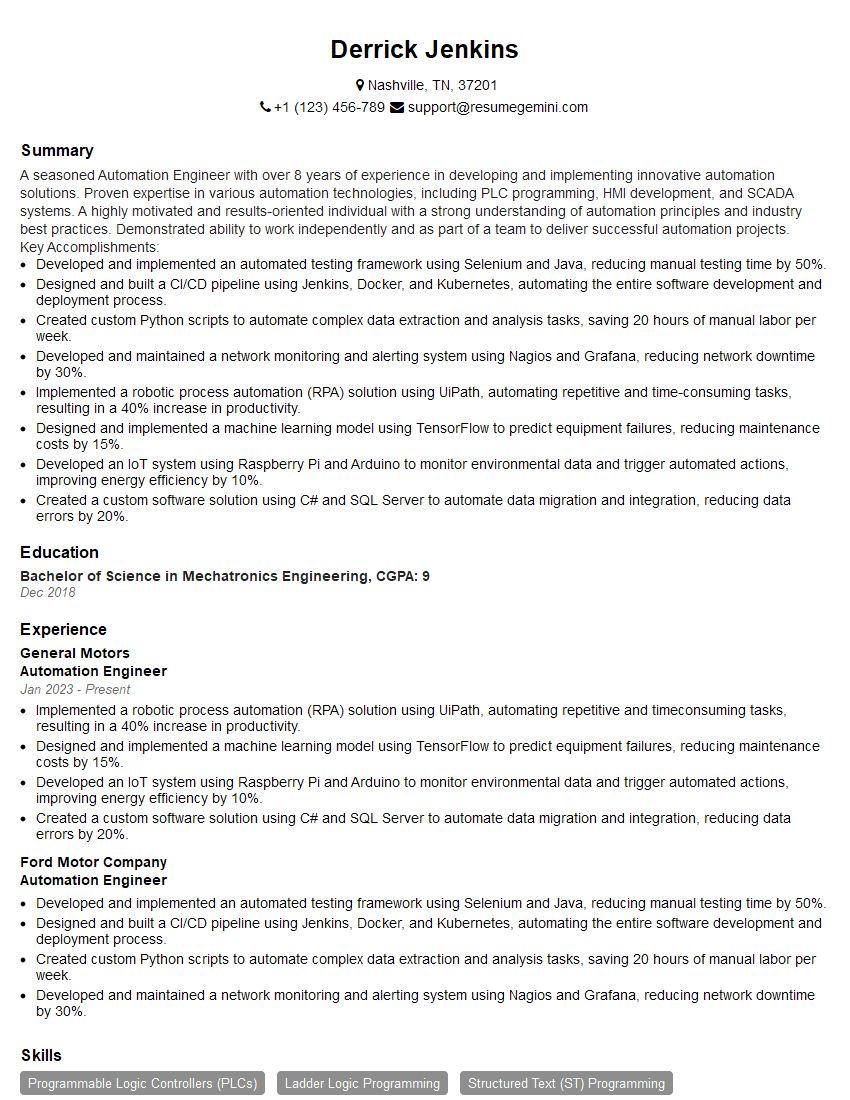
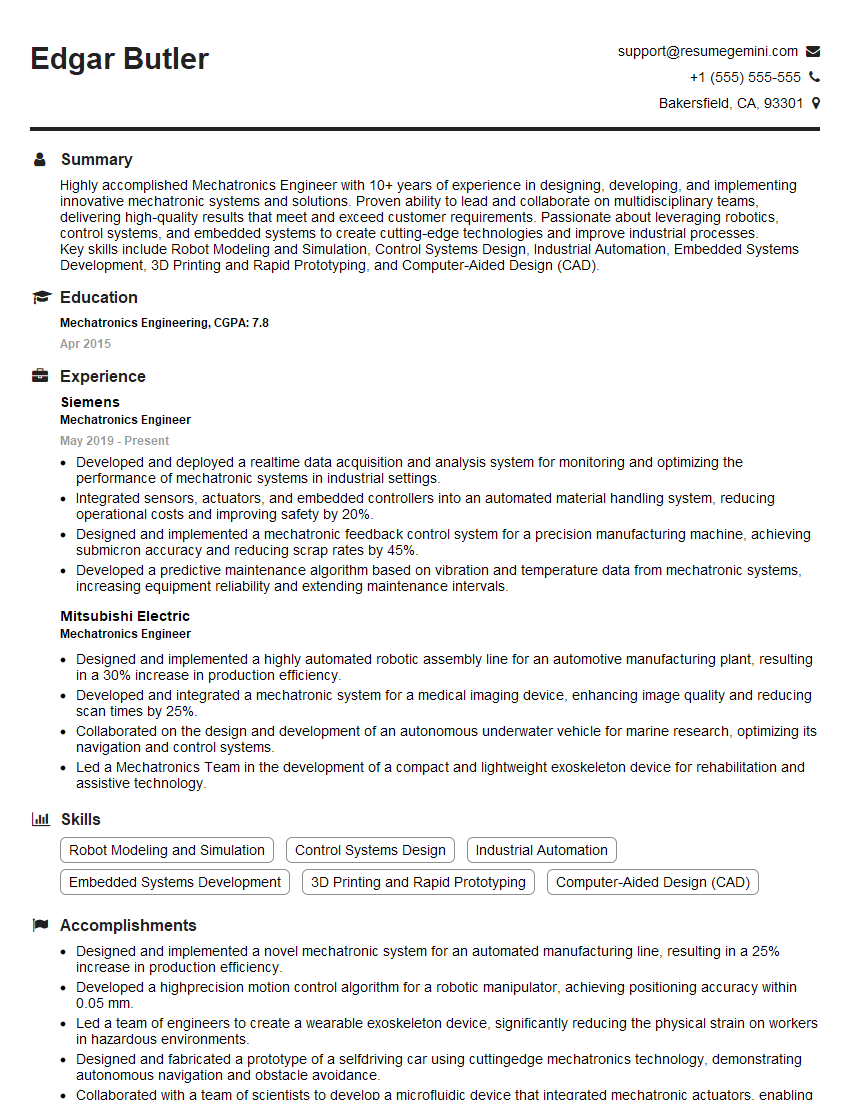
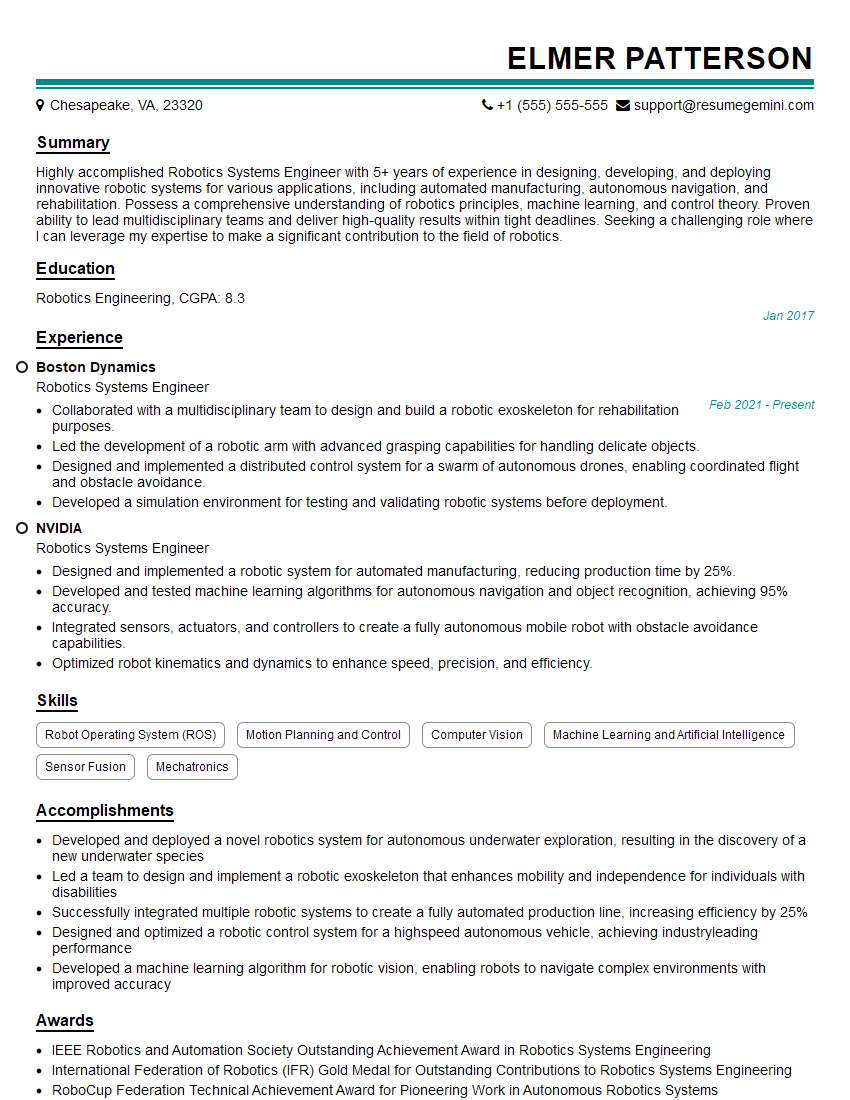
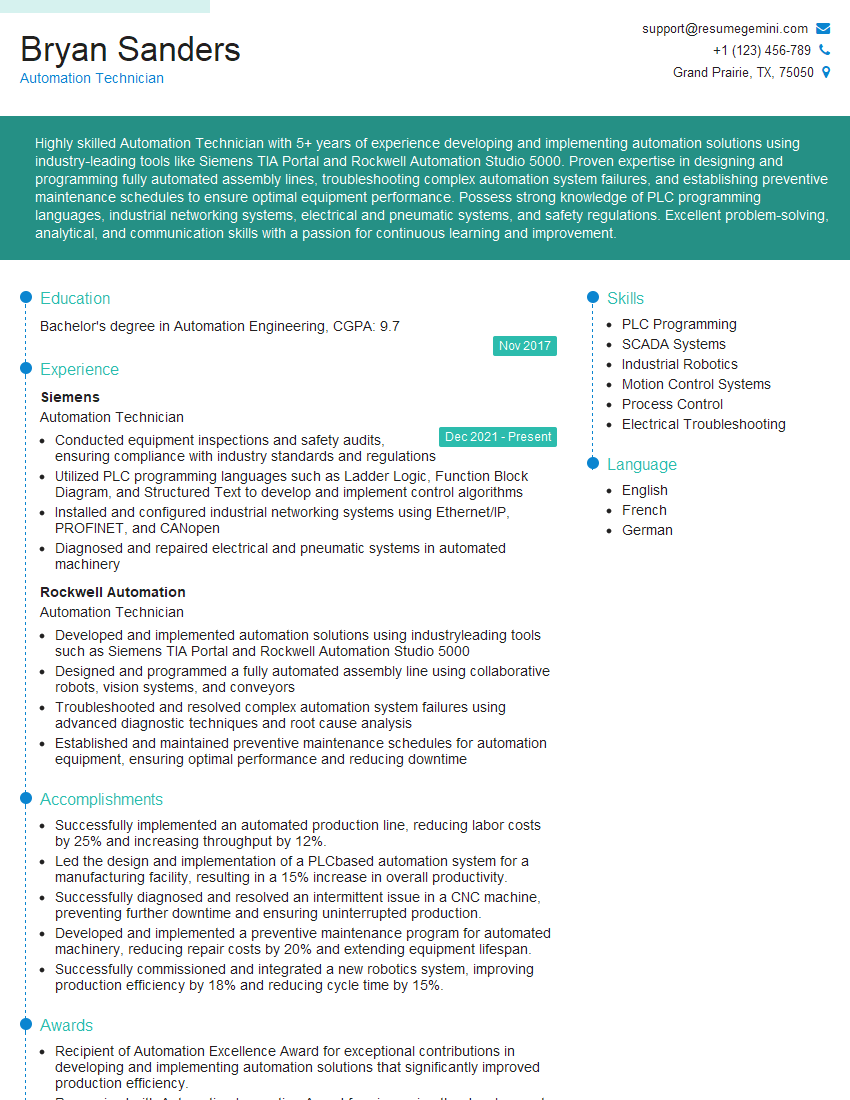
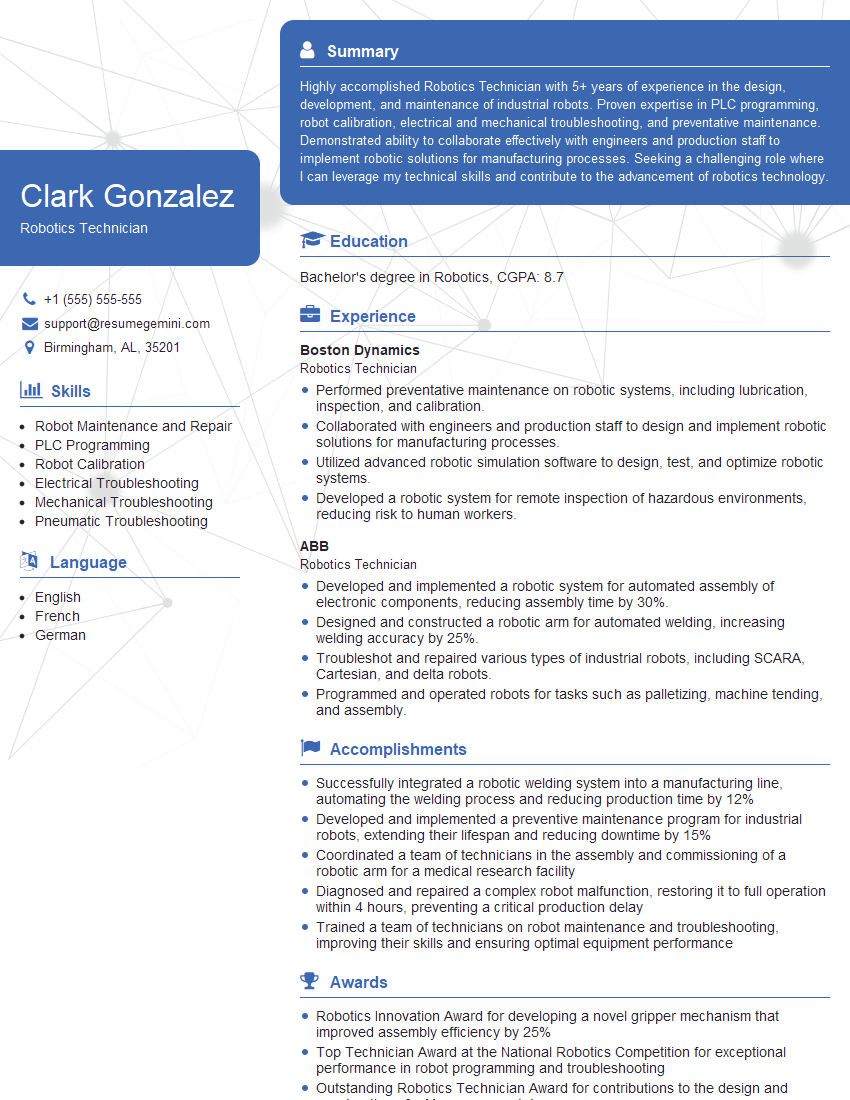
Mastering Robotics and Remote Handling opens doors to exciting and impactful careers in cutting-edge industries. A strong foundation in these areas significantly enhances your job prospects and allows you to contribute to innovative projects. To maximize your chances of landing your dream role, it’s essential to create an ATS-friendly resume that showcases your skills and experience effectively. ResumeGemini is a trusted resource to help you build a professional and impactful resume. They offer examples of resumes specifically tailored to Robotics and Remote Handling, providing valuable guidance and templates to help you present your qualifications compellingly. Take advantage of these resources to craft a resume that highlights your unique expertise and secures your next interview.


Explore more articles
Users Rating of Our Blogs
Share Your Experience
We value your feedback! Please rate our content and share your thoughts (optional).
What Readers Say About Our Blog
Hello,
we currently offer a complimentary backlink and URL indexing test for search engine optimization professionals.
You can get complimentary indexing credits to test how link discovery works in practice.
No credit card is required and there is no recurring fee.
You can find details here:
https://wikipedia-backlinks.com/indexing/
Regards
NICE RESPONSE TO Q & A
hi
The aim of this message is regarding an unclaimed deposit of a deceased nationale that bears the same name as you. You are not relate to him as there are millions of people answering the names across around the world. But i will use my position to influence the release of the deposit to you for our mutual benefit.
Respond for full details and how to claim the deposit. This is 100% risk free. Send hello to my email id: [email protected]
Luka Chachibaialuka
Hey interviewgemini.com, just wanted to follow up on my last email.
We just launched Call the Monster, an parenting app that lets you summon friendly ‘monsters’ kids actually listen to.
We’re also running a giveaway for everyone who downloads the app. Since it’s brand new, there aren’t many users yet, which means you’ve got a much better chance of winning some great prizes.
You can check it out here: https://bit.ly/callamonsterapp
Or follow us on Instagram: https://www.instagram.com/callamonsterapp
Thanks,
Ryan
CEO – Call the Monster App
Hey interviewgemini.com, I saw your website and love your approach.
I just want this to look like spam email, but want to share something important to you. We just launched Call the Monster, a parenting app that lets you summon friendly ‘monsters’ kids actually listen to.
Parents are loving it for calming chaos before bedtime. Thought you might want to try it: https://bit.ly/callamonsterapp or just follow our fun monster lore on Instagram: https://www.instagram.com/callamonsterapp
Thanks,
Ryan
CEO – Call A Monster APP
To the interviewgemini.com Owner.
Dear interviewgemini.com Webmaster!
Hi interviewgemini.com Webmaster!
Dear interviewgemini.com Webmaster!
excellent
Hello,
We found issues with your domain’s email setup that may be sending your messages to spam or blocking them completely. InboxShield Mini shows you how to fix it in minutes — no tech skills required.
Scan your domain now for details: https://inboxshield-mini.com/
— Adam @ InboxShield Mini
Reply STOP to unsubscribe
Hi, are you owner of interviewgemini.com? What if I told you I could help you find extra time in your schedule, reconnect with leads you didn’t even realize you missed, and bring in more “I want to work with you” conversations, without increasing your ad spend or hiring a full-time employee?
All with a flexible, budget-friendly service that could easily pay for itself. Sounds good?
Would it be nice to jump on a quick 10-minute call so I can show you exactly how we make this work?
Best,
Hapei
Marketing Director
Hey, I know you’re the owner of interviewgemini.com. I’ll be quick.
Fundraising for your business is tough and time-consuming. We make it easier by guaranteeing two private investor meetings each month, for six months. No demos, no pitch events – just direct introductions to active investors matched to your startup.
If youR17;re raising, this could help you build real momentum. Want me to send more info?
Hi, I represent an SEO company that specialises in getting you AI citations and higher rankings on Google. I’d like to offer you a 100% free SEO audit for your website. Would you be interested?
Hi, I represent an SEO company that specialises in getting you AI citations and higher rankings on Google. I’d like to offer you a 100% free SEO audit for your website. Would you be interested?
good