Cracking a skill-specific interview, like one for Roofing Repair, requires understanding the nuances of the role. In this blog, we present the questions you’re most likely to encounter, along with insights into how to answer them effectively. Let’s ensure you’re ready to make a strong impression.
Questions Asked in Roofing Repair Interview
Q 1. What types of roofing materials are you familiar with?
Throughout my career, I’ve worked extensively with a variety of roofing materials. This includes the most common, asphalt shingles, which come in different styles and compositions (fiberglass, organic). I’m also experienced with tile roofing, both clay and concrete, which are known for their durability and longevity. Metal roofing, including aluminum, steel, and copper, is another area of my expertise; I understand their distinct advantages, such as resistance to fire and strong winds. Finally, I’m proficient in working with single-ply membrane roofing systems, like TPO and EPDM, often used on flat or low-slope roofs. Each material has unique characteristics that influence repair techniques, and I adapt my approach accordingly.
- Asphalt Shingles: The most common type, offering a wide range of styles and price points.
- Tile Roofing: Durable and aesthetically pleasing, but heavier and more costly.
- Metal Roofing: Long-lasting and highly resistant to weather damage.
- Single-ply Membranes (TPO, EPDM): Ideal for flat roofs, known for their seamless and waterproof nature.
Q 2. Describe your experience with asphalt shingle repairs.
Asphalt shingle repairs constitute a significant portion of my work. My experience encompasses everything from minor repairs like replacing a few damaged shingles to more extensive projects involving whole sections of the roof. I’m skilled in identifying the cause of damage, whether it’s wind uplift, impact damage, or simply age and weathering. For example, I’ve dealt with situations where hail damage caused widespread shingle cracking, requiring meticulous removal and replacement to ensure a watertight seal. I always prioritize using high-quality shingles that match the existing roofing material to maintain the roof’s aesthetic appeal. My process involves careful removal of damaged shingles, proper installation of underlayment (if necessary), and precise placement of new shingles, ensuring proper nailing and overlapping for optimal protection.
I also understand the importance of addressing underlying issues, such as inadequate ventilation or damaged flashing, that can contribute to shingle damage. Neglecting these underlying problems often leads to recurring issues, causing further damage and escalating repair costs. I always provide a comprehensive assessment, informing clients of any potential issues beyond the initial problem.
Q 3. How do you identify and address leaks in different roof types?
Locating and fixing leaks requires a systematic approach that varies depending on the roof type. With asphalt shingle roofs, I often start by visually inspecting the area around the suspected leak, looking for missing or damaged shingles, cracked flashing, or signs of water stains. For tile roofs, I might use a moisture meter to detect hidden moisture problems. On flat roofs with membrane systems, I’ll often use a water test, applying water to the suspect area to pinpoint the exact location of the leak.
My process generally involves:
- Visual Inspection: Identifying potential entry points.
- Moisture Meter/Water Test: Pinpointing the exact location of the leak (depending on roof type).
- Repair: Replacing damaged shingles, flashing, or membrane material; sealing cracks or seams; addressing any underlying issues like clogged gutters or inadequate ventilation.
- Verification: Ensuring the repair is successful by checking for any further leaks.
For instance, I once discovered a leak in a tile roof that was caused by a damaged flashing around a chimney. Simple replacement of the flashing solved the problem, highlighting the significance of addressing seemingly minor details.
Q 4. Explain your process for inspecting a roof for damage.
A thorough roof inspection is crucial for identifying potential problems before they escalate. My inspection process is comprehensive and meticulous, beginning with a visual assessment from the ground, checking for obvious signs of damage such as missing shingles, sagging areas, or damaged flashing. Then, I proceed to a hands-on inspection, climbing onto the roof (always using appropriate safety gear) to assess the condition of all components. I use binoculars to check hard-to-reach areas. This involves checking for:
- Shingle Condition: Checking for cracks, curling, missing shingles, or granule loss.
- Flashing Integrity: Examining flashing around chimneys, vents, and valleys for signs of rust, damage, or gaps.
- Ventilation: Assessing attic ventilation to ensure proper airflow and prevent moisture buildup.
- Gutter and Downspout Condition: Checking for clogs, damage, or proper drainage.
- Underlayment: Checking the condition of the underlayment if access allows.
I meticulously document my findings, taking photos and creating detailed reports for clients. This allows for a comprehensive understanding of the roof’s condition and helps in determining the necessary repairs or replacements.
Q 5. What safety precautions do you take while working on a roof?
Safety is my paramount concern. Working on roofs presents inherent risks, and I never compromise on safety procedures. Before starting any work, I always conduct a thorough site assessment, identifying potential hazards like electrical lines or unstable areas. I use appropriate personal protective equipment (PPE) which includes a safety harness with a lifeline, fall arrest system, and appropriate footwear. I ensure proper use of ladders, and if needed, utilize scaffolding or other elevated work platforms. I also communicate clearly with my team and make sure everyone on the site understands safety protocols.
Regular safety checks are conducted throughout the project, and I’m always vigilant about weather conditions. Work is stopped immediately if conditions become unsafe, such as strong winds or lightning. Proper training and adherence to OSHA guidelines are essential aspects of my work process.
Q 6. How do you estimate the cost of a roofing repair project?
Estimating the cost of a roofing repair project involves a multi-step process. First, I need a thorough understanding of the extent of damage after a detailed inspection. This includes the type and quantity of materials needed, the complexity of the repair, and the labor involved. I factor in the cost of materials, considering variations in pricing depending on the brand and quality of products. Labor costs are calculated based on the number of workers, the time required for the project, and their respective hourly rates. I also incorporate any additional costs such as waste removal, permits, or specialized equipment rentals.
My estimate provides a detailed breakdown of all these costs, allowing clients to understand the pricing structure. I am transparent about potential unforeseen issues and how these might impact the final cost. I believe in building trust and providing clients with accurate and reliable cost estimations before commencing any work.
Q 7. Describe your experience with repairing different types of flashing.
Flashing is a critical element in preventing leaks, and I have extensive experience repairing various types. This includes step flashing around chimneys, valley flashing, and counter flashing. The repair process depends on the type of flashing and the extent of damage. For example, repairing rusted or damaged step flashing involves removing the old, corroded material and installing new flashing, ensuring proper overlap and a watertight seal. Valley flashing repairs often require careful removal of damaged sections and installation of new material, maintaining the proper pitch and drainage. Counter flashing around chimneys requires precise placement to prevent water from seeping behind the chimney.
I am adept at using different materials such as aluminum, copper, and galvanized steel, selecting the most appropriate type based on the specific needs of the roof and the existing flashing. Regardless of the type, the repairs always prioritize creating a durable and watertight seal to prevent future leaks.
Q 8. What are the common causes of roof damage?
Roof damage is a multifaceted issue stemming from a variety of sources. Think of your roof as a shield protecting your home; any breach compromises its integrity. Common causes can be broadly categorized into weather-related events, age-related deterioration, and improper installation or maintenance.
Weather-related damage: This is the most frequent culprit. Severe storms, including hail, high winds, and heavy snow, can cause significant damage, from minor shingle displacement to complete roof failure. Prolonged exposure to sun and UV rays causes shingle degradation and cracking over time. Ice dams, formed from melting snow refreezing at the eaves, can lift shingles and cause water damage. Consider a recent storm that caused widespread hail damage – many roofs required significant repairs, including shingle replacements and even structural work.
Age and deterioration: Like any building material, roofing components have a finite lifespan. Shingles, flashing, and underlayment degrade over time, becoming brittle and susceptible to cracking. This is often a slow, insidious process, leading to gradual leakage and requiring preventative maintenance. I once worked on a house with a 30-year-old asphalt shingle roof – the shingles were heavily weathered and brittle, creating numerous points of vulnerability.
Poor installation or maintenance: Improper installation, including inadequate flashing around chimneys or vents, can lead to leaks. Neglecting regular maintenance, such as cleaning gutters and inspecting the roof for damage, can allow small problems to escalate into major issues. A common example is clogged gutters leading to water overflow, which damages the fascia board, soffit, and eventually the roof itself.
Q 9. How do you handle emergency roof repairs?
Emergency roof repairs demand immediate action to prevent further damage and protect the home’s interior. My approach prioritizes safety and stabilization, followed by temporary repairs to safeguard against the elements, and finally, a comprehensive assessment to plan long-term solutions.
Safety First: I always begin by assessing the safety of the situation. If there’s significant damage or instability, I secure the area and potentially consult with a structural engineer. Safety harnesses and proper fall protection are paramount.
Temporary Stabilization: This involves taking immediate steps to prevent further damage, such as covering exposed areas with tarps secured with weights or temporary patching materials. The goal is to protect the interior from rain, snow, or wind.
Assessment and Long-Term Plan: Once the immediate danger is mitigated, I conduct a thorough inspection to determine the extent of the damage. This assessment dictates the materials and techniques for the permanent repairs. I then provide a detailed estimate and schedule for the complete repair.
For instance, a sudden windstorm might rip off several shingles. My immediate response would be to tarp the affected area to prevent water infiltration, followed by a detailed inspection and subsequent repair or replacement of the damaged shingles.
Q 10. What is your experience with roof ventilation and its importance?
Roof ventilation is crucial for maintaining a healthy and long-lasting roof. It’s like the respiratory system of your home, preventing moisture buildup that can lead to mold, rot, and premature aging of the roofing materials. Inadequate ventilation is one of the biggest culprits of roof problems I encounter.
Importance: Proper ventilation allows for the escape of hot, moist air from the attic, preventing condensation. Condensation is the enemy of a roof, as it can saturate insulation, causing mold growth and wood rot. Furthermore, adequate ventilation reduces the temperature in the attic, which minimizes shingle degradation.
Types of Ventilation: There are two primary types: soffit vents (located near the eaves) and ridge vents (located along the roof ridge). Soffit vents allow the entry of cool outside air, while ridge vents provide the exit point for the warm, moist air. Proper balance between intake and exhaust is essential.
Identifying Issues: Signs of poor ventilation include ice dams in winter (due to excessive heat buildup), moisture stains on the attic ceiling, and the musty smell of mold. During inspections, I always check for proper ventilation flow and address any deficiencies, such as blocked vents or insufficient ventilation.
I remember a case where a homeowner was experiencing recurring ice dams. Upon inspection, I found that the attic’s ventilation was severely inadequate. Installing new soffit and ridge vents resolved the problem, preventing further damage and significant repair costs.
Q 11. Explain your knowledge of different roofing underlayments.
Roofing underlayment is a crucial component, acting as a secondary barrier against water penetration. It’s the safety net that catches any water that manages to get past the shingles. Different types offer varying degrees of protection and are suited for different applications.
Felt Underlayment: This is the traditional asphalt-saturated felt, relatively inexpensive, but offers less protection against water than synthetic options. It’s commonly used as a base layer, primarily for its water-resistance.
Synthetic Underlayment: These are newer, more advanced options, often made from polypropylene or polyethylene. They offer superior water resistance and tear strength than felt. Some are even self-adhering, simplifying installation. Synthetic options, like those with a rubberized backing, provide better protection against wind-driven rain.
Ice and Water Shield: This specialized underlayment is self-adhering and extremely water-resistant. It’s typically installed in vulnerable areas, such as valleys, around chimneys, and along the eaves, to provide extra protection against ice dams and leakage.
The choice of underlayment depends on factors like budget, climate, and the roof’s design. In areas with heavy snowfall, using an ice and water shield in vulnerable areas is highly recommended.
Q 12. How do you deal with challenging weather conditions during repairs?
Working in challenging weather conditions requires meticulous planning, specialized equipment, and prioritizing safety. Extreme temperatures, high winds, and rain can all impact repair efficiency and safety.
Safety Measures: Safety is paramount. I use appropriate safety harnesses, fall protection, and weather-resistant clothing. In extreme conditions, work might be postponed until the weather improves.
Adaptive Techniques: High winds might require securing materials more effectively. Rain necessitates adapting the workflow to minimize water damage to both the roof and the interior. Extreme heat necessitates frequent breaks and hydration. Cold weather necessitates appropriate clothing and awareness of frostbite risks.
Material Considerations: Some materials, like certain adhesives, are temperature-sensitive. Choosing suitable materials for the weather conditions is critical.
For example, during a heavy rain, we might focus on protecting the area with tarps before attempting repairs, prioritizing the drying of the surface before applying any adhesives.
Q 13. Describe your experience with gutter and downspout repairs.
Gutter and downspout repairs are integral to overall roof maintenance. Properly functioning gutters and downspouts prevent water damage to the roof, foundation, and landscaping. My experience encompasses a wide range of issues, from simple cleaning to full replacements.
Common Problems: Clogged gutters, damaged downspouts, leaks, and sagging gutters are common issues. These can be caused by debris buildup, rust, age, or improper installation.
Repair Techniques: Cleaning gutters involves removing leaves, debris, and other blockages. Repairing minor damage might involve patching holes or seams, while more extensive damage requires replacing sections or entire gutters and downspouts. I often recommend seamless gutters for better water flow and durability.
Importance: Neglecting gutter and downspout maintenance can lead to water damage to the roof, foundation, and even the home’s interior. Water pooling near the foundation can also damage the landscaping and create pest problems. Well-maintained gutters and downspouts protect the entire property.
I recently worked on a home where clogged gutters had caused significant damage to the fascia boards and soffits. The repair was considerably more expensive than if routine gutter cleaning had been undertaken.
Q 14. What tools and equipment are essential for roofing repair?
The essential tools and equipment for roofing repair vary depending on the specific task, but a well-equipped roofing professional needs a comprehensive arsenal. Safety equipment is always my priority.
Safety Equipment: Safety harnesses, fall arrest systems, safety glasses, gloves, and hard hats are absolutely essential for all roofing work.
Hand Tools: These include hammers, pry bars, screwdrivers, utility knives, measuring tapes, and various types of saws (circular, reciprocating).
Power Tools: Depending on the job, power tools such as nail guns, drills, and impact drivers can significantly increase efficiency and accuracy. A good quality ladder is also essential for safe access to the roof.
Specialized Tools: Tools like roofing shovels for removing debris, shingle cutters for clean cuts, and roofing cement are crucial for many tasks. Specialized tools may also be needed for particular roofing materials.
Other Equipment: Tarps for covering and protecting areas, safety cones for ground traffic control, and ladders are important elements.
Investing in high-quality tools and regularly maintaining them is crucial for both efficiency and safety.
Q 15. How do you ensure the safety of yourself and your team?
Safety is paramount in roofing. We adhere to a strict safety protocol on every job. This begins with a thorough job-site assessment before work commences, identifying potential hazards like power lines, unstable structures, and uneven terrain. Each team member receives comprehensive safety training covering the proper use of Personal Protective Equipment (PPE), including harnesses, hard hats, safety glasses, and fall arrest systems. We regularly inspect our equipment to ensure it’s in perfect working order. Furthermore, we emphasize constant communication amongst the team, using hand signals and verbal confirmations to avoid accidents. For example, before any work begins at heights, we establish a designated communication system and a clear understanding of roles and responsibilities, utilizing a system of checks and double-checks for all critical steps.
- Pre-job Site Assessment: Identifying and mitigating risks before work begins.
- Comprehensive Safety Training: Ensuring all team members understand and implement safety procedures.
- Regular Equipment Inspection: Maintaining tools and equipment in optimal condition.
- Effective Communication: Establishing clear lines of communication to prevent misunderstandings.
Career Expert Tips:
- Ace those interviews! Prepare effectively by reviewing the Top 50 Most Common Interview Questions on ResumeGemini.
- Navigate your job search with confidence! Explore a wide range of Career Tips on ResumeGemini. Learn about common challenges and recommendations to overcome them.
- Craft the perfect resume! Master the Art of Resume Writing with ResumeGemini’s guide. Showcase your unique qualifications and achievements effectively.
- Don’t miss out on holiday savings! Build your dream resume with ResumeGemini’s ATS optimized templates.
Q 16. What is your experience with working from heights?
I have over 15 years of experience working at heights. This includes extensive experience with various fall protection systems, including anchor points, safety harnesses, and lanyards. I am certified in OSHA 10-hour safety training, and I’m proficient in using various types of scaffolding and ladders safely and efficiently. I’ve worked on everything from low-slope residential roofs to steep-pitched commercial buildings. One particularly challenging project involved repairing a historic church steeple, requiring specialized equipment and meticulous safety precautions. The experience solidified my commitment to meticulous safety planning and execution for high-altitude jobs.
- OSHA 10-Hour Safety Training Certification: Demonstrating a commitment to safety regulations.
- Experience with Various Fall Protection Systems: Expertise in a range of safety equipment and techniques.
- Experience on Diverse Projects: A track record of working on various roof types and complexities.
Q 17. How do you handle customer communication and concerns?
Open and honest communication is vital. We start by actively listening to the customer, understanding their concerns, and clearly explaining the assessment findings. We provide detailed estimates that break down the costs involved, ensuring transparency throughout the process. We use a combination of phone calls, emails, and on-site discussions to keep customers informed of project progress and address any concerns immediately. For instance, if a customer expresses anxiety about the timeline, we explain potential delays, offering realistic expectations. If cost becomes a concern, we explore various options, possibly suggesting a phased approach to the repair. Our ultimate goal is to build trust and ensure the customer is satisfied.
- Active Listening: Understanding the customer’s needs and concerns.
- Transparent Communication: Providing detailed estimates and updates.
- Multiple Communication Channels: Utilizing phone calls, emails, and on-site discussions.
- Proactive Problem-Solving: Addressing concerns and offering solutions.
Q 18. What are the signs of a failing roof?
Several signs indicate a failing roof. These include missing or damaged shingles, curled or cracked shingles, granules accumulating in gutters (indicating shingle deterioration), sagging rooflines, water stains on ceilings or walls, and the presence of moss or algae growth. Leaks are a clear indication of a problem, but often, the leak’s location doesn’t match the source of the damage. For instance, a leak in one room might originate from a damaged section elsewhere on the roof. Other subtle signs include soft or spongy areas on the roof deck, and unusual noises like creaking or cracking sounds during wind or rain. Regular inspections can help identify these problems before they escalate into major issues.
- Missing or Damaged Shingles: Visible signs of deterioration.
- Granule Accumulation: Indicates shingle breakdown.
- Sagging Rooflines: Suggests structural problems.
- Water Stains: Evidence of past or present leaks.
- Unusual Noises: Potential indications of structural weakening.
Q 19. Describe your experience with repairing flat roofs.
Flat roofs require specialized repair techniques. My experience encompasses various flat roof systems, including built-up roofing (BUR), modified bitumen, and single-ply membranes (like TPO or EPDM). Repairing flat roofs involves identifying the source of the leak, removing the damaged area, and properly installing a new section that seamlessly integrates with the existing system. This includes proper flashing around penetrations like pipes and vents, and ensuring a proper slope to facilitate water drainage. For example, I’ve repaired numerous leaks in modified bitumen roofs by carefully cutting out the damaged section, applying a primer, and then patching with new bitumen using a hot-air torch. Proper sealing is crucial to prevent future leaks. In addition, I have experience with preventative maintenance such as cleaning, inspecting, and applying roof coatings to extend the life of the flat roofing system.
- Experience with Various Flat Roof Systems: Expertise in BUR, modified bitumen, TPO, and EPDM.
- Leak Repair Techniques: Proficiency in identifying, repairing, and sealing leaks.
- Understanding of Proper Drainage: Ensuring water flows away from the roof effectively.
- Preventative Maintenance: Performing regular inspections and cleaning for system longevity.
Q 20. How do you determine the best course of action for different types of roof damage?
Determining the best course of action for roof damage requires a thorough assessment. This begins with a visual inspection, noting the extent and type of damage. For example, minor shingle damage might only need spot repairs, while extensive damage may require a full roof replacement. If there are signs of structural damage, a structural engineer may be needed. We assess the underlying cause—was it wind damage, aging materials, or improper installation? The material type and age of the roof also play a role. For instance, a cracked tile roof might be repaired with specialized cement, while a severely damaged asphalt shingle roof may require complete replacement. We carefully weigh the cost of repair against the cost of replacement, considering the longevity and overall condition of the roof. Factors like warranty coverage and the home’s age also influence decision-making.
- Thorough Assessment: Visual inspection and identification of damage type and extent.
- Underlying Cause Determination: Identifying the reason for the damage (e.g., wind, age, improper installation).
- Material Type and Age Consideration: Understanding the specific requirements of different roofing materials.
- Cost-Benefit Analysis: Weighing the cost of repair versus replacement.
Q 21. What is your experience with different types of roof coatings?
My experience with roof coatings is extensive. I’ve worked with acrylic, silicone, and polyurethane coatings on various roof types. These coatings provide waterproofing, UV protection, and can extend the lifespan of a roof. The selection depends on the roof type, its condition, and the specific needs of the homeowner. For example, acrylic coatings are cost-effective for minor repairs and extending the life of asphalt shingles. Silicone coatings provide excellent waterproofing and durability, often preferred for flat roofs and areas prone to heavy rain. Polyurethane coatings are known for their excellent elasticity and resistance to ponding water. Each coating requires proper surface preparation for optimal adhesion and performance. Application techniques vary, sometimes requiring specialized equipment like sprayers. Careful attention to detail is crucial to ensure a uniform and effective coating application. After application, regular inspection is important to maintain the protective coating’s efficacy over time.
- Experience with Various Coating Types: Proficiency with acrylic, silicone, and polyurethane coatings.
- Understanding of Coating Properties: Knowledge of the advantages and disadvantages of each coating type.
- Proper Surface Preparation: Expertise in preparing surfaces for optimal coating adhesion.
- Application Techniques: Experience with both manual and spray application methods.
Q 22. How do you maintain accurate records of materials used and labor hours?
Maintaining accurate records is crucial for efficient project management and client billing in roofing repair. I utilize a combination of digital and physical methods to ensure complete and reliable documentation.
- Digital System: I employ dedicated project management software that allows for real-time tracking of materials ordered, received, and used. This software often includes features for generating reports showing material costs, waste, and overall usage. I meticulously input data on each job, including material quantities, unit costs, and supplier information. For instance, if we’re using 50 squares of asphalt shingles at $30/square, the software automatically calculates the total cost.
- Physical Records: Even with a robust digital system, physical copies of invoices, delivery receipts, and material data sheets are kept in organized files. This provides a backup in case of system failures and serves as a readily available reference. These paper records are cross-referenced with the digital entries to maintain consistency.
- Time Tracking: Labor hours are tracked using timesheets, either paper-based or electronic. Each worker records their start and end times for every task on a specific project. This information is then transferred to the project management software to calculate labor costs and track project progress. We utilize GPS tracking on some company vehicles to verify time spent on site.
This dual approach ensures data integrity, simplifies auditing, and offers a comprehensive overview of material and labor costs for each roofing project, facilitating accurate billing and efficient resource allocation.
Q 23. Describe your experience with working on large-scale roofing projects.
I’ve been involved in several large-scale roofing projects, including a recent 100-unit apartment complex re-roofing. These projects require meticulous planning, coordination, and effective communication.
- Project Planning: Large-scale projects begin with thorough site assessments, detailed material estimations, and creation of a comprehensive project schedule. This involves coordinating with subcontractors, suppliers, and the client to ensure a smooth workflow. We often use project management software with Gantt charts to visualize deadlines and dependencies.
- Logistics: Managing material delivery and storage on a large scale is crucial. We establish a dedicated staging area and coordinate deliveries to minimize disruption to the site. We also have contingency plans in place to deal with potential material shortages or weather delays.
- Team Management: Effective communication and teamwork are essential. We use daily briefings to ensure everyone is on the same page and to address any potential issues. Regular quality checks are conducted to maintain high standards throughout the project. For the apartment complex project, we had four roofing crews working simultaneously, demanding rigorous coordination to prevent conflicts and maintain safety.
My experience with these projects has honed my skills in project management, logistics, and team leadership. I am confident in my ability to successfully manage and deliver even the most complex roofing projects, on time and within budget.
Q 24. How do you ensure compliance with building codes and regulations?
Compliance with building codes and regulations is paramount. I stay updated on local, state, and national codes, and ensure all our work adheres to these standards.
- Code Research: Before starting any project, I thoroughly research the applicable building codes. This involves consulting local building departments, reviewing relevant code books, and verifying permit requirements. We maintain a library of current code manuals and subscribe to relevant online resources for updates.
- Permitting: Obtaining the necessary permits before commencing any work is crucial. I handle all aspects of permit applications, including submission of detailed plans and specifications. I work closely with building inspectors to address any concerns and ensure compliance.
- Inspection: We schedule regular inspections with building inspectors to ensure ongoing compliance. This proactive approach prevents costly rework and ensures the project meets all safety and quality requirements. I welcome inspections as an opportunity to demonstrate our commitment to professional standards and best practices.
- Documentation: Detailed documentation of all work performed, including material specifications and installation methods, is maintained for reference during inspections and for future warranty claims.
Our commitment to code compliance not only protects our clients but also maintains our professional reputation and avoids potential legal issues.
Q 25. How do you troubleshoot and solve complex roofing problems?
Troubleshooting complex roofing problems requires a systematic and analytical approach. I employ a multi-step process to identify the root cause and implement effective solutions.
- Thorough Inspection: A detailed visual inspection is the first step. This involves examining the entire roof structure, identifying areas of damage, and assessing the extent of the problem. I use specialized tools such as moisture meters and thermal cameras to detect hidden damage, such as leaks or rot.
- Data Gathering: Gathering information about the roof’s history is important. This includes reviewing previous repairs, material specifications, and understanding the building’s age and environmental exposure. Discussions with the homeowner about their observations are valuable.
- Root Cause Analysis: Once the problem is identified, a thorough investigation into the root cause is conducted. This may involve examining underlying structural issues, material defects, or improper installation techniques. Is it a simple leak or a more complex issue like poor ventilation leading to moisture buildup?
- Solution Implementation: Once the root cause is determined, a practical and cost-effective solution is developed and implemented. This might include repairing damaged sections, replacing deteriorated materials, or addressing underlying structural problems. We prioritize long-term solutions over quick fixes.
For example, a recurring leak might initially appear to be a simple shingle issue, but further investigation might reveal a problem with the underlying flashing or even roof ventilation. Addressing the root cause, rather than just patching the leak, prevents future problems and ensures a lasting repair.
Q 26. Describe your experience with different roofing repair techniques.
My experience encompasses a wide range of roofing repair techniques, catering to various roof types and damage scenarios.
- Shingle Repair: This includes replacing damaged or missing shingles, repairing cracked shingles, and addressing shingle lifting or curling. The method used depends on the type of shingle and the extent of the damage.
- Flashing Repair: Addressing leaks around chimneys, vents, and other penetrations often involves repairing or replacing flashing. This often requires careful removal and replacement of the flashing to ensure a watertight seal.
- Roof Membrane Repair: For flat roofs, repairing damaged membranes is crucial. This can involve patching punctures, sealing seams, and replacing deteriorated sections of the membrane. We use specialized sealants and repair materials designed for this purpose.
- Underlayment Repair: If the underlayment is damaged, repair or replacement may be necessary to prevent water from reaching the roof deck. This is often done during a larger repair project or in areas of significant damage.
- Emergency Repairs: Handling emergency repairs such as storm damage, requiring immediate action to prevent further damage to the roof and the building’s structure. This often involves temporary repairs to stabilize the situation followed by permanent repairs once the immediate danger has passed.
My expertise allows me to select the most appropriate repair technique for each specific situation, ensuring a lasting and effective solution tailored to the client’s needs and budget.
Q 27. What are your strengths and weaknesses regarding roofing repair?
My strengths lie in my meticulous attention to detail, my problem-solving skills, and my ability to work effectively both independently and as part of a team. I’m highly organized, ensuring that projects run smoothly and efficiently. I also pride myself on my communication skills, making sure clients are informed every step of the way.
One area I’m constantly working to improve is delegating tasks more effectively on larger projects. While I’m comfortable taking the lead, I recognize the importance of entrusting responsibilities to capable team members to enhance efficiency. I’m actively participating in project management training to strengthen this skill.
Q 28. Explain your understanding of warranties and guarantees related to roofing repairs.
Understanding warranties and guarantees is crucial for both the client and the contractor. I make sure clients are fully informed about the terms and conditions of any warranty provided for our roofing repairs.
- Manufacturer Warranties: Many roofing materials come with manufacturer warranties, covering defects in materials and workmanship for a specific period. I clearly explain the specifics of these warranties, including exclusions and limitations.
- Workmanship Warranties: We offer our own workmanship warranty, covering our labor for a specific period (typically 1-2 years), ensuring that any issues resulting from our work are addressed promptly. The terms are clearly defined in a written contract.
- Comprehensive Documentation: Detailed records are kept, including material specifications, installation dates, and photos of completed work. This documentation serves as evidence for warranty claims and ensures clarity regarding the scope of work and materials used.
- Claims Process: We have a clear and straightforward claims process, making it easy for clients to submit warranty claims. We promptly investigate any issues and aim for efficient resolutions.
Transparency about warranties and a clear claims process build trust with clients and demonstrate our commitment to providing high-quality and lasting repairs.
Key Topics to Learn for Roofing Repair Interview
- Roofing Materials: Understanding asphalt shingles, tile, metal, and other roofing materials; their properties, lifespan, and common issues.
- Roof Inspection Techniques: Developing a systematic approach to identify leaks, damaged areas, and potential hazards during a roof inspection.
- Repair Methods: Knowing how to effectively repair common roofing problems, including shingle replacement, flashing repair, and gutter cleaning.
- Safety Procedures: Demonstrating a strong understanding of fall protection, proper use of safety equipment, and OSHA regulations.
- Problem-Solving & Troubleshooting: Explaining your approach to diagnosing complex roof problems and implementing effective solutions.
- Estimating & Bidding: Understanding how to accurately estimate material costs, labor, and overall project pricing.
- Customer Interaction: Highlighting experience in communicating effectively with clients, explaining repair options, and managing expectations.
- Tools & Equipment: Demonstrating familiarity with common roofing tools and equipment, including their proper use and maintenance.
- Building Codes & Regulations: Showing awareness of local building codes and regulations related to roofing repairs.
- Warranty & Insurance: Understanding the role of warranties and insurance in roofing repair projects.
Next Steps
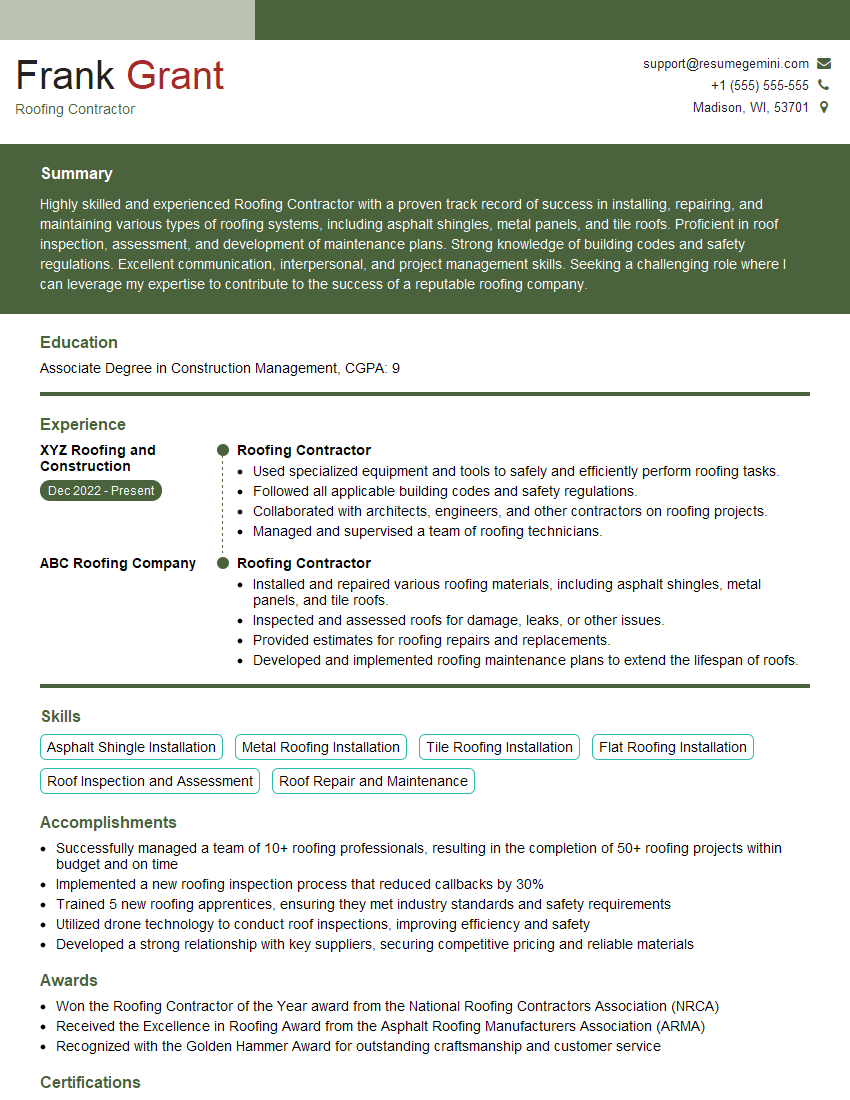
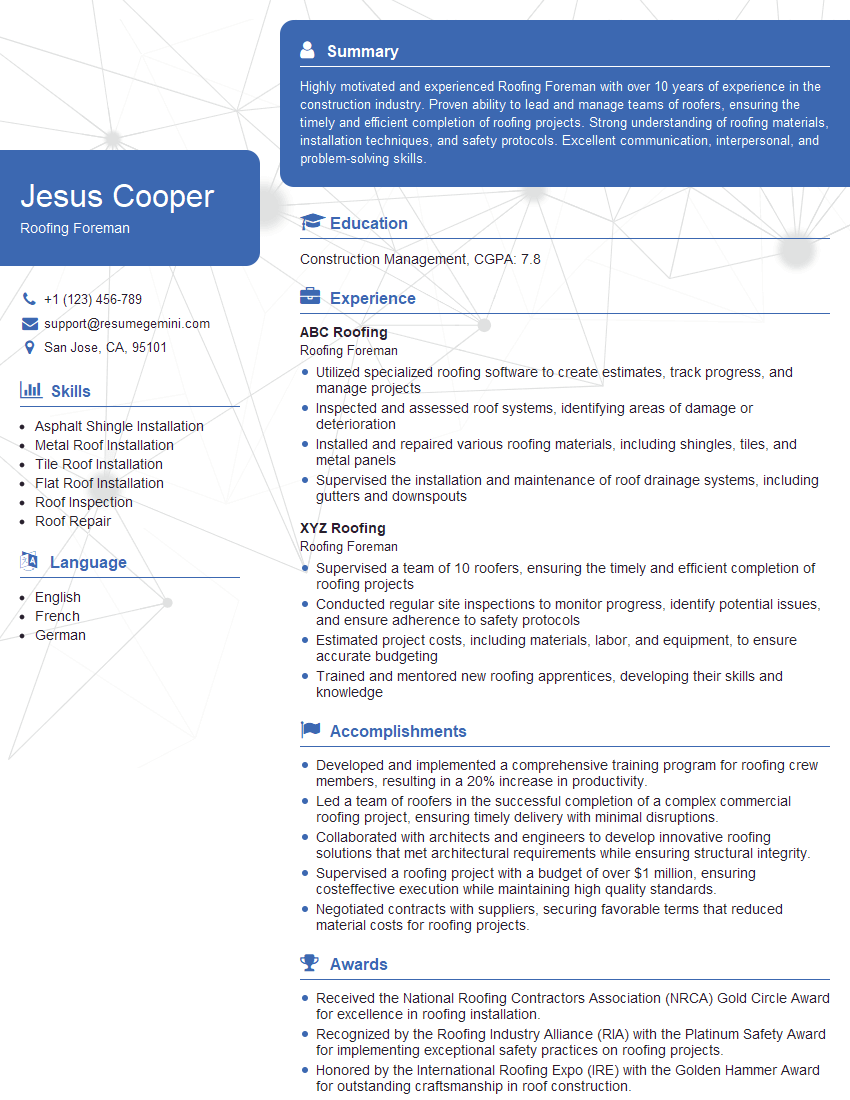
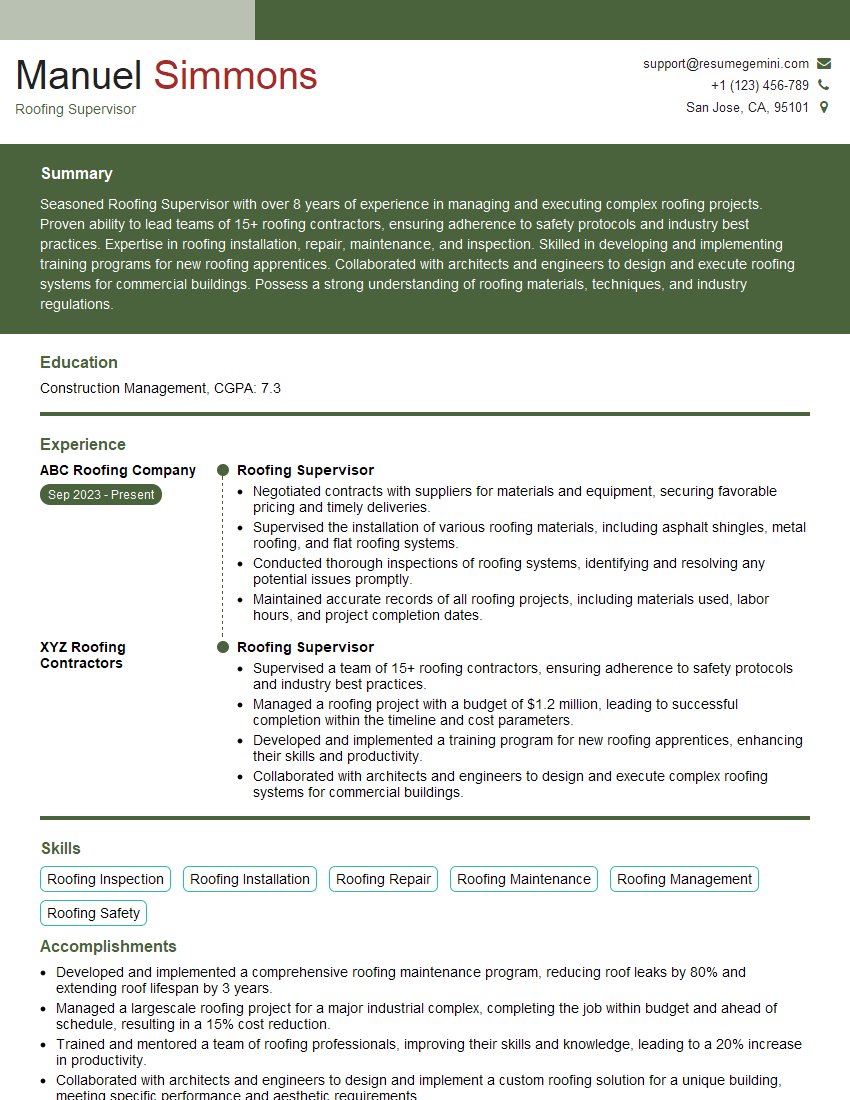
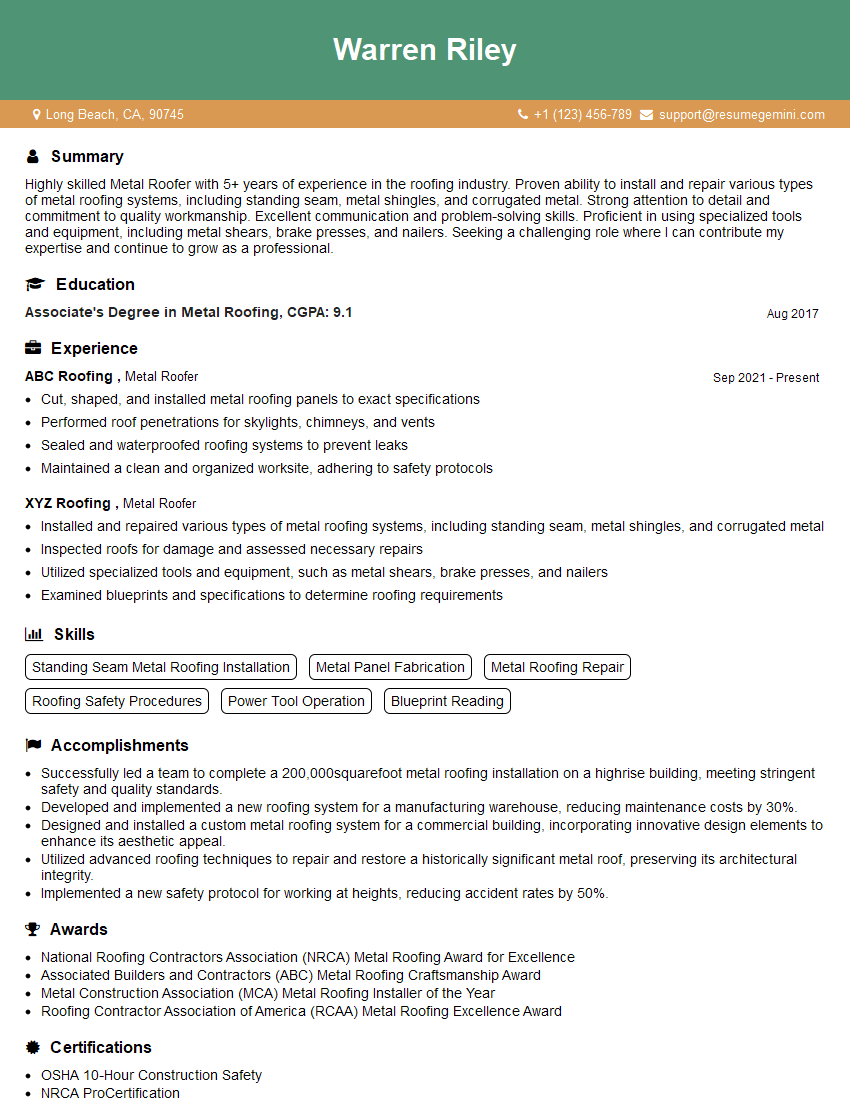
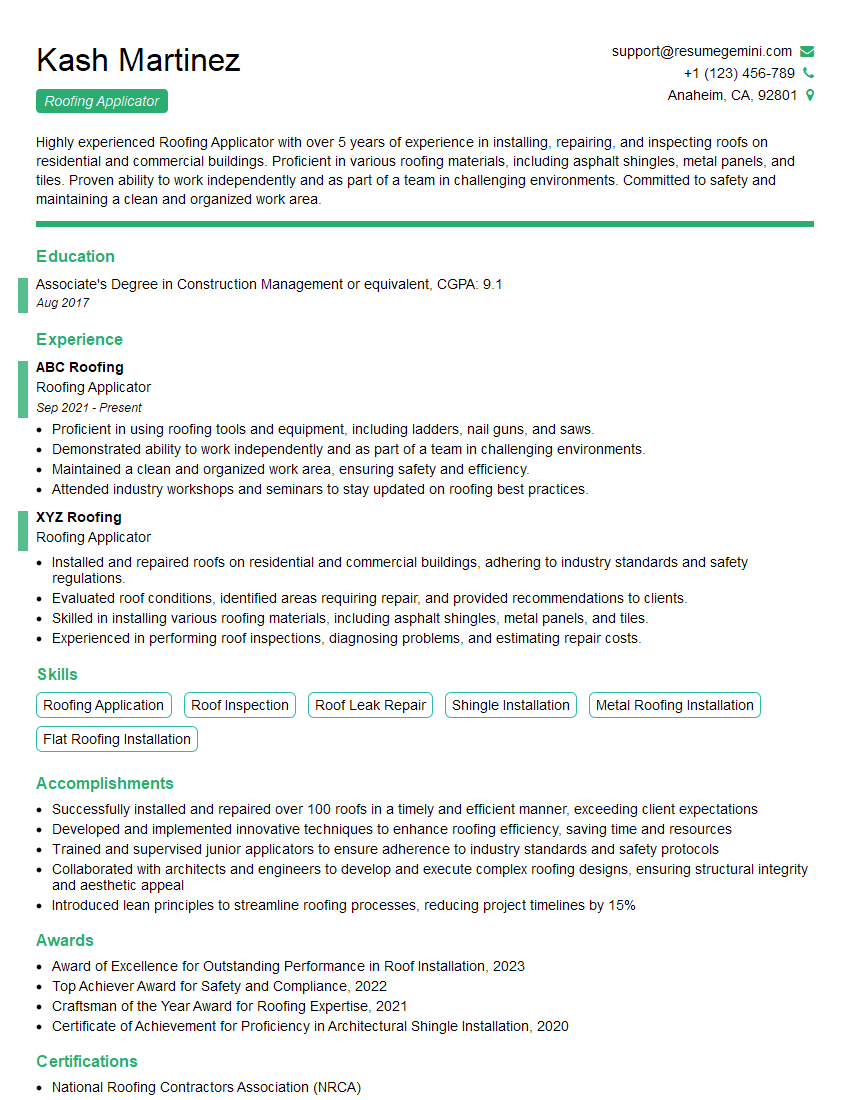
Mastering roofing repair skills opens doors to a rewarding career with excellent growth potential. A strong understanding of these technical skills, combined with effective communication, will set you apart from other candidates. To significantly increase your chances of landing your dream job, focus on creating an ATS-friendly resume that highlights your abilities. ResumeGemini is a trusted resource that can help you build a professional and impactful resume, tailored to showcase your roofing repair expertise. Examples of resumes tailored to the Roofing Repair field are available through ResumeGemini to guide you.
Explore more articles
Users Rating of Our Blogs
Share Your Experience
We value your feedback! Please rate our content and share your thoughts (optional).
What Readers Say About Our Blog
Attention music lovers!
Wow, All the best Sax Summer music !!!
Spotify: https://open.spotify.com/artist/6ShcdIT7rPVVaFEpgZQbUk
Apple Music: https://music.apple.com/fr/artist/jimmy-sax-black/1530501936
YouTube: https://music.youtube.com/browse/VLOLAK5uy_noClmC7abM6YpZsnySxRqt3LoalPf88No
Other Platforms and Free Downloads : https://fanlink.tv/jimmysaxblack
on google : https://www.google.com/search?q=22+AND+22+AND+22
on ChatGPT : https://chat.openai.com?q=who20jlJimmy20Black20Sax20Producer
Get back into the groove with Jimmy sax Black
Best regards,
Jimmy sax Black
www.jimmysaxblack.com
Hi I am a troller at The aquatic interview center and I suddenly went so fast in Roblox and it was gone when I reset.
Hi,
Business owners spend hours every week worrying about their website—or avoiding it because it feels overwhelming.
We’d like to take that off your plate:
$69/month. Everything handled.
Our team will:
Design a custom website—or completely overhaul your current one
Take care of hosting as an option
Handle edits and improvements—up to 60 minutes of work included every month
No setup fees, no annual commitments. Just a site that makes a strong first impression.
Find out if it’s right for you:
https://websolutionsgenius.com/awardwinningwebsites
Hello,
we currently offer a complimentary backlink and URL indexing test for search engine optimization professionals.
You can get complimentary indexing credits to test how link discovery works in practice.
No credit card is required and there is no recurring fee.
You can find details here:
https://wikipedia-backlinks.com/indexing/
Regards
NICE RESPONSE TO Q & A
hi
The aim of this message is regarding an unclaimed deposit of a deceased nationale that bears the same name as you. You are not relate to him as there are millions of people answering the names across around the world. But i will use my position to influence the release of the deposit to you for our mutual benefit.
Respond for full details and how to claim the deposit. This is 100% risk free. Send hello to my email id: lukachachibaialuka@gmail.com
Luka Chachibaialuka
Hey interviewgemini.com, just wanted to follow up on my last email.
We just launched Call the Monster, an parenting app that lets you summon friendly ‘monsters’ kids actually listen to.
We’re also running a giveaway for everyone who downloads the app. Since it’s brand new, there aren’t many users yet, which means you’ve got a much better chance of winning some great prizes.
You can check it out here: https://bit.ly/callamonsterapp
Or follow us on Instagram: https://www.instagram.com/callamonsterapp
Thanks,
Ryan
CEO – Call the Monster App
Hey interviewgemini.com, I saw your website and love your approach.
I just want this to look like spam email, but want to share something important to you. We just launched Call the Monster, a parenting app that lets you summon friendly ‘monsters’ kids actually listen to.
Parents are loving it for calming chaos before bedtime. Thought you might want to try it: https://bit.ly/callamonsterapp or just follow our fun monster lore on Instagram: https://www.instagram.com/callamonsterapp
Thanks,
Ryan
CEO – Call A Monster APP
To the interviewgemini.com Owner.
Dear interviewgemini.com Webmaster!
Hi interviewgemini.com Webmaster!
Dear interviewgemini.com Webmaster!
excellent
Hello,
We found issues with your domain’s email setup that may be sending your messages to spam or blocking them completely. InboxShield Mini shows you how to fix it in minutes — no tech skills required.
Scan your domain now for details: https://inboxshield-mini.com/
— Adam @ InboxShield Mini
support@inboxshield-mini.com
Reply STOP to unsubscribe
Hi, are you owner of interviewgemini.com? What if I told you I could help you find extra time in your schedule, reconnect with leads you didn’t even realize you missed, and bring in more “I want to work with you” conversations, without increasing your ad spend or hiring a full-time employee?
All with a flexible, budget-friendly service that could easily pay for itself. Sounds good?
Would it be nice to jump on a quick 10-minute call so I can show you exactly how we make this work?
Best,
Hapei
Marketing Director
Hey, I know you’re the owner of interviewgemini.com. I’ll be quick.
Fundraising for your business is tough and time-consuming. We make it easier by guaranteeing two private investor meetings each month, for six months. No demos, no pitch events – just direct introductions to active investors matched to your startup.
If youR17;re raising, this could help you build real momentum. Want me to send more info?
Hi, I represent an SEO company that specialises in getting you AI citations and higher rankings on Google. I’d like to offer you a 100% free SEO audit for your website. Would you be interested?
Hi, I represent an SEO company that specialises in getting you AI citations and higher rankings on Google. I’d like to offer you a 100% free SEO audit for your website. Would you be interested?