Interviews are opportunities to demonstrate your expertise, and this guide is here to help you shine. Explore the essential Safety Case Development interview questions that employers frequently ask, paired with strategies for crafting responses that set you apart from the competition.
Questions Asked in Safety Case Development Interview
Q 1. Describe the lifecycle stages of a Safety Case.
The Safety Case lifecycle is iterative and often follows a project’s lifecycle. It’s not a one-time event but a living document, evolving as the project progresses and new information emerges. Key stages typically include:
- Initiation: Defining the scope, objectives, and hazards relevant to the system or project. This involves identifying stakeholders and regulatory requirements.
- Hazard Identification & Risk Assessment: Systematically identifying potential hazards and assessing their associated risks. Techniques like HAZOP, FMEA, and What-If analysis are employed.
- Risk Mitigation & Control: Implementing measures to reduce or eliminate identified risks to an acceptable level. This could involve engineering controls, administrative controls, or procedural changes.
- Safety Case Development: Documenting all aspects of the hazard identification, risk assessment, and mitigation process. This forms the central component of the Safety Case.
- Safety Case Review & Approval: Independent review and approval of the Safety Case by relevant stakeholders, often including regulatory bodies. This ensures its completeness and acceptability.
- Implementation & Monitoring: Putting the safety measures into practice and continuously monitoring their effectiveness. This may involve audits, inspections, and performance reviews.
- Review & Updates: Periodically reviewing and updating the Safety Case based on operational experience, changes in the system or environment, and new regulatory requirements. This ensures its continued relevance and effectiveness.
For example, consider the development of a new chemical plant. The initiation phase would define the hazards associated with chemical handling, storage, and processing. Throughout construction and operation, the Safety Case would be updated to reflect changes in processes or safety controls.
Q 2. What are the key elements of a comprehensive Safety Case?
A comprehensive Safety Case comprises several key elements, working together to demonstrate that the risks are ALARP (As Low As Reasonably Practicable). These include:
- Hazard Identification: A systematic method for identifying all potential hazards associated with the system.
- Risk Assessment: A process to evaluate the likelihood and severity of each identified hazard, leading to an overall risk level.
- Risk Mitigation Strategies: Detailed descriptions of measures put in place to reduce or control the identified risks.
- Safety Requirements Specification: A clear statement of the safety requirements that must be met to achieve an acceptable level of risk.
- Safety Integrity Level (SIL) Assessment (where applicable): Determination of the required safety integrity level for safety instrumented systems (SIS).
- Verification & Validation: Evidence demonstrating that the safety requirements have been met and the risk mitigation strategies are effective.
- Emergency Response Plan: Procedures to follow in case of an accident or emergency.
- Training and Competency: Demonstration that personnel are adequately trained and competent to operate the system safely.
- Safety Management System (SMS): An overarching system for managing safety, including procedures, responsibilities, and accountability.
Think of it like building a house – each element (foundation, walls, roof, etc.) is crucial for overall safety and stability. A weak element jeopardizes the whole structure.
Q 3. Explain the difference between hazard identification and risk assessment.
While both hazard identification and risk assessment are crucial for safety management, they address different aspects:
- Hazard Identification is the process of systematically identifying potential sources of harm (hazards) that could lead to injury, damage, or environmental harm. It’s about finding what could go wrong. Examples include: faulty equipment, human error, or environmental factors.
- Risk Assessment evaluates the likelihood and severity of identified hazards occurring and causing harm. It combines the probability of a hazard occurring with the consequences if it does. It answers how likely is it to happen, and how bad would the outcome be? This often leads to a risk ranking or rating.
Imagine a factory with a high-pressure pipeline. Hazard identification would list the potential for leaks or ruptures. Risk assessment would then consider the probability of a leak, the amount of pressure, the toxicity of the chemical, and proximity to personnel to determine the overall risk level.
Q 4. How do you quantify risk in a Safety Case?
Risk quantification involves assigning numerical values to both the likelihood and severity of a hazard. Several methods exist, each with strengths and weaknesses:
- Qualitative Methods: Use descriptive terms (e.g., low, medium, high) to rate likelihood and severity. Simple, but less precise.
- Quantitative Methods: Assign numerical probabilities (e.g., 0.01, 0.1, 1) and consequence scores (e.g., minor injury, major injury, fatality). More precise, but require more data and expertise.
- Fault Tree Analysis (FTA): A deductive technique that models the combinations of events that can lead to a top-level undesired event.
- Event Tree Analysis (ETA): A probabilistic technique that models the consequences of an initiating event, branching based on the success or failure of safety systems.
Risk is often expressed as a product of likelihood and severity (e.g., Risk = Likelihood x Severity). The specific scales and methods used depend on the context and regulatory requirements. For instance, a chemical plant might use a quantitative risk assessment based on frequency and fatality rates, while a software application might employ qualitative methods based on severity levels.
Q 5. What are the different risk mitigation strategies?
Risk mitigation strategies aim to reduce the likelihood or severity of hazards. They are broadly categorized as:
- Elimination: Removing the hazard completely (e.g., replacing a hazardous chemical with a safer alternative).
- Substitution: Replacing a hazardous substance or process with a less hazardous one (e.g., using robotics to handle hazardous materials).
- Engineering Controls: Implementing physical or engineering changes to reduce the risk (e.g., installing guards on machinery, implementing pressure relief valves).
- Administrative Controls: Implementing procedures, training, or management systems to reduce risk (e.g., safety training programs, work permits).
- Personal Protective Equipment (PPE): Providing workers with protective clothing or equipment (e.g., safety glasses, hard hats).
Choosing the right strategy depends on factors like cost-effectiveness, feasibility, and effectiveness. Ideally, the hierarchy of controls should be followed, prioritizing elimination or substitution before resorting to administrative controls or PPE.
Q 6. What is ALARP (As Low As Reasonably Practicable) and how is it applied in Safety Case development?
ALARP (As Low As Reasonably Practicable) is a principle stating that risks should be reduced to a level where further reductions are not justified by the cost, effort, or other resources involved. It’s not about eliminating all risk – that’s often impossible and impractical – but about reaching an acceptable balance between risk and the resources required to reduce it further.
In Safety Case development, ALARP is applied by:
- Demonstrating that appropriate risk reduction measures have been implemented. This involves justifying the chosen mitigation strategies and showing that they are effective.
- Justifying the residual risk. This involves demonstrating that the remaining risk is ALARP, considering the costs and benefits of further reduction.
- Using a risk matrix or other quantitative/qualitative tools. This helps to illustrate the level of residual risk and its acceptability within the context of the operation.
Imagine a construction site. While eliminating all risks is impossible, they implement safety measures like hard hats and scaffolding to reduce risks to ALARP. Further reductions, like individually-tailored safety harnesses for every worker might be deemed impractical due to cost and logistical challenges.
Q 7. Explain the importance of HAZOP studies in Safety Case development.
HAZOP (Hazard and Operability Study) is a systematic technique used to identify potential hazards and operability problems in a process or system. It’s a crucial part of Safety Case development because it provides a structured and comprehensive approach to hazard identification. This helps to ensure that all significant hazards are considered, leading to a more robust and effective safety case.
HAZOP involves a team reviewing the process flow diagram, considering deviations from the intended operation (e.g., ‘no flow’, ‘high flow’, ‘high temperature’). For each deviation, the team identifies potential hazards and assesses their risks. The results are documented, and mitigation strategies are developed.
The benefits of using HAZOP in Safety Case development include:
- Early identification of hazards: HAZOP is typically conducted during the design phase, allowing for proactive risk mitigation.
- Comprehensive hazard identification: The systematic nature of HAZOP helps to ensure that a wide range of potential hazards are considered.
- Improved safety and operability: By identifying and addressing potential problems early on, HAZOP can contribute to a safer and more efficient process.
- Stronger safety case: A HAZOP study provides valuable evidence to support the safety case, demonstrating a structured and thorough approach to hazard identification and risk assessment.
For instance, in the design of an offshore oil platform, a HAZOP study would identify potential hazards related to fire, explosions, spills, and structural failures. This would then inform the design of safety systems and procedures to mitigate these risks, strengthening the overall safety case.
Q 8. Describe your experience with Bow-Tie analysis.
Bow-Tie analysis is a risk assessment methodology that visually represents the relationships between hazards, controls, and consequences. It’s a powerful tool for identifying and managing risks, providing a holistic view of the safety system. Think of it like a butterfly – the hazard is the body, preventative controls are the left wing, mitigative controls are the right wing, and the consequences are the tail.
My experience includes using Bow-Tie analysis across various sectors, from oil and gas to transportation. In one project involving a chemical plant, we used Bow-Tie analysis to identify potential process upsets (the hazard). We then mapped out preventative controls, such as automated shut-off valves, and mitigative controls like emergency response procedures (the wings). Finally, we assessed the potential consequences, ranging from minor equipment damage to major environmental releases (the tail). This allowed us to prioritize risk reduction efforts and allocate resources effectively. We documented all this clearly in the safety case, demonstrating our understanding of the risks and the controls in place.
A key benefit is its clarity; Bow-Tie diagrams are easily understandable by technical and non-technical stakeholders alike, facilitating effective communication and collaboration. I’ve found that this improves buy-in and allows for a more robust safety case.
Q 9. How do you ensure the integrity of a Safety Case over time?
Maintaining the integrity of a Safety Case over time is crucial. It’s not a static document; it’s a living document that must adapt to changes in the operational environment, technology, and regulatory requirements. Think of it like a ship needing constant maintenance to ensure its seaworthiness.
My approach involves several key strategies: Firstly, a robust change management process is essential. Any modification to processes, equipment, or procedures requires a thorough risk assessment to determine its impact on the existing controls and consequently the safety case. This often necessitates updating the Bow-Tie diagrams or Fault Tree Analyses.
Secondly, regular reviews are paramount. These reviews involve a multidisciplinary team, including engineers, operators, and safety specialists, to assess the continued effectiveness of the safety controls. These reviews are scheduled, and the frequency depends on the risk level. High-risk operations will require more frequent reviews.
Thirdly, an effective record-keeping system is needed to track all changes, reviews, and updates to the Safety Case, providing clear auditability and transparency. This includes documenting the rationale for any changes made. This is critical for demonstrating compliance to regulators.
Finally, leveraging technology such as digital safety case management systems can greatly assist in efficient record-keeping and automated review notifications. These systems can highlight potential vulnerabilities and ensure prompt responses to safety issues.
Q 10. What are the key regulatory requirements for Safety Case submissions?
Regulatory requirements for Safety Case submissions vary widely depending on the industry and geographical location. However, some common threads exist. The overarching goal is to demonstrate that the risks associated with an operation are adequately controlled to an acceptable level.
Generally, submissions must clearly demonstrate hazard identification, risk assessment using appropriate methods like FTA or ETA, and justification of safety controls. The documentation should be comprehensive, well-structured, and easily understandable to the reviewing authority. Specific requirements may include details on emergency response procedures, training programs for personnel, and maintenance schedules.
For example, in the offshore oil and gas industry, regulatory bodies like the HSE (UK) or the BSEE (USA) have specific guidelines and standards that must be adhered to. These often involve demonstrating compliance with specific codes of practice and industry standards.
Failure to meet these regulatory requirements can result in penalties, operational restrictions, or even legal action. Therefore, thorough understanding and careful adherence to all applicable regulations is paramount in Safety Case development.
Q 11. Explain the role of layers of protection in a Safety Case.
Layers of protection analysis (LOPA) is a crucial element of a Safety Case. It emphasizes the importance of having multiple independent safety systems in place to prevent or mitigate hazards. Instead of relying on a single safeguard, a layered approach increases the overall safety integrity of the operation.
Imagine a dam; a single barrier might be a wall. But to truly protect against catastrophic failure, you would have multiple layers: an overflow spillway, an emergency drain, and regular inspections. Each layer serves as a backup in case another fails.
In a process plant, layers of protection might include: inherent safety features (e.g., using less hazardous materials), engineering controls (e.g., pressure relief valves, interlocks), administrative controls (e.g., operating procedures, training), and emergency response systems (e.g., fire suppression, evacuation plans). Each layer is independently assessed to determine its effectiveness, and the overall reliability is calculated to ensure sufficient protection against potential hazards.
The LOPA analysis is essential for justifying the selection and design of safety-critical equipment and procedures. It demonstrates to regulators and stakeholders that the system is robust and unlikely to fail in the event of multiple failures.
Q 12. Describe your experience with Fault Tree Analysis (FTA).
Fault Tree Analysis (FTA) is a deductive, top-down risk assessment technique used to identify the causes of a specific undesired event (top event). It is a powerful tool for understanding the complex interactions of system components that lead to failure. Think of it like tracing the roots of a tree to find the source of a problem.
My experience involves building FTAs using specialized software to model intricate systems and failures. For instance, in an aviation safety assessment, we used FTA to analyze the causes of a potential engine failure. We started with the top event (engine failure) and worked our way down, identifying potential causes (fuel pump failure, compressor blade failure, etc.) and their contributing factors (worn parts, improper maintenance, etc.).
FTA allows for a quantitative assessment of the probability of the top event occurring. This is achieved by assigning probabilities to the basic events and using Boolean logic to calculate the overall probability of system failure. This quantitative analysis is crucial in prioritizing risk reduction efforts and justifies the need for specific safety interventions described in the safety case.
Q 13. Describe your experience with Event Tree Analysis (ETA).
Event Tree Analysis (ETA) is an inductive, bottom-up technique used to analyze the possible consequences of an initiating event. It helps to visualize the sequence of events that could follow an initiating event, leading to different outcomes. Think of it like mapping out different pathways from a starting point.
In a previous project involving a pipeline transportation system, we used ETA to analyze the consequences of a pipeline rupture. We started with the initiating event (pipeline rupture) and considered various potential events that could follow (e.g., leak detection, emergency shutdown, fire). Each event had a probability of occurrence and consequences (e.g., environmental damage, injury). This gave us a range of potential outcomes and their probabilities, showing the importance of rapid response mechanisms.
ETA is particularly useful for assessing the effectiveness of safety systems and emergency response plans. It helps determine the probability of each outcome and informs decision-making regarding risk mitigation strategies. The outcomes and their associated probabilities are incorporated into the safety case, providing insights into the potential scenarios.
Q 14. How do you manage stakeholder engagement in Safety Case development?
Stakeholder engagement is critical for the success of Safety Case development. It ensures that the case is relevant, accepted, and effectively implemented. I use a multi-faceted approach, focusing on communication, collaboration, and transparency.
Firstly, I establish clear communication channels with all relevant stakeholders, including operations personnel, management, regulators, and external experts. Regular meetings and progress reports are key to keeping everyone informed.
Secondly, I facilitate collaborative workshops to discuss potential hazards, risks, and mitigation strategies. These workshops provide a platform for open discussion and knowledge sharing. This participatory approach fosters ownership and buy-in from all stakeholders.
Thirdly, I maintain transparency throughout the process. All information, including the Safety Case itself, is made readily accessible to relevant stakeholders. Transparency builds trust and confidence.
Finally, actively seeking feedback from stakeholders at each stage is crucial. This allows for adjustments and improvements, ensuring that the Safety Case reflects a shared understanding of the risks and their management.
By fostering strong stakeholder relationships and effective communication, I ensure the Safety Case is both robust and acceptable to all parties involved.
Q 15. Explain the process of validating a Safety Case.
Validating a Safety Case is the crucial process of confirming that the arguments and evidence presented convincingly demonstrate the system’s acceptable risk level. It’s not just about checking for errors; it’s about rigorously assessing whether the case successfully justifies the safety claims made. This involves several key steps:
- Independent Review: A team independent from the Safety Case authors critically examines the document. They check for logical fallacies, inconsistencies, gaps in evidence, and the overall strength of the arguments. This is akin to a peer review in academia but with a far greater focus on safety and potential consequences.
- Evidence Verification: The validity of the supporting evidence – from hazard analyses to risk assessments to test results – is meticulously verified. This might involve examining raw data, checking calculations, and independently repeating some analyses.
- Stakeholder Consultation: Key stakeholders, including regulators, operators, and potentially affected parties, review and provide feedback on the Safety Case. This ensures the case addresses relevant concerns and perspectives.
- Gap Analysis: The validation process often identifies gaps or weaknesses in the Safety Case. These need to be addressed through further analysis, testing, or the implementation of additional safety measures.
- Traceability Checks: The validation process checks for the correct traceability between different parts of the Safety Case, ensuring that all arguments and evidence are linked consistently and completely.
For example, in the validation of a safety case for a new railway signaling system, the independent reviewers might verify the results of simulations demonstrating the system’s ability to prevent train collisions under various failure scenarios. They would check the underlying assumptions, the methodology used, and the robustness of the conclusions drawn.
Career Expert Tips:
- Ace those interviews! Prepare effectively by reviewing the Top 50 Most Common Interview Questions on ResumeGemini.
- Navigate your job search with confidence! Explore a wide range of Career Tips on ResumeGemini. Learn about common challenges and recommendations to overcome them.
- Craft the perfect resume! Master the Art of Resume Writing with ResumeGemini’s guide. Showcase your unique qualifications and achievements effectively.
- Don’t miss out on holiday savings! Build your dream resume with ResumeGemini’s ATS optimized templates.
Q 16. How do you incorporate lessons learned into Safety Case development?
Incorporating lessons learned is critical to continuous improvement in Safety Case development. It’s about proactively using past experiences – both successes and failures – to enhance future safety cases. This involves several strategies:
- Post-Incident Reviews: Thorough post-incident investigations are crucial. They identify root causes, contributing factors, and any shortcomings in the safety management system. These findings are then directly incorporated into updated Safety Cases and safety procedures.
- Regular Audits and Inspections: Regular audits and inspections help to uncover potential hazards and safety deficiencies before they lead to incidents. Findings from these activities feed into the iterative improvement of the Safety Case.
- Feedback Mechanisms: Establishing clear feedback mechanisms allows for the capture of lessons learned throughout the entire lifecycle of the system. This includes feedback from operators, maintenance personnel, and other stakeholders.
- Knowledge Management Systems: Centralized knowledge management systems (databases or repositories) store lessons learned, making them readily accessible to all involved in Safety Case development. This facilitates the sharing of best practices and avoids repeating past mistakes.
For instance, if a previous Safety Case for a chemical plant underestimated the risk of a specific type of equipment failure, this lesson is incorporated into the next iteration by including more rigorous failure analysis, more conservative estimations, or specifying improved redundancy measures within the safety system.
Q 17. What are the common challenges in Safety Case development?
Developing robust Safety Cases presents numerous challenges, often intertwined and requiring careful management. Some common issues include:
- Defining acceptable risk: This is inherently subjective and often requires balancing safety, cost, and operational needs. Stakeholder alignment on risk tolerance is crucial.
- Managing complexity: Modern systems are incredibly complex, making comprehensive hazard identification and risk assessment a significant challenge. Effective decomposition techniques and modelling are vital.
- Data availability and quality: Reliable data is essential, but often scarce or unreliable. This necessitates creative data gathering and analysis techniques, potentially including conservative estimations where data is lacking.
- Uncertainty and ambiguity: Dealing with inherent uncertainties in risk estimations and system behavior is a key challenge. Probabilistic risk assessment and sensitivity analysis help manage this uncertainty.
- Maintaining consistency and traceability: Large Safety Cases are prone to inconsistencies and traceability issues. Structured approaches and dedicated tools are necessary to overcome this.
- Communication and stakeholder engagement: Successfully communicating the Safety Case’s complexities to diverse stakeholders – technical and non-technical – is key to its acceptance and effectiveness.
Consider, for example, the challenge of developing a Safety Case for an autonomous vehicle. The sheer number of potential hazards and the inherent complexities of AI algorithms make comprehensive risk assessment incredibly demanding.
Q 18. How do you handle conflicting safety requirements?
Conflicting safety requirements are unfortunately common in complex systems. Resolving these conflicts requires a systematic and prioritized approach:
- Prioritization based on risk: Requirements are prioritized based on the severity and likelihood of the associated hazards. Higher-risk requirements take precedence.
- Requirement trade-off analysis: The impacts of meeting or not meeting each requirement are carefully analyzed. This helps to identify acceptable compromises and optimize safety with available resources.
- Hierarchical risk decomposition: Breaking down complex system-level requirements into lower-level sub-requirements helps to identify and resolve conflicts at a more manageable level.
- Formal methods and tools: Formal methods, such as fault tree analysis or event tree analysis, can be used to quantitatively assess the impact of conflicting requirements.
- Stakeholder negotiation and consensus: In some cases, negotiation and consensus building among stakeholders might be necessary to resolve conflicting viewpoints on safety priorities.
Imagine a scenario where one safety requirement mandates a rapid emergency shutdown, while another requires a gradual shutdown to prevent damage to the system. The conflict is resolved by analyzing the risks associated with each shutdown method and selecting the option that minimizes overall risk, possibly with the inclusion of mitigating measures to minimize the negative impacts of the chosen approach.
Q 19. Describe your experience with software used for Safety Case development.
Throughout my career, I have extensively used various software tools for Safety Case development. My experience encompasses:
- HAZOP software: Tools like PHAST and others supporting HAZOP (Hazard and Operability) studies enable systematic hazard identification and risk assessment.
- Fault tree analysis (FTA) software: Software like Isograph Reliability Workbench facilitates the creation and analysis of fault trees to model potential system failures.
- Event tree analysis (ETA) software: Similar software tools support the creation and analysis of event trees to model the consequences of initiating events.
- Risk assessment and management software: Tools like BowTieXP help integrate various risk assessment methodologies and manage risks through the lifecycle of a project. They are often used to create graphical displays of the risk assessments, often called bowtie diagrams.
- Document management systems: These systems are crucial for managing the large volumes of data associated with Safety Cases, enabling version control, collaboration, and efficient review processes.
My proficiency in these tools extends to data input, analysis, report generation, and integration with other safety engineering software. I’m also adept at selecting the appropriate software based on the complexity and specific needs of the project.
Q 20. How do you ensure the clarity and understandability of a Safety Case?
Ensuring clarity and understandability is paramount in Safety Case development. The document needs to effectively communicate complex technical information to a diverse audience, including technical experts and non-technical stakeholders. Strategies for achieving this include:
- Clear and concise language: Avoiding jargon and using plain language makes the case accessible to a wider audience. Technical terms should be defined clearly and consistently.
- Logical structure and flow: A well-structured document with a clear narrative guides the reader smoothly through the arguments and evidence.
- Visual aids and diagrams: Flowcharts, tables, graphs, and other visuals enhance comprehension, especially for complex information like risk matrices or fault trees.
- Modular design: Breaking down the Safety Case into manageable modules simplifies understanding and enables focused review.
- Effective use of templates and standards: Following established templates and standards ensures consistency, improves traceability, and facilitates review.
- Peer reviews and feedback: Regular peer reviews and feedback from diverse stakeholders identify ambiguities and areas that require clarification.
For example, using clear visual aids like bowtie diagrams to depict hazard scenarios and mitigation strategies makes the overall risk picture much easier to understand, even for individuals lacking a detailed technical background.
Q 21. Explain your understanding of safety critical systems.
Safety-critical systems are those whose failure could lead to significant harm, injury, or even death. These systems require rigorous safety management and engineering practices to minimize the risk of failure. Key characteristics include:
- High reliability and availability: These systems must function correctly under a wide range of operating conditions and tolerate failures without catastrophic consequences.
- Redundancy and fail-safe mechanisms: Redundancy and fail-safe designs ensure that the system remains operational even in the event of component failures.
- Formal methods and safety standards: Formal methods and industry safety standards (like IEC 61508 for electrical/electronic/programmable electronic safety-related systems) provide a framework for designing, developing, and verifying safety-critical systems.
- Safety lifecycle management: A comprehensive lifecycle approach that addresses safety concerns from initial design to decommissioning.
Examples include aircraft flight control systems, nuclear power plant safety systems, and medical devices used in life-sustaining procedures. The consequences of failure in these systems are severe, demanding the highest levels of safety engineering.
Q 22. Describe your experience with safety management systems (SMS).
Safety Management Systems (SMS) are crucial for proactively managing safety risks within an organization. My experience encompasses developing, implementing, and auditing SMS across various sectors, including aviation and offshore oil and gas. This involved creating comprehensive safety policies, procedures, and training programs, conducting regular safety audits and inspections, and investigating accidents or incidents to identify root causes and implement corrective actions. I’ve worked with organizations to integrate SMS into their overall management systems, ensuring a holistic approach to safety. For example, in the offshore oil and gas sector, I helped a company implement a bow-tie analysis methodology to identify and mitigate hazards during drilling operations, resulting in a significant reduction in incidents.
A key aspect of my work has been promoting a strong safety culture. This goes beyond simply following procedures; it’s about fostering a culture where everyone feels empowered to raise safety concerns, without fear of retribution. I’ve facilitated workshops and training sessions to build safety awareness and encourage proactive hazard identification.
Q 23. How do you address uncertainties and data limitations in risk assessment?
Uncertainty and data limitations are inherent in risk assessment. My approach involves a combination of qualitative and quantitative methods to address these challenges. When data is scarce, I employ techniques like Fault Tree Analysis (FTA) and Event Tree Analysis (ETA) to model potential failure scenarios and estimate probabilities based on expert judgment and historical data from similar systems. For instance, when assessing the risk of a new piece of equipment with limited operational history, I’d consult with subject matter experts to estimate failure rates based on their experience with similar technologies.
Sensitivity analysis is another key tool. This involves varying input parameters to determine how sensitive the overall risk assessment is to uncertainties in the data. This helps prioritize data gathering efforts by focusing on the parameters that have the biggest impact on risk. Furthermore, I utilize Bayesian methods to incorporate expert opinion and update risk estimates as new data becomes available. The use of appropriate risk matrices and clearly stated assumptions ensures transparency and allows for informed decision-making, even with incomplete data.
Q 24. What are the ethical considerations in Safety Case development?
Ethical considerations are paramount in Safety Case development. Transparency and honesty are essential – we must present a balanced view of the risks, acknowledging both the benefits and drawbacks of a project. This includes clearly articulating the limitations of the assessment and any assumptions made. It also necessitates considering the potential impact on all stakeholders, including workers, the community, and the environment. For instance, if a cost-cutting measure would compromise safety, it’s ethically crucial to raise this concern, even if it means challenging the project’s feasibility.
Confidentiality is another crucial ethical element. Information gathered during the Safety Case development process, especially regarding specific hazards or vulnerabilities, must be handled responsibly and not disclosed inappropriately. Adherence to relevant codes of conduct and professional standards is non-negotiable to maintain integrity and public trust.
Q 25. Explain your experience with different risk assessment methodologies.
My experience encompasses a variety of risk assessment methodologies, tailored to the specific context and available data. I’m proficient in both quantitative and qualitative methods. Quantitative methods like Fault Tree Analysis (FTA), Event Tree Analysis (ETA), and Failure Mode and Effects Analysis (FMEA) provide numerical estimates of risk, while qualitative methods such as HAZOP (Hazard and Operability Study) and bow-tie analysis provide a more holistic understanding of the hazard and control system.
For example, in an aviation project, I might use FTA to analyze the potential failure of a critical system and estimate the probability of a catastrophic event. In a chemical process plant, I’d likely utilize HAZOP to systematically review the process for potential hazards and identify appropriate safeguards. The choice of methodology always depends on the project’s complexity, the nature of the hazards, and the quality and quantity of available data. I often combine different methodologies for a more comprehensive assessment.
Q 26. How do you communicate technical safety information to non-technical audiences?
Communicating complex safety information to non-technical audiences requires clear, concise language and effective visualization. I avoid technical jargon and use analogies and visual aids such as diagrams, charts, and infographics to convey key concepts. For instance, instead of using complex statistical data, I might use a simple bar graph showing the relative likelihood of different hazards. Storytelling is another powerful tool; real-life examples and case studies can resonate more effectively than abstract concepts.
Active listening and feedback are crucial during communication. I ensure the audience understands the information by asking clarifying questions and tailoring the message to their level of understanding. In a recent project, I presented safety information to a community group using a presentation that incorporated local examples and incorporated opportunities for questions and discussion, ensuring all concerns were addressed.
Q 27. Describe a time you had to revise a Safety Case due to new information.
During a project involving the design of a new offshore platform, the initial Safety Case was based on existing industry standards and modelling. However, after a significant storm caused damage to a similar structure in a nearby location, new information emerged regarding the platform’s resilience to extreme weather conditions. This prompted a thorough review and revision of the Safety Case.
The revision involved updating the risk assessment to reflect the new data, incorporating updated weather modelling, and proposing additional structural reinforcements to enhance the platform’s resilience. We engaged external experts to validate our findings and ensured transparency by documenting all changes and the rationale behind them, resulting in a revised Safety Case that addressed the newly discovered vulnerabilities.
Q 28. How do you stay updated on current best practices in Safety Case Development?
Staying updated on best practices in Safety Case development requires a multifaceted approach. I actively participate in professional organizations such as the Institution of Chemical Engineers (IChemE) and attend industry conferences and workshops to learn about emerging technologies and best practices. I also regularly review relevant industry publications, journals, and regulatory updates to remain abreast of changes in safety standards and regulations.
Online resources and professional networking platforms also play a key role. I engage with other safety professionals through online forums and communities to share knowledge and learn from their experiences. Continuous professional development is essential in this dynamic field to maintain the highest level of competence and ensure that Safety Cases are developed using the most up-to-date methods and standards.
Key Topics to Learn for Safety Case Development Interview
- Hazard Identification and Risk Assessment: Understanding methodologies like HAZOP, HAZID, and FMEA, and their practical application in identifying potential hazards and assessing their risks within a system.
- Safety Integrity Levels (SIL): Grasping the concept of SILs, their determination based on risk assessment, and how they inform the selection of safety instrumented systems (SIS).
- Safety Instrumented Systems (SIS): Familiarity with SIS design principles, including architecture, hardware selection, and verification & validation techniques.
- Safety Case Structure and Argumentation: Knowing how to construct a robust and defensible safety case, including the use of evidence and justification for safety claims.
- Legal and Regulatory Frameworks: Understanding relevant safety standards, regulations, and guidelines applicable to your industry (e.g., IEC 61508, ISO 14971).
- Software Safety: For software-intensive systems, understanding software safety engineering principles, including requirements management, verification, and validation.
- Human Factors in Safety: Recognizing the role of human error and implementing strategies to mitigate risks associated with human-machine interaction.
- Safety Case Verification and Validation: Understanding the importance of independent verification and validation of the safety case and the methods employed.
- Problem-solving approaches related to Safety Case Development: Demonstrate your ability to analyze complex safety issues, propose solutions, and justify your recommendations.
- Communication and Collaboration: Highlight your skills in effectively communicating complex technical information to both technical and non-technical audiences.
Next Steps
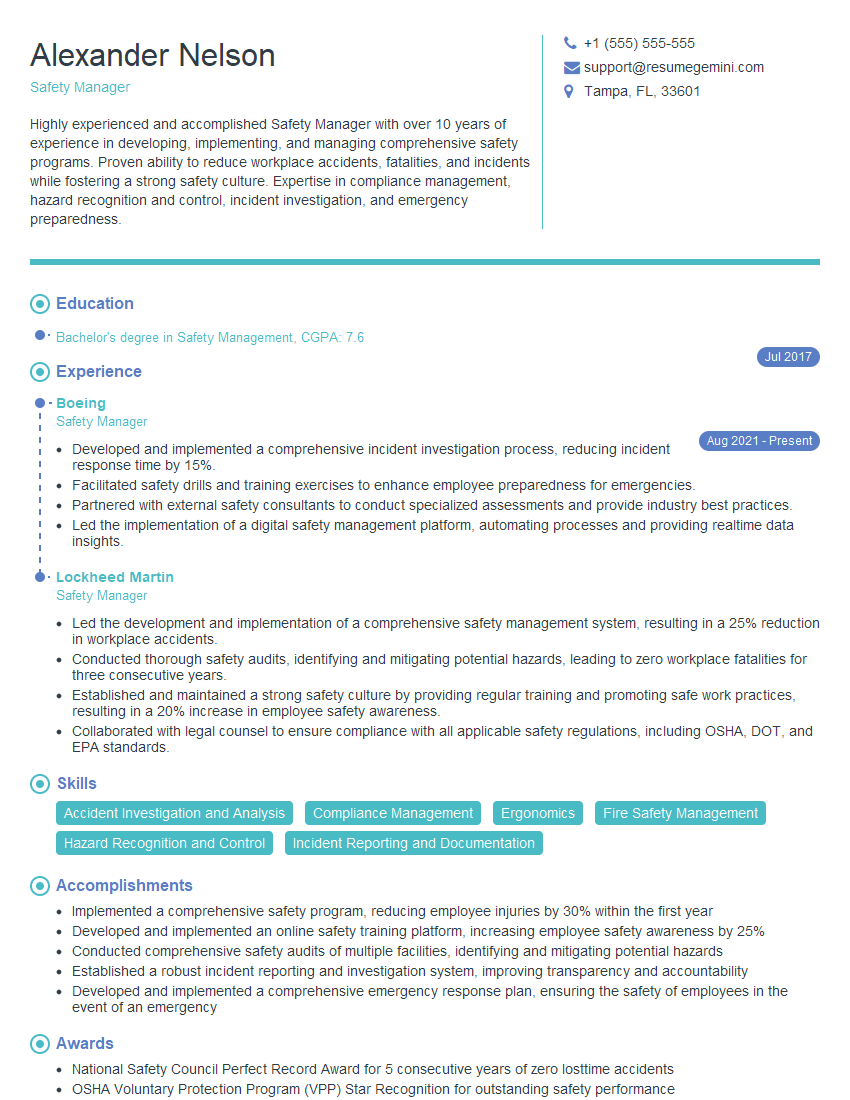
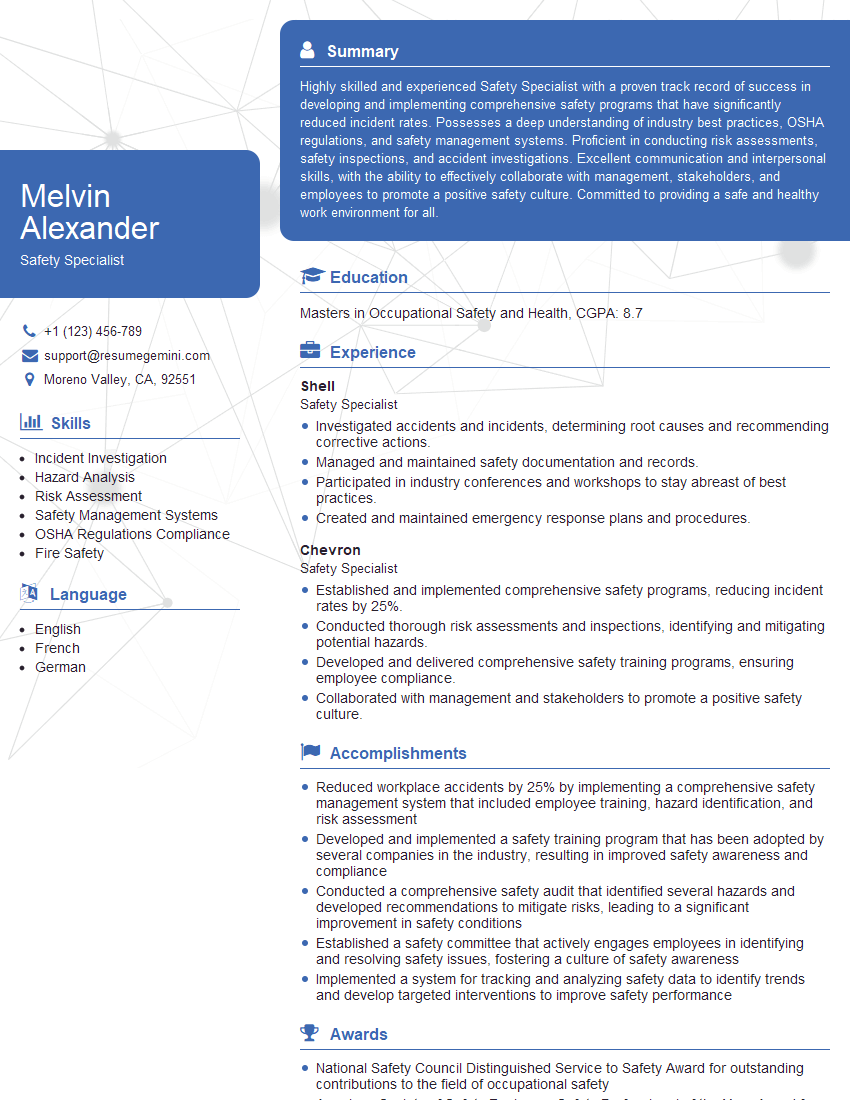
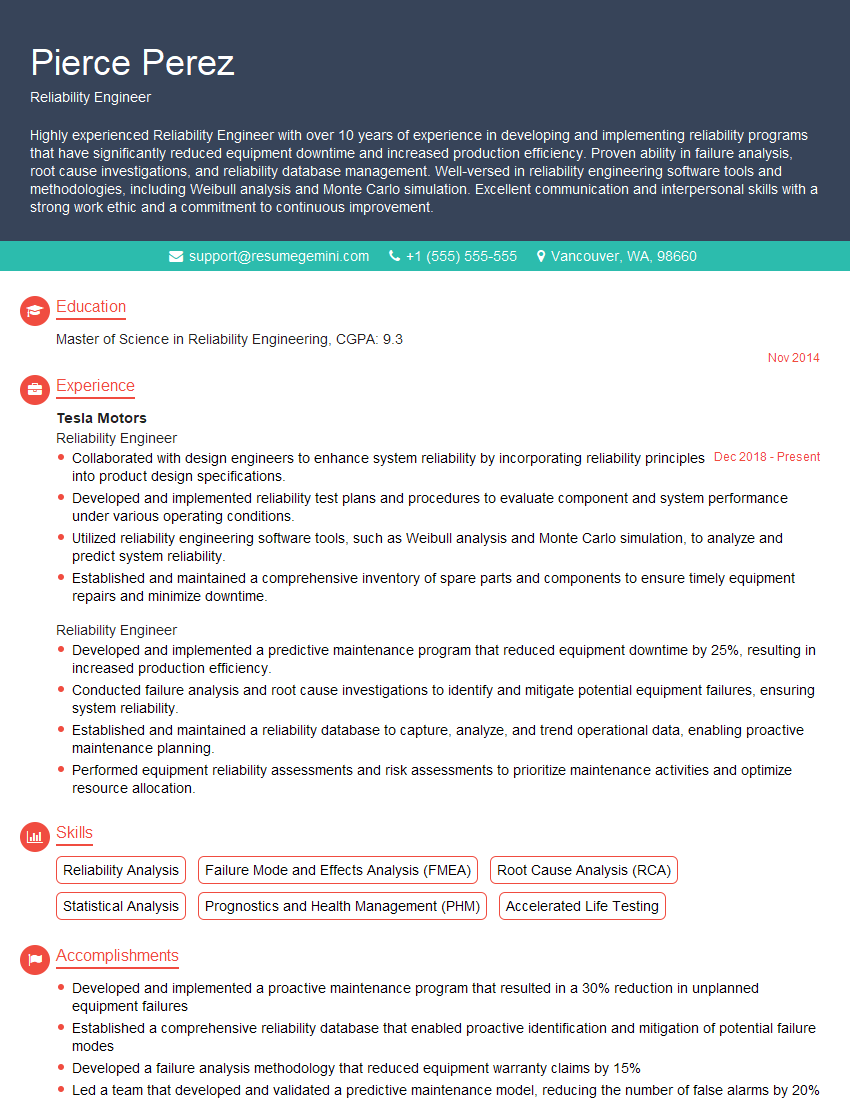
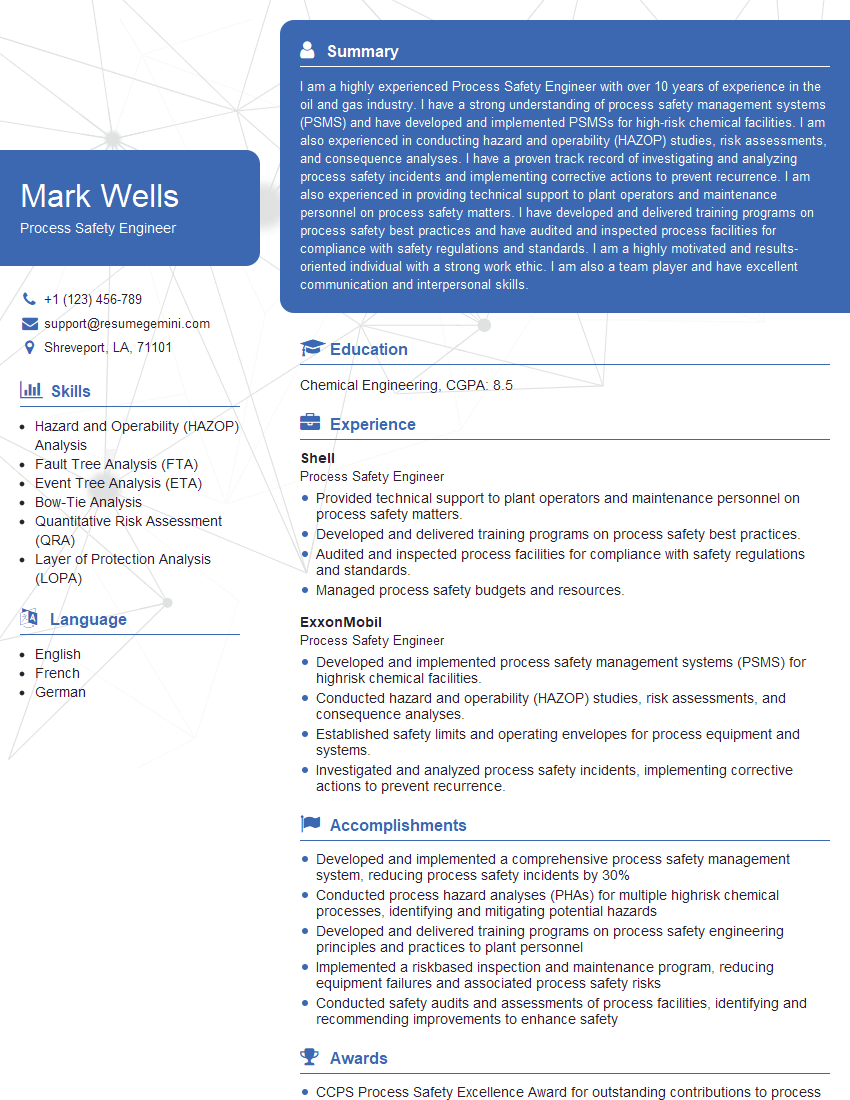
Mastering Safety Case Development is crucial for career advancement in many safety-critical industries, opening doors to leadership roles and higher earning potential. To maximize your job prospects, create an ATS-friendly resume that showcases your skills and experience effectively. ResumeGemini is a trusted resource that can help you build a professional and impactful resume. They provide examples of resumes tailored to Safety Case Development to guide you through the process. Invest time in crafting a strong resume – it’s your first impression with potential employers.
Explore more articles
Users Rating of Our Blogs
Share Your Experience
We value your feedback! Please rate our content and share your thoughts (optional).
What Readers Say About Our Blog
Attention music lovers!
Wow, All the best Sax Summer music !!!
Spotify: https://open.spotify.com/artist/6ShcdIT7rPVVaFEpgZQbUk
Apple Music: https://music.apple.com/fr/artist/jimmy-sax-black/1530501936
YouTube: https://music.youtube.com/browse/VLOLAK5uy_noClmC7abM6YpZsnySxRqt3LoalPf88No
Other Platforms and Free Downloads : https://fanlink.tv/jimmysaxblack
on google : https://www.google.com/search?q=22+AND+22+AND+22
on ChatGPT : https://chat.openai.com?q=who20jlJimmy20Black20Sax20Producer
Get back into the groove with Jimmy sax Black
Best regards,
Jimmy sax Black
www.jimmysaxblack.com
Hi I am a troller at The aquatic interview center and I suddenly went so fast in Roblox and it was gone when I reset.
Hi,
Business owners spend hours every week worrying about their website—or avoiding it because it feels overwhelming.
We’d like to take that off your plate:
$69/month. Everything handled.
Our team will:
Design a custom website—or completely overhaul your current one
Take care of hosting as an option
Handle edits and improvements—up to 60 minutes of work included every month
No setup fees, no annual commitments. Just a site that makes a strong first impression.
Find out if it’s right for you:
https://websolutionsgenius.com/awardwinningwebsites
Hello,
we currently offer a complimentary backlink and URL indexing test for search engine optimization professionals.
You can get complimentary indexing credits to test how link discovery works in practice.
No credit card is required and there is no recurring fee.
You can find details here:
https://wikipedia-backlinks.com/indexing/
Regards
NICE RESPONSE TO Q & A
hi
The aim of this message is regarding an unclaimed deposit of a deceased nationale that bears the same name as you. You are not relate to him as there are millions of people answering the names across around the world. But i will use my position to influence the release of the deposit to you for our mutual benefit.
Respond for full details and how to claim the deposit. This is 100% risk free. Send hello to my email id: lukachachibaialuka@gmail.com
Luka Chachibaialuka
Hey interviewgemini.com, just wanted to follow up on my last email.
We just launched Call the Monster, an parenting app that lets you summon friendly ‘monsters’ kids actually listen to.
We’re also running a giveaway for everyone who downloads the app. Since it’s brand new, there aren’t many users yet, which means you’ve got a much better chance of winning some great prizes.
You can check it out here: https://bit.ly/callamonsterapp
Or follow us on Instagram: https://www.instagram.com/callamonsterapp
Thanks,
Ryan
CEO – Call the Monster App
Hey interviewgemini.com, I saw your website and love your approach.
I just want this to look like spam email, but want to share something important to you. We just launched Call the Monster, a parenting app that lets you summon friendly ‘monsters’ kids actually listen to.
Parents are loving it for calming chaos before bedtime. Thought you might want to try it: https://bit.ly/callamonsterapp or just follow our fun monster lore on Instagram: https://www.instagram.com/callamonsterapp
Thanks,
Ryan
CEO – Call A Monster APP
To the interviewgemini.com Owner.
Dear interviewgemini.com Webmaster!
Hi interviewgemini.com Webmaster!
Dear interviewgemini.com Webmaster!
excellent
Hello,
We found issues with your domain’s email setup that may be sending your messages to spam or blocking them completely. InboxShield Mini shows you how to fix it in minutes — no tech skills required.
Scan your domain now for details: https://inboxshield-mini.com/
— Adam @ InboxShield Mini
support@inboxshield-mini.com
Reply STOP to unsubscribe
Hi, are you owner of interviewgemini.com? What if I told you I could help you find extra time in your schedule, reconnect with leads you didn’t even realize you missed, and bring in more “I want to work with you” conversations, without increasing your ad spend or hiring a full-time employee?
All with a flexible, budget-friendly service that could easily pay for itself. Sounds good?
Would it be nice to jump on a quick 10-minute call so I can show you exactly how we make this work?
Best,
Hapei
Marketing Director
Hey, I know you’re the owner of interviewgemini.com. I’ll be quick.
Fundraising for your business is tough and time-consuming. We make it easier by guaranteeing two private investor meetings each month, for six months. No demos, no pitch events – just direct introductions to active investors matched to your startup.
If youR17;re raising, this could help you build real momentum. Want me to send more info?
Hi, I represent an SEO company that specialises in getting you AI citations and higher rankings on Google. I’d like to offer you a 100% free SEO audit for your website. Would you be interested?
Hi, I represent an SEO company that specialises in getting you AI citations and higher rankings on Google. I’d like to offer you a 100% free SEO audit for your website. Would you be interested?