Interviews are opportunities to demonstrate your expertise, and this guide is here to help you shine. Explore the essential Scripting and Programming (e.g., Python, C++) interview questions that employers frequently ask, paired with strategies for crafting responses that set you apart from the competition.
Questions Asked in Scripting and Programming (e.g., Python, C++) Interview
Q 1. Explain the difference between `==` and `is` in Python.
In Python, == and is are both used for comparison, but they operate differently. == checks for equality in value, while is checks for equality in object identity (memory location).
Think of it like this: == asks, “Are these two things the same?” while is asks, “Are these two things the very same thing?”
Example:
list1 = [1, 2, 3]list2 = [1, 2, 3]list3 = list1print(list1 == list2) # Output: True (same value)print(list1 is list2) # Output: False (different objects)print(list1 is list3) # Output: True (same object)Because list1 and list2 are distinct lists with the same values, == returns True. However, is returns False because they reside at different memory addresses. list3, being an alias for list1, shares the same memory location, hence is returns True.
In essence, use == when you care about whether two things have the same content and is when you need to know if two variables point to the exact same object in memory. This is crucial for managing resources and understanding object behavior, especially in scenarios involving mutable objects and complex data structures.
Q 2. What are the benefits of using Python’s list comprehension?
Python’s list comprehension provides a concise way to create lists. It improves code readability and often leads to more efficient execution compared to traditional for loops. The primary benefits include:
- Conciseness: List comprehensions significantly reduce the amount of code required to generate lists.
- Readability: The compact syntax makes the code easier to understand and follow, particularly when dealing with complex list manipulations.
- Efficiency: In many cases, list comprehensions are faster than equivalent
forloops because they are optimized internally.
Example:
Let’s say you want to create a list of squares from 1 to 10. Using a for loop:
squares = []for i in range(1, 11): squares.append(i**2)print(squares)Using list comprehension:
squares = [i**2 for i in range(1, 11)]print(squares)The list comprehension accomplishes the same task with fewer lines of code and is generally more efficient. In professional settings, this leads to cleaner, maintainable code and potentially faster execution times, especially when handling large datasets.
Q 3. Describe polymorphism in C++ with examples.
Polymorphism in C++ allows objects of different classes to be treated as objects of a common type. This is achieved through inheritance and virtual functions. It enables writing flexible and extensible code where the specific behavior is determined at runtime.
Example:
#include class Shape {public: virtual void draw() { std::cout << "Drawing a generic shape" << std::endl; }};class Circle : public Shape {public: void draw() override { std::cout << "Drawing a circle" << std::endl; }};class Square : public Shape {public: void draw() override { std::cout << "Drawing a square" << std::endl; }};int main() { Shape* shape1 = new Circle(); Shape* shape2 = new Square(); shape1->draw(); // Output: Drawing a circle shape2->draw(); // Output: Drawing a square delete shape1; delete shape2; return 0;} Here, Shape is a base class, and Circle and Square are derived classes. The draw() function is a virtual function, allowing different classes to provide their own implementations. A Shape pointer can point to either a Circle or a Square object, and the correct draw() function will be called at runtime—this is polymorphism in action. This is incredibly useful in scenarios where you might have a collection of objects of various types, and you need to perform the same operation (like drawing) on all of them without knowing their exact type beforehand.
Q 4. What are virtual functions and why are they used?
In C++, a virtual function is a member function that you declare using the virtual keyword in the base class. Its purpose is to enable polymorphism. When a virtual function is called through a pointer or reference to a base class object, the actual function executed is determined at runtime based on the object’s dynamic type (the type of the object it actually points to).
Why are they used?
- Runtime Polymorphism: Virtual functions are the key mechanism for achieving runtime polymorphism. This means the correct function to call is decided at runtime, making the code more flexible and adaptable.
- Extensibility: You can add new derived classes with their own implementations of the virtual function without modifying the base class or other derived classes. This promotes code reusability and maintainability.
- Abstract Base Classes: Virtual functions are essential for defining abstract base classes, which provide a blueprint for derived classes and cannot be instantiated directly.
Example: The example in the previous question on Polymorphism illustrates the use of virtual functions.
Q 5. Explain the concept of inheritance in object-oriented programming.
Inheritance in object-oriented programming is a mechanism that allows you to create new classes (derived classes or subclasses) based on existing classes (base classes or superclasses). The derived class inherits the attributes (data members) and behaviors (member functions) of the base class and can extend or modify them.
Benefits of Inheritance:
- Code Reusability: Avoid redundant code by reusing the base class’s functionality in derived classes.
- Extensibility: Easily add new functionality by creating derived classes without altering existing code.
- Hierarchical Organization: Creates a clear hierarchical structure in your code, which improves organization and maintainability.
- Polymorphism: Enables polymorphic behavior through virtual functions and allows for consistent interaction with objects of various types.
Example (Conceptual):
Imagine a Vehicle base class with attributes like speed and color, and a method move(). You could then create derived classes like Car and Motorcycle inheriting these attributes and methods. Car might add attributes like numberOfDoors, and Motorcycle might add hasSidecar. Both would inherit and potentially override the move() method to reflect their specific movement characteristics. This prevents code duplication and creates a well-structured representation of the real-world relationship between vehicles.
Q 6. How do you handle exceptions in Python?
Python uses the try...except block to handle exceptions. This allows you to gracefully manage errors without causing your program to crash.
Basic Structure:
try: # Code that might raise an exception result = 10 / 0except ZeroDivisionError: # Handle the specific exception print("Error: Division by zero")except Exception as e: # Handle any other exception print(f"An error occurred: {e}")else: # Code to execute if no exception occurs print(f"Result: {result}")finally: # Code that always executes (cleanup actions) print("This always runs")Explanation:
tryblock: Contains the code that might raise an exception.exceptblock: Specifies the type of exception to catch and the code to execute if that exception occurs. You can have multipleexceptblocks to handle different types of exceptions.elseblock (optional): Executes if no exceptions occur in thetryblock.finallyblock (optional): Always executes, regardless of whether an exception occurred, typically used for cleanup tasks (like closing files or releasing resources).
Proper exception handling is crucial for creating robust and reliable Python applications. It helps prevent unexpected program termination and provides a mechanism to gracefully recover from errors or provide informative messages to the user.
Q 7. What are smart pointers in C++ and how do they prevent memory leaks?
Smart pointers in C++ are classes that act like pointers but offer automatic memory management, preventing memory leaks and dangling pointers. They are crucial for writing safe and efficient C++ code.
Common Types:
unique_ptr: Exclusive ownership. Only oneunique_ptrcan point to a given object at any time. When theunique_ptrgoes out of scope, the object is automatically deleted.shared_ptr: Shared ownership. Multipleshared_ptrobjects can point to the same object. The object is deleted only when the lastshared_ptrpointing to it goes out of scope. It uses reference counting to track the number of pointers.weak_ptr: Weak reference. Does not participate in reference counting. Used to observe an object managed by ashared_ptrwithout extending its lifetime. It helps break circular dependencies and avoid memory leaks that can arise in complex object relationships.
How they prevent memory leaks:
Smart pointers automatically release the memory allocated for an object when it is no longer needed, eliminating the need for manual delete calls. This prevents memory leaks, a common problem in C++ where memory allocated dynamically is not freed, leading to memory exhaustion over time. Forgetting to delete manually is a frequent source of errors that smart pointers resolve elegantly.
Example:
#include int main() { std::unique_ptr ptr = std::make_unique(10); // ptr will automatically delete the int when it goes out of scope} In this example, the integer allocated on the heap will be freed automatically when ptr goes out of scope because of the unique_ptr smart pointer, preventing a memory leak.
Q 8. Describe different types of memory allocation in C++.
C++ offers several ways to allocate memory, each with its own characteristics and trade-offs. The primary methods are static, automatic, and dynamic allocation.
- Static Allocation: Memory is allocated at compile time. The size is fixed and determined before the program runs. This is done for global variables and static variables within functions. It’s simple and efficient, but inflexible in terms of size. Example:
int myArray[10]; - Automatic Allocation (Stack Allocation): Memory is allocated on the stack when a function is called and automatically deallocated when the function returns. Local variables are typically allocated this way. This method is fast and automatic memory management is handled by the compiler. However, stack memory is limited in size. Example:
int myVariable; - Dynamic Allocation (Heap Allocation): Memory is allocated during runtime using operators
newandnew[](for arrays) and deallocated usingdeleteanddelete[]respectively. This offers flexibility in managing memory size and lifespan, but requires manual memory management. Failure to deallocate leads to memory leaks. Example:int *dynamicArray = new int[10]; delete[] dynamicArray;
Choosing the right allocation method depends on your needs. If you know the size beforehand and it’s relatively small, static or automatic allocation is preferred for simplicity and performance. For dynamic data structures or when the size isn’t known in advance, dynamic allocation is necessary.
Q 9. What is the difference between a stack and a heap?
The stack and heap are distinct memory regions in a C++ program used for different purposes. Think of the stack as a neatly organized stack of plates; you add and remove plates from the top. The heap is more like a big storage room where you can place items anywhere and retrieve them as needed, but you need to manage their placement and removal yourself.
- Stack: Follows LIFO (Last-In, First-Out). Used for storing function call frames (local variables, function parameters, return address). Memory allocation and deallocation are automatic and fast. It’s limited in size.
- Heap: Used for dynamic memory allocation. Memory is allocated using
newand deallocated usingdelete. Memory management is manual, offering flexibility but requiring careful handling to avoid memory leaks or dangling pointers. It’s much larger than the stack.
In essence, the stack is for temporary, short-lived data, while the heap is for data whose lifetime extends beyond the scope of a single function.
Q 10. Explain the concept of garbage collection in Python.
Python employs garbage collection to automatically manage memory. Unlike C++, where you explicitly allocate and deallocate memory using new and delete, Python’s garbage collector automatically reclaims memory that’s no longer being used. This helps prevent memory leaks and simplifies memory management.
Python predominantly uses a cycle-detecting garbage collector based on reference counting. Each object keeps track of how many other objects refer to it. When the reference count drops to zero, meaning no other object is using it, the object’s memory is freed. To handle circular references (where two or more objects refer to each other, even if not accessible from elsewhere), Python employs a cycle detection algorithm that periodically identifies and removes these circularly linked objects.
The garbage collector runs in the background, periodically checking for unreferenced objects. It’s typically a non-deterministic process, meaning it doesn’t run on a fixed schedule, but is triggered by various events such as low memory conditions or when memory allocation requests cannot be fulfilled. This makes memory management in Python more robust and less error-prone, especially for developers less experienced in manual memory management.
Q 11. How do you implement a linked list in C++?
A linked list is a linear data structure where each element (node) points to the next element in the sequence. Unlike arrays, linked lists don’t store elements contiguously in memory; they can grow or shrink dynamically.
Here’s a simple singly linked list implementation in C++:
#include

struct Node {
    int data;
    Node *next;
};

void insert(Node **head, int newData) {
    Node *newNode = new Node;
    newNode->data = newData;
    newNode->next = *head;
    *head = newNode;
}

void printList(Node *node) {
    while (node != nullptr) {
        std::cout << node->data << " ";
        node = node->next;
    }
    std::cout << std::endl;
}

int main() {
    Node *head = nullptr;
    insert(&head, 1);
    insert(&head, 2);
    insert(&head, 3);
    printList(head);
    return 0;
}
This example demonstrates a singly linked list (each node points only to the next). You can also implement doubly linked lists (each node points to both the next and previous nodes), which allow traversal in both directions.
Q 12. What are different searching and sorting algorithms and their time complexities?
Searching and sorting algorithms are fundamental to computer science. Their efficiency is often measured by time complexity (Big O notation), indicating how the runtime grows with the input size.
- Searching Algorithms:
- Linear Search: Checks each element sequentially. Time complexity: O(n).
- Binary Search: Works on sorted data; repeatedly divides the search interval in half. Time complexity: O(log n).
- Sorting Algorithms:
- Bubble Sort: Repeatedly steps through the list, compares adjacent elements, and swaps them if they are in the wrong order. Time complexity: O(n^2).
- Insertion Sort: Builds the final sorted array one item at a time. Time complexity: O(n^2).
- Merge Sort: A divide-and-conquer algorithm that recursively divides the list into smaller sublists until each sublist contains only one element, then repeatedly merges the sublists to produce new sorted sublists until there is only one sorted list remaining. Time complexity: O(n log n).
- Quick Sort: Another divide-and-conquer algorithm; it selects a 'pivot' element and partitions the other elements into two sub-arrays, according to whether they are less than or greater than the pivot. The sub-arrays are then recursively sorted. Average time complexity: O(n log n), worst-case: O(n^2).
The choice of algorithm depends on the data size, whether the data is already sorted, and memory constraints. For large datasets, O(n log n) algorithms like merge sort and quick sort are generally preferred for their efficiency.
Q 13. Explain the difference between pass-by-value and pass-by-reference.
Pass-by-value and pass-by-reference are two ways of passing arguments to functions. They impact how changes made inside the function affect the original variables.
- Pass-by-value: A copy of the argument's value is passed to the function. Changes made to the parameter inside the function do not affect the original variable. Example (C++):
void modify(int x) { x = 10; } int main() { int a = 5; modify(a); std::cout << a; // Output: 5 } - Pass-by-reference: The function receives a reference (or pointer) to the original variable. Changes made to the parameter directly affect the original variable. Example (C++):
void modify(int& x) { x = 10; } int main() { int a = 5; modify(a); std::cout << a; // Output: 10 }
Pass-by-value is safer as it protects the original variable from unintended modifications, but it can be less efficient for large data structures due to the overhead of copying. Pass-by-reference is more efficient for large data structures but requires careful handling to avoid unintended side effects.
Q 14. What are design patterns and give examples of common ones.
Design patterns are reusable solutions to commonly occurring problems in software design. They provide a vocabulary and framework for communicating design choices and promoting code reusability and maintainability.
- Singleton Pattern: Ensures that a class has only one instance and provides a global point of access to it. Example: A database connection manager or a logger.
- Factory Pattern: Defines an interface for creating objects, but lets subclasses decide which class to instantiate. Useful when you have multiple related classes and want to defer the creation of specific objects to subclasses. Example: Creating different types of buttons in a GUI.
- Observer Pattern: Defines a one-to-many dependency between objects. When one object changes state, all its dependents are notified and updated automatically. Example: Event handling systems, where GUI elements update when underlying data changes.
- Strategy Pattern: Defines a family of algorithms, encapsulates each one, and makes them interchangeable. Useful when you have multiple algorithms that perform the same task but differ in their implementation. Example: Different sorting algorithms.
Design patterns are not rigid templates; they are adaptable guidelines to be applied according to the specific context of your project. Using appropriate patterns improves code organization, flexibility, and readability, ultimately leading to better software.
Q 15. Explain the concept of dynamic programming.
Dynamic programming is a powerful algorithmic technique used to solve optimization problems by breaking them down into smaller, overlapping subproblems, solving each subproblem only once, and storing their solutions to avoid redundant computations. Think of it like building a complex structure with prefabricated parts – you build each part only once and then reuse it as needed. This significantly improves efficiency compared to naive recursive approaches that might recalculate the same subproblems repeatedly.
How it works: Dynamic programming typically involves two key approaches:
- Top-down (memoization): Starts with the main problem and recursively breaks it down into smaller subproblems. Solutions to subproblems are stored in a cache (often a dictionary or array) to avoid recalculation.
- Bottom-up (tabulation): Starts with the smallest subproblems and iteratively builds solutions to larger problems using the previously computed solutions. Solutions are usually stored in a table (array or matrix).
Example: Consider the Fibonacci sequence. A naive recursive approach is slow because it recalculates many values multiple times. A dynamic programming solution (using tabulation) would look like this:
def fibonacci_dp(n):
  fib = [0, 1]
  for i in range(2, n + 1):
    fib.append(fib[i-1] + fib[i-2])
  return fib[n]

print(fibonacci_dp(10))  # Output: 55
Real-world applications: Dynamic programming is used extensively in various fields, including Bioinformatics (sequence alignment), Operations Research (shortest path algorithms), Computer Graphics (optimal path finding), and Finance (portfolio optimization).
Career Expert Tips:
- Ace those interviews! Prepare effectively by reviewing the Top 50 Most Common Interview Questions on ResumeGemini.
- Navigate your job search with confidence! Explore a wide range of Career Tips on ResumeGemini. Learn about common challenges and recommendations to overcome them.
- Craft the perfect resume! Master the Art of Resume Writing with ResumeGemini's guide. Showcase your unique qualifications and achievements effectively.
- Don't miss out on holiday savings! Build your dream resume with ResumeGemini's ATS optimized templates.
Q 16. How would you optimize a slow-running Python script?
Optimizing a slow-running Python script involves a multi-pronged approach focusing on identifying bottlenecks and applying appropriate techniques. Profiling is crucial to pinpoint the performance-critical sections of your code.
- Profiling: Use tools like
cProfileor external profilers to identify which functions or lines of code consume the most time. This provides concrete data to guide optimization efforts. - Algorithm optimization: The most impactful improvements often come from choosing more efficient algorithms. For instance, replacing a nested loop with a more efficient data structure or algorithm can drastically reduce runtime.
- Data structure selection: Choosing the right data structure is crucial. Dictionaries (for fast lookups), sets (for membership testing), and appropriate list/array structures can significantly impact performance. Avoid unnecessary list comprehensions when simple loops perform better.
- Code optimization: Examine loops for unnecessary iterations or computations. Use generators or iterators for large datasets to avoid loading everything into memory at once. Utilize built-in functions (often written in C) whenever possible as they are generally faster than equivalent Python code.
- Library optimization: If your script uses external libraries, explore optimized versions or alternatives. NumPy, for example, provides highly optimized numerical computation.
- Multiprocessing/Multithreading: For CPU-bound tasks, consider multiprocessing to leverage multiple CPU cores. Multithreading can be useful for I/O-bound operations but be aware of the Global Interpreter Lock (GIL) limitations in CPython.
- Asynchronous programming: For I/O-bound tasks (network requests, file I/O), asynchronous programming with
asynciocan significantly improve responsiveness.
Example: Imagine a script processing a large list. Replacing a nested loop that iterates through the list multiple times with a single pass using a dictionary or using NumPy arrays will drastically improve speed.
Q 17. How would you debug a segmentation fault in C++?
Debugging segmentation faults in C++ requires a systematic approach. A segmentation fault occurs when your program tries to access memory it doesn't have permission to access (e.g., writing beyond the bounds of an array, dereferencing a null pointer, using freed memory).
- Use a Debugger (GDB): GDB (GNU Debugger) is an indispensable tool. You can set breakpoints, step through your code line by line, examine variables, and inspect the call stack to pinpoint the exact location of the fault.
- Compile with Debug Symbols: Ensure that you compile your code with debugging symbols (-g flag with g++). This provides GDB with essential information for effective debugging.
- Memory Inspection Tools: Tools like Valgrind (or AddressSanitizer, ASan) can help detect memory leaks and other memory-related errors. Valgrind is particularly helpful in identifying memory access violations.
- Examine the Stack Trace: GDB provides a stack trace showing the function calls leading up to the segmentation fault. This helps trace the execution path and identify the problematic code section.
- Check for Array Bounds: Carefully review array accesses to ensure you don't try to read or write beyond the allocated size. Use bounds checking techniques when possible.
- Null Pointer Checks: Always check for null pointers before dereferencing them. This prevents accessing invalid memory locations.
- Memory Leaks: Although not directly causing segmentation faults, memory leaks can lead to instability and eventually crashes, often indirectly contributing to segmentation faults. Identify and fix memory leaks using tools like Valgrind.
Example GDB usage: After a segmentation fault, running gdb myprogram core (where core is the core dump file) will load the program into GDB. Commands like backtrace (to show the stack trace), where (similar to backtrace), and print variable_name (to inspect variables) are essential.
Q 18. Explain the use of templates in C++.
C++ templates allow you to write generic code that can work with different data types without being explicitly written for each type. They achieve this through code generation at compile time; the compiler creates a specific version of the template function or class for each data type used.
How they work: Templates use placeholders (often denoted by T) that represent the type. The compiler substitutes the placeholder with the actual data type when the template is instantiated. This avoids code duplication and promotes code reusability.
Example: A simple template function to find the maximum of two values:
template <typename T>
T max(T a, T b) {
  return (a > b) ? a : b;
}

int main() {
  int x = 10, y = 20;
  double p = 3.14, q = 2.71;
  std::cout << max(x, y) << std::endl; // Output: 20
  std::cout << max(p, q) << std::endl; // Output: 3.14
  return 0;
}
Class Templates: Templates can also be used with classes. This allows you to create generic classes that operate on different data types.
Advantages:
- Code Reusability: Write code once, use it with many data types.
- Type Safety: The compiler enforces type checking at compile time.
- Efficiency: No runtime overhead for type checking.
Real-world applications: Standard Template Library (STL) containers like std::vector, std::list, and std::map are all built using C++ templates.
Q 19. Describe different data structures and their applications.
Data structures are ways of organizing and storing data in a computer so that it can be used efficiently. The choice of data structure depends heavily on the specific needs of the application. Common data structures include:
- Arrays: A contiguous block of memory storing elements of the same data type. Excellent for fast random access (accessing an element by its index), but resizing can be expensive.
- Linked Lists: Elements are stored in nodes, each node pointing to the next. Efficient for insertions and deletions, but random access is slow.
- Stacks: Follow the LIFO (Last-In, First-Out) principle. Useful for function calls, undo/redo operations, and expression evaluation.
- Queues: Follow the FIFO (First-In, First-Out) principle. Used in managing tasks, buffering data, and implementing breadth-first search.
- Trees: Hierarchical data structures. Binary trees, binary search trees (BSTs), and AVL trees (self-balancing BSTs) are common examples. Used in searching, sorting, and representing hierarchical data.
- Graphs: Collections of nodes (vertices) connected by edges. Used to represent networks, relationships, and dependencies.
- Hash Tables (Dictionaries): Use a hash function to map keys to indices in an array for fast lookups, insertions, and deletions. Average-case O(1) time complexity for these operations.
- Heaps: A specialized tree-based data structure satisfying the heap property (parent nodes are greater/less than children). Used in priority queues and heapsort.
Applications:
- Arrays: Storing and accessing lists of data, image processing.
- Linked Lists: Implementing undo/redo functionality, managing dynamic memory.
- Stacks: Function call management, expression evaluation.
- Queues: Task scheduling, buffering, breadth-first search.
- Trees: Representing hierarchical data, searching, sorting.
- Graphs: Social networks, route planning, network analysis.
- Hash Tables: Databases, symbol tables, caches.
- Heaps: Priority queues, heapsort.
Q 20. What are the differences between Python 2 and Python 3?
Python 2 and Python 3 are distinct versions of the Python programming language with significant differences. Python 2 is officially deprecated and no longer receives security updates, while Python 3 is the current, actively maintained version.
- Print Function: In Python 2,
printis a statement; in Python 3, it's a function (print()). - Integer Division: Python 2's integer division truncates the result; Python 3 returns a float.
- Unicode Handling: Python 3 uses Unicode by default, simplifying handling of text data from various languages; Python 2 requires explicit Unicode declarations.
- Library Differences: Some libraries and modules have different interfaces or are unavailable in Python 2.
- Exception Handling: The syntax for exception handling has minor changes.
- `xrange` vs. `range`:` xrange` in Python 2 is equivalent to `range` in Python 3. `range` in Python 2 creates a list, while in Python 3, it creates an iterator, generally more memory-efficient.
Example:
 # Python 2
print 10 / 3  # Output: 3

# Python 3
print(10 / 3)  # Output: 3.3333333333333335
Migrating from Python 2 to Python 3 often requires code adjustments. The official Python documentation provides comprehensive guides for this process.
Q 21. What is the difference between a class and an object?
In object-oriented programming, a class is a blueprint or template for creating objects. It defines the attributes (data) and methods (functions) that objects of that class will have. An object is an instance of a class; it's a concrete realization of the class's blueprint. Think of a class as a cookie cutter and objects as the cookies it creates.
Example: Let's say we have a class named Dog:
class Dog:
    def __init__(self, name, breed):
        self.name = name
        self.breed = breed

    def bark(self):
        print('Woof!')

dog1 = Dog('Buddy', 'Golden Retriever') # dog1 is an object of the Dog class
dog2 = Dog('Lucy', 'Labrador') # dog2 is another object of the Dog class

dog1.bark() # Output: Woof!
In this example, Dog is the class. dog1 and dog2 are objects (instances) of the Dog class. Each object has its own name and breed attributes.
Q 22. Explain the concept of encapsulation and abstraction.
Encapsulation and abstraction are fundamental concepts in object-oriented programming (OOP) that promote code organization, maintainability, and reusability. Think of them as ways to hide complexity and manage information effectively.
Encapsulation bundles data (variables) and methods (functions) that operate on that data within a single unit, often a class. This protects the data from accidental or unauthorized access. It's like a capsule containing everything needed – you interact with the capsule, not its internal components directly.
Abstraction simplifies complex systems by showing only essential information and hiding unnecessary details. It's like a high-level view of a car – you know how to drive it, but you don't need to understand the intricate workings of the engine.
Example (Python):
class Dog:
    def __init__(self, name, breed):
        self._name = name  # Encapsulated data using a protected attribute
        self._breed = breed
    def bark(self):
        print("Woof!")  # Method operating on the encapsulated data
    def get_name(self): # Accessor method
        return self._name
In this example, _name and _breed are encapsulated; you access them through methods like get_name(), preventing direct modification and ensuring data integrity. The Dog class is an abstraction; it represents the essential characteristics of a dog without revealing internal details of how barking works.
Q 23. How do you handle concurrency in Python?
Python offers several ways to handle concurrency, which is the ability to execute multiple tasks seemingly at the same time. This is different from parallelism, where tasks actually run simultaneously on multiple cores. Concurrency is primarily managed using threads and asynchronous programming.
Threads: The threading module provides a way to create and manage threads. Each thread shares the same memory space, which makes communication efficient but requires careful synchronization to avoid race conditions (where multiple threads modify shared data simultaneously).
import threading
import time
def my_task(name):
    print(f"Thread {name}: starting")
    time.sleep(2)
    print(f"Thread {name}: finishing")
threads = []
for i in range(3):
    thread = threading.Thread(target=my_task, args=(i,))
    threads.append(thread)
    thread.start()
for thread in threads:
    thread.join()
Asynchronous Programming: The asyncio library enables asynchronous operations using async and await keywords. This is particularly useful for I/O-bound tasks (like network requests) where threads might spend significant time waiting. Asynchronous programming allows multiple I/O operations to overlap, improving efficiency.
import asyncio
async def fetch_data(url):
    # Simulate network request
    await asyncio.sleep(1)
    print(f"Fetched data from {url}")
async def main():
    await asyncio.gather(fetch_data("url1"), fetch_data("url2"))
asyncio.run(main())
Choosing between threads and asynchronous programming depends on the nature of the tasks. For CPU-bound tasks, threads offer little benefit; asynchronous programming is better for I/O-bound tasks.
Q 24. What are threads and processes in C++?
In C++, threads and processes are mechanisms for concurrency, but they differ significantly in how they manage resources and interact.
Processes: A process is an independent execution environment with its own memory space, resources, and address space. Processes are relatively heavyweight; creating and managing them involves more overhead. Inter-process communication (IPC) requires explicit mechanisms like pipes or shared memory.
Threads: Threads are lightweight units of execution within a process. Multiple threads within the same process share the same memory space, making communication much faster and easier. However, this shared memory requires careful synchronization to avoid race conditions. Threads are typically managed using the
Example (Conceptual): Imagine a restaurant. A process is like an entire restaurant, with its own kitchen, staff, and customers. Threads are like individual chefs or waiters working within the same restaurant, sharing resources (ingredients, tables).
Choosing between processes and threads: Processes are ideal for isolation and robustness, while threads are preferred for performance and shared-resource access when proper synchronization mechanisms are implemented.
Q 25. How do you use Git for version control?
Git is a distributed version control system (DVCS) that tracks changes to files over time, allowing collaboration and efficient management of code projects. Here's a basic workflow:
- Initialization:
git initcreates a new Git repository in the current directory. - Staging:
git add .adds all changes to the staging area.git addadds specific files. - Committing:
git commit -m "Your commit message"saves a snapshot of the changes in the staging area. - Branching:
git branchcreates a new branch.git checkoutswitches to a branch. Branching allows parallel development without affecting the main codebase. - Merging:
git mergemerges changes from one branch into another. - Remote Repositories:
git remote add originconnects to a remote repository (e.g., GitHub, GitLab).git push originuploads local commits to the remote. - Pulling:
git pull origindownloads changes from the remote repository. - Handling Conflicts: Git automatically merges changes most of the time. When conflicts arise, Git marks them in the files, and you need to resolve them manually and then stage and commit the resolved files.
Beyond these basics, Git offers powerful features like rebasing, cherry-picking, and advanced merging strategies. Using a graphical user interface (GUI) for Git can simplify many of these tasks.
Q 26. Explain the SOLID principles of object-oriented design.
The SOLID principles are five design principles intended to make software designs more understandable, flexible, and maintainable. They are especially valuable in object-oriented programming.
- Single Responsibility Principle (SRP): A class should have only one reason to change. Each class should have a single, well-defined responsibility.
- Open/Closed Principle (OCP): Software entities (classes, modules, functions, etc.) should be open for extension, but closed for modification. New functionality should be added without altering existing code.
- Liskov Substitution Principle (LSP): Subtypes should be substitutable for their base types without altering the correctness of the program. Derived classes should behave as expected when used in place of their parent class.
- Interface Segregation Principle (ISP): Clients should not be forced to depend upon interfaces they don’t use. Large interfaces should be broken down into smaller, more specific ones.
- Dependency Inversion Principle (DIP): High-level modules should not depend on low-level modules. Both should depend on abstractions. Abstractions should not depend on details. Details should depend on abstractions. This promotes loose coupling and better design.
Following these principles leads to more robust, maintainable, and testable code. They are guidelines rather than strict rules, and the level of strictness depends on the project's context and complexity.
Q 27. What is RESTful API and how does it work?
A RESTful API (Representational State Transfer Application Programming Interface) is a set of architectural constraints for designing networked applications. It uses HTTP methods (GET, POST, PUT, DELETE) to interact with resources identified by URLs. Each HTTP method corresponds to a specific action on the resource.
- GET: Retrieves a resource.
- POST: Creates a new resource.
- PUT: Updates an existing resource.
- DELETE: Deletes a resource.
How it works: A client (e.g., a web browser or mobile app) sends an HTTP request to a server specifying the resource and the desired action. The server processes the request, performs the action (e.g., retrieving data from a database), and sends back a response containing the result. The response typically includes a status code indicating success or failure and the resource representation (e.g., in JSON or XML format).
Example: A social media API might have a resource for users. A GET request to /users/123 would retrieve the details of user with ID 123. A POST request to /users with user data would create a new user.
RESTful APIs are widely used for building web services due to their simplicity, scalability, and stateless nature. The stateless nature means each request is independent, simplifying server design and load balancing.
Q 28. Describe your experience with a specific programming project.
In a previous role, I developed a Python-based data processing pipeline for a large e-commerce company. The pipeline processed millions of daily sales transactions, performing tasks such as data cleaning, transformation, and aggregation. The challenge was to process this enormous volume of data efficiently and reliably within a reasonable time frame.
I designed the pipeline using a modular approach, breaking it down into independent components responsible for specific tasks (data ingestion, cleaning, transformation, aggregation, and storage). This allowed for parallel processing, significantly speeding up the overall process. We leveraged Apache Kafka for distributing the data streams and utilized multiprocessing to perform parallel computations.
For data cleaning, I implemented custom validation rules and employed techniques such as outlier detection and data imputation. Data transformation involved converting data types, handling missing values, and normalizing data. Aggregation involved calculating key metrics like total sales, average order value, and sales by product category. We used a distributed database (Cassandra) to manage the high volume of processed data.
Through rigorous testing and performance monitoring, we achieved a significant reduction in processing time and improved data quality. The pipeline's modular design made it easier to maintain and adapt to changing business requirements. We used Git for version control and implemented continuous integration and continuous delivery (CI/CD) to ensure a smooth deployment process.
Key Topics to Learn for Scripting and Programming (e.g., Python, C++) Interviews
- Data Structures and Algorithms: Understanding fundamental data structures like arrays, linked lists, trees, and graphs, and mastering common algorithms (searching, sorting, graph traversal) is crucial for solving coding challenges efficiently.
- Object-Oriented Programming (OOP) Principles: Grasping concepts like encapsulation, inheritance, polymorphism, and abstraction is vital, especially for C++ interviews. Be prepared to discuss their practical application in designing robust and maintainable code.
- Memory Management: For C++, demonstrate a clear understanding of memory allocation (heap vs. stack), pointers, dynamic memory allocation, and memory leaks. Python's garbage collection should also be understood conceptually.
- Software Design Patterns: Familiarity with common design patterns (e.g., Singleton, Factory, Observer) shows your ability to write structured, reusable, and scalable code. Be ready to discuss the pros and cons of various patterns.
- Problem-Solving and Debugging Skills: Interviewers assess your ability to break down complex problems into smaller, manageable parts. Practice approaching problems systematically and demonstrate your debugging skills through examples.
- Version Control (Git): Understanding Git commands (clone, commit, push, pull, branch) and the collaborative workflow is essential in any software development role.
- Specific Language Features (Python/C++): Deep dive into the specifics of your chosen language. For Python, focus on libraries like NumPy and Pandas (if relevant). For C++, master standard template library (STL) containers and algorithms.
- Databases (SQL/NoSQL): Basic understanding of database concepts and querying is beneficial, especially if the role involves data manipulation.
Next Steps
Mastering scripting and programming languages like Python and C++ significantly boosts your career prospects in the tech industry, opening doors to diverse and exciting roles. To maximize your chances, crafting a strong, ATS-friendly resume is paramount. ResumeGemini is a trusted resource to help you build a professional and impactful resume that highlights your skills and experience effectively. Examples of resumes tailored to Scripting and Programming (e.g., Python, C++) roles are available to help you get started.
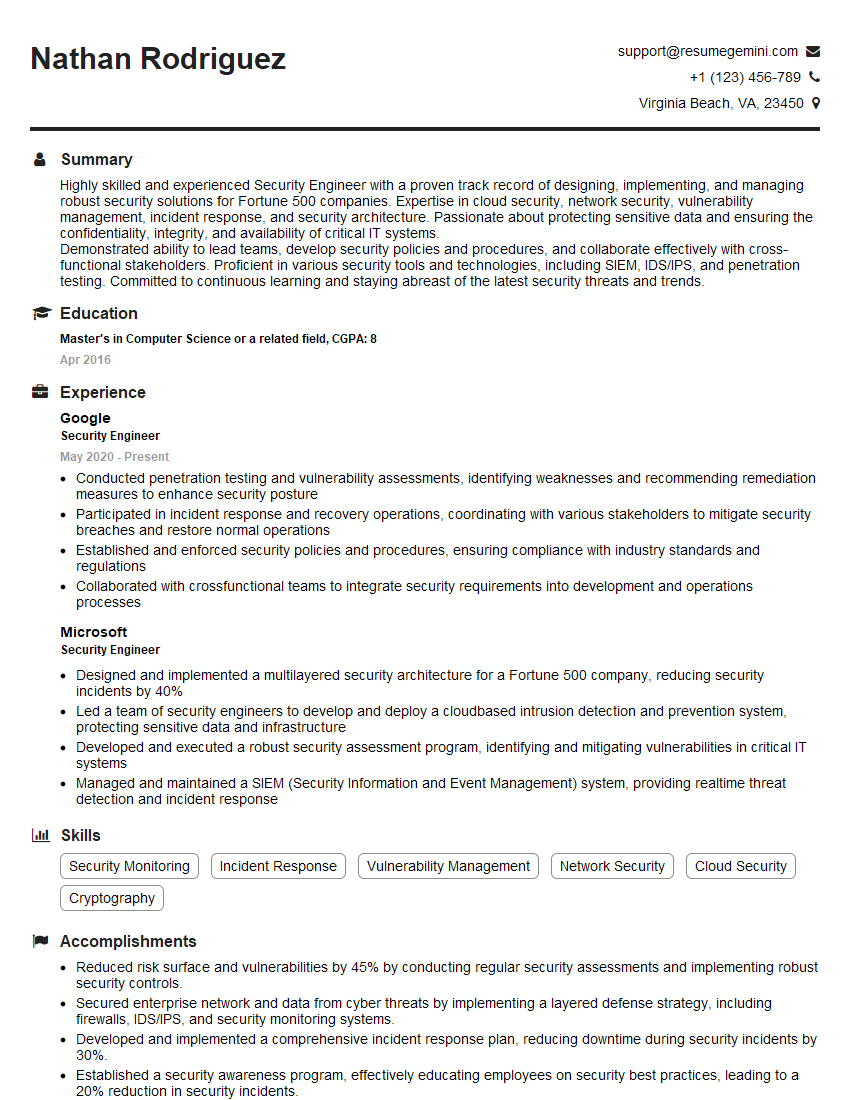
Security Engineer Resume Sample
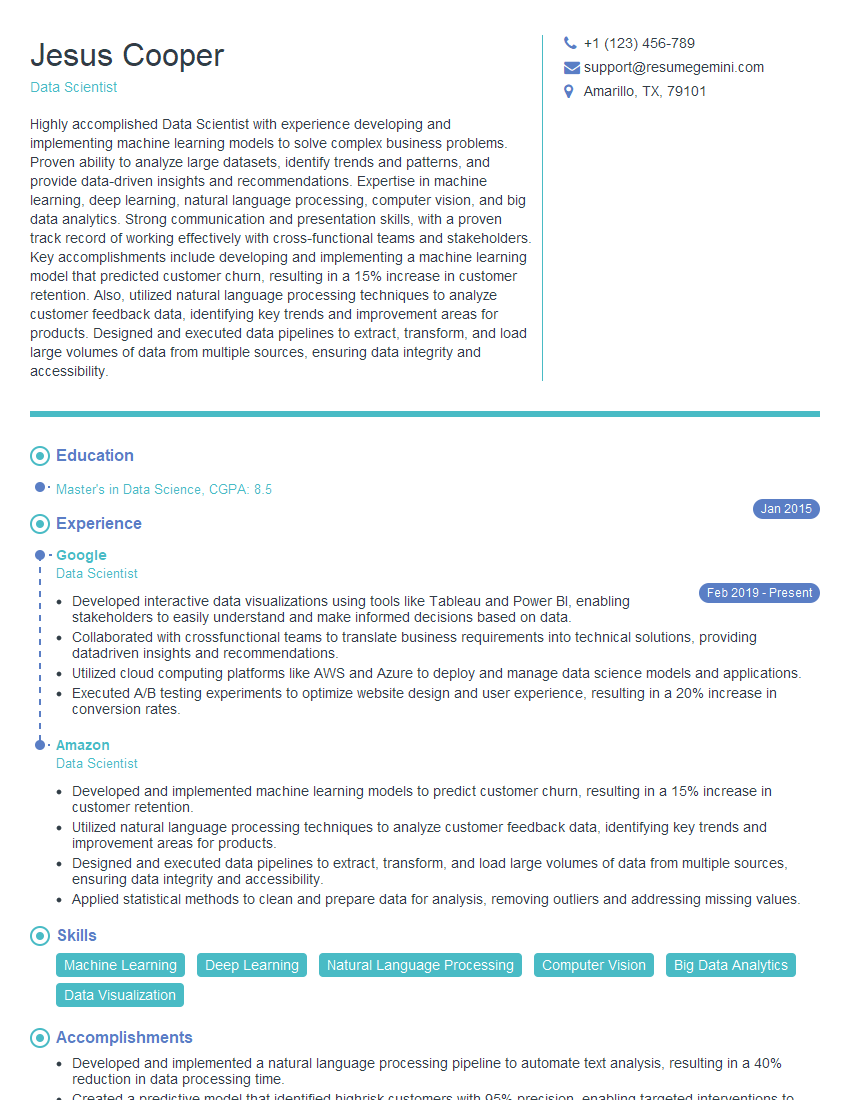
Data Scientist Resume Sample
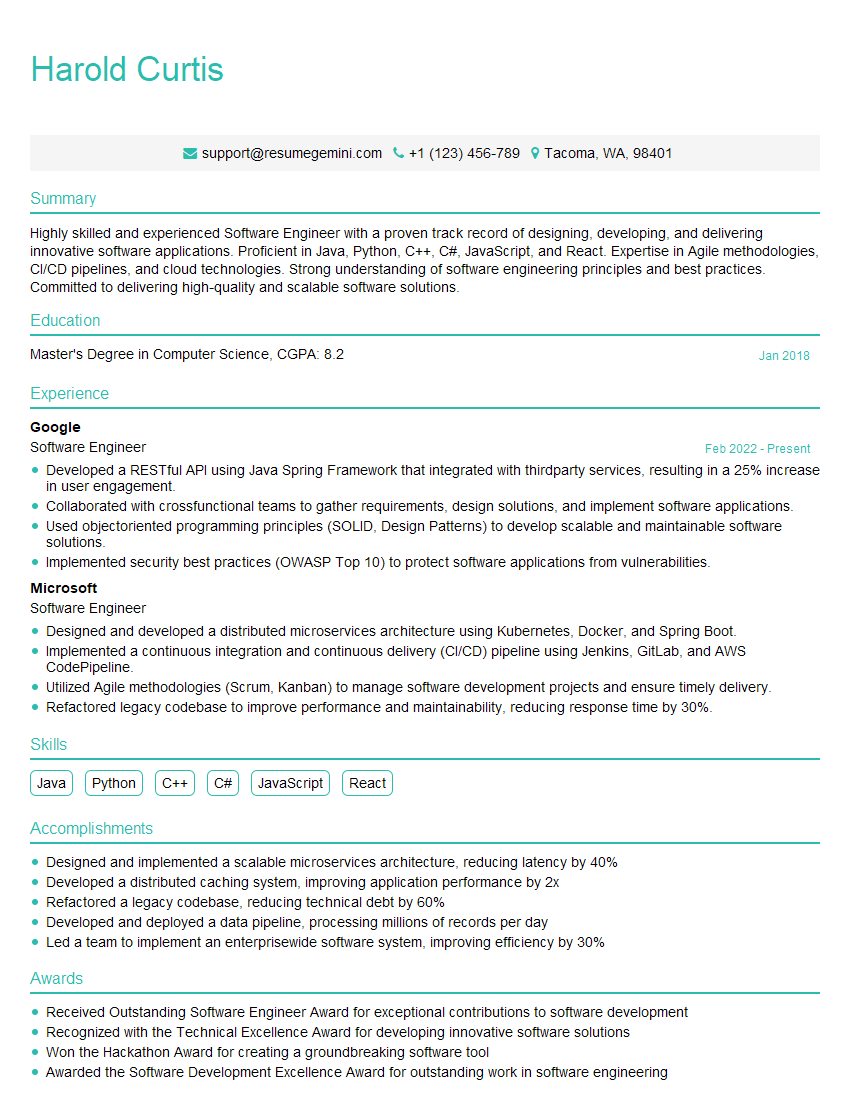
Software Engineer Resume Sample
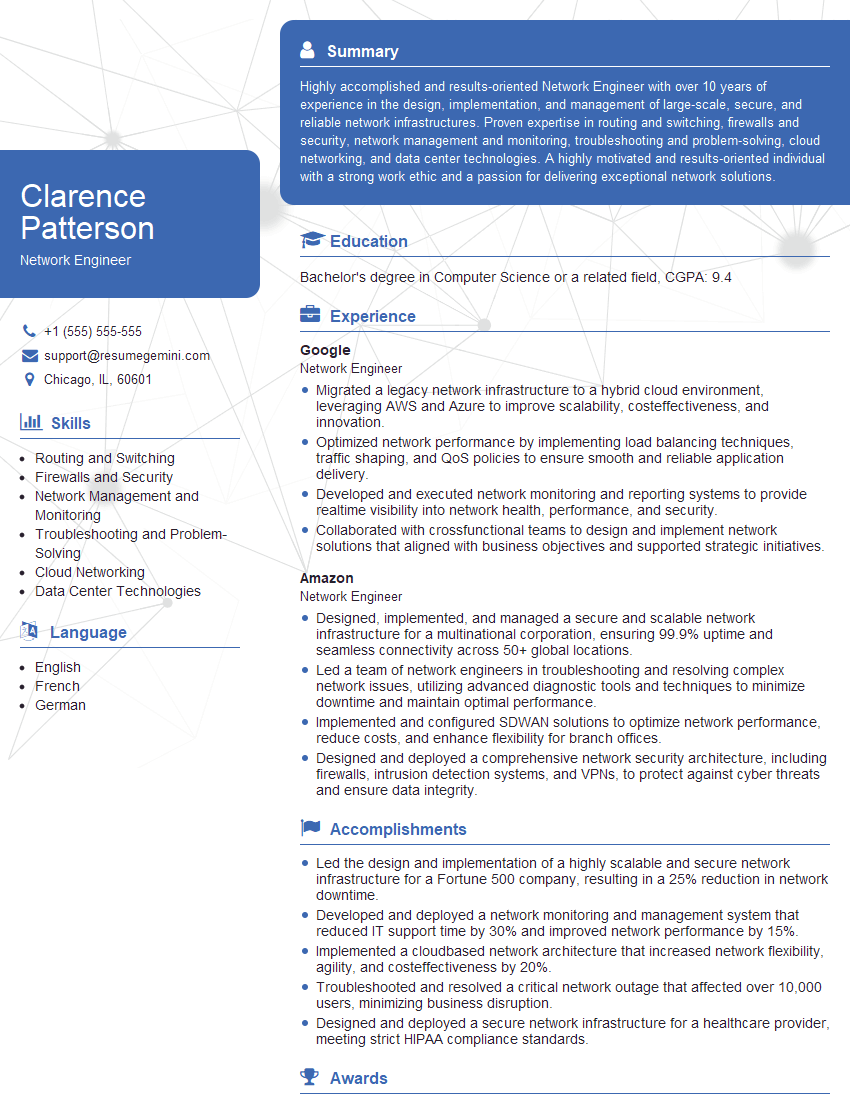
Network Engineer Resume Sample
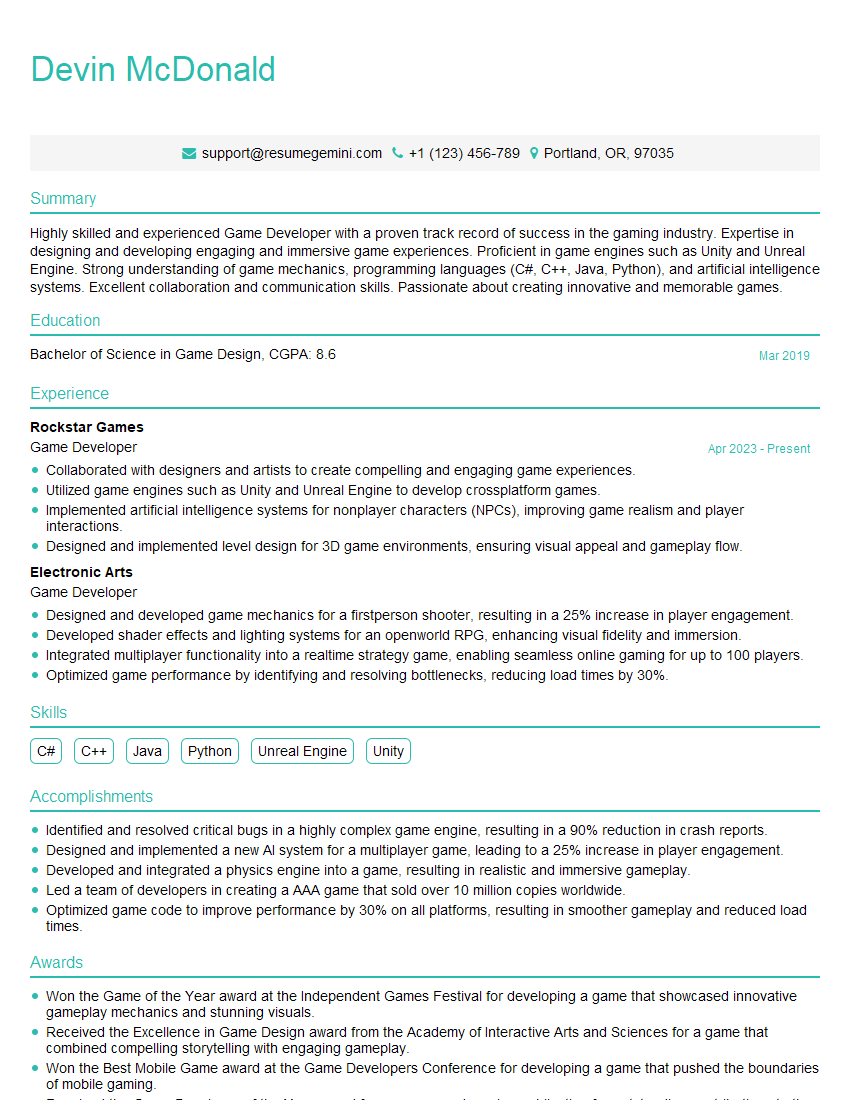
Game Developer Resume Sample
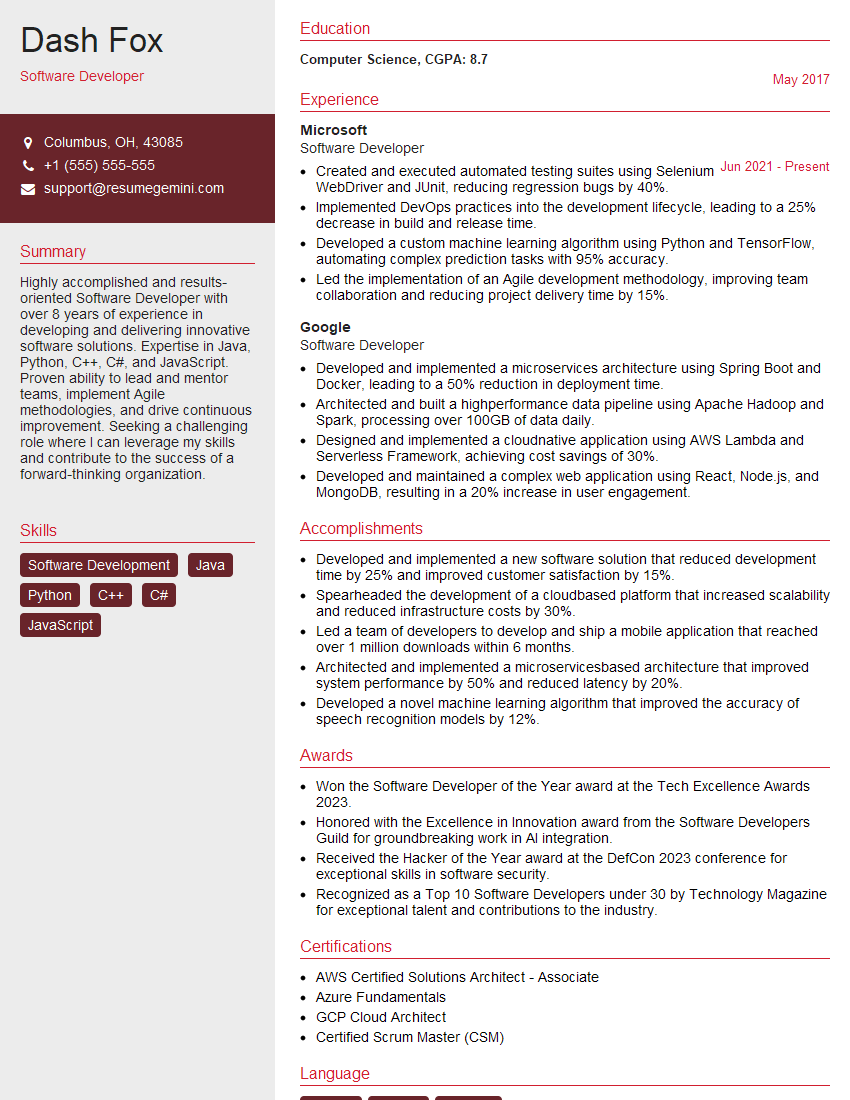
Software Developer Resume Sample
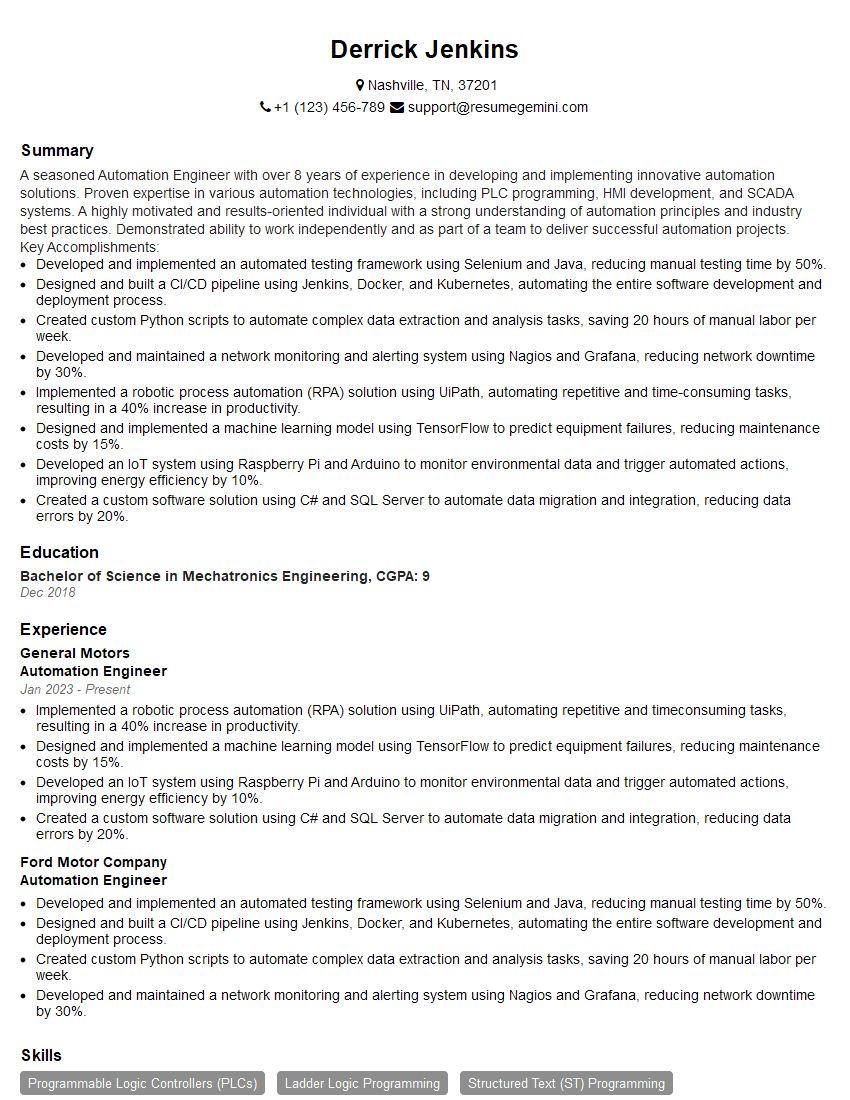
Automation Engineer Resume Sample

Senior Software Engineer Resume Sample
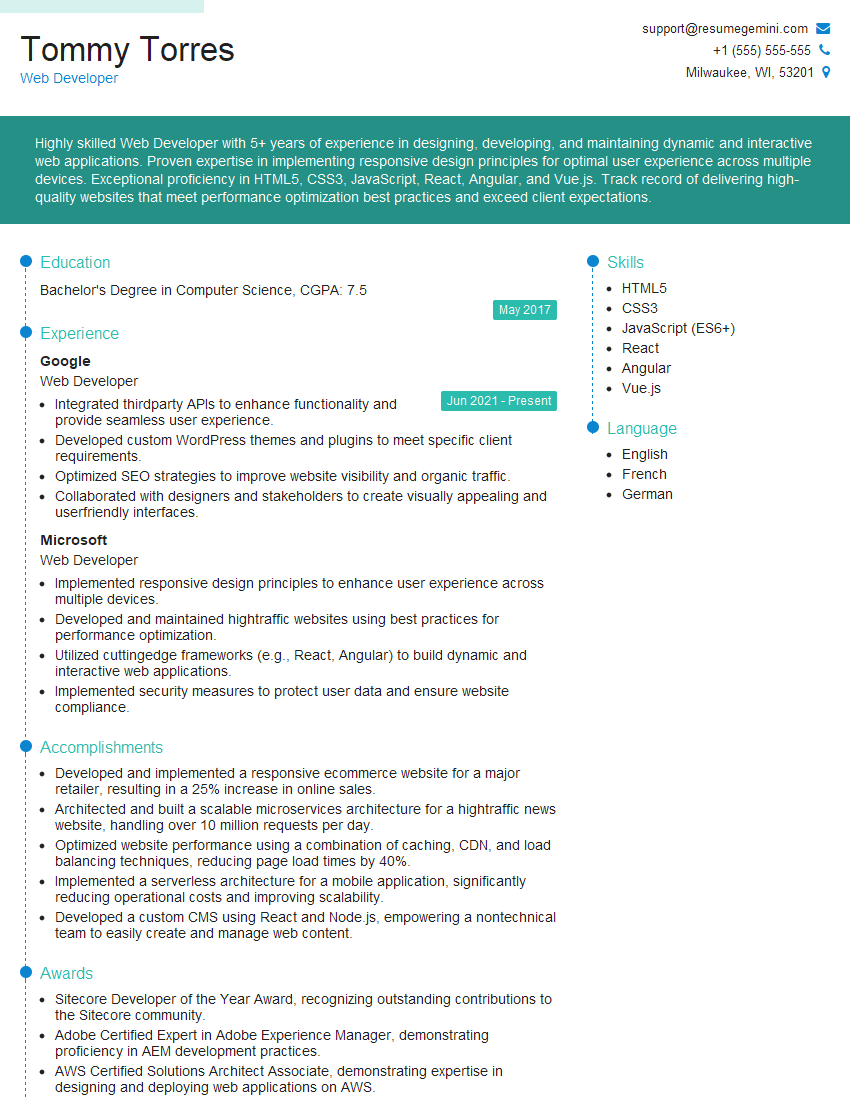
Web Developer Resume Sample
System Administrator Resume Sample

Quality Assurance Engineer Resume Sample
Full Stack Developer Resume Sample
Database Administrator Resume Sample
Embedded Systems Engineer Resume Sample
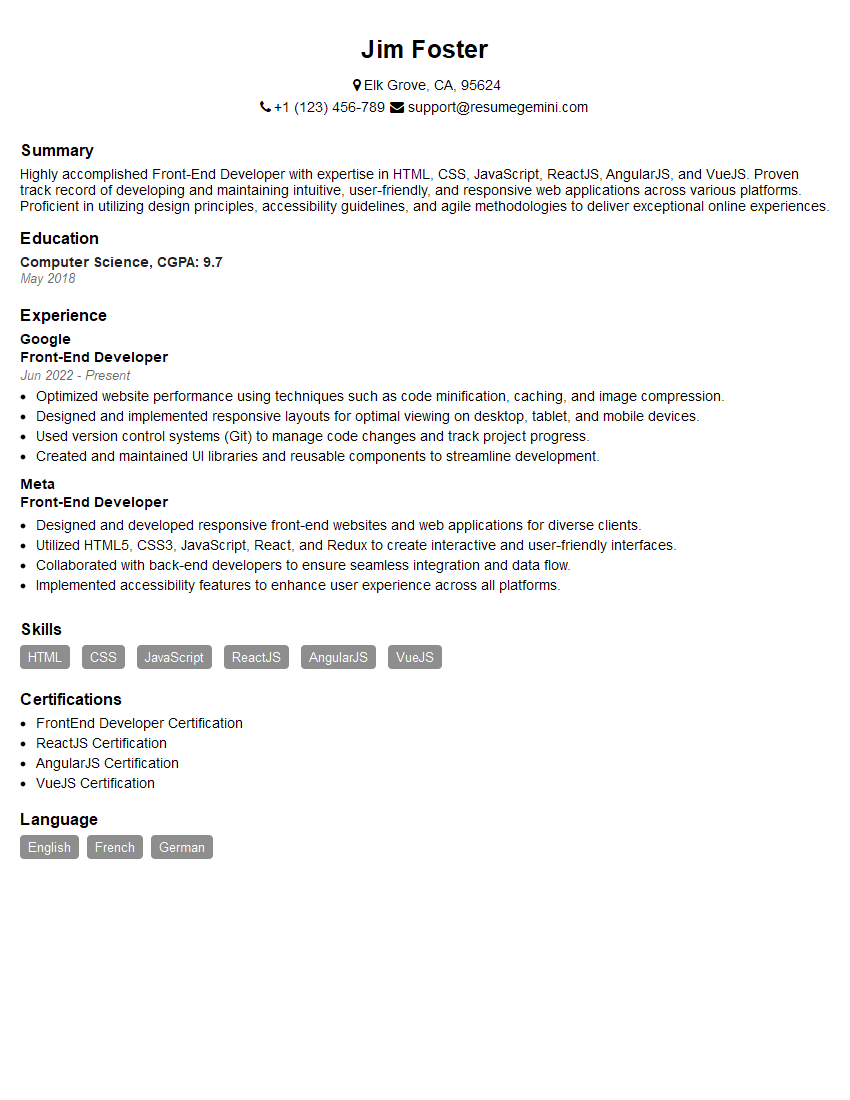
Front-End Developer Resume Sample
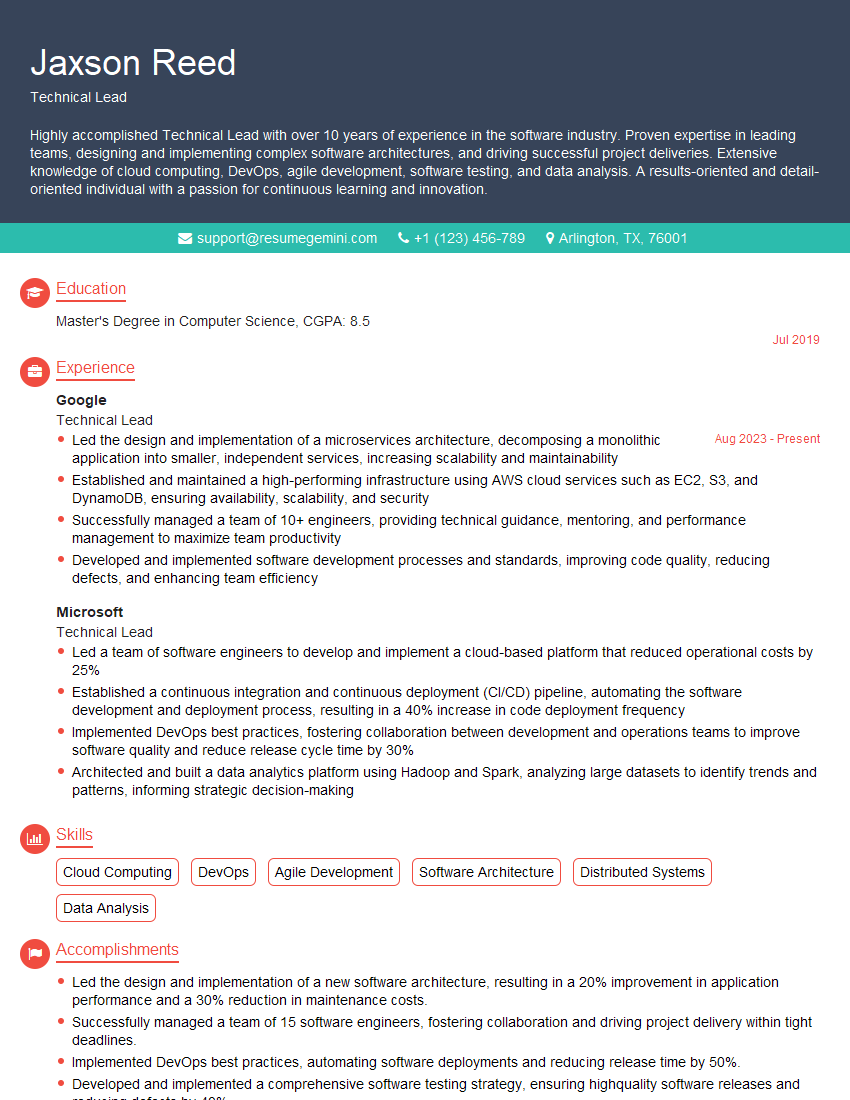
Technical Lead Resume Sample
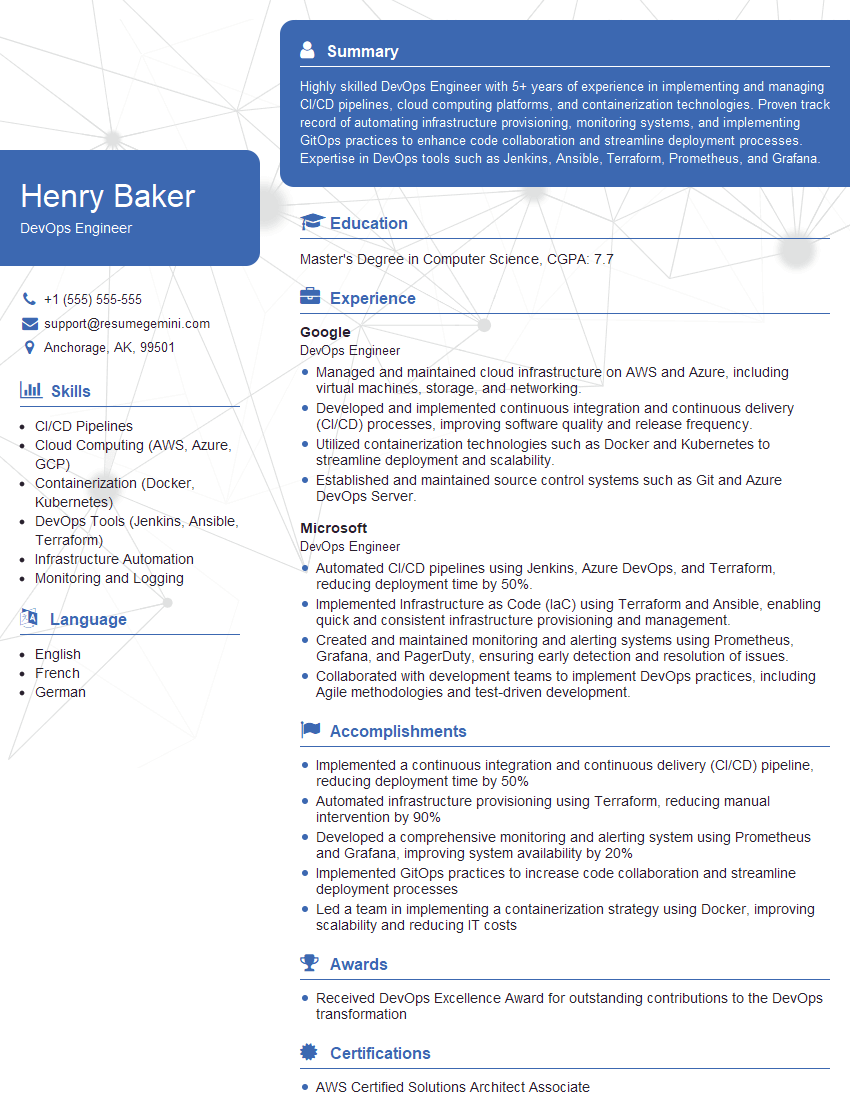
DevOps Engineer Resume Sample
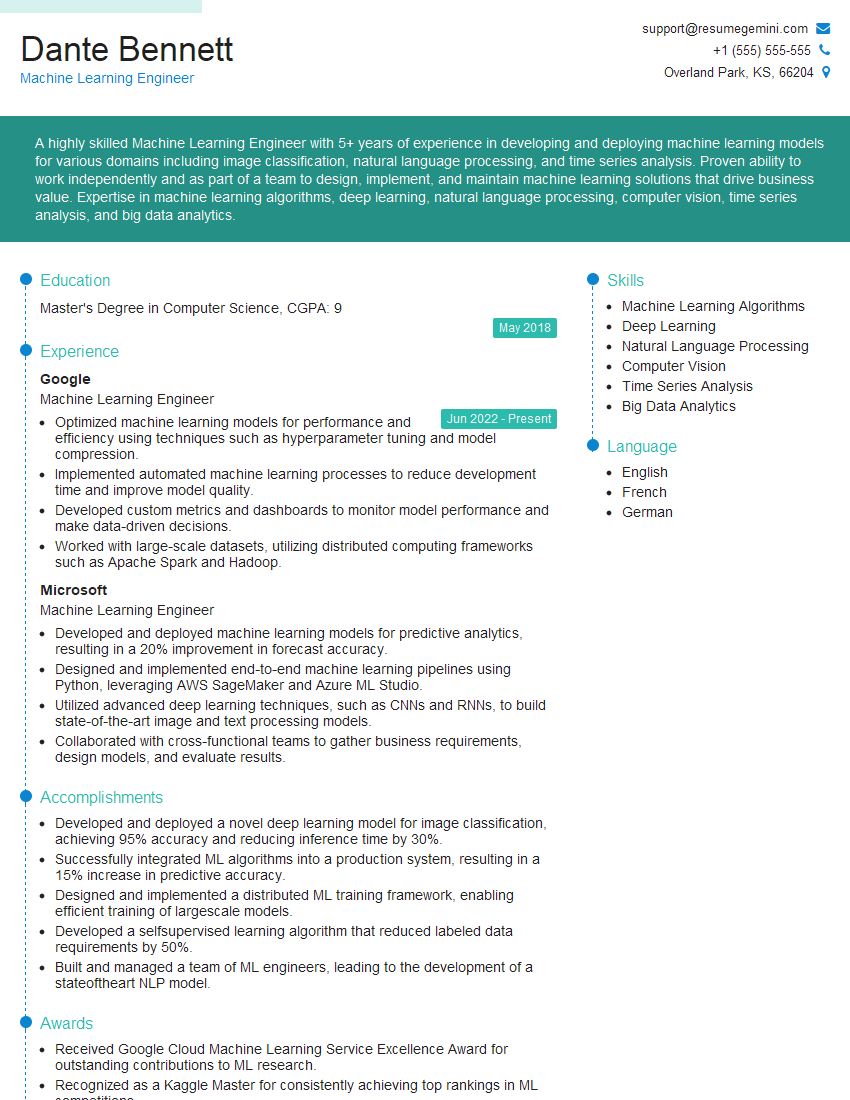
Machine Learning Engineer Resume Sample
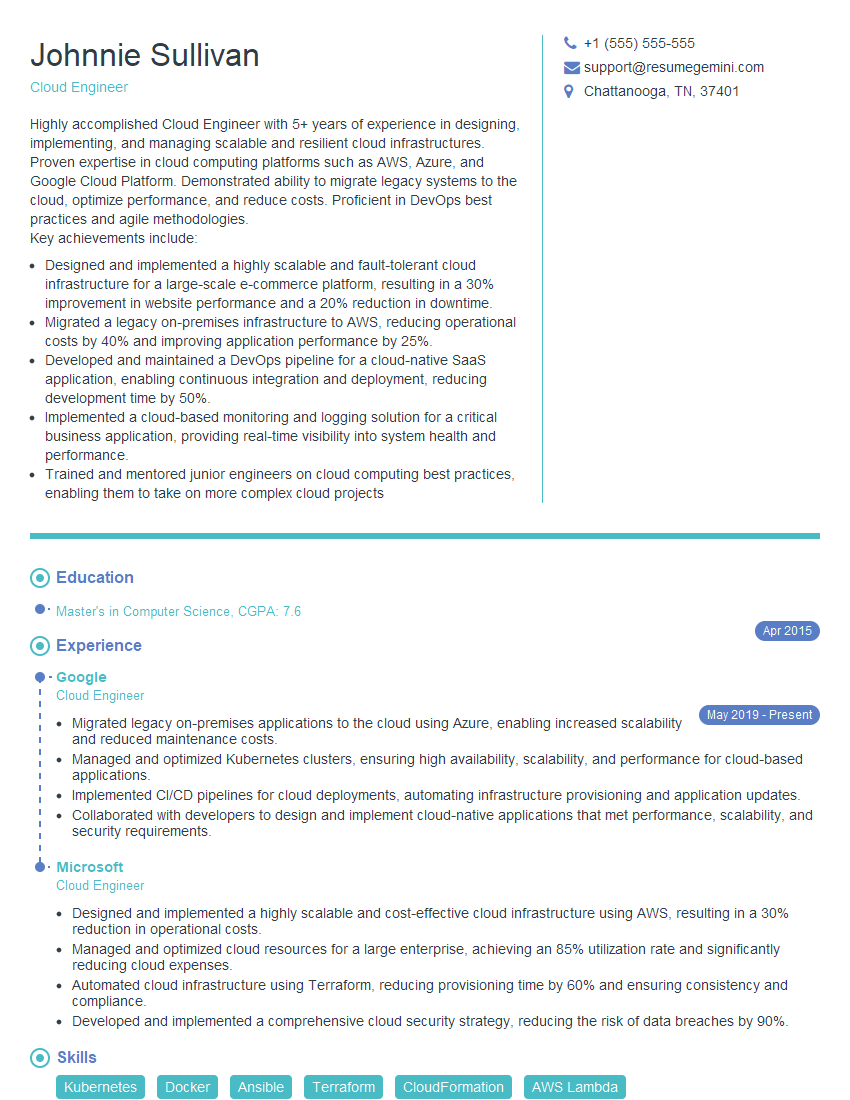
Cloud Engineer Resume Sample
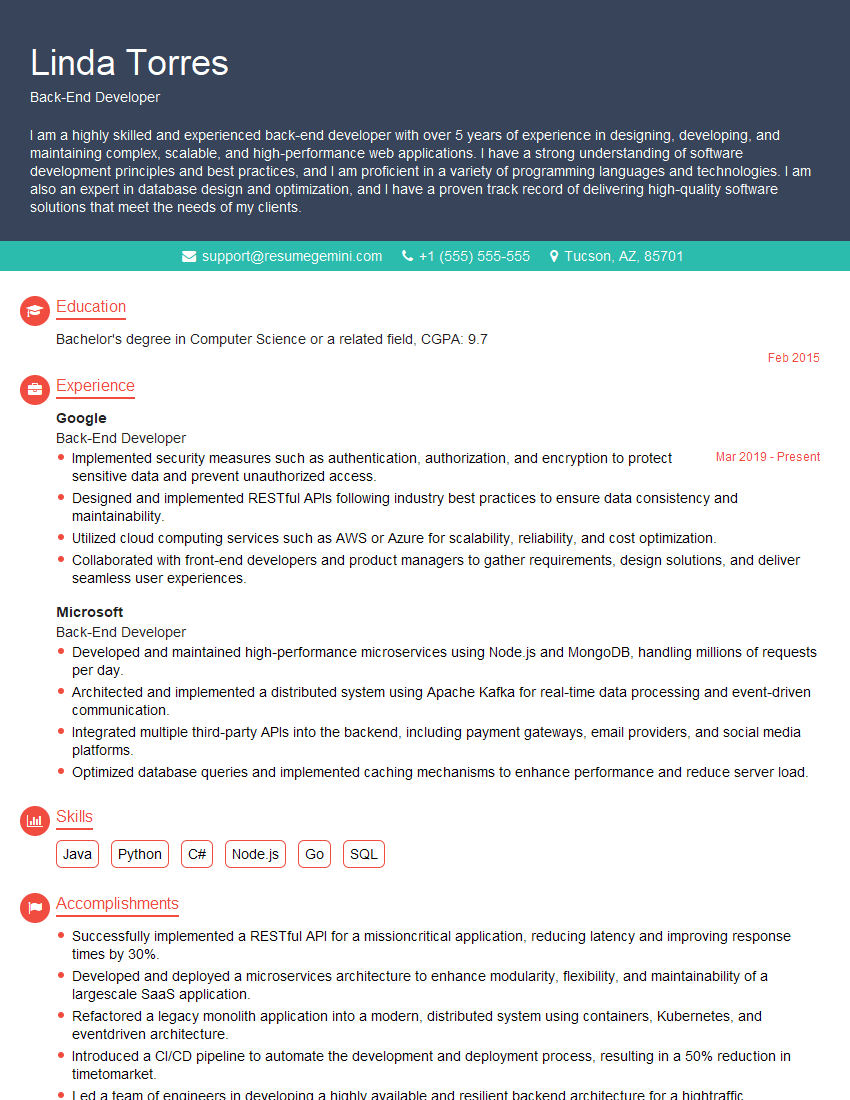
Back-End Developer Resume Sample
- Security Engineer
- Data Scientist
- Software Engineer
- Network Engineer
- Game Developer
- Software Developer
- Automation Engineer
- Senior Software Engineer
- Web Developer
- System Administrator
- Quality Assurance Engineer
- Full Stack Developer
- Database Administrator
- Embedded Systems Engineer
- Front-End Developer
- Technical Lead
- DevOps Engineer
- Machine Learning Engineer
- Cloud Engineer
- Back-End Developer
Explore more articles
Users Rating of Our Blogs
Share Your Experience
We value your feedback! Please rate our content and share your thoughts (optional).
What Readers Say About Our Blog
Hello,
we currently offer a complimentary backlink and URL indexing test for search engine optimization professionals.
You can get complimentary indexing credits to test how link discovery works in practice.
No credit card is required and there is no recurring fee.
You can find details here:
https://wikipedia-backlinks.com/indexing/
Regards
NICE RESPONSE TO Q & A
hi
The aim of this message is regarding an unclaimed deposit of a deceased nationale that bears the same name as you. You are not relate to him as there are millions of people answering the names across around the world. But i will use my position to influence the release of the deposit to you for our mutual benefit.
Respond for full details and how to claim the deposit. This is 100% risk free. Send hello to my email id: [email protected]
Luka Chachibaialuka
Hey interviewgemini.com, just wanted to follow up on my last email.
We just launched Call the Monster, an parenting app that lets you summon friendly ‘monsters’ kids actually listen to.
We’re also running a giveaway for everyone who downloads the app. Since it’s brand new, there aren’t many users yet, which means you’ve got a much better chance of winning some great prizes.
You can check it out here: https://bit.ly/callamonsterapp
Or follow us on Instagram: https://www.instagram.com/callamonsterapp
Thanks,
Ryan
CEO – Call the Monster App
Hey interviewgemini.com, I saw your website and love your approach.
I just want this to look like spam email, but want to share something important to you. We just launched Call the Monster, a parenting app that lets you summon friendly ‘monsters’ kids actually listen to.
Parents are loving it for calming chaos before bedtime. Thought you might want to try it: https://bit.ly/callamonsterapp or just follow our fun monster lore on Instagram: https://www.instagram.com/callamonsterapp
Thanks,
Ryan
CEO – Call A Monster APP
To the interviewgemini.com Owner.
Dear interviewgemini.com Webmaster!
Hi interviewgemini.com Webmaster!
Dear interviewgemini.com Webmaster!
excellent
Hello,
We found issues with your domain’s email setup that may be sending your messages to spam or blocking them completely. InboxShield Mini shows you how to fix it in minutes — no tech skills required.
Scan your domain now for details: https://inboxshield-mini.com/
— Adam @ InboxShield Mini
Reply STOP to unsubscribe
Hi, are you owner of interviewgemini.com? What if I told you I could help you find extra time in your schedule, reconnect with leads you didn’t even realize you missed, and bring in more “I want to work with you” conversations, without increasing your ad spend or hiring a full-time employee?
All with a flexible, budget-friendly service that could easily pay for itself. Sounds good?
Would it be nice to jump on a quick 10-minute call so I can show you exactly how we make this work?
Best,
Hapei
Marketing Director
Hey, I know you’re the owner of interviewgemini.com. I’ll be quick.
Fundraising for your business is tough and time-consuming. We make it easier by guaranteeing two private investor meetings each month, for six months. No demos, no pitch events – just direct introductions to active investors matched to your startup.
If youR17;re raising, this could help you build real momentum. Want me to send more info?
Hi, I represent an SEO company that specialises in getting you AI citations and higher rankings on Google. I’d like to offer you a 100% free SEO audit for your website. Would you be interested?
Hi, I represent an SEO company that specialises in getting you AI citations and higher rankings on Google. I’d like to offer you a 100% free SEO audit for your website. Would you be interested?
good