Preparation is the key to success in any interview. In this post, we’ll explore crucial Setup and operate woodworking machines interview questions and equip you with strategies to craft impactful answers. Whether you’re a beginner or a pro, these tips will elevate your preparation.
Questions Asked in Setup and operate woodworking machines Interview
Q 1. What safety precautions do you follow when operating woodworking machinery?
Safety is paramount in woodworking. Think of it like this: every machine is a potential hazard, and your diligence is your best protection. My safety routine is comprehensive and starts before I even turn a machine on.
- Personal Protective Equipment (PPE): This is non-negotiable. I always wear safety glasses, hearing protection, and a dust mask, at minimum. Depending on the task, this also includes gloves, a respirator, and sometimes a full face shield.
- Machine Inspection: Before each use, I thoroughly inspect every machine for loose parts, damaged blades, or any other potential hazards. A quick visual check can prevent serious accidents.
- Clear Work Area: A clutter-free workspace is crucial. Tools, materials, and anything else that could cause a trip or interfere with operation are kept well away from the machine.
- Proper Tool Use: I ensure I understand and follow the manufacturer’s instructions for every machine. Never pushing the limits of a machine’s capabilities is essential.
- Emergency Procedures: Knowing the location of emergency stop buttons and having a clear understanding of emergency response procedures is vital. Knowing what to do if something goes wrong is critical to personal safety.
- Push Sticks and Feather Boards: These safety aids prevent your hands from getting too close to dangerous cutting surfaces.
For example, I once noticed a small crack in the blade of my table saw during a pre-operation check. Replacing it prevented a potentially disastrous accident.
Q 2. Explain the setup procedure for a CNC router.
Setting up a CNC router involves careful planning and precise execution. Think of it as preparing for a delicate surgery – precision is everything.
- CAM Software: First, I create the design using Computer-Aided Manufacturing (CAM) software. This software translates my design into instructions for the router. I carefully check the toolpaths to ensure they’re accurate and efficient.
- Material Preparation: The workpiece needs to be securely clamped down to the router table. Any movement during the routing process can lead to inaccurate results or damage to the machine and the workpiece.
- Tool Selection: Choosing the right router bit is crucial for the specific material and desired result. Different bits are designed for different cuts and materials.
- Machine Zeroing: This is vital for accurate cuts. I use a touch probe or manual method to set the machine’s zero point, ensuring accurate positioning of the tool and the workpiece.
- Spindle Speed and Feed Rate: These parameters are adjusted based on the material and bit used. The wrong settings can lead to poor surface finish, broken bits, or damage to the workpiece.
- Test Run (Optional but Recommended): Before cutting the final piece, running a test cut on a scrap piece of similar material allows you to verify the settings and the toolpaths.
For instance, I recently used a CNC router to carve intricate designs on a mahogany panel. Precise zeroing and careful toolpath planning were essential to achieve the desired level of detail.
Q 3. How do you troubleshoot a jammed feed system on a planer?
A jammed feed system on a planer is frustrating, but systematic troubleshooting can quickly resolve the issue. The process is like detective work, eliminating possibilities one by one.
- Power Down and Disconnect: Safety first! Always turn off the machine and unplug it from the power source before attempting any repairs.
- Visual Inspection: Carefully examine the feed rollers for any obstructions, such as wood chips, knots, or foreign objects. Look for anything that might be binding the rollers.
- Check for Damage: Inspect the rollers for damage, cracks, or wear that could be causing the jam. Worn or damaged rollers might need replacing.
- Clean the Feed System: Use a brush, compressed air, or vacuum cleaner to remove any debris that could be obstructing the system. Thoroughly clean the area around the feed rollers and the infeed and outfeed tables.
- Lubricate: Check for proper lubrication of the rollers and moving parts. Dry or insufficiently lubricated components can increase friction and contribute to jams.
- Belt Tension: Verify that the drive belts are properly tensioned. Incorrect tension can cause slipping and feeding problems.
I once had a planer jam due to a large knot in a piece of pine. After removing the knot and carefully cleaning the feed system, the planer ran smoothly again.
Q 4. Describe your experience with different types of wood and their properties.
My experience with various wood types is extensive, and understanding their unique properties is fundamental to successful woodworking. Think of it as understanding the individual personalities of different ingredients in a recipe.
- Hardwoods: These are dense and strong, like oak, maple, and cherry. They are ideal for furniture, flooring, and projects that require durability, but can be more challenging to work with due to their hardness. Oak, for example, is known for its strength and grain patterns but can be difficult to plane cleanly.
- Softwoods: These are typically lighter and less dense, such as pine, fir, and cedar. They’re easier to work with but less durable than hardwoods. Pine is a popular choice for framing and construction due to its affordability and ease of working.
- Exotic Woods: These include woods like mahogany, rosewood, and zebrawood, prized for their unique colours, grains, and often higher costs. They require special care during processing and finishing. Mahogany is widely used for its rich color and smooth finish, ideal for high-end furniture.
I’ve worked with hundreds of types of wood over the years, from the common to the rare. Each one requires a different approach based on its grain, density, and inherent properties.
Q 5. How do you maintain the accuracy and precision of woodworking machines?
Maintaining the accuracy and precision of woodworking machines is essential for quality work. Regular maintenance is key, similar to regularly servicing a car to ensure its optimal performance.
- Regular Cleaning: Removing sawdust and debris from all parts of the machine prevents buildup that can affect accuracy and cause damage.
- Blade Sharpening/Replacement: Dull blades reduce accuracy and increase the risk of kickback. Regular sharpening or replacement is necessary, depending on usage.
- Alignment Checks: Periodically checking the alignment of the blades, fences, and other components is crucial for precision. Misalignment can lead to inaccurate cuts.
- Lubrication: Lubricating moving parts reduces friction and wear, improving the longevity and accuracy of the machine.
- Calibration: Machines should be calibrated regularly using appropriate tools and techniques to ensure they operate within their specified tolerances.
For example, I regularly calibrate my jointer to ensure that its surfaces are perfectly parallel, which is crucial for achieving flat, square joints.
Q 6. What are the common causes of blade breakage in a band saw?
Band saw blade breakage is a common problem with several potential causes. Think of it like a chain—a weak link anywhere can break the whole thing.
- Dull Blades: A dull blade has to work harder, generating more heat and stress, increasing the chance of breakage.
- Improper Tension: Too tight or too loose tension can lead to blade breakage. The correct tension is critical for proper operation.
- Blade Tracking Problems: If the blade isn’t tracking correctly, it can rub against the guides or the wheels, causing wear and potential breakage.
- Incorrect Blade Selection: Using the wrong type or size of blade for the material being cut can also result in breakage.
- Material Defects: Hidden knots or other defects in the wood can cause the blade to bind or snap.
- Excessive Force: Forcing the cut or trying to cut too quickly generates excessive stress on the blade.
I once experienced a blade breakage because I was using a blade designed for hardwood on a very knotty piece of softwood. Selecting the correct blade for the task is crucial.
Q 7. How do you calibrate a woodworking machine for optimal performance?
Calibrating a woodworking machine is akin to tuning a musical instrument; it ensures optimal performance and accuracy. The process varies slightly depending on the specific machine.
- Consult the Manual: Each machine has specific calibration procedures outlined in its manual. This is the first and most important step.
- Alignment Checks: For machines like planers and jointers, alignment of blades and tables is critical. Using precision tools, such as a straight edge and feeler gauges, is essential for accurate alignment.
- Squareness Checks: Ensuring components like tables and fences are square to each other is vital for accurate cuts. A square can be used to check for squareness.
- Use Calibration Tools: Many machines have specific calibration tools, such as dial indicators or laser levels, to help with accurate adjustments.
- Test Cuts: After calibration, conducting test cuts on scrap wood allows you to verify the accuracy and make any necessary fine adjustments.
For example, when calibrating my table saw, I use a combination square to ensure the blade is perfectly perpendicular to the table. Consistent test cuts are essential to fine tune the calibration for ultimate precision.
Q 8. Describe your experience with different types of woodworking joints.
Woodworking joints are the critical connections that hold a project together. My experience encompasses a wide range, from simple to complex. I’m proficient in numerous joint types, each suited for specific applications and stresses.
- Butt Joints: The simplest, where two pieces meet end-to-end. While basic, reinforcement like biscuits, dowels, or glue is crucial for strength. I often use them for framing or less-stressed areas.
- Lap Joints: One piece overlaps the other, increasing surface area and strength. Variations include half-lap, miter lap, and sliding dovetail lap joints, each offering varying degrees of strength and visual appeal. These are great for joining framing members at angles or for creating drawers.
- Dovetail Joints: Known for their exceptional strength and interlocking design, these are typically used in fine furniture construction, especially drawers. I’m skilled in both through dovetails (visible on both sides) and half-blind dovetails (hidden on one side).
- Mortise and Tenon Joints: A strong joint where a tenon (a projecting piece) fits into a mortise (a hole). Variations exist, such as through tenons, blind tenons, and wedged tenons. I frequently use these for constructing chair legs, table legs, and cabinet frames, offering robustness and clean lines.
- Dado Joints: A groove cut into one piece to receive the edge of another. They are excellent for shelving, drawers, and creating strong, rigid structures.
Choosing the right joint is vital. Factors I consider include the type of wood, the intended load, the aesthetic requirements, and the available tools.
Q 9. How do you ensure the safety of others while operating heavy machinery?
Safety is paramount in my work. Operating heavy machinery demands a rigorous approach to safety protocols. I ensure a safe environment through a multi-layered approach.
- Personal Protective Equipment (PPE): This is non-negotiable. I always wear safety glasses, hearing protection, a dust mask (especially when working with hardwoods), and appropriate clothing – no loose sleeves or jewelry.
- Machine Guards: I always verify that all machine guards are in place and functioning correctly before starting any operation. Improperly guarded machinery is simply not used.
- Clear Workspace: Maintaining a clean and organized workspace prevents accidents. Tools and materials are stored appropriately, and the floor is kept clear of debris.
- Lockout/Tagout Procedures: Before performing any maintenance or repairs, I follow lockout/tagout procedures to ensure that power is disconnected and the machine is rendered inoperable.
- Training and Awareness: I am up-to-date on all relevant safety regulations and best practices, and I frequently review them. I also ensure that anyone working near me understands and adheres to safety protocols.
- Emergency Procedures: I am familiar with emergency procedures, including where the nearest first-aid kit is located and how to contact emergency services.
Beyond these steps, I encourage a culture of safety. I actively communicate potential hazards and proactively address any safety concerns.
Q 10. What is your experience with preventative maintenance on woodworking equipment?
Preventative maintenance is crucial for the longevity and safe operation of woodworking machinery. My routine includes regular inspections and scheduled maintenance tasks.
- Daily Inspections: Before each use, I visually inspect machines for loose parts, damaged components, or signs of wear. I check blades, bits, and other cutting tools for sharpness and damage.
- Lubrication: Moving parts require regular lubrication to prevent wear and tear. I use appropriate lubricants according to the manufacturer’s recommendations.
- Blade/Bit Sharpening: Dull blades are dangerous and inefficient. I sharpen or replace blades and bits regularly, depending on usage and material.
- Belt Adjustments: I check and adjust belts and pulleys to ensure proper tension and alignment, minimizing vibration and preventing slippage.
- Dust Collection: Effective dust collection is essential for both safety and machine longevity. I regularly clean and maintain dust collection systems, ensuring proper airflow and preventing clogging.
- Scheduled Maintenance: I perform more thorough maintenance tasks on a schedule, such as replacing worn parts, cleaning internal components, and checking electrical connections. This schedule is based on manufacturer recommendations and usage.
A well-maintained machine is a safe and efficient machine. Preventative maintenance saves time and money in the long run by preventing costly repairs and downtime.
Q 11. How do you read and interpret woodworking blueprints?
Reading and interpreting woodworking blueprints requires a keen eye for detail and an understanding of woodworking practices. I approach blueprints systematically.
- Overall Dimensions: I start by reviewing the overall dimensions and scale of the project to understand its size and proportions.
- Material Specifications: I identify the types and dimensions of the wood required for the project.
- Joint Details: I pay close attention to the details of the joints, noting the type of joint, dimensions, and placement.
- Viewpoints: I carefully examine the different viewpoints (plan, elevation, section) to gain a complete understanding of the three-dimensional design.
- Assembly Sequence: I determine the optimal assembly sequence to minimize errors and ensure a smooth construction process.
- Measurements and Tolerances: Accurate measurement and tolerance understanding are critical. I meticulously interpret dimensions, tolerances, and annotations to ensure precision in cutting and assembly.
Often, I create my own detailed sketches or digital models based on the blueprint to further clarify the design and ensure I fully grasp all the aspects before starting the project. This helps visualize the process and anticipate any potential challenges.
Q 12. Explain your experience with different types of wood finishes.
Wood finishes enhance the beauty and durability of woodworking projects. My experience includes a variety of finishes, each with unique properties.
- Oil-Based Finishes: These penetrate the wood, providing water resistance and enhancing the natural grain. Examples include linseed oil, tung oil, and Danish oil. I often use these for projects where I want to emphasize the natural wood look.
- Water-Based Finishes: These are low-VOC (Volatile Organic Compound), making them environmentally friendly. They are easy to apply and clean up, and offer good protection. Examples include water-based polyurethane and acrylic finishes. This is becoming my preferred option for its environmentally-conscious aspect and ease of use.
- Lacquer: This dries quickly, creating a hard, durable finish with a high gloss. It’s great for projects that need a lot of protection and shine. However, it does require careful application to avoid runs and imperfections.
- Shellac: A natural resin-based finish, shellac is easy to apply and produces a warm, amber tone. It’s a traditional finish appreciated for its elegance and durability.
- Varnish: Varnish provides excellent protection against moisture and wear. It’s available in a wide range of gloss levels, allowing for customization.
The choice of finish depends on the type of wood, the intended use of the piece, and the desired aesthetic. Proper surface preparation is crucial for any finish to adhere properly and create a beautiful, lasting result.
Q 13. What are the differences between various types of woodworking machines (e.g., router, planer, shaper)?
Woodworking machines each serve unique purposes. Understanding their differences is key to safe and effective operation.
- Router: A versatile machine using rotating bits to perform various tasks such as shaping edges, creating decorative profiles, and cutting grooves. Its adaptability makes it a cornerstone of woodworking.
- Planer: Used to flatten and smooth surfaces of wood. It removes material evenly, creating consistently thick boards. Essential for preparing lumber for construction.
- Shaper: Similar to a router but typically larger and more powerful, designed for heavier-duty shaping operations. It’s often used for creating intricate profiles or repetitive shaping tasks on larger pieces of wood.
- Table Saw: The workhorse for ripping (cutting along the length of the board) and crosscutting (cutting across the width of the board) lumber accurately. Crucial for creating precise cuts in various dimensions.
- Band Saw: Uses a continuous blade to cut curves and intricate shapes. Its versatility allows for shaping components and creating various curved elements.
- Jointer: Creates perfectly straight and flat edges on boards, preparing them for accurate jointing. Essential for ensuring that surfaces meet evenly, vital for strong joints.
Each machine requires specific techniques and safety precautions. Improper operation can lead to injury or damage to the workpiece. Thorough training and understanding of each machine are necessary before use.
Q 14. How do you handle machine malfunctions or breakdowns?
Machine malfunctions or breakdowns are an unfortunate reality of woodworking. My approach is systematic and safety-focused.
- Immediate Shutdown: The first step is always to safely shut down the machine and disconnect the power source, ensuring no one is in harm’s way.
- Assessment: I carefully assess the nature of the malfunction, trying to identify the cause. This may involve checking belts, blades, electrical connections, or other components.
- Troubleshooting: Based on my assessment, I attempt to troubleshoot the problem. This might involve simple repairs, such as tightening a loose screw or replacing a broken part. I always consult the machine’s manual for guidance.
- Seeking Assistance: If the problem is beyond my capabilities, I seek assistance from a qualified technician or a more experienced woodworker. I never attempt repairs that I’m not confident in handling.
- Documentation: I keep detailed records of any malfunctions, repairs, and maintenance performed on each machine. This helps me track potential issues and plan for future maintenance.
- Prevention: After a breakdown, I analyze the root cause to identify any preventative measures I could take to avoid similar issues in the future. This might involve improved maintenance routines or changes to operating procedures.
Preventing breakdowns through regular maintenance is far more efficient and cost-effective than dealing with unexpected repairs. A proactive approach to maintenance is crucial for minimizing downtime and ensuring a safe work environment.
Q 15. Describe your experience with various cutting tools and their applications.
My experience with woodworking cutting tools spans a wide range, from hand tools to power tools. Hand tools like chisels, hand planes, and saws offer precise control for intricate work and are essential for fine details. I’m proficient in using various chisel types – from mortise chisels for joinery to firmer chisels for shaping – and understand the importance of proper sharpening for clean cuts. Hand planes, like smoothing planes and block planes, allow for surface refinement and shaping with exceptional accuracy. Power tools greatly increase efficiency. I’m highly skilled in operating table saws, for accurate ripping and crosscutting; band saws, for intricate curves and resawing; jigsaw and scroll saws for detailed cuts; and router, with a wide array of bits for creating various profiles and joinery. Each tool’s application depends on the project; for instance, I’d use a hand plane for fine finishing after using a planer to initially smooth a board, and I’d select a specific router bit depending on whether I need a rounded edge or a decorative profile.
- Table Saw: Ripping lumber to precise widths, crosscutting boards to length.
- Band Saw: Cutting curves, resawing thick lumber into thinner pieces.
- Router: Creating decorative edges, profiles, dados, and rabbets.
- Chisels: Fine joinery, shaping, cleaning up cuts.
Career Expert Tips:
- Ace those interviews! Prepare effectively by reviewing the Top 50 Most Common Interview Questions on ResumeGemini.
- Navigate your job search with confidence! Explore a wide range of Career Tips on ResumeGemini. Learn about common challenges and recommendations to overcome them.
- Craft the perfect resume! Master the Art of Resume Writing with ResumeGemini’s guide. Showcase your unique qualifications and achievements effectively.
- Don’t miss out on holiday savings! Build your dream resume with ResumeGemini’s ATS optimized templates.
Q 16. How do you measure and inspect finished wood products for accuracy?
Accurate measurement and inspection are paramount. I utilize a combination of tools and techniques depending on the project’s complexity. For initial measurements, I rely on accurate measuring tapes and squares, ensuring proper alignment before cutting. For precise measurements, I use digital calipers and micrometers to check dimensions within fractions of a millimeter. After cutting, I inspect the finished product using various methods. A combination square is vital for checking angles and squareness. I use a straight edge to check for any warping or bowing. A surface gauge helps ensure consistent depth and evenness in grooves and dados. Finally, visual inspection is crucial to identify any imperfections or blemishes before finishing. Think of building a fine piece of furniture; even minor inaccuracies can affect its stability and aesthetics. Thorough inspection is my insurance policy against defects.
Q 17. What are your experience with different types of cutting techniques?
My experience includes various cutting techniques, each suited for specific tasks. Rip cuts are for cutting wood along the grain, usually done on a table saw for accuracy. Crosscuts are perpendicular to the grain, often used for squaring lumber or cutting boards to length. Mitering cuts, creating angled cuts for joining pieces at precise angles, require careful setup and are crucial for frame construction. I’m also experienced in dados, rabbets, and grooves – all different types of shoulder cuts used in joinery. For curved cutting, I use techniques like band sawing, jigsaw work, and even carving, adapting my method based on the curve’s complexity and the final finish desired. I understand the importance of choosing the appropriate technique; using a router to make a tenon would be inappropriate. The correct cutting technique directly impacts both efficiency and accuracy.
Q 18. How do you address quality control issues during production?
Quality control is an ongoing process, not an afterthought. It starts with selecting high-quality lumber, free of defects like knots and cracks. Throughout the production process, I regularly check dimensions and angles using my measuring tools. Visual inspection identifies surface imperfections. I maintain detailed records, documenting any deviations or challenges faced. If issues arise, like a slightly warped piece, I’ll either rework the component or find an alternative to prevent defects from propagating. If a batch of lumber proves substandard, it’s rejected. My goal is to consistently deliver high-quality products that meet or exceed client expectations. Think of it like baking a cake; even the slightest error can significantly affect the final result. That’s why diligence in quality control is essential.
Q 19. What are your troubleshooting skills related to woodworking machinery?
Troubleshooting woodworking machinery requires systematic approach. I start by identifying the problem – is it a noise, a malfunction, or an inaccurate cut? Safety is paramount; I always disconnect power before attempting any repair or adjustment. For simple issues, such as a dull blade, I replace or sharpen it. For more complex issues, I start by checking for loose parts, checking connections, and reviewing the machine’s manual. If the problem persists, I systematically test various components – belts, motors, switches – to pinpoint the malfunction. Over the years, I’ve developed a strong understanding of the mechanics of various machines, which significantly aids in troubleshooting. For instance, unusual vibrations often indicate a problem with alignment or balance.
Q 20. Explain your experience with operating various CNC woodworking machines.
I have extensive experience operating various CNC woodworking machines, including CNC routers and CNC lathes. My experience covers programming these machines using CAM software, generating toolpaths from CAD designs, and setting up the machines for optimal performance. I understand the importance of tool selection and bit configuration in achieving precise cuts and surface finishes. I’m proficient in setting up work holding systems for different workpiece sizes and shapes. For example, I know how to use vacuum chucks, clamps, and fixtures for secure and efficient machining. Safety protocols are meticulously followed, including the use of proper PPE and emergency stop procedures. CNC machining is highly efficient, ideal for tasks requiring repeatability and precision, like creating identical parts or complex shapes.
Q 21. How do you ensure the efficient operation of woodworking machines?
Efficient operation of woodworking machines involves a combination of factors. Regular maintenance is key – keeping blades sharp, lubricating moving parts, and cleaning debris prevents malfunctions and extends the machine’s lifespan. Proper setup for each job ensures accuracy and minimizes waste. This includes appropriate blade selection, correct feed rates, and optimized cutting parameters. Understanding the machine’s capabilities and limitations avoids pushing it beyond its design, preventing damage. Effective workflow planning minimizes idle time, optimizing the production process. This might involve batching similar tasks, pre-planning cutting sequences, and having all materials ready beforehand. A well-organized workspace further promotes efficiency, preventing delays due to searching for tools or materials. Efficiency isn’t just about speed; it’s about optimizing the entire process.
Q 22. Describe your knowledge of different types of wood adhesives.
Wood adhesives are the backbone of any woodworking project, providing the crucial bond that holds pieces together. My knowledge encompasses a wide range, from the commonly used to the specialized. They can be broadly categorized by their chemical composition and setting properties.
Polyvinyl Acetate (PVA): This is the workhorse, a water-based adhesive known for its affordability, ease of use, and relatively low toxicity. It’s perfect for everyday projects and is readily cleaned with water. I use it extensively for furniture assembly and general joinery.
Urea-Formaldehyde (UF): Stronger than PVA, UF resins are often used in plywood manufacturing and exterior applications where durability is paramount. However, it has some formaldehyde release concerns, which I take into account when choosing it for a project.
Polyurethane (PU): A high-strength, water-resistant adhesive, polyurethane excels in demanding applications. I favor it when working with hardwoods or exterior projects requiring exceptional water resistance. Its strong bond is crucial for structural integrity.
Epoxy: This two-part adhesive is incredibly strong, durable, and versatile. I use it for critical joints that need superior strength and gap-filling capabilities. For example, in repairing cracks or bonding dissimilar materials.
Animal Glue: A traditional adhesive, animal glue is environmentally friendly and reversible (with water). While requiring more careful application, I utilize it for historical restorations or projects demanding a specific aesthetic.
Choosing the right adhesive depends heavily on the project’s requirements – the type of wood, its intended use, the climate, and the desired strength. I always assess these factors before selecting the appropriate adhesive.
Q 23. How do you manage your time and prioritize tasks in a busy production environment?
In a busy production environment, effective time management is key. I employ a combination of strategies to prioritize tasks and ensure timely completion of projects. My approach starts with a clear understanding of deadlines and project requirements. This involves carefully reviewing blueprints, material lists, and any specifications to prepare a detailed plan.
I use a Kanban-style system, tracking projects on a whiteboard to visualize progress and identify bottlenecks. Prioritization is done using a combination of urgency and importance. Urgent and important tasks always get immediate attention, while less critical tasks are scheduled accordingly. I also frequently review my progress, adapting my plan as needed. For example, if a critical component is running behind schedule, I will adjust other tasks to compensate.
Furthermore, I’m proficient with various software tools for project management which helps me track time efficiently and accurately. This leads to better estimations and prevents project delays.
Proactive communication with colleagues is essential. Any issues or delays are reported promptly, and collaboration often facilitates finding efficient solutions. Ultimately, a planned, flexible, and communicative approach is critical to effective time management in a fast-paced setting.
Q 24. Explain your experience with different types of sanding techniques and equipment.
Sanding is a crucial step in woodworking, influencing both the final finish and the overall quality of the piece. My experience encompasses a range of techniques and equipment, catering to various project needs and material types.
Hand Sanding: This technique, using sandpaper of various grits, offers precision and control, crucial for detailed work. I use it frequently for final finishing and intricate details, where machine sanding may be too aggressive.
Belt Sanding: Belt sanders excel at removing significant amounts of material quickly. I use them for initial shaping and smoothing larger surfaces, significantly accelerating the process compared to hand sanding. However, it requires skill to avoid creating uneven surfaces.
Random Orbital Sanding: These sanders leave a finer, more uniform finish compared to belt sanders. They are ideal for intermediate sanding stages, bridging the gap between rough shaping and final polishing.
Drum Sanding: Used on specialized machinery, drum sanding is effective for curves and shaping. It requires precision and experience to avoid damaging the workpiece. I use it mostly for curved components in furniture.
Choosing the right sanding method depends on several factors including the type of wood, the required smoothness, the size of the workpiece, and the time constraints. I always start with coarser grit sandpaper and progressively move to finer grits, ensuring a smooth, even finish. Each technique requires a specific approach and skillset that I have honed over years of experience.
Q 25. What is your familiarity with different types of wood finishing techniques?
Wood finishing is the art of enhancing the wood’s natural beauty and protecting it from wear and tear. I’m proficient in various techniques, ensuring a durable and aesthetically pleasing final product.
Staining: I utilize various stains – water-based, oil-based, and gel stains – to achieve the desired color and tone, depending on the wood species and the desired final look. Careful application is crucial for achieving an even color.
Sealing: Sealing is essential to prevent the absorption of subsequent finishes and protect the wood from moisture. I apply sealers appropriate for the type of finish and the project’s needs, ranging from shellac to dewaxed shellac.
Varnishing: Varnish provides a clear, protective coating, enhancing the wood’s natural beauty while protecting it from scratches and moisture. I’m experienced with various types, such as polyurethane and spar varnish.
Lacquering: Lacquers offer a hard, durable finish, ideal for high-traffic areas. They dry quickly and can be applied in thin coats, resulting in a smooth, even surface.
Waxing: Waxing imparts a subtle sheen and enhances the feel of the wood, while offering a degree of protection. It is suitable for less demanding applications.
The selection of finishing techniques is dictated by factors like the wood type, desired durability, and the intended use of the finished product. I always test different methods on scrap pieces to ensure I obtain the desired outcome.
Q 26. How do you ensure the efficiency of the woodworking process?
Ensuring efficiency in the woodworking process involves a multifaceted approach, integrating planning, optimization, and proper maintenance.
Optimized Workflows: Careful planning is essential; organizing tasks logically, minimizing material handling, and ensuring a smooth flow of operations from cutting to finishing. I ensure all necessary tools and materials are readily accessible at each stage.
Sharp Tools and Equipment: Dull tools reduce efficiency and often lead to poor quality results. Regular sharpening and maintenance are crucial for optimal performance and safety. I have a dedicated schedule for tool maintenance, ensuring peak productivity.
Proper Material Handling: Efficient organization of lumber and materials minimizes wasted time searching for components and streamlines the overall process. I utilize a well-organized storage system to maintain this order.
Process Improvement: Continuous evaluation of the workflow allows for identification and elimination of bottlenecks or inefficiencies. I regularly review my processes and identify areas for improvement, sometimes making small tweaks that can yield large productivity gains. For example, a slight change in material organization resulted in a 15% reduction in processing time for a specific component.
By focusing on these key areas, I consistently improve the efficiency of my woodworking processes, resulting in higher output and improved quality.
Q 27. What are your skills in using hand tools for woodworking?
My hand tool skills are a cornerstone of my woodworking expertise. I’m highly proficient in using a wide array of hand tools, which allows for both precision work and the ability to adapt to various situations, including those where power tools are impractical or unavailable.
Chisels: I’m skilled in using both firmer and bevel-edged chisels for intricate joinery, shaping, and carving. I understand the importance of proper sharpening and various techniques for different cuts.
Hand Planes: I use various hand planes – smoothing planes, block planes, and jointer planes – for achieving fine finishes and precise shaping. This enables me to refine surfaces with exceptional accuracy and control.
Saws: My skills include using hand saws, coping saws, and tenon saws for precise cuts. I am adept at making both straight and curved cuts with these tools.
Mallet and Hammers: I use mallets for driving chisels without damaging the workpiece and hammers for more forceful applications, demonstrating an understanding of force application and control.
Measuring and Marking Tools: Accurate measurement is critical. I am adept at using measuring tapes, squares, marking gauges, and other marking tools to ensure precision in every step of the project.
Hand tool skills not only provide precision but also foster a deeper understanding of woodworking principles. This knowledge enhances my ability to use power tools effectively and troubleshoot potential problems.
Q 28. How do you maintain a clean and organized workspace?
Maintaining a clean and organized workspace is crucial for efficiency, safety, and quality of work. A cluttered workspace leads to wasted time searching for tools and materials, increases the risk of accidents, and often results in lower quality work.
My approach emphasizes a system of organization and consistent cleanup. Tools are returned to their designated places after each use, and materials are stored logically, utilizing labeled containers and shelves. I maintain a dedicated area for each phase of the woodworking process, ensuring a smooth workflow. This minimizes the movement of materials and tools, resulting in enhanced efficiency.
Regular cleaning is an integral part of my routine. This includes sweeping or vacuuming the floor, wiping down surfaces, and removing any sawdust or debris. This not only ensures a safe workspace but also prevents dust from accumulating, which can affect the quality of the final finish. Moreover, a clean and organized workspace promotes a sense of calm and focus, making the entire woodworking process more enjoyable and productive.
In short, a clean and organized workspace is not simply a matter of tidiness; it’s a fundamental element of efficient and safe woodworking practices that contributes directly to the overall quality of the finished project.
Key Topics to Learn for Setup and Operate Woodworking Machines Interview
- Machine Operation & Safety: Understanding the safe and efficient operation of various woodworking machines, including planers, jointers, lathes, table saws, and routers. This includes pre-operation checks, proper material handling, and emergency procedures.
- Setup and Adjustment: Knowing how to accurately set up machines for different tasks and materials. This involves adjusting blade heights, fence alignments, speed settings, and feed rates based on project requirements and material properties. Practical application includes demonstrating your ability to set up a machine for specific cuts or shaping tasks.
- Material Selection and Handling: Understanding the properties of different wood types and their impact on machine settings and cutting techniques. This includes recognizing and addressing potential issues like wood grain direction and moisture content. Practical application includes explaining your process for selecting the appropriate wood for a project and preparing it for machining.
- Tooling and Maintenance: Familiarity with different types of cutting tools, their applications, and proper maintenance procedures. This includes sharpening, changing blades, and recognizing signs of wear or damage. Practical application involves explaining your preventative maintenance routine and troubleshooting strategies for common machine problems.
- Troubleshooting and Problem Solving: Ability to identify and resolve common machine malfunctions, including diagnosing issues with feed mechanisms, blade alignment, and other operational problems. This includes knowing when to seek assistance and following safety protocols.
- Quality Control and Inspection: Understanding the importance of producing accurate, high-quality work and implementing quality control checks throughout the process. This involves inspecting materials and finished products for defects.
Next Steps
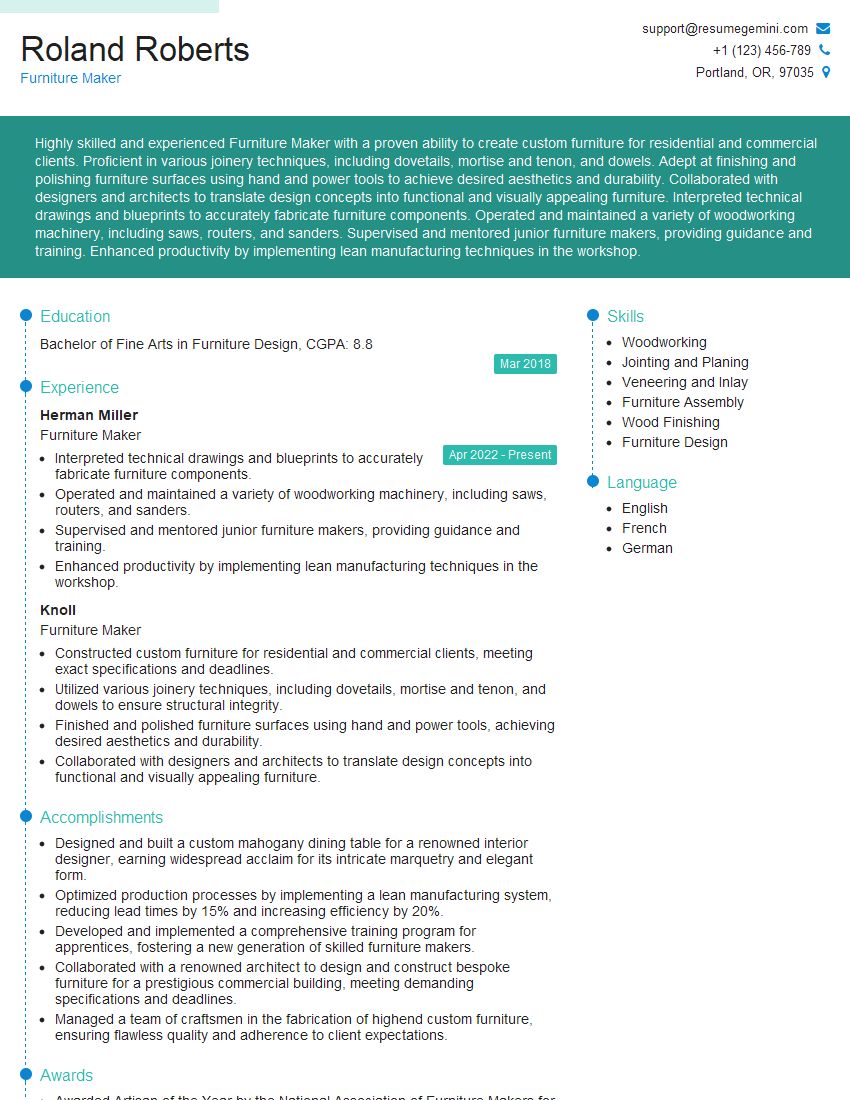
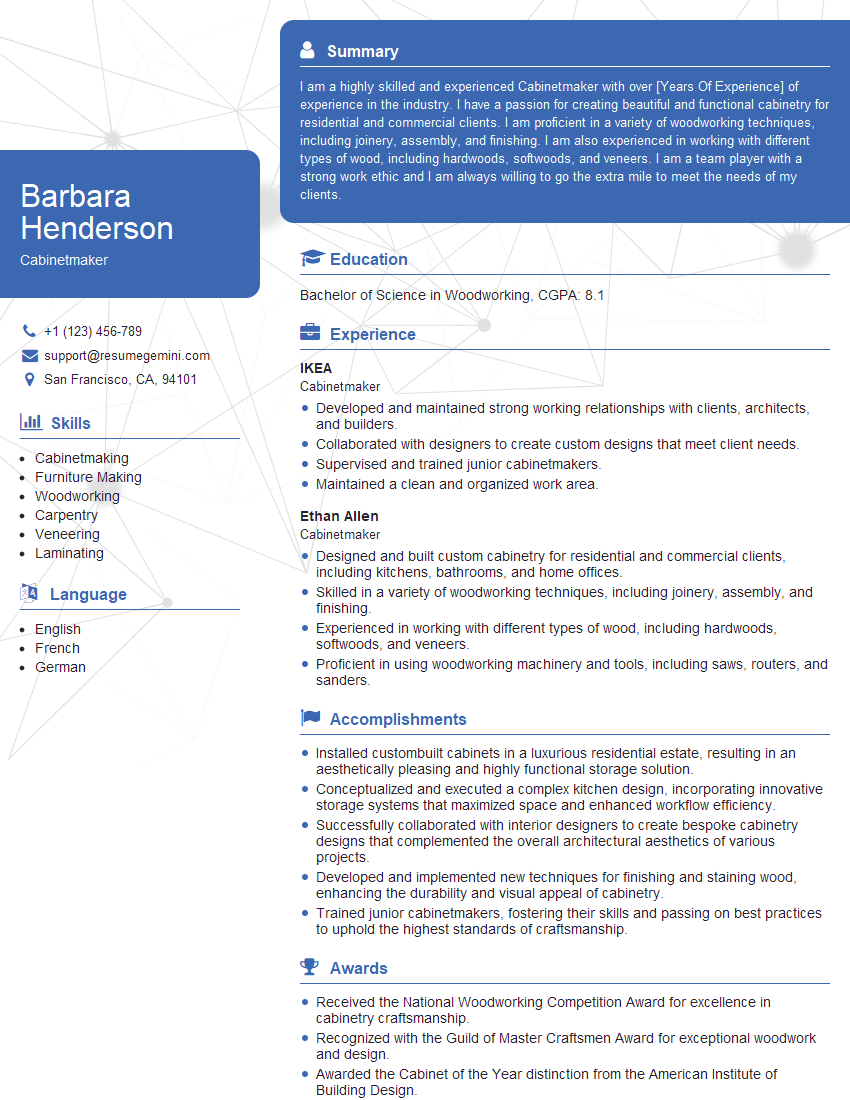
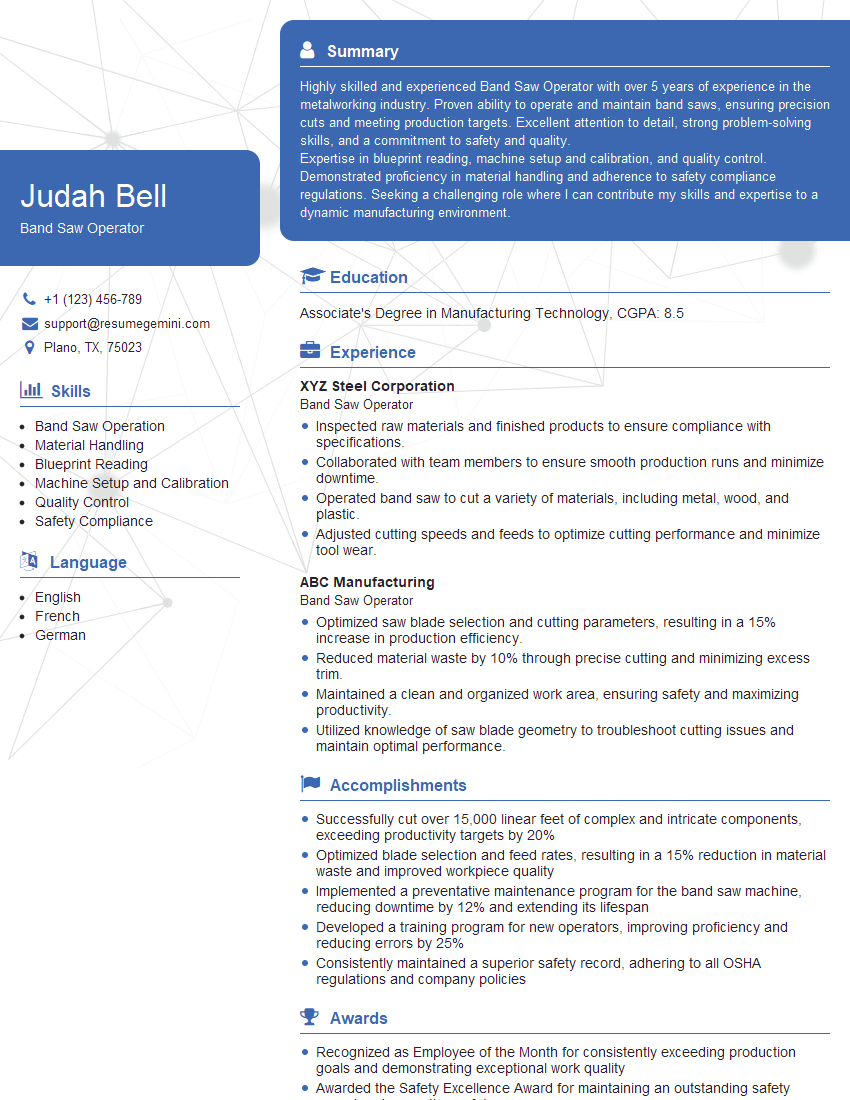
Mastering the setup and operation of woodworking machines is crucial for career advancement in this field. Proficiency in these skills demonstrates your dedication to safety, precision, and efficiency – all highly valued attributes by employers. To increase your chances of landing your dream job, creating a strong, ATS-friendly resume is essential. ResumeGemini is a trusted resource that can help you build a professional and effective resume that highlights your skills and experience. Examples of resumes tailored to Setup and Operate Woodworking Machines positions are available to help you get started.



Explore more articles
Users Rating of Our Blogs
Share Your Experience
We value your feedback! Please rate our content and share your thoughts (optional).
What Readers Say About Our Blog
Attention music lovers!
Wow, All the best Sax Summer music !!!
Spotify: https://open.spotify.com/artist/6ShcdIT7rPVVaFEpgZQbUk
Apple Music: https://music.apple.com/fr/artist/jimmy-sax-black/1530501936
YouTube: https://music.youtube.com/browse/VLOLAK5uy_noClmC7abM6YpZsnySxRqt3LoalPf88No
Other Platforms and Free Downloads : https://fanlink.tv/jimmysaxblack
on google : https://www.google.com/search?q=22+AND+22+AND+22
on ChatGPT : https://chat.openai.com?q=who20jlJimmy20Black20Sax20Producer
Get back into the groove with Jimmy sax Black
Best regards,
Jimmy sax Black
www.jimmysaxblack.com
Hi I am a troller at The aquatic interview center and I suddenly went so fast in Roblox and it was gone when I reset.
Hi,
Business owners spend hours every week worrying about their website—or avoiding it because it feels overwhelming.
We’d like to take that off your plate:
$69/month. Everything handled.
Our team will:
Design a custom website—or completely overhaul your current one
Take care of hosting as an option
Handle edits and improvements—up to 60 minutes of work included every month
No setup fees, no annual commitments. Just a site that makes a strong first impression.
Find out if it’s right for you:
https://websolutionsgenius.com/awardwinningwebsites
Hello,
we currently offer a complimentary backlink and URL indexing test for search engine optimization professionals.
You can get complimentary indexing credits to test how link discovery works in practice.
No credit card is required and there is no recurring fee.
You can find details here:
https://wikipedia-backlinks.com/indexing/
Regards
NICE RESPONSE TO Q & A
hi
The aim of this message is regarding an unclaimed deposit of a deceased nationale that bears the same name as you. You are not relate to him as there are millions of people answering the names across around the world. But i will use my position to influence the release of the deposit to you for our mutual benefit.
Respond for full details and how to claim the deposit. This is 100% risk free. Send hello to my email id: lukachachibaialuka@gmail.com
Luka Chachibaialuka
Hey interviewgemini.com, just wanted to follow up on my last email.
We just launched Call the Monster, an parenting app that lets you summon friendly ‘monsters’ kids actually listen to.
We’re also running a giveaway for everyone who downloads the app. Since it’s brand new, there aren’t many users yet, which means you’ve got a much better chance of winning some great prizes.
You can check it out here: https://bit.ly/callamonsterapp
Or follow us on Instagram: https://www.instagram.com/callamonsterapp
Thanks,
Ryan
CEO – Call the Monster App
Hey interviewgemini.com, I saw your website and love your approach.
I just want this to look like spam email, but want to share something important to you. We just launched Call the Monster, a parenting app that lets you summon friendly ‘monsters’ kids actually listen to.
Parents are loving it for calming chaos before bedtime. Thought you might want to try it: https://bit.ly/callamonsterapp or just follow our fun monster lore on Instagram: https://www.instagram.com/callamonsterapp
Thanks,
Ryan
CEO – Call A Monster APP
To the interviewgemini.com Owner.
Dear interviewgemini.com Webmaster!
Hi interviewgemini.com Webmaster!
Dear interviewgemini.com Webmaster!
excellent
Hello,
We found issues with your domain’s email setup that may be sending your messages to spam or blocking them completely. InboxShield Mini shows you how to fix it in minutes — no tech skills required.
Scan your domain now for details: https://inboxshield-mini.com/
— Adam @ InboxShield Mini
support@inboxshield-mini.com
Reply STOP to unsubscribe
Hi, are you owner of interviewgemini.com? What if I told you I could help you find extra time in your schedule, reconnect with leads you didn’t even realize you missed, and bring in more “I want to work with you” conversations, without increasing your ad spend or hiring a full-time employee?
All with a flexible, budget-friendly service that could easily pay for itself. Sounds good?
Would it be nice to jump on a quick 10-minute call so I can show you exactly how we make this work?
Best,
Hapei
Marketing Director
Hey, I know you’re the owner of interviewgemini.com. I’ll be quick.
Fundraising for your business is tough and time-consuming. We make it easier by guaranteeing two private investor meetings each month, for six months. No demos, no pitch events – just direct introductions to active investors matched to your startup.
If youR17;re raising, this could help you build real momentum. Want me to send more info?
Hi, I represent an SEO company that specialises in getting you AI citations and higher rankings on Google. I’d like to offer you a 100% free SEO audit for your website. Would you be interested?
Hi, I represent an SEO company that specialises in getting you AI citations and higher rankings on Google. I’d like to offer you a 100% free SEO audit for your website. Would you be interested?