Interviews are more than just a Q&A session—they’re a chance to prove your worth. This blog dives into essential Showmanship and Performance interview questions and expert tips to help you align your answers with what hiring managers are looking for. Start preparing to shine!
Questions Asked in Showmanship and Performance Interview
Q 1. Describe your experience in captivating an audience.
Captivating an audience is about creating a compelling experience that resonates emotionally and intellectually. It’s a multifaceted process involving strong storytelling, confident delivery, and a genuine connection with the viewers. I achieve this through several key strategies. First, I meticulously craft my performance, focusing on a clear narrative arc with a beginning, middle, and end. This ensures the audience has a satisfying journey. Second, I utilize varied vocal techniques, modulating my tone, pace, and volume to keep the audience engaged and highlight key moments. Think of it like composing music – the shifts in rhythm and intensity are crucial. Finally, and perhaps most importantly, I connect with the audience on a human level. I make eye contact, actively listen to their response (even nonverbal cues), and allow for genuine moments of shared experience. For example, during a recent corporate event, I incorporated a spontaneous audience poll related to the presentation’s theme, creating an interactive and memorable experience.
Q 2. How do you adapt your performance style to different audiences?
Adapting my performance style to different audiences is paramount. I analyze my audience beforehand, considering factors like age, background, cultural context, and the reason for their attendance. For instance, a performance for children will necessitate a more playful, high-energy approach with vibrant visuals and interactive elements, while a corporate presentation demands a more formal, structured style with data-driven insights and professional communication. My strategy involves customizing the content, delivery, and even the visual aids to resonate with the specific audience. I might adjust my humor, examples, and the level of technical jargon used. The goal is always to create a tailored experience that is both informative and engaging, making the performance relevant and meaningful to each audience.
Q 3. Explain your approach to stage presence and command.
Stage presence and command are built on confidence, preparation, and awareness. A commanding stage presence is not about being loud or boisterous; it’s about owning the space and projecting authority and assurance. I achieve this through mindful posture, deliberate movement, and strong vocal projection. I practice my material extensively, ensuring I’m familiar with every aspect of my performance, which allows me to project confidence and focus on connecting with the audience. This preparation reduces anxiety and allows me to respond authentically to the energy in the room. Furthermore, I maintain constant awareness of my surroundings and audience reactions, allowing me to adjust my approach if needed. Think of it as a conversation, not a monologue. It’s a dynamic interplay between performer and audience, which I constantly monitor and react to.
Q 4. How do you handle unexpected technical difficulties during a performance?
Unexpected technical difficulties are an inevitable part of live performance. My approach focuses on preparedness and adaptability. Firstly, I always have backup plans. This might include having printed copies of slides, a pre-recorded audio version of a presentation, or the ability to perform a segment without technical reliance. Secondly, I maintain a calm demeanor and communicate openly with the audience. Acknowledging the issue directly and honestly often defuses any tension, and my ability to improvise ensures the performance flows smoothly. Finally, I involve the technical team promptly to resolve the issue, but I don’t let their efforts disrupt the audience’s experience. For example, during a lighting failure, I seamlessly transitioned into a storytelling segment, engaging the audience with an anecdote related to the show’s theme, using the unexpected darkness to heighten the dramatic effect.
Q 5. Describe a time you had to improvise during a performance. What was your strategy?
During a recent improv show, our pre-planned skit’s central prop – a vintage suitcase – was accidentally damaged backstage. My strategy was to immediately incorporate the mishap into the performance. Instead of letting it derail the flow, I highlighted the broken suitcase as a comedic element, weaving a humorous narrative about its ‘unexpected journey’ and connecting it to the main theme of the skit. This improvisation not only salvaged the performance but also added an element of surprise and authenticity that the audience found endearing. The key was to embrace the unexpected and transform a potential setback into an opportunity for spontaneous, audience-connecting creativity.
Q 6. How do you manage nerves before a performance?
Managing pre-performance nerves is crucial. My approach is multifaceted. Thorough preparation is key. Knowing my material intimately reduces anxiety significantly. I also employ relaxation techniques such as deep breathing exercises and meditation to calm my nervous system. Positive self-talk is also crucial; I focus on my strengths and past successes. Furthermore, I visualize a successful performance, imagining the positive energy and connection with the audience. Finally, I engage in physical activity, such as a short jog or stretching, to release pent-up energy. These techniques help me translate nervous energy into focused excitement, allowing me to deliver a compelling and energetic performance.
Q 7. How do you incorporate audience interaction into your performances?
Audience interaction is crucial for creating a dynamic and memorable experience. I incorporate it naturally, depending on the format and type of performance. In some cases, I might include planned Q&A sessions, polls, or quizzes to directly engage the audience and gauge their understanding. In more informal settings, I might invite spontaneous questions or comments, fostering a more conversational atmosphere. A key strategy is to actively listen to the audience and respond authentically to their reactions, creating a genuine two-way exchange. For example, if someone makes a comment or asks a question, I tailor my response to acknowledge their contribution and incorporate their perspective into the ongoing narrative. The goal is to create a sense of shared experience and participation, turning the audience from passive observers into active contributors.
Q 8. Explain your process for developing a compelling performance.
Developing a compelling performance is a multi-stage process that begins long before stepping onto the stage. It’s like crafting a delicious meal – you need the right ingredients and the right recipe.
- Concept & Research: First, I define the core message or theme. What story am I telling? What emotion am I aiming to evoke? Thorough research is crucial – understanding the context, the audience, and the desired outcome is paramount. For example, if I’m performing a historical piece, I need to understand the historical context to portray it authentically.
- Structure & Scripting (if applicable): I create a clear structure, outlining the beginning, middle, and end. If a script is involved, I focus on pacing, dialogue, and ensuring a compelling narrative arc. Think of it as the skeleton of your performance.
- Rehearsal & Refinement: This is where the magic happens. I rehearse repeatedly, paying close attention to timing, delivery, and emotional resonance. I experiment with different approaches, seeking feedback and making adjustments. This iterative process ensures a polished and engaging final product. I might record myself to identify areas for improvement – like a chef tasting their dish multiple times.
- Technical Aspects: Depending on the performance, this may involve mastering props, costumes, lighting, and sound. I collaborate with the technical team to ensure seamless integration of these elements, enhancing the overall impact.
- Audience Connection: Finally, I consider how to connect with the audience. This goes beyond just delivering lines; it’s about creating a shared experience, making eye contact, and responding to the energy in the room. It’s like a conversation, not a monologue.
Q 9. How do you use body language to enhance your performance?
Body language is a powerful tool; it’s the unspoken language of performance. It’s about using your entire body to tell the story, not just your voice.
- Posture & Presence: A confident posture exudes authority and engages the audience. Slouching projects apathy. I practice maintaining an upright yet relaxed stance, ensuring I command the stage.
- Gestures & Movements: Gestures should be purposeful and meaningful, not distracting. They emphasize key points, convey emotions, and maintain audience interest. I avoid fidgeting or repetitive movements. Consider a powerful gesture emphasizing a pivotal moment in a story versus nervous hand-wringing.
- Facial Expressions: The face is a storyteller’s canvas. I use subtle and nuanced facial expressions to reflect the emotions of the character or the message I’m conveying. A slight smile can convey warmth, while a furrowed brow can express concern.
- Eye Contact: Making eye contact connects with individual audience members, creating a personal connection and inviting them into the performance. I practice scanning the room, engaging with different sections of the audience to create a sense of intimacy.
- Space & Movement: How I use the stage is critical. Strategic movement draws attention, creates dynamic energy, and enhances the narrative flow. An actor pacing the stage during a moment of tension creates a very different feeling than one remaining still.
Q 10. Describe your understanding of vocal projection and modulation.
Vocal projection and modulation are essential for ensuring that your voice is heard clearly and effectively, conveying the necessary emotions and nuances.
- Projection: This is about the power and volume of your voice. I use breathing techniques to ensure I project my voice without straining. It’s like a singer learning to control their breath – you need the power to reach the back row but maintain control and nuance.
- Modulation: This involves varying your pitch, tone, pace, and volume to create emphasis and expression. A monotone voice is boring. I use modulation to create interest and emotion – think of a whispered secret versus a triumphant shout.
- Articulation & Enunciation: Clear articulation and pronunciation are vital. Mumbling makes it difficult to understand. I practice tongue twisters and focus on clear diction to ensure every word is understood.
- Pauses & Silence: Strategic pauses create impact and allow the audience to absorb information. Silence can be just as powerful as words. Think of the dramatic pauses in a play that heighten suspense.
- Resonance: I practice using my vocal resonators (chest, throat, head) to improve the clarity and fullness of my voice.
Q 11. How do you ensure your performance is both engaging and professional?
Balancing engagement and professionalism involves carefully crafting your persona and approach. It’s like finding the perfect balance between being friendly and authoritative.
- Authenticity: Be yourself but be your best self. Authenticity connects with the audience. Avoid trying to be someone you’re not.
- Professionalism: Maintain a respectful demeanor, arrive on time, be prepared, and dress appropriately. This demonstrates respect for your audience, the venue, and the event.
- Audience Interaction: Engage with the audience thoughtfully and respectfully. Avoid inappropriate jokes or comments. A good connection comes from genuine interaction.
- Energy Level: Maintain an appropriate energy level. Be enthusiastic and passionate, but avoid being over the top. It’s like a fine wine – not too boisterous, but full of flavour.
- Respectful Language: Use language that is appropriate for your audience and the setting. Avoid slang or offensive language.
Q 12. How familiar are you with different performance venues and their unique challenges?
Familiarity with different performance venues is crucial. Each presents unique challenges in terms of acoustics, lighting, stage size, and audience interaction.
- Acoustics: A large hall requires different projection techniques compared to an intimate theater. I adapt my vocal delivery and microphone technique accordingly.
- Lighting: Stage lighting affects visibility and mood. I work with lighting designers to ensure optimal visibility and create a desired atmosphere.
- Stage Size: Movement and staging need to be adapted to the size of the stage. In a small space, overly grand gestures might be inappropriate.
- Audience Interaction: The size and type of audience influence the level and style of interaction. A formal lecture requires a different approach compared to a stand-up comedy show.
- Technical Capabilities: Different venues have different technical capabilities. I ensure I’m prepared for any technical limitations.
Q 13. How do you incorporate storytelling into your performances?
Storytelling is the heart of most compelling performances. It’s about connecting with the audience on an emotional level.
- Narrative Arc: I structure the performance around a clear narrative arc – beginning, rising action, climax, falling action, resolution. It’s like creating a compelling movie plot.
- Character Development: If the performance involves characters, I work to develop them fully, creating believable motivations and emotions.
- Emotional Resonance: I focus on evoking emotions in the audience, using storytelling techniques to create empathy, suspense, joy, or sorrow.
- Imagery & Language: I use vivid imagery and evocative language to paint pictures in the audience’s minds.
- Personal Anecdotes (if appropriate): Personal stories can create a powerful connection with the audience, adding a touch of authenticity and vulnerability.
Q 14. How do you receive and utilize constructive criticism?
Constructive criticism is invaluable for growth. I approach it as an opportunity for improvement, not a personal attack.
- Active Listening: I listen attentively, focusing on understanding the feedback, rather than becoming defensive.
- Seeking Clarity: If I’m unsure about something, I ask clarifying questions to fully grasp the feedback.
- Objectivity: I try to objectively assess the validity of the criticism, separating personal feelings from the feedback.
- Implementation: I identify areas for improvement and actively work to implement the suggestions, making adjustments in my next performance.
- Gratitude: I express gratitude for the feedback, recognizing its value in my professional development. It’s a gift, not a judgment.
Q 15. Describe your experience with rehearsal and preparation techniques.
Rehearsal and preparation are the bedrock of any successful performance. My approach is multifaceted, focusing on both technical proficiency and emotional connection. It begins with a thorough understanding of the material, whether it’s a script, a musical score, or a dance routine. I then break down the performance into smaller, manageable segments, focusing on mastering each individual part before integrating them into a cohesive whole.
- Detailed Script/Score Analysis: I meticulously analyze the text or music, identifying key emotional beats, character arcs, and technical challenges.
- Structured Rehearsals: Rehearsals aren’t just about running through the material repeatedly. I incorporate focused exercises on specific aspects, like vocal projection, stage presence, or character development. I often record rehearsals to objectively assess my progress and identify areas for improvement.
- Technical Refinement: This phase focuses on perfecting the technical aspects – whether it’s perfecting a specific dance move, mastering a difficult vocal run, or refining the timing of a comedic line.
- Emotional Connection & Character Work: Beyond the technical aspects, I dedicate time to understanding the emotional core of the performance. This involves deep dives into character motivations, backstories, and relationships to ensure an authentic portrayal.
- Run-Throughs and Feedback: Frequent run-throughs, ideally with an audience or trusted colleagues, provide invaluable feedback and allow me to adapt and refine the performance.
For example, in preparing for a dramatic monologue, I spent weeks analyzing the character’s motivations, researching the historical context, and working with a vocal coach to develop the right tone and inflection. This methodical approach ensures a polished and emotionally resonant performance.
Career Expert Tips:
- Ace those interviews! Prepare effectively by reviewing the Top 50 Most Common Interview Questions on ResumeGemini.
- Navigate your job search with confidence! Explore a wide range of Career Tips on ResumeGemini. Learn about common challenges and recommendations to overcome them.
- Craft the perfect resume! Master the Art of Resume Writing with ResumeGemini’s guide. Showcase your unique qualifications and achievements effectively.
- Don’t miss out on holiday savings! Build your dream resume with ResumeGemini’s ATS optimized templates.
Q 16. How do you handle criticism or negative feedback from an audience?
Constructive criticism is vital for growth. I approach negative feedback not as a personal attack, but as an opportunity to learn and improve. My process involves active listening, thoughtful consideration, and a willingness to adapt.
- Active Listening: I try to understand the source of the criticism, focusing on the specific points rather than getting defensive.
- Objective Assessment: I consider the feedback objectively, separating valid criticism from subjective opinions. Does the criticism point to a genuine flaw in my performance, or is it a matter of personal preference?
- Adaptability: If the criticism is valid, I work on addressing the issue. This might involve adjusting my delivery, refining my technique, or even re-evaluating the overall performance concept.
- Seeking Clarification: If I’m unsure about the feedback, I ask clarifying questions to fully understand the perspective.
In one instance, audience feedback suggested my character’s emotional arc was unclear in the second act. Instead of dismissing it, I revised the scene’s pacing and added subtle physical cues to better illustrate the emotional shift. The result was a much more impactful performance.
Q 17. How do you maintain energy and enthusiasm throughout a long performance?
Maintaining energy and enthusiasm throughout a long performance requires careful planning and self-management. It’s a marathon, not a sprint.
- Physical Preparation: Proper hydration, nutrition, and physical exercise before the performance are essential. I avoid heavy meals and ensure I’m well-rested.
- Mental Strategies: Visualization techniques, positive self-talk, and mindfulness practices help me stay focused and energized. I might listen to upbeat music beforehand to set a positive tone.
- Audience Engagement: Connecting with the audience keeps the energy flowing. Responding to their reactions, making eye contact, and engaging in spontaneous moments creates a dynamic exchange.
- Strategic Breaks: If possible, incorporating planned breaks allows me to recharge and refocus. Even a few moments of silence or a quick sip of water can make a difference.
- Variation and Pacing: Varying the pace and intensity of the performance prevents monotony. Alternating between high-energy and quieter moments keeps both me and the audience engaged.
Think of it like pacing yourself in a long-distance race. You don’t sprint the whole way; you manage your energy strategically to maintain a consistent pace and finish strong.
Q 18. Describe a time you had to overcome a challenge during a performance.
During a crucial musical performance, the microphone abruptly cut out mid-song. My initial reaction was panic, but I quickly regained composure.
- Quick Assessment: I instantly assessed the situation, realizing the microphone was the problem, not my performance.
- Improvisation: Instead of stopping, I continued singing unamplified, using my vocal projection skills to reach the audience. I adjusted my performance style to compensate for the lack of amplification.
- Maintaining Composure: I kept a calm demeanor, preventing any visible signs of distress to the audience. I didn’t let the technical issue disrupt the flow of the song.
- Audience Connection: I engaged with the audience directly, making eye contact and smiling to connect with them on a more intimate level. This unexpected intimacy added to the performance’s unique character.
The challenge turned into an opportunity to showcase adaptability and demonstrate the importance of strong stage presence and vocal technique. While not ideal, the audience responded incredibly positively to my quick thinking and continued engagement.
Q 19. How do you build rapport with an audience?
Building rapport with an audience is about creating a genuine connection and shared experience. It’s about making them feel seen and heard.
- Eye Contact: Making eye contact with individuals throughout the audience helps create a sense of intimacy and connection.
- Storytelling: Weaving personal anecdotes or relatable stories into the performance helps to create a human connection. People connect with authentic emotion.
- Interaction: If appropriate for the performance style, engaging the audience directly through questions, jokes, or invitations to participate creates a sense of shared experience.
- Energy and Enthusiasm: Positive energy and genuine enthusiasm are contagious. If you’re passionate about your performance, the audience will likely be too.
- Listening: Pay attention to the audience’s reactions and adjust your performance accordingly. A responsive performance demonstrates awareness and respect.
For example, during a stand-up routine, I noticed the audience laughing at a particular joke more than others. I built on that success, expanding on that theme in later jokes to create a more tailored and interactive experience.
Q 20. How familiar are you with different performance styles and genres?
I’m familiar with a wide range of performance styles and genres, from classical theatre and musical theatre to contemporary dance, stand-up comedy, and even immersive theatre experiences. My background allows me to adapt my approach to suit the specific demands of each genre.
- Classical Theatre: Experience with Shakespeare, Greek tragedy, and other classic works, emphasizing precise diction, vocal projection, and character work.
- Musical Theatre: Proficiency in singing, dancing, and acting, requiring a balance of technical skill and emotional expression.
- Contemporary Dance: Knowledge of various dance styles, from modern to ballet, with an emphasis on physicality, emotional storytelling, and precise movements.
- Stand-up Comedy: Experience in crafting and delivering comedic material, including timing, delivery, and audience interaction.
- Immersive Theatre: Understanding the nuances of audience interaction in non-traditional theatre settings and improvisational skills.
This versatility allows me to bring unique perspectives and skills to each project.
Q 21. How do you maintain the quality of your performance under pressure?
Maintaining performance quality under pressure hinges on thorough preparation and mental resilience.
- Over-Preparation: The more prepared I am, the less likely I am to be thrown off by unexpected challenges. This includes thorough rehearsals, contingency planning (e.g., having backup plans for technical issues), and mental rehearsal to anticipate and manage potential problems.
- Mindfulness and Control: Focusing on the present moment, rather than worrying about potential errors, is crucial. Deep breathing techniques and mindfulness exercises help to center me and manage stress.
- Positive Self-Talk: I use positive affirmations to maintain confidence and self-belief. Remembering past successes reinforces my ability to overcome challenges.
- Adaptability: The capacity to adapt quickly to unexpected circumstances, like technical malfunctions or unexpected audience reactions, is vital. This requires flexibility and the ability to think on my feet.
- Focus on the Performance, Not the Pressure: I try to shift my focus from the pressure to the performance itself, connecting with the material and engaging with the audience. This helps maintain a sense of purpose and prevents overwhelm.
Maintaining composure under pressure isn’t about eliminating nerves; it’s about channeling that nervous energy into a focused and engaging performance.
Q 22. How do you collaborate effectively with other performers?
Effective collaboration with other performers hinges on clear communication, mutual respect, and a shared understanding of the performance goals. It’s like a well-oiled machine – each part needs to function smoothly and in harmony with the others.
- Pre-performance meetings: Thorough rehearsals and discussions about character interactions, timing, and transitions are crucial. We discuss potential challenges and agree on solutions beforehand. For example, in a musical theatre production, we’d meticulously plan scene changes and handovers between actors.
- Active listening and feedback: I value everyone’s input and actively participate in constructive criticism sessions. This helps identify strengths and areas for improvement across the group. If a fellow performer suggests a different blocking that enhances the flow of the scene, I embrace it.
- Adaptability and compromise: On stage, things don’t always go as planned. Being able to adapt to unexpected situations and work collaboratively to resolve them is essential. For instance, if a prop malfunctions, we need to quickly improvise and maintain the audience engagement.
Q 23. How do you use lighting, sound, and other technical elements to enhance your performance?
Lighting, sound, and other technical elements are not mere add-ons; they are integral parts of the storytelling. They create the atmosphere, emphasize emotions, and guide the audience’s focus.
- Lighting: I work closely with the lighting designer to ensure that lighting cues enhance the dramatic arc of the performance. Spotlights can highlight a character’s emotional state, while washes of colour can set the mood (e.g., deep blues for melancholy, warm oranges for joy).
- Sound: Sound design is equally vital. Background music, sound effects, and amplification all play a role in creating an immersive experience. The right music choice can amplify the emotional impact of a scene. In a dramatic monologue, for example, a sudden crescendo can indicate a crucial turning point.
- Other technical elements: This might involve coordinating with stagehands for prop placement or using special effects like fog or projections to add visual interest and depth to the performance.
Think of it like painting a picture – lighting is the colour palette, sound is the music, and special effects are the brush strokes that add texture and detail.
Q 24. Describe your experience with costume and makeup application.
Costume and makeup are essential tools for character development and storytelling. They are more than just aesthetics; they help me embody the character fully.
- Costume: I collaborate with costume designers to choose outfits that accurately reflect the character’s personality, social status, and the overall setting of the performance. This involves fitting sessions and discussions regarding fabric choices and accessories.
- Makeup: I have experience applying a wide range of makeup styles, from natural and subtle looks to more elaborate and theatrical ones. I understand how makeup can enhance facial features, add character, and create specific effects (e.g., aging, wounds). I also pay attention to the makeup’s durability and how it interacts with lighting.
For example, in a historical drama, period-appropriate clothing and makeup are crucial to immerse the audience. Similarly, a villain might require a more dramatic makeup look to convey menace.
Q 25. How do you ensure your performance aligns with the overall event goals?
Aligning my performance with the overall event goals requires a deep understanding of the event’s objectives and target audience. This involves careful communication with event organizers and other stakeholders.
- Understanding the event brief: Before any performance, I thoroughly review the event brief to understand the theme, desired tone, and expected outcomes. This might involve a corporate event, a charity gala, or a private function, each with specific needs.
- Tailoring the performance: Once the objectives are clear, I adapt my performance accordingly. This may involve choosing appropriate material, adjusting the length, and modifying the style and delivery of the performance to suit the occasion.
- Collaboration and feedback: I engage in open communication with organizers to ensure alignment. This includes discussing the content, logistics, and ensuring the performance doesn’t clash with the overall flow of the event.
For example, at a corporate event, I might adjust my performance to incorporate elements that relate to the company’s values and message, ensuring it’s both engaging and relevant.
Q 26. How do you assess the success of your performance?
Assessing performance success isn’t solely about applause. It involves analyzing multiple factors to understand the effectiveness of my performance and identify areas for improvement.
- Audience feedback: Direct feedback from the audience through surveys, reviews, or informal conversations is valuable. This can provide insights into what resonated and what didn’t.
- Objective metrics: Depending on the type of performance, I might track metrics like audience engagement (e.g., participation rate, social media interactions), donations raised (for charity events), or sales generated (for commercial events).
- Self-reflection: I critically review my performance, analyzing my delivery, pacing, and overall connection with the audience. I look for opportunities to refine my technique and enhance my craft.
Combining audience feedback with objective metrics and self-reflection gives a comprehensive picture of the performance’s success, allowing for continuous learning and growth.
Q 27. Describe your experience with audience engagement strategies.
Audience engagement is about creating a connection, fostering interaction, and making the audience feel involved in the performance. It’s about transforming them from passive observers into active participants.
- Interactive elements: Incorporating interactive elements like Q&A sessions, polls, games, or even impromptu audience participation can create a more dynamic and engaging experience.
- Storytelling techniques: I use storytelling techniques to captivate the audience, creating relatable narratives that evoke emotions and leave a lasting impression. A compelling story can build a connection far stronger than a mere presentation.
- Nonverbal communication: Maintaining eye contact, using expressive body language, and adapting my energy levels to match the audience’s mood are crucial for creating a strong connection.
For instance, in a comedic performance, encouraging laughter and spontaneous interaction builds a lively atmosphere, whereas in a more serious setting, a thoughtful and respectful delivery will create a strong connection.
Q 28. How would you describe your unique selling proposition as a performer?
My unique selling proposition as a performer is the ability to seamlessly blend technical skill with emotional authenticity. I’m not just performing; I’m connecting.
I combine a strong foundation in classical performance techniques with a contemporary understanding of audience engagement strategies. My performances are characterized by:
- Technical proficiency: I possess a mastery of vocal technique, movement, and stage presence.
- Emotional depth: I have the ability to connect with my audience on an emotional level, creating a powerful and memorable experience.
- Adaptability and versatility: I am comfortable adapting my style to various settings, audiences, and performance formats.
In essence, I offer a powerful blend of skill and heart – the technical prowess to deliver an outstanding performance and the emotional depth to create a truly impactful experience for my audience.
Key Topics to Learn for Showmanship and Performance Interview
- Stage Presence and Confidence: Understanding and projecting confidence, commanding attention, and maintaining composure under pressure. Practical application: Analyzing your own strengths and weaknesses in performance settings, practicing techniques to improve posture and vocal projection.
- Audience Engagement: Techniques for connecting with an audience, reading their responses, and adapting your performance accordingly. Practical application: Developing strategies to incorporate audience participation, tailoring your delivery to different audience types, and practicing improvisation skills.
- Storytelling and Narrative: Crafting compelling narratives, building suspense, and creating emotional impact through your performance. Practical application: Analyzing successful performances to understand narrative structure, practicing storytelling techniques, and developing a personal performance style.
- Vocal Technique and Delivery: Mastering vocal projection, articulation, pace, and tone to effectively communicate your message. Practical application: Working on vocal exercises to improve range and clarity, practicing different delivery styles, and seeking feedback on vocal performance.
- Character Development and Immersion: Creating believable and engaging characters, understanding their motivations, and embodying them convincingly. Practical application: Studying character development techniques from acting, developing a range of character voices and mannerisms, and practicing improvisation exercises.
- Technical Proficiency (if applicable): Depending on the specific role, this could include expertise with sound systems, lighting, special effects, or other relevant technologies. Practical application: Familiarize yourself with relevant software and equipment, practice troubleshooting common technical issues, and highlight your proficiency in your resume.
Next Steps
Mastering showmanship and performance is crucial for career advancement in many fields, from entertainment and public speaking to sales and leadership. A strong performance translates to increased confidence, better communication, and the ability to captivate your audience – essential skills for success. To maximize your job prospects, create an ATS-friendly resume that highlights your skills and accomplishments effectively. ResumeGemini is a trusted resource to help you build a professional and impactful resume tailored to your specific experience. We offer examples of resumes tailored to Showmanship and Performance to guide your process. Invest the time to craft a compelling resume—it’s your first impression and a key to unlocking your career potential.
Director Resume Sample
Animator Resume Sample
Actor Resume Sample
Comedian Resume Sample
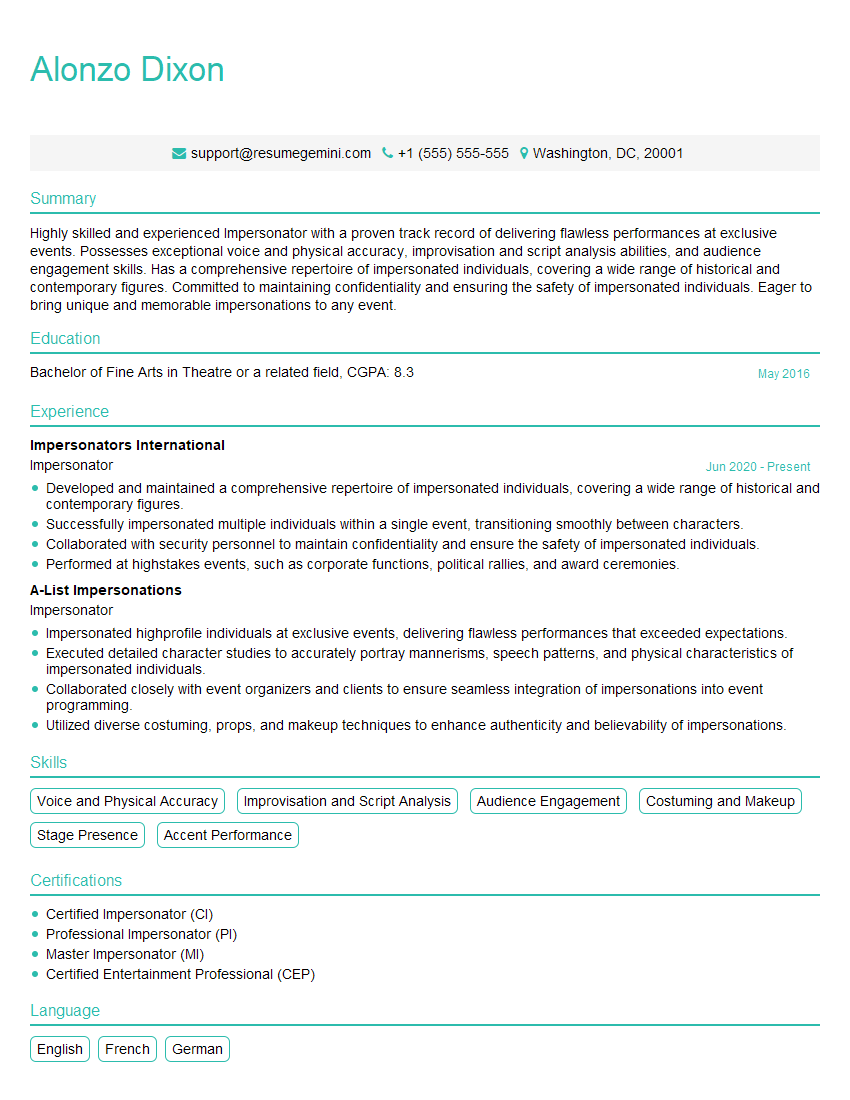
Impersonator Resume Sample
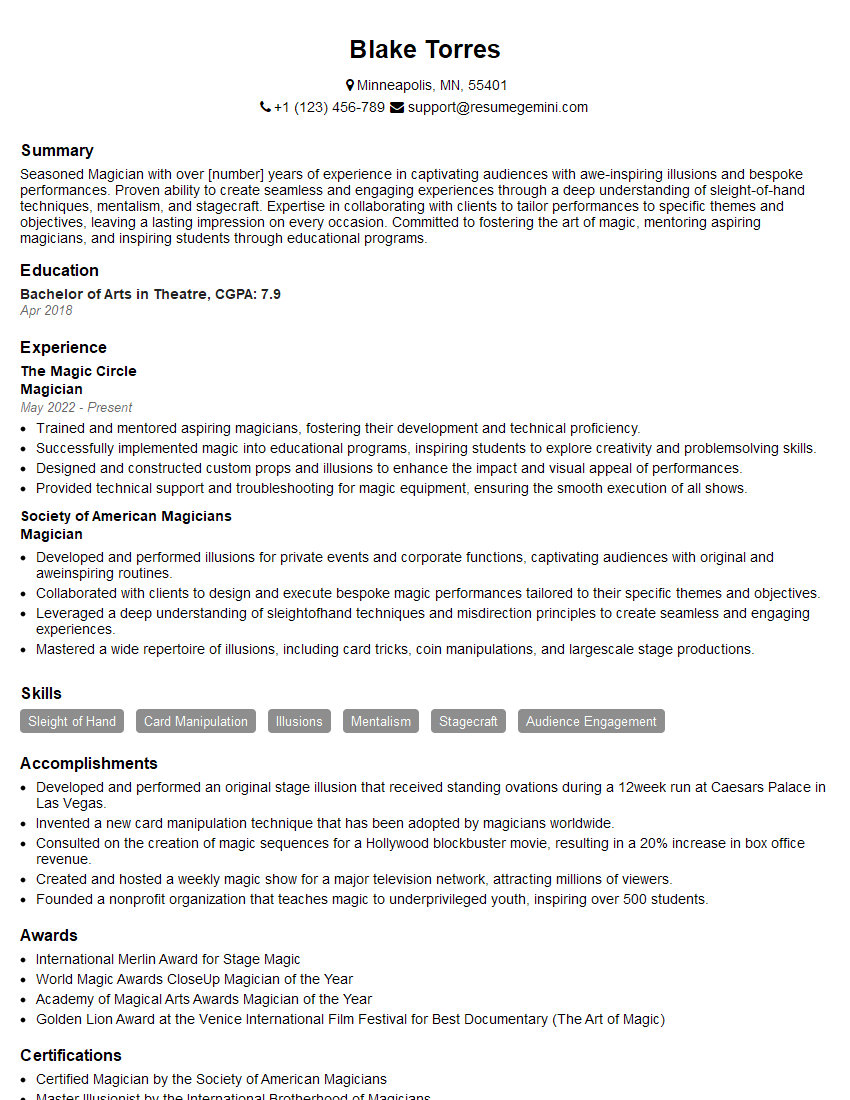
Magician Resume Sample
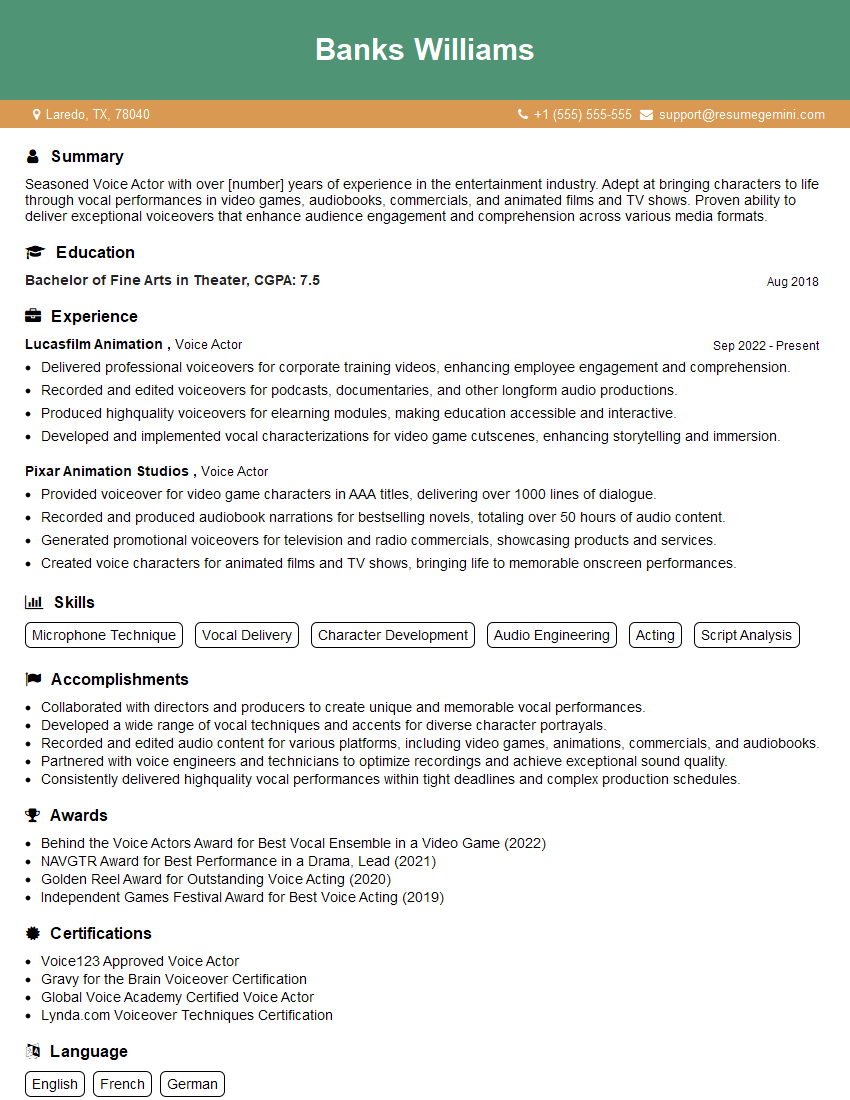
Voice Actor Resume Sample
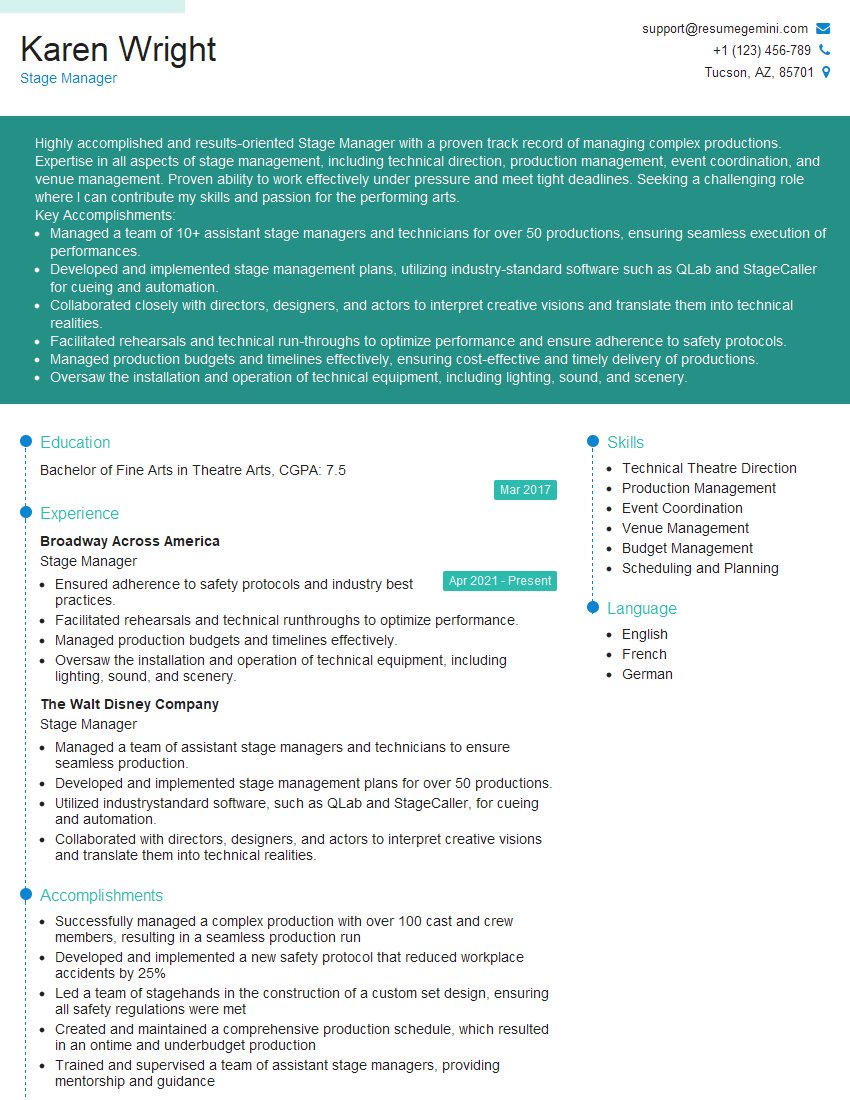
Stage Manager Resume Sample
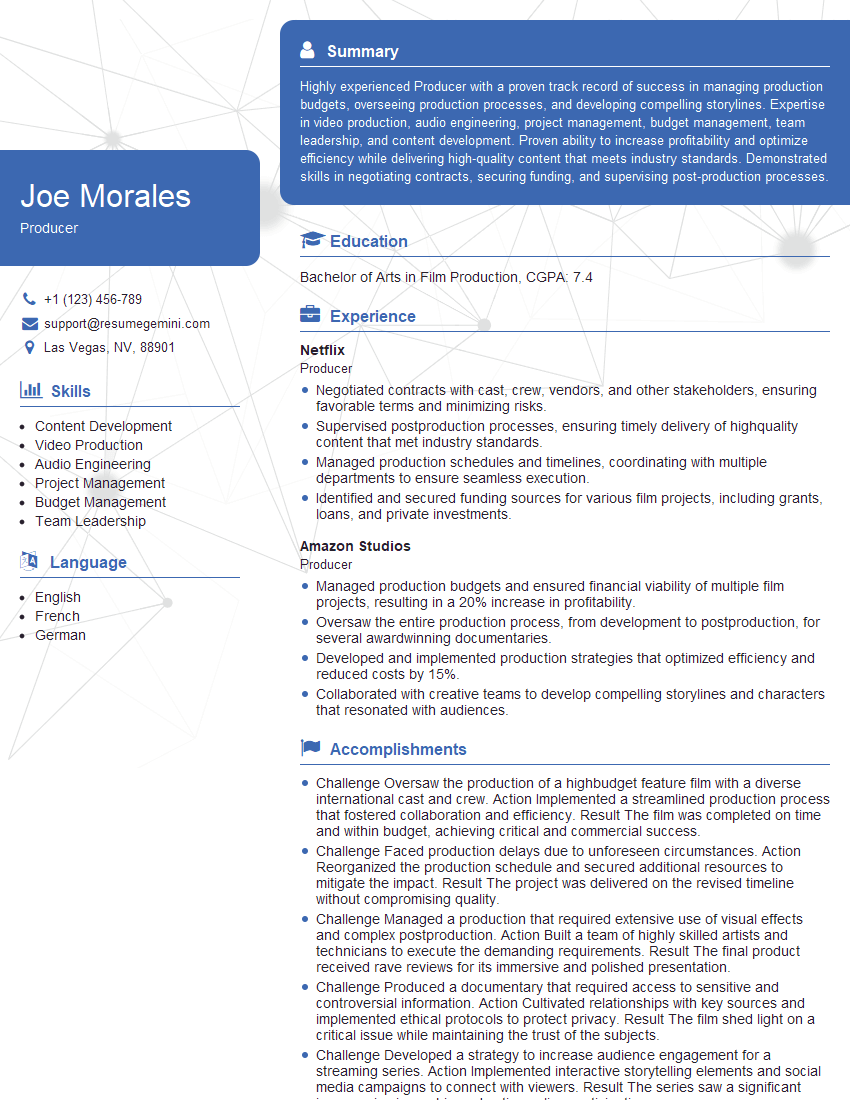
Producer Resume Sample
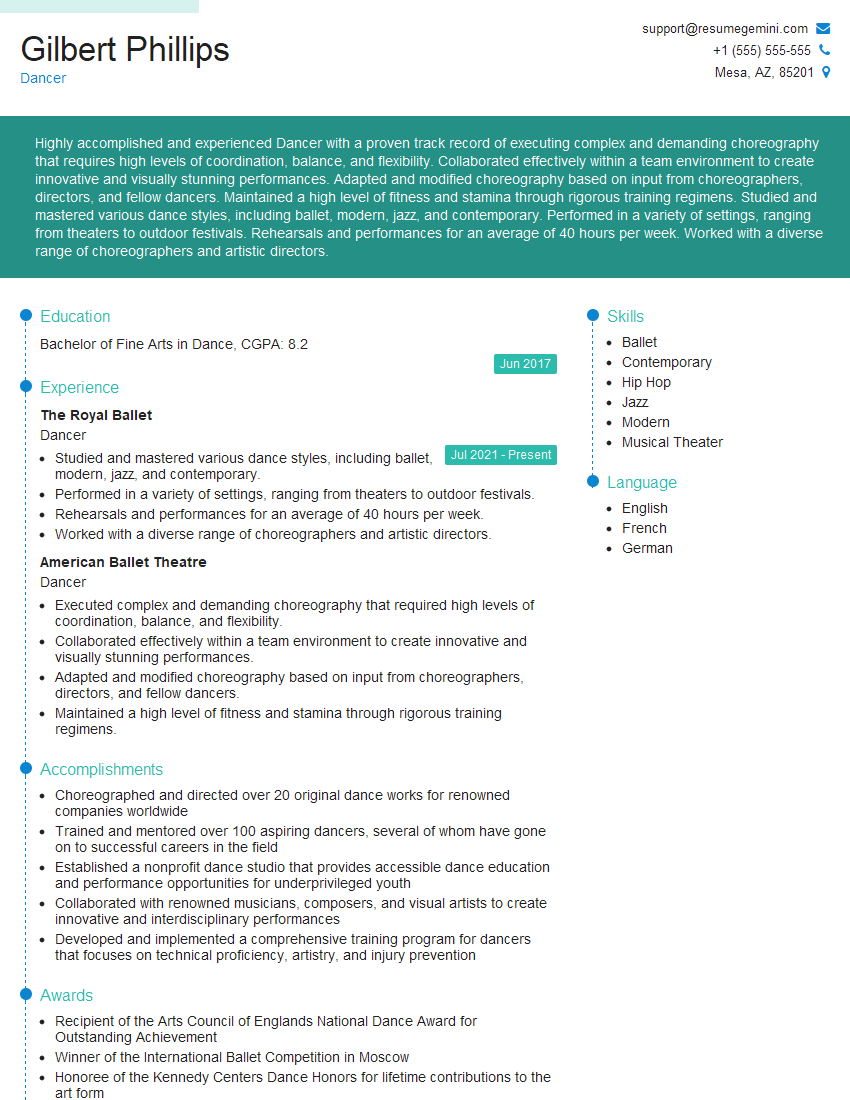
Dancer Resume Sample
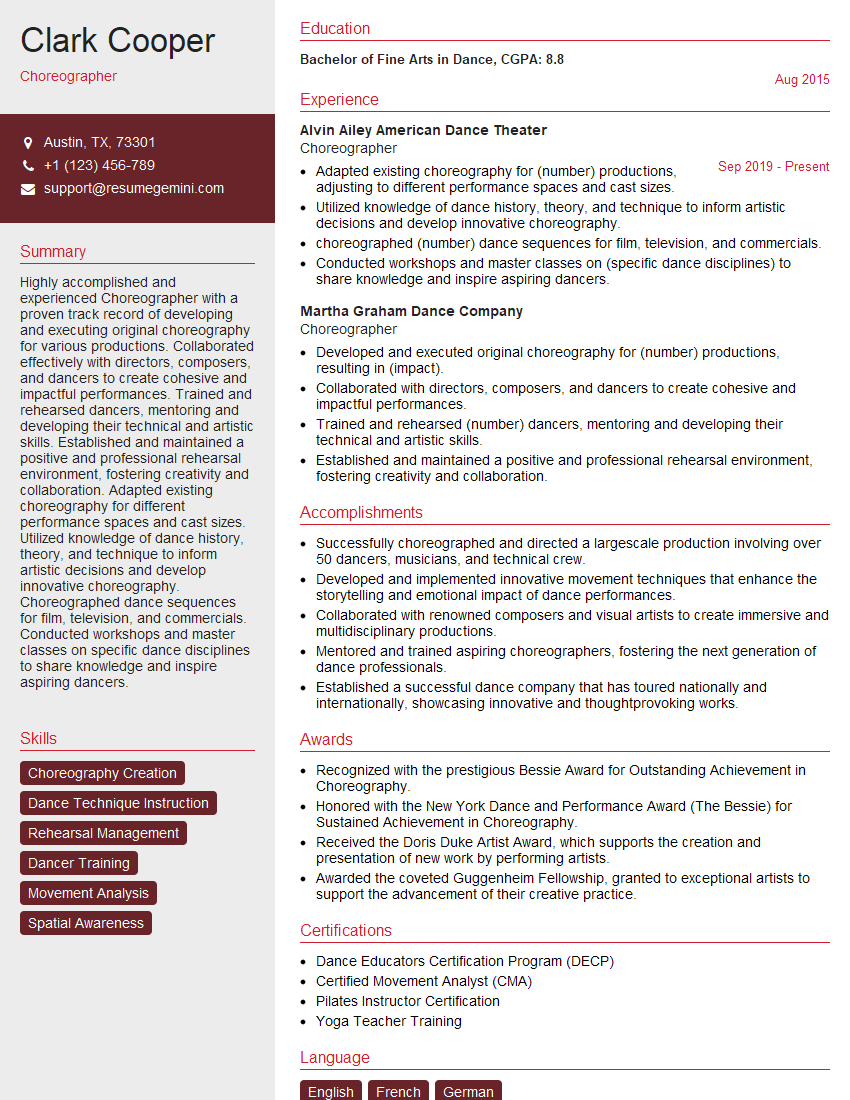
Choreographer Resume Sample
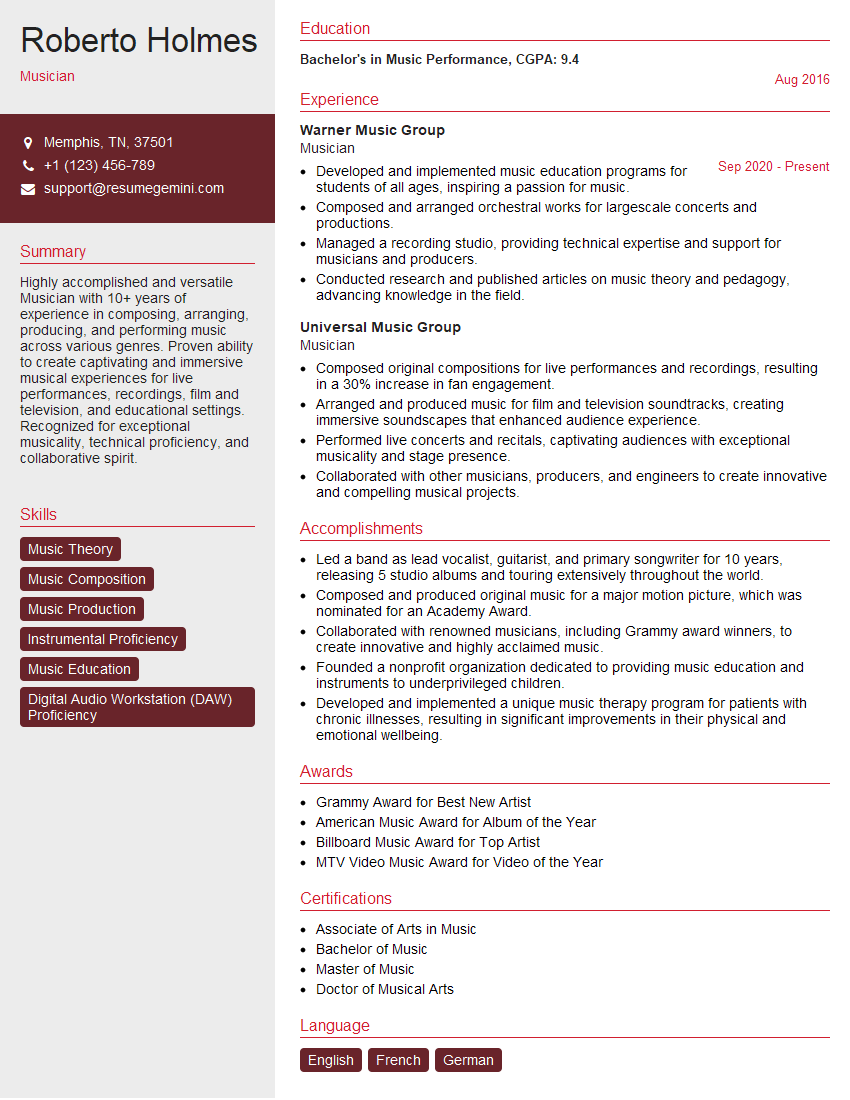
Musician Resume Sample
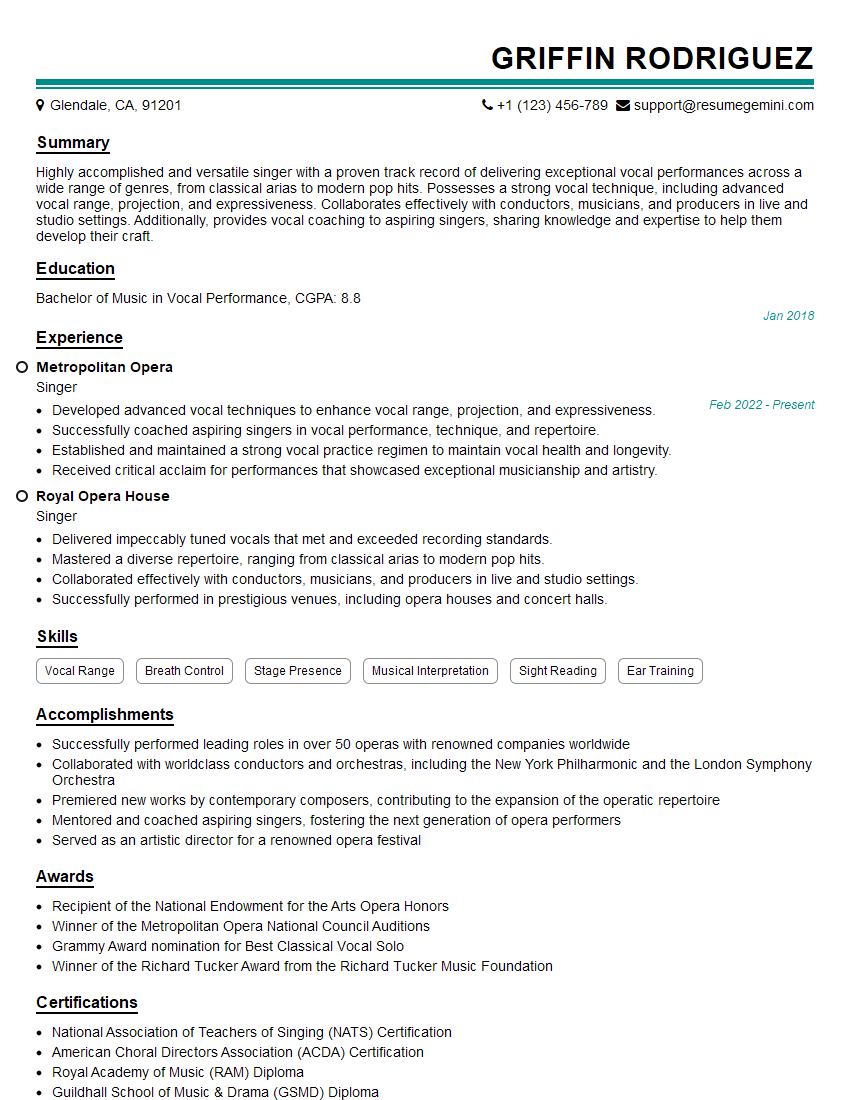
Singer Resume Sample
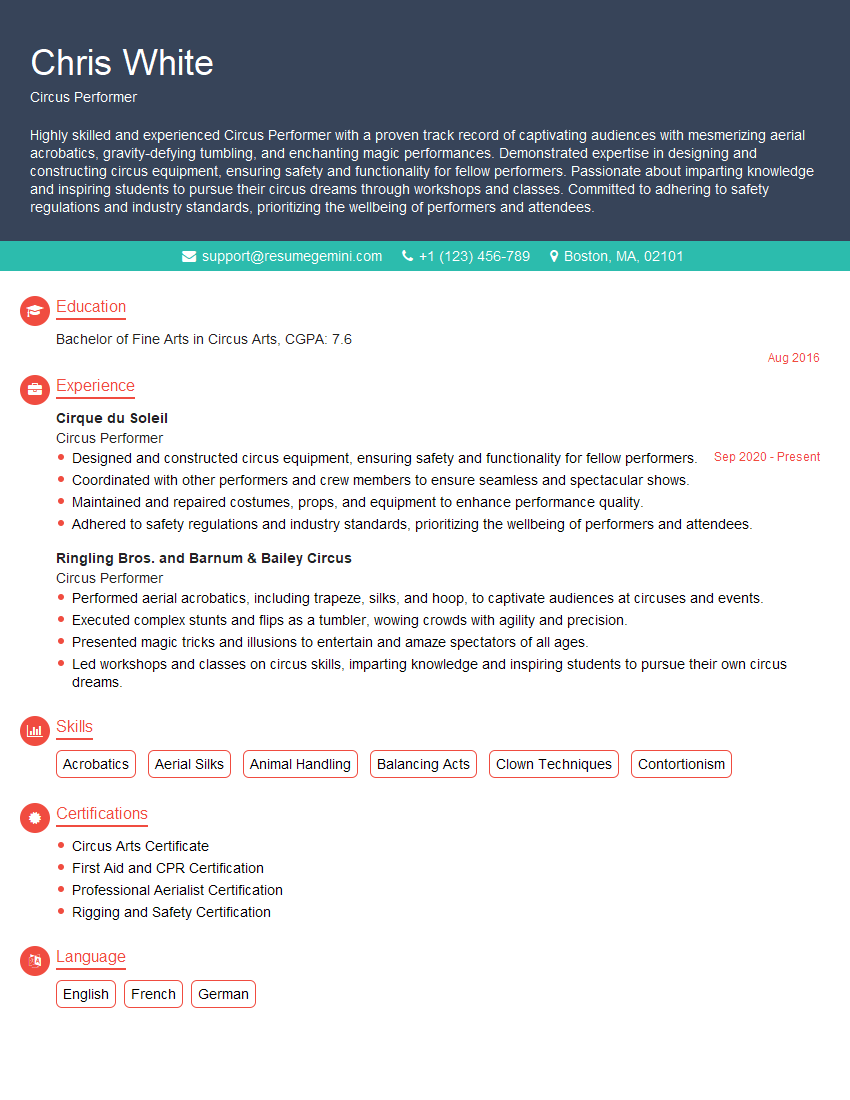
Circus Performer Resume Sample

Radio Host Resume Sample
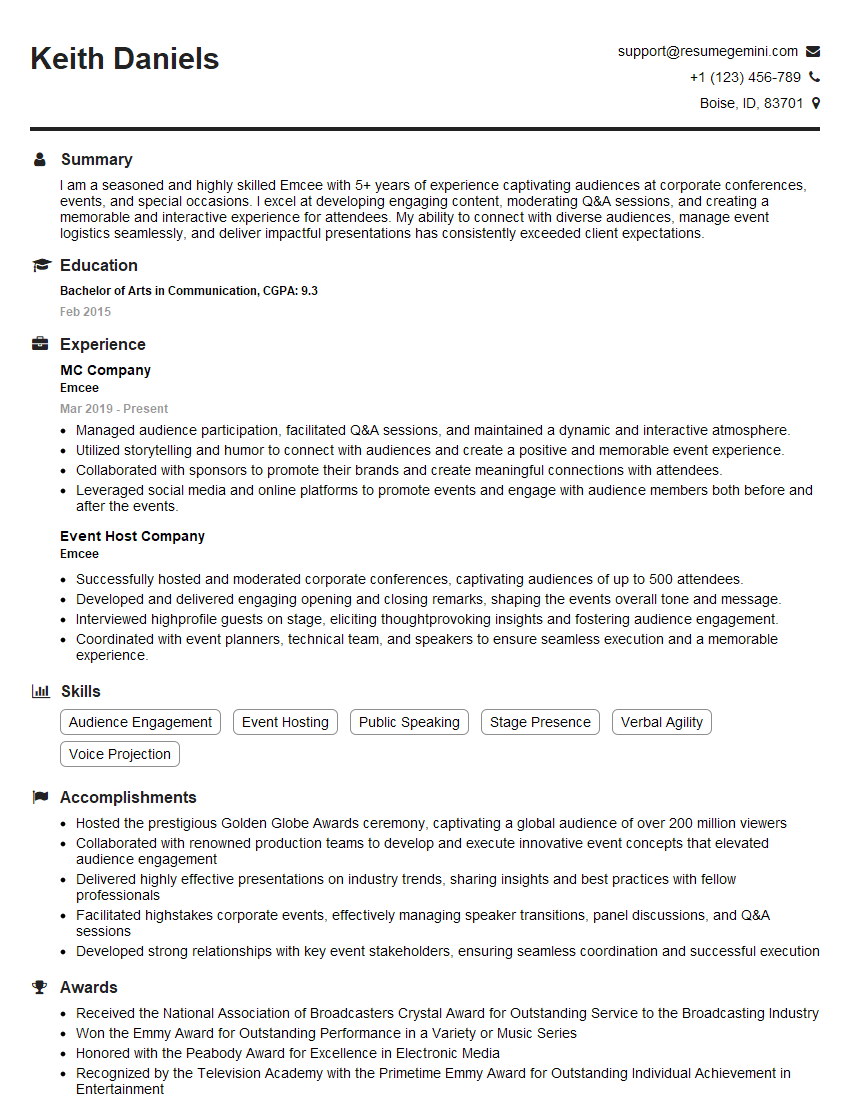
Emcee Resume Sample
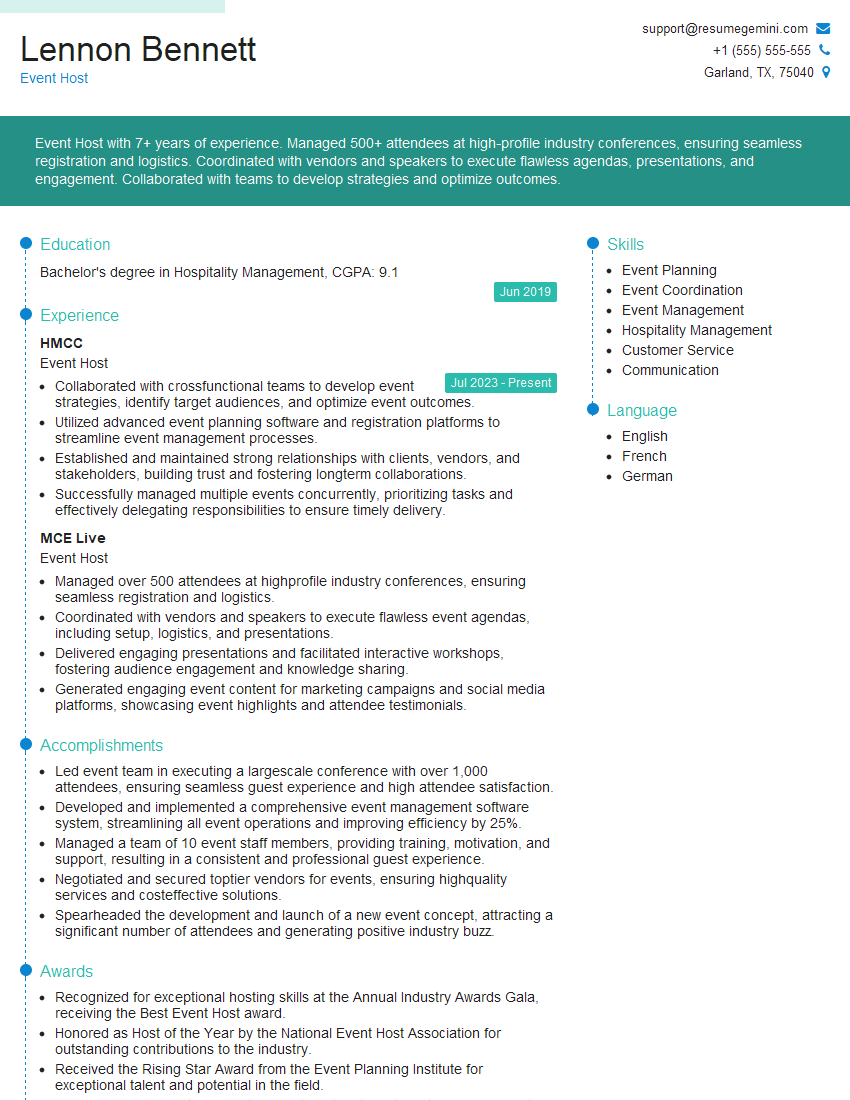
Event Host Resume Sample
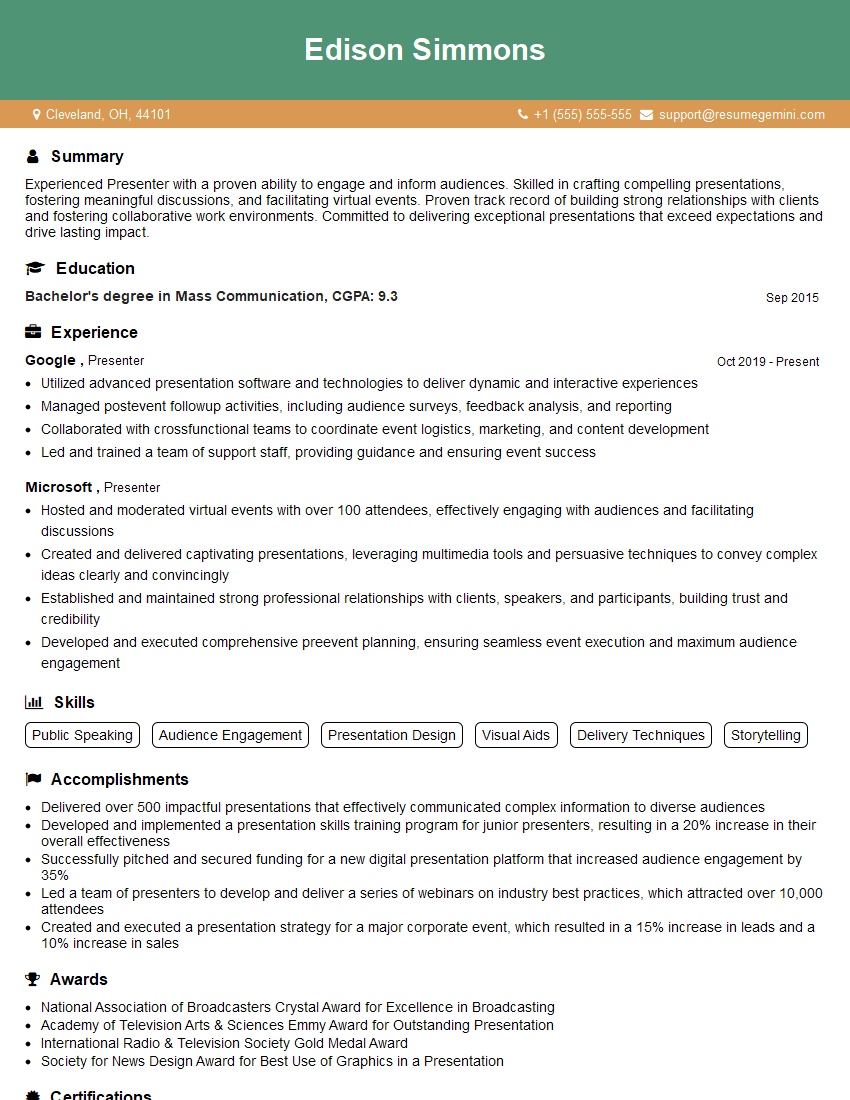
Presenter Resume Sample
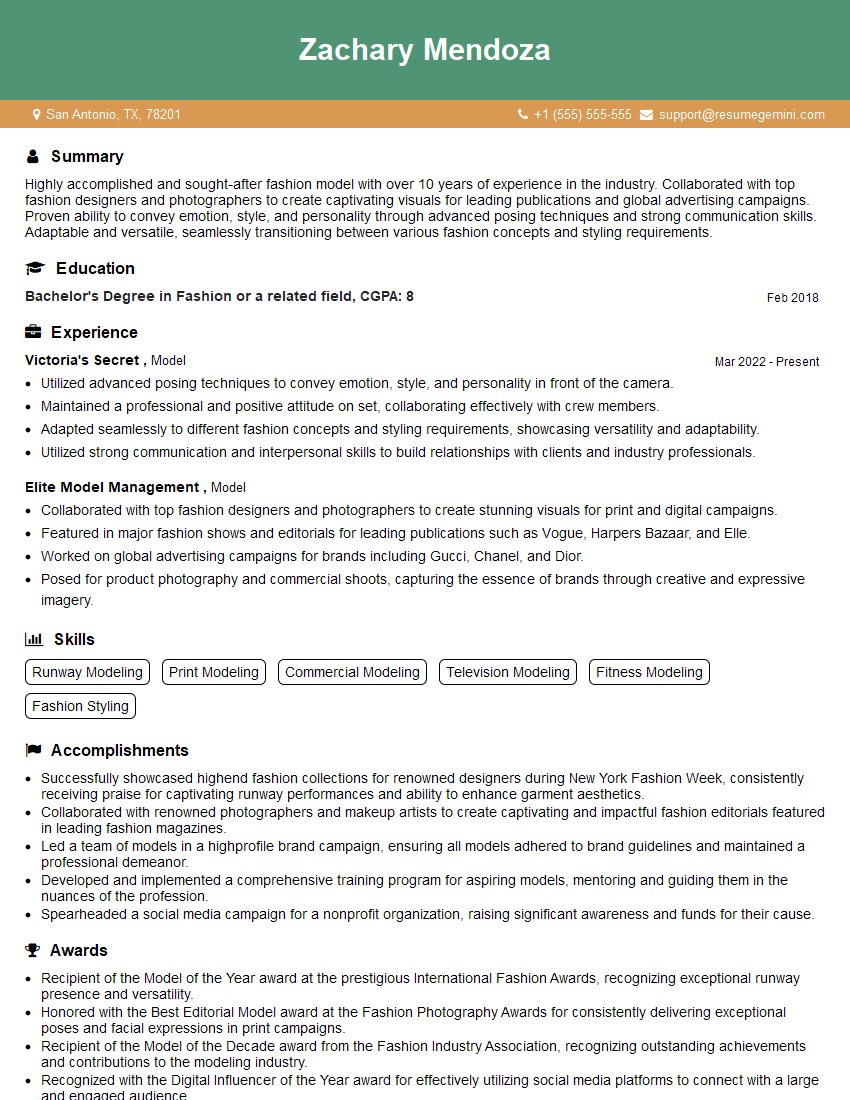
Model Resume Sample
Explore more articles
Users Rating of Our Blogs
Share Your Experience
We value your feedback! Please rate our content and share your thoughts (optional).
What Readers Say About Our Blog
Hello,
we currently offer a complimentary backlink and URL indexing test for search engine optimization professionals.
You can get complimentary indexing credits to test how link discovery works in practice.
No credit card is required and there is no recurring fee.
You can find details here:
https://wikipedia-backlinks.com/indexing/
Regards
NICE RESPONSE TO Q & A
hi
The aim of this message is regarding an unclaimed deposit of a deceased nationale that bears the same name as you. You are not relate to him as there are millions of people answering the names across around the world. But i will use my position to influence the release of the deposit to you for our mutual benefit.
Respond for full details and how to claim the deposit. This is 100% risk free. Send hello to my email id: [email protected]
Luka Chachibaialuka
Hey interviewgemini.com, just wanted to follow up on my last email.
We just launched Call the Monster, an parenting app that lets you summon friendly ‘monsters’ kids actually listen to.
We’re also running a giveaway for everyone who downloads the app. Since it’s brand new, there aren’t many users yet, which means you’ve got a much better chance of winning some great prizes.
You can check it out here: https://bit.ly/callamonsterapp
Or follow us on Instagram: https://www.instagram.com/callamonsterapp
Thanks,
Ryan
CEO – Call the Monster App
Hey interviewgemini.com, I saw your website and love your approach.
I just want this to look like spam email, but want to share something important to you. We just launched Call the Monster, a parenting app that lets you summon friendly ‘monsters’ kids actually listen to.
Parents are loving it for calming chaos before bedtime. Thought you might want to try it: https://bit.ly/callamonsterapp or just follow our fun monster lore on Instagram: https://www.instagram.com/callamonsterapp
Thanks,
Ryan
CEO – Call A Monster APP
To the interviewgemini.com Owner.
Dear interviewgemini.com Webmaster!
Hi interviewgemini.com Webmaster!
Dear interviewgemini.com Webmaster!
excellent
Hello,
We found issues with your domain’s email setup that may be sending your messages to spam or blocking them completely. InboxShield Mini shows you how to fix it in minutes — no tech skills required.
Scan your domain now for details: https://inboxshield-mini.com/
— Adam @ InboxShield Mini
Reply STOP to unsubscribe
Hi, are you owner of interviewgemini.com? What if I told you I could help you find extra time in your schedule, reconnect with leads you didn’t even realize you missed, and bring in more “I want to work with you” conversations, without increasing your ad spend or hiring a full-time employee?
All with a flexible, budget-friendly service that could easily pay for itself. Sounds good?
Would it be nice to jump on a quick 10-minute call so I can show you exactly how we make this work?
Best,
Hapei
Marketing Director
Hey, I know you’re the owner of interviewgemini.com. I’ll be quick.
Fundraising for your business is tough and time-consuming. We make it easier by guaranteeing two private investor meetings each month, for six months. No demos, no pitch events – just direct introductions to active investors matched to your startup.
If youR17;re raising, this could help you build real momentum. Want me to send more info?
Hi, I represent an SEO company that specialises in getting you AI citations and higher rankings on Google. I’d like to offer you a 100% free SEO audit for your website. Would you be interested?
Hi, I represent an SEO company that specialises in getting you AI citations and higher rankings on Google. I’d like to offer you a 100% free SEO audit for your website. Would you be interested?
good