Preparation is the key to success in any interview. In this post, we’ll explore crucial SIGINT Open Source Intelligence interview questions and equip you with strategies to craft impactful answers. Whether you’re a beginner or a pro, these tips will elevate your preparation.
Questions Asked in SIGINT Open Source Intelligence Interview
Q 1. Explain the difference between SIGINT and OSINT.
SIGINT (Signals Intelligence) and OSINT (Open-Source Intelligence) are both crucial intelligence gathering methods, but they differ significantly in their sources and techniques. SIGINT involves the interception and analysis of electronic signals, like communications, radar, and other electromagnetic emissions. Think of it as eavesdropping on electronic conversations – it requires specialized equipment and often involves legally sensitive operations. OSINT, on the other hand, focuses on publicly available information. This includes news articles, social media posts, government documents, academic research, and more. It’s like being a detective who meticulously pieces together clues from publicly accessible sources.
In essence, SIGINT is clandestine and technical, while OSINT is open and analytical. One relies on intercepting signals, while the other uses publicly accessible data. They complement each other; OSINT can often help corroborate or provide context for information gleaned from SIGINT.
Q 2. Describe your experience with various OSINT tools and techniques.
My OSINT toolkit is diverse and constantly evolving. I’m proficient in using search engines like Google and specialized search tools like Shodan (for internet-connected devices) and Maltego (for link analysis). I leverage social media platforms like Twitter, Facebook, and LinkedIn to extract information relevant to my investigations. I also utilize advanced search operators (e.g., site:example.com “keyword”) to refine my searches and utilize Boolean operators (AND, OR, NOT) for effective filtering. Furthermore, I routinely consult news archives, government databases (e.g., company registries, court records), and academic research papers.
Beyond the tools, my techniques involve keyword research, advanced search strategies, network analysis, and geolocation techniques. For example, I might use image reverse search to identify the origin of a picture or analyze metadata embedded in documents to uncover hidden information. I also actively monitor specific websites and social media accounts for relevant updates, using RSS feeds and alerts where appropriate.
Q 3. How do you verify the credibility of information found through OSINT?
Verifying OSINT information is paramount. It’s crucial to treat all sources with a healthy dose of skepticism. My verification process involves several steps: Triangulation: I cross-reference information across multiple independent sources to see if the information aligns. If several reputable sources corroborate the same facts, the credibility increases significantly. Source Evaluation: I assess the reputation and potential biases of the source. Is it a known reputable news organization, a government agency, or an anonymous blog? The source’s credibility directly impacts the weight I assign to the information. Fact-Checking: I verify facts and figures using additional reliable resources. Dates, names, locations, and other details are checked meticulously. Metadata Analysis: I examine metadata (hidden data) embedded in documents, images, or videos for clues about the source, creation date, and potential manipulation.
Think of it like building a case in court – you need multiple pieces of evidence from reliable sources to build a strong, credible argument. Each piece of information is weighed based on the source’s credibility and consistency with other sources.
Q 4. Outline your process for collecting and analyzing OSINT data.
My OSINT data collection and analysis process is iterative and follows a structured approach. It begins with clearly defining the intelligence requirement (IR): What specific information are we seeking? Once the IR is defined, I develop a search strategy, identifying relevant keywords, sources, and tools. Then I collect the data, meticulously documenting the source and date of acquisition for each piece of information. This is crucial for maintaining transparency and accountability.
The analysis phase involves organizing and filtering the collected data, identifying patterns and relationships. I often use spreadsheets or specialized software to visualize connections between individuals, organizations, or events. Finally, I synthesize the findings into a concise, well-supported intelligence report, highlighting key conclusions and remaining uncertainties.
Throughout the entire process, I maintain rigorous documentation and adhere to ethical guidelines, ensuring all information is legally and ethically sourced.
Q 5. How do you handle conflicting information from multiple OSINT sources?
Conflicting information is common in OSINT. It’s a critical skill to resolve these discrepancies. I approach it systematically: Source Assessment: I analyze the credibility and potential biases of each source reporting conflicting information. A credible source with supporting evidence takes precedence over less reliable sources. Contextual Analysis: I consider the context in which the information was reported. Timing, location, and the overall narrative can shed light on discrepancies. Data Triangulation: I seek additional sources to corroborate one side or the other, or to identify a more accurate narrative that reconciles the conflicting claims. Analysis of Methodology: If the differences seem to stem from differing collection or analysis methods, I evaluate the methodology to determine which is more robust. Finally, I clearly document any remaining ambiguities in my report, highlighting the areas of uncertainty.
The goal is not necessarily to definitively resolve all conflicts, but rather to present a balanced assessment of the information, acknowledging uncertainties where they exist.
Q 6. Describe a time you had to overcome a challenge in using OSINT to reach a conclusion.
During an investigation involving a suspected fraud ring, I encountered a challenge in verifying the identity of a key individual. Initial OSINT revealed multiple aliases and conflicting online profiles. Several online personas seemingly belonged to the same person, but verifying this link proved difficult. The information was fragmented and lacked concrete links. I overcame this challenge by using advanced search techniques to find obscure online forums and less-trafficked social media platforms where the individual might have interacted using different aliases. I analyzed their linguistic styles, online behavior patterns, and linked accounts on different platforms. Eventually, I discovered a previously unknown online profile linked to all the other aliases, containing a photograph that matched a publicly available image of the suspect. This ultimately confirmed the identity and formed a crucial link in the investigation.
Q 7. How familiar are you with data visualization techniques for OSINT analysis?
I’m highly familiar with data visualization techniques for OSINT analysis. These techniques are crucial for making sense of large, complex datasets. I regularly use tools like Gephi for network analysis, creating visual representations of relationships between individuals, organizations, or locations. This helps to identify key players, clusters, and potential connections. I also utilize spreadsheets and other data analysis tools to create charts and graphs, visualizing trends over time, geographical distribution, or other relevant patterns. Simple charts like timelines, maps, and bar graphs help to present complex data in a clear and easily understandable format.
Effective data visualization is critical for conveying findings clearly and concisely to stakeholders, facilitating faster and more effective decision-making.
Q 8. Explain your understanding of the legal and ethical considerations of OSINT.
OSINT, while a powerful tool, operates within a complex legal and ethical landscape. The legality of gathering information hinges on where you obtain it and how you use it. Publicly available information is generally permissible, but accessing restricted systems or violating privacy laws is illegal. Ethical considerations focus on responsible data handling. This means being mindful of privacy, avoiding malicious use of information, and respecting data ownership. For instance, scraping personal data from social media without consent is unethical and possibly illegal, while accessing publicly available company press releases is perfectly acceptable.
In practice, I always adhere to a strict code of conduct that prioritizes transparency and legality. Before engaging in any OSINT activity, I carefully assess the legal and ethical implications of my actions, ensuring full compliance with relevant regulations and ethical guidelines. I document my sources thoroughly, and I’m very careful to avoid activities that could compromise the privacy or security of others.
Q 9. How do you prioritize information gathered from OSINT sources?
Prioritizing OSINT information is crucial for efficient analysis. I employ a multi-faceted approach combining relevance, credibility, and timeliness. First, I assess the relevance of the information to the intelligence goal. Does it directly address the question at hand? Then I evaluate the credibility of the source: Is it a reputable news outlet, a government agency, or an individual blog? Finally, I consider the timeliness of the data – recent information is often more pertinent. I use a scoring system, weighing each factor appropriately, to rank the gathered intelligence.
For example, if I’m investigating a company’s financial health, a recent report from a reputable financial news source would rank higher than an older blog post, even if both contain relevant information. This structured approach ensures I focus on the most valuable data points first.
Q 10. Describe your experience with social media intelligence gathering.
Social media intelligence is a cornerstone of modern OSINT. My experience spans various platforms, from Twitter and Facebook to LinkedIn and specialized industry forums. I’m proficient in utilizing social media analytics tools to identify key individuals, track conversations, and understand public sentiment regarding specific topics or events. I use keyword searches, hashtag tracking, and advanced search operators to filter relevant information. I also understand how to analyze network graphs to identify influential individuals and relationships within online communities.
For example, during a recent investigation, I used LinkedIn to map the professional networks of key individuals within a target organization, revealing previously unknown connections and providing valuable insights into their operations. This was crucial for understanding the flow of information within the organization.
Q 11. How do you identify and mitigate bias in OSINT analysis?
Bias is a significant challenge in OSINT analysis. It can stem from the sources themselves, the analyst’s personal beliefs, or the inherent limitations of the data. To mitigate bias, I utilize multiple sources and strive for triangulation – verifying information from at least three independent sources. I also critically evaluate the source’s potential biases: Is it known to promote a particular viewpoint? Furthermore, I’m mindful of my own biases and actively seek to challenge my assumptions throughout the analytical process. Regularly reviewing my work with a peer provides an additional layer of objectivity.
A practical example: When analyzing news reports about a political event, I consult various news outlets, representing different political perspectives, to gain a more balanced understanding and identify any potential biases in individual reports.
Q 12. How do you use OSINT to support strategic intelligence goals?
OSINT significantly supports strategic intelligence goals by providing context, identifying emerging trends, and uncovering hidden connections. I’ve used OSINT to support competitive intelligence, risk assessments, and even crisis response. For example, during a competitive intelligence study, OSINT provided insights into a competitor’s new product development, allowing my organization to adapt its strategies accordingly. Similarly, I’ve used OSINT to identify potential risks associated with new ventures by analyzing public sentiment, regulatory landscape, and competitor activity.
In a crisis response situation, I leveraged OSINT to quickly gather information about the evolving situation, identify key players and their motivations, and gain a clearer understanding of the public’s reaction, which proved vital in coordinating effective responses.
Q 13. Describe your experience with open-source intelligence databases.
My experience with open-source intelligence databases is extensive. I’m familiar with a wide range of databases, including those focusing on specific sectors (e.g., financial news databases, satellite imagery archives) as well as general-purpose databases. I am proficient in using search engines effectively, leveraging advanced search operators and techniques to refine searches and retrieve specific data. I understand the limitations of each database, and I’m capable of integrating data from multiple sources to create a comprehensive picture.
For example, I regularly use databases like [Mentioning specific databases is avoided to prevent promoting particular services. The answer would mention specific examples depending on the interview context], leveraging their unique strengths to gain a holistic view of the topic under investigation. Understanding the specific strengths and weaknesses of various databases is key to obtaining comprehensive yet reliable information.
Q 14. How do you stay up-to-date on the latest trends in OSINT?
Staying up-to-date in the dynamic field of OSINT requires a multi-pronged approach. I regularly attend conferences and webinars, participate in online communities dedicated to OSINT, and follow prominent OSINT researchers and practitioners on social media. I subscribe to relevant newsletters and regularly read industry publications. Furthermore, I actively experiment with new tools and techniques, continuously expanding my skillset.
Continuous learning is essential. The landscape of available data and tools is constantly evolving, and staying ahead of the curve is crucial for maintaining proficiency in this field.
Q 15. Explain your understanding of geospatial intelligence and its application in OSINT.
Geospatial intelligence (GEOINT) is intelligence derived from the exploitation and analysis of imagery and geospatial data. In OSINT, GEOINT plays a crucial role by providing context and visual verification for information gathered from other sources. Think of it as adding a geographical layer to your investigation. For example, satellite imagery can confirm the location of a reported event, a map can show the proximity of individuals to a specific location, and street view imagery can provide a visual record of a building’s condition.
In a practical application, if I were investigating a suspected arms smuggling operation, I might use GEOINT from open sources like Google Earth or Bing Maps to analyze the location of warehouses, shipping ports, and known smuggling routes. By overlaying this geospatial data with other OSINT findings like news articles or social media posts, I can build a more complete picture of the operation’s activities and logistics.
- Satellite imagery: Verifying the existence of a building mentioned in a news report.
- Mapping software: Identifying the proximity of key individuals to a location of interest.
- Street View imagery: Observing security measures at a potential target location.
Career Expert Tips:
- Ace those interviews! Prepare effectively by reviewing the Top 50 Most Common Interview Questions on ResumeGemini.
- Navigate your job search with confidence! Explore a wide range of Career Tips on ResumeGemini. Learn about common challenges and recommendations to overcome them.
- Craft the perfect resume! Master the Art of Resume Writing with ResumeGemini’s guide. Showcase your unique qualifications and achievements effectively.
- Don’t miss out on holiday savings! Build your dream resume with ResumeGemini’s ATS optimized templates.
Q 16. How do you use OSINT to track individuals or organizations?
Tracking individuals or organizations using OSINT involves a systematic approach. It begins with identifying the target and then systematically searching for publicly available information across various online platforms. This includes social media profiles (Facebook, Twitter, LinkedIn, Instagram), professional networking sites, news articles, blogs, public records databases, and forums.
For example, to track an organization, I might start by searching for their name on Google, exploring their website, and examining their press releases. This provides a baseline of information. Then, I move to social media, looking for company pages, employee profiles, and any mentions in posts or comments. I’d cross-reference this information with public records to verify details like registration dates and addresses. Tracking individuals is similar but might involve looking for their professional background, education, family details, and affiliations. Always remember that ethical considerations are paramount; only access publicly available information and respect privacy.
The process is iterative, constantly verifying information from multiple sources to ensure accuracy. Building timelines is crucial, allowing you to chart a target’s activities and movements over time.
Q 17. How do you handle large datasets of OSINT information?
Handling large OSINT datasets requires a structured approach. The first step is organization. I typically employ a combination of tools and techniques to manage the data effectively.
- Data organization: I use spreadsheets or databases to categorize and tag information. For example, creating separate sheets for different data sources (social media, news articles, etc.) and tagging each piece of information with keywords related to the investigation.
- Data visualization: Tools like Gephi or other network visualization software are invaluable for identifying relationships between individuals, organizations, and events within the dataset. Visualizing the data can help to identify patterns and trends that might be missed when reviewing raw data.
- Automated tools: There are various open-source and commercial tools that can help automate aspects of data collection, analysis, and visualization. I might use Python libraries like Scrapy for web scraping or specialized OSINT tools to assist with specific tasks.
The key is to develop a system that allows for efficient searching, filtering, and analysis. This ensures that I can easily retrieve the relevant information when needed and maintain the integrity of the investigation.
Q 18. Describe your experience working with structured and unstructured data in OSINT.
OSINT involves working with both structured and unstructured data. Structured data is neatly organized and easily searchable (think databases or spreadsheets), while unstructured data is less organized and requires more effort to analyze (think social media posts or news articles).
My experience includes using SQL queries to retrieve specific information from structured databases and employing natural language processing (NLP) techniques to analyze unstructured data like text documents or social media posts. For example, I might use keyword searches and sentiment analysis to identify key themes and opinions within a large corpus of text.
Combining these approaches is key to a thorough investigation. I often extract key pieces of information from unstructured data and then input that information into structured formats for easier analysis and management. This process improves both the efficiency and reliability of my investigations.
Q 19. Explain your approach to analyzing images and videos in OSINT investigations.
Analyzing images and videos in OSINT involves several steps. Initially, I focus on metadata extraction. This includes details like the date and time the image or video was created, the GPS coordinates (if available), and the camera model used. This contextual information is invaluable for verifying the authenticity and relevance of the media.
Next, I use image and video analysis techniques. This might include reverse image searches using tools like Google Images or TinEye to find other instances of the image online. For videos, I might examine the background, clothing, and other details for clues that can help identify individuals or locations. I use forensic tools where appropriate to assess whether the media has been manipulated or altered.
Finally, I often incorporate geolocation data from the metadata or by visually analyzing the surroundings in images or videos. This helps place the media within a specific geographical context, linking it to other pieces of information in my investigation. This approach allows for robust verification and validation of the findings.
Q 20. How familiar are you with using Boolean operators in OSINT searches?
I’m very familiar with using Boolean operators (AND, OR, NOT) in OSINT searches. They’re fundamental to effective searching across diverse platforms.
For example, searching for "John Doe" AND "London" AND "finance" will only return results that contain all three terms, refining the search significantly. Using "John Doe" OR "Jane Doe" will return results containing either name. The NOT operator is useful for excluding irrelevant information; for example, "cybersecurity" NOT "fraud" would exclude results related to fraud while focusing on cybersecurity.
Understanding and effectively employing Boolean operators dramatically enhances search precision and efficiency, reducing the time spent sifting through irrelevant results. Mastering these operators is essential for any OSINT investigator.
Q 21. Describe your understanding of network analysis as applied to OSINT.
Network analysis is crucial in OSINT for visualizing and understanding the relationships between entities. In essence, it’s about mapping connections. Instead of looking at individual pieces of data in isolation, network analysis allows us to see how these pieces connect to form a larger picture.
In OSINT, this might involve mapping communication networks, identifying key individuals or organizations within a network, or analyzing the flow of information. For example, I might use network analysis techniques to map the relationships between individuals involved in a disinformation campaign, identifying key influencers or disseminators of misinformation. Or I might analyze a network of websites to reveal patterns of links and affiliations that suggest coordinated activity.
Tools like Gephi or other network visualization software are often employed for this purpose. By visualizing the network, we can quickly identify key nodes, clusters, and bridges—critical elements for understanding the structure and dynamics of the system under investigation. This provides invaluable context and insight into the overall situation.
Q 22. How do you protect sensitive information while conducting OSINT research?
Protecting sensitive information during OSINT research is paramount. It’s a balancing act between accessing open-source information and safeguarding confidential data related to the investigation or the organization. This involves a multi-layered approach:
- Data Minimization: Only collect data strictly relevant to the investigation. Avoid excessive data collection which increases the risk of exposure.
- Secure Storage: Employ encrypted storage solutions for all collected data, both on personal devices and organizational servers. This protects information even if a device is lost or compromised.
- Access Control: Implement strict access controls, restricting access to sensitive data based on the need-to-know principle. This might involve password protection, encryption keys, and secure file sharing protocols.
- Anonymization Techniques: When possible, anonymize data collected during the research. For example, remove personally identifiable information (PII) like names and addresses from documents or images.
- Regular Audits: Conduct regular security audits to assess vulnerabilities and identify potential weaknesses in the data handling process.
- Secure Communication: Use encrypted communication channels for discussions regarding sensitive information, like VPNs or encrypted email.
- Awareness Training: Ensure that all personnel involved are properly trained in secure data handling practices and OSINT research methodologies. This includes awareness of phishing attempts and malicious websites.
For example, if investigating a potential cyber threat, I would avoid downloading attachments from potentially malicious websites. Instead, I’d use safe methods like screen captures for preserving evidence and only access information from trusted sources, always employing secure storage and access controls throughout the process.
Q 23. How do you use OSINT to identify potential threats or vulnerabilities?
Identifying potential threats or vulnerabilities using OSINT involves systematically analyzing publicly available information to uncover patterns and anomalies. This often requires a combination of techniques:
- Social Media Monitoring: Identifying disgruntled employees or potential insiders who might pose a risk, based on their online activity and communications.
- Website Analysis: Evaluating a company’s website for security vulnerabilities, outdated software versions listed, or poorly implemented security measures that might be exploitable.
- News and Media Scrutiny: Searching news articles and media reports for information about past security incidents or breaches that might indicate vulnerabilities.
- Forum and Online Community Analysis: Exploring online forums and communities to find discussions that might reveal vulnerabilities or potential threats, such as leaked credentials or exploits.
- Open Source Intelligence Databases: Using specialized databases containing threat actor information or vulnerability reports to uncover potential links between individuals or organizations.
- Dark Web Monitoring: Investigating the dark web for information on potential threats, including the sale of stolen data, the discussion of attack plans, or other illicit activities.
For instance, discovering a company’s use of an outdated version of a specific software, coupled with public knowledge of a known vulnerability in that version, could point towards a significant security threat that needs immediate attention.
Q 24. Describe a time you had to work under pressure while conducting OSINT analysis.
During a recent investigation involving a suspected data breach at a major financial institution, we had only 72 hours to identify the source and extent of the breach before sensitive client data could be compromised further. The pressure was immense. We immediately deployed a multi-pronged approach:
- Prioritization: We prioritized the most critical data sources, focusing on information that directly implicated potential threat actors or the scope of the compromise.
- Teamwork: The team worked around the clock in shifts, utilizing specialized skills and efficiently distributing tasks.
- Resource Allocation: We allocated resources to specific tasks based on the urgency and potential impact, ensuring that the most crucial tasks received the necessary attention.
- Data Analysis: We leveraged automated tools to sift through vast amounts of data, speeding up the identification of relevant information.
- Communication: Constant communication among team members and stakeholders ensured everyone stayed informed about progress and necessary adjustments.
Through this coordinated effort, we identified the source of the breach, the affected data, and relayed actionable intelligence to the client within the deadline, minimizing the potential damage.
Q 25. Explain your experience with different OSINT data formats (e.g., text, images, videos).
My experience encompasses a broad range of OSINT data formats. Proficiency in handling various formats is crucial for effective intelligence gathering.
- Text Data: I’m proficient in analyzing text from various sources, including news articles, social media posts, leaked documents, and forum discussions. Tools like keyword searches, sentiment analysis, and topic modeling are essential here.
- Images: I utilize reverse image search engines to trace the origin and context of images, and image metadata analysis to extract geolocation data or timestamps. Tools like
exiftoolcan be invaluable. - Videos: I analyze videos for visual clues, audio analysis (for identifying voices or background noise), and metadata extraction to identify the time and location of recording. Frame-by-frame analysis can help uncover critical details.
- Audio: I leverage tools for audio analysis like spectrograms to identify frequencies and patterns, often useful in threat assessment for identifying communication patterns or specific audio signatures.
- Databases: I can extract and analyze data from publicly available databases, including WHOIS records, corporate registries, and other sources.
The ability to correlate information across these formats is key. For instance, linking a specific image found on social media to a news report and then cross-referencing that with the metadata and geolocation information enhances the overall intelligence value considerably.
Q 26. How do you integrate OSINT findings with other intelligence sources?
Integrating OSINT findings with other intelligence sources, such as HUMINT (Human Intelligence), SIGINT (Signals Intelligence), or IMINT (Imagery Intelligence), is crucial for a comprehensive understanding of the situation. This is done through correlation and triangulation of information.
- Correlation: Identifying overlapping information between OSINT and other sources to verify findings and build a more robust picture. For example, a social media post revealing a threat actor’s travel plans could be corroborated with flight records from a SIGINT source.
- Triangulation: Using multiple independent sources to confirm information, increasing confidence in the accuracy of the analysis. This reduces the risk of relying on a single, potentially unreliable, source.
- Contextualization: Using OSINT to provide context to other intelligence sources, enriching the analysis. For example, understanding the political and social context through OSINT can help interpret SIGINT communications.
- Data Fusion: Combining various intelligence data types and sources through the use of specialized tools and techniques to synthesize insights. These techniques allow for drawing broader conclusions by looking at the collective body of information.
For example, OSINT about a company’s cybersecurity practices might reveal vulnerabilities that are later confirmed through a penetration test (HUMINT or technical intelligence). This integration helps build a stronger case and provides a more accurate and comprehensive threat assessment.
Q 27. How familiar are you with different types of OSINT methodologies (e.g., passive, active)?
I’m familiar with various OSINT methodologies, understanding that the optimal approach depends on the specific intelligence need and available resources.
- Passive OSINT: This involves collecting information without actively interacting with the target. Examples include monitoring social media, analyzing publicly available databases, and reviewing news reports. It’s less intrusive but may provide limited information depending on the target’s online presence.
- Active OSINT: This involves actively engaging with targets or their online presence. Examples include contacting individuals or organizations directly through legitimate means, conducting surveys, or posing inquiries within online communities. This method yields more targeted information but carries a higher risk of detection and may require additional measures to maintain operational security.
- Advanced Techniques: Techniques such as network mapping, data scraping, and using specialized tools for data analysis, often requiring more technical expertise.
The choice of method depends heavily on the context. For example, during a preliminary investigation into a potential threat, passive OSINT might be sufficient to gather initial information. However, if more in-depth information is needed, active OSINT may be required. A balanced and cautious approach, always prioritizing operational security, is crucial.
Key Topics to Learn for SIGINT Open Source Intelligence Interview
- Data Collection and Sourcing: Understanding diverse OSINT sources (social media, forums, news articles, government data), methodologies for efficient data gathering, and legal/ethical considerations.
- Data Analysis and Interpretation: Techniques for verifying information credibility, identifying biases, analyzing patterns and trends, and drawing insightful conclusions from unstructured data.
- Information Validation and Verification: Employing fact-checking methodologies, triangulation of information from multiple sources, and assessing the reliability of open-source information.
- OSINT Tools and Technologies: Familiarity with relevant software and platforms for data collection, analysis, and visualization; understanding their capabilities and limitations.
- Geolocation and Mapping: Applying geospatial intelligence techniques to interpret location data, visualize information geographically, and understand its implications.
- Network Analysis: Identifying relationships between individuals, organizations, and events through the analysis of connections and interactions within open-source data.
- Reporting and Communication: Effectively presenting findings in clear, concise, and actionable intelligence reports; adapting communication style to different audiences.
- Ethical Considerations and Legal Frameworks: Understanding the legal and ethical implications of OSINT collection and analysis, ensuring compliance with regulations and best practices.
- Problem-Solving and Critical Thinking: Applying analytical skills to solve complex problems, identify critical information, and draw meaningful conclusions from often incomplete or ambiguous data.
Next Steps
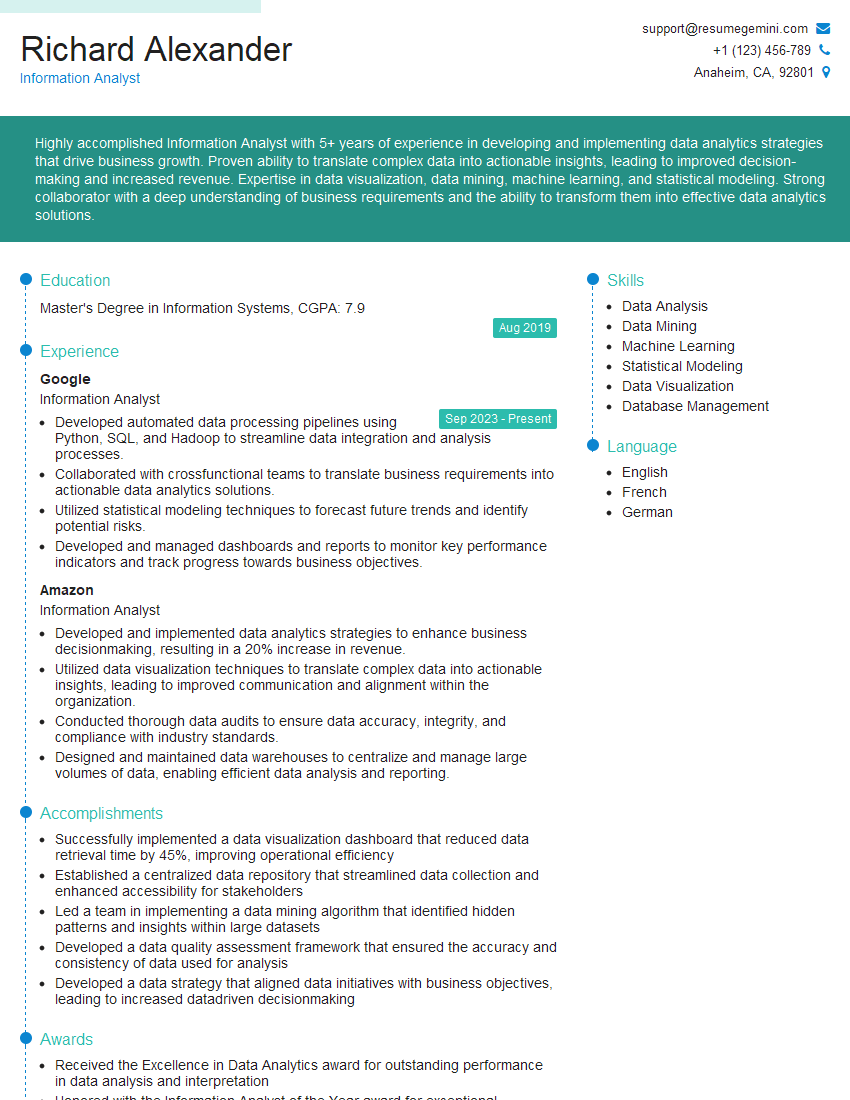
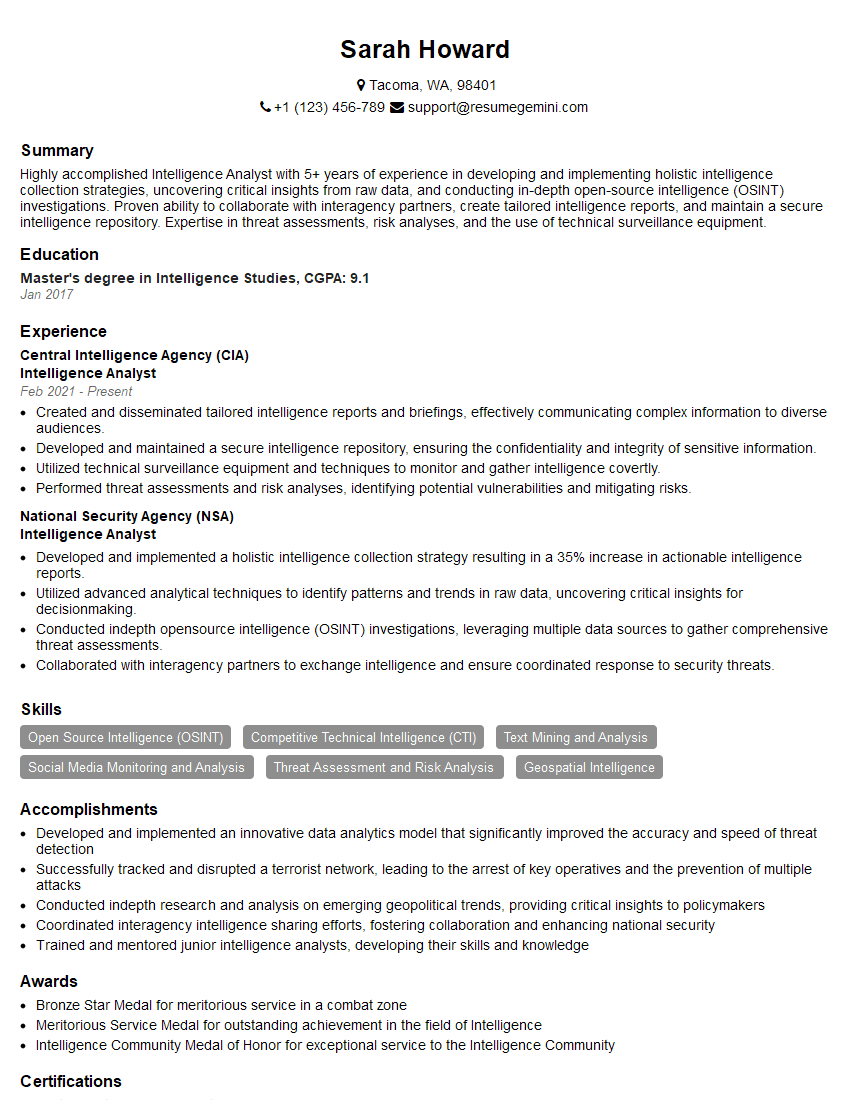
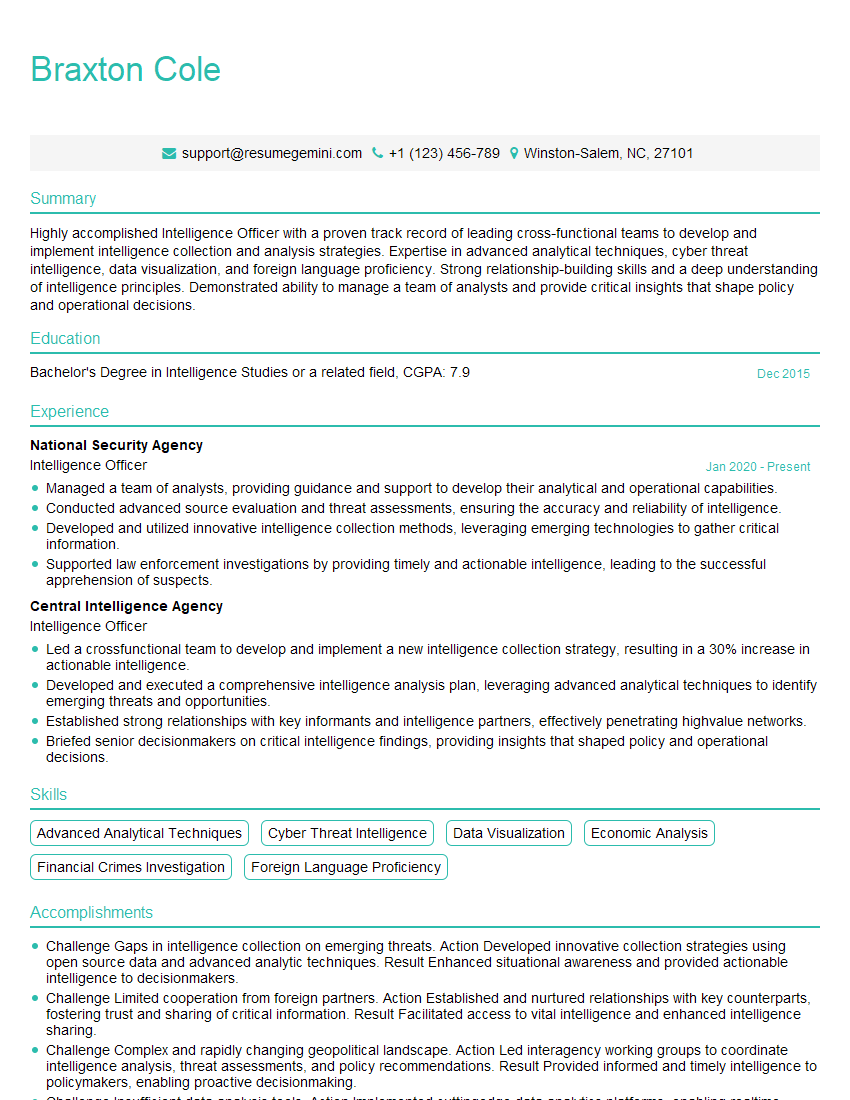
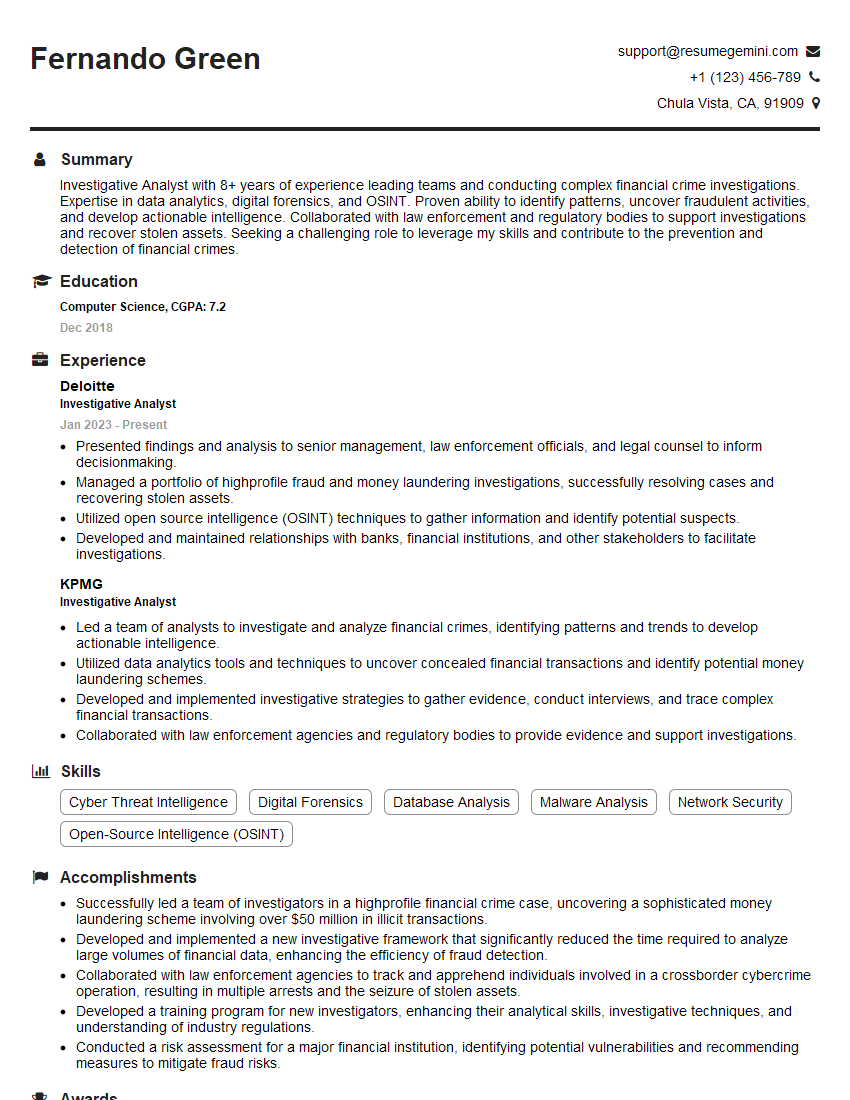
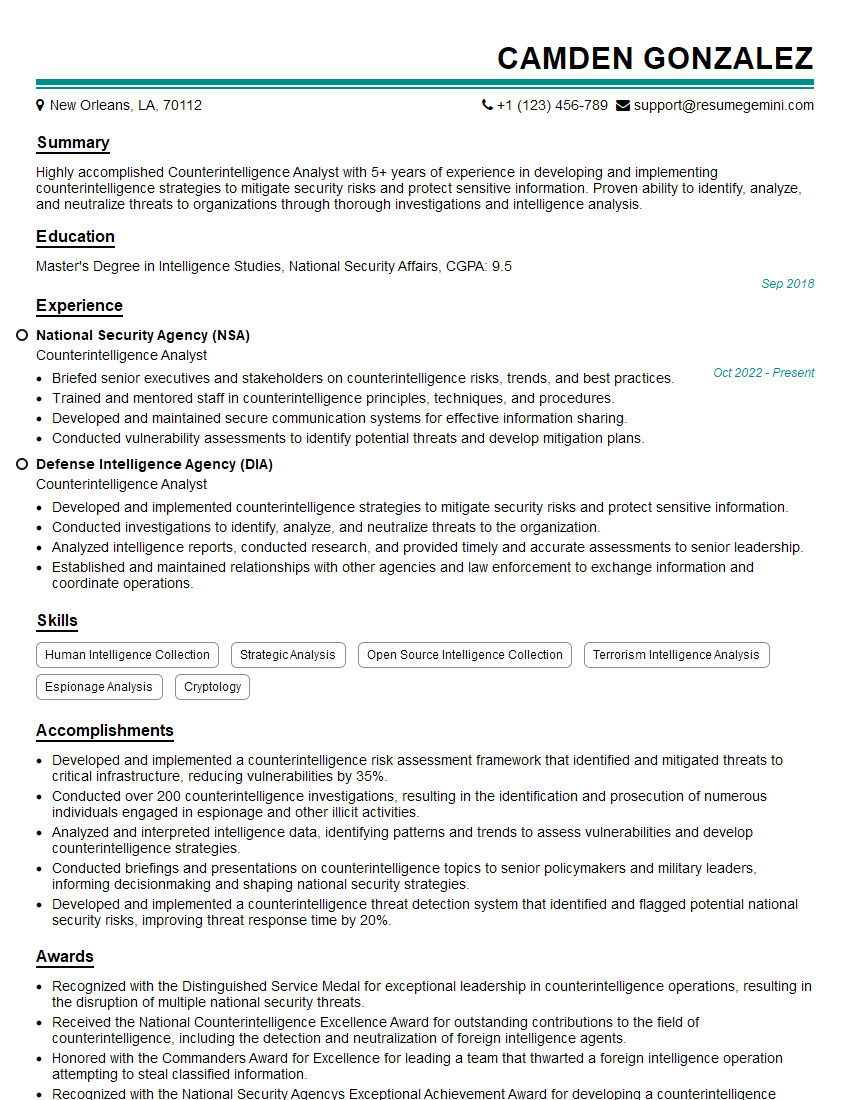
Mastering SIGINT Open Source Intelligence opens doors to exciting and impactful careers in intelligence analysis, cybersecurity, risk management, and investigative journalism. To maximize your job prospects, focus on building a strong, ATS-friendly resume that effectively showcases your skills and experience. ResumeGemini is a trusted resource to help you create a professional and compelling resume that highlights your unique qualifications. We provide examples of resumes tailored to SIGINT Open Source Intelligence roles to give you a head start. Invest time in crafting a resume that accurately represents your capabilities – it’s your first impression with potential employers.
Explore more articles
Users Rating of Our Blogs
Share Your Experience
We value your feedback! Please rate our content and share your thoughts (optional).
What Readers Say About Our Blog
Hello,
we currently offer a complimentary backlink and URL indexing test for search engine optimization professionals.
You can get complimentary indexing credits to test how link discovery works in practice.
No credit card is required and there is no recurring fee.
You can find details here:
https://wikipedia-backlinks.com/indexing/
Regards
NICE RESPONSE TO Q & A
hi
The aim of this message is regarding an unclaimed deposit of a deceased nationale that bears the same name as you. You are not relate to him as there are millions of people answering the names across around the world. But i will use my position to influence the release of the deposit to you for our mutual benefit.
Respond for full details and how to claim the deposit. This is 100% risk free. Send hello to my email id: [email protected]
Luka Chachibaialuka
Hey interviewgemini.com, just wanted to follow up on my last email.
We just launched Call the Monster, an parenting app that lets you summon friendly ‘monsters’ kids actually listen to.
We’re also running a giveaway for everyone who downloads the app. Since it’s brand new, there aren’t many users yet, which means you’ve got a much better chance of winning some great prizes.
You can check it out here: https://bit.ly/callamonsterapp
Or follow us on Instagram: https://www.instagram.com/callamonsterapp
Thanks,
Ryan
CEO – Call the Monster App
Hey interviewgemini.com, I saw your website and love your approach.
I just want this to look like spam email, but want to share something important to you. We just launched Call the Monster, a parenting app that lets you summon friendly ‘monsters’ kids actually listen to.
Parents are loving it for calming chaos before bedtime. Thought you might want to try it: https://bit.ly/callamonsterapp or just follow our fun monster lore on Instagram: https://www.instagram.com/callamonsterapp
Thanks,
Ryan
CEO – Call A Monster APP
To the interviewgemini.com Owner.
Dear interviewgemini.com Webmaster!
Hi interviewgemini.com Webmaster!
Dear interviewgemini.com Webmaster!
excellent
Hello,
We found issues with your domain’s email setup that may be sending your messages to spam or blocking them completely. InboxShield Mini shows you how to fix it in minutes — no tech skills required.
Scan your domain now for details: https://inboxshield-mini.com/
— Adam @ InboxShield Mini
Reply STOP to unsubscribe
Hi, are you owner of interviewgemini.com? What if I told you I could help you find extra time in your schedule, reconnect with leads you didn’t even realize you missed, and bring in more “I want to work with you” conversations, without increasing your ad spend or hiring a full-time employee?
All with a flexible, budget-friendly service that could easily pay for itself. Sounds good?
Would it be nice to jump on a quick 10-minute call so I can show you exactly how we make this work?
Best,
Hapei
Marketing Director
Hey, I know you’re the owner of interviewgemini.com. I’ll be quick.
Fundraising for your business is tough and time-consuming. We make it easier by guaranteeing two private investor meetings each month, for six months. No demos, no pitch events – just direct introductions to active investors matched to your startup.
If youR17;re raising, this could help you build real momentum. Want me to send more info?
Hi, I represent an SEO company that specialises in getting you AI citations and higher rankings on Google. I’d like to offer you a 100% free SEO audit for your website. Would you be interested?
Hi, I represent an SEO company that specialises in getting you AI citations and higher rankings on Google. I’d like to offer you a 100% free SEO audit for your website. Would you be interested?
good