Cracking a skill-specific interview, like one for Signage Fabrication and Installation, requires understanding the nuances of the role. In this blog, we present the questions you’re most likely to encounter, along with insights into how to answer them effectively. Let’s ensure you’re ready to make a strong impression.
Questions Asked in Signage Fabrication and Installation Interview
Q 1. Describe your experience with various signage materials (e.g., acrylic, aluminum, vinyl).
My experience spans a wide range of signage materials, each with its unique properties and applications. Think of it like choosing the right tool for the job – you wouldn’t use a hammer to screw in a screw!
- Acrylic: I’ve extensively used acrylic for its clarity, durability, and versatility. It’s ideal for indoor and outdoor signage, especially where a sleek, modern look is desired. For example, I recently fabricated illuminated channel letters for a retail store using high-quality acrylic, achieving a stunning visual effect.
- Aluminum: Aluminum is a robust choice for long-lasting, weather-resistant signage. Its strength makes it suitable for large, freestanding signs or those in high-traffic areas. I’ve worked with brushed aluminum for a sophisticated look and powder-coated aluminum for vibrant colors and added protection.
- Vinyl: Vinyl is incredibly versatile, offering a cost-effective solution for various signage needs. From vehicle wraps to window decals and banners, I’ve utilized its flexibility and print capabilities extensively. One project involved designing and installing a complex multi-layered vinyl graphic on a curved storefront, demonstrating the material’s adaptability.
My selection of material always considers factors such as budget, desired aesthetic, location, and longevity requirements.
Q 2. Explain your proficiency in different sign installation methods (e.g., adhesive, mechanical fasteners).
Secure and safe installation is paramount in signage. I’m proficient in various methods, selecting the most appropriate technique based on the sign’s size, weight, material, and the substrate it’s being affixed to.
- Adhesive: I use high-performance adhesives designed for specific materials and substrates. This involves careful surface preparation, application of the adhesive, and precise alignment to ensure a long-lasting bond. For example, I meticulously prepare surfaces before installing vinyl decals to guarantee they adhere correctly and won’t peel.
- Mechanical Fasteners: For larger or heavier signs, mechanical fasteners like screws, rivets, or bolts offer superior strength and security. I always ensure proper spacing and secure anchoring into structurally sound substrates to prevent the sign from falling. This might involve using specialized anchors for concrete or masonry.
- Combination Methods: Often, a combination of adhesive and mechanical fasteners provides the optimal solution, particularly for large, complex signs. This ensures both structural integrity and a clean aesthetic.
Safety is always my priority. I follow strict safety procedures, including using appropriate personal protective equipment (PPE) and employing proper lifting techniques.
Q 3. How do you ensure signage adheres to building codes and safety regulations?
Adherence to building codes and safety regulations is non-negotiable. It’s not just about avoiding fines; it’s about public safety. I thoroughly research and understand the specific regulations for each project, which can vary significantly depending on location and type of structure.
My process includes:
- Permitting: Obtaining necessary permits from relevant authorities before commencing any work. This ensures compliance from the outset.
- Wind Load Calculations: For outdoor signs, accurate wind load calculations are essential to ensure the sign can withstand high winds without causing damage or posing a risk. This often requires specialized software and knowledge.
- Sign Height and Placement: Ensuring the sign’s height, placement, and visibility meet local regulations to avoid obstructing views or creating hazards.
- Material Compliance: Selecting materials that meet fire codes and other safety standards.
- Accessibility Considerations: Designing signs that are accessible to people with disabilities, complying with ADA guidelines.
Regularly reviewing updated building codes is crucial to maintain best practices.
Q 4. What are your preferred methods for measuring and cutting signage materials?
Precise measurement and cutting are fundamental to creating professional-quality signage. Inaccuracy can lead to wasted materials and a subpar final product.
My preferred methods include:
- Digital Measurement: Utilizing laser measuring tools and digital calipers for precise and accurate measurements.
- Computer-Aided Design (CAD): Creating detailed designs in software such as AutoCAD or CorelDRAW, allowing for precise cutting instructions that are sent directly to our CNC router or cutting plotter.
- CNC Router/Plotter: For large format or intricate cuts, these machines offer speed, precision, and repeatability. The designs from CAD software are sent directly to the machines, minimizing human error.
- Manual Cutting (Hand Tools): For smaller, simpler projects or prototype work, I utilize specialized hand tools like utility knives, rotary cutters, and shears, ensuring clean, straight cuts.
Regardless of the method, quality control is crucial, always verifying measurements and cuts before proceeding to the next step.
Q 5. Describe your experience with large-format printing and its applications in signage.
Large-format printing is indispensable in modern signage fabrication. It allows for the creation of high-resolution, vibrant graphics on a wide range of substrates. This is essential for capturing attention and communicating effectively.
My experience includes:
- Material Selection: Choosing appropriate materials for printing depending on the application. This might include vinyl for vehicle wraps, PVC for banners, or fabric for trade show displays.
- Print Technology: Working with various print technologies, including solvent, eco-solvent, and UV printing, each with its advantages and disadvantages in terms of color vibrancy, durability, and environmental impact.
- Color Management: Ensuring color accuracy and consistency throughout the printing process, from initial design to final product. This often involves using color profiles and specialized software.
- Finishing Techniques: Utilizing finishing techniques such as lamination for protection and durability. This is especially important for outdoor signage to protect against the elements.
Large-format printing allows for complex designs and stunning visual impact, vital for making signage effective.
Q 6. How do you handle challenging installations, such as those involving difficult access or weather conditions?
Challenging installations require careful planning and adaptability. I’ve encountered various obstacles, but a methodical approach always leads to successful outcomes.
My strategies include:
- Thorough Site Assessment: Before commencing any installation, I conduct a comprehensive site survey to identify potential challenges such as difficult access, structural limitations, or environmental factors.
- Specialized Equipment: Utilizing specialized equipment like scissor lifts, cherry pickers, or scaffolding to overcome height restrictions or difficult access points. Safety is paramount when using such equipment.
- Weather Contingency Plans: Developing contingency plans to deal with unexpected weather conditions. This might include postponing installation until conditions improve or using specialized materials suitable for extreme weather.
- Collaboration and Communication: Collaborating with other tradespeople or property managers to coordinate access and ensure a smooth installation process. Open communication is vital to overcome unforeseen hurdles.
Remember, safety is always the top priority. I would never compromise safety for speed.
Q 7. What software are you proficient in for design and fabrication (e.g., AutoCAD, CorelDRAW)?
Proficiency in design and fabrication software is crucial for efficient and accurate sign production. My expertise lies in several industry-standard programs:
- AutoCAD: I utilize AutoCAD for creating precise 2D and 3D models of signage, ensuring accurate dimensions and specifications for fabrication.
- CorelDRAW: CorelDRAW is my go-to for vector-based graphic design, enabling me to create and manipulate complex designs for signs, vinyl graphics, and other signage elements.
- Adobe Photoshop & Illustrator: These programs complement my CAD and CorelDRAW skills, providing a powerful suite for image manipulation, graphic design, and layout creation.
These programs allow me to translate client visions into detailed technical drawings and production files, optimizing efficiency and reducing errors throughout the fabrication process.
Q 8. Explain your troubleshooting skills when dealing with faulty signage or installation issues.
Troubleshooting faulty signage or installation issues requires a systematic approach. I begin by carefully assessing the problem, gathering all relevant information, and identifying the root cause. This often involves visual inspection, checking electrical connections, and testing components.
For example, if an illuminated sign isn’t working, I’d first check the power supply, then the wiring, and finally the lights themselves. If a channel letter is loose, I’d examine the mounting system and look for any damage or inadequate fasteners. Sometimes, the issue is environmental – extreme weather can affect the sign’s performance. I’ll document each step, including photos, to aid in diagnosis and future reference. If the problem is beyond my immediate expertise, I have a network of reliable specialists I can consult.
My process is based on a combination of experience and using diagnostic tools like multimeters to identify electrical faults or level gauges to ensure proper alignment. I prioritize a methodical approach to quickly identify and resolve issues, minimizing downtime and project delays.
Q 9. How do you manage time effectively on multiple signage projects simultaneously?
Managing multiple signage projects effectively requires a robust organizational system. I leverage project management software to track deadlines, allocate resources, and monitor progress. This allows me to see a clear overview of all active projects and their individual timelines. Prioritization is crucial; I focus on projects with the most imminent deadlines or those with the most critical dependencies.
I break down larger projects into smaller, manageable tasks, assigning specific timelines to each. Regular communication with my team and clients ensures everyone is on the same page and potential conflicts are identified early. I also dedicate specific time blocks for each project, minimizing context switching and maximizing efficiency. Regular check-ins help me identify and address potential delays proactively.
Think of it like conducting an orchestra – each musician (team member) has a specific part to play, and the conductor (myself) ensures everyone plays in harmony and at the right time. Through diligent planning and execution, multiple projects can be handled seamlessly and successfully.
Q 10. What safety precautions do you prioritize during signage installation?
Safety is paramount in signage installation. We adhere to strict safety protocols at every stage, from initial planning to final cleanup. This includes using appropriate Personal Protective Equipment (PPE), such as hard hats, safety glasses, gloves, and high-visibility vests.
Before any work begins, we conduct a thorough site assessment to identify potential hazards, such as overhead power lines, traffic flow, or unstable surfaces. We always use proper lifting techniques and equipment to avoid injuries. Working at heights requires using appropriate fall protection systems, such as harnesses and safety lines. We regularly inspect equipment to ensure it is in good working order and follow all relevant safety regulations and local building codes.
For example, when installing a large sign, we’ll use scaffolding and secure it properly, ensuring proper weight distribution. We’ll always have spotters when lifting heavy materials, and utilize trained and certified personnel for complex tasks. Safety isn’t just a checklist; it’s an ingrained part of our company culture.
Q 11. Describe your experience with different types of sign lighting (e.g., LED, neon, fluorescent).
I have extensive experience with various sign lighting technologies. LED lighting is increasingly popular due to its energy efficiency, long lifespan, and vibrant color options. I’m skilled in selecting appropriate LED modules, drivers, and controlling systems for various sign types. Neon lighting, while classic, requires more specialized knowledge in terms of glass bending and gas filling. I understand the limitations of neon and its higher energy consumption compared to LEDs.
Fluorescent lighting, while less common now, is still used in some applications. I understand how to install and maintain fluorescent lighting systems, including ballasts and tubes. My expertise also extends to the different color temperatures and light intensities available with each technology, allowing me to meet the specific needs of a given project. I consider factors such as energy efficiency, maintenance requirements, and the desired aesthetic effect when selecting the appropriate lighting solution.
For instance, for a retro diner, neon lighting might be the best choice for its iconic aesthetic. For a modern corporate building, energy-efficient LEDs would be preferred.
Q 12. How do you maintain quality control throughout the fabrication and installation process?
Maintaining quality control is a continuous process throughout fabrication and installation. We begin by meticulously reviewing design specifications and ensuring materials meet the required standards. During fabrication, we employ rigorous quality checks at each stage, from cutting and bending materials to assembling components. This may include using precision measuring tools and regularly inspecting the work for defects. We also utilize templates and jigs to ensure consistency and accuracy.
Before installation, we conduct a final inspection of the finished sign to ensure it meets design specifications and is free of defects. During installation, we prioritize precision and attention to detail, ensuring the sign is securely mounted and aligned correctly. We perform a final inspection after installation to verify the sign’s functionality, appearance, and overall integrity. This often includes testing lighting and electrical systems. We document all inspections with photographs and checklists. We actively use feedback from installations to refine our processes and improve quality continuously.
Think of it like baking a cake – each step must be followed precisely to achieve a perfect result. Our commitment to quality control ensures our signs are not just visually appealing, but also durable and long-lasting.
Q 13. Explain your understanding of different sign types (e.g., channel letters, illuminated signs, banners).
My knowledge encompasses a wide range of sign types. Channel letters are three-dimensional letters typically made of metal, often illuminated from the front or back. I understand the fabrication techniques, lighting options, and mounting methods associated with channel letters. Illuminated signs use internal or external lighting to enhance visibility. This could include LED, neon, or fluorescent lighting. My experience extends to various illuminated sign designs, from cabinet signs to light boxes.
Banners are temporary signs made of flexible materials like vinyl or fabric. I’m knowledgeable about banner design, printing, and installation techniques, including appropriate hardware and mounting methods. Beyond these, I have experience with other types such as pylon signs (tall freestanding signs), monument signs (large, permanent ground-mounted signs), and digital signage. Understanding the materials, fabrication methods, and installation techniques for each type is crucial for successful project execution. The choice of sign type depends on factors such as budget, location, message, and desired lifespan.
Q 14. How do you handle customer communication and manage expectations during a project?
Effective customer communication is crucial. I begin by actively listening to the client’s needs and understanding their vision. I ask clarifying questions to ensure I thoroughly understand their requirements and expectations. I provide clear and concise updates throughout the project, keeping the client informed of progress and addressing any concerns promptly. This includes providing regular progress reports, photos, and any relevant documentation.
Realistic expectations are set from the outset. I discuss project timelines, potential challenges, and costs transparently. If unforeseen issues arise, I communicate them promptly to the client, offering solutions and exploring alternatives. Open and honest communication builds trust and helps manage expectations effectively. I aim to maintain a professional and friendly relationship with the client, ensuring their satisfaction throughout the entire process. I consider customer feedback invaluable, using it to improve future projects and services.
Think of it as a partnership – the client’s vision and my expertise work together to create a successful outcome. Clear communication ensures everyone is on the same page, minimizing misunderstandings and fostering a positive working relationship.
Q 15. What experience do you have with vehicle wraps and window graphics installation?
Vehicle wraps and window graphics installations are a significant part of my expertise. I’ve worked on numerous projects, ranging from single vehicle wraps for small businesses to large fleet wraps for national corporations. My experience encompasses all aspects, from initial design consultation and template creation to the precise application of the vinyl and finishing touches. With window graphics, I’m proficient in applying both perforated films (allowing visibility from inside while displaying graphics from outside) and static cling films, adapting the technique based on the client’s needs and the window’s characteristics. For example, I recently completed a fleet wrap project for a regional delivery service, requiring meticulous attention to detail given the number of vehicles and the need for consistent branding. Another project involved installing window graphics for a high-end retail store, demanding a clean and professional finish that enhanced, rather than detracted from, the store’s aesthetic.
- Experience with various vinyl types: I’m experienced with cast vinyl, which offers superior conformability for complex curves on vehicles, and calendared vinyl, a more economical option for flatter surfaces.
- Precise cutting and weeding: I use high-precision vinyl cutters and possess the skills necessary to create intricate designs and cleanly weed excess vinyl.
- Proper installation techniques: I’m well-versed in techniques like squeegee application, heat gun usage for complex curves, and the proper removal of air bubbles to ensure a professional and long-lasting finish.
Career Expert Tips:
- Ace those interviews! Prepare effectively by reviewing the Top 50 Most Common Interview Questions on ResumeGemini.
- Navigate your job search with confidence! Explore a wide range of Career Tips on ResumeGemini. Learn about common challenges and recommendations to overcome them.
- Craft the perfect resume! Master the Art of Resume Writing with ResumeGemini’s guide. Showcase your unique qualifications and achievements effectively.
- Don’t miss out on holiday savings! Build your dream resume with ResumeGemini’s ATS optimized templates.
Q 16. How do you ensure the longevity and durability of installed signage?
Ensuring the longevity and durability of signage is paramount. It begins even before installation. We use high-quality materials, selecting vinyl and laminates appropriate for the specific environment – UV-resistant for outdoor signage, for example. Proper surface preparation is crucial; the surface needs to be clean, dry, and free of contaminants. During installation, precise application techniques minimize the risk of wrinkles, bubbles, or lifting. We also account for environmental factors; extreme temperatures or harsh weather can impact adhesive performance. For outdoor signage, this often involves applying a protective laminate that safeguards the graphics from UV degradation and scratches. For example, I once installed signage for a beachside restaurant; the choice of vinyl and laminate had to withstand salt spray and intense sun exposure. Post-installation, providing clients with care instructions extends the life of the signage. This includes guidance on cleaning and avoiding harsh chemicals.
Q 17. Describe your experience with permit acquisition and compliance procedures.
Permit acquisition and compliance are critical aspects of my work. I’m familiar with the varying regulations that govern signage in different municipalities and states. This includes understanding zoning laws, height restrictions, and building codes. Before commencing any project, I research the relevant permits and make the necessary applications. I handle all the paperwork, from submitting applications and providing necessary documentation (e.g., detailed drawings and specifications) to liaising with building inspectors and addressing any concerns. I have successfully navigated complex permitting processes in several jurisdictions, ensuring projects are compliant from the outset and minimizing potential delays or fines. For instance, a recent project required navigating historical preservation regulations, which added complexity, but through meticulous planning and communication with local authorities, the installation was completed successfully and within the legal framework.
Q 18. How familiar are you with different types of adhesives and their applications in signage?
I have extensive experience with a wide range of adhesives used in signage. My knowledge extends beyond simply applying them; I understand the properties of different adhesives and how to select the most appropriate one for various substrates and environmental conditions. For example, I’m familiar with solvent-based adhesives offering strong bonds, pressure-sensitive adhesives commonly used in vinyl graphics, and water-based options for environmentally conscious installations. The choice of adhesive depends on factors like the substrate (metal, wood, glass, etc.), the environmental conditions (temperature, humidity), and the type of signage material (vinyl, acrylic, etc.). Incorrect adhesive selection can lead to adhesion failures, making this an area requiring careful consideration and expertise. I ensure that I consistently utilize the correct adhesive for the job ensuring a long lasting finish.
Q 19. What’s your experience with working at heights and using safety equipment?
Safety is my top priority. I’ve undergone extensive training in working at heights and using appropriate safety equipment. This includes the proper use of harnesses, fall arrest systems, scaffolding, and other necessary safety gear. I meticulously follow all safety protocols and ensure that my team members do so as well. Before commencing work at height, I always conduct a thorough risk assessment, identifying potential hazards and developing a safe work plan. I hold certifications for working at heights and regularly undertake refresher courses to stay updated with best practices and new safety technologies. Safety isn’t just a checklist for me; it’s an ingrained part of my work ethic, prioritizing the safety of myself and my crew above all else.
Q 20. Describe a time you had to adapt to unexpected challenges during a signage installation.
During the installation of a large-format outdoor sign, unforeseen structural issues with the building’s facade emerged. The mounting points identified in the initial design proved to be unsuitable. Instead of proceeding and risking damage, I immediately stopped the work, reassessed the situation, and consulted with structural engineers. We developed an alternative mounting system that addressed the structural concerns without compromising the aesthetic integrity of the sign. This involved sourcing stronger mounting brackets and modifying the installation plan. While this added time and cost to the project, prioritizing safety and a structurally sound installation ensured the long-term success of the signage and ultimately client satisfaction. The solution involved open communication with the client, transparency about the unexpected challenges, and a collaborative approach to finding the best, safest solution.
Q 21. How do you manage inventory and supplies for signage fabrication?
Efficient inventory management is crucial for seamless fabrication and installation. We utilize a computerized inventory management system to track materials, from vinyl rolls and adhesives to mounting hardware and specialized tools. This system provides real-time visibility into stock levels, enabling timely reordering to avoid project delays. We categorize materials based on their usage and shelf life, implementing a FIFO (First-In, First-Out) system to minimize waste. Regular inventory audits help identify potential shortages or obsolete materials, enabling proactive adjustments to procurement strategies. We also maintain detailed records of material usage for each project, facilitating accurate cost estimations and improving efficiency in future projects. This systematic approach guarantees that we always have the necessary resources available while minimizing storage costs and waste.
Q 22. What are your skills in operating power tools and machinery related to signage fabrication?
My expertise with power tools and machinery used in signage fabrication is extensive. I’m proficient in operating a wide range of equipment, including CNC routers for precise cutting and engraving, laser cutters for intricate designs and material removal, vinyl cutters for creating lettering and graphics, and various hand-held power tools like drills, sanders, and grinders. Safety is paramount; I always adhere to strict safety protocols, ensuring proper machine maintenance, and using appropriate personal protective equipment (PPE) like safety glasses, hearing protection, and dust masks. For instance, when using a CNC router, I meticulously program the machine to ensure the cut is accurate and safe, always double-checking the settings before initiating the cut to prevent material waste or machine damage. My experience also extends to using large format printers for direct-to-substrate printing, understanding the intricacies of printhead maintenance and media handling.
Q 23. Explain your understanding of color matching and color management in signage.
Color matching and color management are critical for achieving the client’s vision and brand consistency in signage. I understand the importance of using a calibrated monitor and a color management system (CMS) like Pantone to ensure accurate color reproduction. We often work with specific color codes provided by the client, and I use colorimeters and spectrophotometers to ensure precise matching of inks, paints, or vinyl materials to those specifications. For example, if a client requests a specific shade of blue from their corporate branding guidelines, we use a spectrophotometer to measure the Pantone color and then adjust the ink mix in our large-format printer until it perfectly matches. The slightest color deviation can drastically affect the overall appearance and brand recognition, so accuracy is paramount. Understanding color profiles, gamut limitations of different printing methods, and substrate interactions are key to achieving consistent and accurate color reproduction.
Q 24. How do you ensure signage is visually appealing and effectively communicates its message?
Creating visually appealing and effective signage involves a multi-faceted approach that integrates design principles, typography, and material choices. I collaborate closely with designers to ensure the final product is both aesthetically pleasing and effectively communicates the intended message. Factors like font selection, size, color contrast, and layout are meticulously considered to ensure readability and impact. For example, we use high-contrast colors to make text easily legible, especially for signs viewed from a distance. The placement of the signage, material choice (e.g., reflective vinyl for nighttime visibility), and overall design aesthetics are all crucial. Before final production, we often create mock-ups or prototypes to allow clients to visualize the final product and provide feedback, ensuring that the signage achieves its intended purpose and enhances their brand presence.
Q 25. Describe your experience with digital signage installation and maintenance.
My experience with digital signage installation and maintenance involves working with various technologies including LED screens, LCD displays, and interactive kiosks. This includes site surveys to assess power requirements, network connectivity, and mounting options. The installation process involves careful mounting and cabling to ensure stable and secure operation. Post-installation, regular maintenance includes cleaning the screens, checking connections, and software updates to ensure optimal performance. Troubleshooting issues, such as display malfunctions or network connectivity problems, is a key part of maintaining digital signage. For example, I recently resolved a digital signage issue where flickering was caused by a faulty power supply. The problem was quickly identified and rectified, minimizing downtime and ensuring continuous operation. My experience extends to scheduling maintenance visits and providing remote support when necessary.
Q 26. What are your skills in reading and interpreting technical drawings and blueprints?
Reading and interpreting technical drawings and blueprints is fundamental to my role. I’m adept at understanding architectural drawings, electrical schematics, and specifications for signage projects. I can interpret dimensions, materials, and placement details, ensuring the signage is correctly fabricated and installed. This includes understanding scales, symbols, and notations. For example, I recently worked on a project where the blueprint indicated specific mounting requirements for a large illuminated sign on a complex building facade. My ability to interpret these requirements ensured the safe and secure installation of the sign, meeting all building codes and regulations. I use these blueprints to create accurate templates and cutting plans for fabrication.
Q 27. How do you handle client feedback and revisions during the sign production process?
Handling client feedback and revisions is an integral part of the signage production process. I actively encourage client communication throughout the process, fostering open dialogue and collaborative problem-solving. I use project management software to track revisions and ensure timely implementation of changes. This collaborative approach minimizes misunderstandings and ensures client satisfaction. If a client requests a design change, I provide realistic timelines for incorporating those changes, clearly outlining the potential implications on the project schedule and budget. I present revisions clearly and professionally, explaining the rationale behind any suggestions or modifications. My aim is to exceed expectations by turning client feedback into a positive refinement of the final product.
Q 28. What is your experience with post-installation service and maintenance of signage?
Post-installation service and maintenance are crucial for ensuring the longevity and effectiveness of signage. This includes regular inspections to identify potential issues such as damage, fading, or malfunctioning components. I offer maintenance contracts that encompass preventative measures such as cleaning and minor repairs, helping to extend the life of the signage. I also provide prompt response to any issues reported by clients, ensuring quick turnaround times for repairs or replacements. For example, if a sign is damaged by vandalism, we would promptly assess the extent of the damage and provide a repair or replacement solution in a timely manner. Proactive maintenance minimizes unforeseen problems, ensures the signage continues to perform its intended function, and protects our client’s investment.
Key Topics to Learn for Signage Fabrication and Installation Interview
- Material Selection and Properties: Understanding the characteristics of various signage materials (e.g., acrylic, aluminum, vinyl) and their suitability for different applications and environments. Practical application: Choosing the right material for an outdoor sign exposed to harsh weather conditions.
- Fabrication Techniques: Mastering techniques like cutting, routing, welding, bending, and printing relevant to signage creation. Practical application: Describing your experience with CNC routing for precise sign lettering.
- Design and Layout: Understanding design principles, CAD software (e.g., AutoCAD, CorelDRAW), and the process of translating design concepts into fabrication plans. Practical application: Explaining your approach to ensuring a design is structurally sound and manufacturable.
- Installation Methods and Safety: Knowledge of safe installation practices, including working at heights, using appropriate tools and equipment, and adhering to building codes. Practical application: Describing your experience with different types of sign mounting systems and their safety considerations.
- Troubleshooting and Problem-Solving: Ability to identify and resolve common issues during fabrication and installation, such as material defects, design flaws, or on-site challenges. Practical application: Providing an example of a problem you encountered during installation and how you successfully resolved it.
- Project Management Basics: Understanding project timelines, budgeting, client communication, and ensuring projects are completed on time and within budget. Practical application: Describing your experience managing multiple signage projects simultaneously.
- Building Codes and Regulations: Familiarity with relevant building codes and regulations pertaining to signage installation and safety. Practical application: Explaining how you ensure your installations comply with local ordinances.
Next Steps
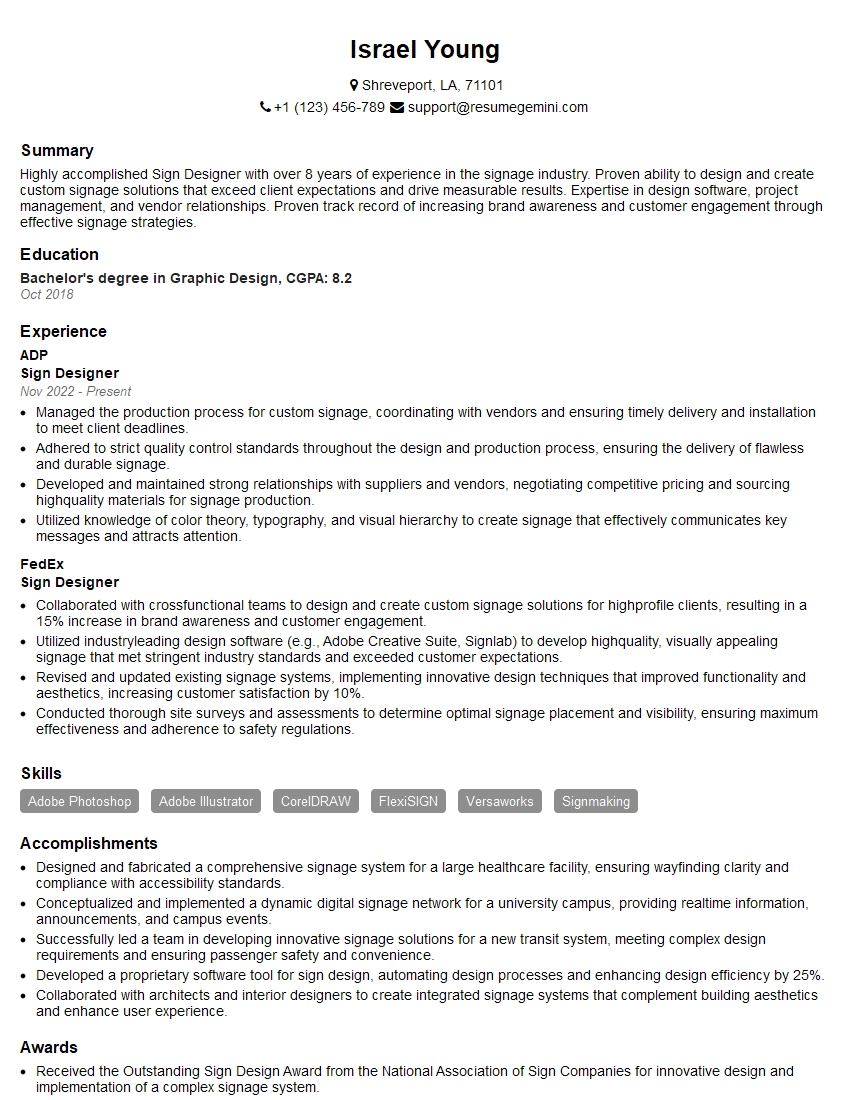
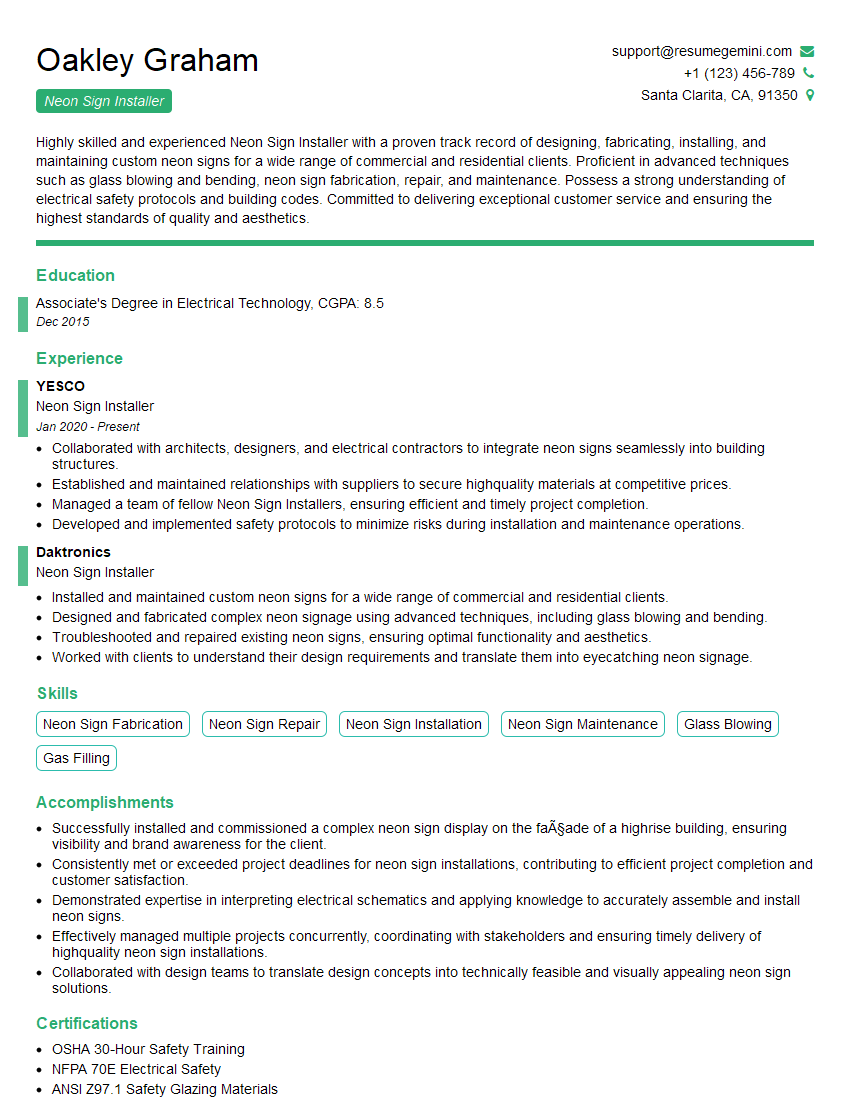
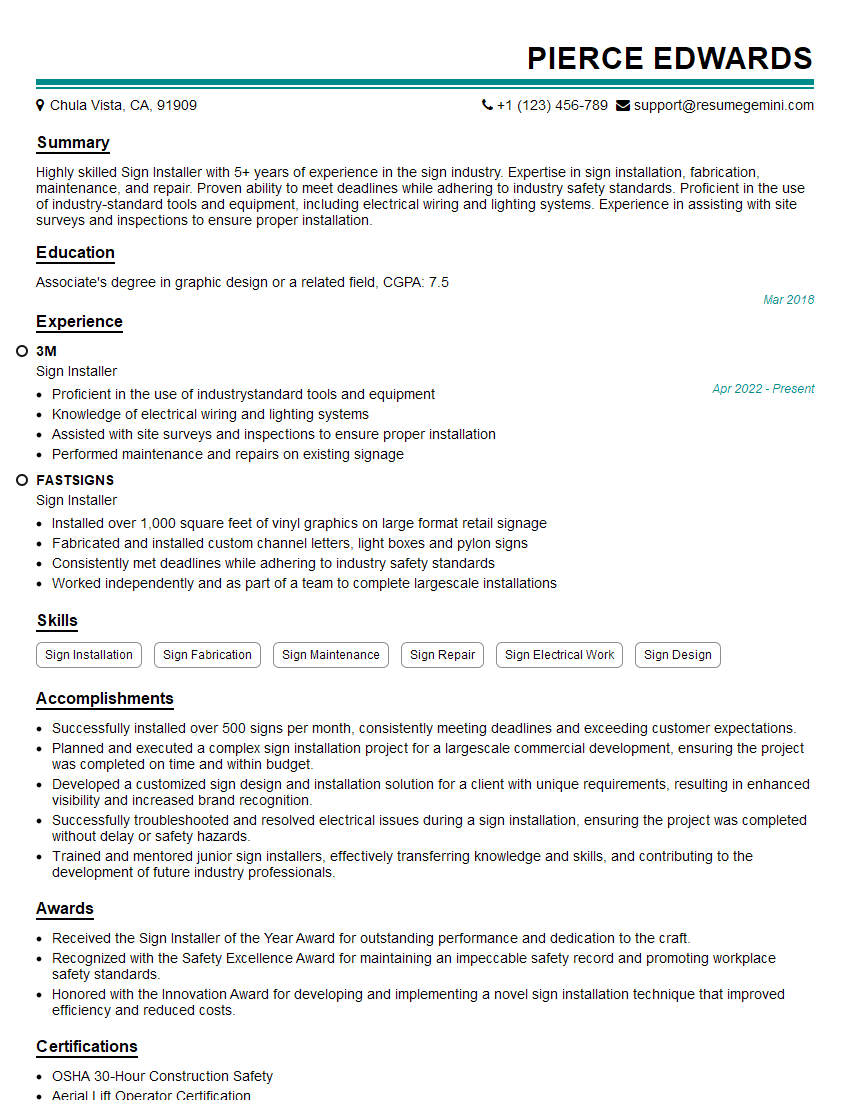
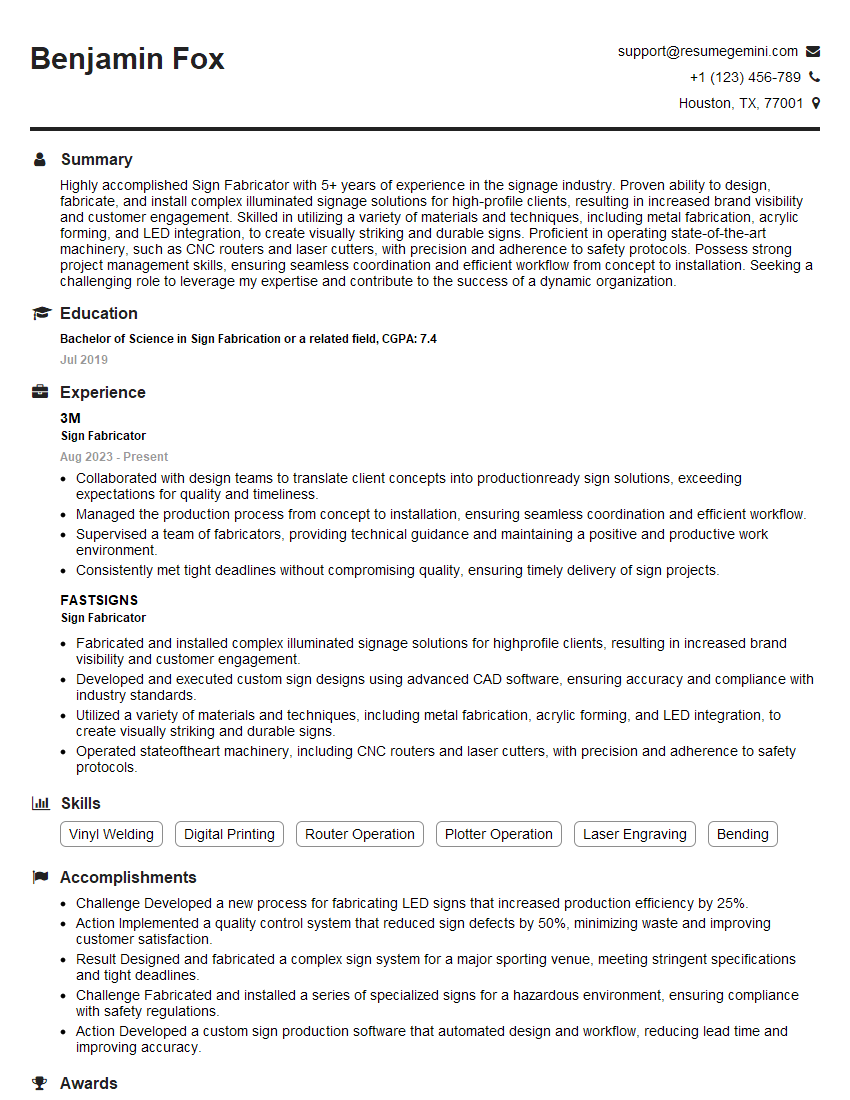
Mastering Signage Fabrication and Installation opens doors to a rewarding career with excellent growth potential. This field demands skilled professionals who are adept at both the technical and managerial aspects of the job. To significantly improve your job prospects, it’s crucial to create a resume that effectively highlights your skills and experience to Applicant Tracking Systems (ATS). ResumeGemini is a trusted resource for building professional, ATS-friendly resumes that stand out. They provide examples of resumes tailored to Signage Fabrication and Installation, helping you showcase your expertise effectively and land your dream job.
Explore more articles
Users Rating of Our Blogs
Share Your Experience
We value your feedback! Please rate our content and share your thoughts (optional).
What Readers Say About Our Blog
Attention music lovers!
Wow, All the best Sax Summer music !!!
Spotify: https://open.spotify.com/artist/6ShcdIT7rPVVaFEpgZQbUk
Apple Music: https://music.apple.com/fr/artist/jimmy-sax-black/1530501936
YouTube: https://music.youtube.com/browse/VLOLAK5uy_noClmC7abM6YpZsnySxRqt3LoalPf88No
Other Platforms and Free Downloads : https://fanlink.tv/jimmysaxblack
on google : https://www.google.com/search?q=22+AND+22+AND+22
on ChatGPT : https://chat.openai.com?q=who20jlJimmy20Black20Sax20Producer
Get back into the groove with Jimmy sax Black
Best regards,
Jimmy sax Black
www.jimmysaxblack.com
Hi I am a troller at The aquatic interview center and I suddenly went so fast in Roblox and it was gone when I reset.
Hi,
Business owners spend hours every week worrying about their website—or avoiding it because it feels overwhelming.
We’d like to take that off your plate:
$69/month. Everything handled.
Our team will:
Design a custom website—or completely overhaul your current one
Take care of hosting as an option
Handle edits and improvements—up to 60 minutes of work included every month
No setup fees, no annual commitments. Just a site that makes a strong first impression.
Find out if it’s right for you:
https://websolutionsgenius.com/awardwinningwebsites
Hello,
we currently offer a complimentary backlink and URL indexing test for search engine optimization professionals.
You can get complimentary indexing credits to test how link discovery works in practice.
No credit card is required and there is no recurring fee.
You can find details here:
https://wikipedia-backlinks.com/indexing/
Regards
NICE RESPONSE TO Q & A
hi
The aim of this message is regarding an unclaimed deposit of a deceased nationale that bears the same name as you. You are not relate to him as there are millions of people answering the names across around the world. But i will use my position to influence the release of the deposit to you for our mutual benefit.
Respond for full details and how to claim the deposit. This is 100% risk free. Send hello to my email id: lukachachibaialuka@gmail.com
Luka Chachibaialuka
Hey interviewgemini.com, just wanted to follow up on my last email.
We just launched Call the Monster, an parenting app that lets you summon friendly ‘monsters’ kids actually listen to.
We’re also running a giveaway for everyone who downloads the app. Since it’s brand new, there aren’t many users yet, which means you’ve got a much better chance of winning some great prizes.
You can check it out here: https://bit.ly/callamonsterapp
Or follow us on Instagram: https://www.instagram.com/callamonsterapp
Thanks,
Ryan
CEO – Call the Monster App
Hey interviewgemini.com, I saw your website and love your approach.
I just want this to look like spam email, but want to share something important to you. We just launched Call the Monster, a parenting app that lets you summon friendly ‘monsters’ kids actually listen to.
Parents are loving it for calming chaos before bedtime. Thought you might want to try it: https://bit.ly/callamonsterapp or just follow our fun monster lore on Instagram: https://www.instagram.com/callamonsterapp
Thanks,
Ryan
CEO – Call A Monster APP
To the interviewgemini.com Owner.
Dear interviewgemini.com Webmaster!
Hi interviewgemini.com Webmaster!
Dear interviewgemini.com Webmaster!
excellent
Hello,
We found issues with your domain’s email setup that may be sending your messages to spam or blocking them completely. InboxShield Mini shows you how to fix it in minutes — no tech skills required.
Scan your domain now for details: https://inboxshield-mini.com/
— Adam @ InboxShield Mini
support@inboxshield-mini.com
Reply STOP to unsubscribe
Hi, are you owner of interviewgemini.com? What if I told you I could help you find extra time in your schedule, reconnect with leads you didn’t even realize you missed, and bring in more “I want to work with you” conversations, without increasing your ad spend or hiring a full-time employee?
All with a flexible, budget-friendly service that could easily pay for itself. Sounds good?
Would it be nice to jump on a quick 10-minute call so I can show you exactly how we make this work?
Best,
Hapei
Marketing Director
Hey, I know you’re the owner of interviewgemini.com. I’ll be quick.
Fundraising for your business is tough and time-consuming. We make it easier by guaranteeing two private investor meetings each month, for six months. No demos, no pitch events – just direct introductions to active investors matched to your startup.
If youR17;re raising, this could help you build real momentum. Want me to send more info?
Hi, I represent an SEO company that specialises in getting you AI citations and higher rankings on Google. I’d like to offer you a 100% free SEO audit for your website. Would you be interested?
Hi, I represent an SEO company that specialises in getting you AI citations and higher rankings on Google. I’d like to offer you a 100% free SEO audit for your website. Would you be interested?