Interviews are opportunities to demonstrate your expertise, and this guide is here to help you shine. Explore the essential Skilled in Art Direction and Creative Concept Development interview questions that employers frequently ask, paired with strategies for crafting responses that set you apart from the competition.
Questions Asked in Skilled in Art Direction and Creative Concept Development Interview
Q 1. Describe your process for developing a creative concept from initial brief to final presentation.
My creative concept development process is iterative and highly collaborative. It begins with a thorough understanding of the client brief, identifying the core message, target audience, and desired outcome. I then move into a research phase, gathering inspiration and analyzing competitors. This informs the initial brainstorming session, where I use a variety of techniques, from mind-mapping to mood boards, to generate a range of ideas. I then narrow down these ideas, developing 2-3 strong concepts with detailed visual mockups and written rationales. These concepts are presented to the client, followed by revisions based on feedback. The final stage involves refining the chosen concept to a polished presentation, ready for implementation.
For example, for a recent campaign for a sustainable clothing brand, I began by researching sustainable practices and the target audience’s values. My brainstorming generated ideas focusing on natural imagery and minimalist design, which resonated with the brand’s ethos. The final presentation included mood boards, style guides, and mockups for social media and website banners.
Q 2. How do you manage conflicting creative visions from different stakeholders?
Managing conflicting creative visions requires strong communication and diplomacy. I begin by actively listening to each stakeholder, understanding their individual perspectives and concerns. I then facilitate a discussion, highlighting the common goals and identifying areas of agreement. I present different approaches, explaining the rationale behind each choice and emphasizing the overall impact on the campaign’s objectives. Compromise is key; I might incorporate elements from various suggestions, creating a hybrid solution that satisfies the majority of stakeholders. If consensus remains elusive, I present a clear rationale for my recommended approach, supported by data and research. The key is to create a sense of collaboration, ensuring everyone feels heard and valued, even if their specific suggestions are not fully implemented.
Q 3. Explain your experience with different design software (e.g., Adobe Creative Suite).
I’m proficient in the entire Adobe Creative Suite, including Photoshop, Illustrator, InDesign, After Effects, and Premiere Pro. My expertise extends beyond simply knowing the tools; I understand how to leverage their capabilities to achieve specific creative goals. For example, I use Photoshop extensively for image manipulation and retouching, Illustrator for vector-based illustrations and logo design, and InDesign for layout and typography in print and digital materials. I’m also skilled in using After Effects for motion graphics and Premiere Pro for video editing, broadening my capacity for dynamic and engaging content creation. My proficiency allows me to seamlessly transition between different design tasks and meet diverse project requirements.
Q 4. How do you ensure brand consistency across multiple design projects?
Maintaining brand consistency across multiple projects involves creating and adhering to a comprehensive brand style guide. This guide acts as a central repository for all brand assets, including logo variations, color palettes, typography specifications, and imagery guidelines. I ensure that every design element, from color choices to font selections, aligns precisely with the established guidelines. For digital projects, I leverage tools like style sheets in web design (CSS) to maintain consistency across various platforms and interfaces. Regular communication with stakeholders is also vital to address any potential deviations and ensure the brand’s visual identity remains unified and recognizable across all platforms.
Q 5. Describe your approach to brainstorming and idea generation.
My brainstorming approach is multifaceted and incorporates various techniques. I often begin with individual brainstorming sessions, utilizing mind-mapping to explore ideas freely. This is followed by group brainstorming sessions, encouraging collaborative idea generation and building upon each other’s suggestions. I frequently incorporate mood boards and trend analysis to understand current creative styles and inform my ideas. I also use techniques like ‘SCAMPER’ (Substitute, Combine, Adapt, Modify, Put to other uses, Eliminate, Reverse) to challenge existing approaches and spark innovative solutions. The key is to foster a creative and open environment where unconventional ideas are encouraged.
Q 6. How do you handle feedback and critiques on your creative work?
I view feedback as an opportunity for growth and improvement. I listen attentively to critiques, taking notes and asking clarifying questions to ensure I understand the feedback fully. I then analyze the feedback, distinguishing between constructive criticism and subjective opinions. I prioritize constructive criticism and use it to refine my work, incorporating suggestions where appropriate. If there’s a disagreement, I aim to understand the underlying concerns and offer alternative solutions. My goal is not merely to defend my work but to collaboratively create the best possible outcome. A collaborative approach always yields the best results.
Q 7. Give an example of a time you had to overcome a creative challenge.
During a rebranding project for a tech startup, the initial client brief lacked clear direction. They wanted a “modern and innovative” design, but couldn’t articulate what that meant visually. To overcome this, I conducted extensive user research, analyzing competitor branding and understanding the target audience’s preferences. I presented the client with multiple concept directions, each accompanied by a detailed rationale explaining the design choices and their alignment with the brand’s values and goals. This clear and well-reasoned approach helped the client visualize the possibilities and confidently choose a direction. The final result exceeded expectations, achieving significant brand recognition and aligning perfectly with the company’s evolving identity. This experience taught me the importance of comprehensive research and transparent communication in navigating ambiguous creative briefs.
Q 8. How do you stay up-to-date with current design trends and technologies?
Staying current in the dynamic world of design requires a multifaceted approach. It’s not just about passively absorbing trends, but actively engaging with the design community and experimenting with new tools.
- Industry Publications and Websites: I regularly follow leading design blogs, magazines (both print and online), and websites like Awwwards, Behance, and Dribbble to see what’s being created and discussed. This provides a pulse on emerging styles and techniques.
- Design Conferences and Workshops: Attending conferences like Adobe MAX, AIGA events, or smaller niche workshops offers invaluable networking opportunities and access to cutting-edge presentations and insights from leading designers.
- Experimentation and Hands-on Learning: I dedicate time to exploring new software, experimenting with different design styles, and pushing my creative boundaries. This active learning approach allows me to gain practical experience with new technologies and better understand their applications.
- Social Media and Online Communities: Following key designers, design agencies, and relevant hashtags on platforms like Instagram, Twitter, and LinkedIn provides a constant stream of inspiration and information. Engaging in relevant online communities fosters collaboration and shared learning.
For example, recently I’ve been delving into the use of AI tools in design, experimenting with Midjourney and Dall-E 2 to understand their potential and limitations in creative concept development. This hands-on approach helps me critically assess new technologies and determine their value in my workflow.
Q 9. How do you measure the success of a creative campaign?
Measuring the success of a creative campaign goes beyond simply looking at aesthetic appeal. A multi-faceted approach is crucial, focusing on both quantitative and qualitative data. The specific metrics will vary depending on the campaign’s objectives, but some key measurements include:
- Quantitative Metrics: These are the numbers. For example, website traffic, conversion rates (e.g., sales, leads, sign-ups), social media engagement (likes, shares, comments), brand mentions, and reach.
- Qualitative Metrics: These are harder to quantify but just as important. Brand awareness surveys, customer feedback (reviews, testimonials), focus group discussions, and media coverage can provide insights into how the campaign is perceived and its impact on brand sentiment.
- Return on Investment (ROI): Ultimately, the success of a campaign often comes down to its ROI. This requires tracking all costs associated with the campaign and comparing them to the revenue or other benefits generated.
For instance, in a recent campaign for a sustainable fashion brand, we not only tracked website traffic and sales conversions, but also conducted a post-campaign survey to gauge consumer perception of the brand’s commitment to sustainability. The positive feedback, along with a significant increase in sales, demonstrated the campaign’s overall success.
Q 10. Describe your experience working with clients or managing a team.
I thrive in collaborative environments. My experience encompasses both client management and team leadership. I’ve worked with clients ranging from small startups to large multinational corporations.
- Client Management: I prioritize clear communication and active listening to understand clients’ needs and objectives. I’m adept at translating their business goals into effective visual strategies, presenting concepts clearly, and managing expectations throughout the design process. This includes regular progress reports, feedback sessions, and proactive problem-solving.
- Team Management: When leading a team, I focus on fostering a collaborative and creative atmosphere. I delegate tasks based on individual strengths, provide constructive feedback, and offer support and guidance to team members. I ensure clear communication channels are established and deadlines are met effectively.
For example, while working with a tech startup, I collaborated closely with the CEO to understand their branding needs and developed a visual identity that captured their innovative spirit. I then managed a team of designers and developers to ensure the consistent application of the brand across all platforms. Regular client check-ins and open communication were crucial in delivering a successful result that met and exceeded their expectations.
Q 11. Explain your understanding of typography and its role in design.
Typography is far more than just choosing fonts; it’s a crucial element in establishing the visual hierarchy, readability, and overall tone of a design. A well-chosen typeface can significantly enhance the message and user experience.
- Readability and Legibility: Font selection should prioritize readability and legibility, considering factors like font size, line height, letter spacing (tracking), and word spacing (kerning). The chosen typeface must be easily read and understood across various screen sizes and devices.
- Visual Hierarchy: Different font sizes, weights (bold, regular, light), and styles (italics, uppercase) create a visual hierarchy, guiding the viewer’s eye through the design and highlighting important information.
- Brand Personality: Typefaces communicate a brand’s personality. A playful script might be perfect for a children’s brand, while a bold sans-serif might suit a tech company.
- Consistency: Maintaining consistency in typography is vital for a cohesive design. This involves using a limited number of fonts and establishing clear guidelines for their usage.
For example, in designing a website for a law firm, I’d choose a serif typeface like Garamond or Times New Roman to convey professionalism and trustworthiness, while using a sans-serif typeface like Open Sans for body text to ensure readability. Careful attention to kerning and tracking would further enhance legibility.
Q 12. How do you ensure your designs are accessible to people with disabilities?
Accessible design ensures that everyone, regardless of ability, can access and use the design. It’s a crucial aspect of ethical and responsible design. Key considerations include:
- Alternative Text for Images: Providing descriptive alternative text (alt text) for all images allows screen readers to convey the image’s content to visually impaired users.
- Sufficient Color Contrast: Ensuring adequate color contrast between text and background prevents readability issues for those with visual impairments. Tools like WebAIM’s color contrast checker can assist in meeting accessibility guidelines.
- Keyboard Navigation: All interactive elements must be navigable using a keyboard, accommodating users who cannot use a mouse.
- Captioning and Transcripts: For videos and audio content, providing accurate captions and transcripts ensures accessibility for the deaf and hard of hearing.
- WCAG Compliance: Following the Web Content Accessibility Guidelines (WCAG) provides a framework for creating accessible digital content.
For example, when designing a website, I ensure all images have descriptive alt text, the color contrast ratio is sufficient, and all interactive elements work properly with keyboard navigation. Using a tool like a WCAG compliance checker helps verify accessibility across different aspects of the design.
Q 13. Describe your experience with color theory and its application in design.
Color theory is the foundational principle governing how colors interact and affect our perception. Understanding color theory is crucial for creating effective and impactful designs.
- Color Harmonies: Using color harmonies (complementary, analogous, triadic, etc.) creates visually pleasing and balanced designs. Understanding the relationships between colors helps create a cohesive and harmonious aesthetic.
- Color Psychology: Different colors evoke different emotions and associations. Knowing the psychology of color allows designers to use color strategically to achieve specific effects (e.g., using calming blues for a spa, energetic reds for a sports brand).
- Color Contrast: Using sufficient color contrast between foreground and background elements is crucial for readability and accessibility. A strong contrast between text and background improves visibility.
- Color Modes: Understanding different color modes (RGB, CMYK) is essential for proper color reproduction across different mediums (web, print).
For example, when designing a marketing campaign for a luxury brand, I might use a sophisticated color palette based on analogous colors, creating a sense of elegance and sophistication. Conversely, a campaign for a children’s toy might utilize brighter, more vibrant colors to evoke feelings of joy and playfulness. Understanding the nuances of color theory is paramount in making impactful design decisions.
Q 14. How do you balance creative vision with business objectives?
Balancing creative vision with business objectives is a constant dance in the design world. It requires strong communication, strategic thinking, and a collaborative approach.
- Understanding Business Goals: Thoroughly understanding the client’s business objectives, target audience, and key performance indicators (KPIs) is the first step. This informs all design decisions, ensuring the creative vision aligns with the desired outcomes.
- Data-Driven Design: Using data analytics to inform design choices helps make sure the design meets the business goals. This could include A/B testing different design iterations to determine which performs better.
- Iterative Process: Embracing an iterative design process allows for adjustments based on feedback and data analysis. This flexible approach ensures that the final design balances creativity with effectiveness.
- Clear Communication: Open and transparent communication with clients is crucial throughout the design process. Regular check-ins, presenting options, and actively seeking feedback ensure alignment between the creative vision and the business objectives.
For example, I recently worked on a redesign for a e-commerce website. While my creative vision involved a bold, modern design, I also focused on user experience (UX) best practices to optimize conversion rates, a key business objective. By incorporating user testing and A/B testing, we could create a design that was both visually appealing and highly effective in driving sales.
Q 15. Explain your process for creating a mood board or style guide.
Creating a mood board or style guide is the cornerstone of any successful design project. It’s essentially a visual roadmap, guiding the entire creative process and ensuring consistency. My process is iterative and involves several key steps:
- Initial Briefing and Research: I begin by thoroughly understanding the project brief, target audience, and brand guidelines. This involves market research, competitor analysis, and sometimes even user interviews to gather insights. For example, if designing for a sustainable clothing brand, I’d research eco-friendly materials, packaging, and current trends in sustainable fashion.
- Mood Board Creation: I curate a collection of images, textures, colors, and typography samples that evoke the desired mood and aesthetic. This could include photography, illustrations, artwork, and even fabric swatches. I leverage platforms like Pinterest, Adobe Stock, and Dribbble for inspiration. The mood board visually communicates the overall ‘feel’ of the project—think ‘rustic elegance,’ ‘modern minimalist,’ or ‘playful and vibrant.’
- Style Guide Development: Once the mood board establishes the direction, I translate the visual elements into a comprehensive style guide. This document includes detailed specifications for colors (with hex codes), typography (font families, sizes, weights), imagery (style, tone), and graphic elements. This ensures consistency across all design deliverables. For instance, the style guide might specify the use of specific fonts for headings versus body text, or define the preferred color palette for different sections of a website.
- Iteration and Refinement: The mood board and style guide are not static; they evolve through discussion and feedback with the client or team. I present my initial drafts and iterate based on their input, refining the visuals and specifications until we reach a shared understanding of the project’s visual identity.
Career Expert Tips:
- Ace those interviews! Prepare effectively by reviewing the Top 50 Most Common Interview Questions on ResumeGemini.
- Navigate your job search with confidence! Explore a wide range of Career Tips on ResumeGemini. Learn about common challenges and recommendations to overcome them.
- Craft the perfect resume! Master the Art of Resume Writing with ResumeGemini’s guide. Showcase your unique qualifications and achievements effectively.
- Don’t miss out on holiday savings! Build your dream resume with ResumeGemini’s ATS optimized templates.
Q 16. How do you handle tight deadlines and high-pressure situations?
Tight deadlines and pressure are inherent in the creative industry. My approach is built around effective time management, prioritization, and proactive communication.
- Prioritization: I break down large projects into smaller, manageable tasks, focusing on the most critical elements first. This helps prevent feeling overwhelmed and allows for flexible adjustments if unexpected delays occur. Using project management tools like Trello or Asana significantly improves this process.
- Effective Time Management: I employ time-blocking techniques, allocating specific time slots for different tasks. This disciplined approach ensures focused work sessions and prevents task switching, which can reduce overall efficiency. Regular breaks are also crucial to maintain concentration and avoid burnout.
- Proactive Communication: Open and honest communication with stakeholders is paramount. If I foresee potential challenges or delays, I address them proactively, offering potential solutions rather than waiting until the problem escalates. This transparency fosters trust and collaborative problem-solving.
- Stress Management: While deadlines are important, maintaining a healthy work-life balance is crucial. I incorporate stress-reduction techniques like short exercise breaks or mindfulness exercises to maintain focus and mental well-being.
Q 17. What is your preferred design style, and how does it inform your creative choices?
While I’m adaptable and comfortable working across various styles, I lean towards a modern, minimalist aesthetic. This preference isn’t rigid; it’s a foundation that informs my creative choices.
Minimalism, for me, isn’t about simplicity for simplicity’s sake. It’s about intentional design—carefully selecting essential elements to create a clear, impactful message. It prioritizes functionality, readability, and a clean, uncluttered visual experience. For example, in web design, this might mean using a clean grid layout, a limited color palette, and high-quality imagery to convey the message effectively without overwhelming the user. This approach enhances usability and ensures the design remains timeless, avoiding trends that quickly fade.
This doesn’t mean my work is always stark or devoid of personality. The ‘modern’ aspect allows for creativity and innovation in typography, color choices, and subtle details that add personality and brand identity. The key is balance—a refined elegance combined with a strategic use of elements to achieve the desired impact.
Q 18. Describe your experience in leading design presentations to clients or executives.
I have extensive experience presenting design work to clients and executives, both individually and to larger teams. My approach focuses on storytelling and clear communication.
- Storytelling: I don’t just present designs; I tell the story behind them. I articulate the design process, explain the creative decisions, and demonstrate how the design solutions address the client’s needs and objectives. This makes the presentation engaging and memorable.
- Visual Clarity: The presentation itself is meticulously crafted, using high-quality visuals and concise, easy-to-understand language. I avoid technical jargon, focusing instead on clear explanations and visual demonstrations.
- Data-Driven Insights: Where applicable, I incorporate data and analytics to support my design choices. This provides objective evidence of the design’s effectiveness and enhances the presentation’s credibility. For example, I might show user testing results demonstrating improved engagement or conversion rates.
- Interactive Elements: To increase engagement, I sometimes incorporate interactive elements into my presentations—for instance, using prototypes or clickable mockups. This allows clients to experience the design and provide more informed feedback.
- Feedback and Iteration: The presentation isn’t a one-way street. I encourage questions and feedback throughout the presentation, creating a dialogue that allows for adjustments and ensures the client feels heard and valued.
Q 19. How do you incorporate user research into your design process?
User research is fundamental to my design process. It ensures that the designs are not only visually appealing but also user-centric and effective. My approach involves several methods:
- User Interviews: I conduct in-depth interviews with target users to understand their needs, behaviors, and pain points related to the product or service being designed. This helps to uncover insights that might not be apparent through other research methods.
- Surveys: Surveys provide a broader perspective by gathering data from a larger sample size of users. They can be used to quantify preferences and validate assumptions.
- Usability Testing: I conduct usability testing to evaluate the design’s effectiveness and identify areas for improvement. This typically involves observing users as they interact with prototypes or mockups, providing insights into their experience.
- Persona Development: I often create user personas based on the research findings. These fictional representations of target users help to focus the design process and ensure the designs are tailored to the needs of the intended audience.
- A/B Testing: After the design is implemented, A/B testing can be used to compare different design versions and determine which performs better in terms of user engagement and conversion rates.
The insights gained from these methods are directly incorporated into design decisions, ensuring the final product meets the needs and expectations of the users.
Q 20. Explain your understanding of design principles like hierarchy, balance, and proportion.
Design principles like hierarchy, balance, and proportion are crucial for creating effective and visually appealing designs. They provide a framework for organizing elements and guiding the viewer’s eye.
- Hierarchy: This refers to the visual order of elements, guiding the user’s attention to the most important information first. This is often achieved through size, color, contrast, and placement. For example, a headline is typically larger and bolder than body text to establish visual hierarchy.
- Balance: This relates to the visual weight distribution within a design. Symmetrical balance is created by mirroring elements on either side of a central axis, while asymmetrical balance uses different elements of varying visual weight to create a sense of equilibrium. Think of a balanced scale; both sides don’t need to be identical but need to feel equally weighted.
- Proportion: This concerns the relative size and scale of elements within a design. Using the golden ratio or other proportional relationships can create aesthetically pleasing and harmonious compositions. Proper proportion ensures elements are sized appropriately relative to each other, creating visual harmony.
These principles work together to create visually appealing and effective designs. A well-designed layout guides the user’s eye, communicates information clearly, and creates a positive user experience.
Q 21. Give an example of a time you had to adapt your design approach based on unexpected feedback.
During a recent website redesign for a tech startup, I initially focused on a bold, highly interactive design incorporating complex animations. After presenting the initial designs, the client expressed concern that the interactivity might distract from the core message and could negatively impact loading times. This feedback was unexpected, as initial discussions hadn’t explicitly highlighted this concern.
Instead of becoming defensive, I viewed the feedback as an opportunity for improvement. I immediately scheduled a follow-up meeting to thoroughly understand their concerns. We discussed alternative approaches that prioritized clarity and speed without sacrificing the visual appeal.
I adapted the design by simplifying the animations, focusing on micro-interactions where appropriate, and prioritizing clean layouts and clear visual hierarchy. We also conducted A/B testing on different design iterations to measure user engagement and loading times. This iterative approach, driven by client feedback and data, resulted in a final design that satisfied both aesthetic and functional requirements, highlighting the importance of adaptability and collaboration in the design process.
Q 22. How do you ensure consistency in design across different media platforms (e.g., web, print, social media)?
Maintaining design consistency across various platforms is crucial for brand recognition and user experience. It’s like having a consistent visual language – your brand’s ‘voice’ – that speaks clearly no matter the medium.
I achieve this through a well-defined style guide. This document serves as the central repository for all brand assets, including:
- Logo variations: Different formats (e.g., RGB, CMYK) and sizes for web and print.
- Color palettes: Primary, secondary, and accent colors with their hex codes, ensuring consistent color representation across platforms.
- Typography: Specified font families, sizes, weights, and styles for headlines, body text, and captions.
- Imagery guidelines: Style and tone of photography or illustrations to maintain visual unity.
- Spacing and layout: Grid systems, margins, and padding to ensure consistency in visual hierarchy and readability.
I also employ a centralized design system, often leveraging tools like Figma or Adobe XD, which allows for the creation and sharing of reusable design components. This ensures consistency across all design elements, making updates efficient and maintaining uniformity. For example, a button style created once can be seamlessly used across the website, app, and social media graphics.
Q 23. How familiar are you with Agile methodologies and their application in a design workflow?
I’m highly familiar with Agile methodologies, particularly Scrum, and their application in design workflows. Think of Agile as a flexible approach to project management, perfectly suited to the iterative nature of design.
In an Agile setting, I participate in sprint planning, daily stand-ups, and sprint reviews. Instead of lengthy design phases followed by lengthy development, we work in short cycles (sprints). This allows for continuous feedback and adjustments throughout the project, leading to a more refined and user-centered outcome. For instance, instead of designing the entire website at once, we might focus on the homepage in one sprint, the product page in another, continuously gathering user feedback along the way. This iterative approach helps to mitigate risk and adapt to changing requirements more efficiently.
Q 24. How do you prioritize different tasks and manage your time effectively in a fast-paced environment?
Prioritization and time management are key in a fast-paced environment. I use a combination of techniques to manage my workload effectively.
- Prioritization matrix: I categorize tasks based on urgency and importance (e.g., Eisenhower Matrix). This ensures that critical tasks receive immediate attention, while less important tasks are scheduled appropriately.
- Time blocking: I allocate specific time slots for different tasks in my day, creating a structured schedule and minimizing distractions. This is akin to creating dedicated workspaces in your mind.
- Project management tools: I leverage tools like Asana or Trello to track progress, assign tasks, and collaborate with team members efficiently. This allows me to keep track of everything in one place and get quick overviews of progress.
- Regular review and adjustment: I frequently review my schedule and adjust it based on changing priorities and unexpected delays. Adaptability is key!
Q 25. What are your strengths and weaknesses as an Art Director/Creative Concept Developer?
My strengths lie in my conceptual thinking, ability to translate abstract ideas into compelling visuals, and collaborative spirit. I excel at brainstorming, developing innovative concepts, and leading teams to achieve shared goals. For instance, I recently developed a unique visual identity for a start-up that resonated deeply with their target audience, resulting in significant brand awareness.
One area I’m continuously working on is delegation. While I enjoy being hands-on, I’m learning to trust and empower my team members to take ownership of tasks, allowing me to focus on high-level strategic decisions.
Q 26. Explain your experience with project management tools and workflows.
I’m proficient in several project management tools, including Asana, Trello, and Jira. My workflow typically involves:
- Task creation and assignment: Clearly defining tasks and assigning them to appropriate team members within the chosen platform.
- Progress tracking: Monitoring task completion, identifying roadblocks, and making adjustments as needed.
- Communication and collaboration: Utilizing the tools’ communication features for seamless collaboration and efficient problem-solving.
- Reporting and documentation: Generating reports to track progress and maintain a comprehensive record of the project’s development.
I tailor my approach to the specific project and team needs, choosing the most suitable tool and workflow for optimal efficiency. For example, for smaller projects with a smaller team, Trello’s simplicity is often ideal. Larger, more complex projects might benefit from the more robust features of Asana or Jira.
Q 27. Describe a time you had to make a difficult design decision.
During a recent rebranding project, we faced a difficult decision regarding the new logo. The initial design, while aesthetically pleasing, lacked memorability. The client loved it, but market research suggested low recall rates.
I presented data-backed evidence supporting a redesign, outlining the risks of launching with a forgettable logo. This involved carefully explaining the research findings, presenting alternative design options, and collaboratively discussing the pros and cons of each. The final decision was made collaboratively, focusing on achieving brand recognition and long-term success, rather than solely relying on initial aesthetic appeal. The resulting logo was more impactful and successful in achieving the marketing goals.
Q 28. How do you build and maintain relationships with other creative professionals?
Building and maintaining strong relationships with creative professionals is essential for success. I approach this through open communication, active listening, mutual respect, and a collaborative spirit. Think of it like building a strong team where everyone feels valued and heard.
I regularly engage in:
- Open and honest communication: Clearly expressing my needs and expectations while actively listening to the perspectives of others.
- Respectful collaboration: Recognizing and valuing the contributions of each team member.
- Regular feedback sessions: Providing constructive criticism and receiving feedback gracefully, fostering a culture of continuous improvement.
- Networking and mentorship: Building relationships with other professionals through industry events, workshops, and mentorship opportunities. It’s a two-way street. I’m always learning from my peers.
Key Topics to Learn for Skilled in Art Direction and Creative Concept Development Interview
- Visual Communication & Design Principles: Understanding typography, color theory, composition, and visual hierarchy to create impactful designs.
- Creative Concept Development: Brainstorming, ideation, and developing compelling concepts that meet client briefs and brand guidelines. This includes understanding the process from initial concept to final presentation.
- Art Direction & Style Guides: Overseeing the visual aspects of a project, ensuring consistency and adherence to a defined brand aesthetic. Demonstrate understanding of how to translate abstract concepts into tangible visual language.
- Project Management & Collaboration: Managing timelines, budgets, and collaborating effectively with designers, writers, and other stakeholders. Showcasing your experience in leading and motivating teams.
- Software Proficiency: Demonstrating expertise in relevant design software (Adobe Creative Suite, Sketch, Figma, etc.) and the ability to adapt to new technologies.
- Presentation & Client Communication: Effectively presenting design concepts and rationale to clients or internal teams. Showcasing your ability to explain your creative decisions confidently and persuasively.
- Problem-Solving & Creative Thinking: Articulating your problem-solving approach within a design context. Showcasing examples of how you’ve overcome creative challenges and found innovative solutions.
- Industry Trends & Research: Staying up-to-date on current design trends and using this knowledge to inform your creative direction. Highlighting your proactive approach to continuing professional development.
Next Steps
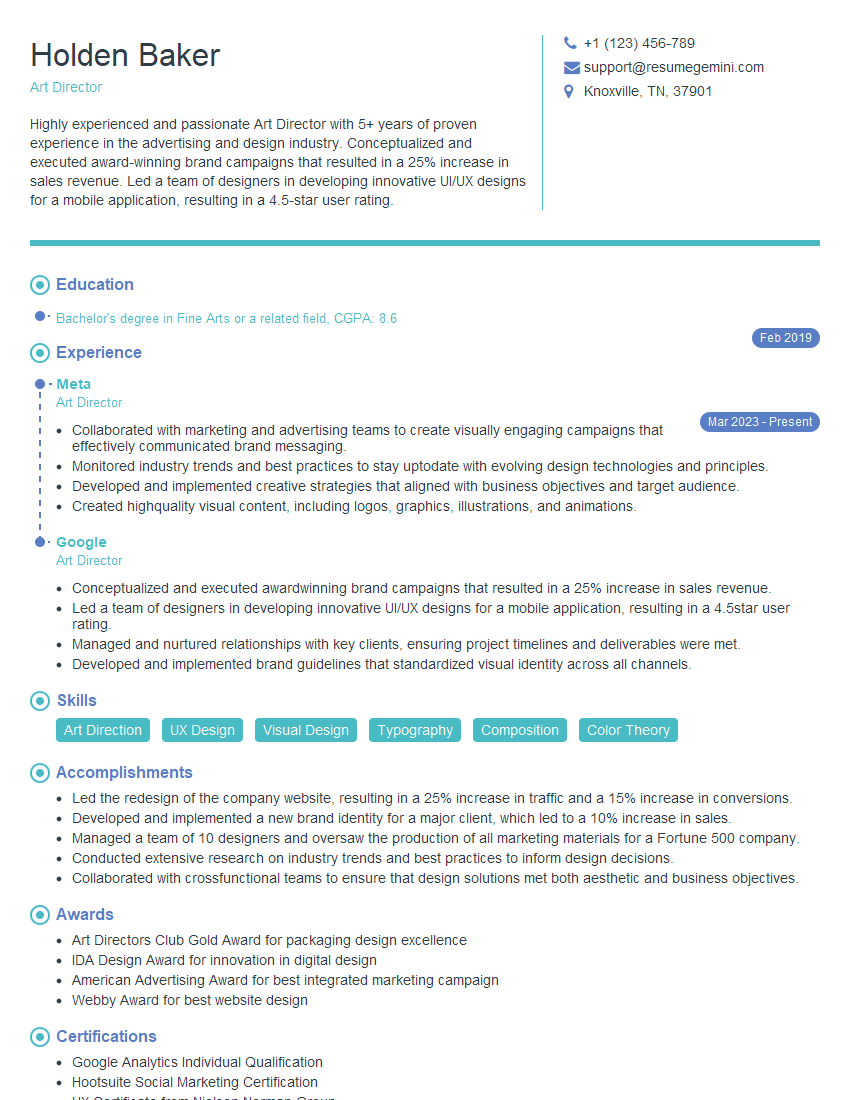
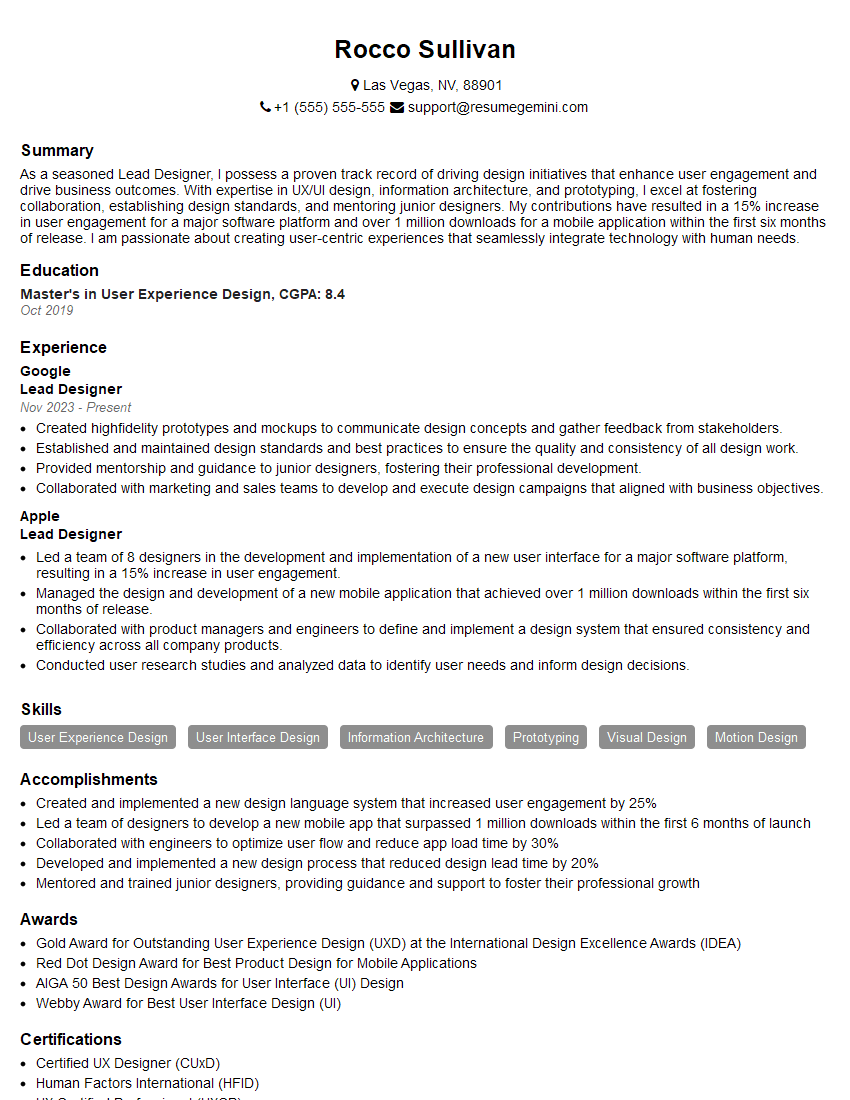
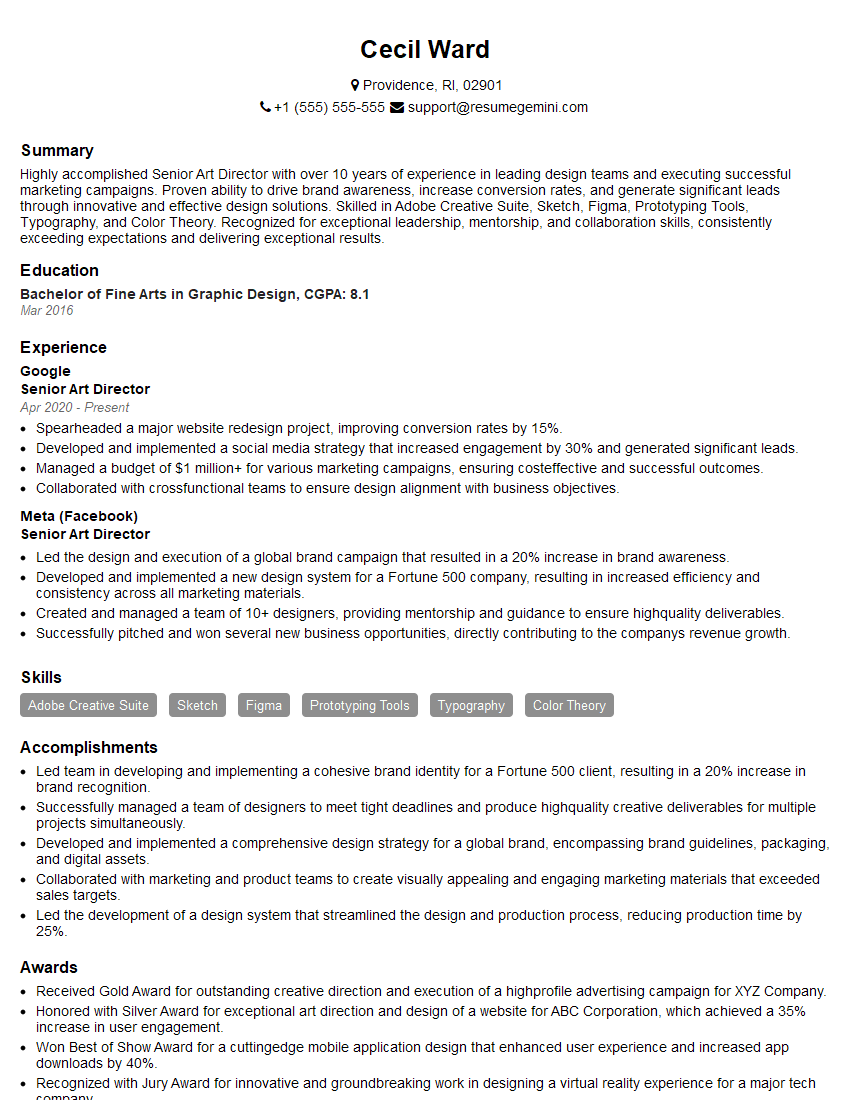
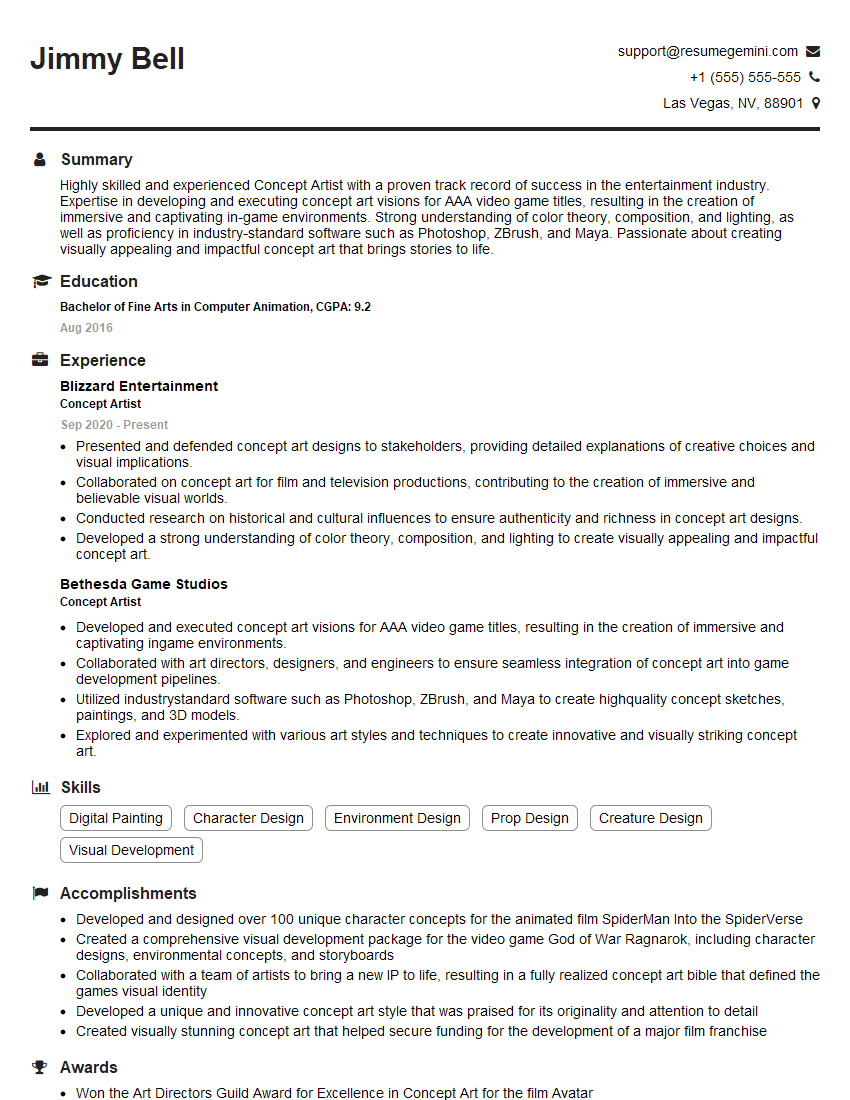
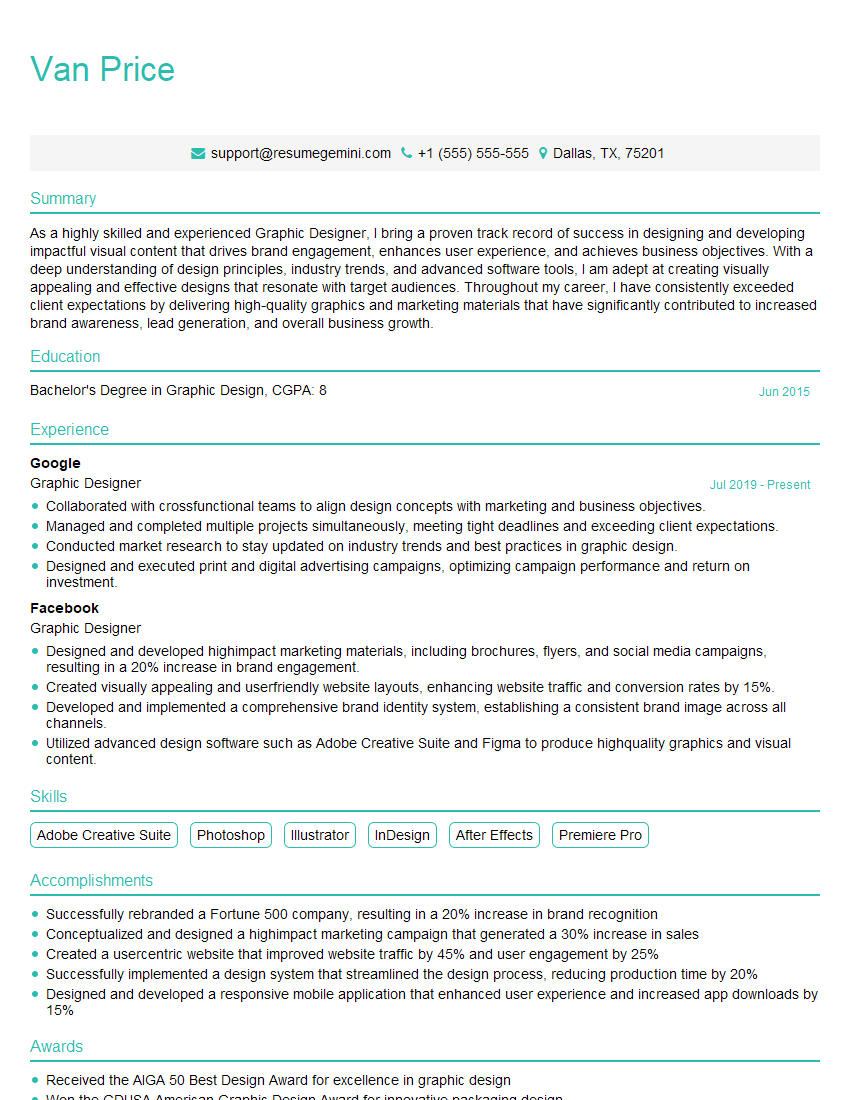
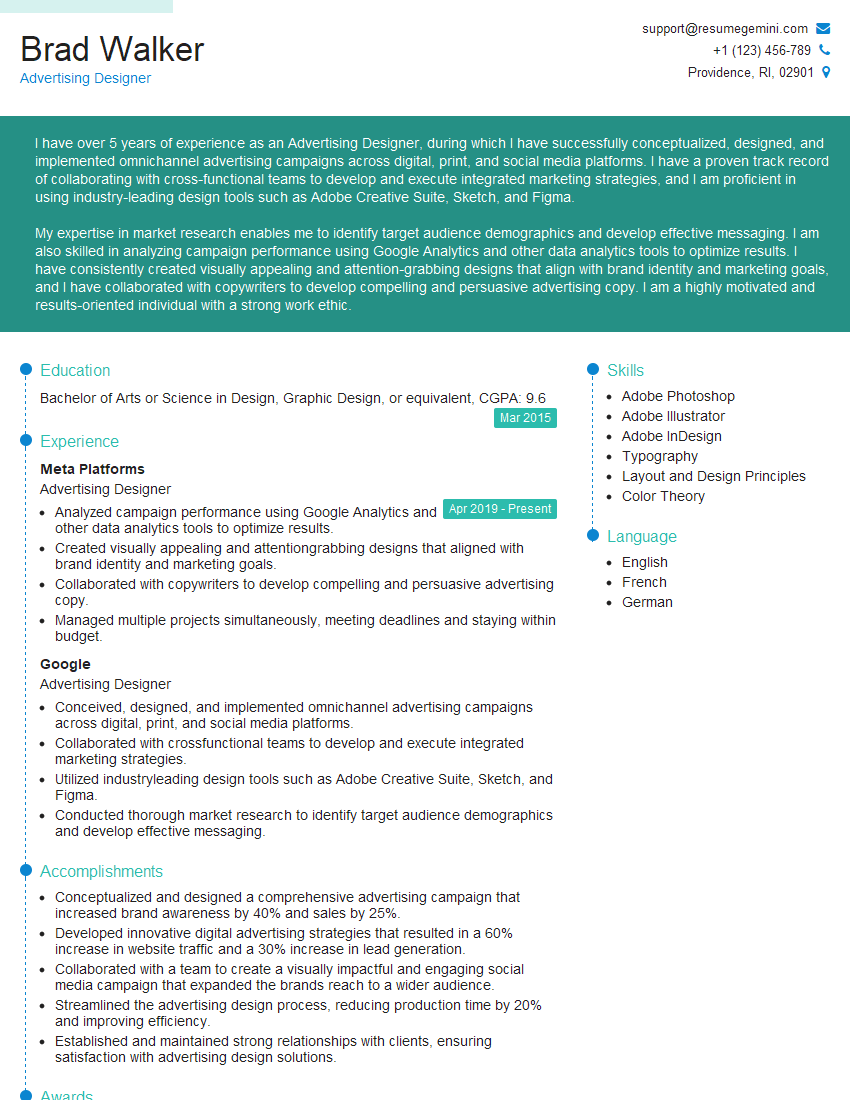
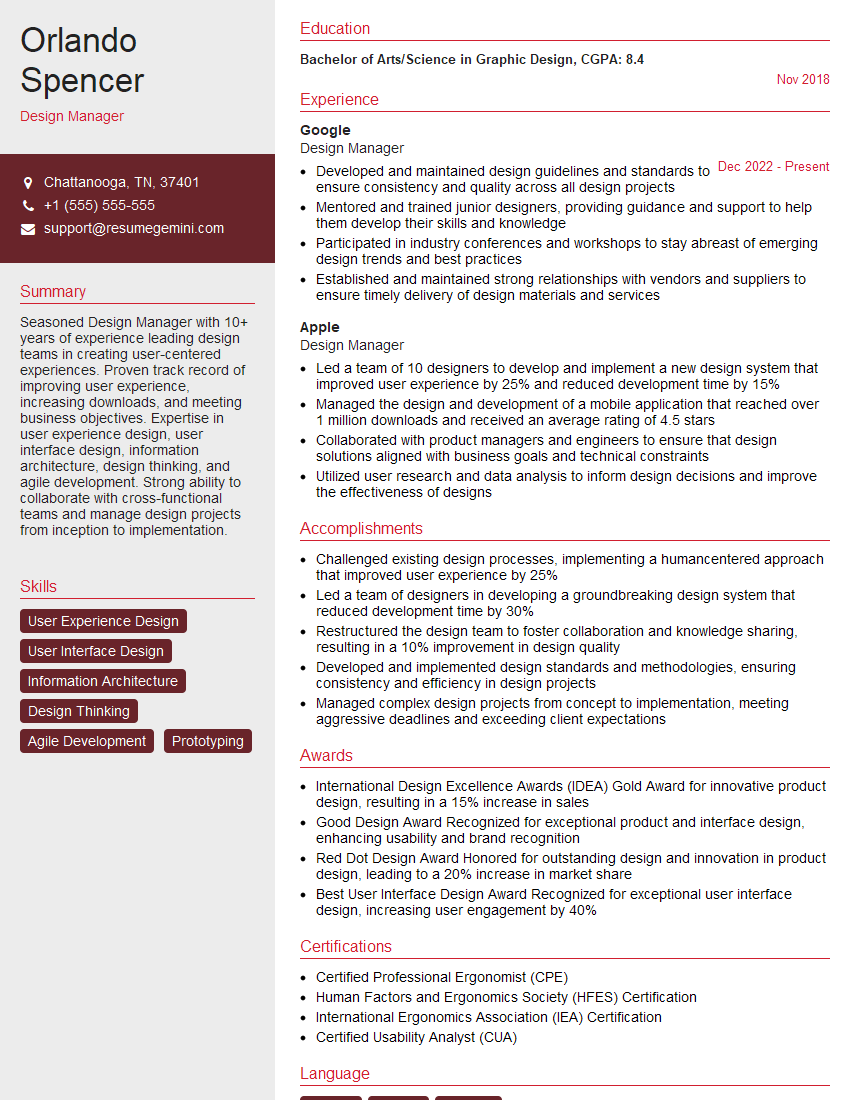
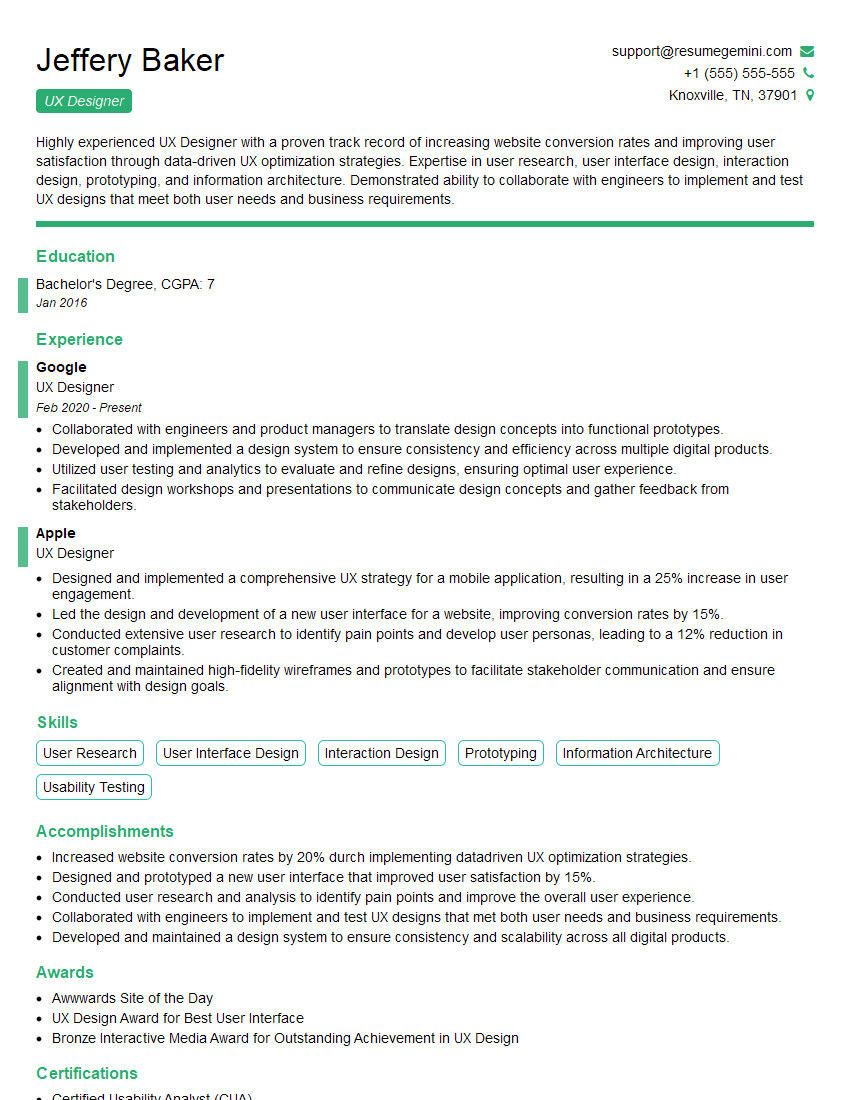
Mastering Art Direction and Creative Concept Development is crucial for career advancement in the design field, opening doors to leadership roles and higher earning potential. A strong resume is your first impression – ensure yours is ATS-friendly to maximize your job prospects. Use ResumeGemini to build a professional and impactful resume that showcases your skills and experience effectively. ResumeGemini provides examples of resumes tailored to Art Direction and Creative Concept Development roles to help guide you. Invest the time to craft a compelling narrative that highlights your unique contributions and achievements. Your career success starts with a strong foundation; let ResumeGemini help you build it.

Explore more articles
Users Rating of Our Blogs
Share Your Experience
We value your feedback! Please rate our content and share your thoughts (optional).
What Readers Say About Our Blog
Attention music lovers!
Wow, All the best Sax Summer music !!!
Spotify: https://open.spotify.com/artist/6ShcdIT7rPVVaFEpgZQbUk
Apple Music: https://music.apple.com/fr/artist/jimmy-sax-black/1530501936
YouTube: https://music.youtube.com/browse/VLOLAK5uy_noClmC7abM6YpZsnySxRqt3LoalPf88No
Other Platforms and Free Downloads : https://fanlink.tv/jimmysaxblack
on google : https://www.google.com/search?q=22+AND+22+AND+22
on ChatGPT : https://chat.openai.com?q=who20jlJimmy20Black20Sax20Producer
Get back into the groove with Jimmy sax Black
Best regards,
Jimmy sax Black
www.jimmysaxblack.com
Hi I am a troller at The aquatic interview center and I suddenly went so fast in Roblox and it was gone when I reset.
Hi,
Business owners spend hours every week worrying about their website—or avoiding it because it feels overwhelming.
We’d like to take that off your plate:
$69/month. Everything handled.
Our team will:
Design a custom website—or completely overhaul your current one
Take care of hosting as an option
Handle edits and improvements—up to 60 minutes of work included every month
No setup fees, no annual commitments. Just a site that makes a strong first impression.
Find out if it’s right for you:
https://websolutionsgenius.com/awardwinningwebsites
Hello,
we currently offer a complimentary backlink and URL indexing test for search engine optimization professionals.
You can get complimentary indexing credits to test how link discovery works in practice.
No credit card is required and there is no recurring fee.
You can find details here:
https://wikipedia-backlinks.com/indexing/
Regards
NICE RESPONSE TO Q & A
hi
The aim of this message is regarding an unclaimed deposit of a deceased nationale that bears the same name as you. You are not relate to him as there are millions of people answering the names across around the world. But i will use my position to influence the release of the deposit to you for our mutual benefit.
Respond for full details and how to claim the deposit. This is 100% risk free. Send hello to my email id: lukachachibaialuka@gmail.com
Luka Chachibaialuka
Hey interviewgemini.com, just wanted to follow up on my last email.
We just launched Call the Monster, an parenting app that lets you summon friendly ‘monsters’ kids actually listen to.
We’re also running a giveaway for everyone who downloads the app. Since it’s brand new, there aren’t many users yet, which means you’ve got a much better chance of winning some great prizes.
You can check it out here: https://bit.ly/callamonsterapp
Or follow us on Instagram: https://www.instagram.com/callamonsterapp
Thanks,
Ryan
CEO – Call the Monster App
Hey interviewgemini.com, I saw your website and love your approach.
I just want this to look like spam email, but want to share something important to you. We just launched Call the Monster, a parenting app that lets you summon friendly ‘monsters’ kids actually listen to.
Parents are loving it for calming chaos before bedtime. Thought you might want to try it: https://bit.ly/callamonsterapp or just follow our fun monster lore on Instagram: https://www.instagram.com/callamonsterapp
Thanks,
Ryan
CEO – Call A Monster APP
To the interviewgemini.com Owner.
Dear interviewgemini.com Webmaster!
Hi interviewgemini.com Webmaster!
Dear interviewgemini.com Webmaster!
excellent
Hello,
We found issues with your domain’s email setup that may be sending your messages to spam or blocking them completely. InboxShield Mini shows you how to fix it in minutes — no tech skills required.
Scan your domain now for details: https://inboxshield-mini.com/
— Adam @ InboxShield Mini
support@inboxshield-mini.com
Reply STOP to unsubscribe
Hi, are you owner of interviewgemini.com? What if I told you I could help you find extra time in your schedule, reconnect with leads you didn’t even realize you missed, and bring in more “I want to work with you” conversations, without increasing your ad spend or hiring a full-time employee?
All with a flexible, budget-friendly service that could easily pay for itself. Sounds good?
Would it be nice to jump on a quick 10-minute call so I can show you exactly how we make this work?
Best,
Hapei
Marketing Director
Hey, I know you’re the owner of interviewgemini.com. I’ll be quick.
Fundraising for your business is tough and time-consuming. We make it easier by guaranteeing two private investor meetings each month, for six months. No demos, no pitch events – just direct introductions to active investors matched to your startup.
If youR17;re raising, this could help you build real momentum. Want me to send more info?
Hi, I represent an SEO company that specialises in getting you AI citations and higher rankings on Google. I’d like to offer you a 100% free SEO audit for your website. Would you be interested?
Hi, I represent an SEO company that specialises in getting you AI citations and higher rankings on Google. I’d like to offer you a 100% free SEO audit for your website. Would you be interested?