Every successful interview starts with knowing what to expect. In this blog, we’ll take you through the top Solid Food Preparation interview questions, breaking them down with expert tips to help you deliver impactful answers. Step into your next interview fully prepared and ready to succeed.
Questions Asked in Solid Food Preparation Interview
Q 1. Describe your experience with various cooking methods (e.g., grilling, roasting, sautéing).
My experience encompasses a wide range of cooking methods, each offering unique textural and flavor profiles. Grilling, for instance, imparts a characteristic smoky char, ideal for meats and vegetables. I frequently use it to prepare things like grilled salmon with a lemon-herb marinade or perfectly charred asparagus. Roasting, on the other hand, uses dry heat in an oven, resulting in tender interiors and crispy exteriors. Think of a beautifully roasted chicken with rosemary and potatoes, or a tray of roasted root vegetables. Sautéing employs quick, high-heat cooking in a small amount of fat, perfect for delicate ingredients like mushrooms or shrimp, where the goal is to quickly cook and retain moisture and freshness. I often use this method to prepare a quick stir-fry or to create a flavorful base for pasta sauces.
Beyond these, I’m proficient in braising (slow cooking in liquid), poaching (gentle cooking in simmering liquid), steaming, and deep-frying, each chosen strategically based on the desired outcome and the characteristics of the ingredients.
Q 2. Explain your understanding of food safety regulations and hygiene practices.
Food safety is paramount in my practice. I adhere strictly to all relevant regulations, prioritizing hygiene at every stage. This begins with proper handwashing and the use of sanitized equipment. I meticulously follow the FIFO (First In, First Out) method for inventory management, ensuring that older products are used before newer ones to minimize waste and prevent spoilage. Temperature control is critical; I consistently monitor cooking temperatures using thermometers to ensure food is cooked to safe internal temperatures, eliminating risks of foodborne illnesses. Cross-contamination is avoided by using separate cutting boards and utensils for raw and cooked foods. I also maintain a clean and organized workspace, preventing the spread of bacteria and other contaminants. Regular cleaning and sanitation of all surfaces and equipment are essential components of my daily routine.
Q 3. How do you maintain consistency in food preparation, ensuring high quality across large batches?
Maintaining consistency in large-batch cooking requires precision and standardization. I use standardized recipes with precise measurements, ensuring every batch is identical. This includes carefully weighing ingredients instead of relying on volume measurements. I also utilize calibrated kitchen equipment, such as scales and timers, to ensure accuracy. Furthermore, I employ consistent cooking techniques and monitor cooking times closely. For example, when making a large batch of soup, I’ll use a thermometer to ensure the broth is simmering at the correct temperature throughout the cooking process. Regular quality checks throughout the process, including taste tests, allow for timely adjustments and ensure the final product meets the desired quality standards. Documenting each step of the process, including temperatures and timing, helps to maintain consistency over time and across different batches.
Q 4. Describe your experience with inventory management and food cost control.
Efficient inventory management and food cost control are crucial for any successful food operation. I regularly track inventory levels, predicting demand based on past sales data and upcoming events. This allows for timely ordering of ingredients, minimizing waste and spoilage. I utilize spreadsheets or dedicated inventory management software to record purchases, track stock levels, and analyze food costs. This data helps identify areas for cost reduction, such as negotiating better prices with suppliers or finding more cost-effective alternatives for certain ingredients. Portion control is essential in minimizing food waste and controlling costs. By consistently using standardized recipes and portion sizes, I can accurately forecast ingredient needs and reduce waste. Regularly analyzing cost reports allows me to identify trends and adjust purchasing strategies as needed.
Q 5. How do you adapt recipes to accommodate dietary restrictions (e.g., vegetarian, vegan, allergies)?
Adapting recipes for dietary restrictions requires a thorough understanding of the nutritional content of ingredients and the ability to substitute them effectively. For vegetarians, I might replace meat with plant-based proteins such as tofu, lentils, or mushrooms, adjusting the cooking method as needed. Vegan recipes require the omission of all animal products, including dairy and eggs. I use plant-based milk alternatives, vegan butter, and egg replacers to maintain texture and flavor. Managing allergies necessitates careful ingredient selection and preparation. I avoid using ingredients known to trigger allergies and ensure thorough cleaning of equipment to prevent cross-contamination. For example, when preparing food for someone with a nut allergy, I would use a separate workspace and utensils entirely free from nuts.
Q 6. What is your experience with different types of knives and cutting techniques?
My knife skills are extensive, covering a variety of knives and cutting techniques. I am proficient with chef’s knives, paring knives, serrated knives, and filleting knives, each chosen based on the specific task. I understand and apply various cutting techniques including dicing, mincing, julienning, brunoise, and chiffonade. Proper knife handling and safety are paramount; I always use a sharp knife to avoid accidents and ensure clean, consistent cuts. Sharpening and maintaining knives is a regular practice, ensuring efficiency and safety. A sharp knife is not only more efficient but also safer than a dull one.
Q 7. Explain your method for properly storing different types of food to maintain freshness and prevent spoilage.
Proper food storage is essential for maintaining freshness and preventing spoilage. I utilize a variety of methods depending on the food type. Perishable items like meat and dairy are promptly refrigerated at or below 40°F (4°C). Fruits and vegetables are stored in designated crisper drawers to maintain optimal humidity levels. Leftovers are stored in airtight containers and refrigerated within two hours of cooking. Dry goods like grains, flour, and spices are stored in airtight containers in a cool, dark, and dry place to prevent spoilage and maintain their quality. Freezing is an effective method for extending the shelf life of many foods, and I regularly freeze excess ingredients to avoid waste.
Proper labeling and dating of stored items is crucial to maintain control and prevent using expired products. Regular inventory checks are performed to identify and discard expired or spoiled items, further reducing food waste.
Q 8. How do you handle high-pressure situations in a busy kitchen environment?
In a high-pressure kitchen, maintaining composure is paramount. My approach is multifaceted. First, I prioritize mise en place – meticulously prepping all ingredients before starting a service. This significantly reduces stress during peak hours. Second, I focus on efficient workflow. I visualize the entire service flow, anticipating bottlenecks and adjusting my tasks accordingly. Think of it like a well-orchestrated symphony – each instrument (cook) plays their part seamlessly. Third, I actively communicate with my team. Open and clear communication prevents misunderstandings and allows for swift problem-solving. If something unexpected occurs (like a rush order), I calmly assess the situation, delegate tasks efficiently, and adjust the cooking schedule accordingly. Finally, I focus on my breathing and maintain a positive attitude – stress can be contagious, so calmness is infectious.
Q 9. How do you ensure the proper temperature of food during preparation and service?
Maintaining proper food temperature is crucial for food safety and quality. We use a combination of methods. First, time-temperature control is paramount. We use calibrated thermometers to check internal temperatures frequently throughout the cooking process, ensuring we reach safe minimum temperatures for each dish. For example, chicken must reach 165°F (74°C) to eliminate harmful bacteria. Second, we use appropriate holding equipment. Chafing dishes, hot-holding cabinets, and temperature-controlled storage units maintain food at safe temperatures during service. Third, we follow strict cooling procedures. Rapid cooling of leftovers is crucial to prevent bacterial growth. We use ice baths or blast chillers to quickly reduce the temperature of cooked food before refrigeration. Lastly, regular equipment maintenance is crucial. Malfunctioning equipment can lead to inconsistent temperatures, so routine checks are non-negotiable.
Q 10. Describe your experience with preparing various cuisines.
My culinary experience spans a diverse range of cuisines. I’ve worked extensively in Italian cuisine, mastering pasta making from scratch and perfecting classic sauces like Bolognese and Pesto. I have significant experience with French techniques, focusing on precision and elegant presentation. In Asian cuisine, I’m particularly skilled in wok cooking, mastering the high heat and rapid techniques essential for stir-fries and noodle dishes. Further, my experience includes creating innovative dishes that blend different culinary traditions – for example, a fusion dish that incorporates French pastry techniques with Asian flavors. I thrive in the exploration and adaptation of different cooking styles.
Q 11. How do you manage your time effectively in a fast-paced kitchen?
Time management in a fast-paced kitchen requires a structured approach. I use a combination of techniques. Prioritization is key. I focus on tasks that must be completed first, ensuring timely service of orders. Batching similar tasks improves efficiency – for example, prepping all vegetables for a particular dish at once rather than sporadically throughout the service. Utilizing prep time strategically is also crucial. I use any downtime to prepare ingredients or clean my station, thereby preventing a backlog later. I also anticipate needs. I continually assess the flow of orders and proactively prepare components for upcoming dishes. Finally, I am adept at multitasking while maintaining high standards of quality, a skill honed through years of experience.
Q 12. Describe your experience with using various kitchen equipment (e.g., ovens, mixers, grills).
I’m proficient in using a wide array of kitchen equipment. My experience with ovens includes various types: convection, deck, and wood-fired. I understand the nuances of each and can adjust cooking times and temperatures accordingly. With mixers, I can confidently use stand mixers, hand mixers, and immersion blenders for various applications, from making dough to creating emulsions. My grill experience ranges from traditional charcoal grills to gas grills and plancha. I’m also comfortable with specialized equipment like pasta machines, food processors, and sous vide circulators. Safety is my priority when using any equipment, and I always follow proper operating procedures and maintenance guidelines.
Q 13. Explain your approach to recipe development or modification.
My approach to recipe development involves a structured process. It begins with conceptualization – brainstorming the desired flavor profile, texture, and overall aesthetic. Next, I move to experimentation, testing different ingredients and techniques. This often involves meticulous note-taking and adjustments based on taste tests and feedback. I employ systematic adjustments – tweaking ingredient ratios, cooking times, and techniques until the desired outcome is achieved. This might involve substituting ingredients to suit dietary needs or adjusting cooking methods for specific equipment. Finally, the recipe undergoes standardization before implementation, ensuring consistency and reproducibility in a professional kitchen setting.
Q 14. How do you handle recipe scaling for different serving sizes?
Scaling recipes involves understanding the relationship between ingredients and their function. It’s not simply multiplying quantities. For example, doubling a recipe may require slight adjustments to cooking times or the addition of a small amount of liquid to maintain consistency. I use a combination of percentage-based scaling and ratio analysis. Understanding the role of each ingredient is crucial. For instance, if a recipe calls for 1 cup of flour and ½ cup of water, doubling it is straightforward. However, increasing the quantity of an emulsifier like egg yolk might require a proportionately smaller increase to prevent issues in the final product. Through years of experience, I have developed a keen intuition for making such adjustments, balancing precision with culinary creativity.
Q 15. Describe your experience with portion control and plating.
Portion control and plating are crucial for both culinary aesthetics and operational efficiency. Precise portioning ensures consistent quality and minimizes food waste, while attractive plating enhances the dining experience. My experience spans various settings, from fine dining restaurants where precise measurements and artistic presentation are paramount, to high-volume catering where speed and accuracy are key.
For example, in a fine dining setting, I’d meticulously measure ingredients using calibrated scales and measuring cups to ensure each dish adheres to the recipe and desired portion size. Plating would involve careful consideration of color, texture, and height, arranging elements to create a visually appealing and balanced presentation. In a catering environment, I’d utilize standardized portioning tools like scoops and ladles, ensuring each guest receives the correct amount of food efficiently.
I’m proficient in a variety of plating techniques, including classic styles like ‘Napkin Fold’ for elegant presentations, and modern approaches involving height, layering, and negative space for a more contemporary feel. I’m adept at adapting my plating style to suit the occasion and the overall menu concept.
Career Expert Tips:
- Ace those interviews! Prepare effectively by reviewing the Top 50 Most Common Interview Questions on ResumeGemini.
- Navigate your job search with confidence! Explore a wide range of Career Tips on ResumeGemini. Learn about common challenges and recommendations to overcome them.
- Craft the perfect resume! Master the Art of Resume Writing with ResumeGemini’s guide. Showcase your unique qualifications and achievements effectively.
- Don’t miss out on holiday savings! Build your dream resume with ResumeGemini’s ATS optimized templates.
Q 16. How do you maintain a clean and organized work station?
Maintaining a clean and organized workstation is paramount for food safety and efficiency. My approach is based on the principles of mise en place, a French culinary term that translates to ‘everything in its place.’ This involves prepping all ingredients and organizing them logically before beginning the cooking process.
Before starting any task, I thoroughly clean and sanitize my workspace, including countertops, cutting boards, and utensils. I use separate cutting boards for different food types (raw meat, vegetables, etc.) to prevent cross-contamination. Throughout the preparation process, I consistently wipe down spills and dispose of waste immediately. I organize my ingredients and tools in a logical manner, keeping frequently used items within easy reach.
This systematic approach allows for smoother workflow, reduces stress, and ultimately ensures that food is prepared safely and efficiently. Think of it like a well-organized toolbox; every tool is easily accessible, enhancing productivity and minimizing frustration.
Q 17. What is your experience with food cost calculation and menu pricing?
Food cost calculation and menu pricing are essential for profitability in any food service operation. My experience includes calculating food costs using various methods, including the standard recipe cost method and the actual cost method, and using this data to determine profitable menu pricing.
The standard recipe cost method involves calculating the cost of each ingredient in a recipe and adding them together to get the total cost. The actual cost method tracks the actual cost of ingredients used over a period, providing a more accurate reflection of costs. To determine menu pricing, I consider factors such as food cost percentage (ideally between 28-35%), overhead costs (rent, utilities, labor), desired profit margin, and competitive market pricing.
For example, if the cost of ingredients for a dish is $5 and I aim for a 30% food cost, I would calculate the selling price as $5 / 0.30 = $16.67 (approximately). This ensures a healthy profit margin while remaining competitive in the market. Spreadsheet software is essential for accurately managing these calculations, allowing for quick adjustments and analysis.
Q 18. How do you handle food waste and minimize waste in your preparation process?
Food waste is a significant concern in the culinary industry, both ethically and economically. My approach to minimizing food waste involves careful planning, precise portioning, and creative utilization of leftovers. I start with accurate forecasting of food needs based on anticipated demand, preventing over-preparation. Proper storage techniques, including FIFO (First In, First Out) for inventory management, help to extend the shelf life of ingredients.
I repurpose leftovers whenever possible; for instance, vegetable scraps can be used to make stocks, and leftover proteins can be incorporated into other dishes. Composting is also a valuable strategy for reducing organic waste. By carefully tracking food usage and waste, I identify areas for improvement in the preparation process. This data-driven approach allows for continuous refinement of procedures to minimize waste and maximize resource efficiency.
For example, instead of discarding wilting greens, I might use them in a pesto or soup, transforming potentially wasted ingredients into a new dish.
Q 19. What are your strengths and weaknesses as a food preparer?
My strengths lie in my meticulous attention to detail, organizational skills, and adaptability. I excel at following recipes precisely while maintaining a consistently high standard of food quality. I’m also quick to adapt to changing demands and unexpected challenges in a fast-paced kitchen environment. My organizational skills ensure a clean and efficient workflow.
One area for improvement is expanding my knowledge of specialized culinary techniques, such as advanced pastry work. While my foundational skills are strong, I’m actively seeking opportunities to refine and expand my expertise in this area through further training and practice. I believe continuous learning is essential in this dynamic field.
Q 20. How do you stay up-to-date with current culinary trends and techniques?
Staying current in the culinary world is crucial for maintaining relevance and creativity. I regularly subscribe to culinary magazines, attend industry conferences and workshops, and actively participate in online culinary communities. I also follow renowned chefs and food bloggers on social media platforms, which offer exposure to cutting-edge techniques and innovative menu trends.
Additionally, I experiment with new ingredients and flavors in my personal cooking, exploring diverse cuisines and adapting trends to my own style. I also seek feedback from colleagues and customers to gain insights and identify areas for improvement. Continuous learning is a cornerstone of my professional development.
Q 21. Describe a time you had to solve a problem in the kitchen. What was your solution?
During a particularly busy catering event, we experienced an unexpected shortage of a key ingredient midway through service. The main course relied heavily on this ingredient, and a simple substitution wasn’t feasible without compromising the dish’s quality.
My immediate response involved quickly assessing the situation and brainstorming potential solutions. I contacted our supplier, but lead times were too long to solve the problem in time. Then I communicated the problem to the head chef and together we decided to creatively alter the menu. We substituted the planned main course with a highly adaptable alternative we already had the ingredients for; a dish that was still elegant and delicious but didn’t require the missing ingredient. This required collaboration and quick decision-making. The change in the menu was communicated to the event coordinator, ensuring they were informed and supportive of the alteration. The outcome was a successful event despite the unforeseen challenge, demonstrating my ability to think critically and adapt under pressure.
Q 22. How do you work effectively as part of a kitchen team?
Effective teamwork in a kitchen is all about seamless collaboration and efficient execution. Think of it like a well-oiled machine – each person has a crucial role, and when everyone performs their part effectively, the entire system runs smoothly. In my experience, this involves:
Clear Communication: I always ensure I actively listen to instructions and confirm my understanding. I also readily communicate any challenges or needs to my colleagues and supervisors. For example, if a station is running low on a key ingredient, I’ll immediately let the appropriate person know.
Respectful Collaboration: I value every team member’s contribution and treat them with respect, regardless of their role. I’m happy to assist colleagues when needed and offer support if they’re struggling with a task. For instance, if a line cook is overloaded, I might offer to help prep vegetables or plate dishes.
Maintaining a Clean and Organized Workspace: This is paramount for efficiency and safety. I always ensure my station is clean and organized, minimizing the risk of accidents and improving workflow. This includes cleaning as I go and properly storing ingredients.
Proactive Problem-Solving: Instead of waiting for problems to escalate, I try to anticipate potential issues and address them proactively. If I notice a particular ingredient is running low, I’ll inform the person responsible to ensure a timely restock.
Q 23. How do you handle constructive criticism from your supervisor or colleagues?
Constructive criticism is invaluable for growth. I view it as an opportunity to improve my skills and become a better chef. My approach involves:
Active Listening: I listen attentively to the feedback without interrupting, focusing on understanding the specific points being made.
Seeking Clarification: If anything is unclear, I ask clarifying questions to ensure I understand the feedback completely.
Reflecting on the Feedback: I take time to reflect on the feedback, considering how I can apply it to improve my performance. I don’t get defensive; instead, I focus on how to improve.
Implementing Changes: I actively work to implement the suggested changes and actively seek further feedback to gauge my progress. For example, if criticized for my plating, I’ll practice different techniques and seek feedback on improvements.
Q 24. What are your salary expectations?
My salary expectations are in line with the industry standard for a chef with my experience and skill set in this specific location. I’m open to discussing a competitive compensation package based on the details of this position and the overall benefits offered.
Q 25. What are your long-term career goals in the culinary field?
My long-term career goals involve becoming a culinary leader who mentors and inspires other chefs. I aspire to refine my skills further, perhaps specializing in a particular cuisine, and eventually manage my own kitchen, creating a unique dining experience for customers. Ultimately, I envision myself as a chef who not only excels in the kitchen but also contributes to the advancement of the culinary arts.
Q 26. Why are you interested in this particular position?
I’m highly interested in this position because of [mention specific reasons, e.g., the restaurant’s reputation, the focus on sustainable practices, the opportunity to work with a particular chef, etc.]. The opportunity to contribute my skills to such a respected establishment is truly exciting, and I’m confident that I can make a significant contribution to your team.
Q 27. What is your availability to work varying shifts, including weekends and holidays?
I understand that the culinary industry demands flexibility. I am available to work varying shifts, including weekends and holidays, as required by the needs of the establishment. I believe that dedication and commitment are essential aspects of success in this field, and I’m prepared to work the hours necessary to contribute effectively to the team.
Q 28. Are there any questions you have for me?
Yes, I have a few questions. First, could you elaborate on the restaurant’s current culinary philosophy and its future direction? Secondly, what opportunities are there for professional development and advancement within the company? Finally, what is the typical team dynamic like in the kitchen?
Key Topics to Learn for Solid Food Preparation Interview
- Food Safety and Hygiene: Understanding and applying HACCP principles, safe handling procedures for various ingredients, proper sanitation techniques, and preventing cross-contamination.
- Ingredient Knowledge: Demonstrating familiarity with different types of ingredients, their properties, and how they behave during cooking processes. This includes understanding ingredient sourcing, quality assessment, and storage best practices.
- Cooking Methods and Techniques: Mastering various cooking methods such as roasting, grilling, sautéing, braising, and their applications in preparing different solid food items. This includes understanding heat transfer and its impact on food texture and flavor.
- Knife Skills and Butchery (if applicable): Proficiency in basic and advanced knife skills, including safe and efficient cutting techniques for vegetables, meats, and other ingredients. Understanding meat cuts and portioning methods are crucial for some roles.
- Recipe Adherence and Modification: Accurately following recipes while understanding how to adjust ingredients and techniques to accommodate dietary restrictions, ingredient substitutions, and portion sizes.
- Yield Management and Portion Control: Calculating ingredient quantities for specified numbers of servings, controlling portion sizes for cost-effectiveness and consistency, and minimizing food waste.
- Equipment Knowledge and Maintenance: Familiarity with various kitchen equipment (ovens, ranges, grills, mixers, etc.), their proper usage, and basic maintenance procedures.
- Mise en Place and Organization: Demonstrating efficient pre-preparation techniques, organizing workstations effectively, and maintaining a clean and safe work environment.
- Troubleshooting and Problem-Solving: Identifying and resolving common cooking challenges, such as uneven cooking, incorrect seasoning, and ingredient inconsistencies. This includes adapting to unexpected situations in a kitchen setting.
Next Steps
Mastering solid food preparation techniques is crucial for career advancement in the culinary field, opening doors to diverse roles and opportunities for growth. A strong resume is key to showcasing your skills and experience to potential employers. To maximize your job prospects, create an ATS-friendly resume that highlights your relevant expertise. ResumeGemini is a trusted resource to help you build a professional and impactful resume that stands out. We provide examples of resumes tailored to Solid Food Preparation to guide you through the process.
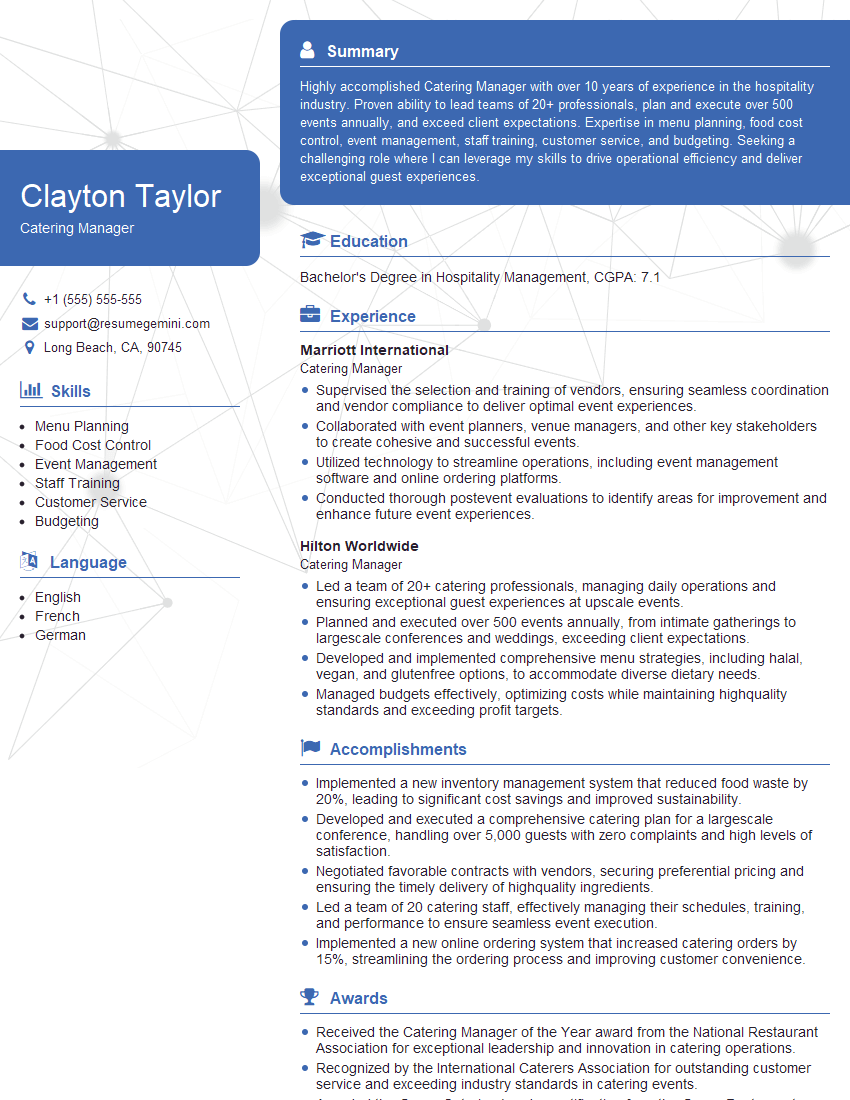
Catering Manager Resume Sample
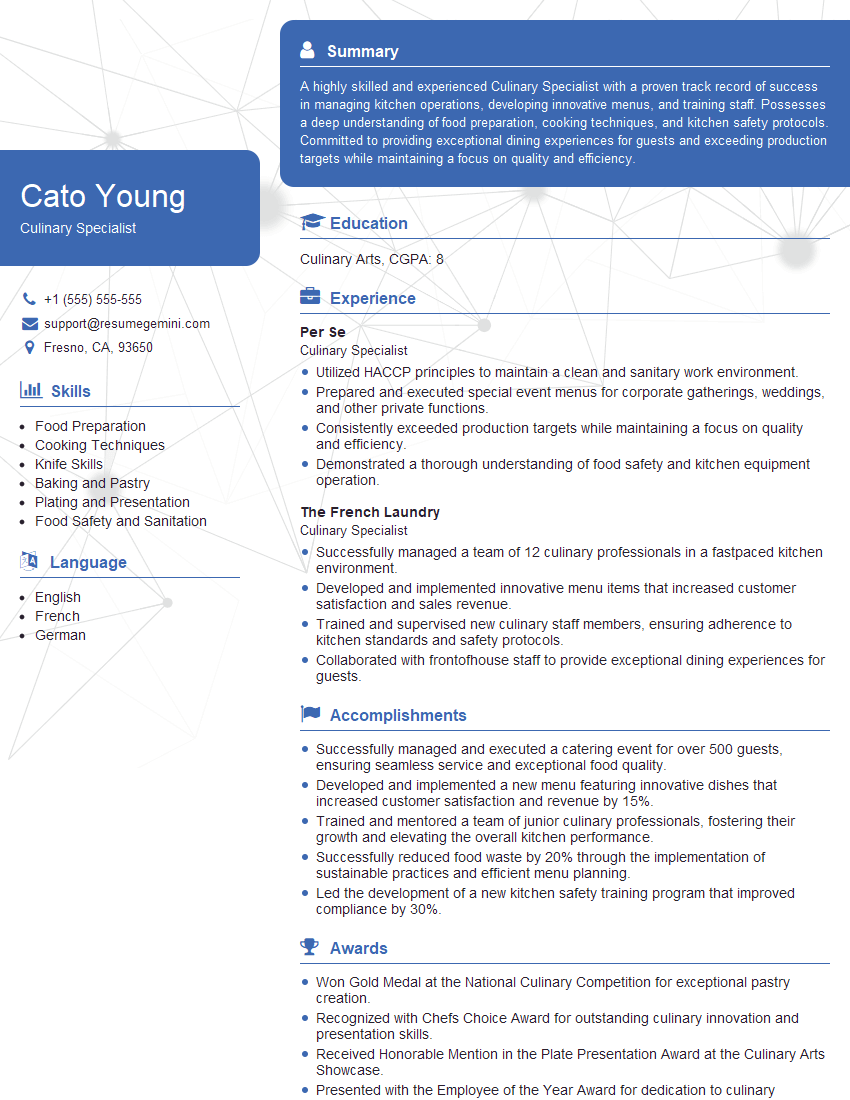
Culinary Specialist Resume Sample
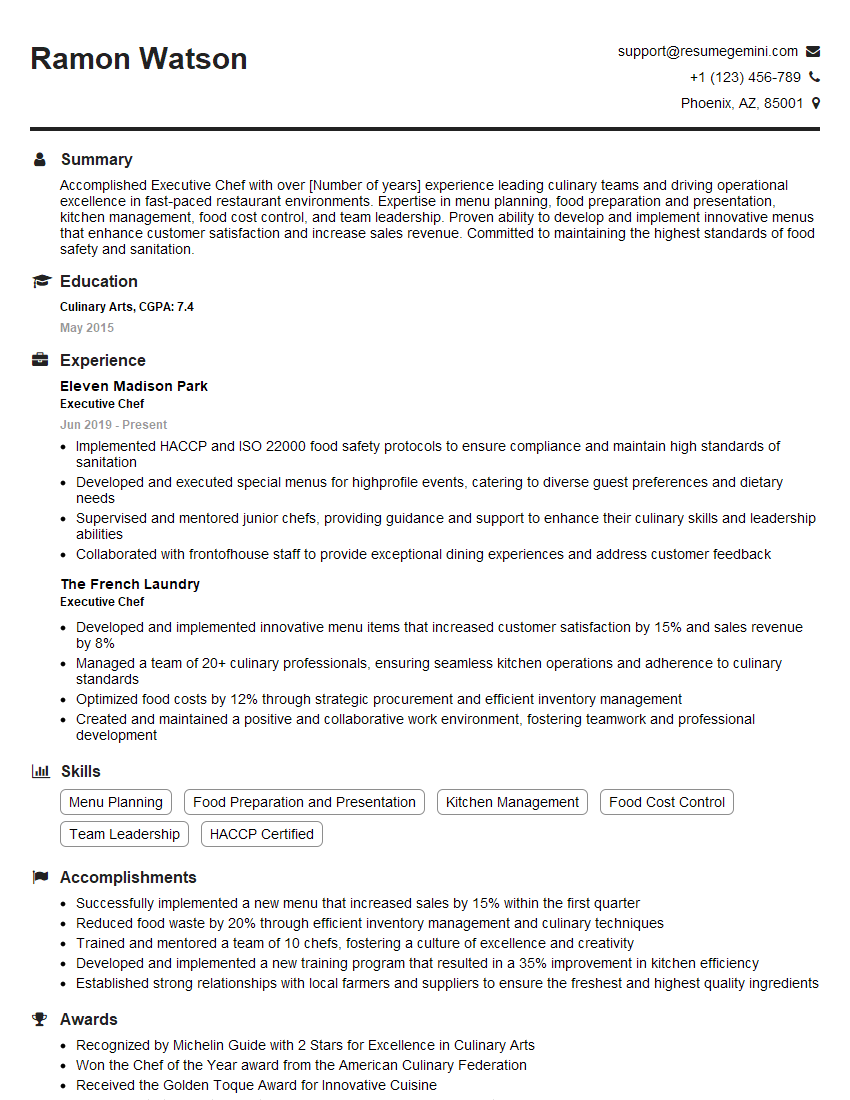
Executive Chef Resume Sample
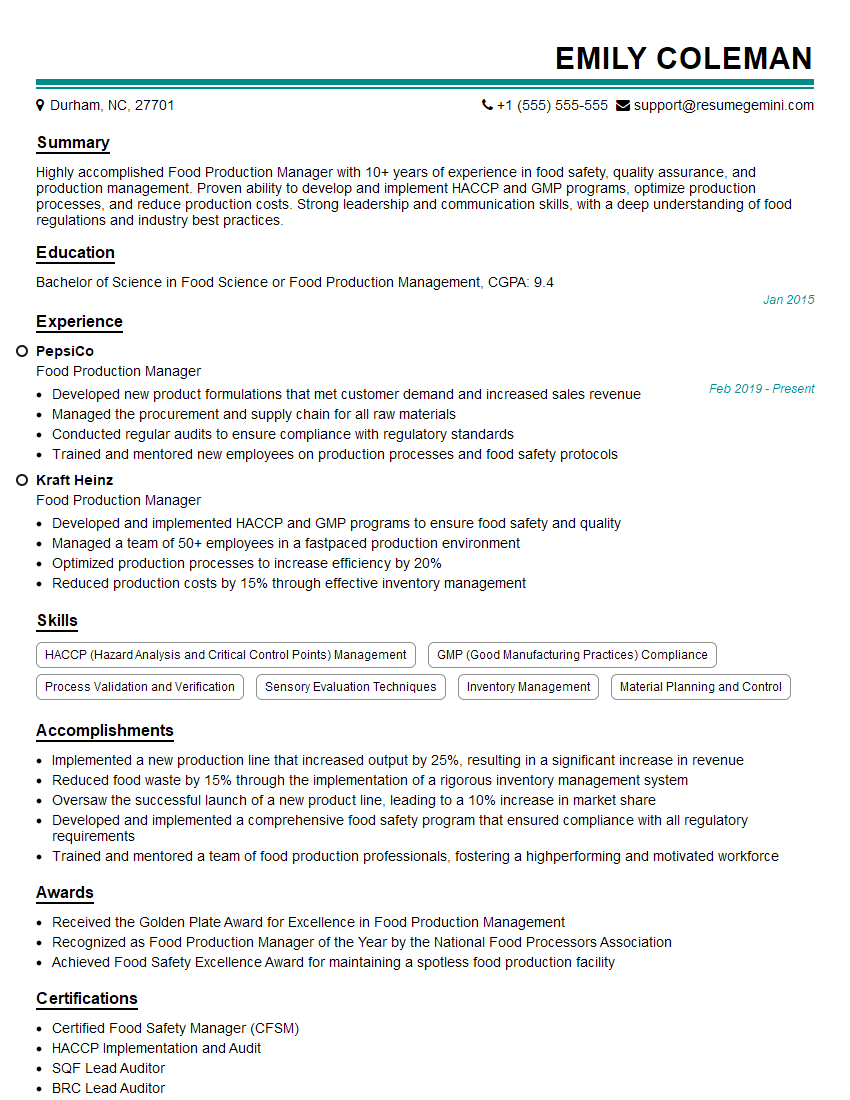
Food Production Manager Resume Sample
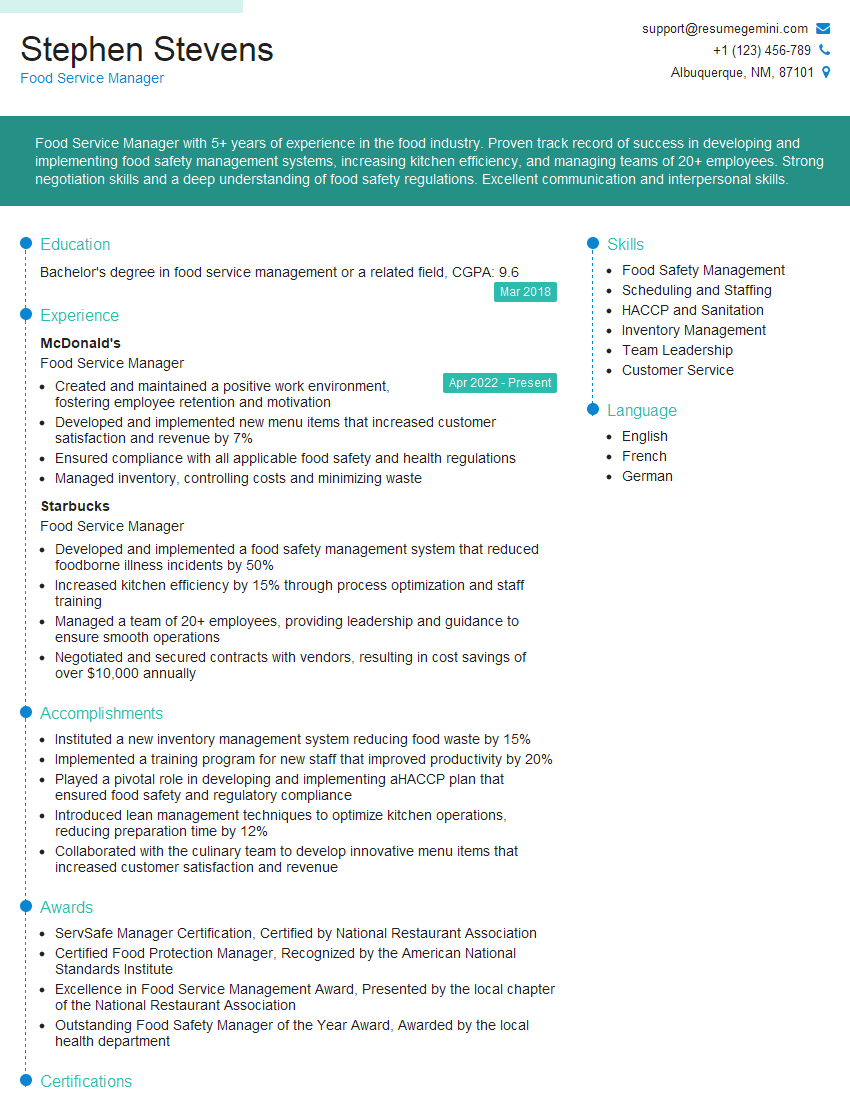
Food Service Manager Resume Sample
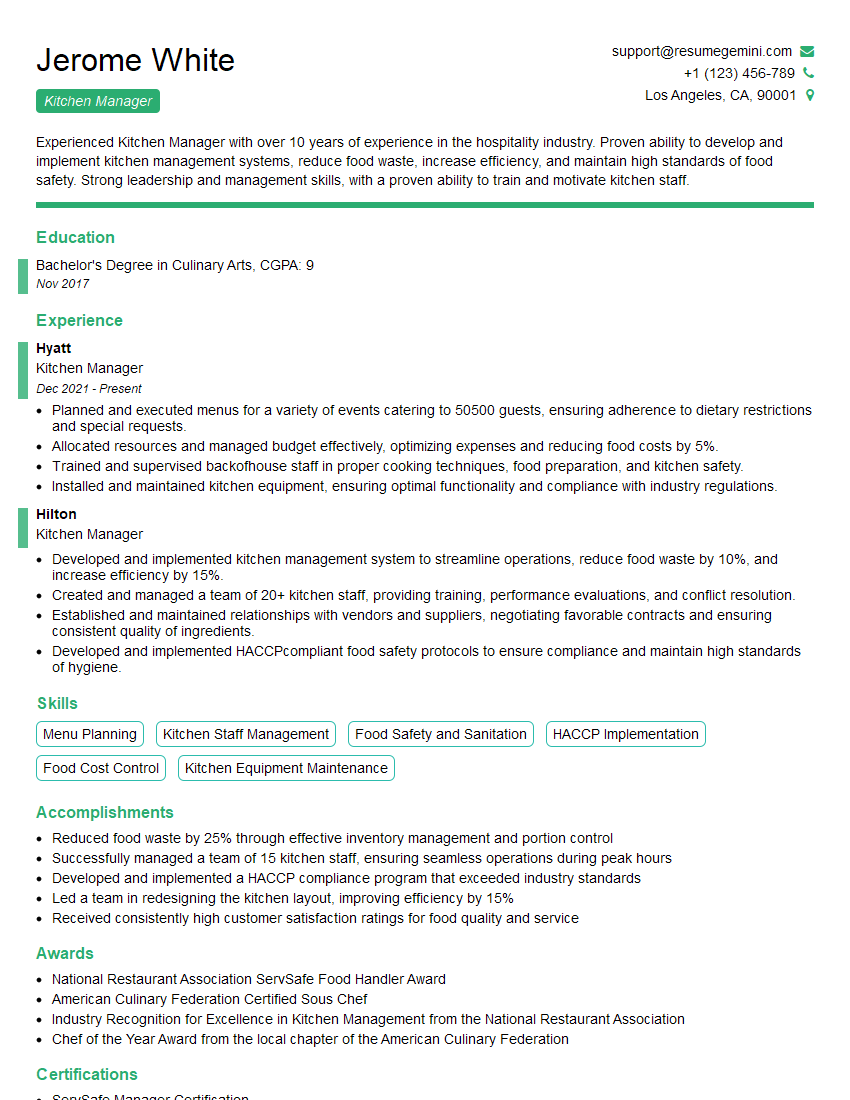
Kitchen Manager Resume Sample
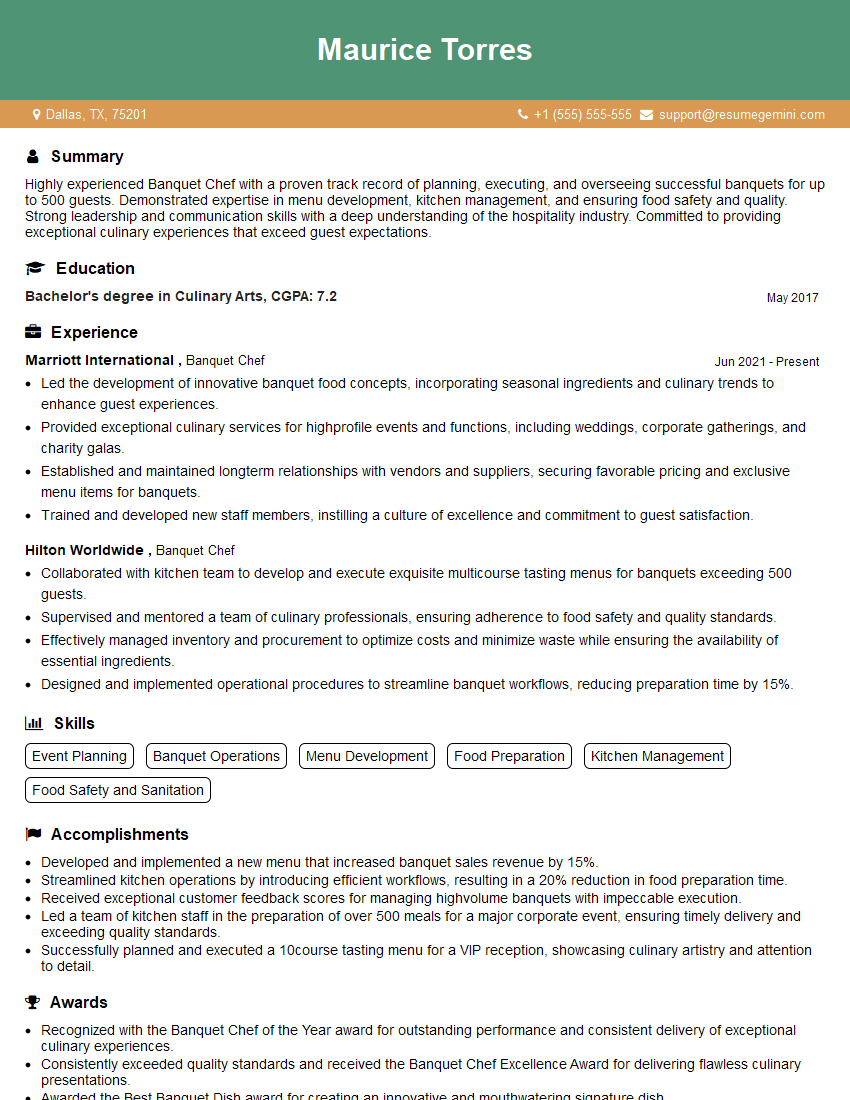
Banquet Chef Resume Sample
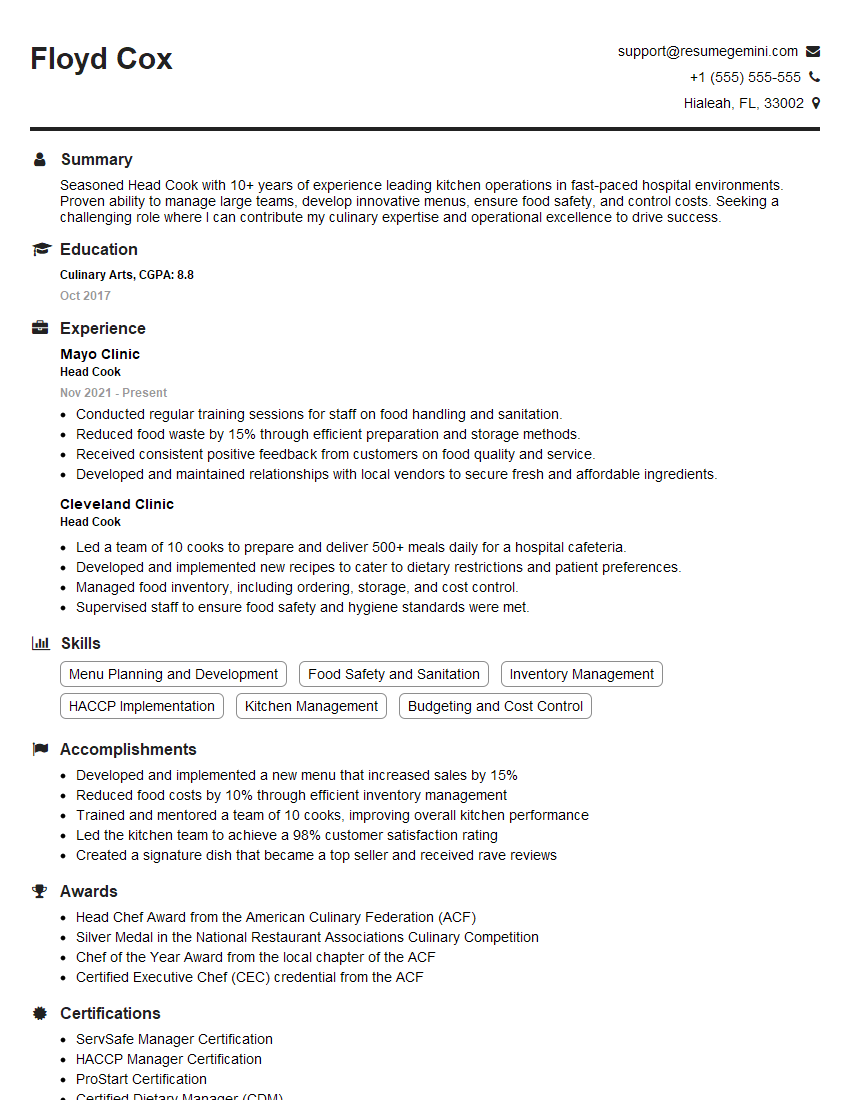
Head Cook Resume Sample
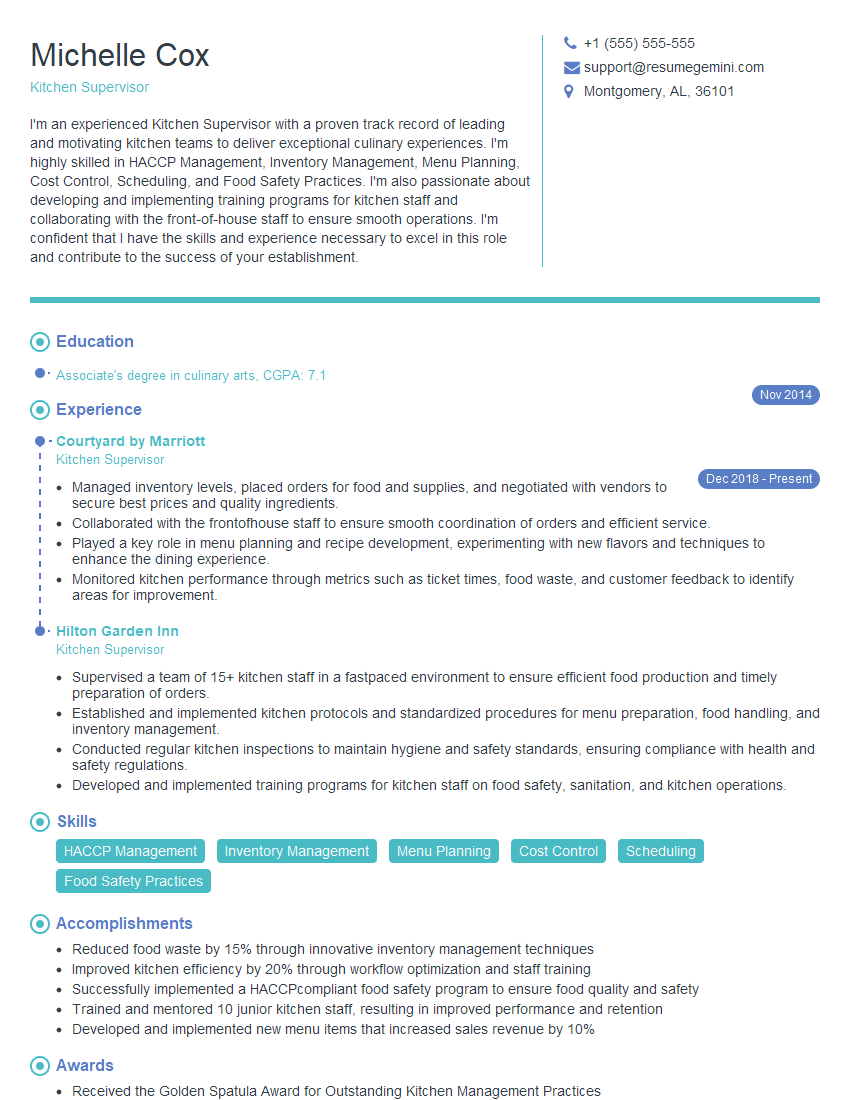
Kitchen Supervisor Resume Sample
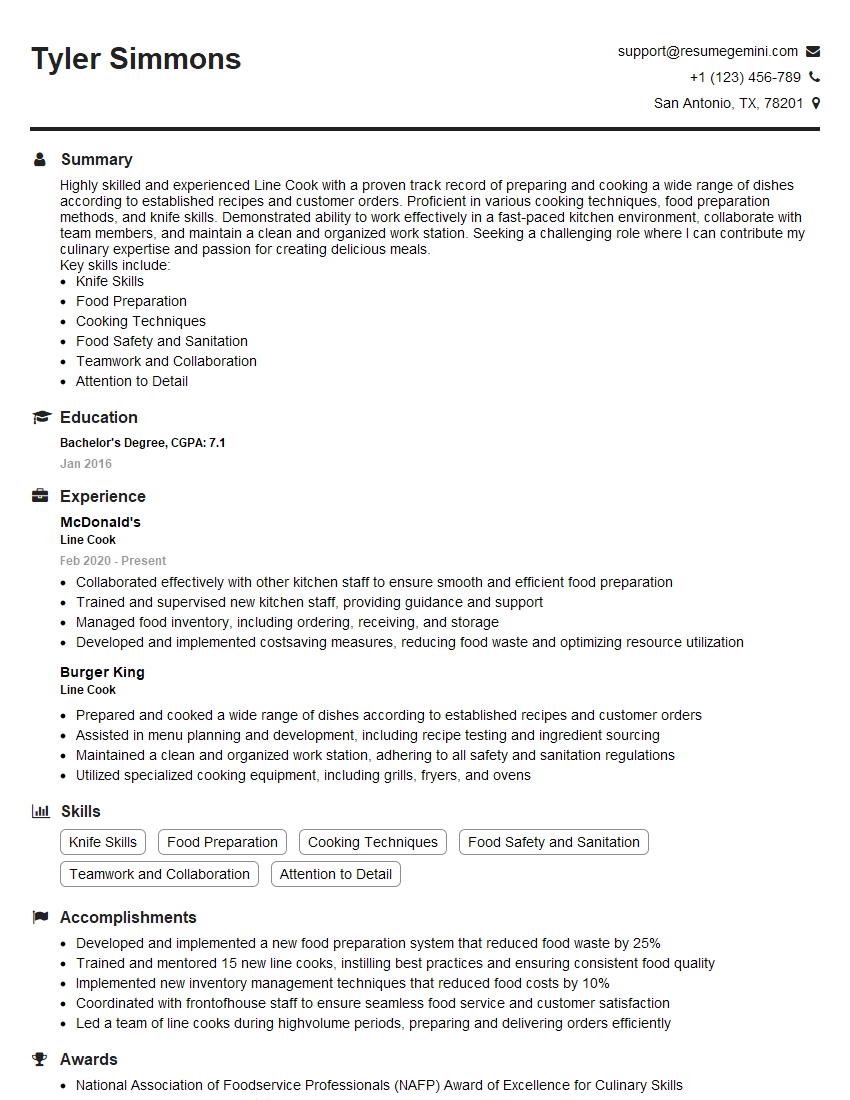
Line Cook Resume Sample
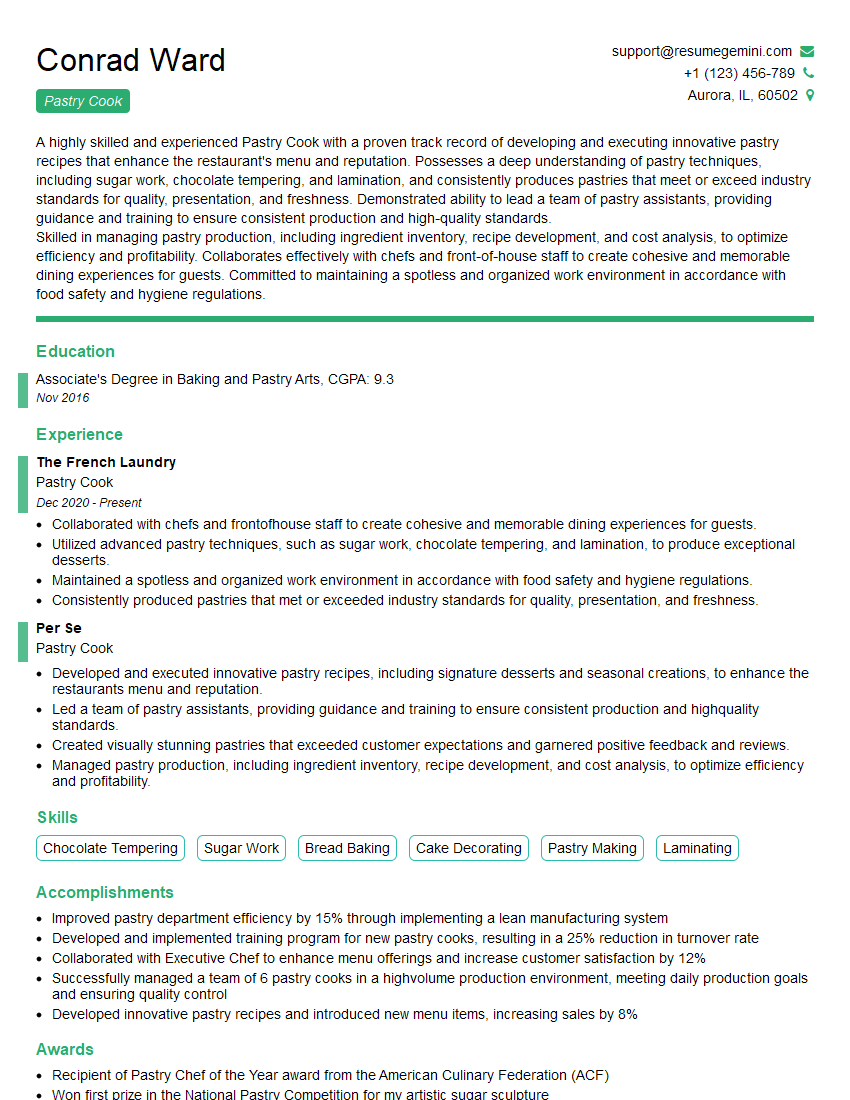
Pastry Cook Resume Sample
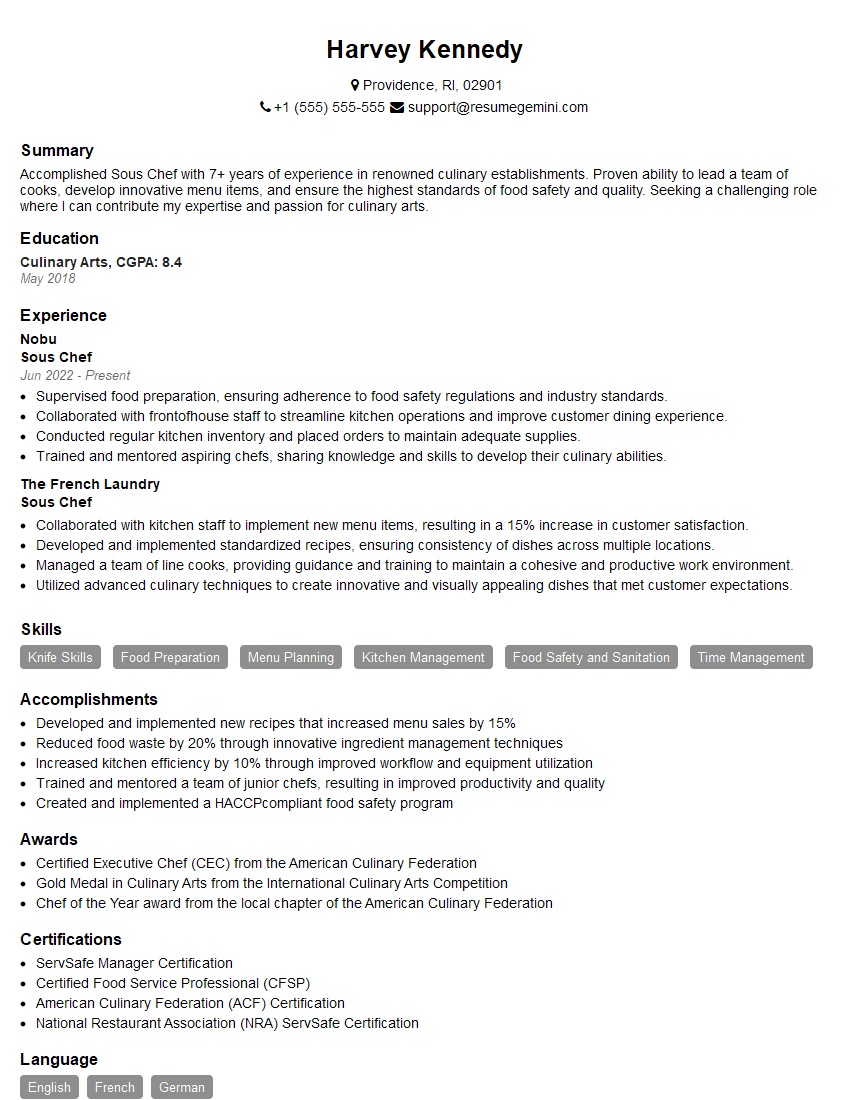
Sous Chef Resume Sample
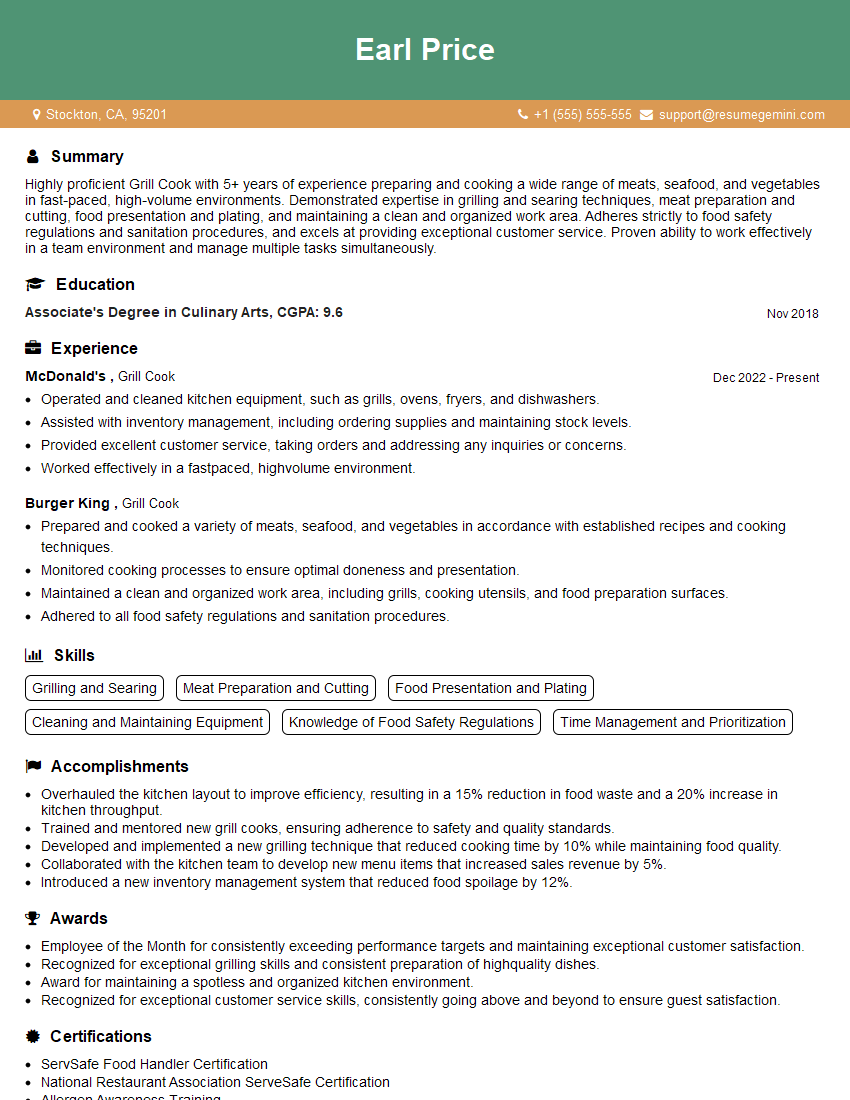
Grill Cook Resume Sample
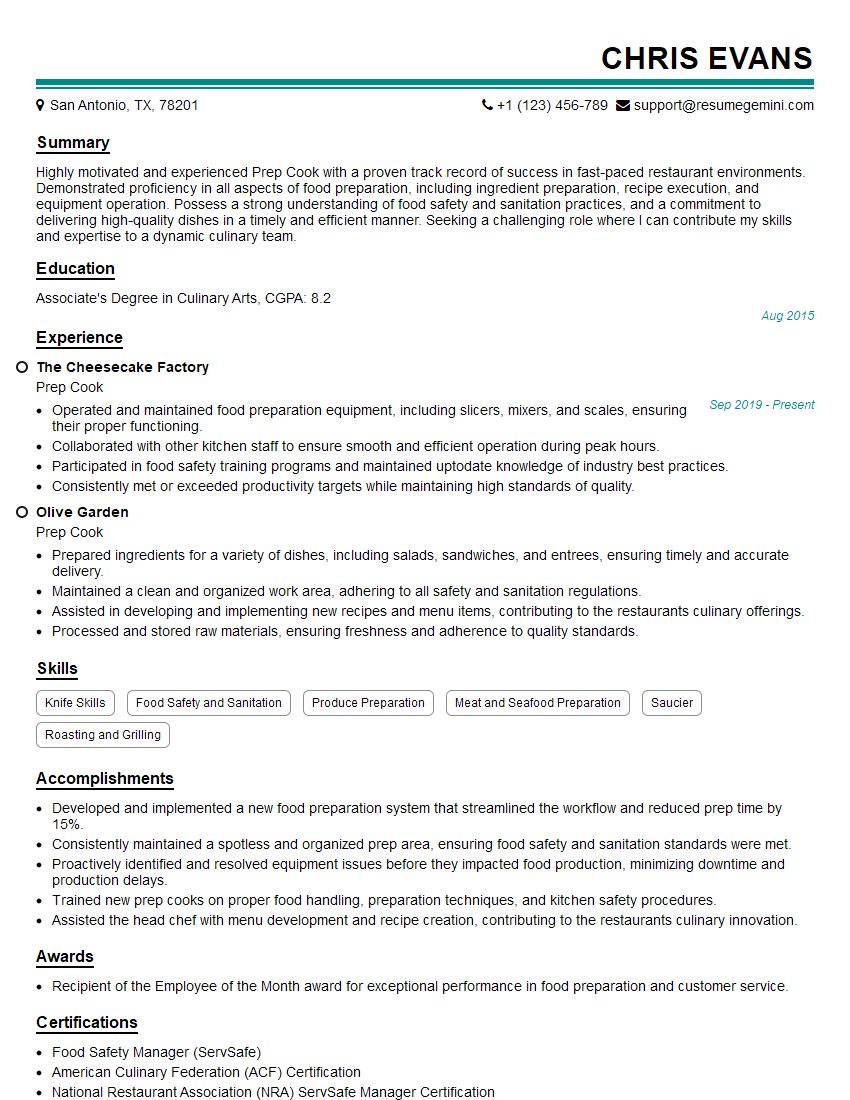
Prep Cook Resume Sample
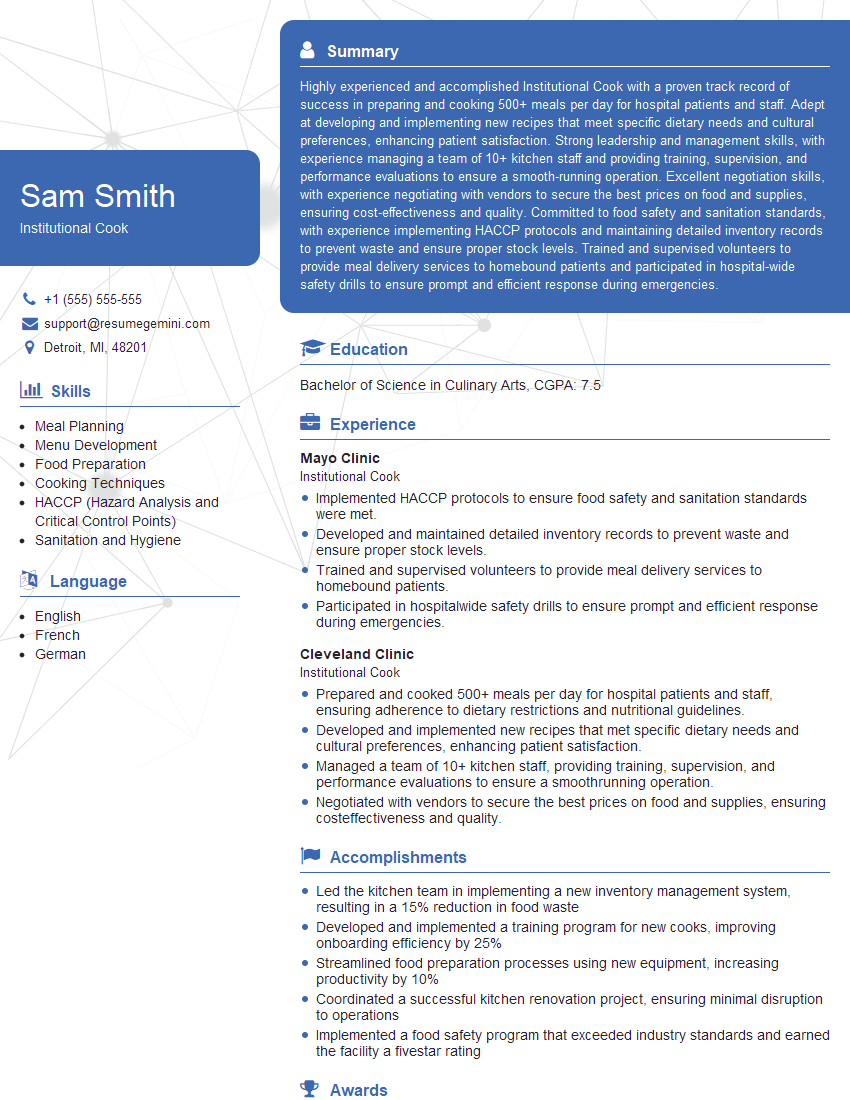
Institutional Cook Resume Sample
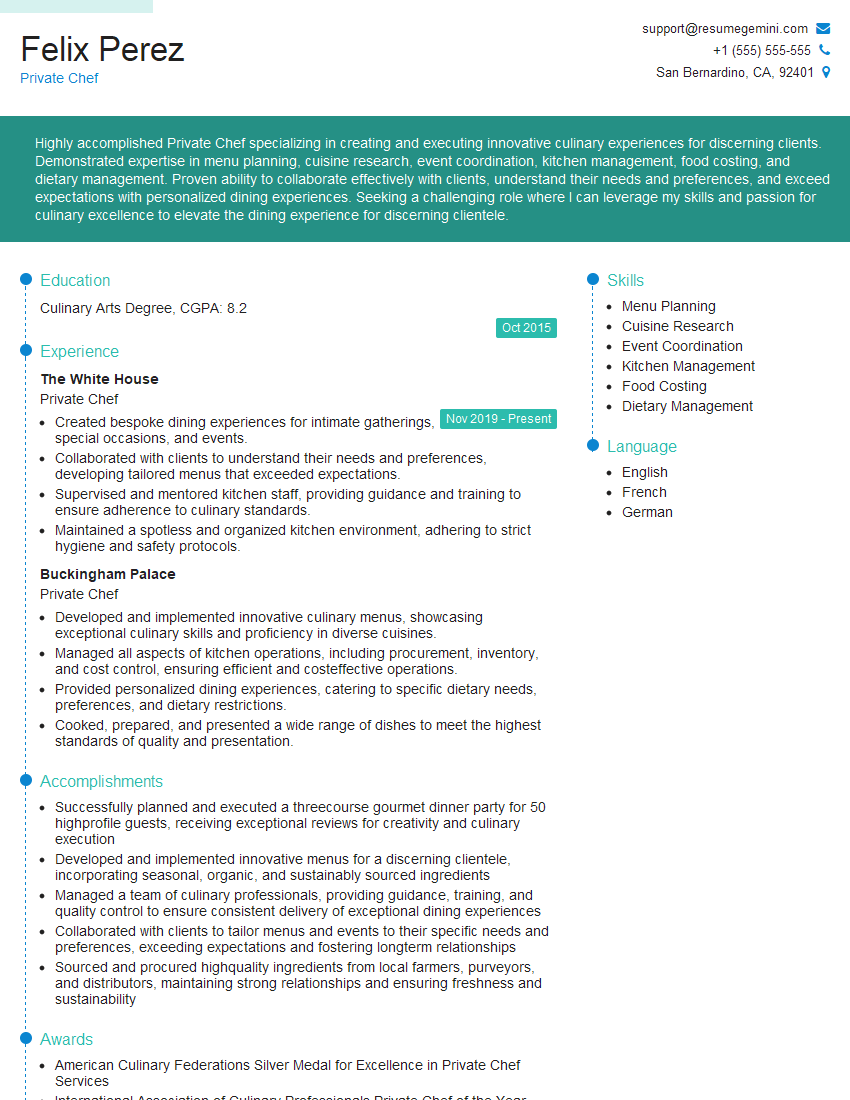
Private Chef Resume Sample

Chef De Partie Resume Sample
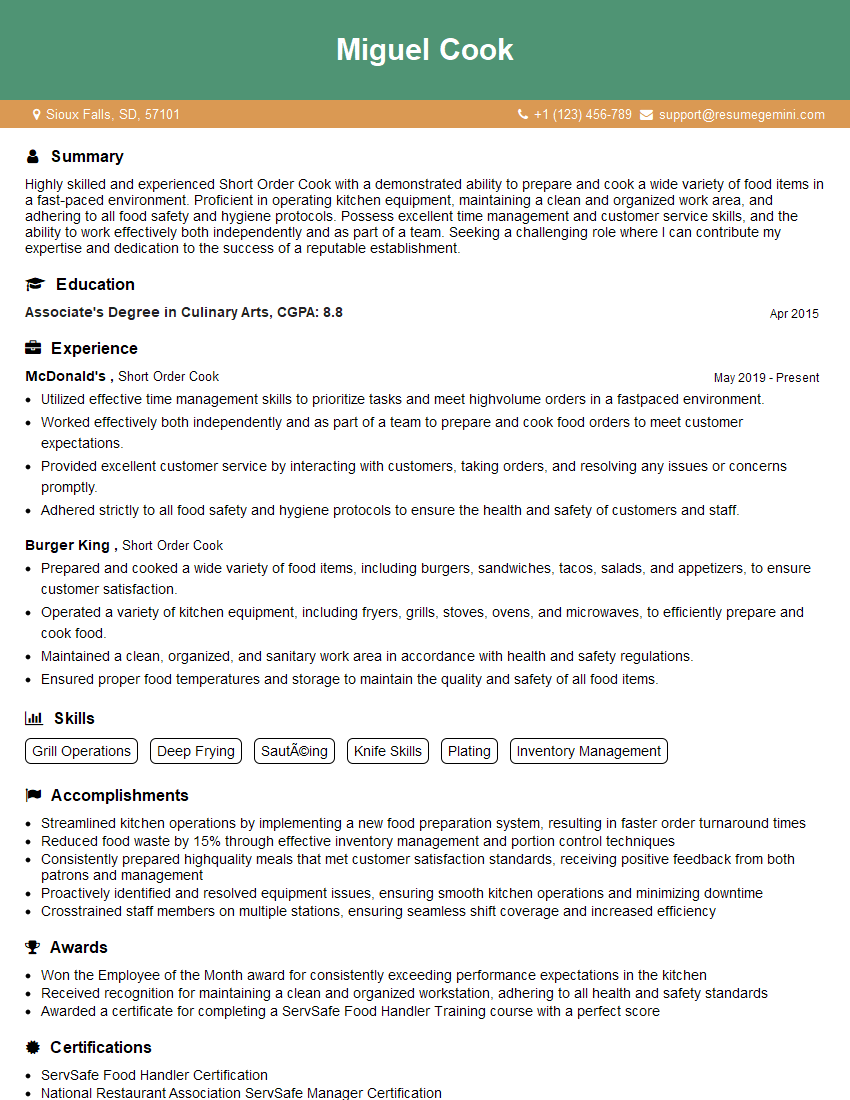
Short Order Cook Resume Sample
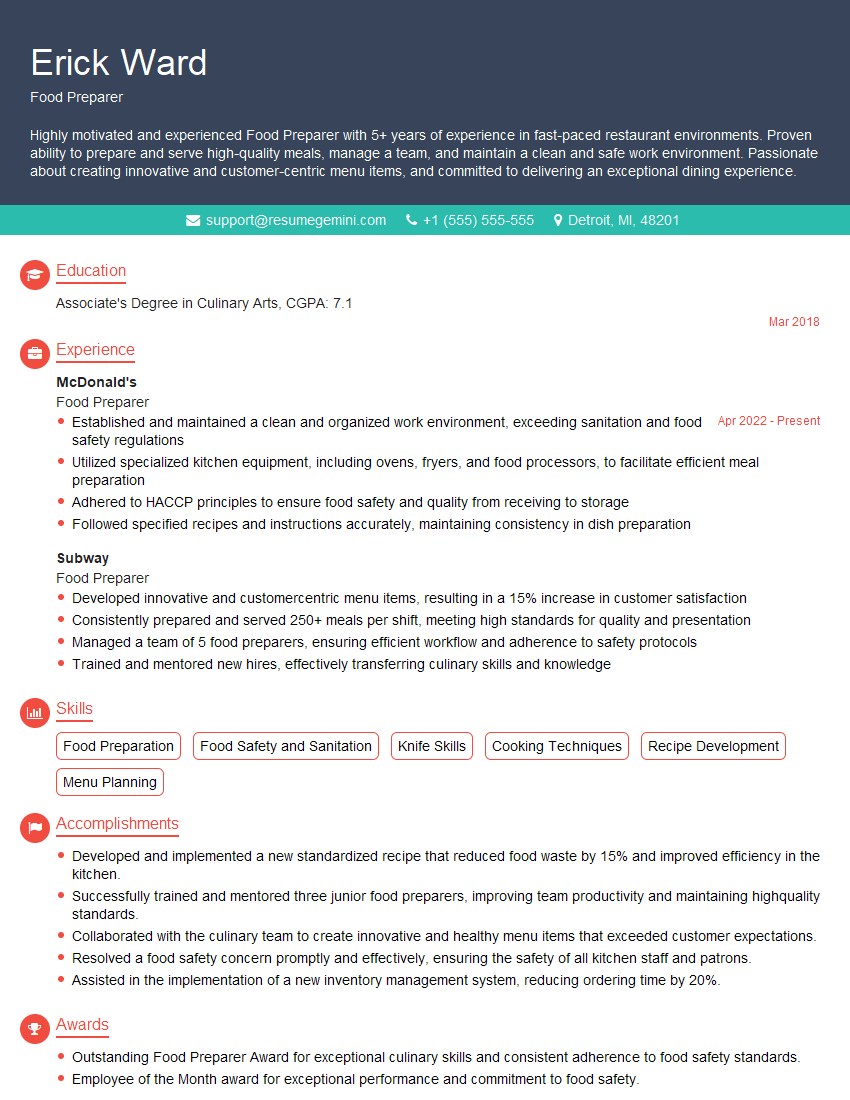
Food Preparer Resume Sample
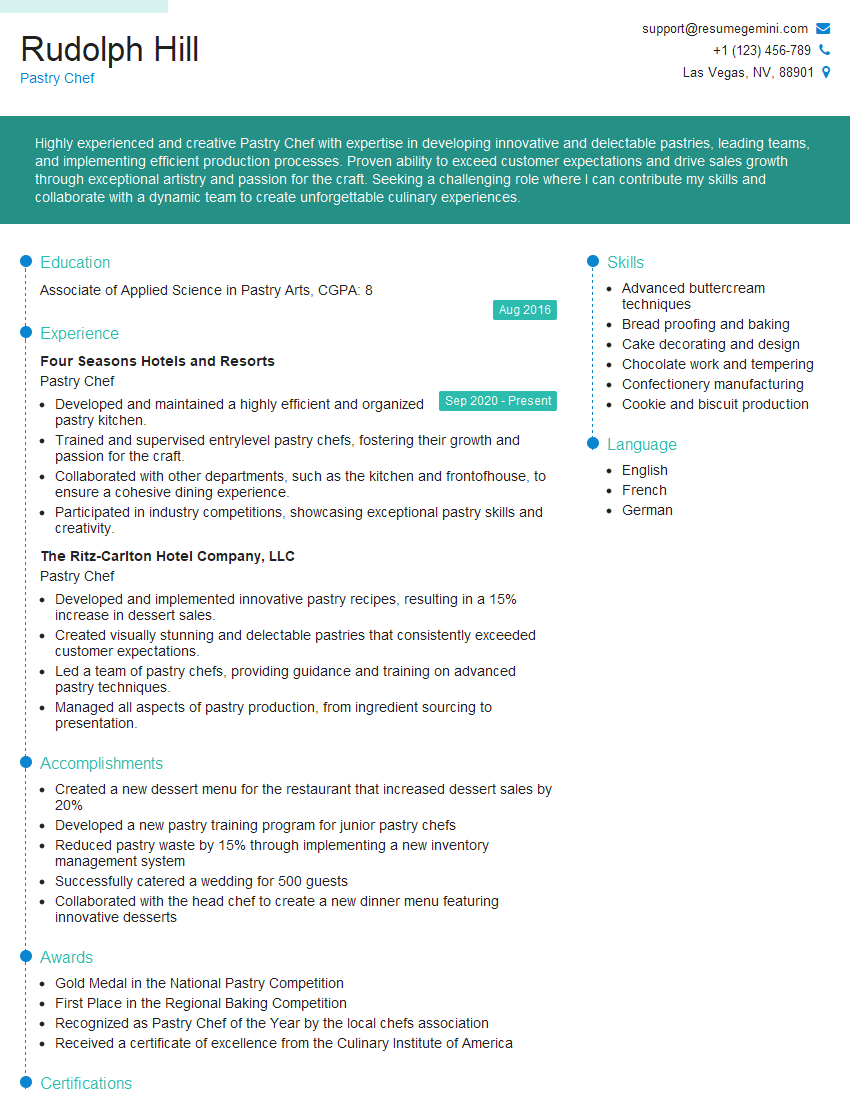
Pastry Chef Resume Sample
Explore more articles
Users Rating of Our Blogs
Share Your Experience
We value your feedback! Please rate our content and share your thoughts (optional).
What Readers Say About Our Blog
Hello,
we currently offer a complimentary backlink and URL indexing test for search engine optimization professionals.
You can get complimentary indexing credits to test how link discovery works in practice.
No credit card is required and there is no recurring fee.
You can find details here:
https://wikipedia-backlinks.com/indexing/
Regards
NICE RESPONSE TO Q & A
hi
The aim of this message is regarding an unclaimed deposit of a deceased nationale that bears the same name as you. You are not relate to him as there are millions of people answering the names across around the world. But i will use my position to influence the release of the deposit to you for our mutual benefit.
Respond for full details and how to claim the deposit. This is 100% risk free. Send hello to my email id: [email protected]
Luka Chachibaialuka
Hey interviewgemini.com, just wanted to follow up on my last email.
We just launched Call the Monster, an parenting app that lets you summon friendly ‘monsters’ kids actually listen to.
We’re also running a giveaway for everyone who downloads the app. Since it’s brand new, there aren’t many users yet, which means you’ve got a much better chance of winning some great prizes.
You can check it out here: https://bit.ly/callamonsterapp
Or follow us on Instagram: https://www.instagram.com/callamonsterapp
Thanks,
Ryan
CEO – Call the Monster App
Hey interviewgemini.com, I saw your website and love your approach.
I just want this to look like spam email, but want to share something important to you. We just launched Call the Monster, a parenting app that lets you summon friendly ‘monsters’ kids actually listen to.
Parents are loving it for calming chaos before bedtime. Thought you might want to try it: https://bit.ly/callamonsterapp or just follow our fun monster lore on Instagram: https://www.instagram.com/callamonsterapp
Thanks,
Ryan
CEO – Call A Monster APP
To the interviewgemini.com Owner.
Dear interviewgemini.com Webmaster!
Hi interviewgemini.com Webmaster!
Dear interviewgemini.com Webmaster!
excellent
Hello,
We found issues with your domain’s email setup that may be sending your messages to spam or blocking them completely. InboxShield Mini shows you how to fix it in minutes — no tech skills required.
Scan your domain now for details: https://inboxshield-mini.com/
— Adam @ InboxShield Mini
Reply STOP to unsubscribe
Hi, are you owner of interviewgemini.com? What if I told you I could help you find extra time in your schedule, reconnect with leads you didn’t even realize you missed, and bring in more “I want to work with you” conversations, without increasing your ad spend or hiring a full-time employee?
All with a flexible, budget-friendly service that could easily pay for itself. Sounds good?
Would it be nice to jump on a quick 10-minute call so I can show you exactly how we make this work?
Best,
Hapei
Marketing Director
Hey, I know you’re the owner of interviewgemini.com. I’ll be quick.
Fundraising for your business is tough and time-consuming. We make it easier by guaranteeing two private investor meetings each month, for six months. No demos, no pitch events – just direct introductions to active investors matched to your startup.
If youR17;re raising, this could help you build real momentum. Want me to send more info?
Hi, I represent an SEO company that specialises in getting you AI citations and higher rankings on Google. I’d like to offer you a 100% free SEO audit for your website. Would you be interested?
Hi, I represent an SEO company that specialises in getting you AI citations and higher rankings on Google. I’d like to offer you a 100% free SEO audit for your website. Would you be interested?
good