The right preparation can turn an interview into an opportunity to showcase your expertise. This guide to Solid Mechanics and Structural Analysis interview questions is your ultimate resource, providing key insights and tips to help you ace your responses and stand out as a top candidate.
Questions Asked in Solid Mechanics and Structural Analysis Interview
Q 1. Explain the difference between stress and strain.
Stress and strain are fundamental concepts in solid mechanics that describe how a material responds to an applied force. Think of it like this: stress is the cause, and strain is the effect.
Stress is the internal force per unit area within a material caused by an external force. It’s measured in Pascals (Pa) or pounds per square inch (psi). Imagine stretching a rubber band; the rubber band is experiencing internal stress as it resists the stretching force. The formula is:
σ = F/Awhere σ (sigma) is stress, F is the force applied, and A is the cross-sectional area.
Strain, on the other hand, is the measure of deformation resulting from the stress. It’s a dimensionless quantity representing the change in length or shape relative to the original dimensions. Continuing with the rubber band, the amount it stretches is the strain. For tensile strain (stretching), it’s defined as:
ε = ΔL/Lwhere ε (epsilon) is strain, ΔL is the change in length, and L is the original length.
In essence, stress is what’s happening inside the material, while strain is what’s happening to the material’s dimensions.
Q 2. Describe the concept of yield strength and ultimate tensile strength.
Yield strength and ultimate tensile strength are critical material properties determined from a tensile test. These tests involve pulling a material sample until it breaks, measuring the force and elongation throughout the process.
Yield strength is the stress at which a material begins to deform plastically (permanently). Before this point, the deformation is elastic—meaning the material will return to its original shape once the force is removed. Think of bending a paperclip slightly; it springs back. But bend it too far, and it remains bent—that’s plastic deformation. The yield strength marks the transition from elastic to plastic behavior. It’s crucial for designing structures that shouldn’t permanently deform under load.
Ultimate tensile strength is the maximum stress a material can withstand before it begins to fracture. This is the highest point on the stress-strain curve. After reaching the ultimate tensile strength, the material starts to neck down (reduce in cross-sectional area) before ultimately breaking. This property is essential for determining the maximum load a component can safely support.
For example, a bridge must have components with a yield strength high enough to prevent permanent deformation under typical loads and an ultimate tensile strength to withstand unexpected extreme events such as strong winds.
Q 3. What are the different types of stress?
Stress is not a single entity but can manifest in various forms depending on the direction and nature of the applied force. Here are some key types:
- Tensile stress: Occurs when a material is pulled apart (like stretching a rubber band).
- Compressive stress: Occurs when a material is squeezed together (like a column supporting a heavy load).
- Shear stress: Occurs when parallel forces act in opposite directions, causing a sliding motion (like cutting with scissors).
- Bending stress: A combination of tensile and compressive stresses that occur when a material is bent (like a beam supporting a weight).
- Torsional stress: Occurs when a twisting force is applied (like turning a wrench).
Understanding these different types of stress is crucial in structural analysis to appropriately model the behavior of components under load.
Q 4. Explain Hooke’s Law and its limitations.
Hooke’s Law is a fundamental principle in elasticity that states that the stress applied to a material is directly proportional to the resulting strain, within the material’s elastic limit. Mathematically:
σ = Eεwhere σ is stress, ε is strain, and E is the Young’s modulus (a material property representing its stiffness).
Limitations of Hooke’s Law:
- Elastic limit: Hooke’s Law only applies within the elastic region of the material’s stress-strain curve. Beyond the yield strength, the relationship becomes non-linear, and permanent deformation occurs.
- Material type: It doesn’t apply to all materials. Some materials exhibit non-linear elastic behavior even at low stresses.
- Temperature: The Young’s modulus and hence the relationship between stress and strain, are temperature-dependent.
- Loading rate: The material response can also be affected by the speed at which the load is applied.
For example, designing a spring requires considering Hooke’s Law to determine the required spring constant (related to Young’s modulus) to achieve a desired stiffness within the elastic limit.
Q 5. What is Poisson’s ratio and its significance?
Poisson’s ratio (ν, nu) is a material property that describes the ratio of lateral strain to axial strain under uniaxial stress (stress applied in only one direction). In simpler terms, it quantifies how much a material shrinks in one direction when stretched in another direction.
Significance:
- Material characterization: Poisson’s ratio is a characteristic property of a material and helps identify its elastic properties. It provides insight into the material’s microstructure.
- Stress analysis: It’s essential in stress analysis to accurately predict the strains in all directions under a given load.
- Design considerations: For example, if a material has a high Poisson’s ratio (e.g., rubber), it will experience significant lateral contraction when stretched, which is crucial to consider when designing components.
For instance, a rubber band when stretched gets thinner in the middle; this reduction in thickness is directly related to its Poisson’s ratio. A material with a Poisson’s ratio of 0.5 is incompressible (its volume doesn’t change when deformed).
Q 6. Explain the concept of fatigue and fatigue failure.
Fatigue is a phenomenon where a material fails under repeated cyclic loading, even if the maximum stress during each cycle is below the material’s yield strength. Imagine repeatedly bending a paperclip back and forth; eventually, it will break, even though a single bend wouldn’t cause failure. That’s fatigue.
Fatigue failure occurs when micro-cracks initiate and propagate through the material due to the accumulation of cyclic stresses. These cracks grow slowly until the remaining cross-section can no longer support the load, leading to sudden failure.
Factors influencing fatigue:
- Stress amplitude and mean stress: Higher stress amplitude and mean stress accelerates fatigue.
- Number of cycles: More cycles generally leads to earlier failure.
- Surface finish: Surface imperfections can act as stress concentration sites.
- Material properties: Material’s fatigue strength is a critical parameter.
Designing components for applications with cyclic loading, such as aircraft wings or bridges, requires considering fatigue life and selecting materials with high fatigue strength and employing techniques like surface treatments to improve fatigue resistance.
Q 7. Describe different failure theories (e.g., maximum shear stress, von Mises).
Failure theories help predict when a material will fail under multiaxial stress states (stress acting in multiple directions simultaneously). Different theories use different criteria to assess failure.
- Maximum shear stress theory (Tresca theory): Predicts failure when the maximum shear stress in the material reaches the shear yield strength in a uniaxial tensile test.
- Von Mises theory (maximum distortion energy theory): Predicts failure based on the distortion energy in the material. It assumes failure occurs when the distortion energy reaches a critical value. This theory is generally preferred for ductile materials.
- Maximum principal stress theory (Rankine theory): Assumes failure occurs when the maximum principal stress exceeds the tensile strength.
The choice of failure theory depends on the material’s ductility and the type of loading. For ductile materials, the Von Mises theory is often more accurate. Brittle materials are better assessed using the maximum principal stress theory. Understanding these theories is critical in designing structures and components subjected to complex stress states, ensuring safety and reliability.
Q 8. What are the assumptions made in the analysis of beams?
Analyzing beams often involves simplifying assumptions to make the problem solvable. These assumptions are crucial for applying established theories and formulas. Key assumptions include:
- Linear Elastic Material: The beam material behaves linearly elastically, meaning stress is proportional to strain (following Hooke’s Law). This is valid within the elastic limit of the material.
- Small Deflections: The beam’s deflection under load is small compared to its length. This allows us to use simplified equations and neglect higher-order terms in the analysis.
- Homogeneous Material: The beam material is uniform in its properties throughout its volume. This simplifies calculations and allows us to use average material properties.
- Isotropic Material: The material properties are the same in all directions. This assumption isn’t always true (e.g., wood), but simplifies the analysis considerably.
- Plane Sections Remain Plane: Cross-sections of the beam remain plane after bending. This is a crucial assumption in the derivation of bending stress formulas.
- Negligible Shear Deformation: In many cases, the effect of shear deformation on the overall deflection of the beam is negligible compared to bending deformation. This simplifies the analysis, especially for long, slender beams.
These assumptions, while simplifying the analysis, are not always perfectly met in reality. However, they often provide reasonably accurate results for many engineering applications. For instance, when dealing with ductile materials under relatively low stresses, these assumptions hold true. The degree to which these assumptions affect accuracy needs careful consideration on a case-by-case basis.
Q 9. Explain the concept of bending moment and shear force diagrams.
Shear force and bending moment diagrams are graphical representations of the internal forces and moments acting within a beam under load. They are essential for determining the stresses and deflections within the beam.
Shear Force (V): Represents the internal force acting perpendicular to the beam’s longitudinal axis. It’s the algebraic sum of all vertical forces acting on either side of a section. A positive shear force typically indicates upward shear on the left side of the section.
Bending Moment (M): Represents the internal moment acting about the beam’s neutral axis. It’s the algebraic sum of moments of all forces acting on either side of a section. A positive bending moment typically causes compression at the top and tension at the bottom of the beam (for beams with symmetrical cross-sections).
Constructing these diagrams involves calculating the shear force and bending moment at various points along the beam. Critical points are often at the locations of supports and applied loads. The diagrams help identify the locations of maximum shear and bending moments, crucial information for determining the strength and design of the beam.
Example: Imagine a simply supported beam with a central point load. The shear force diagram will show a jump at the load location, while the bending moment diagram will show a maximum value at the center and zero values at the supports. This visually represents the internal forces and moments that determine the beam’s overall stress and deflection.
Q 10. How do you determine the deflection of a beam?
Determining beam deflection involves applying principles of elasticity and structural mechanics. Several methods are available, ranging from simple formulas for specific cases to more complex numerical techniques for complex geometries and loading conditions.
- Double Integration Method: This classic method involves integrating the bending moment equation twice to obtain the beam’s deflection equation. The constants of integration are determined using boundary conditions (e.g., support reactions).
- Superposition Method: For beams with multiple loads, superposition allows us to analyze each load separately and then sum the individual deflections to find the total deflection. This method relies on the linearity assumption.
- Moment-Area Method: A graphical method that uses the area under the bending moment diagram and the moment-area theorems to determine the slope and deflection of the beam. This method is useful for beams with complex loading patterns.
- Conjugate Beam Method: An elegant method where an imaginary conjugate beam is used to find the slope and deflection of the original beam. The loading on the conjugate beam is related to the bending moment diagram of the original beam.
- Finite Element Method (FEM): A powerful numerical method for analyzing complex beam structures with arbitrary geometries and loading conditions. Software packages are commonly used to perform FEM analysis.
The chosen method depends on the beam’s geometry, loading, and the desired accuracy. For simple beams with standard loading, simple formulas may suffice. For more complex scenarios, numerical methods such as FEM provide more accurate and versatile solutions.
Example: For a simply supported beam with a uniformly distributed load, a simple formula readily provides the maximum deflection. However, for a beam with multiple point loads and varying cross-section, FEM is a preferred approach.
Q 11. Explain the concept of buckling and Euler’s formula.
Buckling refers to the sudden sideways failure of a slender structural member (like a column) subjected to compressive load. It occurs when the compressive load exceeds a critical value, causing the member to lose its stability and deflect significantly.
Euler’s Formula provides the critical buckling load (Pcr) for a slender column with ideal conditions:
Pcr = (π²EI) / (KL)²
Where:
Eis the modulus of elasticity of the column material.Iis the area moment of inertia of the column’s cross-section about the axis of bending.Lis the effective length of the column.Kis the effective length factor, which depends on the end conditions of the column (fixed, pinned, free).
Euler’s formula assumes a perfectly straight column with no initial imperfections, a linear elastic material, and a constant cross-section. In reality, imperfections exist, and the formula provides a lower bound on the actual buckling load. For columns with imperfections or non-linear material behavior, more advanced analysis methods are needed.
Example: A long, slender steel column fixed at both ends will have a higher buckling load than a similar column pinned at both ends because its effective length is shorter (K=0.5 for fixed-fixed compared to K=1.0 for pinned-pinned).
Q 12. What are the different types of columns and their buckling characteristics?
Columns are classified based on their end conditions, which significantly influence their buckling characteristics. The effective length (Le = KL) is crucial in determining the critical buckling load.
- Fixed-Fixed: Both ends are fixed, resulting in K = 0.5. This condition provides the highest buckling resistance.
- Pinned-Pinned: Both ends are pinned, resulting in K = 1.0. This is a common and relatively straightforward condition.
- Fixed-Free (Cantilever): One end is fixed, and the other is free, resulting in K = 2.0. This condition has the lowest buckling resistance.
- Fixed-Pinned: One end is fixed, and the other is pinned, resulting in K ≈ 0.7. This condition falls between fixed-fixed and pinned-pinned.
The buckling characteristics are primarily defined by the effective length and the column’s geometry (cross-sectional area and moment of inertia). The Euler formula is widely used, but its accuracy is highly dependent on the assumptions being met. For short, stubby columns, the Euler formula might not be accurate, and other failure modes (yielding) might dominate.
Example: A tall, slender building column will be designed carefully considering its effective length and end conditions to ensure it doesn’t buckle under its own weight and applied loads. A shorter column can often be designed to be much more robust.
Q 13. Explain the concept of torsion and how it affects structural members.
Torsion refers to the twisting of a structural member due to an applied torque or moment. This twisting action produces shear stresses within the member.
Effects on Structural Members: Torsional loads can cause significant stress concentrations, particularly in members with non-circular cross-sections. These stress concentrations can lead to premature failure. The magnitude of torsional stress depends on the applied torque, the shape and size of the cross-section, and the material properties.
Analysis: For circular shafts under torsion, the analysis is relatively straightforward using the torsion formula:
τ = (Tr) / J
Where:
τis the shear stress.Tis the applied torque.ris the radial distance from the center of the shaft.Jis the polar moment of inertia of the shaft’s cross-section.
For non-circular sections, the analysis is more complex, often requiring numerical methods or approximate solutions. The maximum shear stress will typically occur at points farthest from the centroid.
Example: A transmission shaft in a machine transmits power through torque. Designing the shaft requires considering the torsional stresses to prevent failure. In buildings, torsion can occur in columns due to eccentric loading, requiring careful design considerations.
Q 14. Describe different methods for analyzing indeterminate structures.
Indeterminate structures have more unknown reactions than equations of equilibrium can provide. This means static equilibrium alone is insufficient to determine the internal forces and reactions. Additional equations are needed, typically derived from compatibility conditions (displacement and rotations).
- Force Method (Flexibility Method): This method introduces redundant forces or reactions, reducing the structure to a statically determinate one. Compatibility equations are then formed to solve for the redundant forces. This process involves calculating flexibility coefficients which represent the displacements caused by unit forces.
- Displacement Method (Stiffness Method): This more widely used method is the foundation of Finite Element Analysis. It focuses on displacements as the primary unknowns. Stiffness matrices, representing the relationship between forces and displacements, are formulated and solved to determine displacements and subsequently internal forces.
- Slope-Deflection Method: A matrix method commonly used for analyzing continuous beams and frames. It directly relates the end moments to end slopes and displacements. The method is relatively straightforward for simpler structures.
- Moment Distribution Method: An iterative method used to analyze indeterminate structures like continuous beams and frames. It involves distributing moments between members until equilibrium is achieved. This method is suitable for manual calculations, although it becomes less efficient for complex structures.
- Finite Element Method (FEM): A powerful numerical method which discretizes the structure into smaller elements. The method solves a system of equations based on element stiffness and applied loads to calculate the displacements, stresses and strains.
The choice of method often depends on the complexity of the structure and available computational resources. For simple indeterminate structures, manual methods like the moment distribution might be feasible. For larger and more complex structures, FEM is the most practical and accurate approach.
Q 15. What is the Finite Element Method (FEM) and its applications?
The Finite Element Method (FEM) is a powerful numerical technique used to solve complex engineering problems, particularly in structural analysis and mechanics. Imagine dividing a complex structure, like a bridge, into many smaller, simpler shapes called ‘finite elements’. We then apply the laws of physics (like stress-strain relationships) to each of these elements. By solving these simpler problems individually and combining the results, we can approximate the overall behavior of the entire structure. This is far easier than trying to solve the entire problem at once.
Applications of FEM are incredibly diverse:
- Structural Analysis: Analyzing stresses, strains, and deflections in bridges, buildings, airplanes, and more.
- Fluid Dynamics: Simulating fluid flow around objects like airplane wings or inside pipes.
- Heat Transfer: Modeling temperature distribution in electronic devices or engines.
- Biomechanics: Studying the mechanics of bones, joints, and tissues.
- Electromagnetism: Analyzing electromagnetic fields in electrical machines and devices.
For example, FEM is crucial in designing safe and efficient automobiles. Engineers use it to simulate crash tests, optimize vehicle weight, and ensure structural integrity under various load conditions.
Career Expert Tips:
- Ace those interviews! Prepare effectively by reviewing the Top 50 Most Common Interview Questions on ResumeGemini.
- Navigate your job search with confidence! Explore a wide range of Career Tips on ResumeGemini. Learn about common challenges and recommendations to overcome them.
- Craft the perfect resume! Master the Art of Resume Writing with ResumeGemini’s guide. Showcase your unique qualifications and achievements effectively.
- Don’t miss out on holiday savings! Build your dream resume with ResumeGemini’s ATS optimized templates.
Q 16. Explain the concept of meshing in FEA and its importance.
Meshing in FEA is the process of dividing a continuous structure into a discrete number of smaller, simpler elements. Think of it like creating a mosaic – the individual tiles are the elements, and the entire mosaic represents the structure. The quality of the mesh directly impacts the accuracy and efficiency of the analysis.
Importance of Meshing:
- Accuracy: A finer mesh (more elements) generally leads to more accurate results, as it better captures the geometry and variations in stress and strain. However, it also increases computation time.
- Convergence: The solution should converge to a stable result as the mesh is refined. If it doesn’t, it indicates potential problems in the model or analysis settings.
- Computational Cost: A coarser mesh (fewer elements) requires less computational resources and time, but may sacrifice accuracy.
- Stress Concentration: In areas expected to have high stress concentrations (like corners or holes), a refined mesh is crucial to accurately capture these effects.
Choosing the right mesh density is a balance between accuracy and computational cost. Experienced engineers use their judgment and often employ adaptive mesh refinement techniques, where the mesh is automatically refined in areas of high stress or strain gradients.
Q 17. What are different element types used in FEA?
Various element types are used in FEA, each suited for specific situations. The choice depends on the geometry, material properties, and the nature of the problem being solved.
- Linear Elements: The simplest, represented by straight lines (1D), triangles (2D), or tetrahedra (3D). Suitable for problems with relatively uniform stress and strain distribution.
- Quadrilateral Elements (2D) and Hexahedral Elements (3D): More accurate than linear elements, especially for bending problems. They can better approximate curved boundaries.
- Higher-Order Elements: Use curved edges and have more nodes, leading to improved accuracy, particularly in situations with significant stress gradients.
- Beam Elements: Specifically designed for slender members subjected to bending, shear, and axial loads. They significantly reduce computational cost compared to using 3D solid elements for beams.
- Shell Elements: Used for thin-walled structures like plates and shells, offering a compromise between computational efficiency and accuracy.
For instance, analyzing a simple beam under bending might use beam elements for efficiency, while a complex automotive part requiring detailed stress analysis might use a combination of hexahedral and tetrahedral elements.
Q 18. How do you validate FEA results?
Validating FEA results is crucial to ensure their reliability. This involves comparing the numerical results to experimental data or analytical solutions whenever possible. It’s like checking your calculations against a known answer to see if your approach is correct.
Methods for Validation:
- Experimental Verification: Comparing FEA results to experimental measurements (e.g., strain gauges, displacement measurements) from physical tests on a prototype or a similar structure.
- Analytical Solutions: For simpler geometries and loading conditions, analytical solutions (obtained through mathematical formulas) can serve as a benchmark for comparison.
- Mesh Convergence Studies: Refining the mesh and observing whether the results converge towards a stable solution. Lack of convergence indicates potential problems in the model or analysis setup.
- Benchmark Problems: Comparing results against published solutions for well-established benchmark problems.
- Engineering Judgment: Experienced engineers use their knowledge and intuition to assess the reasonableness of the results based on the physics of the problem.
A mismatch between FEA results and experimental data might point to errors in the model, material properties, boundary conditions, or the numerical solution process, requiring investigation and refinement.
Q 19. Explain the concept of boundary conditions in FEA.
Boundary conditions specify how a structure interacts with its surroundings. They define the constraints and supports that prevent the structure from moving freely. Imagine holding a piece of wood – your hands represent boundary conditions, restraining its movement.
Types of Boundary Conditions:
- Fixed Support: Completely restricts all degrees of freedom (translation and rotation) at a point or surface. Think of a structure bolted to a rigid wall.
- Hinged Support: Restricts translation in all directions but allows rotation about one or more axes.
- Roller Support: Restricts translation in one direction but allows translation in other directions and rotation.
- Prescribed Displacement: Specifies the displacement of a node or surface in a certain direction. This is useful to simulate certain types of loading or connections.
- Symmetry Boundary Conditions: Exploits symmetry in the geometry and loading to reduce the size of the model and computation time.
Incorrect boundary conditions can significantly affect the accuracy of the FEA results. It is vital to define these carefully and realistically based on the actual physical support conditions.
Q 20. What are different types of loading conditions considered in structural analysis?
Structural analysis considers various loading conditions to evaluate a structure’s response under different scenarios. These loads can act on a structure individually or in combination.
- Concentrated Loads: Act at a specific point on the structure, like a point load from a heavy machine.
- Distributed Loads: Spread over a length, area, or volume, such as the weight of a beam or the pressure of a fluid.
- Static Loads: Remain constant over time, like the self-weight of a bridge.
- Dynamic Loads: Vary with time, like wind gusts or earthquake forces. These require more sophisticated analysis techniques to account for inertia and dynamic effects.
- Thermal Loads: Caused by temperature changes leading to thermal expansion or contraction and resultant stresses.
- Impact Loads: Sudden, high-magnitude loads, like a collision.
For example, designing a building requires considering static loads (self-weight, furniture), dynamic loads (wind, earthquakes), and thermal loads (temperature fluctuations).
Q 21. Describe different material models used in FEA (e.g., linear elastic, plastic).
Material models define the relationship between stress and strain in a material, influencing the accuracy of the FEA results. Different materials behave differently under load.
- Linear Elastic Material: The simplest model, assuming a linear relationship between stress and strain. Stress is proportional to strain (Hooke’s Law), and the material returns to its original shape after unloading. This is appropriate for many metals under low stress.
- Nonlinear Elastic Material: Stress is not linearly proportional to strain. The material returns to its original shape after unloading, but the relationship is not linear. Rubber is a good example.
- Plastic Material: The material undergoes permanent deformation after exceeding a yield strength. The stress-strain relationship is nonlinear, and the material does not fully recover its original shape after unloading. Many metals exhibit plastic behavior.
- Viscoelastic Material: Combines elastic and viscous behavior. The material’s response depends not only on stress but also on the rate of loading. Polymers often show viscoelastic behavior.
- Creep Material: The material undergoes time-dependent deformation under constant stress at high temperatures.
Selecting the appropriate material model is crucial for accurate FEA. Using a linear elastic model for a material that exhibits plastic behavior will lead to inaccurate and potentially unsafe results.
Q 22. How do you handle non-linearity in structural analysis?
Non-linearity in structural analysis arises when the relationship between load and displacement is not linear. This can stem from material non-linearity (e.g., plasticity, hyperelasticity), geometric non-linearity (large displacements or rotations altering the structure’s stiffness), or a combination of both. Handling non-linearity requires iterative solution methods because the stiffness matrix changes with the deformation.
Common approaches include:
- Incremental-iterative methods: The load is applied incrementally, and for each increment, an iterative solution scheme (like Newton-Raphson) is used to find the equilibrium state. This involves repeatedly solving the equilibrium equations until the solution converges to a desired tolerance. This is the most common approach for complex non-linear problems.
- Arc-length methods: These methods control the solution path in non-linear analysis, especially useful for problems with snap-through or snap-back behavior where traditional methods might fail to converge. The arc-length method controls the step size based on the displacement or load increment, ensuring stability.
Imagine bending a paper clip: initially, the relationship is linear, but once the yield point is reached, the material deforms permanently, introducing plasticity and non-linear behavior. Analyzing this requires an iterative approach, as the stiffness of the paperclip changes as it bends.
Q 23. Explain the concept of modal analysis.
Modal analysis is a technique used to determine the natural frequencies and mode shapes of a structure. A natural frequency is the frequency at which a structure will vibrate freely without any external force after an initial disturbance. A mode shape is the pattern of deformation associated with each natural frequency.
In essence, it’s like finding the ‘musical notes’ a structure can ‘play’. Each mode shape represents a specific vibration pattern. Understanding these modes is crucial for assessing a structure’s dynamic response to external excitations such as earthquakes, wind loads, or machine vibrations. Modal analysis often uses eigenvalue analysis to solve for the natural frequencies and mode shapes.
For example, designing a tall building requires modal analysis to understand its response to wind or seismic activity. Knowing the natural frequencies helps ensure that they don’t coincide with typical excitation frequencies, preventing resonance and potential structural failure.
Q 24. What is dynamic analysis and how is it different from static analysis?
Static analysis assumes that loads are applied slowly and that inertial effects are negligible. The structure is assumed to be in equilibrium at all times. Dynamic analysis, however, considers the time-varying nature of loads and the inertial forces that result from acceleration. It accounts for the structure’s mass and damping properties.
Think of gently placing a book on a table (static) versus dropping it (dynamic). The dynamic scenario involves impact forces, vibrations, and transient behavior not captured in a static analysis. Common methods for dynamic analysis include:
- Transient dynamic analysis: Solves for the response of the structure to time-varying loads, like an impact or blast.
- Frequency-domain analysis (modal superposition): Solves for the structure’s response to harmonic loads using modal analysis.
- Response spectrum analysis: Used to estimate the maximum response of a structure subjected to a seismic event.
Choosing between static and dynamic analysis depends on the nature of the applied loads and the desired level of accuracy. If the loads are applied slowly and the structure’s inertia is insignificant, a static analysis may suffice. However, for rapidly applied loads or situations where vibrations are important, dynamic analysis is necessary.
Q 25. Describe your experience with any commercial FEA software (e.g., ANSYS, ABAQUS, Nastran).
I have extensive experience using ANSYS Mechanical. I’ve utilized it for a wide range of projects, from linear static and dynamic analyses to complex non-linear simulations involving plasticity, contact, and large deformations. My proficiency includes:
- Meshing: Creating and refining meshes, selecting appropriate element types for different scenarios.
- Material Modeling: Defining material properties and selecting appropriate constitutive models based on material behavior.
- Boundary Conditions: Applying loads, constraints, and boundary conditions accurately to represent real-world scenarios.
- Solving and Post-processing: Running simulations, interpreting results, and visualizing stresses, displacements, and other critical data using ANSYS’ post-processing tools.
I’m familiar with its APDL scripting capabilities for automating tasks and customizing analyses. In a recent project, I leveraged ANSYS’s contact algorithms to accurately model the interaction between components in a complex assembly, leading to a more accurate and reliable prediction of stresses.
Q 26. Explain your approach to solving a complex structural problem.
My approach to solving a complex structural problem is systematic and involves several key steps:
- Problem Definition: Clearly define the problem, including the geometry, materials, loads, boundary conditions, and desired results. This often involves close collaboration with engineers and clients to fully understand their needs.
- Conceptualization and Simplification: Identify simplifying assumptions to reduce complexity while maintaining accuracy. This might include symmetry considerations or idealizations of certain components.
- Modeling: Develop a suitable finite element model (FEM) using appropriate software (like ANSYS or ABAQUS). This includes mesh generation, material property definition, and load application.
- Analysis: Perform the analysis, selecting the appropriate analysis type (static, dynamic, non-linear, etc.).
- Verification and Validation: Verify the model’s accuracy through mesh convergence studies and compare results with analytical solutions or experimental data whenever possible.
- Interpretation and Reporting: Interpret the results and create clear and concise reports, highlighting key findings and recommendations.
For instance, when analyzing a complex bridge structure, I’d start by simplifying the model while maintaining essential features. Mesh refinement would be crucial near stress concentrations. I would then use results to guide design modifications and ensure structural integrity.
Q 27. How do you ensure the accuracy and reliability of your analysis results?
Ensuring the accuracy and reliability of analysis results requires a multi-faceted approach:
- Mesh Convergence Studies: Refining the mesh until results become independent of mesh density to ensure the solution is not mesh-dependent.
- Verification: Checking the model’s accuracy by comparing results with analytical solutions or simpler models for which analytical solutions exist.
- Validation: Comparing numerical results with experimental data from physical testing or real-world observations. This is crucial for confirming the accuracy of the model’s representation of the real system.
- Sensitivity Studies: Investigating the impact of uncertainties in material properties, loads, and boundary conditions on the results. This helps determine the robustness of the design.
- Peer Review: Having other experienced engineers review the model, analysis procedure, and results provides an additional check for errors or inconsistencies.
For example, in a pressure vessel design, I’d use both analytical calculations and FEA, validating the FEA model’s accuracy against the analytical result and then verifying the entire process through experimental stress measurements on a prototype.
Q 28. Describe a challenging structural analysis project you’ve worked on and the solutions you implemented.
One challenging project involved analyzing the structural integrity of a large offshore wind turbine tower under extreme environmental conditions. The complexity arose from the combination of:
- Complex Geometry: The tower had a tapered design with varying wall thicknesses, requiring careful meshing to capture stress concentrations accurately.
- Dynamic Loading: The tower was subjected to cyclic wind loads and significant wave forces, necessitating dynamic analysis with realistic environmental conditions.
- Material Non-linearity: Fatigue effects due to cyclic loading needed to be considered using advanced material models in the FEA software.
To tackle this, I employed advanced FEA techniques, including a time-history analysis to simulate the dynamic loads, and a fatigue analysis to predict the tower’s lifespan. I also used submodeling to refine the mesh in critical areas, focusing on stress concentrations near welds and joints. The analysis revealed potential fatigue issues in certain regions that were then addressed through design modifications, leading to a more robust and reliable tower design.
Key Topics to Learn for Solid Mechanics and Structural Analysis Interview
- Stress and Strain Analysis: Understanding stress-strain relationships, constitutive models (linear elastic, plastic, viscoelastic), and failure criteria (e.g., von Mises, Tresca).
- Practical Application: Analyzing the stress distribution in a bridge component under various load conditions to ensure its structural integrity.
- Tensors and Stress Transformation: Mastering the concept of stress tensors and their transformation to analyze stress in different coordinate systems.
- Practical Application: Determining the principal stresses in a complex structural element subjected to combined loading.
- Beam Theory and Bending: Understanding bending moment, shear force diagrams, and deflection calculations for various beam types.
- Practical Application: Designing a beam for a specific application, considering deflection limits and material strength.
- Buckling and Stability: Analyzing the critical load for column buckling and understanding stability concepts.
- Practical Application: Determining the appropriate cross-sectional dimensions for a column to prevent buckling under compressive loads.
- Finite Element Analysis (FEA): Familiarity with the basic principles and applications of FEA in structural analysis.
- Practical Application: Using FEA software to model and analyze a complex structure, predicting its behavior under load.
- Energy Methods: Understanding the application of energy principles (e.g., Castigliano’s theorem) in structural analysis.
- Practical Application: Calculating deflections in complex structures using energy methods.
Next Steps
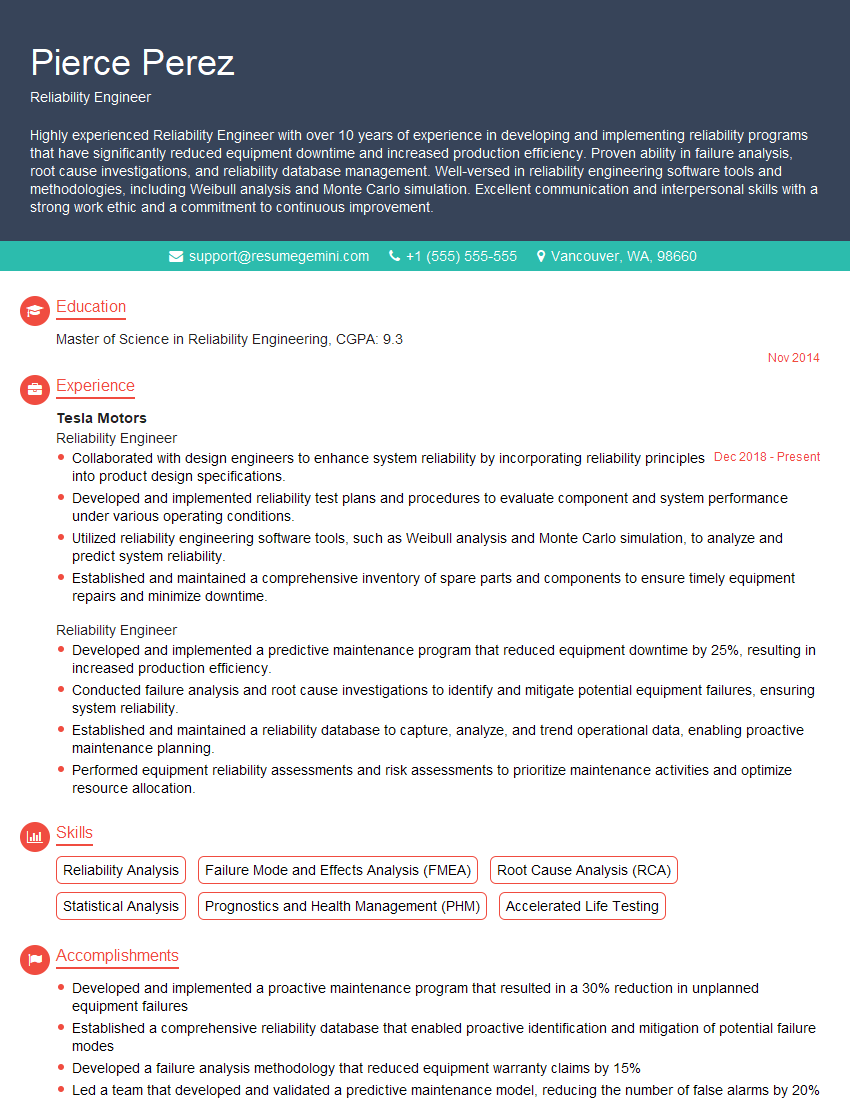
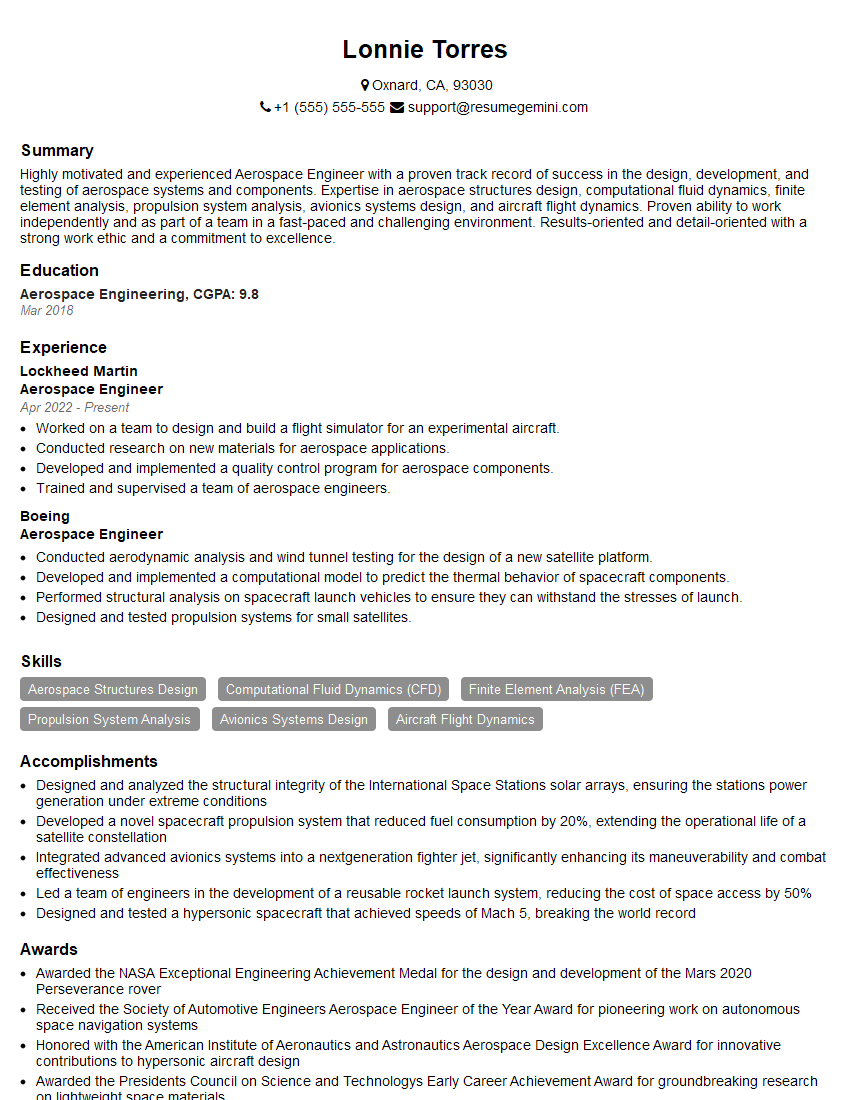
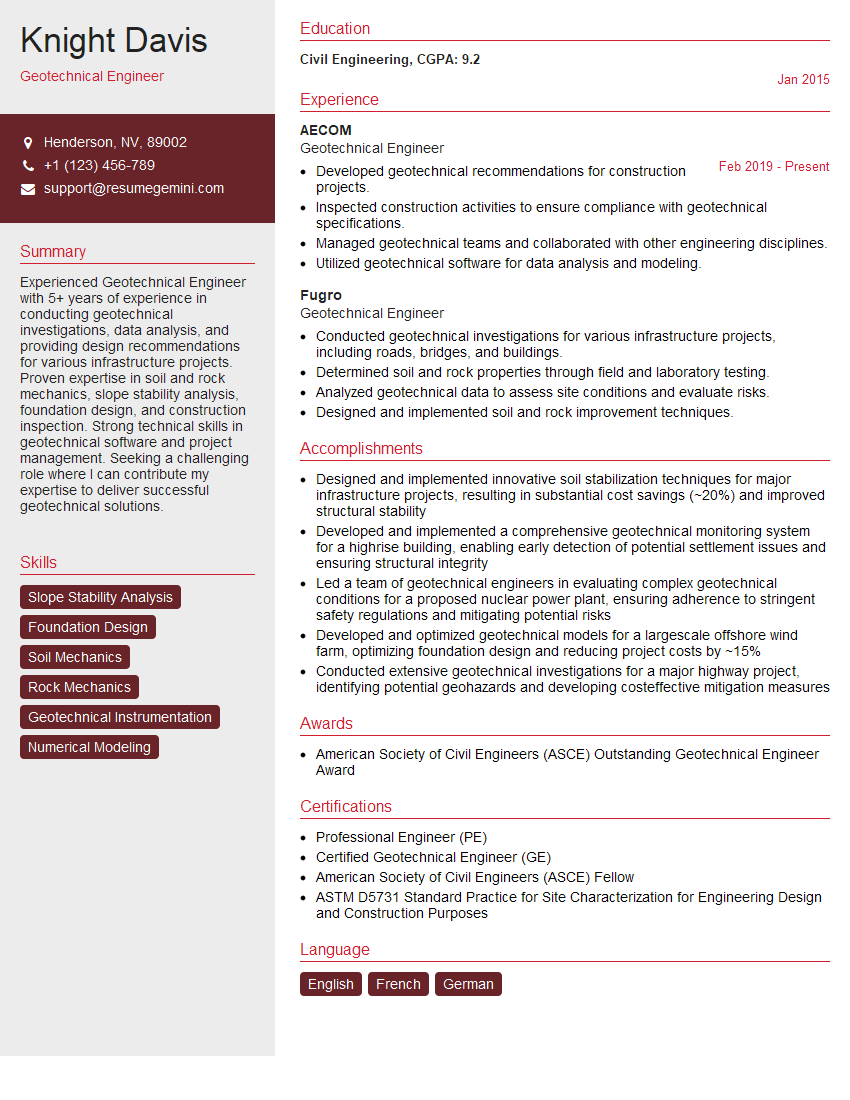
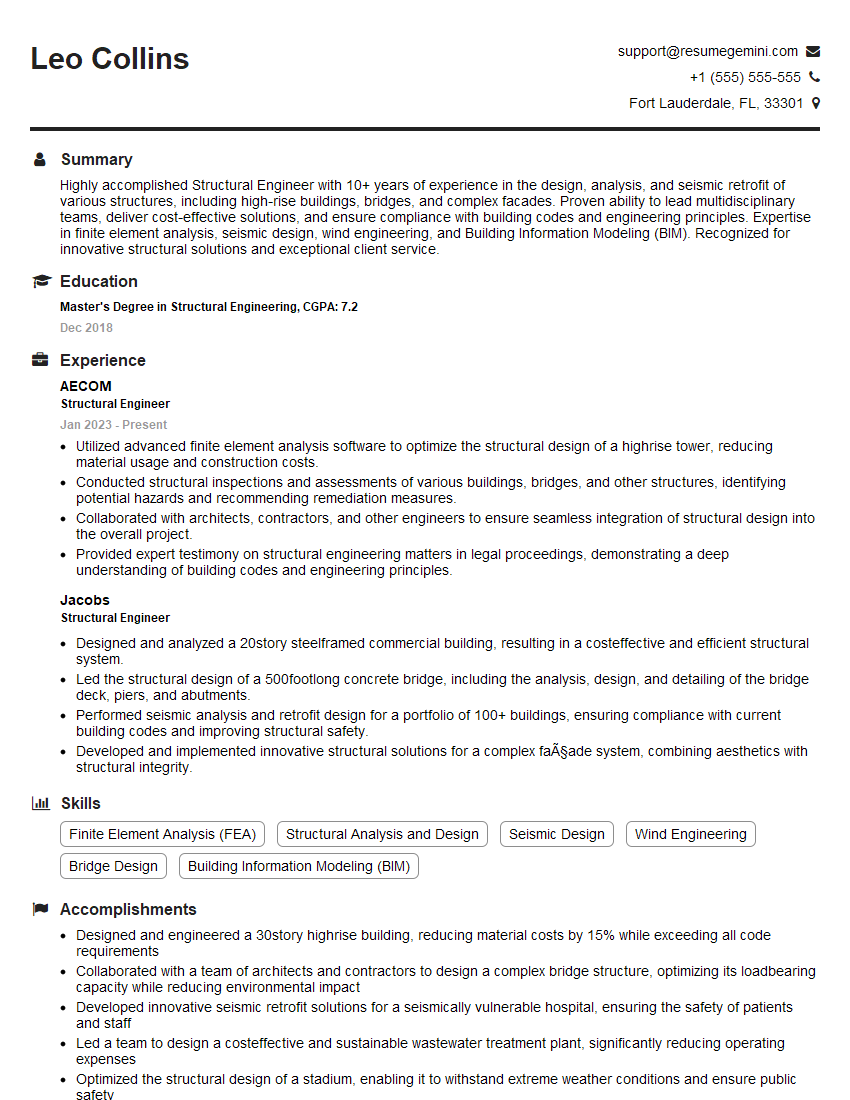
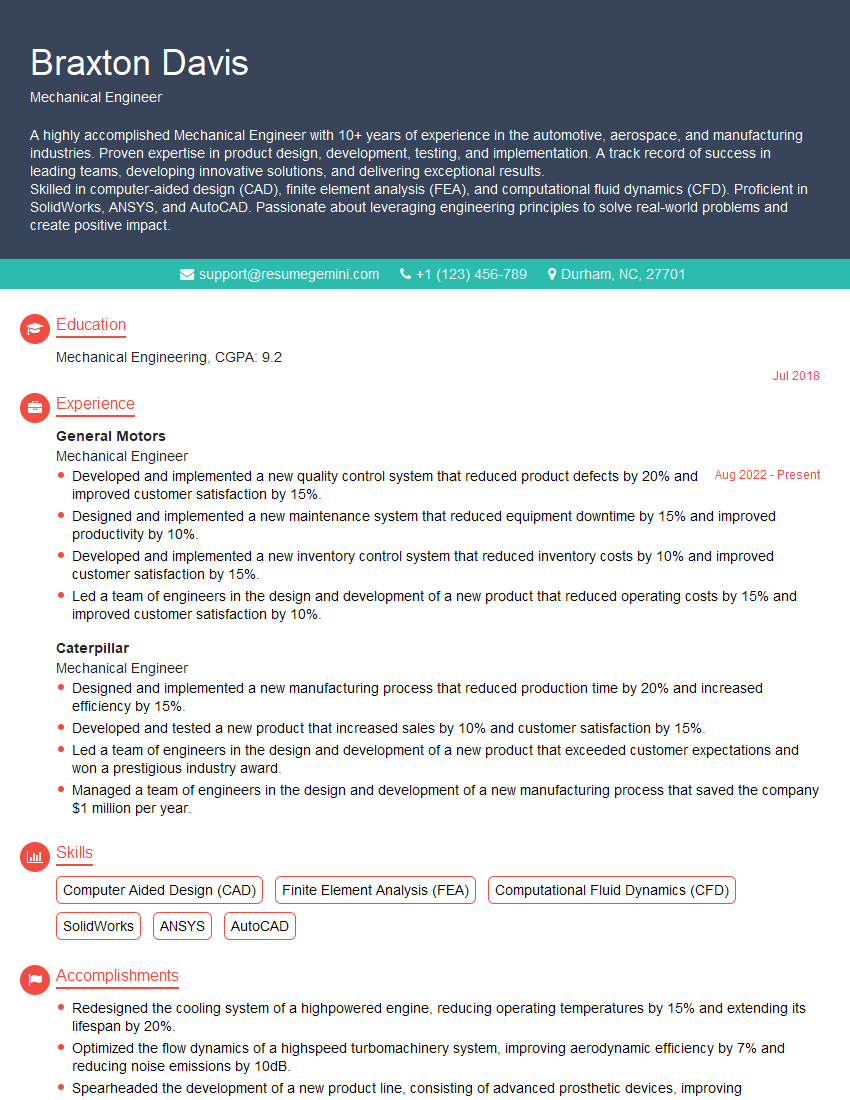
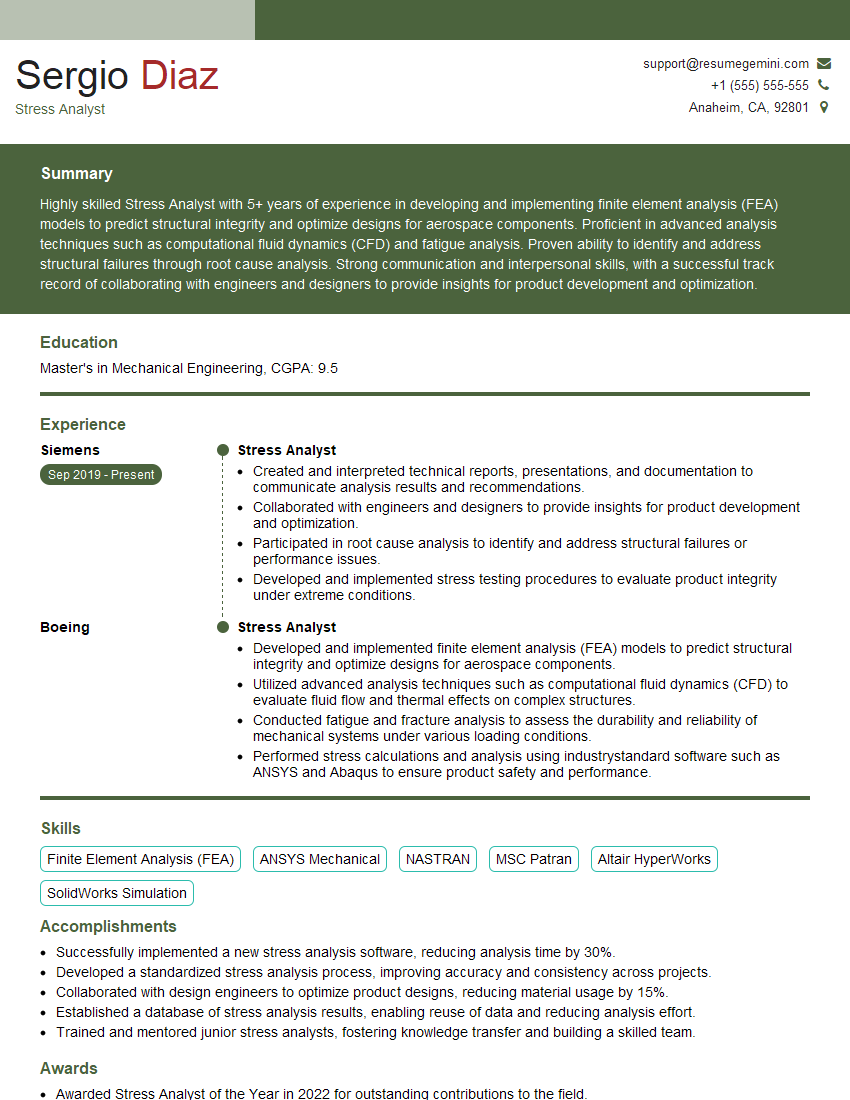
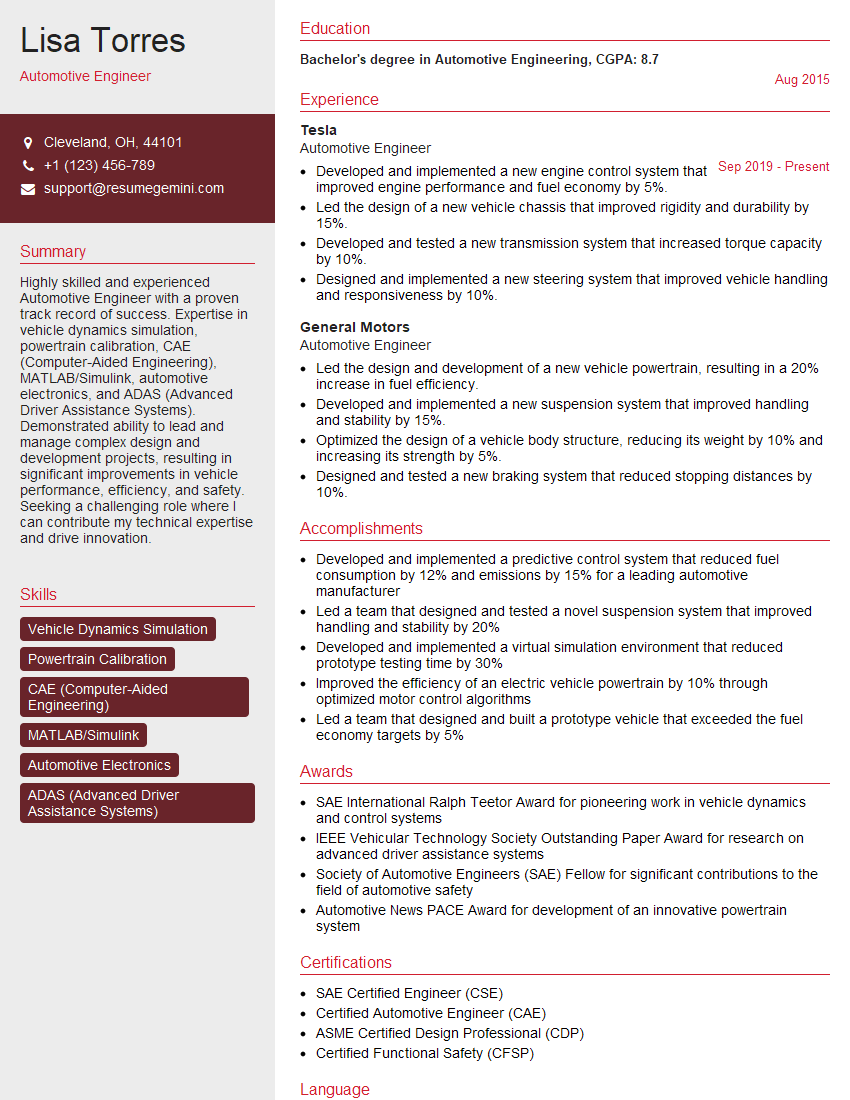
Mastering Solid Mechanics and Structural Analysis is crucial for a successful career in engineering, opening doors to exciting opportunities in design, research, and analysis. A strong foundation in these areas significantly enhances your problem-solving abilities and allows you to contribute meaningfully to innovative projects. To maximize your job prospects, creating an ATS-friendly resume is vital. ResumeGemini is a trusted resource that can help you build a professional and effective resume tailored to the specific demands of the Solid Mechanics and Structural Analysis field. Examples of resumes tailored to this field are available, providing you with a strong foundation for your job search.

Explore more articles
Users Rating of Our Blogs
Share Your Experience
We value your feedback! Please rate our content and share your thoughts (optional).
What Readers Say About Our Blog
Hello,
we currently offer a complimentary backlink and URL indexing test for search engine optimization professionals.
You can get complimentary indexing credits to test how link discovery works in practice.
No credit card is required and there is no recurring fee.
You can find details here:
https://wikipedia-backlinks.com/indexing/
Regards
NICE RESPONSE TO Q & A
hi
The aim of this message is regarding an unclaimed deposit of a deceased nationale that bears the same name as you. You are not relate to him as there are millions of people answering the names across around the world. But i will use my position to influence the release of the deposit to you for our mutual benefit.
Respond for full details and how to claim the deposit. This is 100% risk free. Send hello to my email id: [email protected]
Luka Chachibaialuka
Hey interviewgemini.com, just wanted to follow up on my last email.
We just launched Call the Monster, an parenting app that lets you summon friendly ‘monsters’ kids actually listen to.
We’re also running a giveaway for everyone who downloads the app. Since it’s brand new, there aren’t many users yet, which means you’ve got a much better chance of winning some great prizes.
You can check it out here: https://bit.ly/callamonsterapp
Or follow us on Instagram: https://www.instagram.com/callamonsterapp
Thanks,
Ryan
CEO – Call the Monster App
Hey interviewgemini.com, I saw your website and love your approach.
I just want this to look like spam email, but want to share something important to you. We just launched Call the Monster, a parenting app that lets you summon friendly ‘monsters’ kids actually listen to.
Parents are loving it for calming chaos before bedtime. Thought you might want to try it: https://bit.ly/callamonsterapp or just follow our fun monster lore on Instagram: https://www.instagram.com/callamonsterapp
Thanks,
Ryan
CEO – Call A Monster APP
To the interviewgemini.com Owner.
Dear interviewgemini.com Webmaster!
Hi interviewgemini.com Webmaster!
Dear interviewgemini.com Webmaster!
excellent
Hello,
We found issues with your domain’s email setup that may be sending your messages to spam or blocking them completely. InboxShield Mini shows you how to fix it in minutes — no tech skills required.
Scan your domain now for details: https://inboxshield-mini.com/
— Adam @ InboxShield Mini
Reply STOP to unsubscribe
Hi, are you owner of interviewgemini.com? What if I told you I could help you find extra time in your schedule, reconnect with leads you didn’t even realize you missed, and bring in more “I want to work with you” conversations, without increasing your ad spend or hiring a full-time employee?
All with a flexible, budget-friendly service that could easily pay for itself. Sounds good?
Would it be nice to jump on a quick 10-minute call so I can show you exactly how we make this work?
Best,
Hapei
Marketing Director
Hey, I know you’re the owner of interviewgemini.com. I’ll be quick.
Fundraising for your business is tough and time-consuming. We make it easier by guaranteeing two private investor meetings each month, for six months. No demos, no pitch events – just direct introductions to active investors matched to your startup.
If youR17;re raising, this could help you build real momentum. Want me to send more info?
Hi, I represent an SEO company that specialises in getting you AI citations and higher rankings on Google. I’d like to offer you a 100% free SEO audit for your website. Would you be interested?
Hi, I represent an SEO company that specialises in getting you AI citations and higher rankings on Google. I’d like to offer you a 100% free SEO audit for your website. Would you be interested?
good