Unlock your full potential by mastering the most common Spatial Composition interview questions. This blog offers a deep dive into the critical topics, ensuring you’re not only prepared to answer but to excel. With these insights, you’ll approach your interview with clarity and confidence.
Questions Asked in Spatial Composition Interview
Q 1. Explain the principles of Gestalt theory and how they apply to spatial composition.
Gestalt theory is a school of thought in psychology that emphasizes our tendency to perceive things as whole forms rather than as collections of individual parts. In spatial composition, this translates to how we visually organize and interpret elements within a space. Key principles include:
- Proximity: Elements placed close together are perceived as a group. Think of a cluster of trees in a landscape – we see them as a single forest, not individual trees.
- Similarity: Similar elements are perceived as belonging together. For instance, using the same material for multiple furniture pieces in a room creates visual unity.
- Closure: We tend to complete incomplete figures. An archway, even if partially obscured, is still perceived as a whole archway.
- Continuity: The eye follows lines and curves naturally. A winding path in a garden guides the viewer’s eye through the space.
- Figure-Ground: We distinguish between the focal point (figure) and the background (ground). A brightly lit sculpture in a dark room will immediately capture attention.
Applying Gestalt principles in spatial composition helps to create harmonious and easily understandable spaces. By strategically arranging elements based on these principles, designers can guide the user’s eye, establish visual hierarchy, and create a cohesive and aesthetically pleasing environment.
Q 2. Describe your experience using different 3D modeling software (e.g., Maya, 3ds Max, Blender).
My experience spans several industry-standard 3D modeling software packages. I’m highly proficient in Maya, leveraging its robust animation and rigging tools for projects involving complex character interactions within virtual environments. I’ve used 3ds Max extensively for architectural visualization, particularly appreciating its efficient polygon modeling capabilities for creating detailed building models and interiors. Blender, with its open-source nature and versatile capabilities, has been invaluable for rapid prototyping and experimental design, allowing for quick iterations and explorations of different spatial concepts. In each software, I’ve honed my skills in UV mapping, texturing, and lighting, ensuring high-quality visual representations of my spatial designs.
For instance, on a recent architectural project, I utilized 3ds Max to create photorealistic renderings of a proposed museum design. The client was particularly impressed by the detail and realism achieved through the use of advanced lighting techniques and high-resolution textures. In another project, Maya was crucial for developing a VR experience where the user could navigate a historical town; precise modeling and animation were essential to ensure the experience felt authentic and immersive.
Q 3. How do you balance visual hierarchy and user experience in a spatial design?
Balancing visual hierarchy and user experience is paramount in spatial design. Visual hierarchy dictates what the user sees first and what elements are emphasized. User experience focuses on how easily and intuitively the user can navigate and interact with the space. The key is to create a hierarchy that supports, not hinders, the user experience.
For example, a museum exhibit might prioritize the most important artifacts by placing them at eye level, in well-lit spaces, and using larger-scale displays. Less crucial information could be placed at lower levels or in less prominent areas. This guides the user’s attention effectively while ensuring they don’t feel overwhelmed or confused. The spatial flow should also be considered, ensuring a smooth and intuitive path through the exhibition. Poor spatial planning, even with a strong visual hierarchy, can lead to a frustrating user experience.
Tools like color, scale, and contrast play significant roles. A larger, brighter object immediately attracts attention more than a smaller, duller one. However, overuse of bright colors or jarring contrasts can be counterproductive, detracting from the overall experience. A balanced approach is critical, ensuring clarity and visual appeal.
Q 4. Describe your process for creating a compelling spatial narrative.
Creating a compelling spatial narrative involves designing a space that tells a story. This goes beyond just the visual; it’s about creating an emotional journey for the user. My process involves:
- Defining the narrative arc: What’s the story? What’s the beginning, middle, and end? What emotion do I want to evoke?
- Conceptual sketching and mood boarding: I start with rough sketches and gather inspiration images to establish the visual style and mood.
- Spatial planning: I design the layout, considering sightlines, flow, and pacing. A dramatic reveal might involve leading the user down a long corridor before unveiling the main space.
- Lighting and sound design: Light and sound are crucial for setting the tone and mood. A dimly lit room with suspenseful music creates a very different atmosphere than a brightly lit space with upbeat music.
- Detailing and refinement: Finally, I refine the space, adding detailed textures, objects, and interactive elements to enrich the narrative.
For example, designing a museum exhibit about ancient Rome might start with a dark, mysterious entrance, gradually leading the user to increasingly bright and open spaces representing the height of Roman power. This carefully planned progression enhances the narrative and enhances the overall visitor experience.
Q 5. How do you approach creating a sense of scale and depth in a virtual environment?
Creating a sense of scale and depth in a virtual environment requires careful consideration of various techniques. One fundamental approach is using perspective: objects farther away appear smaller, converging lines create depth, and the placement of objects along a clear vanishing point enhances the illusion of distance.
Atmospheric perspective plays a crucial role. Objects in the distance appear less detailed and often have a bluish or hazy tone due to atmospheric scattering. This effect can be simulated using shaders and post-processing effects in 3D modeling software.
Lighting is also paramount. Shadows cast by objects provide valuable depth cues. A well-placed light source can highlight features and create focal points, adding to the perceived dimensionality of the space. Furthermore, the use of parallax mapping, where textures shift slightly as the viewpoint changes, adds subtle depth to surfaces.
Finally, the incorporation of realistic environmental details, like distant mountains or a vast sky, can vastly contribute to the sense of scale and immersion within the virtual environment.
Q 6. Explain your understanding of spatial relationships and proximity.
Spatial relationships and proximity refer to how elements are positioned relative to each other and how those positions affect our perception of the space. Proximity, as discussed in the context of Gestalt theory, affects grouping and visual hierarchy. Closely spaced objects are perceived as related, while distant ones feel separate.
Beyond proximity, spatial relationships can be described through concepts like alignment, orientation, and layering. Alignment, for example, refers to how objects are positioned relative to each other, such as aligning objects along a vertical or horizontal axis. This creates order and visual harmony. Orientation describes how objects are positioned in space, their angles and directions. Layering involves placing objects in front of or behind each other, creating a sense of depth.
Understanding spatial relationships and proximity is fundamental for creating balanced and functional spaces. Poor spatial relationships can lead to confusion and discomfort. For example, in an office environment, placing desks too close together can create a feeling of crampedness, while spacing them too far apart can hinder communication and collaboration. Skillful use of spatial relationships helps to build intuitive and pleasant environments.
Q 7. Discuss different techniques for creating realistic lighting and shadows in a 3D scene.
Creating realistic lighting and shadows in a 3D scene involves a combination of techniques, both within the 3D modeling software and through post-processing. Key considerations include:
- Light sources: Employing various light types like point lights (simulating bulbs), directional lights (simulating sunlight), and area lights (simulating larger light sources like windows) creates a more nuanced lighting scheme.
- Global Illumination (GI): GI algorithms simulate indirect lighting, bouncing light off surfaces to create more realistic reflections and ambient lighting. This adds significant realism.
- Shadow Mapping: This technique renders shadows by projecting the scene from the light source’s perspective, creating accurate shadow casting.
- Ray Tracing: A more computationally intensive method, ray tracing simulates the path of light rays, providing highly realistic reflections, refractions, and shadows.
- Ambient Occlusion (AO): AO simulates the darkening of surfaces in areas where light is blocked by nearby objects. This adds depth and realism to crevices and corners.
The choice of techniques depends on the project’s complexity and performance requirements. For real-time rendering, simpler techniques like shadow mapping are often preferred, while high-quality pre-rendered images can benefit from computationally expensive methods like ray tracing.
Furthermore, understanding the properties of light, such as color temperature and intensity, is crucial for creating accurate and visually compelling scenes. A cold blue light might evoke a nighttime atmosphere, while a warm yellow light could create a cozy feeling.
Q 8. How do you incorporate user feedback into your spatial design process?
User feedback is paramount in spatial design. It allows us to refine designs based on real-world needs and preferences, ensuring the final product is both functional and user-friendly. My process involves incorporating feedback at multiple stages:
- Early-stage concept testing: I use surveys, focus groups, and informal user interviews to gather initial reactions to design concepts. This helps identify potential issues early on, avoiding costly revisions later.
- Prototype testing: I create interactive prototypes, either physical or digital, allowing users to experience the space and provide feedback on usability, wayfinding, and overall experience. For example, I might create a virtual reality model of a museum layout for testing before construction.
- Post-implementation evaluation: After a space is completed, I use observation, questionnaires, and user interviews to assess its effectiveness and identify areas for improvement. This feedback informs future projects and improves my overall design process.
For example, during the design of a hospital waiting area, initial feedback suggested the seating arrangement was isolating. By incorporating this feedback, we redesigned the area to promote social interaction and reduce feelings of isolation.
Q 9. What are your preferred methods for creating and managing spatial data?
Efficient spatial data management is crucial. My preferred methods combine robust software with organized file structures. I utilize Geographic Information Systems (GIS) software like ArcGIS or QGIS for managing and analyzing geographic data. This allows me to work with various data formats (shapefiles, GeoJSON, etc.) and perform spatial analyses.
For 3D modeling, I use software like Autodesk Revit, Blender, or SketchUp depending on the project requirements. These programs offer powerful tools for creating and manipulating 3D models, incorporating spatial data, and simulating real-world conditions.
My file management is meticulous. I use a hierarchical folder structure, clearly naming files and versions. This ensures easy access and prevents confusion when collaborating on large projects. Version control systems like Git are also employed for larger collaborative projects.
Q 10. Describe your experience with different spatial analysis techniques.
My experience encompasses a wide range of spatial analysis techniques. These include:
- Spatial interpolation: Estimating values at unsampled locations based on known data points. This is useful for creating continuous surfaces from point data, like elevation or pollution levels.
- Buffer analysis: Creating zones around features, determining proximity and relationships. For example, identifying areas within a certain distance of a school or hospital.
- Overlay analysis: Combining multiple spatial datasets to identify areas that meet specific criteria. This is often used for site selection, identifying areas suitable for development based on factors like zoning, environmental constraints, and accessibility.
- Network analysis: Analyzing transportation networks to optimize routes, find shortest paths, and model flows. This is vital in urban planning and logistics.
For instance, during a recent project, overlay analysis helped identify optimal locations for new community centers by considering factors like population density, proximity to public transport, and land availability.
Q 11. How do you ensure accessibility in your spatial designs?
Accessibility is a core principle in my designs. I follow universal design principles, ensuring spaces are usable and enjoyable by people of all ages and abilities. This involves:
- Wayfinding: Designing clear and intuitive signage, using contrasting colors and tactile elements for visually impaired users.
- Universal design principles: Incorporating ramps, wider doorways, and accessible restrooms to comply with building codes and accommodate users with mobility impairments.
- Sensory considerations: Minimizing noise pollution, providing adequate lighting, and considering the needs of users with sensory sensitivities.
- Assistive technology integration: Designing spaces that are compatible with assistive technologies, like screen readers and voice control systems.
For example, during the design of a park, I incorporated tactile paving at crosswalks, ensuring safe navigation for visually impaired users. Similarly, benches were placed strategically to provide ample resting spots for users with mobility limitations.
Q 12. Explain your workflow for creating a 3D model from a 2D blueprint.
My workflow for creating a 3D model from a 2D blueprint involves several steps:
- Blueprint Digitization: The 2D blueprint is scanned and imported into a CAD or 3D modeling software.
- Feature Extraction: Key features like walls, doors, and windows are traced and converted into 3D objects. This often involves using the software’s built-in tools for extrusion and construction.
- 3D Modeling: Using the extracted features, a 3D model is constructed. This step might involve creating more complex elements such as stairs, roofs, or interior finishes.
- Material Application: Realistic materials are assigned to the surfaces of the 3D model, enhancing visual accuracy and providing a more immersive experience.
- Texture Mapping: High-resolution textures are added to the model’s surfaces, enhancing its realism. This can include realistic wood grain, brick patterns, or even custom textures.
- Lighting and Rendering: The model is lit and rendered, creating photorealistic images or animations. This often involves experimenting with different light sources and settings to capture the intended mood and atmosphere.
Throughout this process, consistent checks are performed to ensure accuracy and adherence to the original blueprint. This iterative approach ensures the final 3D model reflects the design faithfully and accurately.
Q 13. Describe your understanding of spatial audio and its application in virtual environments.
Spatial audio, the ability to create the perception of sound originating from a specific location in 3D space, is transformative in virtual environments. It enhances immersion and realism by making the environment feel more lifelike. This is achieved through binaural audio recording or through algorithmic techniques that create directional cues.
Applications in virtual environments include:
- Enhanced immersion in games: The ability to hear footsteps approaching from behind or a gunshot from the distance significantly increases the feeling of being present in the game world.
- Improved navigation and orientation: Spatial audio cues can help users navigate virtual spaces more effectively, especially in complex environments. For example, a sound emanating from a specific direction could indicate a path or point of interest.
- Realistic environmental soundscapes: Adding realistic environmental sounds like birds chirping or wind blowing can increase the believability of virtual worlds.
The key challenge is balancing realistic spatial audio with computational performance. Efficient algorithms and optimized audio rendering are necessary for smooth, real-time experiences.
Q 14. How do you address challenges related to performance optimization in spatial designs?
Performance optimization is vital for interactive spatial designs, especially in virtual or augmented reality. Challenges include managing the computational load of complex 3D models and large datasets. Strategies I employ include:
- Level of Detail (LOD): Using different levels of detail for 3D models based on their distance from the viewer. This reduces rendering load by showing simplified models at a distance.
- Occlusion culling: Not rendering objects that are hidden from view by other objects. This significantly reduces the number of polygons that need to be processed.
- Data streaming: Loading and unloading data dynamically as the user moves through the space. This prevents overwhelming the system with excessive data.
- Optimization of algorithms: Using efficient algorithms for spatial calculations and rendering to minimize processing time.
- Hardware acceleration: Leveraging the power of graphics processing units (GPUs) for accelerated rendering.
For example, in a large-scale virtual environment, LOD would be crucial to ensure smooth navigation without performance hiccups. Distant buildings might be represented by simplified models, while closer ones are rendered in high detail only when necessary.
Q 15. Explain your experience working with different spatial input devices (e.g., VR controllers, motion capture).
My experience with spatial input devices is extensive, encompassing both traditional and emerging technologies. I’ve worked extensively with VR controllers, from basic positional tracking devices to haptic feedback controllers offering more nuanced interaction. Understanding the limitations and capabilities of each device is crucial. For instance, while simpler controllers excel in straightforward interactions, haptic feedback enhances immersion by providing tactile sensations, thereby improving user experience and engagement.
Motion capture technology has also played a significant role in my projects. I’ve used optical and inertial systems to capture full-body movement, translating real-world gestures into virtual environments. This allows for incredibly realistic and intuitive interactions, particularly useful in applications like virtual prototyping or immersive training simulations. For example, in a recent project involving the design of a virtual museum, motion capture allowed users to ‘walk’ through the virtual space and interact with exhibits naturally, as if they were physically present. The choice of input device always depends on the specific project requirements – balancing cost, accuracy, and the overall user experience.
Career Expert Tips:
- Ace those interviews! Prepare effectively by reviewing the Top 50 Most Common Interview Questions on ResumeGemini.
- Navigate your job search with confidence! Explore a wide range of Career Tips on ResumeGemini. Learn about common challenges and recommendations to overcome them.
- Craft the perfect resume! Master the Art of Resume Writing with ResumeGemini’s guide. Showcase your unique qualifications and achievements effectively.
- Don’t miss out on holiday savings! Build your dream resume with ResumeGemini’s ATS optimized templates.
Q 16. How do you balance artistic expression with technical constraints in your spatial designs?
Balancing artistic expression and technical constraints in spatial design requires a delicate approach. Think of it like sculpting: you have a vision for the final piece (artistic expression), but you’re limited by the material’s properties (technical constraints).
I start by clearly defining the project goals and limitations. This includes understanding the hardware’s capabilities (e.g., processing power, rendering limitations, input device precision), budget constraints, and the target audience. Then, I create iterative prototypes, experimenting with different design options and constantly evaluating their feasibility. This allows me to make informed compromises without sacrificing the core artistic vision. For example, if high-polygon models impact performance, I might explore level-of-detail (LOD) techniques to maintain visual quality while optimizing performance.
Communication with the engineering team is paramount. Open dialogue ensures that artistic aspirations are understood and that technical challenges are addressed proactively. This collaborative approach leads to innovative solutions that bridge the gap between artistic intent and technical reality.
Q 17. How do you create a sense of place and atmosphere in your designs?
Creating a sense of place and atmosphere involves meticulously crafting the visual, auditory, and even haptic elements of the spatial experience. It’s about evoking a mood and feeling, making the user feel immersed and ‘present’ within the virtual environment.
Visual elements play a critical role. Lighting, particularly, sets the tone. Warm, diffused lighting creates a cozy atmosphere, while harsh, directional lighting can suggest a more dramatic setting. Texture is another crucial element. Detailed textures on surfaces add realism and enhance the sense of immersion. The use of realistic materials and surface properties significantly contribute to the overall feeling of authenticity.
Sound design is equally important. Ambient sounds, like birds chirping in a forest or the hum of a city, add depth and believability. Music can subtly guide the user’s emotional experience. In a virtual museum, for example, I might use quiet, classical music to create a contemplative atmosphere.
Haptic feedback, when available, adds a crucial layer of immersion. Feeling the weight of a virtual object or the texture of a surface dramatically enhances the sense of presence. This multi-sensory approach allows for a truly captivating and believable spatial experience.
Q 18. Describe your experience with different rendering techniques and their impact on visual quality and performance.
My experience with rendering techniques spans a range of approaches, from real-time rendering for interactive applications to offline rendering for high-fidelity visuals. Understanding the strengths and weaknesses of each method is critical in making informed decisions.
Real-time rendering techniques, such as forward and deferred rendering, are essential for interactive applications like VR and AR. Forward rendering is simpler to implement but can be less efficient for complex scenes. Deferred rendering, on the other hand, is more efficient but requires more complex shader programming. The choice depends on the specific project’s needs – balancing visual fidelity with performance.
Offline rendering techniques, like ray tracing and path tracing, produce stunningly realistic images but are computationally expensive and unsuitable for real-time interactions. They’re invaluable for creating high-quality visuals for marketing materials, architectural visualizations, or pre-rendered cinematic sequences within an interactive experience. Often, I’ll employ a hybrid approach, using offline rendering for static elements and real-time rendering for interactive aspects of the environment.
Q 19. How do you create a seamless transition between different spatial areas?
Creating seamless transitions between spatial areas requires careful consideration of visual continuity, navigation, and user experience. Abrupt changes can disrupt the user’s sense of immersion.
Visual continuity is achieved through consistent use of materials, lighting styles, and overall aesthetic. Transitions shouldn’t feel jarring; instead, they should feel natural and logical. One effective technique is to use gradual changes in lighting and environmental elements. For instance, a transition from a bright, open space to a dimly lit corridor can be achieved through a gradual dimming of the lights and a subtle shift in color palette.
Navigation plays a significant role. Clear wayfinding cues, such as visible pathways or directional indicators, guide the user smoothly from one area to another. The use of portals, transitions fading in and out, or even subtle camera movements can create more cinematic and fluid transitions. The goal is to minimize any sense of disorientation or disruption in the user’s experience, fostering seamless movement through the virtual world.
Q 20. Describe your understanding of wayfinding and its importance in spatial design.
Wayfinding, the process of finding one’s way from point A to point B, is paramount in spatial design. It’s not merely about navigation; it’s about guiding the user’s experience and enhancing their overall interaction. A poorly designed wayfinding system can lead to frustration and disorientation, hindering the enjoyment of the spatial experience.
In my designs, I incorporate various wayfinding techniques: clear signage, visual cues (like contrasting colors or textures), and intuitive spatial layouts. For example, using a combination of visual guides like glowing pathways and strategically placed landmarks makes navigation easier, especially in complex virtual environments. These cues don’t need to be obtrusive; subtle hints often suffice. I always consider the target audience. The wayfinding system in a children’s game will differ considerably from the wayfinding system in a professional training simulation.
Testing and iteration are critical. User feedback is invaluable in identifying areas where wayfinding might be confusing or challenging. By addressing these issues early, I can ensure a smooth and enjoyable experience for everyone.
Q 21. How do you use color theory to enhance the spatial experience?
Color theory is a powerful tool for enhancing the spatial experience. Colors evoke emotions, influence perception, and can dramatically impact the overall mood and atmosphere of a space.
Understanding color psychology is essential. Warm colors (reds, oranges, yellows) tend to create a sense of energy and excitement, while cool colors (blues, greens, purples) often evoke calmness and tranquility. I use this knowledge to strategically apply color to enhance the user’s experience. For example, a virtual office might use calming blues and greens to promote focus, whereas a virtual game level might employ vibrant reds and oranges to create excitement and energy.
Color contrast and harmony are equally important. Using contrasting colors can draw attention to specific elements, while harmonious colors create a sense of unity and visual balance. I carefully consider color palettes to ensure that they complement the overall design and effectively communicate the intended mood and purpose of the space. Color should never be used arbitrarily; it’s a crucial element in achieving a well-designed and immersive spatial experience.
Q 22. Explain your experience with virtual prototyping and its benefits in spatial design.
Virtual prototyping is a crucial aspect of modern spatial design. It allows designers to create and interact with 3D models of spaces before physical construction, offering significant advantages. Think of it as a digital sandbox where you can test different layouts, lighting schemes, and even material choices without the cost and time constraints of real-world building.
My experience includes utilizing software such as Revit, SketchUp, and Unreal Engine to create interactive virtual prototypes. The benefits are multifaceted:
- Early Problem Detection: Identifying and resolving spatial issues (e.g., inadequate circulation, poor sightlines) early in the design process significantly reduces costly revisions later.
- Enhanced Client Collaboration: Virtual walkthroughs allow clients to experience the design intuitively, leading to better communication and informed decision-making.
- Improved Design Iteration: Quickly testing different design options allows for faster iteration and optimization, resulting in a more efficient and effective design process.
- Realistic Visualization: High-quality renderings and virtual reality experiences enhance communication and stakeholder buy-in.
For example, on a recent museum exhibit design, we used virtual prototyping to test the flow of visitors through the space, optimizing the placement of interactive elements to avoid bottlenecks and enhance the visitor experience.
Q 23. Describe your understanding of human factors and ergonomics in relation to spatial design.
Human factors and ergonomics are fundamental to successful spatial design. They focus on understanding how people interact with their environment and designing spaces that support their physical and cognitive needs. Ignoring these factors can lead to discomfort, inefficiency, and even safety hazards.
My understanding encompasses several key aspects:
- Anthropometrics: This involves considering the dimensions of the human body (height, reach, etc.) to design spaces that accommodate people of varying sizes and abilities. For instance, designing appropriate counter heights for kitchens or ensuring sufficient wheelchair accessibility.
- Biomechanics: This focuses on the way the body moves and interacts with its surroundings, aiming for comfortable posture and efficient movement within a space. This might involve optimizing the placement of furniture to reduce strain or designing ergonomic workstations.
- Cognitive Ergonomics: This area explores how people process information and make decisions in a given space. Clear signage, intuitive layouts, and effective wayfinding are key elements in cognitive ergonomics. Poor wayfinding in a large building can lead to frustration and disorientation.
- Environmental Psychology: Understanding the psychological effects of the environment on people. This includes factors like light levels, color schemes, and the overall atmosphere of a space, considering their impact on mood and productivity.
I routinely use anthropometric data and ergonomic principles during the design process, from selecting furniture to determining the optimal placement of lighting and fixtures.
Q 24. How do you address potential usability issues in your spatial designs?
Addressing usability issues is an iterative process that involves user testing and feedback throughout the design process. It’s not something addressed only at the end. My approach involves:
- User Research: Conducting surveys, interviews, and focus groups to understand the needs and expectations of the users. This helps to define user personas and their interactions with the space.
- Heuristic Evaluation: Applying established usability principles (heuristics) to evaluate the design for potential problems. This is often a checklist-based approach focusing on aspects like clarity, efficiency, and learnability.
- Usability Testing: Observing users interacting with the virtual or physical space to identify pain points and areas for improvement. I often use eye-tracking and other analytical techniques to gain insights into user behavior.
- Iterative Design: Based on the feedback received, iterating on the design to address identified usability issues. This cycle of testing, analysis, and refinement is crucial for enhancing the overall user experience.
For instance, in designing a hospital waiting area, user testing showed that the layout was confusing and that signage was insufficient. We revised the layout and added clearer directional signage, significantly improving the patient experience.
Q 25. How do you ensure the consistency and coherence of your spatial designs across different platforms or devices?
Maintaining consistency and coherence across different platforms and devices requires a well-defined design system and a responsive design approach. This means creating a set of reusable design elements and styles that can be adapted to various contexts.
My strategy involves:
- Modular Design: Breaking down the design into reusable components and modules that can be easily rearranged and adapted to different screen sizes and devices.
- Responsive Design Principles: Implementing responsive design principles to ensure the layout and content adjust seamlessly to different screen resolutions and orientations. This often involves using CSS media queries to adapt styles based on screen size.
- Style Guides and Design Systems: Creating comprehensive style guides and design systems that define the visual language and interaction patterns for the design. This includes typography, color palettes, and component specifications.
- Version Control: Using version control systems to manage design assets and ensure consistency across all platforms and iterations.
For example, in designing a wayfinding system for a large campus, we created a consistent visual style that was applied across various digital platforms (website, mobile app) and physical signage. This ensured a unified and easy-to-understand user experience regardless of the platform.
Q 26. Explain your experience with collaborative design tools and workflows.
Collaboration is essential in spatial design. I have extensive experience working with diverse teams using various collaborative design tools and workflows.
My experience includes using:
- Cloud-based Collaboration Platforms: Such as Google Workspace, Microsoft Teams, and Dropbox for sharing files, managing revisions, and facilitating communication.
- Real-time Collaboration Tools: Like Miro and Figma for collaborative design brainstorming and prototyping, allowing multiple team members to work simultaneously on a design.
- BIM Software (Building Information Modeling): Revit and ArchiCAD allow for collaborative model creation and review, ensuring consistent design information across the project lifecycle.
- Version Control Systems: Git for managing design assets and code, enabling effective collaboration and tracking of changes.
Establishing clear communication protocols and utilizing these tools allows for seamless team collaboration, efficient design iterations, and effective conflict resolution. I frequently lead design reviews and feedback sessions, ensuring everyone’s input is heard and considered.
Q 27. How do you stay up-to-date with the latest trends and technologies in spatial composition?
Staying updated in this rapidly evolving field requires a proactive and multifaceted approach.
My strategies include:
- Industry Publications and Journals: Regularly reading industry publications like *Architectural Record*, *Interior Design*, and other specialized journals to stay abreast of the latest trends and innovations.
- Conferences and Workshops: Attending industry conferences and workshops to network with other professionals and learn about cutting-edge technologies and design approaches.
- Online Courses and Webinars: Engaging in online courses and webinars to acquire new skills and deepen my understanding of emerging technologies like VR/AR and AI-driven design tools.
- Professional Networking: Actively engaging in professional networks (online and in-person) to share knowledge and learn from other experts.
- Experimentation and Hands-on Learning: Regularly experimenting with new software and technologies to gain hands-on experience and push the boundaries of my design capabilities.
Continuous learning is crucial, ensuring my designs remain at the forefront of innovation and address emerging user needs and technological advancements.
Q 28. Describe a challenging spatial design project you worked on and how you overcame the challenges.
One particularly challenging project involved designing a sustainable and accessible community center in a densely populated urban area. The constraints were significant: limited space, a tight budget, and the need to accommodate a diverse range of community needs.
The challenges included:
- Space Optimization: Maximizing functionality within a small footprint required careful planning and innovative space-saving solutions. This involved exploring multi-functional spaces and optimizing circulation routes.
- Budget Constraints: Working with a limited budget necessitated creative solutions involving the selection of cost-effective materials and construction methods while maintaining high design quality.
- Accessibility: Ensuring full accessibility for people with disabilities, which involved meticulous planning of ramps, elevators, and accessible restrooms, integrating these features seamlessly into the design.
- Community Engagement: Effectively gathering and integrating feedback from a diverse community was crucial. We held numerous community workshops and consultations to ensure the design reflected their needs and preferences.
We overcame these challenges through a combination of:
- Detailed Space Planning: Creating highly detailed 3D models and floor plans to optimize space utilization and address potential conflicts early in the process.
- Value Engineering: Exploring cost-effective material options without compromising design quality or functionality.
- Universal Design Principles: Applying universal design principles to ensure accessibility was integrated into every aspect of the design, rather than being an afterthought.
- Community Collaboration: Implementing a robust community engagement process allowed for open dialogue and incorporated valuable feedback into the design.
The successful completion of this project demonstrated the importance of proactive problem-solving, creative design thinking, and effective stakeholder engagement.
Key Topics to Learn for Spatial Composition Interview
- Understanding Perspective and Vantage Point: Explore different types of perspective (one-point, two-point, three-point) and how choosing the right vantage point impacts the overall message and mood of a composition.
- Rule of Thirds and Golden Ratio: Learn how to apply these principles to create visually appealing and balanced compositions. Practice applying them to different media (photography, graphic design, etc.).
- Negative Space and Visual Hierarchy: Understand the importance of negative space in creating emphasis and directing the viewer’s eye. Practice establishing a clear visual hierarchy to guide the viewer through your composition.
- Compositional Techniques: Explore techniques like leading lines, framing, symmetry, and asymmetry. Understand the impact of each technique on the overall feel and effectiveness of the composition.
- Color Theory and its Application: Discuss how color choices affect mood, contrast, and overall visual impact. Practice using color palettes to enhance your compositions.
- Depth and Dimension: Explore techniques used to create a sense of depth and three-dimensionality in two-dimensional compositions, such as overlapping elements, atmospheric perspective, and shading.
- Analyzing Existing Compositions: Practice critically analyzing successful compositions from various fields to understand the principles at play. Identify the techniques used and how they contribute to the overall impact.
- Problem-Solving in Spatial Composition: Be prepared to discuss how you would approach solving composition challenges, such as incorporating multiple elements harmoniously or conveying a specific narrative through visual means.
Next Steps
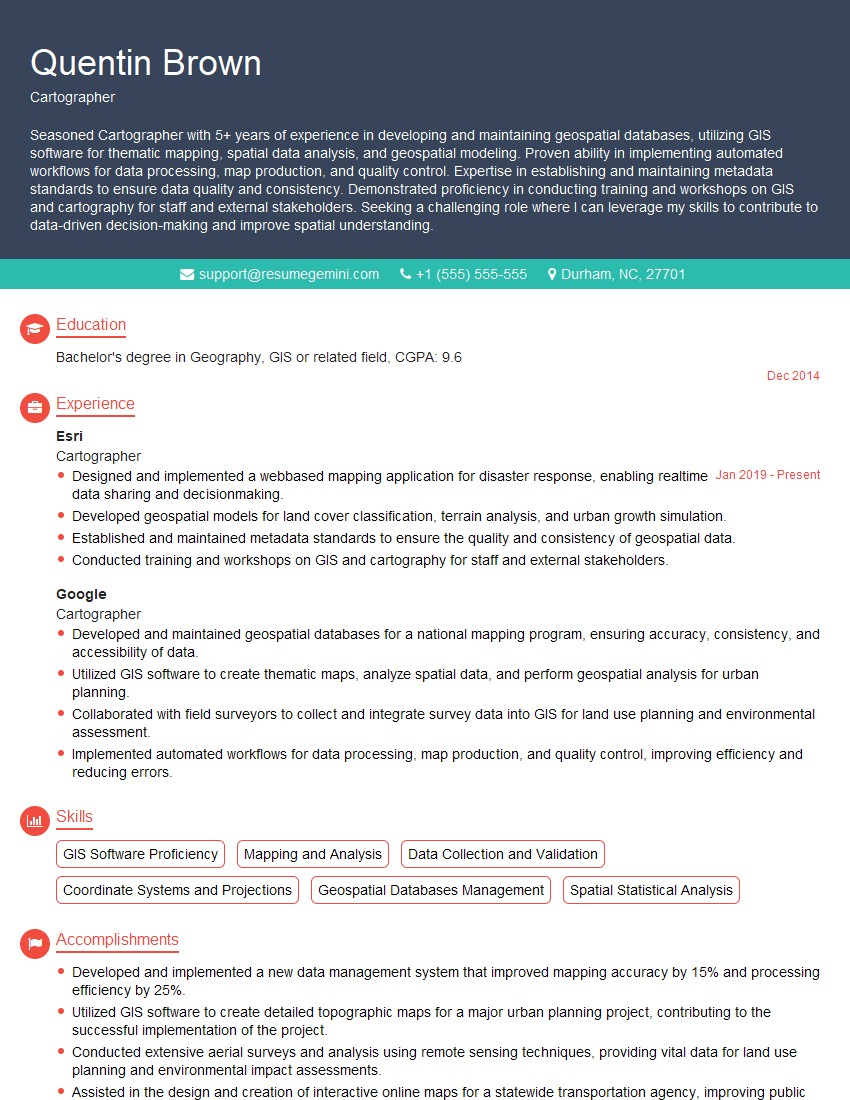
Mastering spatial composition is crucial for success in many creative fields, significantly enhancing your ability to communicate visually and create impactful work. A strong understanding of these principles will set you apart in the job market and boost your career prospects. To maximize your chances of landing your dream role, focus on creating an ATS-friendly resume that effectively highlights your skills and experience. ResumeGemini is a trusted resource to help you build a professional and impactful resume tailored to your specific field. Examples of resumes tailored to Spatial Composition are available to help guide your process.
Explore more articles
Users Rating of Our Blogs
Share Your Experience
We value your feedback! Please rate our content and share your thoughts (optional).
What Readers Say About Our Blog
Hello,
we currently offer a complimentary backlink and URL indexing test for search engine optimization professionals.
You can get complimentary indexing credits to test how link discovery works in practice.
No credit card is required and there is no recurring fee.
You can find details here:
https://wikipedia-backlinks.com/indexing/
Regards
NICE RESPONSE TO Q & A
hi
The aim of this message is regarding an unclaimed deposit of a deceased nationale that bears the same name as you. You are not relate to him as there are millions of people answering the names across around the world. But i will use my position to influence the release of the deposit to you for our mutual benefit.
Respond for full details and how to claim the deposit. This is 100% risk free. Send hello to my email id: [email protected]
Luka Chachibaialuka
Hey interviewgemini.com, just wanted to follow up on my last email.
We just launched Call the Monster, an parenting app that lets you summon friendly ‘monsters’ kids actually listen to.
We’re also running a giveaway for everyone who downloads the app. Since it’s brand new, there aren’t many users yet, which means you’ve got a much better chance of winning some great prizes.
You can check it out here: https://bit.ly/callamonsterapp
Or follow us on Instagram: https://www.instagram.com/callamonsterapp
Thanks,
Ryan
CEO – Call the Monster App
Hey interviewgemini.com, I saw your website and love your approach.
I just want this to look like spam email, but want to share something important to you. We just launched Call the Monster, a parenting app that lets you summon friendly ‘monsters’ kids actually listen to.
Parents are loving it for calming chaos before bedtime. Thought you might want to try it: https://bit.ly/callamonsterapp or just follow our fun monster lore on Instagram: https://www.instagram.com/callamonsterapp
Thanks,
Ryan
CEO – Call A Monster APP
To the interviewgemini.com Owner.
Dear interviewgemini.com Webmaster!
Hi interviewgemini.com Webmaster!
Dear interviewgemini.com Webmaster!
excellent
Hello,
We found issues with your domain’s email setup that may be sending your messages to spam or blocking them completely. InboxShield Mini shows you how to fix it in minutes — no tech skills required.
Scan your domain now for details: https://inboxshield-mini.com/
— Adam @ InboxShield Mini
Reply STOP to unsubscribe
Hi, are you owner of interviewgemini.com? What if I told you I could help you find extra time in your schedule, reconnect with leads you didn’t even realize you missed, and bring in more “I want to work with you” conversations, without increasing your ad spend or hiring a full-time employee?
All with a flexible, budget-friendly service that could easily pay for itself. Sounds good?
Would it be nice to jump on a quick 10-minute call so I can show you exactly how we make this work?
Best,
Hapei
Marketing Director
Hey, I know you’re the owner of interviewgemini.com. I’ll be quick.
Fundraising for your business is tough and time-consuming. We make it easier by guaranteeing two private investor meetings each month, for six months. No demos, no pitch events – just direct introductions to active investors matched to your startup.
If youR17;re raising, this could help you build real momentum. Want me to send more info?
Hi, I represent an SEO company that specialises in getting you AI citations and higher rankings on Google. I’d like to offer you a 100% free SEO audit for your website. Would you be interested?
Hi, I represent an SEO company that specialises in getting you AI citations and higher rankings on Google. I’d like to offer you a 100% free SEO audit for your website. Would you be interested?
good