Preparation is the key to success in any interview. In this post, we’ll explore crucial Sports Management and Administration interview questions and equip you with strategies to craft impactful answers. Whether you’re a beginner or a pro, these tips will elevate your preparation.
Questions Asked in Sports Management and Administration Interview
Q 1. Describe your experience in developing and implementing a sports marketing strategy.
Developing and implementing a successful sports marketing strategy requires a multi-faceted approach focusing on understanding the target audience, defining clear objectives, and leveraging various marketing channels. It starts with thorough market research to identify potential sponsors, understand fan demographics and preferences, and analyze competitor strategies.
For example, in my previous role with a minor league baseball team, we identified a significant segment of young families as potential attendees. We developed a family-friendly marketing campaign that included discounted tickets for families, themed nights focusing on children’s entertainment, and partnerships with local businesses to offer family-oriented promotions. This resulted in a 20% increase in family attendance over the previous season.
The strategy also involved utilizing digital marketing (social media campaigns, targeted ads), traditional media (local newspaper and radio ads), and public relations (building relationships with local media and community organizations). We tracked key performance indicators (KPIs) like website traffic, social media engagement, ticket sales, and sponsor satisfaction to measure the success of our efforts and make data-driven adjustments as needed.
Q 2. How would you manage a budget for a large-scale sporting event?
Managing the budget for a large-scale sporting event requires meticulous planning and control. Think of it like building a house – you need a detailed blueprint (budget) before you even start buying materials.
The first step is creating a comprehensive budget that outlines all anticipated expenses, categorized into major areas such as venue rental, staffing, marketing & promotions, security, insurance, equipment, and contingency funds (for unexpected costs). Each category should have itemized line items with estimated costs. For instance, ‘Staffing’ might include details like the number of ushers, security personnel, and event staff, along with their respective hourly rates and total costs. This granular detail ensures transparency and accountability.
Next is securing funding through various sources, such as sponsorships, ticket sales, broadcasting rights, and potentially government grants or loans. Regular monitoring and reporting throughout the event’s lifecycle are crucial. This might involve weekly or monthly budget reviews, comparing actual expenditures against the planned budget, and identifying areas for potential cost savings or reallocation of funds.
Finally, utilizing project management software helps in tracking expenses and ensuring that the budget remains on track. It helps visualize the financial health of the project and enables proactive adjustment to potential budget shortfalls.
Q 3. Explain your understanding of Title IX and its implications for sports administration.
Title IX of the Education Amendments of 1972 is a landmark legislation that prohibits sex-based discrimination in any education program or activity receiving federal financial assistance. In the context of sports administration, this means that educational institutions must provide equal opportunities for male and female athletes. This includes:
- Equal opportunity to participate: Schools must provide proportional athletic opportunities for both genders, considering the number of students of each sex enrolled in the institution.
- Equal treatment: This encompasses equal access to scholarships, coaching, facilities, equipment, travel budgets, and support services.
- Equal accommodation: Providing similar facilities, equipment, and resources. For example, if the men’s team has access to a state-of-the-art training facility, the women’s team should have similar access.
Non-compliance can result in the loss of federal funding and legal repercussions. Sports administrators need a strong understanding of Title IX regulations and should actively strive to create a fair and equitable athletic environment for all.
Q 4. How would you handle a crisis situation involving a player or team?
Handling a crisis involving a player or team requires a swift, decisive, and transparent response. My approach would involve these steps:
- Immediate Response: First, secure the safety and well-being of all involved. This might involve contacting emergency services if necessary.
- Assess the Situation: Gather all the facts quickly and accurately. This often requires speaking to multiple sources to get a comprehensive understanding of the situation.
- Develop a Communication Plan: Establish a clear, concise message for internal stakeholders (coaches, team members, staff) and external stakeholders (media, fans, sponsors). Be prepared to address the situation openly and honestly. Avoid speculation or making statements without verification.
- Take Action: Depending on the nature of the crisis, this could involve disciplinary action, public apologies, policy changes, or legal consultation.
- Monitor and Evaluate: Closely monitor the situation’s impact and how the public perceives the organization’s response. Use this feedback to improve future crisis management strategies.
Transparency and quick action build trust. For example, if a player is involved in a public incident, addressing the situation directly and appropriately demonstrates accountability and responsible leadership.
Q 5. What strategies would you employ to increase fan engagement and attendance?
Increasing fan engagement and attendance requires a multi-pronged strategy that focuses on creating a memorable and enjoyable experience. Think about what makes an event truly special.
Strategies include:
- Enhanced Game Day Experience: This can involve creating interactive entertainment, offering family-friendly activities, improving food and beverage options, and enhancing the stadium atmosphere through music, lighting, and other elements.
- Digital Engagement: Leveraging social media, mobile apps, and email marketing to communicate with fans, offer exclusive content, and build a sense of community.
- Loyalty Programs: Rewarding fans for their loyalty with discounts, exclusive access, and other perks.
- Community Outreach: Engaging with the local community through charitable events, sponsorships, and partnerships builds positive relationships and attracts new fans.
- Personalized Communication: Utilizing data to understand fans’ preferences and tailor marketing messages accordingly.
For instance, a team could create a mobile app with real-time scores, stats, player interviews, and interactive games to enhance engagement. Running contests and giveaways on social media can increase followers and promote attendance. The overall goal is to create a feeling of belonging and excitement around the team.
Q 6. Describe your experience in negotiating sponsorship deals.
Negotiating sponsorship deals requires a keen understanding of the sponsor’s objectives and the value proposition of the sporting event or team. It’s about building a mutually beneficial partnership.
My approach involves:
- Identifying Potential Sponsors: Researching companies whose products or services align with the target audience and the event’s image.
- Developing a Sponsorship Package: Creating a comprehensive proposal outlining the benefits for sponsors, such as brand visibility, advertising opportunities, exposure to a target demographic, and potential customer acquisition.
- Negotiating Terms: Engaging in constructive dialogue with potential sponsors, negotiating mutually acceptable terms on pricing, activation rights, and performance metrics.
- Building Relationships: Nurturing relationships with sponsors beyond the initial agreement to ensure mutual satisfaction and encourage long-term partnerships.
For example, when negotiating with a sportswear company, I would emphasize the reach of our team’s fan base and the opportunity to showcase their latest product line through on-field visibility, social media campaigns, and exclusive events. The key is demonstrating the ROI for the sponsor in a clear and compelling way.
Q 7. How do you measure the success of a sports marketing campaign?
Measuring the success of a sports marketing campaign requires a clear definition of objectives and the selection of appropriate Key Performance Indicators (KPIs). It’s not just about ticket sales, though that’s a significant factor. Think broader!
Key metrics include:
- Brand Awareness: Tracking changes in brand recognition and recall through surveys, social media analytics, and media mentions.
- Website Traffic and Engagement: Monitoring website visits, time spent on site, bounce rate, and conversion rates (e.g., ticket purchases, merchandise sales).
- Social Media Engagement: Tracking likes, shares, comments, followers, and reach on various social media platforms.
- Ticket Sales and Attendance: Monitoring overall attendance figures, comparing them to previous events, and analyzing factors influencing attendance.
- Sponsor Satisfaction: Gathering feedback from sponsors to assess their perception of the campaign’s effectiveness and their return on investment.
By analyzing these metrics, you can determine the campaign’s effectiveness in achieving its stated goals and identify areas for improvement. This data-driven approach is critical for optimizing future marketing efforts.
Q 8. How would you address a conflict between a coach and an athlete?
Resolving conflicts between coaches and athletes requires a delicate balance of empathy, fairness, and decisive action. My approach begins with active listening to understand each party’s perspective without judgment. I facilitate open communication, encouraging both the coach and athlete to express their concerns and feelings in a safe and respectful environment. This often involves separate, private conversations initially to gather all the facts and identify the root cause of the conflict. Is it a misunderstanding of expectations, a difference in training philosophies, or a personality clash?
Once I have a clearer picture, I work to find common ground. This might involve clarifying roles and responsibilities, mediating disagreements, or establishing clear communication protocols. For example, if the conflict stems from differing training methodologies, I might suggest a compromise that incorporates elements from both approaches. If the issue is a personality conflict, I could facilitate team-building exercises or conflict-resolution workshops. Ultimately, the goal is to create a collaborative environment where both the coach and athlete feel heard, respected, and valued. Failure to resolve the conflict may lead to poor team morale, decreased performance, and even player departure, so a timely and effective intervention is crucial.
Finally, I always document the conflict resolution process and follow-up to ensure the agreed-upon solutions are implemented and the conflict doesn’t resurface. My experience shows that a structured, empathetic approach can foster a healthier team dynamic and improve performance.
Q 9. What are your strategies for improving the operational efficiency of a sports team or organization?
Improving operational efficiency in sports involves streamlining processes, optimizing resource allocation, and leveraging technology. My strategies focus on three key areas: process optimization, data-driven decision-making, and technology integration.
- Process Optimization: This includes identifying and eliminating bottlenecks in workflows. For example, I’d analyze the team’s travel arrangements, scheduling practices, and communication channels to identify areas for improvement. Implementing project management software could help streamline scheduling and task delegation, reducing delays and enhancing communication across departments.
- Data-Driven Decision Making: Analyzing performance data – such as player statistics, training metrics, and injury reports – can inform decisions regarding training plans, player recruitment, and resource allocation. This requires robust data collection systems and the ability to interpret data accurately.
- Technology Integration: Utilizing technology, such as CRM systems for managing player relationships, performance analysis software, and online booking systems for facility rentals, can significantly improve operational efficiency. For instance, implementing a centralized communication platform would drastically improve the speed and efficiency of internal communication.
Successful implementation requires a collaborative approach, involving key stakeholders such as coaches, athletes, and administrative staff. It also requires continuous monitoring and evaluation to adapt and improve processes based on performance and feedback.
Q 10. How do you use data analytics to inform decision-making in sports management?
Data analytics plays a crucial role in modern sports management, enabling data-driven decision-making across various aspects of the organization. My approach focuses on leveraging data to optimize performance, improve player health, and enhance strategic planning.
For example, we might use player tracking data (speed, distance covered, acceleration) to identify areas for improvement in training programs. We can analyze opponent scouting reports to identify weaknesses and develop game strategies. Injury data allows for the development of injury prevention programs and informed decisions regarding player rest and recovery. Social media analytics helps to understand fan engagement and tailor marketing efforts.
The key is not just collecting data, but effectively interpreting it. This requires expertise in statistical analysis and a strong understanding of the sport-specific context. We would use tools like R or Python to analyze data and develop visualizations to communicate insights effectively to coaches and other stakeholders. For instance, visual representations of player fatigue levels alongside game performance data might reveal correlations that could lead to changes in training regimens to prevent overtraining and injuries.
Q 11. What is your experience with compliance regulations in the sports industry?
Compliance is paramount in the sports industry, given the numerous regulations governing areas such as athlete welfare, financial reporting, and anti-doping. My experience includes ensuring adherence to rules and regulations set forth by governing bodies like the NCAA (in college sports), or the governing bodies for specific professional leagues. This involves establishing clear internal policies, conducting regular training for staff, and implementing robust record-keeping systems.
For example, in college athletics, I have experience managing compliance with Title IX regulations related to gender equity in sports programs. This involved ensuring equitable opportunities for participation, scholarships, and facilities for male and female athletes. In professional settings, experience includes navigating rules surrounding player contracts, salary caps, and fair market value considerations. Proactive compliance measures are crucial not only to avoid legal issues and penalties but also to maintain the integrity and reputation of the organization.
Q 12. How do you manage a team of diverse individuals with varying skillsets?
Managing a diverse team requires a nuanced understanding of individual strengths, communication styles, and cultural backgrounds. My approach centers around fostering inclusivity, effective communication, and equitable opportunities.
Firstly, I establish clear roles and responsibilities, ensuring that each team member understands their contributions and how they fit into the broader organizational goals. Regular one-on-one meetings provide a platform for open communication and feedback, allowing me to address any concerns or challenges promptly. Secondly, I promote a culture of respect and understanding, encouraging open dialogue and celebrating the diversity of perspectives within the team. Finally, I ensure that performance evaluations are fair and objective, based on clear performance metrics. Recognizing and rewarding individual contributions helps to motivate and retain high-performing team members, regardless of their background or expertise. A diverse team, effectively managed, leads to creative problem-solving and better decision-making.
Q 13. Describe your experience in managing a sports facility or venue.
My experience in managing a sports facility includes overseeing daily operations, budgeting, maintenance, and event planning. This involved coordinating with various stakeholders, including facility staff, event organizers, and security personnel. The key to successful facility management is proactive planning and meticulous attention to detail.
This includes developing and implementing facility maintenance schedules to prevent equipment failures and ensure a safe environment for athletes and spectators. Effective budgeting and financial management are critical to ensure the facility operates within its financial constraints. Event planning requires coordinating logistics such as scheduling, ticket sales, concessions, and security. Ultimately, managing a successful facility requires a combination of organizational skills, financial acumen, and a customer-focused approach, ensuring a positive experience for everyone who uses the facility.
Q 14. What are your strategies for recruiting and retaining top talent in the sports industry?
Recruiting and retaining top talent in the sports industry requires a multi-faceted approach that goes beyond simply offering competitive salaries. My strategies emphasize building a strong employer brand, offering engaging career development opportunities, and creating a positive work environment.
For recruiting, I utilize targeted networking, professional organizations, and online recruitment platforms to reach potential candidates. This is supplemented by strong employer branding efforts to showcase the unique culture and opportunities within the organization. Retention strategies focus on providing opportunities for professional growth, such as mentorship programs, training courses, and opportunities for advancement. A supportive and inclusive work environment is crucial to ensuring that employees feel valued and engaged. Regular performance reviews, open communication channels, and a focus on employee wellbeing are essential to retaining top talent in the competitive sports industry. Offering competitive compensation and benefits is obviously a foundational element, but without a holistic approach, top talent will seek more appealing workplaces.
Q 15. How do you handle pressure and tight deadlines in a fast-paced sports environment?
In the high-pressure world of sports management, handling tight deadlines is paramount. My approach is multifaceted. First, I prioritize tasks using methods like Eisenhower Matrix (urgent/important), ensuring critical deadlines are met first. Second, I foster clear communication with my team, establishing open channels for updates and challenges. This prevents bottlenecks and allows for proactive problem-solving. Third, I leverage project management tools to track progress, allocate resources efficiently, and maintain transparency. Finally, I believe in building resilience by practicing stress management techniques—regular exercise, mindfulness, and sufficient rest help me maintain focus and composure under pressure. For instance, during a crucial playoff game preparation, I prioritized media coordination and logistical arrangements, delegating smaller tasks effectively to meet the tight deadline for stadium setup and media coverage.
Career Expert Tips:
- Ace those interviews! Prepare effectively by reviewing the Top 50 Most Common Interview Questions on ResumeGemini.
- Navigate your job search with confidence! Explore a wide range of Career Tips on ResumeGemini. Learn about common challenges and recommendations to overcome them.
- Craft the perfect resume! Master the Art of Resume Writing with ResumeGemini’s guide. Showcase your unique qualifications and achievements effectively.
- Don’t miss out on holiday savings! Build your dream resume with ResumeGemini’s ATS optimized templates.
Q 16. Explain your understanding of risk management in sports.
Risk management in sports encompasses identifying, assessing, and mitigating potential threats that could impact an organization’s operations, reputation, or financial stability. This includes various aspects, such as player injuries, legal disputes, financial instability, reputational damage from scandals, and security breaches. A robust risk management plan involves several steps: identifying potential risks (e.g., using SWOT analysis), analyzing the likelihood and impact of each risk, developing mitigation strategies (e.g., insurance, security protocols, crisis communication plans), and regularly reviewing and updating the plan. For example, implementing comprehensive injury prevention programs for athletes significantly reduces the risk of lost playing time and associated costs. Similarly, having a strong legal team and clear contractual agreements mitigates legal risks.
Q 17. What is your experience with social media management in the sports industry?
My experience with social media management in sports involves creating and executing comprehensive strategies to engage fans, build brand awareness, and drive revenue. I’m proficient in utilizing various platforms (Twitter, Instagram, Facebook, TikTok) to share engaging content, including behind-the-scenes glimpses, player highlights, and interactive polls. I understand the importance of data analytics in measuring campaign success and adjusting strategies accordingly. For example, I’ve successfully managed social media accounts for a minor league baseball team, resulting in a 30% increase in follower engagement within six months by implementing a content calendar emphasizing short-form video and interactive stories. I also understand the importance of community management – responding to comments and feedback promptly to build positive brand relationships.
Q 18. How would you develop a long-term strategic plan for a sports organization?
Developing a long-term strategic plan for a sports organization requires a systematic approach. First, a thorough SWOT analysis (Strengths, Weaknesses, Opportunities, Threats) is conducted to assess the organization’s current state. Then, a clear vision and mission statement are defined, outlining the organization’s long-term goals and values. Key performance indicators (KPIs) are established to track progress towards these goals (e.g., ticket sales, sponsorship revenue, fan engagement). The plan should incorporate various aspects, including marketing and branding, financial planning, talent acquisition and development, facility management, and community relations. Finally, the plan must be flexible and adaptable to changes in the sports landscape. For example, a long-term strategic plan for a soccer club might include investments in youth academies to develop future talent, expansion of community outreach programs, and exploring new revenue streams through digital content and e-commerce.
Q 19. Describe your experience in managing player contracts and negotiations.
My experience in managing player contracts and negotiations involves a deep understanding of contract law, salary caps, and collective bargaining agreements. I’ve been involved in negotiating contracts for both athletes and coaches, ensuring fair compensation while protecting the organization’s interests. This process requires strong negotiation skills, an ability to understand player value, and the capacity to build trust and rapport with athletes and their agents. It’s crucial to consider not just the immediate financial implications, but also the long-term impact on team dynamics and player performance. For example, in negotiating a contract extension for a key player, I successfully balanced the athlete’s desire for a higher salary with the team’s need to remain within the salary cap, leading to a mutually beneficial agreement.
Q 20. What are your strategies for enhancing the profitability of a sports organization?
Enhancing the profitability of a sports organization involves a multi-pronged approach. First, increasing revenue streams is crucial. This can be done through various means, including increasing ticket sales (through dynamic pricing, loyalty programs, and improved fan experience), securing lucrative sponsorship deals, generating revenue from merchandise and concessions, and exploring new digital revenue streams (e.g., streaming subscriptions, fantasy sports partnerships). Second, cost management is vital. This includes controlling operational expenses, negotiating favorable deals with suppliers, and implementing efficient resource allocation strategies. Third, strategic investments are necessary. This may involve investing in facilities upgrades, talent acquisition, or advanced data analytics to optimize performance and fan engagement. For example, a sports team might invest in a new mobile app to enhance the fan experience and increase merchandise sales. This integrated approach to both revenue generation and cost control will improve profitability.
Q 21. How do you build and maintain relationships with key stakeholders in the sports industry?
Building and maintaining strong relationships with key stakeholders—players, coaches, fans, sponsors, media, and community members—is fundamental to success in sports management. This requires consistent communication, transparency, and a genuine commitment to collaboration. I prioritize open dialogue, actively seeking feedback and addressing concerns promptly. I build trust by consistently delivering on promises and acting ethically. For sponsors, I ensure mutually beneficial partnerships by providing opportunities for brand exposure and activation. For fans, I strive to create memorable experiences that foster loyalty and engagement. For the community, I promote social responsibility initiatives that enhance the organization’s reputation. For example, organizing community events and charity initiatives strengthens relationships with local stakeholders, improving the team’s image within the community.
Q 22. Explain your experience with financial reporting and budgeting in a sports context.
Financial reporting and budgeting in sports is crucial for ensuring the long-term health and sustainability of any organization. It involves a comprehensive process of tracking revenue streams, managing expenses, and forecasting future financial performance. My experience encompasses creating and managing budgets across various revenue centers, including ticket sales, sponsorships, merchandise, and broadcasting rights. This includes meticulous tracking of income and expenditure, variance analysis against the budget, and the production of regular financial reports for stakeholders.
For example, in my previous role with a professional soccer club, I was responsible for developing the annual operating budget. This involved collaborating with various departments – from ticket sales and marketing to player personnel – to gather their revenue projections and expense requirements. I then consolidated this information into a comprehensive budget, which was presented to the board of directors for approval. Throughout the year, I monitored actual performance against the budget, identifying any variances and taking corrective actions to keep the club on track financially. This included regular reporting using tools like Excel and specialized sports management software to generate financial statements and key performance indicators (KPIs) such as profitability, return on investment (ROI) on marketing campaigns, and operating efficiency.
Q 23. Describe your experience in managing sponsorships and endorsements.
Managing sponsorships and endorsements involves building and nurturing relationships with potential sponsors, negotiating contracts, and delivering on the promises made to secure sponsorship deals. It’s a strategic function that requires strong communication, negotiation, and relationship-building skills. My experience includes identifying target sponsors, developing compelling sponsorship packages, and negotiating contracts that are mutually beneficial.
In one instance, I secured a multi-year sponsorship deal with a major beverage company for a collegiate athletic program. This involved a thorough market analysis to identify a brand that aligned with the program’s values and target audience, developing a customized sponsorship package offering diverse benefits such as brand visibility at games, social media promotion, and exclusive hospitality opportunities, and negotiating the terms of the contract to ensure a fair and equitable arrangement. The success of this deal hinged on fostering a strong relationship with the sponsor throughout the duration of the agreement, ensuring consistent communication and exceeding their expectations. Regular reporting on the ROI of the sponsorship, including metrics such as brand awareness and reach through social media analytics, played a crucial part in ensuring the longevity of the relationship.
Q 24. How would you handle a dispute between a sports organization and a media outlet?
Disputes between a sports organization and a media outlet can range from copyright infringements to disagreements over contract terms or reporting inaccuracies. My approach to resolving such conflicts would be based on a collaborative and principled strategy focused on communication and finding mutually acceptable solutions.
First, I would establish open communication channels, inviting representatives from both parties to a meeting to clearly understand the points of contention and discuss the underlying issues. I believe in establishing a factual record of the dispute by gathering all relevant documentation. Depending on the nature and severity of the dispute, mediation could be an effective solution to avoid litigation. If mediation fails, exploring arbitration as an alternative dispute resolution (ADR) method could be considered. Legal counsel would be engaged throughout this process to ensure the organization’s rights are protected. In any case, maintaining a professional and respectful demeanor is paramount, preserving the organization’s reputation and minimizing any potential negative impact.
Q 25. What are your strategies for promoting diversity and inclusion in a sports organization?
Promoting diversity and inclusion in sports is not merely a matter of compliance but a fundamental aspect of building a fair, equitable, and high-performing organization. My strategies encompass a holistic approach, focusing on representation at all levels, equitable opportunities, and inclusive culture building.
This involves actively recruiting from diverse talent pools, implementing blind recruitment processes to mitigate unconscious bias, establishing mentorship programs to support underrepresented groups, creating inclusive team-building activities to foster understanding and empathy among team members, and providing diversity and inclusion training for staff at all levels. Regularly reviewing recruitment and promotion data to assess progress and identify areas needing improvement is vital. Moreover, collaborating with community organizations that support minority groups in sports can create a powerful pipeline of diverse talent. These initiatives contribute to building a workplace where everyone feels valued, respected, and empowered to reach their full potential.
Q 26. How do you balance the commercial aspects of sports with ethical considerations?
Balancing the commercial aspects of sports with ethical considerations requires a commitment to responsible decision-making that prioritizes both financial success and moral integrity. It’s a delicate balancing act, requiring a clear ethical framework and robust internal controls.
For example, when considering sponsorship deals, I would assess whether the sponsor’s values align with the organization’s and whether the sponsorship activities are consistent with promoting positive social values. I would also establish clear guidelines for player endorsements, ensuring that athletes only endorse products or services that they genuinely believe in and that are compatible with the organization’s image and values. Transparency and accountability are crucial, requiring the establishment of clear policies and procedures that govern commercial activities and ensuring compliance with all relevant regulations. By integrating ethics into all aspects of the organization’s operations, we can ensure both financial sustainability and a strong reputation built on trust and integrity.
Q 27. What is your understanding of the legal landscape surrounding sports management?
The legal landscape of sports management is complex and multifaceted, encompassing various areas of law, including contract law, employment law, antitrust law, intellectual property law, and tort law. A solid understanding of these areas is essential for effective sports management.
Contract law is fundamental in managing player contracts, sponsorship agreements, broadcasting rights, and facility leases. Employment law governs the relationship between the organization and its employees, covering issues such as fair wages, working conditions, and anti-discrimination regulations. Antitrust law dictates fair competition within the industry and prevents monopolies. Intellectual property law protects the organization’s trademarks, copyrights, and patents. Tort law deals with civil wrongs, including negligence and liability. Staying abreast of legal developments and engaging legal counsel when needed is paramount. The nuances of these legal areas can significantly impact decision-making in sports management, so continuous professional development and seeking expert legal advice is essential for effective risk management and compliance.
Key Topics to Learn for Sports Management and Administration Interview
- Financial Management in Sports: Understanding budgeting, revenue generation (sponsorships, ticket sales, merchandise), cost control, and financial reporting within a sports organization. Practical application: Developing a realistic budget for a hypothetical minor league team.
- Marketing and Sponsorship in Sports: Developing and executing marketing strategies, identifying and securing sponsorships, managing brand image and public relations. Practical application: Creating a marketing plan to increase fan engagement for a specific sporting event.
- Legal and Ethical Considerations: Navigating contracts, labor relations, player agents, intellectual property rights, and ethical dilemmas within the sports industry. Practical application: Analyzing a hypothetical contract dispute between a player and a team.
- Event Management and Operations: Planning, organizing, and executing sporting events, managing logistics, security, and staff. Practical application: Designing a detailed operational plan for a large-scale sporting event.
- Facility Management: Overseeing the maintenance, operations, and security of sports facilities. Practical application: Developing a maintenance schedule for a stadium, considering budget and event schedules.
- Risk Management and Crisis Communication: Identifying potential risks, developing mitigation strategies, and managing crises effectively. Practical application: Creating a crisis communication plan for a hypothetical injury to a star athlete.
- Human Resource Management: Recruiting, hiring, training, and managing staff within a sports organization. Practical application: Developing a job description for a specific role within a sports team.
- Data Analytics and Technology in Sports: Utilizing data to improve performance, enhance decision-making, and understand fan behavior. Practical application: Analyzing player statistics to inform strategic decisions.
Next Steps
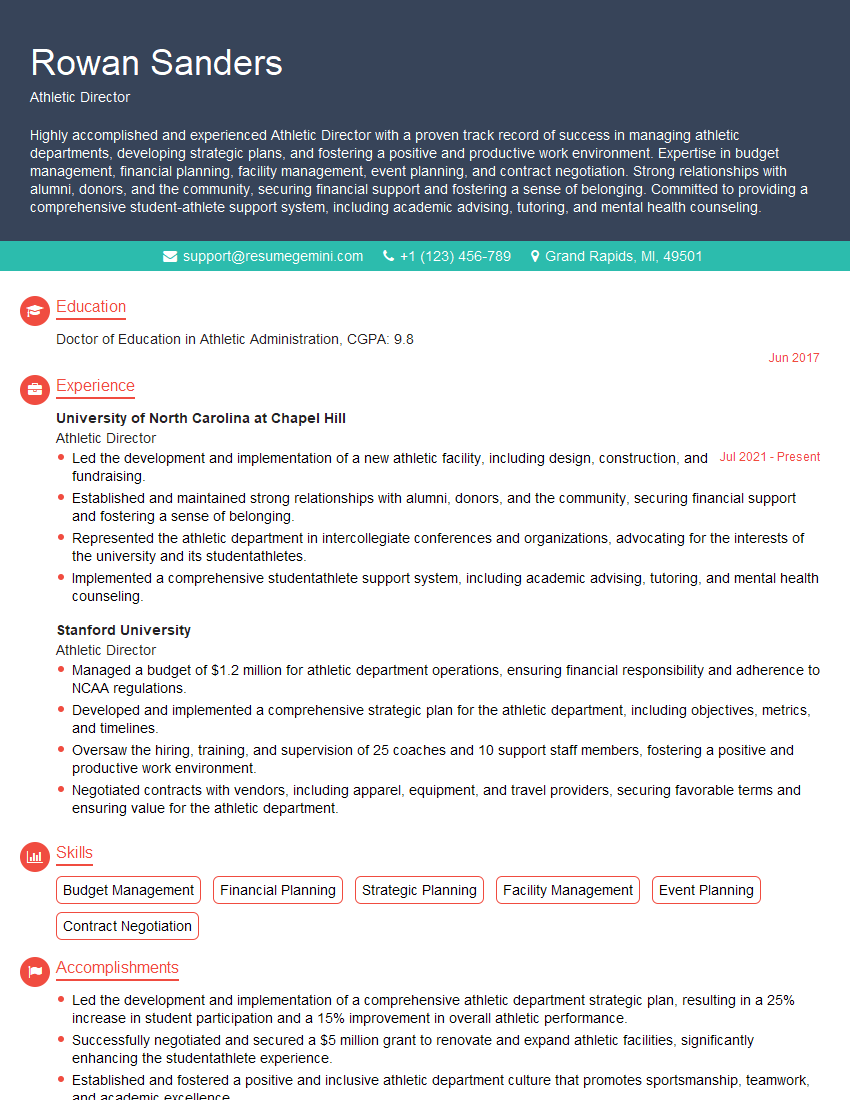
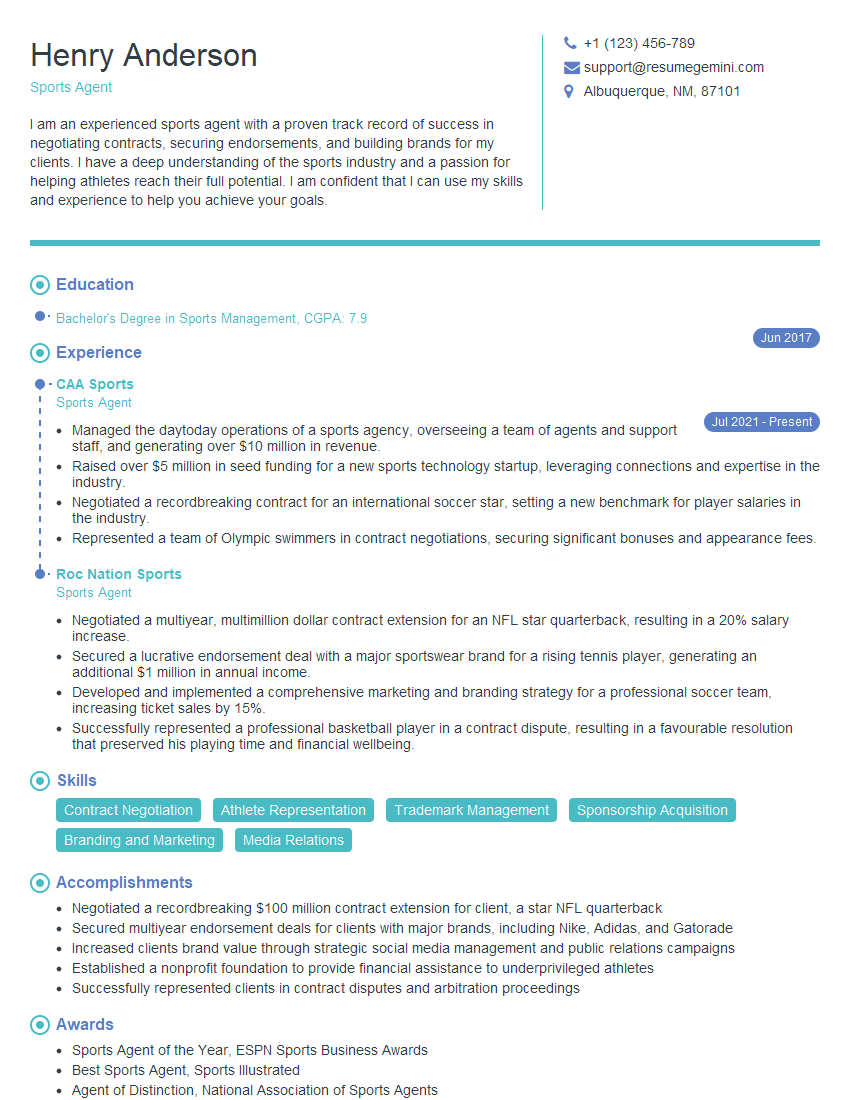
Mastering Sports Management and Administration opens doors to exciting and rewarding careers, offering opportunities for growth and impact within the dynamic world of sports. A strong resume is crucial for securing your dream role. Building an ATS-friendly resume increases your chances of getting noticed by recruiters and landing interviews. We highly recommend using ResumeGemini to craft a professional and impactful resume tailored to the specifics of Sports Management and Administration. ResumeGemini provides valuable tools and examples to help you create a winning resume. Examples of resumes tailored to Sports Management and Administration are available to guide your process.
Explore more articles
Users Rating of Our Blogs
Share Your Experience
We value your feedback! Please rate our content and share your thoughts (optional).
What Readers Say About Our Blog
Attention music lovers!
Wow, All the best Sax Summer music !!!
Spotify: https://open.spotify.com/artist/6ShcdIT7rPVVaFEpgZQbUk
Apple Music: https://music.apple.com/fr/artist/jimmy-sax-black/1530501936
YouTube: https://music.youtube.com/browse/VLOLAK5uy_noClmC7abM6YpZsnySxRqt3LoalPf88No
Other Platforms and Free Downloads : https://fanlink.tv/jimmysaxblack
on google : https://www.google.com/search?q=22+AND+22+AND+22
on ChatGPT : https://chat.openai.com?q=who20jlJimmy20Black20Sax20Producer
Get back into the groove with Jimmy sax Black
Best regards,
Jimmy sax Black
www.jimmysaxblack.com
Hi I am a troller at The aquatic interview center and I suddenly went so fast in Roblox and it was gone when I reset.
Hi,
Business owners spend hours every week worrying about their website—or avoiding it because it feels overwhelming.
We’d like to take that off your plate:
$69/month. Everything handled.
Our team will:
Design a custom website—or completely overhaul your current one
Take care of hosting as an option
Handle edits and improvements—up to 60 minutes of work included every month
No setup fees, no annual commitments. Just a site that makes a strong first impression.
Find out if it’s right for you:
https://websolutionsgenius.com/awardwinningwebsites
Hello,
we currently offer a complimentary backlink and URL indexing test for search engine optimization professionals.
You can get complimentary indexing credits to test how link discovery works in practice.
No credit card is required and there is no recurring fee.
You can find details here:
https://wikipedia-backlinks.com/indexing/
Regards
NICE RESPONSE TO Q & A
hi
The aim of this message is regarding an unclaimed deposit of a deceased nationale that bears the same name as you. You are not relate to him as there are millions of people answering the names across around the world. But i will use my position to influence the release of the deposit to you for our mutual benefit.
Respond for full details and how to claim the deposit. This is 100% risk free. Send hello to my email id: lukachachibaialuka@gmail.com
Luka Chachibaialuka
Hey interviewgemini.com, just wanted to follow up on my last email.
We just launched Call the Monster, an parenting app that lets you summon friendly ‘monsters’ kids actually listen to.
We’re also running a giveaway for everyone who downloads the app. Since it’s brand new, there aren’t many users yet, which means you’ve got a much better chance of winning some great prizes.
You can check it out here: https://bit.ly/callamonsterapp
Or follow us on Instagram: https://www.instagram.com/callamonsterapp
Thanks,
Ryan
CEO – Call the Monster App
Hey interviewgemini.com, I saw your website and love your approach.
I just want this to look like spam email, but want to share something important to you. We just launched Call the Monster, a parenting app that lets you summon friendly ‘monsters’ kids actually listen to.
Parents are loving it for calming chaos before bedtime. Thought you might want to try it: https://bit.ly/callamonsterapp or just follow our fun monster lore on Instagram: https://www.instagram.com/callamonsterapp
Thanks,
Ryan
CEO – Call A Monster APP
To the interviewgemini.com Owner.
Dear interviewgemini.com Webmaster!
Hi interviewgemini.com Webmaster!
Dear interviewgemini.com Webmaster!
excellent
Hello,
We found issues with your domain’s email setup that may be sending your messages to spam or blocking them completely. InboxShield Mini shows you how to fix it in minutes — no tech skills required.
Scan your domain now for details: https://inboxshield-mini.com/
— Adam @ InboxShield Mini
support@inboxshield-mini.com
Reply STOP to unsubscribe
Hi, are you owner of interviewgemini.com? What if I told you I could help you find extra time in your schedule, reconnect with leads you didn’t even realize you missed, and bring in more “I want to work with you” conversations, without increasing your ad spend or hiring a full-time employee?
All with a flexible, budget-friendly service that could easily pay for itself. Sounds good?
Would it be nice to jump on a quick 10-minute call so I can show you exactly how we make this work?
Best,
Hapei
Marketing Director
Hey, I know you’re the owner of interviewgemini.com. I’ll be quick.
Fundraising for your business is tough and time-consuming. We make it easier by guaranteeing two private investor meetings each month, for six months. No demos, no pitch events – just direct introductions to active investors matched to your startup.
If youR17;re raising, this could help you build real momentum. Want me to send more info?
Hi, I represent an SEO company that specialises in getting you AI citations and higher rankings on Google. I’d like to offer you a 100% free SEO audit for your website. Would you be interested?
Hi, I represent an SEO company that specialises in getting you AI citations and higher rankings on Google. I’d like to offer you a 100% free SEO audit for your website. Would you be interested?