Cracking a skill-specific interview, like one for Stage Lighting, requires understanding the nuances of the role. In this blog, we present the questions you’re most likely to encounter, along with insights into how to answer them effectively. Let’s ensure you’re ready to make a strong impression.
Questions Asked in Stage Lighting Interview
Q 1. Explain the difference between Fresnel and PAR lights.
Fresnel and PAR lights are both common stage lighting instruments, but they differ significantly in their beam characteristics and applications. Think of it like this: a Fresnel is like a spotlight with adjustable focus, while a PAR can be more like a floodlight with a fixed beam.
- Fresnel: These lights use a Fresnel lens, a stepped lens that allows for smooth adjustment of the beam angle from a narrow spot to a wide flood. The focus is controlled by moving the lens closer or farther from the lamp. This makes them highly versatile for highlighting actors or creating soft washes.
- PAR (Parabolic Aluminized Reflector): PAR lights use a parabolic reflector to concentrate the light into a specific beam angle. The beam angle is fixed by the reflector’s design, making them less versatile in terms of beam shaping but more consistent and powerful. They are often used for creating strong, punchy effects or illuminating large areas.
In a theatrical production, you might use Fresnels for highlighting a solo performer on stage, smoothly blending light across a backdrop, or creating subtle variations in intensity. PAR cans, on the other hand, are ideal for backlighting, creating gobo projections (patterns projected onto a surface), or washing the entire stage with a uniform color.
Q 2. Describe your experience with lighting control consoles (specify brands).
I have extensive experience operating and programming a variety of lighting control consoles. My proficiency spans several major brands, including ETC Ion, MA Lighting grandMA2, and ChamSys MagicQ. I’ve worked with both smaller consoles for intimate theater settings and large-scale consoles for arena-sized productions. For instance, I programmed a recent outdoor concert using an ETC Ion, leveraging its powerful networking capabilities to manage hundreds of fixtures across multiple universes. On another project, a small-scale theater production, I used a ChamSys MagicQ console for its intuitive interface and ease of use for a less experienced lighting team.
My experience isn’t just limited to operating; I’m also comfortable with console maintenance and troubleshooting. I can quickly diagnose common issues, such as patching problems, cue list errors, or DMX communication failures. I am also proficient in creating complex lighting cues, sequences, and chases using different console functionalities.
Q 3. How do you calculate light levels using foot-candles or lux?
Calculating light levels involves understanding the relationship between light source intensity, distance, and the measured illuminance. Foot-candles (fc) and lux (lx) are both units of illuminance, with 1 foot-candle equal to 10.76 lux. The inverse square law is crucial here.
The formula is relatively straightforward: Illuminance (in fc or lx) is inversely proportional to the square of the distance from the light source. However, this is a simplified model; factors like light absorption by the air and the light fixture’s beam angle affect the actual illuminance.
For a more precise calculation, you’d need to consider:
- Light source intensity (lumens): This represents the total amount of light emitted by the source.
- Distance from the light source (feet or meters): This is the distance between the light source and the measurement point.
- Beam angle: The spread of the light affects illuminance.
- Light loss: Account for any light lost due to absorption or diffusion.
For example, if a light source emits 1000 lumens, and you measure illuminance at 10 feet away, you’d need additional information about the light’s beam angle and any losses to get an accurate value. Lux meters provide a direct measurement, eliminating complex calculations. They are widely used in professional settings for precise illuminance measurement.
Q 4. What are the safety procedures for working with high-voltage lighting equipment?
Safety is paramount when working with high-voltage lighting equipment. Several key procedures must be rigorously followed:
- Lockout/Tagout Procedures: Before any work is done on a lighting fixture or circuit, power must be completely disconnected and locked out using a lockout/tagout system. This ensures that power cannot be accidentally restored while someone is working on the equipment.
- Personal Protective Equipment (PPE): Appropriate PPE, including insulated gloves and safety glasses, must be worn at all times. This protects against electrical shock and potential eye injuries from broken lamps or flying debris.
- Grounding: Ensure that all equipment is properly grounded to prevent electrical shocks and stray currents. Grounding wires must be in good condition and securely connected.
- Proper Handling of Lamps: High-intensity discharge (HID) lamps contain hazardous materials. Always wear gloves when handling them and dispose of them properly according to local regulations.
- Awareness of Hot Surfaces: Lighting fixtures and lamps can become very hot during operation; be aware of this and use caution when touching equipment, even after it is powered off.
- Working at Heights: If working with lighting fixtures at heights, appropriate fall protection measures must be in place. Harnesses, safety lines, and proper training are vital.
Regular safety training and adherence to established safety protocols are crucial for minimizing risks when working with high-voltage lighting systems.
Q 5. How do you troubleshoot a lighting fixture that is not working?
Troubleshooting a malfunctioning lighting fixture involves a systematic approach:
- Visual Inspection: Start by visually inspecting the fixture for any obvious damage, such as loose connections, broken wires, or a damaged lamp.
- Check Power Supply: Verify that power is reaching the fixture. Check the circuit breaker, dimmer pack, and any cabling connecting the fixture to the power source. Use a multimeter to confirm voltage.
- Test the Lamp: If possible, replace the lamp with a known working lamp. This quickly identifies if the lamp itself is the problem.
- Check Connectors and Wiring: Carefully inspect all connectors and wiring for loose connections, shorts, or broken wires. Pay attention to the connections within the fixture itself and those at the power source.
- Inspect Dimming System: If the problem is with dimming, ensure that the dimmer channel is assigned to the correct fixture and that the dimmer itself is functioning correctly. Test with a different fixture on the same dimmer channel.
- DMX Signal: Verify that a DMX signal is reaching the fixture. Use a DMX tester to ensure the signal is present, correct, and free from errors.
- Consult Manufacturer Documentation: If the problem persists, refer to the manufacturer’s documentation or contact their technical support for assistance. This can offer detailed troubleshooting steps specific to the fixture model.
Remember to always follow safety procedures before attempting any repairs, particularly those involving high voltage.
Q 6. Explain your experience with different types of dimming systems.
My experience encompasses various dimming systems, from older, more basic systems to modern, sophisticated digital dimming solutions. I’ve worked with:
- Analog Dimmers: These older systems use variable resistors to control the voltage to the lamps. They are relatively simple but can suffer from heat build-up and less precise dimming curves. I have experience with both SCR (Silicon Controlled Rectifier) and autotransformer dimmers.
- Digital Dimmers: These use electronic circuitry to control the voltage more precisely and efficiently, providing smoother dimming curves and better control over the light output. They often offer advanced features like dimming curves and scene memory.
- Networked Dimming Systems: These systems use a network to control dimmers, offering advanced features like remote control, scene storage, and monitoring of dimmer status. ETC, MA Lighting, and others offer robust network solutions.
The choice of dimming system depends on the scale and complexity of the lighting design. For smaller projects, analog dimmers might suffice, while large productions demand the precision and control offered by networked digital systems. My experience allows me to effectively work with all of these systems.
Q 7. What software are you proficient in for lighting design and programming?
I am proficient in several software packages used for lighting design and programming. My experience includes:
- Vectorworks Spotlight: For creating detailed 2D and 3D lighting plots, visualizing lighting designs, and generating documentation.
- Autodesk 3ds Max with plugins like Lightwright: For 3D visualization and precise calculations of light levels and positions, especially in complex architectural settings.
- Capture: For visualizing lighting designs in a 3D environment before implementing them.
Beyond these, I am also familiar with various console-specific programming software, which often accompanies the control consoles used in production. These softwares allow for offline programming and managing complex lighting cues and sequences before uploading them to the console. Proficiency in this software is vital for efficient and error-free programming workflow in live shows.
Q 8. Describe your experience with color mixing and gels.
Color mixing with gels is fundamental to stage lighting. Gels are thin sheets of colored plastic placed in front of lighting instruments to alter the color of the light. Think of them as colored filters for your light. My experience spans a wide range of color mixing techniques, from basic additive color mixing (red, green, blue) to more complex subtractive mixing using various gel colors to achieve specific hues and saturation. I’m proficient in understanding the impact of different gel combinations on the overall mood and ambiance of a scene. For instance, combining a CTO (Color Temperature Orange) gel with a pale blue gel can create a warm, sunset-like effect, while layering deep blues and purples can conjure a mystical, nighttime atmosphere. I also have experience with color temperature adjustment using gels, such as correcting the color temperature of LED fixtures or creating specific color effects using different gel combinations and dimming levels.
I often use gel color charts and swatch books as reference, but more importantly, my experience allows me to predict how different gels will interact and to fine-tune the colors for precise aesthetic results. I regularly experiment with different color combinations to achieve unique effects, and I understand the limitations of certain gel types and the impact of different lighting instruments on gel color rendering.
Q 9. How do you create a lighting plot?
Creating a lighting plot is like drawing a blueprint for the lighting design of a performance. It’s a detailed plan that shows the placement of each lighting instrument, its type, color, and the areas it will illuminate on stage. My process begins with a thorough understanding of the performance itself – the script, set design, and director’s vision. Then, I’ll typically work from a floor plan of the stage, carefully positioning each instrument to achieve specific lighting effects.
The plot visually represents each fixture’s position, its aiming direction (using angles), its type (e.g., Fresnel, PAR, LED), and its gel color. I also include details such as dimmer channels, circuit numbers, and any special effects (like gobos or prisms). Software like Vectorworks or WYSIWYG is invaluable during this process, as it allows for 3D modeling and simulation, enabling me to visualize the lighting design before implementation. Careful attention to detail is crucial; errors in the plot can lead to complications during the tech rehearsal and the performance.
For example, I might specify a warm wash of light from the front using several Fresnel instruments, complemented by backlighting from LED units for separation and depth. The plot acts as a crucial communication tool between me, the stage manager, and the electricians, ensuring everyone is on the same page.
Q 10. Explain your understanding of lighting instruments and their applications.
Lighting instruments are the tools we use to shape light on stage. Each type has its unique characteristics and applications. My experience encompasses a wide range of instruments, including:
- Fresnel: These produce a soft-edged, adjustable beam, ideal for washes and highlighting actors.
- PAR (Parabolic Aluminized Reflector): These create a more focused, intense beam, suitable for accent lighting and effects.
- Ellipsoidal Reflector Spotlight (ERS): These offer a sharp, precise beam with adjustable shutters for shaping the light, perfect for gobos (projected patterns) and special effects.
- LED fixtures: Highly versatile instruments offering a wide range of color temperatures, color mixing capabilities, and often built-in effects. I’m proficient in using both traditional and LED fixtures.
Selecting the appropriate instrument depends entirely on the desired effect. For example, I would use Fresnels for a soft, even wash across the stage, while ERS lights with gobos would be perfect for creating scenic projections or highlighting specific objects. The understanding of the specific capabilities of each instrument allows for a highly effective and nuanced lighting design.
Q 11. What is your experience with moving lights and their functionalities?
Moving lights are a game-changer in stage lighting. These automated fixtures can pan, tilt, zoom, and change color, offering unparalleled flexibility and dynamism. My experience includes programming and operating various moving light brands, including the common features like color mixing (RGB or CMY), gobo projection, and prism effects. I understand their intricacies, from the intricacies of DMX (Digital Multiplex) control protocols to advanced programming techniques using lighting consoles.
For example, I’ve used moving lights to create dynamic chases across the stage, mimicking rain or spotlight effects, or to follow specific actors with precise movements. The ability to pre-program intricate lighting sequences allows for a smooth and seamless execution during the performance, and reduces manual adjustments during the show. Furthermore, I’m proficient in troubleshooting common issues and maintaining moving lights, ensuring their reliability during productions.
Q 12. How do you create different lighting moods and atmospheres?
Creating different lighting moods and atmospheres is all about manipulating the qualities of light: color, intensity, direction, and texture. I achieve this by strategically combining various lighting instruments, gels, and techniques. For example, a warm, intimate atmosphere can be created using low-intensity amber and golden lights, strategically positioned to highlight key areas and create shadows. Conversely, a dramatic, high-energy scene might use intense blues, whites, and strong directional lighting to heighten tension.
I might use gobos to project patterns onto the set, adding visual texture and enhancing the mood. The use of haze or fog can also significantly contribute to the atmosphere, allowing the light beams to become more visible and adding depth to the scene. The interplay of light and shadow is crucial, and I understand how to utilize both to create a compelling visual experience. Understanding the psychology of color and its impact on the audience’s emotional response is integral to my approach.
Q 13. Explain your experience with lighting design for different types of performances.
My experience encompasses lighting design for diverse performance types, including theater, concerts, corporate events, and dance productions. Each type requires a unique approach. Theater lighting often prioritizes the illumination of actors, storytelling, and creating specific moods in line with the script. Concert lighting emphasizes visual spectacle, incorporating dynamic effects and audience interaction. Corporate events demand a more polished, professional look, often prioritizing branding and aesthetics.
For instance, in a theatrical production, I might focus on subtle changes in light intensity and color to reflect the emotional arc of the narrative. In a concert, I might employ more aggressive and dynamic techniques, using moving lights and lasers to create a visually stunning experience. In corporate events, consistency in branding colors and a polished, even light across the speaking area is crucial. Adaptability and the ability to tailor my approach to the unique demands of each genre are key to my success.
Q 14. Describe your process for creating a lighting cue sheet.
A lighting cue sheet is a crucial document that guides the lighting operator during a performance. It lists each lighting cue, including its number, description, the time it should appear, and the specific lighting parameters (dimmer levels, color changes, moving light positions, etc.). Creating a cue sheet involves meticulous organization and attention to detail. It’s typically created in conjunction with the lighting plot and is frequently integrated with the show’s overall running order.
My process begins by carefully numbering each cue and providing a clear, concise description. I use a structured format – often a spreadsheet or dedicated software – to maintain consistency. Each cue should be easily understood by the lighting operator, including specific timings, dimmer levels (represented as percentages or absolute values depending on the console), color specifications (gel names or color temperature settings), and the positions of any moving lights. Testing and refinement are essential steps to ensure the accuracy and smooth execution of the cue sheet during rehearsals and the actual performance.
Q 15. How do you handle unexpected technical issues during a performance?
Handling unexpected technical issues during a performance requires a calm, methodical approach and a proactive mindset. My strategy involves a combination of preparation, quick troubleshooting, and effective communication.
Preparation: Before any performance, I conduct thorough checks of all equipment, ensuring backups are readily available. This could include spare lamps, dimmers, and even a backup console if feasible. A pre-show lighting test run is essential to identify and resolve potential problems before the audience arrives.
Troubleshooting: If a problem arises, my first step is to identify the source. Is it a blown lamp? A faulty dimmer? A console error? Once identified, I attempt a quick fix, utilizing my knowledge of the system and the show’s lighting plot. If the issue is complex and beyond my immediate capability, I communicate clearly with the technical director and other crew members to determine the best course of action, which might involve a temporary workaround or a complete system reboot.
Communication: Clear and concise communication with the stage manager, director, and other technicians is paramount. They need to be kept informed of the problem, the attempted solutions, and any potential impact on the performance. This ensures a unified response and prevents unnecessary panic.
For example, during a recent musical performance, a significant portion of the lighting rig failed due to a power surge. By quickly assessing the situation, we switched to a significantly simpler lighting plan using only our back-up instruments. We communicated effectively with the stage manager, who adjusted the show’s pacing slightly to minimize the visual impact. While not ideal, the audience was largely unaffected, highlighting the success of pre-planning and a calm, effective response.
Career Expert Tips:
- Ace those interviews! Prepare effectively by reviewing the Top 50 Most Common Interview Questions on ResumeGemini.
- Navigate your job search with confidence! Explore a wide range of Career Tips on ResumeGemini. Learn about common challenges and recommendations to overcome them.
- Craft the perfect resume! Master the Art of Resume Writing with ResumeGemini’s guide. Showcase your unique qualifications and achievements effectively.
- Don’t miss out on holiday savings! Build your dream resume with ResumeGemini’s ATS optimized templates.
Q 16. What is your experience with rigging and safety procedures for lighting equipment?
Rigging and safety are paramount in stage lighting. My experience encompasses years of working with various rigging systems, from simple counterweight systems to more complex motorized systems. I am certified in [Mention specific rigging certifications e.g., OSHA 10, relevant theatrical rigging certification]. I understand and adhere strictly to all relevant safety regulations and best practices.
Pre-Rig Inspection: Before any rigging operation, a thorough inspection of all equipment (cables, chains, motors, etc.) is conducted. This ensures everything is in good working order and free from damage. We also check weight limits and ensure proper load balancing.
Safety Procedures: All rigging operations are performed under the supervision of experienced riggers, adhering to strict safety protocols. Appropriate safety harnesses, fall protection, and lockout/tagout procedures are implemented. Regular safety briefings are held to reinforce safe working practices and address potential hazards.
Documentation: All rigging activities are meticulously documented, including load calculations, equipment inspections, and any modifications to the rigging system. This ensures traceability and accountability.
In one instance, we identified a compromised cable during a pre-rig inspection. Replacing it prevented a potential accident that could have resulted in serious injury or equipment damage. This underlines the critical importance of detailed inspection and adherence to safety protocols.
Q 17. Explain your understanding of color temperature and its effect on lighting design.
Color temperature, measured in Kelvin (K), describes the warmth or coolness of a light source. Lower Kelvin values (e.g., 2700K) indicate warmer, more orange-yellow light, similar to incandescent bulbs. Higher Kelvin values (e.g., 6500K) represent cooler, bluer light, resembling daylight. Understanding color temperature is crucial for creating the right mood and atmosphere in a lighting design.
Impact on Design: Color temperature significantly influences the overall feel of a scene. Warm light creates a cozy, intimate ambiance, suitable for romantic scenes or historical settings. Cool light can feel more modern, energetic, or even sterile, often used in contemporary settings or to highlight certain elements.
Color Mixing: Color temperature affects how colors appear when mixed. Mixing warm and cool light sources can create interesting and dramatic effects. For instance, combining warm amber with cool blue can produce a dramatic contrast.
Skin Tones: The color temperature of the light directly influences how skin tones appear. Warm light tends to be more flattering for skin tones, while cool light can appear harsh or make skin look paler.
For a recent play set in a Victorian era drawing-room, we primarily used warm-toned tungsten-halogen lights (around 3200K) to create an authentic and comfortable atmosphere. In contrast, a modern dance performance benefitted from a cooler color temperature (around 5000K) to enhance the sleek and dynamic nature of the choreography.
Q 18. Describe your experience with LED lighting fixtures and their advantages/disadvantages.
LED lighting fixtures have revolutionized stage lighting. I have extensive experience using various LED fixtures, from small moving heads to large-scale LED video walls.
Advantages: LED lighting offers numerous benefits, including energy efficiency, longer lifespan (compared to traditional lamps), vibrant color rendering, and precise color mixing capabilities. Their compact size allows for more creative design possibilities and they generate significantly less heat.
Disadvantages: While LEDs are highly efficient, the initial investment cost can be higher than traditional lighting. The color quality can vary significantly between different LED manufacturers and models, and some LED fixtures can exhibit noticeable flicker if not properly controlled. Additionally, the precise control offered by LEDs requires a good understanding of their specific operational characteristics.
In a recent project, we used LED moving heads to create dynamic effects, and LED panels for backdrops. The energy savings were substantial, and the color flexibility allowed us to create visually stunning effects. However, we experienced some initial challenges with color consistency between different LED fixture models; careful calibration was needed to achieve uniform color across the stage.
Q 19. How do you ensure the safety of your lighting equipment and crew?
Ensuring the safety of lighting equipment and crew is my top priority. This involves a multi-faceted approach:
Regular Inspections: All lighting equipment undergoes regular inspections to check for wear and tear, damaged cables, loose connections, and other potential hazards. This includes both pre-show and periodic checks throughout the production run.
Safe Working Practices: All crew members are trained in safe working practices, including proper lifting techniques, the use of safety harnesses (where necessary), and lockout/tagout procedures for electrical work. We emphasize the importance of reporting any safety concerns immediately.
Emergency Procedures: Clear emergency procedures are established and regularly reviewed, covering situations such as power outages, equipment malfunctions, and potential fire hazards. The crew is trained in the use of fire extinguishers and other emergency equipment.
Risk Assessment: A thorough risk assessment is conducted for each production, identifying potential hazards and implementing control measures to mitigate these risks. This includes evaluating the rigging system, electrical supply, and potential environmental factors.
For instance, before any rigging work, we conduct a thorough risk assessment and only use certified riggers who follow strict safety protocols. We also ensure that all electrical work is carried out by qualified electricians, adhering to relevant electrical codes and standards.
Q 20. What are your strategies for managing time effectively during a show’s technical rehearsals?
Effective time management during technical rehearsals is critical. My strategy focuses on detailed planning, clear communication, and prioritizing tasks.
Detailed Schedule: A detailed schedule is created in advance, outlining specific tasks and allocating time slots for each. This schedule is shared with all relevant personnel.
Prioritization: Tasks are prioritized based on their complexity and importance to the overall show. We address critical elements first, ensuring the most important aspects of the lighting design are thoroughly rehearsed.
Flexibility: While a schedule is important, flexibility is crucial. Unexpected issues often arise, and we must adapt and adjust the schedule accordingly. Efficient problem-solving and quick decision-making are essential.
Clear Communication: Open and consistent communication between the lighting crew, stage manager, and director is essential. This ensures everyone is on the same page and understands the progress being made.
In a recent production, we used a visual schedule board to track our progress during technical rehearsals. This not only improved team communication but also helped in visualizing the schedule and adapting to any unforeseen events.
Q 21. Explain your process for coordinating with other technical departments (sound, video).
Coordinating with other technical departments (sound, video) requires proactive communication and collaboration. My approach involves:
Pre-Production Meetings: Early meetings with the sound and video teams are essential to discuss the overall design, identify potential conflicts (e.g., lighting positions interfering with video screens), and agree upon a unified technical vision.
Communication Tools: We use shared communication tools, such as spreadsheets, software for sharing lighting plots, and direct communication platforms (e.g., Slack, email), to ensure all teams have access to the latest information.
Technical Run-Throughs: Joint technical run-throughs are held to test the interaction between lighting, sound, and video elements. This allows us to identify and resolve any technical conflicts or timing issues before the first performance.
On-Site Collaboration: During performances and rehearsals, open communication channels are maintained to address any unexpected issues that may arise during the show. This includes a designated point person for each department who can communicate with each other quickly and efficiently.
For example, in a recent concert, we collaborated closely with the video team to ensure the lighting design complemented the video projections, creating a harmonious visual experience. Regular meetings and clear communication ensured the seamless integration of lighting and video.
Q 22. Describe your experience with different types of lighting instruments (e.g., ellipsoidal, Fresnel, PAR).
My experience encompasses a wide range of lighting instruments, each with its unique characteristics and applications. I’m proficient with ellipsoidal spotlights, known for their sharp, controllable beams perfect for highlighting actors or specific scenic elements. Their ability to accept gobos (metal templates that create patterns) allows for creative projection effects. I’ve extensively used Fresnel lenses, which produce a softer, more diffused light ideal for washes and background illumination. Their adjustable beam spread makes them versatile for various needs. Finally, PAR (Parabolic Aluminized Reflector) cans are my go-to for powerful, wide-angle washes, often used for general stage illumination or creating intense effects.
- Ellipsoidal: Think of a precise surgical tool—focused and highly controlled. I’ve used these to create dramatic spotlight effects on a lead actor in a dramatic play.
- Fresnel: This is more like a painter’s brush—providing smooth, even washes of color. I’ve used these extensively for mood lighting in intimate scenes.
- PAR: This is the workhorse—powerful and broad. These are indispensable for illuminating large areas quickly, like in a concert setting where quick changes are needed.
Q 23. What is your familiarity with different types of lighting control protocols (e.g., DMX, RDM)?
I’m highly familiar with various lighting control protocols, with DMX (Digital Multiplex) being my primary workhorse. DMX is a standard digital communication protocol used to control lighting fixtures, allowing for precise and complex control of individual parameters like intensity, color, and gobo rotation. I’ve worked extensively with DMX consoles, programming cues and sequences for various productions. Furthermore, my experience includes RDM (Remote Device Management), a powerful protocol built on DMX that allows for bi-directional communication between the console and fixtures. RDM facilitates remote configuration, diagnostics, and troubleshooting of lighting equipment, significantly enhancing workflow efficiency. I can confidently program, troubleshoot, and manage both protocols in a variety of scenarios.
For example, imagine a large-scale musical. DMX would control the individual lights, allowing for complex synchronized changes during the choreography. RDM would be crucial if a fixture malfunctions, allowing for remote diagnostics to quickly identify the problem without interrupting the show.
Q 24. Explain your understanding of lighting design principles (e.g., intensity, color, distribution).
Understanding lighting design principles is fundamental to my work. Intensity refers to the brightness of the light, crucial for creating emphasis and visual hierarchy on stage. Color dictates mood and atmosphere, shaping the emotional impact of a scene. For instance, warm amber hues can create a sense of intimacy, while cool blues might suggest coldness or sadness. Distribution refers to how the light is spread – a tightly focused beam versus a wide wash. Mastering these three elements is key to creating impactful and effective lighting designs.
A simple example: In a romantic scene, I might use low intensity, warm-colored Fresnel lenses for a soft, intimate ambiance. Conversely, in a tense scene, I could use high-intensity, cool-colored ellipsoidal spotlights for a dramatic effect.
Q 25. Describe your experience working with lighting design specifications and blueprints.
I have extensive experience interpreting and working with lighting design specifications and blueprints. These documents are crucial for translating a designer’s vision into reality. I am adept at understanding lighting plots which detail fixture placement, type, color, and aiming. I can read electrical schematics to ensure proper power distribution and safety. I collaborate effectively with designers, understanding their intent and working to ensure the final product accurately reflects the design.
For instance, if the blueprint specifies a specific color temperature (e.g., 3200K) for a certain area, I know to select appropriate fixtures and gels to achieve that exact temperature. Attention to detail is crucial to the success of the lighting design.
Q 26. How familiar are you with energy-efficient lighting solutions and sustainability practices?
Sustainability and energy efficiency are paramount in modern lighting design. I’m well-versed in energy-efficient lighting solutions, incorporating LED (Light Emitting Diode) fixtures wherever possible. LEDs offer significant energy savings compared to traditional incandescent or halogen lights, reducing operational costs and minimizing environmental impact. Furthermore, I prioritize responsible sourcing and disposal of lighting equipment to promote sustainable practices. I factor these concerns into every design, ensuring we are using the most efficient lighting equipment available.
For example, choosing LED fixtures with high color rendering index (CRI) ensures we get vibrant, accurate colors while consuming less energy.
Q 27. What is your experience with creating lighting effects (e.g., chases, strobes, gobo projections)?
Creating dynamic lighting effects is a significant part of my work. I’m proficient in programming chases (sequential lighting effects), strobes (rapid on/off pulses), and gobo projections (projected patterns or images). I use these techniques to enhance the emotional impact of a production, complementing the story and actions on stage. I’m skilled in using lighting consoles to precisely time and control these effects, ensuring they are perfectly synchronized with the action.
Imagine a rock concert—the fast-paced chases and intense strobes enhance the energy of the music. Or consider a theatrical performance—subtle gobo projections might create a mystical forest scene.
Q 28. Describe a challenging lighting situation you faced and how you solved it.
One challenging situation involved a performance in a historically significant building with extremely high ceilings and limited access to rigging points. The original lighting design relied heavily on flown fixtures, which weren’t feasible given the site constraints. My solution involved a creative re-design using a combination of strategically placed ground-based fixtures and carefully positioned projectors. I utilized powerful PAR cans for general illumination and carefully aimed ellipsoidal spotlights from ground level to achieve the desired highlights. To overcome limitations in projection reach, I employed long-throw projectors, maximizing their power and creating the necessary visual effects. This required detailed calculations and precise aiming, but the final result was a successful and visually stunning production, proving that adaptability and problem-solving are crucial in lighting design.
Key Topics to Learn for Stage Lighting Interview
- Light Sources and Qualities: Understanding the properties of different light sources (LED, incandescent, fluorescent, etc.), color temperature, and their impact on mood and atmosphere. Practical application: Choosing the right fixture for a specific scene or effect.
- Color Mixing and Gel Filtration: Mastering the principles of additive and subtractive color mixing, and the practical application of gels to achieve specific colors and effects. Problem-solving: Troubleshooting color inconsistencies on stage.
- Lighting Instruments and their Functions: Familiarize yourself with various lighting instruments (Fresnels, Ellipsoidals, PAR cans, etc.), their functionalities, and their appropriate uses in different theatrical settings. Practical application: Designing a lighting plot for a specific production.
- Lighting Control Systems: Understanding the operation of lighting consoles, including patching, cueing, and programming techniques. Problem-solving: Troubleshooting technical issues with the lighting console.
- Safety and Regulations: Knowledge of relevant safety regulations and procedures related to stage lighting equipment and its operation. Practical application: Ensuring a safe working environment for yourself and others.
- Lighting Design Principles: Understanding the fundamentals of lighting design, including aspects like composition, balance, contrast, and mood creation. Practical application: Analyzing existing lighting designs and identifying areas for improvement.
- Lighting Plots and Technical Drawings: Ability to read and interpret lighting plots and technical drawings. Practical application: Creating and modifying lighting plots for various productions.
Next Steps
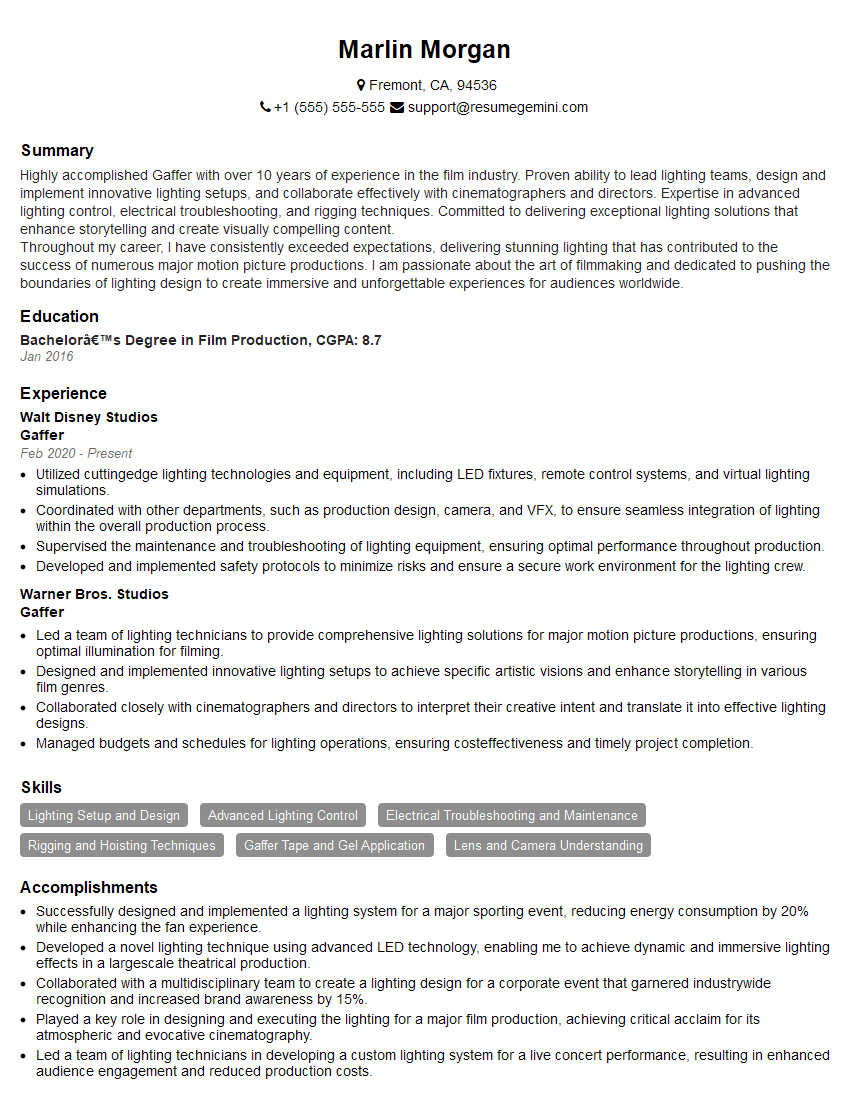
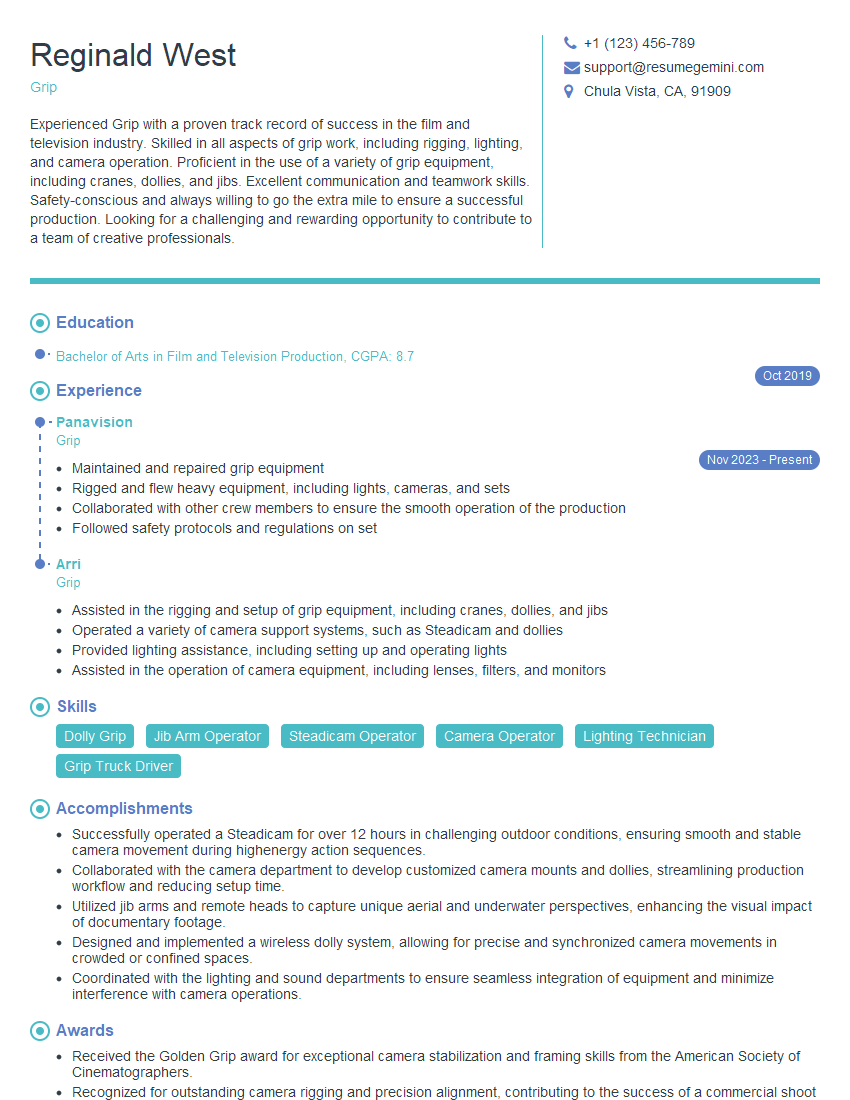
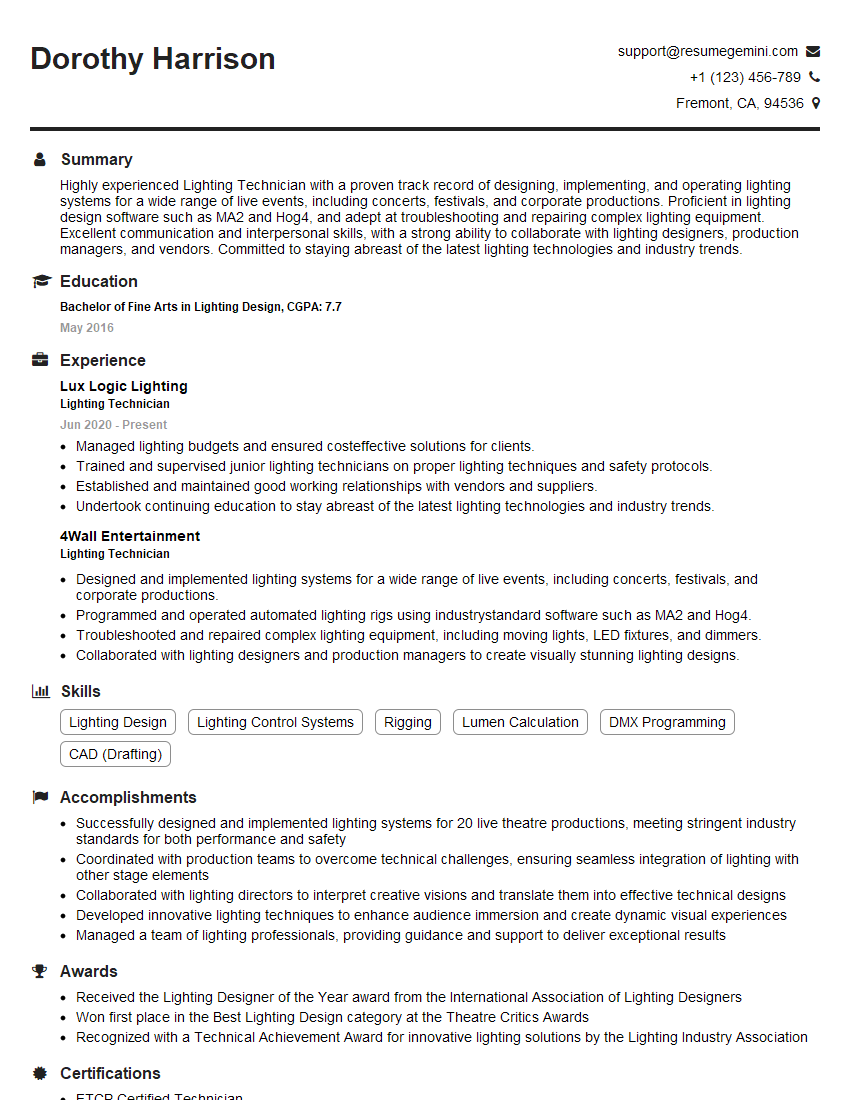
Mastering stage lighting opens doors to exciting career opportunities in theatre, film, television, and events. A strong understanding of these principles is crucial for securing your dream role. To significantly increase your chances, crafting a compelling and ATS-friendly resume is essential. ResumeGemini is a trusted resource to help you build a professional resume that highlights your skills and experience effectively. Examples of resumes tailored specifically to Stage Lighting professionals are available, providing you with a template for success. Invest time in refining your resume; it’s your first impression on potential employers.
Explore more articles
Users Rating of Our Blogs
Share Your Experience
We value your feedback! Please rate our content and share your thoughts (optional).
What Readers Say About Our Blog
Hello,
we currently offer a complimentary backlink and URL indexing test for search engine optimization professionals.
You can get complimentary indexing credits to test how link discovery works in practice.
No credit card is required and there is no recurring fee.
You can find details here:
https://wikipedia-backlinks.com/indexing/
Regards
NICE RESPONSE TO Q & A
hi
The aim of this message is regarding an unclaimed deposit of a deceased nationale that bears the same name as you. You are not relate to him as there are millions of people answering the names across around the world. But i will use my position to influence the release of the deposit to you for our mutual benefit.
Respond for full details and how to claim the deposit. This is 100% risk free. Send hello to my email id: [email protected]
Luka Chachibaialuka
Hey interviewgemini.com, just wanted to follow up on my last email.
We just launched Call the Monster, an parenting app that lets you summon friendly ‘monsters’ kids actually listen to.
We’re also running a giveaway for everyone who downloads the app. Since it’s brand new, there aren’t many users yet, which means you’ve got a much better chance of winning some great prizes.
You can check it out here: https://bit.ly/callamonsterapp
Or follow us on Instagram: https://www.instagram.com/callamonsterapp
Thanks,
Ryan
CEO – Call the Monster App
Hey interviewgemini.com, I saw your website and love your approach.
I just want this to look like spam email, but want to share something important to you. We just launched Call the Monster, a parenting app that lets you summon friendly ‘monsters’ kids actually listen to.
Parents are loving it for calming chaos before bedtime. Thought you might want to try it: https://bit.ly/callamonsterapp or just follow our fun monster lore on Instagram: https://www.instagram.com/callamonsterapp
Thanks,
Ryan
CEO – Call A Monster APP
To the interviewgemini.com Owner.
Dear interviewgemini.com Webmaster!
Hi interviewgemini.com Webmaster!
Dear interviewgemini.com Webmaster!
excellent
Hello,
We found issues with your domain’s email setup that may be sending your messages to spam or blocking them completely. InboxShield Mini shows you how to fix it in minutes — no tech skills required.
Scan your domain now for details: https://inboxshield-mini.com/
— Adam @ InboxShield Mini
Reply STOP to unsubscribe
Hi, are you owner of interviewgemini.com? What if I told you I could help you find extra time in your schedule, reconnect with leads you didn’t even realize you missed, and bring in more “I want to work with you” conversations, without increasing your ad spend or hiring a full-time employee?
All with a flexible, budget-friendly service that could easily pay for itself. Sounds good?
Would it be nice to jump on a quick 10-minute call so I can show you exactly how we make this work?
Best,
Hapei
Marketing Director
Hey, I know you’re the owner of interviewgemini.com. I’ll be quick.
Fundraising for your business is tough and time-consuming. We make it easier by guaranteeing two private investor meetings each month, for six months. No demos, no pitch events – just direct introductions to active investors matched to your startup.
If youR17;re raising, this could help you build real momentum. Want me to send more info?
Hi, I represent an SEO company that specialises in getting you AI citations and higher rankings on Google. I’d like to offer you a 100% free SEO audit for your website. Would you be interested?
Hi, I represent an SEO company that specialises in getting you AI citations and higher rankings on Google. I’d like to offer you a 100% free SEO audit for your website. Would you be interested?
good