Feeling uncertain about what to expect in your upcoming interview? We’ve got you covered! This blog highlights the most important Steel Manufacturing Processes interview questions and provides actionable advice to help you stand out as the ideal candidate. Let’s pave the way for your success.
Questions Asked in Steel Manufacturing Processes Interview
Q 1. Explain the basic principles of the Bessemer process.
The Bessemer process, a revolutionary steelmaking technique developed in the mid-19th century, relies on the principle of oxidizing impurities in molten pig iron using a blast of air. Think of it like blowing out a candle – the air reacts with the carbon and other impurities, removing them and converting the iron into steel. The process is carried out in a pear-shaped vessel called a Bessemer converter. Molten pig iron is poured into the converter, and a powerful blast of air is forced through the bottom. The air oxidizes the impurities, generating significant heat, which keeps the iron molten. This rapid oxidation process is exothermic, reducing the need for additional fuel. The process is relatively fast, taking only about 15-20 minutes, but it’s crucial to control the air flow precisely to avoid overheating and damaging the converter. The resulting steel is then poured out. While it was historically significant, it’s largely replaced by more efficient and controlled methods like the Basic Oxygen Furnace (BOF) process due to its limitations in controlling the final steel composition.
Q 2. Describe the different types of steel and their applications.
Steel is categorized into various types based on its chemical composition and properties. We can broadly classify them as:
- Carbon Steel: This is the most common type, primarily composed of iron and carbon. The carbon content dictates its properties – higher carbon content leads to increased strength and hardness but reduced ductility. Low-carbon steel (mild steel) is used in applications like car bodies and construction due to its weldability and formability. High-carbon steel is used in tools and springs due to its strength.
- Alloy Steel: These steels contain specific elements other than carbon (like chromium, nickel, manganese, molybdenum) to enhance specific properties. Stainless steel is a prime example, with chromium adding corrosion resistance, making it ideal for cutlery, kitchen appliances, and medical equipment. High-strength low-alloy (HSLA) steels are another example, optimized for strength and weldability, making them useful in automotive and construction applications.
- Tool Steel: These are high-carbon, alloy steels designed for their extreme hardness and wear resistance. They’re used to make tools like cutting tools, drills, and dies.
- Speciality Steels: This category includes steels with specific properties like electrical conductivity (electrical steels) or magnetic permeability (transformer steels).
The choice of steel depends entirely on the specific application. The required strength, durability, corrosion resistance, weldability, and cost all contribute to material selection.
Q 3. What are the key stages in the steelmaking process?
The steelmaking process is complex, but we can broadly define the key stages as:
- Ironmaking: This involves extracting iron from iron ore in a blast furnace, resulting in molten pig iron which still contains significant impurities. Imagine this as the initial refining stage.
- Steelmaking: This is where the pig iron is converted into steel. Methods such as the Basic Oxygen Furnace (BOF) process or Electric Arc Furnace (EAF) process are used to remove impurities like carbon, silicon, manganese, and phosphorus through oxidation. This stage is critical for achieving the desired chemical composition.
- Secondary Refining: After the primary steelmaking process, secondary refining may be necessary to fine-tune the chemical composition and remove inclusions (small particles of impurities) to ensure homogeneity and improve quality. Think of this as a polishing stage.
- Casting: The molten steel is then solidified into semi-finished products, primarily through continuous casting, which produces slabs, blooms, or billets. This is crucial for shaping the steel for further processing.
- Rolling/Shaping: The semi-finished products are then rolled into desired shapes like sheets, plates, bars, or sections using rolling mills. This stage determines the final dimensions and shape of the steel product.
- Finishing and Treatment: This final stage includes processes like heat treatment to adjust mechanical properties (strength, hardness, ductility), surface treatments (coating, painting) to enhance corrosion resistance or aesthetics, and inspection to ensure quality.
Q 4. Explain the importance of continuous casting in modern steel production.
Continuous casting is a revolutionary process that has significantly improved the efficiency and quality of steel production. Instead of casting steel into individual molds (ingots), continuous casting involves continuously pouring molten steel into a water-cooled mold where it solidifies into a semi-finished product (slab, bloom, or billet) of the desired cross-section. This is then cut into lengths. The advantages are numerous:
- Increased Efficiency: It’s a continuous process, significantly increasing the production rate compared to ingot casting.
- Improved Quality: Continuous casting minimizes the formation of defects and ensures better homogeneity of the steel.
- Reduced Costs: It saves on energy, labor, and materials compared to traditional casting methods.
- Better Product Yield: It results in higher yield of marketable steel, minimizing waste.
Imagine an ice cream machine – instead of making one scoop at a time, continuous casting is like having a machine that continuously produces a long stream of the ice cream.
Q 5. Describe the role of alloying elements in steel.
Alloying elements are crucial in steelmaking because they dramatically alter the properties of steel. They are added in carefully controlled amounts during the steelmaking process. For example:
- Chromium (Cr): Increases hardness, strength, and corrosion resistance (stainless steels).
- Nickel (Ni): Improves toughness, ductility, and corrosion resistance (stainless steels, nickel alloys).
- Manganese (Mn): Increases strength and hardness, improves hardenability, and reduces brittleness.
- Molybdenum (Mo): Increases strength, toughness, and hardenability, particularly at high temperatures.
- Vanadium (V): Improves strength, toughness, and wear resistance.
- Silicon (Si): Improves strength and reduces oxidation during steelmaking.
The specific alloying elements and their proportions determine the final properties of the steel, allowing manufacturers to tailor the steel to specific applications.
Q 6. How do you control the chemical composition of steel during production?
Controlling the chemical composition of steel during production is crucial for achieving desired properties. This is accomplished through a combination of techniques:
- Precise additions of alloying elements: The amount of each alloying element is carefully calculated and added to the molten steel during the steelmaking process. This is often done using automated systems for precise control.
- Oxygen control: The oxygen content in the molten steel is monitored and controlled using techniques like blowing oxygen or adding deoxidizers (such as aluminum or silicon). This prevents oxidation of the steel and ensures the desired chemical composition.
- Temperature control: Maintaining the correct temperature is crucial throughout the steelmaking process. Too high a temperature can lead to excessive oxidation, while too low a temperature can hinder the reactions and the removal of impurities.
- Chemical analysis: Samples are regularly taken and analyzed to determine the chemical composition of the steel. Spectrometers provide rapid and precise measurements, ensuring the steel meets the specified composition.
Imagine baking a cake – you need to carefully measure and add each ingredient to achieve the desired outcome. Similarly, precise control over the chemical composition is essential for high-quality steel.
Q 7. What are the different types of rolling mills and their applications?
Rolling mills are used to shape semi-finished steel products into their final forms. Different types of rolling mills cater to various shapes and product requirements:
- Reversing Mills: These mills have two rolls rotating in opposite directions. The material is passed back and forth between the rolls to reduce its thickness. They are highly versatile and capable of handling a range of sections.
- Continuous Mills: These mills have a series of stands (sets of rolls) arranged in sequence, allowing the material to pass through them continuously. They are more efficient for mass production of sheets, plates, and coils.
- Four-High Mills: These mills have four rolls, with two smaller rolls (the work rolls) placed between two larger rolls (the backup rolls). The backup rolls support the work rolls, allowing for higher rolling forces and better control of the rolling process. They’re suitable for precise thickness control.
- Sendzimir Mills: These mills are characterized by a cluster of small diameter rolls positioned between two large backup rolls. They are particularly suited to rolling thin strips of steel to high precision.
The selection of rolling mill type depends on factors such as the desired product shape, required precision, production volume, and economic considerations. Think of them as specialized tools for shaping steel into diverse forms.
Q 8. Explain the process of heat treatment and its impact on steel properties.
Heat treatment is a crucial process in steel manufacturing that involves controlled heating and cooling of steel to alter its microstructure and, consequently, its mechanical properties. Think of it like baking a cake – you need specific temperatures and timings to achieve the desired texture and taste. Similarly, different heat treatments tailor steel’s strength, hardness, ductility, and toughness.
The process typically involves several stages: heating to a specific temperature within a controlled atmosphere (to prevent oxidation or decarburization), soaking at that temperature to allow for complete transformation of the microstructure, and then cooling, which can be done slowly in a furnace (annealing, normalizing), rapidly in air (quenching), or in a liquid (oil or water quenching), or a combination of methods (tempering).
Different heat treatments yield different results. For instance:
- Annealing softens the steel, making it more easily machinable.
- Normalizing improves the steel’s uniformity and strength.
- Quenching and Tempering (often used together) dramatically increase hardness and strength. Quenching introduces a hard martensitic structure, while tempering reduces brittleness by partially reversing the martensitic transformation.
The impact on steel properties is significant. Heat treatment allows us to tailor the steel to specific applications. For example, a high-strength, low-alloy steel might undergo quenching and tempering to produce a component for a car’s chassis, while a tool steel might undergo multiple heat treatments to achieve extreme hardness and wear resistance for a cutting tool.
Q 9. Describe the different types of steel defects and their causes.
Steel defects can significantly compromise the integrity and performance of the final product. These flaws can arise at various stages of the manufacturing process, from raw material to finished product. They can be broadly classified into:
- Surface defects: These include cracks, scratches, seams, pits, and scale. Causes can range from improper rolling or forging techniques, to surface contamination during casting or handling.
- Internal defects: These are more serious and often require destructive testing to detect. Examples include inclusions (non-metallic particles trapped within the steel), porosity (small holes within the steel), and segregations (uneven distribution of alloying elements).
- Geometric defects: These relate to the shape and dimensions of the steel product and include things like warping, twisting, and inaccurate dimensions.
Causes of these defects are multifaceted and include factors such as:
- Poor quality raw materials: Impurities in the iron ore or scrap metal can lead to inclusions and other internal defects.
- Improper processing parameters: Incorrect temperatures, pressures, or cooling rates during various stages of production can result in defects.
- Equipment malfunction: Problems with the rolling mills, casting equipment, or heat treatment furnaces can cause surface or internal defects.
- Human error: Mistakes during handling, inspection, or operation can also lead to defects.
Identifying and mitigating these defects is crucial for ensuring the quality and safety of the steel products. This is done through rigorous quality control measures discussed in the next question.
Q 10. How do you ensure the quality control of steel products?
Ensuring the quality control of steel products involves a multi-layered approach starting from raw material inspection and extending to final product testing. Think of it as a quality assurance chain – every link needs to be strong to prevent weaknesses.
The process typically includes:
- Raw material inspection: Chemical composition and physical properties of incoming raw materials (iron ore, scrap, alloying elements) are analyzed to ensure they meet specifications.
- In-process quality control: During each stage of production (e.g., melting, casting, rolling, heat treatment), parameters like temperature, pressure, and chemical composition are monitored and adjusted to maintain quality standards. Regular sampling and testing is performed.
- Non-destructive testing (NDT): Techniques like ultrasonic testing, radiographic testing, and magnetic particle testing are used to detect internal and surface defects without damaging the product.
- Destructive testing: Tensile testing, hardness testing, impact testing, and chemical analysis are performed on samples to determine the mechanical and chemical properties of the steel. This provides quantitative data on the steel’s performance characteristics.
- Dimensional inspection: Precise measurements are taken to ensure the steel products meet the specified dimensions and tolerances.
- Visual inspection: Surface defects are checked visually, often aided by magnification.
Data from all these inspections is meticulously documented and analyzed to identify trends, improve processes, and ensure continuous improvement in quality. This ensures that the steel meets customer specifications, industry standards, and safety requirements.
Q 11. What are the common safety hazards in a steel plant and how to mitigate them?
Steel plants present a range of safety hazards due to the high temperatures, heavy machinery, and hazardous materials involved. It’s essential to maintain a proactive safety culture.
Common hazards include:
- Burns: From molten metal, hot surfaces, and steam.
- Crushing injuries: From heavy machinery, moving equipment, and falling objects.
- Electrical hazards: From exposed wiring and high-voltage equipment.
- Chemical hazards: Exposure to harmful chemicals and dust.
- Noise pollution: High noise levels from machinery can cause hearing damage.
- Fires and explosions: Due to flammable materials and high temperatures.
Mitigation strategies include:
- Engineering controls: Implementing safety guards, interlocks, and emergency shut-off systems on machinery.
- Administrative controls: Establishing clear safety procedures, providing thorough safety training, implementing regular safety inspections, and enforcing strict adherence to safety rules.
- Personal protective equipment (PPE): Providing and ensuring the use of appropriate PPE, such as heat-resistant clothing, safety glasses, hearing protection, respirators, and safety shoes.
- Emergency preparedness: Developing and regularly practicing emergency response plans for various scenarios, including fires, explosions, and chemical spills.
Regular safety audits, employee training, and open communication are vital to maintaining a safe working environment in a steel plant. Safety should never be compromised.
Q 12. Explain the importance of environmental regulations in steel manufacturing.
Environmental regulations are paramount in steel manufacturing due to the industry’s significant environmental impact. Steel production is energy-intensive and generates various pollutants if not managed responsibly.
Key environmental concerns include:
- Greenhouse gas emissions: Steelmaking contributes significantly to CO2 emissions, primarily from the use of coke in blast furnaces.
- Air pollution: Particulate matter, sulfur dioxide, and nitrogen oxides are released during various processes.
- Water pollution: Wastewater from steel plants can contain heavy metals and other harmful substances.
- Waste generation: Steel production generates large quantities of solid waste, including slag and dust.
Environmental regulations aim to minimize these impacts. Compliance necessitates the implementation of various measures such as:
- Investing in cleaner technologies: Using alternative fuels (e.g., hydrogen), improving energy efficiency, and adopting cleaner steelmaking processes like electric arc furnaces (EAFs).
- Air pollution control: Installing pollution control equipment (e.g., electrostatic precipitators, scrubbers) to reduce emissions.
- Water treatment: Treating wastewater to remove pollutants before discharge.
Compliance with environmental regulations is not only a legal obligation but also crucial for environmental sustainability and corporate social responsibility. It demonstrates a commitment to minimizing the industry’s environmental footprint.
Q 13. How do you optimize the efficiency of a steel production process?
Optimizing the efficiency of a steel production process requires a holistic approach focusing on several key areas.
Strategies include:
- Process optimization: Analyzing each stage of production to identify bottlenecks and inefficiencies. This often involves using data analytics and simulation tools to model and improve processes. For example, optimizing the blast furnace burden distribution can increase productivity.
- Energy efficiency improvements: Implementing energy-saving measures such as using more efficient equipment, recovering waste heat, and optimizing energy consumption patterns. This can significantly reduce operating costs and environmental impact.
- Raw material optimization: Selecting and using raw materials efficiently to minimize waste and maximize yield. This includes optimizing the mix of raw materials (iron ore, scrap) used in the steelmaking process.
- Waste reduction and recycling: Implementing strategies to minimize waste generation and maximize recycling of materials such as slag and steel scrap. This has both economic and environmental benefits.
- Automation and digitalization: Automating processes to improve consistency, speed, and efficiency, while reducing reliance on manual labor. Utilizing advanced analytics and machine learning for predictive maintenance and real-time process monitoring.
- Continuous improvement methodologies: Implementing lean manufacturing principles and other continuous improvement methodologies (e.g., Six Sigma) to identify and eliminate waste throughout the production process.
A combination of these strategies, coupled with regular monitoring and analysis of key performance indicators (KPIs), allows for continuous improvement and optimization of the steel production process, leading to increased productivity, reduced costs, and improved sustainability.
Q 14. Describe your experience with different steelmaking processes (e.g., BOF, EAF).
My experience encompasses both Basic Oxygen Furnace (BOF) and Electric Arc Furnace (EAF) steelmaking processes. Both have their strengths and weaknesses, and the choice depends on factors like the availability of raw materials and the desired steel grade.
BOF (Basic Oxygen Furnace): I’ve worked extensively with BOF processes, primarily in the production of carbon steel. BOF is a highly efficient process for producing large quantities of steel from molten iron. The key advantage is its speed – a heat cycle takes only around 30 minutes. However, the process relies heavily on high-quality hot metal (pig iron) and is less flexible in terms of alloying and producing specialized steel grades.
EAF (Electric Arc Furnace): I have significant experience with EAFs, particularly in the production of specialty steels and the recycling of steel scrap. EAFs are incredibly versatile, allowing for precise control over chemical composition and the production of high-quality alloy steels. They are also more environmentally friendly than BOFs, as they use less coke and produce lower greenhouse gas emissions. The primary drawback is their slower production rate compared to BOFs.
My experience spans various aspects of both processes, including raw material selection, process optimization, quality control, and environmental compliance. I am proficient in interpreting process parameters, optimizing operating conditions, and troubleshooting process issues in both BOF and EAF steelmaking environments.
Q 15. What are the key performance indicators (KPIs) in steel manufacturing?
Key Performance Indicators (KPIs) in steel manufacturing are crucial for monitoring efficiency, productivity, and overall plant health. They can be broadly categorized into production, quality, safety, and financial metrics.
- Production KPIs: These focus on the quantity and speed of steel production. Examples include tons of steel produced per day, production uptime (percentage of time the plant is actively producing), and yield (ratio of finished steel to raw materials). A low yield indicates material waste and needs investigation.
- Quality KPIs: These ensure the steel meets required specifications. Examples include defect rates (percentage of products with flaws), adherence to chemical composition standards, and tensile strength values. Consistent quality is critical for customer satisfaction and brand reputation.
- Safety KPIs: Prioritizing worker safety is paramount. KPIs here include the number of safety incidents, lost-time injury frequency rate (LTIFR), and near-miss reporting rates. A strong safety culture directly impacts productivity and minimizes legal liabilities.
- Financial KPIs: These track the economic performance of the plant. Examples include production costs per ton, operating profit margin, and return on investment (ROI). Analyzing these KPIs helps optimize resource allocation and improve profitability.
Regular monitoring and analysis of these KPIs allow for proactive identification of areas for improvement and optimization of the steel manufacturing process. For instance, a consistently low yield might necessitate reviewing the raw material sourcing or optimizing the smelting process.
Career Expert Tips:
- Ace those interviews! Prepare effectively by reviewing the Top 50 Most Common Interview Questions on ResumeGemini.
- Navigate your job search with confidence! Explore a wide range of Career Tips on ResumeGemini. Learn about common challenges and recommendations to overcome them.
- Craft the perfect resume! Master the Art of Resume Writing with ResumeGemini’s guide. Showcase your unique qualifications and achievements effectively.
- Don’t miss out on holiday savings! Build your dream resume with ResumeGemini’s ATS optimized templates.
Q 16. How do you handle production issues and downtime in a steel plant?
Handling production issues and downtime requires a systematic and proactive approach. My experience involves implementing a robust troubleshooting framework built on several key steps:
- Immediate Response: The first step is to swiftly isolate the problem, ensuring the safety of personnel and preventing further damage. This often involves activating emergency shutdown procedures if necessary.
- Root Cause Analysis: A thorough investigation is crucial to pinpoint the root cause of the downtime. This could involve reviewing operational logs, conducting visual inspections, and analyzing sensor data. Techniques like the ‘5 Whys’ can be highly effective in uncovering underlying issues.
- Corrective Actions: Based on the root cause analysis, appropriate corrective actions are implemented. This might involve equipment repairs, process adjustments, or even operator retraining. The goal is to fix the immediate problem and prevent recurrence.
- Preventive Maintenance: To minimize future downtime, a detailed preventive maintenance schedule is essential. Regular inspections, lubrication, and component replacements can greatly extend the lifespan of equipment and reduce unexpected failures.
- Continuous Improvement: Following each incident, we conduct a post-incident review to identify improvements to processes or systems. This data feeds into continuous improvement initiatives, reducing the likelihood of similar problems in the future. For example, a recurring issue with a specific machine might lead to investment in new technology or a change in operational procedures.
Effective communication is critical throughout the entire process. Keeping all relevant parties informed – from maintenance staff to management – ensures efficient problem resolution and minimizes production losses.
Q 17. Explain your experience with steel plant maintenance and repairs.
My experience with steel plant maintenance and repairs spans over [Number] years, encompassing both preventative and reactive maintenance strategies. I’ve been involved in the maintenance of various critical equipment, including blast furnaces, rolling mills, and continuous casting machines.
- Preventative Maintenance: This involves regularly scheduled inspections, lubrication, and component replacements to minimize equipment failures. We utilize computerized maintenance management systems (CMMS) to track maintenance schedules, track spare parts inventory, and generate reports on equipment performance.
- Reactive Maintenance: This focuses on addressing equipment failures as they occur. My experience involves leading teams in troubleshooting equipment malfunctions, conducting repairs, and coordinating with external contractors when needed. Effective reactive maintenance requires a well-stocked spare parts inventory and a skilled workforce capable of swift and efficient repairs.
- Maintenance Planning and Scheduling: This involves optimizing maintenance activities to minimize downtime. We employ various techniques like critical path analysis to identify the most efficient sequencing of tasks during planned shutdowns. Thorough planning is crucial to ensure the timely completion of tasks within budget constraints.
Throughout my career, I’ve prioritized safety during all maintenance activities, adhering to strict lockout/tagout procedures and ensuring personnel have the appropriate personal protective equipment (PPE).
Q 18. Describe your experience with different types of steel testing methods.
Steel testing is crucial for ensuring the quality and properties of the final product. My experience covers a range of destructive and non-destructive testing methods:
- Chemical Analysis: This involves determining the chemical composition of the steel using techniques like spectroscopy (Optical Emission Spectroscopy or OES) to ensure it meets the required specifications for different grades of steel.
- Mechanical Testing: This assesses the mechanical properties of the steel, including tensile strength, yield strength, elongation, and hardness. Common tests include tensile testing, hardness testing (Rockwell, Brinell, Vickers), and impact testing (Charpy, Izod).
- Non-Destructive Testing (NDT): These methods evaluate the steel without damaging the sample. Examples include ultrasonic testing (UT) to detect internal flaws, radiographic testing (RT) to identify cracks and porosity, and magnetic particle inspection (MPI) for surface and near-surface defects.
- Metallurgical Examination: Microscopic examination of the steel’s microstructure reveals information about its grain size, phase composition, and the presence of inclusions, which is vital in understanding its properties and identifying potential defects.
The selection of appropriate testing methods depends on the type of steel, its intended application, and the required level of quality assurance. Accurate and reliable testing is essential to guarantee the structural integrity and performance of steel products.
Q 19. How do you ensure the safety and health of workers in a steel plant?
Ensuring worker safety and health is my top priority in any steel plant operation. My approach is multi-faceted and focuses on a culture of safety, prevention, and continuous improvement.
- Safety Training and Education: Comprehensive training programs are essential, covering topics such as hazard identification, risk assessment, safe work practices, and the use of personal protective equipment (PPE). Regular refresher courses and tailored training for specific roles are also crucial.
- Risk Assessment and Mitigation: A thorough risk assessment identifies potential hazards in the workplace and develops appropriate control measures. This involves implementing engineering controls (e.g., guarding machinery), administrative controls (e.g., work permits), and personal protective measures (e.g., providing safety glasses, hearing protection, and protective clothing).
- Emergency Response Planning: Developing and regularly practicing emergency response plans is vital. This includes procedures for fire emergencies, chemical spills, and medical emergencies. Regular drills ensure that personnel are prepared to respond effectively in case of unforeseen events.
- Safety Audits and Inspections: Regular safety audits and inspections identify potential hazards and ensure compliance with safety regulations. These inspections are crucial for proactive identification of issues before they lead to accidents or injuries. The findings are used to improve safety procedures and eliminate identified hazards.
- Incident Reporting and Investigation: A robust system for reporting and investigating safety incidents is essential for identifying root causes and implementing corrective actions. This includes thorough investigation of near-miss events to prevent future occurrences.
Ultimately, creating a strong safety culture that emphasizes personal responsibility and open communication is key to maintaining a safe and healthy work environment.
Q 20. Explain the principles of material handling in a steel plant.
Material handling in a steel plant involves the efficient movement, storage, and protection of raw materials, work-in-progress, and finished products. It’s a crucial aspect of the manufacturing process, directly impacting productivity and safety.
- Raw Material Handling: This involves unloading raw materials (iron ore, coal, limestone) from ships, trains, or trucks, and transporting them to storage areas or directly to the blast furnace. Equipment includes cranes, conveyors, and stockyards.
- In-Process Handling: This involves the movement of molten steel between different stages of the manufacturing process, including the blast furnace, basic oxygen furnace (BOF), and continuous casting machine. Specialized equipment like ladles, transfer cars, and cranes is used to handle the extremely high temperatures and weight of molten steel.
- Finished Product Handling: This involves the handling of finished steel products, from slabs and billets to coils and sheets. Equipment like cranes, forklifts, automated guided vehicles (AGVs), and specialized rolling equipment ensures efficient transportation and storage of finished goods.
- Storage and Inventory Management: Efficient storage of raw materials and finished products is crucial. This requires well-organized storage areas, optimized inventory management systems, and effective tracking of materials to prevent stockouts or overstocking.
Effective material handling relies on the selection of appropriate equipment, optimized process flows, and a well-trained workforce. Minimizing material handling time and maximizing efficiency directly contributes to the overall productivity and profitability of the steel plant. Careful consideration of safety is also essential in all handling procedures to prevent accidents and injuries.
Q 21. What are the different types of steel coatings and their applications?
Steel coatings protect steel from corrosion, enhance its appearance, and improve its functionality. Several types of coatings are used, each with its specific applications:
- Zinc Coatings (Galvanizing): This involves coating steel with a layer of zinc, offering excellent corrosion resistance. It’s widely used in construction, automotive, and infrastructure applications where long-term protection is essential. Hot-dip galvanizing provides a thicker, more durable coating than electrogalvanizing.
- Aluminum Coatings: Aluminum coatings offer good corrosion resistance and reflectivity. They are often used in applications requiring high-temperature resistance or excellent reflectivity, like heat exchangers or architectural components.
- Organic Coatings (Paints): These provide a wide range of aesthetic and protective properties. Different types of paints are available, offering varying levels of corrosion resistance, UV protection, and color options. They are commonly used for decorative purposes or in applications requiring specific color or finish.
- Metal Coatings (Other): Coatings like tin, chromium, or nickel can be applied to steel to improve its corrosion resistance or enhance specific properties, like solderability or wear resistance. These coatings are often used in specialized applications where specific properties are required.
- Conversion Coatings: These coatings are formed by chemical reaction on the steel surface. Phosphating and chromating are examples; they provide a base for paint adhesion and improve corrosion resistance. These are often used as pre-treatment before applying organic coatings.
The choice of steel coating depends on various factors, including the intended application, the level of corrosion protection required, the cost, and aesthetic requirements. Proper coating application is critical to ensure its effectiveness and durability.
Q 22. Describe your experience with steel plant automation and control systems.
My experience with steel plant automation and control systems spans over 15 years, encompassing various roles from process engineer to plant manager. I’ve worked extensively with Distributed Control Systems (DCS) like Siemens PCS7 and Honeywell Experion, overseeing their implementation and optimization in blast furnaces, basic oxygen furnaces (BOFs), and continuous casting machines. These systems are crucial for real-time monitoring and control of critical parameters such as temperature, pressure, and flow rates, ensuring optimal production and minimizing waste. For example, in one project, we implemented an advanced process control (APC) system on our BOF, resulting in a 5% increase in steel yield and a 3% reduction in energy consumption. This involved developing sophisticated control algorithms and integrating them with the DCS to fine-tune the oxygen blowing process. My expertise also includes the integration of supervisory control and data acquisition (SCADA) systems for overall plant monitoring and data analysis.
Furthermore, I have significant experience with programmable logic controllers (PLCs) and their application in automated material handling systems, including robotic systems for casting and product handling. Safety is paramount, and I’ve actively participated in the design and implementation of safety instrumented systems (SIS) to mitigate risks associated with high-temperature processes and heavy machinery.
Q 23. How do you manage inventory and logistics in a steel production facility?
Efficient inventory and logistics management is critical in a steel production facility to minimize downtime and optimize production flow. We employ a sophisticated inventory management system (IMS) that integrates with our ERP (Enterprise Resource Planning) software to track raw materials (iron ore, coal, limestone), work-in-progress (WIP) materials, and finished goods throughout the entire production process. This system utilizes real-time data on inventory levels, production schedules, and customer orders to forecast demand and optimize stock levels. This prevents bottlenecks while avoiding excessive holding costs. We use the ABC analysis method to prioritize inventory control efforts, focusing on the most critical items (A items) for tighter control.
Logistics optimization involves carefully managing the flow of materials within the plant and between the plant and external suppliers and customers. This includes efficient material handling systems, transportation planning (trucking, rail), and warehousing strategies. We use route optimization software to minimize transportation costs and delivery times. Regular inventory audits and reconciliation procedures are in place to ensure accuracy and identify discrepancies. We’ve also implemented RFID (Radio-Frequency Identification) technology to track materials efficiently throughout the plant, reducing manual tracking efforts and improving accuracy.
Q 24. Explain your experience with steel production cost optimization strategies.
Cost optimization in steel production requires a holistic approach, addressing all aspects of the production process. My experience includes implementing various strategies, such as optimizing energy consumption through process improvements and implementing energy-efficient technologies. For example, we successfully implemented waste heat recovery systems, which significantly reduced energy costs. Another key area is raw material sourcing and purchasing. We’ve implemented strategies for negotiating better prices with suppliers, securing long-term contracts, and exploring alternative, lower-cost raw materials while maintaining quality.
Process optimization is another crucial aspect. We use data analytics to identify bottlenecks and inefficiencies in the production process and implement solutions to improve productivity and reduce waste. Lean manufacturing principles and Six Sigma methodologies have been instrumental in identifying and eliminating waste throughout the value stream. This has involved improving operational efficiency, reducing defects, and minimizing downtime. Continuous improvement is an ongoing effort, with regular reviews and analysis of key performance indicators (KPIs) to monitor progress and identify further areas for improvement. Finally, focusing on employee training and development to improve skill sets and reduce errors significantly contributes to cost reduction.
Q 25. Describe your familiarity with different steel industry standards and certifications.
I am familiar with a wide range of steel industry standards and certifications, including ISO 9001 (Quality Management Systems), ISO 14001 (Environmental Management Systems), and OHSAS 18001 (Occupational Health and Safety Management Systems). Understanding and complying with these standards is crucial for ensuring product quality, environmental responsibility, and worker safety. We have implemented robust quality control systems throughout the production process, from raw material inspection to finished product testing, adhering to industry-specific standards like ASTM (American Society for Testing and Materials) and EN (European Norms). We regularly undergo audits to ensure compliance with these standards and certifications. Additionally, we are familiar with specific product certifications based on customer requirements and applications, such as those relating to structural steel, automotive steel, or stainless steel, each with its own specific testing and certification requirements.
Q 26. How do you use data analytics to improve steel production efficiency?
Data analytics plays a vital role in improving steel production efficiency. We collect massive amounts of data from various sources throughout the production process, including sensors on equipment, process control systems, and laboratory testing results. This data is then analyzed using statistical process control (SPC) techniques to identify trends, patterns, and anomalies. For instance, we use regression analysis to predict yield based on various input parameters, enabling us to optimize the production process. Machine learning algorithms are employed for predictive maintenance, anticipating equipment failures and scheduling maintenance proactively, thus minimizing downtime.
We also utilize data visualization tools to present complex data in an easily understandable format. This allows us to identify bottlenecks, track key performance indicators (KPIs), and make data-driven decisions to improve efficiency. For example, we developed a real-time dashboard that displays key production metrics, such as production rate, energy consumption, and product quality, enabling real-time monitoring and prompt identification and mitigation of issues. This approach allows us to proactively address issues before they significantly impact production.
Q 27. Explain your experience with steel supply chain management.
My experience with steel supply chain management includes managing relationships with suppliers, optimizing logistics, and ensuring timely delivery of materials and products to customers. We leverage strategic partnerships with key suppliers to secure reliable sources of raw materials and ensure consistent quality. Effective communication and collaboration with suppliers are crucial for minimizing disruptions and managing costs. We use collaborative planning, forecasting, and replenishment (CPFR) techniques to synchronize supply and demand, improving forecasting accuracy and minimizing inventory holding costs.
Logistics optimization involves selecting the most efficient transportation modes (truck, rail, ship) and optimizing routes to minimize transportation costs and delivery times. We use transportation management systems (TMS) to track shipments, manage carriers, and ensure timely delivery. Inventory management, as discussed earlier, plays a critical role in ensuring sufficient stock while minimizing holding costs. We strive to build strong relationships with customers and ensure effective communication to manage their expectations and ensure timely delivery of high-quality products, meeting their specific needs and requirements.
Q 28. Describe your experience with steel product development and innovation.
Steel product development and innovation are essential for remaining competitive in the steel industry. My experience includes participating in the development of new steel grades with enhanced properties, such as higher strength, improved corrosion resistance, and better formability. This involves working closely with metallurgists, engineers, and customers to understand their needs and develop steel products that meet their specific requirements. We use advanced simulation and modeling techniques to optimize the properties of new steel grades, reducing the need for extensive and costly physical testing. We also focus on developing sustainable steel products, such as those made from recycled materials or with reduced carbon emissions.
Innovation is an ongoing process. We actively explore new technologies and processes to improve efficiency and sustainability. For example, we are currently exploring the use of additive manufacturing (3D printing) for producing complex steel components and investigating the potential of using hydrogen in steelmaking to reduce carbon emissions. Collaboration with research institutions and industry partners is crucial for fostering innovation and staying ahead of the curve in the steel industry.
Key Topics to Learn for Steel Manufacturing Processes Interview
- Ironmaking: Understand the blast furnace process, raw materials (iron ore, coke, limestone), and chemical reactions involved. Explore different ironmaking technologies and their relative advantages and disadvantages.
- Steelmaking: Master the basic oxygen furnace (BOF) process, electric arc furnace (EAF) process, and their respective applications. Be prepared to discuss factors influencing steel quality, such as temperature control and alloying additions.
- Continuous Casting: Familiarize yourself with the principles of continuous casting, including mold design, secondary cooling, and strand breakage prevention. Understand the impact of casting parameters on steel microstructure and properties.
- Rolling and Shaping: Learn about different rolling processes (hot rolling, cold rolling) and their effect on steel properties. Discuss various shaping techniques used to create different steel products.
- Heat Treatment: Understand the various heat treatment processes (annealing, quenching, tempering) and their influence on steel microstructure and mechanical properties. Be prepared to discuss the selection of appropriate heat treatments for different applications.
- Quality Control and Testing: Familiarize yourself with common steel testing methods (tensile testing, hardness testing, impact testing) and their purpose in ensuring product quality. Understand statistical process control (SPC) and its role in maintaining consistent quality.
- Safety and Environmental Considerations: Discuss environmental regulations related to steel manufacturing and best practices for ensuring a safe working environment. This demonstrates your awareness of responsible manufacturing.
- Advanced Steelmaking Technologies: Explore emerging technologies like thin slab casting, advanced high-strength steels, and sustainable steelmaking practices. Demonstrating knowledge of industry trends shows initiative.
Next Steps
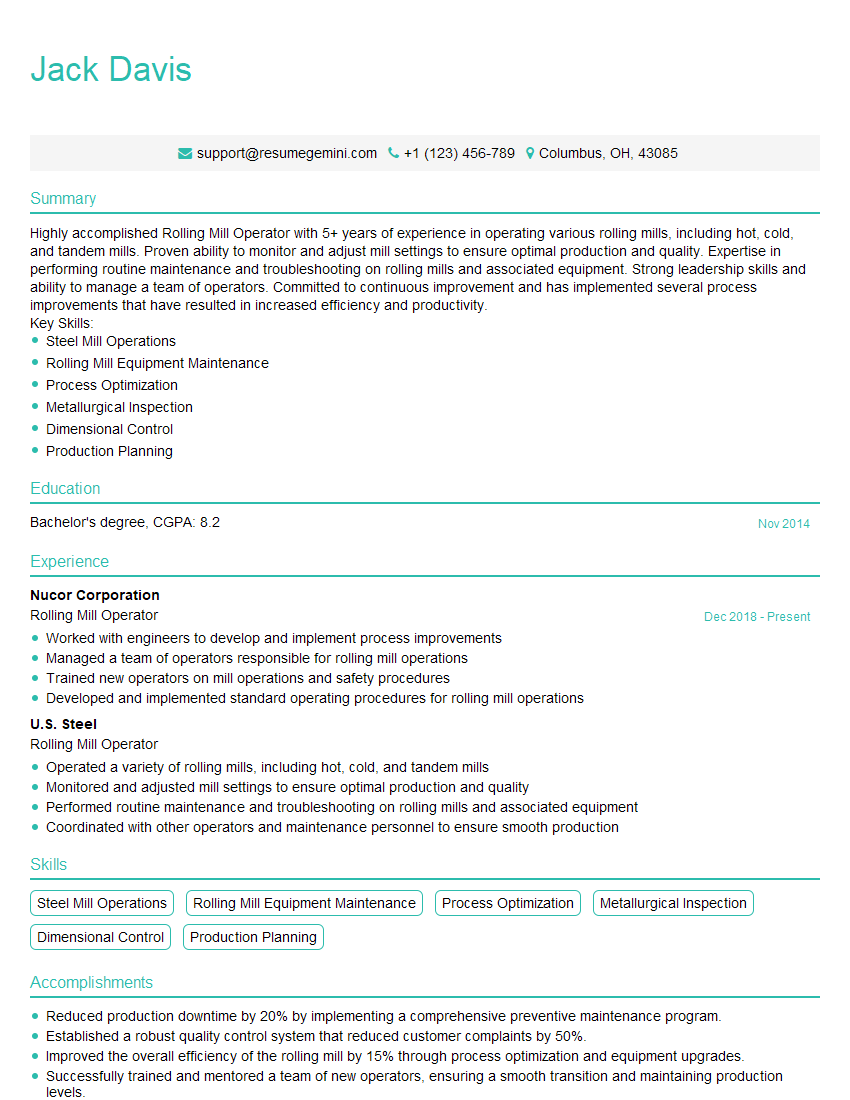
Mastering steel manufacturing processes is crucial for career advancement in this vital industry. A strong understanding of these processes positions you for higher-level roles and increased earning potential. To significantly boost your job prospects, create a resume that’s both impressive and easily scanned by Applicant Tracking Systems (ATS). ResumeGemini is a trusted resource that can help you build a professional and effective resume, optimized for ATS and recruiters. Examples of resumes tailored to the Steel Manufacturing Processes field are available to guide you.


Explore more articles
Users Rating of Our Blogs
Share Your Experience
We value your feedback! Please rate our content and share your thoughts (optional).
What Readers Say About Our Blog
Very informative content, great job.
good