Interviews are more than just a Q&A session—they’re a chance to prove your worth. This blog dives into essential Store Layout Planning interview questions and expert tips to help you align your answers with what hiring managers are looking for. Start preparing to shine!
Questions Asked in Store Layout Planning Interview
Q 1. Explain the principles of effective store layout design.
Effective store layout design hinges on understanding and optimizing the customer journey to maximize sales and brand experience. It’s about creating a space that is both aesthetically pleasing and highly functional. Key principles include:
- Customer Flow: Guiding customers smoothly through the store, exposing them to as much merchandise as possible.
- Accessibility and Navigation: Ensuring easy access to all areas and clear signage to prevent confusion.
- Product Placement: Strategically positioning products to maximize visibility and sales (e.g., high-demand items in easily accessible locations).
- Space Planning: Efficient use of space, considering factors like shelving, fixtures, and aisle width.
- Visual Merchandising: Using displays, lighting, and signage to enhance the shopping experience and attract attention.
- Brand Consistency: Reflecting the brand’s image and values through design elements.
- Safety and Comfort: Prioritizing safety, providing comfortable spaces, and ensuring ADA compliance.
For example, a grocery store might place high-profit items at eye level and impulse buys near checkout counters. A clothing store might create distinct zones for different clothing styles to enhance browsing.
Q 2. Describe different store layout types (e.g., grid, free-flow, loop).
Several store layout types cater to different retail strategies and product categories:
- Grid Layout: A traditional layout with aisles running perpendicular to each other, offering maximum product display space. Think of most supermarkets – highly efficient for browsing but can feel impersonal.
- Free-Flow Layout: A more flexible and open layout with no fixed aisle patterns. This allows for creative displays and a more relaxed shopping experience, suitable for boutiques or art galleries. However, it can lead to traffic congestion.
- Loop Layout: Guides customers along a predetermined path, ensuring they see most products. This layout is common in department stores and encourages maximum exposure but can feel restrictive.
- Spine Layout: Features a central aisle with smaller aisles branching off. Useful for larger stores with a wide variety of products.
- Angular Layout: Combines elements of grid and free-flow, creating defined areas within an open space.
The choice of layout depends heavily on the store’s size, product type, and target customer.
Q 3. How do you optimize store layout for customer flow and impulse purchases?
Optimizing store layout for customer flow and impulse purchases requires a strategic approach:
- Decompression Zone: The area immediately inside the entrance should be designed to allow customers to adjust to the store environment. Avoid placing key items here.
- Power Aisles and Hot Spots: Place high-demand and high-profit items in highly visible areas and along main traffic flows (power aisles). These spots maximize visibility and sales.
- Impulse Purchase Zones: Position impulse buys (candy, magazines, etc.) near checkout counters or in high-traffic areas.
- Strategic Product Placement: Use techniques like ‘butt-brush’ merchandising (placing high-demand items next to each other to encourage browsing) and ‘adjacent placement’ (placing complementary products together).
- Visual Cues: Utilize signage, lighting, and promotional displays to guide customers and draw attention to specific products.
- Data Analysis: Track customer movement through heat maps and sales data to identify areas for improvement.
For instance, a bookstore might place bestsellers and new releases prominently, while impulse buys like bookmarks and stationery are located near the checkout.
Q 4. What are the key considerations for designing a planogram?
Planograms, visual representations of product placement on shelves, are crucial for consistency and maximizing sales. Key considerations include:
- Shelf Space Allocation: Determining the appropriate shelf space for each product based on its sales performance and profitability.
- Product Facing and Shelf Height: Optimizing the number of product facings (the number of times a product is displayed) and placement height (eye-level is prime real estate).
- Product Grouping: Organizing products by category, brand, or other relevant criteria to improve findability and browsing.
- Visual Appeal: Creating visually appealing displays that enhance the shopping experience.
- Inventory Management: Planograms can aid in inventory control and reduce stockouts.
- Compliance: Adhering to brand guidelines and legal requirements (e.g., labeling).
Software like JDA or Spaceman is often used to create and manage planograms.
Q 5. How do you incorporate visual merchandising principles into store layout?
Visual merchandising is seamlessly integrated with store layout to create an engaging shopping environment. This involves:
- Color Psychology: Using colors to evoke specific emotions and attract attention.
- Lighting: Using lighting to highlight key products and create ambiance.
- Signage: Employing clear and attractive signage to guide customers and promote products.
- Window Displays: Utilizing window displays to entice customers into the store.
- Theming: Using themes or storytelling to create a cohesive brand experience.
For example, a clothing store might use mannequins, lighting, and color schemes to showcase seasonal collections, creating a visually compelling narrative.
Q 6. Explain the importance of zoning in store layout.
Zoning divides the store into distinct areas, each serving a specific purpose. This improves navigation and enhances the customer experience. Examples include:
- Entrance Zone: Sets the tone and encourages exploration.
- Display Zones: Showcase key products and promotions.
- Checkout Zone: Facilitates efficient transactions and often includes impulse-buy items.
- Service Zones: Provide customer service functions such as returns and fittings rooms.
- Storage Zones: Keep inventory and maintain a tidy shopping area.
Effective zoning ensures a logical flow, minimizes customer confusion, and enhances the shopping experience. Poor zoning can lead to bottlenecks and frustrated customers.
Q 7. How do you assess the impact of store layout on sales performance?
Assessing the impact of store layout on sales performance requires a multi-faceted approach:
- Sales Data Analysis: Compare sales figures before and after layout changes, focusing on specific product categories and zones.
- Customer Traffic Analysis: Use heat maps and customer counting systems to track customer movement and identify high-traffic and low-traffic areas.
- Conversion Rate Analysis: Measure the percentage of customers who make a purchase compared to the total number of visitors.
- Customer Feedback: Gather customer feedback through surveys, focus groups, or online reviews to identify areas for improvement.
- A/B Testing: Test different layout variations in different sections of the store to compare their effectiveness.
By tracking these metrics, retailers can identify which layout changes are most effective and continuously optimize the store environment to boost sales.
Q 8. Describe your experience with store layout software (e.g., AutoCAD, SketchUp).
My experience with store layout software is extensive, encompassing both 2D and 3D modeling programs. I’m highly proficient in AutoCAD, using it for precise 2D drafting of floor plans, fixture placement, and detailed dimensioning. This allows for accurate space planning and efficient communication with contractors. I also leverage SketchUp for creating 3D models, which allows clients to visualize the final store layout and easily explore different design options. This 3D visualization is particularly helpful in communicating concepts to stakeholders who might not be as familiar with technical drawings. For example, I recently used SketchUp to create a virtual walkthrough of a proposed grocery store redesign, highlighting improved traffic flow and product placement. The client was thrilled to experience the design in a three-dimensional space before construction even began. Beyond AutoCAD and SketchUp, I have experience with other software like V-Ray for rendering photorealistic images and Enscape for real-time walkthroughs, further enhancing the client presentation and approval process.
Q 9. How do you handle design changes during a project?
Handling design changes is a crucial aspect of any store layout project. My approach involves a collaborative and iterative process. Firstly, I establish clear communication channels with the client and stakeholders, ensuring that everyone is kept informed about the project’s progress and any potential alterations. When a design change request arises, I carefully evaluate its impact on the overall layout, budget, and timeline. This evaluation considers factors like the functionality of the space, the brand’s aesthetic, and any potential regulatory compliance issues. I present a detailed analysis of the proposed change, including a cost-benefit assessment, to the client before implementation. For instance, if a client requests a significant shift in product category placement, I might use heat mapping data from previous store designs to predict the impact on customer flow and sales. Finally, I document all changes, updating the relevant design files and providing clients with updated documentation.
Q 10. How do you measure the success of a new store layout?
Measuring the success of a new store layout requires a multifaceted approach. We don’t just rely on gut feeling; we employ concrete metrics to assess its effectiveness. Key Performance Indicators (KPIs) include sales per square foot, customer traffic patterns (tracked through analytics), conversion rates, and customer dwell time (how long customers spend in different sections). We also gather qualitative data through customer surveys and feedback to understand their shopping experience. Analyzing these metrics allows us to evaluate the impact of the new layout on key business objectives. For example, if sales per square foot significantly increase after a redesign, it demonstrates the success of the new layout in optimizing space utilization. Conversely, if customer feedback suggests poor wayfinding, it highlights areas for improvement in the future. Regularly monitoring and reviewing these KPIs ensures continuous improvement and optimization.
Q 11. Explain your process for analyzing existing store layouts.
Analyzing existing store layouts starts with a thorough site visit, where I meticulously document the current space. This includes measuring dimensions, observing customer flow, identifying bottlenecks, and assessing the condition of fixtures and equipment. Next, I analyze sales data, customer traffic patterns, and product performance within the existing layout. I might use heatmaps or other data visualization tools to identify high-traffic and low-traffic areas. Furthermore, I conduct interviews with staff to understand their perspectives on the layout’s effectiveness, identifying pain points and areas for improvement. This data is then synthesized to create a comprehensive report, identifying strengths, weaknesses, opportunities, and threats (SWOT analysis) relating to the existing layout. For example, if I find that a specific aisle consistently has low sales and limited customer traffic, it suggests an opportunity for rearrangement or improved product placement. This systematic approach ensures that the redesign is data-driven and focuses on solving the existing issues.
Q 12. How do you balance aesthetic appeal with functionality in store layout?
Balancing aesthetic appeal and functionality is a key consideration in store layout design. It’s not a compromise, but rather a harmonious integration of both elements. A visually appealing store attracts and engages customers, while a functional layout ensures a smooth and efficient shopping experience. For example, using attractive materials and lighting can enhance the store’s ambiance, while strategically placing high-demand items near entrances and organizing products by category improves navigation. I might use design principles like visual merchandising techniques to create visually engaging displays, while maintaining clear sightlines and intuitive pathways. The use of color psychology, incorporating branding elements, and thoughtful use of signage are also critical components of achieving this balance. Think of it like a well-designed website; it’s both aesthetically pleasing and easy to navigate. The goal is to create a positive and efficient shopping experience that keeps customers engaged and coming back.
Q 13. How do you incorporate accessibility guidelines into store design?
Incorporating accessibility guidelines is not just a legal requirement; it’s a matter of providing an inclusive shopping experience for all customers. I ensure compliance with ADA (Americans with Disabilities Act) and other relevant accessibility standards throughout the design process. This includes designing wide aisles for wheelchair access, providing ramps or elevators for multi-level stores, ensuring accessible restroom facilities, and providing clear signage with Braille and large print options. I also consider the placement of crucial information and equipment, such as cash registers and customer service desks, to ensure easy accessibility for people with disabilities. Prioritizing accessibility not only fulfills legal obligations, but it also demonstrates a commitment to inclusivity and makes the store welcoming to a broader customer base. It’s about creating an environment where everyone feels comfortable and can shop with ease.
Q 14. How do you incorporate security considerations into store layout?
Security considerations are integrated into store layout from the initial design phase. Strategic placement of security cameras and personnel ensures that high-value merchandise is visible and easily monitored, while blind spots are minimized. This might include strategically positioning cameras in areas with high theft rates or near exits. The layout also considers the flow of customers and staff, aiming to create natural surveillance opportunities. Designing clear sightlines throughout the store, along with well-lit areas, further enhances security. Additionally, the layout should facilitate quick response times for security personnel in case of emergencies. Incorporating these security features not only protects the store’s assets but also enhances the safety and well-being of both staff and customers. It’s a balance between security and creating a welcoming and comfortable environment.
Q 15. What are some common challenges in store layout planning, and how do you overcome them?
Store layout planning presents numerous challenges, often interlinked and requiring holistic solutions. One common hurdle is balancing maximizing space utilization with creating a pleasant and intuitive shopping experience. For example, cramming too many products into a small area can lead to congestion and frustrate customers, while overly spacious layouts can feel empty and uninviting. Another significant challenge involves aligning the layout with the retailer’s specific goals – be it boosting sales of a particular product category, promoting brand image, or improving customer flow. Finally, unexpected issues like structural limitations, building codes, and even the availability of specific fixtures can significantly impact the planning process.
To overcome these challenges, I employ a multi-pronged approach. This includes using sophisticated space planning software to optimize product placement, conducting thorough site surveys to identify and account for physical constraints, and engaging in extensive stakeholder collaboration to ensure alignment on goals and priorities. Detailed data analysis, including sales figures and customer traffic patterns, helps in making informed decisions. For instance, placing high-demand items in easily accessible locations while strategically positioning impulse-buy items near checkout counters can dramatically enhance sales performance. Continuous monitoring and evaluation post-implementation allows for iterative improvements and adjustments based on real-world data.
Career Expert Tips:
- Ace those interviews! Prepare effectively by reviewing the Top 50 Most Common Interview Questions on ResumeGemini.
- Navigate your job search with confidence! Explore a wide range of Career Tips on ResumeGemini. Learn about common challenges and recommendations to overcome them.
- Craft the perfect resume! Master the Art of Resume Writing with ResumeGemini’s guide. Showcase your unique qualifications and achievements effectively.
- Don’t miss out on holiday savings! Build your dream resume with ResumeGemini’s ATS optimized templates.
Q 16. How do you create a customer-centric store layout?
Creating a customer-centric store layout prioritizes the shopper’s experience at every step. It’s about understanding customer behavior and journey, designing a space that facilitates intuitive navigation, and making the shopping process as smooth and enjoyable as possible. This requires careful consideration of several factors.
- Intuitive Navigation: Clear signage, logical product categorization, and well-defined pathways are crucial. Think about how supermarkets strategically place essential items throughout the store, encouraging customers to browse multiple aisles.
- Product Placement: High-demand products should be easily accessible, while strategically placing complementary items together can increase sales. For instance, placing coffee next to coffee filters enhances the likelihood of a customer purchasing both.
- Comfort and Ambiance: Adequate lighting, comfortable temperature, and appealing aesthetics significantly impact the shopping experience. A relaxing atmosphere encourages customers to spend more time browsing.
- Decompression Zone: The area immediately after the entrance needs careful consideration. It should be designed to allow customers to transition from the outside world into the store’s environment. Avoid placing high-value products here; instead, focus on creating an inviting atmosphere.
- Checkout Experience: Efficient and well-staffed checkout areas are vital. Long queues create frustration and can lead to abandoned purchases.
Essentially, a customer-centric layout is like a well-designed journey, guiding customers effortlessly toward their desired products while encouraging exploration and purchase.
Q 17. Describe your experience working with cross-functional teams on store layout projects.
I have extensive experience collaborating with cross-functional teams, including architects, engineers, visual merchandisers, marketing, and store operations personnel. Successful store layout projects rely on seamless communication and collaboration. For example, on a recent project for a new apparel store, I worked closely with the visual merchandising team to ensure that the store’s design complemented their display strategies. The architects provided crucial input on structural limitations and compliance with building codes, while the store operations team offered invaluable insights into staff workflows and practical considerations. I facilitated regular meetings, using project management software to track progress, share updates, and manage potential conflicts. Open communication, active listening, and a commitment to finding mutually agreeable solutions were key to the project’s success. Ultimately, the diverse perspectives enriched the design, resulting in a more functional and aesthetically pleasing retail space.
Q 18. How do you manage multiple projects simultaneously in store layout planning?
Managing multiple store layout projects concurrently requires meticulous organization and effective prioritization. I utilize project management methodologies, such as Agile, to break down large projects into smaller, manageable tasks. This approach allows for flexible adaptation to changing priorities and ensures that all projects receive adequate attention. Prioritization is crucial; I utilize a system that considers factors like project deadlines, budget constraints, and strategic importance. I also delegate tasks effectively and leverage the skills of my team members, ensuring everyone is clear on their roles and responsibilities. Regular project reviews and communication are vital to track progress and proactively address any challenges. Tools such as Gantt charts and Kanban boards provide a visual representation of project timelines and workflow, facilitating efficient resource allocation and timely completion.
Q 19. How do you stay updated on the latest trends in retail design?
Staying abreast of the latest trends in retail design is paramount. I accomplish this through a multi-faceted approach. I regularly attend industry conferences and trade shows, networking with other professionals and learning about new technologies and design concepts. I subscribe to relevant industry publications and online resources, keeping me updated on emerging trends in retail technology, customer behavior, and design aesthetics. I also follow key influencers and companies on social media platforms like Instagram and Pinterest, observing innovative design solutions and retail strategies. Moreover, I actively participate in online forums and communities, engaging in discussions and exchanging knowledge with peers. This continuous learning ensures that my designs remain current, innovative, and relevant to the ever-evolving retail landscape.
Q 20. How do you adapt store layout to different retail environments?
Adapting store layouts to different retail environments requires a nuanced understanding of the specific context. Factors such as store size, location, target customer demographics, and brand identity significantly influence the design. For example, a flagship store in a bustling city center might require a different layout compared to a smaller outlet in a suburban mall. A high-end boutique will demand a more luxurious and sophisticated design than a discount retailer. I carefully analyze these factors, using data-driven insights to inform design choices. This includes studying customer traffic patterns, product categories, and competitor strategies. The flexibility to adapt my approach based on site-specific conditions, including spatial limitations and existing infrastructure, is crucial. Utilizing 3D modeling software allows me to visualize the impact of different layouts within specific environments, enabling informed decision-making and ensuring optimal utilization of space and resources.
Q 21. How do you handle conflicting priorities during store layout design?
Conflicting priorities are inevitable in store layout design. For instance, maximizing space utilization may conflict with creating a comfortable shopping environment. To navigate these situations, I facilitate open communication and collaborative problem-solving sessions with stakeholders. We prioritize objectives based on their strategic importance and feasibility. This often involves a process of negotiation and compromise, where we weigh the pros and cons of different options and strive to find solutions that address as many priorities as possible. Utilizing data-driven analysis, such as sales data and customer behavior patterns, can help in making objective decisions. For example, if maximizing space utilization conflicts with creating a visually appealing environment, data analysis can help determine the optimal balance, prioritizing aspects that directly impact sales and customer satisfaction. Involving stakeholders in the decision-making process fosters a sense of ownership and increases the likelihood of buy-in to the final design.
Q 22. How do you incorporate brand identity into store design?
Incorporating brand identity into store design is crucial for creating a cohesive and memorable customer experience. It’s about translating the brand’s personality, values, and story into the physical space. This involves a holistic approach, considering everything from the color palette and materials used to the layout itself and the overall atmosphere.
- Visual Identity: The store’s color scheme, typography, and logo should directly reflect the brand’s visual identity. For example, a high-end luxury brand might use sophisticated muted tones and elegant fonts, while a playful brand for children might opt for bright, bold colors and whimsical designs.
- Material Selection: The materials chosen for fixtures, flooring, and walls should complement the brand’s image. A sustainable brand might use reclaimed wood, while a tech company might feature sleek metal and glass.
- Layout and Ambiance: The store’s layout itself can communicate brand values. A minimalist brand might opt for a clean, uncluttered space, while a brand focusing on community might create a more open, interactive environment.
- Signage and Messaging: Clear and consistent signage reinforces the brand’s message and helps guide customers through the store. The tone and style of the signage should align with the overall brand voice.
For example, I once worked with a sustainable clothing brand. We incorporated reclaimed wood shelving, natural lighting, and earthy tones throughout the store to reflect their commitment to eco-friendly practices. The overall feel was calm and inviting, reflecting the brand’s values.
Q 23. Describe your experience with fixture selection and placement.
Fixture selection and placement are critical for optimizing product display, enhancing customer flow, and maximizing sales. My experience encompasses a wide range of fixture types, from gondolas and wall units to custom displays and interactive kiosks. The process begins with a thorough analysis of the product assortment, considering size, shape, and presentation needs.
- Functionality: Fixtures must be chosen based on their ability to effectively display products and cater to the specific needs of the merchandise. For example, delicate jewelry needs different displays than bulky sporting goods.
- Aesthetics: Fixtures should enhance the store’s visual appeal and complement the overall brand identity. Their design, materials, and finishes should be consistent with the brand’s image.
- Placement: Placement is key to influencing customer traffic and product visibility. High-demand items often receive prime placement, while less popular items might be positioned strategically to encourage exploration. We leverage techniques like the ‘decompression zone’ (the area immediately inside the entrance) and ‘power walls’ (high-impact displays) to optimize placement.
- Customer Flow: Fixture placement should facilitate a smooth and efficient flow of customer traffic throughout the store, preventing bottlenecks and encouraging exploration of the entire space.
In a recent project for a grocery store, we strategically placed high-margin items like organic produce in high-traffic areas, while using endcaps to promote seasonal specials. We also incorporated island displays to create focal points and break up the monotony of standard shelving.
Q 24. How do you utilize data analytics in store layout decision-making?
Data analytics plays a vital role in informed store layout decision-making. By analyzing sales data, customer traffic patterns, and heat maps, we can gain valuable insights into customer behavior and optimize store design for maximum effectiveness.
- Sales Data: Analyzing sales data by product category and location helps identify best-selling items and areas of the store that generate the most revenue. This information guides fixture placement and allocation of space.
- Customer Traffic Patterns: Tracking customer movement using sensors or video analytics reveals how customers navigate the store. This data identifies bottlenecks, areas of low engagement, and popular pathways, guiding design to improve flow and visibility.
- Heat Maps: Heat maps visually represent customer density in different areas of the store. They pinpoint high-traffic zones and areas with low engagement, offering insights for optimizing product placement and signage.
- A/B Testing: Different layout configurations can be tested in sections of the store to compare their impact on sales and customer behavior. This iterative process helps refine design choices and measure their effectiveness.
For instance, a retailer might use heatmap data to identify a ‘dead zone’ in a store. By analyzing the data, we might decide to relocate high-margin products to this area, improve lighting, or add interactive displays to attract customers and boost sales.
Q 25. How do you present and communicate store layout plans to stakeholders?
Presenting store layout plans effectively involves clear communication and visual aids. I typically use a multi-pronged approach to ensure stakeholders understand the design and its rationale.
- Visualizations: Detailed floor plans, 3D renderings, and virtual tours allow stakeholders to visualize the proposed layout. These tools provide a clear and comprehensive understanding of the design.
- Data-driven presentations: Supporting the design with data from analytics ensures stakeholders understand the rationale behind design choices. This demonstrates the potential impact on sales and customer experience.
- Interactive sessions: Presenting the plans in interactive sessions allows for immediate feedback and discussion. This collaborative approach fosters a shared understanding and buy-in from stakeholders.
- Prototypes: In some cases, creating physical or digital prototypes allows stakeholders to interact with the design in a more tangible way. This helps identify and address potential issues early in the process.
For example, I’ve used virtual reality to allow stakeholders to ‘walk through’ a proposed store layout, experiencing the design from a customer’s perspective. This highly engaging method effectively communicates the design’s impact and leads to more productive discussions.
Q 26. How do you deal with budget constraints in store layout planning?
Budget constraints are a common challenge in store layout planning. Managing these effectively involves careful prioritization and creative solutions.
- Prioritization: Identifying essential elements and focusing resources on those that deliver the highest return on investment is critical. This involves analyzing the impact of each design element on sales and customer experience.
- Value Engineering: Exploring cost-effective alternatives without compromising quality or functionality. This might involve selecting less expensive materials or fixtures that still achieve the desired aesthetic and functionality.
- Modular Design: Using modular fixtures allows for flexibility and adaptability in the future. This allows for changes and expansions without significant additional costs.
- Phased Rollout: Implementing the design in phases allows for spreading costs over time, making the project more manageable and reducing upfront investment.
In one project, we faced a significant budget limitation. We opted for a modular shelving system that could be easily reconfigured in the future, allowing for flexibility and cost-effectiveness. We also prioritized key areas like the entrance and high-traffic zones, ensuring a strong initial impression while optimizing the use of less expensive materials in other areas.
Q 27. Describe your experience with space optimization techniques.
Space optimization involves maximizing the use of available space to improve efficiency and enhance the customer experience. This goes beyond simply fitting more products; it’s about creating a functional and inviting environment.
- Vertical Space: Utilizing vertical space effectively by using high shelves and multi-tiered displays allows for increased product visibility and storage without sacrificing floor space.
- Flexible Fixtures: Implementing adaptable fixtures like gondolas and modular shelving allows for easy reconfiguration to accommodate changing product assortments and sales patterns.
- Strategic Zoning: Dividing the store into distinct zones based on product category or customer behavior can improve navigation and product discovery. This can also improve customer flow and prevent bottlenecks.
- Backroom Optimization: Optimizing storage and workflow in the backroom frees up valuable selling space and streamlines operations.
For a small boutique, we maximized vertical space by installing custom-designed, high-reaching shelving units. This allowed for a significant increase in product display without expanding the store’s footprint. We also employed a visually appealing, yet efficient, arrangement of fixtures, creating a curated shopping experience in a small space.
Q 28. How do you incorporate technology (e.g., interactive displays) into store layout?
Incorporating technology into store layout enhances the customer experience, improves efficiency, and gathers valuable data. Interactive displays, digital signage, and mobile apps can transform the shopping journey.
- Interactive Displays: These can provide product information, virtual try-ons, and personalized recommendations, enhancing engagement and making shopping more convenient.
- Digital Signage: Dynamic displays can showcase promotions, highlight new arrivals, and provide wayfinding, adding an element of dynamism and improving communication.
- Mobile Integration: Integrating mobile apps with in-store technology, such as beacons or QR codes, provides personalized shopping experiences, loyalty programs, and mobile payments, transforming how customers interact with the store.
- Smart Shelves: These can automatically track inventory levels and alert staff when restocking is needed, optimizing inventory management and reducing labor costs.
For example, I worked with a cosmetics retailer that incorporated interactive kiosks in their stores. Customers could virtually try on makeup, access product information, and receive personalized recommendations. This innovative approach greatly enhanced the shopping experience and increased sales.
Key Topics to Learn for Store Layout Planning Interview
- Space Planning & Design Principles: Understanding concepts like flow, zoning, and fixture placement to maximize sales and customer experience. Practical application: Designing a retail space that intuitively guides customers through product categories.
- Visual Merchandising & Product Presentation: Techniques for showcasing products effectively, considering factors like color, lighting, and signage. Practical application: Creating compelling displays that increase impulse purchases.
- Customer Traffic Flow & Path Analysis: Analyzing customer movement within a store to optimize layout and improve conversion rates. Practical application: Identifying bottlenecks and redesigning the layout to improve traffic flow.
- Planogram Development & Implementation: Creating and implementing planograms (schematic diagrams of shelf layouts) to optimize product placement and shelf space. Practical application: Utilizing planograms to ensure consistent product placement across multiple store locations.
- Data Analysis & Sales Performance: Using sales data to inform layout decisions and track the effectiveness of different store designs. Practical application: Analyzing sales data to determine the optimal placement of high-demand products.
- Inventory Management & Stock Levels: Integrating inventory management considerations into the store layout to minimize stockouts and maximize storage efficiency. Practical application: Designing a layout that efficiently stores and replenishes inventory while maintaining aesthetic appeal.
- Accessibility & Compliance: Adhering to ADA (Americans with Disabilities Act) guidelines and other relevant regulations to ensure an inclusive shopping experience. Practical application: Designing a store layout that is easily navigable and accessible to customers with disabilities.
- Budgeting & Resource Allocation: Understanding the financial aspects of store layout planning, including fixture costs, labor, and design fees. Practical application: Developing a cost-effective layout that maximizes return on investment.
Next Steps
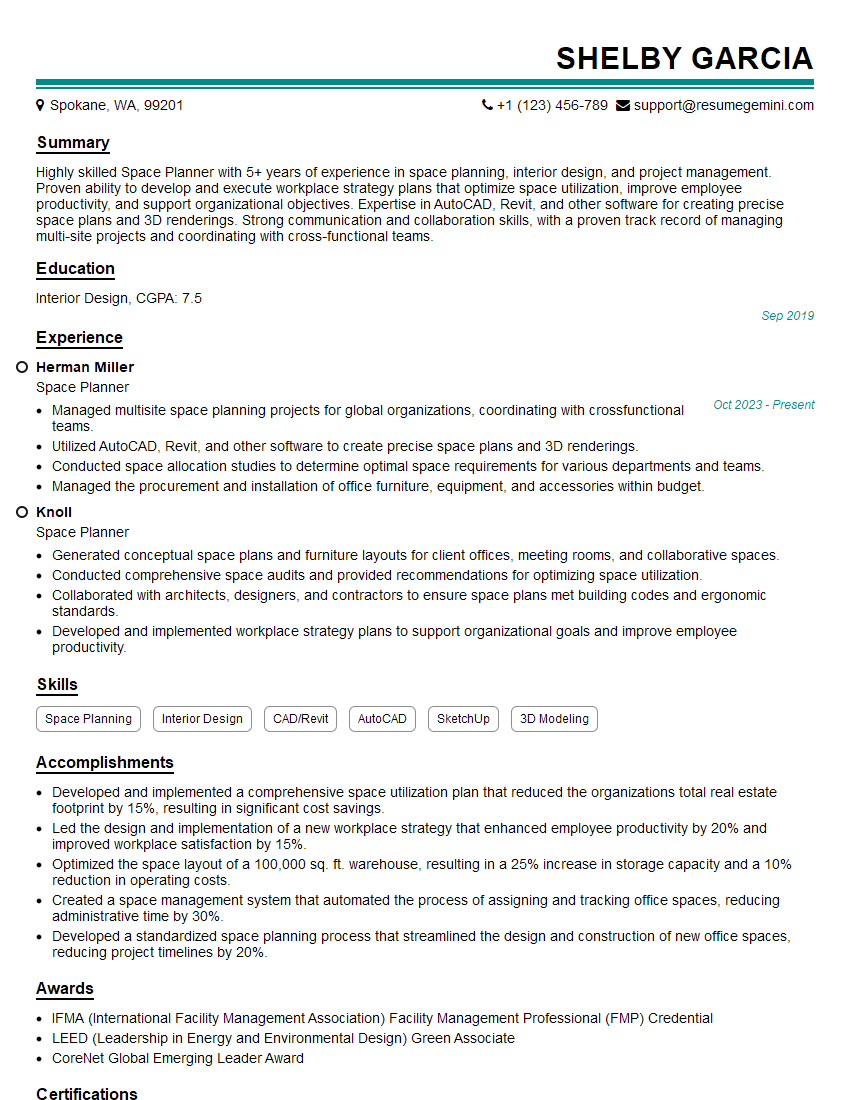
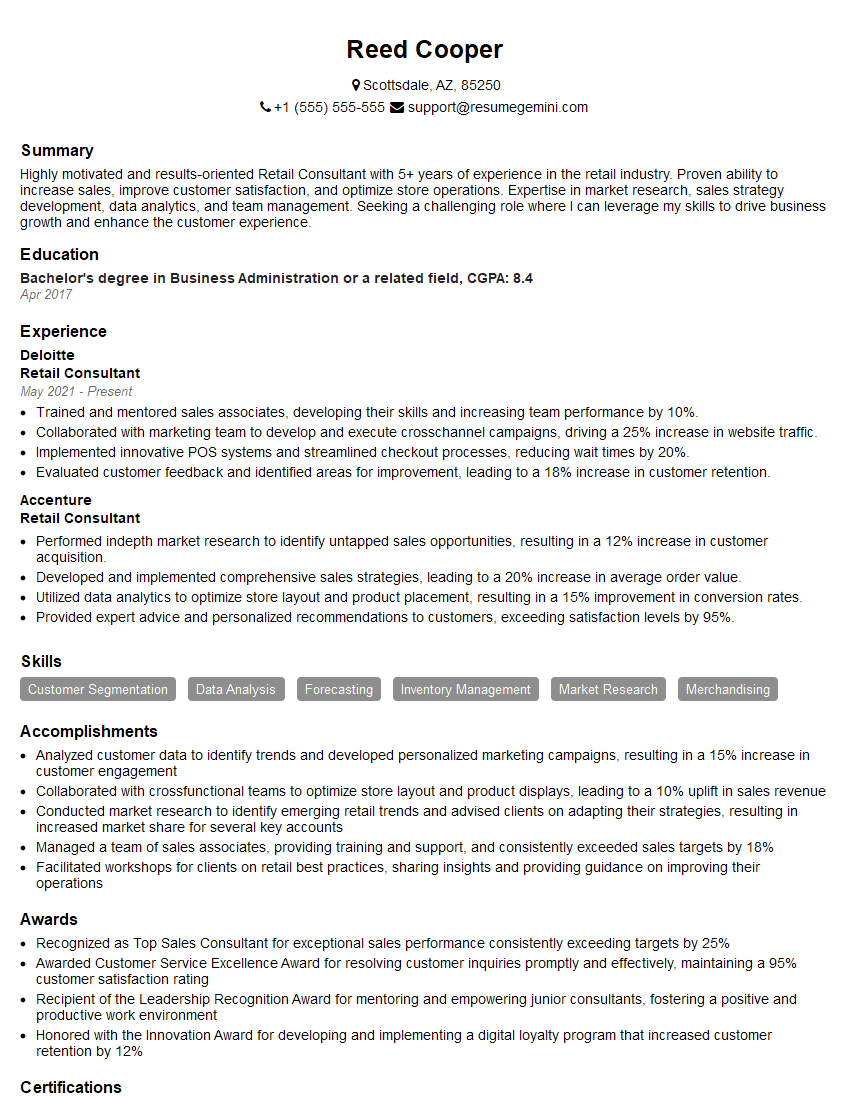
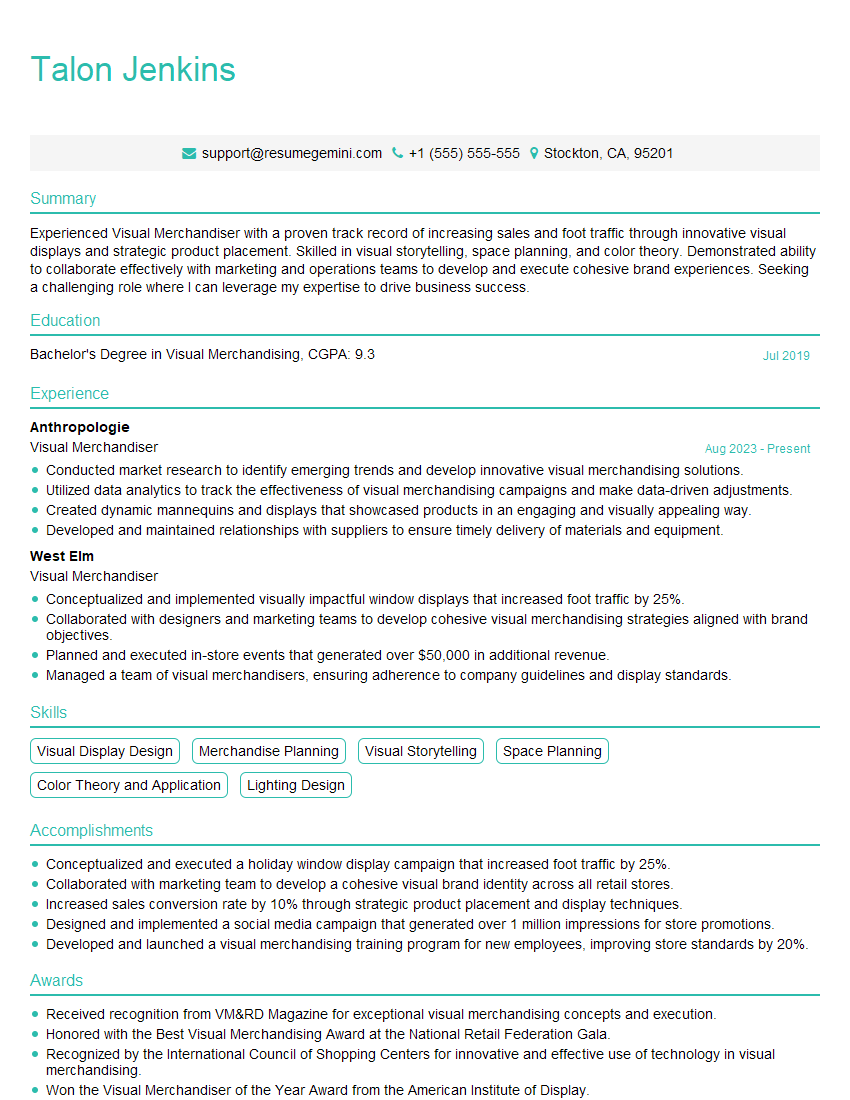
Mastering Store Layout Planning is crucial for career advancement in retail and related fields, opening doors to roles with increased responsibility and earning potential. A well-crafted resume is your key to unlocking these opportunities. Creating an ATS-friendly resume significantly increases your chances of getting noticed by recruiters and landing an interview. ResumeGemini is a trusted resource to help you build a professional and impactful resume. We provide examples of resumes tailored to Store Layout Planning to guide you through the process. Take the next step towards your dream career today!
Explore more articles
Users Rating of Our Blogs
Share Your Experience
We value your feedback! Please rate our content and share your thoughts (optional).
What Readers Say About Our Blog
Attention music lovers!
Wow, All the best Sax Summer music !!!
Spotify: https://open.spotify.com/artist/6ShcdIT7rPVVaFEpgZQbUk
Apple Music: https://music.apple.com/fr/artist/jimmy-sax-black/1530501936
YouTube: https://music.youtube.com/browse/VLOLAK5uy_noClmC7abM6YpZsnySxRqt3LoalPf88No
Other Platforms and Free Downloads : https://fanlink.tv/jimmysaxblack
on google : https://www.google.com/search?q=22+AND+22+AND+22
on ChatGPT : https://chat.openai.com?q=who20jlJimmy20Black20Sax20Producer
Get back into the groove with Jimmy sax Black
Best regards,
Jimmy sax Black
www.jimmysaxblack.com
Hi I am a troller at The aquatic interview center and I suddenly went so fast in Roblox and it was gone when I reset.
Hi,
Business owners spend hours every week worrying about their website—or avoiding it because it feels overwhelming.
We’d like to take that off your plate:
$69/month. Everything handled.
Our team will:
Design a custom website—or completely overhaul your current one
Take care of hosting as an option
Handle edits and improvements—up to 60 minutes of work included every month
No setup fees, no annual commitments. Just a site that makes a strong first impression.
Find out if it’s right for you:
https://websolutionsgenius.com/awardwinningwebsites
Hello,
we currently offer a complimentary backlink and URL indexing test for search engine optimization professionals.
You can get complimentary indexing credits to test how link discovery works in practice.
No credit card is required and there is no recurring fee.
You can find details here:
https://wikipedia-backlinks.com/indexing/
Regards
NICE RESPONSE TO Q & A
hi
The aim of this message is regarding an unclaimed deposit of a deceased nationale that bears the same name as you. You are not relate to him as there are millions of people answering the names across around the world. But i will use my position to influence the release of the deposit to you for our mutual benefit.
Respond for full details and how to claim the deposit. This is 100% risk free. Send hello to my email id: lukachachibaialuka@gmail.com
Luka Chachibaialuka
Hey interviewgemini.com, just wanted to follow up on my last email.
We just launched Call the Monster, an parenting app that lets you summon friendly ‘monsters’ kids actually listen to.
We’re also running a giveaway for everyone who downloads the app. Since it’s brand new, there aren’t many users yet, which means you’ve got a much better chance of winning some great prizes.
You can check it out here: https://bit.ly/callamonsterapp
Or follow us on Instagram: https://www.instagram.com/callamonsterapp
Thanks,
Ryan
CEO – Call the Monster App
Hey interviewgemini.com, I saw your website and love your approach.
I just want this to look like spam email, but want to share something important to you. We just launched Call the Monster, a parenting app that lets you summon friendly ‘monsters’ kids actually listen to.
Parents are loving it for calming chaos before bedtime. Thought you might want to try it: https://bit.ly/callamonsterapp or just follow our fun monster lore on Instagram: https://www.instagram.com/callamonsterapp
Thanks,
Ryan
CEO – Call A Monster APP
To the interviewgemini.com Owner.
Dear interviewgemini.com Webmaster!
Hi interviewgemini.com Webmaster!
Dear interviewgemini.com Webmaster!
excellent
Hello,
We found issues with your domain’s email setup that may be sending your messages to spam or blocking them completely. InboxShield Mini shows you how to fix it in minutes — no tech skills required.
Scan your domain now for details: https://inboxshield-mini.com/
— Adam @ InboxShield Mini
support@inboxshield-mini.com
Reply STOP to unsubscribe
Hi, are you owner of interviewgemini.com? What if I told you I could help you find extra time in your schedule, reconnect with leads you didn’t even realize you missed, and bring in more “I want to work with you” conversations, without increasing your ad spend or hiring a full-time employee?
All with a flexible, budget-friendly service that could easily pay for itself. Sounds good?
Would it be nice to jump on a quick 10-minute call so I can show you exactly how we make this work?
Best,
Hapei
Marketing Director
Hey, I know you’re the owner of interviewgemini.com. I’ll be quick.
Fundraising for your business is tough and time-consuming. We make it easier by guaranteeing two private investor meetings each month, for six months. No demos, no pitch events – just direct introductions to active investors matched to your startup.
If youR17;re raising, this could help you build real momentum. Want me to send more info?
Hi, I represent an SEO company that specialises in getting you AI citations and higher rankings on Google. I’d like to offer you a 100% free SEO audit for your website. Would you be interested?
Hi, I represent an SEO company that specialises in getting you AI citations and higher rankings on Google. I’d like to offer you a 100% free SEO audit for your website. Would you be interested?