Feeling uncertain about what to expect in your upcoming interview? We’ve got you covered! This blog highlights the most important Structural Support interview questions and provides actionable advice to help you stand out as the ideal candidate. Let’s pave the way for your success.
Questions Asked in Structural Support Interview
Q 1. Explain the difference between static and dynamic loading on a structure.
The key difference between static and dynamic loading lies in how the load is applied to a structure. Static loading refers to loads that are applied slowly and remain constant over time. Think of the weight of a building’s roof or the pressure of soil against a retaining wall. These loads are relatively predictable and allow for straightforward calculations using equilibrium equations.
Dynamic loading, on the other hand, involves loads that change rapidly with time, often involving impact, vibration, or repetitive cycles. Examples include the impact of a vehicle collision on a bridge, wind gusts on a skyscraper, or the repeated stress cycles on a machine part. Analyzing dynamic loads requires more sophisticated techniques, considering factors like inertia and acceleration, often necessitating advanced simulations or specialized software.
Imagine a bookshelf: The weight of books is a static load. However, if someone bumps into the shelf, that’s a dynamic load, potentially creating much larger stresses than the static load alone.
Q 2. Describe your experience with various structural materials (steel, concrete, timber).
My experience encompasses a wide range of structural materials. I’ve extensively worked with steel, appreciating its high tensile strength, ductility, and relative ease of fabrication. Steel structures are ideal for high-rise buildings, bridges, and industrial facilities. I’ve designed numerous steel frames, incorporating various connection types, such as welded connections and high-strength bolted connections. Understanding the behavior of steel under various loading conditions, including buckling and yielding, is crucial.
Concrete offers exceptional compressive strength and is widely used in building foundations, columns, and slabs. My expertise includes reinforced concrete design, carefully selecting reinforcement patterns to mitigate tensile stresses and crack formation. I’m proficient in analyzing concrete structures according to relevant codes, considering factors such as creep and shrinkage.
Finally, I’ve worked with timber structures, appreciating its inherent strength, sustainability, and aesthetic qualities. This includes designing timber frames for residential and light commercial buildings. In this area, understanding wood’s anisotropic nature—its different strength properties in different directions—is vital for ensuring structural integrity and durability.
Q 3. How do you determine the appropriate safety factors for a given structural design?
Determining appropriate safety factors is crucial for ensuring structural safety and reliability. Safety factors account for uncertainties in material properties, loading conditions, and analytical models. The selection process is influenced by several factors:
- Importance of the structure: A critical structure, such as a hospital or a bridge, requires a higher safety factor than a less critical one.
- Material properties: The variability of material strength, and potential degradation over time.
- Load uncertainty: The accuracy of load estimations. Are the loads precisely known or are there significant uncertainties (e.g., seismic loads)?
- Consequences of failure: What are the potential risks of structural collapse? The greater the potential for loss of life or property damage, the higher the safety factor.
- Applicable codes and standards: Building codes often specify minimum safety factors for different structural elements and materials.
For instance, a safety factor of 1.5 might be suitable for a simple residential structure, while a higher factor, such as 2.0 or even higher, might be appropriate for a critical infrastructure project.
Q 4. What are the common failure modes of structural elements?
Structural elements can fail in several ways. Common failure modes include:
- Tensile failure: Occurs when a member is subjected to excessive tensile forces, causing it to stretch and eventually break. Think of a wire snapping.
- Compressive failure: Happens when a member is subjected to excessive compressive forces, causing buckling or crushing. A column collapsing under its own weight is an example.
- Shear failure: Results from excessive shear stresses, causing a member to slide or fracture along a plane. Think of a beam failing near a support due to high shear forces.
- Flexural failure: Occurs when a member bends excessively, leading to cracking or fracture. This is common in beams subjected to bending moments.
- Torsional failure: Results from excessive twisting forces, causing the member to twist and fail. Shafts in machinery can fail in this manner.
- Fatigue failure: Occurs due to repeated cyclical loading, eventually leading to crack initiation and propagation. This is a significant concern in bridge design.
Understanding these failure modes is crucial for designing safe and reliable structures. Proper material selection, detailing, and analysis are essential to prevent these failures.
Q 5. Explain your understanding of finite element analysis (FEA).
Finite Element Analysis (FEA) is a powerful computational method used to analyze and predict the behavior of structures under various loading conditions. It involves dividing a complex structure into smaller, simpler elements (finite elements), each with its own characteristics. The behavior of these individual elements is then analyzed, and the results are combined to predict the overall behavior of the structure. This allows for accurate stress, strain, and displacement predictions, even for intricate geometries and loading scenarios.
FEA is particularly useful in analyzing complex geometries, non-linear material behavior, and dynamic loading conditions where traditional hand calculations would be impractical. I utilize FEA software extensively in my projects, from validating simpler hand calculations to addressing challenging design problems involving complex geometries or nonlinear material behavior.
For example, using FEA, I can accurately model the stress distribution in a complex bridge structure subjected to various load combinations, including live loads from vehicles and dead loads from the bridge itself. This allows for an optimized design that maximizes efficiency while ensuring safety and durability.
Q 6. How do you handle unexpected issues or design challenges during a project?
Unexpected issues during a project are inevitable. My approach involves a systematic problem-solving process:
- Identify and define the problem: Thoroughly investigate the issue, collecting data and documenting observations.
- Analyze the root cause: Employ analytical tools, including FEA where necessary, to understand the underlying cause of the problem.
- Develop and evaluate potential solutions: Brainstorm multiple options and assess their feasibility, cost-effectiveness, and impact on the overall project timeline and budget.
- Implement the chosen solution: Execute the chosen solution, carefully documenting the process.
- Verify the solution’s effectiveness: Monitor the results and assess whether the solution adequately addresses the issue. Further adjustments may be needed.
Communication is paramount. I always keep stakeholders informed, ensuring transparency and collaboration throughout the process. Documenting each step and decision is critical for maintaining accountability and facilitating future problem-solving.
Q 7. Describe your experience with structural detailing and drafting.
I have extensive experience with structural detailing and drafting. I am proficient in using various Computer-Aided Design (CAD) software packages, such as AutoCAD and Revit. My detailing work focuses on creating accurate and comprehensive drawings that accurately reflect the structural design. This includes generating shop drawings for fabricators, ensuring all structural members are properly dimensioned and detailed, with appropriate connections and specifications.
I understand the importance of clear and concise drawings, adhering to industry standards and best practices. My experience extends to producing reinforcement detailing for concrete structures, including schedules and bar bending diagrams. I believe detailed drawings are crucial for effective communication between designers, fabricators, and construction crews, leading to efficient construction and a successful project.
Q 8. What software are you proficient in (e.g., AutoCAD, Revit, SAP2000)?
My proficiency in structural engineering software is extensive. I’m highly skilled in AutoCAD, for creating detailed 2D drawings and managing project documentation. Revit is another key tool in my arsenal; I use it extensively for Building Information Modeling (BIM), allowing for integrated design, analysis, and visualization. For structural analysis, I rely heavily on SAP2000, a powerful software package that enables complex finite element analysis, crucial for optimizing structural designs and ensuring safety. I also have working experience with ETABS, a similar program frequently used for building design. Beyond these, I’m comfortable utilizing specialized software for specific tasks, like STAAD Pro for steel structures.
Q 9. How do you ensure compliance with building codes and regulations?
Ensuring compliance with building codes and regulations is paramount in structural engineering. My approach is multifaceted. Firstly, I thoroughly research and understand the specific codes applicable to the project location and building type. This includes referencing documents like the International Building Code (IBC), relevant local ordinances, and any special design considerations. Secondly, I meticulously integrate these code requirements into the design process from the outset, ensuring the structural elements meet all specified criteria for strength, stability, and fire resistance. Thirdly, I utilize software that can automatically check designs for code compliance, flagging any potential issues. Finally, I often collaborate with third-party reviewers and inspectors to obtain independent verification and approval, providing an extra layer of assurance.
For example, on a recent high-rise project, I had to ensure compliance with seismic design standards specific to the region’s high earthquake risk. This required careful selection of materials, detailing of connections, and rigorous analysis to demonstrate the structure’s ability to withstand seismic forces.
Q 10. Explain your experience with seismic design principles.
Seismic design is a critical aspect of my work, especially given the increasing awareness of earthquake risks in many regions. My experience encompasses various approaches, including the equivalent static method for simpler structures and more complex dynamic analyses for larger and more critical buildings. I understand how to model the structure’s behavior under seismic loads using software like SAP2000 or ETABS, considering factors like soil conditions and the building’s geometry. The design process involves selecting appropriate materials with high ductility, designing energy-dissipating systems like base isolation or dampers, and detailing connections to ensure proper performance during an earthquake. I always prioritize detailing to minimize potential weak points and enhance the structure’s ability to withstand seismic forces without catastrophic failure. I’ve worked on projects that used various seismic design strategies, and understand the tradeoffs and limitations of each.
For instance, on one project located in a high seismic zone, we utilized a base isolation system to decouple the building from the ground motion, significantly reducing the seismic forces transmitted to the structure. This required specialized analysis and careful coordination with other disciplines.
Q 11. Describe your understanding of load paths in a structure.
Understanding load paths is fundamental to structural design. A load path is simply the route a load takes through a structure from its point of application to its ultimate support. Imagine a simple house: the weight of the roof (dead load) and snow (live load) travels down through the roof trusses, to the supporting walls, down through the walls to the foundation, and ultimately to the ground. This entire sequence is the load path. Efficient and safe design relies on clearly defined and uninterrupted load paths. A break or inefficiency in the load path can lead to structural failure. Therefore, during design, we meticulously trace each load’s path, ensuring that all components are adequately sized and connected to carry their designated loads. This process involves considering various load types like gravity, wind, seismic, and snow loads. It’s like a chain; the strength of the chain is only as strong as its weakest link. We must carefully design every component to prevent failure within the entire load path.
Q 12. How do you account for soil conditions in your structural designs?
Soil conditions significantly influence structural design. Before even beginning the structural design process, thorough geotechnical investigations are essential. These investigations provide data on soil properties such as bearing capacity, shear strength, and settlement characteristics. This information is then incorporated into the foundation design. For example, if the soil has low bearing capacity, a larger and deeper foundation might be required. If the soil is prone to settlement, special foundation techniques, like piling, might be necessary to prevent differential settlement and structural damage. Software tools allow for detailed analysis of soil-structure interaction, providing insights into how the structure will respond to soil movements. Ignoring soil conditions can lead to significant problems such as foundation failure, cracking, or even collapse of the structure. In my experience, I have collaborated closely with geotechnical engineers to ensure the foundation design is perfectly suited to the ground conditions.
Q 13. What is your experience with structural inspections and evaluations?
I have considerable experience in structural inspections and evaluations. This involves on-site assessments of existing structures to identify any structural deficiencies, damage, or deterioration. My process includes a visual inspection, checking for signs of cracking, corrosion, or deflection. I also utilize non-destructive testing methods to evaluate the condition of concrete and steel elements. This data is then used to create comprehensive reports that detail the findings, assess the structural integrity, and recommend appropriate remedial measures. I’ve worked on a variety of projects ranging from small residential buildings to large industrial facilities, allowing me to develop a broad understanding of structural issues and their solutions. I prioritize safety and adherence to best practice in all inspection and evaluation work.
Q 14. How do you interpret structural drawings and specifications?
Interpreting structural drawings and specifications is a fundamental skill for a structural engineer. I’m proficient in understanding various types of drawings, including architectural, structural, and MEP (Mechanical, Electrical, and Plumbing) drawings. I can identify different structural elements like beams, columns, foundations, and walls; understand their dimensions, materials, and connections. The specifications document provides essential information regarding design standards, material properties, and construction details. I always ensure that I understand the design intent from the drawings and specifications and that all elements work together harmoniously. A thorough understanding of these documents is vital for coordinating with other disciplines and ensuring efficient and accurate construction. Misinterpretations can lead to significant errors and costly revisions later in the project.
For example, I recently worked on a project where a conflict between architectural and structural drawings was found. By careful examination and coordination, I was able to identify the discrepancy, which allowed us to prevent construction errors and ensure that the design met the necessary structural requirements.
Q 15. Explain your experience with different types of foundations (e.g., shallow, deep).
Foundation design is crucial for structural stability, and my experience encompasses both shallow and deep foundation systems. Shallow foundations, such as spread footings and rafts, are suitable for structures on relatively strong, shallow soils. I’ve extensively used spread footings for residential projects, ensuring adequate bearing capacity by analyzing soil reports and calculating the required footing size and depth. For instance, in a recent project involving a two-story house on clay soil, I designed spread footings based on the allowable bearing pressure determined from geotechnical investigations. Conversely, deep foundations, including piles and caissons, are employed when soil conditions are weak or when heavy loads need to be transferred to deeper, stronger strata. I’ve worked on several high-rise buildings where we utilized bored piles to overcome the challenges posed by soft, compressible soils. In that project, we conducted detailed pile capacity analyses considering factors like pile length, soil properties, and load combinations, ensuring the stability and safety of the entire structure.
My selection of foundation type always depends on a detailed geotechnical investigation, structural load calculations, and cost-effectiveness analyses. I consider factors like soil bearing capacity, groundwater level, and settlement considerations to make an informed decision.
Career Expert Tips:
- Ace those interviews! Prepare effectively by reviewing the Top 50 Most Common Interview Questions on ResumeGemini.
- Navigate your job search with confidence! Explore a wide range of Career Tips on ResumeGemini. Learn about common challenges and recommendations to overcome them.
- Craft the perfect resume! Master the Art of Resume Writing with ResumeGemini’s guide. Showcase your unique qualifications and achievements effectively.
- Don’t miss out on holiday savings! Build your dream resume with ResumeGemini’s ATS optimized templates.
Q 16. Describe your approach to analyzing and designing reinforced concrete structures.
My approach to analyzing and designing reinforced concrete structures is systematic and adheres to established codes and best practices. It begins with a thorough understanding of the structural requirements, architectural plans, and geotechnical data. I use software like ETABS or SAP2000 for finite element analysis (FEA), to model the structure and apply the relevant loads (dead loads, live loads, wind loads, seismic loads). The software allows me to assess stresses, strains, deflections, and other critical parameters. The design itself is iterative. I use a combination of simplified methods and advanced FEA to optimize the design based on the load capacity and efficiency. For example, I will often use simplified hand calculations to preliminary size members, then refine these using FEA to account for complex load interactions. After generating the analysis results, I design the reinforced concrete members (beams, columns, slabs, walls) according to ACI 318 or relevant codes. This involves selecting appropriate reinforcement detailing, concrete strength, and ensuring that the design meets all serviceability and strength requirements. The process is checked and rechecked for all conceivable loading conditions. I always document everything meticulously.
Example: A beam's moment capacity (Mu) must be greater than or equal to the factored moment demand (Mu) from the analysis: Mu ≥ MuQ 17. How do you address issues of deflection and vibration in structures?
Deflection and vibration control are critical for structural performance and occupant comfort. Excessive deflection can lead to cracking, aesthetic issues, and damage to non-structural elements. Vibration, especially in structures susceptible to dynamic loads (e.g., bridges, stadiums), can cause discomfort and even structural damage. I address these issues through several methods. Firstly, I use robust analysis techniques, including FEA, to accurately predict deflections and vibration modes. Secondly, I carefully select materials and member sizes to limit deflections within acceptable limits as specified by codes (like ACI 318 for concrete). For example, increasing beam depth significantly reduces deflection. Thirdly, for vibration control, I may incorporate damping systems (like viscous dampers) or modify the structural design to alter natural frequencies. If excessive vibration is a significant concern, I would consult with a specialist in structural dynamics. Finally, I always review the analysis results against allowable limits, which differ based on the specific structural element and intended use. For instance, a floor’s deflection limit is stricter than that of a roof.
Q 18. What is your experience with structural rehabilitation and strengthening techniques?
I have considerable experience in structural rehabilitation and strengthening. This involves evaluating existing structures for deficiencies, assessing their remaining capacity, and implementing cost-effective solutions to increase their lifespan and safety. Common techniques I’ve used include:
- Jacketing: Encasing existing columns or beams with stronger concrete or steel sections to increase their load capacity.
- Fiber-reinforced polymers (FRP): Applying FRP sheets to increase the tensile strength and flexural capacity of concrete elements. I’ve used this extensively on bridge decks to repair and strengthen deteriorated sections.
- Post-tensioning: Introducing compressive forces to counteract tensile stresses and enhance the strength of existing structures.
- Seismic retrofitting: Strengthening structures to withstand seismic events. This involves techniques such as adding shear walls, improving foundation connections, and installing base isolation systems.
The specific technique used depends on the nature of the deficiency and the overall condition of the structure. Each project requires a thorough assessment to determine the appropriate method.
Q 19. Explain your understanding of buckling in columns and beams.
Buckling is a critical failure mode for slender compression members like columns and beams. It occurs when a compressive load exceeds the member’s capacity to resist lateral deformation, causing a sudden and potentially catastrophic failure. The Euler formula is a fundamental equation used to predict the buckling load of slender columns, and I use this along with more sophisticated methods in FEA to determine the critical buckling load for different boundary conditions and imperfections. For example, a column fixed at both ends will have a higher buckling load than one that is pinned at both ends. Understanding the effective length of a member is essential. Beams can also buckle under compressive stresses, particularly in situations with high axial loads combined with bending moments. In designing columns, I always consider the slenderness ratio, which is the ratio of the column’s effective length to its least radius of gyration. A high slenderness ratio indicates a higher risk of buckling. To prevent buckling, I design members with appropriate cross-sectional areas, use higher-strength materials, and ensure proper bracing and support conditions. My approach always balances safety with practical considerations and cost-effectiveness.
Q 20. Describe your experience with wind load calculations and analysis.
Wind load calculations and analysis are vital in the design of tall buildings and other structures exposed to significant wind forces. I utilize various methods, depending on the complexity of the structure and the local wind conditions. These include simplified procedures based on building codes (like ASCE 7) and more advanced computational fluid dynamics (CFD) simulations for complex geometries. ASCE 7 provides wind speed data and equations to estimate wind pressures based on factors such as building height, location, and topography. CFD simulations provide a more detailed representation of wind flow around the structure, leading to a more accurate calculation of wind loads. My experience involves using both methods in different projects. The results of these analyses are then used as input in structural analyses to determine the necessary strength and stability of the structure to withstand the wind loads. The design process must account for both static and dynamic effects of wind.
Q 21. How do you incorporate sustainability principles into structural design?
Sustainability is a core consideration in my design approach. I strive to minimize the environmental impact of structures throughout their lifecycle, from material selection to demolition. This involves employing several strategies:
- Material selection: Using recycled and locally sourced materials reduces transportation costs and carbon emissions. I prioritize sustainable materials with lower embodied carbon, such as recycled steel or low-carbon concrete.
- Efficient design: Optimizing structural designs to minimize material usage reduces waste and resource consumption. Proper structural analysis ensures that we do not over-design members, wasting materials.
- Lifecycle analysis: Considering the environmental impact of the structure over its entire lifespan, from construction to demolition and recycling.
- Energy efficiency: Designing structures that minimize energy consumption for heating, cooling, and lighting. This can involve optimizing the building envelope and utilizing passive design strategies.
Balancing sustainability with structural performance and cost is a constant challenge, but it’s a crucial aspect of responsible structural engineering. For example, employing sustainable materials may increase initial cost, but might lead to lower operational costs and a smaller carbon footprint over the lifetime of the structure.
Q 22. What are the key considerations in designing for high-rise structures?
Designing high-rise structures presents unique challenges compared to low-rise buildings. The key considerations revolve around wind loads, seismic activity, material selection, and overall structural stability. Imagine building a skyscraper as stacking increasingly heavy blocks – each floor adds significant weight and stress.
- Wind Loads: High-rise buildings experience significantly increased wind pressure and vortex shedding (the swirling of air around the building), which need to be carefully analyzed and mitigated using aerodynamic design features or structural reinforcement.
- Seismic Activity: In seismically active regions, the building needs to withstand significant lateral forces during an earthquake. This requires robust structural systems like braced frames or base isolation systems, effectively acting as shock absorbers.
- Material Selection: The choice of materials is crucial. High-strength concrete, steel, and composite materials are often preferred for their high strength-to-weight ratio and resilience. The selection also considers durability, fire resistance, and cost-effectiveness.
- Structural Stability: Maintaining stability is paramount, preventing sway, buckling, and overall collapse. This often involves complex structural analysis using sophisticated software to model the building’s response to various loads.
- Foundation Design: The foundation must be capable of supporting the immense weight of the building and transferring loads safely to the soil. This involves extensive geotechnical investigation and specialized foundation designs such as deep foundations (piles or caissons).
For example, the design of the Burj Khalifa considered all these factors extensively, employing a Y-shaped design to minimize wind forces and a complex foundation system to handle the significant weight and soil conditions.
Q 23. Describe your experience with bridge design and analysis.
My experience in bridge design and analysis spans over 10 years, encompassing various bridge types and materials. I’ve been involved in projects from conceptual design to construction oversight, utilizing both analytical and numerical methods. For example, I led the structural analysis of a cable-stayed bridge, where I employed finite element analysis (FEA) software to model the complex interaction between the cables, deck, and towers.
I’m proficient in analyzing different load scenarios, including live loads (vehicles and pedestrians), dead loads (structural weight), and environmental loads (wind, snow, temperature). I am familiar with various bridge design codes (e.g., AASHTO, Eurocodes), ensuring projects comply with relevant standards and safety regulations. During my time working on a major highway bridge project, I successfully identified a potential fatigue issue in a critical connection that could have caused structural failure, prompting necessary design modifications, saving time and money during construction.
My expertise includes the analysis of various bridge types such as girder bridges, arch bridges, and suspension bridges, using software like SAP2000 and ABAQUS to perform rigorous simulations and validate design assumptions.
Q 24. How do you perform a structural capacity assessment?
A structural capacity assessment determines the load-carrying ability of an existing structure. It’s like a health check for a building. The process typically involves several steps:
- Visual Inspection: A thorough visual inspection identifies visible damage, deterioration, or anomalies.
- Non-Destructive Testing (NDT): Techniques like ultrasonic testing or ground-penetrating radar are used to assess the internal condition of materials without causing damage.
- Material Testing: Samples of concrete or steel are tested in a laboratory to determine their strength and properties.
- Load Analysis: The current loads acting on the structure are assessed based on design documents and field observations.
- Structural Analysis: The structure’s capacity is analyzed using engineering software and mathematical models, often employing FEA. This can involve updating the original structural model based on the inspection findings.
- Capacity Evaluation: The assessed capacity is compared to the applied loads to determine if the structure meets the required safety standards.
- Report Generation: A comprehensive report is generated detailing the findings, including recommendations for repair, strengthening, or load restrictions.
For example, I recently conducted a capacity assessment on a historic warehouse, identifying weakened beams that required reinforcement. By accurately assessing its capacity, we were able to determine the necessary strengthening measures, ensuring the continued safe use of the building while preserving its historical integrity.
Q 25. Explain your understanding of limit state design.
Limit state design is a modern approach to structural design that focuses on preventing undesirable structural behavior. It shifts from the traditional allowable stress design by considering various failure modes or ‘limit states’, ensuring the structure remains functional and safe throughout its service life. It’s like setting multiple safety nets instead of one.
These limit states can be ultimate limit states (collapse) or serviceability limit states (deflection, cracking, vibration). For instance, an ultimate limit state would be the collapse of a beam under excessive load; a serviceability limit state would be excessive deflection causing cracks in a ceiling.
Design to limit states involves calculating the capacity of the structure for each limit state and comparing it to the expected demand (loads). The design is considered satisfactory if the capacity exceeds the demand for all limit states with an appropriate safety factor incorporated. For example, in designing a steel column, we’d consider its capacity to resist buckling (ultimate limit state) and its ability to limit lateral deflection within acceptable limits (serviceability limit state).
Q 26. How do you collaborate with other engineering disciplines (e.g., architectural, geotechnical)?
Collaboration is essential in structural engineering. I actively engage with architects, geotechnical engineers, and other disciplines throughout the project lifecycle.
- Architects: Close communication with architects is vital to ensure the structural design aligns with the architectural vision while maintaining structural integrity. This includes discussing design options, reviewing plans, and coordinating structural elements with architectural features.
- Geotechnical Engineers: Geotechnical input is crucial for foundation design. We need to know the soil conditions, bearing capacity, and groundwater levels to determine the appropriate foundation type and design parameters.
- MEP Engineers: Collaboration with mechanical, electrical, and plumbing engineers is crucial to ensure proper coordination of structural elements with building services systems, addressing potential conflicts between structural and services design.
For instance, on a recent high-rise project, close collaboration with the architect allowed us to integrate structural elements seamlessly into the building design. Simultaneously, collaboration with the geotechnical engineers ensured the foundation system was designed optimally for the given soil conditions, ultimately leading to a cost-effective and safe solution.
Q 27. Describe your experience with structural monitoring and instrumentation.
My experience with structural monitoring and instrumentation includes deploying various sensors to measure the structural response of buildings and bridges under different loads and environmental conditions. This information provides valuable data to validate design assumptions, assess structural health, and predict potential issues. Imagine it as giving the structure a regular checkup.
The instrumentation can include strain gauges, accelerometers, inclinometers, and displacement transducers, providing real-time data on stress, acceleration, tilt, and movement. I’ve worked on projects where this data was used to monitor the behavior of structures during construction, after completion, and during extreme events like earthquakes. For example, I recently used real-time structural monitoring data to assess the performance of a bridge during its construction phase, which allowed for the early detection of minor issues and prevented major problems later on.
This data is invaluable in understanding how structures perform in real-world conditions and provides crucial information for preventative maintenance and lifecycle management.
Q 28. How do you manage time and resources effectively on structural projects?
Effective time and resource management is crucial in structural engineering projects. I employ several strategies:
- Project Planning: A detailed project plan including timelines, milestones, and resource allocation is essential. We utilize project management tools like Gantt charts to visualize project progress and identify potential delays.
- Risk Management: Identifying and assessing potential risks early on helps to mitigate their impact on the project timeline and budget. This involves having contingency plans and realistic estimates for unforeseen circumstances.
- Resource Allocation: Proper allocation of personnel and materials is vital to ensure efficient execution. This includes allocating tasks based on personnel expertise and availability.
- Regular Monitoring and Reporting: Regular monitoring of progress against the project plan and regular reporting to stakeholders ensures everyone is on the same page and any deviations are addressed promptly.
- Communication: Open and effective communication among team members, clients, and other stakeholders is paramount for avoiding conflicts and ensuring project success. Regular meetings and detailed documentation help maintain transparency and accountability.
For instance, on a recent fast-track project, proactive risk management and efficient resource allocation allowed us to complete the project ahead of schedule and under budget, despite some unanticipated challenges during construction.
Key Topics to Learn for Structural Support Interview
- Structural Analysis: Understanding static and dynamic loads, stress and strain analysis, and the application of various structural theories (e.g., beam theory, plate theory).
- Material Properties & Selection: Knowledge of different construction materials (steel, concrete, timber), their strengths, weaknesses, and suitability for various applications. Practical experience in material testing and specification is highly valued.
- Design Codes & Standards: Familiarity with relevant building codes and industry standards (e.g., ASCE, ACI) and their practical application in structural design.
- Structural Design Principles: Proficiency in designing various structural elements (beams, columns, foundations, etc.) and understanding the principles of stability, strength, and serviceability.
- Finite Element Analysis (FEA): Understanding the basics of FEA software and its application in structural analysis and design. Experience with specific software packages is a significant advantage.
- Construction Methods & Practices: Knowledge of common construction methods and their impact on structural design and performance. Understanding of potential construction challenges and mitigation strategies is important.
- Problem-Solving & Critical Thinking: Demonstrating the ability to approach complex structural problems systematically, applying theoretical knowledge to practical scenarios.
- Structural Detailing & Drawings: Ability to interpret and create detailed structural drawings and specifications. Understanding of construction documentation and detailing best practices.
Next Steps
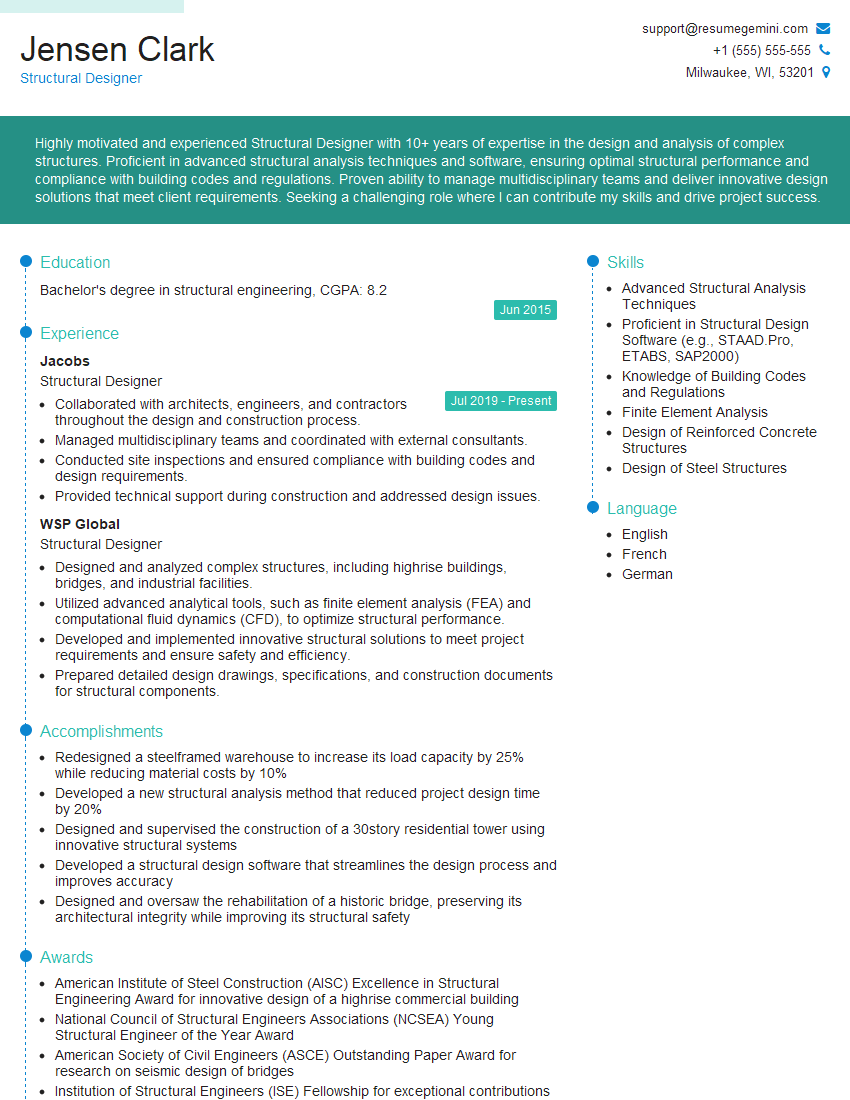
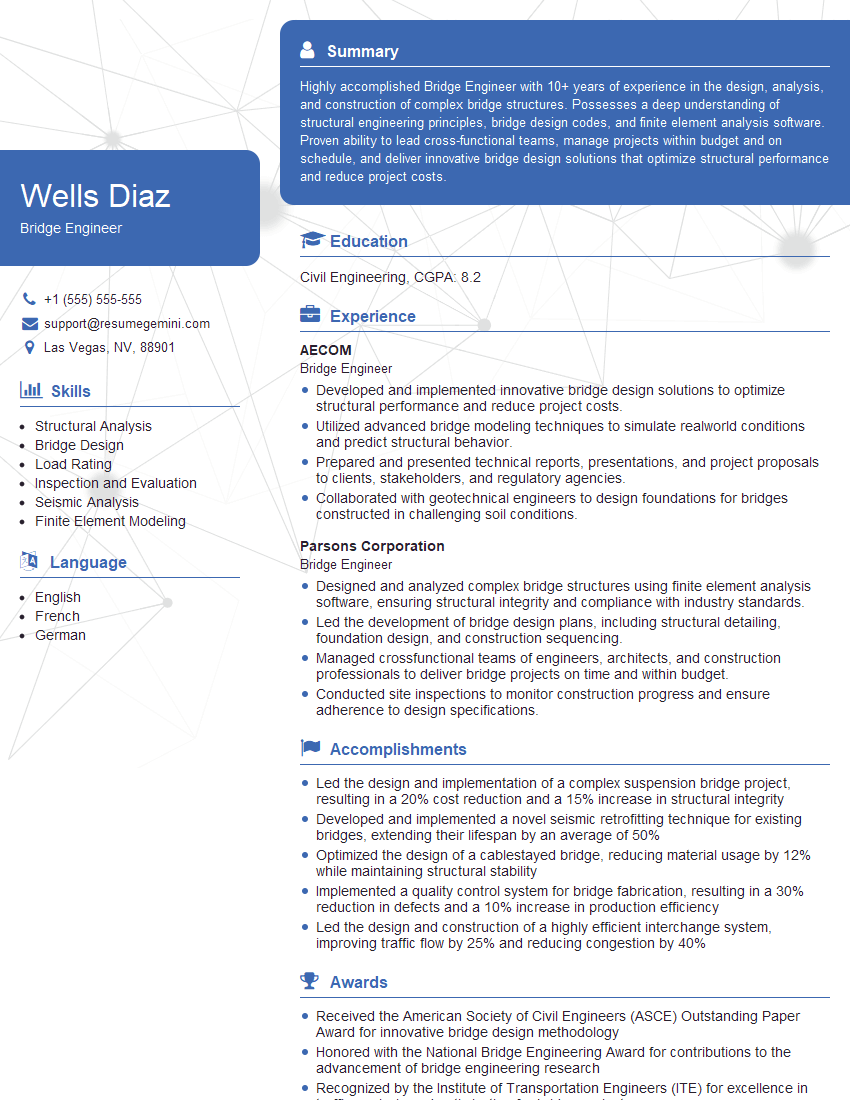
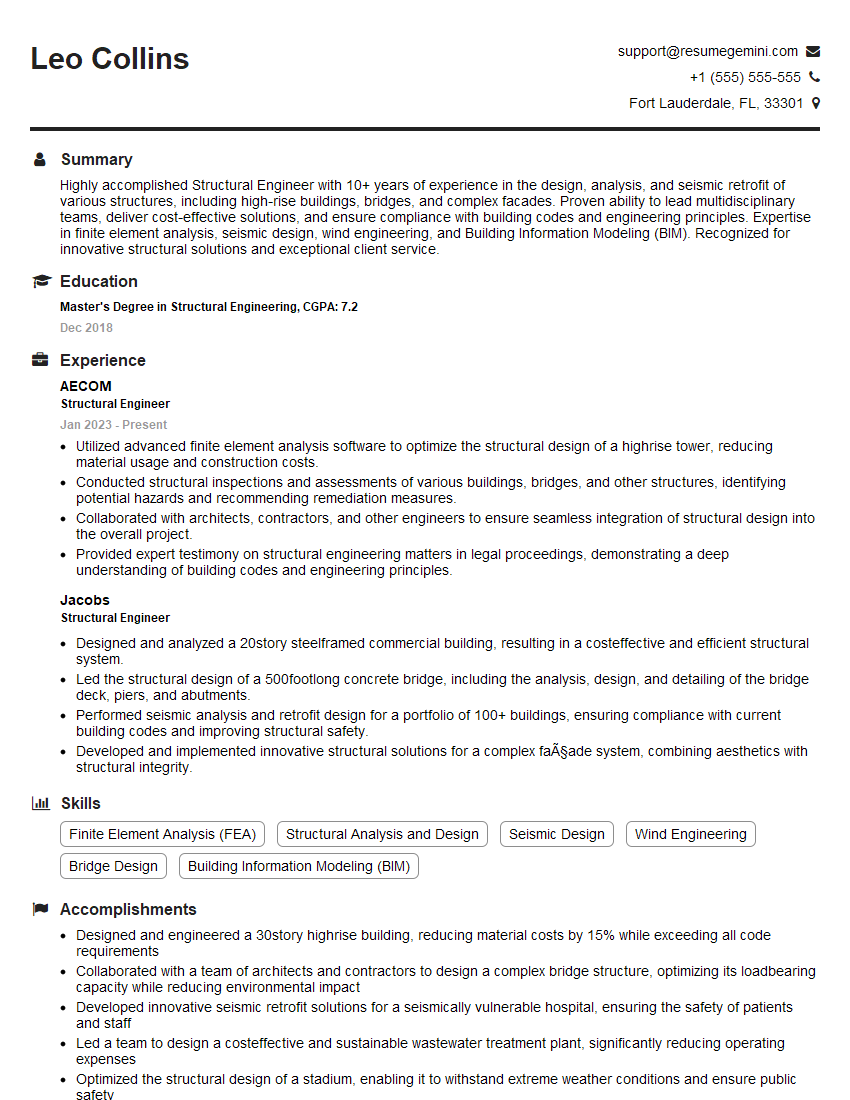
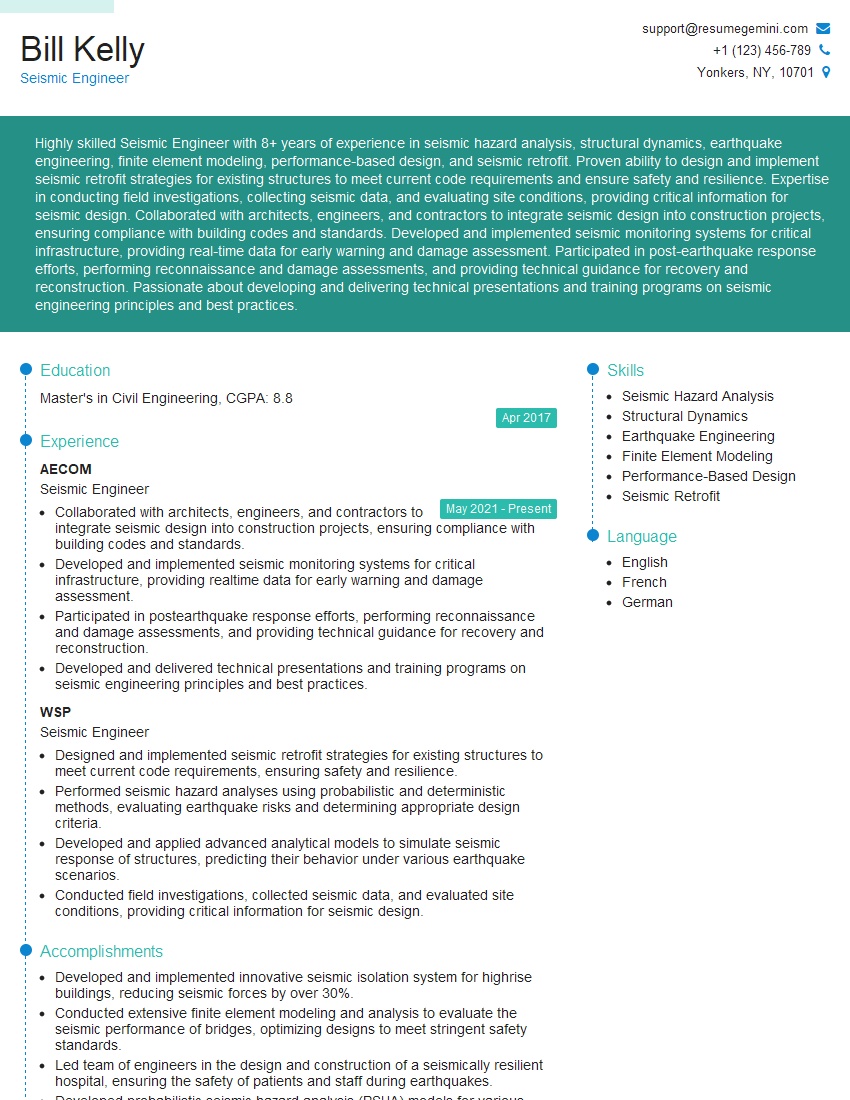
Mastering Structural Support opens doors to exciting and rewarding career opportunities in the construction and engineering industries. To maximize your chances of landing your dream role, a strong and ATS-friendly resume is crucial. ResumeGemini can help you create a professional resume that highlights your skills and experience effectively. We provide examples of resumes tailored specifically for Structural Support professionals to guide you through the process. Invest time in crafting a compelling resume—it’s your first impression on potential employers.
Explore more articles
Users Rating of Our Blogs
Share Your Experience
We value your feedback! Please rate our content and share your thoughts (optional).
What Readers Say About Our Blog
Attention music lovers!
Wow, All the best Sax Summer music !!!
Spotify: https://open.spotify.com/artist/6ShcdIT7rPVVaFEpgZQbUk
Apple Music: https://music.apple.com/fr/artist/jimmy-sax-black/1530501936
YouTube: https://music.youtube.com/browse/VLOLAK5uy_noClmC7abM6YpZsnySxRqt3LoalPf88No
Other Platforms and Free Downloads : https://fanlink.tv/jimmysaxblack
on google : https://www.google.com/search?q=22+AND+22+AND+22
on ChatGPT : https://chat.openai.com?q=who20jlJimmy20Black20Sax20Producer
Get back into the groove with Jimmy sax Black
Best regards,
Jimmy sax Black
www.jimmysaxblack.com
Hi I am a troller at The aquatic interview center and I suddenly went so fast in Roblox and it was gone when I reset.
Hi,
Business owners spend hours every week worrying about their website—or avoiding it because it feels overwhelming.
We’d like to take that off your plate:
$69/month. Everything handled.
Our team will:
Design a custom website—or completely overhaul your current one
Take care of hosting as an option
Handle edits and improvements—up to 60 minutes of work included every month
No setup fees, no annual commitments. Just a site that makes a strong first impression.
Find out if it’s right for you:
https://websolutionsgenius.com/awardwinningwebsites
Hello,
we currently offer a complimentary backlink and URL indexing test for search engine optimization professionals.
You can get complimentary indexing credits to test how link discovery works in practice.
No credit card is required and there is no recurring fee.
You can find details here:
https://wikipedia-backlinks.com/indexing/
Regards
NICE RESPONSE TO Q & A
hi
The aim of this message is regarding an unclaimed deposit of a deceased nationale that bears the same name as you. You are not relate to him as there are millions of people answering the names across around the world. But i will use my position to influence the release of the deposit to you for our mutual benefit.
Respond for full details and how to claim the deposit. This is 100% risk free. Send hello to my email id: lukachachibaialuka@gmail.com
Luka Chachibaialuka
Hey interviewgemini.com, just wanted to follow up on my last email.
We just launched Call the Monster, an parenting app that lets you summon friendly ‘monsters’ kids actually listen to.
We’re also running a giveaway for everyone who downloads the app. Since it’s brand new, there aren’t many users yet, which means you’ve got a much better chance of winning some great prizes.
You can check it out here: https://bit.ly/callamonsterapp
Or follow us on Instagram: https://www.instagram.com/callamonsterapp
Thanks,
Ryan
CEO – Call the Monster App
Hey interviewgemini.com, I saw your website and love your approach.
I just want this to look like spam email, but want to share something important to you. We just launched Call the Monster, a parenting app that lets you summon friendly ‘monsters’ kids actually listen to.
Parents are loving it for calming chaos before bedtime. Thought you might want to try it: https://bit.ly/callamonsterapp or just follow our fun monster lore on Instagram: https://www.instagram.com/callamonsterapp
Thanks,
Ryan
CEO – Call A Monster APP
To the interviewgemini.com Owner.
Dear interviewgemini.com Webmaster!
Hi interviewgemini.com Webmaster!
Dear interviewgemini.com Webmaster!
excellent
Hello,
We found issues with your domain’s email setup that may be sending your messages to spam or blocking them completely. InboxShield Mini shows you how to fix it in minutes — no tech skills required.
Scan your domain now for details: https://inboxshield-mini.com/
— Adam @ InboxShield Mini
support@inboxshield-mini.com
Reply STOP to unsubscribe
Hi, are you owner of interviewgemini.com? What if I told you I could help you find extra time in your schedule, reconnect with leads you didn’t even realize you missed, and bring in more “I want to work with you” conversations, without increasing your ad spend or hiring a full-time employee?
All with a flexible, budget-friendly service that could easily pay for itself. Sounds good?
Would it be nice to jump on a quick 10-minute call so I can show you exactly how we make this work?
Best,
Hapei
Marketing Director
Hey, I know you’re the owner of interviewgemini.com. I’ll be quick.
Fundraising for your business is tough and time-consuming. We make it easier by guaranteeing two private investor meetings each month, for six months. No demos, no pitch events – just direct introductions to active investors matched to your startup.
If youR17;re raising, this could help you build real momentum. Want me to send more info?
Hi, I represent an SEO company that specialises in getting you AI citations and higher rankings on Google. I’d like to offer you a 100% free SEO audit for your website. Would you be interested?
Hi, I represent an SEO company that specialises in getting you AI citations and higher rankings on Google. I’d like to offer you a 100% free SEO audit for your website. Would you be interested?