Interviews are opportunities to demonstrate your expertise, and this guide is here to help you shine. Explore the essential Swim Lessons interview questions that employers frequently ask, paired with strategies for crafting responses that set you apart from the competition.
Questions Asked in Swim Lessons Interview
Q 1. Describe your experience teaching different swim strokes.
My experience teaching swim strokes spans over ten years, encompassing all major strokes: freestyle, backstroke, breaststroke, and butterfly. I begin by breaking down each stroke into fundamental components. For example, with freestyle, we start with proper body position, breathing technique, and arm movements, gradually building up to a coordinated, efficient stroke. With backstroke, emphasis is placed on a strong kick and rhythmic arm pull. Breaststroke requires precise timing and body undulation, while butterfly necessitates exceptional upper body strength and coordination. I adapt my instruction based on the student’s individual needs and progress, using video analysis and drills to correct flaws and refine technique. I believe in a holistic approach, focusing not only on technical aspects, but also on endurance and overall water comfort. For instance, I might incorporate interval training to build stamina or introduce games to make learning fun and engaging.
Q 2. How do you adapt your teaching methods for various age groups?
Adapting my teaching methods to different age groups is crucial for effective learning. With young children (3-5 years), lessons focus on water acclimation, safety, and basic water skills like floating and kicking. Fun games and songs are incorporated to keep them engaged. For older children (6-12), we move towards more structured stroke instruction, emphasizing proper technique and building endurance. Competitive elements and drills are introduced to challenge them. Teenagers and adults benefit from a more individualized approach, focusing on refining techniques, correcting flaws, and achieving personal goals. I might incorporate goal setting techniques and advanced drills to cater to their needs and fitness levels. This age-appropriate approach ensures that each student feels challenged and supported at their own pace.
Q 3. What safety measures do you implement in your swim lessons?
Safety is my paramount concern. My lessons always begin with a thorough review of water safety rules, including entering and exiting the pool safely, understanding the pool’s depth markers, and never swimming alone. I maintain a low student-to-instructor ratio, ensuring I can provide adequate supervision to each student. Appropriate flotation devices, such as life jackets or kickboards, are used when needed. Emergency equipment, such as a first aid kit and rescue equipment, is readily available and I’m certified in water safety rescue techniques. I continuously scan the pool area, paying close attention to student behavior and addressing any safety concerns promptly. Clear communication with parents/guardians about safety protocols is essential before the start of lessons.
Q 4. Explain your approach to assessing a student’s swimming ability.
Assessing a student’s swimming ability involves a multifaceted approach. Initially, I observe their comfort level in the water, their ability to enter and exit the pool independently, and their basic water skills. I then assess their floating abilities, both on their backs and fronts. Next, I evaluate their kicking technique, arm movements, and breathing coordination, using progressively challenging drills. I pay attention to their endurance levels and how effectively they can combine these elements into coordinated strokes. I use a combination of formal assessments and informal observations to gain a complete picture of their skills and areas needing improvement. This might involve simple tests, like how long they can float or how many lengths they can swim with a specific stroke. The aim is to create a personalized learning plan based on their current abilities and developmental stage.
Q 5. How do you handle a student who is afraid of the water?
Addressing a student’s fear of water requires patience, understanding, and a gradual desensitization process. I begin by creating a safe and supportive environment, allowing the student to adjust at their own pace. I start with shallow water activities, focusing on building confidence and trust through playful interactions. Games that involve splashing or blowing bubbles can help them become more comfortable with the water. I then gradually introduce them to deeper water, always ensuring they feel secure and in control. Positive reinforcement and encouragement are key. Celebrating even small accomplishments builds their self-esteem and motivates them to progress. Remember, progress is made incrementally. Understanding the root cause of the fear might help, and adapting the approach accordingly is crucial for creating a positive experience.
Q 6. Describe your experience teaching students with special needs.
My experience includes teaching students with various special needs, including autism, Down syndrome, and physical disabilities. Adapting my teaching methods to suit their individual needs requires careful planning and flexibility. I incorporate visual aids, simplified instructions, and a structured routine to cater to students with autism. For students with physical limitations, modifications to drills and equipment are crucial. For example, I might use flotation devices for added support or adjust exercises to accommodate limited mobility. Communication and collaboration with parents/guardians and therapists is paramount. Understanding each student’s unique abilities and challenges allows me to create a tailored program that maximizes their potential while ensuring their safety and well-being. Celebrating each student’s achievements, no matter how small, creates a positive and inclusive learning environment.
Q 7. What are the common challenges faced by beginners in learning to swim?
Beginners often face several challenges in learning to swim. One major challenge is overcoming the fear of water, which can stem from a lack of confidence or prior negative experiences. Another common challenge is controlling their breathing while submerged. Beginners may struggle to coordinate their breathing with their arm and leg movements, leading to gasping for air and feeling overwhelmed. Maintaining proper body position and mastering basic water skills, like floating and kicking, can also prove difficult. Building strength and endurance is crucial for swimming, and beginners may struggle with the physical demands of learning strokes. It’s vital to address these challenges with patience and a gradual, supportive approach, emphasizing positive reinforcement and celebrating each milestone achieved.
Q 8. How do you maintain discipline and engagement in a class?
Maintaining discipline and engagement in swim lessons requires a balanced approach combining clear expectations, positive reinforcement, and fun activities. I begin by establishing a structured class routine with clear instructions and consistent expectations. This predictability helps children feel secure and understand what’s expected of them. For example, I might start each lesson with a brief warm-up game to get them focused and excited.
To maintain engagement, I incorporate a variety of teaching methods, moving between direct instruction, demonstrations, games, and songs. For instance, learning to float can be taught through a game where children try to be the ‘stillest’ or ‘calmest’ floaters. I also use positive reinforcement frequently, praising effort and improvement rather than just focusing on perfection. Finally, I ensure that I am approachable and build rapport with each student to create a trusting and supportive learning environment.
Addressing misbehavior requires a calm and consistent approach. I’ll often redirect a child’s attention to the activity, providing verbal reminders of the rules. If necessary, I’ll use brief time-outs or a quiet moment to allow the child to regain composure. The key is to remain positive and encouraging, helping the child understand the importance of following instructions for safety and to contribute to the enjoyment of the lesson for everyone.
Q 9. How do you create a positive and encouraging learning environment?
Creating a positive and encouraging learning environment is crucial for successful swim lessons. I achieve this through several key strategies. First, I foster a sense of community by encouraging teamwork and cooperation among students. Simple activities like paired exercises or relay games help build camaraderie.
Secondly, I use positive language and non-verbal cues consistently. Instead of saying ‘Don’t kick your legs like that,’ I would say ‘Let’s try kicking with straighter legs.’ A smile and encouraging tone can make all the difference in a child’s confidence.
Thirdly, celebrating small victories is vital. Every successful attempt, even a minor one, deserves acknowledgement. This could be a high-five, verbal praise, or a small sticker. I frequently remind children that learning takes time and effort, and that improvement is what matters most.
Finally, I adjust my teaching style to accommodate different learning styles and personalities. Some children learn best through visual demonstrations, while others respond better to kinesthetic learning. By adapting my approach, I ensure that every child feels supported and able to succeed.
Q 10. What are your methods for providing constructive feedback to students?
Constructive feedback is essential for student progress. I provide it using the ‘sandwich method’, starting with positive reinforcement, followed by specific suggestions for improvement, and ending with another positive statement to boost confidence. For example, I might say, ‘Your back float was excellent; your body was nice and straight. To make it even better, let’s focus on keeping your head completely still. Great job on holding your breath so well!’
I avoid harsh criticism or comparisons with other students. Instead, I focus on observable behaviors and offer specific, actionable advice. I often use visual aids or demonstrations to clarify my points. For instance, instead of saying ‘Your stroke is inefficient,’ I’ll demonstrate the proper arm motion and explain how it saves energy and improves speed.
I also use feedback sessions to help students set realistic goals. We’ll discuss their progress and plan steps for improvement. This collaborative approach empowers students and helps them take ownership of their learning.
Q 11. Explain your understanding of water safety regulations and procedures.
Understanding water safety regulations and procedures is paramount. This includes familiarity with local regulations regarding pool operation, lifeguard staffing requirements, and emergency response plans. I am well-versed in the proper use and maintenance of safety equipment, such as pool rescue aids and first aid kits.
I strictly adhere to rules regarding supervision ratios, ensuring sufficient adult attention to all swimmers, especially younger or less experienced students. I am also proficient in water entry and exit procedures, ensuring student safety at all times. I implement clear and consistent rules to prevent running, pushing, or diving in areas designated as shallow water. I regularly review these rules and their importance with students before each session.
Additionally, I am up to date on any relevant certifications and trainings necessary to operate within my jurisdiction. Keeping current on safety procedures ensures that all lessons are conducted in a safe and compliant environment.
Q 12. How do you address emergency situations in the water?
Addressing emergency situations in the water requires quick thinking and decisive action. My immediate response is to ensure the safety of all students, implementing my emergency procedures. This may involve rescuing a struggling swimmer using appropriate techniques based on their location and condition. This could include a reach, throw, row, go rescue depending on the situation. I would utilize the nearest available rescue equipment.
Simultaneously, I would initiate emergency protocols: activating emergency alarms or contacting emergency services (911), while providing appropriate first aid, if necessary, until professional assistance arrives. Clear communication with fellow instructors, lifeguards, and parents is critical during this process.
Thorough training and drills help to prepare for various emergencies and scenarios. Regularly reviewing emergency response protocols maintains preparedness and ensures that responses remain efficient and effective.
Q 13. Describe your experience with CPR and First Aid.
I hold current certifications in both CPR (Cardiopulmonary Resuscitation) and First Aid, regularly updated to maintain my proficiency. My training includes adult, child, and infant CPR techniques, as well as emergency oxygen administration. My First Aid certification covers a wide range of injuries and illnesses, including wound care, shock management, and dealing with heat-related emergencies.
I regularly practice these skills through refresher courses and drills to ensure my readiness in an emergency. I am confident in my ability to provide immediate and effective assistance should an accident or injury occur, while simultaneously following procedures to access higher levels of medical assistance if needed.
Q 14. How do you prevent accidents and injuries during swim lessons?
Accident prevention is the cornerstone of safe swim lessons. I start by conducting thorough risk assessments of the pool environment before each class, checking for any hazards like slippery surfaces, sharp objects, or faulty equipment.
I enforce strict rules regarding proper supervision, ensuring that appropriate adult-to-child ratios are maintained at all times, with particular attention given to less skilled swimmers and younger children. I use visual aids and clear instructions to teach students about pool safety, including rules about running, jumping, diving, and appropriate behavior around the water.
I implement a buddy system for independent swimmers, encouraging them to look out for one another while in the water. Regular check-ins during activities further ensure that all students remain safe and monitored. Proper warm-up and cool-down procedures minimize the risk of muscle strains and injury. Regularly reviewing safety procedures and adapting my approach to address any potential risks ensures that the learning environment remains as safe as possible.
Q 15. What are the different levels of swim instruction you are qualified to teach?
I’m certified to teach all levels of swim instruction, from beginner to advanced. This includes:
- Level 1 (Beginner): Focuses on water acclimation, basic safety skills like entering and exiting the water, blowing bubbles, and floating. Students at this level are typically learning the fundamentals and building confidence in the water.
- Level 2 (Intermediate): Builds upon Level 1, introducing front float, back float, kicking on the surface, and basic arm strokes. The goal is to develop coordinated movements and increased water comfort.
- Level 3 (Advanced Beginner): Students learn to coordinate arm and leg movements in the front crawl and backstroke, developing a basic rhythmic pattern. They also begin to work on turns and streamlining.
- Level 4 (Intermediate-Advanced): Focuses on refining stroke technique in all four major strokes (freestyle, backstroke, breaststroke, butterfly), improving speed, endurance, and efficiency. We also introduce more advanced skills like starts, turns, and open water swimming techniques.
- Level 5 (Advanced): At this level, swimmers focus on competitive technique, speed training, and endurance building. We also cover advanced open water swimming techniques and strategies.
My qualifications include [Mention your specific certifications, e.g., American Red Cross Water Safety Instructor, etc.]. I adapt my teaching style to suit each student’s individual needs and progress.
Career Expert Tips:
- Ace those interviews! Prepare effectively by reviewing the Top 50 Most Common Interview Questions on ResumeGemini.
- Navigate your job search with confidence! Explore a wide range of Career Tips on ResumeGemini. Learn about common challenges and recommendations to overcome them.
- Craft the perfect resume! Master the Art of Resume Writing with ResumeGemini’s guide. Showcase your unique qualifications and achievements effectively.
- Don’t miss out on holiday savings! Build your dream resume with ResumeGemini’s ATS optimized templates.
Q 16. What are the key elements of effective swimming technique?
Effective swimming technique involves a harmonious blend of body position, breathing, and coordinated movements. Key elements include:
- Body Position: Maintaining a streamlined, horizontal body position in the water minimizes drag and maximizes efficiency. Think of it like a torpedo – cutting through the water.
- Breathing: Efficient breathing is crucial for endurance. In freestyle, for example, exhaling fully underwater and inhaling quickly above water, is critical to avoid fatigue and maintain a steady pace.
- Rotation: Rotating the body along its longitudinal axis enhances propulsion and power in strokes like freestyle and backstroke. This improves efficiency and speed.
- Coordination: Arm and leg movements must be coordinated effectively to create a continuous and rhythmic flow. This is important in all the strokes. For example, in freestyle, the arm movements should be coordinated with the breathing and leg kick.
- Streamlining: Maintaining a streamlined body position between strokes and during turns is essential for reducing resistance.
I use visual aids, demonstrations, and drills to teach proper technique, regularly providing feedback to refine each student’s form.
Q 17. How do you ensure student progress and track their development?
Tracking student progress is crucial. I use a combination of methods:
- Regular Assessments: I conduct regular in-water assessments to observe skills and technique. This allows me to identify areas needing improvement and adjust my teaching strategies accordingly.
- Skill Checklists: I utilize checklists to document the acquisition of specific skills. These are tailored to each swim level and provide a clear picture of the student’s progress. For example, in Level 1, a checklist might include ‘blowing bubbles comfortably’, ‘floating on their back’, etc.
- Individualized Learning Plans: For students with learning challenges, or those who are progressing exceptionally quickly, individual learning plans are created to cater to their pace.
- Progress Reports/Parent Communication: Regular communication with parents keeps them informed of their child’s progress, both through verbal discussions and written reports.
This comprehensive approach helps me identify areas where extra support is needed or to recognize students ready for advancement.
Q 18. What methods do you use to assess student understanding and skills?
Assessment is an ongoing process, not a single event. I use various methods:
- Observation: Close observation of students in the water allows me to assess their technique, coordination, and safety skills.
- Skill Demonstrations: Students are given opportunities to demonstrate specific skills, allowing for direct evaluation.
- Questioning: I use questions to check students’ understanding of safety rules, proper technique, and water safety procedures.
- Written Tests (for older students): For older students, simple quizzes can help evaluate their knowledge about water safety and swimming techniques.
- Performance-Based Feedback: I give direct feedback following demonstrations and drills, providing both positive reinforcement and constructive criticism.
My assessments are designed to be supportive and encouraging, creating a positive learning environment while ensuring skills are mastered safely.
Q 19. How do you maintain proper hygiene and sanitation in the aquatic environment?
Maintaining a clean and safe aquatic environment is paramount. My approach includes:
- Pool Filtration and Sanitation: I ensure the pool is properly filtered and sanitized according to the established protocols of the facility. This includes regular checks of chlorine levels and pH balance.
- Showering Before Entering the Pool: I always remind students and their guardians to shower before entering the water to remove dirt and other contaminants.
- Hygiene Practices: I encourage frequent handwashing and emphasize the importance of avoiding spitting and other unhygienic habits in the pool.
- Regular Cleaning: I participate in pool deck and surrounding area cleanups to maintain a clean environment. This reduces the risk of slips, trips, and the spread of germs.
- Proper Disposal of Waste: Proper waste disposal is important. Following established procedures for disposing of any waste materials prevents pollution and ensures a safe environment.
I also report any issues concerning the cleanliness and hygiene of the pool to the appropriate facility personnel immediately.
Q 20. How do you communicate effectively with parents and guardians?
Effective communication with parents is essential. I strive to:
- Maintain Open Communication Channels: I encourage parents to ask questions and share concerns. I make myself readily available before and after classes for informal updates.
- Regular Progress Reports: I provide regular updates on their child’s progress, highlighting achievements and areas for improvement.
- Positive Reinforcement: I focus on positive feedback, emphasizing effort and progress rather than only focusing on results. Celebrating successes builds confidence.
- Address Concerns Promptly: I address any concerns or questions promptly and professionally. This promotes a positive and collaborative learning environment.
- Use Multiple Communication Methods: I use different methods such as email, text messages (if appropriate) or phone calls, to best communicate with parents.
Building a strong parent-instructor relationship fosters trust and ensures a positive learning experience for the child.
Q 21. Describe your experience working with different types of swimming pools.
I have experience working with various types of pools including:
- Indoor Pools: These offer a controlled environment with consistent temperature and water quality. Teaching in indoor pools often requires adapting to limited space and potential for echo.
- Outdoor Pools: Outdoor pools present challenges like varying weather conditions, sunlight glare, and potential for increased debris. Adaptability is key in teaching here.
- Wave Pools: Wave pools add a unique element of challenge and require specialized instruction, emphasizing safety and control in dynamic water conditions.
- Lap Pools: Lap pools provide a dedicated space for stroke technique refinement and endurance training. Instructors must be prepared to manage multiple students at once while maintaining appropriate distances.
- Recreational Pools: These pools are often used for group lessons, where managing a larger group of students requires strong organizational and communication skills.
My adaptability allows me to adjust my teaching strategies to accommodate the specific characteristics of each pool type, prioritizing safety and effective instruction.
Q 22. What is your approach to dealing with difficult or disruptive students?
My approach to managing disruptive students focuses on proactive strategies and positive reinforcement. I believe that understanding the root cause of the disruption is key. Sometimes, a student might be overwhelmed, scared, or simply not understanding the instructions.
- Positive Reinforcement: I frequently praise positive behavior and effort, even small achievements. For example, if a child is struggling with a specific skill, I’ll focus on their improvement and celebrate their small wins, like successfully floating for a few seconds longer than before. This builds confidence and encourages continued participation.
- Individual Attention: I take time to connect with each student individually. This helps me identify any underlying issues or anxieties that might be contributing to disruptive behavior. A quiet chat outside the pool can often uncover why a child is acting out.
- Clear Expectations and Consistent Rules: From the beginning, I establish clear expectations and consistent rules. These are explained in simple, age-appropriate terms. Consistency in enforcing these rules is vital for creating a safe and predictable learning environment.
- Redirection and Engagement: If a student becomes disruptive, I use redirection techniques to refocus their attention on the lesson. This might involve incorporating games or other engaging activities. For example, I might introduce a short game focusing on the skill they’re struggling with, turning a negative experience into a positive learning opportunity.
- Collaboration with Parents/Guardians: Open communication with parents is essential. I would discuss concerns and strategies for consistent support both inside and outside the pool.
In severe cases where behavior is consistently unsafe or disruptive, I wouldn’t hesitate to involve the pool management or parent to ensure the safety and well-being of all students.
Q 23. How do you manage your time effectively when teaching multiple classes?
Managing time effectively when teaching multiple classes requires careful planning and organization. I utilize a combination of techniques to ensure all classes receive adequate instruction.
- Detailed Lesson Plans: I create detailed lesson plans for each class, outlining specific objectives, activities, and timings. This ensures a smooth flow and prevents wasted time. This also allows me to adapt the lesson based on the class’s progress.
- Pre-Class Preparation: I prepare all necessary equipment and materials before each class. This minimizes downtime between lessons. Think of things like having kickboards readily accessible or having appropriate sized flotation devices ready.
- Efficient Transitions: I utilize smooth and efficient transitions between activities and exercises to maximize instructional time. Clearly stated instructions and structured activities help speed things up significantly.
- Staggered Class Schedules: If the pool schedule allows, staggering classes to avoid overlaps and ensure adequate preparation time is beneficial.
- Regular Review: I regularly review my teaching methods and time management to identify areas for improvement and optimization.
By implementing these strategies, I am able to provide high-quality instruction to all my classes while maintaining a structured and efficient schedule.
Q 24. What professional development activities have you undertaken recently?
Recently, I completed a comprehensive course on water safety and rescue techniques. This advanced my skills in recognizing and responding to emergencies, ultimately enhancing the safety of my students. I also participated in a workshop focused on inclusive teaching practices for children with disabilities.
This involved learning about adapting teaching methods for various physical and cognitive needs. For example, I learned how to modify exercises for children with limited mobility or sensory sensitivities. This is invaluable as it allows me to make swimming accessible to a wider range of students.
Q 25. How do you stay updated on the latest trends and best practices in swim instruction?
Staying updated on the latest trends and best practices is crucial in swim instruction. I do this through several channels.
- Professional Organizations: I am an active member of [mention relevant professional organizations, e.g., American Red Cross, YMCA]. Their publications, conferences, and workshops provide valuable insights into current research and best practices in the field.
- Journals and Publications: I regularly read journals and publications dedicated to aquatic safety and swim instruction. This helps me stay abreast of new research and innovative teaching techniques.
- Online Resources and Webinars: I utilize online resources and participate in webinars to access information and training from experts around the world.
- Networking with Colleagues: I actively network with colleagues and share ideas and experiences. Learning from other instructors and exchanging best practices is an effective way to continuously improve my teaching.
Q 26. How do you adapt your lessons to accommodate students with different learning styles?
I adapt my lessons to accommodate different learning styles by utilizing a variety of teaching methods and approaches. I believe that every learner is unique and requires a personalized approach.
- Visual Learners: For visual learners, I use demonstrations, visual aids, and videos to illustrate techniques. I might use colorful flotation devices or demonstrate the proper form repeatedly.
- Auditory Learners: For auditory learners, I provide clear and concise verbal instructions, using analogies and comparisons to help them understand complex concepts. Using verbal cues and rhythmic instruction can be very effective.
- Kinesthetic Learners: For kinesthetic learners, I emphasize hands-on practice and allow for plenty of opportunities to experiment and explore. I might use games or activities that involve physical movement to reinforce skills.
- Differentiated Instruction: I differentiate my instruction by providing various levels of support and challenge. Some students may need more individual attention, while others may benefit from more independent practice.
By catering to diverse learning preferences, I ensure that all students have the opportunity to learn and progress at their own pace.
Q 27. What is your philosophy on teaching swimming?
My philosophy on teaching swimming centers around safety, skill development, and fostering a love for the water. It’s not just about teaching strokes; it’s about building confidence and empowering students to become safe and competent swimmers.
- Safety First: Safety is my paramount concern. I prioritize creating a secure and positive learning environment where students feel comfortable and confident. Water safety rules and procedures are consistently reinforced.
- Progressive Skill Development: I believe in a progressive approach to skill development. I break down complex skills into smaller, manageable steps, allowing students to master each step before moving on to the next. This builds confidence and prevents frustration.
- Positive and Encouraging Atmosphere: I strive to create a positive and encouraging learning environment where students feel supported and motivated. Celebration of achievement, regardless of the size, is key.
- Individualized Attention: I recognize that each student learns at a different pace. I provide individualized attention and support to cater to each student’s unique needs and learning style.
Ultimately, my goal is to equip students with the skills and confidence to enjoy the water safely and independently.
Q 28. What are your salary expectations?
My salary expectations are in line with the industry standard for experienced swim instructors with my qualifications and experience. I am open to discussing this further based on the specific details of the position and benefits package offered.
Key Topics to Learn for Swim Lessons Interview
- Water Safety and Rescue Techniques: Understanding various water safety procedures, rescue methods, and emergency response protocols. Practical application includes demonstrating knowledge of appropriate responses to different scenarios, such as a struggling swimmer or a near-drowning incident.
- Teaching Methodologies and Age Appropriateness: Developing lesson plans tailored to different age groups and skill levels, incorporating effective communication and motivational techniques. Practical application involves describing your approach to teaching diverse learners, addressing individual needs and learning styles.
- Student Assessment and Progress Tracking: Accurately assessing student progress, identifying areas needing improvement, and adapting teaching strategies accordingly. Practical application involves explaining how you would monitor a student’s development and provide constructive feedback.
- Risk Management and Prevention: Implementing safety procedures to minimize risks, recognizing potential hazards, and taking preventative measures. Practical application involves describing your understanding of risk assessment and your strategies for maintaining a safe learning environment.
- Curriculum Design and Implementation: Understanding the structure and progression of swim lesson programs, aligning teaching with established learning objectives. Practical application includes explaining how you would design a lesson plan to meet specific learning outcomes.
- Child Psychology and Development: Understanding the emotional and developmental needs of children, adapting teaching styles to accommodate different personalities and learning styles. Practical application involves describing your strategies for building rapport with students and managing challenging behaviors.
- Legal and Ethical Considerations: Understanding relevant regulations, safety standards, and professional ethics related to swim instruction. Practical application includes demonstrating awareness of liability issues and child protection policies.
Next Steps
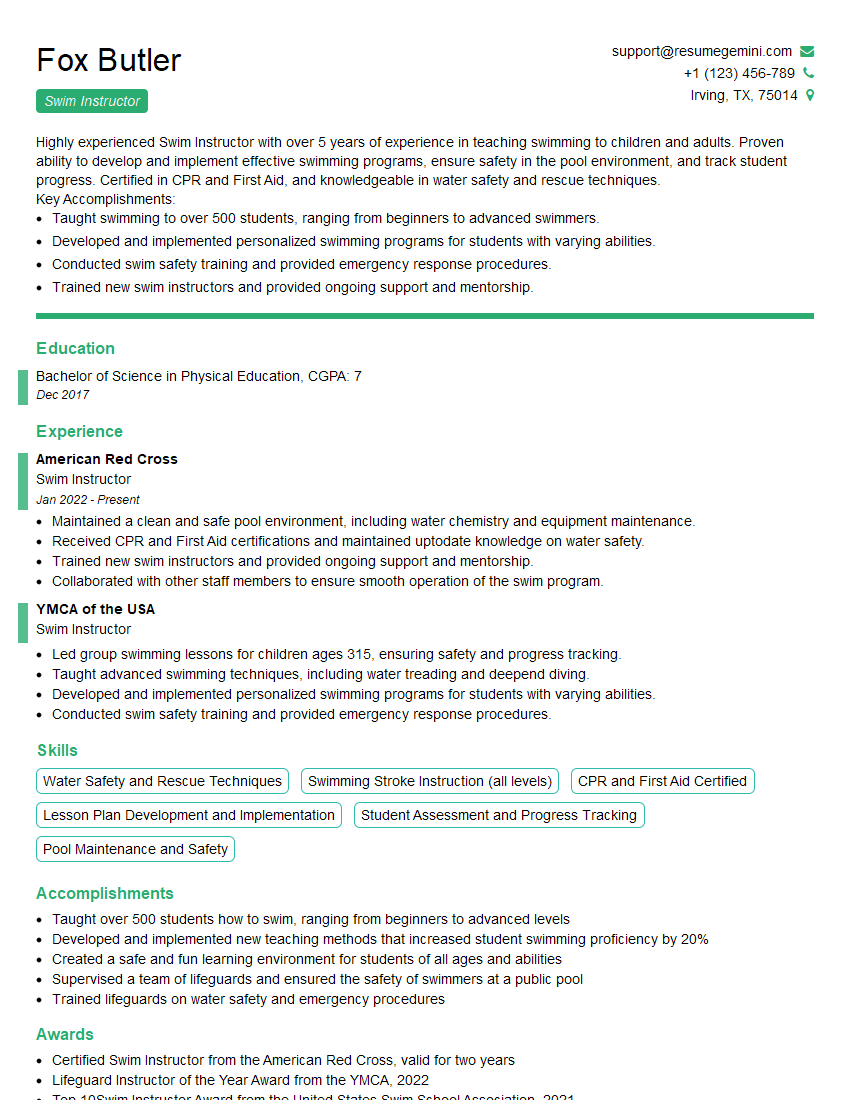
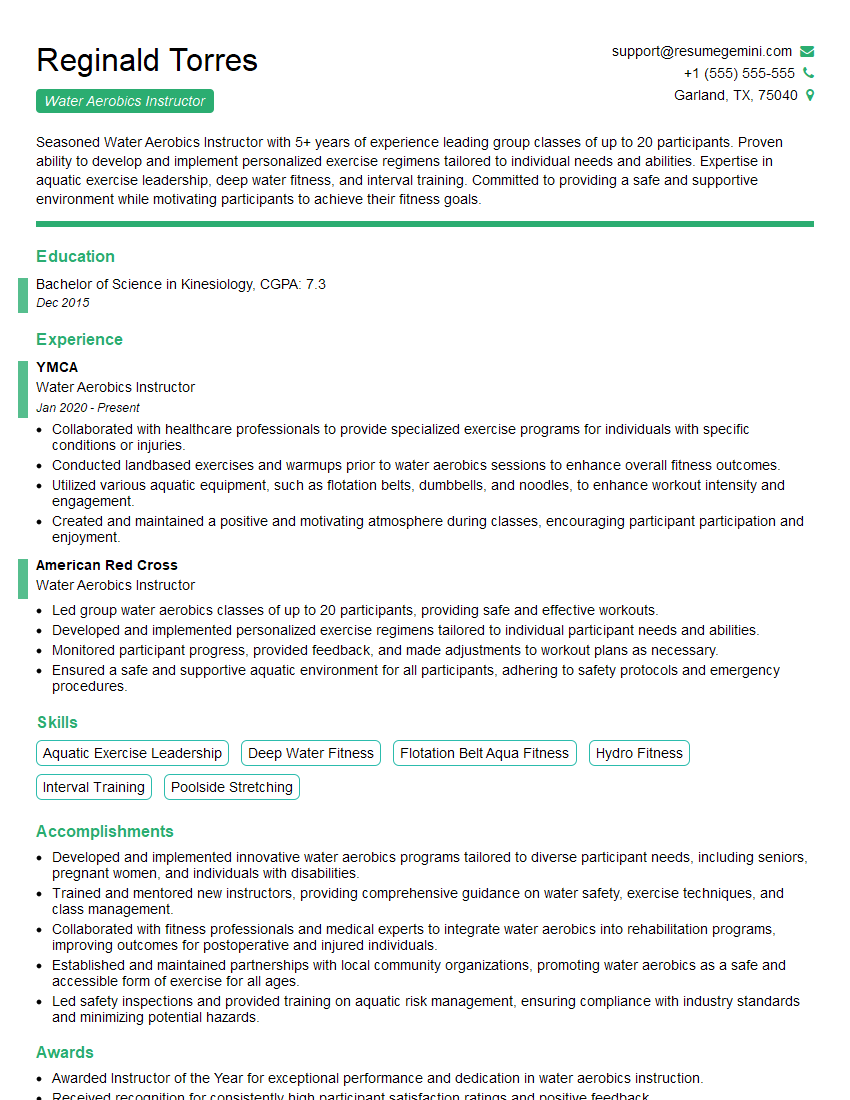
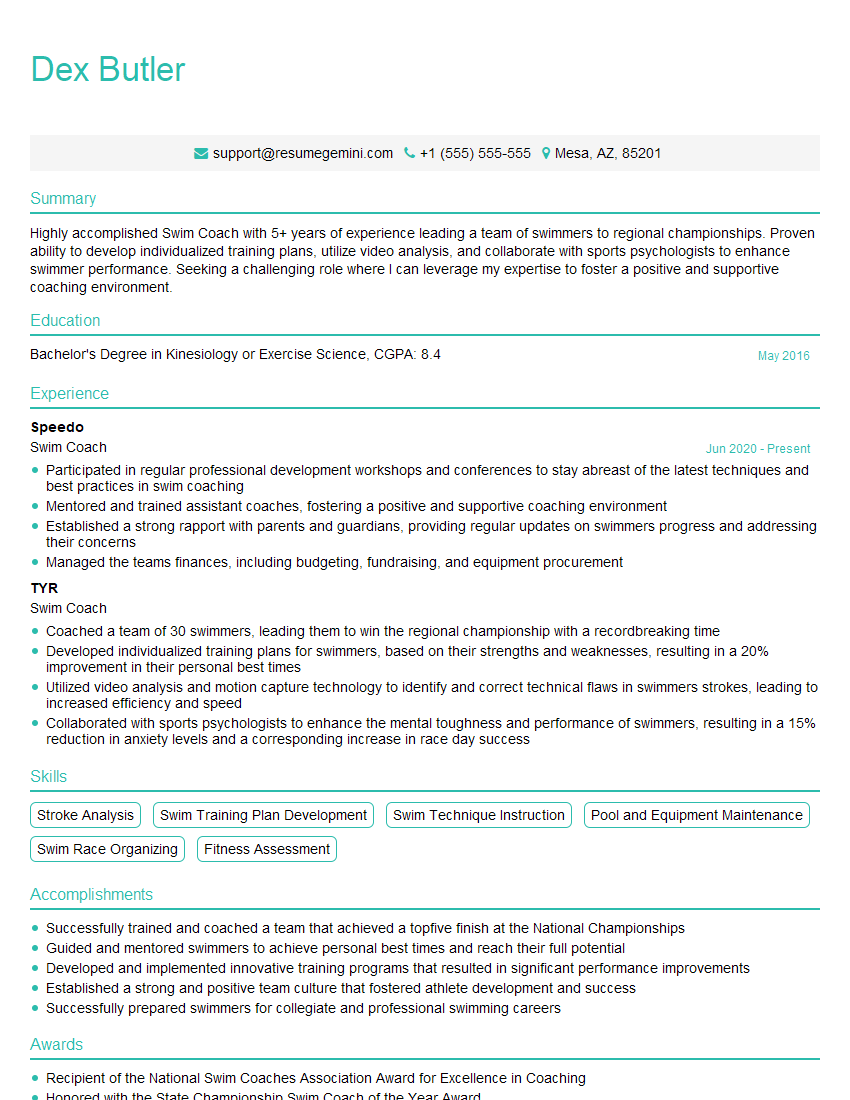
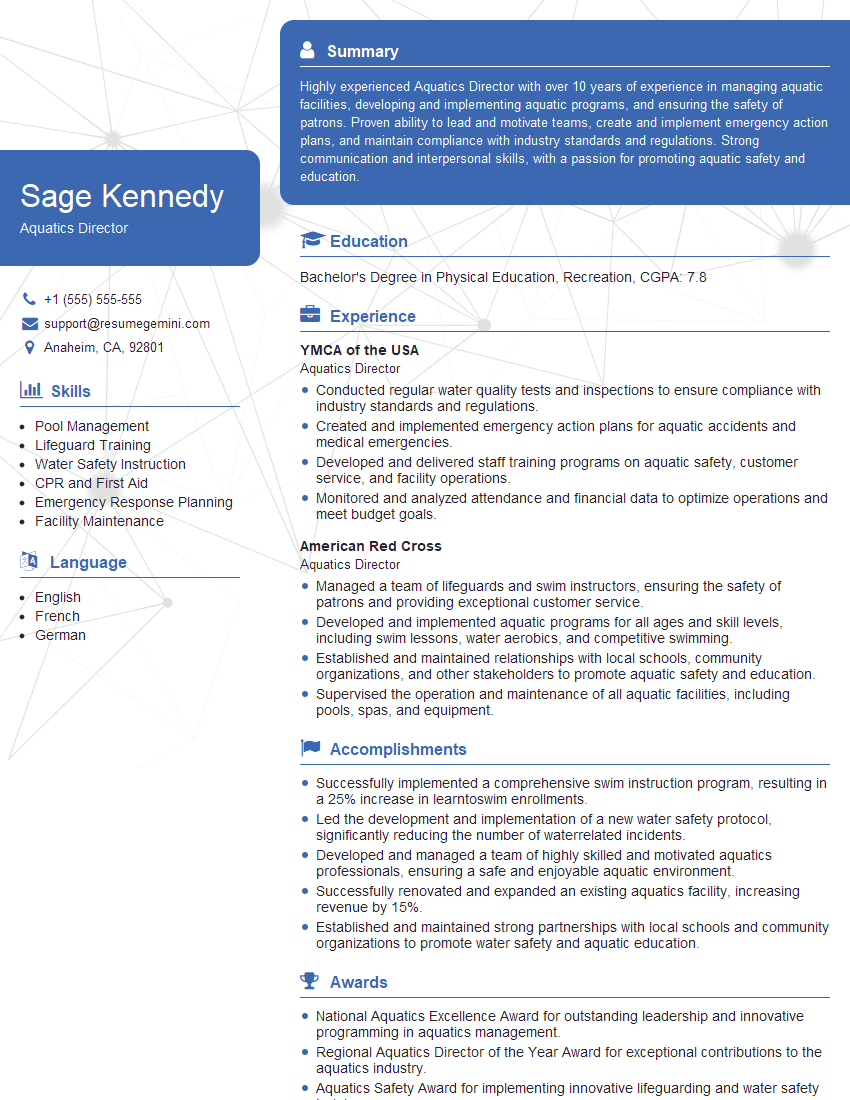
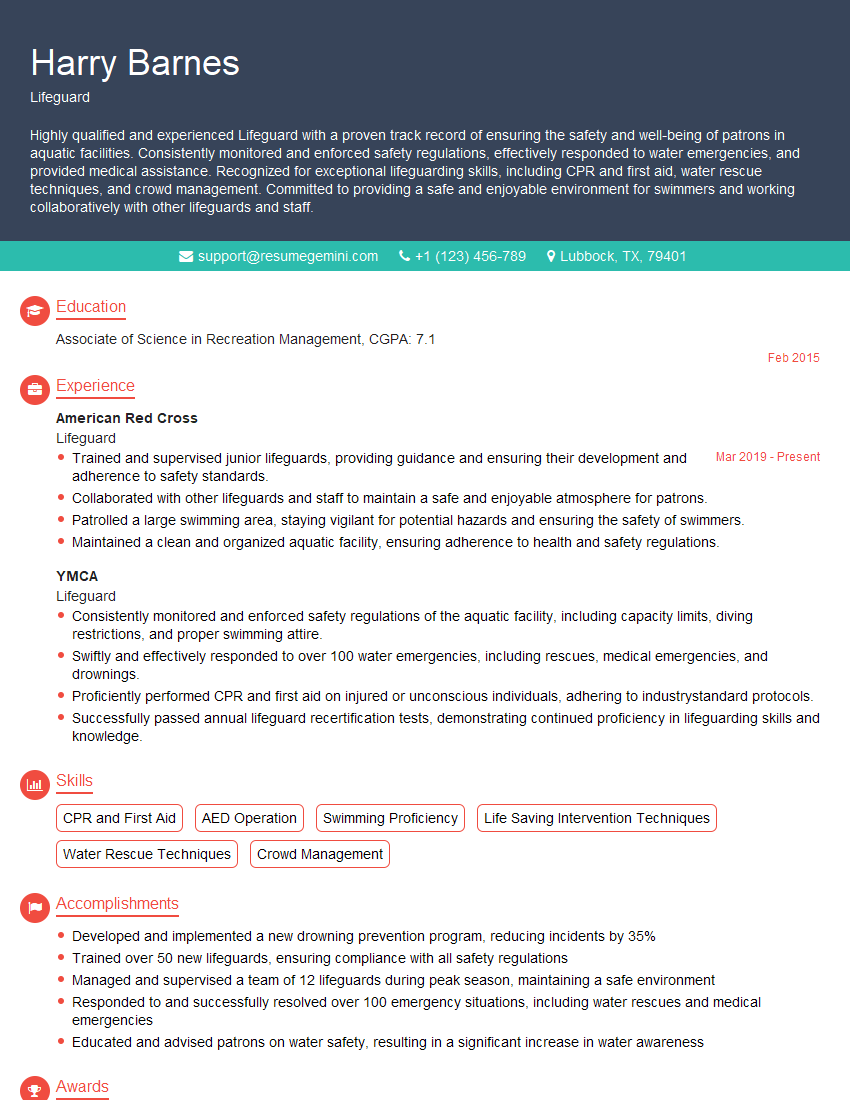
Mastering the key aspects of swim instruction is crucial for career advancement, leading to opportunities for increased responsibility and higher earning potential. A well-crafted, ATS-friendly resume is essential for showcasing your skills and experience to potential employers. To significantly enhance your job prospects, we strongly recommend using ResumeGemini to build a professional and impactful resume. ResumeGemini offers a user-friendly platform and provides examples of resumes tailored to the Swim Lessons field, helping you create a document that highlights your qualifications effectively.
Explore more articles
Users Rating of Our Blogs
Share Your Experience
We value your feedback! Please rate our content and share your thoughts (optional).
What Readers Say About Our Blog
Attention music lovers!
Wow, All the best Sax Summer music !!!
Spotify: https://open.spotify.com/artist/6ShcdIT7rPVVaFEpgZQbUk
Apple Music: https://music.apple.com/fr/artist/jimmy-sax-black/1530501936
YouTube: https://music.youtube.com/browse/VLOLAK5uy_noClmC7abM6YpZsnySxRqt3LoalPf88No
Other Platforms and Free Downloads : https://fanlink.tv/jimmysaxblack
on google : https://www.google.com/search?q=22+AND+22+AND+22
on ChatGPT : https://chat.openai.com?q=who20jlJimmy20Black20Sax20Producer
Get back into the groove with Jimmy sax Black
Best regards,
Jimmy sax Black
www.jimmysaxblack.com
Hi I am a troller at The aquatic interview center and I suddenly went so fast in Roblox and it was gone when I reset.
Hi,
Business owners spend hours every week worrying about their website—or avoiding it because it feels overwhelming.
We’d like to take that off your plate:
$69/month. Everything handled.
Our team will:
Design a custom website—or completely overhaul your current one
Take care of hosting as an option
Handle edits and improvements—up to 60 minutes of work included every month
No setup fees, no annual commitments. Just a site that makes a strong first impression.
Find out if it’s right for you:
https://websolutionsgenius.com/awardwinningwebsites
Hello,
we currently offer a complimentary backlink and URL indexing test for search engine optimization professionals.
You can get complimentary indexing credits to test how link discovery works in practice.
No credit card is required and there is no recurring fee.
You can find details here:
https://wikipedia-backlinks.com/indexing/
Regards
NICE RESPONSE TO Q & A
hi
The aim of this message is regarding an unclaimed deposit of a deceased nationale that bears the same name as you. You are not relate to him as there are millions of people answering the names across around the world. But i will use my position to influence the release of the deposit to you for our mutual benefit.
Respond for full details and how to claim the deposit. This is 100% risk free. Send hello to my email id: lukachachibaialuka@gmail.com
Luka Chachibaialuka
Hey interviewgemini.com, just wanted to follow up on my last email.
We just launched Call the Monster, an parenting app that lets you summon friendly ‘monsters’ kids actually listen to.
We’re also running a giveaway for everyone who downloads the app. Since it’s brand new, there aren’t many users yet, which means you’ve got a much better chance of winning some great prizes.
You can check it out here: https://bit.ly/callamonsterapp
Or follow us on Instagram: https://www.instagram.com/callamonsterapp
Thanks,
Ryan
CEO – Call the Monster App
Hey interviewgemini.com, I saw your website and love your approach.
I just want this to look like spam email, but want to share something important to you. We just launched Call the Monster, a parenting app that lets you summon friendly ‘monsters’ kids actually listen to.
Parents are loving it for calming chaos before bedtime. Thought you might want to try it: https://bit.ly/callamonsterapp or just follow our fun monster lore on Instagram: https://www.instagram.com/callamonsterapp
Thanks,
Ryan
CEO – Call A Monster APP
To the interviewgemini.com Owner.
Dear interviewgemini.com Webmaster!
Hi interviewgemini.com Webmaster!
Dear interviewgemini.com Webmaster!
excellent
Hello,
We found issues with your domain’s email setup that may be sending your messages to spam or blocking them completely. InboxShield Mini shows you how to fix it in minutes — no tech skills required.
Scan your domain now for details: https://inboxshield-mini.com/
— Adam @ InboxShield Mini
support@inboxshield-mini.com
Reply STOP to unsubscribe
Hi, are you owner of interviewgemini.com? What if I told you I could help you find extra time in your schedule, reconnect with leads you didn’t even realize you missed, and bring in more “I want to work with you” conversations, without increasing your ad spend or hiring a full-time employee?
All with a flexible, budget-friendly service that could easily pay for itself. Sounds good?
Would it be nice to jump on a quick 10-minute call so I can show you exactly how we make this work?
Best,
Hapei
Marketing Director
Hey, I know you’re the owner of interviewgemini.com. I’ll be quick.
Fundraising for your business is tough and time-consuming. We make it easier by guaranteeing two private investor meetings each month, for six months. No demos, no pitch events – just direct introductions to active investors matched to your startup.
If youR17;re raising, this could help you build real momentum. Want me to send more info?
Hi, I represent an SEO company that specialises in getting you AI citations and higher rankings on Google. I’d like to offer you a 100% free SEO audit for your website. Would you be interested?
Hi, I represent an SEO company that specialises in getting you AI citations and higher rankings on Google. I’d like to offer you a 100% free SEO audit for your website. Would you be interested?