Interviews are more than just a Q&A session—they’re a chance to prove your worth. This blog dives into essential System Architecture Analysis interview questions and expert tips to help you align your answers with what hiring managers are looking for. Start preparing to shine!
Questions Asked in System Architecture Analysis Interview
Q 1. Explain the difference between microservices and monolithic architecture.
Monolithic and microservices architectures represent two distinct approaches to building software applications. A monolithic architecture is like a single, large apartment building: all the functionalities (e.g., user accounts, payment processing, product catalog) reside within a single codebase and are deployed together. Changes require redeploying the entire application.
In contrast, a microservices architecture is like a collection of smaller, independent apartments. Each microservice focuses on a specific business function, has its own codebase, and can be deployed and scaled independently. For example, you might have separate microservices for user authentication, order management, and inventory tracking. Changes to one service don’t necessitate redeploying the entire system.
Key Differences Summarized:
- Deployment: Monolithic – all at once; Microservices – independent deployments
- Scalability: Monolithic – scale the entire application; Microservices – scale individual services
- Technology Stack: Monolithic – usually consistent; Microservices – flexibility in choosing technology stacks per service
- Fault Isolation: Monolithic – a bug can bring down the whole system; Microservices – failures are isolated to individual services
Choosing between these architectures depends on the application’s complexity, scalability needs, and team size. Small, simple applications may benefit from a monolithic approach for its simplicity. Large, complex applications often benefit from the flexibility and scalability of microservices.
Q 2. Describe your experience with different architectural patterns (e.g., MVC, MVVM, Microservices).
I have extensive experience with various architectural patterns, including MVC, MVVM, and microservices. Let’s examine each:
- MVC (Model-View-Controller): This is a classic pattern separating data (Model), user interface (View), and application logic (Controller). I’ve used MVC extensively in web applications, leveraging frameworks like Spring MVC (Java) and Django (Python). It’s particularly effective for managing the complexities of web interactions and maintaining a clear separation of concerns. A common example is a simple blog application, where MVC clearly separates the blog posts (Model), the way they are displayed (View), and actions like adding new posts (Controller).
- MVVM (Model-View-ViewModel): An evolution of MVC, MVVM is often preferred for applications with complex UIs, especially those using data binding. I’ve implemented MVVM in numerous projects using frameworks like Angular and WPF. The ViewModel acts as an intermediary, simplifying data handling and UI updates, making testing and maintenance easier. Think of a complex dashboard application; MVVM elegantly manages the intricate data flow and UI interactions.
- Microservices: I’ve designed and implemented several systems based on microservices architecture, employing technologies such as Docker and Kubernetes for containerization and orchestration. A recent project involved migrating a monolithic e-commerce platform to a microservices-based system. This provided significant improvements in scalability, resilience, and development speed. Each microservice was responsible for a specific aspect, such as user profiles, product catalogs, order processing, and payments. This modularity greatly simplified development and deployment.
My choice of pattern depends on project requirements. For simple applications, MVC or MVVM may suffice. Complex, scalable systems often benefit from a microservices approach.
Q 3. How do you choose the right database for a given application?
Selecting the right database is crucial for application performance and scalability. The decision depends on several factors:
- Data Model: Relational data (well-structured, with relationships between tables) is best suited for relational databases like MySQL, PostgreSQL, or SQL Server. NoSQL databases like MongoDB, Cassandra, or Redis are better for unstructured or semi-structured data and offer flexibility in scaling.
- Scalability Requirements: Do you need horizontal scalability (adding more servers) or vertical scalability (increasing resources on a single server)? NoSQL databases generally excel at horizontal scaling. Relational databases can be scaled horizontally but often with more complexity.
- Transactionality: Does your application require ACID properties (Atomicity, Consistency, Isolation, Durability)? Relational databases enforce ACID properties robustly. NoSQL databases may offer varying levels of transaction support depending on the specific database.
- Query Patterns: Consider the types of queries your application will execute. Relational databases are excellent for complex joins and aggregations. NoSQL databases may be more suitable for simpler queries focused on specific documents.
- Budget and Expertise: Factor in licensing costs, maintenance, and the availability of skilled personnel.
For example, a social media application might use a NoSQL database like Cassandra for handling massive amounts of user data and interactions, prioritizing scalability over complex transactions. In contrast, a banking application would likely prefer a relational database like PostgreSQL, prioritizing transaction integrity and data consistency.
Q 4. Explain CAP theorem and its implications on system design.
The CAP theorem, short for Consistency, Availability, and Partition tolerance, states that in a distributed data store, you can only achieve two of these three properties simultaneously. Let’s define each:
- Consistency: All nodes see the same data at the same time.
- Availability: Every request receives a response (non-error response) without a guarantee of the data being the most up-to-date.
- Partition tolerance: The system continues to operate despite network partitions (communication failures between nodes).
Implications on System Design: Partition tolerance is generally considered a must-have for distributed systems, as network failures are inevitable. Therefore, designers must choose between Consistency and Availability.
- CP (Consistency and Partition tolerance): Prioritizes data consistency over availability. During a network partition, some nodes may become unavailable to ensure data remains consistent across the remaining nodes. Example: A banking system, where data consistency is paramount.
- AP (Availability and Partition tolerance): Prioritizes availability over strong consistency. During a network partition, the system may return slightly stale data to maintain availability. Example: A social media feed, where it’s acceptable to see a slightly outdated post.
Understanding the CAP theorem is critical for making informed decisions about system architecture and trade-offs related to data consistency and availability.
Q 5. What are the trade-offs between scalability and consistency?
Scalability and consistency represent a fundamental trade-off in distributed systems. Scalability refers to the system’s ability to handle increasing amounts of data and traffic. Consistency refers to the guarantee that all nodes see the same data at the same time. Often, increasing scalability can compromise consistency, and vice versa.
Consider a globally distributed database: To achieve high availability and low latency for users around the world, you might employ a loosely consistent architecture (e.g., using eventual consistency). This means data may not be perfectly synchronized across all nodes immediately but will eventually converge. This approach enhances scalability by allowing independent writes to different regions, but it sacrifices strong, immediate consistency. Conversely, a system that prioritizes strong consistency might require more complex coordination and synchronization mechanisms, potentially impacting scalability.
The optimal balance depends on the specific application. An e-commerce system might prioritize eventual consistency for order processing to improve scalability, while a financial transaction system requires strong consistency to ensure accuracy and avoid errors.
Q 6. Describe your experience with cloud platforms (AWS, Azure, GCP).
I possess considerable experience working with major cloud platforms: AWS, Azure, and GCP. My experience encompasses various services within each platform:
- AWS: I’ve extensively used EC2 for virtual machine deployments, S3 for object storage, RDS for managed databases, Lambda for serverless computing, and other services like ECS and EKS for container orchestration. I’ve built and deployed several applications on AWS, leveraging its robust infrastructure and comprehensive suite of tools.
- Azure: My experience with Azure includes working with virtual machines (Azure VMs), Azure Blob Storage, Azure SQL Database, Azure Functions (serverless), and Azure Kubernetes Service (AKS). I’ve developed and managed applications on Azure, utilizing its integrated development environment and various DevOps tools.
- GCP: On GCP, I’ve utilized Compute Engine for virtual machines, Cloud Storage for object storage, Cloud SQL for managed databases, Cloud Functions for serverless computing, and Kubernetes Engine (GKE) for container orchestration. I’ve also worked with various GCP managed services for data analytics and machine learning.
I’m proficient in selecting the most appropriate cloud platform based on specific project requirements, cost considerations, and existing infrastructure. My experience spans across various aspects of cloud deployment, including infrastructure as code (IaC), networking, security, and monitoring.
Q 7. How do you ensure system security in your designs?
Security is paramount in all my designs. My approach is multi-layered and incorporates several key principles:
- Secure Design Principles: I follow secure coding practices, including input validation, output encoding, and proper error handling. I incorporate security considerations from the initial design phases, rather than as an afterthought.
- Authentication and Authorization: I leverage robust authentication mechanisms (e.g., OAuth 2.0, OpenID Connect) and authorization frameworks (e.g., role-based access control) to restrict access to sensitive resources based on user roles and permissions.
- Data Protection: Data encryption (both in transit and at rest) is essential. I use encryption protocols and key management systems to protect sensitive data. Data loss prevention (DLP) measures are also implemented to prevent unauthorized data exfiltration.
- Infrastructure Security: Secure cloud configurations, including network security groups, firewalls, and intrusion detection/prevention systems, are crucial. Regular security audits and penetration testing are integral to identifying and mitigating vulnerabilities.
- Vulnerability Management: Regular security scanning and patching are essential to address known vulnerabilities. I utilize tools and services to automate these processes.
Security is not a one-time activity but an ongoing process. Regular security reviews, incident response planning, and employee training are key elements of a comprehensive security strategy.
Q 8. Explain your approach to designing a highly available system.
Designing a highly available system hinges on minimizing downtime and ensuring continuous operation. This involves a multi-pronged approach focusing on redundancy, failover mechanisms, and proactive monitoring.
- Redundancy: This is the cornerstone. We replicate critical components – databases, application servers, load balancers – across multiple availability zones or even geographical regions. If one fails, others seamlessly take over.
- Failover Mechanisms: These mechanisms automatically switch traffic to a healthy instance when a failure is detected. Tools like heartbeat monitoring, health checks, and load balancers with failover capabilities are crucial here.
- Load Balancing: Distributing traffic across multiple servers prevents overload on any single instance. This ensures that even if one server goes down, others can handle the increased load.
- Automated Recovery: Scripting and automation are key. We automate failover processes and implement self-healing mechanisms to minimize manual intervention and response time during outages.
- Monitoring and Alerting: Continuous monitoring of system health and performance is essential. Alerting systems notify us of potential issues before they impact users. This allows for proactive maintenance and problem resolution.
For example, imagine an e-commerce website. By replicating databases across multiple regions and using a global load balancer, we ensure users in different parts of the world continue to access the site even if one data center experiences an outage.
Q 9. How do you handle database scaling in a high-traffic environment?
Database scaling in a high-traffic environment requires a strategic approach. The choice of strategy depends on factors like data volume, query patterns, and budget.
- Vertical Scaling (Scaling Up): This involves upgrading to a more powerful database server with more RAM, CPU, and storage. It’s simpler to implement but has limitations – eventually, you hit the hardware ceiling.
- Horizontal Scaling (Scaling Out): This is the preferred method for high-traffic scenarios. We distribute the database across multiple servers, using techniques like sharding or replication.
- Sharding: Partitions the database into smaller, manageable pieces (shards) distributed across different servers. Each shard handles a subset of the data, improving performance and scalability. This requires careful planning of data partitioning to optimize query performance.
- Replication: Creates copies of the database on multiple servers. This improves read performance and provides redundancy (read replicas). Master-slave or multi-master replication configurations can be employed, each with its own tradeoffs.
- Caching: Storing frequently accessed data in a fast cache (like Redis or Memcached) reduces load on the database server.
Imagine a social media platform. Using sharding, we could partition user data based on geographic location or user ID. Each shard would be hosted on a separate database server, allowing for horizontal scaling to handle millions of users and their interactions.
Q 10. Describe your experience with API design and RESTful principles.
API design is central to modern system architecture. I have extensive experience designing RESTful APIs, adhering to key principles for maintainability, scalability, and usability.
- RESTful Principles: I consistently apply REST principles – using HTTP methods (GET, POST, PUT, DELETE) correctly, leveraging status codes to communicate API responses, and designing a clear and consistent resource structure.
- Versioning: I implement versioning strategies (e.g., URI versioning, header-based versioning) to manage API evolution without breaking existing integrations.
- Documentation: Comprehensive API documentation (using Swagger or OpenAPI) is crucial. This ensures that developers can easily understand and integrate with the API.
- Security: Security is paramount. I employ authentication and authorization mechanisms (OAuth 2.0, JWT) to secure API endpoints and protect sensitive data.
- Error Handling: Clear and consistent error handling is essential. APIs should return informative error messages with appropriate HTTP status codes, guiding developers to resolve issues quickly.
In a recent project, I designed a RESTful API for a payment gateway. Using OAuth 2.0 for authentication, clear HTTP status codes for error handling, and comprehensive Swagger documentation, we ensured secure, reliable, and easily integrable payment processing.
Q 11. How do you design for fault tolerance and disaster recovery?
Designing for fault tolerance and disaster recovery involves anticipating potential failures and implementing strategies to mitigate their impact.
- Redundancy and Failover: Replicating critical components and implementing automated failover mechanisms, as described earlier, are fundamental.
- Circuit Breakers: These prevent cascading failures by stopping requests to a failing service temporarily. This protects other parts of the system.
- Database Backups and Recovery: Regular database backups and a well-defined recovery plan are essential. This ensures data can be restored in case of data loss.
- Disaster Recovery Plan: A comprehensive plan outlines procedures for recovering from major disasters (e.g., natural disasters, data center failures). This includes failover to a secondary data center and data restoration procedures.
- Testing: Regular disaster recovery drills and testing are vital to validate the effectiveness of the plan.
For example, a financial institution might replicate its databases across geographically diverse data centers and have a robust disaster recovery plan to ensure continued operation even during a major outage in its primary data center.
Q 12. Explain your experience with different message queues (e.g., Kafka, RabbitMQ).
Message queues are essential for building asynchronous and decoupled systems. My experience includes using Kafka and RabbitMQ.
- Kafka: A high-throughput, distributed streaming platform. Ideal for handling large volumes of real-time data streams. It excels in scenarios requiring high scalability and fault tolerance. Its partitioning and replication capabilities make it highly robust.
- RabbitMQ: A versatile message broker supporting various messaging protocols (AMQP, STOMP, MQTT). It’s suitable for a wider range of applications, including point-to-point and publish-subscribe messaging patterns. It offers features like message persistence and guaranteed delivery.
The choice between Kafka and RabbitMQ depends on the specific needs of the application. Kafka is better suited for high-volume streaming applications, while RabbitMQ offers more flexibility for various messaging patterns.
For instance, a real-time analytics platform might leverage Kafka’s streaming capabilities to process massive data streams from various sources, while an e-commerce platform might use RabbitMQ to manage order processing and inventory updates in a more flexible, asynchronous manner.
Q 13. How do you approach performance optimization in a system?
Performance optimization involves identifying bottlenecks and improving system responsiveness. It’s an iterative process.
- Profiling and Monitoring: Using profiling tools to identify performance bottlenecks (CPU, I/O, network). Monitoring tools provide insights into resource utilization and response times.
- Caching: Caching frequently accessed data reduces database load and improves response times.
- Database Optimization: Optimizing database queries, adding indexes, and using appropriate data structures can dramatically improve database performance.
- Code Optimization: Refactoring code to improve efficiency, using appropriate data structures and algorithms.
- Load Testing: Simulating real-world traffic to identify performance bottlenecks under stress.
For example, if a web application experiences slow response times, profiling might reveal that database queries are the bottleneck. Optimizing queries, adding indexes, or implementing caching could significantly improve performance.
Q 14. What are your preferred methods for system monitoring and logging?
Effective system monitoring and logging are crucial for maintaining system health and troubleshooting issues. My preferred methods include:
- Centralized Logging: Using a centralized logging system (e.g., ELK stack, Splunk) to aggregate logs from various components. This provides a single point for analyzing logs and identifying issues.
- Monitoring Tools: Employing monitoring tools (e.g., Prometheus, Grafana, Datadog) to track key metrics like CPU usage, memory consumption, network traffic, and application performance. Dashboards provide real-time visibility into system health.
- Alerting: Setting up alerts based on critical thresholds. This enables proactive intervention before issues escalate.
- Log Aggregation and Analysis: Analyzing logs to identify patterns, errors, and performance bottlenecks. This information is invaluable for debugging and improving system reliability.
For example, in a microservices architecture, a centralized logging system allows us to track requests across multiple services, making it easier to debug distributed system issues. Monitoring tools provide real-time dashboards showing the health and performance of individual microservices.
Q 15. Describe your experience with containerization technologies (e.g., Docker, Kubernetes).
Containerization technologies like Docker and Kubernetes are fundamental to modern system architecture. Docker provides lightweight, portable, self-contained units (containers) that package applications and their dependencies. This ensures consistency across different environments – development, testing, and production. Kubernetes, on the other hand, orchestrates these containers, managing their deployment, scaling, and networking across a cluster of machines.
In my previous role at Acme Corp, we migrated a legacy monolithic application to a microservices architecture using Docker and Kubernetes. We containerized each microservice individually, enabling independent deployment and scaling. This significantly improved our deployment speed and reduced downtime. We used Kubernetes to manage the entire cluster, automatically scaling resources based on demand. For example, during peak hours, Kubernetes automatically spun up additional instances of our order processing microservice to handle the increased load. We also leveraged Kubernetes’ built-in features for health checks and rollbacks, ensuring application stability and resilience.
My experience extends to utilizing Docker Compose for managing multi-container applications and using Kubernetes features like deployments, services, and ingress controllers for robust application management. I’m also familiar with container registries like Docker Hub and private registries for efficient image management and distribution.
Career Expert Tips:
- Ace those interviews! Prepare effectively by reviewing the Top 50 Most Common Interview Questions on ResumeGemini.
- Navigate your job search with confidence! Explore a wide range of Career Tips on ResumeGemini. Learn about common challenges and recommendations to overcome them.
- Craft the perfect resume! Master the Art of Resume Writing with ResumeGemini’s guide. Showcase your unique qualifications and achievements effectively.
- Don’t miss out on holiday savings! Build your dream resume with ResumeGemini’s ATS optimized templates.
Q 16. How do you balance short-term and long-term goals in system design?
Balancing short-term and long-term goals in system design is crucial. Think of it like building a house: you need to get it habitable quickly (short-term), but also ensure it’s structurally sound and energy-efficient for years to come (long-term). In system design, this often involves prioritizing features based on their impact and feasibility.
For example, a Minimum Viable Product (MVP) focuses on delivering core functionality quickly, addressing short-term business goals. This allows for early user feedback and iteration. However, the architecture must be scalable and extensible to accommodate future growth. This might involve choosing a database that can handle increased data volume and designing APIs with versioning in mind. We use a phased approach, often employing techniques like agile development. Each phase incorporates a balance, focusing on immediate needs while building towards a robust, scalable architecture that can adapt to changing requirements.
Techniques like using design patterns, employing modular design, and building in extensibility from the beginning contribute to this balance. It requires careful planning and prioritization, often involving trade-off decisions to meet both short-term and long-term objectives effectively.
Q 17. Explain your experience with different caching strategies.
Caching is vital for improving system performance by storing frequently accessed data closer to the application. Various strategies exist, each with trade-offs.
- CDN (Content Delivery Network): Caches static content like images and CSS globally, reducing latency for users across different geographical locations.
- Server-side caching (e.g., Redis, Memcached): Stores frequently accessed data in memory, providing very fast retrieval. This is ideal for session data, database query results, or frequently accessed API responses.
- Database caching: Utilizes features within the database itself, such as query caching or materialized views, to improve query performance.
- Client-side caching (e.g., browser caching): Stores data directly in the user’s browser, reducing the number of requests to the server. This is useful for static assets or data that doesn’t change frequently.
In a project involving a high-traffic e-commerce platform, we implemented a multi-tier caching strategy. A CDN handled static assets, Redis cached frequently accessed product information, and database caching optimized database queries. This resulted in a significant performance improvement and reduced the load on the database server. Careful consideration of cache invalidation strategies is crucial to ensure data consistency. Techniques such as cache tagging and time-to-live (TTL) settings help manage data freshness.
Q 18. How do you handle data consistency across multiple microservices?
Maintaining data consistency across multiple microservices is a significant challenge in distributed systems. Several approaches exist, each with its own strengths and weaknesses:
- Saga pattern: Uses a series of local transactions, each updating a single microservice’s database. If one transaction fails, compensating transactions are executed to roll back the changes. This ensures eventual consistency.
- Two-phase commit (2PC): Requires a transaction coordinator to ensure all microservices commit or rollback changes atomically. However, 2PC can be complex and prone to blocking issues.
- Eventual consistency with event sourcing and CQRS (Command Query Responsibility Segregation): Microservices publish events when data changes. Other microservices subscribe to these events and update their own data asynchronously. This approach prioritizes availability and scalability over immediate consistency. CQRS separates read and write operations, optimizing performance for each.
Choosing the right strategy depends heavily on the specific requirements of the system. For example, in a financial application requiring strict data consistency, 2PC might be preferred. In a less critical system, eventual consistency through event sourcing and CQRS might be a better choice due to its scalability and fault tolerance.
In a recent project, we utilized the Saga pattern combined with event sourcing. This allowed for independent microservice development and deployment while maintaining eventual consistency of data across the system. Careful consideration of event ordering and error handling was crucial to ensure data integrity.
Q 19. How do you design for system scalability?
Designing for scalability involves building a system that can handle increasing workloads gracefully. Key considerations include:
- Horizontal scaling: Adding more servers to the system to distribute the load. This is generally preferred over vertical scaling due to its cost-effectiveness and flexibility.
- Vertical scaling: Upgrading the hardware (CPU, memory, etc.) of existing servers. This is easier to implement but has limitations.
- Load balancing: Distributing incoming requests across multiple servers to prevent any single server from being overloaded.
- Database sharding: Partitioning a database across multiple servers to improve query performance and scalability.
- Microservices architecture: Decomposing the system into smaller, independent services that can be scaled independently.
For example, a video streaming platform needs to handle a huge influx of users during peak viewing times. Horizontal scaling with load balancing is crucial here. By adding more servers and intelligently distributing the traffic, the platform can handle millions of concurrent users without performance degradation. Asynchronous processing using message queues can further improve scalability by decoupling components and allowing independent scaling of different parts of the system.
Q 20. Describe your experience with version control systems (e.g., Git).
Version control systems (VCS), primarily Git, are indispensable for collaborative software development. Git allows multiple developers to work concurrently on the same codebase, track changes, manage different versions, and revert to previous states if necessary.
My experience with Git includes branching strategies (e.g., Gitflow, GitHub Flow), merging code, resolving conflicts, using pull requests for code reviews, and managing remote repositories. I’m proficient in using Git commands for various tasks, such as git commit, git push, git pull, git merge, and git rebase. I understand the importance of clear commit messages for maintainability and collaboration. Furthermore, I have experience with collaborative platforms like GitHub and GitLab, leveraging their features for issue tracking, code reviews, and project management. This includes working with pull requests, resolving merge conflicts collaboratively, and using issue trackers to manage bugs and feature requests.
Q 21. How do you approach the design of a system with non-functional requirements (e.g., security, performance)?
Non-functional requirements (NFRs) like security, performance, scalability, and maintainability are just as important as functional requirements. They define the quality attributes of the system.
A robust security strategy, incorporating authentication, authorization, input validation, and secure coding practices, is fundamental. Performance is addressed through efficient algorithms, caching, database optimization, and load testing. Scalability is designed into the architecture from the outset, considering horizontal scaling, load balancing, and database sharding. Maintainability is ensured through modular design, clear code documentation, and automated testing.
For instance, in a banking application, security is paramount. We would implement robust authentication mechanisms, data encryption at rest and in transit, and regular security audits. Performance would be addressed through optimized database queries and efficient caching strategies. Scalability would be ensured through a microservices architecture and horizontal scaling. The entire development process would be meticulously documented for easy understanding and maintenance.
Addressing NFRs often requires a holistic approach, integrating security and performance considerations throughout the design and development process rather than as an afterthought. This often involves employing specific technologies and frameworks designed to meet these requirements. For example, using a secure web framework, implementing appropriate logging and monitoring, and choosing a database optimized for performance are all key considerations.
Q 22. Explain your experience with different architectural patterns for handling asynchronous operations.
Asynchronous operations are crucial for building responsive and scalable systems. I’ve extensive experience with several architectural patterns designed to handle them efficiently. These include:
- Message Queues (e.g., RabbitMQ, Kafka): This pattern decouples services by using a message broker as an intermediary. A service publishes a message to the queue, and another service consumes it asynchronously. This is ideal for scenarios requiring high throughput and fault tolerance, such as order processing or event logging. For example, in an e-commerce system, order placement can be handled asynchronously. The order service places the order details in a queue, and a separate payment processing service consumes the message and handles the payment asynchronously. This ensures that the order placement is not blocked while waiting for payment confirmation.
- Event Sourcing: This pattern captures all changes to the system state as a sequence of events. This allows for asynchronous processing of these events and simplifies auditing and replaying the system’s history. For example, in a banking system, every transaction is an event. These events are stored, allowing for asynchronous reconciliation and reporting, which is critical for compliance and audit trails.
- Background Tasks/Workers (e.g., Celery, Redis Queue): These patterns dedicate separate processes or threads to handle long-running or resource-intensive tasks in the background, preventing blocking the main application thread. A good example is sending email notifications. Instead of blocking the user interface, the application places a task in a queue to be processed asynchronously by background workers.
- Reactive Programming (e.g., RxJava, Reactor): This paradigm handles asynchronous operations using streams of data, allowing for efficient processing and management of events. This is well-suited for systems that handle a high volume of concurrent requests. Imagine a real-time stock ticker; reactive programming would be excellent at managing the constant stream of updates efficiently.
The choice of pattern depends on factors such as the complexity of the operations, the required level of fault tolerance, and the overall system architecture.
Q 23. How do you ensure data integrity in your system designs?
Data integrity is paramount in any system design. My approach involves a multi-layered strategy:
- Database Transactions: Using ACID properties (Atomicity, Consistency, Isolation, Durability) within database transactions ensures that data modifications are atomic and consistent, even in the event of failures. This is fundamental to maintaining data integrity, especially in scenarios involving multiple concurrent updates.
- Data Validation: Implementing robust validation at various layers (frontend, backend, database) helps prevent invalid data from entering the system. This can involve using data types, constraints, regular expressions, and business rules.
- Checksums and Hashing: Using techniques like checksums or cryptographic hashing allows for verification of data integrity during storage and transmission. Any tampering will be immediately detected.
- Versioning: Implementing versioning mechanisms helps track changes to data over time and enables rollback in case of errors. This is vital for auditing and recovery.
- Data Replication and Backup: Implementing data replication across multiple servers and regular backups provides protection against data loss and ensures high availability. This protects against various failures, such as hardware failures and data corruption.
- Auditing and Logging: Comprehensive auditing and logging mechanisms allow for tracking data changes and identifying potential integrity breaches. This aids in debugging and identifying potential security vulnerabilities.
Furthermore, I leverage appropriate technologies and frameworks that inherently support data integrity. For example, choosing a database with strong transactional capabilities and employing ORM frameworks that enforce data consistency are key aspects of my design process.
Q 24. Describe a time you had to make a difficult architectural decision. What were the trade-offs?
In a previous project, we faced a challenging decision regarding the choice of database technology. We needed a system to handle a large volume of rapidly changing data and provide real-time analytics. The options were a traditional relational database (RDBMS) and a NoSQL document database.
The RDBMS offered strong data consistency and transactional capabilities, but its performance under heavy write load and complex queries was a concern. The NoSQL database offered better scalability and performance for handling high volumes of writes, but it lacked the strong data consistency guarantees of the RDBMS. The trade-offs involved balancing the need for speed and scalability with the need for data consistency and transactional integrity.
We ultimately opted for a hybrid approach, employing a NoSQL database for handling the high volume of write operations and a separate RDBMS for critical data that required strong transactional guarantees. This allowed us to leverage the strengths of both technologies while mitigating their weaknesses. The added complexity in managing two databases was a trade-off we accepted to ensure both performance and data integrity. We also implemented robust data synchronization mechanisms to ensure consistency between the two databases.
Q 25. What are some common anti-patterns in system architecture?
Several common anti-patterns can significantly hinder system scalability, maintainability, and performance. Some prominent examples include:
- God Class/Object: A single class or object that handles too many responsibilities, making it difficult to understand, maintain, and test. This often leads to tight coupling and low cohesion.
- Spaghetti Code: Unstructured and poorly organized code with complex and unpredictable flow, making it hard to follow and debug. This usually stems from lack of proper design and planning.
- Big Ball of Mud: A system lacking clear architecture, with components tightly coupled and poorly documented. This often results from rapid development without a defined strategy.
- Reinventing the Wheel: Developing solutions that already exist in libraries or frameworks. This wastes resources and increases the risk of errors.
- Premature Optimization: Optimizing code before it’s necessary, which can lead to complex and less maintainable code.
- Ignoring Security: Neglecting security considerations during the design and implementation phases, leading to vulnerabilities.
- Lack of Modularity: Creating tightly coupled components that are difficult to reuse, replace, or modify independently.
These anti-patterns emphasize the importance of a well-defined architecture, modular design, clean code practices, and thorough testing to ensure system robustness.
Q 26. How do you stay up-to-date with the latest technologies and trends in system architecture?
Staying current in the ever-evolving field of system architecture requires a proactive approach. I utilize several methods to maintain my knowledge:
- Following Industry Blogs and Publications: I regularly read blogs, articles, and publications from leading tech companies and experts. This keeps me informed about new trends and best practices.
- Attending Conferences and Workshops: Participating in industry conferences and workshops offers opportunities to learn from leading experts and network with colleagues.
- Online Courses and Tutorials: I utilize online platforms to take courses and tutorials on emerging technologies and architectural patterns.
- Contributing to Open Source Projects: Contributing to open-source projects provides hands-on experience with different technologies and allows for learning from others.
- Experimentation and Prototyping: I often experiment with new technologies and frameworks through prototyping, gaining practical experience and understanding their strengths and weaknesses.
- Networking and Collaboration: Engaging with the broader technical community through discussions and collaborations allows for knowledge sharing and exposure to different perspectives.
This multifaceted approach ensures I stay informed and adapt to the latest innovations in system architecture.
Q 27. Explain your understanding of DevOps principles and how they apply to system architecture.
DevOps principles are deeply intertwined with system architecture. A well-designed architecture is crucial for enabling the automation and continuous delivery pipelines that are central to DevOps. Key areas of overlap include:
- Infrastructure as Code (IaC): Using IaC tools (e.g., Terraform, Ansible) allows for automating the provisioning and management of infrastructure, making deployments faster and more reliable. This aligns directly with the architectural design; the architecture should be designed in a way that can be easily automated through IaC.
- Microservices Architecture: Microservices are inherently well-suited for DevOps practices, as they promote independent deployments, faster release cycles, and improved fault isolation.
- Monitoring and Logging: Effective monitoring and logging are critical for both DevOps and system architecture. The architecture should incorporate mechanisms for collecting and analyzing logs and metrics to provide real-time insights into system health and performance. This supports efficient troubleshooting and incident response.
- Automated Testing: A well-structured architecture supports automated testing at various levels, which is vital for continuous integration and quality assurance.
In essence, successful DevOps implementation depends heavily on a system architecture that supports automation, modularity, scalability, and observability.
Q 28. How would you design a system to handle a sudden surge in traffic?
Designing a system to handle sudden traffic surges requires a scalable and resilient architecture. My approach involves several key strategies:
- Horizontal Scaling: Employing a horizontally scalable architecture allows for adding more resources (servers, instances) dynamically to handle increased load. This is a key principle for handling surges in traffic.
- Load Balancing: Implementing load balancing distributes incoming traffic across multiple servers, preventing any single server from being overwhelmed. This ensures even distribution of load and improved resilience.
- Caching: Caching frequently accessed data in memory or a distributed cache (e.g., Redis, Memcached) significantly reduces the load on the backend servers. This improves response times and reduces server load under pressure.
- Database Optimization: Optimizing the database schema and queries is crucial for handling increased load. This includes indexing, query optimization, and connection pooling.
- Circuit Breakers: Implementing circuit breakers prevents cascading failures by stopping requests to failing services. This protects the overall system during peak times.
- Rate Limiting: Setting rate limits can prevent the system from being overwhelmed by malicious or unintended traffic spikes. This safeguards the system from being overwhelmed by abusive requests.
These measures, implemented strategically, create a system that is robust and capable of handling unexpected traffic fluctuations without significant performance degradation. The specific implementation would depend on the nature of the application and the expected traffic patterns.
Key Topics to Learn for System Architecture Analysis Interview
- Understanding Architectural Styles: Explore various architectural patterns like microservices, layered architecture, event-driven architecture, and their respective strengths and weaknesses. Consider scenarios where each would be most appropriate.
- Scalability and Performance Analysis: Learn to analyze system performance bottlenecks, identify scalability challenges, and propose solutions for improving efficiency and handling increased load. Practical application: Designing a system to handle a sudden surge in users.
- Data Modeling and Database Design: Master different database models (relational, NoSQL), understand normalization principles, and be able to design efficient database schemas for specific applications. Consider factors like data consistency, scalability, and query performance.
- Security Considerations: Discuss common security threats and vulnerabilities in system architecture. Understand how to incorporate security best practices throughout the design process, including authentication, authorization, and data encryption.
- API Design and Integration: Gain proficiency in designing RESTful APIs and integrating different systems using various communication protocols. Focus on aspects like API documentation, versioning, and error handling.
- Deployment and Infrastructure: Familiarize yourself with cloud platforms (AWS, Azure, GCP) and containerization technologies (Docker, Kubernetes). Understand the implications of infrastructure choices on system architecture and performance.
- Non-Functional Requirements: Go beyond functional requirements and understand the importance of non-functional requirements like availability, reliability, maintainability, and usability in the design process. Be prepared to discuss trade-offs between different requirements.
Next Steps
Mastering System Architecture Analysis is crucial for career advancement in the tech industry, opening doors to leadership roles and significantly increasing your earning potential. A strong understanding of these principles showcases your ability to design robust, scalable, and secure systems, making you a highly valuable asset to any organization.
To maximize your job prospects, create an ATS-friendly resume that highlights your skills and experience effectively. ResumeGemini is a trusted resource that can help you build a professional and impactful resume tailored to your specific needs. We provide examples of resumes specifically designed for candidates in System Architecture Analysis to give you a head start.
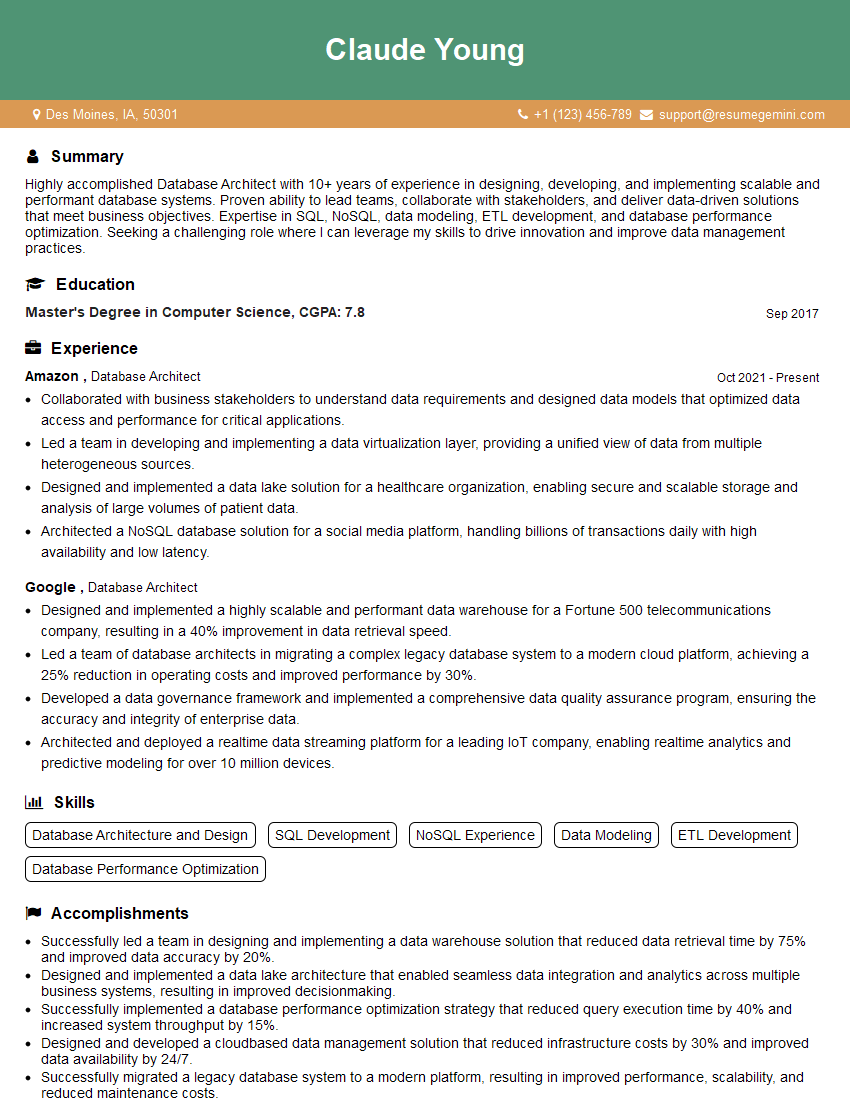
Database Architect Resume Sample
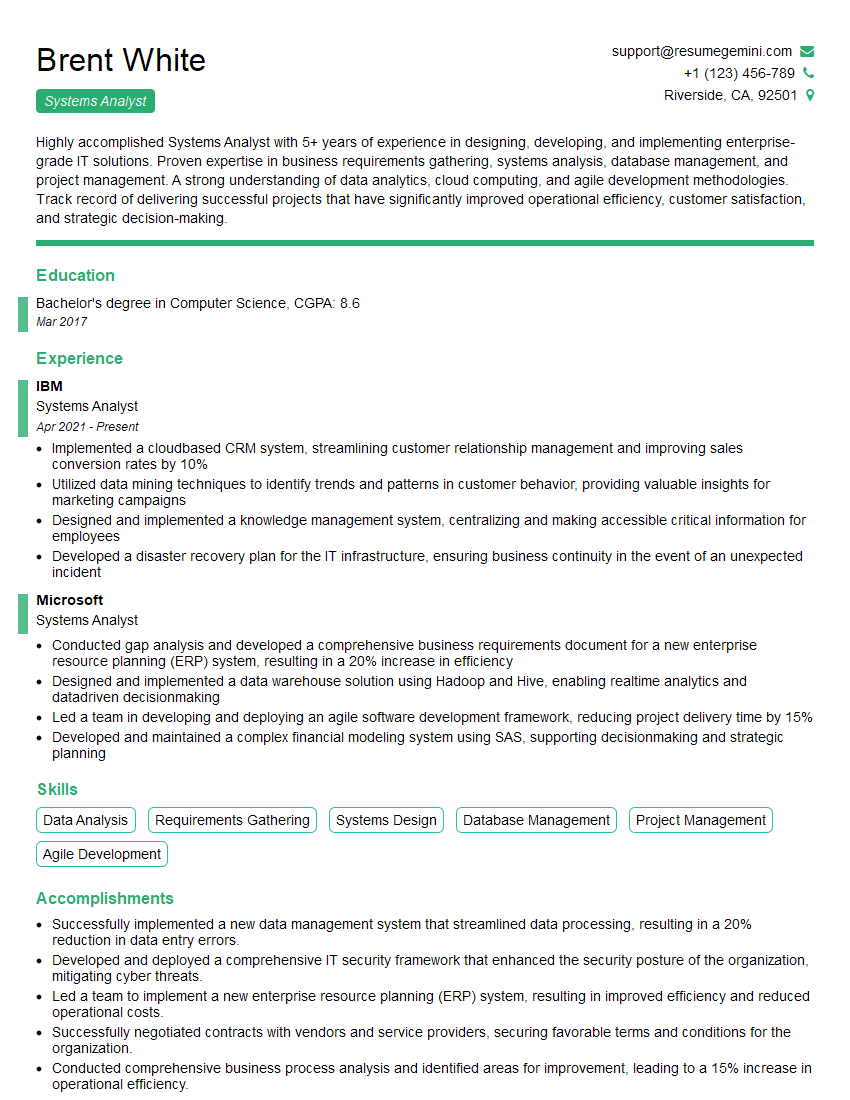
Systems Analyst Resume Sample
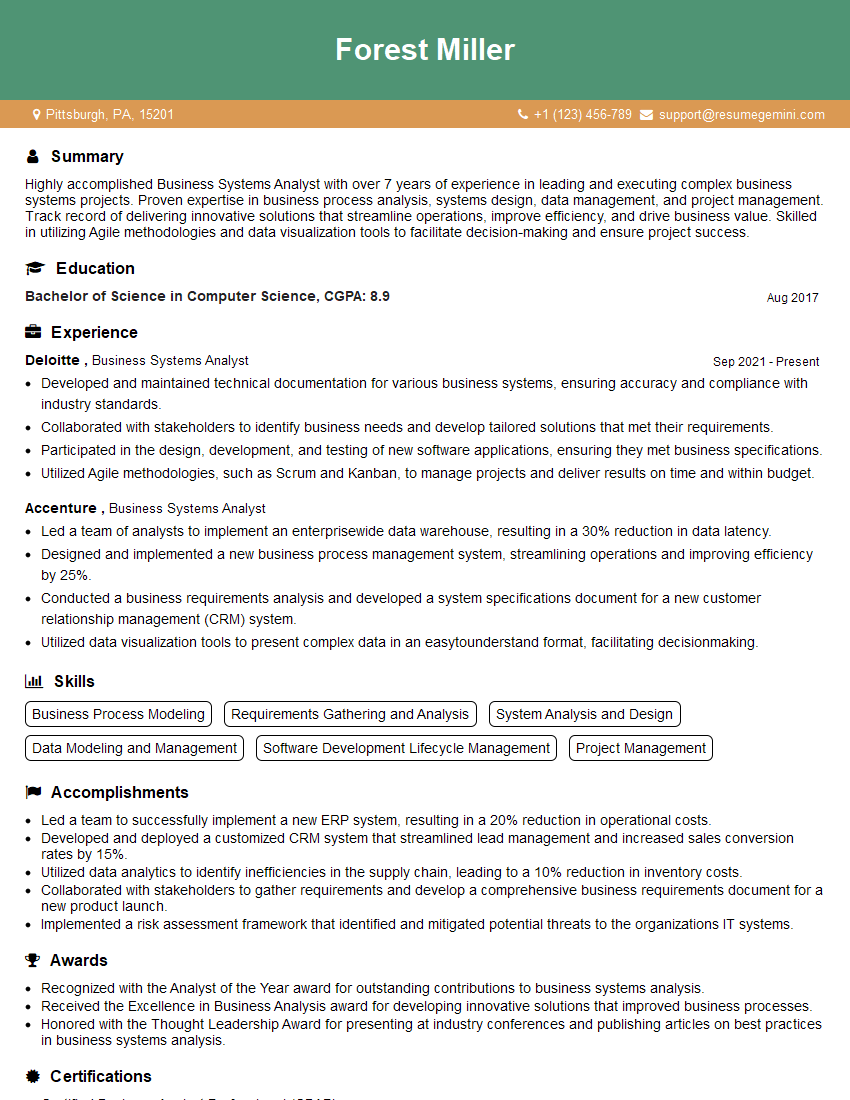
Business Systems Analyst Resume Sample
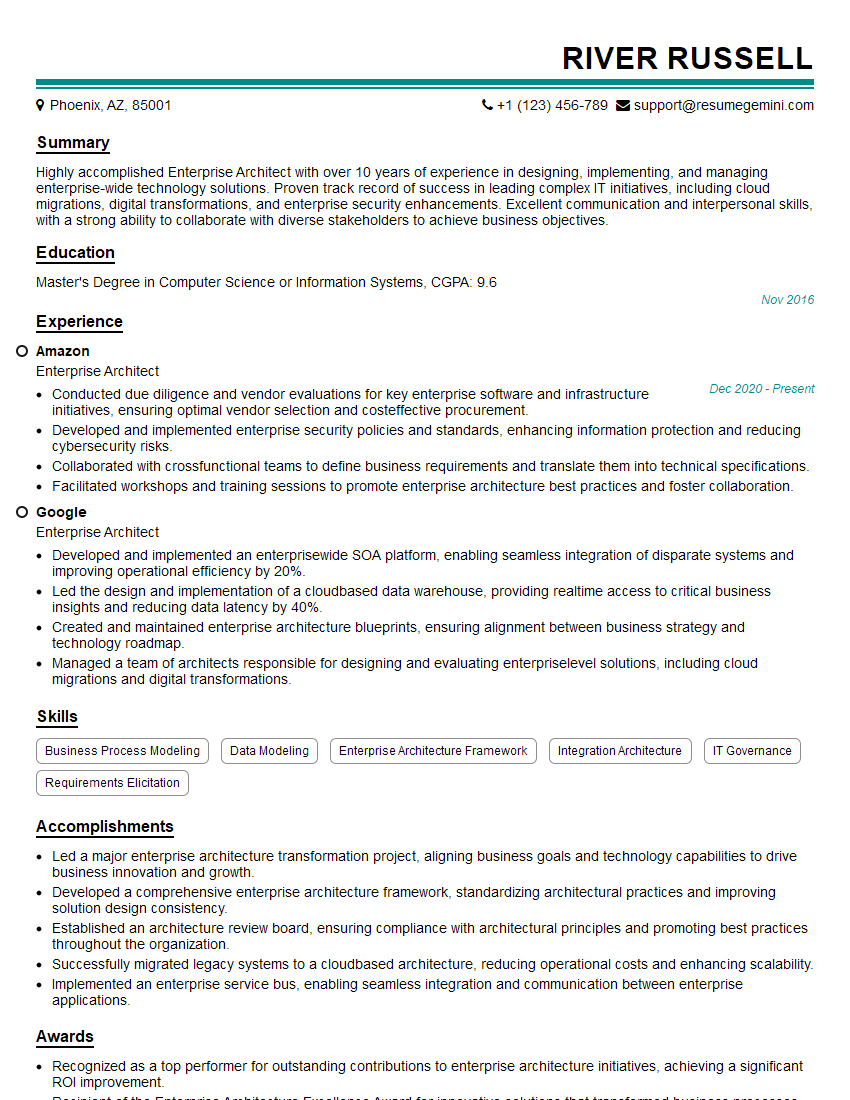
Enterprise Architect Resume Sample
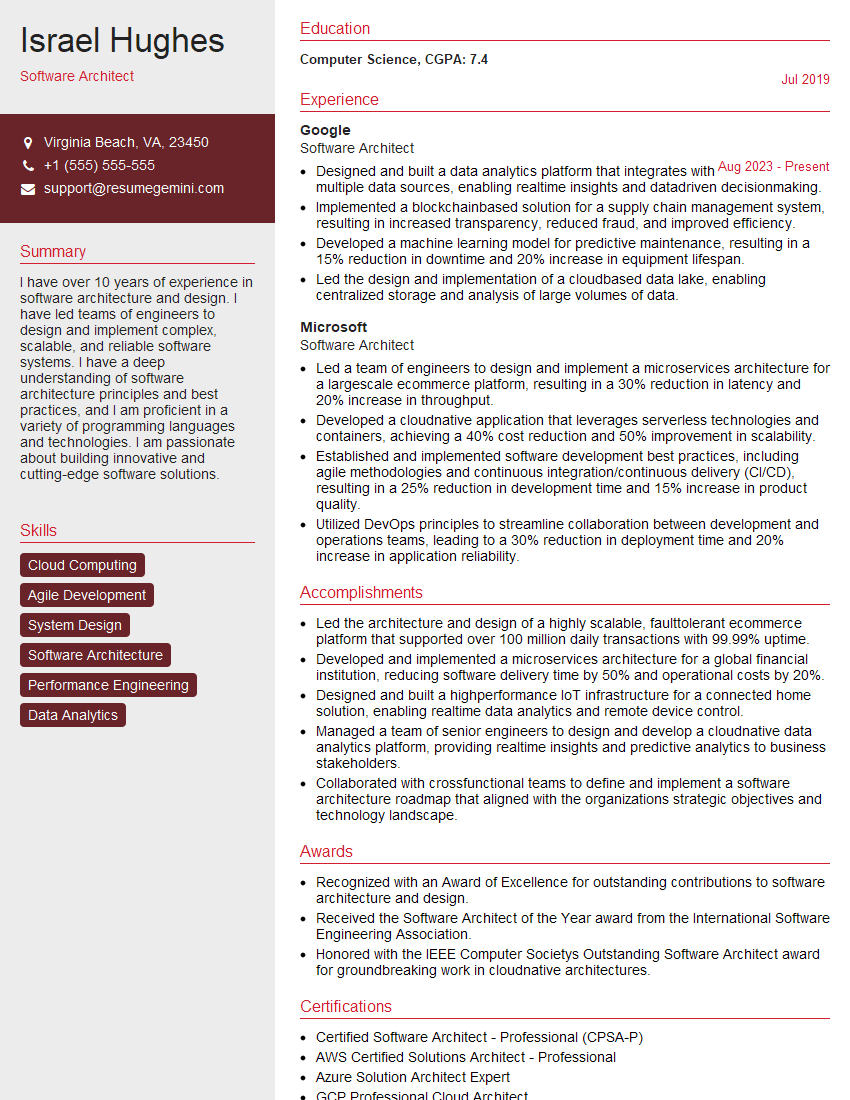
Software Architect Resume Sample
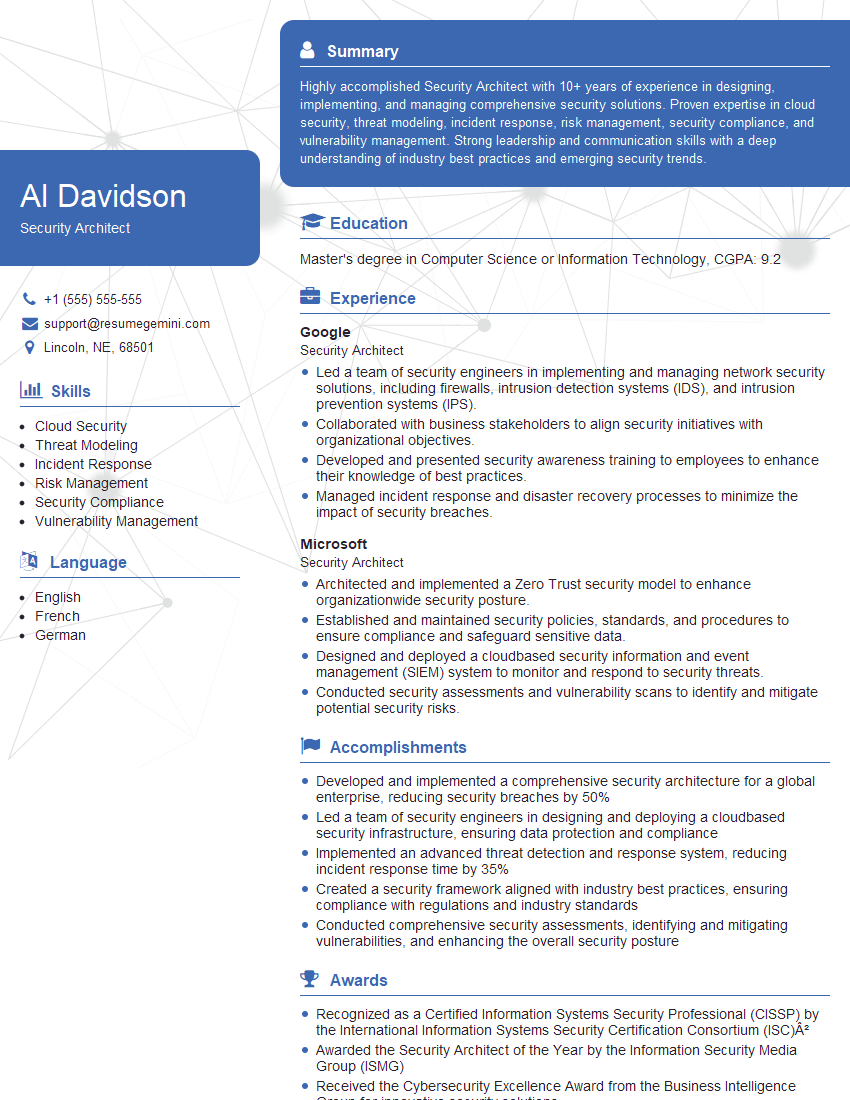
Security Architect Resume Sample
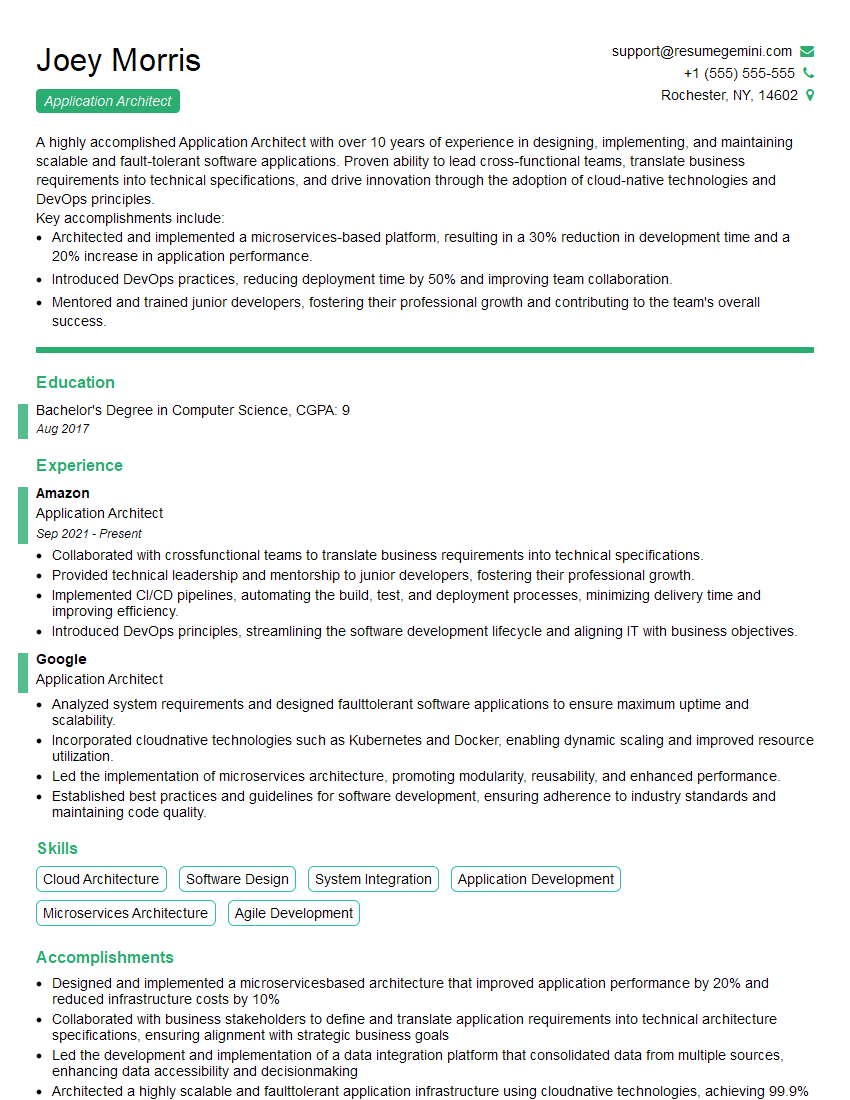
Application Architect Resume Sample
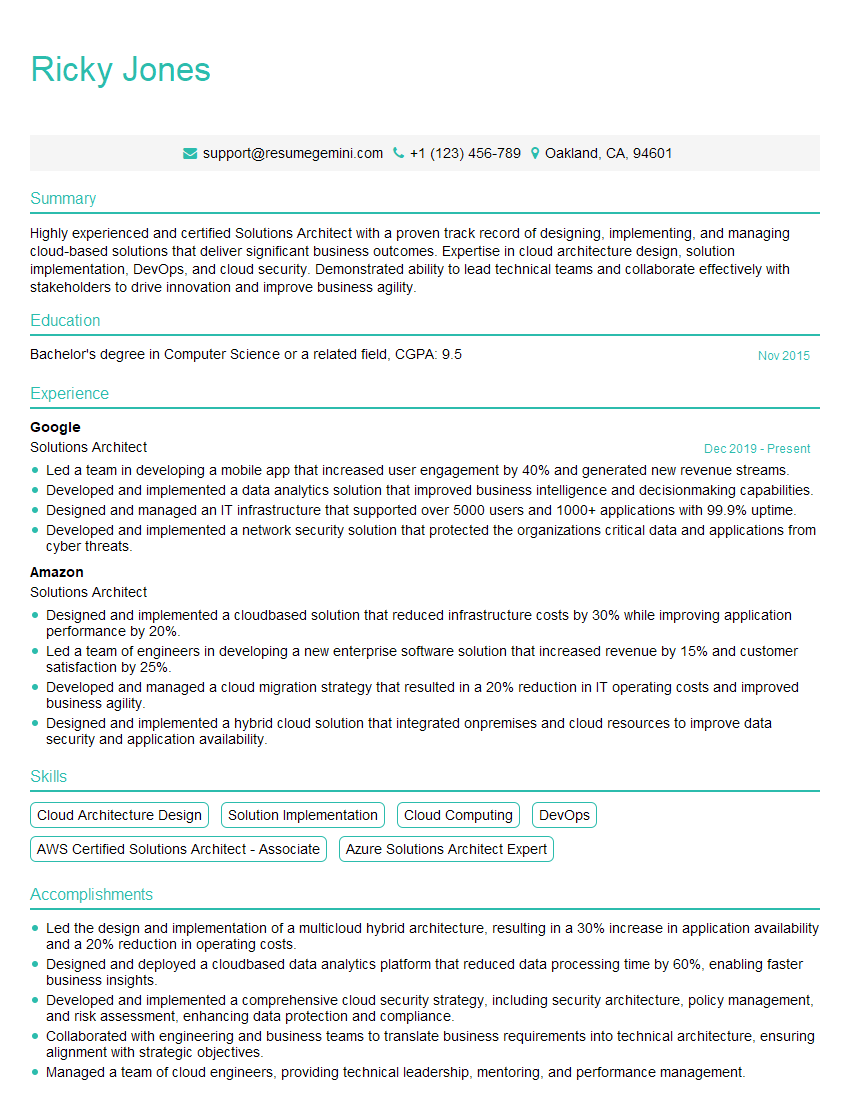
Solutions Architect Resume Sample
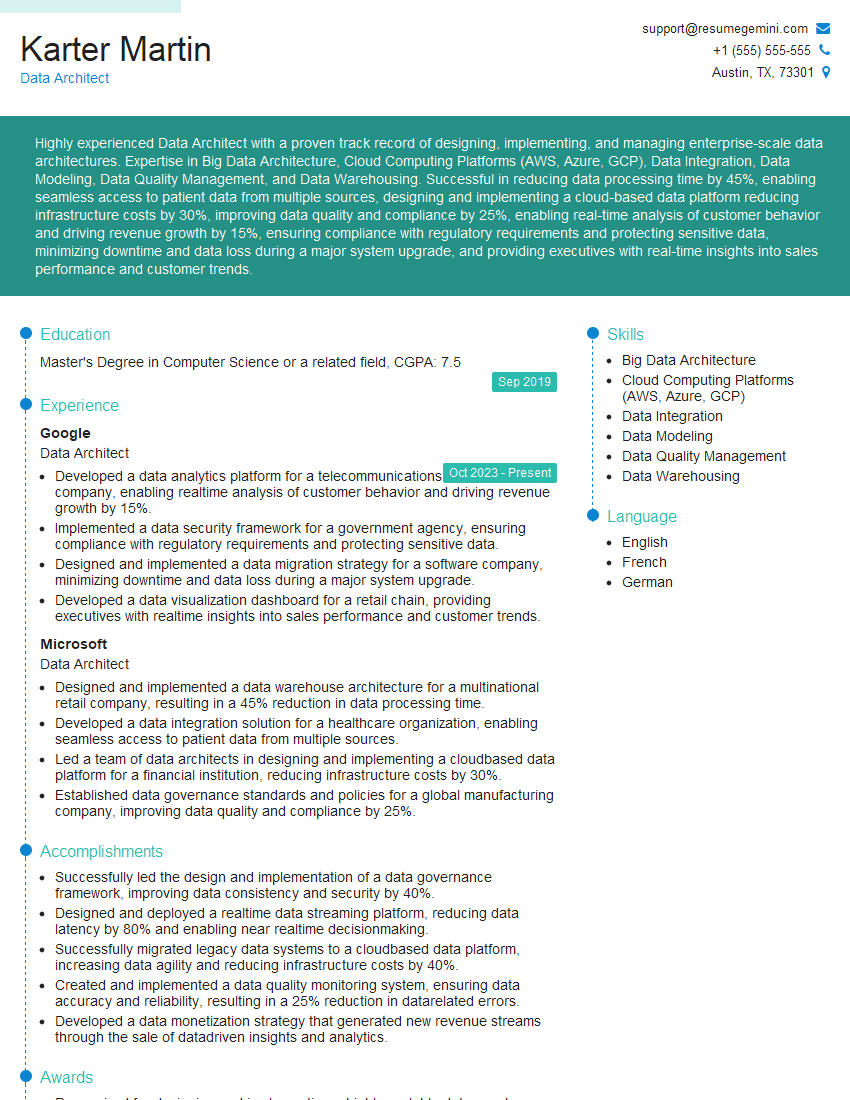
Data Architect Resume Sample
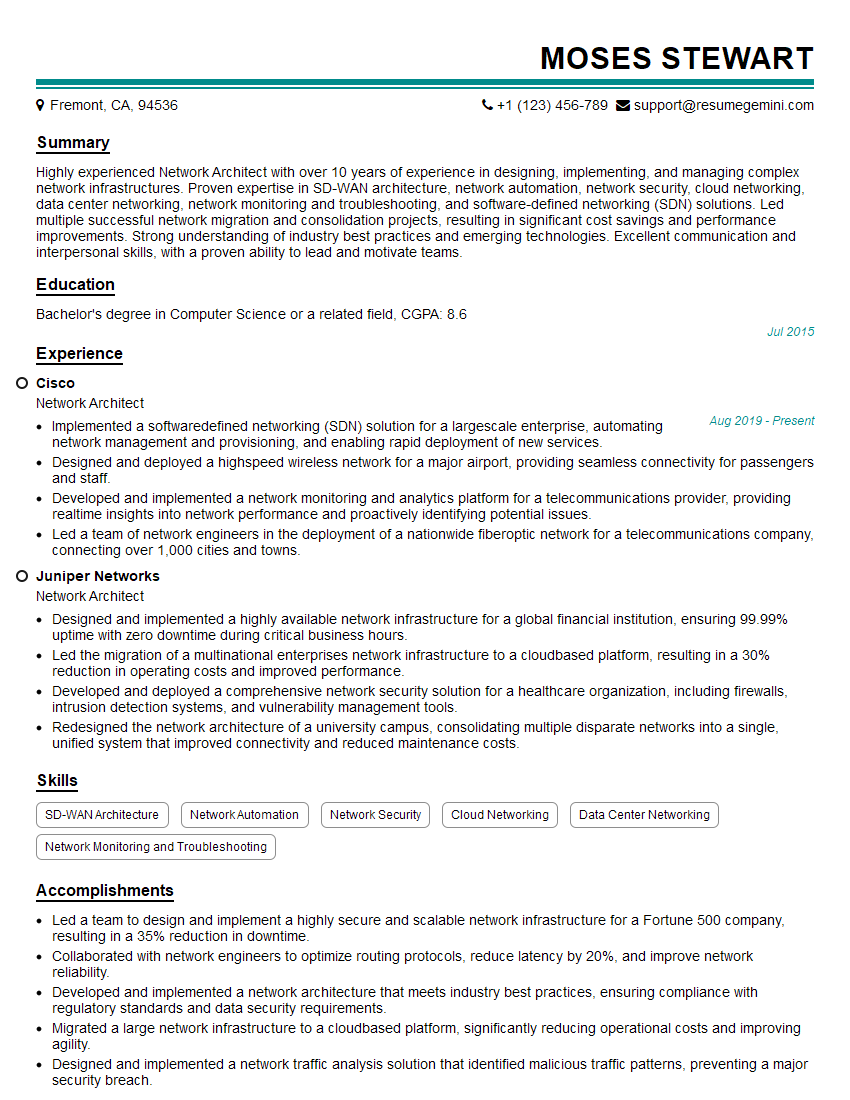
Network Architect Resume Sample
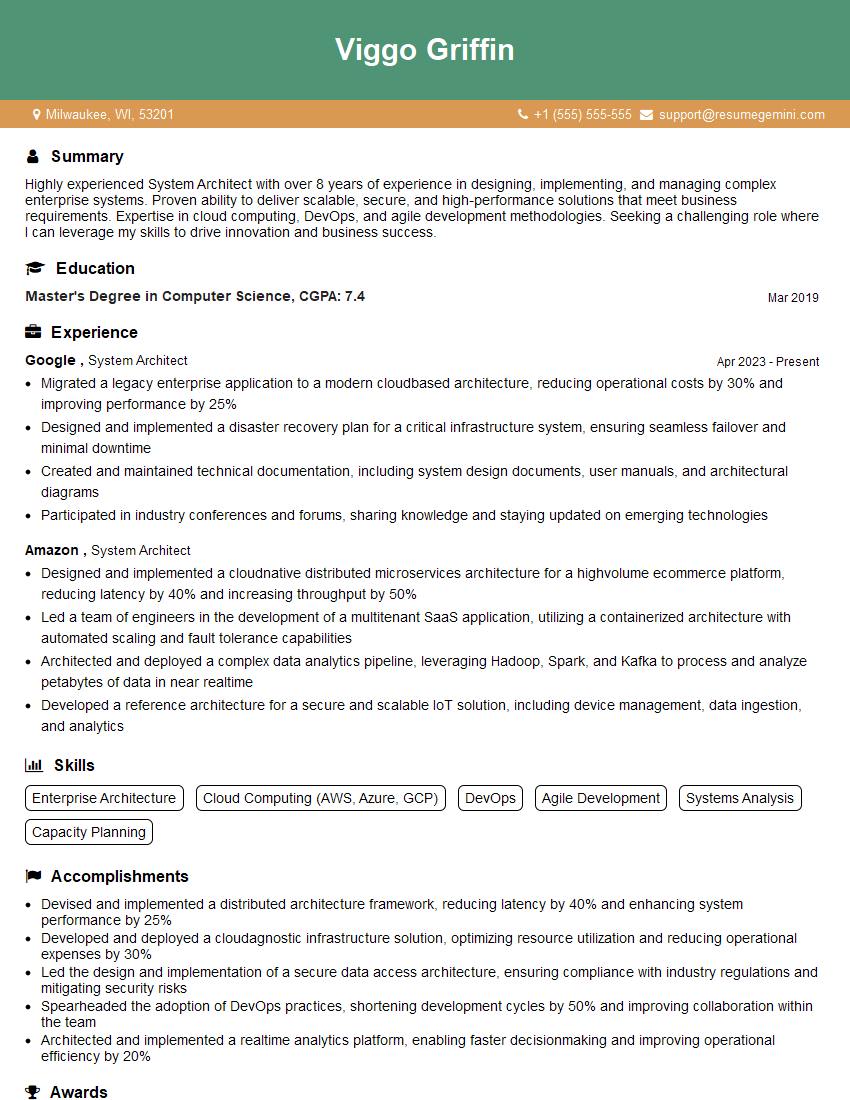
System Architect Resume Sample
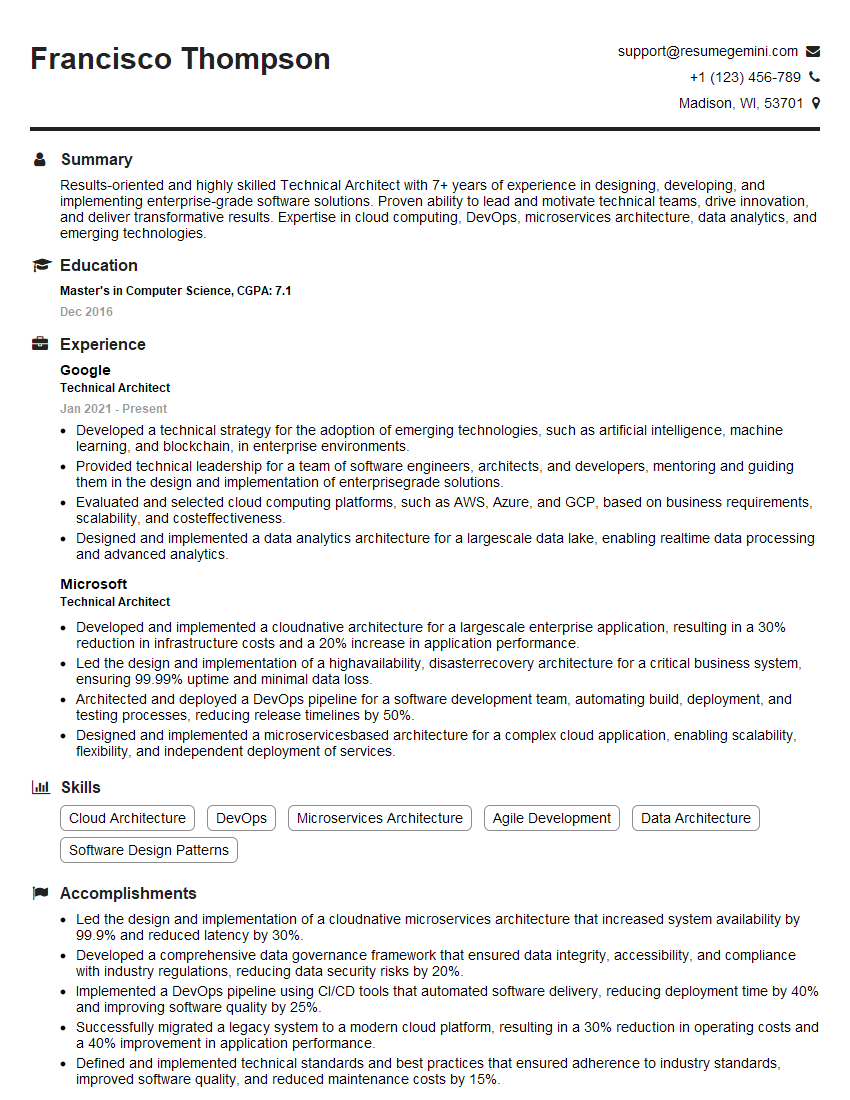
Technical Architect Resume Sample
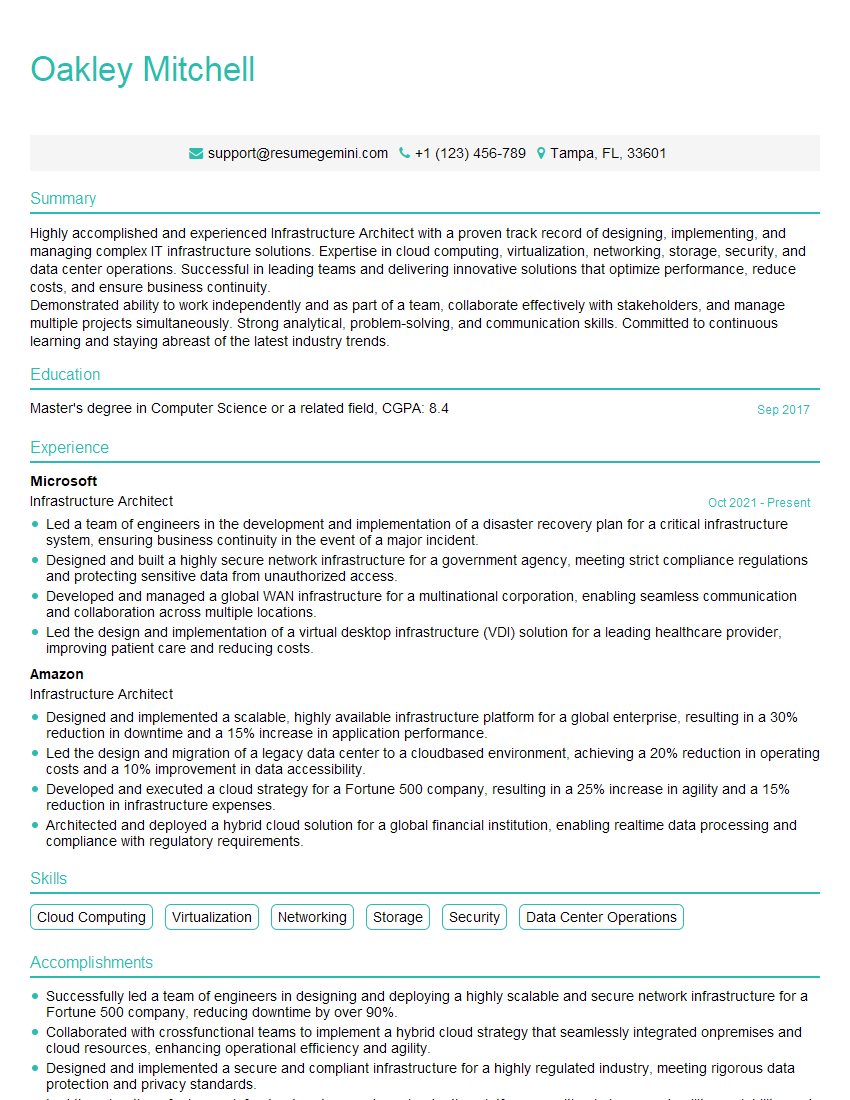
Infrastructure Architect Resume Sample
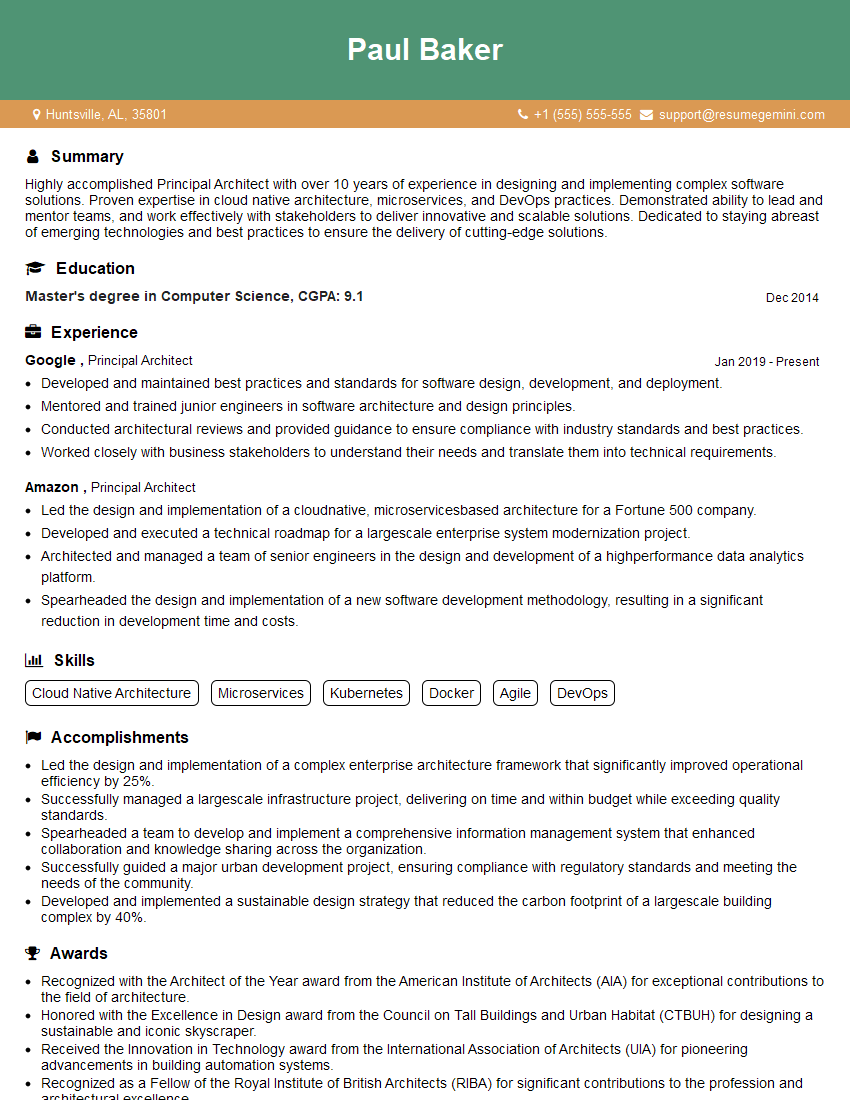
Principal Architect Resume Sample
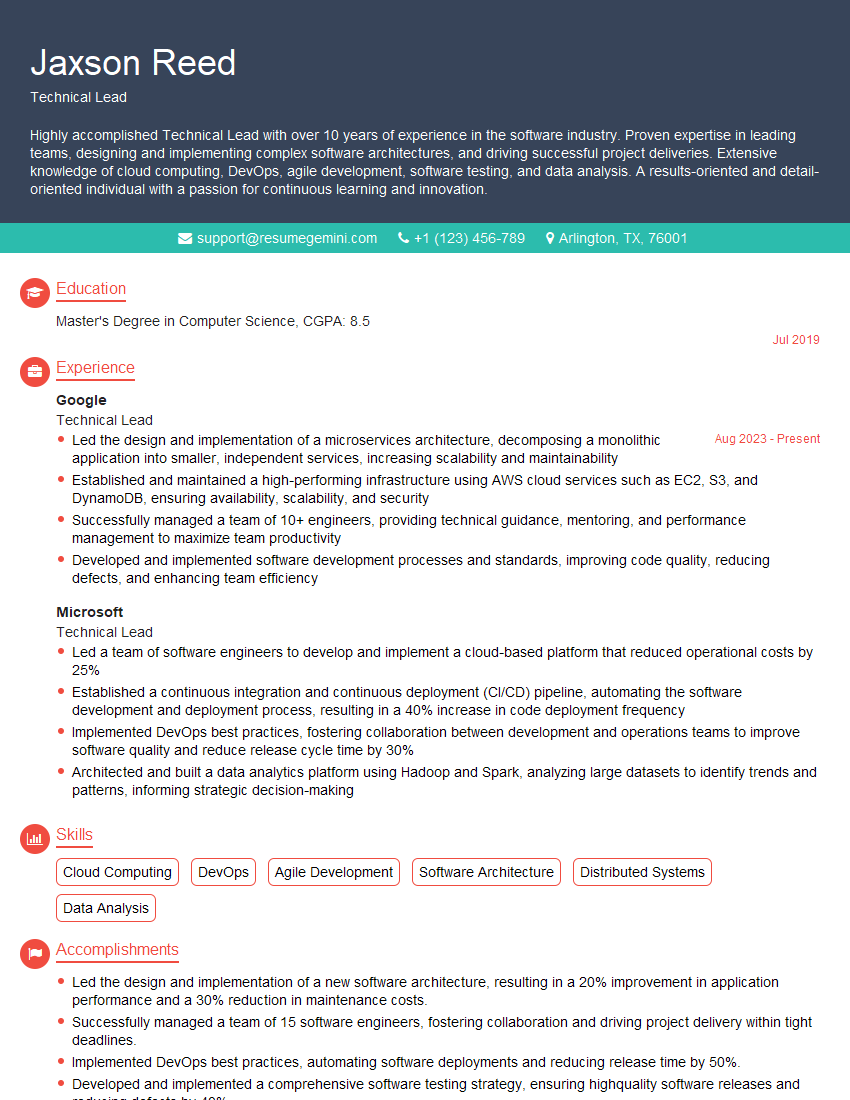
Technical Lead Resume Sample
Explore more articles
Users Rating of Our Blogs
Share Your Experience
We value your feedback! Please rate our content and share your thoughts (optional).
What Readers Say About Our Blog
Hello,
we currently offer a complimentary backlink and URL indexing test for search engine optimization professionals.
You can get complimentary indexing credits to test how link discovery works in practice.
No credit card is required and there is no recurring fee.
You can find details here:
https://wikipedia-backlinks.com/indexing/
Regards
NICE RESPONSE TO Q & A
hi
The aim of this message is regarding an unclaimed deposit of a deceased nationale that bears the same name as you. You are not relate to him as there are millions of people answering the names across around the world. But i will use my position to influence the release of the deposit to you for our mutual benefit.
Respond for full details and how to claim the deposit. This is 100% risk free. Send hello to my email id: [email protected]
Luka Chachibaialuka
Hey interviewgemini.com, just wanted to follow up on my last email.
We just launched Call the Monster, an parenting app that lets you summon friendly ‘monsters’ kids actually listen to.
We’re also running a giveaway for everyone who downloads the app. Since it’s brand new, there aren’t many users yet, which means you’ve got a much better chance of winning some great prizes.
You can check it out here: https://bit.ly/callamonsterapp
Or follow us on Instagram: https://www.instagram.com/callamonsterapp
Thanks,
Ryan
CEO – Call the Monster App
Hey interviewgemini.com, I saw your website and love your approach.
I just want this to look like spam email, but want to share something important to you. We just launched Call the Monster, a parenting app that lets you summon friendly ‘monsters’ kids actually listen to.
Parents are loving it for calming chaos before bedtime. Thought you might want to try it: https://bit.ly/callamonsterapp or just follow our fun monster lore on Instagram: https://www.instagram.com/callamonsterapp
Thanks,
Ryan
CEO – Call A Monster APP
To the interviewgemini.com Owner.
Dear interviewgemini.com Webmaster!
Hi interviewgemini.com Webmaster!
Dear interviewgemini.com Webmaster!
excellent
Hello,
We found issues with your domain’s email setup that may be sending your messages to spam or blocking them completely. InboxShield Mini shows you how to fix it in minutes — no tech skills required.
Scan your domain now for details: https://inboxshield-mini.com/
— Adam @ InboxShield Mini
Reply STOP to unsubscribe
Hi, are you owner of interviewgemini.com? What if I told you I could help you find extra time in your schedule, reconnect with leads you didn’t even realize you missed, and bring in more “I want to work with you” conversations, without increasing your ad spend or hiring a full-time employee?
All with a flexible, budget-friendly service that could easily pay for itself. Sounds good?
Would it be nice to jump on a quick 10-minute call so I can show you exactly how we make this work?
Best,
Hapei
Marketing Director
Hey, I know you’re the owner of interviewgemini.com. I’ll be quick.
Fundraising for your business is tough and time-consuming. We make it easier by guaranteeing two private investor meetings each month, for six months. No demos, no pitch events – just direct introductions to active investors matched to your startup.
If youR17;re raising, this could help you build real momentum. Want me to send more info?
Hi, I represent an SEO company that specialises in getting you AI citations and higher rankings on Google. I’d like to offer you a 100% free SEO audit for your website. Would you be interested?
Hi, I represent an SEO company that specialises in getting you AI citations and higher rankings on Google. I’d like to offer you a 100% free SEO audit for your website. Would you be interested?
good