The right preparation can turn an interview into an opportunity to showcase your expertise. This guide to System Engineering and Integration interview questions is your ultimate resource, providing key insights and tips to help you ace your responses and stand out as a top candidate.
Questions Asked in System Engineering and Integration Interview
Q 1. Explain the difference between system integration and system engineering.
System engineering and system integration are closely related but distinct disciplines. Think of building a house: system engineering is the architectural design and planning phase – defining the overall structure, functionality, and requirements. System integration is the construction phase – bringing together all the individual components (walls, plumbing, electrical) to create the functioning house.
System Engineering encompasses the complete lifecycle of a system, from conceptualization and design to deployment and maintenance. It focuses on defining requirements, architecting the system, managing risks, and ensuring the system meets its overall objectives. It’s a holistic approach to creating a complex system.
System Integration, on the other hand, is a subset of system engineering. It focuses specifically on the process of combining different subsystems or components into a single, cohesive system. This involves testing the interfaces between components, ensuring compatibility, and resolving any integration issues.
In short, system engineering is the ‘big picture,’ while system integration focuses on the practical task of making all the parts work together.
Q 2. Describe your experience with different system integration methodologies (e.g., waterfall, agile).
I have extensive experience with both waterfall and agile methodologies in system integration. My experience shows that the optimal choice depends heavily on the project’s scope, complexity, and client requirements.
- Waterfall: In larger, well-defined projects with stable requirements, the waterfall approach provides a structured and predictable path. I’ve used this in projects involving large-scale ERP implementations, where each phase (requirements, design, implementation, testing, deployment) had clearly defined deliverables and milestones. The rigidity, however, can be a drawback if requirements change mid-project.
- Agile: For projects with evolving requirements or a need for rapid prototyping and feedback, agile methodologies are more effective. In recent projects involving cloud-based application integrations, we employed Scrum, iteratively developing and integrating components, and receiving regular feedback from stakeholders. This allowed for greater flexibility and responsiveness to changing needs.
I am comfortable adapting my approach to fit the specific needs of the project. Often, a hybrid approach incorporating elements of both methodologies can be highly effective.
Q 3. How do you handle conflicting requirements from different stakeholders during system integration?
Conflicting requirements are inevitable in complex system integration projects. My approach involves a structured process to resolve these conflicts:
- Identify and Document: The first step is to clearly identify and document all conflicting requirements, noting the source (stakeholder) and the rationale behind each.
- Prioritization and Negotiation: Using techniques such as MoSCoW analysis (Must have, Should have, Could have, Won’t have), we prioritize requirements based on business value and technical feasibility. This often involves facilitated workshops with stakeholders to reach consensus through negotiation and compromise.
- Trade-off Analysis: Sometimes, complete satisfaction of all requirements isn’t feasible. A trade-off analysis evaluates the impact of sacrificing certain requirements to accommodate others. This involves a clear understanding of the implications of each decision.
- Documentation and Communication: The final agreed-upon requirements are meticulously documented and communicated to all stakeholders. This ensures transparency and avoids future misunderstandings.
Ultimately, successful conflict resolution requires strong communication, collaboration, and a willingness to find mutually acceptable solutions.
Q 4. What are the key challenges in integrating legacy systems with modern systems?
Integrating legacy systems with modern systems presents significant challenges due to several factors:
- Technology Differences: Legacy systems often use outdated technologies and programming languages, making compatibility with modern systems difficult. Data formats and communication protocols may also differ significantly.
- Lack of Documentation: Older systems may lack comprehensive documentation, hindering understanding of their functionality and internal workings. This makes integration efforts more complex and time-consuming.
- Data Migration: Moving data from a legacy system to a modern one can be a major undertaking. Data cleansing, transformation, and validation are crucial steps to ensure data integrity.
- Security Concerns: Legacy systems often lack robust security features, posing risks when integrated with modern systems. Addressing security vulnerabilities is paramount.
Strategies to mitigate these challenges include using middleware to bridge technology gaps, employing data transformation tools, investing in thorough documentation of legacy systems, and prioritizing security assessments and hardening throughout the integration process.
Q 5. Explain your approach to risk management in system integration projects.
My approach to risk management in system integration follows a proactive and systematic process:
- Risk Identification: We use workshops and brainstorming sessions to identify potential risks, including technical challenges, stakeholder conflicts, schedule delays, and budget overruns.
- Risk Assessment: Each identified risk is analyzed based on its likelihood and potential impact. This helps prioritize the risks that need immediate attention.
- Risk Mitigation Planning: For each high-priority risk, we develop a mitigation plan that outlines specific actions to reduce the likelihood or impact of the risk. This includes contingency plans for unforeseen events.
- Risk Monitoring and Control: Throughout the integration process, we continuously monitor risks and track the effectiveness of mitigation strategies. Regular risk reviews ensure that any new risks are identified and addressed promptly.
This proactive approach allows for early detection and mitigation of potential issues, minimizing disruptions and ensuring project success.
Q 6. Describe your experience with system testing and validation.
System testing and validation are crucial phases in system integration. My experience involves a multi-layered approach:
- Unit Testing: Individual components or modules are tested in isolation to verify their functionality.
- Integration Testing: Once individual components are tested, integration tests focus on verifying the interactions between these components.
- System Testing: The entire integrated system is tested as a whole to ensure that it meets all specified requirements and performs as expected.
- User Acceptance Testing (UAT): End-users are involved in testing to ensure the system meets their needs and is user-friendly.
- Regression Testing: After any changes or modifications, regression tests are conducted to verify that existing functionality hasn’t been compromised.
We use a combination of automated and manual testing techniques, utilizing testing frameworks and tools to streamline the process and ensure thoroughness. Detailed test plans and documented results are essential to track progress and identify defects.
Q 7. How do you ensure data integrity during system integration?
Ensuring data integrity during system integration is paramount. My strategy focuses on several key areas:
- Data Mapping and Transformation: A detailed data mapping exercise is performed to identify how data will be transformed and mapped between different systems. This helps avoid data loss or corruption.
- Data Validation and Cleansing: Before migration, data is rigorously validated and cleansed to identify and correct any inconsistencies or errors. This includes handling missing values, duplicates, and invalid data formats.
- Data Quality Checks: Regular checks are performed throughout the integration process to monitor data quality and identify any potential issues. This might involve comparing data counts, checking data types, and verifying data consistency.
- Data Backup and Recovery: Robust backup and recovery procedures are implemented to protect data from loss or damage. Regular backups and disaster recovery plans are vital.
- Data Governance: Establishing clear data governance policies and procedures ensures data integrity throughout the system lifecycle.
Using appropriate data quality tools and employing a methodical approach ensures data integrity and minimizes the risk of errors.
Q 8. What are your preferred tools and technologies for system integration?
My preferred tools and technologies for system integration depend heavily on the specific project requirements and the systems involved. However, I have extensive experience with a range of tools across various layers. For example, in the realm of API integration, I frequently leverage tools like Postman for testing and API management platforms such as Apigee or Kong. For message queuing, I’m proficient with RabbitMQ and Kafka. Orchestration and automation are crucial, and I often use tools like Ansible, Terraform, and Kubernetes. Finally, robust monitoring and logging are essential, so I’m familiar with tools like Prometheus, Grafana, and ELK stack. Choosing the right tools is a crucial decision, and I always prioritize selecting those that best suit the project’s needs, scale appropriately, and enhance maintainability.
For example, in a recent project integrating a legacy system with a new cloud-based application, we used Apigee for API gateway management, Kafka for handling high-volume asynchronous data streams, and Ansible for automating deployment and configuration across our hybrid infrastructure. This mix of tools allowed us to efficiently connect disparate systems and manage the complexities of both legacy and modern technologies.
Q 9. How do you troubleshoot complex system integration issues?
Troubleshooting complex system integration issues requires a systematic and methodical approach. I typically follow a structured process that involves several key steps. First, I meticulously gather all available logs and error messages from the various systems involved. Second, I use network monitoring tools to identify any network bottlenecks or connectivity problems. Third, I employ debugging techniques appropriate to the specific technologies used (e.g., stepping through code, examining message queues). Fourth, I leverage monitoring tools to identify performance degradation or unusual resource consumption. Finally, I collaborate closely with other team members, including developers, operations, and security engineers, to isolate the root cause and implement a solution.
Imagine a scenario where a new payment gateway integration fails intermittently. My approach would start by examining logs on both the application server and the payment gateway itself. I might find intermittent timeouts or unexpected error codes. Using network tracing tools, I could pinpoint network latency or packet loss that’s causing the problem. This systematic investigation, combined with collaborative problem-solving, is key to quickly identifying and fixing such complex issues.
Q 10. Explain your understanding of system architecture and design principles.
System architecture and design principles are fundamental to building robust and scalable systems. My understanding encompasses several key aspects. First, I prioritize modularity, breaking down complex systems into smaller, manageable components that can be independently developed, tested, and deployed. Second, I adhere to well-defined interfaces and protocols to ensure seamless communication between components. Third, I prioritize loose coupling, minimizing dependencies between modules to enhance flexibility and maintainability. Fourth, I thoroughly consider security aspects from the beginning, implementing appropriate security measures at each level of the architecture. Lastly, I leverage design patterns like microservices, message queues, and event-driven architectures to handle scalability, fault tolerance and maintainability.
For instance, choosing a microservices architecture allows for independent scaling of different parts of the application. This significantly improves efficiency and allows for continuous deployment without affecting the entire system.
Q 11. Describe your experience with different system architectures (e.g., microservices, monolithic).
I have extensive experience with both monolithic and microservices architectures. Monolithic architectures, where all components are tightly coupled within a single application, are simpler to develop and deploy initially, but they can become difficult to scale and maintain as the system grows. Microservices, on the other hand, offer better scalability and maintainability by breaking down the application into smaller, independent services. However, they introduce complexities related to service discovery, inter-service communication, and distributed transaction management.
In one project, we migrated a monolithic e-commerce application to a microservices architecture. This involved carefully decomposing the application into smaller services (e.g., catalog service, order service, payment service), designing inter-service communication using message queues and RESTful APIs, and implementing service discovery mechanisms. The result was a more scalable, maintainable, and resilient system that could adapt to changing business requirements more easily.
Q 12. How do you ensure system scalability and performance during integration?
Ensuring system scalability and performance during integration is a critical concern. This requires a multi-faceted approach. First, we utilize load testing and performance testing tools to identify bottlenecks and areas for improvement before deployment. Second, we implement appropriate scaling strategies, such as horizontal scaling (adding more instances of a service) and vertical scaling (increasing resources for individual instances). Third, we choose appropriate technologies and architectures that inherently support scalability, such as cloud-native platforms and microservices. Fourth, we employ caching mechanisms to reduce database load and improve response times. Finally, we continuously monitor system performance and resource utilization to proactively identify and address potential issues.
For instance, when integrating a new user authentication service, we conducted load tests to simulate a large number of concurrent login attempts. This revealed a bottleneck in the database connection pool. By increasing the pool size and optimizing database queries, we significantly improved performance and ensured scalability for high user loads.
Q 13. Explain your experience with DevOps practices in system integration.
DevOps practices are integral to my system integration approach. I have extensive experience with CI/CD (Continuous Integration/Continuous Delivery) pipelines, using tools like Jenkins, GitLab CI, or Azure DevOps to automate the build, test, and deployment processes. This ensures frequent and reliable releases, enhancing agility and reducing the risk of integration issues. Furthermore, I advocate for infrastructure as code (IaC) using tools like Terraform or Ansible, automating infrastructure provisioning and management. This promotes consistency, reproducibility, and reduces manual errors. Collaboration and communication are also paramount, and I actively participate in agile development methodologies, fostering close collaboration between development and operations teams.
In a recent project, we implemented a CI/CD pipeline that automatically built, tested, and deployed new versions of our integration layer to a cloud environment. This reduced deployment time from days to minutes, allowing for faster iteration and quicker resolution of integration issues.
Q 14. How do you manage dependencies between different systems during integration?
Managing dependencies between different systems during integration requires careful planning and execution. I use several strategies to effectively handle these dependencies. First, I create a detailed dependency map to visualize the relationships between systems and identify potential conflicts. Second, I employ version control systems to track changes and ensure consistent versions across all components. Third, I leverage configuration management tools to manage system settings and dependencies centrally. Fourth, I implement robust error handling and rollback mechanisms to mitigate the impact of integration failures. Finally, I adopt a phased rollout approach, gradually integrating systems to minimize disruption and allow for thorough testing and validation at each step.
For example, when integrating a new CRM system with our existing ERP system, we carefully mapped the dependencies between data fields and APIs. We used a phased rollout, starting with a small subset of data and functionalities, to minimize the risk of cascading failures. This meticulous approach ensured a smooth and controlled integration process.
Q 15. Describe your experience with cloud-based system integration.
My experience with cloud-based system integration is extensive, encompassing various cloud platforms like AWS, Azure, and GCP. I’ve worked on projects integrating on-premise systems with cloud services, migrating legacy applications to the cloud, and building entirely new cloud-native architectures. A key aspect of my work involves understanding the nuances of each platform’s services – from compute and storage to databases and messaging queues – and leveraging them effectively for seamless integration. For instance, in a recent project involving migrating a customer relationship management (CRM) system to AWS, I orchestrated the migration using AWS Database Migration Service, ensuring minimal downtime and data integrity. This involved careful planning, rigorous testing, and meticulous monitoring throughout the process. Another example includes developing a serverless architecture using AWS Lambda and API Gateway, integrating it with a pre-existing on-premise ERP system through a secure API connection. This involved careful consideration of security best practices, including encryption and access control.
Career Expert Tips:
- Ace those interviews! Prepare effectively by reviewing the Top 50 Most Common Interview Questions on ResumeGemini.
- Navigate your job search with confidence! Explore a wide range of Career Tips on ResumeGemini. Learn about common challenges and recommendations to overcome them.
- Craft the perfect resume! Master the Art of Resume Writing with ResumeGemini’s guide. Showcase your unique qualifications and achievements effectively.
- Don’t miss out on holiday savings! Build your dream resume with ResumeGemini’s ATS optimized templates.
Q 16. What are your preferred methods for documenting system integration processes?
My preferred methods for documenting system integration processes involve a combination of techniques to cater to different audiences and purposes. I use UML diagrams (e.g., sequence diagrams, class diagrams) to visually represent the interactions between different systems and components. These diagrams are invaluable for understanding the system architecture and the flow of data. Alongside diagrams, I create detailed technical specifications, outlining the integration interfaces, data formats, and communication protocols used. For operational aspects, I maintain comprehensive runbooks that document troubleshooting steps and operational procedures. Finally, I leverage collaborative documentation tools like Confluence or Notion to ensure version control and easy access for the entire team. The use of these tools allows for easy updates and ensures everyone is working from the same information. For example, when integrating a new payment gateway, a sequence diagram clearly illustrating the interaction between the e-commerce platform, the payment gateway, and the bank would be crucial for understanding and debugging the process.
Q 17. How do you handle changes in requirements during the system integration process?
Handling changes in requirements during system integration is a critical aspect of the process and requires a structured approach. The first step is to formally document any change requests, clearly outlining the impact on the existing integration design and timelines. This often involves evaluating the scope of changes and quantifying the effort required for implementation. Then, I prioritize change requests based on their business impact and technical feasibility. For urgent changes, a rapid prototyping approach might be adopted to validate the feasibility before full implementation. Throughout the process, transparent communication with stakeholders is vital, keeping them informed of the progress and any potential delays. Version control is essential to track changes and revert if necessary. For example, a change request might involve adding a new field to the data exchange between two systems. The process involves assessing the impact on existing code, database schema, and testing procedures, followed by implementing and testing the changes while adhering to established change management processes.
Q 18. Describe your experience with different communication protocols.
My experience encompasses a wide range of communication protocols, including REST APIs (Representational State Transfer Application Programming Interfaces), SOAP (Simple Object Access Protocol), message queues (like RabbitMQ, Kafka, and SQS), and various database protocols (e.g., JDBC, ODBC). I am proficient in selecting the appropriate protocol based on factors such as performance requirements, security considerations, and the specific needs of the system being integrated. For instance, REST APIs are often preferred for their simplicity and scalability, while message queues are ideal for asynchronous communication in high-throughput scenarios. SOAP, while less commonly used now, still finds application in enterprise environments requiring robust transaction management. I’ve also worked with various transport layer protocols, such as TCP and UDP, understanding their trade-offs in terms of reliability and speed. In a recent project, I designed a microservices architecture employing REST APIs for inter-service communication, leveraging Kafka for event-driven data streaming between microservices. This approach ensured loose coupling, scalability, and resilience.
Q 19. How do you ensure system security during integration?
Ensuring system security during integration is paramount. My approach involves implementing security measures at every stage of the integration process. This includes secure coding practices, input validation, and output sanitization to prevent vulnerabilities like SQL injection and cross-site scripting (XSS). I utilize encryption techniques (like TLS/SSL) to protect data in transit and at rest. Access control mechanisms, such as role-based access control (RBAC) and least privilege access, limit access to sensitive data and systems. Regular security audits and penetration testing are crucial to identify and mitigate potential security risks. Furthermore, I ensure compliance with relevant security standards and regulations (e.g., PCI DSS, HIPAA). For example, when integrating a payment gateway, I would implement end-to-end encryption for all sensitive data, use strong authentication mechanisms, and adhere to PCI DSS compliance requirements. Regular vulnerability scans and penetration testing help proactively identify and fix potential security flaws.
Q 20. Explain your understanding of different software development lifecycle models.
I have a solid understanding of various software development lifecycle (SDLC) models, including Waterfall, Agile (Scrum, Kanban), and DevOps. Waterfall, with its sequential phases, is suitable for projects with stable requirements and well-defined scope. Agile methodologies, characterized by iterative development and continuous feedback, are better suited for projects with evolving requirements and a need for flexibility. DevOps emphasizes automation and collaboration to accelerate the software delivery process. My choice of SDLC model depends on the project’s complexity, the nature of the requirements, and the client’s preference. I have successfully used Agile methodologies in most of my integration projects, allowing for quick iteration and adaptation to evolving needs. For instance, in a recent project that involved integrating several third-party APIs, the iterative nature of Scrum allowed us to incorporate feedback from each integration sprint, resulting in a more robust and stable final product.
Q 21. How do you estimate the effort and time required for system integration projects?
Estimating effort and time for system integration projects involves a combination of techniques. I often begin with a detailed work breakdown structure (WBS), breaking down the project into smaller, manageable tasks. For each task, I estimate the effort required based on factors like complexity, dependencies, and the team’s skillset. Historical data from previous similar projects can be invaluable in refining these estimates. I use various estimation techniques, including three-point estimation (optimistic, pessimistic, and most likely), to account for uncertainty. Agile methodologies, especially those employing story points, facilitate estimation through relative sizing of tasks. Tools like Microsoft Project or Jira can assist in managing the project schedule and tracking progress. Furthermore, regular monitoring and progress reviews are essential to identify potential deviations from the initial plan and make necessary adjustments. For instance, when estimating a project involving the integration of multiple systems, I might use the three-point estimation technique and then factor in a buffer to account for unforeseen issues and dependencies. Regularly tracking progress against the plan, allows for timely adjustments based on the actual work done and any risks encountered during the process.
Q 22. Describe your experience with system monitoring and maintenance.
System monitoring and maintenance is crucial for ensuring system uptime, performance, and security. My experience involves implementing and managing comprehensive monitoring solutions, using tools like Prometheus and Grafana for visualizing metrics and alerting on anomalies. I’ve worked with various monitoring systems, including Nagios and Zabbix, tailoring them to specific application needs. This includes setting up thresholds for key performance indicators (KPIs) such as CPU utilization, memory usage, and network latency. Beyond reactive monitoring, I’ve proactively implemented automated maintenance tasks such as log rotation, database backups, and software patching to minimize downtime and prevent issues. For example, in a previous project involving a large e-commerce platform, I implemented a system that automatically scaled resources based on real-time traffic patterns, preventing performance bottlenecks during peak hours. This involved integrating monitoring tools with auto-scaling services in the cloud infrastructure.
Further, I’ve developed robust logging and alerting systems to facilitate quick troubleshooting and issue resolution. This involved creating custom dashboards tailored to specific team needs and implementing alerting mechanisms through email, SMS, and other communication channels based on severity levels. My approach emphasizes a proactive rather than purely reactive maintenance strategy, preventing problems before they impact end-users.
Q 23. How do you prioritize tasks in a complex system integration project?
Prioritizing tasks in a complex system integration project requires a structured approach. I typically utilize a combination of methods, including the MoSCoW method (Must have, Should have, Could have, Won’t have) and a risk-based prioritization matrix. The MoSCoW method helps categorize features based on their criticality, while the risk matrix considers the likelihood and impact of potential delays or failures. This allows us to focus on high-impact, high-likelihood risks first. For instance, integrating core functionalities that are crucial for the system’s basic operation would be considered ‘Must have’, while less critical features might be categorized as ‘Should have’ or ‘Could have’.
Furthermore, I leverage agile methodologies, breaking down the project into smaller, manageable sprints. Each sprint’s priorities are determined through collaboration with stakeholders, considering factors such as dependencies, deadlines, and resource availability. Regular sprint reviews and retrospectives help adapt the prioritization based on ongoing progress and emerging challenges. A Gantt chart or similar project management tool provides a visual representation of the tasks, their dependencies, and timelines, further aiding in effective prioritization and progress tracking.
Q 24. Explain your understanding of different database technologies and their integration.
My experience encompasses a range of database technologies, including relational databases like PostgreSQL and MySQL, and NoSQL databases such as MongoDB and Cassandra. The choice of database depends heavily on the specific application requirements. Relational databases excel in structured data management and transactional integrity, making them ideal for applications requiring ACID properties (Atomicity, Consistency, Isolation, Durability). NoSQL databases, on the other hand, are better suited for handling large volumes of unstructured or semi-structured data and offer high scalability and availability.
Integrating these different databases often involves using message queues (like RabbitMQ or Kafka) or ETL (Extract, Transform, Load) processes. For instance, an e-commerce platform might use a relational database for managing customer orders and product information, while a NoSQL database is used to store user reviews or product recommendations. The integration could involve an ETL process that extracts customer purchase data from the relational database, transforms it into an aggregated format, and loads it into a data warehouse for business intelligence reporting. API gateways can also play a crucial role in managing access and communication between different database systems.
Q 25. How do you collaborate effectively with different teams during system integration?
Effective collaboration is paramount in system integration projects. I firmly believe in fostering open communication and clear expectations across different teams. Regular meetings, using tools like Jira and Confluence for task management and documentation, are essential for maintaining transparency and alignment. I often facilitate these meetings, ensuring all teams have a voice and understand the project goals and each team’s responsibilities.
Establishing clear communication channels (e.g., Slack, email) for different purposes (e.g., urgent issues, general updates, specific questions) streamlines communication and prevents information overload. I also encourage proactive problem-solving and conflict resolution through open discussions, emphasizing a collaborative approach to finding solutions. For instance, in a recent project involving frontend, backend, and database teams, I implemented daily stand-up meetings to address immediate issues and identify potential roadblocks early on. This proactive approach prevented major delays and ensured a smooth integration process.
Q 26. Describe your experience with API integration and RESTful services.
I have extensive experience with API integration and RESTful services. REST (Representational State Transfer) is an architectural style for building scalable and maintainable web services. My work involves designing, developing, and consuming RESTful APIs using technologies like Node.js, Python (with frameworks like Flask or Django), and Java. I’m proficient in using various HTTP methods (GET, POST, PUT, DELETE) to interact with APIs and handling different data formats such as JSON and XML.
For example, I recently integrated a payment gateway API into an e-commerce application, securely handling sensitive customer payment information. This required careful consideration of security best practices, including implementing appropriate authentication and authorization mechanisms. My approach involves thorough API documentation using tools like Swagger to facilitate collaboration and understanding among different teams. I also focus on designing APIs that are robust, scalable, and easy to maintain, following best practices for error handling and versioning.
Q 27. What is your experience with containerization technologies like Docker and Kubernetes?
Containerization technologies like Docker and Kubernetes have become integral parts of my workflow. Docker allows us to package applications and their dependencies into isolated containers, ensuring consistent execution across different environments. This simplifies deployment and reduces the risk of conflicts between different software versions. Kubernetes, an orchestration platform, takes this further, managing and scaling containerized applications across a cluster of machines.
I’ve used Docker to build and deploy microservices, creating a more modular and scalable application architecture. Kubernetes facilitates automated deployments, rollbacks, and scaling of these microservices, significantly improving operational efficiency. For example, I implemented a CI/CD pipeline using Docker and Kubernetes to automate the deployment of a complex application to a cloud environment, reducing deployment time from hours to minutes. This significantly reduced the risk of human error during the deployment process and improved overall team productivity.
Q 28. How do you ensure the maintainability of integrated systems?
Maintaining integrated systems requires a proactive approach focusing on several key aspects. Firstly, thorough documentation is essential. This includes detailed architecture diagrams, API specifications, and operational procedures. I use tools like Confluence and similar wiki systems to maintain up-to-date documentation, accessible to all relevant teams. Secondly, modular design principles are crucial. Breaking down the system into independent modules improves maintainability and reduces the impact of changes. Microservices architecture is a prime example of this approach.
Implementing comprehensive testing strategies, including unit, integration, and system tests, is also crucial. Automated testing helps ensure that changes don’t introduce unexpected issues. Furthermore, I advocate for using version control systems (like Git) to track changes, enabling easy rollbacks if necessary. Finally, continuous monitoring and logging are essential for identifying and addressing issues quickly. By combining these practices, we build systems that are not only functional but also easy to maintain and evolve over time, reducing the overall cost of ownership.
Key Topics to Learn for System Engineering and Integration Interview
- System Requirements Analysis: Understanding stakeholder needs, translating them into technical specifications, and managing requirements throughout the system lifecycle. Consider practical application in eliciting requirements from diverse stakeholders and using tools like UML diagrams.
- System Design and Architecture: Designing robust, scalable, and maintainable system architectures. Explore different architectural patterns (e.g., microservices, layered architecture) and their trade-offs. Practical application includes designing a system considering factors like performance, security, and cost.
- Integration and Testing: Understanding various integration approaches (e.g., API integration, message queues), testing methodologies (unit, integration, system testing), and tools used in the process. Consider practical experience with specific integration technologies and testing frameworks.
- Risk Management and Mitigation: Identifying potential risks and developing mitigation strategies throughout the system lifecycle. Practical application involves risk assessment techniques and creating contingency plans.
- Configuration Management: Understanding and applying configuration management principles and tools to ensure system consistency and traceability. Explore version control systems and their role in system integration.
- Deployment and Operations: Understanding deployment strategies (e.g., continuous integration/continuous delivery), operational considerations (monitoring, logging, alerting), and troubleshooting techniques. Practical application could be explaining your experience with cloud deployment platforms.
Next Steps
Mastering System Engineering and Integration opens doors to exciting and rewarding careers in diverse industries. These skills are highly sought after, leading to increased job opportunities and higher earning potential. To maximize your chances of landing your dream role, it’s crucial to present your skills effectively. Building an ATS-friendly resume is essential for getting past applicant tracking systems and into the hands of hiring managers. ResumeGemini can significantly help you achieve this. ResumeGemini offers a trusted platform to craft a professional and compelling resume tailored to your experience. Examples of resumes specifically designed for System Engineering and Integration professionals are available within ResumeGemini to guide and inspire your own creation.
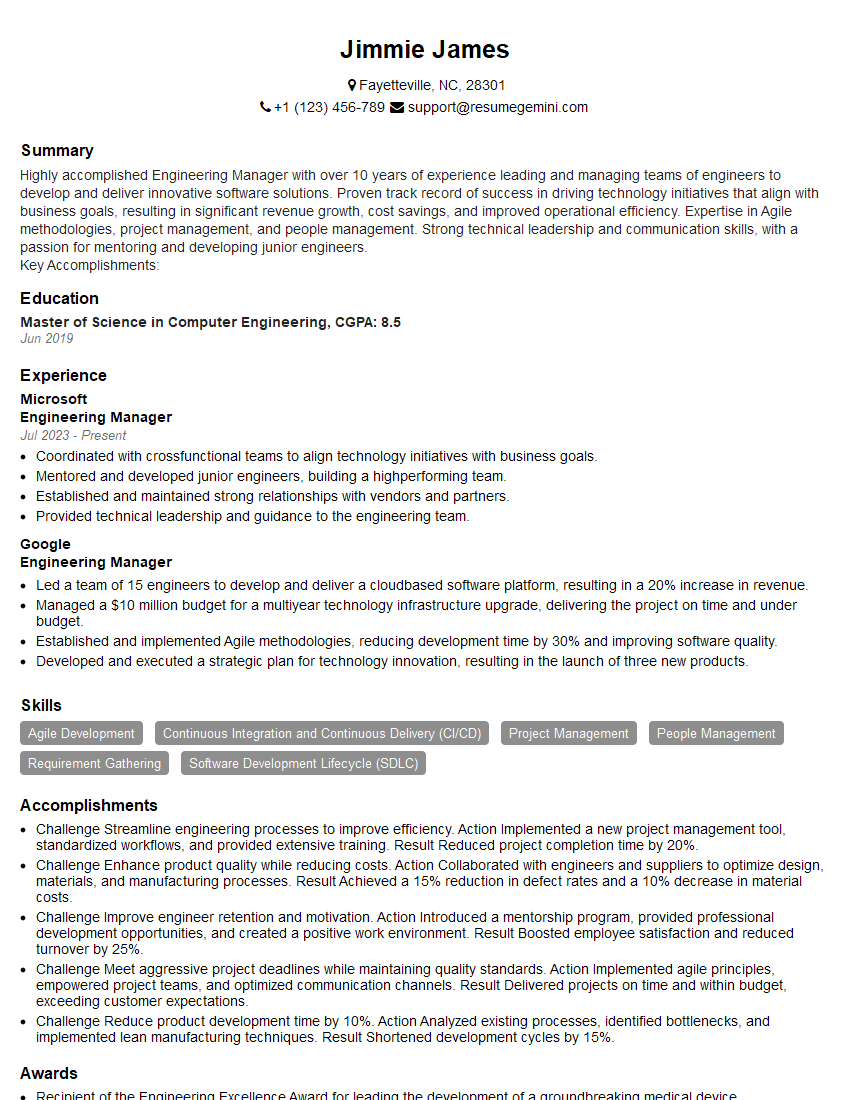
Engineering Manager Resume Sample
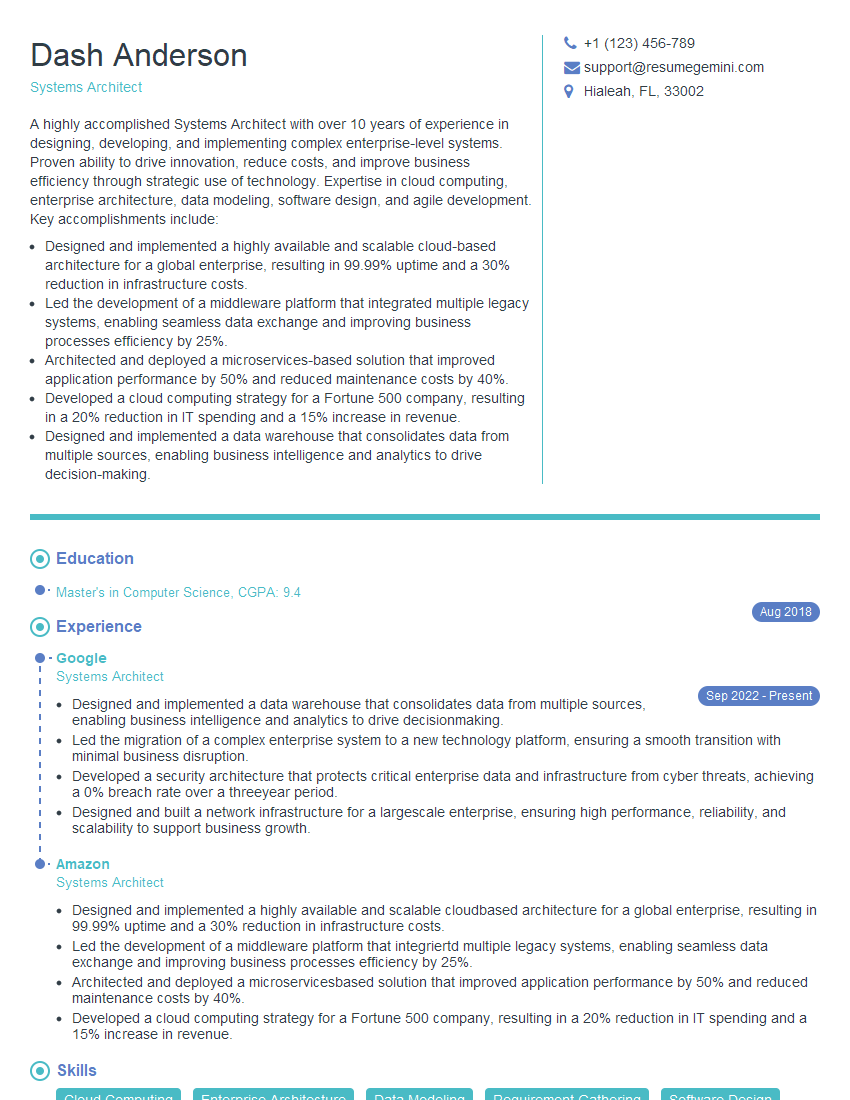
Systems Architect Resume Sample
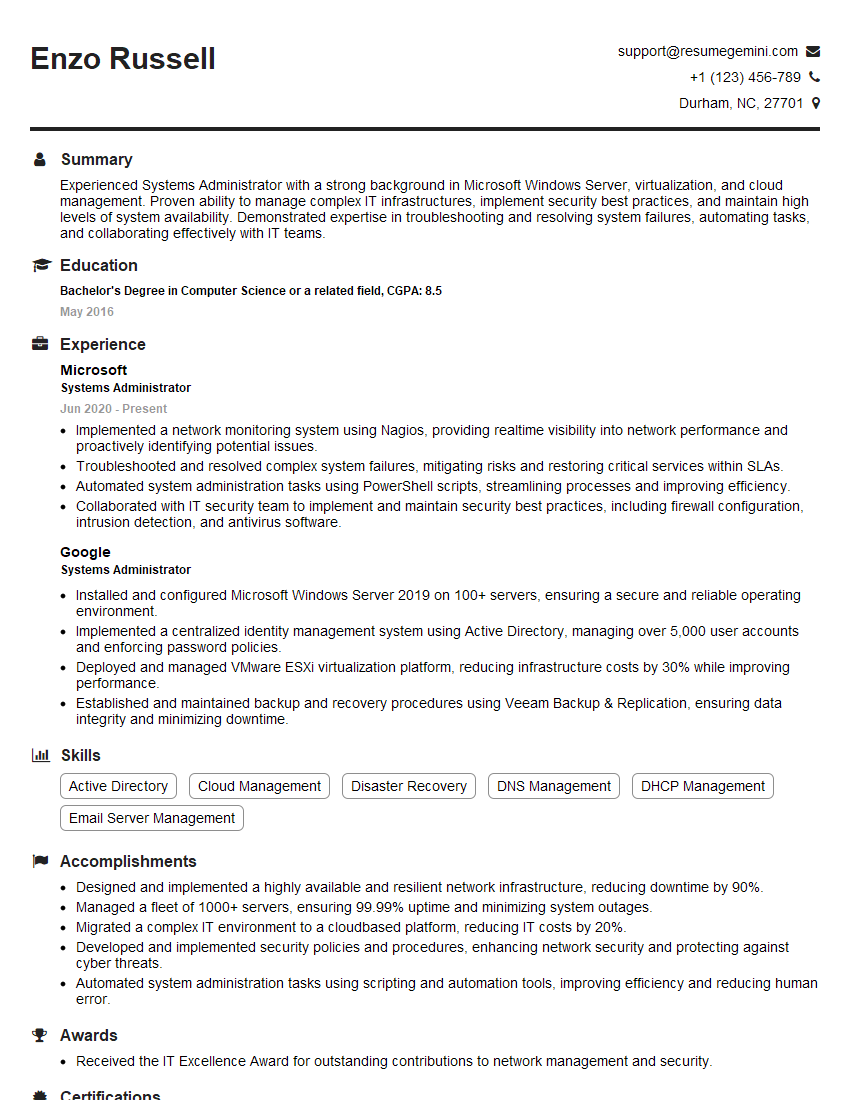
Systems Administrator Resume Sample
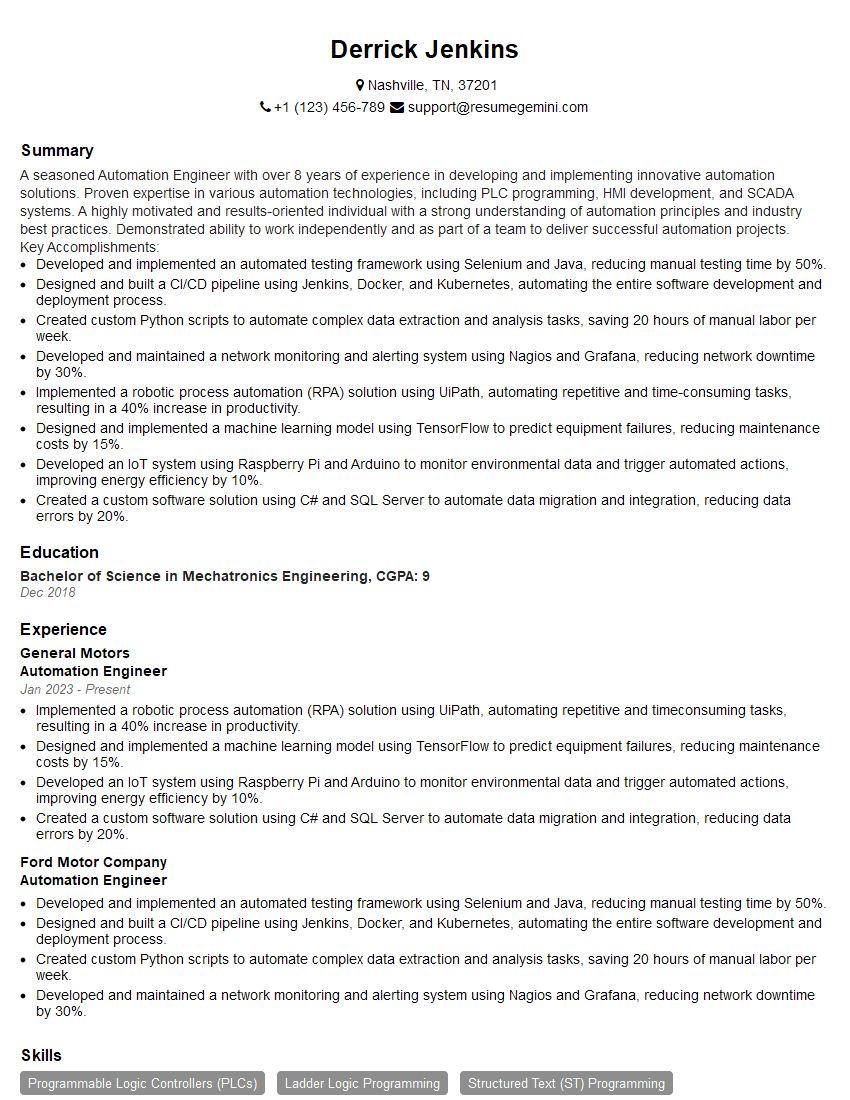
Automation Engineer Resume Sample
Solutions Architect Resume Sample
Infrastructure Engineer Resume Sample
Software Systems Engineer Resume Sample
System Engineer Resume Sample
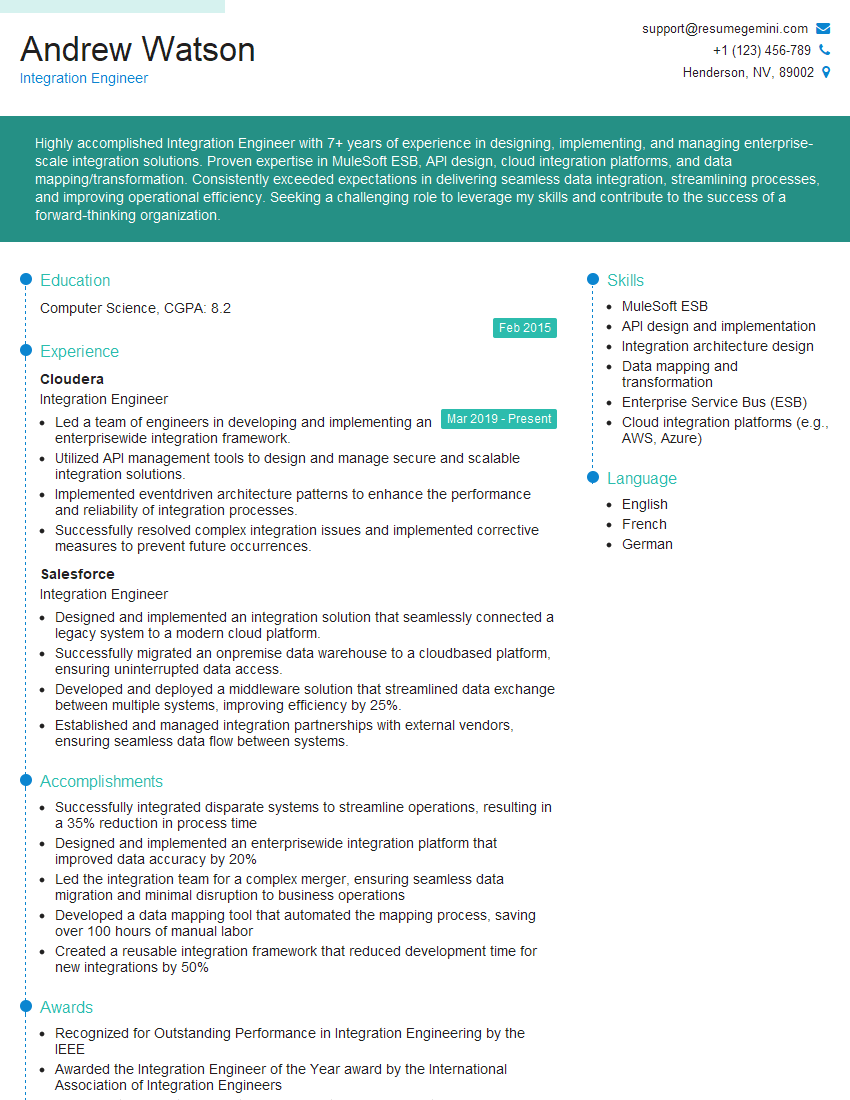
Integration Engineer Resume Sample
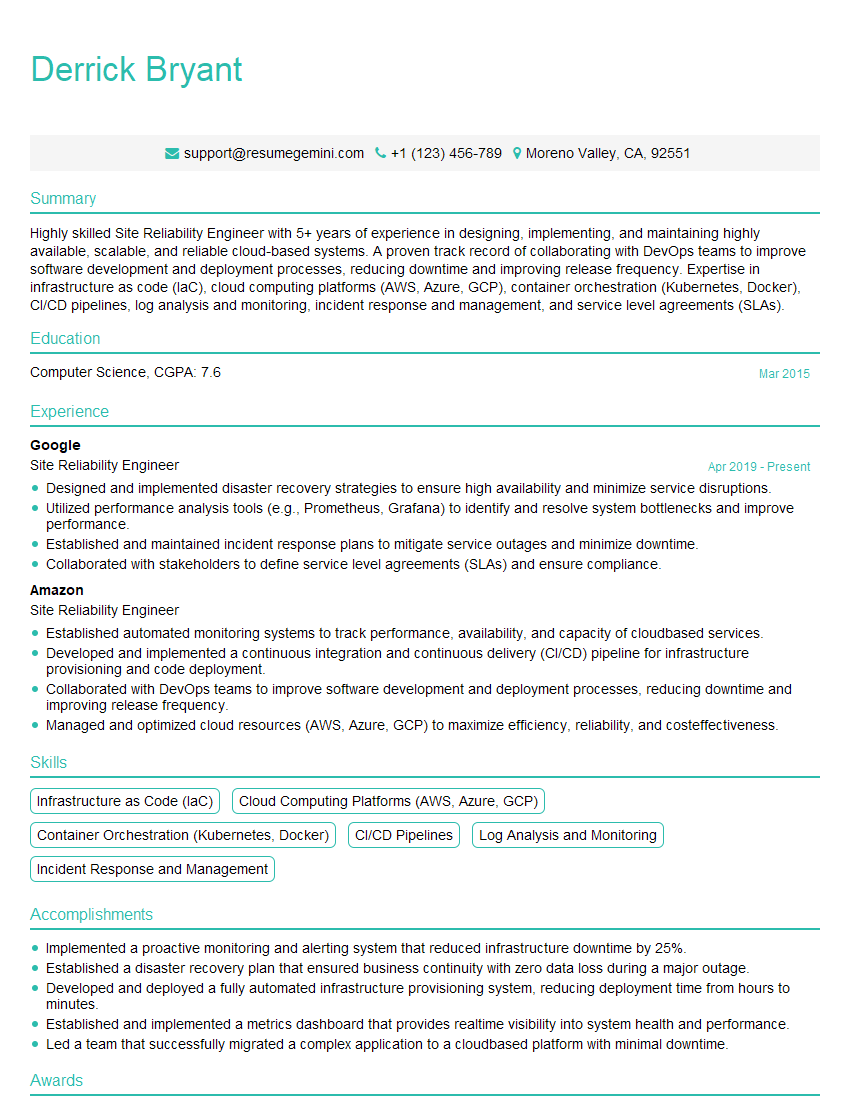
Site Reliability Engineer Resume Sample
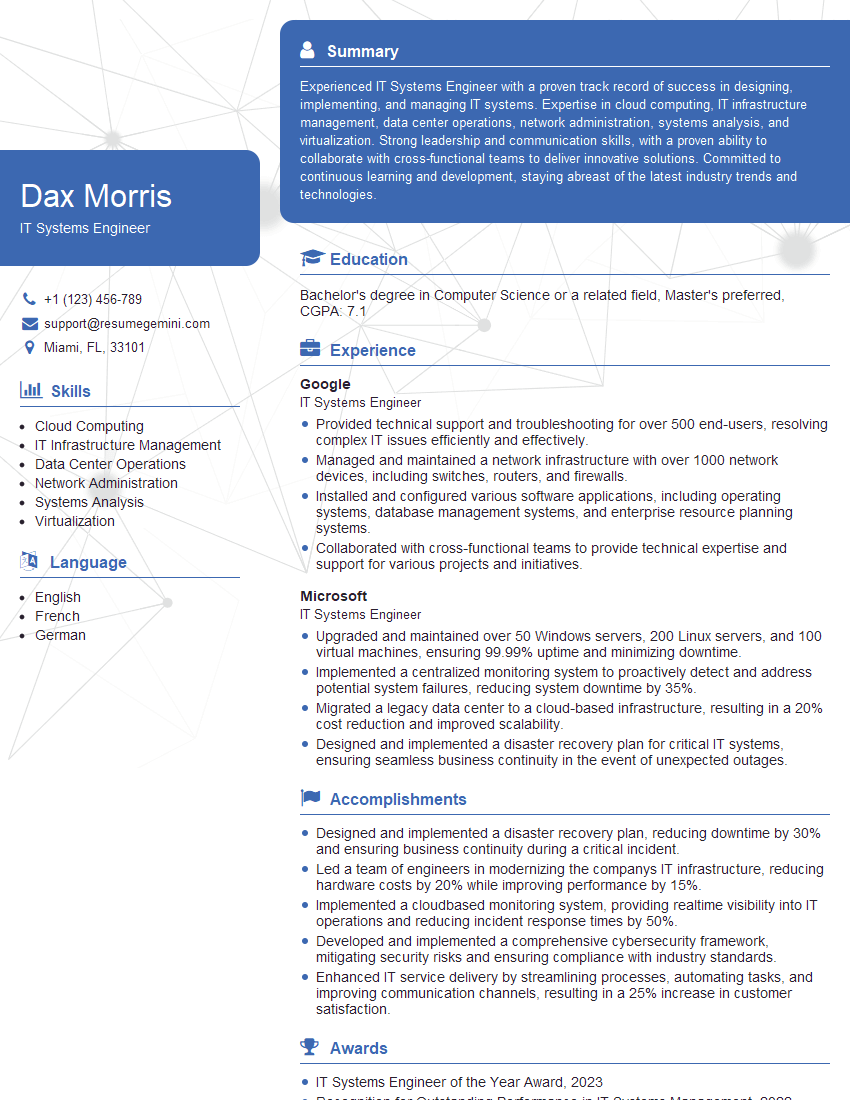
IT Systems Engineer Resume Sample
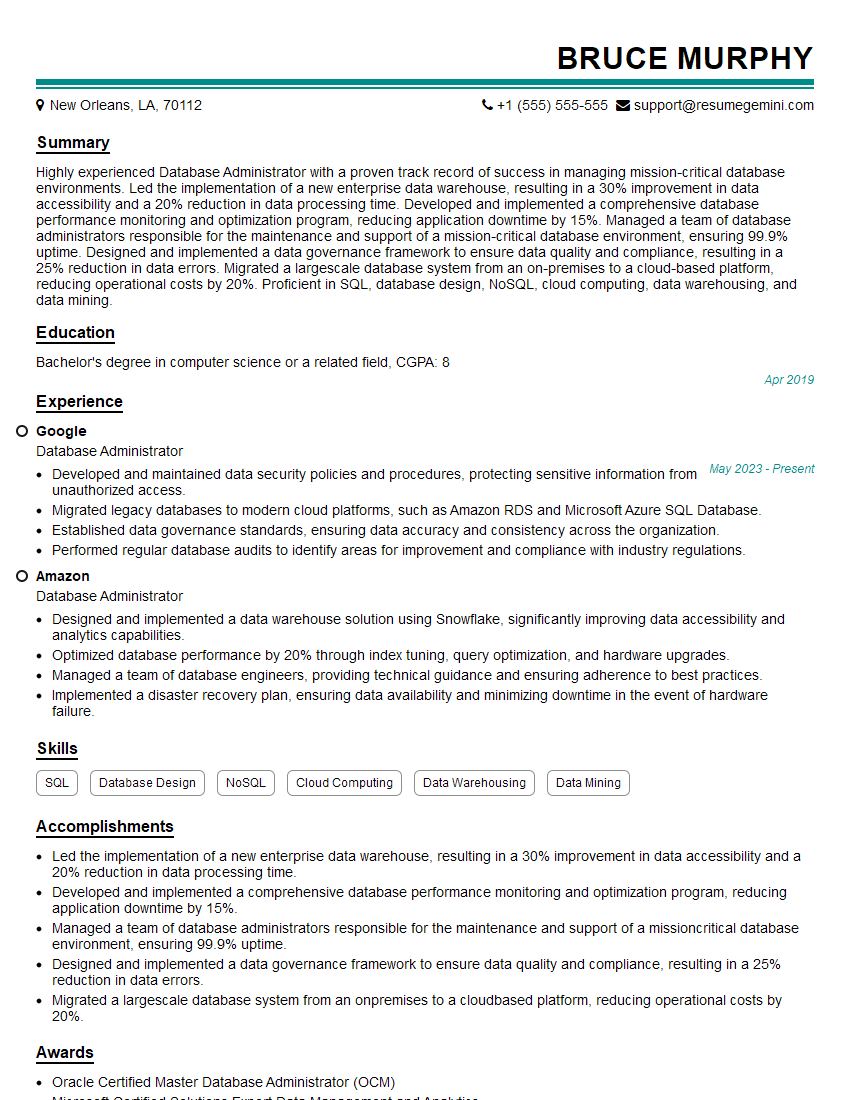
Database Administrator Resume Sample
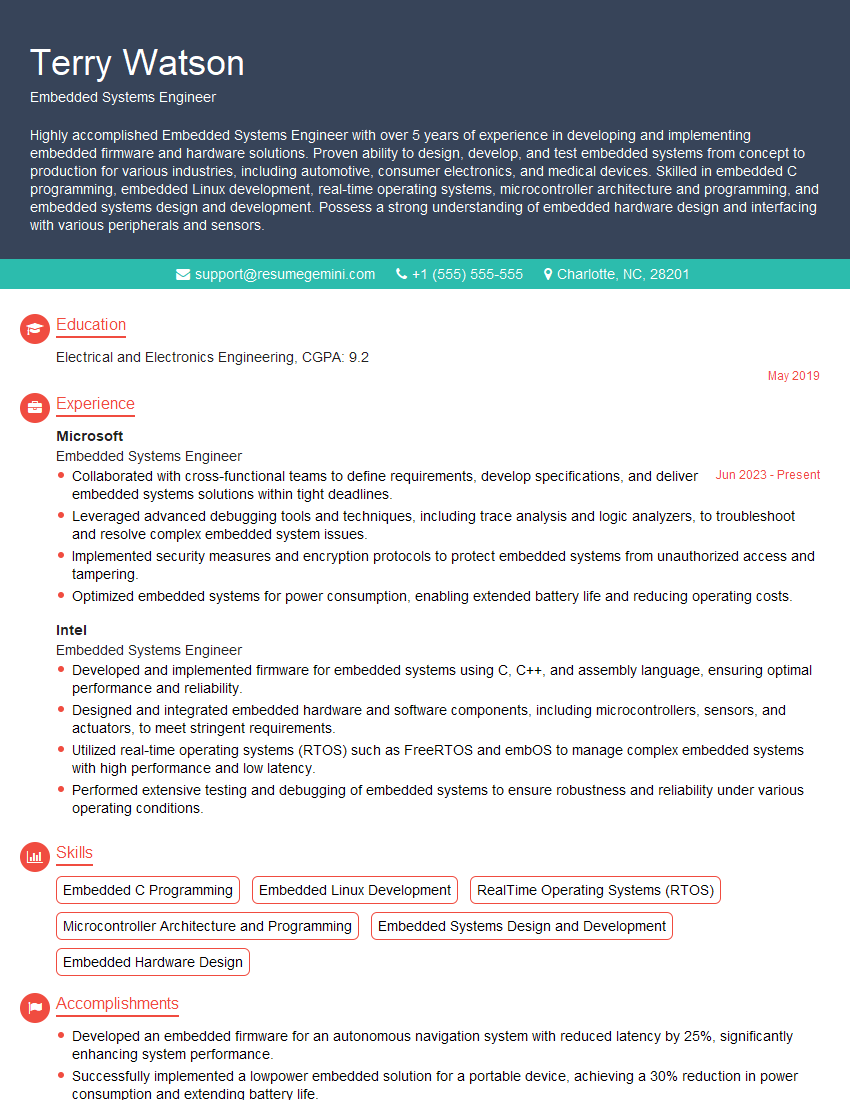
Embedded Systems Engineer Resume Sample
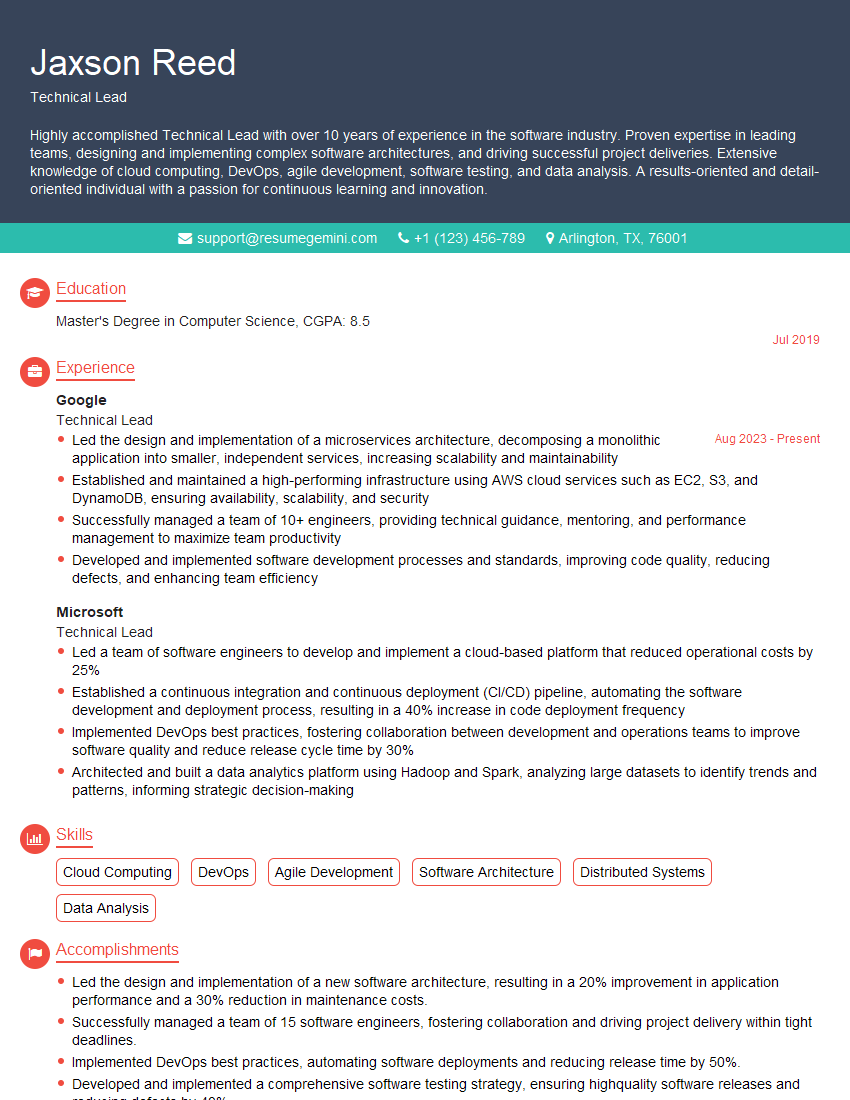
Technical Lead Resume Sample
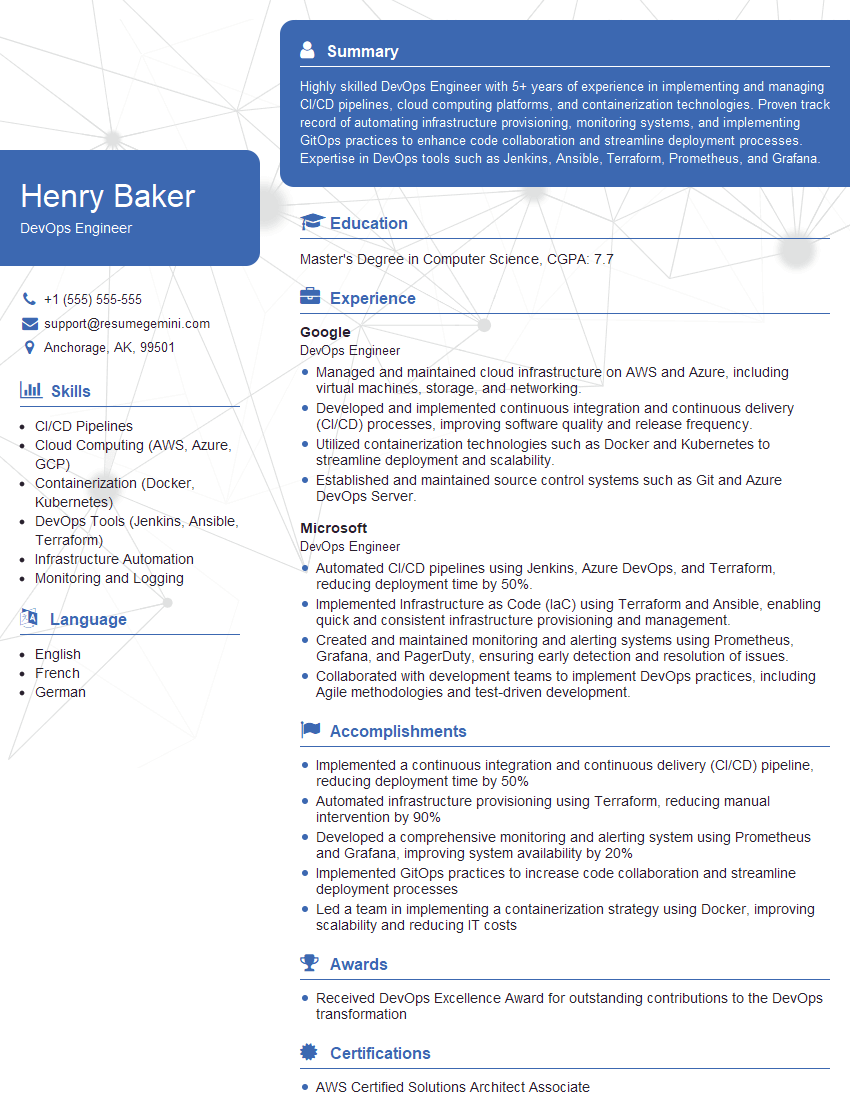
DevOps Engineer Resume Sample
- Engineering Manager
- Systems Architect
- Systems Administrator
- Automation Engineer
- Solutions Architect
- Infrastructure Engineer
- Software Systems Engineer
- System Engineer
- Integration Engineer
- Site Reliability Engineer
- IT Systems Engineer
- Database Administrator
- Embedded Systems Engineer
- Technical Lead
- DevOps Engineer
Explore more articles
Users Rating of Our Blogs
Share Your Experience
We value your feedback! Please rate our content and share your thoughts (optional).
What Readers Say About Our Blog
Hello,
we currently offer a complimentary backlink and URL indexing test for search engine optimization professionals.
You can get complimentary indexing credits to test how link discovery works in practice.
No credit card is required and there is no recurring fee.
You can find details here:
https://wikipedia-backlinks.com/indexing/
Regards
NICE RESPONSE TO Q & A
hi
The aim of this message is regarding an unclaimed deposit of a deceased nationale that bears the same name as you. You are not relate to him as there are millions of people answering the names across around the world. But i will use my position to influence the release of the deposit to you for our mutual benefit.
Respond for full details and how to claim the deposit. This is 100% risk free. Send hello to my email id: [email protected]
Luka Chachibaialuka
Hey interviewgemini.com, just wanted to follow up on my last email.
We just launched Call the Monster, an parenting app that lets you summon friendly ‘monsters’ kids actually listen to.
We’re also running a giveaway for everyone who downloads the app. Since it’s brand new, there aren’t many users yet, which means you’ve got a much better chance of winning some great prizes.
You can check it out here: https://bit.ly/callamonsterapp
Or follow us on Instagram: https://www.instagram.com/callamonsterapp
Thanks,
Ryan
CEO – Call the Monster App
Hey interviewgemini.com, I saw your website and love your approach.
I just want this to look like spam email, but want to share something important to you. We just launched Call the Monster, a parenting app that lets you summon friendly ‘monsters’ kids actually listen to.
Parents are loving it for calming chaos before bedtime. Thought you might want to try it: https://bit.ly/callamonsterapp or just follow our fun monster lore on Instagram: https://www.instagram.com/callamonsterapp
Thanks,
Ryan
CEO – Call A Monster APP
To the interviewgemini.com Owner.
Dear interviewgemini.com Webmaster!
Hi interviewgemini.com Webmaster!
Dear interviewgemini.com Webmaster!
excellent
Hello,
We found issues with your domain’s email setup that may be sending your messages to spam or blocking them completely. InboxShield Mini shows you how to fix it in minutes — no tech skills required.
Scan your domain now for details: https://inboxshield-mini.com/
— Adam @ InboxShield Mini
Reply STOP to unsubscribe
Hi, are you owner of interviewgemini.com? What if I told you I could help you find extra time in your schedule, reconnect with leads you didn’t even realize you missed, and bring in more “I want to work with you” conversations, without increasing your ad spend or hiring a full-time employee?
All with a flexible, budget-friendly service that could easily pay for itself. Sounds good?
Would it be nice to jump on a quick 10-minute call so I can show you exactly how we make this work?
Best,
Hapei
Marketing Director
Hey, I know you’re the owner of interviewgemini.com. I’ll be quick.
Fundraising for your business is tough and time-consuming. We make it easier by guaranteeing two private investor meetings each month, for six months. No demos, no pitch events – just direct introductions to active investors matched to your startup.
If youR17;re raising, this could help you build real momentum. Want me to send more info?
Hi, I represent an SEO company that specialises in getting you AI citations and higher rankings on Google. I’d like to offer you a 100% free SEO audit for your website. Would you be interested?
Hi, I represent an SEO company that specialises in getting you AI citations and higher rankings on Google. I’d like to offer you a 100% free SEO audit for your website. Would you be interested?
good