The thought of an interview can be nerve-wracking, but the right preparation can make all the difference. Explore this comprehensive guide to System Safety Engineering Process Improvement interview questions and gain the confidence you need to showcase your abilities and secure the role.
Questions Asked in System Safety Engineering Process Improvement Interview
Q 1. Explain the difference between HAZOP and FMEA.
HAZOP (Hazard and Operability Study) and FMEA (Failure Mode and Effects Analysis) are both systematic methods for identifying potential hazards in a system, but they differ significantly in their approach and scope.
HAZOP is a qualitative, brainstorming technique that uses guide words (e.g., ‘no,’ ‘more,’ ‘less,’ ‘part of’) to explore deviations from the intended design or operating parameters. It’s particularly useful for identifying hazards related to process interactions and unexpected operating conditions. Think of it like a highly structured brainstorming session with a specific focus on potential problems.
FMEA, on the other hand, is a more quantitative and structured approach that focuses on individual components or functions of a system. It systematically identifies potential failure modes, their effects, and their severity, occurrence, and detection rates. The Severity, Occurrence, and Detection (SOD) scores are then combined to determine a Risk Priority Number (RPN), which helps prioritize corrective actions. Imagine FMEA as a detailed checklist for each part of a system, evaluating its potential failures individually.
In short: HAZOP is broader, qualitative, and focuses on process deviations; FMEA is narrower, quantitative, and focuses on component failures. They are often used together, with HAZOP providing a high-level overview and FMEA providing a detailed assessment of specific components identified during HAZOP.
Q 2. Describe your experience implementing a safety management system.
In my previous role at a medical device company, I was instrumental in implementing a comprehensive safety management system (SMS) compliant with ISO 14971. This involved several key phases:
- Hazard Identification and Risk Analysis: We conducted HAZOP and FMEA studies to identify potential hazards throughout the product lifecycle, from design to disposal.
- Risk Control Measures: We implemented a range of risk control measures, including design modifications, safety devices, warnings, and training programs, to mitigate identified hazards. For example, we redesigned a component to prevent a potential pinch point hazard, adding a safety guard and revising the user manual for improved clarity.
- Risk Management Plan: We developed a formal risk management plan to document all identified hazards, risk control measures, and residual risks. This plan was regularly reviewed and updated as the project progressed and new information became available.
- Training and Communication: We provided comprehensive training to all personnel involved in the design, manufacturing, and use of the medical device, ensuring a clear understanding of safety procedures and responsibilities.
- Monitoring and Review: We established a system for ongoing monitoring and review of the SMS, ensuring its effectiveness in maintaining the safety of the product and its users. This included regular audits and incident reporting mechanisms.
The implementation resulted in a significant reduction in reported incidents and a demonstrably safer product. The project’s success was a direct result of the collaborative effort among engineering, manufacturing, and quality control teams, with a strong emphasis on proactive hazard identification and mitigation.
Q 3. How would you improve the effectiveness of a safety process?
Improving the effectiveness of a safety process requires a multi-faceted approach, focusing on both process enhancements and cultural change. Here’s a framework I’d utilize:
- Proactive Hazard Identification: Implement more robust hazard identification techniques, such as using a combination of HAZOP, FMEA, and potentially FTA (Fault Tree Analysis) and ETA (Event Tree Analysis) for more complex systems. Consider incorporating techniques like bow-tie analysis, which visually connects causes and consequences of hazards.
- Data-Driven Decision Making: Track key safety metrics (discussed later) and use data analysis to identify trends, areas of weakness, and the effectiveness of risk mitigation strategies. This allows for informed prioritization of corrective actions.
- Continuous Improvement: Establish a formal process for continuous improvement through regular reviews, audits, and lessons learned sessions. This ensures that the safety process evolves with the system, adapting to changes and improvements.
- Technology Integration: Leverage software tools for hazard identification, risk assessment, and risk management. This improves efficiency, enhances data analysis capabilities, and facilitates collaboration among team members.
- Enhanced Communication and Collaboration: Foster a culture of open communication and collaboration across all levels of the organization. Ensure that safety concerns are raised and addressed promptly and effectively.
Ultimately, the goal is to create a robust, proactive, and data-driven safety process that is integrated into the organization’s culture.
Q 4. What are the key elements of a successful safety culture?
A successful safety culture is built on several key elements:
- Leadership Commitment: Safety must be a top priority, demonstrated by visible leadership commitment and resources dedicated to safety initiatives. Leaders need to actively model safe behaviors and hold others accountable.
- Open Communication: A culture where employees feel comfortable reporting safety concerns without fear of reprisal is crucial. This requires establishing clear reporting channels and ensuring that reported concerns are addressed promptly and effectively.
- Employee Empowerment: Empowering employees to identify and address safety hazards is essential. This includes providing training, resources, and authority to stop unsafe work practices.
- Proactive Approach: A culture of proactive hazard identification and risk mitigation is critical. This involves consistently reviewing safety procedures, conducting regular safety audits, and learning from incidents.
- Continuous Learning and Improvement: A commitment to continuous learning and improvement is essential to enhance safety performance. This involves regular training, sharing best practices, and adapting safety procedures based on lessons learned.
Think of it like a team sport; success relies on every player’s commitment and participation. A strong safety culture doesn’t just prevent accidents; it fosters a more productive, engaged, and positive work environment.
Q 5. Describe your experience with Fault Tree Analysis (FTA).
I have extensive experience using Fault Tree Analysis (FTA) to identify the root causes of potential system failures. FTA is a deductive, top-down analysis technique that graphically represents the various combinations of events that could lead to a specific undesired event (top event). I’ve used it in several projects, including a recent one analyzing the potential failure of a critical subsystem in a process control system.
In that project, we started by defining the top event: complete system shutdown. We then systematically worked backwards, identifying the immediate causes of the top event, and then the causes of those causes, until we reached the basic events (those that cannot be further decomposed). The resulting fault tree illustrated the various failure paths leading to system shutdown. This helped us identify critical components requiring redundancy or improved design, prioritize mitigation strategies, and ultimately improve the overall reliability and safety of the system. We used specialized FTA software to construct and analyze the fault tree, including probabilistic analysis to quantify the likelihood of each failure path.
FTA is a powerful tool for understanding complex systems and identifying potential weaknesses that might otherwise be missed. It allows for a systematic and comprehensive assessment of risk, enabling informed decision-making about mitigation strategies.
Q 6. How do you identify and mitigate system hazards?
Identifying and mitigating system hazards is a systematic process involving several key steps:
- Hazard Identification: This involves systematically identifying potential hazards using methods like HAZOP, FMEA, checklists, and brainstorming sessions. This stage involves considering all aspects of the system, including normal operation, abnormal conditions, and potential failures.
- Risk Assessment: Once hazards are identified, the associated risks need to be assessed. This involves evaluating the likelihood of the hazard occurring (probability) and the severity of the consequences if it does (severity). Risk matrices and scoring systems are often used for this purpose.
- Risk Mitigation: Based on the risk assessment, appropriate risk mitigation strategies need to be implemented. These strategies can range from eliminating the hazard entirely (the preferred option) to implementing engineering controls, administrative controls (e.g., procedures, training), or personal protective equipment (PPE).
- Risk Monitoring and Review: The effectiveness of the mitigation strategies needs to be continually monitored and reviewed. This includes tracking key safety metrics, conducting regular audits, and investigating incidents to learn from mistakes and make improvements. The process should be iterative, with risk assessments and mitigation strategies updated as needed.
For example, in a chemical process plant, we might identify the hazard of a flammable gas leak. The risk assessment would consider the probability of a leak and the severity of a potential explosion. Mitigation strategies could include installing leak detectors, implementing a robust shutdown system, and providing employee training on emergency procedures. The effectiveness of these measures would then be monitored through regular inspections and maintenance.
Q 7. What are some common safety metrics you track and why?
Several key safety metrics are tracked to monitor the effectiveness of the safety process and identify areas for improvement. The specific metrics chosen depend on the context, but some common examples include:
- Incident Rate: This measures the number of incidents (near misses, injuries, and accidents) per unit of exposure (e.g., hours worked, miles driven). A decreasing trend indicates an improving safety record.
- Lost Time Injury Rate (LTIR): This measures the number of lost-time injuries per unit of exposure. It is a key indicator of the severity of incidents.
- Severity Rate: This focuses on the severity of incidents, independent of frequency. A lower severity rate indicates better hazard control.
- Near Miss Reporting Rate: This measures the number of near misses reported. A high reporting rate suggests a culture of safety and open communication.
- Compliance Rate: This monitors compliance with safety regulations, procedures, and standards.
- Time to Remediation: This measures the time taken to address safety issues, from identification to implementation of corrective actions.
Tracking these metrics provides valuable data for identifying trends, pinpointing areas of weakness, and measuring the effectiveness of safety initiatives. It allows for data-driven decision-making, facilitating continuous improvement and ensuring a safer work environment.
Q 8. Explain your understanding of Bow-Tie analysis.
Bow-Tie analysis is a risk assessment and management technique that visually represents the relationships between hazards, threats, consequences, and controls. Imagine a bow tie: the hazard is in the knot, the threats (causes) are on the left, and the consequences (effects) are on the right. The controls are the ‘strings’ of the bow tie, mitigating both the threats and consequences. It provides a holistic view of risk, moving beyond simple hazard identification to encompass proactive and reactive controls.
In practice, a Bow-Tie analysis involves:
- Identifying Hazards: What are the potential unwanted events?
- Identifying Threats (Causes): What could initiate the hazard?
- Identifying Consequences (Effects): What are the potential outcomes if the hazard occurs?
- Identifying Controls (Preventive & Mitigative): What measures are in place to prevent the threat or mitigate the consequence? This includes both proactive controls (preventing the hazard) and reactive controls (reducing the impact).
- Assessing Risk: Evaluating the likelihood and severity of the consequences to determine the overall risk level.
Example: Consider a chemical spill in a factory. The hazard is the spill, threats could be equipment failure or human error, consequences could be environmental damage or worker injury, and controls might include regular equipment maintenance, emergency shut-off systems, and employee training.
Q 9. How do you conduct a risk assessment using quantitative methods?
Quantitative risk assessment uses numerical data to express the likelihood and severity of risks. It’s more precise than qualitative methods but requires more data and resources. Common quantitative methods include:
- Fault Tree Analysis (FTA): A top-down, deductive approach that models the logic of system failures. It uses Boolean logic gates to show how various component failures can lead to a top-level event (hazard). The probability of the top event is calculated based on the probabilities of the underlying events.
- Event Tree Analysis (ETA): A bottom-up, inductive approach that models the sequences of events following an initiating event (hazard). It branches out to show different possible outcomes and their probabilities.
- Failure Mode and Effects Analysis (FMEA): A systematic approach to identifying potential failure modes in a system, their effects, and their severity, occurrence, and detection probabilities. A risk priority number (RPN) is often calculated (Severity x Occurrence x Detection).
Conducting a Quantitative Risk Assessment involves:
- Data Collection: Gather relevant data on failure rates, probabilities, and consequences (e.g., from historical data, testing, or expert judgment).
- Model Development: Create an appropriate model (FTA, ETA, or FMEA) representing the system and its potential failures.
- Probability Calculation: Use the collected data and the chosen model to calculate the probability of each event and the overall risk.
- Risk Prioritization: Identify and prioritize risks based on their calculated probabilities and consequences.
- Mitigation Planning: Develop mitigation strategies to reduce the identified risks to an acceptable level.
Example: In an aircraft design, FTA might be used to analyze the probability of a catastrophic engine failure, while ETA might be used to assess the various outcomes following an engine fire.
Q 10. How do you incorporate safety into the design process?
Safety is integrated into design through a proactive approach, ensuring safety is considered from the earliest conceptual stages rather than as an afterthought. This often involves applying safety principles throughout the design lifecycle (concept, design, implementation, operation, and decommissioning).
Key methods include:
- Hazard and Operability Study (HAZOP): A systematic review of the design to identify potential hazards and operability problems. It uses guide words (e.g., ‘no,’ ‘more,’ ‘less’) to explore deviations from intended operation.
- Failure Mode, Effects, and Criticality Analysis (FMECA): A more detailed version of FMEA, focusing on the criticality of failures and their potential impact on safety.
- Safety Requirements Specification: Clearly defining safety requirements early in the design process and ensuring they are traceable throughout the design and verification activities.
- Redundancy and Fail-Safe Design: Incorporating redundant systems and fail-safe mechanisms to prevent or mitigate the effects of single-point failures.
- Design Reviews: Regularly reviewing the design with safety experts to identify and address potential safety issues.
Example: In designing a pressure vessel, safety might be considered by specifying a maximum pressure limit, installing pressure relief valves, using materials with high yield strength, and implementing regular inspection procedures. This proactive integration ensures the vessel is safe to operate within its intended parameters.
Q 11. Describe your experience with Safety Integrity Levels (SILs).
Safety Integrity Levels (SILs) are a classification scheme used to specify the required performance level of safety-related systems. They are defined by IEC 61508 and similar standards. SILs range from 1 (lowest) to 4 (highest), with SIL 4 representing the most stringent requirements for safety. The higher the SIL, the lower the acceptable probability of failure on demand (PFD).
My experience with SILs includes:
- SIL Determination: Assessing the risk associated with hazardous events and determining the necessary SIL for the safety instrumented systems (SIS) required to mitigate those risks.
- SIL Verification and Validation: Ensuring that the SIS meets the required SIL through various methods like simulations, testing, and analysis.
- SIL Allocation: Assigning appropriate SIL targets to individual safety functions within a larger system.
- Working with SIL standards: I possess a thorough understanding of IEC 61508 and other relevant standards guiding SIL determination and implementation.
Example: In a process control system, a high-pressure relief valve might be designed to SIL 3, requiring rigorous testing and validation to ensure its high reliability. A lower-consequence safety function might only need a SIL 1 level of protection.
Q 12. How do you handle safety conflicts between different engineering disciplines?
Safety conflicts between engineering disciplines are common. Resolving them requires a collaborative approach and clear communication. These conflicts often arise because different disciplines may have different priorities, perspectives, and technical approaches.
My approach to handling these conflicts involves:
- Facilitated Workshops: Bringing together representatives from all relevant disciplines to openly discuss and resolve the conflicts. A neutral facilitator helps ensure open communication and finding consensus.
- Risk-Based Decision Making: Evaluating the potential safety risks associated with each proposed solution and selecting the option that minimizes overall risk. This often involves a quantitative risk assessment.
- Trade-off Analysis: Examining the trade-offs between different solutions, weighing safety risks against cost, schedule, and other factors. This is essential when compromises are necessary.
- Documented Decisions: Keeping a clear record of all decisions made, including the rationale behind them. This ensures transparency and accountability.
- Escalation Process: Establishing a clear process for escalating unresolved conflicts to higher levels of management.
Example: A conflict might arise between a mechanical engineer prioritizing design simplicity and an electrical engineer requiring additional safety features for the control system. Resolving this would require a discussion focusing on the risks, including the probabilities and severities of failure scenarios for both approaches, leading to a decision that balances simplicity with the necessary safety levels.
Q 13. Explain your experience with incident investigation and root cause analysis.
Incident investigation and root cause analysis are crucial for learning from past mistakes and preventing future incidents. My experience encompasses a variety of techniques, but my focus is always on identifying the root cause rather than just addressing the symptoms.
My approach includes:
- Immediate Actions: First securing the scene and ensuring the safety of personnel involved.
- Data Gathering: Collecting all relevant data, including witness statements, physical evidence, operational records, and system logs.
- Timeline Development: Constructing a chronological timeline of events leading to the incident.
- Root Cause Analysis Techniques: Employing methods like the ‘5 Whys,’ Fault Tree Analysis (FTA), Fishbone Diagrams (Ishikawa Diagrams), and ‘What-If’ analysis to identify the root cause(s). This involves asking ‘why’ repeatedly to peel back layers of contributing factors until the fundamental cause is uncovered.
- Corrective Actions: Developing and implementing effective corrective actions to prevent recurrence.
- Reporting and Documentation: Thoroughly documenting the investigation process, findings, and implemented corrective actions.
Example: Investigating a process control system failure might involve analyzing sensor data, operator logs, and process parameters. Using FTA, the investigation might reveal that a sensor failure was the root cause, but further analysis using the ‘5 Whys’ method could reveal that inadequate calibration procedures were ultimately responsible for the failure.
Q 14. Describe your experience with safety verification and validation activities.
Safety verification and validation activities are critical to ensure that the safety requirements of a system are met throughout its lifecycle. Verification focuses on ensuring the design meets its specifications, while validation checks if the system performs as intended in the real world.
My experience in this area includes:
- Verification: Using methods like inspections, reviews, analyses, simulations, and testing to confirm the design meets the safety requirements. This can involve code reviews, testing safety-related software, and validating calculations.
- Validation: Employing methods such as testing, demonstrations, and operational experience to confirm the system functions as intended in its operational environment. This often requires simulated or real-world scenarios to evaluate the system’s performance under various conditions.
- Independent Verification & Validation (IV&V): Using an independent team to review and assess the safety of the system, providing an unbiased evaluation of safety claims.
- Traceability: Ensuring that all safety requirements are traceable from the initial design stages through to the final implementation and testing.
Example: Verifying a safety-critical software component might involve code reviews, unit testing, integration testing, and formal verification techniques to prove that it meets its functional and safety requirements. Validating the software involves implementing the software on a real system and testing its performance under various operational conditions, potentially including fault injection testing.
Q 15. How do you manage safety-related changes throughout the project lifecycle?
Managing safety-related changes throughout a project lifecycle requires a robust, proactive approach. It’s not enough to address safety only at the beginning and end; it’s a continuous process. We use a system of change control, ensuring every modification – no matter how seemingly minor – undergoes a rigorous safety assessment. This assessment considers potential impacts on existing safety mechanisms and the overall system’s integrity.
- Change Request Process: All changes, even small ones, are documented as formal change requests. These requests are reviewed by a multi-disciplinary team, including safety engineers, designers, and project managers. The team evaluates the change against existing safety requirements and analyzes potential risks and consequences.
- Risk Assessment and Mitigation: The risk assessment follows a structured methodology, often using a HAZOP (Hazard and Operability Study) or FMEA (Failure Mode and Effects Analysis) process. This identifies potential hazards and determines the likelihood and severity of their occurrence. Mitigation strategies are then developed and implemented to reduce these risks to an acceptable level.
- Traceability: A crucial aspect is traceability. Every change should be traceable back to its origin, its impact analysis, and the implemented mitigation strategies. This ensures accountability and allows us to understand the evolution of safety considerations throughout the project.
- Verification and Validation: After implementing a change, we verify that the change was implemented correctly and validate that it meets the revised safety requirements. This might involve testing, simulations, or inspections.
For example, in a recent project involving the design of a robotic arm for industrial use, a change request was made to increase the arm’s speed. Our process triggered a thorough review, leading to modifications in the emergency stop mechanism and the addition of advanced safety sensors to prevent collisions. This ensured that the increased speed didn’t compromise safety.
Career Expert Tips:
- Ace those interviews! Prepare effectively by reviewing the Top 50 Most Common Interview Questions on ResumeGemini.
- Navigate your job search with confidence! Explore a wide range of Career Tips on ResumeGemini. Learn about common challenges and recommendations to overcome them.
- Craft the perfect resume! Master the Art of Resume Writing with ResumeGemini’s guide. Showcase your unique qualifications and achievements effectively.
- Don’t miss out on holiday savings! Build your dream resume with ResumeGemini’s ATS optimized templates.
Q 16. How do you ensure compliance with relevant safety standards and regulations?
Compliance with safety standards and regulations is paramount. We achieve this through a multi-faceted approach. First, we thoroughly identify all applicable standards and regulations relevant to the project’s industry, location, and technology. This may include ISO 26262 (for automotive), IEC 61508 (for functional safety), or OSHA regulations (for workplace safety).
- Standards Integration: The identified standards are directly integrated into the project’s requirements and design processes. We use checklists, templates, and tools to ensure consistent application of these standards throughout the project’s different stages.
- Regular Audits and Reviews: We conduct regular internal audits and external reviews to verify compliance. These assessments provide independent verification of our adherence to safety standards and help identify areas for improvement.
- Documentation: Comprehensive documentation is critical. We meticulously document all safety-related activities, decisions, and evidence of compliance, ensuring that an audit trail is readily available. This allows us to demonstrate our commitment to safety to regulatory bodies and stakeholders.
- Continuous Improvement: Compliance is not a one-time effort; it’s an ongoing process. We regularly review and update our processes to reflect the latest standards and best practices, and we actively participate in industry events and training to stay informed about evolving regulations.
For instance, during a recent project involving the development of medical devices, we meticulously followed the FDA’s design control regulations, including rigorous testing and validation protocols, ensuring full compliance with all relevant safety guidelines. Our diligent record-keeping allowed us to successfully navigate the regulatory approval process.
Q 17. How do you communicate safety information effectively to different stakeholders?
Effective communication of safety information is crucial for a successful safety program. We tailor our communication strategy to the specific needs and understanding of different stakeholders. We use a variety of methods to ensure everyone receives the necessary information in a clear and accessible manner.
- Targeted Communication: We segment our audience into key stakeholder groups (e.g., engineers, operators, management, regulatory bodies) and develop communication plans that address their specific needs and technical backgrounds.
- Multiple Channels: We use a variety of communication channels including formal reports, presentations, training materials, safety alerts, and regular meetings. Visual aids, such as diagrams and videos, are also employed to enhance understanding.
- Feedback Mechanisms: We establish feedback mechanisms such as surveys and open forums to gauge the effectiveness of our communication and identify areas for improvement. This ensures that our message is understood and that any concerns or questions are promptly addressed.
- Language and Clarity: We utilize plain language and avoid technical jargon whenever possible. If technical terms are unavoidable, we ensure they are clearly defined.
For example, when communicating about a newly implemented safety procedure to operators, we use simple language and visual aids in training sessions and provide quick reference guides. For engineers, we provide more detailed technical documentation.
Q 18. What is your experience with safety training and development programs?
I have extensive experience in designing and delivering safety training and development programs. My approach is to create engaging, practical, and relevant training that fosters a strong safety culture. The effectiveness of training is measured through both knowledge assessments and observed changes in on-the-job behavior.
- Needs Assessment: Before developing any training, I conduct a thorough needs assessment to identify specific training gaps and tailor the content to address those gaps. This ensures that the training is targeted and effective.
- Blended Learning Approach: I favor a blended learning approach that combines online modules, classroom instruction, hands-on exercises, and simulations. This caters to diverse learning styles and provides a more engaging and comprehensive learning experience.
- Interactive Training: I incorporate interactive elements, such as games and case studies, to enhance engagement and knowledge retention. This makes learning more enjoyable and memorable.
- Regular Refresher Training: Safety training is not a one-time event. I advocate for regular refresher training to reinforce key concepts and ensure that everyone remains up-to-date on safety procedures and regulations.
In a previous role, I developed a comprehensive safety training program for a manufacturing plant, resulting in a significant reduction in workplace accidents. The program was well-received by employees and contributed to a positive shift in safety culture.
Q 19. Describe a time when you had to deal with a complex safety issue.
During the development of a new automated process for a chemical plant, we encountered a complex safety issue related to the potential for hazardous chemical spills. Initial risk assessments identified a low probability, but the consequences were catastrophic.
- Problem Identification: A thorough HAZOP study revealed that a series of unlikely but potentially simultaneous equipment failures could lead to a major spill.
- Solution Development: We convened a multi-disciplinary team to brainstorm solutions. This involved engineers, safety specialists, and operations personnel. The team explored several options, including improved safety interlocks, redundant systems, and enhanced emergency response protocols.
- Cost-Benefit Analysis: We performed a detailed cost-benefit analysis for each solution, considering the costs of implementation against the potential costs of an accident, including environmental damage, fines, and reputational harm.
- Implementation and Verification: The chosen solution involved a combination of improved safety interlocks and an enhanced emergency response system, which was implemented and rigorously tested. We documented the changes, updated risk assessments, and provided training to operators.
This experience highlighted the importance of a thorough, proactive safety approach, especially when dealing with potentially hazardous processes. The collaborative nature of the solution development and the emphasis on a comprehensive risk assessment were key to resolving the issue successfully.
Q 20. Explain your knowledge of common safety lifecycle models (e.g., V-model).
I’m familiar with several safety lifecycle models, including the V-model, which provides a structured approach to system safety. In the V-model, safety considerations are integrated throughout the development lifecycle, mirroring the development process with corresponding verification and validation activities.
- Requirements Phase: Safety requirements are defined early in the lifecycle, alongside functional requirements. This emphasizes that safety is an integral part of the system, not an afterthought.
- Design Phase: As the system is designed, safety analyses (like HAZOP and FMEA) are performed to identify and mitigate potential hazards. Design choices are evaluated for their impact on safety.
- Verification and Validation: Each stage of development has a corresponding verification and validation phase. For instance, after design, safety analyses are verified; after implementation, testing and simulations are conducted to validate that the safety requirements have been met.
- Operation and Maintenance: Even after deployment, the V-model emphasizes continued safety monitoring, maintenance, and updates to the system to address any emerging risks.
Other models, like the waterfall and spiral models, also incorporate safety aspects, but the V-model’s parallel structure provides clear traceability between development stages and their corresponding safety verification and validation activities.
Q 21. How do you prioritize safety risks?
Prioritizing safety risks involves a structured approach, typically using risk matrices that consider both the likelihood and severity of potential hazards. A common approach is to use a qualitative risk matrix, where likelihood and severity are assigned qualitative ratings (e.g., low, medium, high). These ratings are then combined to determine an overall risk level.
- Risk Assessment Methods: Several methods, including HAZOP, FMEA, and fault tree analysis, are used to identify and assess hazards. These methods help to systematically uncover potential failures and their consequences.
- Risk Matrix: A risk matrix is used to visually represent the risk level for each identified hazard. This provides a clear overview of the risks and facilitates prioritization. The matrix might also include a risk score, calculated from likelihood and severity ratings.
- Risk Reduction Strategies: Once risks are prioritized, strategies are developed to reduce them to an acceptable level. This could involve redesigning the system, implementing safety mechanisms, or developing improved operational procedures.
- Risk Monitoring: Risks are not static; they can change throughout the project’s lifecycle. We continuously monitor risks and update our assessments and mitigation strategies as needed. Regular safety reviews are conducted to evaluate the effectiveness of the implemented measures.
For instance, a high-likelihood, high-severity risk (like a potential catastrophic failure) would be prioritized over a low-likelihood, low-severity risk (like a minor inconvenience). This systematic approach ensures that resources are allocated effectively to address the most critical safety concerns.
Q 22. Describe your experience with safety audits and inspections.
Safety audits and inspections are crucial for proactively identifying hazards and vulnerabilities within a system. My experience encompasses conducting both planned and reactive audits, using a variety of methods including checklists, interviews, observations, and document reviews. For example, in my previous role at a manufacturing plant, I led a series of audits focusing on the lockout/tagout (LOTO) procedures. This involved physically verifying the implementation of the procedure, interviewing operators on their understanding of the process, and reviewing the maintenance logs for compliance. We identified a crucial gap in training, leading to a revised training program and a significant reduction in near-miss incidents. Another project involved a safety inspection of a newly designed robotic assembly line, where I used hazard and operability (HAZOP) studies to anticipate potential risks associated with the new technology. This pro-active approach allowed us to mitigate risks before any incidents could occur.
My audit reports typically include a detailed summary of findings, categorized by severity, along with recommendations for corrective actions and preventative measures. Following up on the implementation of these recommendations is a key part of the process, ensuring that the identified issues are properly addressed. This iterative approach allows for continuous improvement in overall safety.
Q 23. How do you measure the effectiveness of safety initiatives?
Measuring the effectiveness of safety initiatives requires a multi-faceted approach. It’s not enough to simply implement a new program; we need to track and quantify its impact. I use a combination of lagging and leading indicators. Lagging indicators reflect the outcomes of safety initiatives – for instance, the number of accidents, incidents, or near misses. Leading indicators, on the other hand, measure the effectiveness of the processes themselves. Examples include the completion rate of safety training, adherence to safety procedures (as evidenced by observation and documentation), and the number of safety observations submitted by employees. A significant decrease in leading indicators often foreshadows a positive trend in lagging indicators, allowing for proactive intervention.
Data visualization plays a vital role here. I create dashboards to track key safety metrics and use statistical analysis to identify trends and correlations. For instance, a sudden increase in near-miss reports in a particular area might suggest a need for additional training or process improvements in that specific location. These analyses help not only in evaluating the efficacy of existing initiatives but also in prioritizing future efforts. Finally, comparing our safety performance against industry benchmarks provides context and identifies areas for improvement.
Q 24. What are some common challenges in implementing safety process improvements?
Implementing safety process improvements often faces significant challenges. One of the most common is resistance to change. People are often comfortable with existing processes, even if those processes are unsafe. Overcoming this requires clear communication, demonstrating the value of the proposed improvements, and actively involving employees in the process. Another hurdle is resource constraints – improvements often require time, money, and personnel. Carefully prioritizing initiatives, obtaining management buy-in, and justifying the investment in terms of reduced costs from accidents are all crucial.
Another challenge is the complexity of modern systems. In intricate systems like those in aerospace or nuclear power, identifying and managing hazards requires specialized expertise and sophisticated tools. Maintaining effective communication and collaboration among multiple teams and disciplines is essential. Finally, there’s the challenge of measuring and demonstrating the return on investment (ROI) of safety initiatives. This requires careful planning, data collection, and analysis to quantify the benefits of improved safety.
Q 25. How do you use data analysis to inform safety decision-making?
Data analysis is the backbone of informed safety decision-making. I leverage various statistical methods and data visualization techniques to gain insights from safety data. This includes analyzing incident reports to identify root causes, using control charts to monitor trends, and applying regression analysis to determine the relationships between different factors and safety outcomes. For example, I might analyze near-miss reports to identify common contributing factors like fatigue or inadequate training. Then, I would use this data to tailor training programs or implement procedural changes. This data-driven approach reduces the reliance on intuition and allows for a more objective and efficient allocation of resources.
I also use data to measure the effectiveness of safety interventions. For instance, after implementing a new safety procedure, I would track changes in relevant metrics to determine whether the intervention had the desired effect. Moreover, I utilize predictive analytics to identify potential hazards before they lead to incidents. For example, by analyzing machine performance data and environmental conditions, we can predict potential failures and proactively prevent accidents.
Q 26. Explain your experience with safety reporting and documentation.
Effective safety reporting and documentation are vital for continuous improvement and legal compliance. My approach emphasizes creating a system that is easy to use, reliable, and comprehensive. This involves using a standardized format for incident reports, including details on the incident, contributing factors, and corrective actions taken. I ensure that reporting mechanisms are readily accessible to all employees and that reporting is encouraged, without fear of retribution. Anonymity features, when appropriate, help encourage open reporting.
I also manage a comprehensive database for storing and analyzing safety-related information. This database facilitates trend analysis, root cause identification, and the evaluation of the effectiveness of safety interventions. Furthermore, regular audits of the documentation system ensure its accuracy and completeness. All documentation is maintained according to established standards and regulations, providing an auditable trail of safety-related activities.
Q 27. Describe your approach to continuous safety improvement.
Continuous safety improvement is a journey, not a destination. My approach is grounded in the Plan-Do-Check-Act (PDCA) cycle. We begin by planning the improvement initiatives, identifying areas needing attention based on data analysis and risk assessments. Next, we do by implementing the chosen initiatives. Then, we carefully check the results through monitoring and evaluation, collecting data to assess the effectiveness of our actions. Finally, we act by adjusting our strategies based on the findings of the evaluation phase. This cyclical process is iterative, leading to gradual, sustainable safety improvements.
Beyond the PDCA cycle, I believe in fostering a strong safety culture through regular communication, training, and employee engagement. This includes providing regular safety updates, conducting safety meetings, and creating opportunities for employees to contribute to safety initiatives. This collaborative approach ensures that safety improvements are not only effective but also sustainable in the long term. Regular reviews of safety metrics, coupled with trend analysis, allows us to proactively address emerging risks and further refine safety procedures.
Key Topics to Learn for System Safety Engineering Process Improvement Interview
- Hazard Analysis and Risk Assessment (HARA): Understand different HARA methods (e.g., FTA, FMEA, HAZOP) and their applications in identifying and mitigating safety hazards throughout the system lifecycle. Be prepared to discuss the strengths and weaknesses of each method.
- Safety Requirements Engineering: Discuss how to derive safety requirements from system requirements, and how to verify and validate these requirements throughout the development process. Consider examples of how you’ve translated high-level safety goals into concrete, testable requirements.
- Safety Case Development: Explain the purpose and structure of a safety case, including evidence gathering and justification of safety claims. Practice articulating how you’d build a compelling safety case for a complex system.
- Safety Management Systems (SMS): Discuss the principles of a robust SMS, including its components (policy, processes, procedures) and how it contributes to continuous safety improvement. Be prepared to discuss real-world examples of effective SMS implementations.
- Process Improvement Methodologies (e.g., Lean, Six Sigma): Explain how these methodologies can be applied to enhance the efficiency and effectiveness of safety engineering processes. Be ready to discuss specific examples of how you’ve used these techniques to improve safety outcomes.
- Data Analysis and Metrics: Demonstrate your ability to analyze safety data, identify trends, and use metrics to measure the effectiveness of safety interventions. Be prepared to discuss relevant safety KPIs and how to interpret them.
- Human Factors Engineering in Safety: Discuss the importance of considering human error in safety analysis and design. Provide examples of how human factors principles can be applied to improve system safety.
- Safety Verification and Validation Techniques: Describe various techniques used to verify and validate the safety of a system (e.g., testing, simulation, analysis). Be prepared to discuss their limitations and applicability.
Next Steps
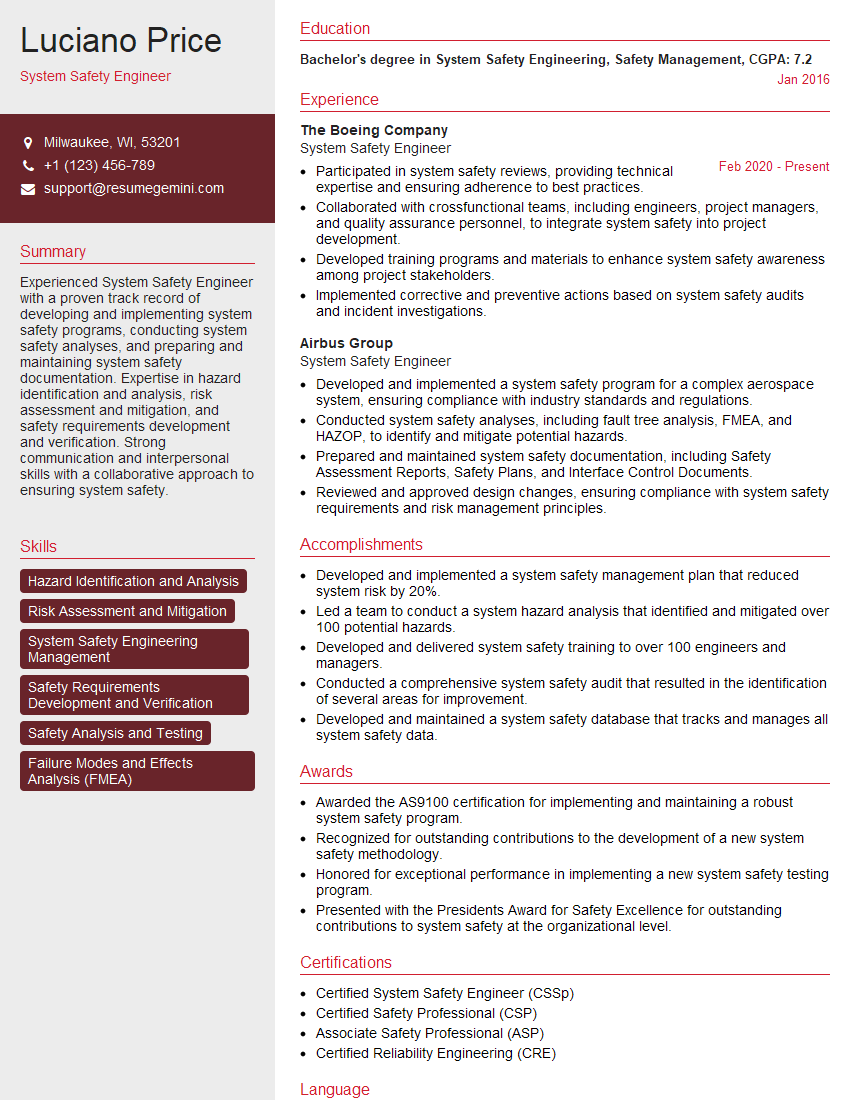
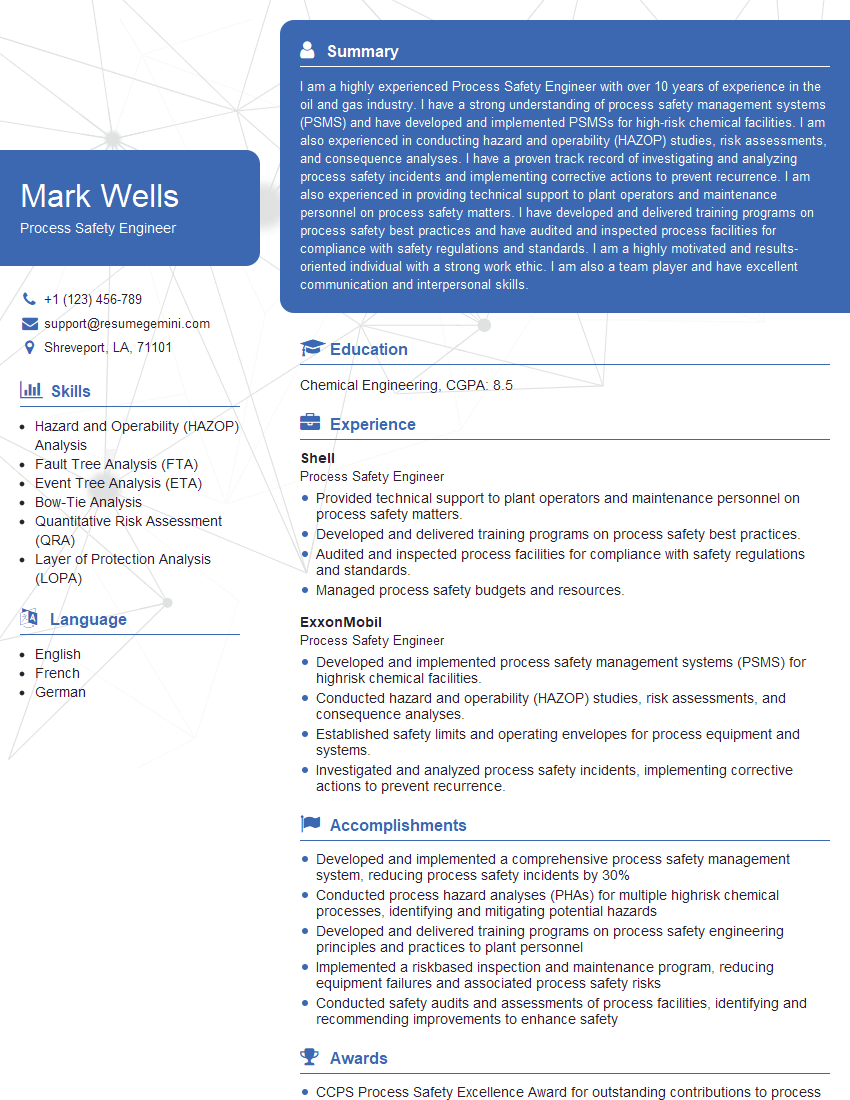
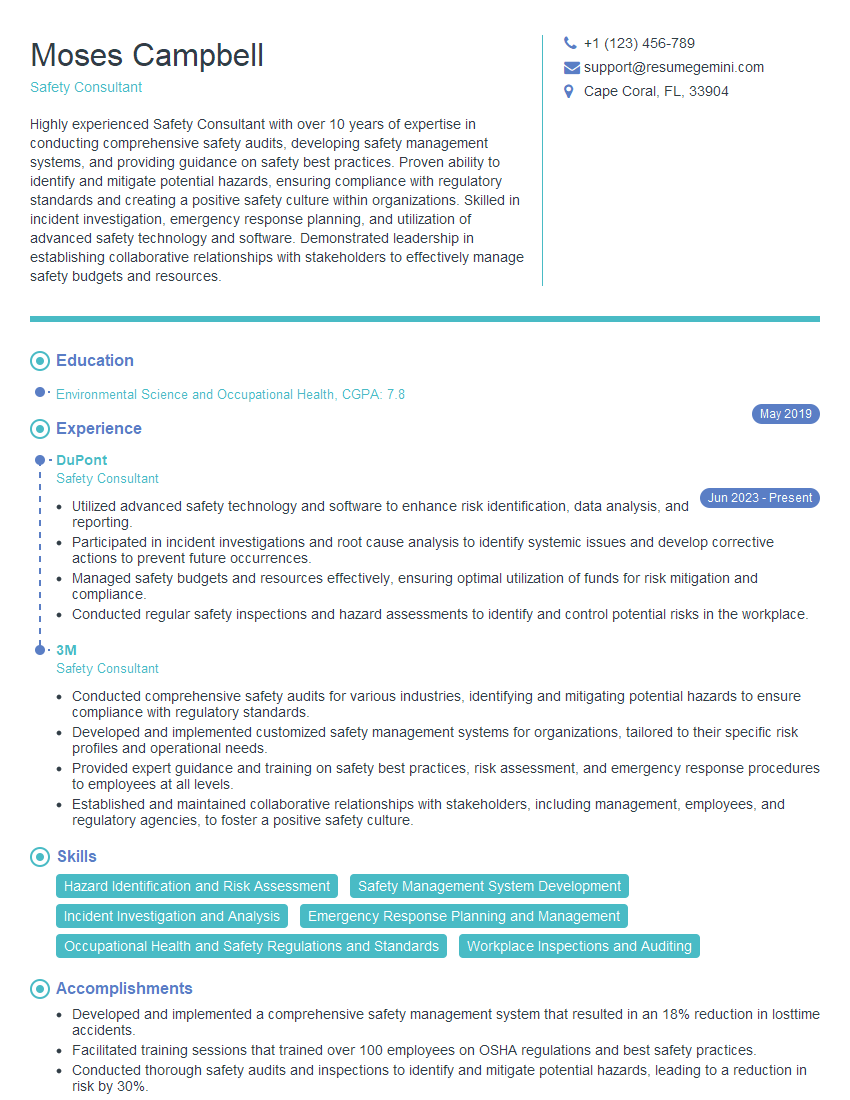
Mastering System Safety Engineering Process Improvement opens doors to exciting career advancements, offering greater responsibility and impact within your field. A well-crafted resume is crucial in showcasing your expertise to potential employers. Creating an ATS-friendly resume significantly improves your chances of getting noticed. We highly recommend using ResumeGemini to build a professional and impactful resume that highlights your skills and experience effectively. ResumeGemini provides examples of resumes tailored to System Safety Engineering Process Improvement, helping you create a document that truly stands out.

Explore more articles
Users Rating of Our Blogs
Share Your Experience
We value your feedback! Please rate our content and share your thoughts (optional).
What Readers Say About Our Blog
Attention music lovers!
Wow, All the best Sax Summer music !!!
Spotify: https://open.spotify.com/artist/6ShcdIT7rPVVaFEpgZQbUk
Apple Music: https://music.apple.com/fr/artist/jimmy-sax-black/1530501936
YouTube: https://music.youtube.com/browse/VLOLAK5uy_noClmC7abM6YpZsnySxRqt3LoalPf88No
Other Platforms and Free Downloads : https://fanlink.tv/jimmysaxblack
on google : https://www.google.com/search?q=22+AND+22+AND+22
on ChatGPT : https://chat.openai.com?q=who20jlJimmy20Black20Sax20Producer
Get back into the groove with Jimmy sax Black
Best regards,
Jimmy sax Black
www.jimmysaxblack.com
Hi I am a troller at The aquatic interview center and I suddenly went so fast in Roblox and it was gone when I reset.
Hi,
Business owners spend hours every week worrying about their website—or avoiding it because it feels overwhelming.
We’d like to take that off your plate:
$69/month. Everything handled.
Our team will:
Design a custom website—or completely overhaul your current one
Take care of hosting as an option
Handle edits and improvements—up to 60 minutes of work included every month
No setup fees, no annual commitments. Just a site that makes a strong first impression.
Find out if it’s right for you:
https://websolutionsgenius.com/awardwinningwebsites
Hello,
we currently offer a complimentary backlink and URL indexing test for search engine optimization professionals.
You can get complimentary indexing credits to test how link discovery works in practice.
No credit card is required and there is no recurring fee.
You can find details here:
https://wikipedia-backlinks.com/indexing/
Regards
NICE RESPONSE TO Q & A
hi
The aim of this message is regarding an unclaimed deposit of a deceased nationale that bears the same name as you. You are not relate to him as there are millions of people answering the names across around the world. But i will use my position to influence the release of the deposit to you for our mutual benefit.
Respond for full details and how to claim the deposit. This is 100% risk free. Send hello to my email id: lukachachibaialuka@gmail.com
Luka Chachibaialuka
Hey interviewgemini.com, just wanted to follow up on my last email.
We just launched Call the Monster, an parenting app that lets you summon friendly ‘monsters’ kids actually listen to.
We’re also running a giveaway for everyone who downloads the app. Since it’s brand new, there aren’t many users yet, which means you’ve got a much better chance of winning some great prizes.
You can check it out here: https://bit.ly/callamonsterapp
Or follow us on Instagram: https://www.instagram.com/callamonsterapp
Thanks,
Ryan
CEO – Call the Monster App
Hey interviewgemini.com, I saw your website and love your approach.
I just want this to look like spam email, but want to share something important to you. We just launched Call the Monster, a parenting app that lets you summon friendly ‘monsters’ kids actually listen to.
Parents are loving it for calming chaos before bedtime. Thought you might want to try it: https://bit.ly/callamonsterapp or just follow our fun monster lore on Instagram: https://www.instagram.com/callamonsterapp
Thanks,
Ryan
CEO – Call A Monster APP
To the interviewgemini.com Owner.
Dear interviewgemini.com Webmaster!
Hi interviewgemini.com Webmaster!
Dear interviewgemini.com Webmaster!
excellent
Hello,
We found issues with your domain’s email setup that may be sending your messages to spam or blocking them completely. InboxShield Mini shows you how to fix it in minutes — no tech skills required.
Scan your domain now for details: https://inboxshield-mini.com/
— Adam @ InboxShield Mini
support@inboxshield-mini.com
Reply STOP to unsubscribe
Hi, are you owner of interviewgemini.com? What if I told you I could help you find extra time in your schedule, reconnect with leads you didn’t even realize you missed, and bring in more “I want to work with you” conversations, without increasing your ad spend or hiring a full-time employee?
All with a flexible, budget-friendly service that could easily pay for itself. Sounds good?
Would it be nice to jump on a quick 10-minute call so I can show you exactly how we make this work?
Best,
Hapei
Marketing Director
Hey, I know you’re the owner of interviewgemini.com. I’ll be quick.
Fundraising for your business is tough and time-consuming. We make it easier by guaranteeing two private investor meetings each month, for six months. No demos, no pitch events – just direct introductions to active investors matched to your startup.
If youR17;re raising, this could help you build real momentum. Want me to send more info?
Hi, I represent an SEO company that specialises in getting you AI citations and higher rankings on Google. I’d like to offer you a 100% free SEO audit for your website. Would you be interested?
Hi, I represent an SEO company that specialises in getting you AI citations and higher rankings on Google. I’d like to offer you a 100% free SEO audit for your website. Would you be interested?