Unlock your full potential by mastering the most common System Verification and Validation interview questions. This blog offers a deep dive into the critical topics, ensuring you’re not only prepared to answer but to excel. With these insights, you’ll approach your interview with clarity and confidence.
Questions Asked in System Verification and Validation Interview
Q 1. Explain the difference between verification and validation.
Verification and validation are crucial aspects of system development, often confused but distinctly different. Think of it like this: Verification asks, “Are we building the product right?” It focuses on ensuring that each stage of development adheres to the specifications and design. Validation, on the other hand, asks, “Are we building the right product?” It focuses on whether the final product meets the needs and expectations of the users and stakeholders.
In simpler terms, verification is about checking the process; validation is about checking the outcome. Verification might involve inspecting code for errors or reviewing design documents for completeness. Validation might involve user acceptance testing or field trials to confirm the system performs as intended in a real-world setting.
- Verification: Internal checks. Do the code and design meet the specifications?
- Validation: External checks. Does the final product meet the user requirements and intended purpose?
Q 2. Describe the V-model in software development.
The V-model is a software development lifecycle model that emphasizes the parallel relationship between development and testing activities. It’s an extension of the waterfall model, incorporating testing phases for each corresponding development phase. Imagine a ‘V’ shape; the left side represents the development phases (requirements, design, coding), while the right side mirrors these phases with corresponding testing activities (unit, integration, system, acceptance testing).
Each stage on the left has a corresponding testing phase on the right. For instance, unit testing verifies the individual modules created during the coding phase, while system testing integrates all modules and tests the system as a whole, aligning with the system design phase. This synchronization ensures early detection of issues and improves the quality of the final product. The model clearly defines the verification and validation process, making it easy to track progress and identify potential problems early on.

Q 3. What are the different types of testing you’re familiar with?
I’m familiar with a wide range of testing types, categorized broadly into:
- Unit Testing: Testing individual components or modules of the system in isolation.
- Integration Testing: Testing the interaction between integrated modules.
- System Testing: Testing the entire system as a whole to ensure it meets requirements.
- Acceptance Testing: Verification by the end-user or customer that the system meets their needs. This often includes User Acceptance Testing (UAT).
- Regression Testing: Retesting after code changes to ensure new code hasn’t introduced bugs or broken existing functionality.
- Performance Testing: Testing the system’s response time, scalability, and stability under various loads. This includes load testing, stress testing, and endurance testing.
- Security Testing: Testing the system’s vulnerability to security threats and attacks.
- Usability Testing: Evaluating the system’s ease of use and user experience.
The specific types of testing utilized depend heavily on the project’s requirements, risks, and resources. In a recent project involving a medical device, we heavily emphasized security and performance testing due to regulatory constraints and safety criticality.
Q 4. Explain your experience with test case design techniques.
Test case design is crucial for effective verification and validation. My experience encompasses several techniques, including:
- Equivalence Partitioning: Dividing input data into groups (partitions) that are expected to be processed similarly. This reduces the number of test cases needed while ensuring comprehensive coverage.
- Boundary Value Analysis: Focusing on boundary conditions; values at the edges or just outside of valid input ranges, as these are often where errors occur.
- Decision Table Testing: Used when the system’s behavior is determined by multiple input conditions. It helps in systematically testing all possible combinations of inputs and outputs.
- State Transition Testing: Suitable for systems with multiple states and transitions. Test cases are designed to cover all possible state transitions and ensure the system behaves correctly in each state.
- Use Case Testing: Tests based on how users interact with the system. This is crucial for validation, ensuring the system meets user needs.
For example, when testing a login system, equivalence partitioning might define partitions for valid usernames/passwords, invalid usernames, and invalid passwords. Boundary value analysis would test the maximum and minimum lengths of usernames and passwords, and values just outside those limits.
Q 5. How do you approach risk management in system verification and validation?
Risk management is an integral part of system verification and validation. My approach is proactive, involving a systematic process:
- Risk Identification: Identify potential risks throughout the development lifecycle, using techniques like brainstorming, FMEA (Failure Mode and Effects Analysis), and hazard analysis.
- Risk Analysis: Assess the likelihood and severity of each risk. This often involves quantifying the risk using a risk matrix.
- Risk Response Planning: Develop strategies to mitigate or avoid the identified risks. These strategies might include implementing additional testing, improving design, or adding safety features.
- Risk Monitoring and Control: Continuously monitor the effectiveness of risk mitigation strategies and adjust the plan as needed. This is crucial throughout the project and post-release.
In a past project, we identified a high risk related to data security. Our response plan included implementing robust encryption, conducting penetration testing, and developing comprehensive security policies. Regular monitoring ensured the effectiveness of these measures.
Q 6. Describe your experience with test automation frameworks.
I have extensive experience with various test automation frameworks, including Selenium for web applications, Appium for mobile apps, and Robot Framework for a wider range of applications. My expertise extends to selecting the appropriate framework based on the project’s needs and constraints.
For example, in a recent project involving a web-based application, we used Selenium to automate regression testing. This significantly reduced testing time and ensured consistent test execution. We developed a robust framework with reusable components and reporting mechanisms to streamline the automation process. The choice of framework depends on factors like programming language proficiency, the technology used in the application being tested, and the test scope.
Example Selenium code snippet (Python): from selenium import webdriver driver = webdriver.Chrome() driver.get("https://www.example.com") Q 7. How do you handle discrepancies between requirements and test results?
Discrepancies between requirements and test results are a common challenge in system verification and validation. My approach involves a systematic investigation to resolve the issue:
- Reproduce the discrepancy: Ensure the test results are repeatable and accurately reflect the problem.
- Analyze the test case: Verify the test case was designed correctly and accurately reflects the requirement.
- Review the requirements: Clarify ambiguities and ensure there are no inconsistencies or missing information in the requirements document.
- Investigate the code: Identify the root cause of the discrepancy by examining the code or design. Debugging tools and techniques are crucial here.
- Document the findings: Clearly document the discrepancy, the root cause, and the proposed resolution. This documentation should be shared with the relevant stakeholders.
- Implement a fix: Correct the code or adjust the requirements as necessary.
- Retest: After implementation, retest to verify the fix has resolved the discrepancy and hasn’t introduced new issues.
In one instance, a discrepancy was found during system testing. Upon investigation, it turned out there was a misinterpretation of a requirement. We clarified the requirement and updated the test case accordingly. This highlights the importance of clear communication and collaborative problem solving in resolving these discrepancies.
Q 8. What metrics do you use to measure the effectiveness of your testing?
Measuring the effectiveness of testing goes beyond simply finding bugs; it’s about understanding how thoroughly we’ve verified the system’s behavior against its requirements. Key metrics I use include:
- Defect Density: This measures the number of defects found per lines of code or per function point. A lower defect density indicates higher quality. For example, a density of 0.5 defects per 1000 lines of code is generally considered good.
- Defect Severity: Categorizing defects by their impact (critical, major, minor) gives insight into the risk profile. A higher proportion of minor defects suggests a more robust system.
- Test Coverage: This metric quantifies the extent to which requirements and code are tested. High code coverage (e.g., 90% statement coverage) increases confidence in the system’s reliability, although it’s not a guarantee of complete functionality. We might also track requirement coverage, ensuring all documented features are tested.
- Test Execution Time: Monitoring test suite runtime helps identify bottlenecks and optimize the testing process. Faster execution cycles allow for more frequent releases.
- Escape Rate: This measures the number of defects that escape into production. A low escape rate signifies effective testing and quality assurance practices.
By tracking these metrics over time, we can identify trends, pinpoint areas needing improvement, and demonstrate the overall effectiveness of our testing strategies.
Q 9. Explain your understanding of traceability matrices.
A traceability matrix is a document that maps requirements to test cases. It’s essentially a table showing how each requirement is verified by specific test cases. Think of it as a cross-reference document ensuring complete coverage. This is crucial for demonstrating that all aspects of the system, as defined by the requirements, have been tested.
For instance, a column might list each requirement ID (e.g., REQ-1, REQ-2). Each row would represent a test case, and the cells would indicate whether a specific test case verifies a particular requirement (often indicated by ‘Yes’, ‘No’, or ‘N/A’). This allows for easy auditing and demonstrates how the testing process validates the original requirements. Using a tool like a spreadsheet or a dedicated test management system makes creation and maintenance more straightforward.
Without a traceability matrix, it becomes difficult to prove complete test coverage and demonstrate compliance with requirements. It greatly aids in debugging; if a defect is found, the matrix immediately identifies which requirements and test cases might be affected, streamlining the investigation.
Q 10. How do you ensure test coverage?
Ensuring test coverage involves a multi-faceted approach that combines various techniques. It’s not just about achieving high code coverage; it’s also about verifying all requirements and edge cases.
- Requirement-Based Testing: We start by meticulously analyzing the requirements document to identify all functional and non-functional requirements. Each requirement is then mapped to at least one test case, ensuring complete functional coverage.
- Code Coverage Analysis: Tools like SonarQube or JaCoCo measure the percentage of code executed during testing. This helps identify untested code paths and allows us to focus on filling gaps. Different types of coverage (statement, branch, path, etc.) provide more granular information.
- Risk-Based Testing: We prioritize testing of critical components and functionalities that pose the highest risk to the system’s success. This is based on factors like complexity, importance, and probability of failure.
- Test Case Design Techniques: We employ techniques like equivalence partitioning, boundary value analysis, and decision table testing to create comprehensive test cases covering a wide range of inputs and scenarios.
- Reviews and Inspections: Peer reviews of test cases and test plans help identify omissions and weaknesses in the test design, further improving coverage.
The goal is to achieve a balance between thorough coverage and efficient resource utilization. We continuously monitor and adjust our approach based on evolving risks and priorities.
Q 11. Describe a time you had to debug a complex system issue.
In a previous project involving a real-time embedded system, we encountered an intermittent crash during heavy load conditions. The system would freeze, requiring a manual reset. Initial debugging proved challenging due to the system’s complexity and the non-deterministic nature of the crash.
Our approach involved:
- Reproducing the issue: We first focused on consistently reproducing the crash to understand the triggers. This involved careful monitoring of system logs and resource utilization under stress conditions.
- System Logging Enhancement: We added more detailed logging to capture system state just before the crash. This gave us vital information about the execution flow.
- Memory Debugging Tools: Tools like Valgrind helped us identify memory leaks and potential heap corruption issues. A memory leak was eventually identified as the root cause.
- Code Review: We conducted a thorough code review of the suspect module, finding a subtle error in memory allocation that was triggered under heavy load.
- Testing and Verification: After fixing the code, we ran exhaustive stress tests and unit tests to confirm the resolution.
This experience highlighted the importance of robust logging, appropriate debugging tools, and a systematic approach to investigating complex system failures.
Q 12. What is your experience with different testing methodologies (e.g., Agile, Waterfall)?
I have extensive experience with both Agile and Waterfall methodologies in system verification and validation. Each approach has its strengths and weaknesses, and the best choice depends on the project’s nature and requirements.
- Waterfall: In Waterfall, testing is typically planned and executed in a sequential manner, following requirements gathering, design, and development. It lends itself to well-defined, stable requirements. The downside is the limited flexibility to accommodate changes late in the lifecycle.
- Agile: Agile promotes iterative development and testing, with continuous integration and delivery. Testing is integrated throughout the development process, allowing for early detection and resolution of defects. This adaptability is crucial when requirements evolve frequently. Test-driven development (TDD) is often employed.
I’ve successfully adapted my testing approach to fit the specific methodology. In Agile projects, I focus on delivering rapid feedback, incorporating automated tests, and utilizing continuous integration/continuous delivery (CI/CD) pipelines. In Waterfall projects, detailed test planning and robust test documentation are paramount.
Q 13. How do you manage and track defects?
Defect management is a critical aspect of the V&V process. We typically use a defect tracking system (e.g., Jira, Bugzilla) to manage and track defects throughout their lifecycle.
The process involves:
- Defect Reporting: Clear and concise defect reports are submitted, including steps to reproduce, expected vs. actual results, severity, and priority. Screenshots or logs are often included.
- Defect Triage: The reported defects are reviewed and prioritized by a team to determine their validity, severity, and urgency.
- Defect Assignment: Defects are assigned to developers for investigation and resolution.
- Defect Resolution: Developers fix the defects and verify the resolution.
- Defect Verification: Testers retest the fixes to ensure the defects have been resolved and don’t introduce new problems.
- Defect Closure: Once verified, the defect is closed, and its status updated in the tracking system.
Regular reporting on defect metrics helps monitor the effectiveness of the testing process and identify any systemic issues. Metrics like defect density, resolution time, and escape rate provide valuable insights.
Q 14. What tools and technologies are you proficient in for system verification and validation?
My toolset for system verification and validation is extensive and includes:
- Test Management Tools: Jira, TestRail, ALM
- Scripting Languages: Python, Perl for test automation
- Code Coverage Tools: SonarQube, JaCoCo
- Debugging Tools: GDB (GNU Debugger), Valgrind (memory debugger)
- Hardware Debugging Tools: Oscilloscopes, logic analyzers (for embedded systems)
- Virtualization and Simulation Tools: VMware, VirtualBox, ModelSim (for hardware/software co-simulation)
- Continuous Integration/Continuous Delivery (CI/CD) Tools: Jenkins, GitLab CI
I am also proficient in using various hardware and software simulators to verify system behavior under different operating conditions and stress levels. The specific tools I use are selected based on the project’s requirements and technologies involved.
Q 15. Explain your experience with configuration management.
Configuration management is the process of identifying, controlling, and tracking modifications to a system throughout its lifecycle. It’s crucial for ensuring that everyone involved is working with the same version of the system and that changes are documented and auditable. My experience encompasses using various tools like Git, SVN, and Perforce, depending on project requirements. I’m proficient in branching strategies like Gitflow to manage parallel development efforts and minimize conflicts. In one project, we used Git to manage the configuration of a complex embedded system. We established clear branching conventions and used pull requests for code reviews, ensuring every change was thoroughly vetted before merging into the main branch. This meticulous approach significantly reduced integration issues during system testing. I also have experience implementing and enforcing configuration management policies, ensuring compliance with standards and minimizing risks associated with uncontrolled changes.
Career Expert Tips:
- Ace those interviews! Prepare effectively by reviewing the Top 50 Most Common Interview Questions on ResumeGemini.
- Navigate your job search with confidence! Explore a wide range of Career Tips on ResumeGemini. Learn about common challenges and recommendations to overcome them.
- Craft the perfect resume! Master the Art of Resume Writing with ResumeGemini’s guide. Showcase your unique qualifications and achievements effectively.
- Don’t miss out on holiday savings! Build your dream resume with ResumeGemini’s ATS optimized templates.
Q 16. Describe your process for creating and maintaining test documentation.
Creating and maintaining comprehensive test documentation is paramount for ensuring test traceability and reproducibility. My approach begins with defining a clear test plan, outlining the scope, objectives, and resources required. This plan usually includes detailed test cases, each outlining a specific scenario, expected results, and test steps. I use a structured format, often leveraging templates within test management tools like TestRail or Jira, to maintain consistency. Each test case is meticulously documented with sufficient detail to allow anyone to execute it. After test execution, results, including screenshots, logs, and defect reports, are meticulously documented. Regular reviews of the test documentation ensure its accuracy and up-to-date status. For instance, in a recent project involving a web application, we maintained a central repository of test cases categorized by functionality. This allowed for easy tracking of test progress, and facilitated regression testing after each software release. Furthermore, our detailed documentation proved invaluable when onboarding new team members.
Q 17. How do you prioritize test cases?
Prioritizing test cases is crucial for maximizing the value of testing within limited time and resources. I typically employ a risk-based approach, categorizing test cases by their potential impact and likelihood of failure. High-priority test cases cover critical functionalities, security aspects, and those prone to higher failure rates based on historical data or risk assessments. For example, a login module would generally receive higher priority than a less critical help section. I also consider factors such as business requirements, deadlines, and the severity of potential defects. Using tools like risk matrices allows for a structured prioritization process, facilitating communication and transparency among stakeholders. In practice, this means that we focus testing effort first on the most critical functionalities, ensuring their stability and reliability before moving onto less critical areas.
Q 18. How do you handle conflicting priorities during testing?
Conflicting priorities are inevitable in software development. To handle them effectively, I advocate for open communication and collaboration. The first step involves clearly identifying the competing priorities, understanding their associated risks and business impact. Then, we prioritize based on a carefully considered risk assessment, involving key stakeholders to reach a consensus. Sometimes, we need to renegotiate deadlines or scope to accommodate competing demands. For instance, if security testing conflicts with a release deadline, we may need to decide whether a delayed release is acceptable to ensure sufficient security testing. Effective communication is key throughout this process, ensuring that all stakeholders understand the trade-offs and the rationale behind the final decision.
Q 19. What is your experience with performance testing?
My experience with performance testing encompasses various techniques, including load testing, stress testing, and endurance testing. I’m proficient in using tools like JMeter, LoadRunner, and Gatling to simulate realistic user loads and identify performance bottlenecks. In a recent project, we used JMeter to test the scalability of an e-commerce platform. By simulating thousands of concurrent users, we identified performance issues related to database queries and optimized them accordingly. Understanding the architecture of the system is critical during performance testing. I analyze the performance results, identify areas for improvement, and collaborate with developers to implement necessary optimizations. Beyond identifying bottlenecks, I also focus on creating comprehensive performance reports that can be understood by both technical and non-technical audiences, illustrating the impact of performance improvements on user experience.
Q 20. How do you ensure the security of the system during verification and validation?
Ensuring system security is an integral part of verification and validation. My approach involves integrating security testing throughout the entire software development lifecycle (SDLC), rather than treating it as an afterthought. This includes incorporating security requirements into the test plan, conducting security assessments, penetration testing, and vulnerability scans. We use static and dynamic analysis tools to identify potential security flaws early in the development process. Furthermore, I’m well-versed in secure coding practices and work closely with developers to ensure that the system is built with security best practices in mind. We also conduct regular security audits to maintain a high level of security and compliance with relevant standards. For example, in a project involving a financial application, we conducted regular penetration testing to proactively identify and address potential vulnerabilities before they could be exploited.
Q 21. Explain your understanding of software testing life cycle.
The Software Testing Life Cycle (STLC) is a systematic process for planning, designing, and executing software tests. It generally includes these phases:
- Requirement Analysis: Understanding the software requirements to define the scope of testing.
- Test Planning: Defining the testing strategy, objectives, resources, and timeline.
- Test Case Development: Creating specific test cases to cover various functionalities and scenarios.
- Test Environment Setup: Setting up the necessary infrastructure and data for testing.
- Test Execution: Executing the test cases and documenting results.
- Defect Reporting and Tracking: Identifying and reporting defects, tracking them until resolution.
- Test Closure: Analyzing test results, summarizing findings, and archiving test artifacts.
Q 22. How do you deal with ambiguous requirements?
Ambiguous requirements are a common challenge in system verification and validation. My approach involves a multi-step process to clarify and resolve them. First, I meticulously review the requirements document, identifying any vague terms, conflicting statements, or missing information. This often involves creating a list of open questions and uncertainties. Then, I proactively engage with stakeholders, including developers, business analysts, and clients, to seek clarification. This might involve scheduling meetings, sending clarifying emails, or creating requirement traceability matrices to visualize potential conflicts. For instance, if a requirement states ‘the system should be fast,’ I’d ask for specific performance metrics, such as response time or transaction throughput. Finally, I document the clarified requirements and ensure everyone involved agrees on the revised specifications, updating the official documentation accordingly. This process, while meticulous, prevents misunderstandings later in the development and testing phases, saving time and resources in the long run.
Q 23. Explain your experience with static and dynamic testing.
Static and dynamic testing are complementary approaches to ensuring software quality. Static testing involves examining the code without actually executing it. This includes techniques like code reviews, static analysis (using tools to automatically identify potential bugs), and inspections. For example, I’ve used SonarQube to analyze codebases for potential vulnerabilities, code smells, and compliance with coding standards. It’s like proofreading a document before printing—you catch errors early on, saving rework later. Dynamic testing, on the other hand, involves executing the software to observe its behavior. This includes various types of testing like unit testing, integration testing, system testing, and user acceptance testing (UAT). I’ve extensive experience across all these, leveraging frameworks like JUnit (for unit testing) and Selenium (for UI testing). Dynamic testing is like test-driving a car—you see how it performs under various conditions. In practice, I combine both. Static testing helps catch issues early, reducing the load on dynamic testing, which then focuses on identifying issues related to runtime behavior and interactions between components.
Q 24. What is your approach to test planning and execution?
My approach to test planning and execution is highly structured and iterative. It begins with a thorough understanding of the system requirements, followed by identifying the testing scope and objectives. I then create a detailed test plan that outlines the testing strategy, test cases, test data requirements, resources, and timelines. This includes identifying risk areas and mitigation strategies. For example, in a recent project involving a financial system, we included specific testing for data security and regulatory compliance, given the high risk associated with such a system. Test execution follows a structured approach, often involving agile methodologies, with continuous feedback and iteration. We use test management tools to track progress, manage defects, and report on test coverage. Throughout the process, I meticulously document each stage, ensuring clear traceability between requirements, test cases, and test results. This rigorous approach ensures comprehensive testing and minimizes the risk of defects slipping into production.
Q 25. Describe your experience with different types of testing reports.
Different testing stages generate various reports, each serving a unique purpose. At the unit testing level, we may have code coverage reports and unit test result summaries showing the success or failure of individual test cases. Integration testing reports focus on the interaction between components, revealing problems arising from the collaboration of different modules. System testing generates more holistic reports assessing the overall functionality of the system. These reports frequently include metrics like defect density and test coverage. Finally, User Acceptance Testing (UAT) reports focus on user experience and feedback, often including detailed descriptions of issues encountered by end-users. I’ve had experience creating these reports using tools like TestRail, Jira, and custom reporting scripts, tailoring them to the specific audience and the needs of each testing phase. Each report is crucial to the overall project decision-making process, from identifying areas needing attention to determining when the system is ready for release.
Q 26. How do you measure test efficiency?
Measuring test efficiency involves looking beyond simple metrics like the number of tests executed. I consider several key indicators, such as defect detection rate (how many defects are found per test case), test execution time, and the cost-effectiveness of the testing process. A high defect detection rate indicates efficient testing, while a high cost per defect suggests areas for improvement, like streamlining test processes or using better tools. Test automation plays a key role, dramatically improving efficiency by automating repetitive tasks and increasing test coverage. Analyzing the return on investment (ROI) of test automation is also critical. For example, if we automate a critical test suite that previously took a week to run manually, we can drastically shorten the testing cycle and free up testers to focus on higher-value activities, making our testing more cost-effective. Continuous monitoring and improvement are key to ensuring testing remains efficient.
Q 27. How do you ensure the quality of your test data?
Ensuring the quality of test data is paramount. Poor test data can lead to inaccurate test results and missed defects. My approach involves a multi-pronged strategy. First, I carefully analyze the requirements to understand the data attributes and constraints needed for comprehensive testing. Then, I use a combination of techniques to generate and manage the data. This might involve using data generation tools, extracting data from production systems (while ensuring appropriate anonymization and data protection), or creating synthetic datasets that mimic real-world scenarios. Data validation is crucial, involving checks for completeness, accuracy, consistency, and compliance with data governance policies. We utilize techniques like data masking and data subsetting to protect sensitive information and improve the efficiency of testing. Regular audits of the test data are performed to ensure its continued quality and relevance throughout the testing cycle. This thorough attention to data quality contributes greatly to the reliability of our test results and increases overall confidence in the system’s functionality.
Q 28. What is your experience with regulatory compliance in your field?
Regulatory compliance is a critical aspect of my work, particularly in industries such as finance, healthcare, and aerospace. My experience includes working with various regulations, including HIPAA (for healthcare), GDPR (for data privacy), and industry-specific standards like ISO 26262 (for automotive safety). My approach involves understanding the relevant regulations and incorporating compliance requirements into all phases of the system verification and validation process, from requirement definition to test execution and reporting. This includes establishing traceability between requirements, test cases, and compliance standards. We use tools and processes that support compliance, such as version control systems for document management and automated testing tools that help ensure compliance with coding standards and security requirements. We meticulously document all testing activities and findings, making sure our records are readily auditable to meet regulatory requirements. Proactive compliance planning and thorough documentation significantly reduce the risk of non-compliance and its associated consequences.
Key Topics to Learn for System Verification and Validation Interview
- Requirements Verification & Validation: Understand the difference between verification and validation, and how to trace requirements throughout the system lifecycle. Explore techniques like inspections, reviews, and walkthroughs.
- Test Planning & Design: Learn how to create comprehensive test plans, design effective test cases, and select appropriate testing methodologies (e.g., unit, integration, system, acceptance testing).
- Test Execution & Reporting: Master the execution of test cases, documenting results meticulously. Understand the importance of clear, concise, and informative test reports, highlighting defects and their impact.
- Defect Tracking & Management: Familiarize yourself with defect tracking systems and the lifecycle of a defect – from identification to resolution and closure. Understand the importance of root cause analysis.
- Risk Assessment & Management: Learn how to identify and assess potential risks associated with the system and develop mitigation strategies. Understanding risk-based testing is crucial.
- Software Testing Methodologies: Explore various testing methodologies like Agile, Waterfall, and V-model, understanding their strengths and weaknesses in the context of system V&V.
- Tools & Technologies: Familiarize yourself with common tools used in system verification and validation, such as test management software and defect tracking systems. Demonstrate your adaptability to new technologies.
- Understanding different system architectures: Prepare to discuss your experience with various system architectures (e.g., client-server, microservices) and how V&V adapts to each.
- Communication & Collaboration: Highlight your ability to effectively communicate technical information to both technical and non-technical audiences and collaborate effectively within a team.
Next Steps
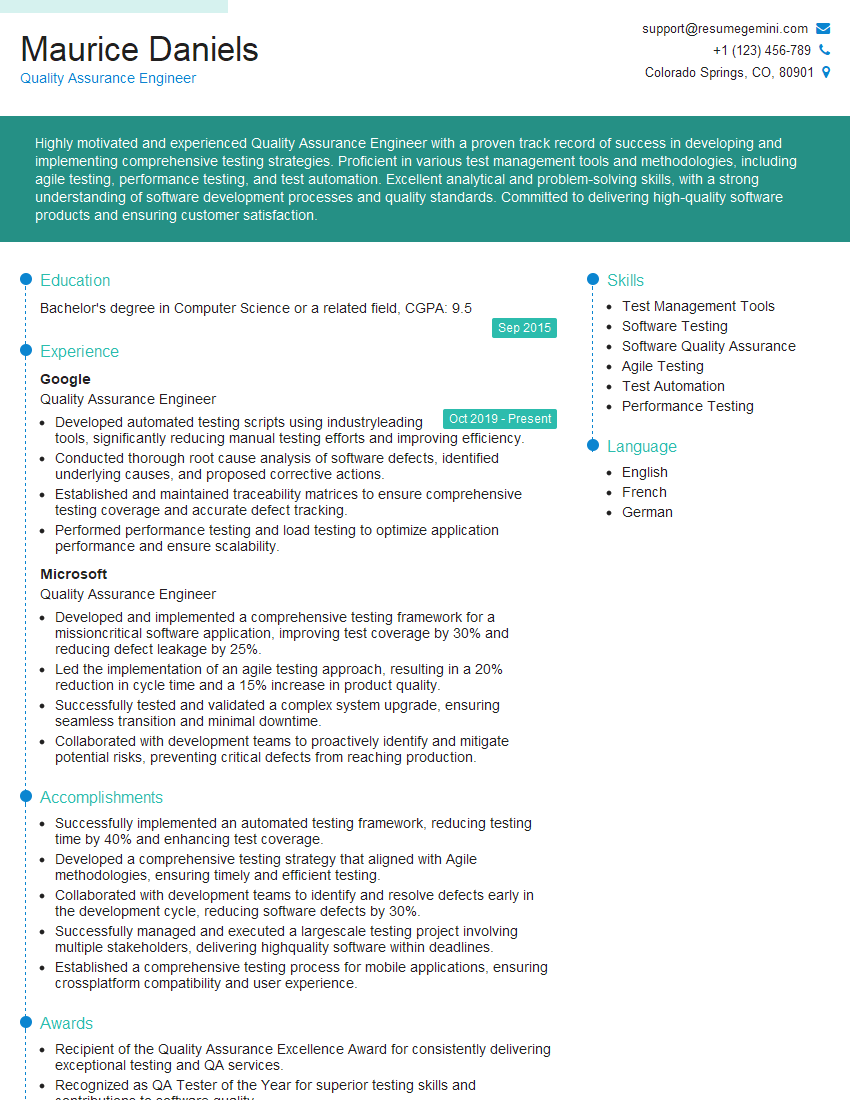
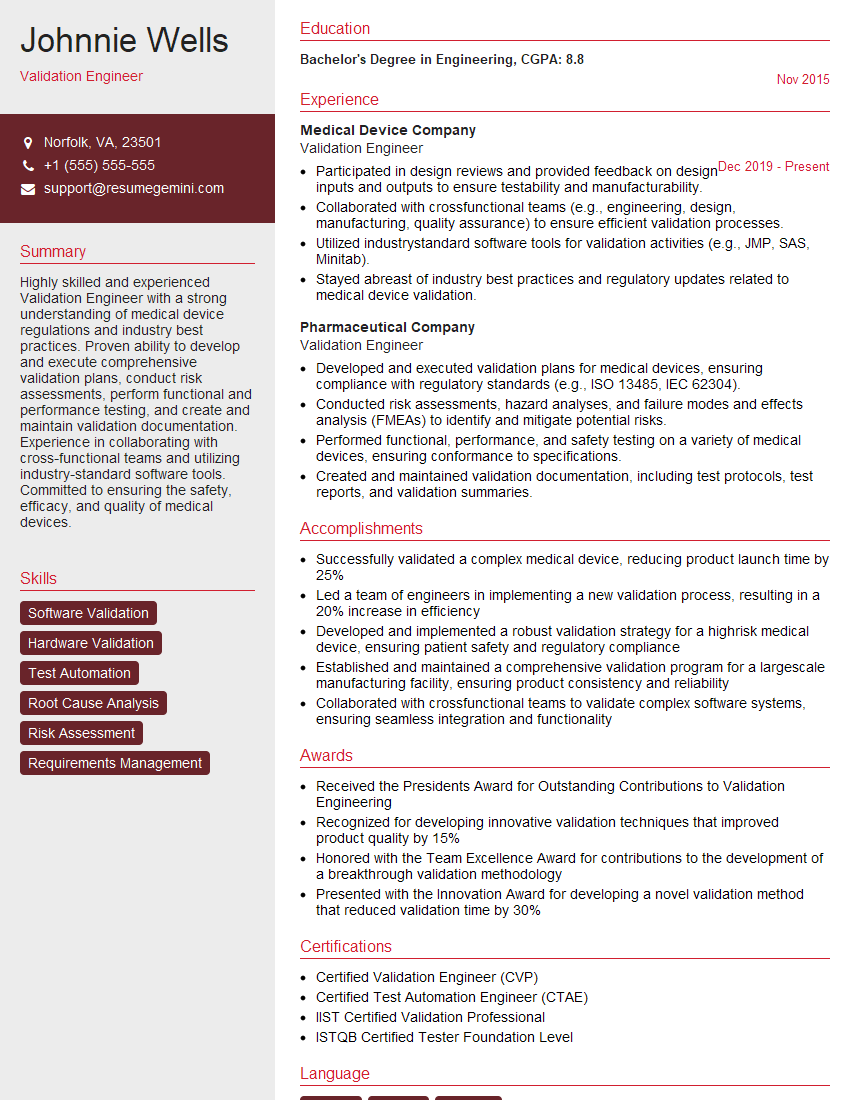
Mastering System Verification and Validation is key to unlocking exciting career opportunities in software development and related fields. A strong understanding of these principles demonstrates a commitment to quality and reliability, highly valued by employers. To maximize your job prospects, focus on building an ATS-friendly resume that effectively showcases your skills and experience. ResumeGemini is a trusted resource to help you craft a professional and impactful resume. Examples of resumes tailored to System Verification and Validation roles are available to guide you.
Explore more articles
Users Rating of Our Blogs
Share Your Experience
We value your feedback! Please rate our content and share your thoughts (optional).
What Readers Say About Our Blog
Hello,
we currently offer a complimentary backlink and URL indexing test for search engine optimization professionals.
You can get complimentary indexing credits to test how link discovery works in practice.
No credit card is required and there is no recurring fee.
You can find details here:
https://wikipedia-backlinks.com/indexing/
Regards
NICE RESPONSE TO Q & A
hi
The aim of this message is regarding an unclaimed deposit of a deceased nationale that bears the same name as you. You are not relate to him as there are millions of people answering the names across around the world. But i will use my position to influence the release of the deposit to you for our mutual benefit.
Respond for full details and how to claim the deposit. This is 100% risk free. Send hello to my email id: [email protected]
Luka Chachibaialuka
Hey interviewgemini.com, just wanted to follow up on my last email.
We just launched Call the Monster, an parenting app that lets you summon friendly ‘monsters’ kids actually listen to.
We’re also running a giveaway for everyone who downloads the app. Since it’s brand new, there aren’t many users yet, which means you’ve got a much better chance of winning some great prizes.
You can check it out here: https://bit.ly/callamonsterapp
Or follow us on Instagram: https://www.instagram.com/callamonsterapp
Thanks,
Ryan
CEO – Call the Monster App
Hey interviewgemini.com, I saw your website and love your approach.
I just want this to look like spam email, but want to share something important to you. We just launched Call the Monster, a parenting app that lets you summon friendly ‘monsters’ kids actually listen to.
Parents are loving it for calming chaos before bedtime. Thought you might want to try it: https://bit.ly/callamonsterapp or just follow our fun monster lore on Instagram: https://www.instagram.com/callamonsterapp
Thanks,
Ryan
CEO – Call A Monster APP
To the interviewgemini.com Owner.
Dear interviewgemini.com Webmaster!
Hi interviewgemini.com Webmaster!
Dear interviewgemini.com Webmaster!
excellent
Hello,
We found issues with your domain’s email setup that may be sending your messages to spam or blocking them completely. InboxShield Mini shows you how to fix it in minutes — no tech skills required.
Scan your domain now for details: https://inboxshield-mini.com/
— Adam @ InboxShield Mini
Reply STOP to unsubscribe
Hi, are you owner of interviewgemini.com? What if I told you I could help you find extra time in your schedule, reconnect with leads you didn’t even realize you missed, and bring in more “I want to work with you” conversations, without increasing your ad spend or hiring a full-time employee?
All with a flexible, budget-friendly service that could easily pay for itself. Sounds good?
Would it be nice to jump on a quick 10-minute call so I can show you exactly how we make this work?
Best,
Hapei
Marketing Director
Hey, I know you’re the owner of interviewgemini.com. I’ll be quick.
Fundraising for your business is tough and time-consuming. We make it easier by guaranteeing two private investor meetings each month, for six months. No demos, no pitch events – just direct introductions to active investors matched to your startup.
If youR17;re raising, this could help you build real momentum. Want me to send more info?
Hi, I represent an SEO company that specialises in getting you AI citations and higher rankings on Google. I’d like to offer you a 100% free SEO audit for your website. Would you be interested?
Hi, I represent an SEO company that specialises in getting you AI citations and higher rankings on Google. I’d like to offer you a 100% free SEO audit for your website. Would you be interested?
good