The thought of an interview can be nerve-wracking, but the right preparation can make all the difference. Explore this comprehensive guide to Systems Safety Analysis interview questions and gain the confidence you need to showcase your abilities and secure the role.
Questions Asked in Systems Safety Analysis Interview
Q 1. Explain the difference between hazard and risk.
The terms hazard and risk are often confused, but they represent distinct concepts in safety analysis. A hazard is a potential source of harm or danger. It’s simply the presence of something that could cause harm. Think of it as the potential for something bad to happen. A risk, on the other hand, is the likelihood of that harm occurring and the severity of the consequences. It quantifies the hazard.
Example: A high-voltage power line is a hazard. The risk associated with that hazard depends on factors like the proximity of people, the presence of protective barriers, and the effectiveness of safety protocols. A poorly insulated line near a playground represents a much higher risk than the same line located in a secure, isolated area.
Q 2. Describe the Fault Tree Analysis (FTA) method and its applications.
Fault Tree Analysis (FTA) is a top-down, deductive method used to systematically analyze the causes of a specific undesired event, often called a ‘top event’. It graphically depicts the logical relationships between various basic events (causes) that can lead to that top event. Each event is represented by a gate (AND, OR, etc.), indicating how multiple events must combine to cause the subsequent event.
Applications: FTA is widely used in various industries, including aerospace, nuclear power, and process safety. It’s particularly effective for identifying potential failure points and vulnerabilities within complex systems. For example, it can be employed to analyze the causes of a power plant shutdown, an aircraft engine failure, or a chemical spill.
Example: Imagine the top event is a ‘Reactor Scram’ (emergency shutdown) in a nuclear power plant. The FTA might show that this top event could be caused by a failure in the reactor pressure sensor (event A) OR a failure in the emergency shutdown system (event B). Event B could further be broken down into multiple sub-events (e.g., failure of component X AND failure of component Y).
Q 3. Explain the Event Tree Analysis (ETA) method and its applications.
Event Tree Analysis (ETA) is a bottom-up, inductive method that focuses on the consequences of an initiating event. It starts with a specific initiating event (e.g., a pipe rupture) and traces the possible sequences of events that can follow, based on the success or failure of safety systems. It’s often represented as a branching diagram, showing the probabilities of different outcomes.
Applications: ETA is frequently used in safety studies to evaluate the effectiveness of safety systems and to estimate the probability of different accident scenarios. It’s especially useful for analyzing systems where the consequences depend on a sequence of events, such as emergency response systems or process control systems.
Example: Consider a fire in a chemical plant as the initiating event. The ETA would analyze what happens next. Does the fire detection system work (success/failure)? Does the sprinkler system activate (success/failure)? Does the emergency response team arrive on time (success/failure)? Each success or failure leads to a different branch, eventually culminating in different accident scenarios (e.g., small fire contained, major fire with significant damage).
Q 4. What is a HAZOP study and how is it conducted?
A HAZOP (Hazard and Operability) study is a systematic and comprehensive technique used to identify potential hazards and operability problems in a process or system. It involves a structured team review using ‘guide words’ (e.g., ‘more,’ ‘less,’ ‘as well as,’ ‘part of,’ ‘reverse’) to explore deviations from the intended design and operation.
How it’s conducted: A HAZOP study is typically conducted by a multidisciplinary team. They systematically review each process step, using the guide words to generate potential deviations from the intended operation. For each deviation, the team investigates the consequences, causes, and recommended safeguards. This process is documented and provides a comprehensive record of potential hazards and mitigations.
Example: In a chemical plant, considering the process of pumping a flammable liquid, the team might use the guide word ‘more’ with the parameter ‘flow rate.’ This could lead to a discussion of the consequences of a higher than expected flow rate – potential for overflow, increased risk of fire, etc. The team then identifies the causes and proposes mitigating actions (e.g., flow limiters, alarms).
Q 5. Describe the Failure Modes and Effects Analysis (FMEA) method.
Failure Modes and Effects Analysis (FMEA) is a systematic method used to identify potential failure modes within a system or process, analyze their effects, and estimate their severity and likelihood. The results are often presented in a matrix that allows for prioritization of risks based on a risk priority number (RPN).
Method: For each component or process step, the FMEA process involves identifying potential failure modes (how things can go wrong), their effects (what happens if it fails), the severity of the effect, the probability of failure, and the detectability of the failure. The RPN is typically calculated by multiplying these three factors (Severity x Probability x Detectability). A higher RPN indicates a higher priority for mitigation.
Example: In the design of an aircraft, an FMEA might be conducted for the landing gear. A potential failure mode could be ‘hydraulic system failure’. The effect might be ‘aircraft unable to land safely’, the severity would be high, the probability might be low (due to redundancy), and detectability would be high (due to warning systems). The RPN would be calculated, and actions taken to mitigate the risk (e.g., improved maintenance, backup systems).
Q 6. What are some common safety lifecycle models?
Several safety lifecycle models exist, each with slightly different approaches, but the core idea remains the same: integrating safety considerations throughout the entire lifecycle of a system. Some common models include:
- V-Model: Emphasizes the verification and validation activities at each stage of development.
- Waterfall Model: A linear sequential approach, where each phase must be completed before the next begins. (Less common for safety-critical systems due to its rigidity)
- Spiral Model: Iterative model emphasizing risk assessment at each stage. This is popular for high-risk systems.
- Agile Methodologies: Adaptive approach with continuous integration of safety considerations and feedback loops. (often modified to address safety critical aspects)
The choice of model depends on the complexity of the system, the regulatory requirements, and the organizational culture. Safety-critical systems usually require more rigorous models like the V-model or spiral model to ensure comprehensive safety assessments throughout the development process.
Q 7. Explain the concept of ALARP (As Low As Reasonably Practicable).
ALARP (As Low As Reasonably Practicable) is a principle used to manage residual risks after all reasonable and feasible control measures have been implemented. It doesn’t mean eliminating all risk, which is often impossible or impractical. Instead, it means reducing risk to a level where further reductions would be disproportionately expensive, time-consuming, or technically infeasible compared to the level of risk reduction achieved.
Concept: The determination of ‘reasonably practicable’ requires a careful consideration of factors including cost, technological feasibility, and the societal benefits of the activity. A cost-benefit analysis is often performed to determine the point at which further risk reduction is no longer justified.
Example: A chemical plant might have a residual risk of a small chemical leak even after implementing various safety measures. Reducing this risk to zero might require an extremely expensive and complex system upgrade. ALARP considers if the cost of further reduction outweighs the potential benefits (reduced likelihood of small leaks) in this context.
Q 8. How do you identify and assess hazards in a complex system?
Identifying and assessing hazards in a complex system requires a systematic approach. We typically employ a combination of techniques like Hazard and Operability studies (HAZOP), Failure Modes and Effects Analysis (FMEA), and Fault Tree Analysis (FTA). These methods help uncover potential hazards, analyze their causes, and evaluate their severity and likelihood.
For instance, in designing a self-driving car, a HAZOP might examine the “operating mode” of the vehicle’s lane-keeping system. We’d consider deviations from the norm, such as ‘no lane markings,’ and explore the consequences. An FMEA would delve into specific components, analyzing potential failures (e.g., camera malfunction) and their effects on the system. An FTA would build a tree diagram showing how various failures could combine to cause a major accident, like a collision.
The process involves: 1) Defining the system boundaries and operational context; 2) Identifying potential hazards through brainstorming and structured analysis techniques; 3) Evaluating the severity, likelihood, and detectability of each hazard; 4) Prioritizing hazards based on the risk level (severity x likelihood); and 5) Implementing mitigation strategies.
Q 9. What are the key elements of a safety case?
A safety case is a structured argument demonstrating that a system is sufficiently safe for its intended purpose. It’s a comprehensive document that justifies the safety claims made about the system. Key elements include:
- Safety Requirements: These specify the acceptable levels of risk and the safety goals the system must achieve.
- Hazard Analysis: This documents the identified hazards, their associated risks, and the methods used to assess them (e.g., FMEA, FTA).
- Safety Architecture: This describes the system design features intended to mitigate identified hazards, including safety mechanisms and safeguards.
- Verification and Validation: This provides evidence that the safety requirements have been met through testing, analysis, and inspection.
- Safety Management Plan: This outlines the procedures for managing safety throughout the system’s lifecycle.
- Assumptions and Limitations: This explicitly states the assumptions made during the safety assessment and any limitations of the analysis.
Think of it like a legal brief defending the safety of the system. It needs to be robust and convincing to stakeholders.
Q 10. Describe your experience with safety standards (e.g., ISO 26262, IEC 61508).
I have extensive experience working with safety standards such as ISO 26262 (for automotive safety) and IEC 61508 (for functional safety of electrical/electronic/programmable electronic safety-related systems). I’ve been involved in projects requiring compliance with these standards, applying the associated methodologies for hazard analysis, risk assessment, and safety verification.
For example, in a recent project involving the design of an autonomous agricultural vehicle, we used ISO 26262’s Automotive Safety Integrity Level (ASIL) decomposition to assign safety requirements to different system components based on the potential risk. We then utilized various techniques, including software verification and validation methods prescribed by the standard, to ensure that the implemented safety mechanisms met the required ASIL levels.
My experience also includes conducting safety audits and reviews to ensure adherence to these standards and identifying any gaps in the safety process.
Q 11. How do you manage safety risks throughout the system lifecycle?
Safety risk management is an iterative process integrated throughout the system lifecycle, starting from the initial concept phase and continuing through operation and decommissioning. This is often visualized using the V-Model.
In the early stages, we focus on hazard identification and preliminary risk assessment to inform design choices. During development, we continuously verify and validate safety mechanisms through simulations, testing, and inspections. Operational phases involve monitoring performance, addressing issues, and making necessary updates. Decommissioning includes safe shutdown procedures and waste disposal. A key aspect is using feedback loops to improve the safety management process based on lessons learned.
For example, regular safety reviews and updates are crucial to address issues arising from real-world operation. This might include software patches to address unforeseen vulnerabilities, or hardware modifications to improve safety features.
Q 12. Explain the importance of safety culture in an organization.
A strong safety culture is fundamental for achieving and maintaining high safety standards. It’s more than just policies and procedures; it’s a shared mindset where safety is everyone’s top priority. It fosters a proactive approach to hazard identification, reporting, and mitigation, encouraging employees at all levels to actively contribute to safety improvements.
Key aspects include open communication, clear accountability, proactive hazard reporting, and a commitment to continuous improvement. A culture where employees feel empowered to stop unsafe work without fear of retribution is essential. Lack of a strong safety culture can lead to complacency, increased risk-taking, and ultimately, accidents.
Think of it like a ship’s crew: if everyone understands their role and is committed to the collective safety of the vessel, accidents are less likely.
Q 13. How do you communicate complex safety information to non-technical stakeholders?
Communicating complex safety information to non-technical stakeholders requires simplifying technical jargon and using clear, concise language. Visual aids like charts, graphs, and infographics are extremely effective. Analogies and real-world examples can help illustrate abstract concepts. I also find it helpful to focus on the benefits of safety measures rather than dwelling on the potential negative consequences.
For example, instead of saying “the system’s fault tolerance is 99.999%,” I might say “this system is designed to prevent failures and ensure reliable operation in almost all circumstances.” I would also show a simple visual representing the likelihood of a failure, rather than complex statistical data.
Active listening and engaging in discussions ensure that the message is understood and any concerns are addressed.
Q 14. Describe your experience with quantitative risk assessment techniques.
My experience with quantitative risk assessment encompasses techniques like Fault Tree Analysis (FTA), Event Tree Analysis (ETA), and Markov modeling. FTA helps quantify the probability of system failure by analyzing the combination of individual component failures. ETA assesses the consequences of an initiating event by considering various possible outcomes. Markov models can analyze system reliability over time, considering the transitions between different states (e.g., operating, degraded, failed).
For example, in a pipeline safety analysis, FTA could be used to model the probability of a pipeline rupture due to corrosion, exceeding pressure, or external damage. ETA could then determine the likely consequences of a rupture, considering factors like the volume of released material, the presence of ignition sources, and the proximity of populated areas.
These quantitative methods provide a more precise understanding of risks, allowing for better informed decisions about safety investments and mitigation strategies.
Q 15. How do you prioritize safety risks?
Prioritizing safety risks involves a systematic approach to determine which hazards pose the greatest potential for harm. We typically use risk assessment matrices, combining the likelihood of an event occurring with its severity. This often involves a qualitative judgment, but can be supported by quantitative data where available.
For example, imagine we’re assessing risks in a chemical plant. A small leak of a low-toxicity chemical might be considered low likelihood and low severity, while a major leak of a highly toxic chemical would be high likelihood and high severity. We would prioritize mitigating the high-severity, high-likelihood risks first. Techniques like Fault Tree Analysis (FTA) and Event Tree Analysis (ETA) can be used to quantify likelihood and severity, improving the objectivity of the prioritization process. The resulting risk matrix helps us allocate resources effectively and focus on the most critical safety improvements.
Beyond the matrix, we must also consider factors such as regulatory requirements, public perception, and the potential impact on the business. A risk that might seem statistically less significant could still demand urgent attention due to regulatory mandates or negative publicity implications. This holistic approach is crucial for responsible and effective risk management.
Career Expert Tips:
- Ace those interviews! Prepare effectively by reviewing the Top 50 Most Common Interview Questions on ResumeGemini.
- Navigate your job search with confidence! Explore a wide range of Career Tips on ResumeGemini. Learn about common challenges and recommendations to overcome them.
- Craft the perfect resume! Master the Art of Resume Writing with ResumeGemini’s guide. Showcase your unique qualifications and achievements effectively.
- Don’t miss out on holiday savings! Build your dream resume with ResumeGemini’s ATS optimized templates.
Q 16. Explain the concept of safety integrity levels (SILs).
Safety Integrity Levels (SILs) are a quantitative measure of the risk reduction provided by a safety instrumented system (SIS). They are defined by international standards like IEC 61508 and are crucial for specifying the required performance level of safety-critical systems. A SIL ranges from 1 to 4, with SIL 4 representing the highest level of safety integrity and SIL 1 the lowest.
Imagine a safety system designed to shut down a process if a pressure exceeds a certain limit. A SIL 1 system might tolerate a slightly higher probability of failure compared to a SIL 4 system. The higher the SIL, the lower the probability of dangerous failures. The SIL rating directly impacts the design, testing, and verification requirements of the safety system. A SIL 4 system requires far more rigorous design and verification than a SIL 1 system.
SIL determination relies on a detailed hazard and risk assessment, considering the severity of potential consequences and the frequency of hazardous events. This assessment then informs the selection of appropriate hardware, software, and operational procedures to meet the required SIL level. For example, a SIL 4 system might employ triple-modular redundancy and rigorous testing to ensure extremely high reliability.
Q 17. How do you verify and validate safety-critical systems?
Verifying and validating safety-critical systems is a critical process ensuring that the system meets its safety requirements throughout its lifecycle. Verification confirms that the system is built correctly (according to the specification), while validation confirms that it does the right thing (meeting the intended safety goals).
Verification involves activities such as code reviews, inspections, and testing to ensure the design and implementation adhere to the safety requirements. Validation uses techniques such as simulations, testing in controlled environments, and eventually, field testing, to demonstrate that the system actually functions as intended and reduces risks to acceptable levels. This often employs techniques like Failure Mode and Effects Analysis (FMEA) to identify potential failure modes and their impact.
For instance, in the development of a flight control system, verification would include checking if the code compiles correctly, if the requirements are properly implemented, and if the system’s architecture is robust. Validation would then involve simulations to assess the system’s response to various scenarios and potentially, flight testing with gradual incorporation of the new system.
Both processes are iterative and often involve feedback loops to address identified issues and improve safety. Documentation is crucial in tracing each step of the verification and validation process, ensuring a clear audit trail.
Q 18. What are some common safety barriers and their limitations?
Safety barriers are layers of protection designed to prevent hazards from escalating into accidents. Examples include engineering controls (e.g., pressure relief valves), administrative controls (e.g., lockout/tagout procedures), and personal protective equipment (PPE). However, each barrier has limitations.
- Engineering Controls: While effective, they can fail due to wear and tear, improper maintenance, or design flaws. For example, a pressure relief valve might fail to open under high pressure.
- Administrative Controls: These rely on human adherence and can be bypassed or overlooked due to human error, fatigue, or inadequate training. For instance, a lockout/tagout procedure might not be followed correctly, leaving equipment energized.
- Personal Protective Equipment (PPE): This is the last line of defense and relies on individuals properly using and maintaining the equipment. It’s also limited in its ability to protect against all types of hazards. A safety helmet, while protecting from falling objects, won’t protect against chemical exposure.
The effectiveness of safety barriers depends on their redundancy and layered approach. The more barriers present, the less likely a hazard will result in an accident. However, even with multiple barriers, there’s always the possibility of multiple failures, which underlines the importance of robust design, testing, and human factor considerations.
Q 19. Describe your experience with safety management systems (SMS).
My experience with Safety Management Systems (SMS) encompasses their implementation and continuous improvement across various industries. I’ve been involved in developing and implementing SMS frameworks, conducting safety audits and assessments, and managing safety data.
In one project, I assisted a railway company in developing their SMS. This included defining safety policies, establishing reporting mechanisms for safety incidents, conducting hazard identification and risk assessments, and developing training programs. We used a bow-tie analysis to visually represent hazards, controls and consequences. We also implemented a system for tracking corrective actions and monitoring the effectiveness of safety interventions. A key component was fostering a safety culture through ongoing communication and proactive engagement with employees at all levels.
My experience demonstrates a deep understanding of the principles of hazard identification, risk assessment, risk mitigation, and proactive safety management. I am proficient in using various SMS tools and techniques and have a proven ability to guide organizations through the process of creating and maintaining a robust and effective safety management system. The key is to integrate safety into the daily operations and culture, rather than treating it as a separate entity.
Q 20. How do you handle safety conflicts between different stakeholders?
Safety conflicts between stakeholders are common due to varying priorities and perspectives. Resolving these conflicts requires a collaborative and structured approach.
Firstly, I would facilitate open communication and ensure all stakeholders understand the safety risks involved. This often involves presenting data clearly and objectively, using tools like risk matrices to illustrate the potential consequences of different actions. Transparency and clear communication are paramount in building trust and understanding.
Secondly, I would use a structured approach to conflict resolution. This might involve techniques like negotiation, mediation, or even arbitration, depending on the complexity and severity of the conflict. The goal is to find a mutually acceptable solution that balances safety concerns with operational needs and budget constraints. Sometimes compromise is necessary, and it’s vital to document the decision-making process and the rationale behind the chosen solution.
Finally, ongoing monitoring and review are essential to ensure the chosen solution is effective and to address any emerging conflicts. This collaborative process ensures everyone feels heard, understood, and engaged in creating a safe working environment. A key element is to focus on shared goals and find solutions that benefit all stakeholders in the long run.
Q 21. Explain the concept of human factors in safety.
Human factors encompass the physical and cognitive characteristics of humans, and how these interact with their work environment and technologies. It’s a crucial aspect of safety analysis because human error contributes significantly to accidents. Understanding human limitations and capabilities helps to design safer systems and processes.
Consider the design of a control panel. Poorly designed interfaces, inadequate lighting, or confusing labels can lead to operator errors. By applying human factors principles, we can design intuitive and user-friendly interfaces that minimize the potential for human error. This includes aspects like ergonomics (proper workstation setup), work schedules (managing fatigue), and training (ensuring competency).
Another example is the impact of workload. High workload and time pressure can negatively affect performance and decision-making. Understanding these limitations helps in designing systems that manage workload effectively and provide adequate support to operators. Techniques like Human Reliability Analysis (HRA) are specifically used to model and quantify the impact of human factors on system safety.
In summary, incorporating human factors considerations throughout the design, implementation and operation of systems is vital for preventing accidents. This requires a multidisciplinary approach, involving engineers, psychologists, and operations personnel to create systems that are not only safe technologically, but also safe for the human operators.
Q 22. How do you investigate safety incidents and accidents?
Investigating safety incidents and accidents is a systematic process aimed at understanding the circumstances, identifying contributing factors, and preventing future occurrences. It typically follows a structured methodology, often involving several phases:
- Data Collection: This involves gathering information from various sources, including witness statements, accident reports, physical evidence, system logs, and maintenance records. The goal is to build a comprehensive picture of the event.
- Reconstruction: Using the collected data, we reconstruct the sequence of events leading to the incident. This often involves timelines, diagrams, and simulations to understand the causal chain.
- Analysis: We employ various analytical techniques, such as fault tree analysis (FTA) and event tree analysis (ETA), to identify root causes, contributing factors (latent failures), and potential hazards. We look beyond immediate causes to underlying systemic issues.
- Reporting and Recommendation: The findings are documented in a comprehensive report, detailing the root causes, contributing factors, and recommendations for corrective and preventive actions. This includes implementing safety improvements to the system, processes, or training.
For example, in investigating a software malfunction causing a system shutdown, we’d examine code, logs, user actions, system configurations and test logs to determine if it was a software bug, a hardware failure, or improper user interaction, and then look for systemic issues like insufficient testing or poor design that allowed the bug to propagate.
Q 23. Describe your experience with root cause analysis techniques.
I have extensive experience with various root cause analysis (RCA) techniques. My preferred methods include:
- 5 Whys: This iterative questioning technique drills down to the root cause by repeatedly asking “Why?” until the fundamental problem is identified. It’s simple but effective for straightforward incidents.
- Fault Tree Analysis (FTA): This top-down, deductive approach graphically represents the logical relationships between various events leading to an undesirable outcome. It’s particularly useful for complex systems with multiple potential failure points. It helps visually identify how individual events can combine to create system failures.
- Fishbone Diagram (Ishikawa Diagram): A visual tool to brainstorm the potential causes of a problem by categorizing them (e.g., people, machines, materials, methods, environment). This is great for collaborative brainstorming and identifying potential factors initially missed.
- Failure Mode and Effects Analysis (FMEA): A proactive technique to identify potential failure modes in a system and assess their severity, probability, and detectability. It helps prioritize risk mitigation efforts.
For instance, in analyzing a production line stoppage, 5 Whys might reveal inadequate maintenance as the root cause, while FTA could model all potential contributing factors from machine malfunction to human error, enabling better preventative measures.
Q 24. How do you measure the effectiveness of safety initiatives?
Measuring the effectiveness of safety initiatives requires a multi-faceted approach. We need both leading indicators (predictive) and lagging indicators (reactive) to assess progress.
- Leading Indicators: These measure the effectiveness of proactive safety measures before an incident occurs. Examples include the number of safety training hours completed, the number of safety audits conducted, the completion rate of safety inspections, proactive reporting of near misses and the implementation of safety recommendations.
- Lagging Indicators: These measure the outcome of safety initiatives after an incident occurs. Examples include the number of accidents, injuries, lost-time incidents (LTIs), and the severity of incidents. While important, these indicators only show the past and do not necessarily reflect ongoing success.
We also track safety culture metrics like employee perception surveys to gauge attitudes towards safety and identify areas needing improvement. Data analysis, trend identification, and regular reporting are crucial for demonstrating the impact of safety programs and making data-driven improvements. For example, a decrease in near misses after implementing a new safety training program is a strong leading indicator, confirming the training’s effectiveness in raising awareness and changing behavior.
Q 25. What are some common safety metrics used in your industry?
Common safety metrics in my industry (assuming a process industry, but adaptable to others) include:
- Total Recordable Incident Rate (TRIR): The number of recordable incidents per 200,000 employee hours worked.
- Lost Time Incident Rate (LTIR): The number of lost-time incidents per 200,000 employee hours worked.
- Days Away, Restricted, or Transferred (DART) Rate: The number of workdays lost due to occupational injuries per 100 full-time employees.
- Near Miss Reporting Rate: The number of near misses reported per employee or per work hour. A high rate can indicate a strong safety culture (willingness to report), or possibly high-risk situations.
- Safety Training Completion Rate: Percentage of employees who have completed mandatory safety training.
- Compliance Rate: Percentage of safety regulations and procedures being followed.
These metrics, along with others specific to the industry or organization, are essential for monitoring progress, benchmarking performance, and identifying areas for improvement. It is essential to use these metrics alongside qualitative data such as safety audits and employee feedback.
Q 26. Explain your understanding of safety regulations relevant to your experience.
My understanding of safety regulations is comprehensive, depending on the specific industry and geographic location. Generally, I’m familiar with regulations concerning:
- Occupational Safety and Health Administration (OSHA) regulations (USA): These cover a wide range of workplace safety issues, including hazard communication, personal protective equipment (PPE), machine guarding, and emergency action plans. I have a thorough understanding of OSHA’s general duty clause requiring employers to provide a safe and healthy workplace.
- International Organization for Standardization (ISO) standards (e.g., ISO 45001): These provide a framework for occupational health and safety management systems. Familiarity with this standard allows integration of safety into all aspects of the organization.
- Industry-Specific Regulations: My expertise also includes knowledge of regulations specific to sectors like aviation, nuclear power, or transportation. These often involve stringent requirements and specialized safety protocols.
- Environmental Protection Agency (EPA) regulations (where applicable): Environmental and safety concerns are often intertwined; understanding EPA regulations, especially concerning hazardous materials handling and waste disposal, is crucial.
Staying current with regulatory changes is paramount. I regularly review updates and attend training to maintain my knowledge and ensure compliance. This is crucial for ensuring a safe workplace and protecting the organization from legal and financial risks.
Q 27. Describe a challenging safety problem you solved and your approach.
In a previous role, we faced a significant safety challenge involving a series of near misses related to a complex robotic system in a manufacturing plant. Initial investigations revealed inconsistencies in operator training and inadequate emergency stop procedures. My approach involved:
- Thorough Incident Investigation: We conducted a comprehensive review of each near miss, using FTA to identify common contributing factors. This revealed weaknesses in both the system design (lack of clear visual cues) and the training materials (ambiguous instructions).
- Root Cause Analysis: We used a combination of 5 Whys and FMEA to pinpoint the root causes, which included insufficient operator training, inadequate system design, and a lack of regular safety audits.
- Corrective Actions: We redesigned the emergency stop mechanism to be more intuitive, developed and delivered a new operator training program with hands-on simulations and scenario-based learning, and implemented a robust safety audit schedule with regular checks for compliance.
- Preventive Measures: We incorporated new safety features into the system design, including additional warning lights and alarms, to prevent similar incidents. We also developed a standardized checklist for pre-operation checks to minimize human error.
The result was a significant reduction in near misses and a demonstrable improvement in operator confidence and safety. This experience highlighted the importance of considering human factors, system design, and training in safety management.
Q 28. What are your future career goals in systems safety analysis?
My future career goals in systems safety analysis center on becoming a recognized leader in the field and contributing to advancements in safety engineering practices. Specifically, I aim to:
- Expand my expertise in advanced analytical techniques: I plan to deepen my knowledge of probabilistic risk assessment (PRA) methods and their application to complex systems.
- Contribute to the development of innovative safety solutions: I’m interested in exploring the application of artificial intelligence and machine learning in enhancing safety management systems.
- Mentor and train the next generation of safety professionals: I aspire to share my knowledge and experience by mentoring junior engineers and contributing to safety engineering education.
- Lead and manage large-scale safety programs: I want to take on greater leadership responsibilities to manage complex safety initiatives within organizations.
Ultimately, I strive to help organizations foster a proactive safety culture, minimizing risks and creating safer workplaces for everyone. I believe that continuous learning and improvement are key to achieving these goals, and I am committed to staying at the forefront of the field.
Key Topics to Learn for Systems Safety Analysis Interview
- Hazard Identification and Risk Assessment: Understand various techniques like HAZOP, FMEA, FTA, and their practical application in identifying potential hazards and assessing their associated risks within complex systems.
- Safety Requirements Analysis and Specification: Learn how to translate identified hazards and risks into clear, concise, and verifiable safety requirements. This includes understanding the importance of traceability and allocation of safety requirements.
- Safety Verification and Validation: Explore methods for demonstrating that the system meets its safety requirements. This includes techniques like testing, simulation, and analysis, and understanding the difference between verification and validation.
- Safety Case Development and Argumentation: Learn how to structure and present a compelling safety case that demonstrates the system’s acceptability from a safety perspective, addressing all identified hazards and risks.
- System Architectures and Safety Integrity Levels (SIL): Understand how system architectures influence safety and the concept of SILs in determining the required safety integrity level for different functions.
- Human Factors in System Safety: Recognize the critical role of human error in system failures and how to mitigate human factors risks through design and procedures.
- Safety Standards and Regulations: Familiarize yourself with relevant safety standards and regulations (e.g., ISO 26262, IEC 61508) and their application in different industries.
- Problem-Solving and Analytical Skills: Practice your ability to systematically analyze complex problems, identify root causes, and propose effective mitigation strategies. Develop your skills in using various safety analysis tools and techniques.
Next Steps
Mastering Systems Safety Analysis is crucial for a successful and rewarding career in engineering and related fields. A strong understanding of these principles opens doors to exciting opportunities and positions you as a valuable asset to any organization prioritizing safety. To enhance your job prospects, creating a compelling and ATS-friendly resume is essential. We strongly recommend using ResumeGemini to build a professional resume that highlights your skills and experience effectively. ResumeGemini provides valuable resources and examples of resumes tailored to Systems Safety Analysis, helping you present yourself in the best possible light to potential employers.
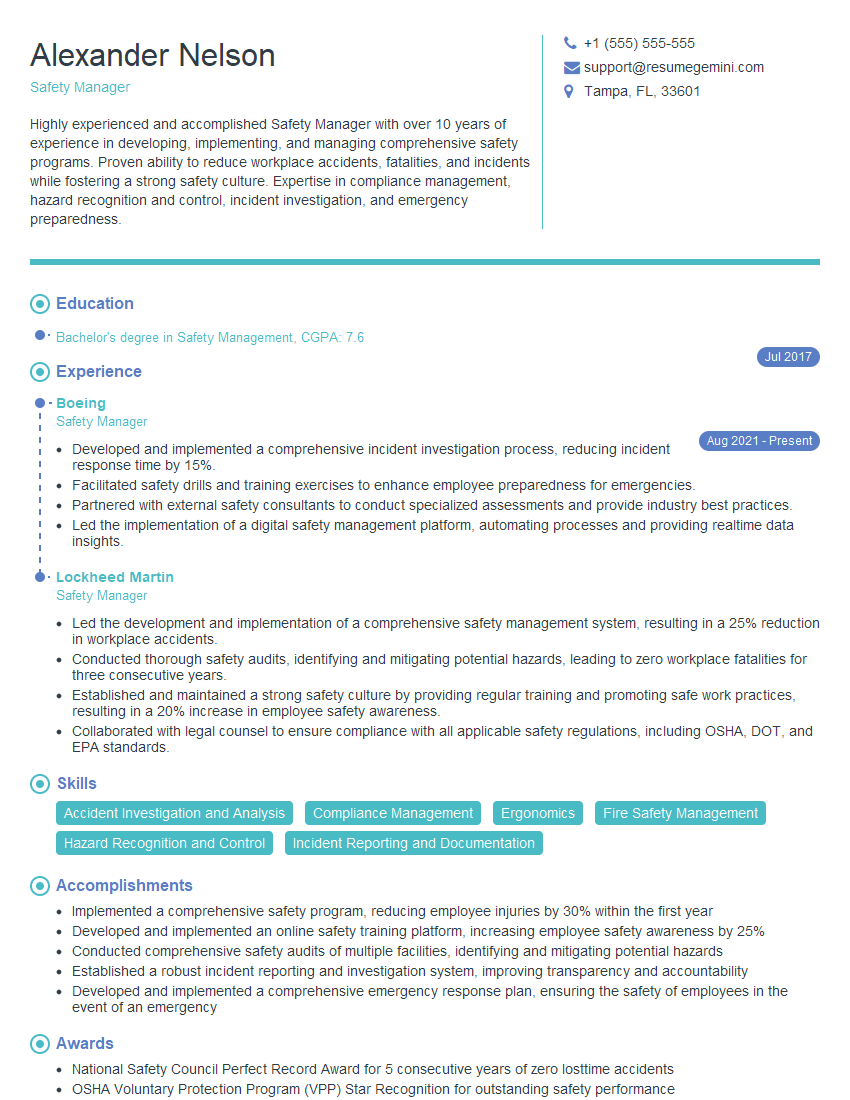
Safety Manager Resume Sample
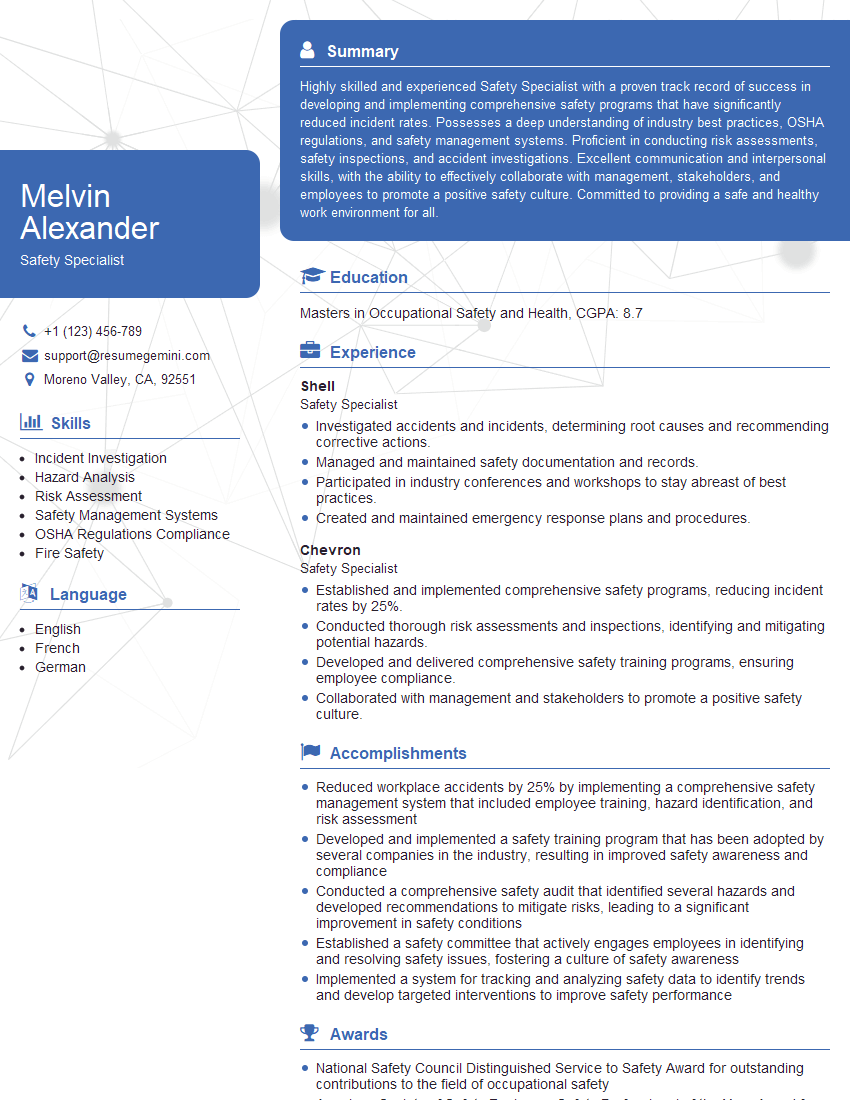
Safety Specialist Resume Sample
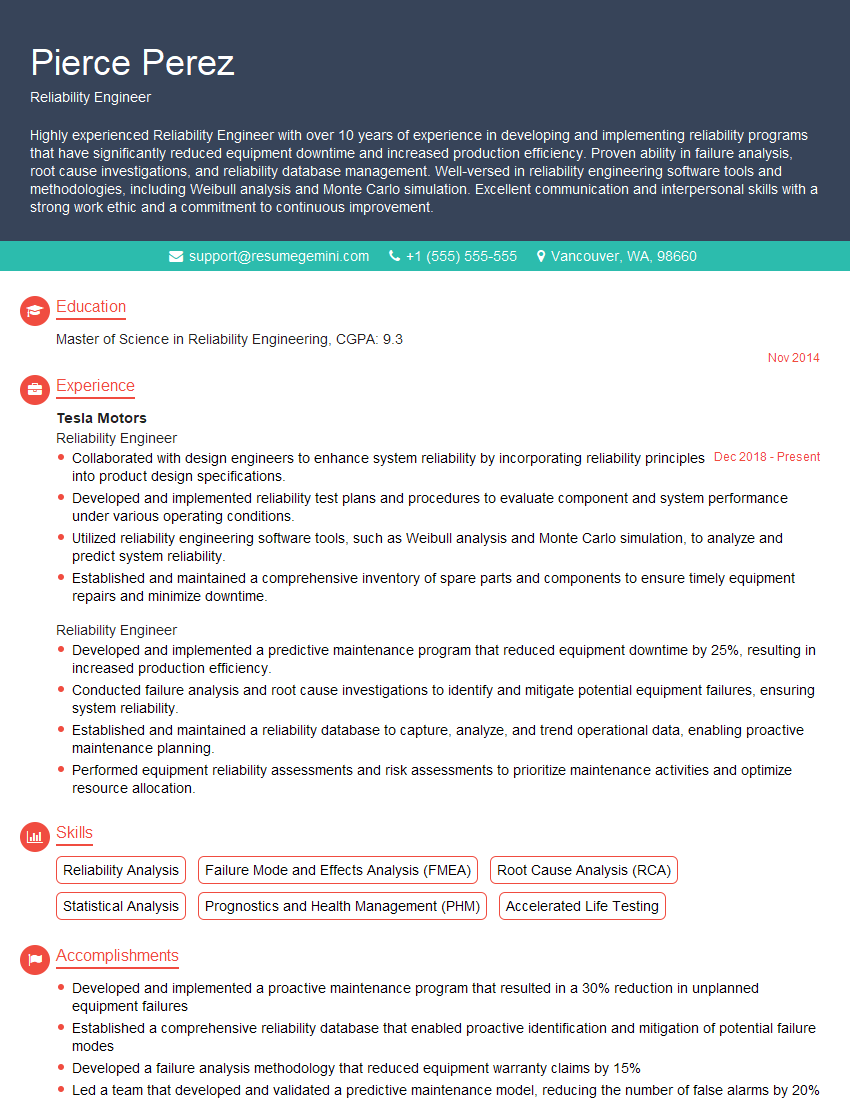
Reliability Engineer Resume Sample
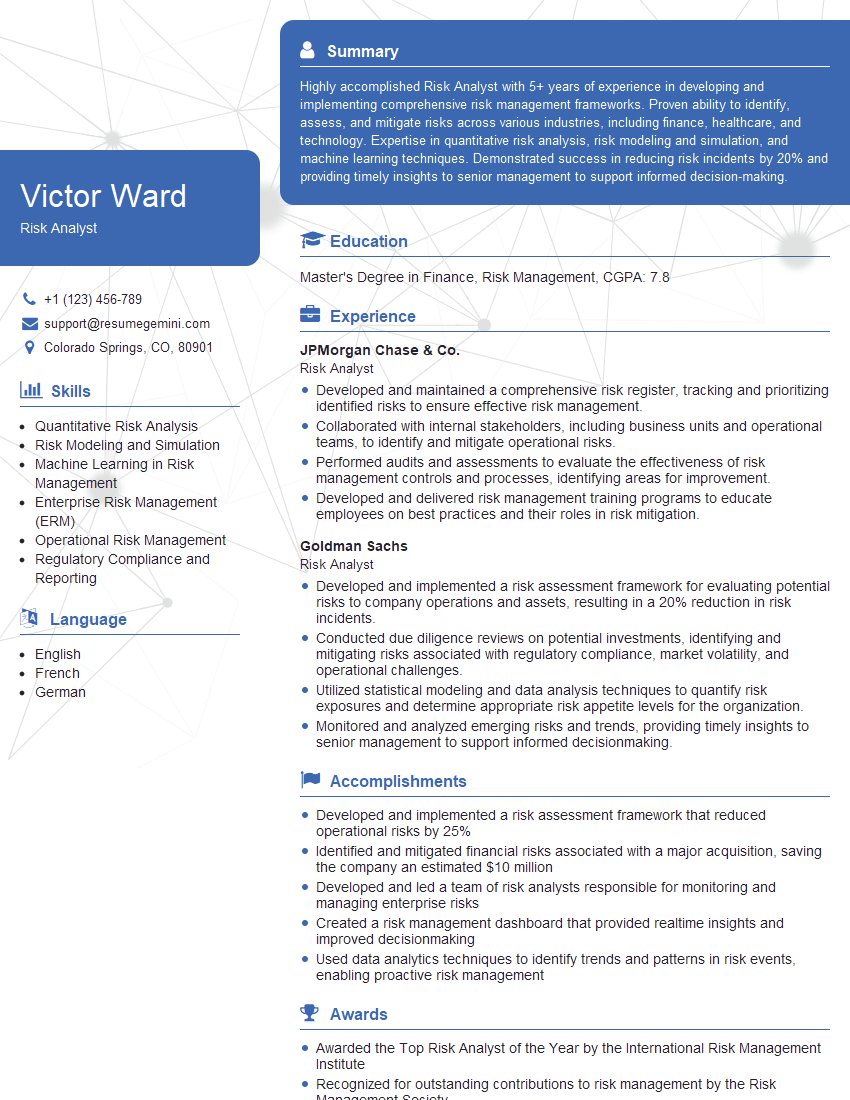
Risk Analyst Resume Sample
Industrial Safety Engineer Resume Sample
Process Safety Engineer Resume Sample
Safety Consultant Resume Sample
Safety Engineer Resume Sample
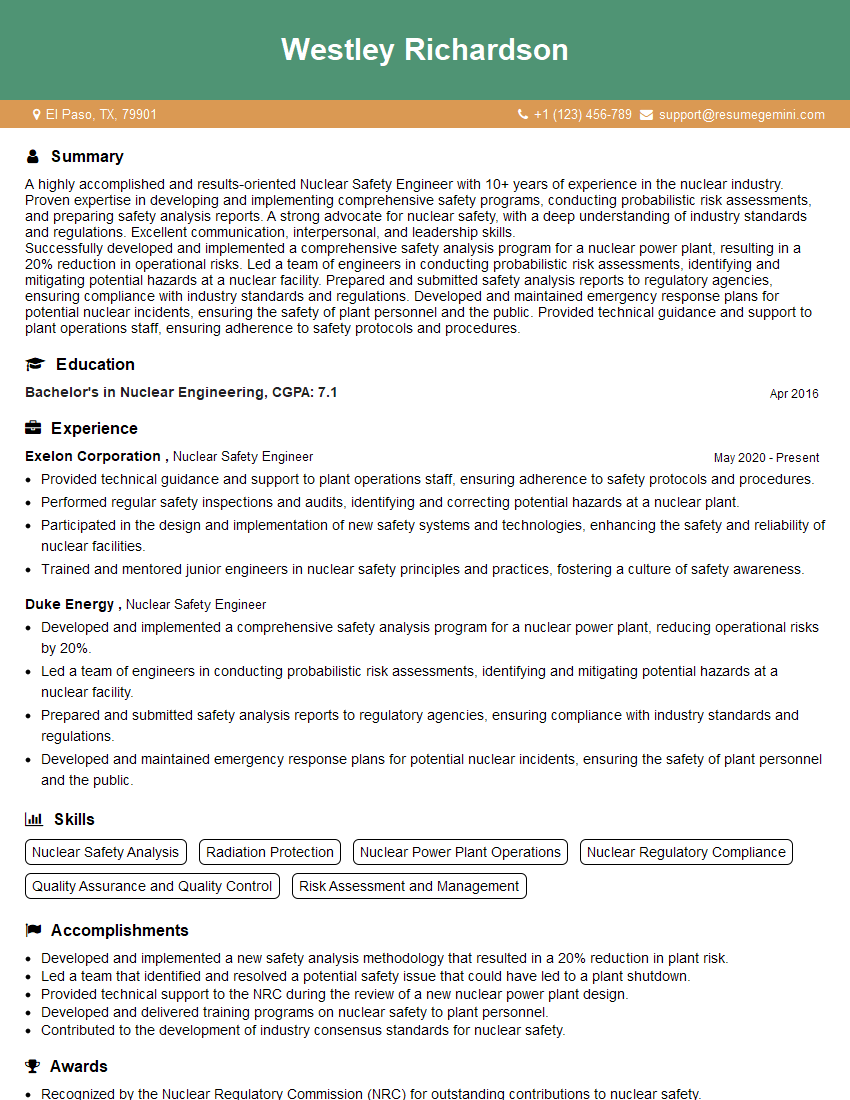
Nuclear Safety Engineer Resume Sample
Explore more articles
Users Rating of Our Blogs
Share Your Experience
We value your feedback! Please rate our content and share your thoughts (optional).
What Readers Say About Our Blog
Attention music lovers!
Wow, All the best Sax Summer music !!!
Spotify: https://open.spotify.com/artist/6ShcdIT7rPVVaFEpgZQbUk
Apple Music: https://music.apple.com/fr/artist/jimmy-sax-black/1530501936
YouTube: https://music.youtube.com/browse/VLOLAK5uy_noClmC7abM6YpZsnySxRqt3LoalPf88No
Other Platforms and Free Downloads : https://fanlink.tv/jimmysaxblack
on google : https://www.google.com/search?q=22+AND+22+AND+22
on ChatGPT : https://chat.openai.com?q=who20jlJimmy20Black20Sax20Producer
Get back into the groove with Jimmy sax Black
Best regards,
Jimmy sax Black
www.jimmysaxblack.com
Hi I am a troller at The aquatic interview center and I suddenly went so fast in Roblox and it was gone when I reset.
Hi,
Business owners spend hours every week worrying about their website—or avoiding it because it feels overwhelming.
We’d like to take that off your plate:
$69/month. Everything handled.
Our team will:
Design a custom website—or completely overhaul your current one
Take care of hosting as an option
Handle edits and improvements—up to 60 minutes of work included every month
No setup fees, no annual commitments. Just a site that makes a strong first impression.
Find out if it’s right for you:
https://websolutionsgenius.com/awardwinningwebsites
Hello,
we currently offer a complimentary backlink and URL indexing test for search engine optimization professionals.
You can get complimentary indexing credits to test how link discovery works in practice.
No credit card is required and there is no recurring fee.
You can find details here:
https://wikipedia-backlinks.com/indexing/
Regards
NICE RESPONSE TO Q & A
hi
The aim of this message is regarding an unclaimed deposit of a deceased nationale that bears the same name as you. You are not relate to him as there are millions of people answering the names across around the world. But i will use my position to influence the release of the deposit to you for our mutual benefit.
Respond for full details and how to claim the deposit. This is 100% risk free. Send hello to my email id: lukachachibaialuka@gmail.com
Luka Chachibaialuka
Hey interviewgemini.com, just wanted to follow up on my last email.
We just launched Call the Monster, an parenting app that lets you summon friendly ‘monsters’ kids actually listen to.
We’re also running a giveaway for everyone who downloads the app. Since it’s brand new, there aren’t many users yet, which means you’ve got a much better chance of winning some great prizes.
You can check it out here: https://bit.ly/callamonsterapp
Or follow us on Instagram: https://www.instagram.com/callamonsterapp
Thanks,
Ryan
CEO – Call the Monster App
Hey interviewgemini.com, I saw your website and love your approach.
I just want this to look like spam email, but want to share something important to you. We just launched Call the Monster, a parenting app that lets you summon friendly ‘monsters’ kids actually listen to.
Parents are loving it for calming chaos before bedtime. Thought you might want to try it: https://bit.ly/callamonsterapp or just follow our fun monster lore on Instagram: https://www.instagram.com/callamonsterapp
Thanks,
Ryan
CEO – Call A Monster APP
To the interviewgemini.com Owner.
Dear interviewgemini.com Webmaster!
Hi interviewgemini.com Webmaster!
Dear interviewgemini.com Webmaster!
excellent
Hello,
We found issues with your domain’s email setup that may be sending your messages to spam or blocking them completely. InboxShield Mini shows you how to fix it in minutes — no tech skills required.
Scan your domain now for details: https://inboxshield-mini.com/
— Adam @ InboxShield Mini
support@inboxshield-mini.com
Reply STOP to unsubscribe
Hi, are you owner of interviewgemini.com? What if I told you I could help you find extra time in your schedule, reconnect with leads you didn’t even realize you missed, and bring in more “I want to work with you” conversations, without increasing your ad spend or hiring a full-time employee?
All with a flexible, budget-friendly service that could easily pay for itself. Sounds good?
Would it be nice to jump on a quick 10-minute call so I can show you exactly how we make this work?
Best,
Hapei
Marketing Director
Hey, I know you’re the owner of interviewgemini.com. I’ll be quick.
Fundraising for your business is tough and time-consuming. We make it easier by guaranteeing two private investor meetings each month, for six months. No demos, no pitch events – just direct introductions to active investors matched to your startup.
If youR17;re raising, this could help you build real momentum. Want me to send more info?
Hi, I represent an SEO company that specialises in getting you AI citations and higher rankings on Google. I’d like to offer you a 100% free SEO audit for your website. Would you be interested?
Hi, I represent an SEO company that specialises in getting you AI citations and higher rankings on Google. I’d like to offer you a 100% free SEO audit for your website. Would you be interested?