Interviews are opportunities to demonstrate your expertise, and this guide is here to help you shine. Explore the essential Tactical Communications and Reporting interview questions that employers frequently ask, paired with strategies for crafting responses that set you apart from the competition.
Questions Asked in Tactical Communications and Reporting Interview
Q 1. Describe your experience with various communication platforms in a tactical environment.
My experience with tactical communication platforms is extensive, encompassing a wide range of technologies. I’ve worked with everything from legacy VHF/UHF radios and satellite phones to modern, encrypted mesh networks and software-defined radios (SDRs). In one deployment, we relied heavily on handheld radios for immediate, short-range communication, coordinating troop movements during a search and rescue operation. The inherent limitations of range and interference were overcome by strategically positioning relay points. For longer-range communication and larger-scale operations, we utilized satellite phones for critical updates and coordination with higher command. More recently, I’ve been involved in integrating encrypted mesh networks for improved resilience and security in complex environments, ensuring continued communication even with individual node failures.
My experience also includes working with various data-linking systems for transmitting images, videos, and real-time sensor data. These systems improved situational awareness significantly, allowing commanders to make more informed decisions quickly. For instance, integrating drone feeds into our tactical picture through a dedicated data link allowed us to anticipate enemy movements and adjust our strategies accordingly. Each platform has its strengths and weaknesses, and the effective utilization requires a deep understanding of their capabilities and limitations within a particular operational context.
Q 2. Explain the process of developing and implementing a tactical communications plan.
Developing and implementing a tactical communications plan is a multifaceted process that requires careful planning and consideration. It begins with a thorough understanding of the operational environment, mission objectives, and potential threats. This includes analyzing the terrain, communication infrastructure availability (or lack thereof), and the expected communication demands. Next, we define the communication architecture—choosing the right mix of platforms based on range, bandwidth, security requirements, and user needs. This architecture might involve a combination of radios, satellite systems, and data links.
Following architecture selection, we detail communication protocols and procedures. This includes establishing clear channels, call signs, and standardized reporting formats. Crucially, we also plan for contingencies – how we’ll maintain communication if a primary system fails. Redundancy and fallback mechanisms are essential. Training personnel on the use of the selected systems and the communication protocols is equally critical. Finally, the plan undergoes rigorous testing and refinement during simulations or rehearsals, allowing for adjustments based on identified vulnerabilities or inefficiencies. A successful plan is flexible and adaptable, allowing for real-time modifications based on evolving situations.
Q 3. How would you prioritize information during a high-pressure, time-sensitive situation?
Prioritizing information under pressure relies on a clear understanding of the situation and established communication protocols. I use a simple yet effective framework: S.T.A.R.
- Situation: Assess the immediate threat and the overall context.
- Threat: Identify the most pressing danger and its impact.
- Action: Determine necessary actions to mitigate the threat.
- Report: Prioritize the transmission of information critical to those actions.
For example, during a hostage situation, the immediate priority would be information related to the hostages’ safety and the location and actions of the perpetrators. Information about peripheral matters would be delayed until the most critical information has been relayed. This requires clear communication channels, the use of concise language, and the ability to distill complex information into essential elements. Training in stress management and decision-making under pressure is crucial for this process.
Q 4. What are the key elements of effective crisis communication?
Effective crisis communication centers around speed, accuracy, and transparency. It’s about getting the right information to the right people at the right time. Key elements include:
- Rapid Response: A swift initial response establishing the facts and addressing immediate concerns is paramount. Silence breeds speculation and mistrust.
- Accuracy: Providing factual, verified information is essential. Avoid speculation or misinformation.
- Transparency: Be honest and upfront, even if the situation is uncertain. Acknowledge mistakes openly.
- Empathy: Showing understanding for the concerns and emotions of the affected parties builds trust.
- Consistency: Maintain consistent messaging across all platforms and channels to prevent confusion.
- Accessibility: Make information readily available through multiple channels to reach a wider audience.
For instance, during a natural disaster, consistent updates on evacuation routes, shelter locations, and resource availability would be crucial, communicated through multiple channels like radio broadcasts, social media, and public announcements. Accurate and timely communication builds confidence and facilitates effective response and recovery efforts.
Q 5. Describe your experience with encryption and secure communication methods.
My experience with encryption and secure communication methods is extensive. I’ve worked with various encryption algorithms and protocols, including AES, RSA, and various secure communication systems. In one operation, we used Type-1 encryption on our satellite communications to protect sensitive intelligence. The selection of the appropriate encryption method depends heavily on the sensitivity of the data, the available technology, and the operational environment.
Beyond encryption, secure communication also involves secure handling of devices and data. This includes physical security measures to prevent unauthorized access to equipment, password management protocols, and the implementation of secure communication protocols and data handling practices to minimize the risk of interception or compromise of sensitive data. Secure communication is not solely dependent on encryption; it’s a holistic approach to protecting information and maintaining operational security.
Q 6. How do you ensure the accuracy and timeliness of your reports?
Ensuring accuracy and timeliness in reporting requires a systematic approach. This starts with utilizing reliable data sources and verifying information from multiple sources whenever possible. I use standardized reporting formats to ensure consistency and clarity, minimizing the potential for errors in data transmission and interpretation.
Timeliness is achieved through efficient reporting procedures and technologies. This might involve the use of real-time data feeds, automated reporting systems, or dedicated communication channels for urgent updates. Furthermore, regular quality checks and audits are in place to identify and rectify any inaccuracies that may arise. A strong emphasis on training to standardize reporting protocols ensures consistent output quality.
Q 7. Explain your understanding of situational awareness and its role in tactical communications.
Situational awareness is the understanding of what is happening around you. In tactical communications, it’s crucial because it directly influences the information that needs to be communicated and how it needs to be communicated. A lack of situational awareness leads to poor decision-making and potential failures.
Effective tactical communication enhances situational awareness by providing a continuous flow of relevant information from various sources. This might include reports from patrol units, sensor data, aerial surveillance, or intelligence reports. The ability to collate, process, and disseminate this information efficiently allows commanders and their teams to maintain a clear understanding of the evolving situation, improving decision-making and coordinating responses effectively. For instance, real-time location tracking and data feeds from sensors allows for proactive response and anticipation of enemy movements.
Q 8. How do you adapt your communication style to different audiences and situations?
Adapting communication style is crucial in tactical settings. It’s about tailoring your message to the audience’s understanding and the urgency of the situation. Think of it like speaking to a seasoned veteran versus a new recruit – you’d adjust your jargon, level of detail, and even your tone of voice.
- For senior leadership: Concise, impactful reports focusing on key findings and strategic implications are essential. Jargon is acceptable, assuming a shared understanding.
- For field teams: Clear, direct instructions, often using plain language, are vital. Prioritizing action over complex explanations is key in high-pressure situations.
- In crisis situations: Brevity and clarity are paramount. Focus on the critical information and use readily understood terms. Avoid ambiguity.
- During routine operations: More detailed explanations and context may be appropriate. This is a good time for proactive communication and team briefings.
For instance, reporting a critical infrastructure failure to a commanding officer requires a far different approach than explaining the same event to a team working on-site. The former needs concise, strategic information, while the latter needs detailed information to take action.
Q 9. Describe a time you had to troubleshoot a communication failure in a tactical setting.
During a large-scale search and rescue operation, we experienced a complete failure of our primary radio network due to unexpected interference. This left multiple teams isolated and unable to coordinate effectively. My immediate action was to establish alternative communication channels.
- Troubleshooting Steps: We first investigated the source of the interference, discovering it stemmed from a nearby construction site operating on the same frequency. This required immediate communication with the construction supervisor to shut down operations temporarily.
- Alternative Channels: Meanwhile, we activated backup communication systems, including satellite phones and pre-established messenger runners with pre-determined routes for critical updates, ensuring redundancy.
- Data Integrity: Once the interference was cleared, we performed a system check on the primary network. We also cross-referenced information relayed through the alternate channels to verify data integrity.
This incident highlighted the critical need for robust communication redundancy and thorough pre-planning to handle unforeseen circumstances. The success of the operation depended on our quick thinking and ability to adapt to the communication failure.
Q 10. What methods do you use to maintain effective communication during a power outage or other disruption?
Maintaining effective communication during power outages or disruptions necessitates a multi-layered approach prioritizing reliability and redundancy. Imagine a scenario where a natural disaster knocks out power grids.
- Pre-Planned Redundancy: We utilize battery-powered radios, satellite phones, and pre-positioned alternative communication nodes (e.g., mesh networks). These are routinely tested to ensure functionality.
- Alternative Communication Methods: Pre-determined rendezvous points and runner systems are vital, especially in geographically challenging areas where radio communication may be hindered. Simple signaling systems can also be employed.
- Data Prioritization: During a disruption, focus is shifted to critical information transmission. Non-critical updates are deferred until communication is restored. We use a system of prioritizing communications through pre-established protocols.
- Regular Communication Checks: Even with alternative channels, regular status checks and message confirmations are necessary to ensure everyone is aware of the situation and the information is being received correctly.
For example, during a simulated power grid failure exercise, our team successfully maintained coordination by using a combination of battery-powered radios, pre-arranged messenger routes, and a handheld satellite phone for crucial updates to command.
Q 11. How familiar are you with various radio communication protocols?
My familiarity with radio communication protocols is extensive. I possess practical experience and in-depth knowledge of various protocols used in tactical scenarios, from military standards to commercial systems. Understanding the differences is crucial for efficient communication and interoperability.
- Military Standards: I’m proficient in protocols like SINCGARS (Single Channel Ground and Airborne Radio System) and HAVEQUICK, understanding their encryption, frequency hopping, and network management capabilities.
- Commercial Systems: I am experienced with various commercial radio systems, including those employing VHF, UHF, and HF frequencies. This includes familiarity with their respective strengths and limitations in different terrain and environmental conditions.
- Data Protocols: I have experience with data transmission protocols used with tactical radios, enabling the seamless transfer of location data, images, and other critical information. This often involves working with different codecs and compression techniques to maximize bandwidth utilization.
- Network Management: Beyond just radio operation, I possess skills in network planning, ensuring frequency allocation, managing channel access, and troubleshooting network congestion issues.
Understanding these protocols allows for effective communication within a team and with other agencies or allies using different radio systems, crucial during joint operations or emergency responses.
Q 12. How do you manage conflicting information from multiple sources?
Managing conflicting information from multiple sources requires a structured approach based on verification, prioritization, and timely communication.
- Source Verification: First, I establish the credibility and reliability of each source. This involves assessing their expertise, potential biases, and past track records. This is often done through pre-established trust and knowledge of reporting individuals.
- Data Triangulation: I then compare and contrast information from different sources to identify inconsistencies or areas of consensus. This process, similar to triangulation in navigation, helps to pinpoint the most probable truth.
- Prioritization and Filtering: Prioritize information based on urgency and relevance to the overall situation. Inaccurate or irrelevant data is filtered out, ensuring that decision-making isn’t hampered by noise.
- Timely Communication: Once a consolidated and validated understanding is achieved, I communicate the findings clearly and promptly to relevant stakeholders. It’s crucial to be transparent about any uncertainties or inconsistencies that remain.
An example would be during a hostage situation where information comes from multiple eyewitnesses, possibly each with slightly different perspectives or even misinformation. Careful cross-referencing and verification are essential to build an accurate picture of the situation.
Q 13. What is your experience with data analysis and reporting in a tactical context?
My experience in tactical data analysis and reporting involves collecting, processing, and interpreting data to support informed decision-making in dynamic environments. It requires translating complex data into actionable intelligence.
- Data Collection: This involves gathering data from various sources such as radio intercepts, sensor data, and field reports. The goal is to ensure comprehensive data capture, leveraging automated systems where possible.
- Data Cleaning and Processing: The data collected is then cleaned and processed to remove errors, inconsistencies, and redundancies. This may involve using statistical methods, data visualization tools, and other techniques to streamline the data.
- Data Analysis: Using appropriate analytical techniques – descriptive, predictive, or prescriptive – I identify trends, patterns, and anomalies within the data to derive meaningful insights. This could involve analyzing communication patterns, predicting enemy movements, or identifying resource allocation inefficiencies.
- Report Generation: The findings are then presented in clear, concise, and visually appealing reports, tailored to the needs of the audience. This includes maps, charts, and narrative summaries to facilitate easy understanding.
For instance, in a counter-terrorism operation, analyzing communication intercepts to identify key players, communication patterns, and potential threats is a key element of the intelligence cycle, directly informing the operation’s success.
Q 14. Describe your experience with creating visual aids for reports (e.g., maps, charts).
Creating effective visual aids for tactical reports is paramount for clear and concise communication. It enhances understanding and facilitates quick decision-making.
- Map Creation: I utilize Geographic Information System (GIS) software to create detailed maps integrating various layers of information such as terrain, infrastructure, troop deployments, and enemy positions. Symbols and legends are meticulously designed for clarity.
- Chart and Graph Generation: I use data visualization tools to generate charts and graphs to represent complex data sets, such as communication frequency usage, casualty rates, or resource allocation, in a way that’s easy to interpret. This includes employing various chart types (bar charts, pie charts, line graphs) depending on the nature of the data.
- Image Integration: Relevant images and videos, with proper annotation and contextual information, are seamlessly integrated into reports to provide a complete and comprehensive picture of the situation.
- Software Proficiency: I’m proficient in software packages such as ArcGIS, QGIS, and various data visualization tools, ensuring high-quality and accurate visual representations of the data.
For example, a visual representation of a patrol route on a map with overlays showing potential enemy locations and known hazards significantly enhances operational planning and risk assessment.
Q 15. How do you ensure the confidentiality and security of sensitive information?
Ensuring confidentiality and security of sensitive information in tactical communications is paramount. It’s a multi-layered approach involving technical safeguards and operational procedures.
- Encryption: We utilize end-to-end encryption for all sensitive data transmissions. This means only the sender and intended recipient can decipher the message, even if intercepted. For example, we might use AES-256 encryption for voice and data communications.
- Access Control: Strict access control protocols limit who can access sensitive information. This includes role-based access, where only authorized personnel with a need-to-know have access based on their roles and responsibilities. Passwords, multi-factor authentication, and regular audits are critical.
- Data Loss Prevention (DLP): DLP tools monitor and prevent sensitive information from leaving the network without authorization. This could include preventing the emailing of classified data to unauthorized addresses or blocking the use of unapproved storage devices.
- COMSEC (Communications Security): We adhere strictly to COMSEC guidelines, which involve managing cryptographic keys, implementing secure communication protocols, and conducting regular security assessments. This might involve using specific encryption algorithms and key management systems approved for the sensitivity of the data.
- Training and Awareness: Regular training for all personnel on security best practices is essential. This includes emphasizing the importance of strong passwords, recognizing phishing attempts, and handling classified material responsibly.
Imagine a scenario where a military unit is coordinating a sensitive operation. Encryption ensures that enemy forces cannot intercept and understand the communication plan. Access control prevents unauthorized personnel from gaining access to sensitive operational details. DLP prevents accidental or malicious leaks of information, such as blueprints or troop movements.
Career Expert Tips:
- Ace those interviews! Prepare effectively by reviewing the Top 50 Most Common Interview Questions on ResumeGemini.
- Navigate your job search with confidence! Explore a wide range of Career Tips on ResumeGemini. Learn about common challenges and recommendations to overcome them.
- Craft the perfect resume! Master the Art of Resume Writing with ResumeGemini’s guide. Showcase your unique qualifications and achievements effectively.
- Don’t miss out on holiday savings! Build your dream resume with ResumeGemini’s ATS optimized templates.
Q 16. How familiar are you with various communication technologies (e.g., satellite, radio, VoIP)?
I’m very familiar with a wide range of communication technologies, each with its strengths and weaknesses.
- Satellite Communications: Offers long-range communication, ideal for geographically dispersed teams or areas with limited infrastructure. However, it can be susceptible to jamming and has higher latency (delay) than other methods.
- Radio Communications: Provides near real-time communication with relatively low latency. Different radio systems exist, ranging from short-range UHF/VHF radios to longer-range HF radios. However, radio is susceptible to interference and has limited range compared to satellite.
- Voice over Internet Protocol (VoIP): Offers cost-effective communication over internet networks. VoIP can be encrypted for secure communication, but its reliability depends heavily on network connectivity and bandwidth. It is vulnerable to network disruptions.
- Mesh Networks: These networks use multiple interconnected nodes to create a self-healing network. If one node fails, the network can reroute communication through other nodes, making them robust and ideal for environments with unpredictable connectivity.
The choice of technology depends on the operational context. For example, a special forces unit operating deep in enemy territory might rely heavily on encrypted satellite communications for long-range coordination, while a police SWAT team might primarily utilize radio systems for close-range communication. Often, a mix of technologies is used to provide redundancy and resilience.
Q 17. How do you handle stress and maintain composure during high-pressure situations?
High-pressure situations are inherent in tactical communications and reporting. Maintaining composure under stress is critical for effective performance.
- Training and Experience: Extensive training in high-stress environments prepares me for unexpected challenges. Years of experience have honed my ability to remain calm and focused under pressure.
- Clear Procedures: Established protocols and standardized operating procedures provide a framework for action, reducing uncertainty and facilitating quick decision-making. This includes clear escalation procedures for critical incidents.
- Situational Awareness: Maintaining a clear understanding of the situation, including potential threats and risks, helps me make informed decisions and stay calm. This includes actively monitoring the environment and seeking additional information when necessary.
- Breaks and Self-Care: Prioritizing rest and well-being is crucial. Regular breaks help manage stress and prevent burnout. I also practice techniques like mindfulness and deep breathing exercises.
- Teamwork: Effective teamwork provides support and shared responsibility, reducing the individual burden and fostering mutual trust.
For example, during a major incident, I use deep breathing techniques to calm my nerves, rely on established protocols to handle the situation methodically, and work with my team to ensure all aspects are covered.
Q 18. How do you assess the credibility of information sources?
Assessing the credibility of information sources is fundamental to accurate reporting. It involves a multi-faceted approach.
- Source Verification: Identifying the source and verifying its identity and authority is crucial. This includes checking the source’s reputation and track record.
- Information Corroboration: Comparing information from multiple independent sources helps confirm its validity. Discrepancies between sources might indicate bias or inaccuracy.
- Bias Detection: Recognizing potential biases in information is essential. Bias can stem from a source’s ideological leanings, personal interests, or other factors.
- Contextual Analysis: Evaluating information within its broader context, considering the circumstances in which it was gathered and reported.
- Fact-Checking: Using fact-checking resources and techniques to verify factual accuracy. This includes cross-referencing with reputable sources and looking for verifiable evidence.
For instance, during a crisis, I might receive information from multiple sources – a civilian eyewitness, a police officer, and a news report. I’d cross-reference those accounts to build a coherent picture, comparing for inconsistencies and identifying potential biases.
Q 19. Explain your understanding of different communication models (e.g., sender-receiver, transactional).
Understanding communication models is crucial for effective tactical communication.
- Sender-Receiver Model: This is a linear model where a sender transmits a message to a receiver. While simple, it overlooks feedback and potential noise in the communication process.
- Transactional Model: This model is more sophisticated, acknowledging that communication is a two-way process involving continuous feedback between sender and receiver. Both parties simultaneously send and receive messages, influencing each other. It also accounts for contextual factors like noise and interference.
The sender-receiver model is useful for understanding basic communication flow. However, the transactional model provides a more accurate and practical representation for tactical communications, where immediate feedback and dynamic adjustments are necessary. For example, during a fast-moving operation, constant feedback and adjustments to plans are required to address changing situations. A simple sender-receiver model wouldn’t accommodate this flexibility.
Q 20. How do you use technology to improve tactical communications efficiency?
Technology plays a vital role in enhancing tactical communications efficiency.
- Computer-Aided Dispatch (CAD) Systems: CAD systems provide real-time location tracking, resource management, and improved dispatch capabilities. This allows for rapid response and efficient coordination.
- Geographic Information Systems (GIS): GIS technology integrates maps and spatial data, allowing for better situational awareness and more effective planning and coordination.
- Data Fusion and Analytics: Combining data from multiple sources to provide a comprehensive picture of the situation. This facilitates more informed decision-making and improved resource allocation.
- Automated Reporting Systems: Automated systems streamline reporting processes, reducing manual workload and ensuring faster dissemination of critical information.
For example, during an emergency response, GIS technology might be used to pinpoint the exact location of an incident and direct resources effectively. CAD systems can manage dispatch of first responders and track their progress in real-time. The ability to merge multiple data streams (traffic conditions, weather reports, etc.) can create a more comprehensive understanding of the overall situation.
Q 21. What measures do you take to prevent communication breakdowns?
Preventing communication breakdowns requires proactive measures and contingency planning.
- Redundancy and Backup Systems: Utilizing multiple communication channels and backup systems ensures that communication is maintained even if one system fails. This might involve using different radio frequencies, satellite links, or backup communication devices.
- Regular System Testing and Maintenance: Regular testing and maintenance of communication equipment and systems ensure optimal performance and identify potential issues before they become critical.
- Clear Communication Protocols and Procedures: Establishing clear communication protocols and procedures minimizes confusion and ensures consistent messaging. This includes standardized terminology, reporting formats, and escalation pathways.
- Training and Proficiency: Adequate training and proficiency in the use of communication equipment and systems is essential for minimizing user error.
- Interoperability: Ensuring compatibility between different communication systems and technologies is vital for seamless communication between different agencies or teams.
For instance, imagine a natural disaster where the primary communication infrastructure is severely damaged. Having backup communication systems in place ensures continued communication and coordination, allowing for efficient rescue and relief operations. Regular training and drills for using backup systems help mitigate potential panic or delays in using those systems.
Q 22. How do you ensure your reports are clear, concise, and easily understood by your audience?
Clarity, conciseness, and understandability are paramount in tactical communications. My approach centers around the ‘KISS’ principle – Keep It Simple, Stupid. I ensure reports are easily understood by tailoring them to the specific audience and their level of technical expertise. This means avoiding jargon unless absolutely necessary, and if used, always providing clear definitions.
- Structure: I utilize a standardized format for all reports, typically employing a structured approach like the Situation-Task-Action-Result (STAR) method or a similar framework, depending on the context. This provides a logical flow of information and ensures all key elements are addressed.
- Visual Aids: Maps, charts, and diagrams are invaluable tools for quickly conveying complex information. A well-placed map showing troop positions or a simple bar chart illustrating casualty numbers is far more effective than lengthy paragraphs.
- Prioritization: I focus on the most crucial information first, presenting the essential facts upfront. Details can be included later, as needed. This is especially vital in high-pressure situations where time is of the essence.
- Proofreading: A final, thorough proofread is essential to eliminate grammatical errors and typos which can significantly impact comprehension.
For example, instead of writing, “The enemy force, consisting of an estimated 20-30 combatants armed with light weapons, initiated an assault on our position at grid coordinates 42N 115E,” I might write, “About 20-30 enemy soldiers attacked our position at Grid 42N 115E. They carried light weapons.” The second version is clearer and quicker to grasp in a tactical environment.
Q 23. Describe your experience working collaboratively within a team to manage communications.
Effective teamwork is the cornerstone of successful tactical communications. My experience involves numerous scenarios requiring seamless collaboration across multiple teams. I’ve worked within multi-disciplinary teams, including intelligence analysts, operations personnel, and communications specialists.
- Clear Roles and Responsibilities: We always establish clear roles and responsibilities upfront, ensuring everyone understands their part in the communication process. This avoids duplication of effort and potential communication bottlenecks.
- Regular Briefings: Frequent, concise briefings are crucial to maintain situational awareness and ensure everyone is on the same page. I actively participate in and sometimes lead these briefings.
- Utilizing Communication Platforms: We leverage various communication platforms, including secure messaging systems, encrypted radio networks, and collaborative software platforms, depending on the security and operational requirements. Understanding the strengths and weaknesses of each tool is critical for optimal communication flow.
- Conflict Resolution: Disagreements inevitably arise. I’ve honed my skills in constructive conflict resolution, ensuring open discussion and respectful debate to arrive at the best course of action.
During a large-scale exercise, for instance, our team faced challenges coordinating multiple moving assets across a wide area. By effectively utilizing a digital mapping platform and establishing clear communication protocols, we successfully managed to maintain real-time situational awareness and complete the mission without incident.
Q 24. How do you handle ambiguous or incomplete information?
Dealing with ambiguous or incomplete information is a common challenge in tactical environments. My approach is systematic:
- Information Gathering: I first try to gather additional information from all available sources. This might involve questioning personnel on the ground, reviewing intelligence reports, or using sensor data.
- Assumption Identification: I carefully identify any assumptions I am making based on incomplete information and clearly communicate these assumptions to my team. Transparency is vital.
- Risk Assessment: I assess the risks associated with acting on incomplete information. What are the potential consequences of misinterpreting the data? This informs my decisions.
- Plan B: Often, I develop a Plan B, or contingency plan, anticipating possible scenarios based on different interpretations of the limited information. This ensures we are prepared for various outcomes.
- Communication: I clearly communicate the uncertainty to the relevant stakeholders, emphasizing the limitations of the available data and highlighting any potential risks involved in making decisions based on incomplete information.
In one instance, during a search and rescue operation, we received fragmented information about the survivor’s location. Instead of acting on the incomplete coordinates, I prioritized collecting more data through aerial surveillance and ground reconnaissance before initiating the rescue. This cautious approach averted a potentially dangerous situation.
Q 25. What experience do you have with incident reporting and documentation?
I have extensive experience in incident reporting and documentation. Accuracy and thoroughness are paramount, as these reports often serve as critical legal and operational records.
- Fact-Based Reporting: I focus on presenting objective facts, avoiding subjective interpretations or opinions. I use precise language and quantify information whenever possible.
- Chronological Order: Reports are structured chronologically, detailing events in the order they occurred. This ensures clarity and prevents confusion.
- Use of Forms and Templates: Standardized forms and templates streamline the reporting process, ensuring consistency and completeness.
- Witness Statements: I obtain and document witness statements to corroborate events whenever feasible.
- Evidence Collection: I understand the importance of collecting and preserving physical evidence to support the report. This may include photographs, video footage, or physical artifacts.
In one case, after a security breach, I meticulously documented the incident, including timestamps, personnel involved, security protocols violated, and the subsequent remediation steps. This detailed report was instrumental in preventing similar incidents and informing security updates.
Q 26. How do you use technology to improve your situational awareness?
Technology plays a crucial role in enhancing situational awareness. I utilize a variety of technological tools to improve my understanding of the operational environment.
- Geographic Information Systems (GIS): GIS software allows for the integration of multiple data layers, creating a comprehensive picture of the environment, including terrain, infrastructure, and the location of friendly and enemy forces.
- Sensor Data Integration: I am proficient in integrating data from various sensors such as unmanned aerial vehicles (UAVs), ground sensors, and satellite imagery. This provides real-time updates on the situation.
- Communication Systems: Secure communication systems, including radio networks and encrypted messaging platforms, provide a crucial link between different teams and individuals.
- Data Analytics: I leverage data analytics tools to identify patterns, trends, and anomalies which may indicate developing threats or opportunities.
For instance, during a counter-narcotics operation, we utilized GIS data integrated with UAV imagery to identify and target drug trafficking routes, leading to a successful seizure of illicit substances.
Q 27. Describe your experience with developing and delivering briefings.
Developing and delivering effective briefings is a skill I’ve honed over many years. My approach emphasizes clarity, conciseness, and audience engagement.
- Audience Analysis: I tailor my briefings to the audience’s needs and knowledge level. A briefing for senior commanders will differ significantly from one for junior personnel.
- Structured Approach: I use a clear and structured format for all briefings, often using a common structure like the ‘5 Ws and 1 H’ (Who, What, When, Where, Why, How) or a military-standard briefing format.
- Visual Aids: Maps, charts, and other visuals are used extensively to clarify information and enhance audience engagement.
- Rehearsal: I always rehearse my briefings to ensure a smooth and confident delivery. Practice is essential for effective communication.
- Feedback Integration: I actively solicit and incorporate feedback after each briefing to continuously improve my presentation skills.
In one instance, I presented a briefing to a high-level committee outlining a new communication strategy. By using clear visuals and a concise, well-organized presentation, I successfully secured their approval for the proposed changes.
Key Topics to Learn for Tactical Communications and Reporting Interview
- Crisis Communication Strategies: Understanding and applying various communication protocols during high-pressure situations. This includes understanding the importance of clear, concise messaging and managing information flow effectively.
- Report Writing and Formatting: Mastering the art of creating accurate, timely, and impactful reports adhering to specific organizational standards and formats. Consider practical applications such as incident reports, after-action reviews, and briefing documents.
- Information Dissemination Techniques: Explore different methods of disseminating information – from verbal briefings and presentations to written reports and digital platforms – choosing the most effective approach based on the audience and context.
- Stakeholder Management and Communication: Learn to effectively communicate with diverse stakeholders, including superiors, subordinates, and external parties, adapting your communication style for optimal understanding and collaboration.
- Technology and Tools: Familiarize yourself with common technologies and tools used in tactical communications and reporting, such as secure communication systems, data analysis software, and reporting platforms.
- Ethical Considerations: Understand the ethical implications of communication and information sharing in tactical environments. This includes maintaining confidentiality and ensuring the accuracy of information.
- Problem-Solving and Decision-Making under Pressure: Practice applying critical thinking and problem-solving skills to analyze situations quickly, make informed decisions, and communicate effectively under pressure.
Next Steps
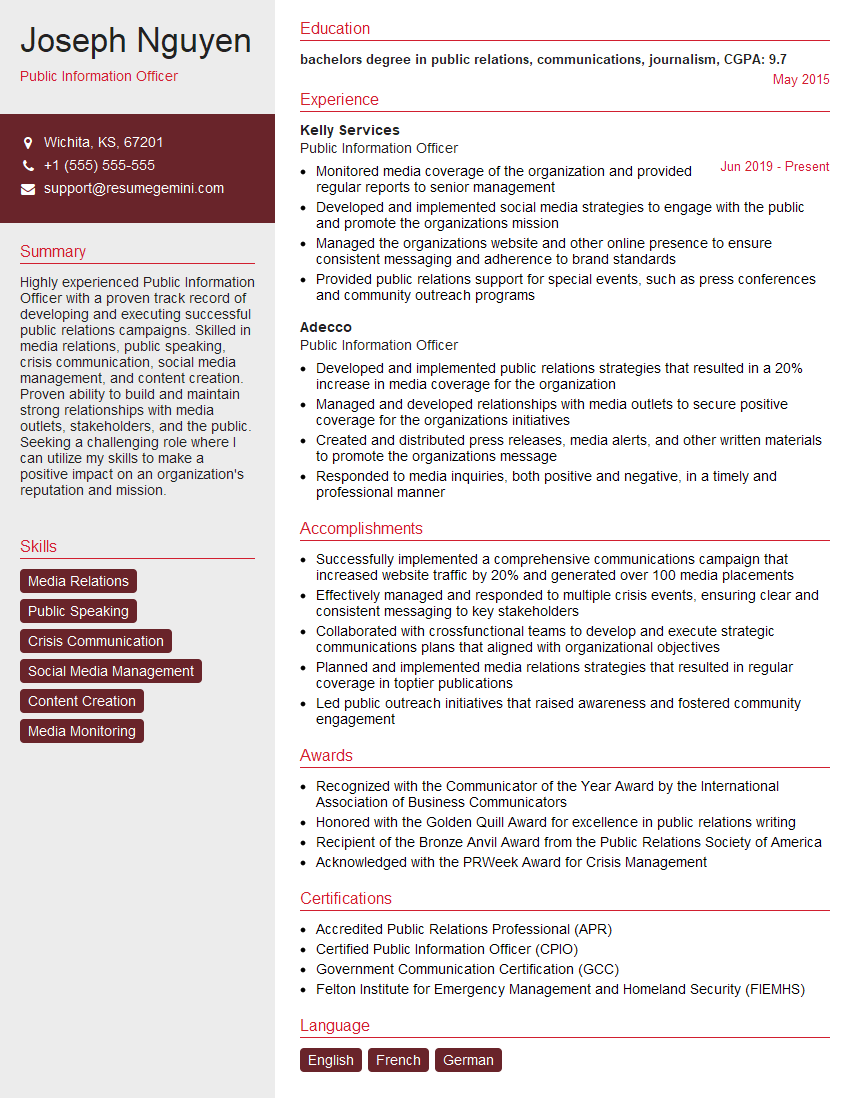
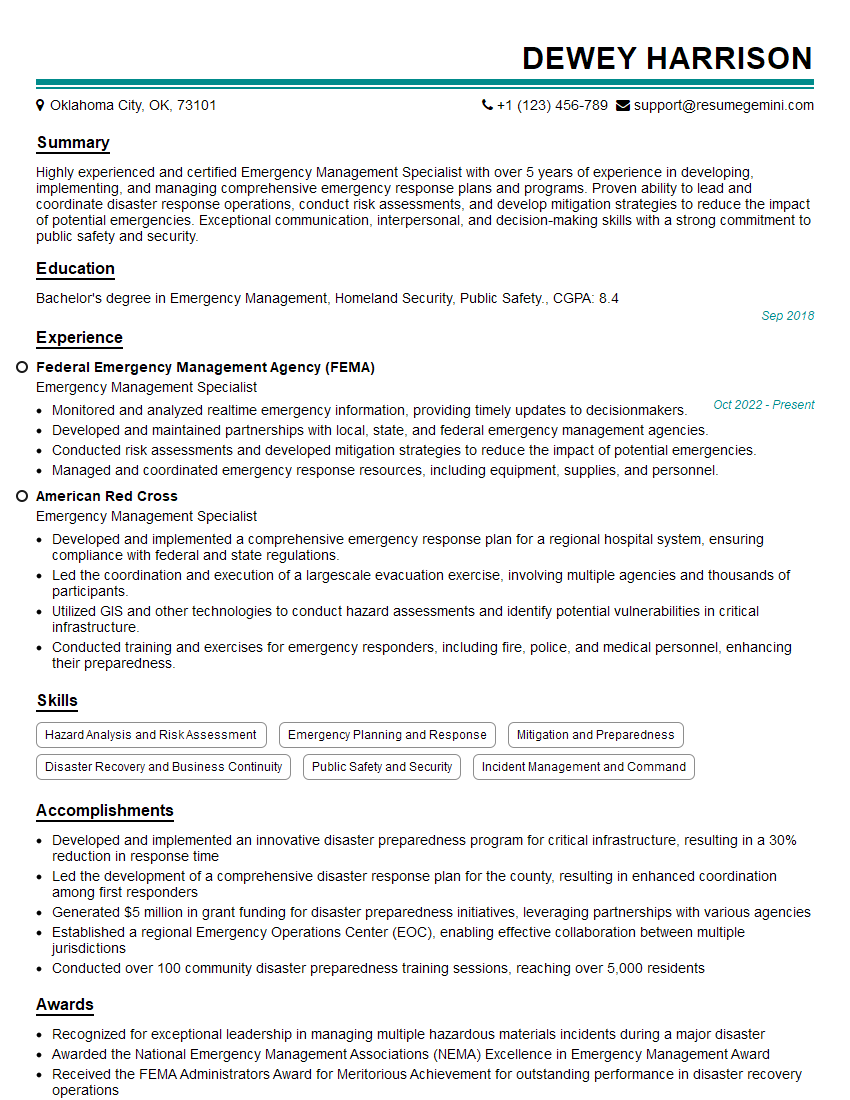
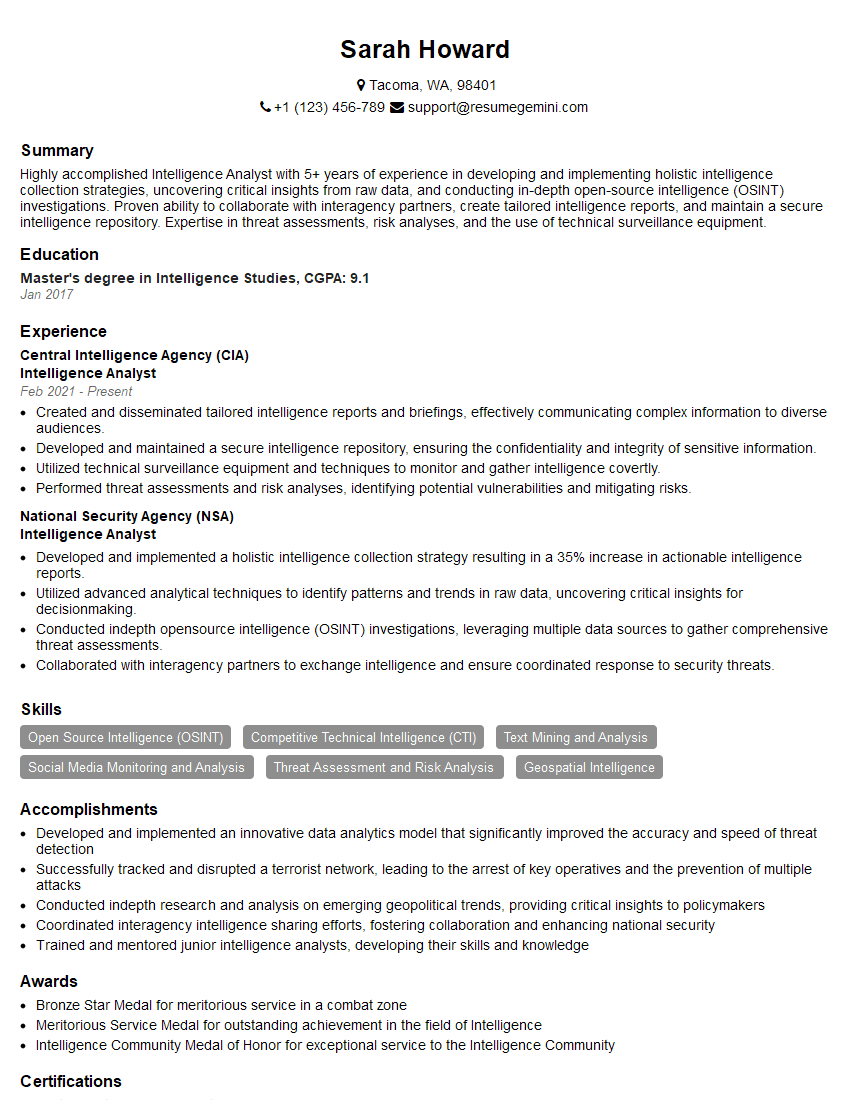
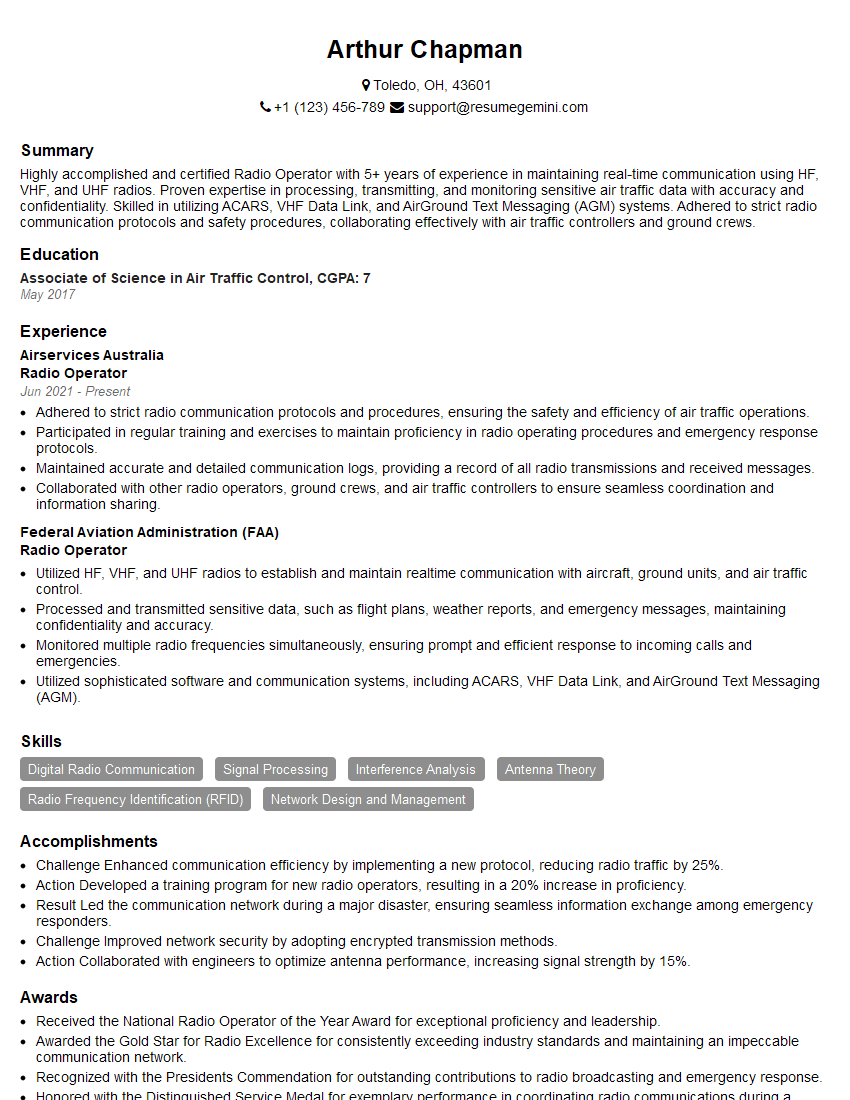
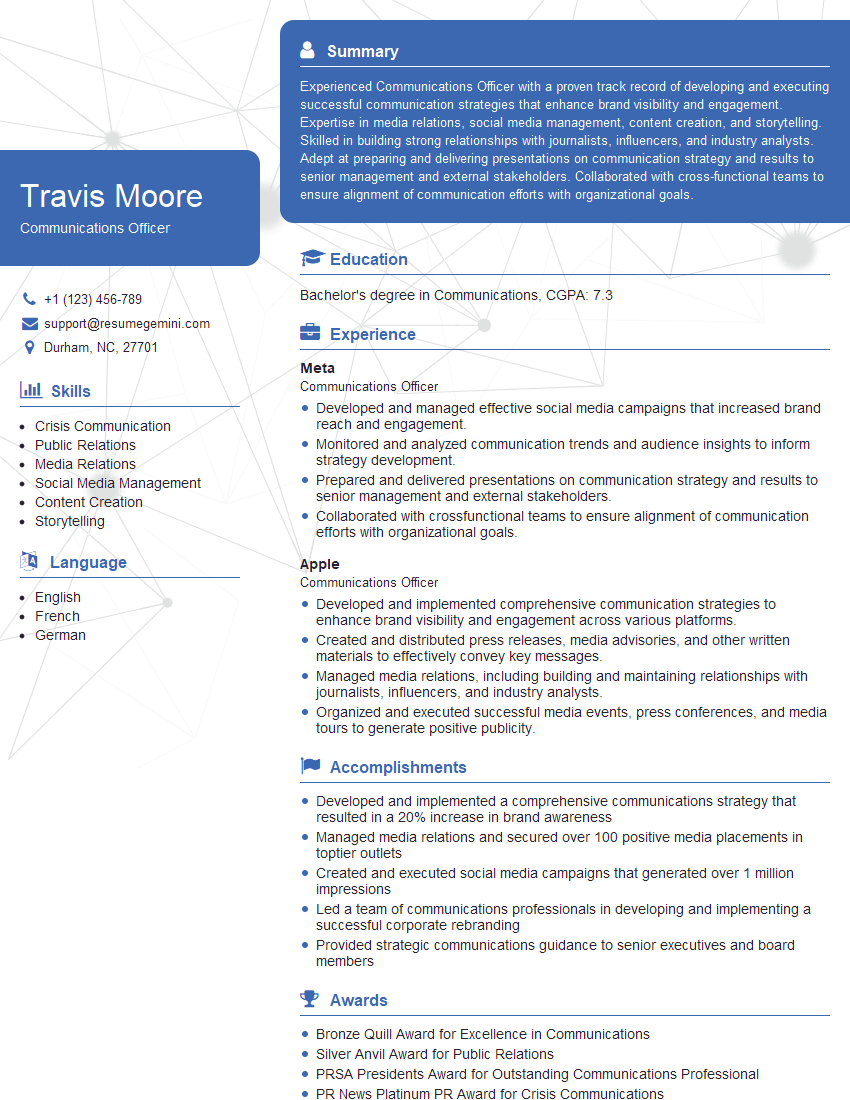
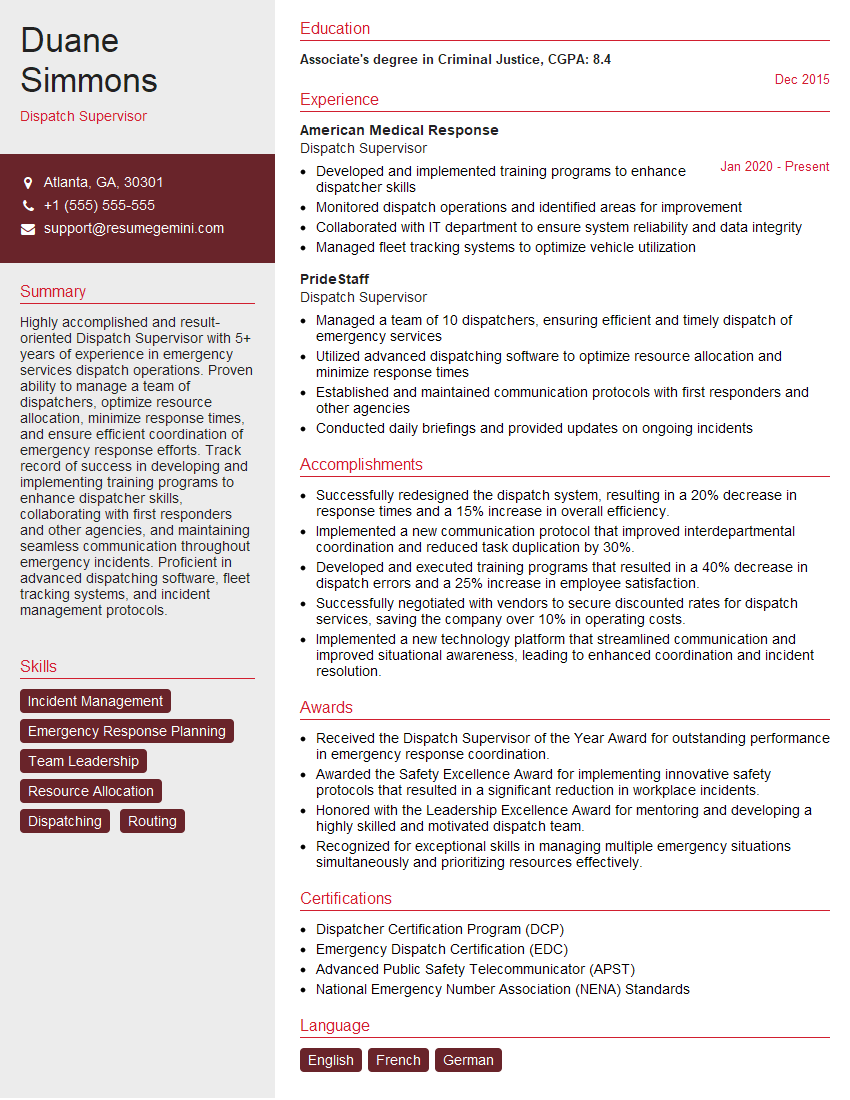
Mastering Tactical Communications and Reporting is crucial for career advancement in many fields, opening doors to leadership roles and specialized opportunities. A strong resume is your key to unlocking these opportunities. Creating an ATS-friendly resume is essential for getting your application noticed by recruiters and hiring managers. To significantly enhance your resume and increase your chances of landing your dream job, we strongly encourage you to utilize ResumeGemini. ResumeGemini provides a powerful and user-friendly platform for building professional resumes, and we offer examples of resumes specifically tailored to Tactical Communications and Reporting to help you get started.
Explore more articles
Users Rating of Our Blogs
Share Your Experience
We value your feedback! Please rate our content and share your thoughts (optional).
What Readers Say About Our Blog
Hello,
we currently offer a complimentary backlink and URL indexing test for search engine optimization professionals.
You can get complimentary indexing credits to test how link discovery works in practice.
No credit card is required and there is no recurring fee.
You can find details here:
https://wikipedia-backlinks.com/indexing/
Regards
NICE RESPONSE TO Q & A
hi
The aim of this message is regarding an unclaimed deposit of a deceased nationale that bears the same name as you. You are not relate to him as there are millions of people answering the names across around the world. But i will use my position to influence the release of the deposit to you for our mutual benefit.
Respond for full details and how to claim the deposit. This is 100% risk free. Send hello to my email id: [email protected]
Luka Chachibaialuka
Hey interviewgemini.com, just wanted to follow up on my last email.
We just launched Call the Monster, an parenting app that lets you summon friendly ‘monsters’ kids actually listen to.
We’re also running a giveaway for everyone who downloads the app. Since it’s brand new, there aren’t many users yet, which means you’ve got a much better chance of winning some great prizes.
You can check it out here: https://bit.ly/callamonsterapp
Or follow us on Instagram: https://www.instagram.com/callamonsterapp
Thanks,
Ryan
CEO – Call the Monster App
Hey interviewgemini.com, I saw your website and love your approach.
I just want this to look like spam email, but want to share something important to you. We just launched Call the Monster, a parenting app that lets you summon friendly ‘monsters’ kids actually listen to.
Parents are loving it for calming chaos before bedtime. Thought you might want to try it: https://bit.ly/callamonsterapp or just follow our fun monster lore on Instagram: https://www.instagram.com/callamonsterapp
Thanks,
Ryan
CEO – Call A Monster APP
To the interviewgemini.com Owner.
Dear interviewgemini.com Webmaster!
Hi interviewgemini.com Webmaster!
Dear interviewgemini.com Webmaster!
excellent
Hello,
We found issues with your domain’s email setup that may be sending your messages to spam or blocking them completely. InboxShield Mini shows you how to fix it in minutes — no tech skills required.
Scan your domain now for details: https://inboxshield-mini.com/
— Adam @ InboxShield Mini
Reply STOP to unsubscribe
Hi, are you owner of interviewgemini.com? What if I told you I could help you find extra time in your schedule, reconnect with leads you didn’t even realize you missed, and bring in more “I want to work with you” conversations, without increasing your ad spend or hiring a full-time employee?
All with a flexible, budget-friendly service that could easily pay for itself. Sounds good?
Would it be nice to jump on a quick 10-minute call so I can show you exactly how we make this work?
Best,
Hapei
Marketing Director
Hey, I know you’re the owner of interviewgemini.com. I’ll be quick.
Fundraising for your business is tough and time-consuming. We make it easier by guaranteeing two private investor meetings each month, for six months. No demos, no pitch events – just direct introductions to active investors matched to your startup.
If youR17;re raising, this could help you build real momentum. Want me to send more info?
Hi, I represent an SEO company that specialises in getting you AI citations and higher rankings on Google. I’d like to offer you a 100% free SEO audit for your website. Would you be interested?
Hi, I represent an SEO company that specialises in getting you AI citations and higher rankings on Google. I’d like to offer you a 100% free SEO audit for your website. Would you be interested?
good