Interviews are more than just a Q&A session—they’re a chance to prove your worth. This blog dives into essential Tidal Patterns interview questions and expert tips to help you align your answers with what hiring managers are looking for. Start preparing to shine!
Questions Asked in Tidal Patterns Interview
Q 1. Explain the difference between spring tides and neap tides.
Spring tides and neap tides represent the extremes of tidal range, determined by the alignment of the sun, Earth, and moon. Spring tides occur when the sun, Earth, and moon are aligned (during new and full moons). The gravitational forces of the sun and moon combine, creating higher high tides and lower low tides – a larger tidal range. Imagine two people pulling on a rope together; their combined force creates a stronger pull. Neap tides, conversely, happen when the sun and moon are at right angles to each other (during the first and third quarter moons). Their gravitational forces partially cancel each other out, resulting in smaller tidal ranges – less difference between high and low tides. Think of the two people pulling on the rope in opposite directions; their combined force is weaker.
In simple terms: Spring tides = big tidal range; Neap tides = small tidal range.
Q 2. Describe the factors influencing tidal range.
Several factors influence tidal range. The most significant is the geometry of the sun, Earth, and moon, as discussed in the previous answer. However, other factors play a crucial role:
- Shape of the coastline and ocean basin: Funnel-shaped bays or shallow continental shelves can amplify tidal ranges. The Bay of Fundy, for instance, experiences some of the highest tides globally due to its unique shape.
- Ocean depth and bathymetry: Deeper water allows for a more uninhibited tidal wave propagation, whereas shallower areas can cause friction and energy dissipation, affecting the tidal range.
- Distance from the moon and sun: Tidal forces are inversely proportional to the cube of the distance. So, when the moon is closer to Earth (perigee), the tidal range is larger.
- Atmospheric pressure: High atmospheric pressure can slightly suppress tidal ranges, while low pressure can enhance them.
- Earth’s rotation: The Earth’s rotation subtly influences the tidal wave propagation and interaction with the coastline.
Q 3. How do astronomical forces affect tidal patterns?
Astronomical forces, primarily the gravitational pull of the moon and sun, are the primary drivers of tidal patterns. The moon’s gravity is most influential due to its proximity to Earth. It creates a bulge of water on the side of the Earth facing the moon (and a corresponding bulge on the opposite side due to inertia). The sun also exerts a gravitational pull, but its effect is smaller because of its greater distance. The combined gravitational forces of the sun and moon, along with the Earth’s rotation, dictate the timing and magnitude of tides. The position of the sun and moon relative to the Earth determines the type of tide (spring or neap), as detailed earlier.
Q 4. What is the Coriolis effect and how does it impact tides?
The Coriolis effect is an inertial force caused by the Earth’s rotation. It affects moving objects, including tidal currents, by deflecting them to the right in the Northern Hemisphere and to the left in the Southern Hemisphere. This deflection doesn’t change the speed of the current, but it alters its direction. This effect is particularly noticeable in large-scale ocean currents and can significantly influence the rotation and pattern of tidal flows around coastlines. For example, amphidromic points, which are points of zero tidal range around which tidal currents rotate, are a direct consequence of the Coriolis effect.
Q 5. Explain the concept of tidal currents and their predictability.
Tidal currents are the horizontal movement of water caused by the rise and fall of tides. They are predictable to a large extent, with their timing and speed determined by the tidal cycle. Predictive models, often based on harmonic analysis (discussed below), are used to forecast tidal currents. These models use astronomical data, bathymetric information, and hydrodynamic equations to simulate tidal flows. The accuracy of these predictions depends on the complexity of the model and the accuracy of the input data. Local factors, such as water depth and coastal configuration, may introduce variations from predicted currents. While highly predictable overall, unexpected weather events or strong winds can introduce variability. Chart datum, (discussed in the next answer) is a fundamental element when interpreting and using tidal current predictions.
Q 6. Describe different tidal datums and their significance.
Tidal datums are reference levels used to measure water levels and depths. Several different datums exist, each with specific applications:
- Mean High Water (MHW): The average of the higher high tides over a specific period (typically 19 years).
- Mean Low Water (MLW): The average of the lower low tides over a specific period.
- Mean Sea Level (MSL): The average of all water levels over a long period, typically 19 years. This datum is often used for various coastal engineering applications.
- Chart Datum: The reference level used on nautical charts. It’s usually selected to be below the lowest predicted tide, guaranteeing that depths shown on charts are always greater than or equal to the actual depth.
The significance of tidal datums lies in their use for defining coastal boundaries, designing harbors and navigation channels, and in managing coastal infrastructure to accommodate the rise and fall of tides. Incorrect datum use can lead to errors in charting, coastal development, and navigation.
Q 7. How do you interpret a tidal harmonic analysis?
Tidal harmonic analysis is a mathematical technique used to decompose complex tidal records into a series of individual tidal constituents, each representing a specific astronomical influence (e.g., the semi-diurnal lunar tide, the diurnal solar tide). The analysis yields amplitude and phase information for each constituent, allowing for the prediction of future tides. The process involves fitting a model to the observed tidal data, often using least squares methods. The output is typically a set of harmonic constants that describe the contribution of each tidal constituent.
Interpreting this analysis involves understanding the amplitudes (how large the constituent is) and phases (when the constituent is at its peak) of each constituent. The sum of these individual constituents then provides a complete model of the tidal elevation at a given location. This information is critical for navigational charts, coastal engineering projects, and other applications requiring accurate tidal predictions. Software packages are commonly used to perform these analyses and provide easily interpretable outputs.
Q 8. What are the limitations of tidal prediction models?
Tidal prediction models, while sophisticated, have inherent limitations. Their accuracy depends heavily on the quality and quantity of input data, primarily historical tide gauge measurements. These measurements might be sparse in certain areas, particularly in remote or developing regions, leading to less accurate predictions. Furthermore, models simplify complex hydrodynamic processes. They often don’t fully account for the subtle influences of atmospheric pressure variations, wind stress, river discharge, or even the complex bathymetry (underwater topography) of the coastal region. For instance, a model might accurately predict tides for a relatively simple, open coastline, but struggle with the highly variable tides found in an estuary with numerous channels and shallow banks.
Another significant limitation is the prediction horizon. While models can predict tides days or even weeks in advance, the accuracy diminishes with time. Short-term predictions are far more reliable than long-term ones due to the cumulative effect of small errors and the unpredictable influence of the aforementioned factors.
Finally, many models are based on harmonic analysis, which decomposes the tide into its constituent harmonic components. This approach, while effective, may not perfectly capture non-linear effects or extreme events such as storm surges, which can dramatically alter tidal patterns and overwhelm the model’s predictions.
Q 9. Explain the use of tidal charts and tide tables.
Tidal charts and tide tables are essential tools for anyone working in coastal environments. They provide information about predicted water levels and tidal currents at specific locations and times. Tide tables are essentially tabular data presenting the predicted high and low water times and heights for a given location over a period (typically a month or year). They are simple to use but provide limited spatial resolution.
Tidal charts, on the other hand, are graphical representations that show the predicted tidal heights and currents over a larger area and at specific times. They offer better spatial resolution, visualizing tidal patterns across a region. Imagine trying to navigate a shallow coastal waterway—a tidal chart would help you visually plan your route, avoiding areas that might become dangerously shallow during low tide. Both charts and tables are crucial for safe navigation, coastal planning, and various marine operations. Their accuracy depends on the model used to generate them and the quality of the input data, but they provide a valuable, easily understandable summary of predicted tidal conditions.
Q 10. How do you account for tidal effects in coastal engineering projects?
Accounting for tidal effects in coastal engineering projects is paramount to ensure their safety, stability, and longevity. Ignoring tides can lead to catastrophic failures. We use various methods to integrate tidal data into the design process. First, we conduct thorough tidal analysis using historical data and predictive models to understand the range of expected tidal levels at the project site. This is crucial for determining design water levels, accounting for both high and low water extremes, including storm surge considerations for increased safety margins.
For structures like seawalls, harbors, or bridges, we need to ensure sufficient freeboard (the vertical distance between the design water level and the top of the structure) to prevent flooding or overtopping during high tides. Similarly, foundation design for offshore structures must account for the dynamic forces of tidal currents, ensuring the structure can withstand these forces throughout the tidal cycle. The design will also incorporate information on tidal currents for things like scour protection (preventing erosion around foundations) and the optimal positioning of intake and outlet structures. We use specialized software and modelling techniques to simulate the interactions between the structure and the tidal flow. A failure to account for these forces can lead to significant structural damage or even collapse.
Q 11. Describe the impact of tides on marine ecosystems.
Tides profoundly influence marine ecosystems, affecting a wide range of biological processes. The rhythmic rise and fall of the water level creates diverse habitats, supporting a high level of biodiversity. Intertidal zones, the areas exposed during low tide and submerged during high tide, are particularly rich in species that have adapted to these fluctuating conditions. These areas provide feeding and breeding grounds for many organisms like crabs, shellfish, and shorebirds.
Tidal currents also play a crucial role in nutrient distribution and mixing, bringing oxygenated water to the seabed and transporting nutrients that support primary productivity. The timing and amplitude of the tides directly influence the feeding and reproductive cycles of many species. For example, some animals only feed during high tide or low tide. Changes in the tidal regime, due to climate change or human intervention, can significantly impact these organisms and the entire ecosystem. A decrease in tidal range, for example, can lead to habitat loss and altered species composition.
Q 12. Explain the applications of tidal energy.
Tidal energy harnesses the power of the tides to generate electricity. This is a renewable energy source, offering a predictable and reliable power output compared to solar or wind energy. Two main methods exist: tidal barrages and tidal stream generators. Tidal barrages are dams built across estuaries or bays. The rising and falling tide fills the reservoir behind the barrage. As the tide recedes, the water flows back out through turbines, generating electricity. This method, while effective, can have substantial environmental consequences. It can alter water flow patterns and affect estuarine habitats.
Tidal stream generators, on the other hand, are similar to underwater wind turbines. They are placed in areas with strong tidal currents, and the flow of water spins the turbines, generating electricity. This method generally has a smaller environmental impact than barrages. While tidal energy is still under development, it presents a significant potential for contributing to a sustainable energy future. However, the high initial investment costs, environmental considerations, and suitable site selection challenges need to be carefully addressed before large-scale deployment.
Q 13. What software or tools do you use for tidal analysis?
For tidal analysis, a variety of software and tools are utilized, ranging from simple spreadsheet programs to complex hydrodynamic modelling packages. For basic analysis of tide gauge data, spreadsheet software like Excel or Google Sheets can be used to calculate tidal parameters like high and low water times, tidal range, and mean sea level. More advanced analysis, such as harmonic analysis to determine tidal constituents, often involves specialized software packages such as:
- MATLAB: Offers a powerful environment with numerous toolboxes for signal processing and data analysis.
- T_Tide: A dedicated MATLAB toolbox specifically for tidal analysis.
- Python libraries (e.g., Pytides, pandas): Provide versatile tools for data manipulation, analysis, and visualization.
- Hydrodynamic modelling software (e.g., Delft3D, MIKE 21): Used for large-scale simulations of tidal flows and their impact on coastal systems.
The choice of software depends on the complexity of the analysis and the specific research question. For example, simple tidal prediction might be accomplished with spreadsheet software, while complex simulations of tidal flows in estuaries require advanced hydrodynamic modeling software.
Q 14. How do you assess the accuracy of tidal predictions?
Assessing the accuracy of tidal predictions involves comparing the predicted values with observed tide gauge data. We usually use statistical measures to quantify the difference between predicted and observed tidal levels, such as:
- Root Mean Square Error (RMSE): Measures the average difference between predicted and observed values.
- Mean Absolute Error (MAE): Similar to RMSE but less sensitive to outliers.
- Bias: Represents the average difference between predicted and observed values, indicating systematic over- or under-prediction.
These statistical measures provide a quantitative assessment of the model’s performance. A lower RMSE or MAE indicates better accuracy. It’s important to consider the temporal and spatial scales when assessing accuracy. Short-term predictions are generally more accurate than long-term predictions, and accuracy can vary geographically. Additionally, visual comparison of predicted and observed tide curves can reveal patterns or systematic errors not always captured by statistical measures. Regular validation against observed data is essential to maintain and improve the accuracy of tidal prediction models.
Q 15. Describe different methods for measuring tidal heights.
Measuring tidal heights involves a combination of traditional and modern techniques. Historically, tide gauges – essentially sophisticated rulers in the water – provided the primary data. These gauges, often located in still water areas to minimize wave interference, continuously record water level against a fixed datum. The datum is a reference point, typically mean sea level (MSL), which is the average water level over a long period (usually 19 years).
- Traditional Tide Gauges: These use a float within a stilling well connected to a recording device. The float rises and falls with the tide, and the movement is translated into a continuous record of water level.
- Acoustic/Radar Gauges: Modern systems often employ non-contact methods. Acoustic gauges use sound waves to measure the distance to the water surface, while radar gauges use electromagnetic waves. These are less prone to maintenance issues compared to traditional float gauges and can operate in more challenging environments.
- Satellite Altimetry: Satellites orbiting Earth can measure sea surface height globally. While less precise than local gauges for single locations, satellite altimetry offers broad-scale coverage, crucial for understanding large-scale tidal patterns and sea level changes.
The choice of method depends on the specific application and budget. A coastal monitoring program might use a network of tide gauges and satellite data for comprehensive coverage, whereas a single port might rely solely on a highly accurate local gauge.
Career Expert Tips:
- Ace those interviews! Prepare effectively by reviewing the Top 50 Most Common Interview Questions on ResumeGemini.
- Navigate your job search with confidence! Explore a wide range of Career Tips on ResumeGemini. Learn about common challenges and recommendations to overcome them.
- Craft the perfect resume! Master the Art of Resume Writing with ResumeGemini’s guide. Showcase your unique qualifications and achievements effectively.
- Don’t miss out on holiday savings! Build your dream resume with ResumeGemini’s ATS optimized templates.
Q 16. What are the challenges in predicting tides in complex coastal environments?
Predicting tides in complex coastal environments presents significant challenges due to the interaction of several factors. The simple, idealized model of a single harmonic tide doesn’t hold true in these areas. Imagine trying to predict the behavior of a complex network of interconnected pipes carrying water – it’s far from simple!
- Complex bathymetry (seafloor topography): Irregular seabed shapes significantly affect water flow, creating variations in tidal range and timing. Shallow areas, channels, and islands all play a role.
- Coastal geometry: The shape of the coastline, including inlets, bays, and estuaries, influences how tidal waves propagate and reflect. A long, narrow bay can experience amplified tidal ranges due to resonance (explained further in question 6).
- River discharge: Large rivers can significantly alter water levels, masking the pure tidal signal, particularly near river mouths. The freshwater inflow interacts with the saltwater tide, creating complex mixing zones.
- Meteorological effects: Wind and atmospheric pressure changes can affect sea level, leading to deviations from predicted tides. Strong winds can push water against the coast, increasing water levels; similarly, low atmospheric pressure can cause higher water levels.
- Data limitations: Accurate bathymetric data might be incomplete or unavailable for certain areas. Limited historical tide gauge data can hamper the accuracy of predictive models in poorly monitored regions.
Addressing these challenges often requires sophisticated hydrodynamic models that account for these interactions, coupled with high-resolution bathymetric data and extensive meteorological information.
Q 17. Explain how sea level rise impacts tidal patterns.
Sea level rise fundamentally alters tidal patterns. Think of it like adding water to a bathtub – the overall water level increases, affecting the high and low tide marks.
- Increased high tide levels: The most obvious effect is the increase in the height of high tides. This leads to more frequent and severe coastal flooding, especially during high tide combined with storm surges.
- Increased tidal range: While not always the case, sea level rise can sometimes increase the difference between high and low tide, meaning higher high tides and lower low tides.
- Changes in tidal timing: While less noticeable than the changes in height, sea level rise can subtly influence the timing of tides due to altered water flow dynamics.
- Increased erosion and inundation: The higher and more frequent high tides lead to increased coastal erosion and inundation of low-lying areas. This accelerates land loss and threatens coastal infrastructure.
Incorporating projected sea level rise into tidal predictions is crucial for adapting to future climate change impacts and implementing effective coastal management strategies.
Q 18. How do you incorporate tidal data into coastal zone management plans?
Tidal data is fundamental to effective coastal zone management. It informs decisions related to coastal development, infrastructure planning, and environmental protection.
- Coastal Development Regulations: Tidal information determines building setbacks from the shoreline, preventing structures from being vulnerable to flooding and erosion. Understanding tidal inundation zones is critical for safe and sustainable development.
- Infrastructure Design: Bridges, ports, and other coastal infrastructure must be designed to withstand the forces of tides. Tidal data is essential for determining structural elevations and ensuring resilience to high tides and storm surges.
- Environmental Impact Assessments: Tidal data informs assessments of the impacts of projects on coastal ecosystems, such as changes to water flow, sediment transport, and habitat suitability. This is crucial for protecting ecologically sensitive areas.
- Flood Risk Management: Accurate tidal predictions are vital for flood warning systems and emergency response planning. Understanding tidal patterns helps communities prepare for and mitigate the effects of coastal flooding.
- Navigation Safety: Accurate tidal information is critical for safe navigation in coastal waters. Charts and nautical publications provide detailed tidal predictions for safe passage.
Essentially, tidal data helps create realistic and resilient coastal management plans that balance human activities with environmental protection.
Q 19. Describe your experience with hydrodynamic modeling related to tides.
My experience with hydrodynamic modeling related to tides spans over [Number] years, encompassing projects ranging from small-scale estuarine studies to large-scale coastal modeling efforts. I’ve utilized various models, including Delft3D, TELEMAC-MASCARET, and XBeach, depending on project needs and scale.
For instance, in a recent project concerning [Project location/description], we employed Delft3D to simulate tidal currents and water levels in a complex estuary. The model incorporated detailed bathymetry, river discharge data, and meteorological forcing to generate high-resolution simulations. This allowed us to analyze the impact of proposed port expansion on local tidal currents and identify potential navigation issues.
My work has also included the calibration and validation of these models using extensive field data (tide gauge measurements, current meter data) and remote sensing techniques. This rigorous approach ensures the accuracy and reliability of model outputs.
Furthermore, I’m proficient in using GIS software (like ArcGIS) to process and visualize the model output, which is crucial for creating informative maps and reports for stakeholders.
Q 20. Explain the concept of tidal resonance and its effects.
Tidal resonance occurs when the natural period of oscillation of a water body (like a bay or estuary) matches the period of the tidal forcing. Imagine pushing a child on a swing – if you push at the right rhythm (the natural frequency of the swing), the swing will oscillate with increasing amplitude. Similarly, in a resonating bay, the incoming tide’s energy is amplified, resulting in exceptionally high tidal ranges.
The shape and dimensions of the water body determine its natural frequency. Long, narrow bays or estuaries often exhibit resonance. The funnel shape of some bays acts to amplify the tidal wave as it propagates inward.
The effect of tidal resonance is significant:
- Amplified tidal ranges: The most prominent effect is a much larger difference between high and low tides compared to what would be expected in an open ocean setting. This can lead to extreme high water levels and potential flooding issues.
- Increased current speeds: The amplified tidal wave also results in faster tidal currents, impacting navigation and sediment transport.
- Enhanced mixing: The stronger currents can increase mixing of water masses, affecting salinity and water quality.
Understanding tidal resonance is crucial for coastal engineering and management, particularly in areas prone to flooding due to amplified tidal ranges.
Q 21. How do you analyze tidal data to identify trends and anomalies?
Analyzing tidal data involves a combination of visual inspection, statistical analysis, and signal processing techniques. The goal is to identify patterns, trends, and any anomalies that deviate from the expected behavior.
- Visual Inspection: Plotting tidal data over time (e.g., a time series plot) allows for the immediate identification of any gross errors or unusual events. This provides a quick overview of the data.
- Harmonic Analysis: This statistical method decomposes the complex tidal signal into its constituent components (e.g., M2, S2, K1), each representing different astronomical influences. This helps to understand the relative contribution of each component to the overall tide.
- Time Series Analysis: Techniques such as autocorrelation and spectral analysis help to identify periodicities and patterns in the data, highlighting any long-term trends or cyclical variations. This might reveal seasonal changes in tidal behaviour or longer-term impacts of climate change.
- Outlier Detection: Statistical methods can help identify outliers – data points significantly deviating from the norm. These might represent measurement errors, unusual events (e.g., storm surges), or other anomalies requiring further investigation.
- Wavelet Analysis: This more advanced technique is used to detect and analyze non-stationary signals, such as changes in tidal behavior associated with storm events or river discharges. It can reveal subtle changes that might be missed by simpler methods.
By combining these methods, we can develop a comprehensive understanding of tidal patterns, identify significant trends, and pinpoint anomalies that require further scrutiny, informing improved predictive models and coastal management strategies.
Q 22. What is the significance of tidal asymmetry?
Tidal asymmetry refers to the unequal heights or durations of high and low tides during a tidal cycle. Instead of a symmetrical rise and fall, we often see a higher high tide and a lower low tide, or a longer period of high water than low water. This is not a deviation from the norm; in fact, it’s the more common scenario.
The significance lies in its impact on coastal processes. Asymmetrical tides influence the amount of water flooding coastal areas, affecting erosion, sediment transport, and the overall ecological dynamics of coastal wetlands and estuaries. For example, a higher high tide might inundate a larger portion of a salt marsh, increasing the duration of exposure to saltwater for marsh plants. Conversely, a prolonged low tide exposes intertidal zones for longer periods, influencing marine life and creating different habitat conditions. Understanding tidal asymmetry is crucial for accurate coastal management and predicting coastal flooding events.
Q 23. Describe the impact of bathymetry on tidal patterns.
Bathymetry, the study of underwater depth of lake or ocean floors, profoundly influences tidal patterns. Think of it like water flowing through a channel – the shape and depth of the channel determine how the water moves. Similarly, the shape of the seabed, including the presence of continental shelves, underwater canyons, and islands, affects the speed and height of tidal waves as they propagate.
For example, a wide, shallow continental shelf will slow down tidal waves, reducing their height and increasing the tidal range (the difference between high and low tide). Conversely, a narrow, deep channel will allow tidal waves to travel faster and higher. Islands and underwater features act as obstacles, causing tidal currents to deflect or accelerate. This creates complex tidal patterns with significant variations even within relatively small geographic areas. Accurate bathymetric data is essential for accurate tidal modeling and prediction.
Q 24. How do you handle data gaps in tidal observations?
Handling data gaps in tidal observations is a common challenge. We employ several strategies, depending on the nature and extent of the gap.
- Interpolation: If gaps are relatively small and the data is consistent, we can use interpolation techniques – like linear interpolation or more sophisticated methods like spline interpolation – to estimate missing values based on surrounding data points.
- Extrapolation: For larger gaps, extrapolation might be used cautiously, but only if the overall tidal pattern is well-understood from surrounding stations or historical data. This needs to be done with great care as it increases uncertainty.
- Data Assimilation: This combines observed data with numerical models. The model provides estimates for the missing data, which are then adjusted based on the available observations. This is a powerful technique for handling larger data gaps, but requires sophisticated modeling capabilities.
- Neighboring Station Data: Data from nearby tidal stations can be used to fill gaps. The similarity of tidal patterns between nearby stations can be assessed, and adjustments made to account for any local differences in bathymetry or other factors.
The choice of method depends on the context – the size of the gap, the quality of the available data, and the required accuracy of the results. Any data gap filling should be clearly documented and any associated uncertainties should be accounted for in any subsequent analyses.
Q 25. Explain the use of tidal data in navigation safety.
Tidal data is indispensable for navigation safety. Accurate knowledge of tidal heights and currents is essential for safe passage, especially in shallow waters or areas with strong tidal currents.
For example, knowing the depth of water at a specific time is crucial for avoiding grounding. Mariners use tidal predictions (obtained from charts or electronic navigation systems) to plan their routes, ensuring they have sufficient water depth for their vessel. Similarly, understanding tidal currents is crucial for accurate navigation, preventing vessels from being swept off course. This is particularly important for smaller vessels navigating narrow channels or areas with strong tidal streams. Without reliable tidal information, navigation would be far more hazardous and could easily lead to accidents.
Q 26. Describe your experience in using GIS for tidal data analysis.
I have extensive experience using Geographic Information Systems (GIS) for tidal data analysis. GIS provides a powerful platform for visualizing, analyzing, and integrating tidal data with other geographic information, such as bathymetry, coastline features, and land use.
Specifically, I’ve used GIS to create:
- Tidal inundation maps: showing areas likely to be flooded at various tidal levels.
- Tidal current maps: illustrating the direction and speed of tidal currents at different locations.
- Spatial analyses of tidal range variability: identifying areas with particularly high or low tidal ranges.
- Integration with other datasets: combining tidal data with other spatial data layers, such as elevation models and ecological data, to assess the impacts of tides on various environmental parameters.
Software such as ArcGIS and QGIS have been my primary tools. I utilize spatial analysis tools to understand the relationship between tidal patterns and other geographic elements, enabling better decision-making in coastal planning, environmental assessments, and navigation safety.
Q 27. What are the ethical considerations of tidal energy development?
The ethical considerations of tidal energy development are multifaceted and require careful attention.
- Environmental Impacts: Tidal energy projects can alter natural habitats, affecting marine life. Potential impacts include changes in water flow, sediment transport, and noise pollution. Thorough environmental impact assessments (EIAs) are crucial, employing robust methodologies to evaluate potential impacts and propose mitigation strategies.
- Visual Impacts: Large-scale tidal energy structures can alter the visual landscape, potentially affecting tourism or the aesthetic value of coastal areas. Careful consideration of the visual impact and potential solutions, such as integrating designs with the environment, are needed.
- Social Impacts: Development may affect local communities, including fishing grounds and recreational activities. It’s vital to engage with local stakeholders from the outset, ensuring fair compensation and community benefits.
- Sustainability: Tidal energy, while renewable, needs careful planning to ensure long-term sustainability. This includes designing robust structures, considering the lifespan of the technology, and managing environmental impacts over the project’s lifetime.
Ethical development requires a balanced approach that weighs the benefits of renewable energy against potential environmental and social costs, prioritizing transparency and community engagement throughout the process. This ensures equitable and sustainable development.
Q 28. How do you communicate complex tidal information to a non-technical audience?
Communicating complex tidal information to a non-technical audience requires clear, concise language, avoiding jargon and using relatable analogies.
Instead of discussing “harmonic constituents,” I’d explain tides as predictable rises and falls of the sea level, like a rhythmic breathing of the ocean, caused by the gravitational pull of the moon and sun. Visual aids such as simple diagrams, charts, and animations are incredibly helpful. I would use everyday examples: for instance, comparing tidal ranges to the height of a person or a building to convey the magnitude.
Storytelling is also effective. I might use a personal anecdote about experiencing a dramatic high tide or discuss the importance of tides for shellfish harvesting or navigation. By relating tidal information to people’s everyday experiences and using diverse communication methods, we can ensure broader understanding and appreciation of this fascinating natural phenomenon.
Key Topics to Learn for Tidal Patterns Interview
- Tidal Dynamics: Understanding the forces driving tides (gravitational pull of the sun and moon, Earth’s rotation), and their predictable patterns.
- Tidal Prediction Models: Familiarize yourself with different prediction methods and their limitations, including harmonic analysis and numerical modeling. Understand the factors influencing accuracy.
- Tidal Data Analysis: Learn how to interpret tidal data from various sources (gauge readings, satellite data), identify trends and anomalies, and perform basic statistical analysis.
- Practical Applications: Explore the applications of tidal patterns in coastal engineering (harbor design, navigation), marine biology (species migration, habitat mapping), and renewable energy (tidal power generation).
- Tidal Currents and their impact: Analyze the influence of tides on water currents, including their speed, direction, and variability. Understand the implications for navigation and marine operations.
- Extreme Tidal Events: Learn about storm surges, spring tides, and other extreme tidal events and their potential consequences for coastal communities.
- Data Visualization and Interpretation: Practice visualizing tidal data using graphs and charts to effectively communicate findings and identify patterns.
Next Steps
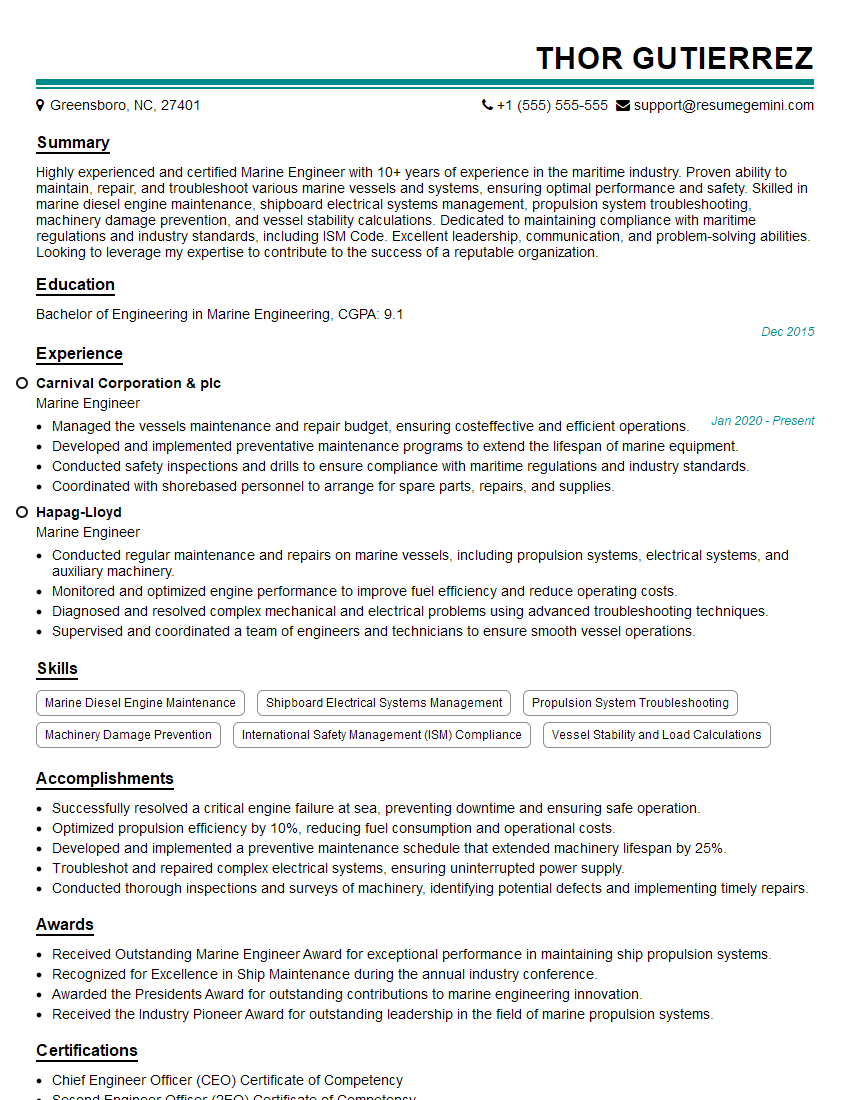
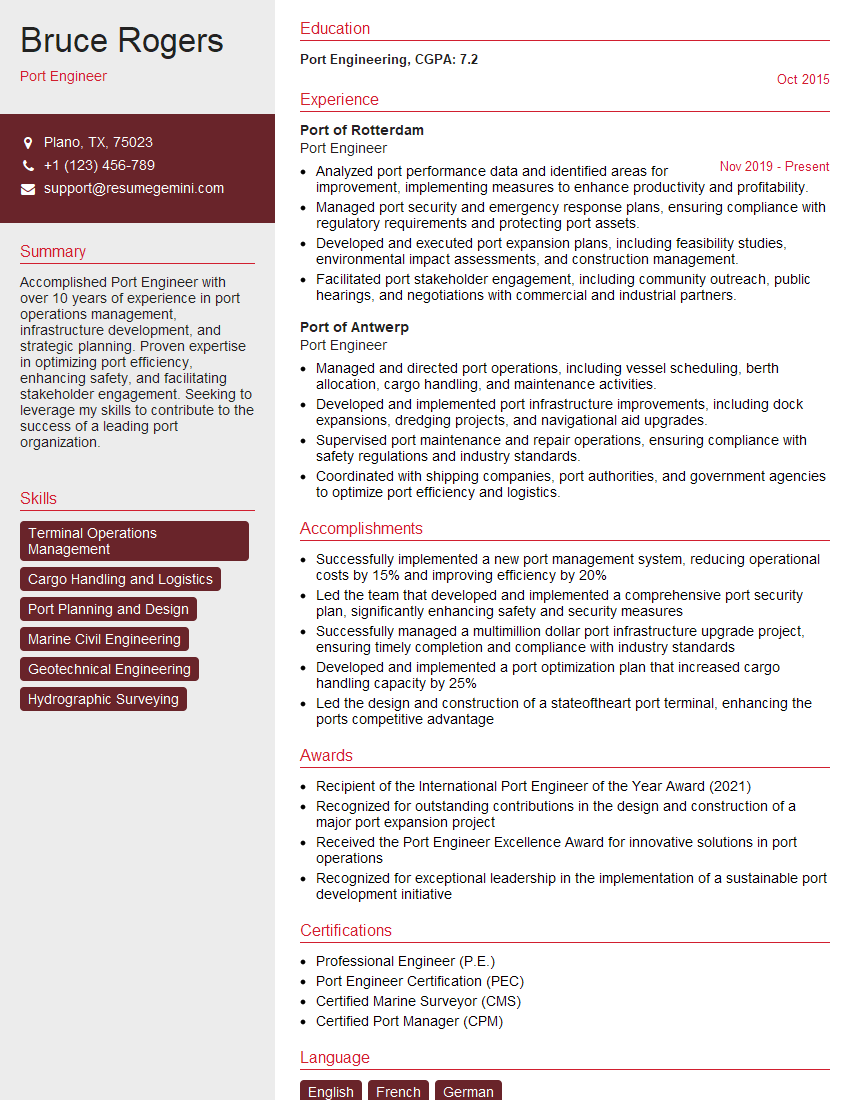
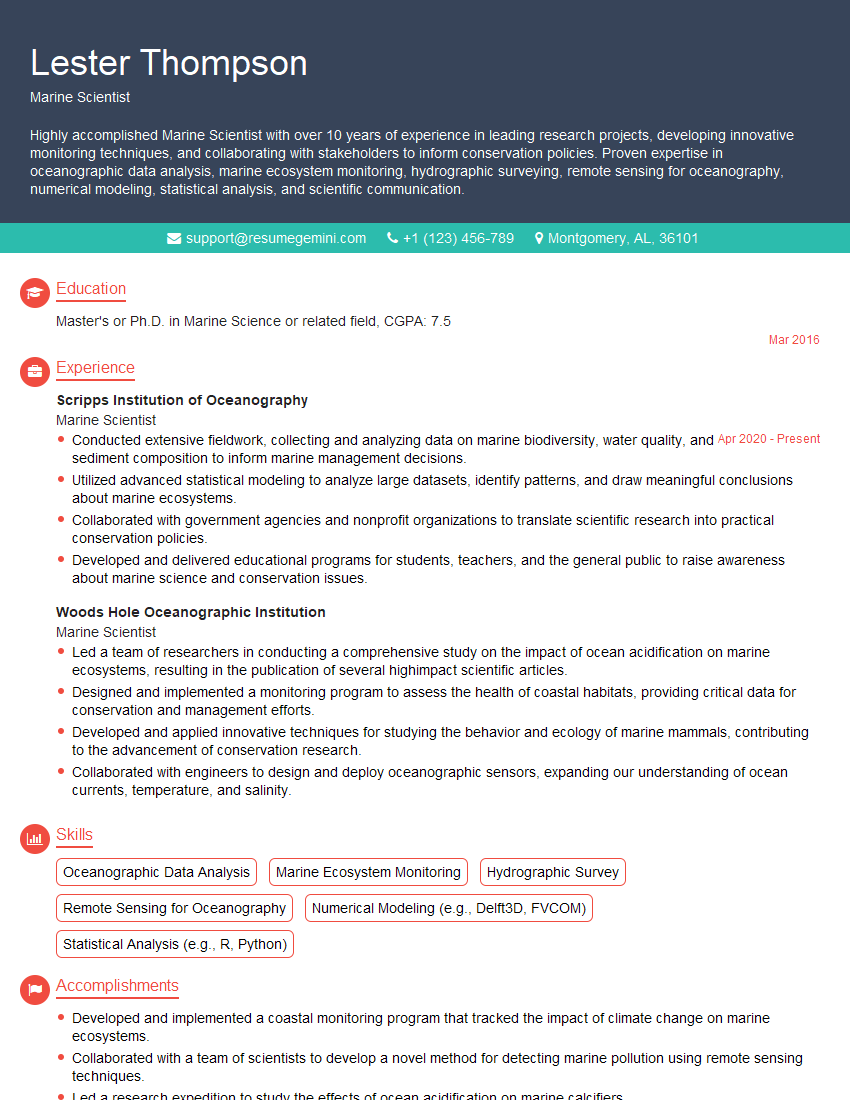
Mastering tidal patterns is crucial for advancing your career in fields like oceanography, coastal engineering, and marine science. A strong understanding of these principles opens doors to exciting and impactful roles. To significantly boost your job prospects, it’s vital to create a resume that Applicant Tracking Systems (ATS) can easily read and understand. This is where ResumeGemini can help. ResumeGemini offers a powerful and user-friendly platform to craft an ATS-friendly resume that highlights your skills and experience effectively. Examples of resumes tailored to Tidal Patterns expertise are available to guide you.
Explore more articles
Users Rating of Our Blogs
Share Your Experience
We value your feedback! Please rate our content and share your thoughts (optional).
What Readers Say About Our Blog
Attention music lovers!
Wow, All the best Sax Summer music !!!
Spotify: https://open.spotify.com/artist/6ShcdIT7rPVVaFEpgZQbUk
Apple Music: https://music.apple.com/fr/artist/jimmy-sax-black/1530501936
YouTube: https://music.youtube.com/browse/VLOLAK5uy_noClmC7abM6YpZsnySxRqt3LoalPf88No
Other Platforms and Free Downloads : https://fanlink.tv/jimmysaxblack
on google : https://www.google.com/search?q=22+AND+22+AND+22
on ChatGPT : https://chat.openai.com?q=who20jlJimmy20Black20Sax20Producer
Get back into the groove with Jimmy sax Black
Best regards,
Jimmy sax Black
www.jimmysaxblack.com
Hi I am a troller at The aquatic interview center and I suddenly went so fast in Roblox and it was gone when I reset.
Hi,
Business owners spend hours every week worrying about their website—or avoiding it because it feels overwhelming.
We’d like to take that off your plate:
$69/month. Everything handled.
Our team will:
Design a custom website—or completely overhaul your current one
Take care of hosting as an option
Handle edits and improvements—up to 60 minutes of work included every month
No setup fees, no annual commitments. Just a site that makes a strong first impression.
Find out if it’s right for you:
https://websolutionsgenius.com/awardwinningwebsites
Hello,
we currently offer a complimentary backlink and URL indexing test for search engine optimization professionals.
You can get complimentary indexing credits to test how link discovery works in practice.
No credit card is required and there is no recurring fee.
You can find details here:
https://wikipedia-backlinks.com/indexing/
Regards
NICE RESPONSE TO Q & A
hi
The aim of this message is regarding an unclaimed deposit of a deceased nationale that bears the same name as you. You are not relate to him as there are millions of people answering the names across around the world. But i will use my position to influence the release of the deposit to you for our mutual benefit.
Respond for full details and how to claim the deposit. This is 100% risk free. Send hello to my email id: lukachachibaialuka@gmail.com
Luka Chachibaialuka
Hey interviewgemini.com, just wanted to follow up on my last email.
We just launched Call the Monster, an parenting app that lets you summon friendly ‘monsters’ kids actually listen to.
We’re also running a giveaway for everyone who downloads the app. Since it’s brand new, there aren’t many users yet, which means you’ve got a much better chance of winning some great prizes.
You can check it out here: https://bit.ly/callamonsterapp
Or follow us on Instagram: https://www.instagram.com/callamonsterapp
Thanks,
Ryan
CEO – Call the Monster App
Hey interviewgemini.com, I saw your website and love your approach.
I just want this to look like spam email, but want to share something important to you. We just launched Call the Monster, a parenting app that lets you summon friendly ‘monsters’ kids actually listen to.
Parents are loving it for calming chaos before bedtime. Thought you might want to try it: https://bit.ly/callamonsterapp or just follow our fun monster lore on Instagram: https://www.instagram.com/callamonsterapp
Thanks,
Ryan
CEO – Call A Monster APP
To the interviewgemini.com Owner.
Dear interviewgemini.com Webmaster!
Hi interviewgemini.com Webmaster!
Dear interviewgemini.com Webmaster!
excellent
Hello,
We found issues with your domain’s email setup that may be sending your messages to spam or blocking them completely. InboxShield Mini shows you how to fix it in minutes — no tech skills required.
Scan your domain now for details: https://inboxshield-mini.com/
— Adam @ InboxShield Mini
support@inboxshield-mini.com
Reply STOP to unsubscribe
Hi, are you owner of interviewgemini.com? What if I told you I could help you find extra time in your schedule, reconnect with leads you didn’t even realize you missed, and bring in more “I want to work with you” conversations, without increasing your ad spend or hiring a full-time employee?
All with a flexible, budget-friendly service that could easily pay for itself. Sounds good?
Would it be nice to jump on a quick 10-minute call so I can show you exactly how we make this work?
Best,
Hapei
Marketing Director
Hey, I know you’re the owner of interviewgemini.com. I’ll be quick.
Fundraising for your business is tough and time-consuming. We make it easier by guaranteeing two private investor meetings each month, for six months. No demos, no pitch events – just direct introductions to active investors matched to your startup.
If youR17;re raising, this could help you build real momentum. Want me to send more info?
Hi, I represent an SEO company that specialises in getting you AI citations and higher rankings on Google. I’d like to offer you a 100% free SEO audit for your website. Would you be interested?
Hi, I represent an SEO company that specialises in getting you AI citations and higher rankings on Google. I’d like to offer you a 100% free SEO audit for your website. Would you be interested?