Are you ready to stand out in your next interview? Understanding and preparing for Tooling Preparation interview questions is a game-changer. In this blog, we’ve compiled key questions and expert advice to help you showcase your skills with confidence and precision. Let’s get started on your journey to acing the interview.
Questions Asked in Tooling Preparation Interview
Q 1. Explain the difference between progressive and compound dies.
Progressive and compound dies are both used in stamping operations to form metal sheets, but they differ significantly in their design and functionality. Think of a compound die as a single, self-contained unit performing multiple operations simultaneously, while a progressive die uses multiple stations to perform each operation sequentially on the same sheet as it moves through the press.
A compound die typically performs two or more operations – such as blanking (cutting), piercing (punching holes), and forming – all within a single die set. Imagine making a washer: a compound die could blank the outer shape, pierce the inner hole, and even slightly emboss the washer in one stroke of the press. This is efficient but limits the complexity of the part due to the physical constraints of combining multiple operations in one space.
A progressive die, on the other hand, breaks down the forming process into multiple stages. Each station within the die performs a single operation. The workpiece is advanced incrementally from station to station with each press stroke, eventually resulting in the finished part. This allows for more complex parts with numerous operations because each operation has its dedicated space and doesn’t need to share space with others. Think of making a complex gear with numerous holes and bends – a progressive die excels here.
In essence, the choice between a progressive and compound die depends on the complexity of the part, the production volume, and the desired level of automation. Compound dies are often more cost-effective for simpler parts with low to moderate production volumes, while progressive dies are preferred for intricate parts requiring many operations and higher volumes, even though the initial tooling investment is higher.
Q 2. Describe your experience with various tooling materials (e.g., steel, aluminum, plastics).
My experience encompasses a wide range of tooling materials, each selected based on the specific application requirements. Steel, particularly tool steel grades like A2, D2, and O1, remains the workhorse for high-volume production runs. Its high strength, wear resistance, and hardness are essential for withstanding the stresses of repeated stamping or forming operations. For example, I’ve used D2 steel extensively in progressive dies for automotive parts where millions of cycles are expected.
Aluminum alloys offer advantages where weight reduction is crucial or when high-speed machining is needed. Their lower hardness compared to steel makes them easier to machine and quicker to manufacture, resulting in reduced tooling costs and lead times. I’ve used aluminum for prototype tooling and low-volume applications, especially in aerospace where weight is a critical factor.
Plastics, including various polymers and composites, are increasingly used for specialized tooling applications like low-pressure molding or rapid prototyping. Their flexibility and cost-effectiveness makes them ideal for developing and testing designs before committing to more expensive steel tooling. I’ve successfully used plastics for creating fixtures and jigs for assembly and testing, especially during development phases of new products.
The material selection always involves a careful consideration of factors such as required strength, wear resistance, machinability, cost, and the specific application’s demands.
Q 3. How do you ensure tooling meets dimensional accuracy specifications?
Ensuring dimensional accuracy is paramount in tooling preparation. We utilize a multi-pronged approach starting with meticulous CAD design and continuing through precise manufacturing and rigorous inspection.
Firstly, the CAD model is created with extremely tight tolerances, incorporating GD&T (Geometric Dimensioning and Tolerancing) to specify the precise dimensions and allowable deviations. This requires a deep understanding of both the design and the manufacturing capabilities.
Secondly, during the manufacturing process, we employ CNC machining centers and other precision equipment. Regular calibration and maintenance of these machines are essential to maintaining accuracy. In addition to the high precision of the machines, proper fixturing and tooling used in the manufacturing process directly affects the final results and are critically important.
Finally, rigorous inspection is carried out at various stages. This might include using CMM (Coordinate Measuring Machines) to measure critical dimensions and verify that they fall within the specified tolerances. Other inspection tools and methods, such as optical comparators and surface finish inspection, ensure the tooling meets all the specified criteria.
Any deviations from the specified tolerances are meticulously investigated and corrected, potentially requiring adjustments to the design, machining parameters, or even the selection of manufacturing equipment. This iterative process ensures that the final tooling meets the required dimensional accuracy.
Q 4. What are your preferred methods for troubleshooting tooling issues?
Troubleshooting tooling issues requires a systematic approach. My preferred method involves a structured investigation process, moving from simple to complex solutions:
- Visual Inspection: A thorough visual examination of the tooling, looking for obvious issues like wear, damage, or misalignment.
- Dimensional Verification: Using measuring tools like calipers, micrometers, and CMMs to check for dimensional discrepancies.
- Process Analysis: Reviewing the stamping or forming process parameters like pressure, speed, and lubrication. Understanding the material properties being used is also crucial.
- Material Testing: Analyzing the material properties of the workpiece to rule out issues like inconsistent material thickness or hardness.
- Root Cause Analysis: Employing techniques like 5 Whys or fishbone diagrams to identify the underlying cause of the problem.
For example, if a part is consistently out of tolerance, we might first check for wear on the punch and die. If that’s not the issue, we could look at the press settings. If the problem persists, more in-depth investigation might be needed, possibly involving material testing or finite element analysis (FEA) simulation.
Q 5. Describe your experience with CAD/CAM software for tooling design.
I’m proficient in several CAD/CAM software packages including SolidWorks, AutoCAD, and Mastercam. My experience includes designing a wide range of tooling, from simple punches and dies to complex progressive dies and fixtures.
The CAD software allows me to create precise 3D models of tooling components, ensuring accurate geometry and minimizing errors. The CAM software then translates these designs into machine-readable instructions for CNC machines. This process requires expertise in selecting appropriate machining strategies, optimizing toolpaths, and selecting the correct cutting tools to achieve the desired surface finish and accuracy. My experience includes optimizing CAM settings to minimize material waste, reduce cycle times and improve overall tooling efficiency. For example, I optimized a CAM program for a complex progressive die, reducing machining time by 15% while maintaining dimensional accuracy.
I also utilize simulation capabilities within the CAD/CAM software to predict and prevent potential issues, such as tool breakage or part deformation, before actual manufacturing. This proactive approach significantly reduces rework and saves time and money.
Q 6. How do you manage tooling inventory and maintenance?
Tooling inventory and maintenance are managed using a combination of strategies to ensure efficient operations and maximize tool lifespan. A well-organized database system tracks all tooling, including its type, specifications, usage history, and maintenance schedule. This allows us to easily locate and retrieve specific tools and understand their condition.
Regular maintenance is critical. This includes periodic inspections for wear, damage, or corrosion, cleaning and lubrication as needed, and prompt repairs or replacements when required. Preventive maintenance reduces downtime and extends the life of the tools. For example, sharpening and regrinding punches and dies extends their useful life significantly.
Tool storage is optimized for easy access and protection from damage. Tools are stored in designated areas, using appropriate storage systems like tool cabinets, racks, and bins. Proper organization minimizes search times and prevents tools from getting damaged.
A replacement schedule is implemented based on the tool’s expected lifespan and usage patterns. This ensures that we have replacement tools readily available, minimizing production downtime.
Q 7. Explain your process for designing and building a new tooling fixture.
Designing and building a new tooling fixture is a multi-step process that prioritizes functionality, durability, and cost-effectiveness. It begins with a thorough understanding of the application’s requirements.
1. Requirements Gathering: This involves understanding the part being worked on, the operations to be performed, the production volume, and any specific constraints. Detailed drawings and specifications are crucial.
2. Design Phase: I use CAD software to create a 3D model of the fixture. The design focuses on rigidity, ergonomics, and ease of use, along with accurate alignment and clamping mechanisms. Finite Element Analysis (FEA) may be used to simulate stresses and optimize the design for durability.
3. Material Selection: Based on the application’s demands (e.g., strength, weight, cost), appropriate materials like steel, aluminum, or even plastics are chosen.
4. Manufacturing: The fixture is then manufactured using appropriate techniques such as CNC machining, welding, or casting, depending on complexity and material.
5. Assembly: All components are assembled and checked for proper function and alignment. This might include the addition of components such as hydraulic or pneumatic actuators.
6. Testing and Validation: Before implementation, the fixture undergoes rigorous testing to verify its functionality and ensure it meets the specified requirements. This may involve trial runs with actual parts.
7. Documentation: Complete documentation is maintained, including design drawings, assembly instructions, and maintenance procedures.
This systematic approach guarantees a robust and effective fixture that meets the project’s needs. For example, I recently designed a fixture for welding a complex sub-assembly; FEA was used to optimize the clamping mechanism, preventing part deformation during the welding process.
Q 8. What quality control measures do you implement during tooling preparation?
Quality control in tooling preparation is paramount to ensuring the final product meets specifications and is free from defects. My approach is multi-faceted and begins even before the tooling is created.
- Design Review: I meticulously review the tooling design, verifying dimensions, tolerances, and material selection against the product requirements. This often involves using GD&T (Geometric Dimensioning and Tolerancing) principles to ensure clear communication of design intent.
- Material Inspection: Before machining begins, I inspect the raw material for defects like cracks, inclusions, or inconsistencies in hardness. This prevents defects from propagating into the finished tool.
- In-Process Inspection: During machining, regular checks are conducted using CMM (Coordinate Measuring Machine) or other precision measuring tools to ensure that dimensions are within tolerance at various stages of the process. Any deviation is immediately addressed.
- Final Inspection: After completion, the tool undergoes a thorough final inspection, often including functional testing to simulate real-world conditions. This confirms the tool’s overall quality and performance.
- Documentation: Comprehensive documentation of each step, including inspection results and any corrective actions, is crucial for traceability and continuous improvement.
For example, in a recent project involving the creation of a precision stamping die, we used a CMM to verify the location of punch and die features to within 0.005mm tolerance. This rigorous inspection ensured the accurate stamping of the final part.
Q 9. How do you handle tooling modifications and repairs?
Tooling modifications and repairs require careful planning and execution to avoid compromising the tool’s integrity. My approach emphasizes both speed and precision.
- Assessment: I begin by thoroughly evaluating the damage or required modification. This involves identifying the root cause of any failure to prevent recurrence.
- Planning: I create a detailed plan outlining the necessary repairs or modifications, including the techniques and materials to be used. This often includes creating updated CAD drawings.
- Execution: The repairs or modifications are carried out using appropriate machining techniques, ensuring precision and quality. This could involve anything from simple grinding to complex re-machining.
- Verification: After the completion of repairs, the tool undergoes a rigorous inspection to verify that the modifications have been successfully implemented and that the tool meets its original specifications or the updated requirements.
For instance, if a cutting tool experiences chipping, I would assess the extent of the damage. If the damage is minor, I might grind the chip away. However, if substantial damage has compromised the cutting edge geometry, a complete re-grinding or even replacement might be necessary.
Q 10. Describe your experience with different types of tooling (e.g., cutting, stamping, molding).
My experience encompasses a wide range of tooling types, each with its unique challenges and manufacturing processes.
- Cutting Tools: I’m proficient in the design, selection, and maintenance of various cutting tools, including end mills, drills, reamers, and milling cutters. I understand the importance of choosing the correct tool material (e.g., high-speed steel, carbide) and geometry for specific applications.
- Stamping Tools: I have extensive experience with stamping dies, including progressive dies, blanking dies, and forming dies. This involves understanding die design principles, material selection, and the effects of different stamping parameters.
- Molding Tools: My expertise extends to injection molds, compression molds, and other types of molding tools. I’m familiar with mold design principles, including considerations for gating, venting, and cooling.
For example, I recently worked on a project that required the design and fabrication of a complex progressive die for producing a small, intricate metal part. The project required a deep understanding of material flow, springback, and die wear.
Q 11. How do you ensure the safety of tooling operations?
Safety is my top priority in all tooling operations. My approach integrates safety into every stage of the process.
- Risk Assessment: I perform a thorough risk assessment before starting any tooling operation, identifying potential hazards and implementing appropriate control measures.
- Safe Work Practices: I strictly adhere to all relevant safety regulations and best practices, including the use of personal protective equipment (PPE) such as safety glasses, hearing protection, and gloves.
- Machine Guarding: I ensure all machinery is properly guarded to prevent accidental contact with moving parts.
- Lockout/Tagout Procedures: I utilize lockout/tagout procedures to ensure machinery is safely de-energized before maintenance or repair.
- Training: I ensure that all personnel involved in tooling operations receive adequate training on safe work practices and emergency procedures.
For example, before operating a CNC milling machine, I always perform a thorough machine inspection, ensuring all guards are in place and the machine is functioning correctly. I also use a lockout/tagout system before performing any maintenance on the machine.
Q 12. How familiar are you with different types of CNC machining processes?
I am highly familiar with various CNC machining processes. My experience spans a range of operations, each with its own set of parameters and applications.
- Milling: I’m experienced in various milling techniques, including face milling, end milling, and profile milling. I understand the importance of selecting the correct cutting parameters (speed, feed, depth of cut) to achieve optimal surface finish and tool life.
- Turning: I’m proficient in turning operations, including roughing, finishing, and facing. I understand how to select appropriate cutting tools and parameters for different materials and geometries.
- Drilling: I have experience with various drilling operations, including spot drilling, reaming, and tapping.
- Programming: I possess proficiency in using various CAM (Computer-Aided Manufacturing) software to generate CNC programs, ensuring accurate and efficient machining.
For instance, I recently used a 5-axis CNC milling machine to create a complex mold insert. Precise programming and careful selection of cutting parameters were crucial to achieving the required tolerances and surface finish.
Q 13. Explain your experience with GD&T (Geometric Dimensioning and Tolerancing).
GD&T (Geometric Dimensioning and Tolerancing) is a crucial aspect of tooling preparation. My experience encompasses understanding, interpreting, and applying GD&T principles to ensure the creation of tools that meet the stringent requirements of the final product.
- Interpretation: I can accurately interpret GD&T symbols and annotations on engineering drawings, understanding the functional requirements and tolerances specified.
- Application: I apply GD&T principles during the tooling design and manufacturing process, ensuring that the tools are produced to the specified tolerances and meet the required geometric characteristics.
- Inspection: I use GD&T principles during the inspection process, verifying that the tools meet the required specifications.
For example, a recent project involved the creation of a precision jig. The drawing specified a location tolerance of ±0.01mm for a critical feature. Understanding and adhering to this GD&T callout was crucial to the successful functioning of the jig.
Q 14. How do you determine the optimal tooling material for a specific application?
Selecting the optimal tooling material is critical for ensuring tool life, accuracy, and overall performance. My selection process considers several key factors:
- Material Properties: I consider the material being machined, its hardness, toughness, and other relevant properties. A harder material requires a harder tool material to avoid premature wear.
- Tooling Application: The type of machining operation (milling, turning, drilling, etc.) will influence the material choice. For example, high-speed steel is commonly used for general-purpose milling, while carbide is preferred for harder materials or higher speeds.
- Cost-Effectiveness: Balancing performance with cost is important. While some materials offer superior performance, they may be significantly more expensive.
- Tool Life Requirements: The expected tool life and the associated cost of replacement must be considered. Longer tool life reduces downtime and overall costs.
For instance, when machining a high-strength steel component, I would likely select a carbide tool for its superior wear resistance and ability to withstand the higher cutting forces. Conversely, for machining aluminum, a high-speed steel or coated carbide tool might suffice, offering a balance between performance and cost.
Q 15. What are your methods for reducing tooling costs?
Reducing tooling costs requires a multifaceted approach focusing on design optimization, material selection, and efficient manufacturing processes. It’s not simply about finding cheaper vendors; it’s about strategic cost reduction throughout the tooling lifecycle.
Design for Manufacturing (DFM): Implementing DFM principles from the outset drastically reduces costs. This involves simplifying designs, minimizing the number of parts, and selecting standard components whenever possible. For example, instead of a complex, custom-machined part, we might use a readily available off-the-shelf component with minor modifications.
Material Selection: Choosing cost-effective materials without compromising quality or durability is crucial. A thorough analysis of material properties and their impact on tool life and performance guides this decision. For instance, selecting a high-strength, readily machinable steel over a more expensive, exotic alloy can significantly cut costs without compromising the final product’s integrity.
Process Optimization: Streamlining manufacturing processes, leveraging automation where beneficial, and minimizing waste are key. This could involve implementing lean manufacturing principles, optimizing machining parameters to reduce cutting time, and improving tool maintenance to extend their lifespan. For instance, implementing a preventative maintenance schedule can significantly reduce unexpected downtime and repair costs.
Supplier Collaboration: Building strong relationships with reliable suppliers allows for negotiating better prices and leveraging their expertise in material sourcing and manufacturing techniques. Open communication and collaborative design reviews are instrumental in achieving cost-effective solutions.
Career Expert Tips:
- Ace those interviews! Prepare effectively by reviewing the Top 50 Most Common Interview Questions on ResumeGemini.
- Navigate your job search with confidence! Explore a wide range of Career Tips on ResumeGemini. Learn about common challenges and recommendations to overcome them.
- Craft the perfect resume! Master the Art of Resume Writing with ResumeGemini’s guide. Showcase your unique qualifications and achievements effectively.
- Don’t miss out on holiday savings! Build your dream resume with ResumeGemini’s ATS optimized templates.
Q 16. Describe your experience with tooling documentation and control systems.
Tooling documentation and control are paramount for efficient and accurate tool management. I’ve extensive experience using Computerized Maintenance Management Systems (CMMS) and Enterprise Resource Planning (ERP) systems to track tooling information, including designs, specifications, maintenance schedules, and performance data. This ensures clear traceability and facilitates data-driven decision-making.
My experience encompasses implementing and managing comprehensive documentation systems, encompassing digital 3D models, detailed drawings, material certifications, and process parameters. These systems allow for easy retrieval of information and aid in troubleshooting and maintaining consistent quality. We also employ robust version control to track revisions and ensure everyone works with the most up-to-date information. A well-defined check-out/check-in system minimizes the risk of misplacing or damaging tools. Further, regular audits and inspections ensure the accuracy and completeness of the documentation, preventing potential errors or inefficiencies in the manufacturing process.
Q 17. How do you prioritize tasks when managing multiple tooling projects?
Prioritizing tooling projects requires a balanced approach that considers urgency, impact, and resource availability. I typically employ a prioritization matrix, weighing factors such as project deadlines, potential production disruptions, and the overall cost of delays.
Urgency: Projects with imminent deadlines or those that directly impact ongoing production receive top priority.
Impact: Projects with the greatest potential impact on production efficiency or product quality are prioritized higher.
Resource Availability: Considering the availability of personnel, equipment, and materials ensures realistic scheduling and prevents resource conflicts.
For example, a critical tooling failure that stops a production line would naturally take precedence over a routine preventative maintenance task. Using a Kanban board or similar visual management tool helps me monitor project progress and make necessary adjustments to the priority list as needed. This flexible approach ensures that resources are allocated effectively, maximizing overall efficiency and meeting critical deadlines.
Q 18. What is your experience with lean manufacturing principles in tooling?
Lean manufacturing principles are integral to my approach to tooling. I’ve successfully implemented various lean techniques to optimize tooling processes, minimizing waste and maximizing efficiency. This includes:
Value Stream Mapping: Identifying and eliminating non-value-added steps in the tooling process. For instance, streamlining the procurement process, reducing lead times, and optimizing the tool design for easier manufacturing.
5S Methodology: Implementing a systematic approach to workplace organization (Sort, Set in Order, Shine, Standardize, Sustain) to ensure a clean, organized, and efficient tooling workspace, reducing search time and improving overall productivity.
Kaizen Events: Conducting regular improvement workshops with the team to identify and implement incremental improvements in tooling processes. This continuous improvement approach helps to identify and solve hidden problems.
Just-in-Time (JIT) Tooling: Implementing JIT principles to ensure that tools are available only when needed, minimizing storage space and reducing the risk of obsolescence.
For example, by implementing 5S in the tool crib, we reduced tool search time by 30%, leading to a noticeable increase in overall productivity.
Q 19. How do you collaborate effectively with other departments (e.g., engineering, manufacturing)?
Effective collaboration across departments is crucial for successful tooling projects. I actively foster open communication and transparent information sharing with engineering, manufacturing, and procurement teams. My approach includes:
Regular Meetings: Conducting regular meetings with relevant stakeholders to discuss project progress, address challenges, and ensure alignment on objectives.
Design Reviews: Participating in design reviews to provide input on tooling feasibility, manufacturability, and cost-effectiveness.
Communication Tools: Utilizing collaborative platforms (e.g., project management software) to facilitate communication and information sharing.
Proactive Problem Solving: Identifying and addressing potential problems early in the project lifecycle to avoid costly delays.
For instance, by working closely with the engineering team during the design phase, I’ve helped identify design flaws that could have caused significant tooling issues later on, saving time and resources.
Q 20. Describe a time you had to resolve a complex tooling problem.
In a previous role, we faced a critical issue with a complex progressive die used for stamping a critical automotive component. The die was experiencing premature wear, leading to significant production downtime and scrap. Initial troubleshooting pointed to material defects, but after thorough analysis involving metallurgical examination and finite element analysis (FEA) simulations, the root cause was traced to an unforeseen resonance issue during the stamping process. The high-frequency vibrations caused by the stamping action were exceeding the die’s fatigue limit.
To solve the problem, we collaborated with the engineering team to redesign critical die components, incorporating vibration dampening features. We also optimized the stamping process parameters to reduce the resonant frequencies. This involved careful adjustment of the press speed, die lubrication, and material feed rate. After implementing these changes, the die performance improved dramatically, eliminating the premature wear and significantly reducing downtime and scrap. This successful resolution required a multidisciplinary approach, combining engineering analysis, process optimization, and effective communication among various teams.
Q 21. What is your experience with different types of die-casting tools?
My experience encompasses a wide range of die-casting tooling, including:
Permanent Mold Dies: These are used for high-volume production runs of parts with relatively simple geometries. I’m experienced in selecting appropriate materials (e.g., high-temperature alloys) and designing for efficient heat transfer and wear resistance.
Die Casting Dies (Hot Chamber & Cold Chamber): I’m proficient in working with both hot chamber and cold chamber die casting dies, understanding the nuances of each process and how they influence tooling design and material selection. The selection depends on the type of metal being cast (e.g., zinc, aluminum, magnesium).
Investment Casting Molds (Lost-Wax Casting): I’ve worked with investment casting molds, understanding the process of creating ceramic shells around wax patterns and then casting molten metal into them. This process is suitable for intricate parts with complex geometries.
My experience includes designing, selecting, maintaining, and troubleshooting these different types of die-casting tools, ensuring optimal performance and durability. I understand the critical role of proper venting, gating systems, and cooling channels in achieving high-quality castings and maintaining tool life.
Q 22. How familiar are you with the process of tooling validation and verification?
Tooling validation and verification (V&V) is a critical process ensuring tooling meets design specifications and performs as intended. It’s like a rigorous quality check before a product goes to market. Verification confirms the tooling meets the design requirements; it’s about checking that what you built matches the blueprints. Validation confirms the tooling performs its intended function within the production process; it’s about checking if the finished product meets the performance expectations.
This involves several stages:
- Design Verification: This checks the CAD models and designs against the specifications using simulations or preliminary tests. For example, finite element analysis (FEA) might be used to simulate the stresses on a mold during injection molding.
- Process Verification: This stage involves testing the tooling in a controlled environment using trial runs. For example, we might conduct several test runs of a stamping die to verify dimensional accuracy and surface finish of the stamped parts.
- Performance Verification: This involves analyzing the performance of the tooling under real-world conditions. We might measure cycle times, part quality, and tool wear during these trials.
- Documentation: Thorough documentation of each stage is essential, including any deviations from the plan and corrective actions taken. This is crucial for traceability and troubleshooting.
A robust V&V process minimizes production downtime and rejects by identifying potential problems early on. For instance, identifying a dimensional inaccuracy during design verification saves the cost and time of building a flawed tool.
Q 23. How do you incorporate sustainability considerations into tooling preparation?
Sustainability is paramount in tooling preparation. We aim to minimize the environmental impact throughout the tooling lifecycle – from material selection to disposal. Think of it as designing for both function and environmental responsibility.
- Material Selection: We prioritize recycled or recyclable materials whenever possible. For example, using tooling steels with high recyclability or opting for aluminum alloys which have a lower carbon footprint than some steel options.
- Energy Efficiency: Designing tooling for efficient operation reduces energy consumption during production. This could involve optimizing cooling systems in injection molds to reduce energy needs.
- Waste Reduction: Careful design and manufacturing processes minimize material waste during tooling creation. We might utilize advanced machining techniques (e.g., 5-axis milling) to reduce material removal and optimize the tool’s form.
- Tool Life Extension: Designing for durability extends the tooling’s lifespan, reducing the need for frequent replacements and the associated material and energy consumption. This often requires careful consideration of material selection, heat treatment, and cooling systems.
- End-of-Life Management: Planning for responsible disposal or recycling of tooling at the end of its life cycle is crucial. This includes identifying appropriate recycling facilities and adhering to environmental regulations.
Implementing these practices leads to cost savings, reduces environmental impact, and strengthens our commitment to corporate social responsibility.
Q 24. Describe your experience with automated tooling systems.
My experience with automated tooling systems is extensive. I’ve worked with CNC machining centers, robotic welding systems, and automated assembly lines. These systems are game-changers, offering significant advantages in terms of precision, speed, and repeatability.
For instance, I’ve used CNC milling machines to create highly complex tooling components with intricate geometries that would be impossible to achieve manually with comparable accuracy. Robotic welding systems have allowed for consistent and high-quality welds on large tooling structures, improving productivity and reducing the risk of human error. The automated assembly lines ensure consistent and high quality assembly which are crucial for consistent product output in high volume manufacturing processes.
Working with these systems requires a strong understanding of programming and process optimization. I’m proficient in various CAM software packages (Computer-Aided Manufacturing) and possess the skills to troubleshoot issues and optimize program parameters for maximum efficiency. This often involves detailed analysis of the machine’s capabilities, tool path optimization, and material selection.
Q 25. What is your approach to selecting appropriate tooling for a high-volume production run?
Selecting tooling for a high-volume production run requires a strategic approach. It’s about finding the right balance between cost, performance, and lifespan. It’s like choosing the right car for a long road trip – you want something reliable and efficient.
- Production Volume and Speed: The required production rate significantly influences tooling choices. High-speed applications might necessitate specialized tooling designed for faster cycle times. A lower volume production may make tooling with a slightly lower cycle time more efficient to create and utilize.
- Part Complexity and Material: The complexity of the part and the material being processed dictate tooling design and material. Intricate parts might require more sophisticated tooling, whereas simpler parts can often utilize less expensive tooling. Different materials require tooling capable of withstanding the associated forces and temperatures.
- Tooling Material and Durability: Tooling material selection is vital for durability and lifespan. High-wear applications demand materials with excellent wear resistance, while less demanding applications might benefit from more cost-effective options.
- Cost Analysis: A comprehensive cost analysis considers initial tooling costs, maintenance, repairs, and replacement costs throughout the production run’s duration. A higher initial cost might be justified if it leads to lower overall costs over the lifetime of the tooling.
- Supplier Selection: Choosing a reputable tooling supplier with experience and expertise in high-volume production is critical. They can provide valuable input on tooling design and material selection, ensuring optimal performance and lifespan.
A thorough analysis of these factors helps in selecting the most appropriate and cost-effective tooling for a high-volume production run.
Q 26. How do you stay updated on the latest advancements in tooling technologies?
Staying current in the ever-evolving field of tooling technologies is essential. I actively engage in several strategies to remain updated:
- Industry Publications and Journals: I regularly read trade magazines and journals focusing on manufacturing and tooling technologies. This helps me keep abreast of new materials, processes, and design advancements.
- Conferences and Trade Shows: Attending industry conferences and trade shows provides valuable insights and networking opportunities with leading experts and manufacturers.
- Online Courses and Webinars: I leverage online resources, including courses and webinars, to deepen my understanding of specific tooling technologies and software.
- Professional Organizations: Membership in professional organizations keeps me connected to the industry’s latest developments and allows access to exclusive resources and publications.
- Collaboration and Networking: I maintain strong professional connections with colleagues, suppliers, and experts, exchanging knowledge and insights on best practices and new innovations.
Continuous learning ensures I apply the latest advancements, leading to improved efficiency, quality, and cost-effectiveness in tooling preparation.
Q 27. How do you balance speed and accuracy in tooling preparation?
Balancing speed and accuracy in tooling preparation is a constant challenge. It’s like trying to run a marathon – you need to maintain a sustainable pace without compromising your form. We achieve this equilibrium through several key strategies:
- Automation: Employing automated systems like CNC machining and robotic welding significantly increases speed while maintaining high accuracy. These systems can perform repetitive tasks consistently and precisely, freeing up human resources for more complex tasks.
- Process Optimization: Streamlining the preparation process through efficient workflows and lean manufacturing principles minimizes wasted time and resources. This often involves optimizing tool paths in CAM software or improving material handling processes.
- Quality Control Measures: Integrating rigorous quality control checks throughout the process, including in-process inspections and final inspections, ensures high accuracy without compromising speed. This might involve using advanced measuring equipment like CMM (Coordinate Measuring Machine) for precise dimensional verification.
- Experienced Personnel: A skilled and experienced team plays a vital role. Experienced machinists, programmers, and inspectors can make informed decisions, optimize processes, and identify potential issues early on, maintaining speed without sacrificing accuracy. This also includes ensuring a team has appropriate training and knowledge of the tooling and relevant safety requirements.
These strategies allow us to deliver high-quality tooling quickly and efficiently, meeting project deadlines and production needs.
Q 28. What are some common challenges you face in tooling preparation, and how do you overcome them?
Tooling preparation presents several common challenges:
- Tight Deadlines: Meeting strict deadlines while maintaining quality is frequently a pressure point. We address this by meticulous planning, efficient workflows, and effective resource allocation.
- Complex Designs: Creating tooling for complex parts requires advanced skills and specialized equipment. Utilizing advanced CAD/CAM software and highly skilled machinists helps overcome this.
- Material Limitations: Certain materials present challenges in machining or forming. We mitigate this by selecting appropriate tooling materials and processes, employing advanced machining techniques, and conducting thorough material analysis.
- Cost Constraints: Balancing quality and cost is often a challenge. We optimize designs, select appropriate materials, and streamline processes to minimize costs without compromising quality.
- Unexpected Issues: Unforeseen problems, such as material defects or machine malfunctions, can arise during preparation. We address this by having contingency plans, robust quality control measures, and a well-trained team capable of troubleshooting and resolving issues quickly.
Proactive problem-solving, meticulous planning, and a skilled team are key to overcoming these challenges and successfully delivering high-quality tooling on time and within budget.
Key Topics to Learn for Tooling Preparation Interview
- Tooling Selection and Justification: Understanding the criteria for choosing the right tooling for a specific manufacturing process. This includes considering factors like material properties, production volume, cost-effectiveness, and available resources. Practical application involves analyzing a scenario and justifying your tooling choices.
- Tool Design and Engineering Principles: A solid grasp of the fundamental principles of tool design, including material science, stress analysis, and wear mechanisms. Practical application includes understanding the implications of different design choices on tool lifespan and product quality.
- Tooling Manufacturing Processes: Familiarity with various manufacturing processes used to create tooling, such as machining, casting, and forging. Understanding the advantages and limitations of each process is crucial. Practical application involves identifying the most suitable manufacturing method for a given tool design.
- Tool Maintenance and Troubleshooting: Knowledge of preventative maintenance techniques and troubleshooting common tooling issues. This includes recognizing wear patterns, identifying potential failures, and implementing corrective actions. Practical application includes analyzing a case study of a failed tool and suggesting improvements.
- Safety Procedures and Regulations: Understanding and adhering to all relevant safety regulations and best practices related to tooling handling, maintenance, and operation. Practical application involves demonstrating awareness of potential hazards and implementing safe work practices.
- Quality Control and Inspection: Implementing quality control measures throughout the tooling process, from design to final inspection. Understanding various inspection methods and their applications. Practical application includes developing a quality control plan for a specific tooling project.
Next Steps
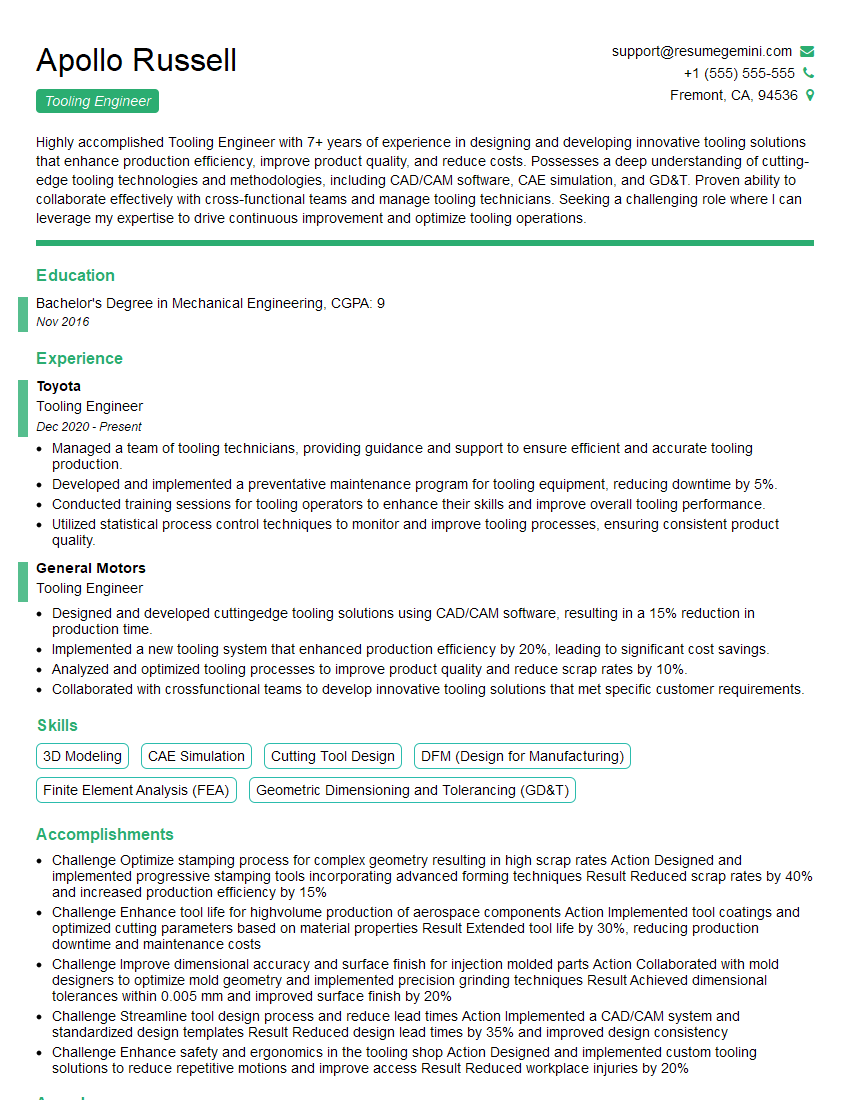
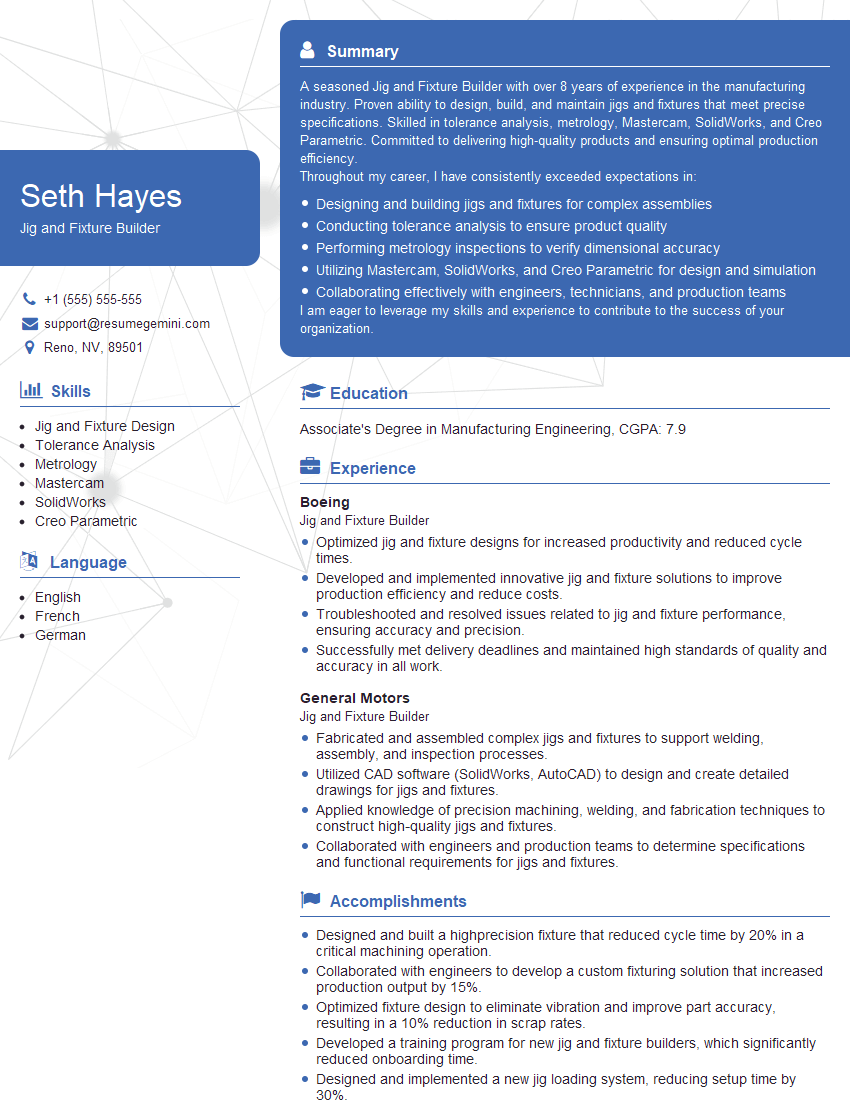
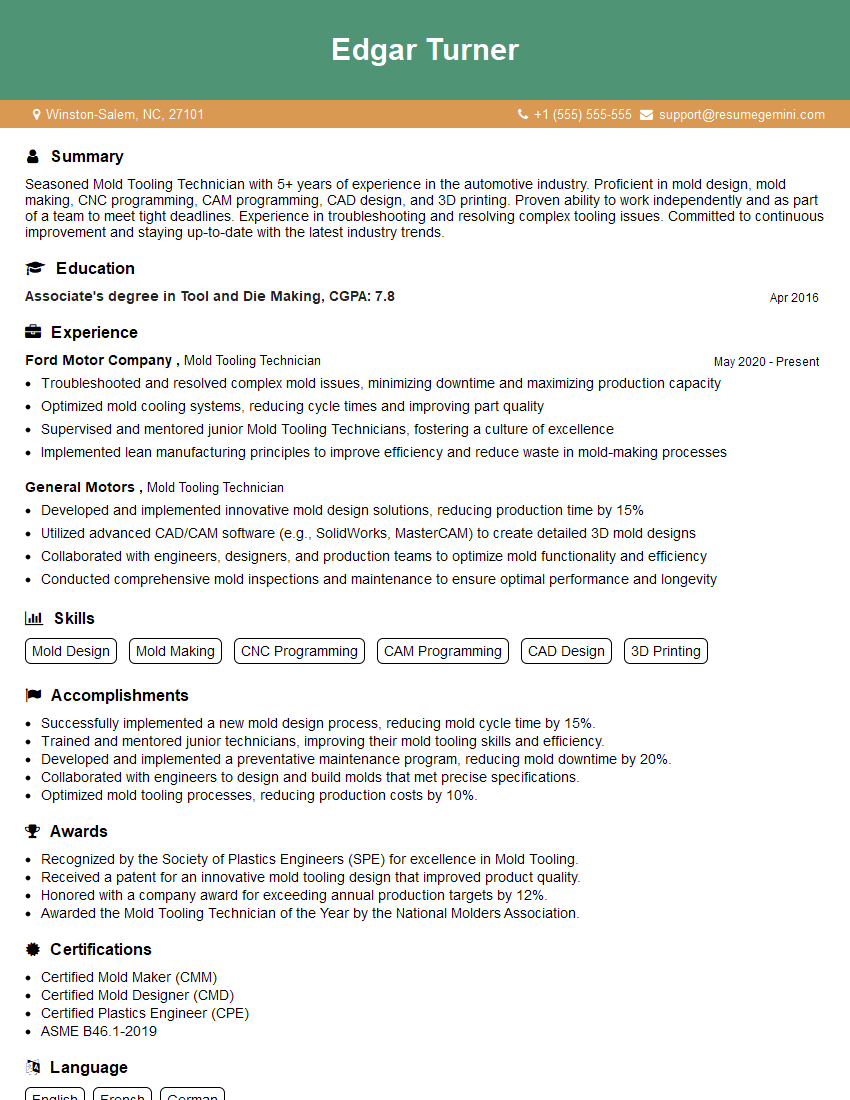
Mastering Tooling Preparation is paramount for career advancement in manufacturing and related fields. A strong understanding of these concepts showcases your technical expertise and problem-solving abilities, making you a highly valuable asset to any team. To significantly enhance your job prospects, focus on creating an ATS-friendly resume that effectively highlights your skills and experience. We highly recommend using ResumeGemini to build a professional and impactful resume. ResumeGemini provides tools and resources to create a compelling document, and examples of resumes tailored to Tooling Preparation are available to guide you.
Explore more articles
Users Rating of Our Blogs
Share Your Experience
We value your feedback! Please rate our content and share your thoughts (optional).
What Readers Say About Our Blog
Attention music lovers!
Wow, All the best Sax Summer music !!!
Spotify: https://open.spotify.com/artist/6ShcdIT7rPVVaFEpgZQbUk
Apple Music: https://music.apple.com/fr/artist/jimmy-sax-black/1530501936
YouTube: https://music.youtube.com/browse/VLOLAK5uy_noClmC7abM6YpZsnySxRqt3LoalPf88No
Other Platforms and Free Downloads : https://fanlink.tv/jimmysaxblack
on google : https://www.google.com/search?q=22+AND+22+AND+22
on ChatGPT : https://chat.openai.com?q=who20jlJimmy20Black20Sax20Producer
Get back into the groove with Jimmy sax Black
Best regards,
Jimmy sax Black
www.jimmysaxblack.com
Hi I am a troller at The aquatic interview center and I suddenly went so fast in Roblox and it was gone when I reset.
Hi,
Business owners spend hours every week worrying about their website—or avoiding it because it feels overwhelming.
We’d like to take that off your plate:
$69/month. Everything handled.
Our team will:
Design a custom website—or completely overhaul your current one
Take care of hosting as an option
Handle edits and improvements—up to 60 minutes of work included every month
No setup fees, no annual commitments. Just a site that makes a strong first impression.
Find out if it’s right for you:
https://websolutionsgenius.com/awardwinningwebsites
Hello,
we currently offer a complimentary backlink and URL indexing test for search engine optimization professionals.
You can get complimentary indexing credits to test how link discovery works in practice.
No credit card is required and there is no recurring fee.
You can find details here:
https://wikipedia-backlinks.com/indexing/
Regards
NICE RESPONSE TO Q & A
hi
The aim of this message is regarding an unclaimed deposit of a deceased nationale that bears the same name as you. You are not relate to him as there are millions of people answering the names across around the world. But i will use my position to influence the release of the deposit to you for our mutual benefit.
Respond for full details and how to claim the deposit. This is 100% risk free. Send hello to my email id: lukachachibaialuka@gmail.com
Luka Chachibaialuka
Hey interviewgemini.com, just wanted to follow up on my last email.
We just launched Call the Monster, an parenting app that lets you summon friendly ‘monsters’ kids actually listen to.
We’re also running a giveaway for everyone who downloads the app. Since it’s brand new, there aren’t many users yet, which means you’ve got a much better chance of winning some great prizes.
You can check it out here: https://bit.ly/callamonsterapp
Or follow us on Instagram: https://www.instagram.com/callamonsterapp
Thanks,
Ryan
CEO – Call the Monster App
Hey interviewgemini.com, I saw your website and love your approach.
I just want this to look like spam email, but want to share something important to you. We just launched Call the Monster, a parenting app that lets you summon friendly ‘monsters’ kids actually listen to.
Parents are loving it for calming chaos before bedtime. Thought you might want to try it: https://bit.ly/callamonsterapp or just follow our fun monster lore on Instagram: https://www.instagram.com/callamonsterapp
Thanks,
Ryan
CEO – Call A Monster APP
To the interviewgemini.com Owner.
Dear interviewgemini.com Webmaster!
Hi interviewgemini.com Webmaster!
Dear interviewgemini.com Webmaster!
excellent
Hello,
We found issues with your domain’s email setup that may be sending your messages to spam or blocking them completely. InboxShield Mini shows you how to fix it in minutes — no tech skills required.
Scan your domain now for details: https://inboxshield-mini.com/
— Adam @ InboxShield Mini
support@inboxshield-mini.com
Reply STOP to unsubscribe
Hi, are you owner of interviewgemini.com? What if I told you I could help you find extra time in your schedule, reconnect with leads you didn’t even realize you missed, and bring in more “I want to work with you” conversations, without increasing your ad spend or hiring a full-time employee?
All with a flexible, budget-friendly service that could easily pay for itself. Sounds good?
Would it be nice to jump on a quick 10-minute call so I can show you exactly how we make this work?
Best,
Hapei
Marketing Director
Hey, I know you’re the owner of interviewgemini.com. I’ll be quick.
Fundraising for your business is tough and time-consuming. We make it easier by guaranteeing two private investor meetings each month, for six months. No demos, no pitch events – just direct introductions to active investors matched to your startup.
If youR17;re raising, this could help you build real momentum. Want me to send more info?
Hi, I represent an SEO company that specialises in getting you AI citations and higher rankings on Google. I’d like to offer you a 100% free SEO audit for your website. Would you be interested?
Hi, I represent an SEO company that specialises in getting you AI citations and higher rankings on Google. I’d like to offer you a 100% free SEO audit for your website. Would you be interested?