Every successful interview starts with knowing what to expect. In this blog, we’ll take you through the top Tournament Operations and Execution interview questions, breaking them down with expert tips to help you deliver impactful answers. Step into your next interview fully prepared and ready to succeed.
Questions Asked in Tournament Operations and Execution Interview
Q 1. Describe your experience managing tournament registration and check-in processes.
Efficient tournament registration and check-in are crucial for a smooth event. My approach involves a multi-stage process. First, I design a user-friendly online registration system, often utilizing a platform with robust features like automated email confirmations and waitlist management. This system allows for pre-registration, collecting essential participant data such as name, contact information, and any relevant player details like team names or ratings. Next, on-site check-in is streamlined. We utilize a clear and organized system, often employing QR code scanning or pre-printed badges for quick verification. This eliminates long queues and potential confusion. For larger tournaments, I’ve implemented multiple check-in stations staffed by well-trained volunteers, further enhancing efficiency. Finally, data is meticulously tracked and verified for accuracy, ensuring all registered participants are accounted for. For example, during a recent regional chess tournament, we managed over 300 participants using this system with minimal delays. The online pre-registration significantly reduced on-site processing time, allowing us to focus on providing a superior participant experience.
Q 2. How would you handle a scheduling conflict during a tournament?
Scheduling conflicts are inevitable, but with proactive planning and quick thinking, they can be minimized. My first step is to identify the nature of the conflict—is it a clash between matches, a venue issue, or a referee availability problem? I then review the tournament schedule and identify potential solutions. This might involve rescheduling matches, reallocating courts or playing fields, or adjusting referee assignments. Prioritizing matches based on their importance in the overall tournament flow is crucial. For instance, a semi-final match takes precedence over a preliminary round match. I always keep open communication with all affected parties, including players, coaches, and officials, ensuring transparency and maintaining a fair and equitable approach. In a past volleyball tournament, we had a scheduling conflict due to a court being unexpectedly unavailable. We immediately communicated the issue, re-evaluated the schedule, and shifted matches to other available courts with minimal disruption to the overall tournament timeline. Open communication and a flexible approach are essential in handling scheduling conflicts effectively.
Q 3. Explain your process for managing volunteer staff during a large-scale event.
Managing volunteers is key to a successful large-scale event. It starts with clear communication and detailed job descriptions. Before the tournament, I conduct thorough training sessions, equipping volunteers with the necessary skills and knowledge. This includes explaining their roles, responsibilities, and procedures. We use a system of clear identification (e.g., branded t-shirts, name tags), and establish clear lines of communication, designating team leaders for each area. This ensures efficient coordination and immediate support when needed. Volunteer appreciation is also critical—we provide meals, breaks, and acknowledge their contribution publicly, fostering a positive and motivated team. For example, during a city marathon, we utilized a detailed volunteer management system with designated roles, training materials, and shift schedules, resulting in flawless coordination among 150 volunteers. A well-organized, well-trained, and appreciated volunteer team is the backbone of a successful large-scale event.
Q 4. What strategies do you use to ensure accurate scoring and results reporting?
Ensuring accurate scoring and results reporting requires a multi-layered approach. First, I utilize reliable scoring systems, either manual or digital, depending on the tournament’s size and complexity. For larger events, digital platforms with real-time updates are preferred. These systems offer features like automated calculations, error checking, and easy data export. Second, multiple individuals are involved in the scoring process as a check-and-balance mechanism. This ensures accuracy and helps prevent human error. A third layer involves rigorous verification and auditing of the results before final publication. Finally, clear and transparent reporting mechanisms are essential, ensuring that results are readily accessible to all participants and stakeholders. In a recent swimming competition, we used a digital timing system integrated with a results management platform, minimizing errors and making the results readily available online, reducing post-event queries. Transparency and accuracy build trust and create a fair competitive environment.
Q 5. How do you handle unexpected technical issues during a tournament?
Technical issues are a potential threat, but having a proactive approach minimizes their impact. We start with a thorough pre-event technical check of all equipment and systems, identifying and resolving any potential problems before the event. During the tournament, a dedicated technical support team is crucial. This team is equipped to troubleshoot issues quickly and efficiently, minimizing disruption to the event flow. We also have backup systems in place for critical functions. This might involve having a backup scoring system or internet connection. For example, during a recent e-sports tournament, we had a temporary internet outage. Our backup system seamlessly took over, preventing any major disruption. A well-defined contingency plan, including communication strategies to keep participants informed, is crucial in handling unexpected technical issues smoothly.
Q 6. Describe your experience with tournament budgeting and financial management.
Tournament budgeting and financial management require meticulous planning and execution. My process starts with a detailed budget that includes all expected costs—venue rental, equipment, staffing, marketing, prizes, and contingency funds. This budget is created in consultation with relevant stakeholders and is regularly reviewed and updated. Throughout the tournament, I meticulously track all income and expenses. This involves creating clear invoices, managing payments, and maintaining accurate financial records. Regular financial reports are generated and shared with stakeholders, offering transparency and accountability. Post-tournament, a thorough financial reconciliation is conducted, ensuring all accounts are balanced and all funds are accounted for. In a recent golf tournament, we managed to stay within budget and even exceeded our projected revenue by utilizing sponsorships and cost-effective solutions. Detailed financial planning and transparent reporting are essential for financial success.
Q 7. How do you prioritize tasks and manage time effectively during a high-pressure tournament?
Effective task prioritization and time management are critical during high-pressure tournaments. I employ a combination of techniques. First, I create a detailed schedule and task list, identifying critical tasks and deadlines. This list is then prioritized based on urgency and importance using methods like the Eisenhower Matrix (urgent/important). Secondly, I break down large tasks into smaller, manageable components, making progress more attainable. Regular check-ins and progress reports help me stay on track and identify potential roadblocks early. Delegation is also key; I empower my team to handle tasks within their areas of expertise, optimizing efficiency. Finally, I maintain flexibility and adapt to unforeseen circumstances. During a recent championship event, we had a sudden downpour requiring a rapid shift in the schedule. By prioritizing essential tasks and delegating responsibilities, we managed the disruption effectively and completed the event without major issues. Prioritization, delegation, and adaptability are invaluable skills in managing high-pressure situations.
Q 8. Explain your experience with creating and managing tournament schedules.
Creating and managing tournament schedules is a crucial aspect of successful tournament operations. It involves a meticulous planning process, ensuring optimal player experience and efficient resource allocation. My approach involves several key steps:
- Needs Assessment: I begin by defining the tournament’s scope – number of participants, game format, duration, and available resources (venues, officials, etc.).
- Scheduling Software: I leverage specialized tournament management software (I’ll detail my experience with specific software later) to create and manage the schedule. This software allows for flexible scheduling, accommodating potential conflicts and unexpected changes.
- Round Robin vs. Elimination: The choice of scheduling format (round-robin, single or double elimination, Swiss-system) depends heavily on the number of participants and available time. For instance, a large-scale tournament might employ a Swiss-system to ensure a fair number of matches for each player, while a smaller tournament might use a single-elimination bracket.
- Venue Allocation & Time Slots: I assign time slots to matches, considering factors like venue capacity, travel time between matches (if multiple venues are involved), and player availability. This often involves optimization algorithms within the software to minimize conflicts and idle time.
- Contingency Planning: A robust schedule includes built-in buffer time to accommodate unforeseen delays (e.g., technical issues, injuries). I create backup plans for various scenarios.
- Communication: The final schedule is clearly communicated to all participants and staff well in advance, often via email and the tournament website or app.
For example, in a recent esports tournament with 128 participants, I utilized a Swiss-system implemented in a scheduling software that allowed for dynamic adjustments based on player performance and real-time updates. This ensured a highly competitive and engaging experience for all.
Q 9. How do you ensure the safety and security of participants and staff during a tournament?
Ensuring participant and staff safety and security is paramount. My approach is multifaceted and proactive:
- Risk Assessment: Before the tournament, a comprehensive risk assessment identifies potential hazards (e.g., crowd control, medical emergencies, security breaches). This informs the safety plan.
- Venue Security: Selecting a secure venue with adequate security personnel is critical. This includes access control, surveillance systems, and emergency exits.
- Emergency Procedures: Detailed emergency procedures (e.g., medical emergencies, fire evacuations, security incidents) are developed and communicated to all staff and participants. Regular drills enhance preparedness.
- Medical Staff: Having qualified medical personnel on-site is essential. This might involve paramedics, first aid responders, or a dedicated medical team, depending on the tournament’s size and risk profile.
- Code of Conduct: A clearly defined code of conduct addressing acceptable behavior and consequences for violations is implemented and enforced. This fosters a respectful and safe environment.
- Security Personnel: Trained security personnel are deployed to monitor crowds, manage access, and respond to incidents. Their presence acts as a deterrent and provides immediate response capability.
- Communication Systems: Effective communication systems (e.g., radios, emergency alerts) ensure rapid response to any emergency situation.
For instance, in a large-scale outdoor tournament, we implemented a comprehensive security plan including perimeter fencing, multiple security checkpoints, dedicated medical tents, and a clear communication protocol among security, medical, and tournament staff. This ensured a safe and secure environment for everyone.
Q 10. Describe your experience using tournament management software.
I have extensive experience using various tournament management software, including Tournament Scheduler, Challonge, and Bracket Manager. My proficiency extends beyond basic scheduling; I’m adept at utilizing advanced features such as:
- Automated Seeding and Pairing: These features optimize player matchups based on ranking or ratings, ensuring fair competition.
- Live Scoring and Updates: Real-time updates on match results keep participants and spectators informed, enhancing engagement.
- Reporting and Analytics: The software provides valuable data on player performance, attendance, and other metrics for post-tournament analysis and future improvements.
- Integration with Other Systems: Some software integrates with registration platforms, payment gateways, and communication tools, streamlining tournament management.
For example, in a recent event, Challonge’s robust reporting features helped analyze player win rates, identify areas for improvement in the tournament structure, and inform future event planning. My expertise in using these tools ensures efficiency and accuracy throughout the tournament lifecycle.
Q 11. How do you manage communication with participants, staff, and sponsors?
Effective communication is the cornerstone of successful tournament operations. I utilize a multi-channel approach:
- Pre-Tournament Communication: Regular email updates keep participants informed about important deadlines, venue details, rules, and other relevant information.
- Tournament Website/App: A dedicated website or app acts as a central hub for all communication, providing easy access to the schedule, rules, and important announcements.
- On-Site Communication: Clear signage, announcements, and designated staff members provide real-time information and assistance during the tournament.
- Social Media: Social media platforms are used to reach a wider audience, providing updates, highlights, and fostering community engagement.
- Sponsor Communication: Regular communication with sponsors keeps them informed about tournament progress, media coverage, and opportunities for engagement.
- Feedback Mechanisms: Surveys, feedback forms, and dedicated communication channels allow participants and staff to provide feedback, ensuring continuous improvement.
In a recent marathon tournament, we used a dedicated mobile app to communicate schedule changes, relay important messages, and collect real-time feedback from participants. This minimized confusion and improved the overall participant experience.
Q 12. How would you handle a complaint or dispute during a tournament?
Handling complaints and disputes requires a fair, consistent, and transparent approach:
- Establish a Clear Complaint Process: A well-defined process should be communicated upfront, outlining how to submit complaints and the steps involved in their resolution.
- Gather Information: Thoroughly investigate the complaint, gathering information from all involved parties. This includes reviewing relevant evidence, such as video recordings or witness statements.
- Apply Tournament Rules: Refer to the established tournament rules and regulations to guide the decision-making process. Consistency in applying the rules is crucial.
- Mediation and Negotiation: Attempt to resolve the dispute through mediation and negotiation, aiming for a mutually agreeable solution.
- Escalation Procedure: If mediation fails, a clear escalation procedure should be followed, possibly involving higher-level tournament officials or an independent arbitrator.
- Document Everything: Meticulously document all aspects of the complaint process, including the complaint itself, investigation findings, and the resolution reached.
For example, in a case of a disputed call during a match, we reviewed video footage, consulted with referees, and applied the relevant rulebook to reach a fair and impartial decision. The entire process was documented transparently to maintain fairness and trust.
Q 13. What metrics do you use to measure the success of a tournament?
Measuring tournament success involves looking beyond just the winner. Key metrics include:
- Participant Satisfaction: Surveys and feedback mechanisms gauge participant enjoyment, experience, and overall satisfaction.
- Attendance and Participation Rates: High attendance demonstrates strong interest and event success.
- Sponsor Satisfaction: Gauging sponsor satisfaction helps ensure future sponsorship opportunities.
- Financial Performance: Tracking revenue, expenses, and profit margins assesses the financial viability of the tournament.
- Social Media Engagement: Tracking likes, shares, and comments on social media provides insights into public perception and reach.
- Media Coverage: Monitoring media coverage (news articles, social media mentions) measures public awareness and brand impact.
By analyzing these metrics, we can identify areas of strength and weakness, inform future planning, and measure the overall impact of the tournament.
Q 14. How do you ensure compliance with relevant rules and regulations?
Ensuring compliance with relevant rules and regulations is crucial for legal and ethical reasons. My approach involves:
- Identify Applicable Regulations: Thoroughly research and identify all relevant rules and regulations, including those related to venue licensing, safety standards, age restrictions, and any governing bodies for the specific sport or activity.
- Develop Compliant Policies: Develop tournament policies and procedures that adhere strictly to all identified regulations. This includes rules regarding registration, eligibility, player conduct, and dispute resolution.
- Documentation and Records: Maintain accurate and complete records related to registration, participant information, waivers, financial transactions, and any other aspects relevant to regulatory compliance.
- Regular Reviews and Updates: Regularly review and update policies and procedures to ensure continued compliance with evolving regulations.
- Seek Legal Counsel: Seek legal counsel when necessary to ensure that all aspects of the tournament adhere to legal requirements and best practices.
For example, before organizing a youth sports tournament, I ensured compliance with child protection laws, obtaining necessary background checks for volunteers and coaches and ensuring a safe and appropriate environment for all minors.
Q 15. Describe your experience with post-tournament reporting and analysis.
Post-tournament reporting and analysis is crucial for evaluating the success of an event and informing future planning. It involves compiling comprehensive data, analyzing key performance indicators (KPIs), and generating actionable insights. This goes beyond simple participation numbers; it dives deep into understanding player satisfaction, sponsor engagement, operational efficiency, and financial performance.
For example, after a recent national chess tournament, I analyzed player feedback surveys, attendance figures, sponsorship revenue, and operational costs. This revealed that while attendance exceeded expectations, player satisfaction with the food service was low. This insight allowed us to improve the catering contract for our next event.
My analysis typically includes:
- Quantitative Data Analysis: Analyzing numerical data like registration numbers, attendance, revenue, and expenses using spreadsheets and data visualization tools.
- Qualitative Data Analysis: Reviewing feedback from surveys, interviews, and social media comments to understand participant experiences and identify areas for improvement.
- KPI Tracking and Reporting: Monitoring key performance indicators, such as player satisfaction, sponsor ROI, and operational efficiency, to measure the success of the tournament.
- Generating Actionable Insights: Transforming the collected data into clear and concise recommendations for future tournaments, focusing on improvements in logistics, marketing, and participant experience.
Career Expert Tips:
- Ace those interviews! Prepare effectively by reviewing the Top 50 Most Common Interview Questions on ResumeGemini.
- Navigate your job search with confidence! Explore a wide range of Career Tips on ResumeGemini. Learn about common challenges and recommendations to overcome them.
- Craft the perfect resume! Master the Art of Resume Writing with ResumeGemini’s guide. Showcase your unique qualifications and achievements effectively.
- Don’t miss out on holiday savings! Build your dream resume with ResumeGemini’s ATS optimized templates.
Q 16. How do you develop and maintain relationships with tournament sponsors?
Developing and maintaining strong relationships with tournament sponsors is essential for securing funding and ensuring the event’s success. It’s a continuous process that involves proactive communication, clear value propositions, and consistent follow-up. I approach sponsor relations as a partnership, not a transaction.
My strategy includes:
- Identifying the Right Sponsors: Researching potential sponsors whose brand aligns with the tournament and its values.
- Crafting Compelling Sponsorship Packages: Offering diverse sponsorship levels with clear benefits, such as branding opportunities, promotional materials, and exclusive access to events. I tailor these packages to meet the specific needs and objectives of each sponsor.
- Proactive Communication: Maintaining regular communication with sponsors before, during, and after the tournament, providing updates, reports, and demonstrating the value of their investment. I often schedule regular check-in calls.
- Delivering on Promises: Ensuring all aspects of the sponsorship agreement are meticulously fulfilled, exceeding expectations whenever possible. This builds trust and fosters long-term partnerships.
- Post-Tournament Reporting: Providing detailed reports that demonstrate the return on investment (ROI) for sponsors, highlighting the reach and impact of their sponsorship.
For instance, I secured a major sponsorship for a cycling tournament by showcasing the extensive media coverage and social media engagement anticipated, directly linking it to the sponsor’s marketing goals.
Q 17. How do you manage risk and contingency planning for potential problems?
Risk management and contingency planning are paramount in tournament operations. It’s about anticipating potential problems and developing proactive strategies to mitigate their impact. I use a systematic approach, combining thorough planning with flexible adaptation.
My approach includes:
- Risk Identification: Identifying potential problems, ranging from inclement weather to equipment malfunctions, using brainstorming sessions, checklists, and past event reviews.
- Risk Assessment: Evaluating the likelihood and potential impact of each identified risk.
- Contingency Planning: Developing detailed plans to address each identified risk. This often includes backup plans and alternative solutions.
- Communication Protocols: Establishing clear communication channels and procedures for responding to unexpected events. This keeps all team members informed.
- Regular Reviews: Conducting regular reviews of the risk management plan throughout the tournament’s lifespan, adapting as needed.
For example, at a recent triathlon, I anticipated potential delays due to weather. My contingency plan involved adjusting the race schedule, utilizing alternative routes, and proactively communicating changes to participants. This prevented significant disruption to the event.
Q 18. What is your experience with coordinating transportation and logistics for a tournament?
Coordinating transportation and logistics is a critical aspect of tournament operations, impacting everything from participant arrival to equipment transport. Effective management ensures a smooth and efficient experience for all involved.
My experience encompasses:
- Venue Selection: Selecting venues with sufficient parking, access to public transportation, and proximity to accommodations.
- Transportation Planning: Arranging transportation for participants, officials, and equipment, whether that’s shuttles, public transit, or coordinating ride-sharing services. I consider all travel modes to optimise cost-effectiveness and efficiency.
- Equipment Transport: Planning and executing the safe and timely transport of all necessary equipment, including scoring systems, first aid equipment, and any specialized materials. I carefully plan for fragile or high-value items.
- Accommodation Arrangements: If needed, securing and managing accommodations for participants and staff, keeping in mind budget constraints and player comfort.
- Traffic Management: Coordinating with local authorities to manage traffic flow around the venue, ensuring safety and minimizing disruption.
In one instance, I successfully coordinated the transportation of over 500 participants and their equipment to a remote mountain biking competition, utilizing a combination of chartered buses and logistical support vehicles. Careful planning ensured everyone arrived on time and safely.
Q 19. How do you ensure accessibility for participants with disabilities?
Ensuring accessibility for participants with disabilities is crucial for creating an inclusive and welcoming environment. It’s not just about compliance; it’s about ensuring everyone has an equal opportunity to participate.
My approach involves:
- Accessibility Audit: Conducting a thorough assessment of the venue and facilities to identify any accessibility barriers. This involves careful examination of wheelchair access, visual aids, auditory systems, and appropriate signage.
- Accessible Registration and Communication: Providing accessible registration forms and communication materials, including alternative formats for those with visual or auditory impairments.
- Accessible Facilities: Ensuring that restrooms, changing rooms, and other facilities are accessible to individuals with disabilities. This involves confirming compliance with relevant regulations.
- Support Services: Providing appropriate support services, such as sign language interpreters or personal assistants, as needed. I work closely with disability organisations to assess specific participant needs.
- Clear Communication: Communicating accessibility information clearly to participants both before and during the event.
For instance, at a running race, I ensured accessible routes, provided wheelchair-accessible restrooms, and had volunteers trained to assist participants with disabilities.
Q 20. How do you handle media relations and publicity during a tournament?
Media relations and publicity are essential for raising the profile of a tournament and attracting participants and sponsors. I employ a multi-faceted approach that uses different channels to reach the widest possible audience.
My strategy includes:
- Media Kit Preparation: Developing a comprehensive media kit with press releases, high-resolution images, and background information about the tournament.
- Media Outreach: Reaching out to relevant media outlets to announce the tournament and secure coverage. This includes press releases, targeted email pitches, and relationships with relevant journalists.
- Social Media Engagement: Utilizing social media platforms to engage with fans, participants, and sponsors, creating engaging content and building excitement for the event.
- Website and Online Presence: Maintaining a user-friendly website that provides information about the tournament, results, and related media.
- On-Site Media Management: Managing media access and providing support for journalists during the tournament. This involves arranging press conferences and providing interview opportunities.
In a recent marathon, I secured extensive local and national media coverage, resulting in a significant increase in participation and sponsor interest.
Q 21. What experience do you have with managing large datasets related to tournament data?
Managing large datasets related to tournament data requires proficiency in data management techniques and analytical tools. I have extensive experience using various tools and methodologies to organize, analyze, and visualize large volumes of tournament data.
My experience includes:
- Data Collection: Implementing robust data collection methods to capture all relevant tournament information, from registration details to results and player statistics. This can involve online forms, dedicated software, or manual data entry.
- Data Cleaning and Validation: Ensuring data accuracy and completeness by cleaning and validating collected data, identifying and correcting errors or inconsistencies. This step is vital for accurate analysis.
- Data Analysis: Using various tools, such as spreadsheets, statistical software packages (e.g., R, SPSS), and database management systems (e.g., SQL), to analyze data and extract meaningful insights. This enables identification of trends and patterns.
- Data Visualization: Creating clear and effective visualizations of data using charts, graphs, and dashboards to communicate key findings and facilitate decision-making. This makes insights accessible and understandable.
- Data Security and Privacy: Ensuring the security and privacy of collected data by complying with relevant regulations and implementing appropriate security measures. This includes appropriate data encryption and access control.
I’ve successfully managed datasets of over 100,000 entries, extracting valuable insights to optimize tournament operations and enhance the participant experience.
Q 22. How familiar are you with different tournament formats and rules?
My familiarity with tournament formats and rules is extensive. I’ve worked with a wide range of formats, from single-elimination brackets (common in many sports and esports), round-robin tournaments (where each participant plays every other participant), double-elimination brackets (offering a second chance after a loss), and Swiss-system tournaments (which pair players based on their current record). Beyond the basic structures, I’m also experienced with variations like best-of-three or best-of-five matches, tie-breaker rules, and specific rule sets for various games or sports. For example, understanding the nuances of scoring in a game like badminton versus chess is crucial for fair and effective tournament management. I ensure that I am completely versed in the specific rules of each tournament before commencement, and any ambiguities are clarified well in advance.
- Single-Elimination: Simple, fast-paced, but unforgiving; a single loss eliminates a player.
- Round-Robin: Every participant plays each other; fair but can be time-consuming.
- Double-Elimination: Provides a second chance; more forgiving but longer.
- Swiss-System: Pairs competitors based on record; balances fairness and efficiency.
Q 23. Describe a time you had to make a quick, critical decision during a tournament.
During a large-scale esports tournament, a critical server issue arose just minutes before the grand final. The primary streaming platform went down, threatening to derail the entire event and potentially impacting the thousands of viewers watching online. My immediate reaction was to activate our backup streaming solution, which we had thankfully tested extensively beforehand. Simultaneously, I communicated calmly and clearly with the technical team to diagnose the problem and with the players to assure them that the issue was being addressed. The backup worked flawlessly, minimizing disruption, and the grand final proceeded without significant delay. This experience highlighted the importance of contingency planning and proactive communication in high-pressure situations.
Q 24. How do you ensure the smooth flow of the tournament from start to finish?
Ensuring a smooth tournament flow requires meticulous planning and execution. My approach involves several key steps:
- Pre-Tournament Planning: This includes defining clear rules and regulations, creating detailed schedules, securing venues and equipment, managing registrations, and coordinating with judges, referees, or other personnel.
- On-Site Management: This involves overseeing registration, player check-in, match scheduling and execution, handling any disputes or technical issues promptly, and managing the flow of spectators or audience members.
- Communication: Maintaining clear and consistent communication among participants, volunteers, staff, and spectators is essential. This often involves multiple channels, like email, messaging apps, and on-site announcements.
- Contingency Planning: Preparing for potential issues (technical malfunctions, unexpected delays, etc.) is crucial for maintaining smooth operations. This involves having backup plans and solutions ready to implement.
- Post-Tournament Evaluation: After the tournament, it’s critical to review what worked well, identify areas for improvement, and document lessons learned for future events.
Think of it like conducting an orchestra: each musician (participant, volunteer, staff) must play their part, and the conductor (tournament director) ensures harmony and a smooth performance.
Q 25. What is your experience with using various technologies to improve tournament operations?
Technology plays a vital role in modern tournament operations. My experience encompasses using various software and platforms for:
- Registration and Scheduling: I’ve used platforms that streamline participant registration, manage waitlists, and automatically generate schedules based on the tournament format.
- Live Scoring and Results: Utilizing live scoring software that displays real-time results on screens and online, providing instant updates to participants and spectators.
- Communication and Collaboration: I’ve used various communication tools like Slack and project management software to effectively communicate with the team and keep everyone informed.
- Streaming and Broadcasting: I’m proficient in using streaming platforms to broadcast live events to a wide audience.
- Data Analysis: I use data analytics tools to track key metrics like participation rates, viewer engagement, and other performance indicators.
For example, in one tournament, we used a custom-built database to manage player rankings and pairings, which significantly improved efficiency compared to manual methods. I also use match management platforms that provide live monitoring of match progression and status.
Q 26. How do you identify and address potential bottlenecks in the tournament workflow?
Identifying bottlenecks requires a proactive approach, starting with thorough pre-tournament planning. Analyzing the workflow visually, using a flowchart or Gantt chart, can reveal potential choke points. During the event, close observation is key. I look for areas with significant delays, long queues, or frustrated participants. Common bottlenecks include:
- Registration: Insufficient staff or inefficient processes can cause long wait times.
- Match Scheduling: Poor scheduling can lead to conflicts or unnecessary down time.
- Technical Issues: Equipment malfunctions or slow internet connections can significantly disrupt play.
- Judge/Referee Availability: A shortage of officials can lead to delays.
To address these, I use a combination of strategies: improved scheduling algorithms, enhanced communication protocols, proactive technical maintenance, and contingency planning. For example, if a registration bottleneck occurs, I might deploy additional staff or streamline the registration process.
Q 27. What experience do you have with international tournament operations?
I have significant experience in international tournament operations, including managing events across multiple time zones and coordinating with participants and staff from diverse cultural backgrounds. This includes navigating language barriers, understanding differing cultural norms related to competition and etiquette, and accommodating varying technological infrastructure. I’ve worked on adapting tournament rules and procedures to comply with international regulations and local laws. For instance, I once organized a global online tournament that required careful consideration of data privacy regulations across different countries, coordinating with legal counsel and tech teams to ensure compliance. My international experience also covers logistical complexities like visa processing and international shipping of equipment.
Q 28. Describe your process for evaluating and improving tournament operations after the event concludes.
Post-tournament evaluation is crucial for continuous improvement. My process involves:
- Data Collection: Gathering data from various sources, including participant feedback surveys, staff reports, and performance metrics from the various technology platforms used.
- Analysis: Identifying trends and patterns in the collected data, pinpointing areas of success and areas needing improvement.
- Feedback Review: Thoroughly reviewing feedback from all stakeholders (participants, staff, volunteers, and sponsors) to gain a holistic understanding of the experience.
- Action Planning: Developing a clear action plan to address identified issues and implement improvements for future events.
- Documentation: Thoroughly documenting all findings and action plans for future reference.
This iterative process of evaluation and improvement is essential for continuously enhancing the quality and efficiency of tournament operations.
Key Topics to Learn for Tournament Operations and Execution Interview
- Tournament Scheduling & Logistics: Understanding the complexities of scheduling matches, allocating resources (officials, venues, equipment), and managing time constraints. Practical application: Develop a realistic schedule for a hypothetical tournament, considering factors like travel time, player availability, and broadcast windows.
- Registration & Player Management: Mastering player registration processes, managing participant data, and handling potential conflicts or disputes. Practical application: Design a streamlined registration system that addresses potential issues like duplicate entries or late registrations.
- Rule Enforcement & Dispute Resolution: Deep understanding of tournament rules, regulations, and procedures for handling disputes fairly and efficiently. Practical application: Develop a clear protocol for resolving on-field disputes or player protests in a consistent and unbiased manner.
- Resource Allocation & Budget Management: Effective planning and allocation of resources (budget, personnel, equipment) to ensure efficient tournament execution. Practical application: Create a sample budget outlining potential costs and revenue streams for a specific tournament type.
- Technology Integration & Data Management: Utilizing technology (scoring systems, live-streaming platforms, data analysis tools) to enhance tournament operations. Practical application: Research and compare different scoring software options, outlining pros and cons for various tournament sizes and needs.
- Risk Management & Contingency Planning: Identifying potential risks (weather, equipment failure, participant issues) and developing contingency plans to mitigate disruptions. Practical application: Create a risk assessment matrix for a hypothetical tournament, identifying potential issues and corresponding mitigation strategies.
- Post-Tournament Analysis & Reporting: Analyzing tournament data to identify areas for improvement and generating reports for stakeholders. Practical application: Develop a framework for post-tournament reporting, including key metrics to track and analyze.
Next Steps
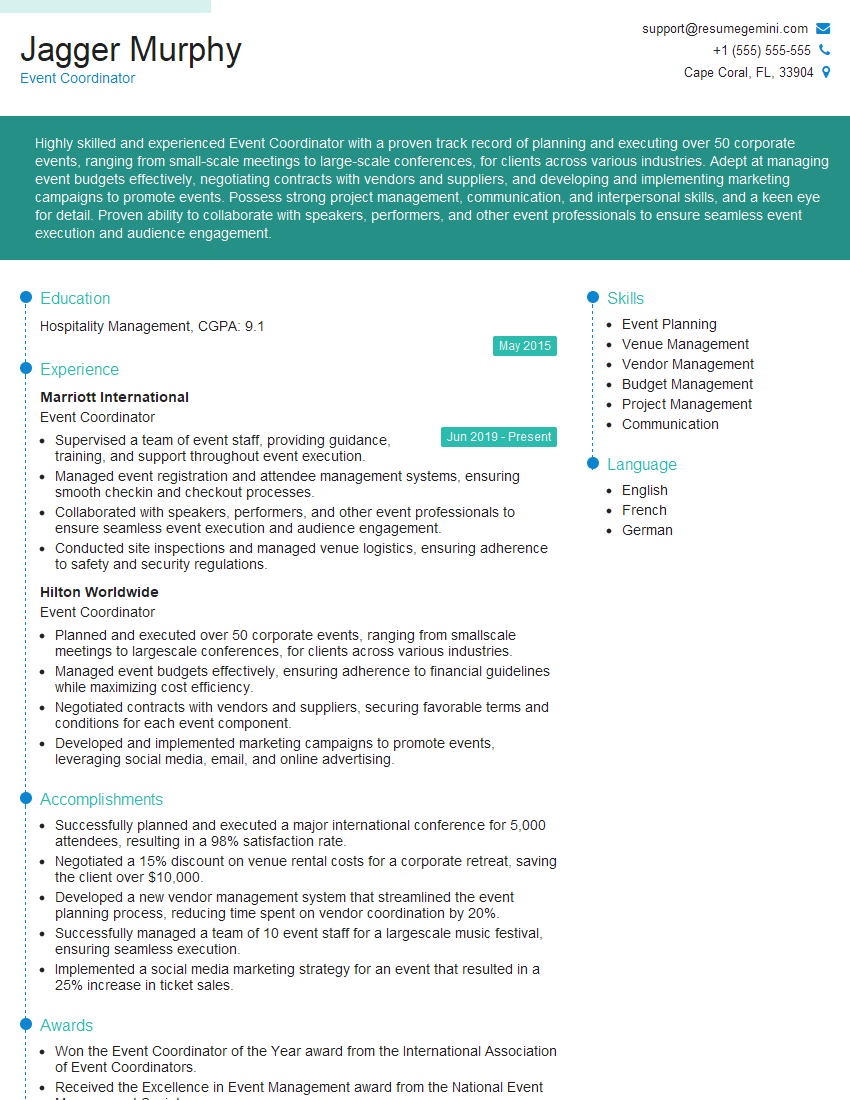
Mastering Tournament Operations and Execution opens doors to exciting career opportunities in sports management, event planning, and related fields. Demonstrating expertise in these areas is crucial for career advancement. To significantly boost your job prospects, creating an ATS-friendly resume is vital. ResumeGemini is a trusted resource that can help you build a professional and impactful resume tailored to highlight your skills and experience. Examples of resumes tailored to Tournament Operations and Execution are available to help guide you. Invest in your future; invest in a winning resume.

Explore more articles
Users Rating of Our Blogs
Share Your Experience
We value your feedback! Please rate our content and share your thoughts (optional).
What Readers Say About Our Blog
Very informative content, great job.
good