Interviews are more than just a Q&A session—they’re a chance to prove your worth. This blog dives into essential Training Methodology interview questions and expert tips to help you align your answers with what hiring managers are looking for. Start preparing to shine!
Questions Asked in Training Methodology Interview
Q 1. Define ADDIE model and explain its limitations.
The ADDIE model is a widely used instructional design framework that stands for Analysis, Design, Development, Implementation, and Evaluation. It provides a structured approach to creating training programs.
- Analysis: This phase involves identifying training needs, target audience, learning objectives, and constraints.
- Design: Here, you develop the learning objectives, choose instructional strategies, create content outlines, and select assessment methods.
- Development: This stage focuses on creating the actual training materials, such as presentations, handouts, online modules, or videos.
- Implementation: This is where you deliver the training to the learners, ensuring the learning environment is conducive to effective learning.
- Evaluation: This final phase assesses the effectiveness of the training program against its objectives, using various methods to measure learner outcomes.
However, the ADDIE model has limitations. It’s often criticized for being a linear, rigid model that doesn’t easily accommodate changes or iterations. Real-world projects rarely follow a perfectly sequential process; unforeseen issues and feedback often necessitate adjustments. Furthermore, the model can be overly time-consuming and resource-intensive, particularly for smaller projects where a more agile approach might be more suitable. For example, in a rapidly evolving technological environment, sticking strictly to the ADDIE model might mean the final product is outdated by the time it’s launched.
Q 2. What are the key principles of adult learning?
Key principles of adult learning, often referred to as andragogy, contrast with pedagogy (child-centered learning). Adults are self-directed, experience-rich, and problem-centered learners. These principles include:
- Self-concept: Adults need to feel respected and valued as autonomous learners; they want to be involved in the design and delivery of their training.
- Prior experience: Adult learners bring a wealth of life and work experience to the learning process; this should be leveraged and built upon.
- Readiness to learn: Adults are most likely to learn when they perceive a need for the knowledge or skills being taught – relevancy is key.
- Orientation to learning: Adults want to learn things relevant to their immediate lives and work; the focus should be on practical application.
- Motivation to learn: Adults are internally motivated; intrinsic rewards, such as increased job satisfaction, are more effective than external rewards (grades, certificates).
For example, instead of lecturing to a group of adult software developers, a more effective approach would be to engage them in hands-on activities, case studies, or collaborative projects, allowing them to apply new concepts to their existing expertise.
Q 3. Explain the difference between Kirkpatrick’s four levels of evaluation.
Kirkpatrick’s four levels of evaluation provide a framework for measuring the effectiveness of training programs. They move from basic reactions to long-term impact.
- Level 1: Reaction: This level assesses learners’ satisfaction and opinions about the training. Did they enjoy the program? Did they find it useful? Methods include surveys and feedback forms.
- Level 2: Learning: This measures the actual knowledge and skills gained by learners. Did they acquire the information? Tests, quizzes, and performance observations are used.
- Level 3: Behavior: This assesses whether learners apply the new knowledge and skills on the job. Did their performance improve after the training? This often requires observation, performance reviews, and 360-degree feedback.
- Level 4: Results: This is the ultimate measure of training effectiveness; it assesses the overall impact of the training on organizational goals. Did the training contribute to improved productivity, reduced errors, or increased sales? This often involves analyzing key performance indicators (KPIs).
For instance, a training program on customer service might measure reaction (learner satisfaction), learning (knowledge of customer service techniques), behavior (improved customer interactions observed through call recordings), and results (increased customer satisfaction scores).
Q 4. How would you conduct a training needs analysis?
Conducting a thorough training needs analysis is crucial for creating effective training programs. This process typically involves three levels:
- Organizational analysis: This examines the overall organizational goals, strategies, and resources. What are the organization’s strategic objectives? Are there performance gaps? What resources (budget, time, technology) are available?
- Task analysis: This identifies specific tasks and skills required for job roles. What are the key tasks performed by employees? What knowledge, skills, and abilities (KSAs) are needed to perform those tasks effectively?
- Individual analysis: This assesses the current skills and knowledge of individual employees. Where are the skill gaps? Who needs training? What is the best way to deliver training to meet individual learning styles and needs?
Methods for gathering data include surveys, interviews, focus groups, observation, performance appraisals, and document reviews. A combination of these methods ensures a comprehensive understanding of training needs. For example, an organizational analysis might reveal a need to improve sales performance. Task analysis identifies deficiencies in sales presentation skills. Individual analysis pinpoints which salespeople require additional training.
Q 5. Describe your experience designing blended learning programs.
I have extensive experience designing blended learning programs, combining online and offline learning experiences to optimize learning outcomes. For example, I designed a blended program for a financial institution to train their compliance officers on new regulations. The program incorporated:
- Online modules: Self-paced e-learning modules covering regulatory background, key concepts, and compliance procedures.
- Instructor-led workshops: Hands-on workshops with instructors provided opportunities for interactive discussions, case study analysis, and peer-to-peer learning.
- Virtual classrooms: Live online sessions allowed for interactive discussions, Q&A, and collaboration among participants across different locations.
- On-the-job coaching: Mentorship from experienced compliance officers reinforced learned concepts in real-world scenarios.
- Assessments: A mix of online quizzes, practical exercises, and a final exam assessed knowledge and skill acquisition at various points throughout the program.
This approach addressed the needs of diverse learners, offering flexibility while fostering interaction and community. The blend of online and offline elements catered to varying learning styles and preferences, leading to improved knowledge retention and practical application of compliance procedures.
Q 6. What are some common challenges in delivering online training?
Delivering effective online training presents several challenges:
- Learner engagement: Maintaining learner engagement in a virtual setting can be challenging; online courses must be interactive and engaging to prevent learner dropout.
- Technical issues: Technical problems with software, internet connectivity, or hardware can disrupt the learning experience.
- Accessibility: Ensuring the training is accessible to learners with disabilities is crucial; content must be designed to meet accessibility standards.
- Learner support: Providing adequate support and guidance to learners throughout the course is essential; learners need easy access to technical help and course-related assistance.
- Assessment and evaluation: Designing effective assessments that prevent cheating and accurately measure learning outcomes in online settings requires careful consideration.
Strategies to address these challenges include using interactive multimedia, incorporating gamification elements, offering multiple methods of support, providing regular feedback, and using various assessment strategies to prevent cheating, such as timed quizzes and proctored exams.
Q 7. How do you measure the effectiveness of a training program?
Measuring the effectiveness of a training program requires a multi-faceted approach, aligning with Kirkpatrick’s four levels. We need to assess:
- Learner satisfaction (reaction): Surveys and feedback forms collect data on learner satisfaction with the training content, delivery methods, and overall experience.
- Knowledge and skill acquisition (learning): Pre- and post-training assessments, quizzes, and tests measure the change in learners’ knowledge and skills.
- On-the-job performance (behavior): Observation of learners’ performance in their roles, performance reviews, and 360-degree feedback provide evidence of behavioral changes.
- Impact on organizational goals (results): Analyzing key performance indicators (KPIs) such as productivity, efficiency, error rates, customer satisfaction, or sales figures demonstrates the overall impact of the training.
By combining qualitative and quantitative data from different sources, we gain a comprehensive understanding of the training’s effectiveness and identify areas for improvement. For example, high learner satisfaction but poor performance improvement would suggest a gap between learning and application, requiring changes in the training design or implementation.
Q 8. Explain your experience with various instructional design models (e.g., SAM, AGILE).
My experience encompasses a range of instructional design models, adapting my approach based on project needs and learner characteristics. I’m proficient in the Successive Approximation Model (SAM), a cyclical iterative model perfect for projects requiring flexibility and refinement. SAM’s emphasis on prototyping and user feedback ensures the final product effectively meets learning objectives. I’ve used SAM extensively in developing online training modules, iteratively improving the design based on participant feedback from pilot tests. For larger, more complex projects, I leverage Agile methodologies. The iterative nature of Agile, with its short sprints and continuous feedback loops, allows for quicker adaptation to changing requirements and ensures the training remains relevant throughout the development lifecycle. For example, in a recent project developing a new software training program, we employed Agile principles, breaking the project into manageable sprints. This enabled us to incorporate user feedback early and often, ultimately resulting in a more user-friendly and effective training program.
Q 9. How do you adapt your training methodology to different learning styles?
Addressing diverse learning styles is paramount. I employ a multifaceted approach, incorporating various teaching methods to cater to visual, auditory, and kinesthetic learners. For visual learners, I utilize diagrams, charts, and videos. Auditory learners benefit from discussions, lectures, and audio recordings. Kinesthetic learners engage best through hands-on activities, simulations, and role-playing exercises. For instance, when training staff on a new customer relationship management (CRM) system, I would provide a visual walkthrough of the system interface, incorporate audio explanations of key features, and then have them complete hands-on exercises to practice using the system. This blended learning approach ensures that all learning styles are accommodated, leading to better knowledge retention and application.
Q 10. Describe a time you had to overcome a challenge in delivering training.
During a training session on complex financial regulations, I encountered significant resistance from participants who felt the material was too theoretical and lacked practical application. To overcome this, I immediately adapted the session. I replaced lengthy lectures with interactive case studies, allowing them to apply the regulations to real-world scenarios. We also incorporated group discussions and problem-solving activities. This shift resulted in a more engaging learning experience, boosting participation and comprehension. The key was recognizing the need for a change, quickly adapting my approach, and actively involving the participants in the learning process. The post-training feedback highlighted this change as being highly effective, with improved understanding and satisfaction scores.
Q 11. What software or tools are you proficient in for creating training materials?
I am proficient in a variety of software and tools for creating training materials. My expertise includes Articulate Storyline for developing interactive e-learning modules, Adobe Captivate for creating engaging simulations, and Camtasia for recording and editing screencasts. I also utilize Adobe Photoshop and Illustrator for creating visually appealing graphics and infographics. For managing learning content and tracking progress, I’m experienced with Learning Management Systems (LMS) such as Moodle and Blackboard. Finally, I’m adept at using Microsoft Office Suite (Word, PowerPoint, Excel) for creating supporting documents and reports. This comprehensive skill set enables me to create varied and effective training materials tailored to different learning preferences and delivery methods.
Q 12. Explain your experience with creating assessments for training programs.
Assessment is integral to effective training. I design assessments aligned with learning objectives, employing various methods to gauge understanding. These include multiple-choice questions for testing knowledge recall, short-answer questions for assessing comprehension, and practical exercises or simulations to evaluate application of skills. For example, after a training session on customer service techniques, I might utilize a role-playing exercise to evaluate participants’ ability to handle difficult customer interactions. I also utilize pre- and post-tests to measure learning gains and identify areas requiring additional support. Moreover, I employ formative assessment techniques throughout the training process, such as quick quizzes and feedback sessions, to provide learners with immediate feedback and adjust the training as needed. The focus is on making assessments authentic and relevant to the job role, providing valuable insights into learner progress.
Q 13. How do you ensure training content remains engaging and relevant?
Maintaining engagement and relevance requires a proactive approach. I incorporate real-world examples, case studies, and relatable scenarios into training content, making it immediately relevant to participants’ daily tasks. Utilizing interactive elements such as games, simulations, and group activities enhances engagement and encourages active participation. Regularly updating content based on feedback and technological advancements is crucial. For instance, if I’m training on software, I ensure the training reflects the latest software version and includes current best practices. Lastly, incorporating storytelling and humor can create a more memorable and enjoyable learning experience, aiding knowledge retention.
Q 14. What is your experience with managing a training budget?
I have significant experience in managing training budgets, from initial planning and resource allocation to cost tracking and reporting. My approach begins with a thorough needs analysis to determine the scope and resources required for each training program. This includes evaluating the costs of training materials, instructor fees, venue rental (if applicable), and technology requirements. I develop detailed budgets, track expenses meticulously, and regularly report on budget performance. I actively seek cost-effective solutions, exploring options like utilizing free or open-source software, leveraging internal resources, and negotiating favorable contracts with vendors. Efficient budget management ensures that training programs deliver maximum impact while remaining fiscally responsible.
Q 15. How do you handle feedback from trainees on a training program?
Trainee feedback is crucial for improving training programs. I approach it systematically, using a multi-pronged strategy. Immediately following a training session, I employ quick feedback methods like brief surveys or informal discussions to capture immediate reactions and identify any pressing issues. These provide immediate insights into what resonated well and areas needing refinement.
Later, I utilize more in-depth methods, such as formal post-training evaluations, incorporating both quantitative measures (e.g., rating scales for different aspects of the training) and qualitative data (e.g., open-ended questions about strengths, weaknesses, and suggestions for improvement). I analyze this data to identify trends and patterns, separating constructive criticism from isolated negative feedback.
For instance, if multiple trainees mention difficulty understanding a specific concept, it signals a need for improved explanation or additional examples in the training materials. I then use this feedback to revise the training materials, adjust the delivery methods, or add supplementary resources, documenting all changes made and their rationale.
Finally, I follow up with trainees after a reasonable time has passed to assess knowledge retention and application of learned skills in their work. This long-term feedback loop allows me to gauge the program’s long-term effectiveness and identify areas for ongoing improvement. This continuous feedback cycle ensures the training remains relevant, effective, and valuable.
Career Expert Tips:
- Ace those interviews! Prepare effectively by reviewing the Top 50 Most Common Interview Questions on ResumeGemini.
- Navigate your job search with confidence! Explore a wide range of Career Tips on ResumeGemini. Learn about common challenges and recommendations to overcome them.
- Craft the perfect resume! Master the Art of Resume Writing with ResumeGemini’s guide. Showcase your unique qualifications and achievements effectively.
- Don’t miss out on holiday savings! Build your dream resume with ResumeGemini’s ATS optimized templates.
Q 16. How do you incorporate technology into your training programs?
Technology plays a vital role in modern training programs, enhancing engagement and accessibility. I integrate technology in various ways, starting with the Learning Management System (LMS). An LMS serves as a central hub for delivering content, tracking progress, and facilitating communication. This could be anything from Moodle to more sophisticated enterprise-level solutions. I use this to host online courses, quizzes, and assessments.
Beyond the LMS, I incorporate interactive elements such as simulations, gamification, and virtual reality (VR) where appropriate. For example, a training program for customer service representatives might use a VR simulation to recreate realistic customer interaction scenarios. This allows trainees to practice handling challenging situations in a safe and controlled environment.
I also leverage microlearning platforms for bite-sized learning modules accessible anytime, anywhere. These are particularly effective for reinforcing learning or delivering just-in-time training. Video tutorials, interactive exercises, and knowledge checks are embedded into these modules. Furthermore, I utilize collaborative tools like online forums and collaborative document editing to promote interaction among trainees and encourage peer learning. Finally, data analytics from the LMS help me track training effectiveness and identify areas for optimization.
Q 17. What is your experience with different training delivery methods (e.g., instructor-led, online, blended)?
My experience spans a broad range of training delivery methods. I’ve extensively used instructor-led training (ILT) which offers the benefits of direct interaction, immediate feedback, and fostering a collaborative learning environment. However, ILT can be expensive and geographically limited.
Online training offers scalability and accessibility, allowing geographically dispersed learners to participate. I have experience designing and delivering fully online courses using various platforms. I always focus on incorporating interactive elements to prevent learner fatigue and ensure engagement. This might involve incorporating videos, quizzes, interactive exercises, and discussions forums.
I’m particularly adept at designing blended learning approaches, which combine the best features of ILT and online training. For example, a program might start with an introductory online module followed by a hands-on workshop, and then conclude with online assessments and ongoing support. This approach caters to different learning styles and maximizes the effectiveness of the training.
The choice of delivery method is always driven by the specific learning objectives, target audience, budget, and available resources. For example, highly technical training involving hands-on practice might be best suited for ILT or a blended approach.
Q 18. Describe your process for selecting appropriate training methods.
Selecting the right training method is crucial for maximizing effectiveness. My process begins with a thorough needs analysis. This involves identifying the learning objectives, target audience characteristics (including their existing knowledge, learning styles, and technological proficiency), available resources, and the desired outcomes.
Next, I evaluate different training methods based on their alignment with the needs analysis. For example, if the goal is to teach a complex technical skill, a hands-on, instructor-led workshop might be most suitable. If the objective is to deliver information broadly to a large audience, online training might be more efficient. If engagement is a primary concern, then a game-based approach could be ideal.
I consider the cost-effectiveness of each option, including development time, facilitator fees, technology costs, and learner time. I then create a comparative analysis of the different options, considering factors like cost, time, scalability, and engagement. The chosen method needs to be easily measurable regarding its impact on the learners’ performance and achievement of the learning objectives.
Finally, I pilot test the chosen method with a smaller group before full rollout to identify and address any issues and make improvements based on feedback. This iterative approach helps ensure that the selected method is effective and aligns perfectly with the training goals.
Q 19. What is your experience with developing microlearning content?
Microlearning is a powerful tool for delivering focused, concise learning experiences. My experience includes designing and developing microlearning modules focusing on specific skills or knowledge points. These modules are typically short (5-15 minutes) and easily digestible, ideal for busy professionals or just-in-time learning needs.
I utilize various formats, including short videos, interactive simulations, quizzes, and infographics. The key is to make them engaging and relevant to the learner’s work. For instance, a microlearning module for a sales team might focus on a specific sales technique, with a short video demonstrating the technique followed by an interactive quiz testing the learner’s understanding.
I always ensure that the content is concise, focused, and visually appealing. This involves using clear language, strong visuals, and interactive elements to maintain learner engagement. I also test the modules with a small group before deploying them to get feedback on clarity, engagement and effectiveness.
The success of microlearning lies in its accessibility and relevance. Learners should be able to easily access the modules whenever and wherever needed, focusing on a specific skill or piece of information without having to spend hours on a longer course.
Q 20. How do you ensure the accessibility of your training materials?
Accessibility is paramount in ensuring that training materials reach all learners, regardless of their abilities. My approach starts with designing materials according to WCAG (Web Content Accessibility Guidelines) standards. This involves considering aspects like color contrast, font size and type, alternative text for images, and keyboard navigation.
For example, I use sufficient color contrast between text and background to improve readability for individuals with visual impairments. I provide alternative text descriptions for images so that screen readers can convey the image’s meaning to visually impaired learners. I ensure that all interactive elements are accessible using keyboard navigation. I also incorporate captions and transcripts for all video content to make it accessible to those with hearing impairments.
Beyond technical aspects, I also consider the learning styles and needs of diverse learners. I ensure that materials are available in multiple formats (e.g., text, audio, video) to accommodate different preferences. I also use clear and simple language, avoiding jargon and technical terms wherever possible. I incorporate various multimedia formats to cater to different learning preferences. Regular feedback from learners helps identify and address accessibility issues.
Q 21. How do you stay updated on the latest trends in training methodology?
Staying current in training methodology requires a proactive and multi-faceted approach. I regularly attend industry conferences and webinars to learn about the latest trends and best practices. These events often feature presentations from leading experts, offering valuable insights into innovative techniques and technologies.
I actively participate in professional organizations related to training and development, engaging with other professionals through networking and knowledge sharing. This provides a platform for exchanging ideas, learning from the experiences of others, and staying informed about new developments in the field.
I subscribe to relevant journals, newsletters, and online publications that focus on training and development. This helps me keep abreast of research findings, emerging trends, and innovative approaches. I also actively follow influential thought leaders and experts in the field via social media and online communities, gaining valuable insights and participating in discussions.
Finally, I continuously evaluate and adapt my training approaches based on feedback, research, and technological advancements. This ensures that my training methods remain effective and relevant in a constantly evolving landscape.
Q 22. Explain your experience with using learning analytics to improve training outcomes.
Learning analytics plays a crucial role in optimizing training effectiveness. It involves collecting and analyzing data about learners’ interactions with training materials to identify areas for improvement. This data-driven approach moves us beyond subjective assessments and allows for precise adjustments.
In my previous role, we used a Learning Management System (LMS) that tracked learner progress, including time spent on modules, quiz scores, and completion rates. We analyzed this data to identify specific modules where learners struggled. For example, we discovered a high drop-off rate in the advanced statistics module. By examining individual learner data, we found that the issue wasn’t the material itself, but rather the lack of sufficient prerequisite knowledge in basic statistics. We responded by creating a pre-assessment to identify learners needing additional foundational support and developed supplementary resources to address this gap, resulting in a significant improvement in completion rates and overall performance.
Another example involved using heatmaps generated from interactive simulations to see where learners were focusing their attention. This highlighted areas of the simulation that were either confusing or less engaging, allowing us to revise the design for better clarity and learner interaction.
Q 23. Describe a time you had to modify a training program based on learner feedback.
Adaptability is key in training design. Learner feedback is invaluable for refining a program and ensuring it meets its objectives. I recall a situation where we launched a new leadership development program. Initial feedback indicated that while the content was valuable, the program’s pace was too fast. Learners felt overwhelmed by the amount of information presented in each session and expressed difficulty integrating the concepts.
Based on this feedback, we made several modifications. First, we broke down each module into smaller, more digestible units. We also incorporated more interactive activities, such as group discussions and case studies, to enhance engagement and reinforce learning. Finally, we added a self-assessment tool to allow learners to track their progress and identify areas requiring further attention. Post-modification evaluations revealed a substantial improvement in learner satisfaction and knowledge retention.
Q 24. How do you prioritize training initiatives based on organizational needs?
Prioritizing training initiatives requires a strategic approach aligning training needs with business objectives. I typically use a needs analysis framework combining quantitative and qualitative data. This involves:
- Identifying business goals: What are the organization’s strategic priorities? What skills and knowledge gaps hinder the achievement of these goals?
- Conducting a skills gap analysis: This assesses the current skills of the workforce and compares them to the skills required to achieve business objectives. Methods include surveys, interviews, performance reviews, and competency assessments.
- Prioritizing based on impact and feasibility: We rank training initiatives based on their potential impact on business goals and their feasibility in terms of resources, time, and budget. A matrix visualizing impact versus feasibility can help with this prioritization.
- Stakeholder alignment: Gaining buy-in from key stakeholders, including managers and employees, is crucial to ensure the success of the chosen training initiatives.
For instance, if a company’s goal is to improve customer satisfaction, training initiatives focusing on customer service skills would be prioritized over, say, a less critical area like office software updates.
Q 25. What are some common mistakes to avoid when designing training programs?
Designing effective training programs requires avoiding common pitfalls that can hinder learning and engagement. Some key mistakes to avoid include:
- Lack of clear objectives: Without clearly defined learning outcomes, it’s difficult to measure the effectiveness of the training.
- Poorly designed content: Content should be engaging, relevant, and aligned with learners’ needs and learning styles. Avoid overwhelming learners with too much information at once.
- Ignoring learner feedback: Regularly solicit and incorporate learner feedback throughout the design and delivery process.
- Lack of practice and application: Learners need opportunities to practice and apply what they’ve learned to reinforce knowledge and build skills.
- Inadequate evaluation: A robust evaluation plan is essential to assess the effectiveness of the training program and make data-driven improvements.
- Ignoring accessibility considerations: Training materials should be accessible to all learners, regardless of their abilities or disabilities.
Q 26. How do you ensure alignment between training objectives and business goals?
Alignment between training objectives and business goals is fundamental for effective training. This requires a clear understanding of the organization’s strategic direction and how training can contribute to its success. I use a process involving:
- Identifying business needs: This involves working closely with business leaders to understand their strategic priorities and the skills and knowledge gaps that need to be addressed.
- Defining learning objectives: Based on the identified business needs, learning objectives are defined that specify what learners should be able to do after completing the training.
- Developing a training curriculum: The curriculum should directly address the learning objectives and incorporate relevant content, activities, and assessments.
- Measuring training impact: This involves tracking key performance indicators (KPIs) related to the business goals to assess the effectiveness of the training program.
For example, if the business goal is to increase sales, training objectives might focus on improving sales techniques, product knowledge, and customer relationship management skills. The training program would then be designed to address these objectives, and the success of the training would be measured by an increase in sales figures.
Q 27. Describe your experience with creating a training evaluation plan.
A comprehensive training evaluation plan is crucial for measuring the effectiveness of a training program and making data-driven improvements. My approach involves a Kirkpatrick four-level model:
- Reaction: Measures learner satisfaction and engagement with the training program (e.g., surveys, feedback forms).
- Learning: Assesses the knowledge and skills gained by learners (e.g., tests, quizzes, observations).
- Behavior: Evaluates the extent to which learners apply what they have learned on the job (e.g., performance appraisals, observation, 360-degree feedback).
- Results: Measures the impact of the training on organizational outcomes (e.g., improved productivity, increased sales, reduced errors).
In developing the plan, I clearly define the metrics to be used at each level, identify the appropriate data collection methods, and establish a timeline for data collection and analysis. The results are then used to inform improvements in the training program and demonstrate its return on investment (ROI).
Key Topics to Learn for Training Methodology Interview
- Needs Assessment: Understanding the learning gaps and organizational context to design effective training programs. Practical application: Analyzing learner data to identify skill deficiencies and tailoring training objectives accordingly.
- Instructional Design Models: Familiarity with ADDIE, SAM, or other models, understanding their stages and applications. Practical application: Applying a chosen model to develop a training program from concept to evaluation.
- Learning Theories: Applying theories like cognitivism, constructivism, and behaviorism to design engaging and effective learning experiences. Practical application: Selecting appropriate instructional strategies based on the chosen learning theory and target audience.
- Training Delivery Methods: Expertise in various delivery methods (e.g., instructor-led, e-learning, blended learning). Practical application: Evaluating the strengths and weaknesses of different methods for specific training needs.
- Training Evaluation: Designing and implementing methods to measure the effectiveness of training programs (Kirkpatrick’s model). Practical application: Developing evaluation metrics to assess learner knowledge, skills, and behavior change.
- Technology Integration in Training: Utilizing technology (LMS, authoring tools, simulations) to enhance training delivery and effectiveness. Practical application: Selecting and implementing appropriate technology to support learning objectives.
- Accessibility and Inclusivity in Training: Designing training that caters to diverse learners and ensures accessibility for individuals with disabilities. Practical application: Adapting training materials and methods to accommodate different learning styles and needs.
Next Steps
Mastering Training Methodology is crucial for career advancement in learning and development. A strong understanding of these concepts will significantly enhance your interview performance and open doors to exciting opportunities. To maximize your job prospects, crafting an ATS-friendly resume is essential. ResumeGemini is a trusted resource that can help you build a professional and impactful resume tailored to your experience. Examples of resumes specifically designed for Training Methodology professionals are available, showcasing the best practices for highlighting your skills and experience effectively. Invest in your career future – build a compelling resume that showcases your expertise.

Knowledge Manager Resume Sample
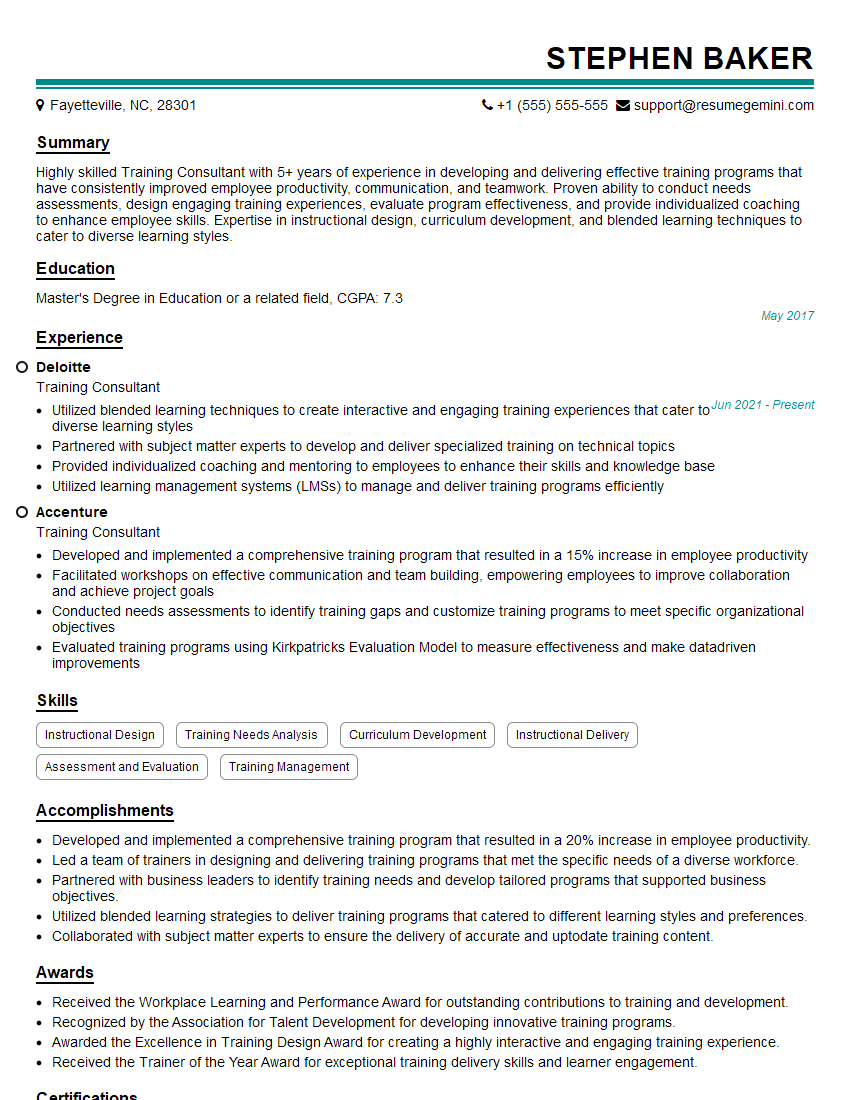
Training Consultant Resume Sample
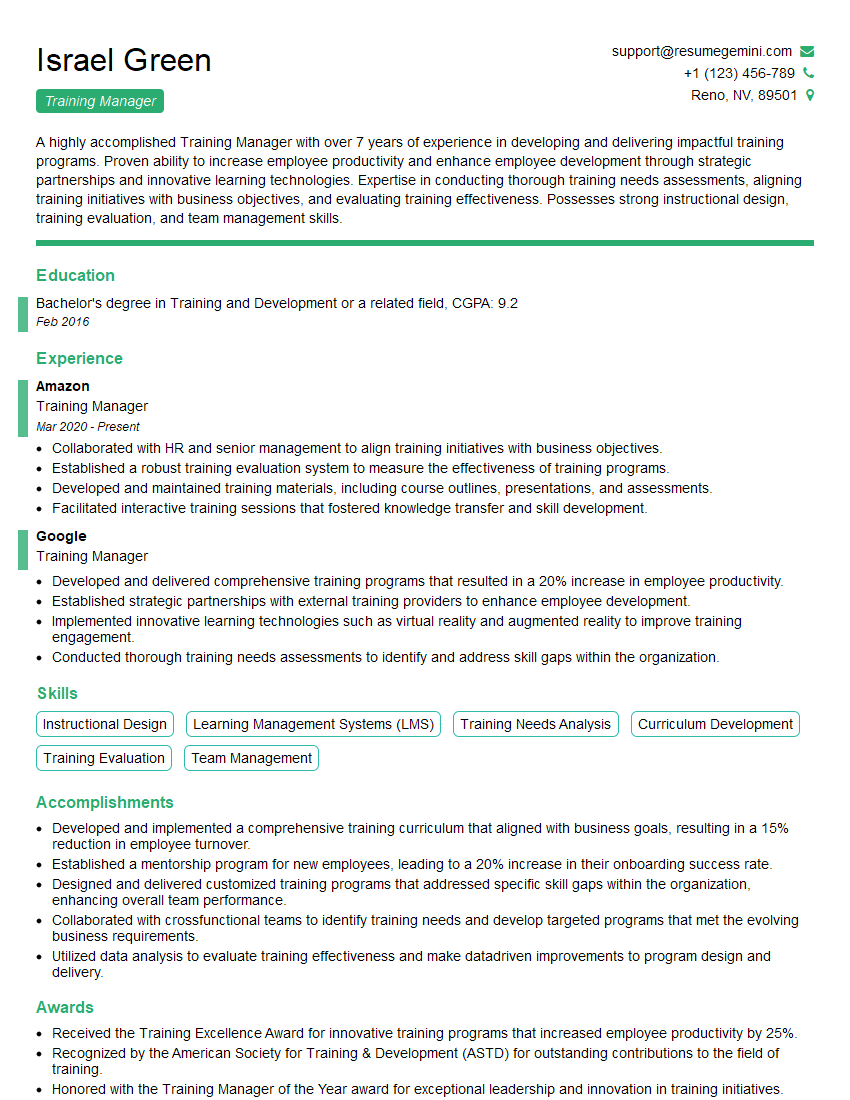
Training Manager Resume Sample
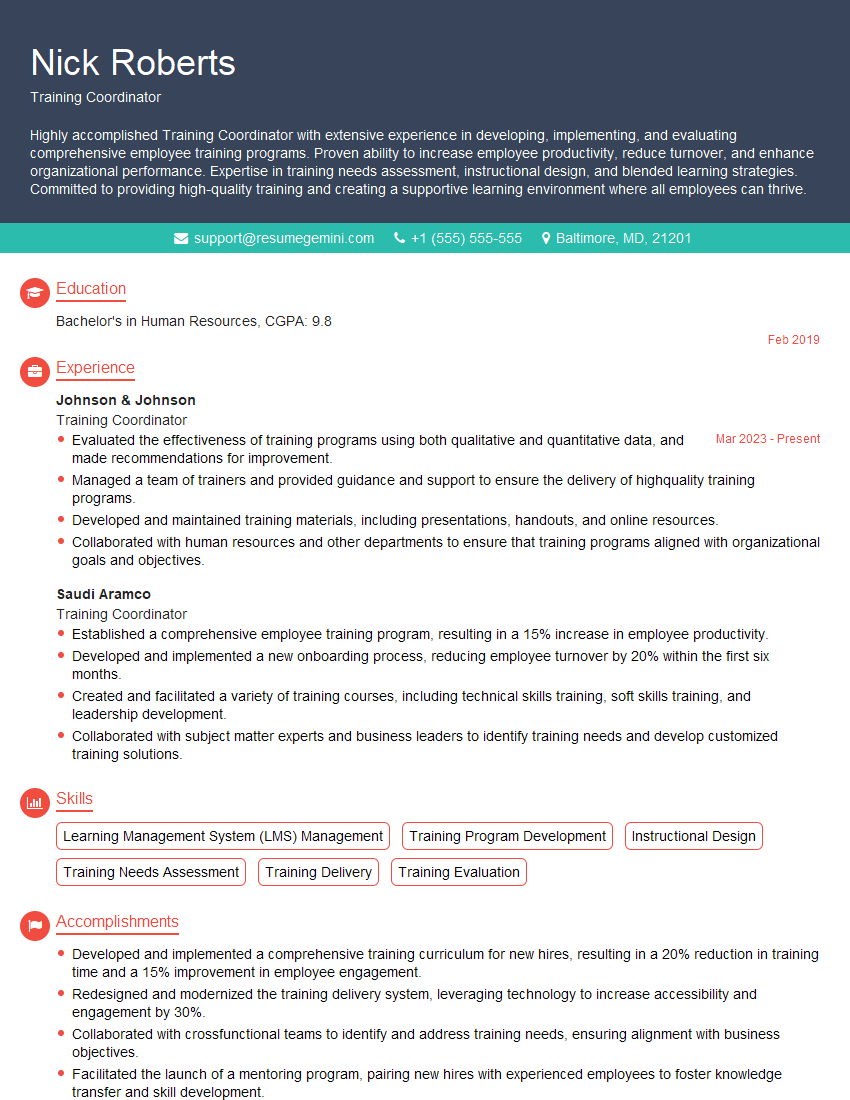
Training Coordinator Resume Sample
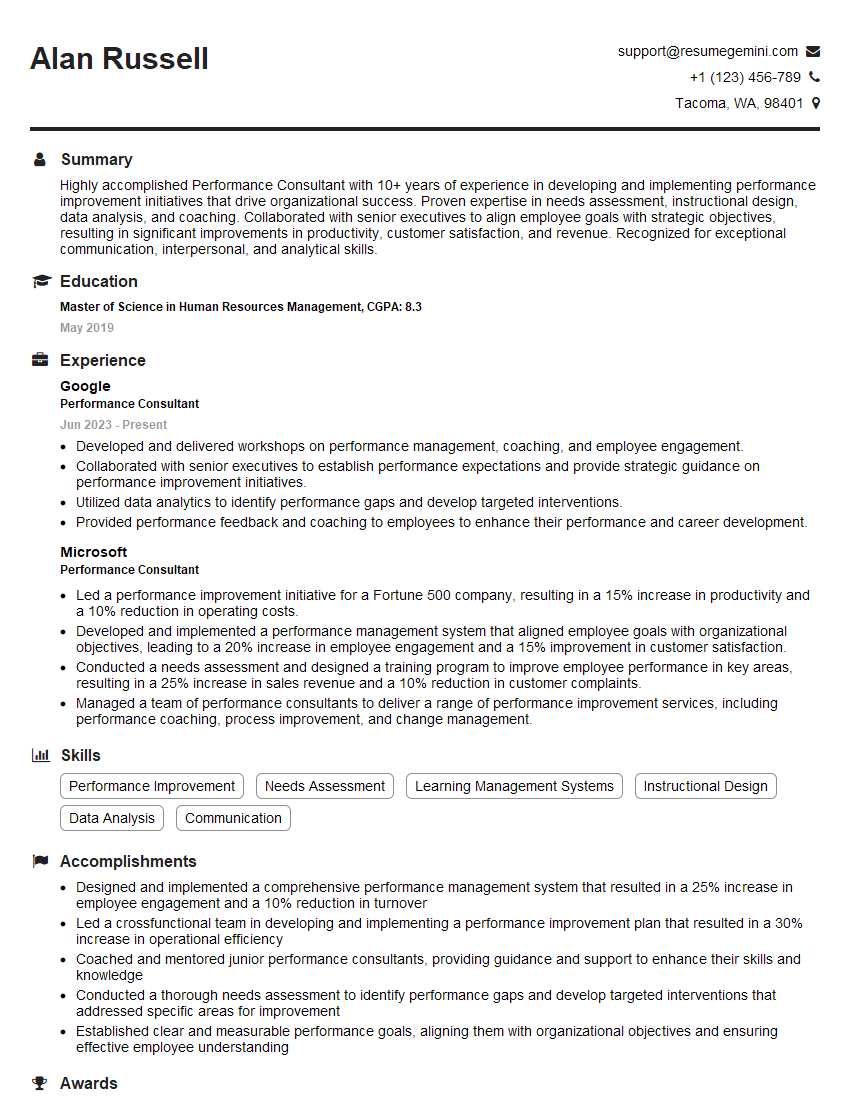
Performance Consultant Resume Sample
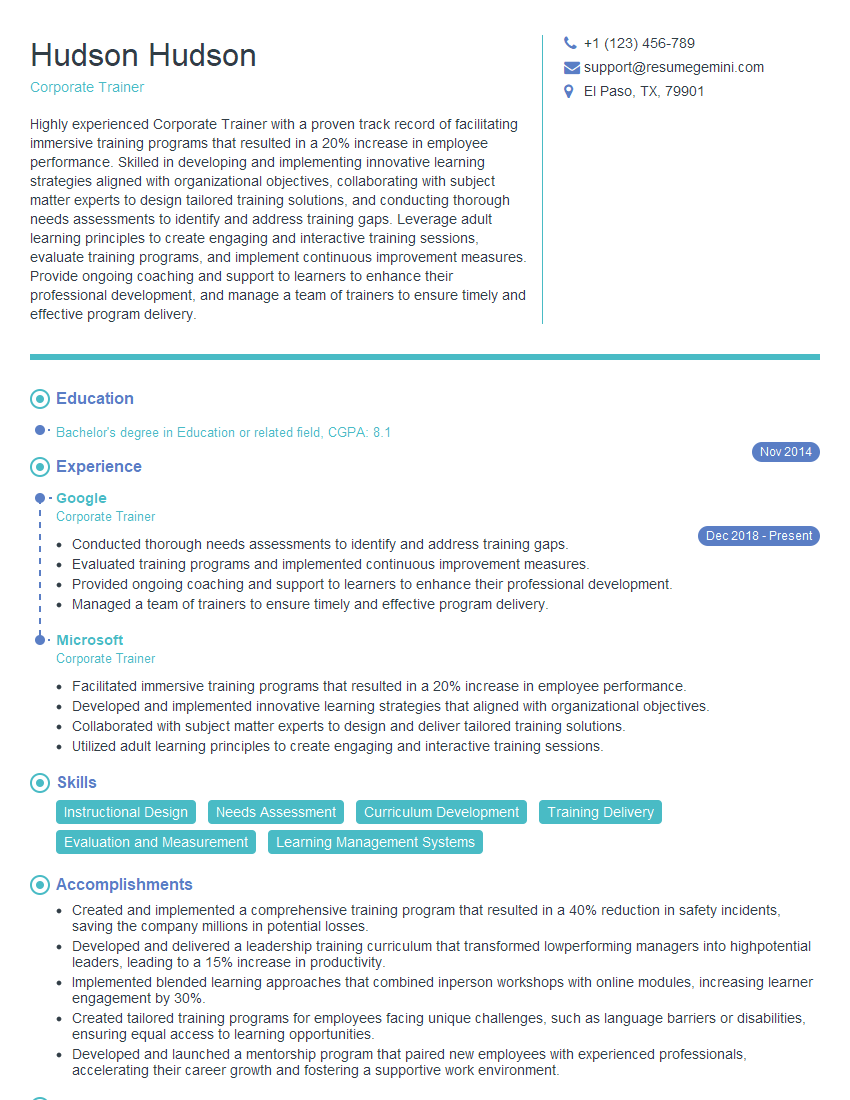
Corporate Trainer Resume Sample

Curriculum Developer Resume Sample

Training Specialist Resume Sample
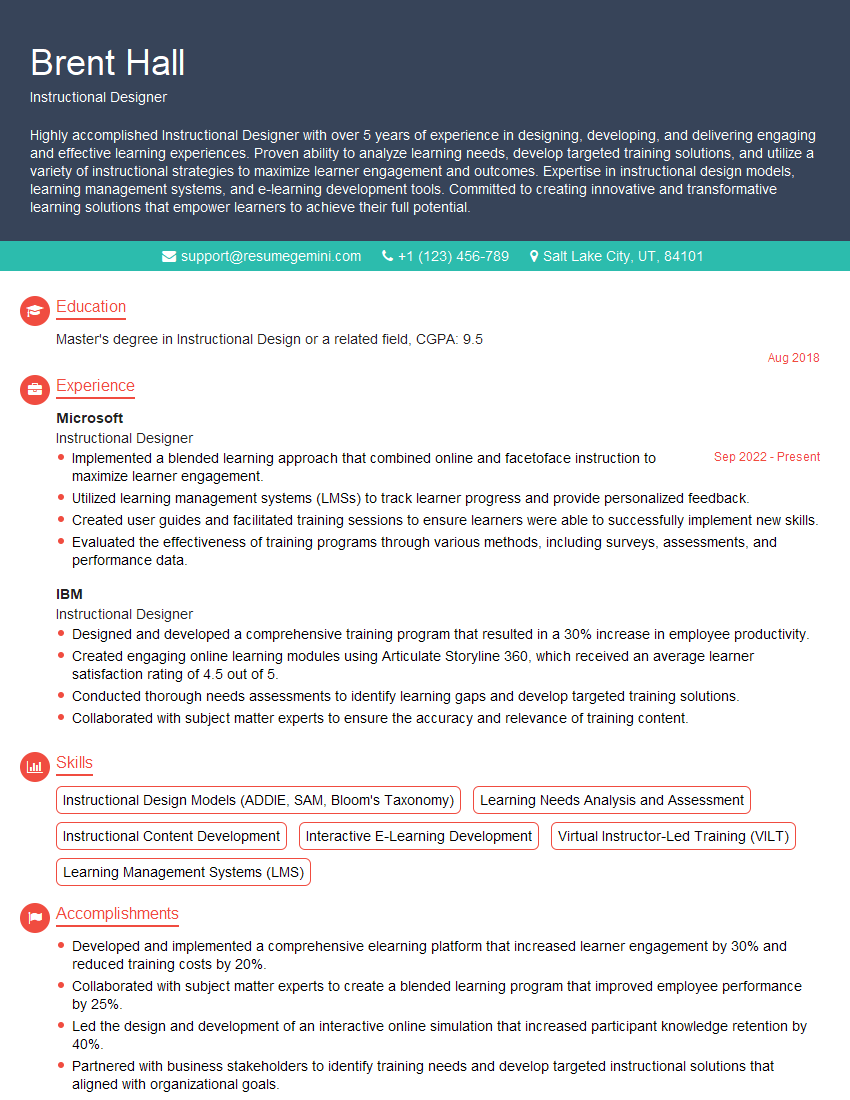
Instructional Designer Resume Sample
Explore more articles
Users Rating of Our Blogs
Share Your Experience
We value your feedback! Please rate our content and share your thoughts (optional).
What Readers Say About Our Blog
Attention music lovers!
Wow, All the best Sax Summer music !!!
Spotify: https://open.spotify.com/artist/6ShcdIT7rPVVaFEpgZQbUk
Apple Music: https://music.apple.com/fr/artist/jimmy-sax-black/1530501936
YouTube: https://music.youtube.com/browse/VLOLAK5uy_noClmC7abM6YpZsnySxRqt3LoalPf88No
Other Platforms and Free Downloads : https://fanlink.tv/jimmysaxblack
on google : https://www.google.com/search?q=22+AND+22+AND+22
on ChatGPT : https://chat.openai.com?q=who20jlJimmy20Black20Sax20Producer
Get back into the groove with Jimmy sax Black
Best regards,
Jimmy sax Black
www.jimmysaxblack.com
Hi I am a troller at The aquatic interview center and I suddenly went so fast in Roblox and it was gone when I reset.
Hi,
Business owners spend hours every week worrying about their website—or avoiding it because it feels overwhelming.
We’d like to take that off your plate:
$69/month. Everything handled.
Our team will:
Design a custom website—or completely overhaul your current one
Take care of hosting as an option
Handle edits and improvements—up to 60 minutes of work included every month
No setup fees, no annual commitments. Just a site that makes a strong first impression.
Find out if it’s right for you:
https://websolutionsgenius.com/awardwinningwebsites
Hello,
we currently offer a complimentary backlink and URL indexing test for search engine optimization professionals.
You can get complimentary indexing credits to test how link discovery works in practice.
No credit card is required and there is no recurring fee.
You can find details here:
https://wikipedia-backlinks.com/indexing/
Regards
NICE RESPONSE TO Q & A
hi
The aim of this message is regarding an unclaimed deposit of a deceased nationale that bears the same name as you. You are not relate to him as there are millions of people answering the names across around the world. But i will use my position to influence the release of the deposit to you for our mutual benefit.
Respond for full details and how to claim the deposit. This is 100% risk free. Send hello to my email id: [email protected]
Luka Chachibaialuka
Hey interviewgemini.com, just wanted to follow up on my last email.
We just launched Call the Monster, an parenting app that lets you summon friendly ‘monsters’ kids actually listen to.
We’re also running a giveaway for everyone who downloads the app. Since it’s brand new, there aren’t many users yet, which means you’ve got a much better chance of winning some great prizes.
You can check it out here: https://bit.ly/callamonsterapp
Or follow us on Instagram: https://www.instagram.com/callamonsterapp
Thanks,
Ryan
CEO – Call the Monster App
Hey interviewgemini.com, I saw your website and love your approach.
I just want this to look like spam email, but want to share something important to you. We just launched Call the Monster, a parenting app that lets you summon friendly ‘monsters’ kids actually listen to.
Parents are loving it for calming chaos before bedtime. Thought you might want to try it: https://bit.ly/callamonsterapp or just follow our fun monster lore on Instagram: https://www.instagram.com/callamonsterapp
Thanks,
Ryan
CEO – Call A Monster APP
To the interviewgemini.com Owner.
Dear interviewgemini.com Webmaster!
Hi interviewgemini.com Webmaster!
Dear interviewgemini.com Webmaster!
excellent
Hello,
We found issues with your domain’s email setup that may be sending your messages to spam or blocking them completely. InboxShield Mini shows you how to fix it in minutes — no tech skills required.
Scan your domain now for details: https://inboxshield-mini.com/
— Adam @ InboxShield Mini
Reply STOP to unsubscribe
Hi, are you owner of interviewgemini.com? What if I told you I could help you find extra time in your schedule, reconnect with leads you didn’t even realize you missed, and bring in more “I want to work with you” conversations, without increasing your ad spend or hiring a full-time employee?
All with a flexible, budget-friendly service that could easily pay for itself. Sounds good?
Would it be nice to jump on a quick 10-minute call so I can show you exactly how we make this work?
Best,
Hapei
Marketing Director
Hey, I know you’re the owner of interviewgemini.com. I’ll be quick.
Fundraising for your business is tough and time-consuming. We make it easier by guaranteeing two private investor meetings each month, for six months. No demos, no pitch events – just direct introductions to active investors matched to your startup.
If youR17;re raising, this could help you build real momentum. Want me to send more info?
Hi, I represent an SEO company that specialises in getting you AI citations and higher rankings on Google. I’d like to offer you a 100% free SEO audit for your website. Would you be interested?
Hi, I represent an SEO company that specialises in getting you AI citations and higher rankings on Google. I’d like to offer you a 100% free SEO audit for your website. Would you be interested?