Are you ready to stand out in your next interview? Understanding and preparing for Understanding building codes and regulations interview questions is a game-changer. In this blog, we’ve compiled key questions and expert advice to help you showcase your skills with confidence and precision. Let’s get started on your journey to acing the interview.
Questions Asked in Understanding building codes and regulations Interview
Q 1. Explain the difference between building codes and zoning regulations.
Building codes and zoning regulations are both crucial for ensuring safe and orderly development, but they govern different aspects. Think of it like this: building codes dictate how a building is constructed, while zoning regulations dictate where and what kind of building can be constructed.
Building Codes: These are sets of rules and standards that specify minimum requirements for the design, construction, and materials used in buildings to ensure public safety and health. They cover everything from structural integrity and fire safety to plumbing, electrical systems, and accessibility. For example, the IBC mandates minimum sizes for stairwells and specifies fire-resistant materials for certain building components.
Zoning Regulations: These are local ordinances that control land use and development within a municipality. They determine what types of buildings (residential, commercial, industrial) can be built in specific areas, the permitted building height, density, setbacks (distance from property lines), and parking requirements. For instance, a zoning ordinance might restrict the height of buildings in a historic district or require a certain number of parking spaces per unit in a multi-family dwelling.
In short, building codes focus on the physical construction of a building, while zoning regulations address the permitted use and location of a building.
Q 2. Describe your experience interpreting and applying building codes.
Throughout my career, I’ve extensively interpreted and applied building codes in various capacities. For example, I recently worked on a project involving the renovation of a historic building. This required a deep understanding of both current building codes and the historical context of the structure. I had to carefully balance the need to meet modern safety standards with the preservation of the building’s original architectural features. This involved navigating complex code provisions, potentially applying exceptions, and coordinating with historical preservation societies and building inspectors. Another instance involved reviewing plans for a high-rise residential development, requiring expertise in structural calculations, fire protection systems, and accessibility requirements as detailed in the IBC and local amendments.
My approach always begins with a thorough review of the relevant codes, including any local amendments or interpretations. I then cross-reference these codes with the provided plans and specifications to ensure full compliance. I’m adept at identifying potential code violations and proposing solutions that meet both code requirements and the client’s objectives.
Q 3. How do you stay up-to-date with changes in building codes and regulations?
Staying current with changes in building codes and regulations is critical for remaining a competent professional. I employ a multi-pronged approach:
Subscription to professional organizations: Membership in organizations like the International Code Council (ICC) provides access to updated codes, training materials, and networking opportunities with other professionals in the field.
Regular review of code updates and bulletins: I actively monitor the ICC website and relevant government agencies for announcements of code changes and amendments.
Attendance at industry conferences and workshops: These events offer invaluable opportunities to learn about the latest code developments and best practices from leading experts.
Networking with peers and colleagues: Discussions and exchanges with other professionals keep me abreast of emerging issues and interpretations.
This constant learning ensures my work remains compliant and reflects current best practices in building safety and design.
Q 4. What are the key elements of the International Building Code (IBC)?
The International Building Code (IBC) is a comprehensive document that establishes minimum standards for building design and construction. Key elements include:
General Provisions: These define the scope, administrative procedures, and legal requirements related to the code.
Building Construction and Materials: Specific requirements for materials, construction methods, and structural integrity depending on building type and occupancy.
Fire Safety: Includes provisions for fire-resistant materials, fire suppression systems, and means of egress.
Means of Egress: Detailed requirements for exit routes, doors, stairwells, and emergency lighting.
Accessibility: Specifications to ensure buildings are accessible to people with disabilities, adhering to the Americans with Disabilities Act (ADA) guidelines.
Plumbing Systems: Requirements for water supply, drainage, and sanitation.
Mechanical Systems: Standards for heating, ventilation, and air conditioning (HVAC) systems.
Electrical Systems: Rules for electrical wiring, equipment, and safety.
The IBC is organized logically, allowing for efficient navigation and cross-referencing of related sections.
Q 5. How do you handle discrepancies between different building codes or interpretations?
Discrepancies between different building codes or their interpretations are not uncommon. My approach involves a systematic process:
Identify the conflicting provisions: Clearly pinpoint the specific sections of the codes that are at odds.
Determine the applicable code: Establish which code takes precedence. This usually involves considering the jurisdiction where the project is located and any local amendments.
Consult relevant authorities: If uncertainty remains, I consult building officials, code experts, or legal counsel to obtain clarification. This may involve submitting questions for official interpretation.
Document the decision-making process: Maintaining a detailed record of the conflict, the resolution process, and the rationale behind the final decision is critical for transparency and accountability.
Implement the chosen solution: Once a resolution is established, I implement the most appropriate and compliant solution.
This methodical approach minimizes risks and ensures that construction meets the required safety and quality standards.
Q 6. Describe your experience reviewing construction plans for code compliance.
I have extensive experience reviewing construction plans for code compliance. This involves a thorough examination of the submitted documents, including architectural, structural, mechanical, electrical, and plumbing plans. My review process includes:
Verification of adherence to all applicable codes: This includes checking for compliance with the IBC, local amendments, and any specific requirements mandated by the jurisdiction.
Identification of potential code violations: I carefully look for discrepancies, omissions, or deviations from the established standards.
Assessment of structural integrity: A crucial aspect of my review involves evaluating the structural design and calculations to ensure stability and safety.
Review of fire safety measures: I scrutinize plans to confirm the adequacy of fire protection systems, means of egress, and fire-resistant materials.
Evaluation of accessibility features: Ensuring the plans comply with ADA guidelines is paramount.
My detailed reports clearly outline any identified code violations and propose corrective measures. This collaborative approach helps developers meet all legal requirements while maintaining the design intent.
Q 7. Explain the process of issuing building permits.
The process of issuing building permits typically involves the following steps:
Submission of application: The applicant submits a complete application package to the relevant building department, including plans, specifications, and other necessary documents.
Plan review: The building department reviews the submitted documents to verify compliance with all applicable building codes and regulations. This often involves detailed inspections of the plans by specialists in structural, mechanical, electrical, plumbing, and fire safety.
Code compliance check: A thorough evaluation is made to identify any code violations. If issues are discovered, the applicant is notified and given time to address them.
Inspection scheduling: Upon successful completion of the plan review and resolution of any identified issues, the building department schedules inspections at various stages of construction.
Permit issuance: Once the plans are deemed compliant, a building permit is issued, authorizing the start of construction.
Ongoing inspections: Throughout the construction process, inspections are carried out to ensure that the work complies with the approved plans and meets all code requirements.
Certificate of Occupancy: Upon completion of construction and successful final inspection, a Certificate of Occupancy (CO) is issued, certifying that the building is fit for its intended purpose and meets all necessary regulations.
The specific procedures might vary slightly among jurisdictions, but the core elements remain consistent.
Q 8. How do you identify and address code violations on a construction site?
Identifying and addressing code violations on a construction site is a multi-step process that requires a keen eye for detail, a thorough understanding of applicable building codes, and effective communication. It begins with a proactive approach, integrating code review into every stage of the project, from initial design to final inspection.
Regular Inspections: I conduct regular site visits, comparing the work in progress against the approved plans and the relevant building codes. This isn’t just a final check; it’s an ongoing process.
Plan Review: Before construction even begins, I meticulously review the architectural and structural plans to identify any potential code violations early on. This prevents costly rework later.
Documentation: I maintain detailed records of all inspections, including photos and written observations of any discrepancies. This documentation is crucial for tracking progress, resolving issues, and demonstrating compliance.
Addressing Violations: Once a violation is identified, I immediately bring it to the attention of the contractor, clearly explaining the problem and citing the specific code section violated. I collaborate to develop a remediation plan that ensures compliance.
For example, I recently discovered a contractor had installed plumbing pipes too close to structural supports, violating minimum clearance requirements. We promptly adjusted the plumbing layout to meet code, avoiding a potentially dangerous and costly situation later.
Q 9. What are the common code violations you’ve encountered?
Over the years, I’ve encountered numerous common code violations. Some of the most frequent include:
Improper Electrical Wiring: This ranges from insufficient grounding to incorrect wire sizing, posing a significant fire hazard.
Lack of Proper Fire Safety Measures: Insufficient fire exits, missing smoke detectors, and inadequate fire suppression systems are serious concerns.
Structural Deficiencies: Issues such as incorrect load calculations, inadequate foundation support, and improper use of building materials are major safety risks.
Accessibility Violations: Failure to meet requirements for ramps, handrails, and accessible bathroom facilities for people with disabilities.
Improper Ventilation: Inadequate ventilation can lead to mold growth, poor air quality, and potential health problems.
These violations aren’t just technicalities; they impact the safety and well-being of building occupants. Addressing them promptly is paramount.
Q 10. How do you prioritize code violations based on severity and risk?
Prioritizing code violations requires a risk-based approach. I consider the severity of the violation and the potential impact on safety, health, and structural integrity. I use a system that categorizes violations into three levels:
Critical Violations: These pose immediate threats to life safety and require immediate attention. Examples include unsafe structural elements or serious fire hazards.
Major Violations: These are significant violations that could lead to future problems but don’t pose an immediate life safety risk. Examples include improper electrical grounding or lack of adequate insulation.
Minor Violations: These are less serious and typically involve aesthetic or minor procedural issues. Examples include minor deviations from approved plans or failure to properly label equipment.
I address critical violations first, followed by major, and finally minor, using a documented prioritization matrix that tracks each violation and the progress of its resolution.
Q 11. Describe your experience working with contractors and developers.
My experience working with contractors and developers has been largely positive, built on a foundation of clear communication and mutual respect. I view them as partners in achieving code compliance, not adversaries. Effective collaboration is key. I work closely with both during the design and construction phases, offering guidance and clarifying code requirements. I provide technical expertise, help them anticipate potential issues, and assist in finding cost-effective solutions for compliance.
For example, I recently worked with a developer who initially proposed a design that didn’t meet accessibility codes. Through collaborative discussions, we explored alternative designs, ultimately reaching a solution that met the code while adhering to the overall aesthetic vision.
Q 12. How do you handle disagreements with contractors regarding code compliance?
Disagreements regarding code compliance are handled professionally and constructively. I approach these situations by:
Clearly Articulating the Code Requirement: I cite the specific code section and explain its implications clearly and concisely, using visual aids if necessary.
Reviewing Documentation: I review the project plans and specifications to see if the discrepancy is a misunderstanding or an oversight.
Seeking Resolution: I strive for a collaborative solution, involving all parties – contractor, developer, and if needed, the building inspector. Open communication and a willingness to compromise are essential.
Escalation (if necessary): If a resolution can’t be reached amicably, I may escalate the issue to higher authorities, providing all necessary documentation.
My goal is always to find solutions that ensure code compliance while minimizing disruption to the project timeline and budget.
Q 13. Explain the process of enforcing building codes.
Enforcing building codes is a multi-faceted process that starts with plan review and continues through construction and final inspections. It’s a collaborative effort involving various stakeholders:
Plan Review: The initial step involves reviewing the submitted plans to ensure compliance with relevant codes. This prevents costly issues down the line.
Inspections: Regular inspections throughout construction verify that work is being done according to the approved plans and codes. This is crucial for ensuring ongoing compliance.
Violation Reporting: Any discrepancies are documented and reported to the contractor, giving them an opportunity to rectify the issues.
Corrective Actions: Contractors are required to address all violations. Failure to do so can result in penalties or project delays.
Final Inspection: A final inspection is conducted to confirm that all identified violations have been corrected and that the building meets all applicable codes.
Legal Action (If necessary): If violations remain unresolved, legal action may be taken, potentially including fines or stop-work orders.
The process aims to balance ensuring public safety and facilitating responsible development.
Q 14. How do you document code violations and enforcement actions?
Documentation is crucial for effective code enforcement. I use a comprehensive system that includes:
Inspection Reports: Detailed reports documenting each inspection, including date, time, location, observations, and photos of any violations. This provides a detailed history of the project.
Violation Notices: Formal written notices to contractors outlining the specific violations, citing relevant code sections, and providing deadlines for corrective action.
Photographs and Videos: Visual documentation provides irrefutable evidence of violations and their subsequent correction.
Corrective Action Plans: Documents outlining the steps the contractor will take to address the violations, including timelines and responsible parties.
Digital Database: All documentation is stored securely in a digital database, easily accessible for review and auditing. This ensures traceability and accountability.
This meticulous record-keeping is not only crucial for enforcing codes but also provides valuable data for improving future projects and preventing similar violations.
Q 15. What are the legal ramifications of non-compliance with building codes?
Non-compliance with building codes carries significant legal ramifications, varying depending on the severity and nature of the violation, as well as the jurisdiction. These ramifications can include:
- Stop-work orders: Construction may be halted until violations are rectified.
- Fines: Substantial fines can be levied, often escalating with the duration of non-compliance and the severity of the infraction.
- Legal action: In extreme cases, legal action, including lawsuits from injured parties or government agencies, can result in significant financial penalties and even criminal charges.
- Insurance issues: Non-compliance can invalidate insurance policies, leaving owners liable for damages and losses.
- Demolition orders: In cases of severe or persistent violations jeopardizing public safety, buildings may be ordered demolished.
- License revocation or suspension: Contractors or developers may face license revocation or suspension, effectively ending their ability to work in the industry.
For example, a building failing to meet fire safety codes could result in hefty fines and potential legal action if a fire occurs due to the code violations. The consequences are not only financial but also reputational, impacting future projects and collaborations.
Career Expert Tips:
- Ace those interviews! Prepare effectively by reviewing the Top 50 Most Common Interview Questions on ResumeGemini.
- Navigate your job search with confidence! Explore a wide range of Career Tips on ResumeGemini. Learn about common challenges and recommendations to overcome them.
- Craft the perfect resume! Master the Art of Resume Writing with ResumeGemini’s guide. Showcase your unique qualifications and achievements effectively.
- Don’t miss out on holiday savings! Build your dream resume with ResumeGemini’s ATS optimized templates.
Q 16. Describe your experience using building code software or databases.
I have extensive experience utilizing various building code software and databases, including ICC Digital Codes, and others specific to different jurisdictions. My proficiency extends beyond simple database searching to leveraging these tools for:
- Code research: Quickly locating relevant code sections for specific projects, ensuring compliance with all applicable regulations. For example, using keyword searches to find requirements for accessibility ramps in a particular jurisdiction’s code.
- Plan review and analysis: Using the software to compare building plans against code requirements, identifying discrepancies and potential issues early in the design phase.
- Code interpretation: Navigating complex or ambiguous code language to arrive at accurate interpretations. This often involves understanding the intent behind the regulations and applying them to the specific project’s context.
- Report generation: Generating reports that document code compliance, which are crucial for permits and inspections.
I find that familiarity with multiple software options allows for efficient work across diverse jurisdictions and projects.
Q 17. How familiar are you with accessibility codes (ADA, etc.)?
I am very familiar with accessibility codes, most notably the Americans with Disabilities Act (ADA) Standards for Accessible Design and other international and regional equivalents. My understanding covers:
- Accessible routes: Ramps, curb cuts, and appropriate pathway widths.
- Accessible entrances: Automatic doors, appropriate door widths, and clear entryways.
- Restrooms: ADA-compliant fixtures, grab bars, and clear floor space.
- Parking: Designated accessible parking spaces with appropriate signage and dimensions.
- Signage and wayfinding: Clear and accessible signage, including tactile and braille signage.
- Communication systems: Accessible alarm systems and visual notification systems.
I understand that these codes are not just about compliance, but about creating inclusive environments for everyone. I have worked on several projects where ensuring accessibility was a critical component, necessitating detailed knowledge of these codes and their implementation.
Q 18. How familiar are you with fire safety codes?
My understanding of fire safety codes is comprehensive, encompassing:
- Means of egress: Properly designed and maintained exit routes, including adequate width, lighting, and signage.
- Fire-resistant materials: Specifications for materials used in construction, ensuring they meet fire-resistance requirements.
- Fire suppression systems: Sprinklers, fire alarms, and smoke detectors, ensuring proper installation, maintenance, and testing.
- Fire protection features: Fire walls, fire doors, and other features designed to contain and prevent the spread of fire.
- Emergency action plans: Understanding the development and implementation of effective emergency plans for occupants.
I’ve personally reviewed plans for high-rise buildings and assisted with fire code audits, emphasizing proactive safety measures rather than simply reacting to violations. My experience allows me to effectively identify potential hazards and recommend appropriate mitigation strategies.
Q 19. How familiar are you with energy efficiency codes?
Energy efficiency codes are critical for sustainable building practices. My knowledge encompasses:
- Building envelope requirements: Insulation levels, window specifications, and air sealing measures to minimize energy loss.
- HVAC systems: Efficient heating, ventilation, and air conditioning systems meeting specific energy performance standards.
- Lighting systems: Use of energy-efficient lighting technologies and controls.
- Renewable energy integration: Understanding the integration of renewable energy sources such as solar panels.
- Water heating systems: Efficient water heating systems and strategies for reducing water consumption.
I’ve worked with projects incorporating LEED certification principles, demonstrating my commitment to environmentally responsible design and construction.
Q 20. How do you ensure the safety of workers on construction sites related to code compliance?
Ensuring worker safety on construction sites is paramount and directly tied to code compliance. My approach involves:
- Thorough site inspections: Regularly inspecting sites to identify potential hazards, ensuring compliance with OSHA regulations and relevant building codes.
- Safety training: Enforcing comprehensive safety training programs for all workers, covering topics like fall protection, hazard communication, and proper use of equipment.
- Hazard identification and mitigation: Proactively identifying potential hazards and implementing appropriate control measures to prevent accidents.
- Proper signage and barriers: Ensuring adequate warning signs, barricades, and safety equipment are in place.
- Documentation and record-keeping: Maintaining detailed records of safety inspections, training, and incident reports.
I believe a proactive approach, emphasizing prevention and education, is far more effective than simply reacting to accidents. My goal is to create a culture of safety on every site I’m involved with.
Q 21. Explain your understanding of building code amendments and updates.
Building codes are not static; they are regularly amended and updated to reflect advancements in technology, safety standards, and energy efficiency. My understanding of this process includes:
- Staying current: Actively monitoring code updates and amendments through official channels and industry publications. I subscribe to relevant newsletters and attend professional development courses to remain informed.
- Interpreting amendments: Understanding how amendments affect existing projects and future designs, ensuring compliance with the latest regulations.
- Transition periods: Being aware of any transition periods established for implementation of new codes, allowing for a smooth transition without compromising safety or legality.
- Jurisdictional variations: Recognizing that code updates can vary between jurisdictions. Therefore, it is crucial to ensure compliance with the specific codes applicable to each project.
I view staying current with building code amendments as a continuous learning process that is critical for responsible and compliant building practices.
Q 22. Describe a situation where you had to resolve a complex code-related issue.
One challenging situation involved a historical building renovation project. The existing structure predated modern building codes, and we needed to determine compliance with current accessibility requirements while preserving the building’s historical integrity. The main issue centered around the existing staircase, which didn’t meet current ADA (Americans with Disabilities Act) standards for width, slope, and handrail placement. A direct replacement would have significantly altered the building’s character.
To resolve this, I employed a multi-pronged approach. First, we meticulously documented the existing conditions, including detailed measurements and photographs. Then, we consulted the local historical preservation commission and reviewed relevant code sections, including the exceptions and variances available for historic buildings. We discovered that a variance could be granted if we could demonstrate that a full replacement would result in an unacceptable loss of historical character. We then worked with structural engineers and accessibility consultants to design a solution involving minimal alterations to the existing staircase while adding a supplemental ADA-compliant lift. This approach ensured compliance, preserved the historical aspects, and satisfied all stakeholders. The project required meticulous documentation, effective communication, and a deep understanding of both the building codes and the historical preservation guidelines.
Q 23. How do you balance code compliance with project timelines and budgets?
Balancing code compliance, project timelines, and budgets requires proactive planning and strategic decision-making. It’s not about compromising compliance but finding the most efficient path to achieve it. This starts even before the project begins, with a thorough review of the building plans against the applicable codes. Identifying potential code conflicts early on prevents costly delays and revisions later.
For example, if a proposed design violates a specific code, we explore alternative solutions that maintain the design intent while meeting code requirements. Sometimes, this involves minor design modifications. Other times, it requires submitting variance requests to the building authority, which must be thoroughly justified and supported by engineering calculations and expert opinions. This process involves collaboration with architects, engineers, and contractors. Clear and frequent communication is crucial to keep everyone informed of potential issues and their impact on the project’s timeline and budget. We use project management software and regular meetings to track progress, manage change orders effectively, and maintain transparent communication among team members and stakeholders. The key is to anticipate potential issues, plan for contingencies, and effectively manage the trade-offs between cost, time, and compliance.
Q 24. What resources do you typically use to resolve code-related questions?
My primary resources for resolving code-related questions are the official building codes themselves – the International Building Code (IBC), International Residential Code (IRC), and any local amendments or ordinances. I also rely on authoritative code interpretation documents published by the International Code Council (ICC) and other reputable sources.
In addition to these, I regularly consult industry publications, professional journals, and online forums specializing in building codes. Networking with experienced professionals and building inspectors is also crucial for gaining insights into practical interpretations and common challenges. Finally, the local building department’s staff are invaluable resources. Their familiarity with local interpretations and specific requirements is often essential for smooth project approval. These resources provide different perspectives and details, ensuring a comprehensive understanding of the relevant regulations.
Q 25. How do you communicate complex code requirements to non-technical individuals?
Communicating complex code requirements to non-technical individuals requires clear, concise language and effective visual aids. I avoid using technical jargon whenever possible. Instead, I use analogies and real-world examples to explain abstract concepts.
For instance, when explaining fire-resistant materials, I might use a simple analogy, comparing the fire rating of a wall to the time it takes for a fire to burn through a specific thickness of material. Visual aids such as diagrams, charts, and simplified code summaries are also very effective. I often create summaries and checklists that highlight the key requirements and how they impact the project. Finally, I actively encourage questions and answer them patiently, ensuring everyone fully understands the implications of the code requirements before proceeding. This approach builds trust and ensures that everyone is on the same page throughout the project.
Q 26. Describe your experience with plan review software.
I have extensive experience using various plan review software packages, including Bluebeam Revu, PlanGrid, and Autodesk BIM 360 Docs. These platforms significantly enhance the efficiency of reviewing construction documents. They allow for digital markup, collaboration, and tracking of revisions. This improves communication and ensures all parties are working with the most current version of the plans.
My skills in these software packages extend beyond basic navigation. I am proficient in utilizing the tools for precise measurements, detailed annotations, and the creation of comprehensive review reports. This enables me to efficiently identify code violations, potential conflicts, and areas requiring clarification. The ability to integrate these platforms with other project management tools further streamlines the workflow, facilitating timely and effective code review and project management.
Q 27. What is your experience with field inspections and report writing?
Field inspections are an integral part of ensuring code compliance. I possess extensive experience conducting thorough on-site inspections, documenting findings accurately, and generating clear and concise inspection reports. My inspections cover all aspects of construction, from foundation work to final finishes, ensuring adherence to the approved plans and applicable building codes.
My reports include detailed descriptions of observed conditions, photographs, and any identified code violations or deficiencies. The reports are structured to be easily understood by both technical and non-technical audiences. I always maintain professionalism and establish clear communication with contractors to resolve issues promptly and efficiently. I believe in a collaborative approach where we work together to achieve compliance rather than focusing solely on identifying problems.
Q 28. How do you handle situations with incomplete or unclear construction documents?
Incomplete or unclear construction documents present a significant challenge, but a systematic approach can mitigate the risks. First, I meticulously review the available documentation, identifying gaps and ambiguities. Then, I prepare a comprehensive list of questions and clarification requests for the design team. This list addresses specific missing information or unclear aspects, ensuring the necessary details are obtained.
If the missing information is crucial for determining compliance, I will halt the review process until the necessary documentation is provided. I communicate the situation to all stakeholders, highlighting potential delays and cost implications. In cases where minor ambiguities exist, and I can reasonably infer the intended design based on best practices and code interpretations, I may proceed with the review, noting any assumptions made in my report. However, this approach requires careful consideration and often involves discussion with the building department to ensure the interpretation aligns with their expectations. The emphasis is on clear communication, proactive identification of issues, and diligent collaboration to avoid costly rework later in the project.
Key Topics to Learn for Understanding Building Codes and Regulations Interview
- Building Codes Fundamentals: Understanding the purpose and structure of building codes (e.g., IBC, NFPA), including their historical context and ongoing revisions. This includes knowing the different code categories and how they interrelate.
- Safety Regulations: Deep dive into regulations related to fire safety, accessibility (ADA compliance), structural integrity, and life safety systems. Consider practical application through case studies of code violations and their consequences.
- Permitting and Inspections: The process of obtaining building permits, understanding inspection requirements, and navigating potential challenges during construction. Consider the roles and responsibilities of various stakeholders involved.
- Plan Review and Design Considerations: Analyze how building codes influence the design phase of a project. Explore how to interpret code requirements and translate them into practical design solutions.
- Material Specifications and Compliance: Understand how building codes dictate material selection, testing, and performance standards. Explore the implications of using non-compliant materials.
- Sustainable Building Practices: Explore the integration of sustainable design principles within the framework of building codes. Consider LEED certifications and energy efficiency requirements.
- Code Enforcement and Legal Aspects: Understand the legal implications of code violations, including penalties, appeals processes, and dispute resolution. Consider the role of code enforcement officers.
- Emerging Technologies and Codes: Explore how technological advancements impact building codes and regulations, including BIM (Building Information Modeling) and other relevant technologies.
Next Steps
Mastering building codes and regulations is crucial for career advancement in construction, architecture, engineering, and related fields. A strong understanding demonstrates professionalism, competence, and a commitment to safety. To stand out to potential employers, create an ATS-friendly resume that highlights your knowledge and experience. ResumeGemini is a trusted resource to help you build a professional and impactful resume that showcases your skills effectively. Examples of resumes tailored to building codes and regulations expertise are available to help guide your creation.
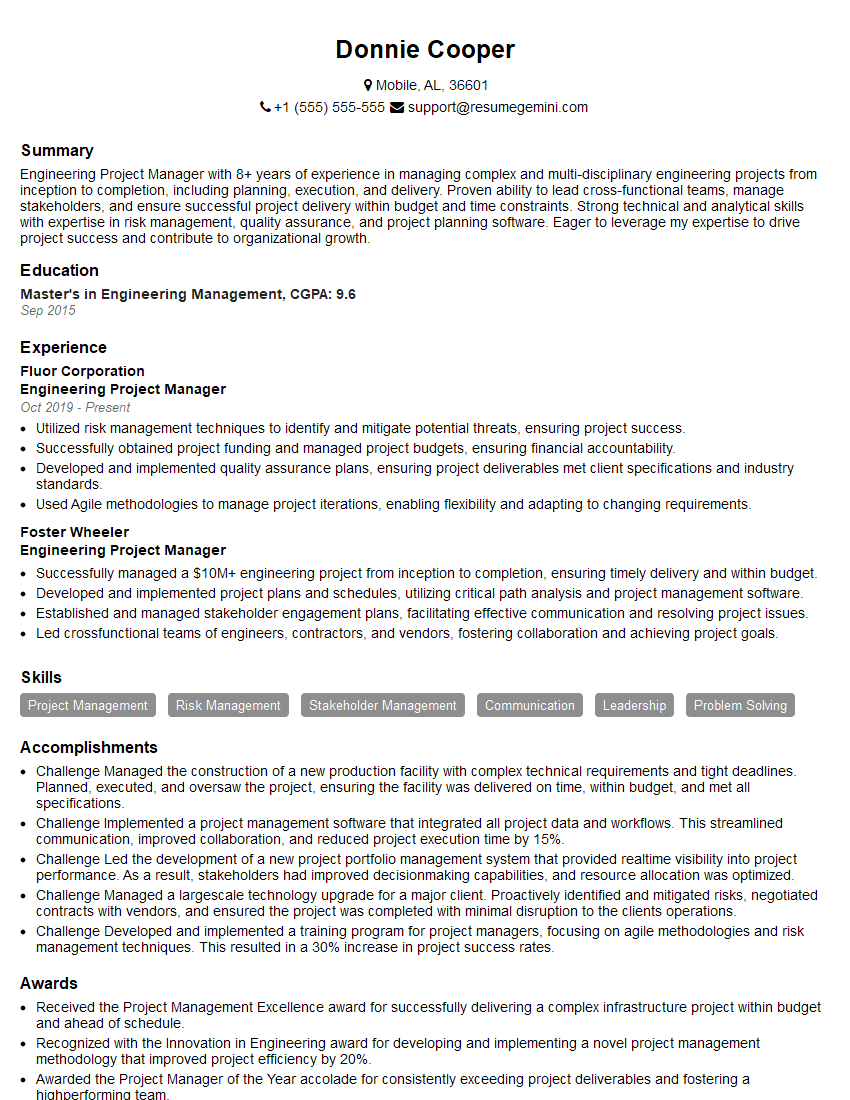
Engineering Project Manager Resume Sample

Compliance Officer Resume Sample

Sustainability Consultant Resume Sample
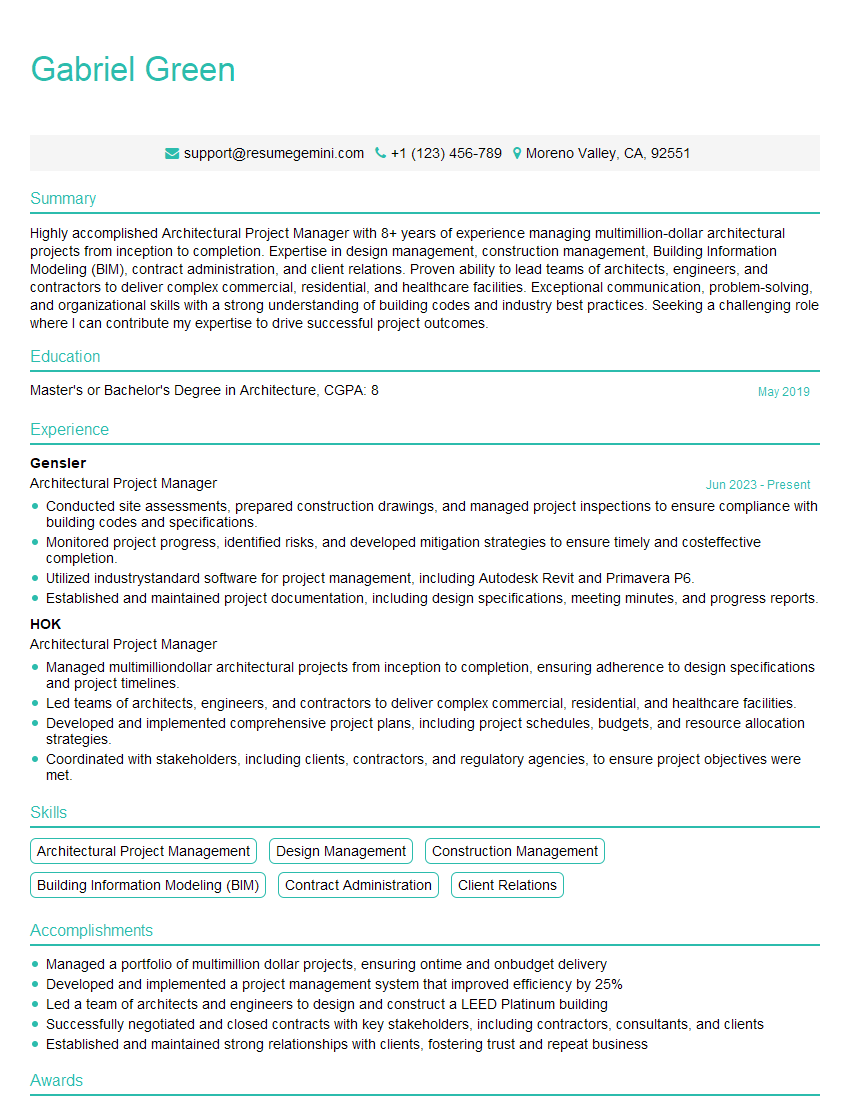
Architectural Project Manager Resume Sample
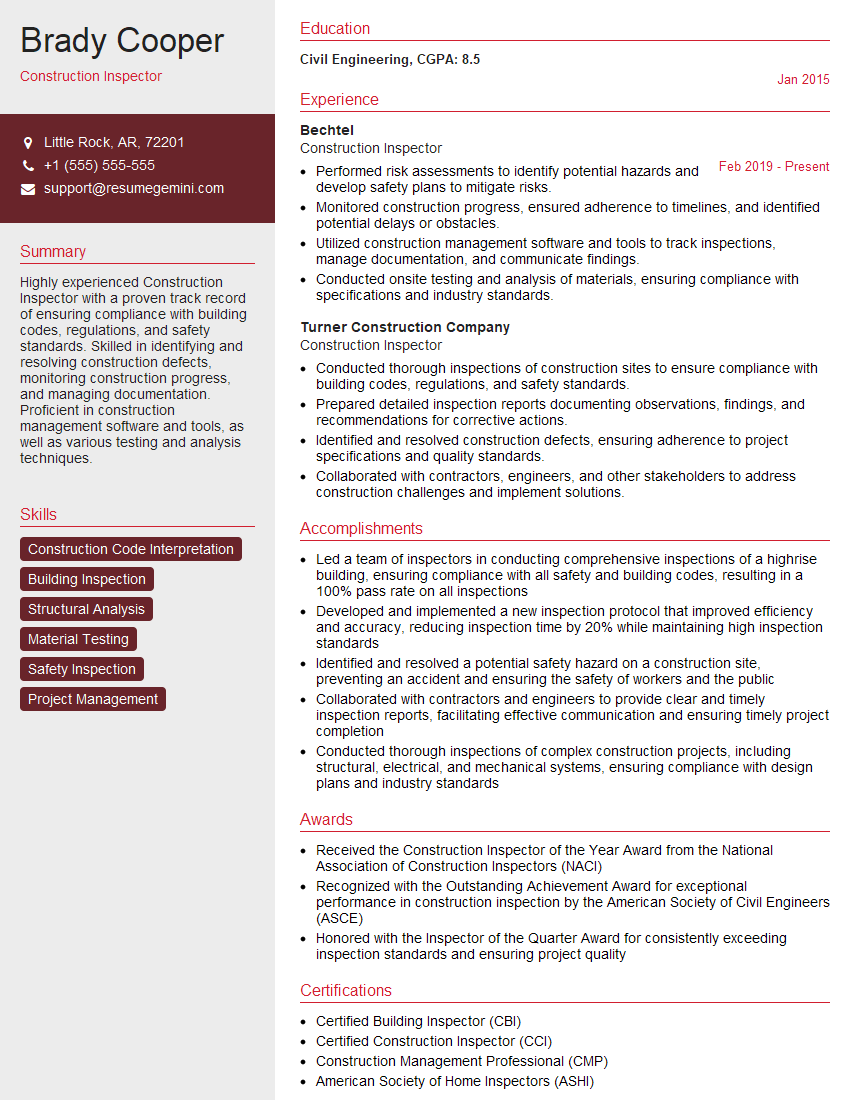
Construction Inspector Resume Sample
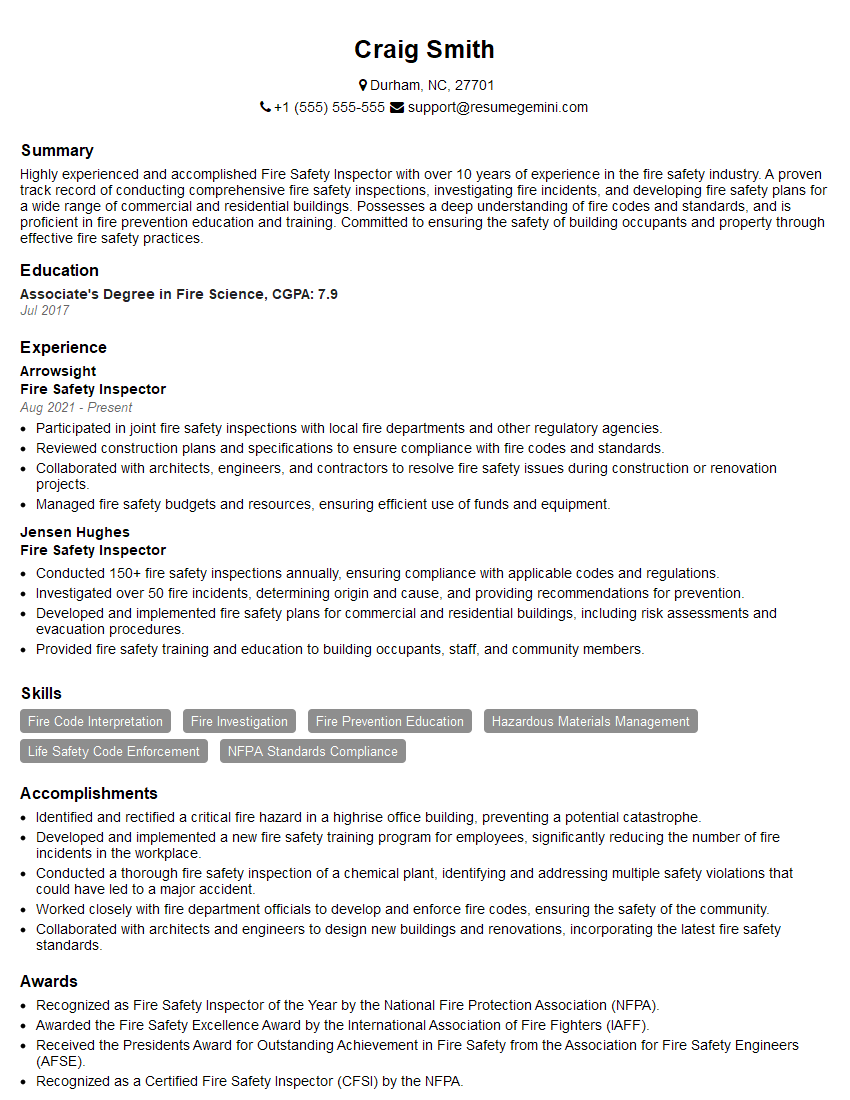
Fire Safety Inspector Resume Sample
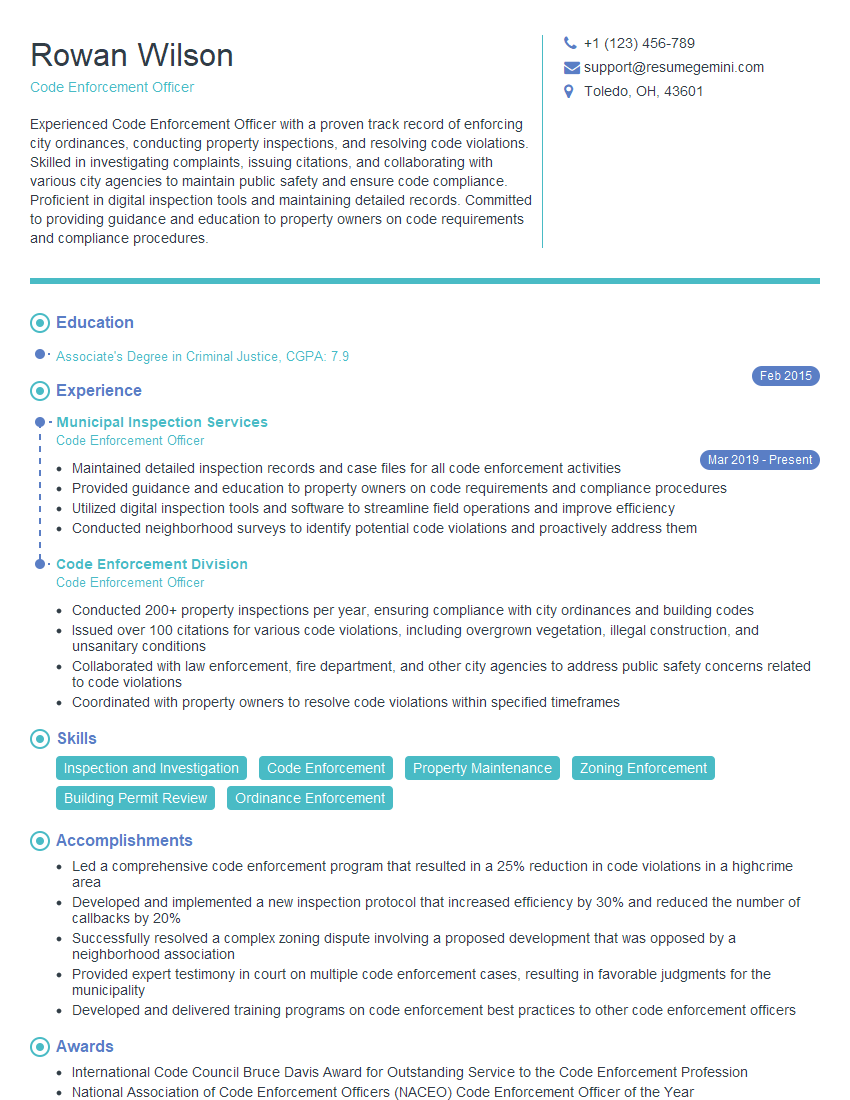
Code Enforcement Officer Resume Sample
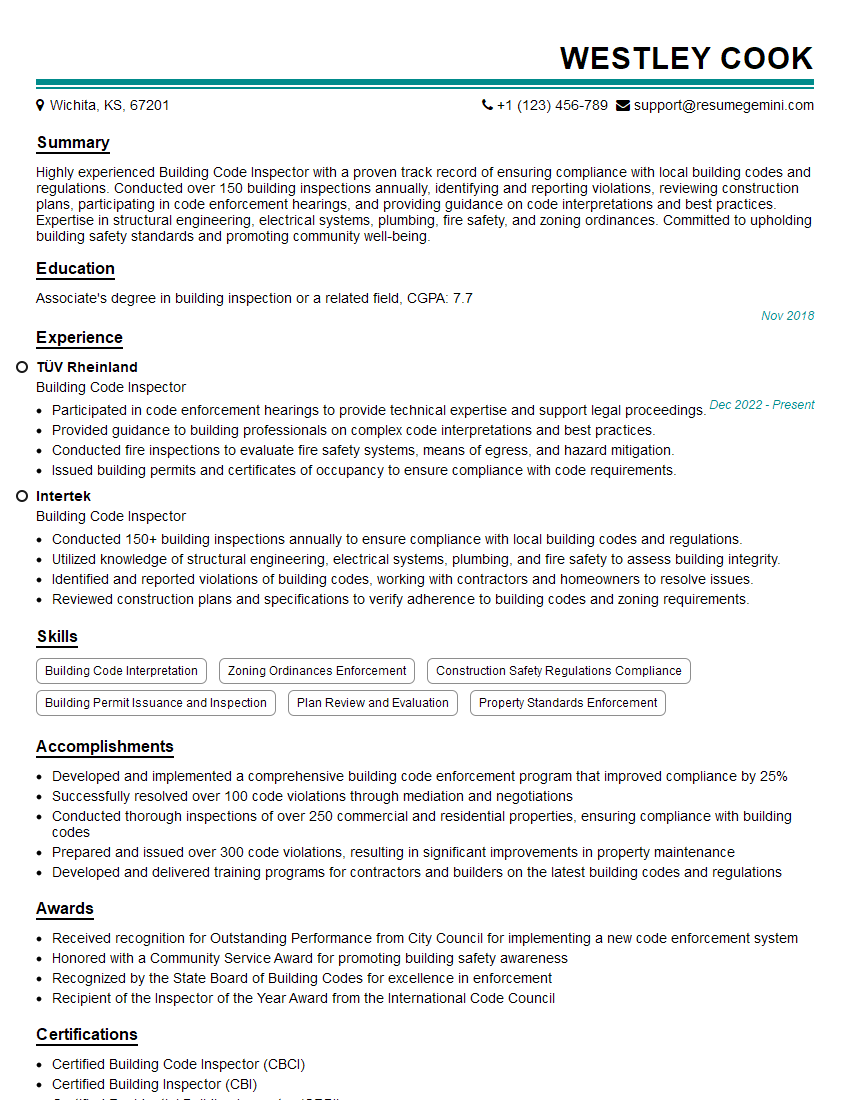
Building Code Inspector Resume Sample
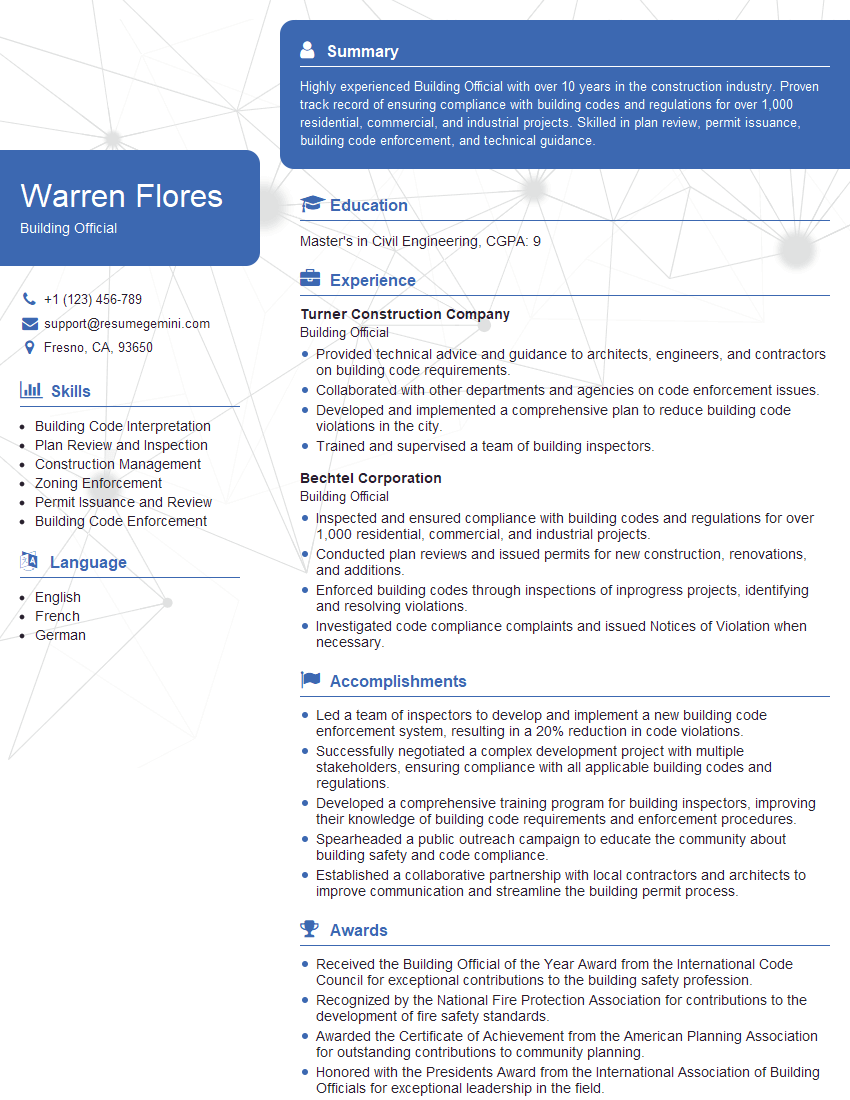
Building Official Resume Sample
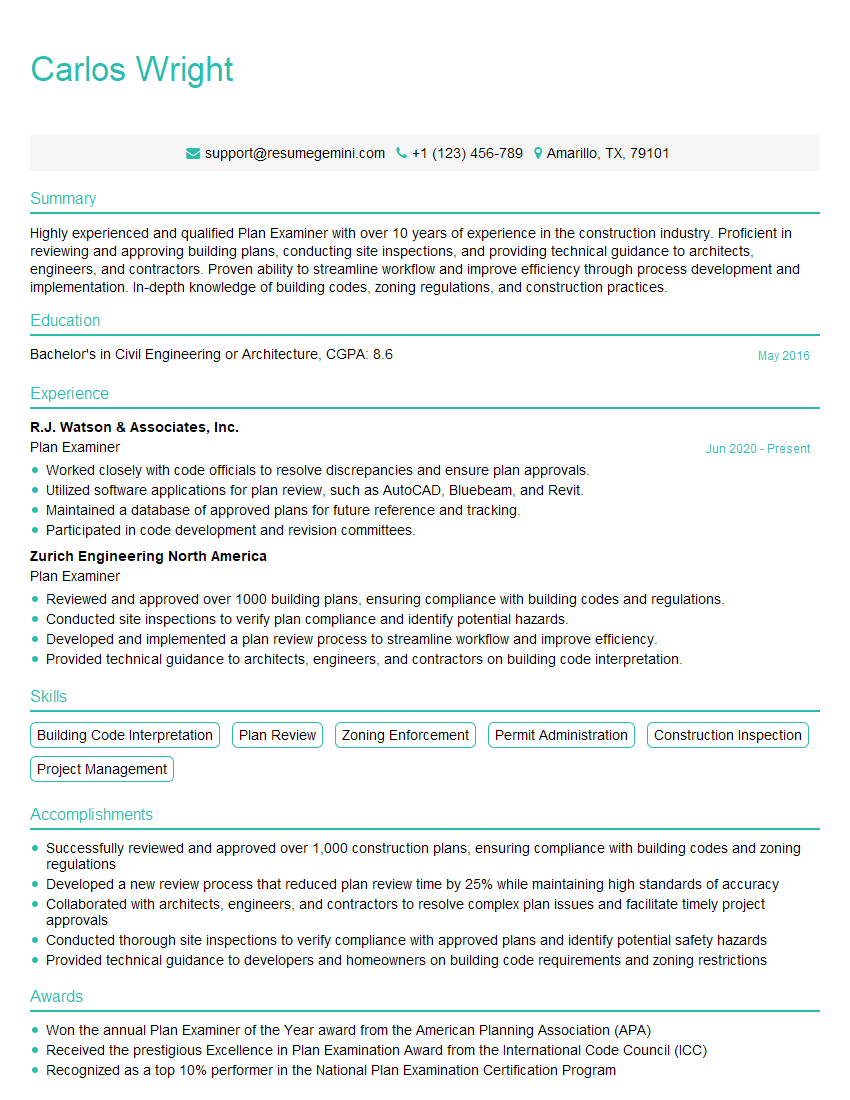
Plan Examiner Resume Sample
Explore more articles
Users Rating of Our Blogs
Share Your Experience
We value your feedback! Please rate our content and share your thoughts (optional).
What Readers Say About Our Blog
Hello,
we currently offer a complimentary backlink and URL indexing test for search engine optimization professionals.
You can get complimentary indexing credits to test how link discovery works in practice.
No credit card is required and there is no recurring fee.
You can find details here:
https://wikipedia-backlinks.com/indexing/
Regards
NICE RESPONSE TO Q & A
hi
The aim of this message is regarding an unclaimed deposit of a deceased nationale that bears the same name as you. You are not relate to him as there are millions of people answering the names across around the world. But i will use my position to influence the release of the deposit to you for our mutual benefit.
Respond for full details and how to claim the deposit. This is 100% risk free. Send hello to my email id: [email protected]
Luka Chachibaialuka
Hey interviewgemini.com, just wanted to follow up on my last email.
We just launched Call the Monster, an parenting app that lets you summon friendly ‘monsters’ kids actually listen to.
We’re also running a giveaway for everyone who downloads the app. Since it’s brand new, there aren’t many users yet, which means you’ve got a much better chance of winning some great prizes.
You can check it out here: https://bit.ly/callamonsterapp
Or follow us on Instagram: https://www.instagram.com/callamonsterapp
Thanks,
Ryan
CEO – Call the Monster App
Hey interviewgemini.com, I saw your website and love your approach.
I just want this to look like spam email, but want to share something important to you. We just launched Call the Monster, a parenting app that lets you summon friendly ‘monsters’ kids actually listen to.
Parents are loving it for calming chaos before bedtime. Thought you might want to try it: https://bit.ly/callamonsterapp or just follow our fun monster lore on Instagram: https://www.instagram.com/callamonsterapp
Thanks,
Ryan
CEO – Call A Monster APP
To the interviewgemini.com Owner.
Dear interviewgemini.com Webmaster!
Hi interviewgemini.com Webmaster!
Dear interviewgemini.com Webmaster!
excellent
Hello,
We found issues with your domain’s email setup that may be sending your messages to spam or blocking them completely. InboxShield Mini shows you how to fix it in minutes — no tech skills required.
Scan your domain now for details: https://inboxshield-mini.com/
— Adam @ InboxShield Mini
Reply STOP to unsubscribe
Hi, are you owner of interviewgemini.com? What if I told you I could help you find extra time in your schedule, reconnect with leads you didn’t even realize you missed, and bring in more “I want to work with you” conversations, without increasing your ad spend or hiring a full-time employee?
All with a flexible, budget-friendly service that could easily pay for itself. Sounds good?
Would it be nice to jump on a quick 10-minute call so I can show you exactly how we make this work?
Best,
Hapei
Marketing Director
Hey, I know you’re the owner of interviewgemini.com. I’ll be quick.
Fundraising for your business is tough and time-consuming. We make it easier by guaranteeing two private investor meetings each month, for six months. No demos, no pitch events – just direct introductions to active investors matched to your startup.
If youR17;re raising, this could help you build real momentum. Want me to send more info?
Hi, I represent an SEO company that specialises in getting you AI citations and higher rankings on Google. I’d like to offer you a 100% free SEO audit for your website. Would you be interested?
Hi, I represent an SEO company that specialises in getting you AI citations and higher rankings on Google. I’d like to offer you a 100% free SEO audit for your website. Would you be interested?
good