The right preparation can turn an interview into an opportunity to showcase your expertise. This guide to Understanding of Inventory Management System interview questions is your ultimate resource, providing key insights and tips to help you ace your responses and stand out as a top candidate.
Questions Asked in Understanding of Inventory Management System Interview
Q 1. Explain the difference between FIFO and LIFO inventory valuation methods.
FIFO (First-In, First-Out) and LIFO (Last-In, First-Out) are two common methods for valuing inventory. They impact the cost of goods sold and the value of ending inventory reported on a company’s financial statements. The core difference lies in the order they assume inventory is sold.
FIFO assumes that the oldest items in your inventory are the first ones sold. Think of a bakery – the croissants baked first are likely the first to be sold. This method results in a higher net income during periods of inflation because the cost of goods sold is lower (based on older, cheaper inventory), leaving a higher value for ending inventory.
LIFO, conversely, assumes that the newest items are sold first. Imagine a stack of freshly printed newspapers; the top ones (latest print) are likely the ones sold first. During inflation, LIFO shows a lower net income because the cost of goods sold is higher (based on newer, more expensive inventory), resulting in a lower value for ending inventory.
Example: Let’s say you bought 10 units at $10 each and later 10 units at $12 each. Under FIFO, the cost of goods sold for 15 units would be (10 * $10) + (5 * $12) = $160. Under LIFO, the cost of goods sold would be (10 * $12) + (5 * $10) = $170. This difference directly affects your profit margin. The choice of method depends on factors like industry norms and tax implications.
Q 2. Describe your experience with various inventory management software (e.g., SAP, Oracle, NetSuite).
My experience spans several leading inventory management software solutions. I’ve extensively worked with SAP, Oracle, and NetSuite, each offering unique functionalities and strengths.
SAP is a robust enterprise resource planning (ERP) system providing comprehensive inventory management capabilities, including detailed tracking, forecasting, and sophisticated reporting. My experience involved customizing SAP’s MM module to optimize inventory processes for a manufacturing client, significantly reducing stockouts and excess inventory.
Oracle offers similarly robust solutions, particularly strong in supply chain management and integration with other business functions. I leveraged Oracle’s inventory optimization tools to improve demand forecasting accuracy, leading to better inventory control and reduced carrying costs for a large retail client.
NetSuite, a cloud-based ERP, offers a user-friendly interface and scalable solutions for businesses of various sizes. I utilized NetSuite’s inventory management features to automate stock replenishment and streamline order fulfillment processes for a rapidly growing e-commerce company. Each system presents unique challenges and rewards – tailoring the system to the client’s specific needs is key.
Q 3. How do you calculate inventory turnover ratio and what does it indicate?
The inventory turnover ratio measures how efficiently a company manages its inventory. It indicates how many times inventory is sold and replaced over a specific period, typically a year. A higher ratio generally suggests efficient inventory management, while a lower ratio might point to slow-moving inventory or potential overstocking.
Calculation: The formula is simple:
Inventory Turnover Ratio = Cost of Goods Sold / Average Inventory
The average inventory is calculated as (Beginning Inventory + Ending Inventory) / 2.
What it indicates: A high ratio suggests strong sales and effective inventory management. Conversely, a low ratio might suggest weak sales, obsolete inventory, or poor demand forecasting. It’s important to compare the ratio to industry benchmarks and the company’s past performance to understand its significance fully. For example, a grocery store would expect a much higher turnover ratio than, say, a furniture retailer, reflecting the different nature of their products.
Q 4. What are the key performance indicators (KPIs) you track in inventory management?
Effective inventory management relies on tracking several key performance indicators (KPIs). These KPIs provide insights into the efficiency and effectiveness of inventory processes and help identify areas for improvement.
- Inventory Turnover Ratio: As discussed earlier, this is crucial for assessing the efficiency of inventory movement.
- Inventory Holding Cost: This represents the cost of storing and maintaining inventory, including warehousing, insurance, and obsolescence. Minimizing this cost is key to profitability.
- Stockout Rate: This measures the frequency of inventory shortages, impacting customer satisfaction and sales. Reducing stockouts is a primary goal.
- Fill Rate: This indicates the percentage of customer orders fulfilled from available inventory. High fill rates signify excellent inventory management.
- Order Fulfillment Cycle Time: This measures the time it takes to process and fulfill an order. Shorter cycle times improve customer experience.
- Inventory Accuracy: This reflects the degree to which recorded inventory matches physical inventory. High accuracy is essential for accurate reporting and decision-making.
By regularly monitoring these KPIs, businesses can identify bottlenecks, improve efficiency, and make data-driven decisions to optimize inventory management.
Q 5. Explain the concept of safety stock and how it’s determined.
Safety stock is the extra inventory held to buffer against unexpected variations in demand or lead times. It acts as a cushion to prevent stockouts and maintain service levels. Think of it as an insurance policy for your inventory.
Determining Safety Stock: Several methods exist, with the most common involving statistical analysis of historical data. This typically involves considering:
- Demand Variability: How much does demand fluctuate? A higher variance requires more safety stock.
- Lead Time Variability: How unpredictable are the delivery times from suppliers? Longer and more variable lead times necessitate more safety stock.
- Service Level: What percentage of demand do you want to be able to meet without stockouts? A higher service level (e.g., 99%) requires more safety stock.
A common approach uses a formula incorporating the standard deviation of demand during lead time and a safety factor based on the desired service level. Sophisticated software can automate these calculations based on historical data and forecasting models. The goal is to balance the cost of holding extra inventory against the cost of stockouts.
Q 6. How do you handle inventory discrepancies?
Inventory discrepancies arise when the recorded inventory doesn’t match the physical inventory. This can be due to various reasons, including theft, damage, errors in data entry, or inaccurate counting. Addressing these discrepancies is critical for maintaining inventory accuracy.
Handling Discrepancies: My approach is systematic:
- Identify the Discrepancy: Conduct a thorough physical count to determine the extent of the discrepancy.
- Investigate the Cause: Analyze potential causes, such as damaged goods, theft, or data entry errors. This may involve reviewing security footage or examining inventory transaction records.
- Adjust Inventory Records: Correct the inventory records to reflect the actual physical count. This may involve writing off damaged or stolen goods.
- Implement Corrective Actions: Implement measures to prevent future discrepancies, such as improved inventory tracking systems, better security measures, and staff training.
- Document the Process: Maintain detailed records of the discrepancy, investigation, and corrective actions taken.
Regular cycle counting helps minimize the impact of discrepancies by frequently reconciling physical and recorded inventory levels.
Q 7. Describe your experience with cycle counting and its importance.
Cycle counting is a process of regularly counting a small portion of inventory instead of conducting a full inventory count at once. It’s a more efficient and less disruptive method of maintaining inventory accuracy compared to a full physical inventory count.
Importance of Cycle Counting: Cycle counting offers several benefits:
- Improved Accuracy: Regular counts help identify and correct discrepancies early on, preventing larger issues.
- Reduced Downtime: Instead of shutting down operations for a full inventory count, cycle counting can be integrated into regular workflows.
- Proactive Problem Solving: Identifying discrepancies during cycle counting allows for timely investigation and corrective actions.
- Cost Savings: While it involves regular effort, cycle counting significantly reduces the cost and disruption of a full inventory count.
My experience includes implementing and managing cycle counting programs. I’ve used various techniques to schedule counts strategically, prioritizing high-value or fast-moving items. By leveraging technology like barcode scanners and inventory management software, we’ve significantly streamlined the process and achieved high levels of inventory accuracy.
Q 8. What are the common causes of inventory shrinkage and how can they be mitigated?
Inventory shrinkage, the difference between recorded inventory and actual inventory, is a significant problem for businesses. It represents lost revenue and profit. Common causes include:
- Theft: Employee theft, shoplifting, and even organized crime can lead to substantial losses.
- Damage: Products can be damaged during handling, storage, or transit, rendering them unsaleable.
- Obsolescence: Products become outdated or unmarketable due to changing trends or technological advancements.
- Spoilage: Perishable goods can spoil due to improper storage or handling.
- Errors in record-keeping: Inaccurate data entry, poor inventory tracking systems, and lack of regular stock checks contribute significantly to discrepancies.
Mitigation strategies involve implementing robust security measures (CCTV, security personnel), improving inventory management systems (regular cycle counts, barcode/RFID tracking), enhancing employee training and accountability, and implementing appropriate storage and handling procedures for different product types. Regular audits and reconciliation processes are crucial to identify and address the root causes of shrinkage.
For example, a retail store might implement a system of regular stocktakes coupled with RFID tagging on all items to prevent theft and accurately track inventory levels. A food manufacturer might invest in better temperature-controlled storage facilities to minimize spoilage.
Q 9. How do you forecast inventory demand?
Forecasting inventory demand involves predicting future sales to optimize stock levels. There are several methods, ranging from simple to complex:
- Time series analysis: This statistical method uses historical sales data to identify trends and patterns, allowing for projections into the future. Moving averages and exponential smoothing are common techniques.
- Causal forecasting: This approach considers factors that influence demand, such as economic indicators, seasonality, promotions, and competitor actions. Regression analysis is a commonly used tool.
- Market research: Gathering insights from customer surveys, focus groups, and market analysis can provide valuable data for more accurate forecasts.
- Qualitative forecasting: This relies on expert judgment and intuition, particularly useful when historical data is limited or unreliable. The Delphi method is an example of this.
The best approach often involves a combination of these methods. For instance, a clothing retailer might use time series analysis of past sales data, combined with market research on upcoming fashion trends, to forecast demand for new clothing lines.
Q 10. Explain the ABC analysis method for inventory management.
ABC analysis is a widely used inventory management technique that categorizes inventory items based on their value and consumption. It prioritizes management efforts on the most valuable items.
- A items: High-value items that represent a small percentage of the total number of items but a large percentage of the total inventory value. These require close monitoring and tight control.
- B items: Moderate-value items with moderate consumption. These require less stringent control than A items but more than C items.
- C items: Low-value items with high consumption. These require less frequent monitoring and simpler control measures.
By classifying items, businesses can allocate resources efficiently. More attention and control mechanisms (such as stricter safety stock levels) are directed towards A items, while simpler inventory tracking methods suffice for C items. This approach allows for optimized storage, reduced carrying costs, and improved inventory turnover.
Imagine a hardware store: A items might be high-end power tools, B items are standard plumbing supplies, and C items are small screws and nuts.
Q 11. What is the economic order quantity (EOQ) and how is it calculated?
The Economic Order Quantity (EOQ) is the optimal order size that minimizes the total inventory costs, including ordering costs and holding costs. It’s a crucial concept in inventory management.
The formula for EOQ is:
EOQ = √[(2DS)/H]Where:
- D = Annual demand
- S = Ordering cost per order
- H = Holding cost per unit per year
For example, if a company has an annual demand (D) of 10,000 units, an ordering cost (S) of $100 per order, and a holding cost (H) of $10 per unit per year, the EOQ would be:
EOQ = √[(2 * 10000 * 100) / 10] = 1414 unitsThis means the company should order 1414 units at a time to minimize its total inventory costs. However, it’s crucial to remember that EOQ is a simplified model and doesn’t account for factors like quantity discounts or lead times.
Q 12. How do you manage obsolete or slow-moving inventory?
Managing obsolete or slow-moving inventory requires a proactive approach to prevent losses and free up resources. Strategies include:
- Identify and classify: Regularly review inventory to identify items that haven’t moved in a defined period. Analyze sales trends to pinpoint slow-movers.
- Price reduction/promotions: Offer discounts or run promotions to stimulate demand for slow-moving items.
- Liquidation: Sell obsolete inventory at a lower price to clear it out, possibly through online marketplaces or liquidators.
- Repurposing/remanufacturing: If possible, repurpose or remanufacture obsolete items to create new products.
- Donation/recycling: Donate usable items to charity or recycle those that cannot be sold or repurposed.
A clear process for identifying slow-moving items, coupled with a decision matrix to determine the best course of action for each item (discount, liquidation, etc.), is crucial for effective management. Regular inventory reviews, coupled with sales data analysis, are vital for proactive identification of potential slow-movers.
Q 13. Describe your experience with inventory optimization techniques.
Throughout my career, I’ve extensively worked with various inventory optimization techniques, including:
- Just-in-Time (JIT) inventory: Minimizing inventory by receiving materials only when needed. This reduces storage costs and waste but requires precise demand forecasting and reliable supply chains.
- Vendor-Managed Inventory (VMI): Allowing suppliers to manage inventory levels at the customer’s location. This requires close collaboration and trust between the supplier and the customer.
- Safety stock optimization: Determining the optimal level of safety stock to buffer against unexpected demand fluctuations or supply chain disruptions. This involves analyzing lead times, demand variability, and service level requirements.
- Inventory turnover analysis: Tracking the rate at which inventory is sold and replenished to identify areas for improvement in inventory management efficiency.
In a previous role at [Previous Company Name], I implemented a JIT system for a specific product line, resulting in a 15% reduction in inventory holding costs within six months. This involved close collaboration with our suppliers to ensure timely delivery and accurate demand forecasting.
Q 14. How do you ensure inventory accuracy?
Ensuring inventory accuracy is vital for efficient operations and financial reporting. Key strategies include:
- Regular cycle counting: Counting a small portion of inventory regularly rather than performing a full inventory count infrequently. This allows for timely identification and correction of discrepancies.
- Barcode/RFID technology: Utilizing barcodes or RFID tags to track inventory movements and automatically update inventory records. This significantly reduces manual counting errors.
- Inventory management software: Implementing robust inventory management software that integrates with other business systems to provide real-time visibility into inventory levels.
- Proper receiving and shipping procedures: Implementing standardized processes for receiving and shipping goods to minimize errors and ensure accurate record-keeping.
- Employee training: Training employees on proper inventory handling, counting procedures, and data entry techniques.
Combining cycle counting with barcode scanning and an integrated inventory management system provided a very effective solution for a previous employer experiencing high inventory discrepancy rates. This resulted in a significant reduction in errors and improved overall efficiency.
Q 15. What are the benefits of using a barcode or RFID system for inventory tracking?
Barcode and RFID systems revolutionize inventory tracking by automating data collection, eliminating manual counting’s inherent errors and inefficiencies. Barcodes, using optical scanners, provide a cost-effective solution for identifying individual items. RFID (Radio-Frequency Identification), however, offers a more advanced, contactless approach, tracking multiple items simultaneously and providing real-time location data.
- Increased Accuracy: Automated scanning drastically reduces human error associated with manual counting, leading to more reliable inventory data.
- Real-time Visibility: RFID especially offers real-time location tracking, allowing for immediate identification of stock levels and location of specific items within a warehouse.
- Improved Efficiency: Faster processing speeds reduce time spent on inventory checks, freeing up staff for other tasks. RFID’s ability to track multiple items simultaneously significantly boosts efficiency in large warehouses.
- Reduced Shrinkage: Real-time monitoring can deter theft and better track potential losses due to damage or misplacement.
- Enhanced Decision-Making: Accurate, real-time data empowers better forecasting and ordering decisions, optimizing stock levels and minimizing storage costs.
For example, a retail store using barcodes at checkout can instantly update inventory levels after each sale. A large distribution center using RFID tags can quickly locate pallets of specific items for faster order fulfillment.
Career Expert Tips:
- Ace those interviews! Prepare effectively by reviewing the Top 50 Most Common Interview Questions on ResumeGemini.
- Navigate your job search with confidence! Explore a wide range of Career Tips on ResumeGemini. Learn about common challenges and recommendations to overcome them.
- Craft the perfect resume! Master the Art of Resume Writing with ResumeGemini’s guide. Showcase your unique qualifications and achievements effectively.
- Don’t miss out on holiday savings! Build your dream resume with ResumeGemini’s ATS optimized templates.
Q 16. Explain the role of inventory management in supply chain efficiency.
Inventory management is the backbone of supply chain efficiency. Effective inventory management ensures the right products are in the right place at the right time, optimizing flow and minimizing disruptions. This impacts every stage, from procurement to delivery.
- Reduced Costs: Optimized stock levels minimize storage costs, reduce waste from obsolescence, and prevent stockouts which lead to lost sales.
- Improved Customer Service: Meeting customer demand promptly improves satisfaction and loyalty. Accurate inventory data ensures timely order fulfillment.
- Increased Profitability: Minimizing waste and maximizing sales directly impact profitability. Efficient inventory management reduces operational costs and increases revenue.
- Better Forecasting: Accurate inventory data informs better demand forecasting, allowing for proactive adjustments to procurement and production schedules.
- Streamlined Operations: Effective inventory management integrates seamlessly with other supply chain functions, creating a smooth, efficient workflow.
Imagine a manufacturing company that uses inventory management software to track raw material levels. Low stock alerts trigger automatic reordering, preventing production delays and maintaining a consistent output.
Q 17. How do you handle inventory during peak seasons or unexpected demand surges?
Handling peak seasons and unexpected demand surges requires a proactive, multi-faceted approach. It’s crucial to anticipate demand and build contingency plans to prevent stockouts and ensure customer satisfaction.
- Demand Forecasting: Utilize historical data and market trends to predict peak demand accurately. Implement sophisticated forecasting models to refine predictions.
- Safety Stock: Maintain a strategic buffer stock of popular items to absorb unexpected demand fluctuations. The optimal safety stock level needs careful calculation, balancing risk and cost.
- Flexible Production/Procurement: Establish flexible contracts with suppliers and explore options to increase production capacity during peak times. Consider outsourcing or temporary staffing.
- Prioritization: If complete demand fulfillment isn’t possible, prioritize high-demand, high-margin products.
- Communication: Maintain open communication with customers regarding potential delays or product unavailability during peak periods.
For example, an online retailer selling holiday gifts might increase their warehouse space temporarily and hire seasonal staff to handle the increased order volume during the holiday season. They might also proactively communicate potential shipping delays to customers.
Q 18. Describe your experience with implementing or improving inventory management processes.
In my previous role at [Previous Company Name], I spearheaded the implementation of a new inventory management system, migrating from a manual spreadsheet-based system to a cloud-based ERP solution. This involved several key steps:
- Needs Assessment: We meticulously identified the shortcomings of the existing system, focusing on inefficiencies and areas prone to errors. This involved interviews with warehouse staff and sales teams.
- System Selection: We evaluated several ERP systems, considering factors such as cost, scalability, integration capabilities, and user-friendliness. We chose a system that best suited our business needs and future growth plans.
- Data Migration: We carefully migrated existing inventory data into the new system, ensuring data accuracy and consistency. Data cleansing and validation were crucial steps.
- Training and Implementation: We provided comprehensive training to all relevant personnel on the new system. This included hands-on training and ongoing support.
- Process Optimization: The new system allowed us to optimize our inventory processes, leading to improved accuracy, reduced waste, and faster order fulfillment.
This transition resulted in a significant reduction in inventory discrepancies (from 15% to 3%), a 10% improvement in order fulfillment time, and a noticeable decrease in stockouts. The improved data visibility empowered better decision-making regarding procurement and sales forecasting.
Q 19. How do you integrate inventory management with other business functions (e.g., sales, production)?
Integrating inventory management with other business functions is vital for seamless operations and accurate data flow. This integration requires a robust system with API connectivity and well-defined data exchange protocols.
- Sales Integration: Real-time updates from the point-of-sale (POS) system immediately adjust inventory levels upon each sale. This eliminates discrepancies caused by manual data entry.
- Production Integration: In manufacturing, inventory management is tightly integrated with production planning. Raw material levels directly influence production schedules, ensuring sufficient materials are available.
- Procurement Integration: Automated reordering systems trigger purchase orders automatically based on pre-defined thresholds, preventing stockouts and streamlining procurement.
- Finance Integration: Inventory valuation is integrated with financial accounting, providing accurate cost of goods sold (COGS) calculations and facilitating financial reporting.
- Customer Relationship Management (CRM) Integration: Integrating inventory data with CRM enables proactive communication with customers regarding order status and potential delays.
For instance, a manufacturing plant might use an integrated system where production schedules automatically adjust based on raw material availability, tracked by the inventory management system. This prevents production delays and maximizes efficiency.
Q 20. What is your experience with different types of warehousing (e.g., public, private)?
My experience encompasses both public and private warehousing, each with distinct advantages and disadvantages.
- Private Warehousing: Offers greater control over operations, customized solutions tailored to specific needs, and potentially lower long-term costs if volume is consistently high. However, it requires significant upfront investment and carries the risk of underutilized space during low-demand periods.
- Public Warehousing: Provides flexibility and scalability, allowing businesses to adjust warehouse space based on fluctuating demand. It eliminates the need for capital investment in infrastructure and maintenance, but can be more expensive on a per-unit basis and offers less control over operations.
The choice depends on factors such as business size, volume fluctuations, budget constraints, and level of control desired. For instance, a rapidly growing e-commerce startup might opt for public warehousing initially due to its flexibility, while a large established manufacturer might prefer private warehousing for greater control and long-term cost savings.
Q 21. How do you handle returns and damaged goods in your inventory?
Handling returns and damaged goods is crucial for maintaining inventory accuracy and minimizing losses. A clear and efficient process is vital.
- Clear Return Policy: Establish a clear and easily accessible return policy outlining the process and timeframe for returns.
- Inspection and Grading: Upon receiving returned goods, inspect their condition, grade them accordingly (e.g., as new, refurbished, or damaged), and document the condition thoroughly.
- Disposition: Decide on the best course of action for damaged or returned items. Options include repairing, reselling at a discounted price, recycling, or discarding them.
- Inventory Adjustment: Update inventory records accurately to reflect the changes in quantity and condition of items.
- Tracking and Reporting: Track the volume and reasons for returns to identify potential issues with products or processes.
For example, a clothing retailer might have a system where returned items are inspected, and if in good condition, they are re-added to the active inventory; damaged items might be sent for recycling or disposal, with the entire process documented and tracked in the inventory management system.
Q 22. What are the common challenges in inventory management and how have you overcome them?
Common challenges in inventory management often revolve around accuracy, efficiency, and cost. Inaccurate inventory data leads to stockouts (running out of items) or overstocking (holding excessive inventory), both impacting profitability. Inefficient processes, such as manual counting or lack of real-time visibility, consume time and resources. High carrying costs (storage, insurance, obsolescence) further erode margins.
In my previous role at XYZ Company, we faced significant discrepancies between physical inventory and our system records. To overcome this, we implemented a cycle counting system. Instead of a single, large annual inventory count, we scheduled smaller, more frequent counts of specific inventory sections. This allowed us to identify and correct discrepancies promptly, reducing the impact on our operations. We also integrated our inventory system with our point-of-sale (POS) system for real-time data updates. This improved accuracy and minimized the risk of stockouts or overstocking. Finally, we analyzed our ABC analysis (classifying inventory items based on their value and consumption) to focus our efforts on high-value items, optimizing the efficiency of our cycle counting process.
Q 23. Describe your experience with inventory reporting and analysis.
My experience with inventory reporting and analysis is extensive. I’m proficient in generating reports on various metrics, including inventory turnover, carrying costs, stock levels, and order fulfillment rates. I use these reports to identify trends, potential issues, and opportunities for improvement. For example, I can identify slow-moving items that may need to be discounted or discontinued. I can also pinpoint areas where stockouts are frequent and optimize ordering procedures to avoid these in the future.
I am comfortable using various software tools like Excel, SQL, and dedicated inventory management systems (IMS) to analyze data and create visualizations (charts, graphs) to communicate findings effectively to stakeholders. In one instance, by analyzing historical sales data and seasonal trends, I was able to predict a surge in demand for a specific product during the holiday season, allowing us to proactively adjust inventory levels and avoid stockouts, resulting in increased sales and customer satisfaction.
Q 24. What is your understanding of just-in-time (JIT) inventory management?
Just-in-Time (JIT) inventory management is a strategy aimed at receiving materials only when needed for production or sale, minimizing inventory holding costs. Think of it as a finely tuned orchestra – each instrument (material) arrives precisely when it’s needed to create the perfect harmony (finished product).
The core principle of JIT is to reduce waste in all forms, including excessive inventory. It requires close collaboration with suppliers to ensure timely deliveries. However, it is highly dependent on reliable supply chains. A disruption in the supply chain can quickly halt production. Success with JIT requires efficient processes, strong supplier relationships, and accurate demand forecasting. Implementing JIT also demands rigorous quality control to minimize defects and waste, as there’s less buffer stock to absorb errors.
Q 25. How familiar are you with lean manufacturing principles and their impact on inventory?
Lean manufacturing principles are deeply intertwined with effective inventory management. They aim to eliminate waste and maximize value. The principles align perfectly with JIT, as reducing inventory is a key aspect of waste elimination. Specific lean principles relevant to inventory include:
- Value Stream Mapping: Analyzing the entire process to identify and eliminate non-value-added activities in inventory flow.
- 5S Methodology: Organizing the workplace to improve efficiency and reduce waste through sorting, setting in order, shining, standardizing, and sustaining.
- Kaizen (Continuous Improvement): Constantly seeking small, incremental improvements in inventory processes.
In a previous role, we implemented Kanban systems, a visual signaling method to manage inventory flow between different stages of production. This reduced lead times and minimized excess work-in-progress (WIP) inventory, aligning with lean principles.
Q 26. How do you ensure compliance with inventory-related regulations?
Compliance with inventory-related regulations is paramount. This involves adhering to industry-specific standards, health and safety regulations, and tax laws. For instance, the proper handling and disposal of hazardous materials are critical in many industries. Accurate inventory tracking is essential for tax purposes and auditing. I ensure compliance through several key steps:
- Regular Audits: Conducting internal and external audits to ensure our processes comply with relevant regulations.
- Documentation: Maintaining detailed records of inventory transactions, including receipts, shipments, and adjustments.
- Training: Educating staff on relevant regulations and best practices.
- Software Compliance: Using inventory management systems that integrate with compliance features and tracking.
Staying updated on evolving regulations through industry publications and professional development is crucial. Proactive compliance prevents costly penalties and damage to reputation.
Q 27. Describe a time you had to make a critical decision regarding inventory levels.
During a period of unexpectedly high demand for a key product, we faced the challenge of potential stockouts. Our initial forecast underestimated the demand surge. I had to quickly analyze sales data, supplier capabilities, and potential production bottlenecks. The decision was to prioritize production of this specific product, even if it meant temporarily delaying production of some lower-priority items. I also negotiated with our key supplier to expedite delivery of additional raw materials. This involved a short-term increase in production costs but prevented significant loss of revenue from stockouts and protected our customer relationships. The outcome justified the risk – we successfully met the increased demand and avoided reputational damage.
Q 28. Explain your experience with vendor-managed inventory (VMI).
Vendor-Managed Inventory (VMI) is a system where the supplier manages the inventory levels at the customer’s location. The supplier takes responsibility for forecasting demand, replenishing stock, and monitoring inventory levels. This often involves the supplier having access to the customer’s inventory data in real-time.
In a previous role, we implemented VMI with a key supplier for a high-demand component. This freed up our internal resources to focus on other core competencies. The supplier’s expertise in inventory management resulted in improved accuracy and reduced our carrying costs. Successful VMI requires strong trust and collaboration between the customer and the supplier, clear communication channels, and shared performance goals. Regular performance reviews are essential to ensure the partnership remains effective and efficient.
Key Topics to Learn for Understanding of Inventory Management System Interview
- Inventory Control Methods: Explore various methods like FIFO, LIFO, and weighted average cost, understanding their implications on financial statements and operational efficiency. Consider the strengths and weaknesses of each in different contexts.
- Demand Forecasting & Planning: Learn techniques for predicting future demand, including time series analysis and statistical forecasting models. Discuss how these predictions impact inventory levels and procurement strategies.
- Inventory Optimization Techniques: Understand the concepts of Economic Order Quantity (EOQ), reorder points, and safety stock. Explore how these techniques minimize holding costs and prevent stockouts.
- Inventory Management Software & Systems: Familiarize yourself with common software features, data analysis capabilities, and reporting functionalities. Be prepared to discuss your experience with different systems or your ability to quickly learn new ones.
- Inventory Accuracy & Cycle Counting: Understand the importance of maintaining accurate inventory records and the methods used to achieve this, including cycle counting and physical inventory checks. Discuss the impact of inaccurate inventory data on business decisions.
- Supply Chain Integration: Discuss how inventory management integrates with other aspects of the supply chain, such as procurement, logistics, and production planning. Consider the role of technology in optimizing these interactions.
- Problem-Solving Scenarios: Practice identifying and resolving common inventory management challenges, such as overstocking, stockouts, and inaccurate inventory data. Develop strategies for analyzing root causes and implementing corrective actions.
Next Steps
Mastering inventory management principles is crucial for career advancement in logistics, supply chain, and operations management. A strong understanding of these concepts demonstrates valuable skills to potential employers. To maximize your job prospects, create an ATS-friendly resume that highlights your relevant skills and experience. ResumeGemini is a trusted resource that can help you build a professional and impactful resume. We provide examples of resumes tailored to Understanding of Inventory Management System to guide you through the process. Invest time in crafting a compelling resume; it’s your first impression!

Operations Manager Resume Sample
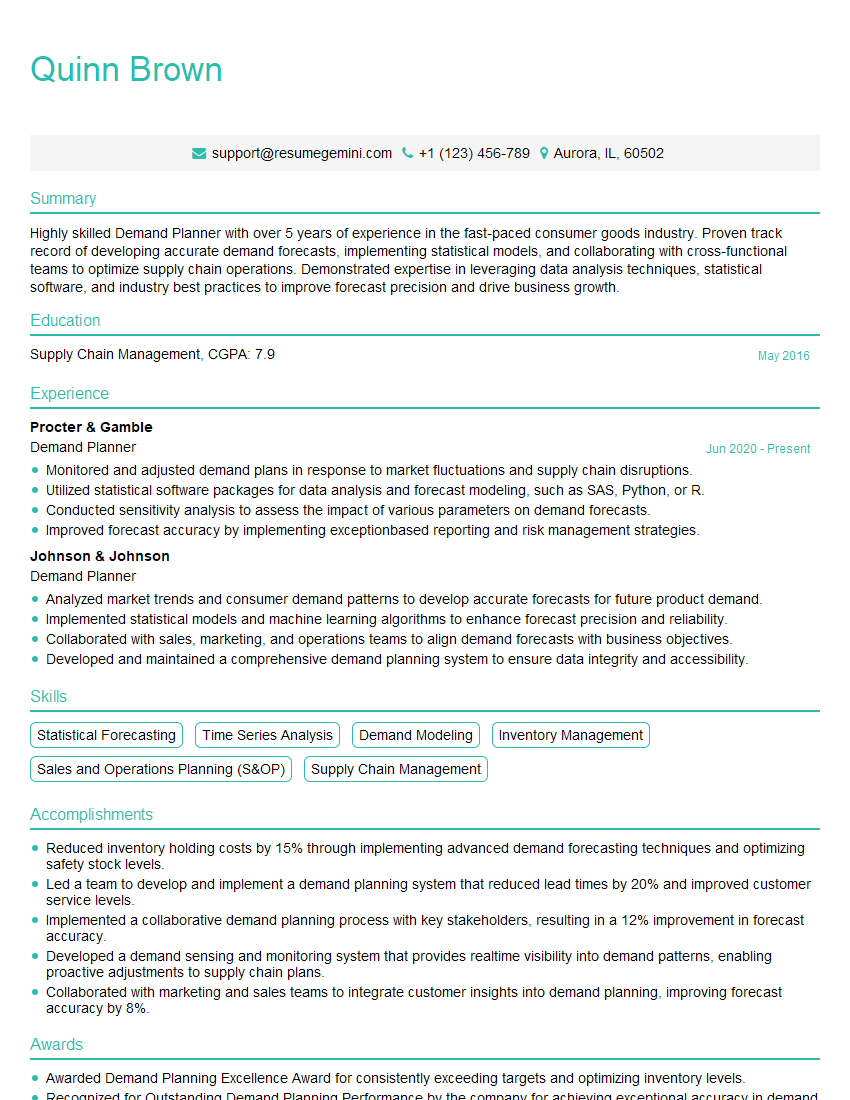
Demand Planner Resume Sample
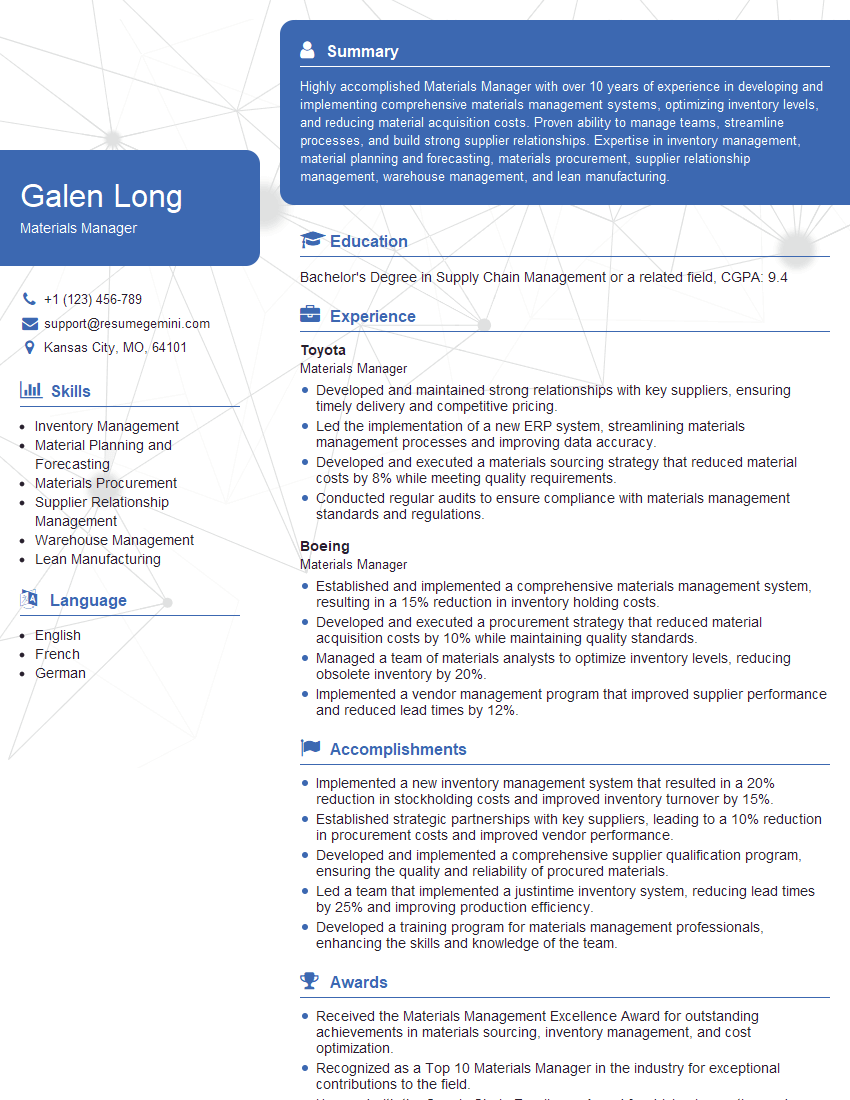
Materials Manager Resume Sample
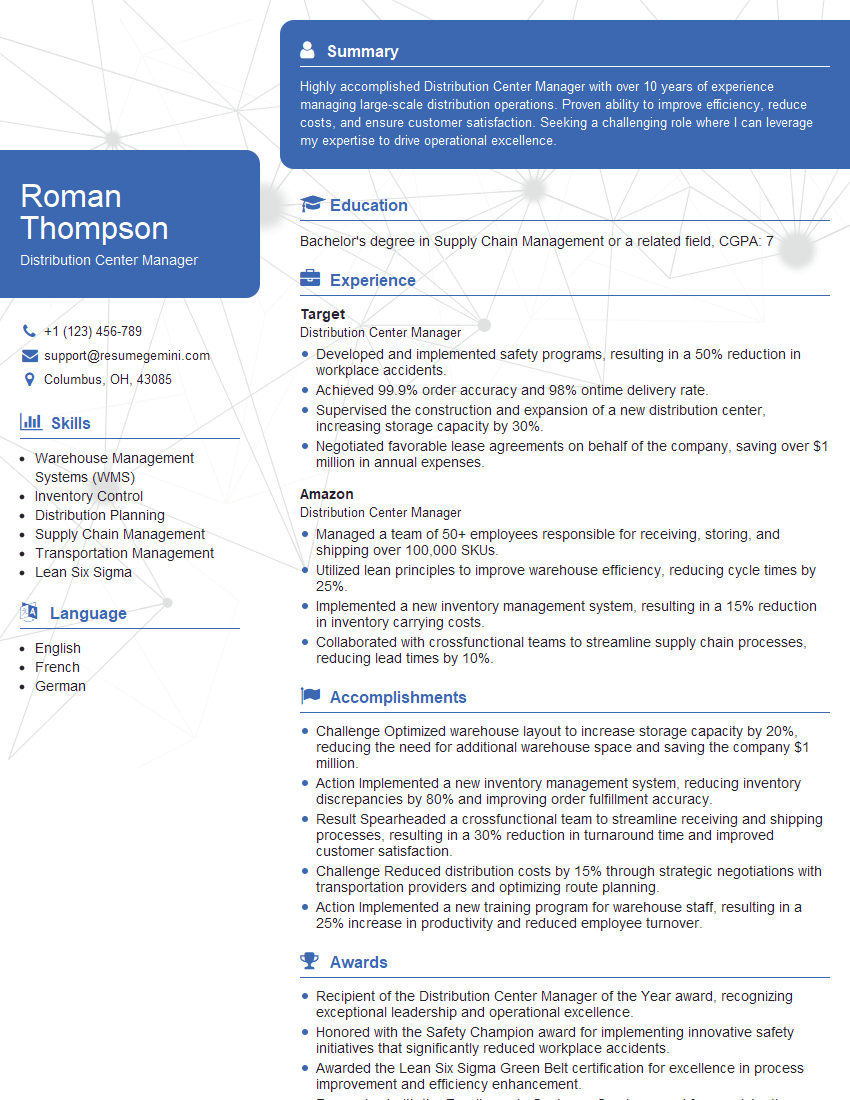
Distribution Center Manager Resume Sample
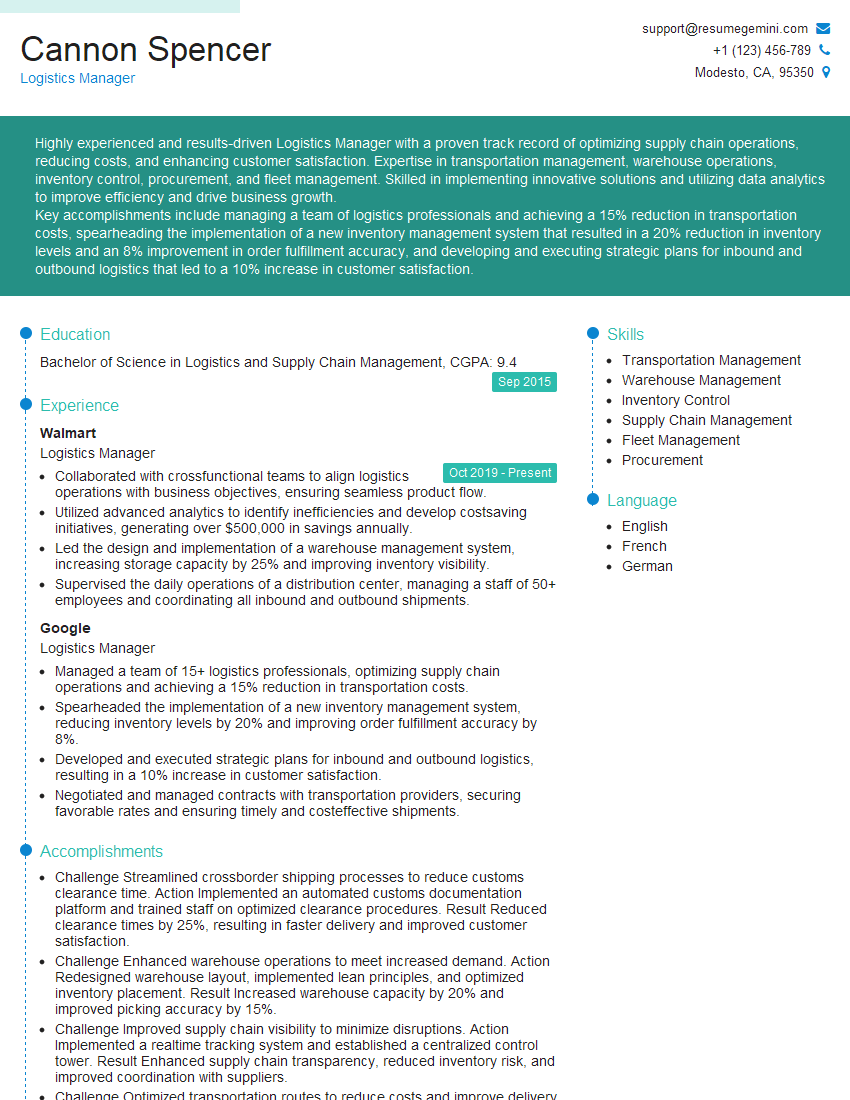
Logistics Manager Resume Sample
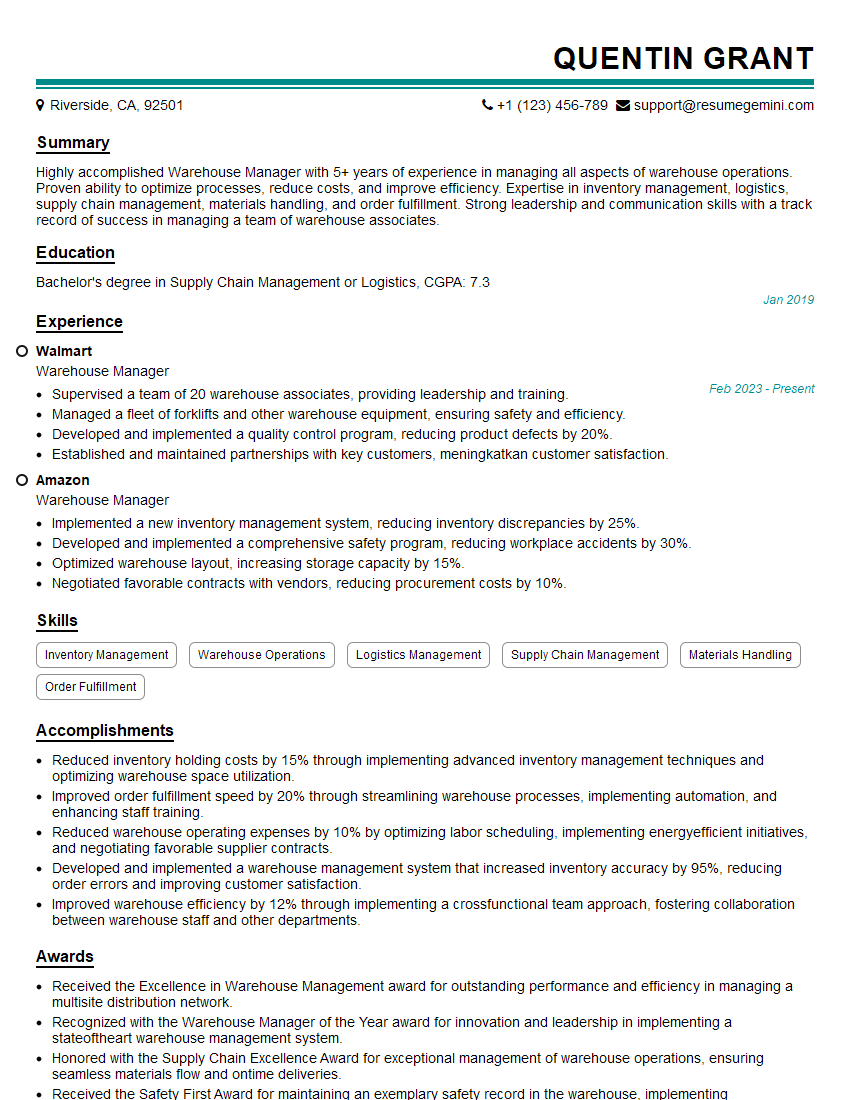
Warehouse Manager Resume Sample
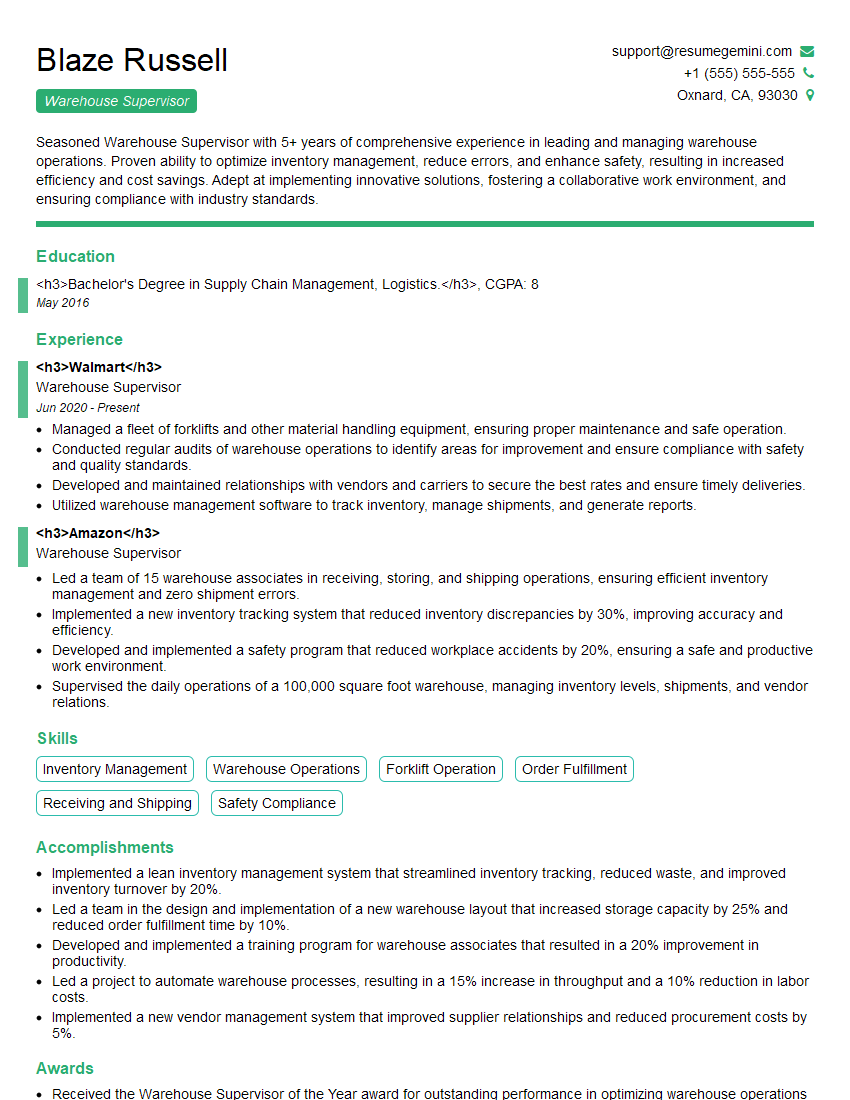
Warehouse Supervisor Resume Sample
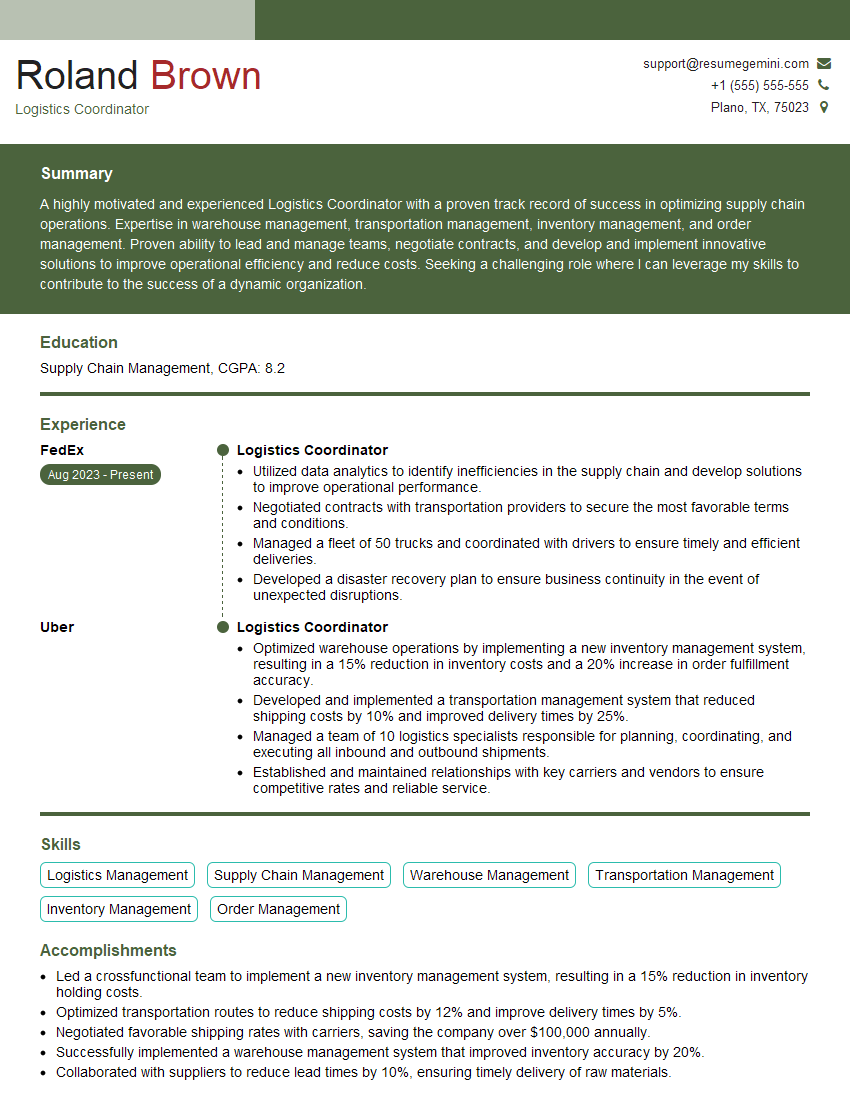
Logistics Coordinator Resume Sample
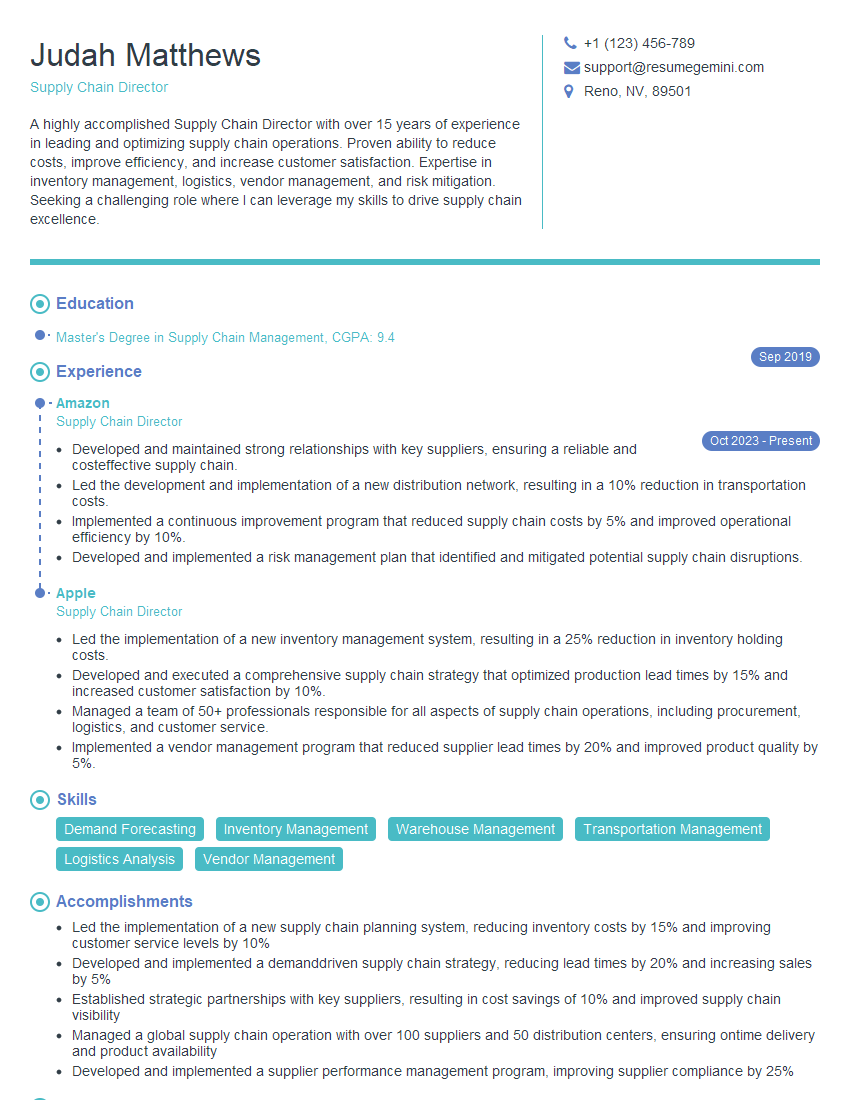
Supply Chain Director Resume Sample
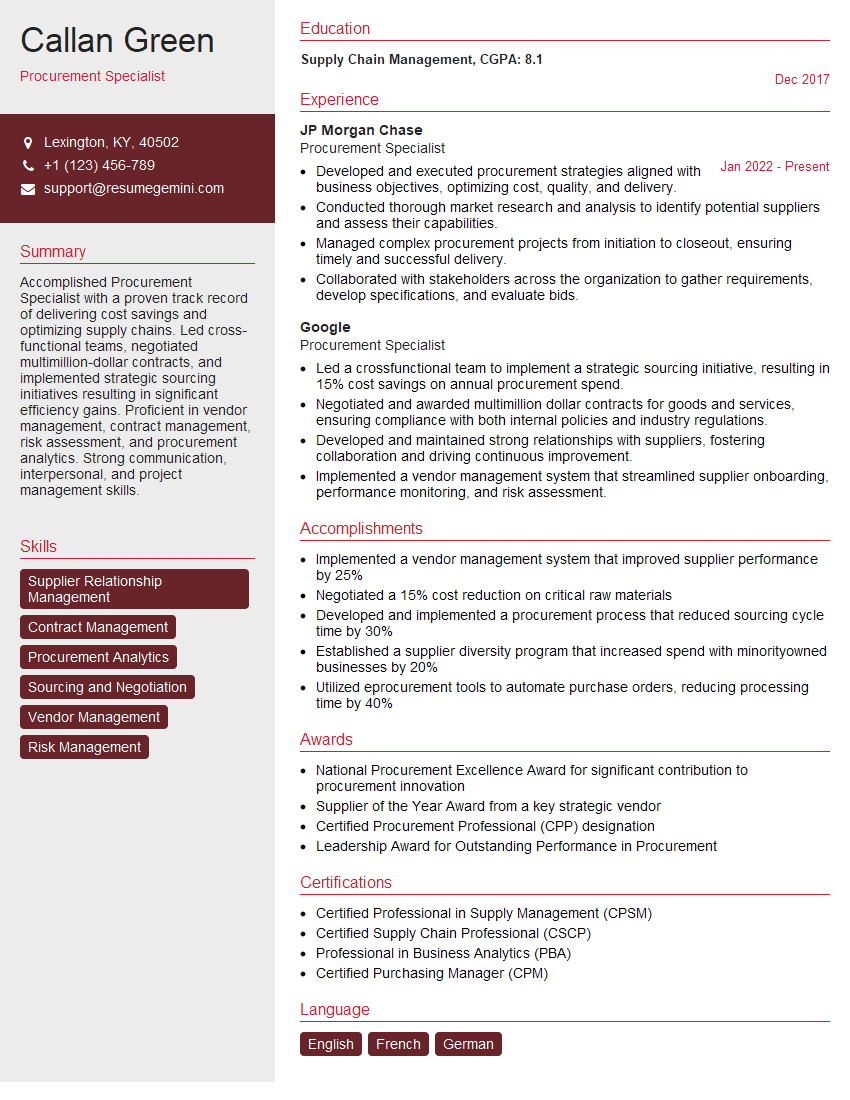
Procurement Specialist Resume Sample
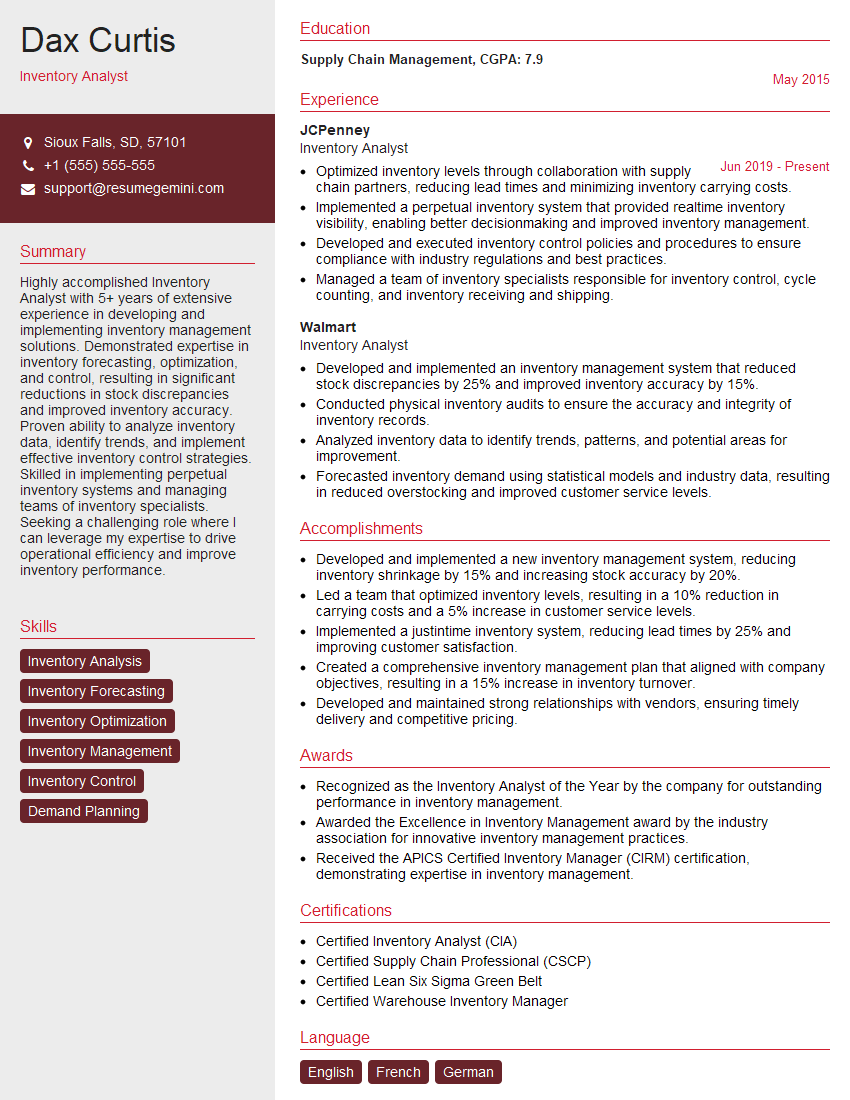
Inventory Analyst Resume Sample
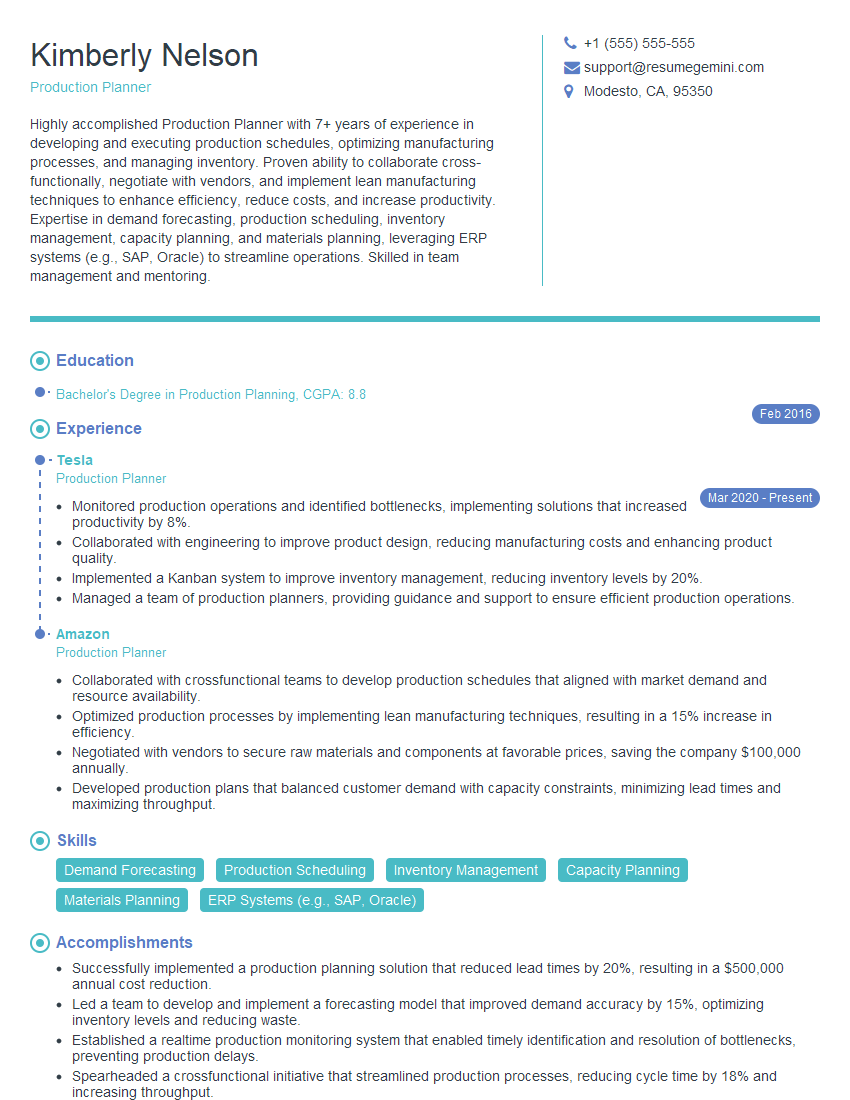
Production Planner Resume Sample
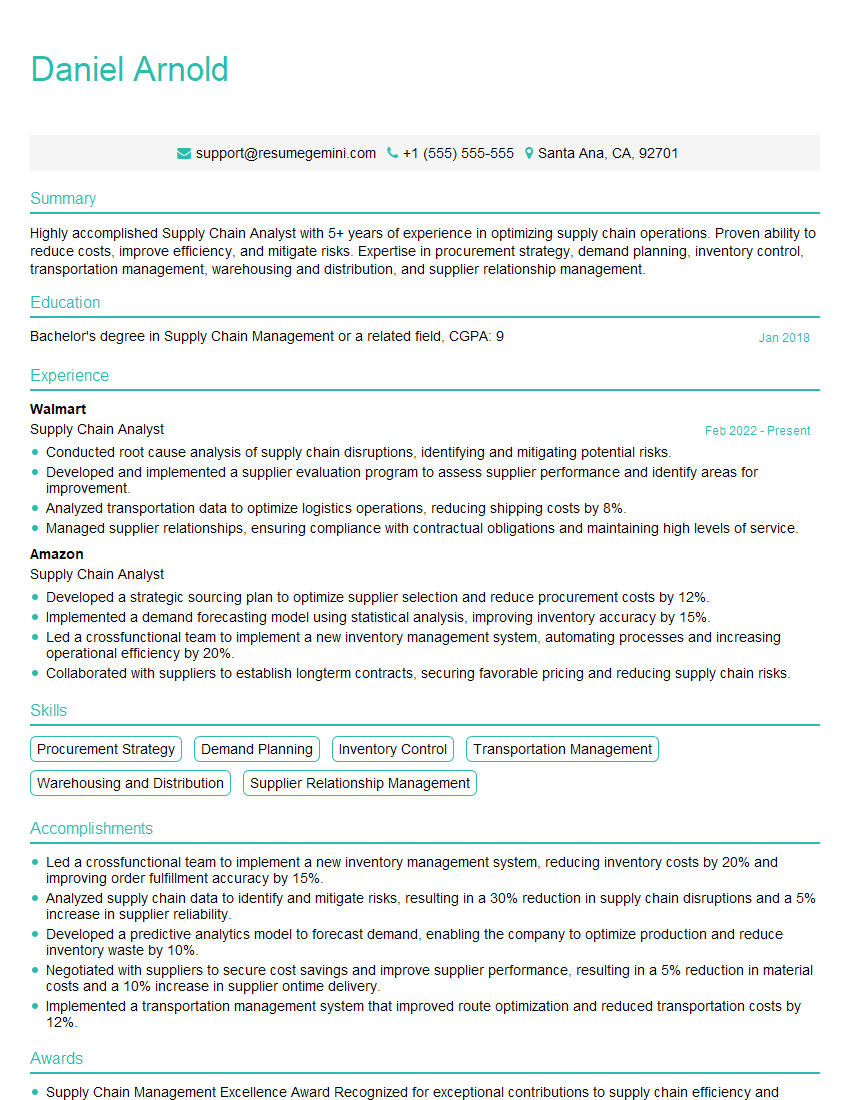
Supply Chain Analyst Resume Sample
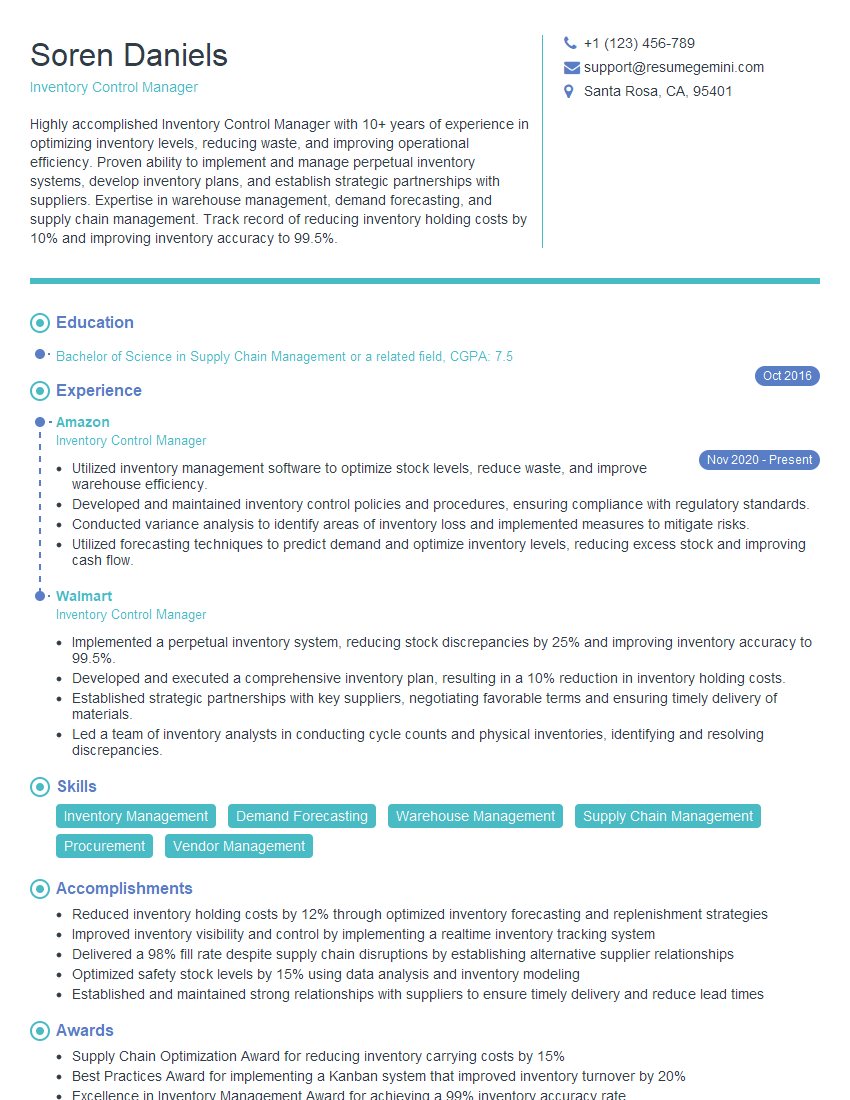
Inventory Control Manager Resume Sample
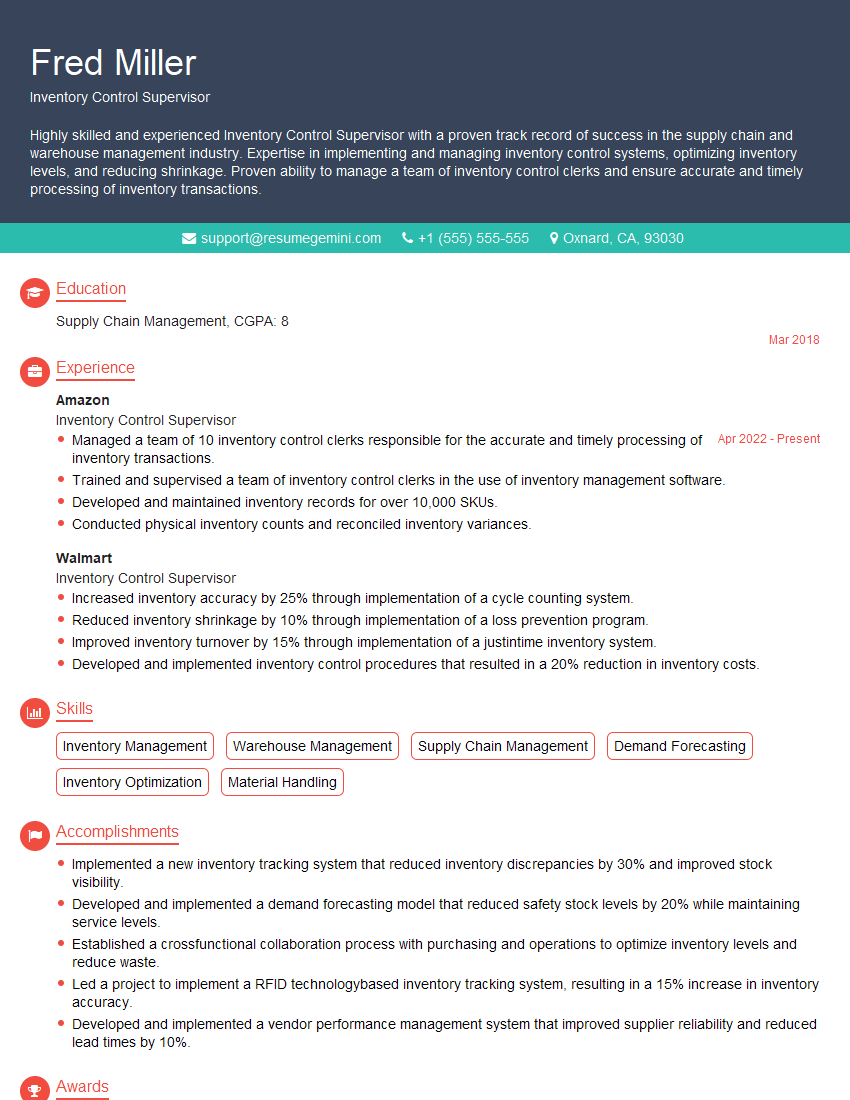
Inventory Control Supervisor Resume Sample
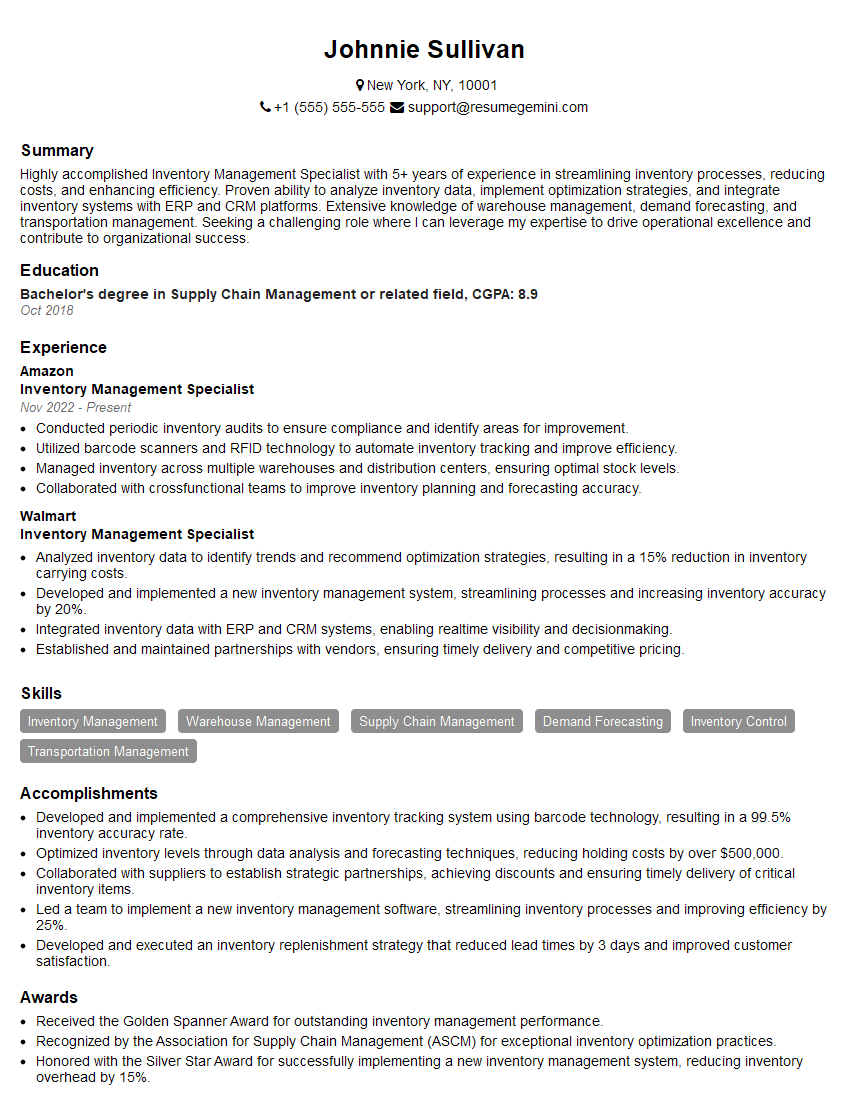
Inventory Management Specialist Resume Sample
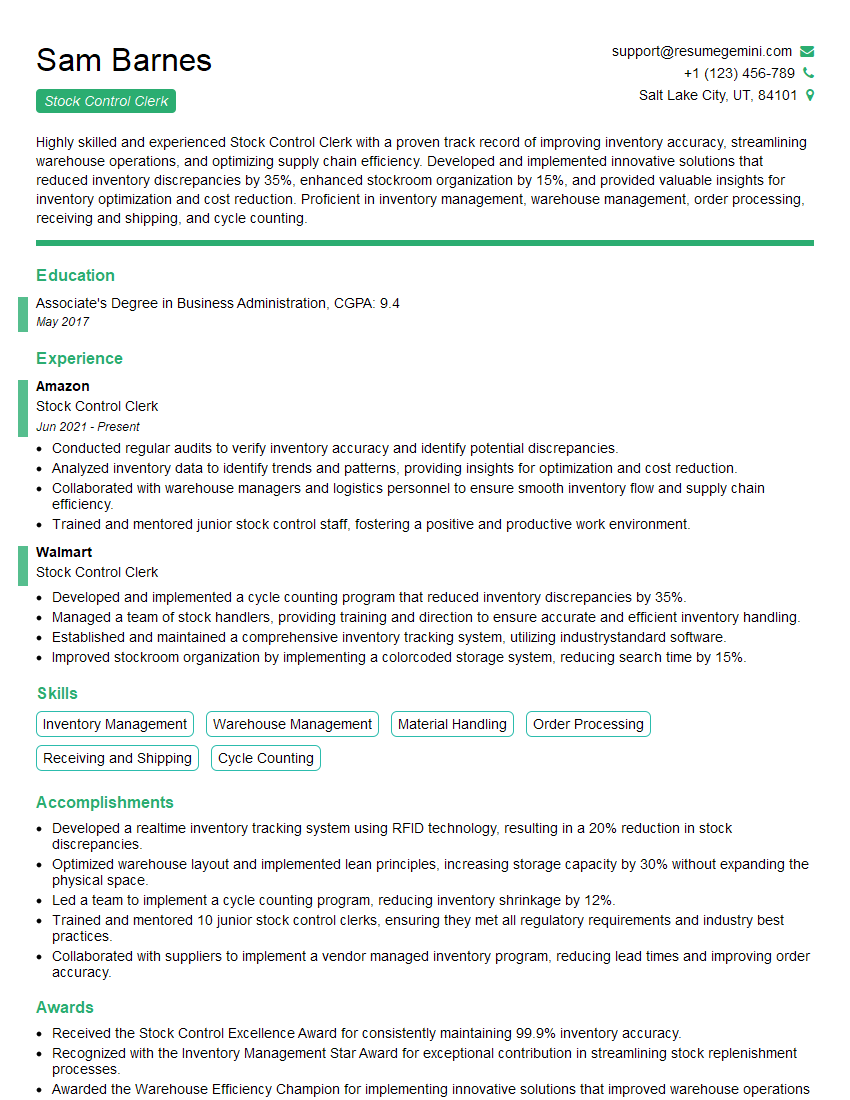
Stock Control Clerk Resume Sample
- Operations Manager
- Demand Planner
- Materials Manager
- Distribution Center Manager
- Logistics Manager
- Warehouse Manager
- Warehouse Supervisor
- Logistics Coordinator
- Supply Chain Director
- Procurement Specialist
- Inventory Analyst
- Production Planner
- Supply Chain Analyst
- Inventory Control Manager
- Inventory Control Supervisor
- Inventory Management Specialist
- Stock Control Clerk
Explore more articles
Users Rating of Our Blogs
Share Your Experience
We value your feedback! Please rate our content and share your thoughts (optional).
What Readers Say About Our Blog
Attention music lovers!
Wow, All the best Sax Summer music !!!
Spotify: https://open.spotify.com/artist/6ShcdIT7rPVVaFEpgZQbUk
Apple Music: https://music.apple.com/fr/artist/jimmy-sax-black/1530501936
YouTube: https://music.youtube.com/browse/VLOLAK5uy_noClmC7abM6YpZsnySxRqt3LoalPf88No
Other Platforms and Free Downloads : https://fanlink.tv/jimmysaxblack
on google : https://www.google.com/search?q=22+AND+22+AND+22
on ChatGPT : https://chat.openai.com?q=who20jlJimmy20Black20Sax20Producer
Get back into the groove with Jimmy sax Black
Best regards,
Jimmy sax Black
www.jimmysaxblack.com
Hi I am a troller at The aquatic interview center and I suddenly went so fast in Roblox and it was gone when I reset.
Hi,
Business owners spend hours every week worrying about their website—or avoiding it because it feels overwhelming.
We’d like to take that off your plate:
$69/month. Everything handled.
Our team will:
Design a custom website—or completely overhaul your current one
Take care of hosting as an option
Handle edits and improvements—up to 60 minutes of work included every month
No setup fees, no annual commitments. Just a site that makes a strong first impression.
Find out if it’s right for you:
https://websolutionsgenius.com/awardwinningwebsites
Hello,
we currently offer a complimentary backlink and URL indexing test for search engine optimization professionals.
You can get complimentary indexing credits to test how link discovery works in practice.
No credit card is required and there is no recurring fee.
You can find details here:
https://wikipedia-backlinks.com/indexing/
Regards
NICE RESPONSE TO Q & A
hi
The aim of this message is regarding an unclaimed deposit of a deceased nationale that bears the same name as you. You are not relate to him as there are millions of people answering the names across around the world. But i will use my position to influence the release of the deposit to you for our mutual benefit.
Respond for full details and how to claim the deposit. This is 100% risk free. Send hello to my email id: lukachachibaialuka@gmail.com
Luka Chachibaialuka
Hey interviewgemini.com, just wanted to follow up on my last email.
We just launched Call the Monster, an parenting app that lets you summon friendly ‘monsters’ kids actually listen to.
We’re also running a giveaway for everyone who downloads the app. Since it’s brand new, there aren’t many users yet, which means you’ve got a much better chance of winning some great prizes.
You can check it out here: https://bit.ly/callamonsterapp
Or follow us on Instagram: https://www.instagram.com/callamonsterapp
Thanks,
Ryan
CEO – Call the Monster App
Hey interviewgemini.com, I saw your website and love your approach.
I just want this to look like spam email, but want to share something important to you. We just launched Call the Monster, a parenting app that lets you summon friendly ‘monsters’ kids actually listen to.
Parents are loving it for calming chaos before bedtime. Thought you might want to try it: https://bit.ly/callamonsterapp or just follow our fun monster lore on Instagram: https://www.instagram.com/callamonsterapp
Thanks,
Ryan
CEO – Call A Monster APP
To the interviewgemini.com Owner.
Dear interviewgemini.com Webmaster!
Hi interviewgemini.com Webmaster!
Dear interviewgemini.com Webmaster!
excellent
Hello,
We found issues with your domain’s email setup that may be sending your messages to spam or blocking them completely. InboxShield Mini shows you how to fix it in minutes — no tech skills required.
Scan your domain now for details: https://inboxshield-mini.com/
— Adam @ InboxShield Mini
support@inboxshield-mini.com
Reply STOP to unsubscribe
Hi, are you owner of interviewgemini.com? What if I told you I could help you find extra time in your schedule, reconnect with leads you didn’t even realize you missed, and bring in more “I want to work with you” conversations, without increasing your ad spend or hiring a full-time employee?
All with a flexible, budget-friendly service that could easily pay for itself. Sounds good?
Would it be nice to jump on a quick 10-minute call so I can show you exactly how we make this work?
Best,
Hapei
Marketing Director
Hey, I know you’re the owner of interviewgemini.com. I’ll be quick.
Fundraising for your business is tough and time-consuming. We make it easier by guaranteeing two private investor meetings each month, for six months. No demos, no pitch events – just direct introductions to active investors matched to your startup.
If youR17;re raising, this could help you build real momentum. Want me to send more info?
Hi, I represent an SEO company that specialises in getting you AI citations and higher rankings on Google. I’d like to offer you a 100% free SEO audit for your website. Would you be interested?
Hi, I represent an SEO company that specialises in getting you AI citations and higher rankings on Google. I’d like to offer you a 100% free SEO audit for your website. Would you be interested?