Unlock your full potential by mastering the most common Understanding of Material Properties and Performance interview questions. This blog offers a deep dive into the critical topics, ensuring you’re not only prepared to answer but to excel. With these insights, you’ll approach your interview with clarity and confidence.
Questions Asked in Understanding of Material Properties and Performance Interview
Q 1. Explain the difference between tensile strength and yield strength.
Tensile strength and yield strength are both crucial measures of a material’s ability to withstand pulling forces, but they represent different stages of deformation. Tensile strength is the maximum stress a material can withstand before it breaks or fractures. Imagine pulling on a rubber band – tensile strength is the point at which it snaps. Yield strength, on the other hand, represents the stress at which the material begins to deform permanently. It’s the point where the material transitions from elastic deformation (where it returns to its original shape after the load is removed) to plastic deformation (where it permanently changes shape). Think of bending a paperclip – once you exceed its yield strength, it stays bent. The difference between these two strengths indicates the material’s ductility – a material with a large difference between tensile and yield strength is more ductile (able to deform significantly before fracture). A high tensile strength indicates a strong material, while a high yield strength shows a material’s resistance to permanent deformation.
Q 2. Describe the concept of fatigue failure in materials.
Fatigue failure occurs when a material breaks down under repeated cyclic loading, even if the maximum stress in each cycle is significantly below the material’s ultimate tensile strength. Imagine repeatedly bending a wire back and forth – eventually, it will break, even if you’re not applying enough force to break it in a single bend. This is because microscopic cracks develop and propagate within the material with each cycle, eventually leading to failure. The number of cycles to failure depends on the stress level of each cycle, material properties, and environmental factors. This is a significant concern in many engineering applications, such as aircraft design, where components are subjected to continuous cyclic loading during flight. Understanding fatigue failure requires careful consideration of stress amplitude, mean stress, and the material’s fatigue properties (typically represented by S-N curves). Designing components to withstand fatigue involves techniques like stress analysis, using fatigue-resistant materials, and implementing protective coatings.
Q 3. What are the common methods for characterizing material microstructure?
Characterizing material microstructure, or the arrangement of its constituent phases, is crucial to understanding its properties. Common methods include:
- Optical Microscopy: A relatively simple technique involving polishing and etching a sample, then observing it under a light microscope. This allows for the identification of grains, phases, and some defects.
- Scanning Electron Microscopy (SEM): Provides higher magnification and resolution than optical microscopy, revealing finer details of the microstructure. SEM can also be used with energy-dispersive X-ray spectroscopy (EDS) to analyze the elemental composition of different regions.
- Transmission Electron Microscopy (TEM): Offers the highest resolution, allowing for the observation of individual atoms and defects like dislocations. It’s particularly useful for studying very fine-scale microstructural features.
- X-ray Diffraction (XRD): Used to identify the crystal structure and phases present in a material. It provides information about lattice parameters and crystallite size.
The choice of method depends on the scale of features of interest and the specific information needed. For example, while optical microscopy is sufficient for analyzing the grain size of a metal, TEM is necessary for studying dislocation structures.
Q 4. How does temperature affect the mechanical properties of materials?
Temperature significantly impacts the mechanical properties of materials. Generally, increasing temperature reduces yield strength and tensile strength while increasing ductility. This is because increased thermal energy enhances atomic mobility, making it easier for dislocations (crystal lattice defects) to move, leading to increased plasticity. Conversely, lowering temperature often increases strength and hardness but reduces ductility, as atomic motion is restricted. Consider the behavior of steel: at low temperatures, it becomes brittle and prone to fracture, while at high temperatures, it becomes softer and more easily deformed. This temperature dependence is crucial in engineering applications, particularly when selecting materials for high-temperature or cryogenic environments. Phase transformations, like the austenite-to-martensite transformation in steel, also greatly influence mechanical behavior and are strongly temperature-dependent.
Q 5. Explain the difference between elastic and plastic deformation.
Elastic deformation is a temporary change in shape that is recovered when the applied stress is removed. Imagine stretching a rubber band – it returns to its original length once you let go. Elastic deformation follows Hooke’s Law (stress is proportional to strain), and the material’s response is reversible. Plastic deformation, however, is a permanent change in shape that persists even after the stress is removed. Think of bending a paperclip – it remains bent. Plastic deformation involves the movement of dislocations within the crystal structure, leading to permanent changes in the material’s microstructure. The yield strength marks the transition between elastic and plastic deformation. The distinction is crucial for designing structures that need to withstand loads without undergoing permanent deformation.
Q 6. Describe the various types of material failure modes.
Material failure modes are numerous and depend on the material, loading conditions, and environment. Some common modes include:
- Fracture: Separation of a material into two or more pieces. This can be brittle (sudden, without significant plastic deformation) or ductile (gradual, with significant plastic deformation before failure).
- Yielding: Permanent deformation of a material beyond its elastic limit.
- Creep: Time-dependent deformation under constant stress, often at high temperatures.
- Fatigue: Failure under cyclic loading, as previously discussed.
- Corrosion: Deterioration of a material due to chemical or electrochemical reactions with its environment.
- Buckling: Instability of a slender structural member under compressive loading.
Understanding failure modes is crucial for designing safe and reliable structures and components. Proper material selection, design optimization, and careful consideration of the operational environment are essential to prevent premature failure.
Q 7. What are the factors influencing the corrosion resistance of a material?
The corrosion resistance of a material is influenced by several factors:
- Material Composition: Some materials, like noble metals (gold, platinum), are inherently resistant to corrosion. Others, like stainless steel, achieve corrosion resistance through the formation of a passive oxide layer.
- Environment: The presence of moisture, oxygen, and aggressive chemicals significantly affects corrosion rates. Acidic or alkaline environments accelerate corrosion, while dry environments typically slow it down.
- Temperature: Higher temperatures generally accelerate corrosion reactions.
- Stress: Stress concentration can initiate or accelerate corrosion, leading to stress corrosion cracking.
- Surface Finish: A smooth surface is generally less susceptible to corrosion than a rough surface.
- Presence of other materials: Galvanic corrosion can occur when two dissimilar metals are in contact in an electrolyte.
Designing corrosion-resistant systems requires careful consideration of these factors. Techniques like protective coatings, cathodic protection, and material selection based on environmental conditions are commonly employed to enhance corrosion resistance.
Q 8. Explain how you would determine the appropriate material for a specific application.
Selecting the right material for a specific application is crucial for ensuring performance, safety, and cost-effectiveness. It’s a multi-step process that involves carefully considering the application’s requirements and matching them with the material’s properties.
- Define Requirements: First, thoroughly document the operational conditions. This includes factors like temperature range, load bearing capacity (tensile, compressive, shear), environmental exposure (corrosion, UV radiation), required durability and lifespan, and any specific functionality needs (e.g., electrical conductivity, biocompatibility).
- Material Selection Chart: Consult material selection charts or databases that compare material properties. These resources allow you to filter materials based on your specified criteria. For example, you could use a database to find materials that meet a specific strength requirement and are resistant to a particular chemical.
- Material Properties Review: Once you have a shortlist of potential candidates, delve deeper into their properties. Review relevant datasheets for detailed information on mechanical, thermal, and chemical properties.
- Prototyping and Testing: Construct prototypes from your top choices and subject them to rigorous testing. This might involve tensile tests, fatigue tests, or environmental stress cracking tests, depending on the specific application. Compare the results to your initial requirements.
- Cost-Benefit Analysis: Factor in material cost, manufacturing processes, and potential lifecycle costs (maintenance, replacement). The most technically suitable material may not always be the most economical choice. Consider trade-offs to optimize for your needs.
Example: Imagine designing a component for a high-temperature aerospace application. You’d prioritize materials with high melting points, excellent creep resistance, and good strength-to-weight ratios, such as nickel-based superalloys or certain ceramic composites. Careful selection based on these criteria would be essential for the safe and reliable functioning of the aerospace component.
Q 9. Describe different types of material testing methods and their applications.
Material testing methods are vital for characterizing the properties of materials and ensuring their suitability for specific applications. There’s a wide range of techniques, each designed to assess a particular property or behavior.
- Tensile Test: Measures the material’s strength, ductility, and Young’s modulus by applying a uniaxial tensile force. This is a fundamental test for evaluating metals, polymers, and composites.
- Compression Test: Determines the material’s compressive strength and stiffness by applying a compressive force. This is important for materials used in load-bearing applications under compression, such as concrete or ceramics.
- Impact Test: (e.g., Charpy or Izod) assesses the material’s resistance to sudden impacts. The energy absorbed during the impact indicates the material’s toughness. This test is crucial for structural elements prone to impact loading.
- Fatigue Test: Evaluates the material’s resistance to repeated cyclic loading. This determines the fatigue life – the number of cycles to failure. This is vital for components subjected to fluctuating loads, like aircraft wings.
- Hardness Test: (e.g., Rockwell, Brinell, Vickers) Measures the material’s resistance to indentation. Hardness is often correlated with strength and wear resistance. This is useful for evaluating the surface properties of materials.
- Creep Test: Measures the time-dependent deformation of a material under constant stress at elevated temperatures. This is important for components operating at high temperatures, such as turbine blades.
The selection of a specific testing method depends heavily on the application and the properties that need to be evaluated. A comprehensive material characterization usually involves a combination of these tests.
Q 10. Explain the concept of creep in materials.
Creep is the time-dependent plastic deformation of a material under sustained stress at elevated temperatures. Imagine a metal wire under constant tension; at room temperature, it might not deform much. However, at high temperature, it will slowly elongate over time – this is creep. It’s a gradual, irreversible process that can lead to component failure if not accounted for.
The rate of creep is influenced by several factors:
- Temperature: Higher temperatures accelerate creep.
- Stress: Higher stresses lead to faster creep rates.
- Material Properties: The inherent resistance to creep varies considerably among different materials. Some materials, like certain nickel-based superalloys, exhibit exceptional creep resistance, making them ideal for high-temperature applications.
Creep can be mitigated through material selection (choosing materials with inherent high creep resistance), lowering operating temperatures, reducing applied stress, or using creep-resistant alloys.
Example: Turbine blades in jet engines experience high temperatures and stresses. Creep is a critical factor in their design; engineers must select materials with excellent creep resistance to ensure the blades maintain their shape and integrity for a long service life.
Q 11. What is the difference between ductile and brittle fracture?
Ductile and brittle fracture are two distinct modes of material failure. The key difference lies in the material’s behavior before fracture.
- Ductile Fracture: Characterized by significant plastic deformation before fracture. This means that the material stretches and necks down considerably before finally breaking. The fracture surface is typically rough and irregular, indicating extensive plastic flow. Ductile fracture provides some warning signs before failure, such as necking and changes in material shape.
- Brittle Fracture: Occurs with little or no plastic deformation. The material fractures suddenly without significant warning. The fracture surface is relatively smooth and flat, with a characteristic crystalline structure visible in some cases. Brittle fracture is sudden and catastrophic, with little or no prior deformation.
Example: Mild steel exhibits ductile fracture, while glass or cast iron shows brittle fracture. Ductile fracture is generally preferred for structural applications as it provides a safety margin through visible deformation before failure.
Q 12. How does grain size affect material properties?
Grain size significantly affects material properties. Materials are composed of many tiny crystals, or grains. The size and distribution of these grains impact the overall strength, ductility, and toughness of the material.
- Hall-Petch Relationship: This relationship describes the strengthening effect of reducing grain size. Smaller grain sizes lead to higher yield strength and hardness due to the increased number of grain boundaries that hinder dislocation movement (dislocations are defects in the crystal structure that cause plastic deformation).
- Ductility and Toughness: While smaller grain sizes increase strength, they can sometimes reduce ductility and toughness, as the increased grain boundary area can lead to more crack initiation sites.
- Creep Resistance: Fine-grained materials often exhibit improved creep resistance at high temperatures due to the higher density of grain boundaries, which impede dislocation motion.
Example: In metalworking, controlling grain size through processes like heat treatment is essential for achieving the desired mechanical properties. For example, cold working (deformation at room temperature) decreases grain size, resulting in a stronger but less ductile metal.
Q 13. Explain the concept of stress-strain curve.
The stress-strain curve graphically depicts the relationship between the stress applied to a material and the resulting strain (deformation). It’s a fundamental tool for characterizing a material’s mechanical behavior under load.
Key features of the stress-strain curve include:
- Elastic Region: The initial portion of the curve where deformation is elastic (reversible). Removing the load returns the material to its original shape. The slope of this region represents Young’s modulus (a measure of stiffness).
- Yield Point: The stress at which plastic deformation (permanent deformation) begins. This is often marked by a noticeable deviation from the linear elastic region.
- Ultimate Tensile Strength (UTS): The maximum stress the material can withstand before fracture.
- Fracture Point: The point where the material breaks.
- Ductility: The material’s ability to deform plastically before fracture; often quantified as elongation or reduction in area.
The shape of the stress-strain curve varies greatly depending on the material type. A ductile material will exhibit a significant plastic region before fracture, while a brittle material will fracture with little or no plastic deformation.
Example: A stress-strain curve for mild steel shows a distinct yield point and a significant plastic region before fracture, indicative of its ductile nature. In contrast, the curve for a brittle ceramic shows little plastic deformation, with fracture occurring relatively quickly.
Q 14. What are the advantages and disadvantages of different material types (e.g., metals, polymers, ceramics)?
Different material types – metals, polymers, and ceramics – offer unique advantages and disadvantages, making them suitable for specific applications.
- Metals:
- Advantages: High strength, ductility, good electrical and thermal conductivity, recyclability.
- Disadvantages: Susceptible to corrosion, relatively high density, can be expensive.
- Polymers:
- Advantages: Lightweight, corrosion resistance, ease of processing, low cost, good insulation properties.
- Disadvantages: Lower strength and stiffness compared to metals, susceptible to creep and degradation at elevated temperatures, not suitable for high-temperature applications.
- Ceramics:
- Advantages: High hardness, high melting point, excellent chemical resistance, good wear resistance.
- Disadvantages: Brittle, low ductility, difficult to process.
Example: Steel is ideal for structural applications due to its high strength and ductility. Polymers are often chosen for lightweight applications like packaging or insulation. Ceramics are utilized in applications requiring high-temperature resistance, such as engine components or heat shields.
The optimal material selection depends on the specific requirements of the application, considering cost, performance, and environmental factors.
Q 15. How do you assess the compatibility of different materials in a system?
Assessing material compatibility involves considering various factors to ensure they function well together in a system. Think of it like choosing roommates – you wouldn’t put someone who needs total silence next to a party animal! Similarly, materials need to be compatible in terms of their physical, chemical, and thermal properties.
- Chemical Compatibility: This examines if materials will react with each other, causing corrosion, degradation, or embrittlement. For example, placing aluminum (highly reactive) in contact with a strong acid will lead to corrosion.
- Thermal Compatibility: Materials should have compatible thermal expansion coefficients. Large differences can cause stress and cracking, especially when exposed to temperature variations. Imagine trying to weld two metals with very different expansion rates; the resulting joint would likely crack upon cooling.
- Mechanical Compatibility: This addresses factors like hardness, strength, and elasticity. If a harder material is bonded to a softer one, the softer material might deform or fracture under stress. Consider a composite material – the matrix and reinforcing fibers need compatible mechanical properties for optimal performance.
- Electrical Compatibility: In electrical systems, compatibility is critical. Insulators must be selected to prevent short circuits, and conductors must have suitable conductivity. A cracked insulator could lead to short circuits and system failure.
A systematic approach, involving reviewing material datasheets, conducting experiments (e.g., electrochemical tests), and perhaps using compatibility charts, is vital for a successful outcome.
Career Expert Tips:
- Ace those interviews! Prepare effectively by reviewing the Top 50 Most Common Interview Questions on ResumeGemini.
- Navigate your job search with confidence! Explore a wide range of Career Tips on ResumeGemini. Learn about common challenges and recommendations to overcome them.
- Craft the perfect resume! Master the Art of Resume Writing with ResumeGemini’s guide. Showcase your unique qualifications and achievements effectively.
- Don’t miss out on holiday savings! Build your dream resume with ResumeGemini’s ATS optimized templates.
Q 16. Describe your experience with material selection software or databases.
I’ve extensively used several material selection software and databases, including CES EduPack, Granta MI, and MatWeb. These tools are invaluable for streamlining material selection, particularly in complex designs.
CES EduPack, for example, allows you to filter materials based on various properties (strength, weight, cost, recyclability etc.) and constraints (temperature range, environmental regulations). This facilitates efficient exploration of alternatives and informed decision-making. I recall using it to choose a suitable biocompatible polymer for a medical implant – the database’s filters quickly narrowed down thousands of materials to a few suitable candidates based on biocompatibility, strength, and processability.
MatWeb is particularly useful for accessing detailed material property data, providing crucial information for calculations and simulations. I’ve used this for verifying material properties before initiating Finite Element Analysis (FEA) for a new structural design project.
Q 17. Explain the principles of non-destructive testing (NDT) methods.
Non-destructive testing (NDT) methods allow us to evaluate the properties and integrity of materials without causing damage. This is crucial for ensuring safety and reliability in various applications, ranging from aerospace to infrastructure.
- Visual Inspection: The simplest method, involves visually checking for surface defects like cracks, corrosion, or dents. This is often the first step in any NDT process.
- Ultrasonic Testing (UT): Uses high-frequency sound waves to detect internal flaws. The echoes reflected from defects reveal their location and size, a bit like sonar. This is used extensively in inspecting welds and castings.
- Radiographic Testing (RT): Employs X-rays or gamma rays to create images of internal structures. This can reveal internal cracks, porosity, or inclusions. It’s commonly used in aerospace and pipeline inspections.
- Magnetic Particle Testing (MT): Detects surface and near-surface cracks in ferromagnetic materials by applying a magnetic field and spraying ferromagnetic particles. The particles accumulate at crack locations, making them visible.
- Liquid Penetrant Testing (PT): A dye is applied to the surface and penetrates any cracks. Excess dye is removed, and a developer is sprayed on to draw the dye out of the cracks, making them visible.
The choice of NDT method depends on the material, component geometry, and the type of defects being sought.
Q 18. How would you investigate a material failure in a product?
Investigating a material failure requires a systematic and multi-faceted approach. It’s like solving a detective mystery!
- Visual Inspection: Carefully examine the failed component to identify the fracture surface and the location of the failure. Take detailed photographs and note any obvious signs of damage.
- Gather Information: Collect information about the service history, loading conditions, and operating environment of the component. This is essential to understanding the context of the failure.
- Microscopic Examination: Use optical or scanning electron microscopy to examine the fracture surface at higher magnifications. This can reveal details about the fracture mechanism, such as brittle fracture, ductile fracture, or fatigue.
- Chemical Analysis: Perform chemical analysis (e.g., EDS) to determine the material composition and identify any impurities or segregation that might have contributed to the failure.
- Mechanical Testing: Conduct mechanical tests (e.g., tensile tests, hardness tests) on samples from the failed component and/or from the original material to assess the material properties and compare them with expected values.
- Finite Element Analysis (FEA): This can be used to model the loading conditions and predict stress and strain distributions within the component, potentially identifying areas of high stress that may have led to failure.
Based on the collected data, a failure analysis report is created, outlining the cause of failure and recommendations for preventing future occurrences.
Q 19. Describe your experience with Finite Element Analysis (FEA) in material selection or design.
Finite Element Analysis (FEA) is a powerful computational tool I utilize extensively for material selection and design optimization. It allows us to simulate the behavior of materials under various loading conditions and predict their performance.
In material selection, FEA helps assess whether a material can withstand the expected stresses and strains in a given application. For example, I once used FEA to compare the performance of different aluminum alloys for a lightweight automotive component. By simulating the loading conditions, we determined that a specific alloy offered the best combination of strength and weight savings.
In design optimization, FEA is used to iterate on designs and explore different material options to achieve optimal performance. We can assess stress concentrations and areas of potential failure, making iterative improvements to the design based on the analysis. For instance, I’ve used FEA to optimize the design of a plastic housing to reduce its weight while maintaining sufficient strength and rigidity.
Q 20. Explain the concept of hardness testing and various methods used.
Hardness testing measures a material’s resistance to indentation or scratching. It provides an indirect measure of strength and other mechanical properties. Several methods exist, each with its own advantages and limitations.
- Brinell Hardness Test: A hardened steel ball is pressed into the material under a specified load. The diameter of the indentation is measured and used to calculate the hardness.
- Rockwell Hardness Test: Measures the depth of indentation caused by a specific indenter under a major load, followed by a minor load. Different scales exist (e.g., Rockwell B, Rockwell C) depending on the material and indenter used.
- Vickers Hardness Test: A diamond pyramid indenter is pressed into the material, and the diagonal length of the resulting indentation is measured. This method provides a consistent hardness value irrespective of material hardness.
- Shore Durometer: Measures the resistance of elastomers and soft plastics to indentation using a specific indenter and scale. It’s particularly useful for softer materials.
The choice of hardness test method depends on the material’s hardness range and the desired level of accuracy. It’s crucial to maintain consistency in the testing procedure and calibrate equipment regularly.
Q 21. How do you determine the appropriate surface treatment for a material?
Choosing the right surface treatment is crucial for enhancing material properties, improving aesthetics, or protecting against environmental factors. The selection process depends on the material, the desired outcome, and the application.
- Corrosion Protection: For materials susceptible to corrosion, coatings like galvanization (zinc coating on steel), anodizing (aluminum oxide layer on aluminum), or paint systems provide protection. The choice depends on the environment and required lifespan.
- Wear Resistance: Hard coatings, like chrome plating, nitriding (nitrogen diffusion into the surface), or physical vapor deposition (PVD) coatings, enhance wear resistance. For example, nitriding increases the surface hardness of steel, enhancing its resistance to wear and fatigue.
- Improved Aesthetics: Electroplating (e.g., gold, silver, or nickel plating), powder coating, or painting are often used to improve the appearance and finish of products. Powder coating is environmentally friendly and provides a durable finish.
- Biocompatibility: For medical implants, surface treatments must ensure biocompatibility and minimize tissue rejection. Methods may include plasma treatments or coating with biocompatible materials.
Therefore, factors like cost, environmental impact, and the application environment must all be considered when selecting a surface treatment. A thorough understanding of both the material and the environmental challenges it faces is critical for success.
Q 22. Describe your understanding of material degradation mechanisms.
Material degradation, simply put, is the process by which a material’s properties deteriorate over time due to various factors. Think of an old, rusty car – that’s material degradation in action! These mechanisms are complex and can be broadly categorized.
- Chemical Degradation: This involves chemical reactions that alter the material’s composition. Corrosion, for instance, is a prime example where metals react with their environment, forming oxides and losing structural integrity. Plastics can also degrade through oxidation, UV exposure, or hydrolysis (reaction with water).
- Physical Degradation: This covers processes that alter the material’s physical structure without changing its chemical composition. Fatigue, caused by repeated stress cycles, can lead to crack initiation and propagation. Creep, the slow deformation under constant stress at high temperatures, is another example. Erosion, the wearing away of material by the action of a fluid, is also relevant.
- Biological Degradation: Certain materials are susceptible to attack by biological organisms like bacteria or fungi. Biodegradation of polymers is a growing area of research, as we strive to create more sustainable materials.
Understanding these mechanisms is crucial for predicting a material’s lifespan and designing for durability. For example, choosing corrosion-resistant stainless steel for marine applications prevents rapid degradation. Similarly, using high-temperature resistant polymers in aerospace reduces creep and ensures component integrity.
Q 23. What are the key considerations for selecting materials in high-temperature applications?
Selecting materials for high-temperature applications requires careful consideration of several critical factors. It’s not just about withstanding heat, but also maintaining strength, stability, and functionality under extreme conditions. Think of the materials used in jet engines or nuclear reactors – these are prime examples where material selection is paramount.
- Melting Point/Glass Transition Temperature: The material must possess a significantly higher melting point (for metals) or glass transition temperature (for polymers) than the operating temperature to avoid melting or significant softening.
- Creep Resistance: High-temperature applications often involve sustained stresses, so the material should exhibit minimal creep (time-dependent deformation) to maintain dimensional stability.
- Oxidation Resistance: At high temperatures, oxidation (reaction with oxygen) can significantly weaken materials. Therefore, oxidation resistance is crucial. Protective coatings can sometimes mitigate this issue.
- Thermal Shock Resistance: The material must be able to withstand rapid temperature fluctuations without cracking or fracturing. This is particularly critical in applications involving thermal cycling.
- Strength and Stiffness at High Temperature: Even at elevated temperatures, the material needs to retain sufficient strength and stiffness to perform its intended function. Superalloys, for example, are designed for this purpose.
Often, a combination of materials and design strategies is employed. For example, using a ceramic matrix composite could offer high-temperature strength and oxidation resistance, while a cooling system may be incorporated to mitigate thermal stresses.
Q 24. Explain the concept of viscoelasticity.
Viscoelasticity describes materials that exhibit both viscous (fluid-like) and elastic (solid-like) behavior. Imagine silly putty – you can stretch it like a solid (elastic), but it also flows slowly like a liquid (viscous) over time. That’s viscoelasticity.
Elastic materials return to their original shape immediately after the removal of stress, following Hooke’s Law. Viscous materials deform permanently under stress, exhibiting flow. Viscoelastic materials demonstrate a time-dependent response to stress, exhibiting both elastic and viscous characteristics. The response depends on factors such as temperature, strain rate, and time.
This time-dependent behavior is captured by models like the Maxwell model (spring and dashpot in series) and the Kelvin-Voigt model (spring and dashpot in parallel). These models describe the material’s stress-strain relationship mathematically, enabling predictions of the material’s behavior under different loading conditions.
Viscoelasticity is crucial in many applications. Polymers, for example, display pronounced viscoelastic behavior, which influences their processing and application. Understanding the viscoelastic properties of polymers is vital for designing components, such as seals or shock absorbers, that need to respond to dynamic loads.
Q 25. How would you interpret a material data sheet?
Interpreting a material data sheet involves systematically reviewing the various properties listed to understand the material’s behavior and suitability for a given application. It’s like reading a material’s ‘resume’ before using it in your project.
Here’s a structured approach:
- Identify the Material: Begin by clearly identifying the material’s name, grade, and manufacturer.
- Mechanical Properties: Analyze key parameters like tensile strength, yield strength, elongation, Young’s modulus, hardness, and fatigue strength. Consider the test methods used to obtain these values (e.g., ASTM standards).
- Physical Properties: Review density, thermal conductivity, specific heat, melting point, coefficient of thermal expansion, and electrical conductivity. These parameters impact the material’s behavior under various environmental conditions.
- Chemical Properties: Note any information on chemical composition, corrosion resistance, and reactivity with other materials.
- Processing Information: Look for details on recommended processing techniques (e.g., welding, machining) and any special precautions.
By critically examining all relevant sections, you can ascertain whether the material’s properties match the requirements of your application. Comparing multiple data sheets allows for a thorough material selection process, ensuring that the chosen material will perform optimally under the expected conditions.
Q 26. Describe your experience with different material joining techniques (e.g., welding, bonding).
My experience encompasses various material joining techniques, each with its own advantages and limitations. The choice depends heavily on the materials involved, the desired joint strength, and the application’s requirements. Think of it like choosing the right tool for a particular job – a hammer isn’t ideal for delicate electronics.
- Welding: I have experience with various welding processes, including arc welding (SMAW, GMAW, GTAW), resistance welding, and laser welding. These techniques are suitable for joining metals, providing strong, permanent joints. The choice of welding method depends on factors like material thickness, weld joint design, and desired quality.
- Adhesive Bonding: I’m proficient in selecting and applying structural adhesives for joining a variety of materials, including metals, polymers, and composites. Bonding offers advantages in joining dissimilar materials and complex geometries, but careful consideration of surface preparation and adhesive selection is critical.
- Soldering and Brazing: I have experience with these techniques for joining metals, particularly for electronic assemblies where high conductivity and precision are required. These processes use lower temperatures compared to welding.
- Mechanical Fastening: This involves joining materials using screws, bolts, rivets, etc. This is a widely used technique but can introduce stress concentrations and may not be suitable for all applications.
In practice, I often evaluate different joining methods for a specific project, considering factors such as cost-effectiveness, joint strength, reliability, and the aesthetics of the final product. The selection process also incorporates assessments of potential failure modes and joint durability under anticipated operating conditions.
Q 27. Explain the principles of fracture mechanics.
Fracture mechanics is the field of study dedicated to understanding how cracks initiate and propagate within a material, ultimately leading to fracture. It’s about predicting when and how a material will break, not just how strong it is in general.
The core principles revolve around the concept of stress intensity factors (K). This factor quantifies the stress field at the crack tip. When K exceeds the material’s fracture toughness (KIC), the crack propagates, leading to fracture. Several factors influence K, including crack size, applied stress, and geometry.
Different fracture modes exist:
- Mode I (Opening Mode): Crack surfaces are pulled apart perpendicular to the crack plane.
- Mode II (Sliding Mode): Crack surfaces slide past each other in the plane of the crack.
- Mode III (Tearing Mode): Crack surfaces slide past each other out of the plane of the crack.
Applications of fracture mechanics are vast, from designing aircraft components to predicting the lifespan of pipelines. By analyzing stress intensity factors and fracture toughness, engineers can design components to prevent crack growth, assess the safety of existing structures containing cracks, and even incorporate controlled crack growth strategies in specific designs.
Q 28. Describe your experience in conducting material testing and analysis.
I have extensive experience in conducting material testing and analysis, leveraging both traditional and advanced techniques to characterize material properties and identify potential failure mechanisms. This involves a range of experimental and analytical methods.
- Tensile Testing: Determining yield strength, tensile strength, elongation, and Young’s modulus.
- Compression Testing: Evaluating compressive strength and modulus.
- Hardness Testing: Assessing material hardness using various scales (Brinell, Rockwell, Vickers).
- Fatigue Testing: Determining fatigue strength and endurance limit.
- Creep Testing: Measuring time-dependent deformation at elevated temperatures.
- Fracture Toughness Testing: Determining the resistance of a material to crack propagation.
- Microscopy (Optical and Electron): Examining the microstructure for defects, inclusions, and grain size.
- X-ray Diffraction: Identifying crystal structure and phase composition.
Data analysis involves using statistical methods to interpret test results, account for variability, and ensure data reliability. I’m proficient in using software packages such as Abaqus or ANSYS for simulating material behavior under various loading conditions and validating experimental findings.
A recent project involved analyzing the fatigue failure of a critical component. Through a combination of fatigue testing, microscopy, and fracture analysis, I was able to identify the root cause of failure (a microscopic crack originating from a manufacturing defect), which led to improvements in the manufacturing process.
Key Topics to Learn for Understanding of Material Properties and Performance Interview
- Mechanical Properties: Stress-strain relationships, tensile strength, yield strength, elasticity, plasticity, fatigue, creep, fracture toughness. Consider practical applications in structural design and material selection.
- Thermal Properties: Thermal conductivity, specific heat capacity, thermal expansion, melting point. Explore how these properties influence material choices in applications like heat exchangers and insulation.
- Electrical Properties: Conductivity, resistivity, dielectric strength. Understand the role of these properties in electronic components and applications.
- Optical Properties: Refractive index, transparency, reflectivity, absorption. Discuss the use of these properties in optical fibers, lenses, and coatings.
- Chemical Properties: Corrosion resistance, reactivity, oxidation, degradation. Analyze how these impact material lifespan and selection in various environments.
- Material Characterization Techniques: Familiarize yourself with common testing methods like tensile testing, hardness testing, microscopy, and spectroscopy. Understand how these techniques reveal material properties.
- Material Selection: Learn to apply your knowledge of material properties to select the optimal material for a given application, considering factors like cost, performance, and environmental impact.
- Failure Analysis: Develop your ability to identify the causes of material failure and propose solutions for improved performance and reliability.
Next Steps
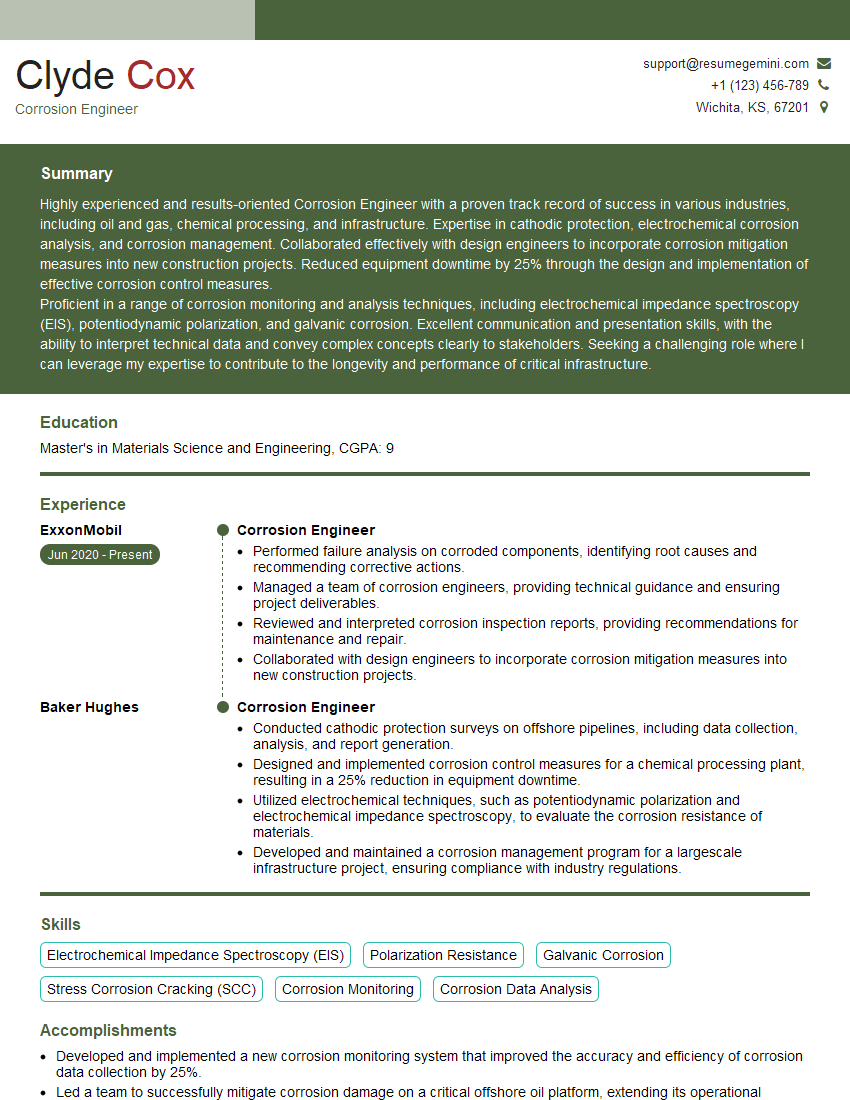
Mastering the understanding of material properties and performance is crucial for career advancement in engineering, manufacturing, and materials science. A strong foundation in this area opens doors to exciting opportunities and allows you to contribute significantly to innovative projects. To maximize your job prospects, create a compelling and ATS-friendly resume that highlights your skills and experience. ResumeGemini is a trusted resource that can help you build a professional resume tailored to your specific needs. Examples of resumes tailored to showcasing expertise in Understanding of Material Properties and Performance are available to help you get started. Invest the time to craft a powerful resume—it’s your first impression on potential employers.



Explore more articles
Users Rating of Our Blogs
Share Your Experience
We value your feedback! Please rate our content and share your thoughts (optional).
What Readers Say About Our Blog
Very informative content, great job.
good