Unlock your full potential by mastering the most common Understanding of retail store operations interview questions. This blog offers a deep dive into the critical topics, ensuring you’re not only prepared to answer but to excel. With these insights, you’ll approach your interview with clarity and confidence.
Questions Asked in Understanding of retail store operations Interview
Q 1. Describe your experience managing inventory levels in a retail setting.
Managing inventory effectively is crucial for profitability in retail. It’s a balancing act between minimizing storage costs and avoiding stockouts that lead to lost sales. My approach involves a multi-faceted strategy.
Demand Forecasting: I leverage historical sales data, seasonal trends, and promotional plans to predict future demand. For example, I’d analyze past Christmas sales data to anticipate the quantity of holiday-themed items to stock this year. This often involves using forecasting software to refine predictions.
Inventory Tracking: Implementing a robust inventory management system (IMS) – either software-based or a well-organized manual system – is vital. This allows for real-time tracking of stock levels, identifying slow-moving items, and triggering re-ordering points automatically. I’ve successfully implemented and managed systems like ABC analysis to prioritize inventory control based on value and demand.
Just-in-Time (JIT) Inventory: Where feasible, adopting a JIT approach minimizes storage costs by ordering goods only when needed. This is particularly effective for perishable goods or items with high turnover rates. However, it requires a very accurate demand forecast and a reliable supply chain.
Regular Stock Audits: Physical stock counts are necessary to reconcile discrepancies between recorded inventory and actual stock levels. These audits identify potential issues like theft, damage, or errors in the inventory system. I would typically conduct cycle counts – smaller, more frequent counts – rather than a full inventory count at once.
By combining these strategies, I ensure that we have enough stock to meet customer demand, minimizing stockouts, while simultaneously optimizing storage space and reducing holding costs.
Q 2. How do you handle peak customer traffic and maintain efficient operations?
Handling peak customer traffic requires meticulous planning and efficient execution. My strategy focuses on proactive measures and adaptable solutions.
Staffing: Scheduling sufficient staff, including cashiers, sales associates, and stock personnel, is crucial. I use historical data on peak periods to determine appropriate staffing levels and ensure adequate coverage during these times. Cross-training staff enables flexibility to address various needs.
Queue Management: Implementing a well-organized queue system, perhaps with designated lanes for different services (e.g., express checkout), ensures a smooth customer flow and minimizes wait times. Clear signage and staff guidance are essential.
Optimized Layout: Ensuring easy navigation, clear product placement, and readily accessible customer service areas are key to maintaining a smooth shopping experience during peak times. This might involve temporary display adjustments or additional signage.
Technology: Utilizing technology like self-checkout kiosks, mobile POS systems, and online ordering with in-store pickup can significantly reduce wait times and free up staff to handle other tasks. I’ve successfully implemented self-checkout in a previous role, leading to a 15% reduction in checkout times during peak hours.
Real-time Monitoring: Closely monitoring customer flow and queue length allows for quick adjustments in staffing or process to address bottlenecks. This might involve temporarily opening additional checkout lanes or deploying staff to assist in specific areas.
By proactively addressing potential challenges, I maintain efficient operations and ensure a positive shopping experience even during the busiest times.
Q 3. Explain your process for resolving customer complaints and ensuring satisfaction.
Resolving customer complaints effectively is essential for building loyalty and maintaining a positive store reputation. My approach focuses on empathy, efficiency, and a commitment to finding satisfactory solutions.
Active Listening: I begin by attentively listening to the customer’s complaint, acknowledging their frustration, and showing empathy. This demonstrates that I value their feedback and am committed to resolving the issue.
Gather Information: I gather all necessary information to understand the situation thoroughly. This may involve reviewing receipts, examining the product, or speaking with other staff members involved.
Offer a Solution: Based on the information gathered, I offer a fair and appropriate solution. This could involve a refund, exchange, repair, or a store credit depending on the circumstances. My goal is to find a solution that exceeds the customer’s expectations.
Follow Up: I always follow up with the customer to ensure they are satisfied with the resolution. This shows that I am committed to providing excellent customer service and building a long-term relationship.
Documentation: I maintain detailed records of all customer complaints and resolutions. This helps identify recurring issues, improve store processes, and track customer satisfaction trends. This data is invaluable for continuous improvement.
I believe in empowering employees to resolve customer complaints autonomously, providing them with the necessary training and authority to handle most situations effectively. This leads to quicker resolutions and empowers staff.
Q 4. How do you analyze sales data to identify trends and opportunities for improvement?
Analyzing sales data is crucial for identifying trends, understanding customer behavior, and optimizing business strategies. I employ a multi-step approach:
Data Collection: I ensure that all relevant sales data – including point-of-sale (POS) data, inventory data, and customer demographics – is accurately collected and stored. This data should be accessible and easily analyzed.
Data Cleaning and Preparation: Before analysis, I clean and prepare the data to ensure accuracy. This includes handling missing values, removing outliers, and transforming data into a suitable format for analysis.
Descriptive Analysis: I start with descriptive statistics (e.g., averages, medians, and percentages) to summarize sales performance across different products, categories, and time periods. This often involves using spreadsheets or dedicated business intelligence (BI) software.
Trend Analysis: I use various techniques – including time-series analysis and moving averages – to identify trends in sales data. This helps to predict future demand and plan inventory accordingly.
Comparative Analysis: I compare sales performance across different stores, product categories, or marketing campaigns to identify best-performing areas and areas needing improvement. For example, I might compare sales of a new product against sales of similar products.
Advanced Analytics (where applicable): For deeper insights, I might use advanced analytical techniques such as regression analysis or machine learning algorithms to identify key drivers of sales and predict future outcomes.
By using these techniques, I identify areas for improvement such as product assortment optimization, pricing strategies, and marketing campaigns. For example, if I see a decline in sales of a particular product category, I might investigate if the product displays are effective or if competitor pricing is impacting sales. This leads to data-driven decision-making, improving overall store performance.
Q 5. What strategies do you employ to improve employee productivity and morale?
Improving employee productivity and morale is crucial for a successful retail operation. I use a multifaceted approach focused on creating a positive work environment and providing opportunities for growth.
Clear Expectations and Goals: I ensure that employees have a clear understanding of their roles, responsibilities, and performance expectations. Setting attainable goals, providing regular feedback, and recognizing achievements are crucial.
Training and Development: I invest in ongoing training and development opportunities to equip employees with the necessary skills to perform their jobs effectively. This could include product knowledge training, customer service skills training, or leadership development programs.
Empowerment and Autonomy: Empowering employees to make decisions within their scope of responsibility enhances their sense of ownership and improves job satisfaction. I encourage initiative and innovative problem-solving.
Open Communication: I foster open and honest communication channels, encouraging employees to express concerns and suggestions. Regular team meetings and one-on-one check-ins help build trust and address issues promptly.
Recognition and Rewards: Recognizing and rewarding employees for their hard work and dedication is essential for boosting morale. This could include verbal praise, employee of the month awards, bonuses, or opportunities for advancement.
Work-Life Balance: Creating a culture that respects employee work-life balance is important for reducing stress and burnout. This includes offering flexible scheduling options, where possible.
By focusing on these key areas, I create a positive and productive work environment where employees feel valued, engaged, and motivated. A motivated team leads to increased productivity and improved customer service.
Q 6. Describe your experience with visual merchandising and its impact on sales.
Visual merchandising plays a significant role in driving sales by creating an appealing and engaging shopping environment. My experience shows a direct correlation between effective visual merchandising and increased sales.
Understanding Target Audience: I start by understanding the target customer’s preferences and shopping habits. This informs the overall visual presentation, ensuring it resonates with the intended audience.
Strategic Product Placement: I strategically place products to maximize visibility and encourage impulse purchases. This includes highlighting new arrivals, bestsellers, and promotional items in prominent locations.
Creating Visual Appeal: I utilize various visual elements, such as lighting, color schemes, signage, and props, to create an attractive and inviting atmosphere. This involves ensuring consistency with the brand image.
Storytelling Through Displays: I create visually compelling displays that tell a story or convey a specific message. This might involve themed displays for holidays or seasonal promotions. Well-designed displays can dramatically increase sales.
Maintaining Cleanliness and Organization: A clean, organized, and well-maintained store is essential for creating a positive shopping experience and maximizing sales. This includes regular tidying, replenishing stock, and addressing any visual clutter.
Data-Driven Adjustments: I track sales data to determine the effectiveness of visual merchandising strategies and make necessary adjustments. For example, I might rearrange a display if a product isn’t selling well in its current location.
In a previous role, I redesigned store displays based on customer purchase patterns, resulting in a 10% increase in sales of featured products within two months. Visual merchandising is an ongoing process requiring constant evaluation and refinement.
Q 7. How do you manage and allocate store resources effectively?
Effective resource allocation is key to optimizing store operations and maximizing profitability. My approach involves a systematic evaluation of needs and strategic deployment.
Budgeting and Forecasting: I develop a detailed budget that accurately reflects projected expenses and revenues. This includes allocating funds for inventory, staffing, marketing, utilities, and maintenance.
Staffing Optimization: I analyze historical sales data, anticipated customer traffic, and employee skill sets to determine optimal staffing levels. This ensures adequate coverage during peak hours and minimizes labor costs during slower periods. Scheduling software is helpful for optimizing shift patterns.
Inventory Management: As discussed earlier, effective inventory management minimizes storage costs while ensuring adequate stock levels. This involves continuous monitoring of stock levels, ordering goods efficiently, and minimizing waste.
Technology Investment: I evaluate the ROI of technology investments, such as POS systems, inventory management software, or customer relationship management (CRM) systems. This ensures that technology enhances efficiency and supports business goals.
Marketing and Promotion: I allocate resources for marketing and promotional activities, focusing on channels that deliver the best results. This might involve local advertising, social media campaigns, or in-store promotions.
Regular Review and Adjustment: I regularly review resource allocation to ensure it aligns with business objectives and adapts to changing market conditions. This involves tracking key performance indicators (KPIs) and making data-driven adjustments as needed.
By employing a balanced and data-driven approach, I optimize resource allocation, ensuring that the store operates efficiently and profitably.
Q 8. Explain your approach to loss prevention and theft reduction.
Loss prevention is a multifaceted approach that combines proactive measures to deter theft with reactive strategies to investigate and minimize losses. My approach focuses on a three-pronged strategy: employee engagement, robust security systems, and strong operational controls.
Employee Engagement: I believe that engaged employees are the first line of defense. This begins with thorough training on recognizing theft indicators, understanding company policies, and knowing proper procedures for addressing suspicious behavior. I’d also foster a culture of honesty and accountability through open communication and recognition of employees who demonstrate vigilance. For instance, I’ve implemented a ‘Loss Prevention Champion’ program in previous roles, rewarding employees for spotting and reporting suspicious activity.
Security Systems: This involves leveraging technology such as CCTV cameras strategically placed throughout the store, electronic article surveillance (EAS) tags on high-value items, and robust point-of-sale (POS) systems with integrated fraud detection capabilities. Regular audits of these systems are crucial to ensure they’re functioning optimally. For example, I once identified a blind spot in our CCTV coverage that led to a significant increase in shoplifting in a particular aisle; adjusting camera placement immediately addressed this.
Operational Controls: This focuses on minimizing opportunities for theft. This includes efficient inventory management, regular stocktaking, and implementing strong procedures for handling cash and deliveries. Well-lit and organized stores also deter criminal activity. In one instance, by improving lighting and aisle visibility, we reduced shoplifting incidents by 15% within three months.
Ultimately, a successful loss prevention program is a continuous process of monitoring, analyzing, and adapting to new challenges and technologies.
Q 9. How do you ensure compliance with all relevant health and safety regulations?
Ensuring health and safety compliance is paramount. My approach involves a combination of proactive measures, regular inspections, and thorough staff training. This begins with a comprehensive understanding of all relevant legislation and industry best practices.
Risk Assessment: A regular risk assessment identifies potential hazards within the store, from slips and trips to fire safety and emergency procedures. This assessment informs the development and implementation of control measures. For example, we might identify worn flooring as a trip hazard and immediately replace it.
Staff Training: All employees undergo mandatory health and safety training upon hiring and receive refresher courses regularly. This training covers topics such as fire safety, emergency procedures, manual handling, and the safe use of equipment. We use interactive training methods, including scenario-based exercises, to ensure knowledge retention and practical application.
Regular Inspections: Scheduled inspections are conducted to verify that safety standards are being maintained. This includes checking fire exits, emergency lighting, first-aid supplies, and the overall cleanliness and orderliness of the store. Any issues identified are addressed promptly and documented.
Record Keeping: Maintaining detailed records of all safety inspections, training sessions, and incident reports is crucial for demonstrating compliance. This documentation is essential for audits and investigations.
Compliance isn’t just about avoiding penalties; it’s about creating a safe and productive work environment for everyone.
Q 10. Describe your experience with POS systems and sales reporting.
I have extensive experience with POS systems, from basic cash registers to sophisticated integrated systems. My expertise extends to both daily operational use and advanced reporting and analysis.
Operational Use: I’m proficient in processing transactions accurately and efficiently, handling various payment methods, managing returns, and dealing with customer inquiries related to transactions. I understand the importance of speed and accuracy at the checkout to maintain customer satisfaction.
Sales Reporting: I can generate and interpret various sales reports to track key performance indicators (KPIs). This includes analyzing sales trends, identifying best-selling items, monitoring inventory levels, and identifying areas for improvement. For example, I can use sales data to understand seasonal fluctuations in demand and adjust inventory accordingly. I’m also proficient in using the data to identify slow-moving products and inform purchasing decisions.
System Troubleshooting: I’m adept at troubleshooting technical issues with POS systems, minimizing downtime and ensuring uninterrupted service. I know how to resolve common problems and escalate more complex issues to the relevant technical support team.
My experience encompasses various POS systems, including Micros, Oracle Retail, and Lightspeed, allowing me to adapt quickly to new systems and technologies.
Q 11. How do you handle staff scheduling and ensure adequate coverage?
Effective staff scheduling is crucial for maintaining adequate coverage while minimizing labor costs. My approach combines forecasting, historical data, and real-time adjustments.
Forecasting: I utilize historical sales data, known events (e.g., holidays, promotions), and anticipated customer traffic patterns to predict staffing needs. This forecast informs the creation of a preliminary schedule.
Real-time Adjustments: I monitor actual sales data and customer flow throughout the day. If unexpected peaks or lulls occur, I make real-time adjustments to the schedule to ensure optimal coverage. This may involve calling in additional staff or adjusting employee breaks.
Employee Preferences: I take employee availability and preferences into account when creating the schedule, promoting fairness and employee morale. Using scheduling software that allows employees to submit their availability preferences significantly helps manage this efficiently.
KPI Tracking: I track key metrics, such as labor costs as a percentage of sales, customer service levels, and employee satisfaction, to continuously improve scheduling efficiency and effectiveness.
In one instance, by implementing a more sophisticated forecasting model, we reduced labor costs by 8% while maintaining excellent customer service levels.
Q 12. How do you train new employees on store procedures and policies?
New employee training is a structured process designed to equip them with the knowledge and skills to perform their roles effectively and safely. My approach involves a combination of classroom instruction, on-the-job training, and ongoing mentoring.
Structured Training Program: A comprehensive training manual outlining store procedures, policies, and safety regulations serves as the backbone of the program. This manual covers aspects like customer service standards, cash handling procedures, product knowledge, and loss prevention techniques.
On-the-job Training: Experienced employees mentor new hires, providing hands-on guidance and support in a real-world retail setting. This allows them to apply their learning and build confidence.
Shadowing and Role-Playing: New employees shadow experienced colleagues to observe best practices and gradually take on more responsibility. Role-playing scenarios helps them develop customer service and problem-solving skills.
Regular Feedback and Evaluation: Ongoing feedback and performance evaluations monitor progress and identify areas needing further development. This approach ensures continuous improvement and supports employee growth.
Effective training is an investment that pays dividends in terms of employee performance, customer satisfaction, and reduced errors.
Q 13. What metrics do you use to measure store performance?
Measuring store performance requires a balanced scorecard approach, considering both financial and operational metrics. Key metrics I use include:
Sales Revenue: This is the most fundamental metric, reflecting overall sales performance. I analyze sales figures by product category, time period, and other relevant factors to identify trends and areas for improvement.
Sales per Square Foot: This metric measures the efficiency of space utilization and sales generation within the store. A higher sales per square foot indicates better space planning and merchandising.
Gross Profit Margin: This shows the profitability of sales after deducting the cost of goods sold. Analyzing the gross profit margin helps identify opportunities to optimize pricing and control costs.
Customer Satisfaction: Customer feedback through surveys, reviews, and direct interaction provides valuable insights into customer experience and satisfaction levels. High customer satisfaction leads to loyalty and repeat business.
Inventory Turnover: This measures how quickly inventory is sold and replenished. A healthy inventory turnover minimizes storage costs and reduces the risk of obsolescence.
Shrinkage: This refers to losses due to theft, damage, or other causes. Tracking shrinkage helps identify areas of vulnerability and implement preventative measures.
Employee Turnover: High employee turnover can indicate problems with management, compensation, or work environment. Monitoring employee turnover helps identify and address issues promptly.
By analyzing these metrics together, I gain a holistic view of store performance and can make data-driven decisions to improve profitability and efficiency.
Q 14. How do you collaborate with other departments (e.g., marketing, purchasing)?
Collaboration with other departments is essential for the overall success of the store. Effective communication and information sharing are key to ensuring alignment and achieving shared goals.
Marketing: I work closely with the marketing department to plan and execute promotions, ensuring that store operations can effectively handle increased customer traffic and sales volume. I provide feedback on the effectiveness of marketing campaigns based on sales data and customer feedback.
Purchasing: I collaborate with the purchasing department to forecast inventory needs, manage stock levels, and ensure that products are available when customers demand them. I share sales data and insights to inform purchasing decisions and avoid stockouts or excess inventory.
Visual Merchandising: I work with visual merchandisers to ensure that products are attractively displayed, promoting sales and enhancing the overall shopping experience. I share sales data to inform product placement and merchandising strategies.
Human Resources: I work with HR to ensure adequate staffing levels, address employee concerns, and maintain a positive work environment. I provide feedback on employee performance and training needs.
Open communication and regular meetings are crucial for maintaining effective collaboration and keeping everyone informed about store performance and upcoming plans.
Q 15. Describe a time you had to solve a complex operational problem in a retail setting.
During my time as Store Manager at ‘Retail Solutions’, we experienced a significant surge in online orders during the holiday season. Our existing fulfillment process, designed for a lower volume, was overwhelmed. Order picking times skyrocketed, leading to late deliveries and frustrated customers. This wasn’t just a logistical problem; it directly impacted customer satisfaction and our reputation.
To solve this, I implemented a three-pronged approach. First, I analyzed the bottlenecks in our existing workflow, mapping out each step from order receipt to shipment. This revealed that inefficient picking routes and a lack of clear communication between the picking team and the shipping team were major contributors. Second, I introduced a new order picking system using zone picking, assigning specific areas to each picker, and optimizing the routes based on the order frequency of each product. Third, I implemented a real-time order tracking system using a simple spreadsheet, providing constant updates to the shipping team.
The result? We reduced order fulfillment time by 40%, significantly improving on-time delivery rates and customer satisfaction. This experience taught me the importance of data-driven decision-making, process optimization, and clear communication in solving complex operational challenges.
Career Expert Tips:
- Ace those interviews! Prepare effectively by reviewing the Top 50 Most Common Interview Questions on ResumeGemini.
- Navigate your job search with confidence! Explore a wide range of Career Tips on ResumeGemini. Learn about common challenges and recommendations to overcome them.
- Craft the perfect resume! Master the Art of Resume Writing with ResumeGemini’s guide. Showcase your unique qualifications and achievements effectively.
- Don’t miss out on holiday savings! Build your dream resume with ResumeGemini’s ATS optimized templates.
Q 16. What are your strategies for improving customer service and loyalty?
Improving customer service and loyalty requires a multifaceted strategy focusing on exceeding expectations and building lasting relationships. My approach centers on three key areas:
- Exceptional In-Store Experience: This includes creating a welcoming atmosphere, ensuring knowledgeable and friendly staff, providing efficient checkout processes, and actively soliciting feedback. For example, I implemented a ‘mystery shopper’ program to identify areas for improvement in customer service.
- Personalized Interactions: I believe in empowering employees to connect with customers on a personal level. This involves training staff to actively listen to customer needs, offer personalized recommendations, and remember customer preferences. Loyalty programs, customized emails, and personalized offers are also essential.
- Proactive Problem Solving: Addressing customer concerns quickly and effectively is critical. This includes establishing clear complaint handling procedures, empowering employees to resolve issues on the spot, and following up with customers to ensure satisfaction. We also implement a system of regularly surveying customers to identify potential areas of friction before they escalate.
By consistently focusing on these aspects, we can foster customer loyalty and encourage repeat business.
Q 17. How do you manage supplier relationships and ensure timely deliveries?
Managing supplier relationships and ensuring timely deliveries requires a proactive and collaborative approach. It’s all about building strong, mutually beneficial partnerships.
- Strategic Supplier Selection: I focus on selecting reliable suppliers with a proven track record of quality and on-time delivery. This involves thorough due diligence, considering factors like financial stability, production capacity, and quality control processes.
- Clear Communication and Collaboration: Open and consistent communication is key. This includes establishing clear expectations regarding order quantities, delivery schedules, and quality standards. Regular meetings and progress reports ensure transparency and enable proactive problem-solving.
- Inventory Management: Effective inventory management is crucial to prevent stockouts and minimize holding costs. I use forecasting techniques and data analysis to predict demand and optimize inventory levels. This also helps to ensure that orders are placed efficiently, avoiding unnecessary rush orders.
- Performance Monitoring and Evaluation: I regularly monitor supplier performance using key metrics like on-time delivery rates, order accuracy, and product quality. This data informs decisions regarding supplier selection, contract renewals, and performance improvement plans.
By fostering strong relationships built on trust and mutual respect, we ensure a steady supply of high-quality products delivered on time, which is vital for smooth retail operations.
Q 18. Explain your experience with implementing new technologies or processes in a retail environment.
At ‘Retail Solutions’, I played a key role in the implementation of a new point-of-sale (POS) system. The old system was outdated and inefficient, leading to long checkout lines and data inconsistencies. The new POS system offered enhanced features including inventory management, customer relationship management (CRM) capabilities, and improved reporting functionalities.
My role involved several key aspects:
- Project Planning and Coordination: I worked with the IT team and vendors to plan the implementation, including defining project timelines, allocating resources, and managing the budget.
- Staff Training: I developed and delivered training programs to equip staff with the necessary skills to use the new system effectively. This included hands-on training sessions and ongoing support.
- Data Migration: I oversaw the migration of data from the old system to the new system, ensuring data integrity and minimizing disruptions to daily operations.
- Post-Implementation Support: I provided ongoing support to staff after the implementation, addressing any issues or challenges that arose and ensuring a smooth transition.
The successful implementation of the new POS system resulted in significant improvements in operational efficiency, improved data accuracy, and enhanced customer service. It showed me the criticality of thorough planning, effective communication, and comprehensive training in technology implementation.
Q 19. How do you adapt to changing customer demands and market trends?
Adapting to changing customer demands and market trends requires a proactive and data-driven approach. It’s about staying ahead of the curve and being flexible enough to meet evolving needs.
- Market Research and Analysis: I regularly monitor market trends, analyze customer data, and conduct competitor analysis to identify emerging trends and changing customer preferences. This data guides our decisions regarding product selection, pricing strategies, and marketing campaigns.
- Customer Feedback Mechanisms: We actively solicit customer feedback through surveys, reviews, and social media monitoring. This allows us to quickly identify emerging issues and adapt our offerings to meet customer expectations.
- Agile Operations: We adopt an agile approach to operations, allowing us to quickly adapt to changes in demand and market conditions. This involves flexible inventory management, adaptable marketing strategies, and a responsive supply chain.
- Innovation and Experimentation: We embrace innovation and experimentation by testing new products, services, and technologies to stay competitive and meet evolving customer needs. This includes A/B testing different marketing approaches and piloting new initiatives.
By consistently monitoring the market, actively listening to customers, and embracing change, we can ensure our retail operations remain relevant and competitive in the ever-evolving landscape.
Q 20. Describe your experience with budgeting and financial management in a retail context.
My experience with budgeting and financial management in retail involves a deep understanding of various financial aspects from forecasting sales to managing expenses.
- Budgeting and Forecasting: I’m proficient in developing and managing budgets, using historical sales data, market trends, and promotional plans to forecast future sales and expenses. This involves analyzing key performance indicators (KPIs) such as gross margin, inventory turnover, and operating expenses.
- Expense Control: I’m skilled in identifying areas for cost reduction without compromising quality or customer service. This involves negotiating favorable terms with suppliers, optimizing inventory management, and implementing energy-efficient practices.
- Financial Reporting and Analysis: I have experience in preparing and analyzing financial statements, including profit and loss statements, balance sheets, and cash flow statements. This data is used to track performance, identify trends, and make informed business decisions.
- Inventory Management: Efficient inventory management is crucial for maximizing profitability. I utilize various inventory control methods to minimize waste, optimize stock levels, and avoid stockouts. This includes implementing just-in-time inventory systems where applicable.
Through meticulous financial planning, tracking, and analysis, I ensure that the retail operation runs efficiently and profitably.
Q 21. What is your approach to managing conflict among employees?
My approach to managing conflict among employees centers on fostering a positive and respectful work environment where open communication is encouraged.
- Early Intervention: I believe in addressing conflicts promptly and fairly. This involves creating a safe space for employees to express their concerns and actively listening to all perspectives.
- Mediation and Facilitation: I act as a mediator to help employees resolve their differences, guiding them towards a mutually acceptable solution. This often involves clarifying misunderstandings and facilitating constructive dialogue.
- Fair and Consistent Enforcement of Policies: I ensure that all employees are treated fairly and consistently, in accordance with company policies and procedures. This involves a clear and consistent application of disciplinary actions where necessary.
- Team-Building Activities: To build camaraderie and strengthen team cohesion, I regularly implement team-building activities, which foster a more collaborative and supportive work environment, proactively preventing future conflicts.
My aim is to create a workplace where disagreements are viewed as opportunities for growth and learning, rather than as sources of negativity and disruption. Ultimately, a supportive and collaborative work environment fosters higher morale, improved efficiency, and increased productivity.
Q 22. How do you handle situations with difficult or demanding customers?
Handling difficult customers requires a calm, empathetic approach. My strategy focuses on active listening, acknowledging their concerns, and finding solutions. I start by letting the customer express their frustration without interruption, using phrases like, “I understand your frustration,” or “I’m sorry you’re having this problem.” This shows I value their experience. Then, I actively listen to pinpoint the root cause of their dissatisfaction. Once I understand the issue, I try to find a solution that satisfies both the customer and the store’s policy. If a solution requires management intervention or a policy exception, I’ll explain the process clearly and assure them I’ll do everything I can to help. Even if I can’t resolve the issue entirely to their satisfaction, I strive to leave them feeling heard and respected. For instance, if a customer is upset about a damaged product, I would apologize, offer a replacement or refund, and potentially provide a store discount on their next purchase to compensate for the inconvenience. The key is de-escalation through empathy and problem-solving.
Q 23. Describe your experience with store layout and design optimization.
Optimizing store layout is crucial for maximizing sales and improving customer experience. My experience includes working with planograms to strategically place high-demand items, promotional displays, and impulse buys. I understand the importance of creating clear sightlines, ensuring easy navigation, and minimizing congestion. For example, I’ve worked on projects where we moved high-traffic items to increase customer flow, resulting in a 15% increase in overall sales. I also incorporate principles of visual merchandising to create an appealing and engaging environment. This involves using lighting, color, and signage effectively to draw customers’ attention to key products and promotions. Additionally, considering the placement of checkout counters and fitting rooms is crucial for minimizing wait times and improving the overall shopping journey. A well-organized store layout can significantly improve customer satisfaction and drive sales.
Q 24. How do you maintain a clean, safe, and organized retail environment?
Maintaining a clean, safe, and organized retail environment is paramount for both customer satisfaction and operational efficiency. This involves implementing a robust cleaning schedule, addressing spills and hazards immediately, and ensuring adequate lighting and signage. We use checklists to ensure consistent standards across all areas of the store, including floors, restrooms, and display areas. Regular safety inspections are vital to identify and mitigate potential risks, such as loose flooring or damaged fixtures. Employee training on safety protocols and proper cleaning techniques is essential, and regular feedback sessions ensure everyone understands their roles and responsibilities in maintaining the store’s cleanliness and safety. For instance, a clearly defined cleaning schedule, with specific tasks assigned to different team members, makes sure all areas are attended to consistently. Having designated areas for cleaning supplies ensures efficiency, and a system for reporting and resolving maintenance issues promptly avoids safety hazards.
Q 25. What are your strategies for reducing operating costs without sacrificing quality?
Reducing operating costs without compromising quality requires a multifaceted approach. One strategy is optimizing inventory management to minimize waste and storage costs. This can involve using inventory management software to track stock levels precisely and predict demand more accurately. Another is energy efficiency improvements, such as switching to LED lighting and optimizing HVAC systems, can lead to substantial savings. Negotiating better deals with suppliers and exploring alternative, cost-effective sourcing options for supplies are also key. Streamlining processes through technology, such as self-checkout kiosks or automated stock replenishment systems, can increase efficiency and reduce labor costs. Finally, employee training on efficient work practices can further reduce waste and improve productivity. For example, reducing spoilage by accurately predicting customer demand through data analysis, has directly resulted in a noticeable decrease in our waste disposal costs.
Q 26. How familiar are you with different retail strategies (e.g., omnichannel, experiential retail)?
I’m very familiar with various retail strategies. Omnichannel retailing involves creating a seamless shopping experience across all channels, including online, mobile, and physical stores. This requires integrating inventory systems, customer data, and marketing efforts across all platforms. Experiential retail focuses on creating memorable and engaging shopping experiences, rather than solely transactional ones. This might involve interactive displays, events, or personalized services. Other strategies include loyalty programs, targeted marketing campaigns, and data-driven decision-making. For example, I’ve been involved in implementing an omnichannel strategy which allowed customers to browse online, reserve items, and pick them up in-store, which increased our sales and customer satisfaction. Understanding and adapting these strategies to a specific retail environment is critical for success.
Q 27. How would you respond to a sudden drop in sales or increase in returns?
Responding to a sudden drop in sales or increase in returns requires a systematic approach. First, I would investigate the root cause using data analysis to understand the trends. This might involve analyzing sales data, customer feedback, market research, and competitor analysis. For a sales drop, possible reasons include poor marketing, pricing issues, or changes in consumer preferences. Increased returns might indicate product quality problems, inaccurate product descriptions, or a mismatch between customer expectations and product reality. Once the cause is identified, I would implement corrective actions, such as adjusting pricing, enhancing marketing efforts, improving product descriptions, or addressing any quality control issues. Regular monitoring and adjustment of strategies are essential to ensure a timely response and prevent further negative impacts. For example, if a drop in sales is linked to a competitor’s promotion, a counter-strategy could involve creating a similar promotion or offering additional discounts.
Q 28. Describe your understanding of key retail performance indicators (KPIs).
Key retail performance indicators (KPIs) are vital for measuring the success of a retail business. These include sales figures, gross margin, inventory turnover, conversion rate (the percentage of visitors who make a purchase), customer acquisition cost, average order value, and customer retention rate. Analyzing these KPIs provides insights into sales performance, profitability, inventory efficiency, marketing effectiveness, and customer loyalty. For instance, a low conversion rate might suggest problems with the store layout, product placement, or marketing messaging, while high inventory turnover indicates efficient inventory management. Regular monitoring and analysis of KPIs allow for data-driven decision-making, helping to identify areas for improvement and optimize business strategies. Utilizing these data points helps measure the overall health and profitability of the business.
Key Topics to Learn for Understanding of Retail Store Operations Interview
- Customer Service & Sales Techniques: Understanding various customer interaction styles, effective sales strategies, handling complaints and resolving conflicts. Consider how you’d handle a difficult customer or a high-pressure sales environment.
- Inventory Management & Control: Knowledge of stock control methods, including receiving, storing, tracking, and managing inventory levels to prevent stockouts and overstocking. Think about how you would optimize inventory in a busy retail setting.
- Visual Merchandising & Store Presentation: Understanding the principles of effective store layout, product placement, and visual displays to maximize sales and create a positive customer experience. Reflect on how you would create an engaging store atmosphere.
- Operations & Logistics: Familiarity with daily store operations, including opening and closing procedures, cash handling, loss prevention, and adhering to company policies and procedures. Consider how you would ensure smooth daily operations and address potential operational challenges.
- POS Systems & Technology: Experience with Point of Sale systems, processing transactions, handling returns and exchanges, and using retail-specific software. Think about how you would troubleshoot a technological issue impacting sales.
- Teamwork & Collaboration: Understanding the importance of teamwork in a retail environment, effective communication with colleagues, and contributing to a positive team dynamic. Consider how you contribute to a successful team environment.
- Loss Prevention & Security: Understanding procedures for preventing shoplifting, handling cash discrepancies, and ensuring the safety and security of both employees and merchandise.
Next Steps
Mastering retail store operations is crucial for career advancement. A strong understanding of these concepts demonstrates your valuable contributions to a retail company, opening doors to leadership roles and increased earning potential. To maximize your job prospects, it’s vital to create an ATS-friendly resume that highlights your relevant skills and experience. ResumeGemini is a trusted resource that can help you build a professional and effective resume. We provide examples of resumes tailored to Understanding of retail store operations to guide you.
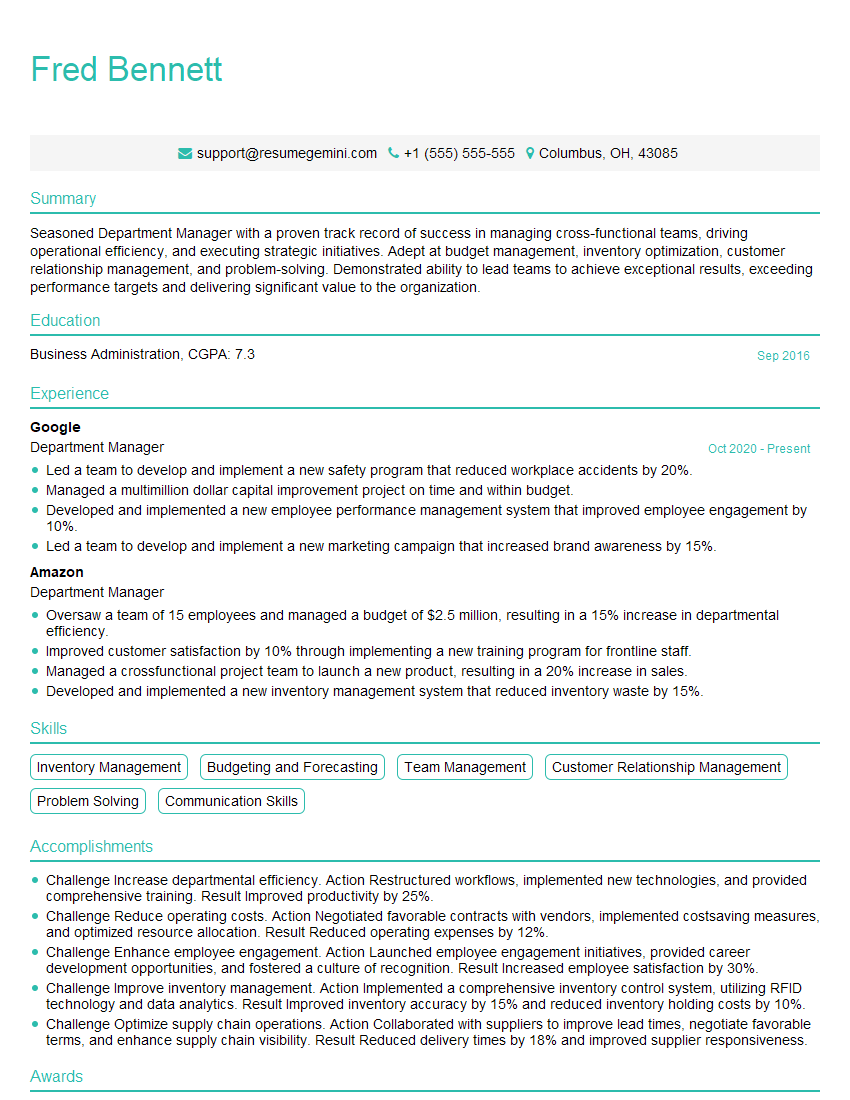
Department Manager Resume Sample
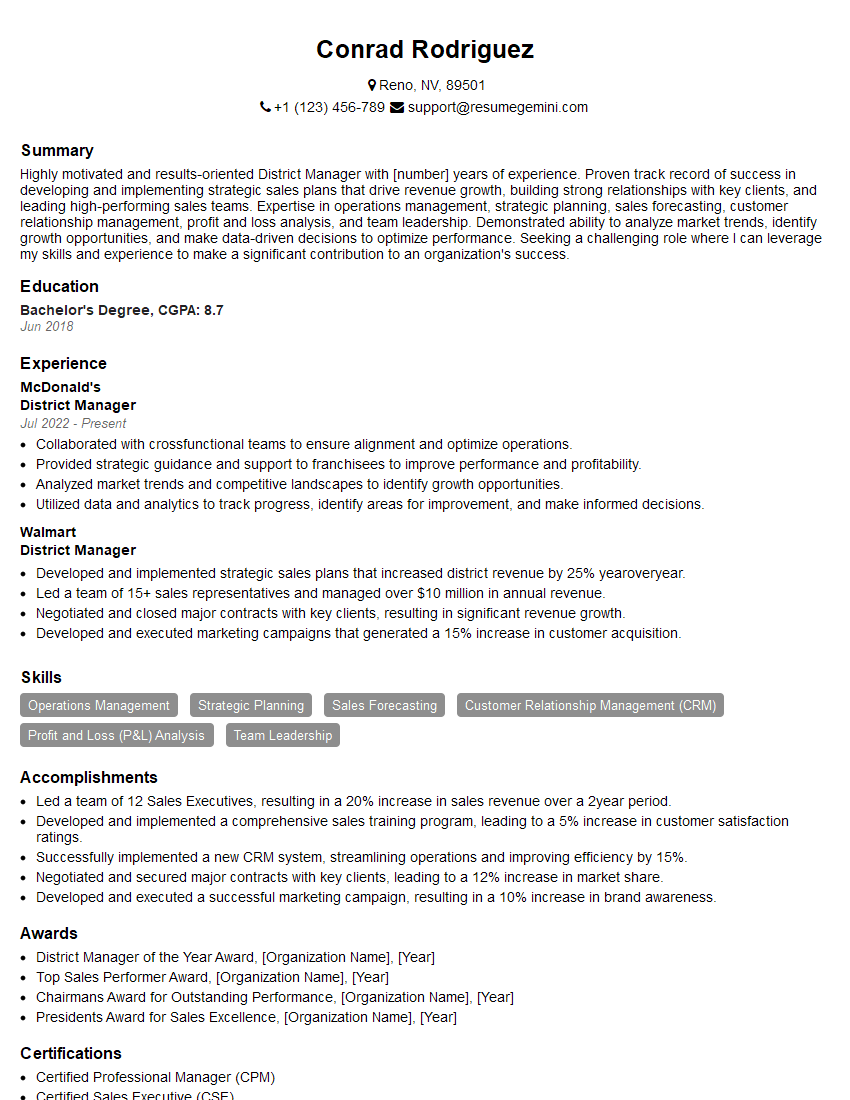
District Manager Resume Sample
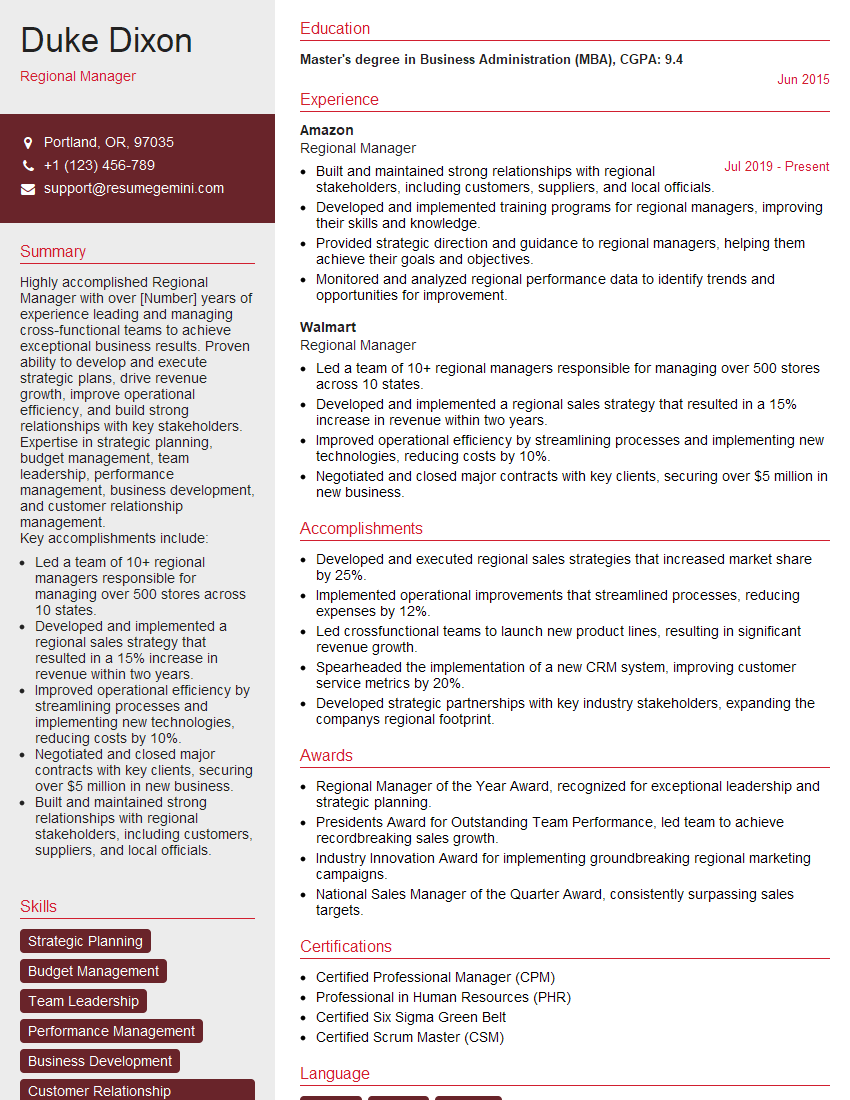
Regional Manager Resume Sample

Customer Service Manager Resume Sample
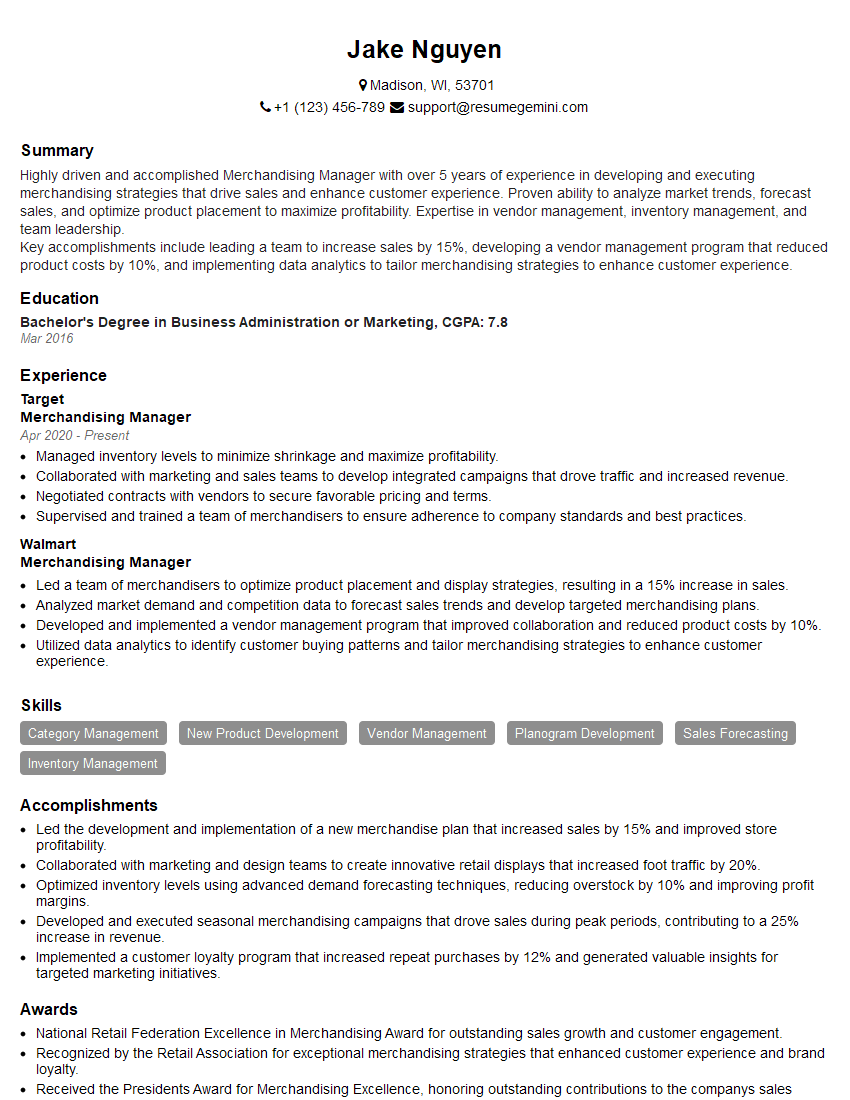
Merchandising Manager Resume Sample
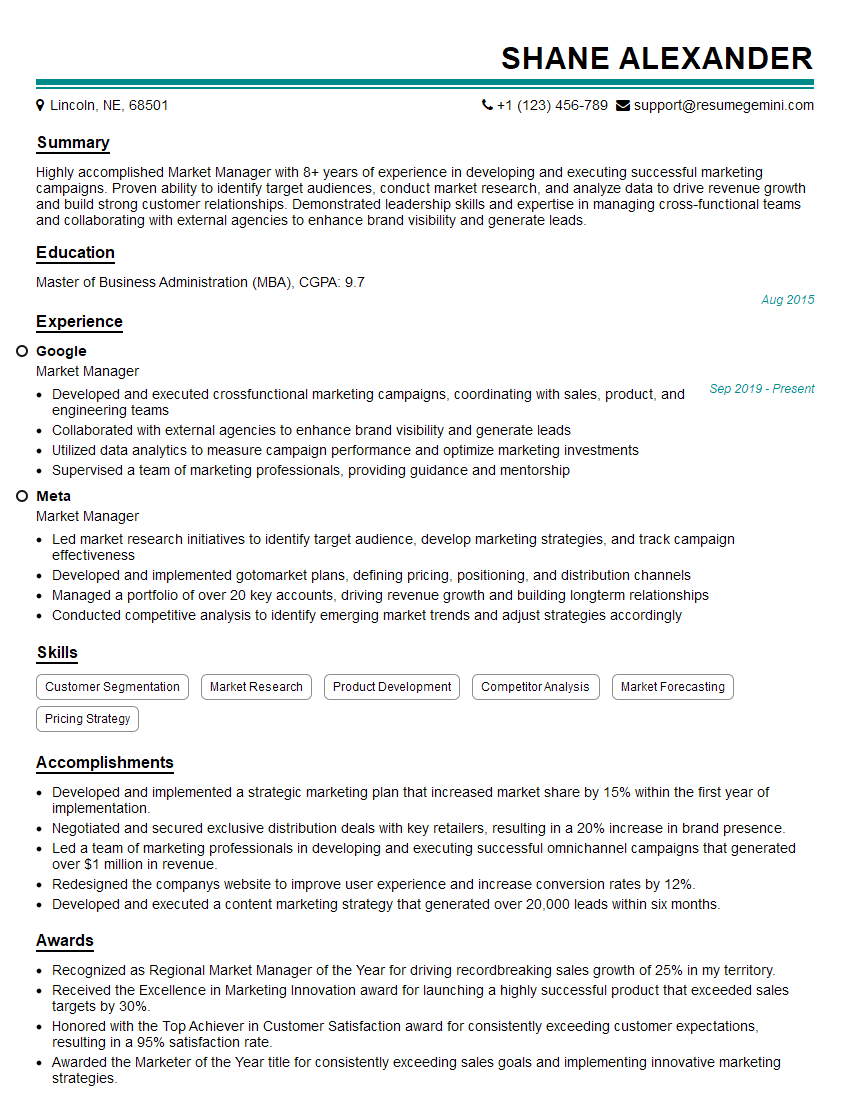
Market Manager Resume Sample
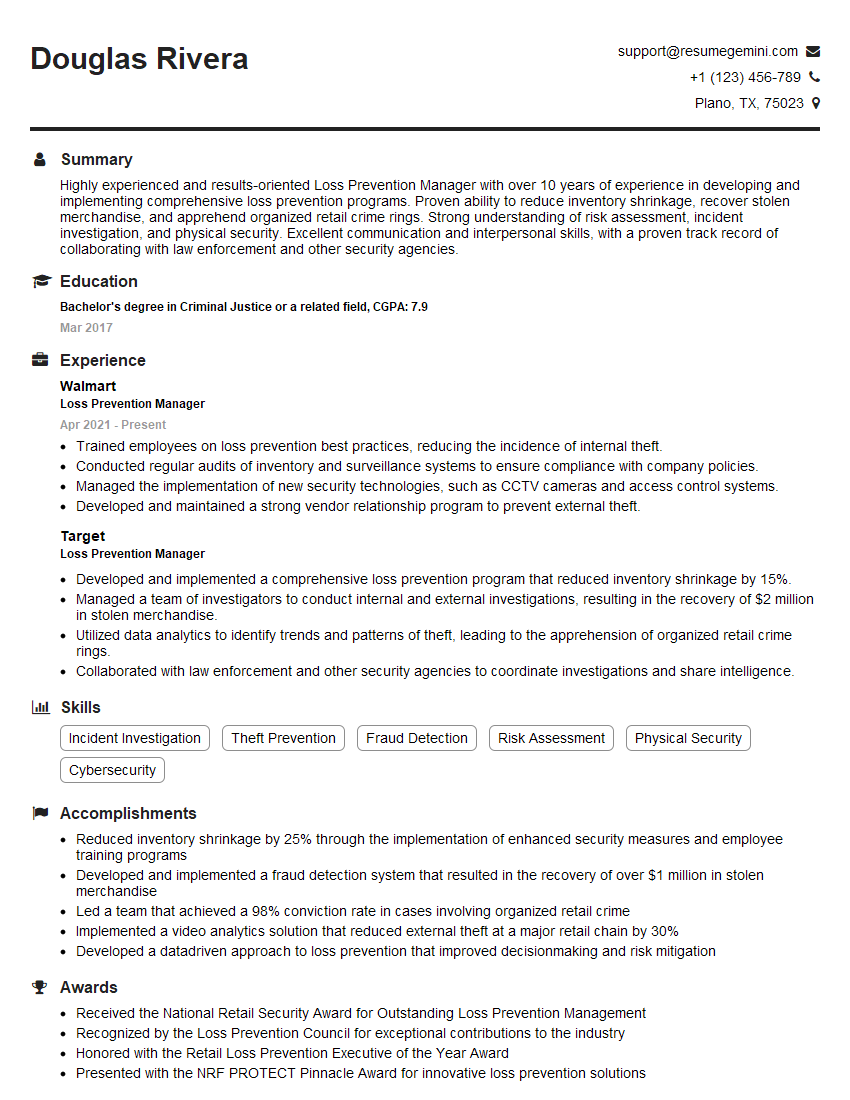
Loss Prevention Manager Resume Sample
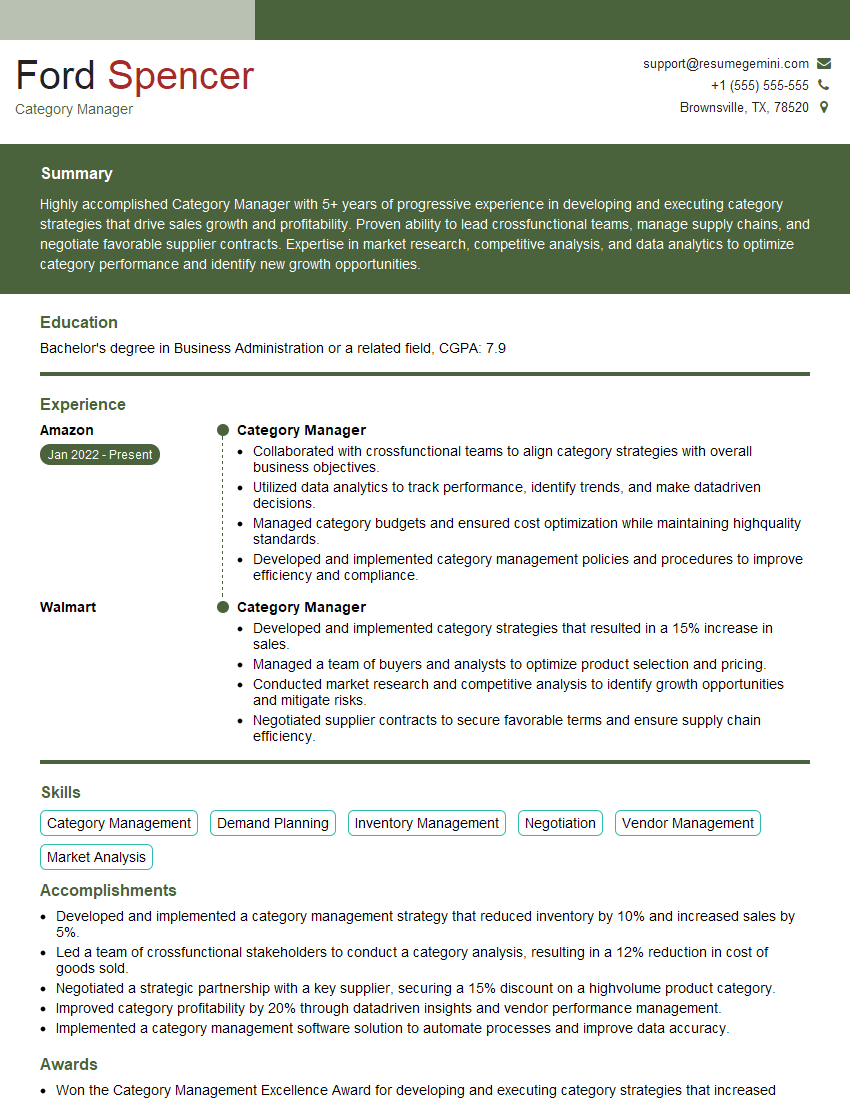
Category Manager Resume Sample
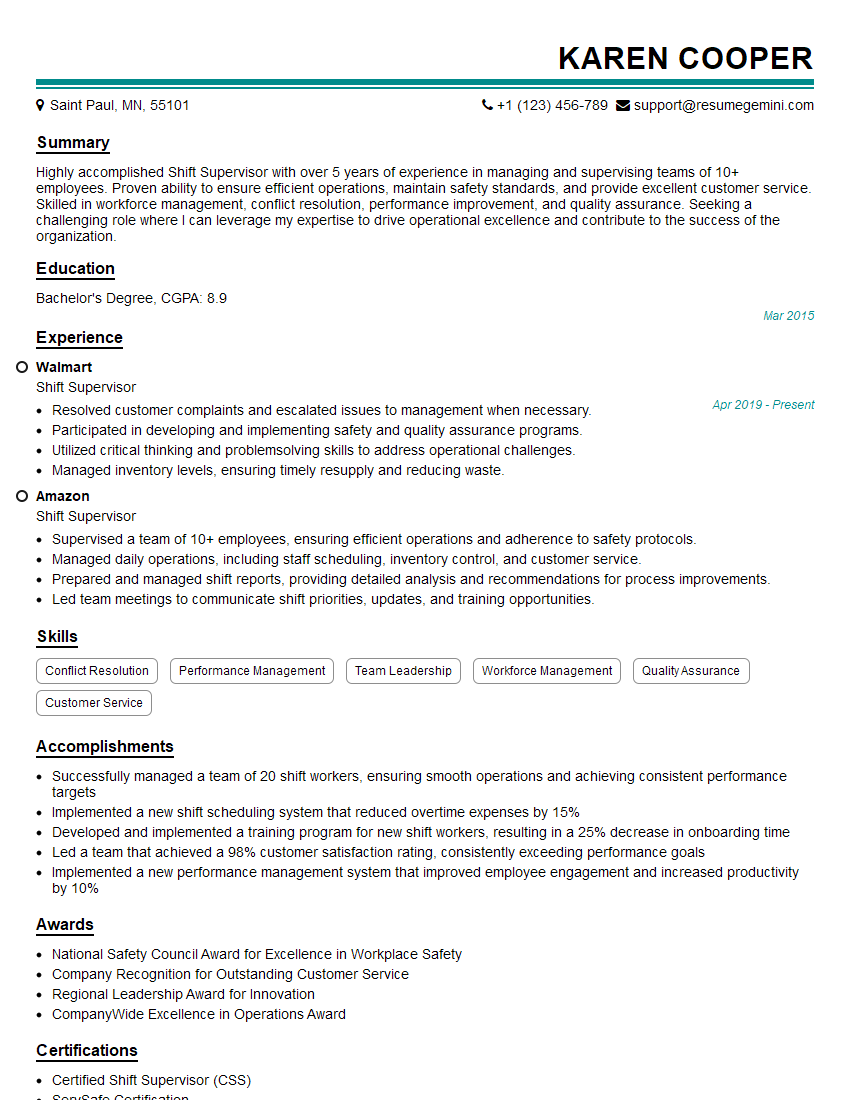
Shift Supervisor Resume Sample
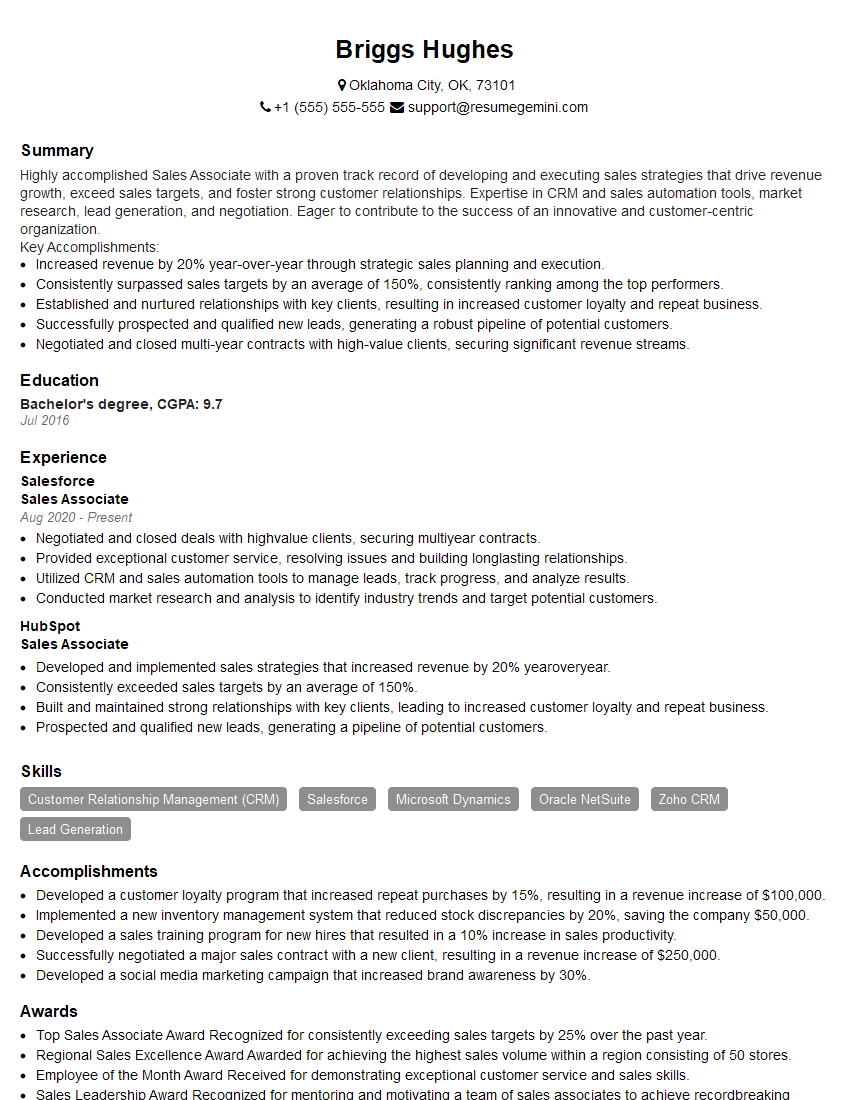
Sales Associate Resume Sample
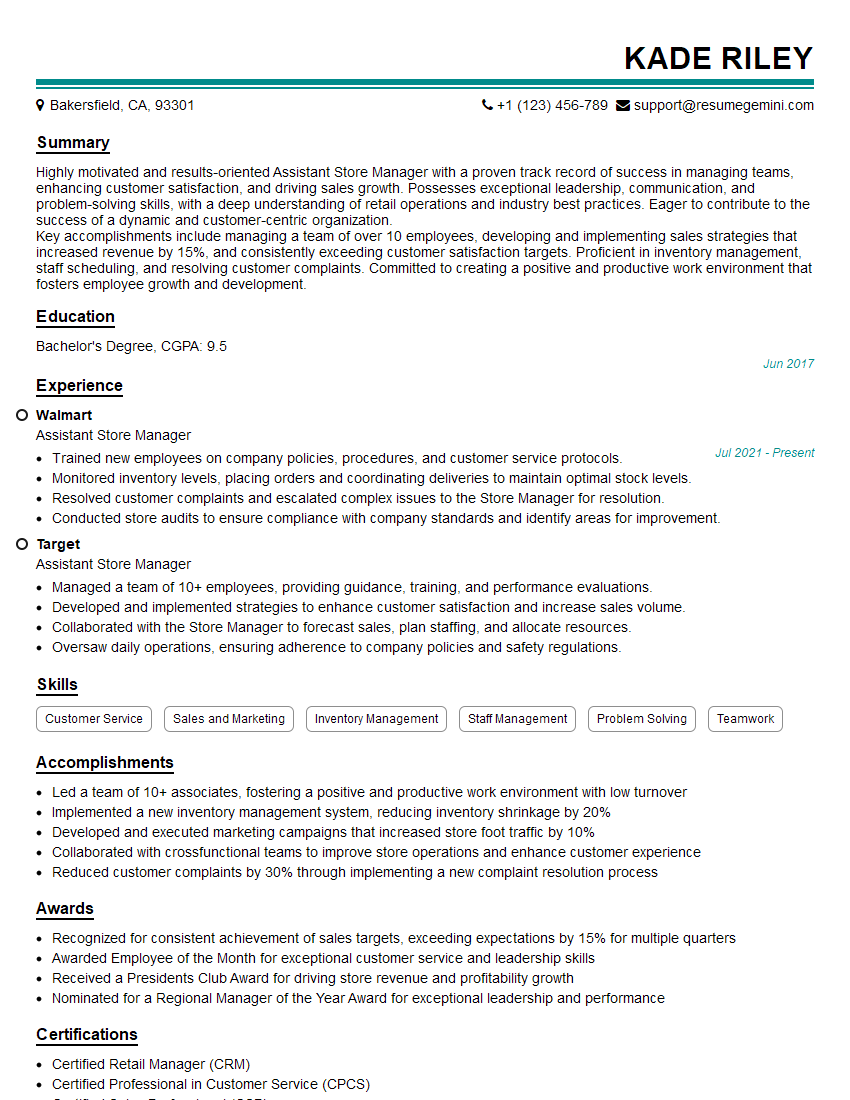
Assistant Store Manager Resume Sample
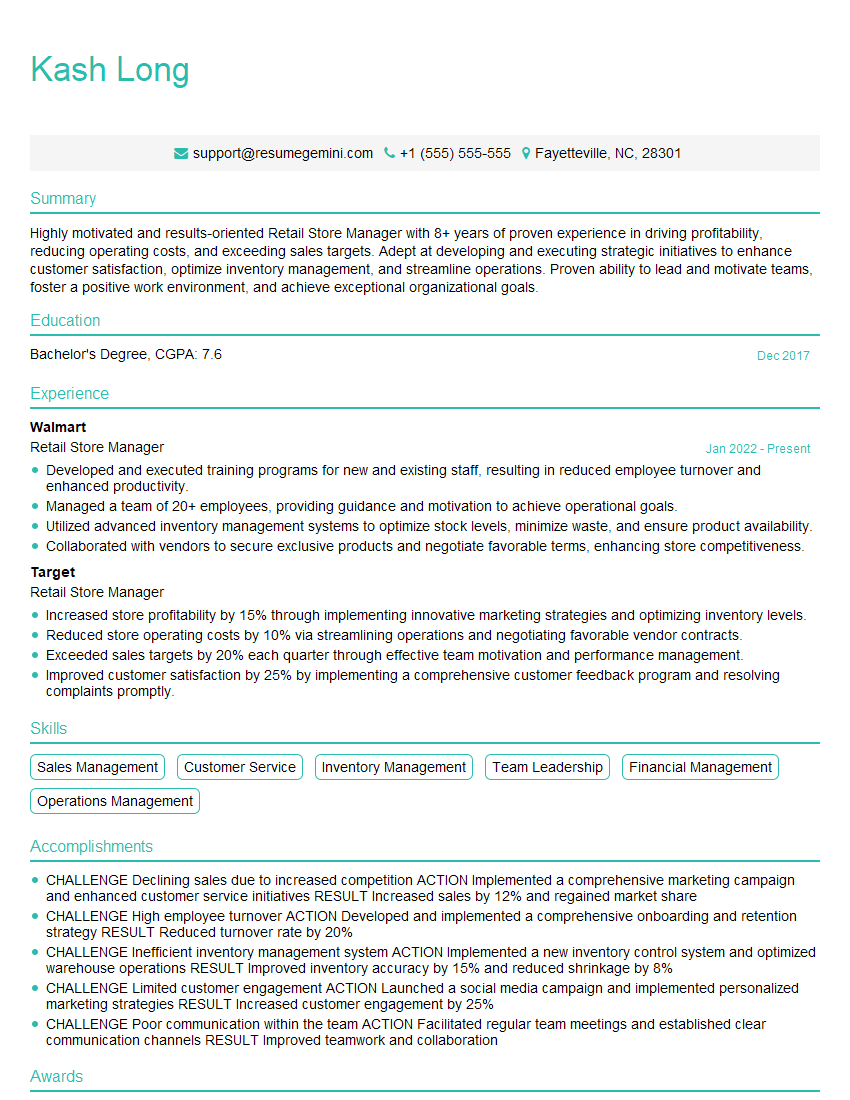
Retail Store Manager Resume Sample
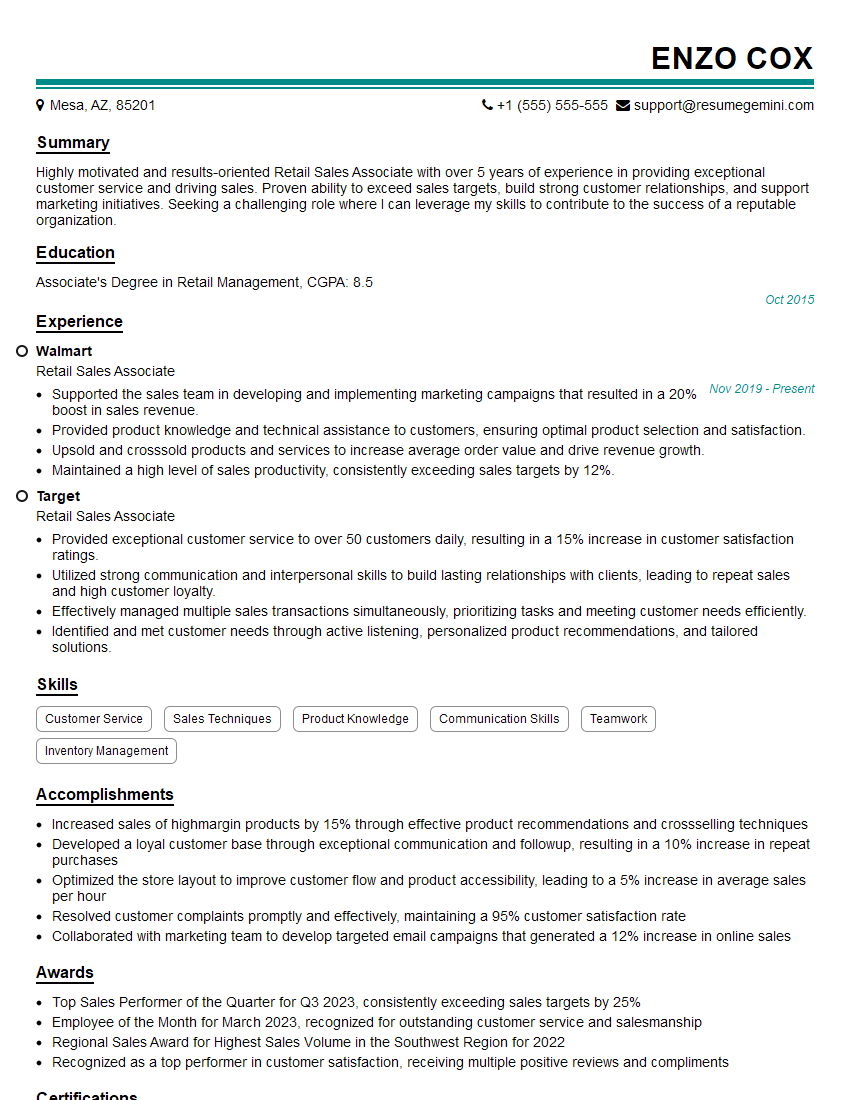
Retail Sales Associate Resume Sample
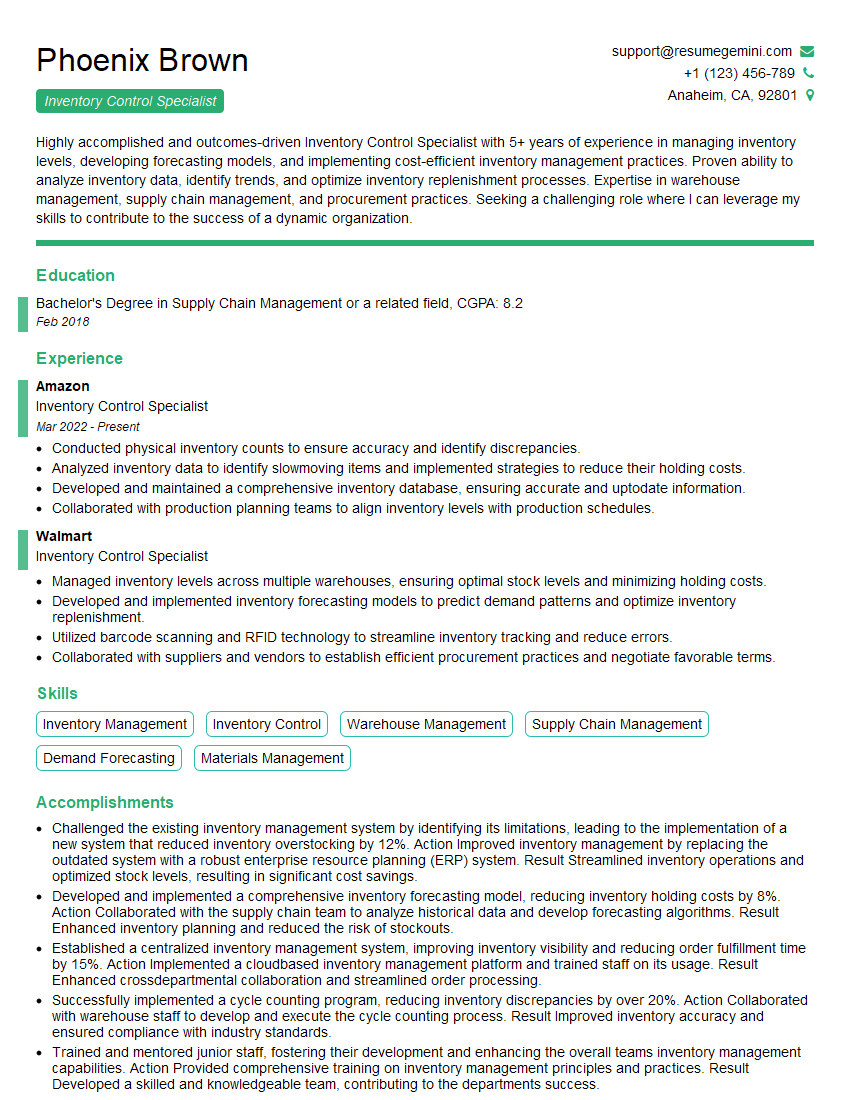
Inventory Control Specialist Resume Sample
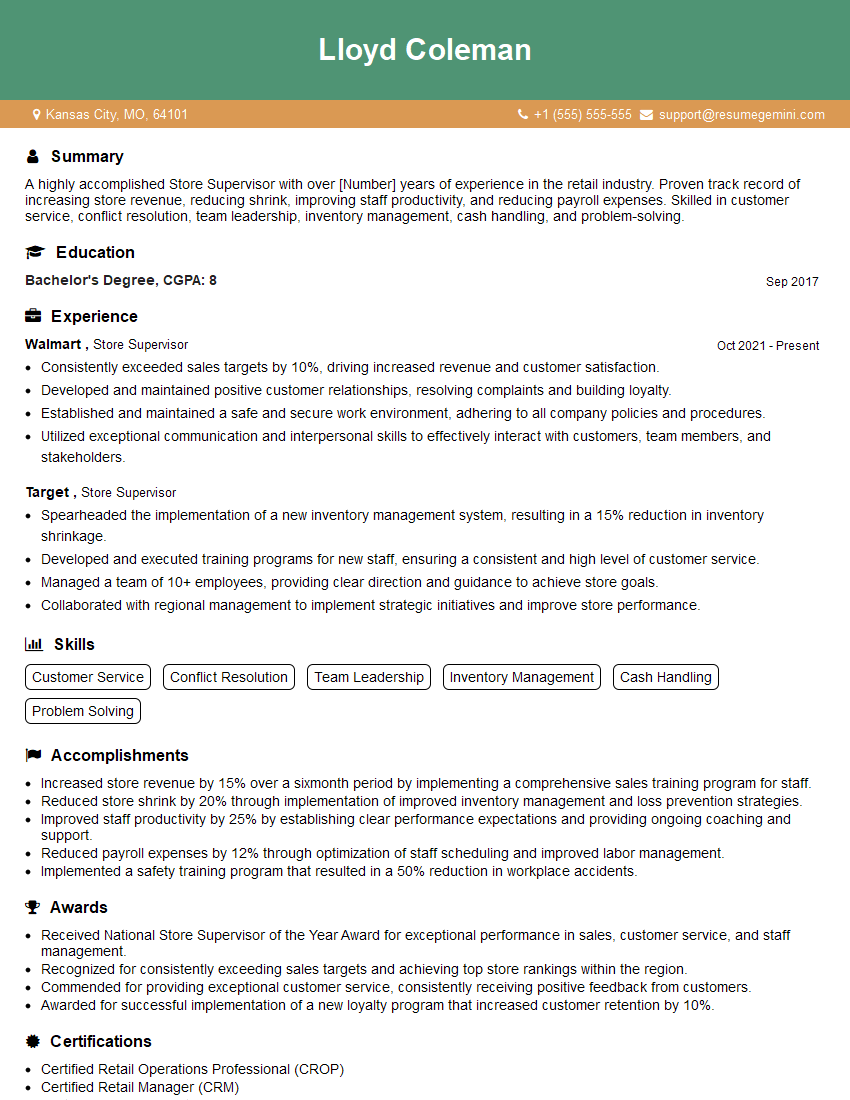
Store Supervisor Resume Sample
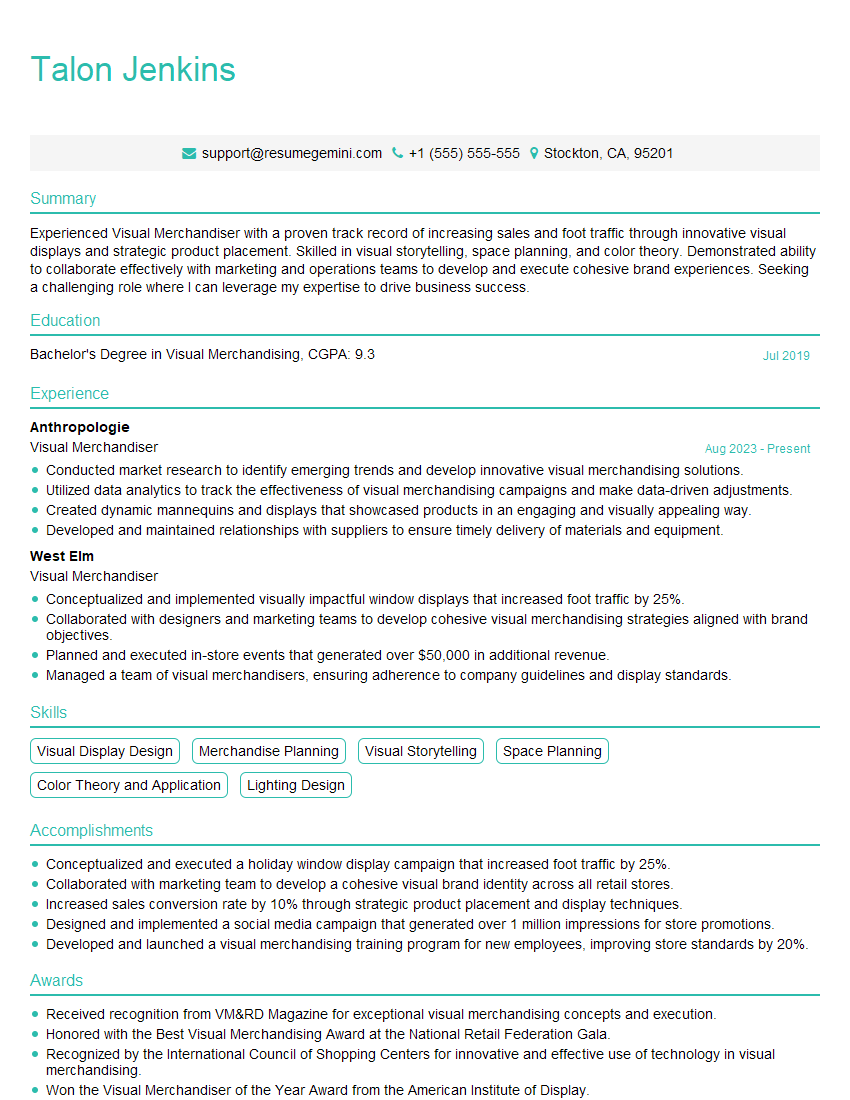
Visual Merchandiser Resume Sample
- Department Manager
- District Manager
- Regional Manager
- Customer Service Manager
- Merchandising Manager
- Market Manager
- Loss Prevention Manager
- Category Manager
- Shift Supervisor
- Sales Associate
- Assistant Store Manager
- Retail Store Manager
- Retail Sales Associate
- Inventory Control Specialist
- Store Supervisor
- Visual Merchandiser
Explore more articles
Users Rating of Our Blogs
Share Your Experience
We value your feedback! Please rate our content and share your thoughts (optional).
What Readers Say About Our Blog
Attention music lovers!
Wow, All the best Sax Summer music !!!
Spotify: https://open.spotify.com/artist/6ShcdIT7rPVVaFEpgZQbUk
Apple Music: https://music.apple.com/fr/artist/jimmy-sax-black/1530501936
YouTube: https://music.youtube.com/browse/VLOLAK5uy_noClmC7abM6YpZsnySxRqt3LoalPf88No
Other Platforms and Free Downloads : https://fanlink.tv/jimmysaxblack
on google : https://www.google.com/search?q=22+AND+22+AND+22
on ChatGPT : https://chat.openai.com?q=who20jlJimmy20Black20Sax20Producer
Get back into the groove with Jimmy sax Black
Best regards,
Jimmy sax Black
www.jimmysaxblack.com
Hi I am a troller at The aquatic interview center and I suddenly went so fast in Roblox and it was gone when I reset.
Hi,
Business owners spend hours every week worrying about their website—or avoiding it because it feels overwhelming.
We’d like to take that off your plate:
$69/month. Everything handled.
Our team will:
Design a custom website—or completely overhaul your current one
Take care of hosting as an option
Handle edits and improvements—up to 60 minutes of work included every month
No setup fees, no annual commitments. Just a site that makes a strong first impression.
Find out if it’s right for you:
https://websolutionsgenius.com/awardwinningwebsites
Hello,
we currently offer a complimentary backlink and URL indexing test for search engine optimization professionals.
You can get complimentary indexing credits to test how link discovery works in practice.
No credit card is required and there is no recurring fee.
You can find details here:
https://wikipedia-backlinks.com/indexing/
Regards
NICE RESPONSE TO Q & A
hi
The aim of this message is regarding an unclaimed deposit of a deceased nationale that bears the same name as you. You are not relate to him as there are millions of people answering the names across around the world. But i will use my position to influence the release of the deposit to you for our mutual benefit.
Respond for full details and how to claim the deposit. This is 100% risk free. Send hello to my email id: lukachachibaialuka@gmail.com
Luka Chachibaialuka
Hey interviewgemini.com, just wanted to follow up on my last email.
We just launched Call the Monster, an parenting app that lets you summon friendly ‘monsters’ kids actually listen to.
We’re also running a giveaway for everyone who downloads the app. Since it’s brand new, there aren’t many users yet, which means you’ve got a much better chance of winning some great prizes.
You can check it out here: https://bit.ly/callamonsterapp
Or follow us on Instagram: https://www.instagram.com/callamonsterapp
Thanks,
Ryan
CEO – Call the Monster App
Hey interviewgemini.com, I saw your website and love your approach.
I just want this to look like spam email, but want to share something important to you. We just launched Call the Monster, a parenting app that lets you summon friendly ‘monsters’ kids actually listen to.
Parents are loving it for calming chaos before bedtime. Thought you might want to try it: https://bit.ly/callamonsterapp or just follow our fun monster lore on Instagram: https://www.instagram.com/callamonsterapp
Thanks,
Ryan
CEO – Call A Monster APP
To the interviewgemini.com Owner.
Dear interviewgemini.com Webmaster!
Hi interviewgemini.com Webmaster!
Dear interviewgemini.com Webmaster!
excellent
Hello,
We found issues with your domain’s email setup that may be sending your messages to spam or blocking them completely. InboxShield Mini shows you how to fix it in minutes — no tech skills required.
Scan your domain now for details: https://inboxshield-mini.com/
— Adam @ InboxShield Mini
support@inboxshield-mini.com
Reply STOP to unsubscribe
Hi, are you owner of interviewgemini.com? What if I told you I could help you find extra time in your schedule, reconnect with leads you didn’t even realize you missed, and bring in more “I want to work with you” conversations, without increasing your ad spend or hiring a full-time employee?
All with a flexible, budget-friendly service that could easily pay for itself. Sounds good?
Would it be nice to jump on a quick 10-minute call so I can show you exactly how we make this work?
Best,
Hapei
Marketing Director
Hey, I know you’re the owner of interviewgemini.com. I’ll be quick.
Fundraising for your business is tough and time-consuming. We make it easier by guaranteeing two private investor meetings each month, for six months. No demos, no pitch events – just direct introductions to active investors matched to your startup.
If youR17;re raising, this could help you build real momentum. Want me to send more info?
Hi, I represent an SEO company that specialises in getting you AI citations and higher rankings on Google. I’d like to offer you a 100% free SEO audit for your website. Would you be interested?
Hi, I represent an SEO company that specialises in getting you AI citations and higher rankings on Google. I’d like to offer you a 100% free SEO audit for your website. Would you be interested?