Cracking a skill-specific interview, like one for Understanding of warehousing and distribution, requires understanding the nuances of the role. In this blog, we present the questions you’re most likely to encounter, along with insights into how to answer them effectively. Let’s ensure you’re ready to make a strong impression.
Questions Asked in Understanding of warehousing and distribution Interview
Q 1. Explain the differences between FIFO and LIFO inventory methods.
FIFO (First-In, First-Out) and LIFO (Last-In, First-Out) are two fundamental inventory accounting methods that dictate the order in which inventory is sold. The choice significantly impacts the cost of goods sold and, consequently, a company’s reported profits.
FIFO: Imagine a bakery. FIFO means the oldest bread (the first batch baked) is sold first. This ensures fresher inventory remains on the shelves longer. In accounting terms, the cost of goods sold reflects the cost of the oldest inventory items. This method generally results in a higher net income during periods of inflation because the lower cost of older inventory is used to calculate the cost of goods sold.
LIFO: Now imagine a hardware store with fluctuating metal prices. Using LIFO, the most recently purchased metal (the last batch received) is sold first. This aligns the cost of goods sold more closely with current market prices. During inflation, LIFO shows a lower net income because the higher cost of the recent purchases is used. However, it also reduces tax liability during inflation as the cost of goods sold is higher.
Key Differences Summarized:
- FIFO: Oldest inventory sold first, higher net income during inflation.
- LIFO: Newest inventory sold first, lower net income during inflation, lower tax liability during inflation.
The best method depends on the specific industry, tax implications, and management’s reporting objectives. For example, a perishable goods business would almost always use FIFO to minimize spoilage costs.
Q 2. Describe your experience with Warehouse Management Systems (WMS).
I have extensive experience implementing and managing Warehouse Management Systems (WMS), primarily using [mention specific WMS software, e.g., Manhattan Associates, Blue Yonder]. My experience spans various aspects, including system selection, implementation, configuration, and ongoing maintenance. I’ve worked with both cloud-based and on-premise solutions.
In a previous role at [Previous Company Name], I led the implementation of a new WMS to replace a legacy system. This involved a detailed analysis of our existing processes, defining requirements, selecting the appropriate software, managing the integration with our existing ERP system, and overseeing the training of warehouse staff. This upgrade resulted in a 20% increase in order fulfillment efficiency and a 15% reduction in inventory discrepancies.
My responsibilities also included optimizing WMS configurations for tasks like putaway strategies (e.g., directed putaway, zone putaway), cycle counting, and reporting. I’m adept at troubleshooting system issues, customizing workflows, and generating key performance indicators (KPIs) to monitor warehouse efficiency.
Q 3. How do you optimize warehouse layout for efficiency?
Optimizing a warehouse layout is crucial for maximizing efficiency. It’s not just about fitting as much as possible; it’s about optimizing the flow of goods and people. I employ a systematic approach:
- Analyze Product Movement: Understanding product velocity (how frequently items are moved) is paramount. High-velocity items should be placed in easily accessible locations.
- Cross-Docking: If applicable, incorporate cross-docking to reduce storage time by directly transferring goods from receiving to shipping.
- Aisle Widths: Balancing aisle width for equipment maneuverability and storage space is critical. Too narrow and it hinders movement, too wide and it wastes space.
- Inventory Zoning: Divide the warehouse into zones based on product characteristics (e.g., size, temperature requirements, order frequency). This simplifies inventory management and picking routes.
- Slotting Optimization: Assign optimal storage locations to each product based on its velocity, size, and handling requirements, using software tools if needed.
- Safety Considerations: Design the layout with safety in mind, incorporating ample space for pedestrian and equipment traffic, clearly marked aisles, and appropriate safety signage.
For example, in a previous project, we implemented a zone-based layout combined with dynamic slotting to improve pick times by 25%. We also introduced a cross-docking area for high-volume products, further enhancing efficiency.
Q 4. What metrics do you use to track warehouse performance?
Tracking warehouse performance relies on a comprehensive suite of metrics. These metrics fall under different categories to provide a holistic view:
- Order Fulfillment Metrics: Order accuracy, order cycle time (time from order placement to shipment), on-time delivery rate, perfect order rate (combining accuracy, completeness, and on-time delivery).
- Inventory Management Metrics: Inventory turnover rate, inventory accuracy, stockout rate, carrying costs.
- Productivity Metrics: Units picked per hour, orders processed per hour, labor cost per unit, space utilization.
- Safety Metrics: Number of accidents, near misses, lost-time injury rate.
- Cost Metrics: Warehousing cost per unit, storage cost per square foot, transportation cost.
By monitoring these metrics, you can identify areas for improvement and measure the effectiveness of implemented changes. For instance, a consistently low inventory turnover rate might indicate dead stock that needs to be addressed.
Q 5. Explain your experience with different types of inventory management systems.
My experience encompasses various inventory management systems, ranging from simple spreadsheet-based systems to sophisticated ERP (Enterprise Resource Planning) systems integrated with WMS. I’ve worked with both periodic and perpetual inventory systems.
Periodic Systems: These involve periodic physical counts to determine inventory levels. While simpler to implement, they offer less real-time visibility and are prone to higher levels of inaccuracy.
Perpetual Systems: These maintain continuous tracking of inventory levels through automated updates based on transactions (receipts, shipments, adjustments). They provide superior real-time visibility, enabling better inventory control and demand forecasting. This is typically integrated with a barcode or RFID scanning system.
My preference is for perpetual systems due to their accuracy and real-time data availability, which facilitates better decision-making regarding purchasing, production scheduling, and order fulfillment. However, successful implementation requires robust system infrastructure and accurate data entry.
Q 6. How do you handle discrepancies in inventory counts?
Inventory discrepancies are inevitable, but their impact can be minimized through a structured process. Here’s my approach:
- Identify the Discrepancy: Compare physical inventory counts against system records. Determine the magnitude and nature of the difference (overages or shortages).
- Investigate the Root Cause: This is crucial. Possible causes include data entry errors, theft, damage, misplacement, or problems with the inventory management system. Analyzing trends helps identify recurring issues.
- Implement Corrective Actions: Address identified root causes. This might involve retraining staff on proper procedures, improving data entry processes, enhancing security measures, implementing better stock control methods, or upgrading the inventory system.
- Adjust Inventory Records: Once the root cause is determined and corrected, update the inventory records to reflect the actual physical count.
- Document the Process: Maintain clear records of the discrepancy, the investigation, the corrective actions taken, and the final adjustment to inventory records. This helps prevent future occurrences.
For instance, I once identified a recurring discrepancy due to incorrect scanning practices during putaway. Implementing additional training and improving scanner ergonomics solved the problem, drastically reducing the frequency of discrepancies.
Q 7. Describe your experience with safety regulations in a warehouse environment.
Safety is paramount in a warehouse environment. My experience encompasses a thorough understanding and adherence to OSHA (Occupational Safety and Health Administration) regulations and other relevant safety standards. I’ve been involved in developing and implementing safety programs and training initiatives.
This includes:
- Safe Equipment Operation: Training employees on the safe operation of forklifts, pallet jacks, and other warehouse equipment.
- Ergonomic Practices: Implementing ergonomic principles to minimize the risk of musculoskeletal injuries.
- Fall Protection: Ensuring proper fall protection measures are in place, especially at heights.
- Fire Safety: Implementing fire prevention and suppression measures, including regular inspections and fire drills.
- Hazardous Materials Handling: Following strict procedures for the handling, storage, and disposal of hazardous materials.
- Proper PPE (Personal Protective Equipment): Ensuring employees use appropriate safety gear, such as safety shoes, gloves, and eye protection.
My approach emphasizes a proactive safety culture, where safety is considered a shared responsibility. Regular safety audits and employee training are vital in preventing accidents and maintaining a safe working environment.
Q 8. How do you manage peak season demands in a warehouse?
Managing peak season demands requires proactive planning and flexible execution. It’s like preparing for a marathon, not a sprint. We start by forecasting demand based on historical data, market trends, and promotional calendars. This allows us to accurately predict the volume increase and adjust staffing, storage capacity, and operational processes accordingly.
- Increased Staffing: We often hire temporary workers to supplement our existing team, focusing on training them in key areas like order picking and packing.
- Expanded Storage: We might lease additional warehouse space or optimize existing space using techniques like vertical storage to accommodate the surge in inventory.
- Optimized Processes: We streamline workflows, prioritizing high-demand items and implementing efficient picking strategies (e.g., wave picking, zone picking) to increase throughput. This includes reviewing and potentially adjusting our warehouse management system (WMS) settings for peak efficiency.
- Improved Communication: Open and clear communication with all stakeholders—employees, suppliers, and customers—is crucial to manage expectations and ensure a smooth operation.
For example, during last year’s holiday season, we successfully handled a 40% increase in order volume by implementing a combination of these strategies. We pre-positioned popular items in easily accessible locations and used our WMS to dynamically adjust picking routes based on real-time order data, ensuring fast turnaround times.
Q 9. What are your strategies for improving warehouse productivity?
Improving warehouse productivity is an ongoing effort, not a one-time fix. It’s about constantly looking for ways to do things better, faster, and more efficiently. We focus on a multi-pronged approach:
- Process Optimization: We regularly analyze our workflows, identifying bottlenecks and inefficiencies. Techniques like Value Stream Mapping help visualize the entire process, pinpointing areas for improvement. For instance, we might reorganize the warehouse layout to reduce travel time for pickers.
- Technology Integration: Implementing a robust WMS and utilizing barcode scanners, RFID technology, and automated guided vehicles (AGVs) significantly increases accuracy and speed. Real-time tracking provides valuable data for continuous improvement.
- Employee Training and Empowerment: Investing in employee training empowers them to work more efficiently and safely. Cross-training ensures flexibility during peak seasons or employee absences. We encourage suggestions from the team; they often have valuable insights into daily operations.
- Preventive Maintenance: Regularly scheduled maintenance on equipment minimizes downtime and ensures smooth operations. This prevents costly repairs and delays.
For example, implementing a voice-directed picking system improved our order picking accuracy by 15% and reduced picking time by 10%. This translated directly into cost savings and improved customer satisfaction.
Q 10. How do you ensure accuracy in order picking and shipping?
Accuracy in order picking and shipping is paramount. We employ several strategies to minimize errors:
- Barcode Scanning/RFID: Every item is scanned at various stages – receiving, put-away, picking, and shipping – to ensure accuracy. RFID offers even greater tracking capabilities.
- WMS Integration: Our WMS provides real-time inventory updates and guides pickers through the optimal route, minimizing the chance of picking the wrong item.
- Quality Control Checks: We have multiple checkpoints during the picking and packing process where orders are visually verified and quantities are double-checked. This may include a final audit before shipping.
- Training and Procedures: Employees receive thorough training on accurate picking techniques and following established procedures. We also regularly review and update our standard operating procedures (SOPs).
Imagine a scenario where we ship the wrong item: not only do we incur costs associated with returns and reshipments, but we also damage our reputation with the customer. Our multi-layered approach significantly minimizes these risks.
Q 11. Explain your experience with different types of warehouse equipment (forklifts, conveyors, etc.)
I have extensive experience with various warehouse equipment, including forklifts, conveyors, and automated systems. My experience encompasses both operating and managing these systems.
- Forklifts: I’m certified to operate various types of forklifts, including sit-down, stand-up, and reach trucks. I understand the importance of safety procedures and preventative maintenance to ensure efficient and accident-free operation.
- Conveyors: I’m familiar with different conveyor systems, such as roller conveyors, belt conveyors, and sorters. I understand how to troubleshoot common issues and optimize their usage for maximum throughput.
- Automated Systems: I’ve worked with automated guided vehicles (AGVs) and automated storage and retrieval systems (AS/RS). These systems significantly improve efficiency and accuracy, but require careful planning, implementation, and ongoing maintenance.
For instance, in a previous role, we transitioned from manual picking to a conveyor-based system integrated with our WMS. This reduced picking time by 30% and minimized the risk of picking errors.
Q 12. How do you handle damaged or lost goods in the warehouse?
Handling damaged or lost goods involves a methodical process to minimize losses and maintain accurate inventory records.
- Damage Reporting: A clear and documented process for reporting damaged goods is essential. This typically involves taking photos, documenting the cause of damage, and assigning responsibility (if possible).
- Inventory Adjustment: The damaged goods are removed from inventory, with detailed records kept for insurance claims or vendor returns. This ensures accurate inventory counts.
- Root Cause Analysis: We investigate the cause of damage to prevent similar occurrences in the future. This might involve reviewing handling procedures, storage conditions, or transportation methods.
- Loss Prevention: For lost goods, we conduct thorough investigations to locate them, starting with a review of recent transactions and physical checks. If not found, we follow a procedure to document the loss, adjusting inventory accordingly.
We use a dedicated software system to track damages and losses, generating reports that provide valuable insights into trends and areas for improvement. This data-driven approach enables us to proactively prevent future incidents.
Q 13. Describe your experience with inventory control procedures.
My experience with inventory control procedures is extensive. Effective inventory management is crucial for operational efficiency and profitability. It’s like running a finely tuned machine; every component needs to work together seamlessly.
- Cycle Counting: We regularly perform cycle counting—auditing a small portion of inventory regularly—instead of relying on a full annual inventory count. This is more efficient and helps catch discrepancies early.
- ABC Analysis: We categorize inventory items based on their value and demand (A, B, C). High-value (A) items receive more frequent monitoring and stricter control procedures.
- Inventory Management Software: We leverage a WMS to track inventory levels, monitor stock movements, and generate accurate reports. This ensures we always have enough stock to meet demand without tying up excessive capital in inventory.
- First-In, First-Out (FIFO): We employ FIFO for perishable goods or items with expiry dates to minimize waste and maximize product shelf life.
For instance, by implementing ABC analysis and focusing our efforts on high-value items, we significantly reduced stockouts and improved overall inventory turnover.
Q 14. How do you maintain a clean and organized warehouse environment?
Maintaining a clean and organized warehouse is not just about aesthetics; it’s about safety, efficiency, and productivity. It’s a matter of order and safety in a space where things could easily become chaotic.
- 5S Methodology: We follow the 5S methodology (Sort, Set in Order, Shine, Standardize, Sustain) to ensure a clean and organized workspace. This promotes safety, reduces waste, and improves efficiency.
- Regular Cleaning Schedules: We have established cleaning schedules for different areas of the warehouse, ensuring regular cleaning and maintenance.
- Designated Areas: We have clearly designated areas for storing materials, equipment, and waste. This prevents clutter and makes it easier to find items.
- Employee Training: Employees receive training on proper cleaning and maintenance procedures, emphasizing the importance of safety and organization.
A clean and organized warehouse not only creates a safer and more pleasant work environment, but also improves workflow, reduces the risk of damage, and minimizes the time spent searching for items. It’s a critical element in maintaining optimal operational efficiency.
Q 15. Explain your process for receiving and processing incoming shipments.
Receiving and processing incoming shipments is a crucial function in any warehouse, impacting efficiency and accuracy. My process is built around a structured, multi-step approach, ensuring timely and error-free handling. It begins with verification against the purchase order (PO) and packing slip, checking for discrepancies in quantity and item details. This is followed by inspection for any damage during transit. Any damage is meticulously documented with photographs and reported immediately to the supplier. Next, items are scanned using barcode or RFID technology, updating the warehouse management system (WMS) with their arrival. The WMS then directs the goods to their designated storage location based on pre-defined strategies, like FIFO (First-In, First-Out) or FEFO (First-Expired, First-Out) if applicable. Finally, a quality control check may be performed depending on the product, and the receiving process is closed once all steps are completed and confirmed within the WMS.
For example, if a shipment of 100 widgets is expected, but only 98 arrive, the discrepancy is immediately noted. We will contact the supplier to arrange for the missing items. This level of detail ensures no inventory issues later on. This meticulous process minimizes errors, optimizes space utilization, and guarantees inventory accuracy, which is essential for fulfilling orders promptly.
Career Expert Tips:
- Ace those interviews! Prepare effectively by reviewing the Top 50 Most Common Interview Questions on ResumeGemini.
- Navigate your job search with confidence! Explore a wide range of Career Tips on ResumeGemini. Learn about common challenges and recommendations to overcome them.
- Craft the perfect resume! Master the Art of Resume Writing with ResumeGemini’s guide. Showcase your unique qualifications and achievements effectively.
- Don’t miss out on holiday savings! Build your dream resume with ResumeGemini’s ATS optimized templates.
Q 16. How do you manage returns and reverse logistics?
Managing returns and reverse logistics requires a system as efficient as the inbound process. It starts with clear return authorization (RMA) procedures, ensuring proper documentation and tracking of each returned item. Once a return is authorized, a specific receiving area is dedicated for returns, and the items are inspected for damage or defects, categorized as either resalable, repairable, or scrap. The WMS is updated to reflect the return, adjusting inventory levels accordingly. Resalable items are returned to the inventory; repairable items go to a designated repair station; while scrap items are disposed of according to environmental regulations and company procedures. Credit memos or refunds are processed after verification and inspection. Reverse logistics also includes coordinating with carriers for return pickups and maintaining detailed records for compliance purposes, like tracking return reasons for identifying areas for process improvement.
For instance, if a customer returns a faulty product, the RMA process ensures we track every step, from receipt to eventual credit issuance or repair and reshipment. This thorough approach minimizes losses, improves customer satisfaction, and offers insights into product quality.
Q 17. What are your strategies for reducing warehouse operating costs?
Reducing warehouse operating costs requires a multifaceted approach that focuses on optimizing processes and resources. This involves implementing strategies like improving space utilization through efficient storage methods such as high-bay racking or slotting optimization. Technology plays a crucial role, with WMS helping minimize labor costs through optimized picking routes and automated processes. Negotiating favorable contracts with suppliers, carriers and vendors on services such as packaging and transportation can drastically reduce costs. Energy efficiency measures, like installing LED lighting and optimizing HVAC systems, can also significantly contribute to cost reduction. Regular maintenance of equipment can prevent costly breakdowns. Minimizing waste through better inventory management, reducing damage and improving accuracy also helps control costs. Finally, continuous process improvement by regularly reviewing and refining operations based on data analysis can identify additional areas for savings.
For example, implementing a slotting optimization strategy can lead to substantial savings in time and labor spent on order picking by strategically placing high-demand items in readily accessible locations.
Q 18. How do you utilize technology to improve warehouse operations?
Technology is instrumental in modern warehouse management, enhancing efficiency and accuracy. A robust Warehouse Management System (WMS) is fundamental for tracking inventory, managing orders, and optimizing workflows. WMS provides real-time visibility into inventory levels, locations, and movements, enabling better stock control and reducing the risk of stockouts or overstocking. Automated guided vehicles (AGVs) or robots can automate tasks like picking, packing, and transporting goods, increasing efficiency and reducing labor costs. Radio-frequency identification (RFID) technology allows for automatic tracking of goods throughout the warehouse, improving accuracy and speed. Integration of WMS with other systems, such as Enterprise Resource Planning (ERP) and Transportation Management Systems (TMS), ensures seamless data flow across the supply chain. Data analytics dashboards derived from WMS and other systems offer valuable insights into operational performance, revealing areas for improvement and informed decision-making.
For instance, using a WMS with a sophisticated picking algorithm optimizes the route taken by pickers, drastically reducing the time needed to fulfill orders compared to traditional methods. This translates directly into significant cost savings and improved efficiency.
Q 19. How do you prioritize tasks and manage your time effectively in a fast-paced warehouse environment?
Prioritizing tasks and managing time effectively in a fast-paced warehouse environment requires a combination of planning, organization, and prioritization techniques. I typically start my day by reviewing the daily schedule and identifying high-priority tasks, like urgent orders or critical deliveries. I utilize task management tools or software to track progress, break down large tasks into smaller, manageable ones and assign deadlines. I frequently communicate with the team to coordinate efforts and resolve any bottlenecks or unexpected issues promptly. I am adept at handling interruptions efficiently without losing focus on the main goals. Employing techniques such as the Eisenhower Matrix (urgent/important) helps me distinguish between tasks that require immediate attention and those that can be scheduled later. Regularly reviewing my workload helps maintain a balanced approach. Proactive identification of potential problems and preemptive measures are crucial to prevent disruptions and maintain workflow.
For example, if an urgent order requires immediate attention, I will allocate the necessary resources and prioritize its processing over other tasks, ensuring timely delivery.
Q 20. Describe your experience with different warehouse layout designs.
My experience encompasses various warehouse layout designs, each suited to different operational needs and product types. I’ve worked with U-shaped layouts, efficient for smaller operations with limited space and straight-forward workflows. I’m also familiar with L-shaped layouts, often optimal for larger spaces where distinct areas are required for different functions. I have significant experience with I-shaped layouts, typically used in high-volume operations, facilitating linear workflows. Furthermore, I have worked with more complex layouts designed to optimize workflows based on specific item characteristics and frequency of access. The choice of layout depends on factors like the size of the facility, volume of goods, order fulfillment processes and material flow. My experience allows me to analyze operational requirements and recommend the most suitable layout to maximize efficiency and minimize operating costs.
For instance, a warehouse handling large volumes of fast-moving consumer goods would benefit from an I-shaped layout with high-density racking, optimized for fast picking and efficient material handling.
Q 21. Explain your experience with cycle counting and inventory audits.
Cycle counting and inventory audits are critical for maintaining accurate inventory records and preventing stock discrepancies. Cycle counting involves regularly counting a subset of inventory items, rather than a full inventory count. This is a continuous process that helps identify and correct discrepancies early. The frequency of counting is determined by the item’s value, velocity (how quickly it moves), and criticality. Inventory audits, on the other hand, are comprehensive counts of all inventory items within a specific period, often annually or semi-annually. Audits aim to provide a complete snapshot of the inventory, validating the accuracy of the inventory records. Both methods use barcode scanners or RFID technology to improve accuracy and efficiency. Data discrepancies identified during cycle counting or audits are investigated to pinpoint the root cause, whether it is a scanning error, data entry mistake, theft or damage. Corrective actions are then taken to improve accuracy and prevent future discrepancies.
For example, high-value items or those prone to shrinkage may require more frequent cycle counting, while lower value, slower-moving items may be counted less often. This targeted approach ensures efficiency and accuracy in inventory management.
Q 22. How do you ensure compliance with relevant health and safety regulations?
Ensuring health and safety compliance in a warehouse is paramount. It’s not just about ticking boxes; it’s about fostering a culture of safety where everyone feels responsible for their own well-being and the well-being of their colleagues. My approach is multifaceted and includes:
- Regular safety training: This goes beyond the initial onboarding. We conduct regular refresher courses covering topics like forklift operation, hazard identification, manual handling techniques, and emergency procedures. We use a blend of classroom sessions, online modules, and practical demonstrations to ensure effective learning. For example, we recently implemented a new virtual reality training program for forklift operation, which dramatically improved operator safety and reduced accidents.
- Risk assessments and hazard identification: We conduct thorough risk assessments at regular intervals, identifying potential hazards such as slips, trips, and falls, fire risks, and exposure to hazardous materials. This assessment informs the implementation of control measures, including proper signage, safety equipment provision, and ergonomic workstation design. We also encourage proactive reporting of near misses, learning from them to prevent future incidents.
- Compliance with relevant legislation: We stay completely up-to-date with all relevant OSHA (or equivalent in other jurisdictions) regulations and guidelines. This includes maintaining comprehensive records of inspections, training, and incident reports for easy auditing. We also regularly review our safety policies and procedures to ensure they align with the latest best practices.
- Employee involvement: I strongly believe that safety is a shared responsibility. We actively encourage employees to participate in safety committees, provide feedback, and report any concerns without fear of reprisal. We hold regular safety meetings to discuss concerns and identify opportunities for improvement.
By combining proactive measures, ongoing training, and a strong safety culture, we create a work environment where safety is not just a priority, but an integral part of our daily operations.
Q 23. How do you manage and motivate a team in a warehouse setting?
Managing and motivating a warehouse team requires a blend of leadership styles and strategies. It’s about understanding individual needs, setting clear expectations, and fostering a positive and productive work environment. My approach is based on these key principles:
- Clear communication: Regular team meetings, one-on-one check-ins, and transparent communication of company goals and objectives are crucial. I ensure everyone understands their roles, responsibilities, and how their contributions impact the overall success of the warehouse.
- Recognition and reward: I actively acknowledge and appreciate individual and team achievements, both large and small. This can range from verbal praise to performance-based incentives, promoting a culture of recognition and motivation. For example, we recently introduced a ‘Warehouse Hero’ award to celebrate exceptional performance and dedication.
- Empowerment and development: I believe in empowering my team by providing opportunities for growth and development. This includes providing training on new technologies, cross-training opportunities, and mentoring programs. Giving team members more autonomy increases their job satisfaction and improves performance.
- Fair and consistent treatment: Maintaining fairness and consistency in applying policies and procedures is essential for building trust and morale. I ensure all team members are treated with respect and dignity, fostering a positive and inclusive work environment.
- Open-door policy: Creating an open and approachable environment where team members feel comfortable voicing concerns or suggestions is critical. This facilitates problem-solving and fosters a collaborative spirit.
Ultimately, my aim is to create a team environment where individuals feel valued, respected, and empowered to contribute their best work. This leads to higher productivity, reduced turnover, and a safer, more efficient warehouse operation.
Q 24. Describe your experience with implementing new warehouse processes or technologies.
I have extensive experience implementing new warehouse processes and technologies to improve efficiency and productivity. A recent example involves the implementation of a Warehouse Management System (WMS). This involved several key steps:
- Needs assessment: We began by conducting a thorough analysis of our existing processes, identifying bottlenecks and areas for improvement. This analysis highlighted the need for a more efficient inventory management system and improved order fulfillment processes.
- WMS selection: We researched and evaluated various WMS options, considering factors such as cost, scalability, integration with existing systems, and user-friendliness. We chose a cloud-based solution to ensure flexibility and accessibility.
- Implementation: The implementation phase involved data migration, system configuration, user training, and testing. We worked closely with the vendor and our IT team to ensure a smooth transition. We adopted a phased approach, implementing the system in stages to minimize disruption to warehouse operations.
- Integration: We integrated the WMS with our existing ERP (Enterprise Resource Planning) system to streamline data flow between different departments. This eliminated manual data entry, reduced errors, and improved overall data accuracy.
- Post-implementation review: Following the implementation, we conducted a thorough review to assess the effectiveness of the WMS. This involved collecting data on key performance indicators (KPIs) such as order fulfillment time, inventory accuracy, and labor productivity. Based on the results, we made adjustments to optimize system performance and user workflows.
The result was a significant improvement in warehouse efficiency, reduced operational costs, and enhanced customer satisfaction. The WMS provided real-time visibility into inventory levels, improved order accuracy, and optimized warehouse space utilization.
Q 25. How do you handle conflicts or disagreements within your warehouse team?
Handling conflicts effectively is crucial for maintaining a positive and productive warehouse environment. My approach focuses on addressing issues promptly, fairly, and constructively.
- Active listening: I start by actively listening to all parties involved, ensuring I understand their perspectives and concerns before offering any solutions. It’s important to create a safe space for open and honest communication.
- Identifying the root cause: I work to identify the underlying cause of the conflict rather than focusing solely on the symptoms. This may involve asking clarifying questions and exploring the context of the disagreement.
- Mediation and facilitation: If the conflict involves more than two individuals, I act as a mediator, facilitating a discussion that allows all parties to express their concerns and find common ground.
- Collaborative problem-solving: Once the root cause is identified, I encourage the parties involved to work collaboratively to develop mutually acceptable solutions. This fosters a sense of ownership and commitment to resolving the conflict.
- Documentation: I document the conflict, the steps taken to resolve it, and the outcome. This serves as a record for future reference and helps prevent similar conflicts from arising.
In some cases, involving HR may be necessary to ensure a fair and impartial resolution. The goal is always to reach a resolution that respects the dignity and rights of all parties involved while maintaining a positive and productive work environment.
Q 26. What are your strategies for improving communication and collaboration within the warehouse?
Improving communication and collaboration is fundamental to efficient warehouse operations. My strategy involves several key components:
- Regular team meetings: We hold regular team meetings to discuss operational updates, address concerns, and brainstorm solutions to common problems. This provides a forum for open communication and collaboration.
- Open-door policy: I maintain an open-door policy, encouraging team members to approach me with any questions, concerns, or suggestions. This fosters a culture of trust and transparency.
- Clear communication channels: We have established clear communication channels to ensure information is disseminated efficiently and effectively. This includes the use of email, instant messaging, and a centralized communication board for daily announcements.
- Cross-functional collaboration: We promote cross-functional collaboration by involving team members from different departments in project planning and execution. This facilitates the exchange of ideas and fosters a sense of shared responsibility. For example, we recently involved our receiving team in the design of a new unloading process, leading to significant improvements in efficiency.
- Technology utilization: We leverage technology such as WMS and communication platforms to streamline workflows and enhance communication. This improves transparency, reduces errors, and facilitates better coordination among team members.
By fostering open communication, encouraging collaboration, and leveraging technology, we cultivate a supportive team environment that values input, promotes innovation, and contributes to a more productive and efficient warehouse.
Q 27. Describe a time you had to solve a complex problem in a warehouse setting.
One time, we experienced a significant backlog in order fulfillment due to a malfunctioning conveyor system. This threatened to disrupt our entire operation and negatively impact our customer service levels. My approach to solving this complex problem involved:
- Rapid assessment: I immediately assessed the situation, gathering information from the maintenance team and operations staff to understand the extent of the problem and its impact on different areas of the warehouse.
- Prioritization: We prioritized the most urgent tasks, focusing on fulfilling orders for our highest-priority customers. This required us to re-route orders manually, temporarily shifting operations to a less automated process.
- Resource allocation: We re-allocated resources, assigning additional personnel to support manual order fulfillment and expedite the repair of the conveyor system. This involved cross-training employees to perform tasks outside their usual responsibilities.
- Communication: I kept all stakeholders (customers, management, and the team) informed about the situation and the steps we were taking to address it. Transparency and open communication were vital in minimizing disruption and maintaining trust.
- Problem-solving: We worked with the maintenance team to diagnose and fix the conveyor system as quickly as possible, and we explored temporary solutions to prevent future breakdowns. This included implementing a preventative maintenance schedule.
Through swift action, effective resource allocation, and transparent communication, we successfully mitigated the impact of the malfunctioning conveyor system, minimizing disruption and maintaining customer satisfaction. This experience reinforced the importance of proactive maintenance, disaster recovery planning, and effective teamwork in resolving complex operational challenges.
Q 28. How do you stay updated on industry best practices and new technologies in warehouse management?
Staying updated on industry best practices and new technologies is crucial for maintaining a competitive edge in warehouse management. My approach involves a multi-pronged strategy:
- Industry publications and journals: I regularly read industry publications such as Modern Materials Handling and Supply Chain Dive to stay informed about the latest trends, technologies, and best practices. I also follow industry influencers and thought leaders on social media platforms such as LinkedIn.
- Conferences and webinars: I attend industry conferences and webinars to learn from experts and network with other professionals in the field. This provides an opportunity to learn about new technologies and innovative solutions firsthand.
- Professional development courses: I actively pursue professional development courses and certifications to enhance my knowledge and skills in warehouse management. This includes courses on topics such as lean warehousing, supply chain optimization, and the implementation of new warehouse technologies.
- Networking: I actively network with other professionals in the field, attending industry events and joining professional organizations. This helps me stay abreast of current industry trends and access new insights from experienced colleagues.
- Vendor engagement: I maintain contact with technology vendors and solution providers to learn about new products and services. This allows us to assess the potential benefits of new technologies and identify solutions that can improve our warehouse operations.
By proactively pursuing professional development opportunities, networking with colleagues and vendors, and following industry trends, I ensure that our warehouse operations remain efficient, effective, and aligned with the latest best practices.
Key Topics to Learn for a Warehousing and Distribution Interview
Ace your next interview by mastering these crucial areas of warehousing and distribution. We’ve broken down the key concepts to help you shine.
- Inventory Management: Understand different inventory control methods (FIFO, LIFO, etc.), cycle counting, and the importance of accurate inventory data for efficient operations. Consider how you’d handle discrepancies or stock shortages.
- Warehouse Layout and Design: Explore the principles of efficient warehouse layout, including slotting optimization, maximizing space utilization, and minimizing travel distances. Think about how different warehouse configurations impact productivity.
- Warehouse Operations: Familiarize yourself with receiving, putaway, picking, packing, and shipping processes. Consider the role of technology (WMS, RF scanners) in streamlining these operations and enhancing accuracy.
- Supply Chain Management: Understand the broader context of warehousing within the supply chain. Consider the relationship between warehousing, transportation, and procurement. Be prepared to discuss optimizing the flow of goods.
- Safety and Compliance: Demonstrate awareness of safety regulations, OSHA guidelines, and best practices for maintaining a safe working environment. Discuss your experience with hazard identification and mitigation.
- Technology and Automation: Discuss your understanding of Warehouse Management Systems (WMS), automated guided vehicles (AGVs), and other technologies used to improve efficiency and accuracy in warehousing and distribution.
- Problem-Solving and Decision-Making: Be ready to discuss scenarios where you had to solve logistical challenges, optimize processes, or make quick decisions under pressure. Use the STAR method (Situation, Task, Action, Result) to structure your responses.
Next Steps: Unlock Your Career Potential
Mastering warehousing and distribution principles is crucial for career advancement in logistics and supply chain management. A strong understanding of these concepts will significantly improve your interview performance and job prospects.
To maximize your chances of landing your dream role, create an ATS-friendly resume that highlights your skills and experience effectively. ResumeGemini is a trusted resource that can help you build a professional and impactful resume. They even provide examples of resumes tailored to the warehousing and distribution industry, giving you a head start in crafting the perfect document to showcase your expertise.
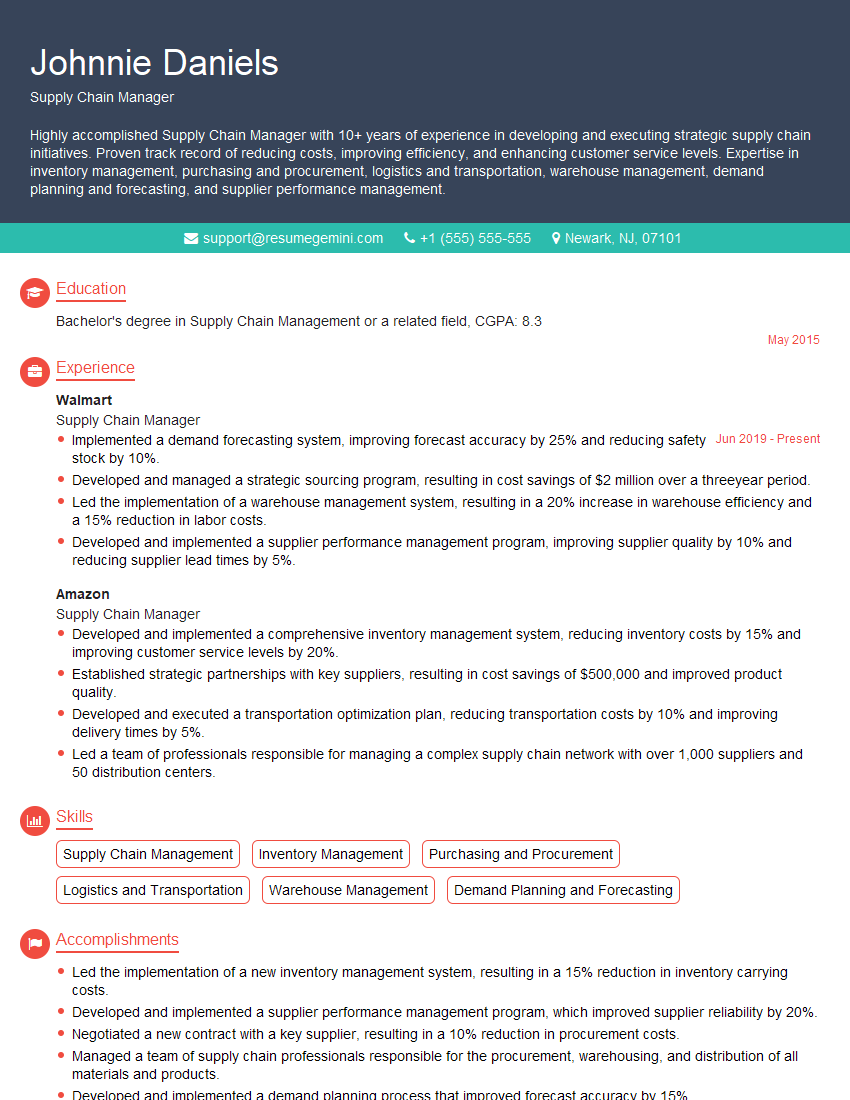
Supply Chain Manager Resume Sample
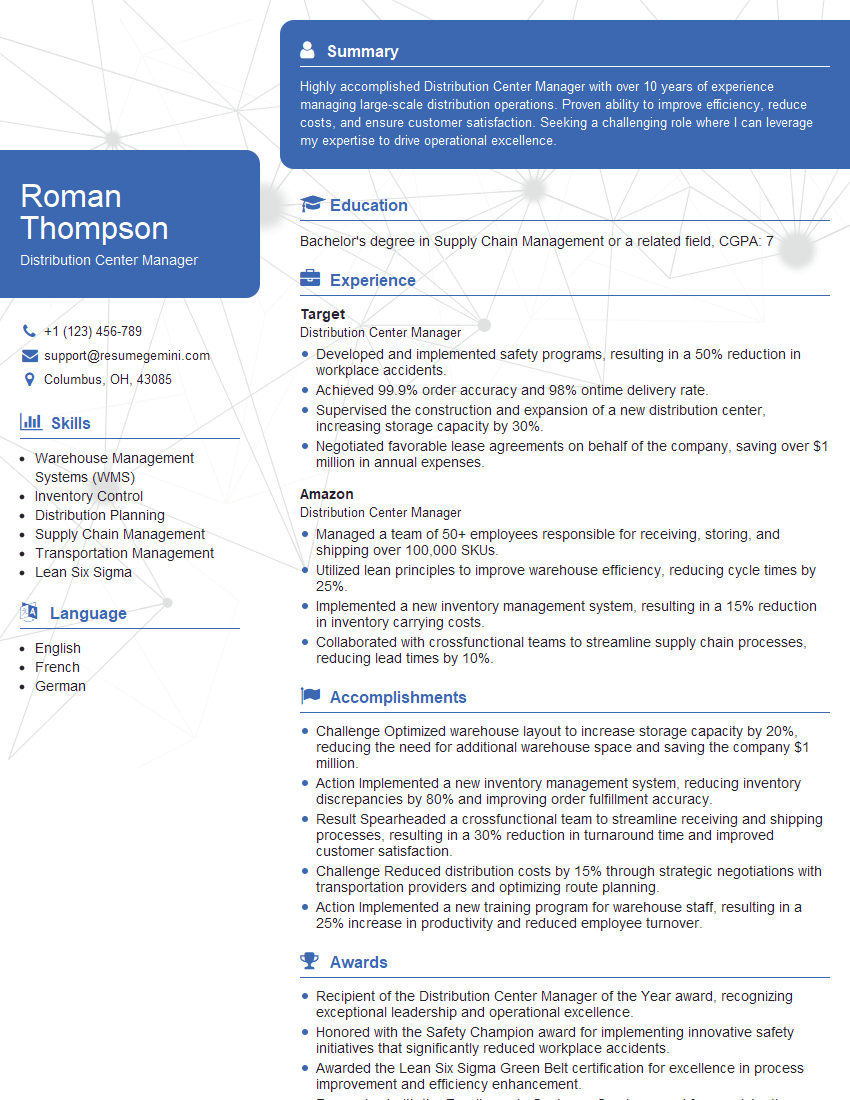
Distribution Center Manager Resume Sample
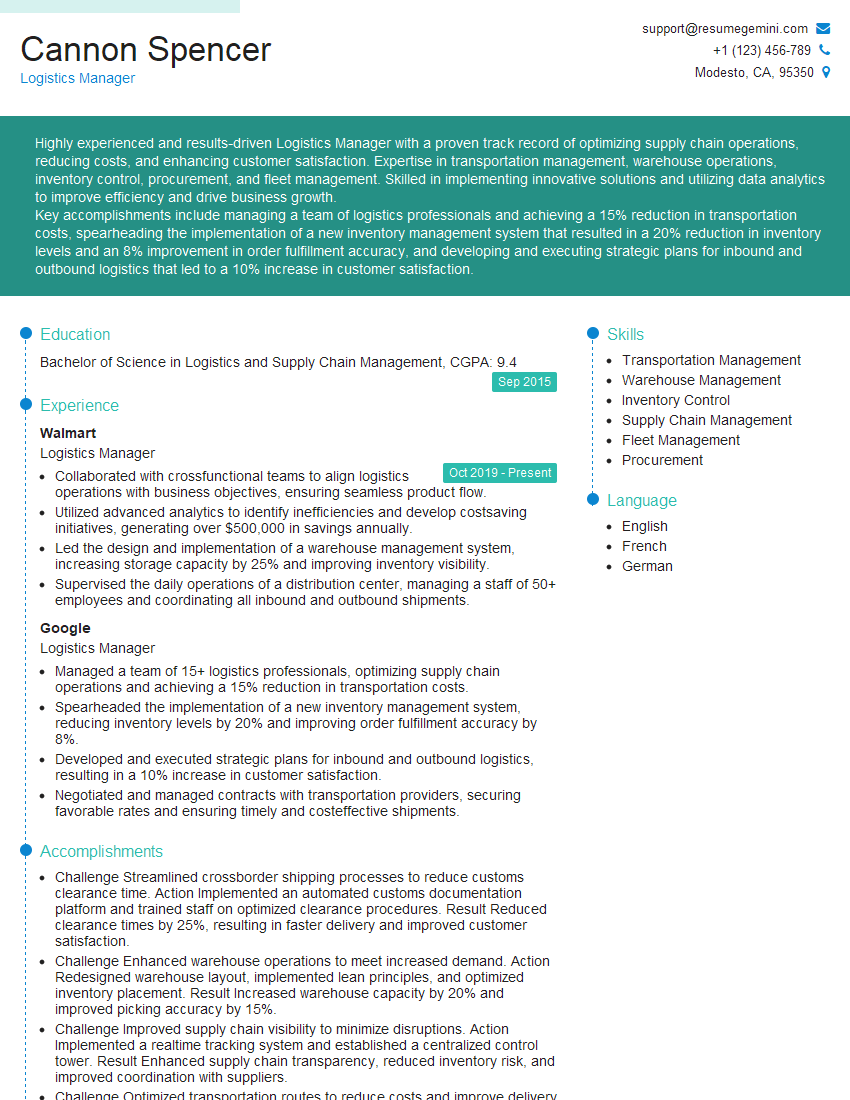
Logistics Manager Resume Sample
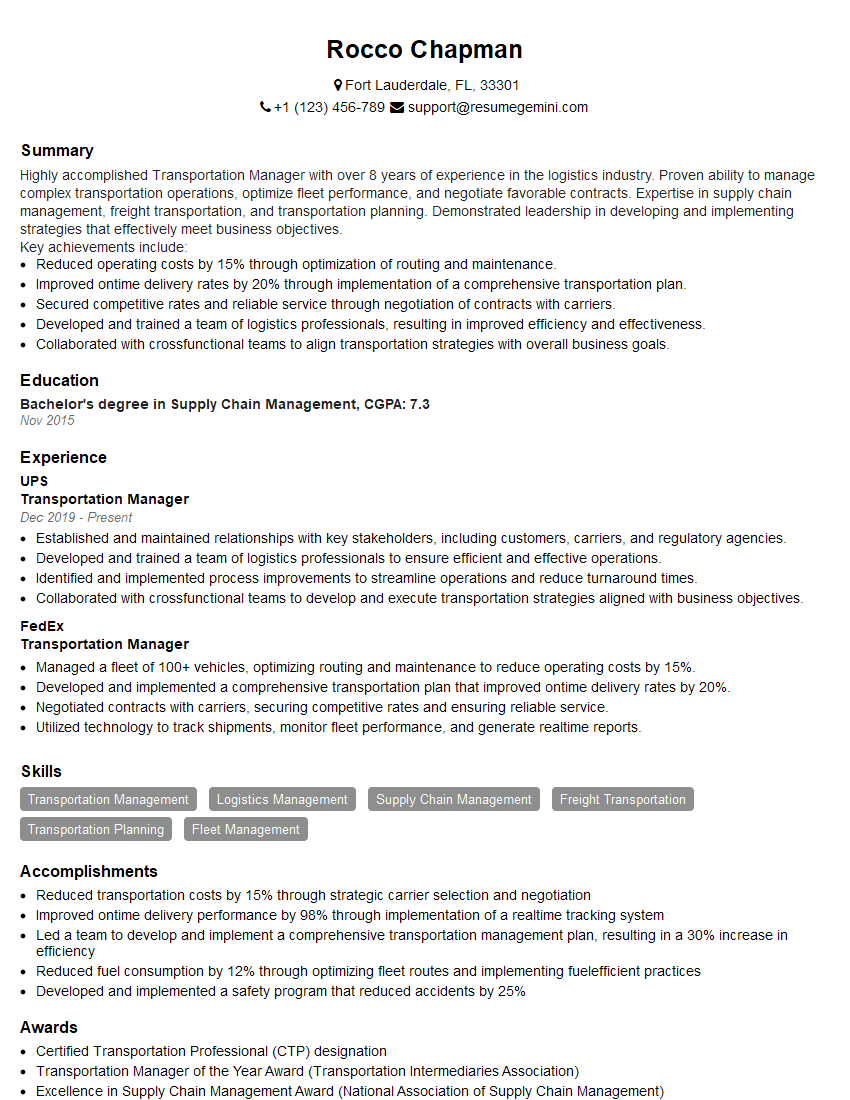
Transportation Manager Resume Sample
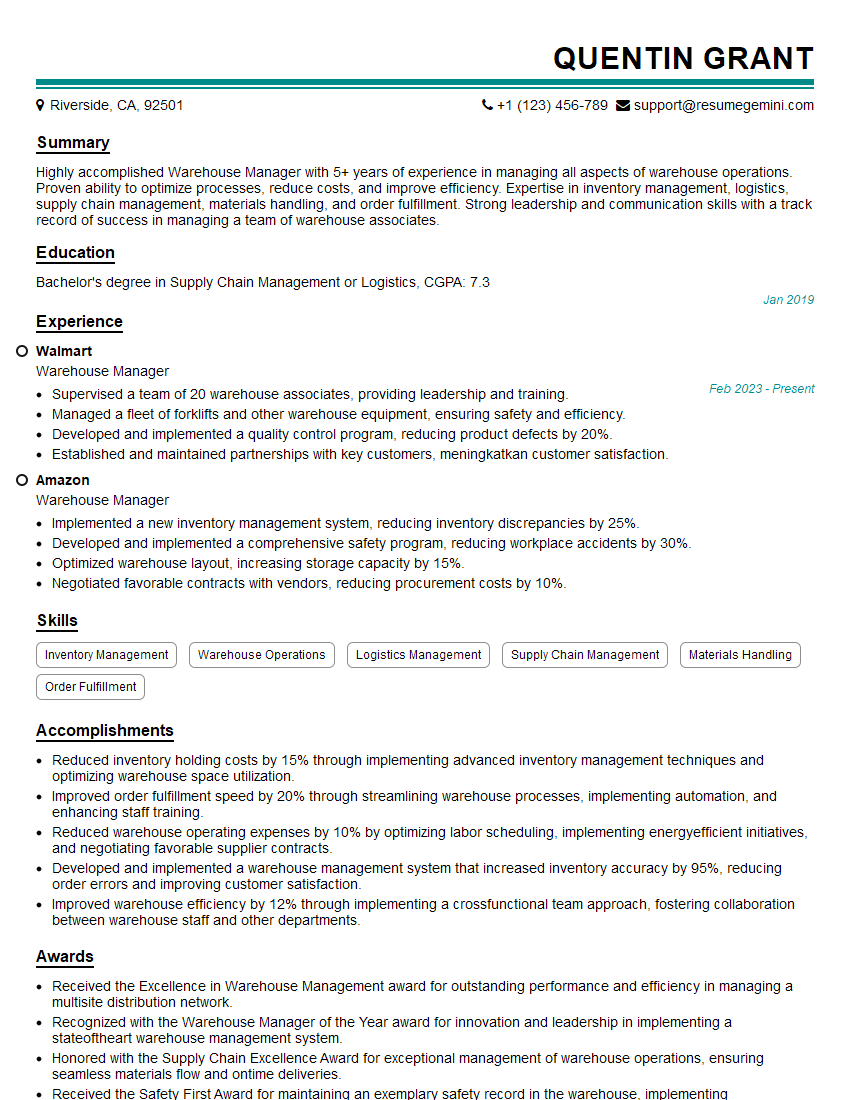
Warehouse Manager Resume Sample
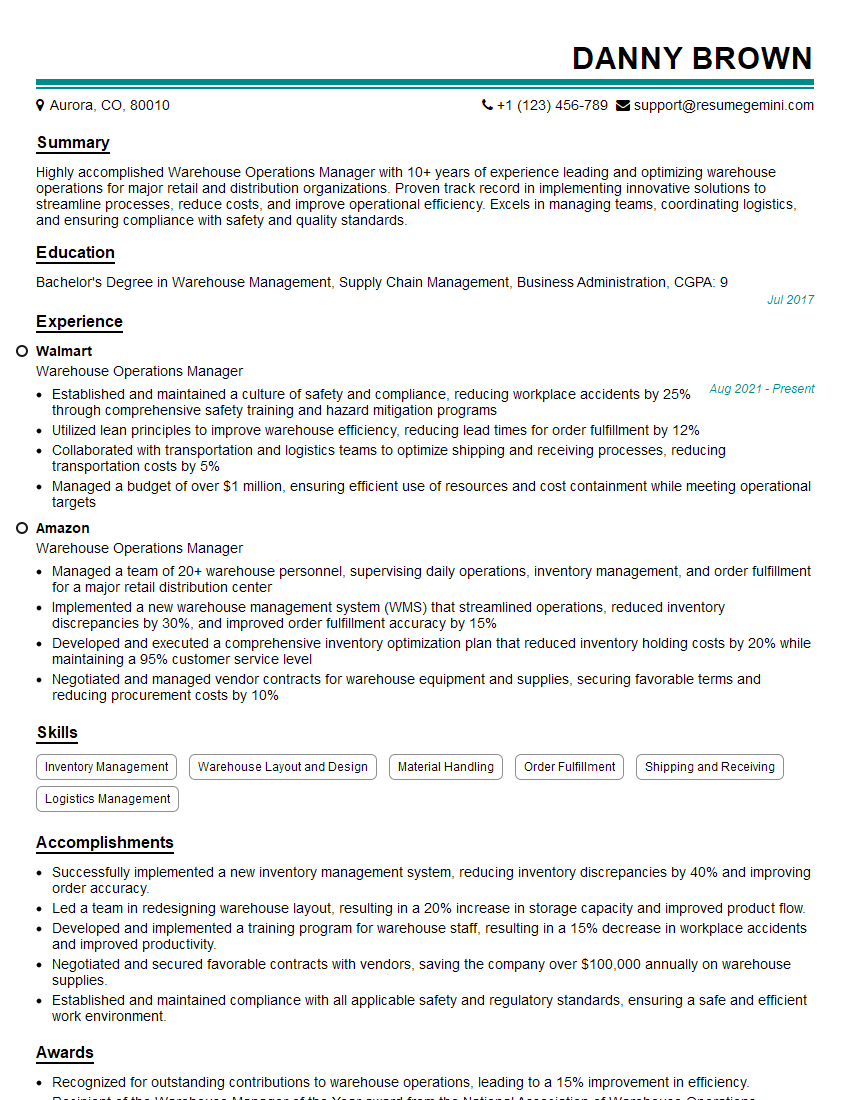
Warehouse Operations Manager Resume Sample
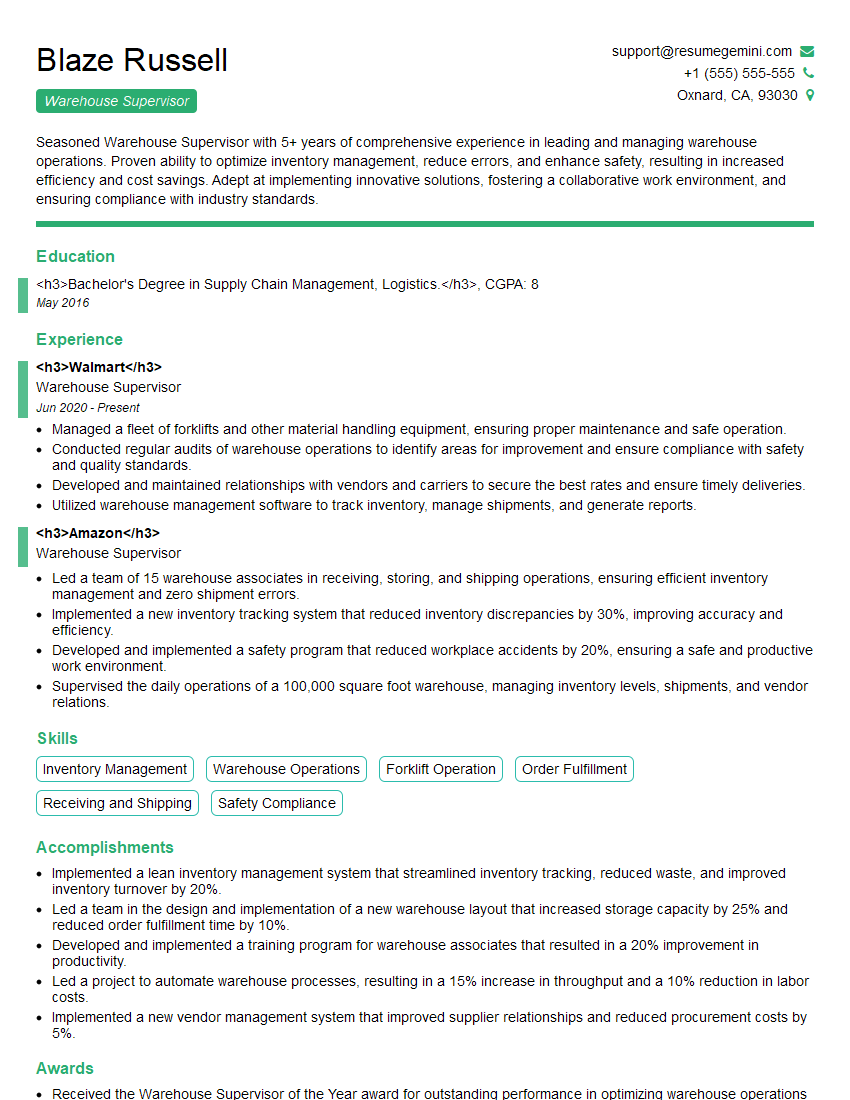
Warehouse Supervisor Resume Sample
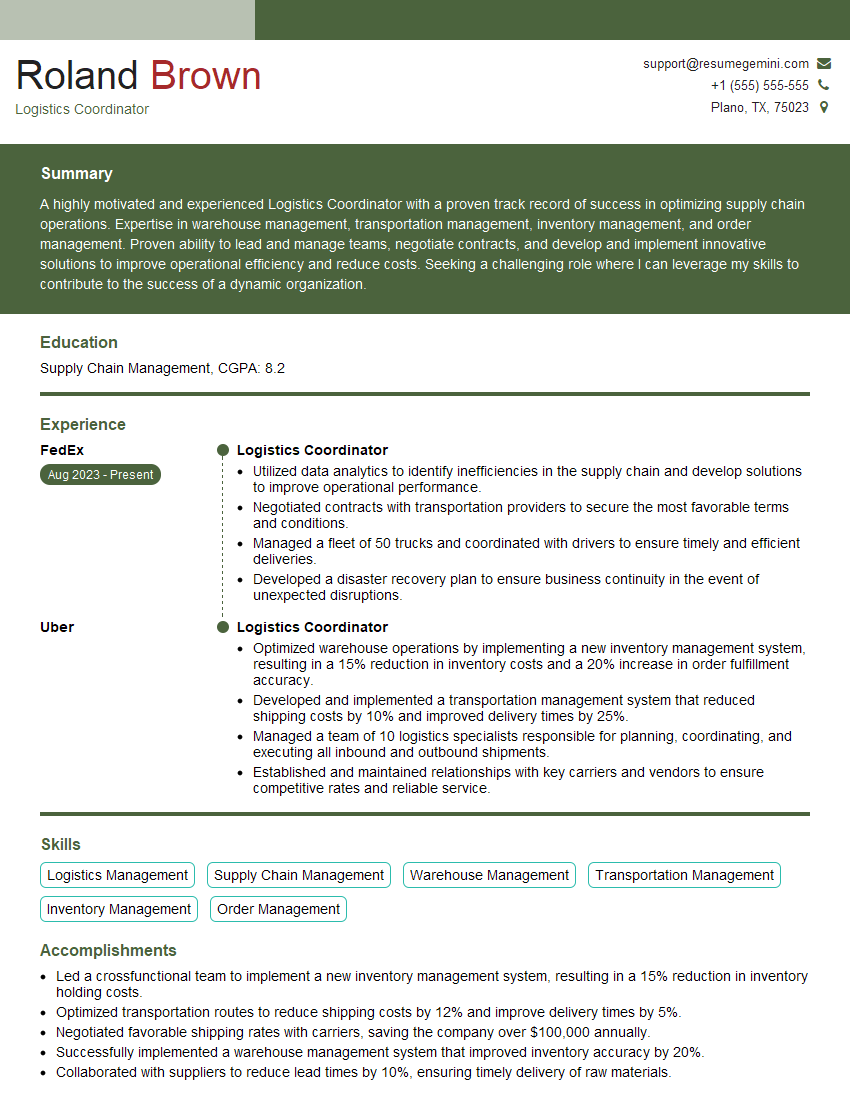
Logistics Coordinator Resume Sample
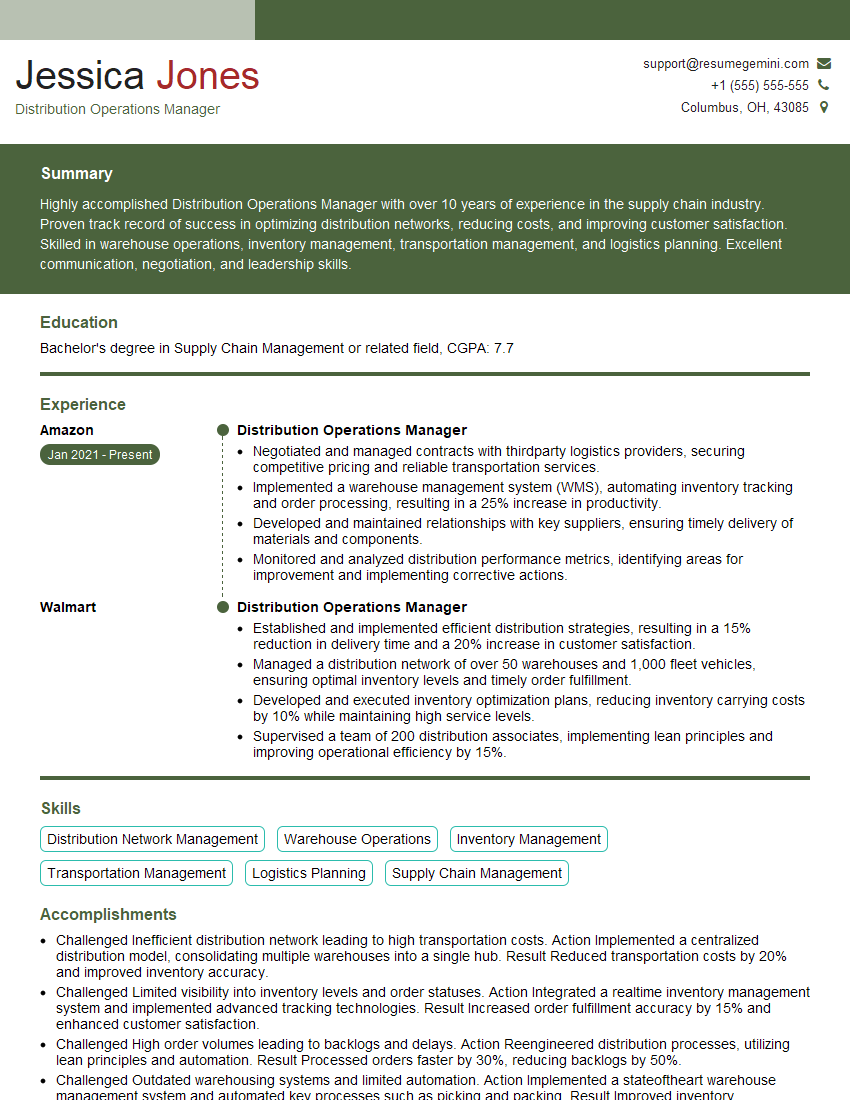
Distribution Operations Manager Resume Sample
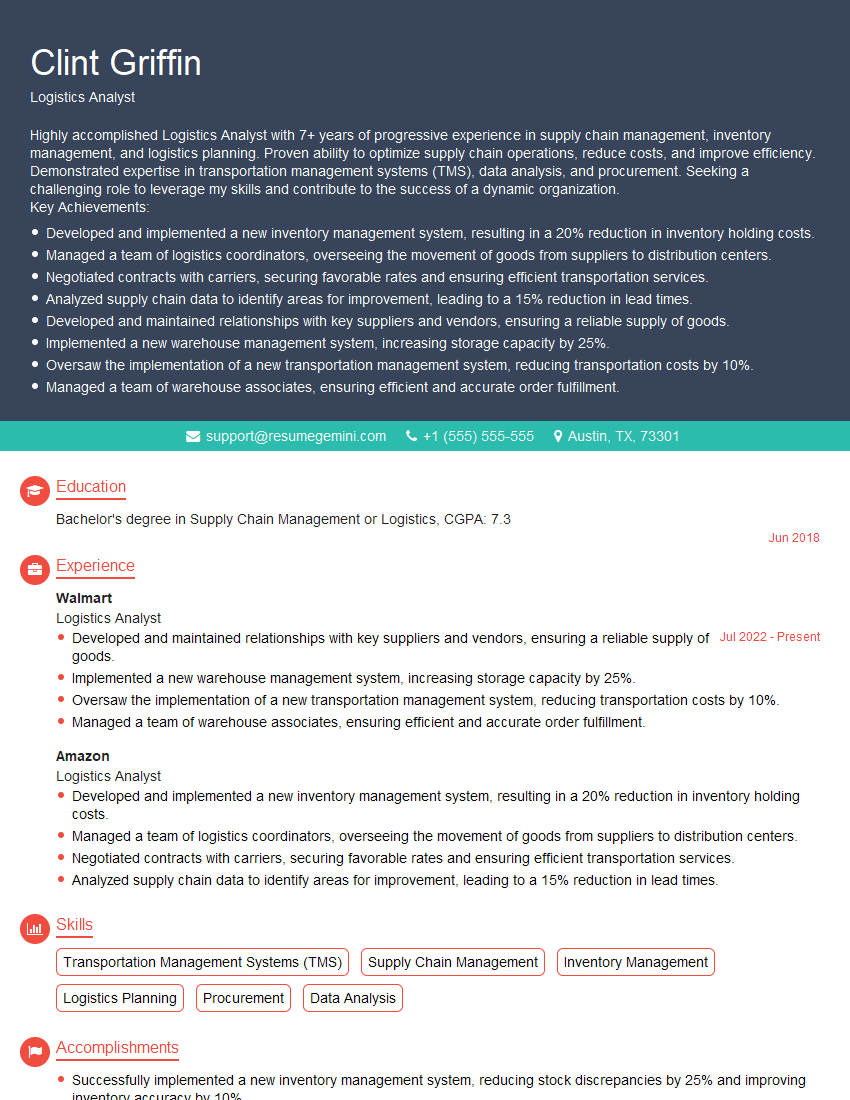
Logistics Analyst Resume Sample
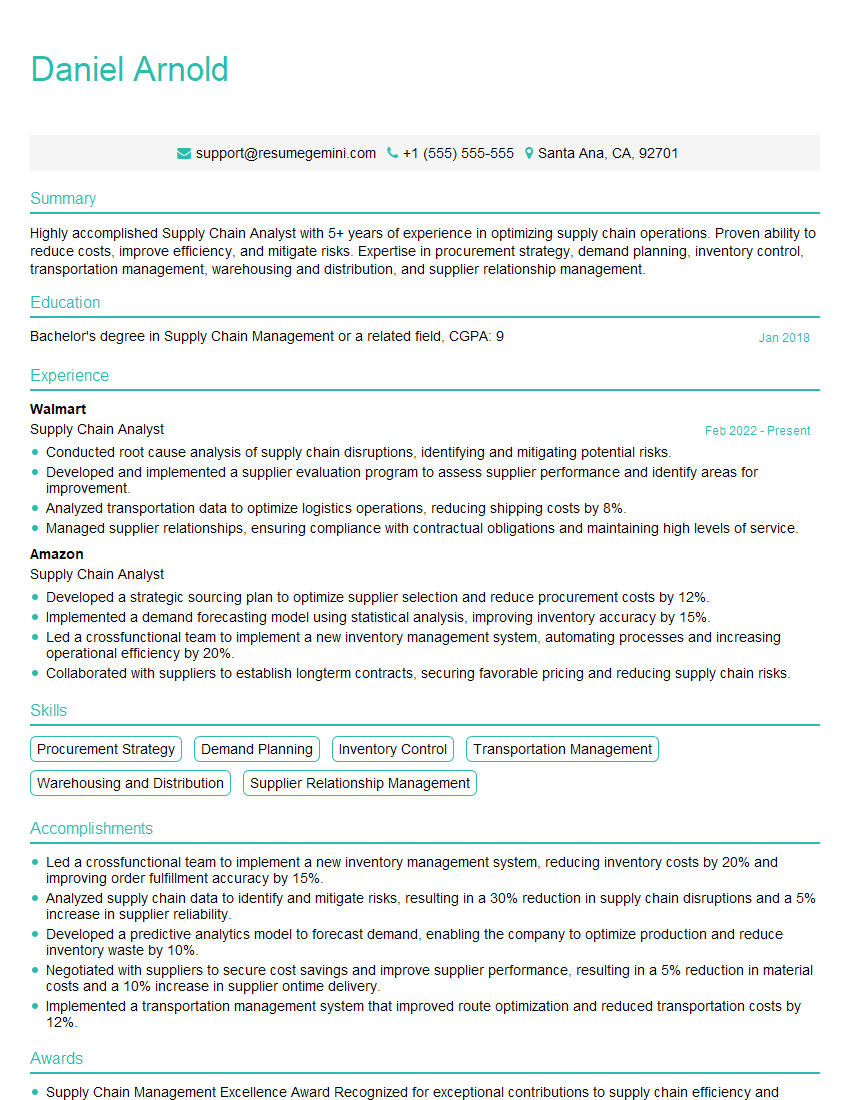
Supply Chain Analyst Resume Sample
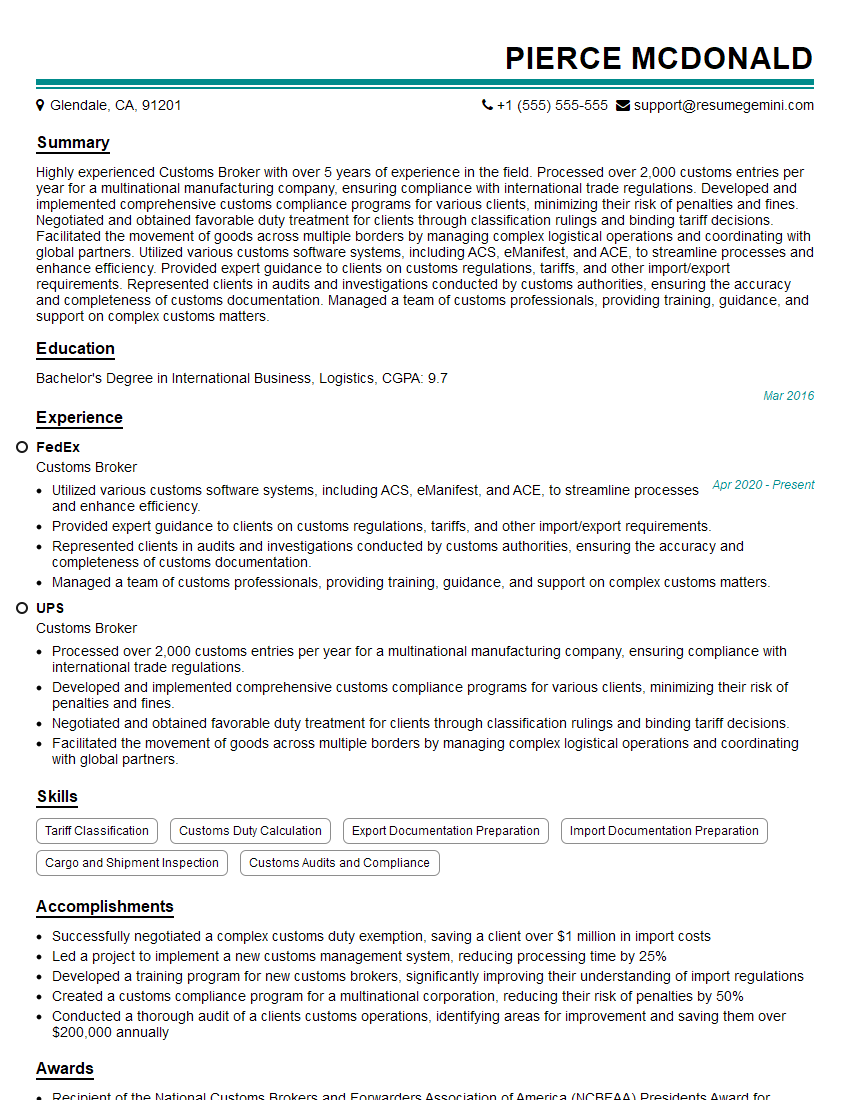
Customs Broker Resume Sample
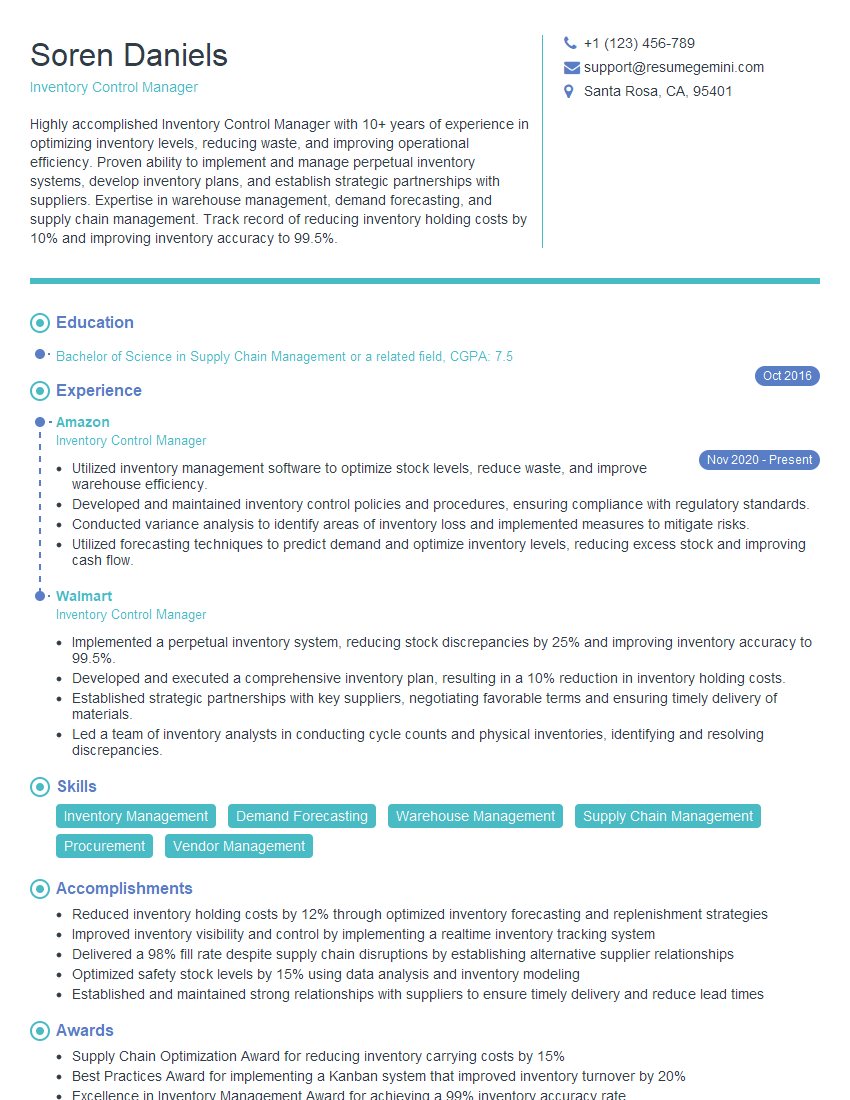
Inventory Control Manager Resume Sample
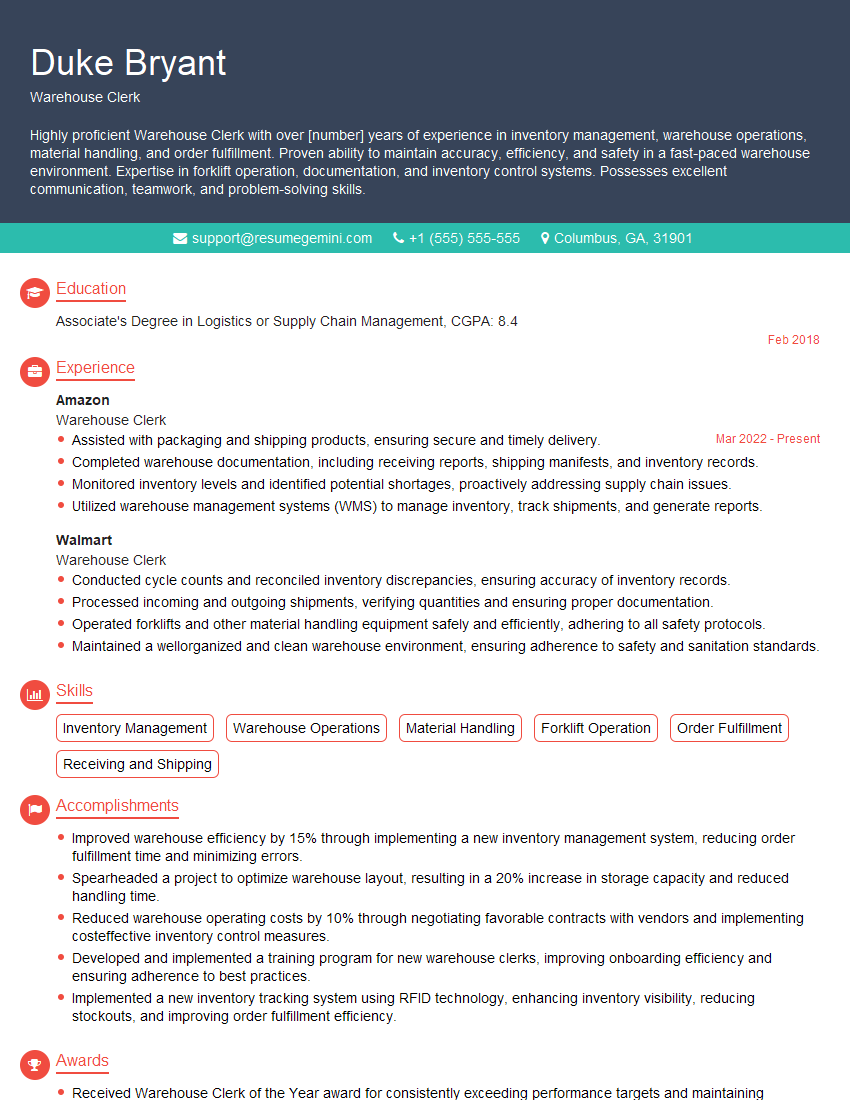
Warehouse Clerk Resume Sample
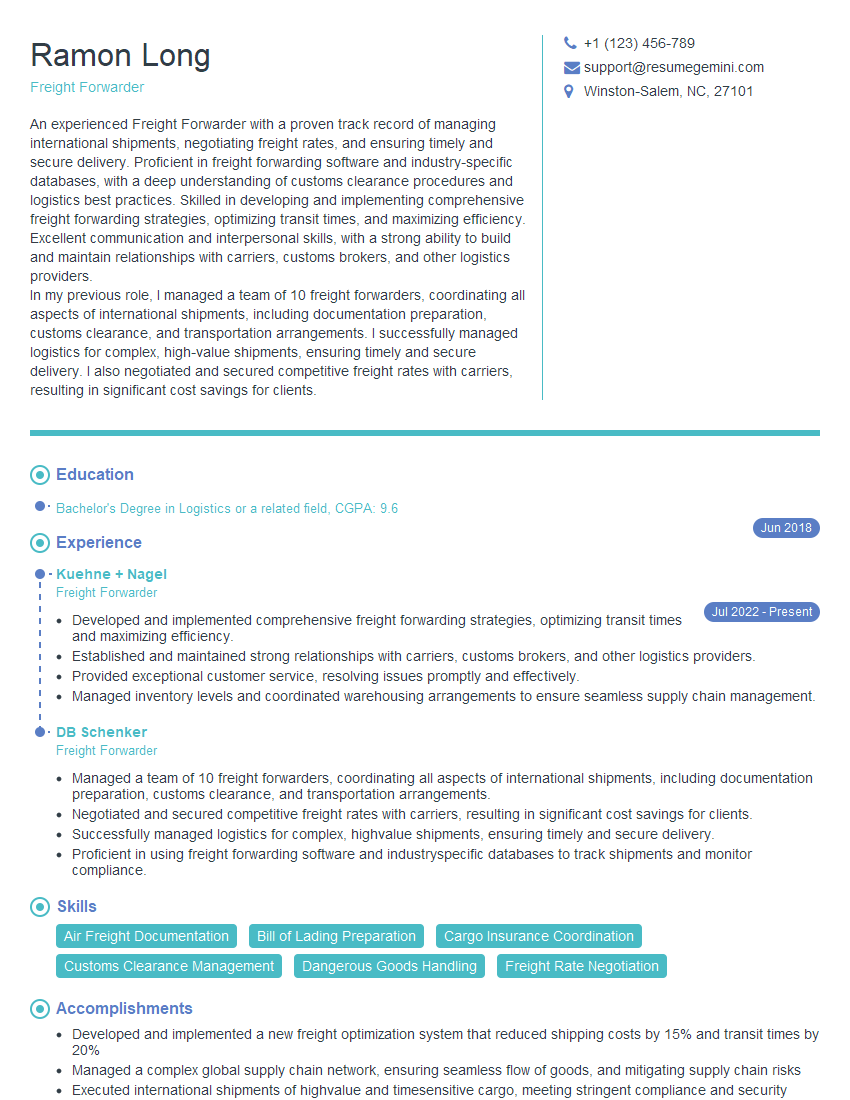
Freight Forwarder Resume Sample
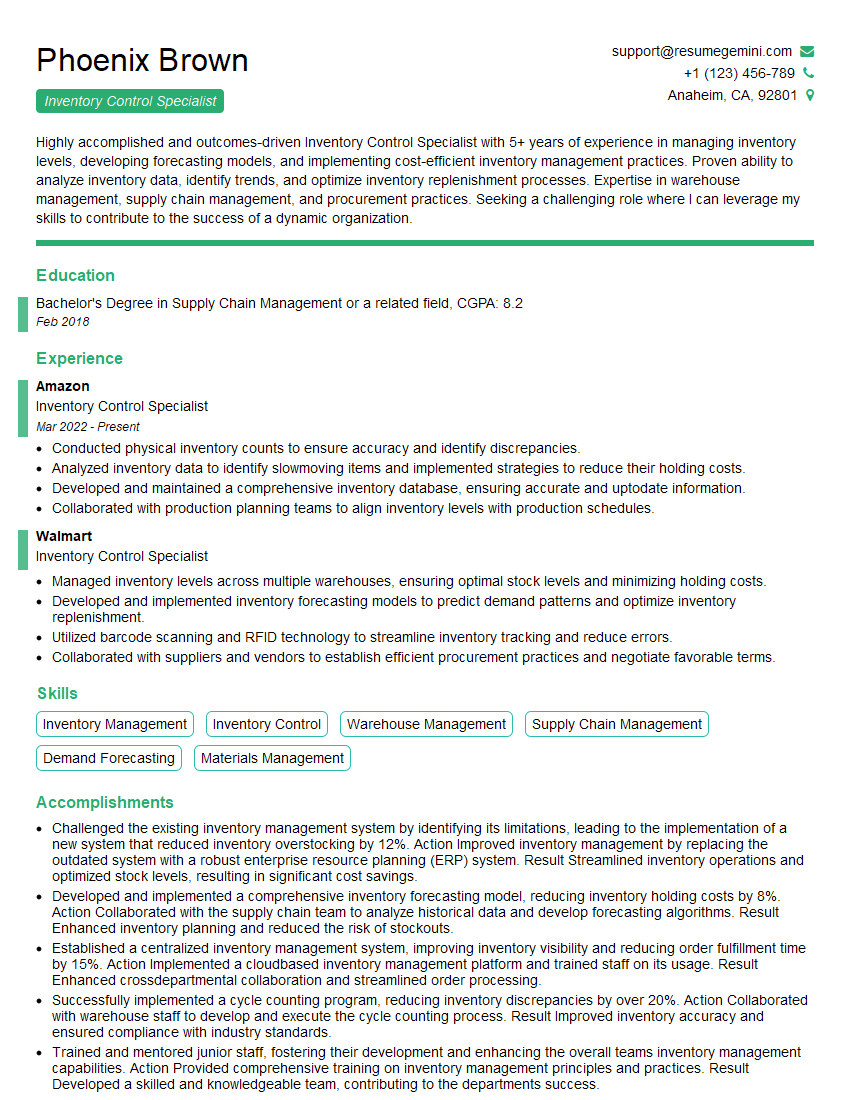
Inventory Control Specialist Resume Sample

Shipping and Receiving Clerk Resume Sample
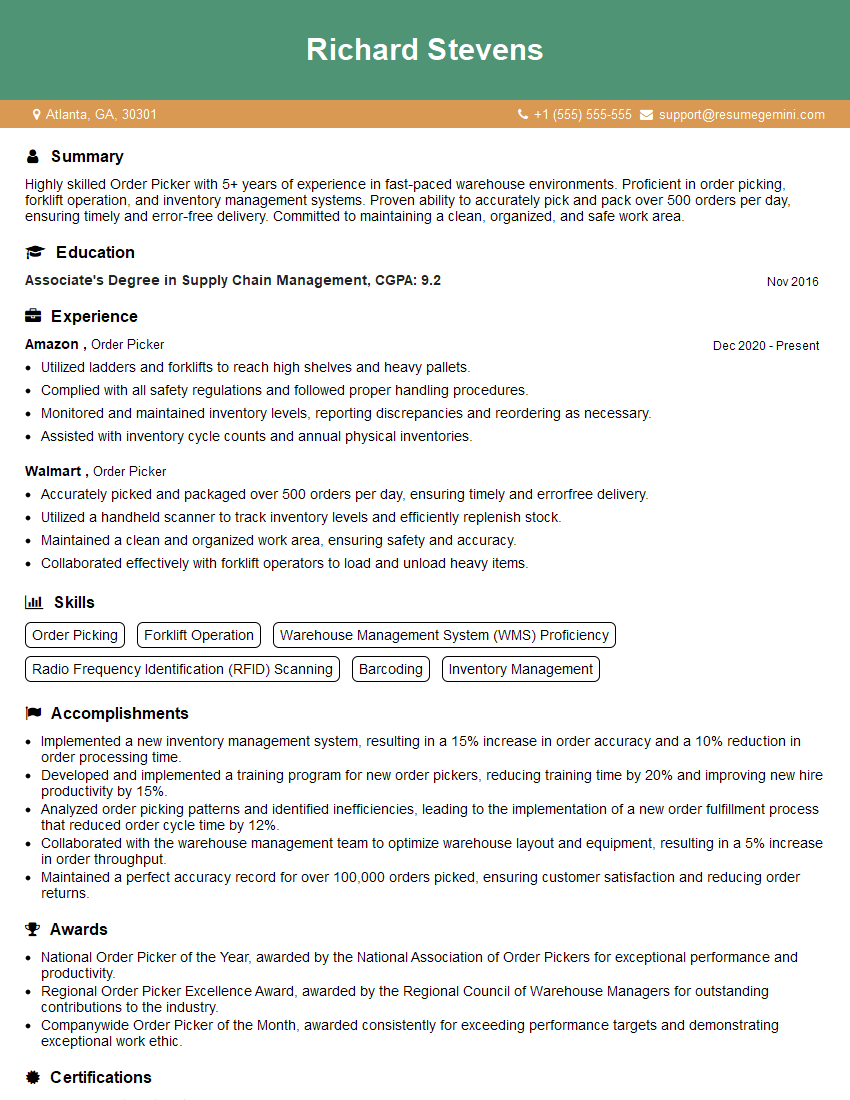
Order Picker Resume Sample
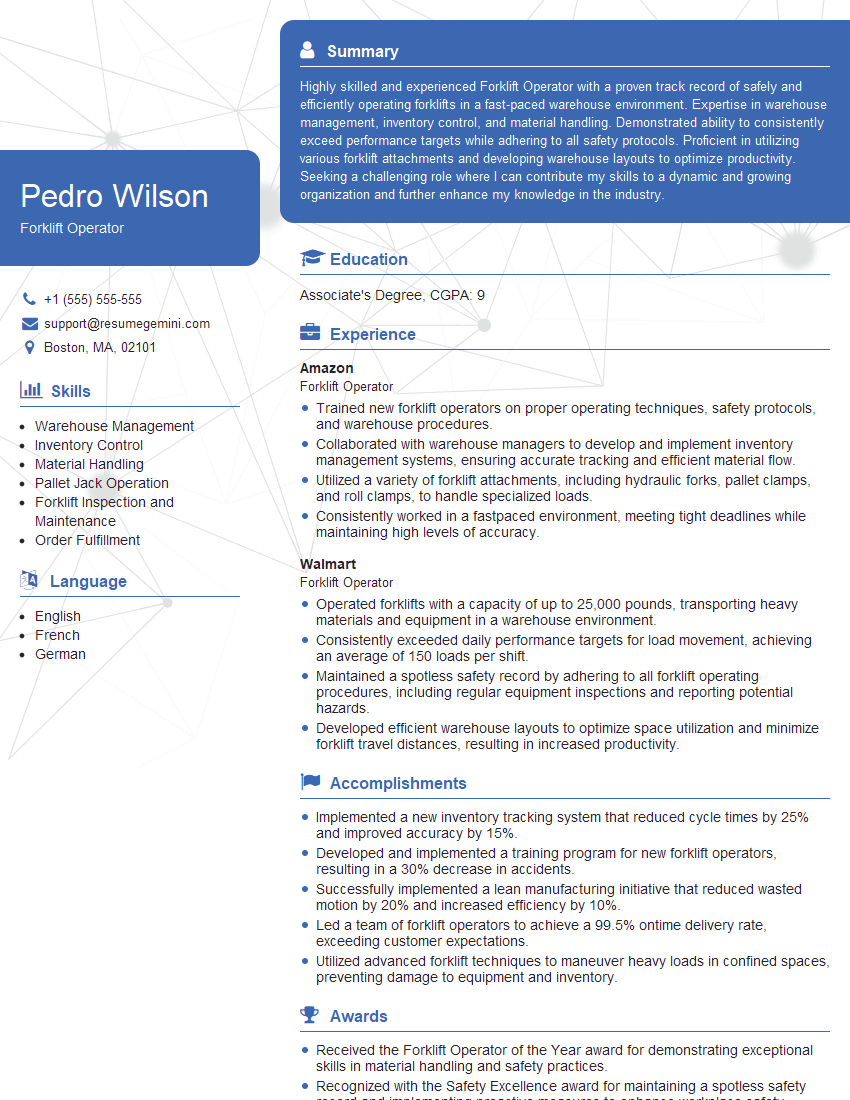
Forklift Operator Resume Sample
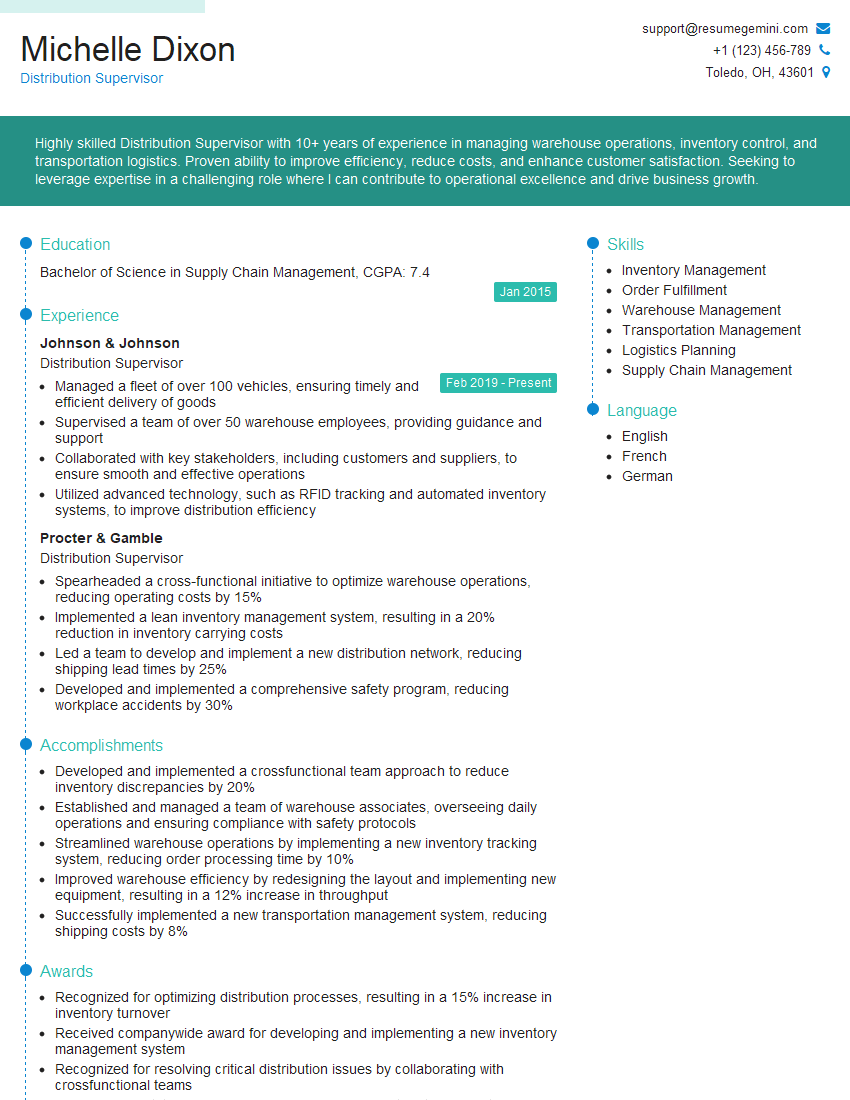
Distribution Supervisor Resume Sample
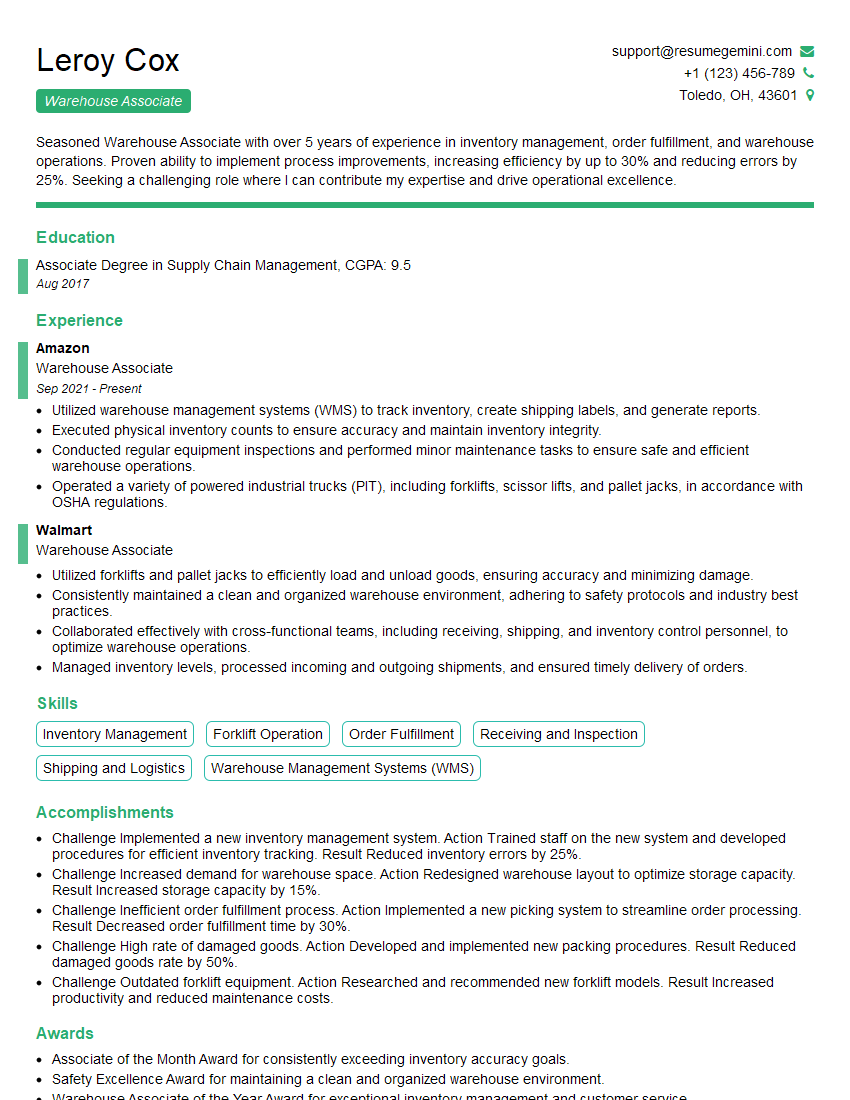
Warehouse Associate Resume Sample
- Supply Chain Manager
- Distribution Center Manager
- Logistics Manager
- Transportation Manager
- Warehouse Manager
- Warehouse Operations Manager
- Warehouse Supervisor
- Logistics Coordinator
- Distribution Operations Manager
- Logistics Analyst
- Supply Chain Analyst
- Customs Broker
- Inventory Control Manager
- Warehouse Clerk
- Freight Forwarder
- Inventory Control Specialist
- Shipping and Receiving Clerk
- Order Picker
- Forklift Operator
- Distribution Supervisor
- Warehouse Associate
Explore more articles
Users Rating of Our Blogs
Share Your Experience
We value your feedback! Please rate our content and share your thoughts (optional).
What Readers Say About Our Blog
Attention music lovers!
Wow, All the best Sax Summer music !!!
Spotify: https://open.spotify.com/artist/6ShcdIT7rPVVaFEpgZQbUk
Apple Music: https://music.apple.com/fr/artist/jimmy-sax-black/1530501936
YouTube: https://music.youtube.com/browse/VLOLAK5uy_noClmC7abM6YpZsnySxRqt3LoalPf88No
Other Platforms and Free Downloads : https://fanlink.tv/jimmysaxblack
on google : https://www.google.com/search?q=22+AND+22+AND+22
on ChatGPT : https://chat.openai.com?q=who20jlJimmy20Black20Sax20Producer
Get back into the groove with Jimmy sax Black
Best regards,
Jimmy sax Black
www.jimmysaxblack.com
Hi I am a troller at The aquatic interview center and I suddenly went so fast in Roblox and it was gone when I reset.
Hi,
Business owners spend hours every week worrying about their website—or avoiding it because it feels overwhelming.
We’d like to take that off your plate:
$69/month. Everything handled.
Our team will:
Design a custom website—or completely overhaul your current one
Take care of hosting as an option
Handle edits and improvements—up to 60 minutes of work included every month
No setup fees, no annual commitments. Just a site that makes a strong first impression.
Find out if it’s right for you:
https://websolutionsgenius.com/awardwinningwebsites
Hello,
we currently offer a complimentary backlink and URL indexing test for search engine optimization professionals.
You can get complimentary indexing credits to test how link discovery works in practice.
No credit card is required and there is no recurring fee.
You can find details here:
https://wikipedia-backlinks.com/indexing/
Regards
NICE RESPONSE TO Q & A
hi
The aim of this message is regarding an unclaimed deposit of a deceased nationale that bears the same name as you. You are not relate to him as there are millions of people answering the names across around the world. But i will use my position to influence the release of the deposit to you for our mutual benefit.
Respond for full details and how to claim the deposit. This is 100% risk free. Send hello to my email id: lukachachibaialuka@gmail.com
Luka Chachibaialuka
Hey interviewgemini.com, just wanted to follow up on my last email.
We just launched Call the Monster, an parenting app that lets you summon friendly ‘monsters’ kids actually listen to.
We’re also running a giveaway for everyone who downloads the app. Since it’s brand new, there aren’t many users yet, which means you’ve got a much better chance of winning some great prizes.
You can check it out here: https://bit.ly/callamonsterapp
Or follow us on Instagram: https://www.instagram.com/callamonsterapp
Thanks,
Ryan
CEO – Call the Monster App
Hey interviewgemini.com, I saw your website and love your approach.
I just want this to look like spam email, but want to share something important to you. We just launched Call the Monster, a parenting app that lets you summon friendly ‘monsters’ kids actually listen to.
Parents are loving it for calming chaos before bedtime. Thought you might want to try it: https://bit.ly/callamonsterapp or just follow our fun monster lore on Instagram: https://www.instagram.com/callamonsterapp
Thanks,
Ryan
CEO – Call A Monster APP
To the interviewgemini.com Owner.
Dear interviewgemini.com Webmaster!
Hi interviewgemini.com Webmaster!
Dear interviewgemini.com Webmaster!
excellent
Hello,
We found issues with your domain’s email setup that may be sending your messages to spam or blocking them completely. InboxShield Mini shows you how to fix it in minutes — no tech skills required.
Scan your domain now for details: https://inboxshield-mini.com/
— Adam @ InboxShield Mini
support@inboxshield-mini.com
Reply STOP to unsubscribe
Hi, are you owner of interviewgemini.com? What if I told you I could help you find extra time in your schedule, reconnect with leads you didn’t even realize you missed, and bring in more “I want to work with you” conversations, without increasing your ad spend or hiring a full-time employee?
All with a flexible, budget-friendly service that could easily pay for itself. Sounds good?
Would it be nice to jump on a quick 10-minute call so I can show you exactly how we make this work?
Best,
Hapei
Marketing Director
Hey, I know you’re the owner of interviewgemini.com. I’ll be quick.
Fundraising for your business is tough and time-consuming. We make it easier by guaranteeing two private investor meetings each month, for six months. No demos, no pitch events – just direct introductions to active investors matched to your startup.
If youR17;re raising, this could help you build real momentum. Want me to send more info?
Hi, I represent an SEO company that specialises in getting you AI citations and higher rankings on Google. I’d like to offer you a 100% free SEO audit for your website. Would you be interested?
Hi, I represent an SEO company that specialises in getting you AI citations and higher rankings on Google. I’d like to offer you a 100% free SEO audit for your website. Would you be interested?