Unlock your full potential by mastering the most common Understanding of Wood Products interview questions. This blog offers a deep dive into the critical topics, ensuring you’re not only prepared to answer but to excel. With these insights, you’ll approach your interview with clarity and confidence.
Questions Asked in Understanding of Wood Products Interview
Q 1. What are the key differences between hardwood and softwood?
The difference between hardwood and softwood lies primarily in their botanical classification and resulting properties. Hardwoods come from deciduous trees (trees that lose their leaves annually), while softwoods come from coniferous trees (cone-bearing, evergreen trees). This distinction doesn’t always correlate perfectly with actual hardness; some softwoods can be harder than some hardwoods. However, generally, hardwoods tend to be denser, stronger, and more durable than softwoods. They also exhibit more intricate grain patterns, making them desirable for furniture and flooring. Softwoods, on the other hand, are often easier to work with, lighter, and less expensive, making them suitable for construction lumber and pulpwood.
- Hardwood Examples: Oak, Maple, Cherry, Mahogany
- Softwood Examples: Pine, Fir, Spruce, Cedar
Think of it like this: Hardwoods are like the ‘steak’ of the lumber world – denser, richer, more complex, and generally more expensive. Softwoods are more like the ‘chicken’ – more versatile, readily available, and a good value.
Q 2. Explain the process of kiln-drying lumber.
Kiln-drying is a controlled process of removing moisture from lumber to prevent warping, shrinking, and decay. It involves placing freshly cut lumber into a large oven-like structure called a kiln. The kiln is then heated and humidity is carefully regulated to gradually reduce the moisture content of the wood. The process typically takes several days to weeks, depending on the species of wood, the thickness of the lumber, and the desired final moisture content. Incorrect drying can lead to significant quality issues, such as checking (cracking), splitting, and warping, reducing the value and usability of the wood.
The process usually involves several phases: initial heating to raise the temperature, a holding phase where the temperature is stable to allow moisture to escape evenly, and a final cooling phase to prevent sudden shrinkage. Advanced kilns often utilize sophisticated computer controls to monitor and adjust temperature and humidity throughout the process for optimal results. The final moisture content is typically between 6% and 12%, depending on the intended use of the lumber.
Q 3. Describe common wood defects and their impact on product quality.
Wood defects can significantly impact the quality and value of lumber. They can be broadly classified into several categories:
- Knots: Branches embedded in the wood, reducing strength and creating potential weak points. Size and type of knot affect severity.
- Checks and Cracks: Separations in the wood, typically caused by stresses during drying or growth. Can weaken the wood and affect its appearance.
- Splits: Similar to checks but extend completely through the wood piece. Often caused by rapid drying or physical damage.
- Decay: Decomposition of the wood by fungi, significantly weakening and reducing the lifespan. Often manifests as discoloration and softening.
- Wane: Presence of bark or lack of wood on the edges of the board. Affects appearance and can reduce usable material.
- Pitch Pockets: Resin-filled cavities found in some softwoods. Can affect strength and appearance.
The impact of these defects depends on their severity, location, and the intended use of the wood. For example, large knots might be acceptable in structural applications where strength is not critical, but are unacceptable in high-quality furniture.
Q 4. How do different wood species vary in terms of strength and durability?
Wood species exhibit a wide range of strength and durability properties. These variations are influenced by factors like density, grain structure, and chemical composition. For example, hardwoods like oak and hickory are known for their exceptional strength and resistance to wear, making them suitable for flooring, furniture, and tool handles. In contrast, softwoods like pine are generally less strong but are easier to work with and less expensive, often used in construction framing.
Strength is often measured by parameters like bending strength and compressive strength. Durability is assessed by resistance to decay, insect attack, and abrasion. Certain species, such as teak and cedar, possess natural resistance to decay and insect damage, making them ideal for outdoor applications. Tables comparing the properties of various wood species are readily available for professionals to make informed material selections.
Q 5. What are the advantages and disadvantages of using engineered wood products?
Engineered wood products, such as plywood, particleboard, and oriented strand board (OSB), are manufactured by combining wood fibers, veneers, or strands with adhesives. They offer several advantages over solid wood:
- Cost-effectiveness: Generally less expensive than solid wood.
- Consistency: Offer greater dimensional stability and uniformity compared to natural wood variations.
- Strength-to-weight ratio: Can achieve high strength while being lighter.
- Reduced warping and shrinking: Engineered construction minimizes movement caused by moisture changes.
However, there are also disadvantages:
- Lower aesthetic appeal: Often lack the visual beauty of solid wood.
- Susceptibility to moisture damage: While less prone to warping, they can still be damaged by excessive moisture.
- Potential for off-gassing: Some adhesives used in manufacturing can release volatile organic compounds (VOCs).
- Reduced nail and screw holding capacity: May require specialized fasteners compared to solid wood.
The choice between solid wood and engineered wood products depends on the specific application, budget, and desired aesthetics.
Q 6. Explain the process of wood preservation and common treatments.
Wood preservation involves treating wood to protect it from decay, insect attack, and other forms of degradation. This is crucial for extending the lifespan of wood used in outdoor applications and environments prone to moisture. Common methods include:
- Pressure Treatment: Wood is placed in a pressure vessel where preservatives are forced into the wood under high pressure. This ensures deep penetration and effective protection.
- Surface Treatment: Preservatives are applied to the surface of the wood using brushing, spraying, or dipping. Provides less protection than pressure treatment and needs more frequent reapplication.
- Thermal Modification: Wood is heated to high temperatures, altering its chemical structure to increase its durability and decay resistance. It also changes the wood’s colour.
Common preservatives include chromated copper arsenate (CCA), although its use is now restricted in many regions due to environmental concerns. Alternative preservatives such as copper azole (CA-B) and copper naphthenate are now more commonly used. The choice of treatment depends on factors such as the type of wood, the intended use, and environmental regulations.
Q 7. Describe various methods for joining wood pieces.
Various methods exist for joining wood pieces, each with its own advantages and disadvantages. The choice depends on factors like the type of wood, the strength required, and the aesthetic considerations.
- Nail and Screw Fastening: Simple and quick, suitable for many applications but can cause splitting in certain wood types.
- Dowel Joints: Use wooden dowels to create strong and relatively invisible joints. Requires precise drilling.
- Mortise and Tenon Joints: A traditional joinery technique creating strong and durable joints often used in furniture making.
- Butt Joints: Simple but weak joint suitable only for low stress applications. Often reinforced with glue and/or screws.
- Lap Joints: Overlap two pieces for increased strength. Several variations exist for different applications.
- Glue: Wood glue is widely used to bond pieces together providing strong adhesion. Wood type and moisture content affect glue effectiveness.
For example, using mortise and tenon joints for a sturdy table leg requires skill and precision, while butt joints glued and screwed might be suitable for a less demanding project. Selecting the right joining method is a crucial aspect of woodworking.
Q 8. What are the common finishing techniques for wood products?
Wood finishing enhances the appearance, durability, and protection of wood products. It’s a multi-step process, and the chosen techniques depend on the desired aesthetic and the wood’s intended use. Common techniques include:
- Staining: Penetrates the wood surface to alter its color without obscuring the grain. Oil-based stains are durable but slower drying; water-based stains are easier to clean up but might raise the grain.
- Painting: Provides a complete color change and a protective layer. Latex paints are popular for their ease of use and clean-up, while oil-based paints offer superior durability.
- Varnishing: Creates a hard, clear, protective coating that enhances the wood’s natural beauty. Different varnishes offer varying levels of gloss and durability.
- Lacquering: Similar to varnishing, but lacquers typically dry faster and are available in various finishes (gloss, semi-gloss, satin).
- Sealing: A crucial preliminary step to prevent the wood from absorbing too much stain or finish. Sealers are usually thin, penetrating liquids.
- Waxing: Provides a protective and subtle sheen, enhancing the natural beauty of the wood while offering less protection than varnish or lacquer. Often used for final touch.
For instance, a fine dining table might receive a multi-step finish with a wood sealer, stain, varnish, and finally, a coat of wax for a luxurious feel. A child’s toy, on the other hand, might simply be sealed and painted with a durable, child-safe paint.
Q 9. How do you identify different wood species?
Identifying wood species requires a keen eye and understanding of various characteristics. Several methods can be used:
- Grain pattern: Each species has a unique grain pattern – straight, wavy, curly, etc. Oak, for example, is known for its prominent, open grain, while maple often has a finer, tighter grain.
- Color and Tone: Wood species exhibit a range of colors, from the light yellow of pine to the reddish-brown of mahogany. The color can also vary depending on the tree’s age and growing conditions.
- Texture: Some woods are smooth, while others are rough or coarse. The texture can be felt by running your hand across the wood’s surface.
- Smell: Certain woods have distinct aromas. Cedar, for instance, has a characteristic aromatic scent.
- Density and Hardness: Hardwoods are generally denser and harder than softwoods. This can be assessed by tapping the wood or checking its Janka hardness rating (a measure of resistance to denting).
- Growth rings: Visible growth rings provide clues about the tree’s age and growth rate, which can be species-specific.
A magnifying glass can help in observing minute details such as pores, grain patterns, and color variations. Reference books and online resources containing detailed images and descriptions of different wood species are also invaluable tools. Experienced woodworkers often develop a ‘wood sense’ through years of handling and working with various species.
Q 10. What are the safety regulations related to woodworking machinery?
Safety is paramount in woodworking. Regulations vary by location, but some universal safety precautions include:
- Machine Guards: Always use appropriate guards and safety features on all machinery (e.g., blade guards on table saws, push sticks, feather boards).
- Personal Protective Equipment (PPE): This includes eye protection (safety glasses or face shield), hearing protection (earplugs or muffs), dust masks (especially for sanding and power planing), and appropriate clothing (long sleeves, close-fitting clothing to prevent entanglement).
- Proper Tool Maintenance: Ensure all tools are sharp and well-maintained to prevent kickbacks and other accidents. Check for loose parts before operation.
- Safe Work Practices: Never operate machinery when tired or distracted. Maintain a clean and organized workspace to prevent tripping hazards. Use appropriate clamping techniques to secure workpieces.
- Emergency Procedures: Know the location of first-aid kits and fire extinguishers. Understand the emergency shutdown procedures for all machinery.
- Training and Certification: Formal training in woodworking techniques and safety is crucial. Some regions may require specific certifications for operating certain equipment.
Ignoring safety regulations can lead to serious injuries, including cuts, burns, hearing loss, and respiratory problems. A safe working environment is the responsibility of both the employer and the individual woodworker.
Q 11. Explain the concept of wood grain and its influence on product design.
Wood grain refers to the arrangement of wood fibers in a tree trunk. It’s created by the growth rings of the tree, which are visible as lines or patterns on the wood surface. The grain’s direction and pattern significantly impact product design:
- Strength and Stability: Wood is stronger along the grain than across it. Designers must consider the grain direction when creating structural components to prevent weakness or splitting.
- Aesthetic Appeal: The grain pattern dramatically influences the visual appeal of a product. Certain designs can highlight or minimize the grain depending on the intended look. For instance, a piece of furniture with book-matched veneer utilizes the symmetry of the grain for a visually striking effect.
- Workability: The grain’s pattern and density influence how easily the wood can be worked with tools. A straight grain generally is easier to plane and sand than a highly figured grain (with complex patterns).
- Finishing: The grain’s texture affects how a finish will appear on the wood’s surface. Open-grained woods may require wood filler before finishing to create a smooth surface.
Example: A chair designed with the grain running parallel to its legs will be stronger than one where the grain runs perpendicularly. Similarly, a table made from a piece of wood with a striking burl (a knot-like formation) will be aesthetically different from a table made with straight-grained wood.
Q 12. What are the environmental concerns related to wood harvesting and processing?
Sustainable wood harvesting and processing are critical for environmental protection. Concerns include:
- Deforestation: Unsustainable logging practices contribute to deforestation, leading to habitat loss, soil erosion, and biodiversity reduction.
- Carbon Emissions: Deforestation releases large amounts of carbon dioxide into the atmosphere, exacerbating climate change. The transportation and processing of wood also contribute to emissions.
- Water Pollution: Wood processing can contaminate water sources with chemicals used in treatment and finishing. Waste from sawmills can pollute rivers and streams.
- Habitat Fragmentation: Clear-cutting large areas of forest disrupts ecosystems and isolates wildlife populations.
- Loss of Biodiversity: Forest ecosystems support a wide variety of plant and animal life. Deforestation leads to the extinction of numerous species.
Addressing these concerns involves promoting sustainable forestry practices such as selective logging, reforestation, responsible sourcing of wood (e.g., looking for FSC certification), and using wood more efficiently. The development of innovative wood-processing techniques that minimize waste and pollution is also important. Consumers can play a role by choosing sustainably sourced wood products.
Q 13. How do you assess the quality of lumber before purchase?
Assessing lumber quality involves examining several factors before purchasing:
- Straightness: The wood should be relatively straight and free from excessive warp or bow.
- Knots: The number, size, and location of knots affect strength and appearance. Live knots (still connected to the tree) are generally weaker than dead knots.
- Splits and Checks: These are cracks in the wood that weaken it and reduce its value.
- Moisture Content: Wood should be appropriately dried (kiln-dried) to minimize shrinkage and warping later. Excessive moisture can lead to mold or rot.
- Sapwood and Heartwood: Heartwood is the darker, inner part of the tree that is generally more resistant to decay. Sapwood is lighter and is often more susceptible to insect damage.
- Grading: Lumber is often graded according to its quality and suitability for different applications. Grading standards vary but generally assess the amount of defects.
Checking for these defects is essential, and a visual inspection can be supplemented by tapping the wood with a hammer to listen for hollow sounds that may indicate internal defects. A moisture meter is helpful for confirming moisture content. Understanding the specific requirements of your project will guide the choice of lumber quality.
Q 14. What are the different types of wood adhesives and their applications?
Wood adhesives are crucial for joining wood pieces, creating strong and durable bonds. Different types cater to specific applications:
- Animal Glue: A traditional adhesive made from animal collagen, it’s water-soluble and often used for fine woodworking and furniture repair. It is not as strong as modern synthetic adhesives.
- Polyvinyl Acetate (PVA): A water-based adhesive, PVA is commonly used for woodworking due to its ease of use, water clean-up, and good bond strength. It is suitable for interior use.
- Urea-Formaldehyde (UF): A less expensive adhesive, commonly used in plywood and particleboard manufacturing. It has good water resistance but emits formaldehyde, which is a health concern.
- Polyurethane (PU): A strong adhesive with good water resistance, suitable for exterior applications and where high strength is needed. It tends to foam up during application.
- Epoxy: A two-part adhesive known for its strong bond strength and excellent water resistance. It’s often used for structural applications or when high durability is required.
- Resorcinol: A very strong, water-resistant adhesive used for exterior applications and structural bonding of wood. It provides an extremely strong bond.
The choice of adhesive depends on factors such as the type of wood, the intended application (interior or exterior), the required bond strength, and the level of water resistance needed. Always follow the manufacturer’s instructions for proper mixing, application, and curing time.
Q 15. Describe the properties of plywood and its manufacturing process.
Plywood is a versatile engineered wood product composed of thin layers of wood veneer, called plies, bonded together with adhesive, with the grain direction of adjacent plies oriented perpendicularly. This cross-grain arrangement significantly enhances the panel’s strength and stability compared to solid wood.
Manufacturing Process:
- Log Preparation: Logs are debarked and sliced into veneers using rotary lathes or slicing machines.
- Veneer Drying: The veneers are dried to a specific moisture content to prevent warping and shrinkage during the bonding process.
- Layering and Bonding: The veneers are arranged with alternating grain directions and bonded together using a strong adhesive under heat and pressure. The number of plies determines the thickness and strength of the plywood.
- Pressing: The layered veneers are pressed in a hot press to cure the adhesive and create a strong, durable panel.
- Finishing: The finished plywood sheets are then sanded and may receive additional surface treatments, such as a protective coating.
Think of it like building a stronger, more stable structure by layering bricks with their sides perpendicular to each other, rather than stacking them directly on top of one another.
Career Expert Tips:
- Ace those interviews! Prepare effectively by reviewing the Top 50 Most Common Interview Questions on ResumeGemini.
- Navigate your job search with confidence! Explore a wide range of Career Tips on ResumeGemini. Learn about common challenges and recommendations to overcome them.
- Craft the perfect resume! Master the Art of Resume Writing with ResumeGemini’s guide. Showcase your unique qualifications and achievements effectively.
- Don’t miss out on holiday savings! Build your dream resume with ResumeGemini’s ATS optimized templates.
Q 16. What are the different types of wood finishes and their suitability for various applications?
Wood finishes protect and enhance the appearance of wood. The best choice depends on the application and desired aesthetic.
- Paints: Offer excellent protection from moisture and UV damage, allowing for a wide variety of colors and finishes. Suitable for exterior applications and high-traffic areas.
- Stains: Penetrate the wood surface, enhancing the natural grain pattern while providing some protection. Suitable for interior applications where the wood grain is to be showcased.
- Varnishes: Create a clear, protective layer, enhancing the wood’s natural beauty. Offer good resistance to moisture and scratches. Suitable for both interior and exterior applications, depending on the varnish type.
- Lacquers: Fast-drying finishes that provide a smooth, hard surface. Often used for furniture and musical instruments.
- Shellac: A natural resin-based finish, providing a warm, amber tone. Offers good protection and a durable finish.
For example, you might use paint for an exterior deck to withstand the elements, stain for interior cabinetry to highlight the wood’s grain, and varnish for a dining table to protect it from scratches and spills.
Q 17. How do you handle variations in wood moisture content during processing?
Wood moisture content (MC) is crucial for processing because it directly affects the wood’s dimensions and stability. Variations in MC can lead to warping, cracking, and other defects.
Handling MC Variations:
- Kiln Drying: Controlled drying in a kiln to reduce MC to a desired level for specific applications. This is especially important for furniture and other finished goods.
- Air Drying: Natural drying process, slower than kiln drying, but gentler on the wood. Often used as a pre-drying step before kiln drying.
- Moisture Meters: Used to measure the MC of wood during processing and storage. Allows for accurate monitoring and control.
- Acclimatization: Allowing lumber to adjust to the environment’s humidity levels before processing to minimize shrinkage or expansion.
- Proper Storage: Storing wood in a climate-controlled environment to minimize MC fluctuations.
Imagine trying to build a house with wood that’s constantly shrinking or swelling – it would be a disaster! Careful control of MC is essential for consistent quality and long-lasting products.
Q 18. Explain the concept of wood seasoning and its importance.
Wood seasoning is the process of reducing the moisture content of freshly cut wood to a stable level. This is vital to prevent future movement and degradation of the wood product.
Importance of Seasoning:
- Reduces Shrinkage and Swelling: As wood dries, it shrinks. Seasoning minimizes this shrinkage, preventing warping and cracking.
- Increases Strength and Durability: Dried wood is stronger and less susceptible to decay and insect infestation.
- Improves Workability: Dried wood is easier to work with, resulting in better quality finished products.
- Enhances Stability: Seasoned wood is less prone to movement due to changes in humidity.
Think of seasoning as preparing your wood for its final role. Just like letting meat age before cooking enhances its flavor and texture, seasoning wood improves its quality and performance in the finished product.
Q 19. What are the different types of wood-based composite materials?
Wood-based composite materials combine wood particles or fibers with adhesives to create engineered products with specific properties.
- Particleboard (PB): Made from wood particles bonded with resin under heat and pressure.
- Medium-Density Fiberboard (MDF): Made from fine wood fibers bonded with resin, resulting in a denser and smoother surface than particleboard.
- Oriented Strand Board (OSB): Made from wood strands oriented in specific directions, providing high strength and stiffness.
- Hardboard: High-density wood fiberboard, extremely dense and durable, often used for siding or backing materials.
- Plywood (already described above): Although technically a composite, its unique layered structure warrants separate discussion.
These composites offer alternatives to solid wood, often at a lower cost, with tailored properties for various applications.
Q 20. Describe the properties and applications of particleboard and MDF.
Particleboard (PB): Composed of wood chips and shavings bonded with resin. It’s less dense and stronger than MDF but more susceptible to moisture damage. It’s often used for less demanding applications like inexpensive furniture and shelving.
Medium-Density Fiberboard (MDF): Made of very fine wood fibers bonded with resin under high pressure. It has a smooth, dense surface making it excellent for painting and finishing. It’s stronger and more dimensionally stable than particleboard. Common uses include furniture, cabinetry, and moldings.
The key difference lies in the particle size and density. MDF’s fine fibers result in a smoother surface and higher density, while particleboard’s larger particles create a more porous and less refined surface.
Q 21. How do you calculate the amount of lumber needed for a project?
Calculating lumber needs requires careful planning and accurate measurements. It’s crucial to account for waste and consider the lumber’s dimensions.
Steps for Calculation:
- Determine the dimensions of each piece needed: Measure the length, width, and thickness of all the required pieces in your project.
- Calculate the board feet required for each piece: Board feet are calculated as:
(length in feet) * (width in feet) * (thickness in inches) / 12 - Sum the board feet for all pieces: Add up the board feet calculated for each individual piece.
- Add waste allowance: Add a percentage (10-20% is typical, depending on the complexity of the cuts) to account for cuts, imperfections, and errors.
- Convert to actual lumber quantities: Check the lumber dimensions available at your supplier and calculate the number of boards needed based on your total board foot requirement and available sizes.
Example: You need 5 boards, each 8 feet long, 6 inches wide, and 1 inch thick.
Board feet per board: (8 ft) * (6 in / 12 in/ft) * (1 in) / 12 = 0.4 board feet
Total board feet (without waste): 0.4 * 5 = 2 board feet
Adding 15% waste: 2 * 1.15 = 2.3 board feet
You’d need to purchase at least 2.3 board feet of lumber. Always round up to the nearest available quantity sold by your lumber supplier.
Q 22. Explain the importance of wood grading in construction.
Wood grading is crucial in construction because it ensures the quality and consistency of lumber used in projects. Different grades reflect variations in strength, appearance, and knot density. Using appropriately graded wood is vital for structural integrity and the overall aesthetic outcome. Imagine building a house – you wouldn’t want to use low-grade, knotty wood for load-bearing beams!
Grading systems, often established by organizations like the American Lumber Standard Committee (ALSC), categorize lumber based on visual inspection criteria. These criteria include knot size, location, and frequency; the presence of shakes, checks, and decay; and the overall straightness of the grain. Higher grades mean fewer defects and greater strength, typically commanding a higher price. Lower grades might be suitable for less critical applications like framing in less visible areas, while higher grades are essential for flooring, fine furniture, or exposed structural members.
For example, a high-grade hardwood like #1 Common might be perfect for flooring, ensuring a uniform and beautiful surface. Conversely, a lower grade, such as #3 Common, might be ideal for less visible structural framing.
Q 23. What are the different types of wood stains and their effects?
Wood stains are coloring agents applied to enhance or alter the natural color of wood, enhancing its grain and texture. They fall into several categories, each offering different effects:
- Oil-based stains: These penetrate deeply into the wood, providing rich, even color and enhancing the wood’s natural grain. They are more durable and water-resistant than water-based stains, but they also take longer to dry and require solvents for cleanup.
- Water-based stains: These are easier to clean up, dry faster, and emit fewer VOCs (volatile organic compounds). They offer a less intense color than oil-based stains, and raise the grain slightly, requiring sanding after application before sealing.
- Gel stains: Designed for vertical surfaces, they have a thicker consistency that doesn’t run or drip. Ideal for cabinets or trim, they offer excellent coverage, even on porous woods.
- Nonaqueous stains: Use solvents other than water. These stains tend to provide a deeper, richer color, but can be more difficult to work with.
The choice of stain depends on the project, the type of wood, and the desired finish. Oil-based stains might be ideal for outdoor furniture, while water-based stains are preferable for interior projects, particularly in environmentally conscious settings. Gel stains are excellent for projects demanding minimal dripping and running.
Q 24. What are the health and safety concerns associated with wood dust?
Wood dust poses significant health and safety concerns, particularly when working with hardwoods or treated lumber. Inhalation can lead to respiratory problems such as:
- Wood dust allergy: This results in allergic reactions like sneezing, coughing, and skin irritation.
- Wood dust asthma: Prolonged exposure can trigger or worsen asthma symptoms.
- Hypersensitivity pneumonitis: This is a more severe lung disease caused by an allergic reaction to wood dust.
- Nasopharyngeal cancer: Specific types of wood dust, particularly hardwoods, are linked to an increased risk of cancer.
Safety precautions include using proper respiratory protection (e.g., N95 respirators), maintaining good ventilation (using dust collectors or working outdoors), regularly cleaning up dust, and wearing protective eyewear and clothing.
Specific hardwoods, like oak and maple, are known for producing finer dust particles that penetrate deeper into the lungs. When working with treated lumber, be aware of potential chemical hazards in the dust and wear appropriate personal protective equipment.
Q 25. Describe the properties and uses of various wood veneers.
Wood veneers are thin sheets of wood, typically less than 1/4 inch thick, glued to a substrate like plywood, MDF (medium-density fiberboard), or particleboard. This allows for the use of expensive or rare wood species in a cost-effective manner. Different veneers have unique properties and uses:
- Oak: Strong, durable, and with attractive grain patterns; used in furniture, flooring, and cabinetry.
- Maple: Hard, smooth, and light-colored; popular for fine furniture, cabinetry, and musical instruments.
- Cherry: Rich, warm tones that darken with age; used in high-end furniture and cabinetry.
- Walnut: Rich, dark color with striking grain; valued for its elegance and used in luxury furniture.
- Mahogany: Luxurious, reddish-brown wood; used in fine furniture and veneer applications.
Veneers can be used to create aesthetically pleasing surfaces that are more resistant to warping or cracking than solid wood of the same species. They are also an environmentally friendly way to use beautiful wood species without excessive deforestation.
Q 26. Explain the process of creating a laminated wood beam.
Laminated wood beams, also known as glued laminated timber (glulam), are created by bonding multiple layers of lumber together with adhesive. This process involves several steps:
- Lumber Selection: High-quality lumber pieces with straight grain and minimal defects are selected.
- Drying: The lumber is carefully dried to a consistent moisture content to prevent warping or shrinkage.
- Planing and Gluing: The lumber is planed to ensure smooth surfaces and then glued together with structural adhesive, often using a mechanical press to ensure even pressure.
- Curing: The glued layers are left to cure under pressure for a specified time, allowing the adhesive to fully bond.
- Finishing: Once cured, the beam is planed and finished to its final dimensions and shape.
Glulam beams provide high strength-to-weight ratios, making them suitable for long spans in construction projects. They are often used for roof beams, floor joists, and other load-bearing applications, particularly where larger spans are required.
Q 27. What are the different types of woodworking tools and their uses?
Woodworking involves a diverse range of tools, each with a specific purpose:
- Hand tools: These include chisels, planes, saws (hand saws, coping saws, backsaws), mallets, hammers, and measuring tools (squares, rulers, calipers).
- Power tools: These are electric or pneumatic tools providing greater efficiency and power. Examples include circular saws, jigsaws, routers, planers, drills, sanders, and lathes.
- Clamps: Essential for holding pieces together during gluing or assembly. Various types are available, including bar clamps, pipe clamps, and spring clamps.
- Safety equipment: This includes eye protection, hearing protection, dust masks, and gloves. Safety is paramount in woodworking.
The choice of tools depends on the specific woodworking task. For example, a hand plane provides fine control over shaping wood, while a power planer is more efficient for larger projects. Similarly, a hand saw offers precision for intricate cuts, while a circular saw is ideal for quick, straight cuts.
Q 28. How do you troubleshoot common problems during woodworking projects?
Troubleshooting in woodworking requires a systematic approach. Start by identifying the problem precisely, then analyze the possible causes. Here’s a step-by-step approach:
- Identify the problem: Is the wood splitting? Are the joints weak? Is the finish uneven? Be specific.
- Analyze the cause: Was the wood too dry or too wet? Was the wrong type of glue or finish used? Was the technique incorrect? Review each step of the process.
- Consult resources: Research the problem online, in woodworking books, or by asking experienced woodworkers. Many resources are available to help solve common problems.
- Experiment and test: Try different solutions on a scrap piece of wood before applying them to the main project.
- Adjust your technique: Based on your analysis and experimentation, refine your technique to prevent the problem from recurring.
For instance, if joints are weak, it might be due to insufficient glue, improperly prepared surfaces, or the use of an unsuitable type of wood. You could try increasing the glue amount, ensuring surfaces are clean and dry, or selecting a stronger species of wood. Always remember that careful planning, precision, and a methodical approach are key to preventing problems in the first place.
Key Topics to Learn for Understanding of Wood Products Interview
- Wood Species and Properties: Understanding the characteristics of different wood species (hardwoods vs. softwoods), their grain patterns, density, strength, durability, and suitability for various applications. Consider how these properties influence processing and end-use performance.
- Wood Processing and Manufacturing: Familiarize yourself with common wood processing techniques such as sawing, drying, planing, and treating. Understand the impact of these processes on wood properties and the final product’s quality. Explore different manufacturing methods for various wood products (e.g., furniture, flooring, construction lumber).
- Wood Defects and Grading: Learn to identify common wood defects (knots, cracks, decay) and understand their impact on structural integrity and aesthetic appeal. Become familiar with different wood grading systems and their implications for product quality and price.
- Wood Preservation and Treatment: Understand the methods used to protect wood from decay, insects, and fire. This includes pressure treatment, surface coatings, and other preservation techniques. Consider the environmental impact of different treatments.
- Sustainable Forestry and Wood Sourcing: Gain knowledge about sustainable forestry practices, responsible wood sourcing, and certifications (e.g., FSC). Understand the importance of environmental responsibility in the wood products industry.
- Wood Adhesives and Joining Techniques: Familiarize yourself with different types of wood adhesives and their applications. Understand various joining techniques used in wood construction and manufacturing (e.g., dowels, screws, glue).
- Wood Finishing and Coatings: Understand different finishing techniques and the properties of various coatings (e.g., stains, varnishes, paints). Consider the impact of finishing on the appearance, durability, and maintenance of wood products.
- Quality Control and Testing: Learn about quality control measures used in the wood products industry, including various testing methods to ensure product performance and safety.
Next Steps
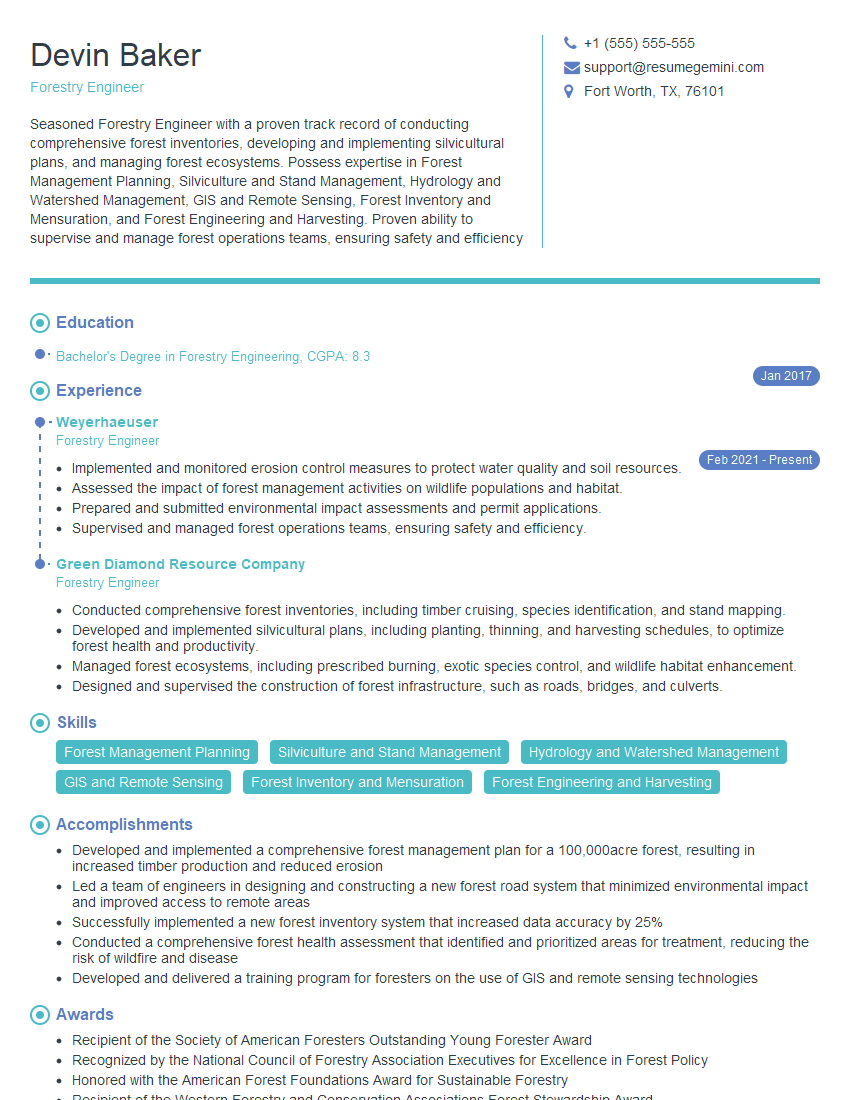
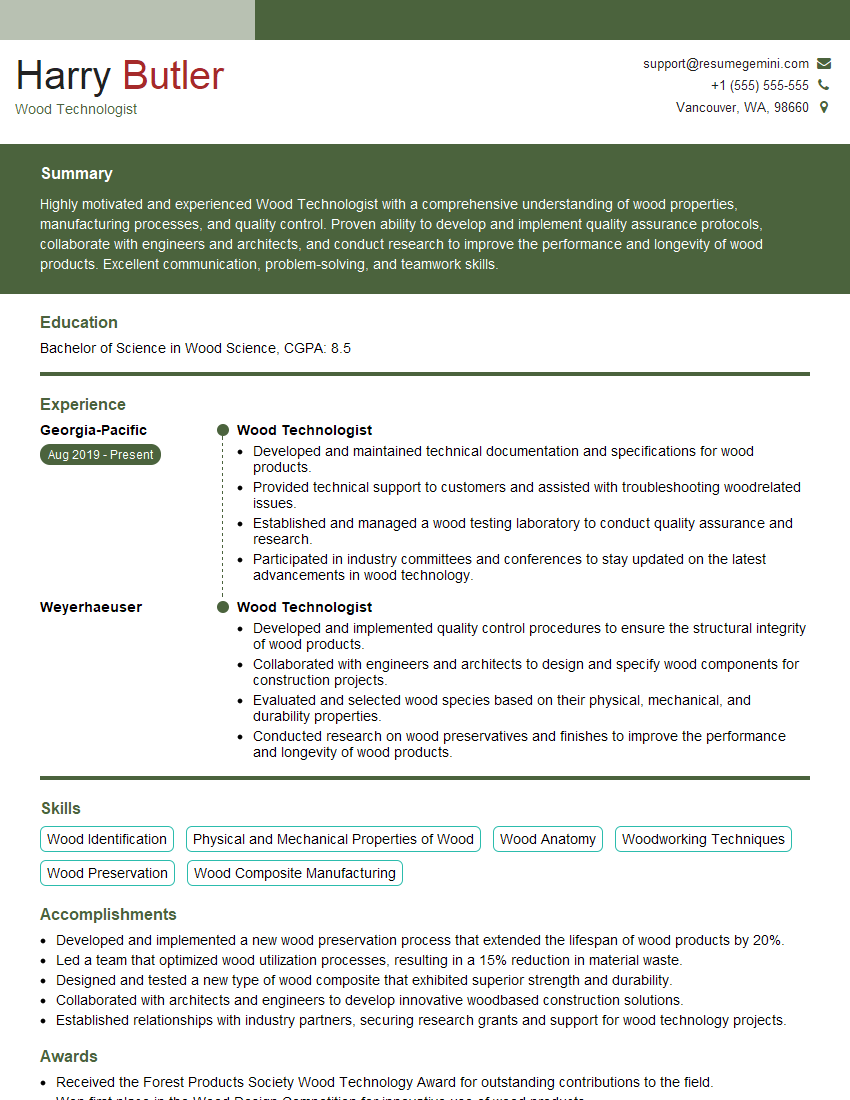
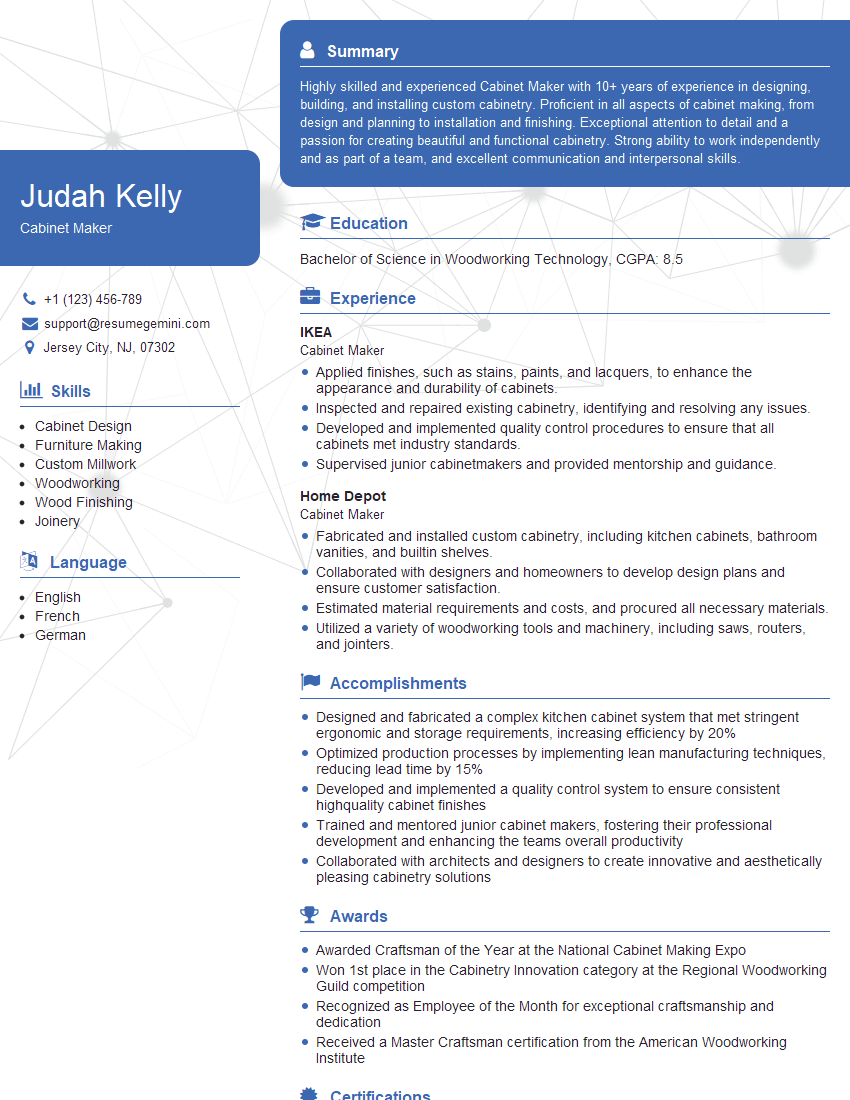
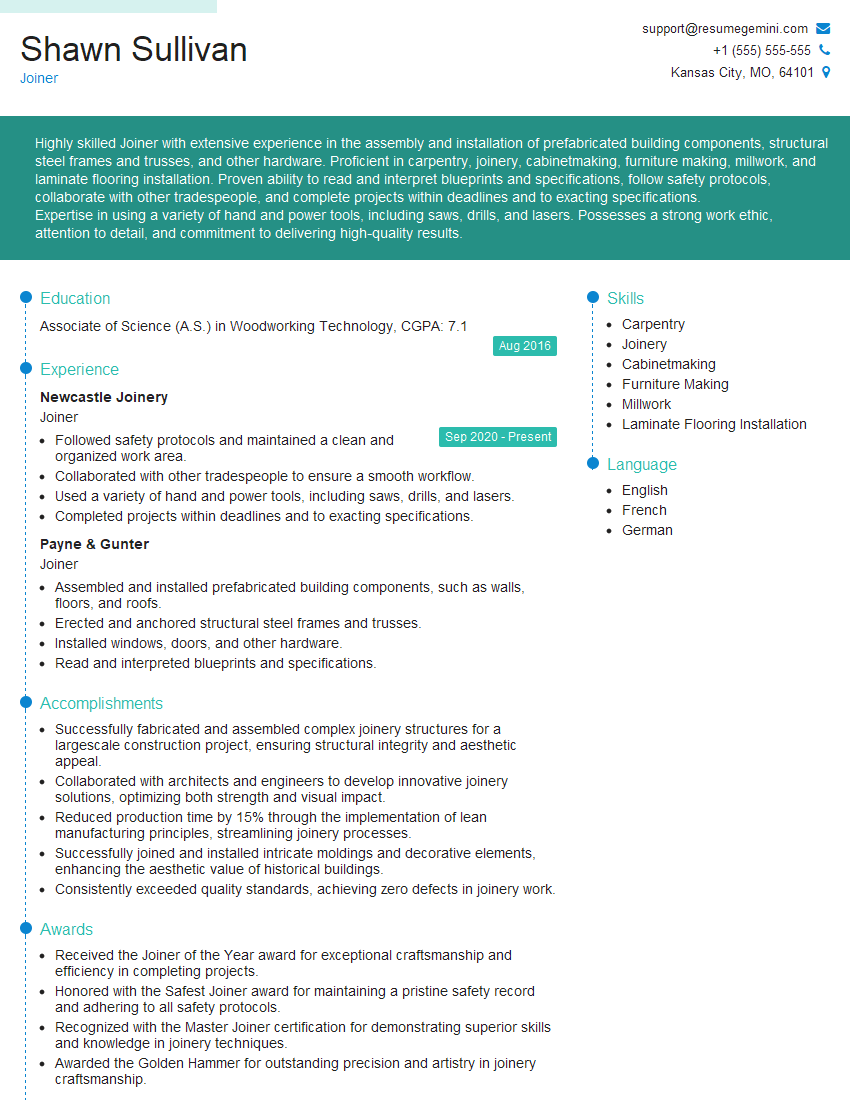
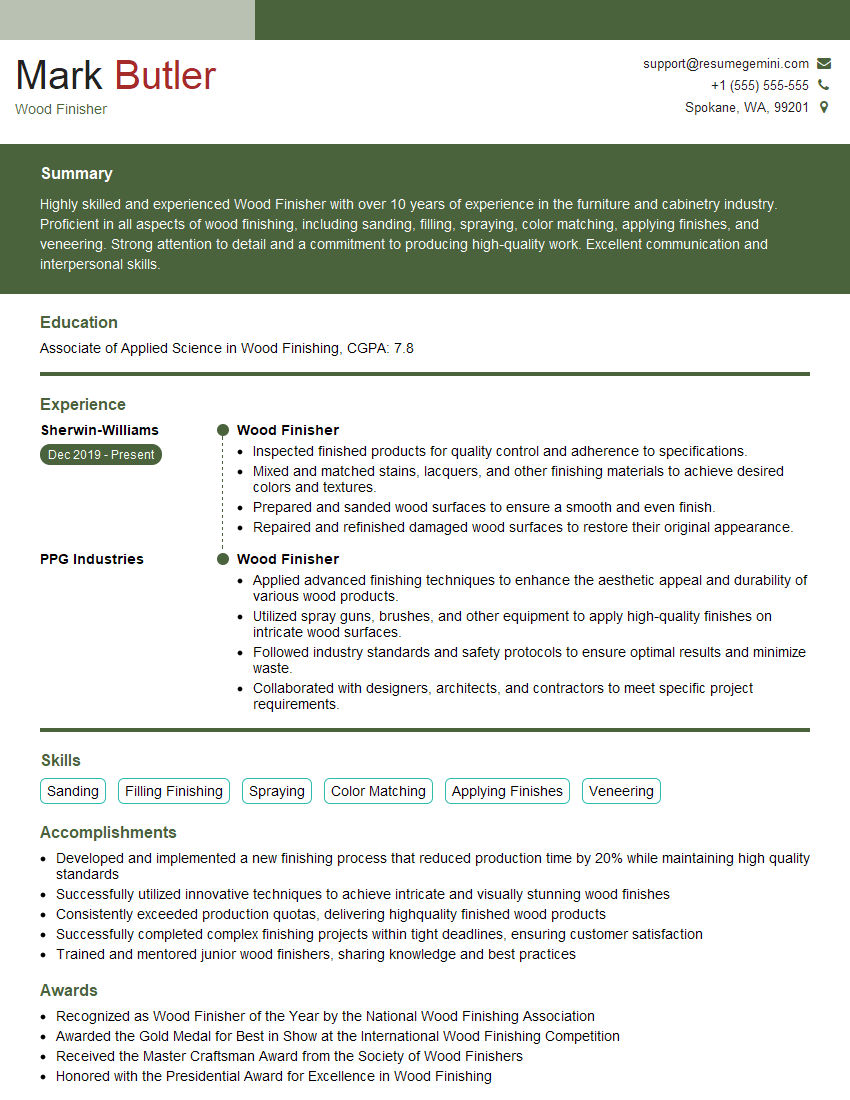
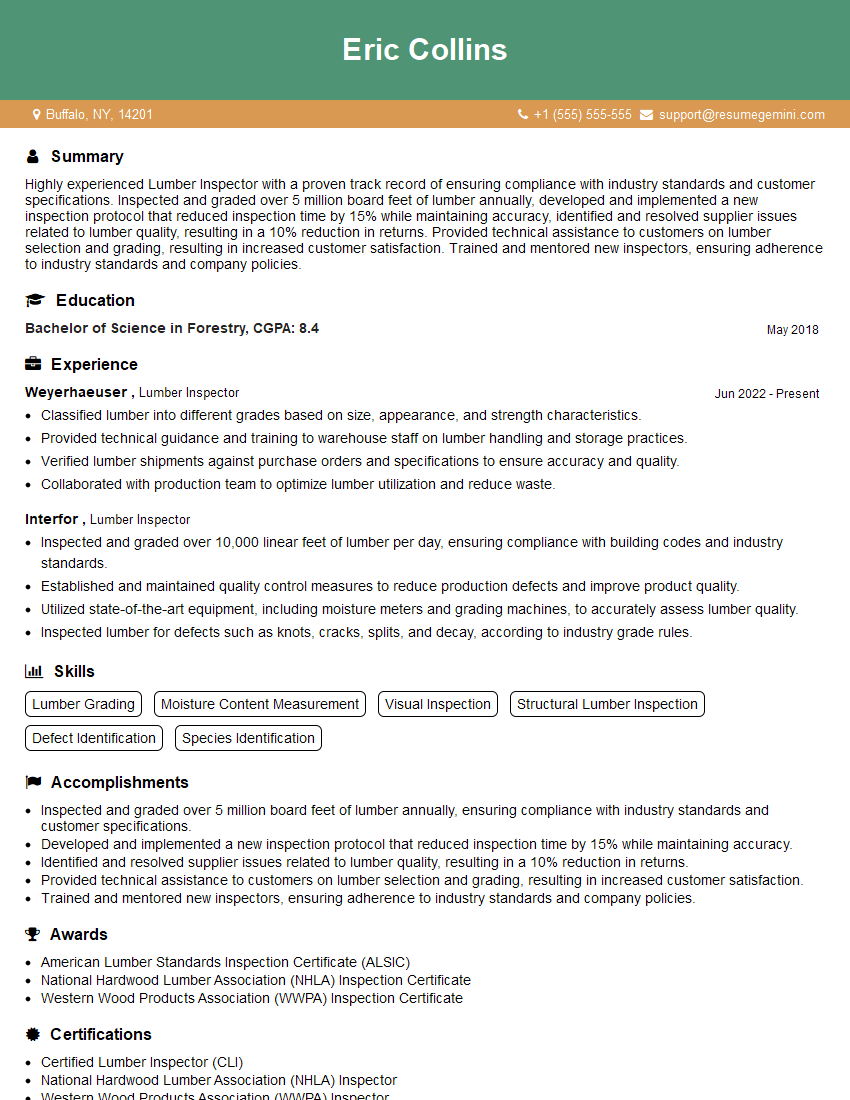
Mastering the understanding of wood products is crucial for career advancement in this dynamic industry. A strong understanding of these concepts demonstrates expertise and opens doors to higher-level roles and greater responsibility. To maximize your job prospects, create an ATS-friendly resume that highlights your skills and experience effectively. ResumeGemini is a trusted resource to help you build a professional resume that gets noticed. Examples of resumes tailored to the Understanding of Wood Products field are available to guide you. Invest time in crafting a compelling resume – it’s your first impression on potential employers.


Explore more articles
Users Rating of Our Blogs
Share Your Experience
We value your feedback! Please rate our content and share your thoughts (optional).
What Readers Say About Our Blog
Attention music lovers!
Wow, All the best Sax Summer music !!!
Spotify: https://open.spotify.com/artist/6ShcdIT7rPVVaFEpgZQbUk
Apple Music: https://music.apple.com/fr/artist/jimmy-sax-black/1530501936
YouTube: https://music.youtube.com/browse/VLOLAK5uy_noClmC7abM6YpZsnySxRqt3LoalPf88No
Other Platforms and Free Downloads : https://fanlink.tv/jimmysaxblack
on google : https://www.google.com/search?q=22+AND+22+AND+22
on ChatGPT : https://chat.openai.com?q=who20jlJimmy20Black20Sax20Producer
Get back into the groove with Jimmy sax Black
Best regards,
Jimmy sax Black
www.jimmysaxblack.com
Hi I am a troller at The aquatic interview center and I suddenly went so fast in Roblox and it was gone when I reset.
Hi,
Business owners spend hours every week worrying about their website—or avoiding it because it feels overwhelming.
We’d like to take that off your plate:
$69/month. Everything handled.
Our team will:
Design a custom website—or completely overhaul your current one
Take care of hosting as an option
Handle edits and improvements—up to 60 minutes of work included every month
No setup fees, no annual commitments. Just a site that makes a strong first impression.
Find out if it’s right for you:
https://websolutionsgenius.com/awardwinningwebsites
Hello,
we currently offer a complimentary backlink and URL indexing test for search engine optimization professionals.
You can get complimentary indexing credits to test how link discovery works in practice.
No credit card is required and there is no recurring fee.
You can find details here:
https://wikipedia-backlinks.com/indexing/
Regards
NICE RESPONSE TO Q & A
hi
The aim of this message is regarding an unclaimed deposit of a deceased nationale that bears the same name as you. You are not relate to him as there are millions of people answering the names across around the world. But i will use my position to influence the release of the deposit to you for our mutual benefit.
Respond for full details and how to claim the deposit. This is 100% risk free. Send hello to my email id: lukachachibaialuka@gmail.com
Luka Chachibaialuka
Hey interviewgemini.com, just wanted to follow up on my last email.
We just launched Call the Monster, an parenting app that lets you summon friendly ‘monsters’ kids actually listen to.
We’re also running a giveaway for everyone who downloads the app. Since it’s brand new, there aren’t many users yet, which means you’ve got a much better chance of winning some great prizes.
You can check it out here: https://bit.ly/callamonsterapp
Or follow us on Instagram: https://www.instagram.com/callamonsterapp
Thanks,
Ryan
CEO – Call the Monster App
Hey interviewgemini.com, I saw your website and love your approach.
I just want this to look like spam email, but want to share something important to you. We just launched Call the Monster, a parenting app that lets you summon friendly ‘monsters’ kids actually listen to.
Parents are loving it for calming chaos before bedtime. Thought you might want to try it: https://bit.ly/callamonsterapp or just follow our fun monster lore on Instagram: https://www.instagram.com/callamonsterapp
Thanks,
Ryan
CEO – Call A Monster APP
To the interviewgemini.com Owner.
Dear interviewgemini.com Webmaster!
Hi interviewgemini.com Webmaster!
Dear interviewgemini.com Webmaster!
excellent
Hello,
We found issues with your domain’s email setup that may be sending your messages to spam or blocking them completely. InboxShield Mini shows you how to fix it in minutes — no tech skills required.
Scan your domain now for details: https://inboxshield-mini.com/
— Adam @ InboxShield Mini
support@inboxshield-mini.com
Reply STOP to unsubscribe
Hi, are you owner of interviewgemini.com? What if I told you I could help you find extra time in your schedule, reconnect with leads you didn’t even realize you missed, and bring in more “I want to work with you” conversations, without increasing your ad spend or hiring a full-time employee?
All with a flexible, budget-friendly service that could easily pay for itself. Sounds good?
Would it be nice to jump on a quick 10-minute call so I can show you exactly how we make this work?
Best,
Hapei
Marketing Director
Hey, I know you’re the owner of interviewgemini.com. I’ll be quick.
Fundraising for your business is tough and time-consuming. We make it easier by guaranteeing two private investor meetings each month, for six months. No demos, no pitch events – just direct introductions to active investors matched to your startup.
If youR17;re raising, this could help you build real momentum. Want me to send more info?
Hi, I represent an SEO company that specialises in getting you AI citations and higher rankings on Google. I’d like to offer you a 100% free SEO audit for your website. Would you be interested?
Hi, I represent an SEO company that specialises in getting you AI citations and higher rankings on Google. I’d like to offer you a 100% free SEO audit for your website. Would you be interested?