The thought of an interview can be nerve-wracking, but the right preparation can make all the difference. Explore this comprehensive guide to USPTO interview questions and gain the confidence you need to showcase your abilities and secure the role.
Questions Asked in USPTO Interview
Q 1. Explain the difference between a utility patent and a design patent.
Utility and design patents protect different aspects of an invention. A utility patent protects the functionality of an invention – how it works, what it does, and its processes. Think of it as protecting the ‘how’ and ‘what’ of an invention. For example, a utility patent might cover a new type of engine, a novel software algorithm, or a unique method for manufacturing a product. In contrast, a design patent protects the appearance of a product – its ornamental design. It covers the visual aspects, not the underlying function. Think of it as protecting the ‘look’ of an invention. A design patent might protect the unique shape of a chair, the pattern on a fabric, or the overall aesthetic of a smartphone. The key difference boils down to function versus form.
Example: Imagine a new type of coffee cup. A utility patent could cover a self-heating mechanism within the cup, while a design patent would cover the cup’s aesthetically pleasing curved shape and ergonomic handle.
Q 2. Describe the process of filing a provisional patent application.
Filing a provisional patent application is a relatively quick and inexpensive way to establish an early filing date for your invention. It’s like staking a claim, giving you a year to decide whether to file a full, non-provisional application. This one-year period allows you to further develop your invention, test its market viability, and secure funding before committing to the more rigorous and expensive process of a non-provisional application.
The process involves:
- Preparing a written description of your invention, including drawings if necessary. This description needs to be clear enough to enable someone skilled in the art to make and use your invention.
- Filing the application with the USPTO, along with the appropriate filing fee.
- Receiving a filing receipt confirming your application’s acceptance.
Importantly, a provisional application doesn’t undergo the same rigorous examination as a non-provisional application. It doesn’t issue a patent; instead, it acts as a placeholder, giving you priority rights.
Example: An inventor develops a new type of solar panel. They file a provisional application to secure the priority date, allowing them a year to refine the technology and conduct market research before filing a non-provisional application.
Q 3. What are the key elements of a valid patent claim?
Patent claims are the most crucial part of a patent application. They define the precise scope of the invention being protected. Think of them as the legal boundaries of your invention’s protection. A claim must be:
- Specific: Clearly and concisely describe the invention’s features and limitations.
- Enabled: The specification must describe how to make and use the invention as claimed.
- Novel: Not anticipated by prior art.
- Non-obvious: Not obvious to a person having ordinary skill in the art at the time the invention was made.
- Definite: Free from ambiguity and clearly understandable by those skilled in the art.
Claims are usually written using specific language and often employ terms like ‘comprising,’ ‘consisting of,’ or ‘consisting essentially of’ to define the scope. A claim might look something like this (simplified example):
1. A system for brewing coffee, comprising a water reservoir, a heating element, and a coffee dispensing mechanism.The claim’s language dictates how broadly or narrowly the invention is protected. A broad claim covers a wider range of embodiments, while a narrow claim covers a more specific embodiment. The selection of claim language is crucial to effective patent protection and often involves strategic considerations.
Q 4. Explain the concept of prior art and its relevance to patentability.
Prior art refers to any information that existed before the invention’s filing date, demonstrating that the invention was already known or used. This can include publications (patents, scientific papers, books), public use, or sales of the invention. The USPTO uses prior art to determine whether an invention is novel and non-obvious – key requirements for patentability. If prior art discloses all the elements of a claimed invention, it may be considered anticipated and thus not patentable. If prior art shows that the invention would have been obvious to a person having ordinary skill in the art at the time the invention was made, it may be rejected for lack of non-obviousness.
Relevance to Patentability: The presence of prior art is a significant hurdle in obtaining a patent. The USPTO examiner will thoroughly search for relevant prior art during the patent examination process. The inventor’s response to the examiner’s prior art citations is crucial in arguing for patentability. A strong understanding of prior art and its implications is therefore critical for successful patent prosecution.
Example: If an inventor claims a new type of bicycle, but a similar bicycle was publicly described in a magazine article before the filing date, that article constitutes prior art and could prevent the patent from being granted.
Q 5. How does the USPTO handle patent interferences?
A patent interference occurs when two or more patent applications claim the same invention. The USPTO must then determine who is entitled to the patent. The process is complex and involves multiple steps:
- Declaration of Interference: The USPTO declares an interference when it identifies conflicting applications.
- Preliminary Motions: Parties involved can file motions to resolve issues such as the scope of the interference or the admissibility of evidence.
- Evidence Presentation: Each party presents evidence to support their claim of priority (the earlier invention date).
- Oral Hearing (if necessary): A hearing may be conducted before a Patent Trial and Appeal Board (PTAB) administrative law judge to resolve factual disputes.
- Decision: The PTAB renders a decision, determining which party is entitled to the patent or if neither party is entitled.
Patent interferences are often lengthy, complex, and expensive proceedings requiring specialized legal expertise. The outcome can significantly impact the rights and commercial interests of the involved parties.
Q 6. What is a 35 U.S. Code § 101 rejection and how can it be overcome?
A 35 U.S. Code § 101 rejection occurs when the USPTO examiner determines that a claimed invention is not eligible for patent protection because it fails to meet the requirements of patentable subject matter. Section 101 sets forth four categories of patentable subject matter: processes, machines, manufactures, and compositions of matter. However, certain abstract ideas, laws of nature, and natural phenomena are generally excluded. A § 101 rejection often arises when the claim is deemed to be directed to an abstract idea, which isn’t inherently patentable.
Overcoming a § 101 rejection requires demonstrating that the claimed invention is not merely an abstract idea but rather a practical application of that idea. This typically involves amending the claims to focus on the specific, tangible elements and their practical implementation, rather than the underlying abstract concept. Strategies might include:
- Adding specific hardware or software components: Show how the abstract idea is implemented in a tangible way.
- Highlighting a specific, inventive process: Demonstrate that the claimed invention improves upon existing processes or techniques.
- Focus on a concrete, useful result: Show that the invention produces a tangible benefit or solution.
Overcoming a § 101 rejection requires a deep understanding of patent law and the specific jurisprudence surrounding this issue. It’s often a complex process and may involve multiple rounds of amendments and argumentation with the examiner.
Q 7. Describe the different types of trademark protection.
Trademark protection prevents others from using a mark (logo, brand name, etc.) that’s confusingly similar to your own. Different types of marks receive different types of protection under the Lanham Act. These include:
- Trademarks: Used to identify and distinguish goods. For example, the Apple logo identifies Apple’s electronic devices.
- Service Marks: Used to identify and distinguish services. For example, the Netflix logo identifies Netflix’s streaming services.
- Collective Marks: Used by organizations to identify members of a group. For example, a union’s logo distinguishes union members.
- Certification Marks: Used to certify the quality or origin of goods or services. For example, a certification mark might indicate that a product meets certain environmental standards.
The level of protection a trademark receives depends on factors such as its distinctiveness (inherently distinctive marks such as invented words are stronger than descriptive marks) and its use in commerce. Trademarks can be registered with the USPTO, which provides nationwide protection, or they can be protected through common law use (using the mark in commerce), which provides more limited, geographically restricted protection. The USPTO’s Trademark Trial and Appeal Board (TTAB) handles disputes related to trademark rights.
Q 8. Explain the Madrid Protocol and its significance.
The Madrid Protocol is an international treaty that simplifies the process of registering trademarks in multiple countries. Imagine you’ve created a fantastic brand and want to protect it globally. Instead of filing separate trademark applications in each country, the Madrid Protocol allows you to file a single application with your home country’s intellectual property office (like the USPTO), which then transmits it to other member countries. This significantly reduces costs and streamlines the entire process.
Its significance lies in its efficiency and cost-effectiveness. It harmonizes trademark registration procedures across participating countries, fostering international trade and protecting brand owners’ rights worldwide. For example, a company designing a new software application could protect its brand name globally using the Madrid Protocol, avoiding the complexities and expense of navigating individual national systems.
Q 9. What is the significance of the Lanham Act?
The Lanham Act, formally known as the Trademark Act of 1946, is the primary federal law governing trademarks in the United States. Think of it as the foundational legal document protecting brand identities and preventing consumer confusion. It defines what constitutes a trademark, outlines the registration process, and sets forth remedies for infringement. Key aspects include defining what constitutes trademark infringement, establishing grounds for cancellation, and providing mechanisms for protecting brand reputation.
The significance of the Lanham Act is multifaceted. It protects businesses from having their brands copied or diluted, ensuring consumers can identify and trust the source of goods and services. It allows brand owners to pursue legal action against those who infringe their trademarks, preventing unfair competition and protecting their investments. For instance, a well-known clothing brand could use the Lanham Act to prevent a smaller company from using a confusingly similar logo and name.
Q 10. What are the grounds for refusing registration of a trademark?
The USPTO might refuse to register a trademark for several reasons, primarily to maintain the integrity of the trademark system and avoid consumer confusion. These grounds are detailed in the Lanham Act.
- Functionality: A mark that’s primarily functional (e.g., a particular shape of a bottle essential for its functionality) can’t be trademarked.
- Descriptiveness: A mark that merely describes the goods or services (e.g., “Red Apples” for apples) generally won’t be registered unless it acquires secondary meaning (when the public associates the mark with a specific source).
- Genericness: A mark that’s become generic for a particular product or service (e.g., “Aspirin” used to be a trademark but now refers to a type of drug) cannot be registered.
- Confusing Similarity: A mark that is confusingly similar to an existing trademark will be refused to prevent consumer confusion. This considers factors like visual similarity, sound similarity, and conceptual similarity.
- Immoral or Scandalous Matter: Marks containing immoral, deceptive, or scandalous matter are ineligible for registration.
- Deceptive Matter: Marks that falsely suggest a connection to another person or entity, or falsely describe a product or service.
For example, a trademark application for “Fast Cars” for automobiles might be refused due to descriptiveness, while one for a logo that’s nearly identical to an existing car brand’s logo might be refused due to confusing similarity.
Q 11. Explain the process of conducting a trademark search.
Conducting a comprehensive trademark search is crucial before filing an application. It helps determine whether a similar mark already exists, minimizing the risk of refusal and potential legal battles. There are two primary phases:
- Preliminary Search: This involves using online databases like the USPTO’s TESS (Trademark Electronic Search System) to search for similar marks. You’d input keywords related to your mark and review the results for visually similar and phonetically similar marks, as well as marks with similar meanings. The goal is to quickly identify potentially problematic marks.
- Comprehensive Search: This involves a more in-depth investigation going beyond just the USPTO database. This might include searching state trademark databases, common law marks, and even foreign trademark databases, depending on the scope of your intended use. You may also hire a professional trademark search firm for this step.
The process is iterative. You might adjust your search terms based on initial findings to uncover even closer matches. It’s vital to consider the goods and services your mark will cover when searching, as this impacts the likelihood of conflict.
Q 12. What is a trademark opposition proceeding?
A trademark opposition proceeding is a legal process where a third party (the opposer) challenges a trademark application before it’s registered. Think of it as a formal objection to the granting of trademark rights to the applicant. The opposer claims that the applied-for mark infringes their own existing trademark or is likely to cause consumer confusion.
The process involves the opposer filing a notice of opposition with the USPTO, outlining the grounds for their objection. This often includes evidence of prior use of a similar mark, likelihood of confusion, and potential harm to the opposer’s business. The applicant then responds, and the matter may proceed to a trial before the Trademark Trial and Appeal Board (TTAB), where both sides present evidence and arguments. The TTAB’s decision can be appealed to federal court.
Q 13. What is the difference between a patent and a copyright?
Patents, copyrights, and trademarks are distinct forms of intellectual property protection, each with its unique scope.
- Patents protect inventions – novel and useful processes, machines, manufactures, compositions of matter, or improvements thereof. They grant the inventor exclusive rights to use, make, and sell the invention for a set period.
- Copyrights protect original works of authorship, including literary, dramatic, musical, and certain other intellectual works. They grant the author exclusive rights to reproduce, distribute, display, and perform the work.
- Trademarks protect brand identifiers – words, phrases, symbols, designs, or a combination thereof, that distinguish goods and services of one party from those of others.
In short: Patents protect inventions, copyrights protect creative works, and trademarks protect brand identities.
Example: A new type of smartphone would be protected by a patent (for its unique design or features), the operating system software could be protected by copyright, and the smartphone brand name and logo would be protected by trademarks.
Q 14. What is the difference between a trademark and a trade secret?
Trademarks and trade secrets are both ways to protect valuable business assets, but they differ significantly in their nature and how they’re protected.
- Trademarks are legally registered symbols, designs, or phrases identifying the source of goods or services. They’re publicly registered and offer legal protection against unauthorized use.
- Trade secrets are confidential information that provides a competitive edge. They’re not publicly registered; their protection relies on maintaining secrecy and confidentiality. Examples include formulas, practices, designs, instruments, or a compilation of information.
Think of it this way: A trademark is a public declaration of ownership, while a trade secret is a closely guarded secret. Coca-Cola’s formula is a trade secret, while its logo is a trademark.
A company might choose to protect a particular manufacturing process as a trade secret (if the process is hard to reverse-engineer), while simultaneously trademarking its brand name and logo.
Q 15. Explain the concept of patent prosecution.
Patent prosecution is the process of obtaining a patent from a patent office, such as the USPTO. It’s a bit like building a strong case in court, but instead of a judge, your audience is a patent examiner. You start with a patent application, a detailed description of your invention, and claims defining what you want to protect. The examiner reviews this application for patentability, checking for novelty, non-obviousness, and utility. If the examiner finds issues, they’ll issue an Office Action, raising objections or requiring amendments. This back-and-forth process of responding to Office Actions, amending the application, and arguing your case continues until either the patent is granted or the application is abandoned.
Think of it like this: you’ve baked a delicious cake (your invention). Your patent application is the recipe, clearly outlining all the ingredients and steps. The examiner is a food critic who scrutinizes your recipe for originality and clarity. They might ask for clarifications or modifications before declaring your cake recipe (patent) worthy of publication.
- Filing the application: This involves submitting the application, drawings, and fees to the USPTO.
- Responding to Office Actions: This involves addressing the examiner’s objections and amending the application as needed.
- Appeals: If the examiner rejects the application, you can appeal the decision to the Patent Trial and Appeal Board (PTAB).
- Allowance and Issuance: Once the examiner is satisfied, the application is allowed, and a patent is issued.
Career Expert Tips:
- Ace those interviews! Prepare effectively by reviewing the Top 50 Most Common Interview Questions on ResumeGemini.
- Navigate your job search with confidence! Explore a wide range of Career Tips on ResumeGemini. Learn about common challenges and recommendations to overcome them.
- Craft the perfect resume! Master the Art of Resume Writing with ResumeGemini’s guide. Showcase your unique qualifications and achievements effectively.
- Don’t miss out on holiday savings! Build your dream resume with ResumeGemini’s ATS optimized templates.
Q 16. Describe your experience with the USPTO’s electronic filing system (EFS-Web).
I have extensive experience using EFS-Web, the USPTO’s electronic filing system. I’m proficient in creating and submitting various documents, including patent applications, amendments, responses to Office Actions, and various other filings. I’m familiar with its features like managing correspondence, tracking case status, and paying fees online. I’ve used it to file hundreds of applications across diverse technological fields. My experience ensures efficient and accurate filing, minimizing the risk of delays or rejections due to procedural errors. I understand the importance of proper formatting and documentation required by the system, and I always ensure strict adherence to USPTO guidelines. I find EFS-Web indispensable for managing the complexities of modern patent prosecution, enabling efficient communication and collaboration with the USPTO.
For instance, I once successfully navigated a complex amendment using EFS-Web where a tight deadline was approaching. My proficiency with the system allowed me to submit the amendment in a timely fashion, avoiding any potential negative consequences. In another instance, I utilized EFS-Web’s tracking features to promptly identify and address an unexpected request from a patent examiner, ensuring a smooth and efficient prosecution process.
Q 17. How familiar are you with the MPEP (Manual of Patent Examining Procedure)?
I’m extremely familiar with the MPEP (Manual of Patent Examining Procedure). It’s the bible for patent prosecution, providing comprehensive guidance on all aspects of patent examination. I regularly consult the MPEP to understand USPTO procedures, legal precedents, and best practices for crafting strong patent applications and responding to Office Actions. My understanding spans its various sections, from patentability requirements (novelty, non-obviousness, utility) to claim drafting and amendment strategies. I use it daily to ensure my work meets the highest standards of legal accuracy and compliance. My familiarity with the MPEP is critical for effective patent prosecution and increases my clients’ chances of obtaining strong, enforceable patents.
For example, I recently used the MPEP’s guidance on claim construction to successfully overcome an examiner’s rejection based on prior art. The MPEP’s detailed explanations of claim interpretation allowed me to clearly articulate how my client’s claims were distinct from the cited references, leading to the allowance of the application.
Q 18. What is your understanding of the Doctrine of Equivalents?
The Doctrine of Equivalents is a crucial legal principle in patent litigation. It allows a patent holder to claim infringement even if the infringing device or process doesn’t literally fall within the scope of the patent claims, as long as it performs substantially the same function in substantially the same way to achieve substantially the same result. It’s a way to prevent others from circumventing a patent by making minor, insubstantial changes.
Think of it as a copyright on a song. You can’t simply change a few notes and claim it’s a new song. The Doctrine of Equivalents protects against this type of subtle infringement. The courts use a three-part test (function-way-result) to determine if infringement exists under the doctrine. This doctrine is a powerful tool for patent holders, but it’s also a complex area of law, subject to case-specific interpretation.
Q 19. Explain the concept of claim construction.
Claim construction is the process of interpreting the meaning of the claims in a patent. Claims are the legally binding part of a patent, defining the scope of the patent protection. Claim construction determines what the patent actually covers and, consequently, what constitutes infringement. Judges and juries rely on claim construction to resolve patent disputes.
The process often involves examining the claims themselves, the specification (detailed description of the invention), the prosecution history (record of the interactions between the applicant and the examiner), and expert testimony. It’s a critical step in patent litigation, and the outcome can significantly impact the result of a case. A narrow claim construction may limit the scope of protection, while a broad construction could lead to greater protection, but also increase the risk of invalidity.
Q 20. Describe your experience with patent litigation.
While my primary focus is patent prosecution, I have substantial experience supporting patent litigation efforts. This support includes assisting in claim construction analysis, providing expert testimony regarding patent validity and infringement, and preparing technical reports for use in litigation. I have been involved in cases across different technologies, including software, medical devices, and mechanical systems. This experience allows me to anticipate potential litigation issues during the patent prosecution phase and work towards minimizing those risks. It also helps me understand how a case might unfold in court, and allows for more strategic drafting of patent claims. I’m familiar with the complexities and procedures involved in litigation, including discovery, depositions, and trial preparation.
For example, in one case, my technical expertise was crucial in explaining complex technical details to the court, helping to ensure the judge and jury could understand the technology at issue. My analysis of the claims and the prior art helped establish a strong position for my client.
Q 21. How do you handle conflicting claims in a patent application?
Conflicting claims in a patent application are a common challenge. These conflicts arise when claims overlap, are contradictory, or describe inventions that are mutually exclusive. Handling such conflicts requires careful analysis and strategic decision-making. The goal is to create a set of claims that are internally consistent, clearly define the invention, and are likely to withstand examination.
My approach involves:
- Identifying the conflict: Carefully reviewing the claims to pinpoint the exact nature of the conflict.
- Analyzing the invention: Understanding the different aspects of the invention and how they relate to each other.
- Amendments and revisions: Revising or amending the claims to eliminate the conflict. This might involve narrowing the scope of certain claims, broadening others, or deleting conflicting claims altogether.
- Prioritizing claims: Determining which claims are most important and focusing on strengthening those.
- Consulting with clients: Discussing the options with the client to ensure the final set of claims reflects their business goals.
The process requires a deep understanding of patent law, claim drafting techniques, and the specifics of the invention. The goal is to create a set of claims that are both strong and internally consistent, maximizing the chances of obtaining a valid and enforceable patent.
Q 22. How do you prioritize tasks when facing multiple deadlines?
Prioritizing tasks with multiple deadlines at the USPTO requires a structured approach. I use a combination of methods, starting with a clear understanding of each deadline’s importance and urgency. I leverage project management tools to list all tasks, assigning each a priority level (e.g., high, medium, low) based on factors like legal implications, client impact, and filing deadlines. For example, a high-priority task might be responding to an Office Action with a tight deadline to avoid abandonment, while a lower priority might involve researching a less urgent legal issue. Then, I use time management techniques like the Eisenhower Matrix (urgent/important) to further refine the order. Finally, I regularly review and adjust my schedule as new information emerges or priorities shift, ensuring flexibility and responsiveness to the dynamic nature of patent prosecution.
This structured approach ensures that I’m always working on the most critical tasks first, minimizing the risk of missing deadlines and maximizing efficiency. Regular review keeps the whole process adaptable, which is vital in the fast-paced USPTO environment.
Q 23. Describe your experience working with complex technical documents.
My experience with complex technical documents, especially within the USPTO context, is extensive. I’ve worked with hundreds of patent applications, each demanding meticulous review of specifications, claims, and drawings. These documents often involve sophisticated technology, requiring a deep understanding not only of the legal aspects of patent law but also the underlying science or engineering principles. For example, I’ve analyzed patent applications for novel semiconductor devices, requiring a grasp of advanced physics and fabrication processes to ascertain patentability and identify potential issues.
My approach involves breaking down complex documents into manageable sections, carefully analyzing each part for clarity, consistency, and compliance with USPTO regulations. I utilize cross-referencing and detailed note-taking to track key elements and potential inconsistencies. This systematic approach ensures thorough understanding and effective identification of potential problems like ambiguous claims or insufficient disclosure.
Q 24. How do you stay updated on changes in intellectual property law?
Staying updated on changes in intellectual property (IP) law, particularly at the USPTO, is paramount. I subscribe to several key legal journals and publications, such as the Journal of the Patent and Trademark Office Society and the AIPLA Quarterly Journal. I also actively participate in professional development programs offered by organizations like the American Intellectual Property Law Association (AIPLA) and attend relevant conferences and webinars. Furthermore, I monitor USPTO websites and official publications for updates on guidelines, rules, and case law. This multi-faceted approach ensures I am consistently informed on the latest changes, rulings, and best practices.
Beyond formal resources, networking with colleagues and other practitioners in the field contributes significantly to staying current. Discussions and shared experiences provide valuable insights into emerging trends and challenges.
Q 25. What is your strategy for effective communication with clients or colleagues?
Effective communication is central to my work at the USPTO. My strategy focuses on clarity, accuracy, and empathy. I start by actively listening to understand my client’s or colleague’s needs and concerns. I then communicate information in a clear and concise manner, avoiding technical jargon unless absolutely necessary. If specialized terms are unavoidable, I always provide clear definitions. I always tailor my communication style to the audience; for example, I would communicate differently with a highly technical inventor compared to a business executive.
Regular updates, transparent communication regarding potential challenges, and timely responses are crucial. I use a variety of communication tools, including email, phone, and video conferencing, to suit the situation and preference of the recipient. This proactive and responsive approach fosters strong professional relationships and ensures everyone is well-informed and aligned.
Q 26. How do you handle pressure and tight deadlines?
Handling pressure and tight deadlines in a USPTO environment requires a calm and organized approach. I prioritize tasks effectively, as described earlier, which helps alleviate stress and prevents feeling overwhelmed. I break down large tasks into smaller, more manageable steps, allowing me to track progress and celebrate small victories. I also build in buffer time to account for unexpected delays or complications. Finally, I ensure adequate rest and self-care; acknowledging that maintaining my well-being is crucial for peak performance under pressure.
A key element of my strategy is to proactively communicate potential challenges to clients or colleagues. This transparency helps manage expectations and prevents misunderstandings. This approach not only mitigates the pressure but also demonstrates responsibility and commitment to successful outcomes.
Q 27. Describe a time you had to solve a complex problem related to intellectual property.
I once encountered a complex problem involving a patent application for a novel medical device. The initial claim set was broad, but the examiner raised objections based on prior art, claiming lack of novelty and obviousness. This required a deep dive into both the technical details of the invention and extensive prior art searches. My strategy involved multiple steps. First, I carefully analyzed the examiner’s objections, identifying specific points of contention. Second, I conducted thorough prior art searches, using various databases and resources available to identify relevant patents and publications. Finally, I re-drafted the claims to more precisely define the inventive aspects of the device, differentiating them from the prior art.
The revised claims were carefully constructed to address the examiner’s concerns while maintaining the client’s desired scope of protection. This involved strategic arguments that highlighted the unique features of the device and distinguished it from prior art. Eventually, the patent application was allowed, showcasing the importance of combining legal and technical expertise in resolving complex IP challenges.
Q 28. How do you ensure the accuracy and completeness of your work?
Accuracy and completeness are non-negotiable in USPTO work. I employ several measures to ensure these are upheld. First, I meticulously review all documents multiple times, using checklists and cross-referencing to ensure consistency and adherence to USPTO requirements. Second, I utilize various software and databases to support accuracy, including USPTO’s online resources for checking compliance and searching prior art. Third, I maintain a detailed record of all my actions and decisions, creating a clear audit trail. Finally, I engage in thorough peer reviews, when possible, to identify potential errors or omissions.
My commitment to accuracy and completeness stems from a deep understanding of the serious consequences of errors in patent applications. Inaccurate or incomplete filings can lead to delays, rejections, and ultimately, the loss of valuable intellectual property rights. Therefore, rigorous attention to detail is not simply a best practice but an essential aspect of responsible patent prosecution.
Key Topics to Learn for USPTO Interview
- Intellectual Property Law Fundamentals: Understand core concepts like patents, trademarks, copyrights, and trade secrets. Consider practical scenarios involving infringement and licensing.
- Patent Prosecution Process: Familiarize yourself with the stages of patent application, examination, allowance, and issuance. Practice analyzing claim language and identifying patentable subject matter.
- Trademark Examination and Registration: Learn about trademark searching, registration procedures, and opposition proceedings. Develop skills in evaluating trademark strength and likelihood of confusion.
- Copyright Law and Protection: Understand the scope of copyright protection, registration processes, and fair use principles. Practice analyzing copyright infringement scenarios.
- USPTO Rules and Procedures: Become proficient in navigating the USPTO’s online systems and understanding its regulations and guidelines. This includes familiarity with relevant forms and filing requirements.
- Technology and Innovation: Demonstrate understanding of various technological fields and their intersection with intellectual property. Practice applying IP principles to emerging technologies.
- Ethical Considerations in IP Law: Understand the ethical responsibilities of IP professionals and the importance of maintaining integrity and confidentiality.
- Problem-Solving and Analytical Skills: Develop your ability to analyze complex scenarios, identify key issues, and formulate effective solutions related to IP disputes and legal challenges.
Next Steps
Mastering the intricacies of USPTO regulations and procedures is crucial for a successful and rewarding career in intellectual property. A strong understanding of these concepts will open doors to exciting opportunities and allow you to contribute significantly to the field. To maximize your job prospects, creating an ATS-friendly resume is essential. This ensures your application gets noticed by recruiters and hiring managers. We highly recommend using ResumeGemini, a trusted resource, to build a professional and impactful resume. ResumeGemini offers examples of resumes tailored specifically to USPTO applications to help guide you.
Administrative Assistant Resume Sample
Information Technology Specialist Resume Sample
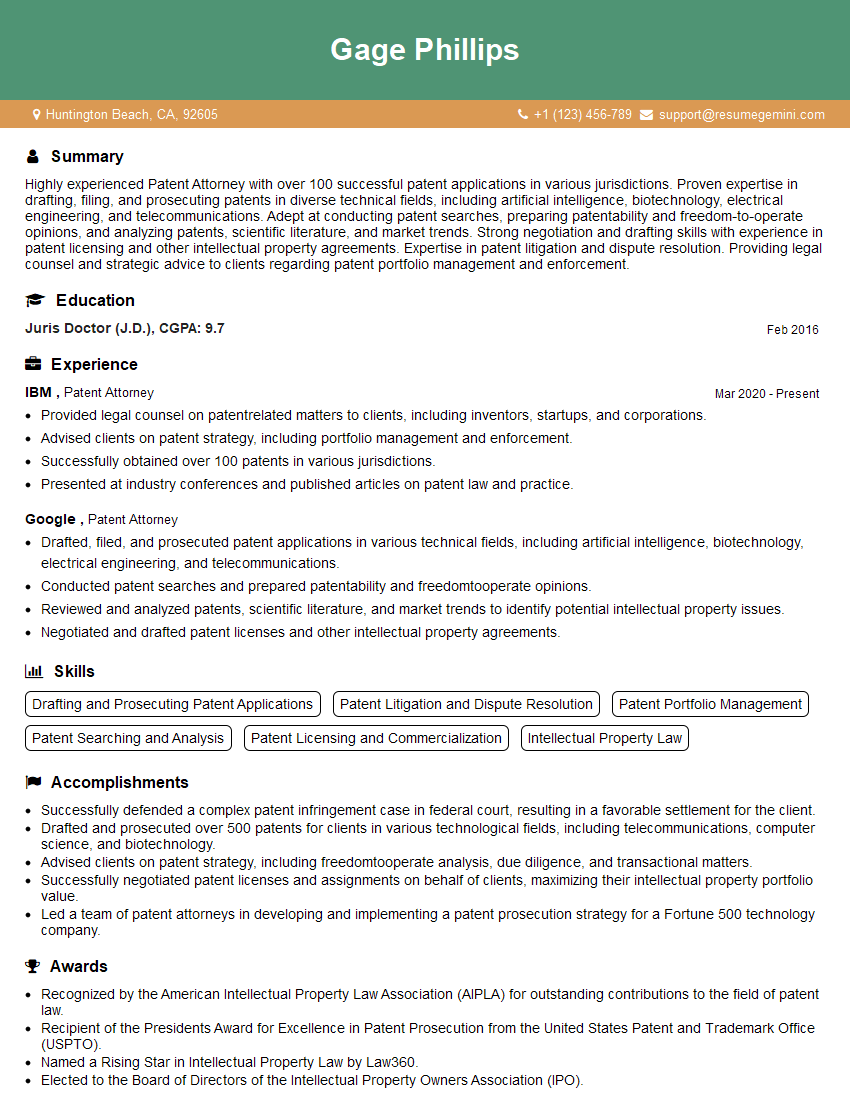
Patent Attorney Resume Sample
Administrative Law Judge Resume Sample
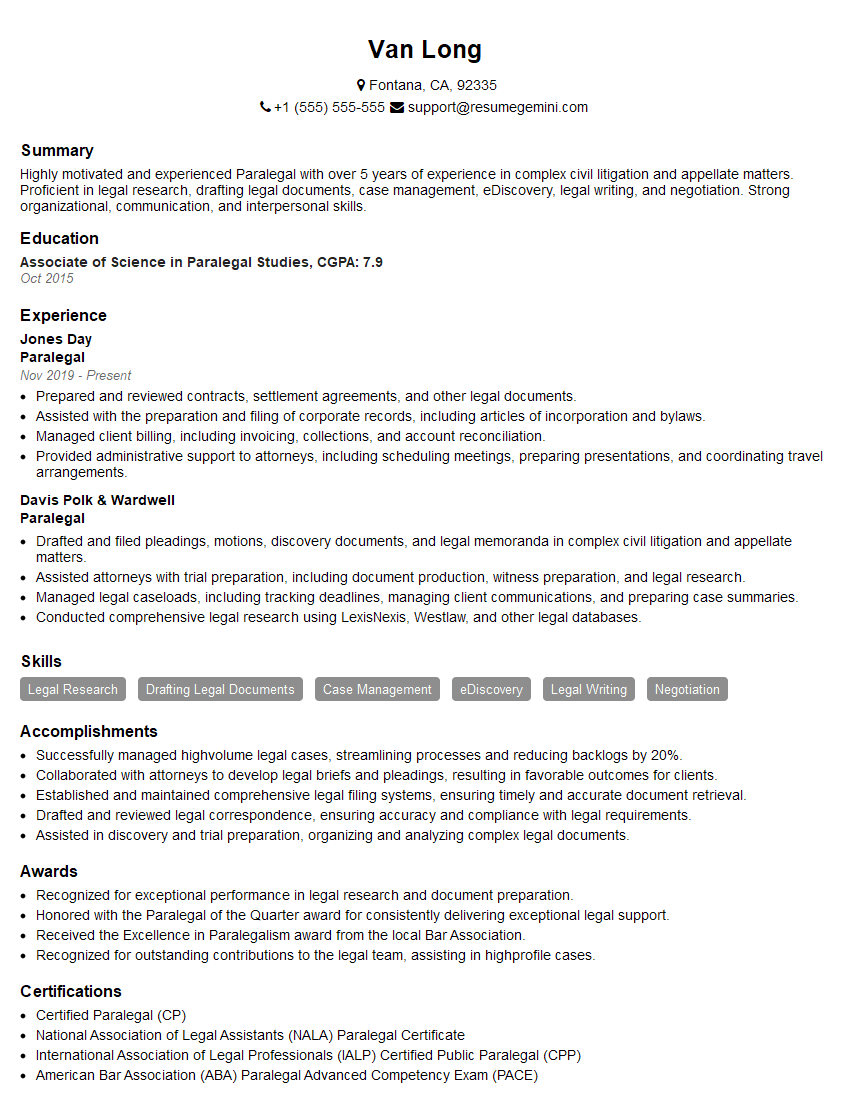
Paralegal Resume Sample
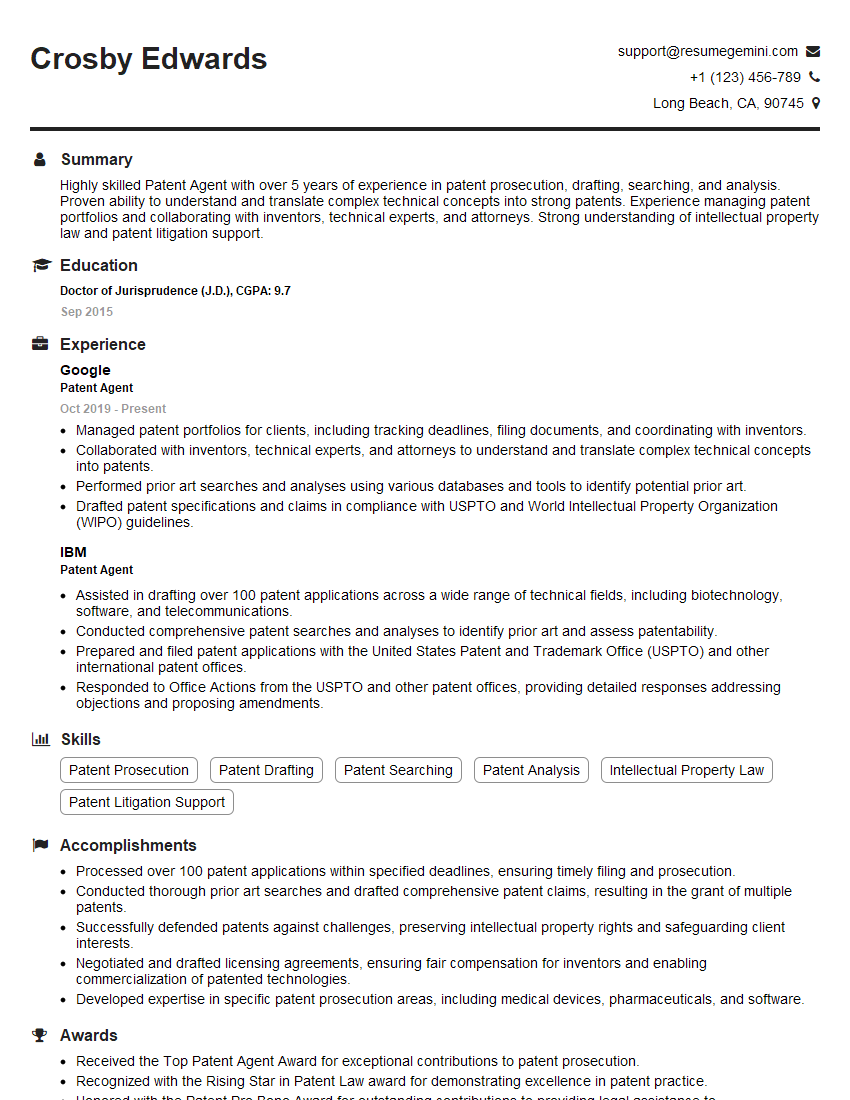
Patent Agent Resume Sample
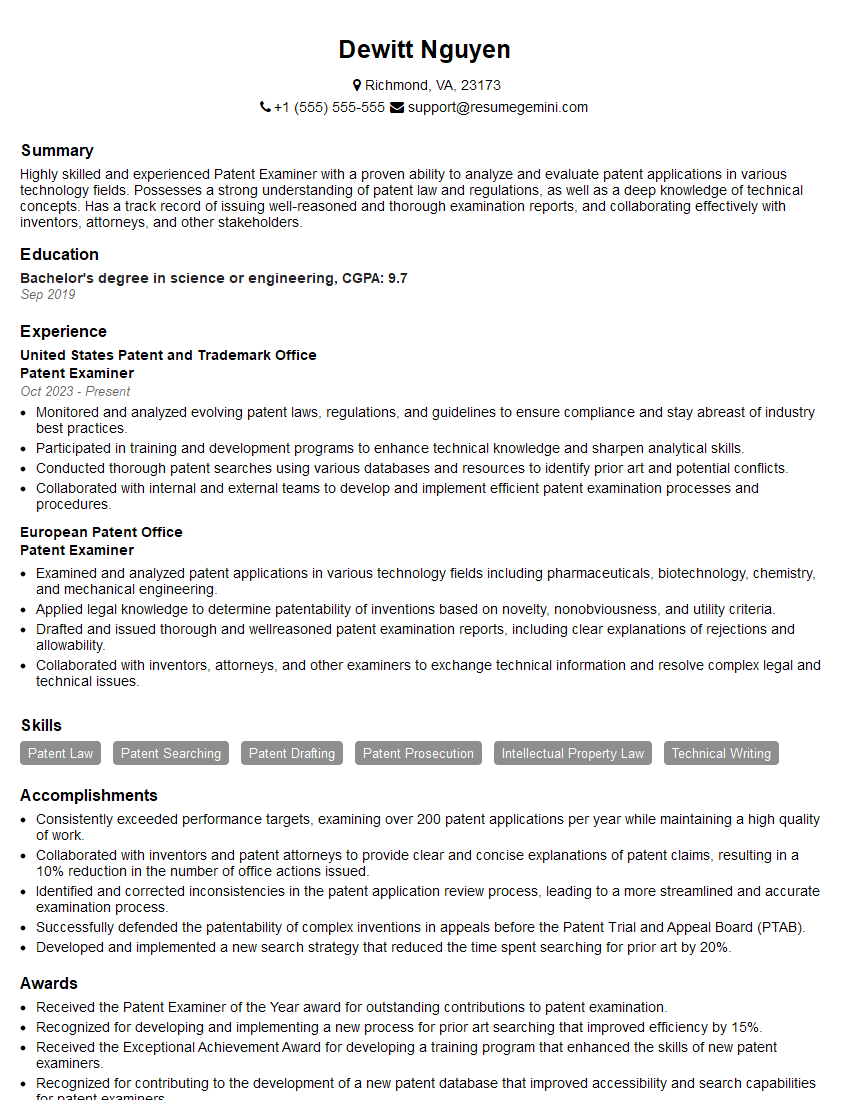
Patent Examiner Resume Sample
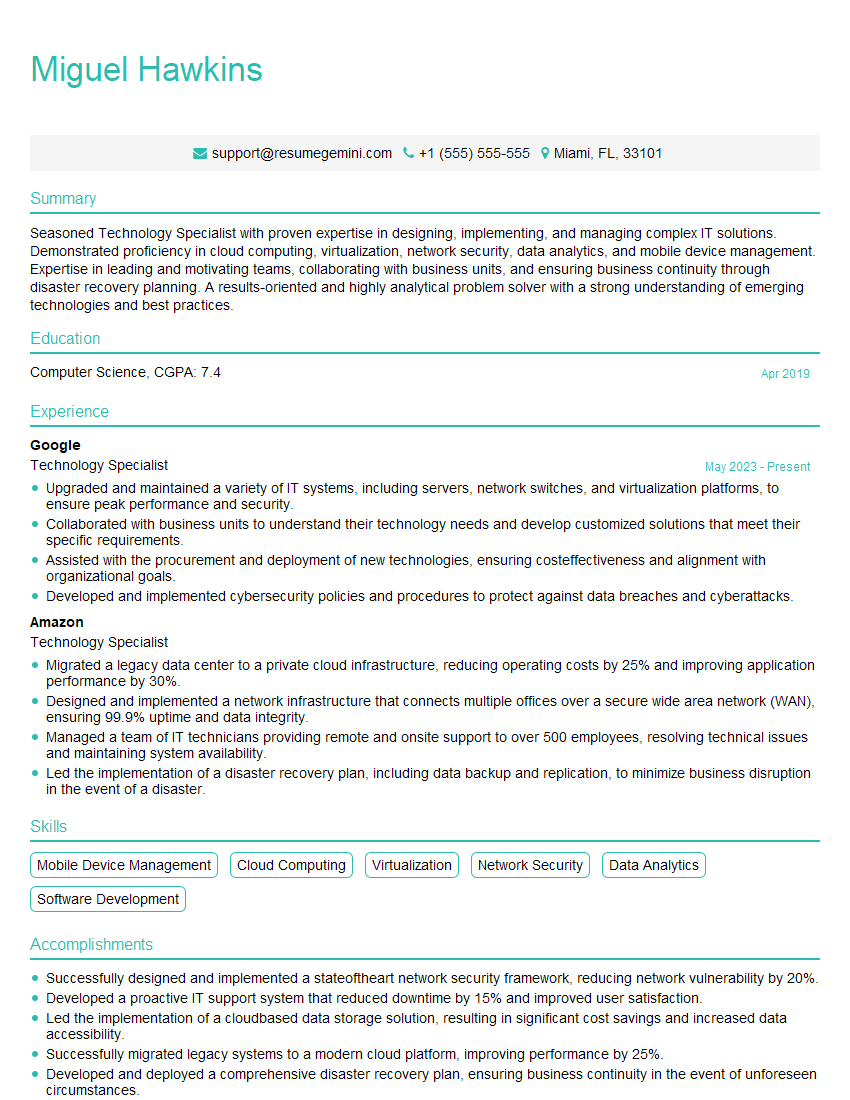
Technology Specialist Resume Sample
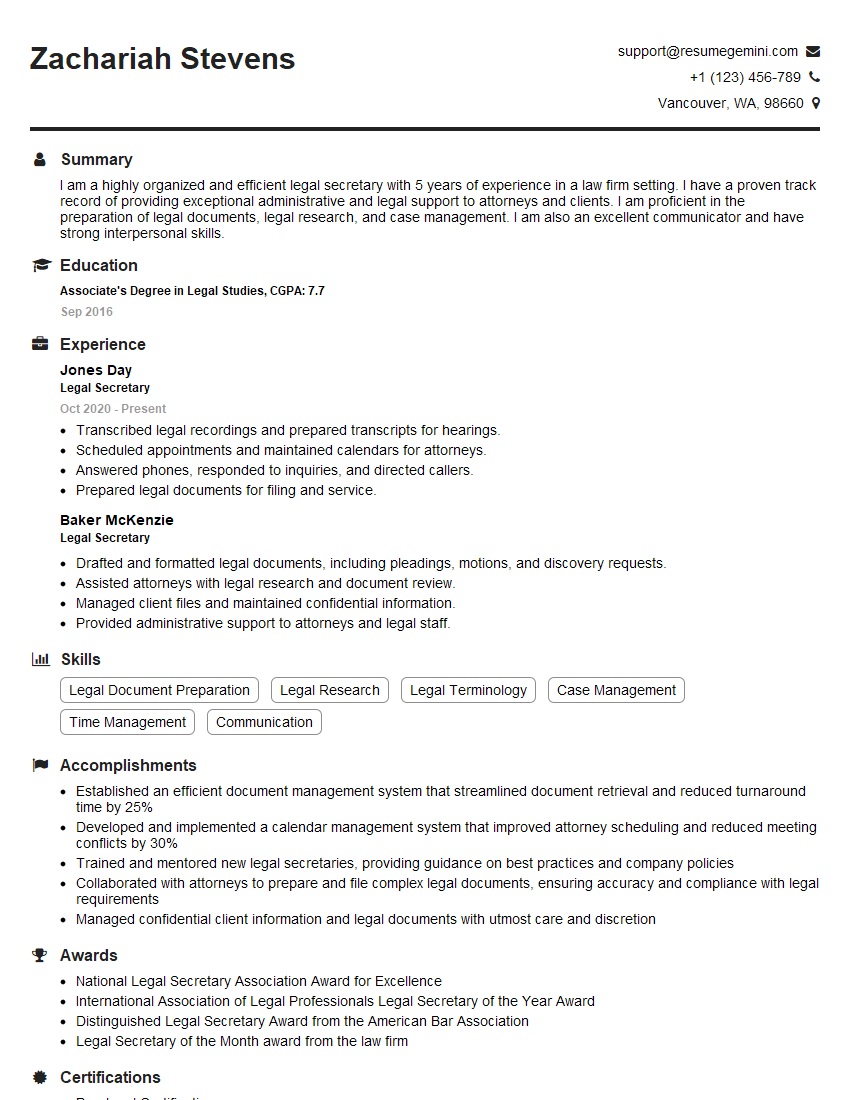
Legal Secretary Resume Sample
Explore more articles
Users Rating of Our Blogs
Share Your Experience
We value your feedback! Please rate our content and share your thoughts (optional).
What Readers Say About Our Blog
Hi I am a troller at The aquatic interview center and I suddenly went so fast in Roblox and it was gone when I reset.
Hi,
Business owners spend hours every week worrying about their website—or avoiding it because it feels overwhelming.
We’d like to take that off your plate:
$69/month. Everything handled.
Our team will:
Design a custom website—or completely overhaul your current one
Take care of hosting as an option
Handle edits and improvements—up to 60 minutes of work included every month
No setup fees, no annual commitments. Just a site that makes a strong first impression.
Find out if it’s right for you:
https://websolutionsgenius.com/awardwinningwebsites
Hello,
we currently offer a complimentary backlink and URL indexing test for search engine optimization professionals.
You can get complimentary indexing credits to test how link discovery works in practice.
No credit card is required and there is no recurring fee.
You can find details here:
https://wikipedia-backlinks.com/indexing/
Regards
NICE RESPONSE TO Q & A
hi
The aim of this message is regarding an unclaimed deposit of a deceased nationale that bears the same name as you. You are not relate to him as there are millions of people answering the names across around the world. But i will use my position to influence the release of the deposit to you for our mutual benefit.
Respond for full details and how to claim the deposit. This is 100% risk free. Send hello to my email id: [email protected]
Luka Chachibaialuka
Hey interviewgemini.com, just wanted to follow up on my last email.
We just launched Call the Monster, an parenting app that lets you summon friendly ‘monsters’ kids actually listen to.
We’re also running a giveaway for everyone who downloads the app. Since it’s brand new, there aren’t many users yet, which means you’ve got a much better chance of winning some great prizes.
You can check it out here: https://bit.ly/callamonsterapp
Or follow us on Instagram: https://www.instagram.com/callamonsterapp
Thanks,
Ryan
CEO – Call the Monster App
Hey interviewgemini.com, I saw your website and love your approach.
I just want this to look like spam email, but want to share something important to you. We just launched Call the Monster, a parenting app that lets you summon friendly ‘monsters’ kids actually listen to.
Parents are loving it for calming chaos before bedtime. Thought you might want to try it: https://bit.ly/callamonsterapp or just follow our fun monster lore on Instagram: https://www.instagram.com/callamonsterapp
Thanks,
Ryan
CEO – Call A Monster APP
To the interviewgemini.com Owner.
Dear interviewgemini.com Webmaster!
Hi interviewgemini.com Webmaster!
Dear interviewgemini.com Webmaster!
excellent
Hello,
We found issues with your domain’s email setup that may be sending your messages to spam or blocking them completely. InboxShield Mini shows you how to fix it in minutes — no tech skills required.
Scan your domain now for details: https://inboxshield-mini.com/
— Adam @ InboxShield Mini
Reply STOP to unsubscribe
Hi, are you owner of interviewgemini.com? What if I told you I could help you find extra time in your schedule, reconnect with leads you didn’t even realize you missed, and bring in more “I want to work with you” conversations, without increasing your ad spend or hiring a full-time employee?
All with a flexible, budget-friendly service that could easily pay for itself. Sounds good?
Would it be nice to jump on a quick 10-minute call so I can show you exactly how we make this work?
Best,
Hapei
Marketing Director
Hey, I know you’re the owner of interviewgemini.com. I’ll be quick.
Fundraising for your business is tough and time-consuming. We make it easier by guaranteeing two private investor meetings each month, for six months. No demos, no pitch events – just direct introductions to active investors matched to your startup.
If youR17;re raising, this could help you build real momentum. Want me to send more info?
Hi, I represent an SEO company that specialises in getting you AI citations and higher rankings on Google. I’d like to offer you a 100% free SEO audit for your website. Would you be interested?
Hi, I represent an SEO company that specialises in getting you AI citations and higher rankings on Google. I’d like to offer you a 100% free SEO audit for your website. Would you be interested?
good