Preparation is the key to success in any interview. In this post, we’ll explore crucial Validation Auditing interview questions and equip you with strategies to craft impactful answers. Whether you’re a beginner or a pro, these tips will elevate your preparation.
Questions Asked in Validation Auditing Interview
Q 1. Describe your experience with different validation lifecycle phases.
The validation lifecycle is a structured approach ensuring systems consistently meet predefined requirements. My experience spans all phases, from initial planning through ongoing maintenance. Let’s break down each phase:
- Phase 1: User Requirement Specification (URS) Development: This involves collaborating with end-users to define the system’s intended use, operational parameters, and performance expectations. A well-defined URS is crucial for a successful validation. For example, for a new analytical instrument, the URS would specify the required accuracy, precision, and the types of samples it must analyze.
- Phase 2: Design Qualification (DQ): Here, we evaluate the proposed system design to ensure it meets the requirements outlined in the URS. This includes reviewing drawings, specifications, and protocols to verify its suitability. For instance, a DQ for a cleanroom would involve reviewing its design and HVAC specifications to confirm they meet the required cleanliness levels.
- Phase 3: Installation Qualification (IQ): Once the system is installed, IQ verifies that it’s correctly installed and meets the design specifications. This might include checking power connections, software installation, and the physical integrity of the equipment. A successful IQ for a manufacturing equipment would mean confirming all components are correctly installed and functional.
- Phase 4: Operational Qualification (OQ): OQ focuses on verifying the system’s performance under various operating conditions. We would test parameters like temperature, pressure, or software functionality to make sure it performs as designed. Imagine testing a refrigerator’s ability to maintain a set temperature across a range of ambient temperatures.
- Phase 5: Performance Qualification (PQ): PQ assesses the system’s ability to consistently produce accurate and reliable results within the defined parameters. This often involves running samples and comparing the results to a known standard. For example, in a pharmaceutical setting, PQ for a tablet press would involve validating that it produces tablets of consistent weight and hardness.
- Phase 6: Ongoing Maintenance and Revalidation: This final phase ensures the system continues to meet requirements through regular maintenance, calibrations, and periodic revalidations. This ensures ongoing compliance and reliability. Regular calibrations of measuring equipment, and scheduled maintenance of manufacturing machines fall under this.
Q 2. Explain the difference between qualification and validation.
While both qualification and validation ensure systems meet requirements, they target different aspects. Think of it this way: qualification focuses on the hardware and its capabilities, while validation focuses on the process and its output.
- Qualification: This verifies that equipment and systems are built and installed correctly and perform as expected. It involves activities like Design Qualification (DQ), Installation Qualification (IQ), and Operational Qualification (OQ). For example, the qualification of a new analytical balance would cover its installation, calibration, and verification of its linearity and repeatability.
- Validation: This demonstrates that a process consistently produces the expected results. It typically includes Performance Qualification (PQ). In our example, the validation of the analytical method performed on this balance would demonstrate its ability to accurately and precisely measure the concentration of the analyte within the specified range.
In essence, qualification is a prerequisite for validation; you can’t validate a process if the equipment used isn’t properly qualified.
Q 3. What are the key elements of a validation plan?
A well-structured validation plan is the roadmap for a successful validation project. Key elements include:
- Objectives: Clearly defined goals and scope of the validation. What exactly are we trying to validate?
- Scope: Precisely identifying the systems, processes, and equipment involved.
- Methodology: Detailing the specific tests, procedures, and acceptance criteria.
- Responsibilities: Assigning roles and responsibilities to individuals or teams.
- Timeline: Establishing realistic deadlines for each phase.
- Resources: Listing required equipment, materials, personnel, and budget.
- Documentation: Specifying the required documentation and record-keeping practices. This is crucial for audit trails.
- Risk Assessment: Identifying potential risks and mitigation strategies. We’ll discuss this further in the next question.
- Approval: Signatures from relevant stakeholders indicating approval of the plan.
A strong validation plan avoids ambiguity and ensures everyone is on the same page, ultimately leading to a successful project.
Q 4. How do you assess the risk associated with a validation project?
Risk assessment in validation is critical for identifying potential problems and developing mitigation strategies. We usually employ a structured approach:
- Identify Hazards: What could go wrong? This might include equipment failure, deviation from procedures, or inadequate training.
- Analyze Risks: For each hazard, we assess the likelihood and potential impact. A risk matrix is often used to visually represent this.
- Evaluate Risks: We prioritize risks based on their severity. High-risk areas require more attention and resources.
- Develop Mitigation Strategies: We implement strategies to reduce or eliminate identified risks. This may include improved training, redundant systems, or enhanced testing procedures.
- Document Findings: All identified risks, their assessments, and mitigation strategies are meticulously documented.
For example, in validating a new production process, we might identify a high risk of contamination. Our mitigation strategy could involve implementing stricter cleaning procedures and environmental monitoring.
Q 5. What are the different types of validation (e.g., IQ, OQ, PQ)?
The most common types of validation are:
- Installation Qualification (IQ): Verifies that the system is installed correctly according to specifications (as we discussed earlier).
- Operational Qualification (OQ): Confirms the system operates within defined parameters across its intended operational range.
- Performance Qualification (PQ): Demonstrates that the system consistently produces accurate and reliable results. This is often the most challenging part, requiring extensive testing and documentation.
Other types of validation might include:
- Process Validation: Demonstrates the process consistently produces the desired results.
- Cleaning Validation: Verifies that cleaning procedures effectively remove residues.
- Computer System Validation (CSV): Ensures software and computer systems meet regulatory requirements – we’ll discuss this further below.
The specific types of validation needed depend on the system or process being validated and regulatory requirements.
Q 6. Explain the process of User Requirement Specification (URS) validation.
URS validation is a crucial step, ensuring the User Requirement Specification accurately reflects the needs and expectations of all stakeholders. The process involves:
- Review and Approval: The URS is circulated for review and approval by all relevant stakeholders (users, management, validation team, etc.). This ensures everyone is aligned on the requirements.
- Feasibility Check: The URS is evaluated for feasibility. Are the requirements achievable using existing technology and resources?
- Ambiguity Resolution: Any ambiguities or inconsistencies in the URS are addressed and clarified before proceeding.
- Traceability: The URS must clearly link the requirements to the overall project objectives. This ensures that all validation activities directly address the intended purpose.
- Change Management: A defined process for managing changes to the URS throughout the project lifecycle. Any change needs to be properly documented and approved.
A well-validated URS provides a solid foundation for the subsequent validation activities, minimizing the chances of misinterpretations and ensuring the final system meets user expectations.
Q 7. Describe your experience with Computer System Validation (CSV).
Computer System Validation (CSV) is crucial for ensuring that computer systems used in regulated industries (pharmaceuticals, medical devices, etc.) are reliable, secure, and meet regulatory requirements. My experience encompasses all aspects of CSV, from planning and risk assessment through execution and documentation.
I’ve worked on projects involving:
- GAMP guidelines: Implementing the Good Automated Manufacturing Practices guidelines to ensure compliance.
- Risk-based approach: Employing risk-based approaches to identify and mitigate potential vulnerabilities in computer systems.
- Validation planning and execution: Developing validation plans and executing various validation activities, including IQ, OQ, and PQ.
- Software and hardware validation: Validating the software and hardware components of the systems.
- Documentation: Creating and maintaining comprehensive documentation throughout the CSV lifecycle. This is incredibly important for audits.
- Deviation and change management: Effectively handling deviations and implementing change management procedures.
CSV is a complex process that requires a multidisciplinary approach. A successful project needs the collaboration of IT specialists, validation experts, and end-users. The ultimate goal is to ensure data integrity and system reliability, which are critical in regulated industries.
Q 8. How do you handle deviations during the validation process?
Handling deviations during validation is crucial for ensuring the integrity of the process. A deviation is any unplanned event that occurs during validation, potentially impacting the results. My approach involves a systematic process:
- Immediate Investigation: Upon discovering a deviation, I immediately initiate an investigation to understand the root cause. This often involves interviewing personnel, reviewing data logs, and examining equipment.
- Documentation: Every deviation, no matter how minor, is meticulously documented. This documentation includes a detailed description of the deviation, the date and time of occurrence, the individuals involved, the investigation’s findings, and any corrective actions taken.
- Risk Assessment: A risk assessment is performed to determine the impact of the deviation on the overall validation process. This helps prioritize corrective actions and determine if the deviation renders the validation invalid.
- Corrective and Preventive Actions (CAPA): Based on the risk assessment, appropriate CAPAs are implemented to prevent similar deviations from occurring in the future. This might involve retraining personnel, modifying equipment, or improving procedures.
- Impact Assessment: We determine whether the deviation impacts the overall validity of the process. Minor deviations might not require extensive remediation, while major deviations might necessitate repeating parts or all of the validation activities.
- Documentation of Resolution: Once the corrective actions are completed and verified effective, the resolution is thoroughly documented, including evidence of effectiveness.
For example, if a temperature excursion occurred during a stability study, we’d thoroughly investigate the cause (e.g., malfunctioning equipment, human error). We’d document this, assess the impact on the product stability, implement corrective actions (e.g., equipment repair, operator retraining), and document the effectiveness of these actions. The final report would clearly describe the deviation, investigation, and resolution.
Q 9. How do you ensure the accuracy and completeness of validation documentation?
Accuracy and completeness of validation documentation are paramount. They ensure the reproducibility of results and provide auditability. My approach centers on these key elements:
- Structured Templates: We use pre-defined, standardized templates for all validation documentation. This ensures consistency and reduces the risk of missing critical information.
- Version Control: A robust version control system (e.g., electronic document management system) is employed to track changes and revisions. This allows for easy tracing of any modifications made to the documentation.
- Review and Approval Process: A formal review and approval process is in place, involving multiple stakeholders with relevant expertise. This ensures that the documentation is accurate, complete, and compliant with regulatory requirements. Signatures and dates are crucial components.
- Data Integrity: We prioritize maintaining data integrity throughout the process. Data is collected using calibrated instruments, and all data is reviewed for accuracy and completeness before being included in the documentation.
- Archiving: Validation documents are archived securely and according to established procedures. This ensures that the documentation is readily available for future audits or inspections.
Imagine a validation protocol without a defined format – it would be chaotic and difficult to audit. Our structured approach makes it straightforward for both internal and external reviewers to easily understand and verify the validation process.
Q 10. Explain your understanding of 21 CFR Part 11 and its relevance to validation.
21 CFR Part 11 is a set of regulations from the U.S. Food and Drug Administration (FDA) that addresses the electronic records and electronic signatures used in regulated industries. Its relevance to validation is immense, especially for computer systems used in manufacturing, testing, and quality control. Compliance ensures data integrity and authenticity. Key aspects include:
- Electronic Records: Part 11 mandates that electronic records have the same legal standing as paper records. This means that electronic validation documents must be secure, reliable, and readily retrievable.
- Electronic Signatures: Electronic signatures must be secure and uniquely identifiable to the signer. They must be tamper-evident, ensuring the integrity of the signed documents.
- System Validation: The computer systems used to generate, store, and manage electronic records must be validated to ensure they are operating as intended and meet regulatory requirements.
- Audit Trails: Comprehensive audit trails are critical to demonstrate the history of data creation, modification, and access. These trails must be tamper-evident.
For instance, a validated LIMS (Laboratory Information Management System) must comply with 21 CFR Part 11 to ensure that lab data, including validation data, is secure, traceable, and legally defensible.
Q 11. What are the key regulatory requirements for validation in your industry?
Regulatory requirements for validation vary depending on the industry (pharmaceuticals, medical devices, food, etc.). However, some common threads exist:
- Good Manufacturing Practices (GMP): GMP regulations are fundamental, emphasizing quality control and assurance throughout the manufacturing process. Validation is a key component of GMP compliance.
- Specific Industry Guidelines: Each industry has its own guidelines and standards (e.g., ICH Q7 for pharmaceutical manufacturing). These provide detailed requirements for validation activities.
- Data Integrity: Maintaining data integrity is paramount across all regulated industries. Validation activities must ensure that data is accurate, complete, consistent, and reliable.
- Documentation: Comprehensive, accurate, and auditable documentation is essential for demonstrating compliance. This includes validation plans, protocols, reports, and deviations.
For example, in pharmaceuticals, the FDA’s regulations are extremely stringent, demanding comprehensive validation of manufacturing processes, analytical methods, and computer systems. Failure to comply can result in regulatory actions, including warning letters, product recalls, and even facility closures.
Q 12. How do you manage validation projects with multiple stakeholders?
Managing validation projects with multiple stakeholders requires effective communication, collaboration, and project management skills. My strategy includes:
- Clearly Defined Roles and Responsibilities: Each stakeholder’s role and responsibilities are clearly defined at the outset. This avoids confusion and duplication of effort.
- Regular Meetings: Regular meetings are held to track progress, discuss issues, and ensure alignment among stakeholders.
- Project Management Software: Using project management software (e.g., MS Project, Jira) helps in tracking tasks, deadlines, and resources. This promotes transparency and accountability.
- Communication Plan: A well-defined communication plan ensures that all stakeholders are kept informed of project progress and any potential issues.
- Risk Management: Potential risks and issues are identified and proactively managed to prevent delays and problems.
Imagine a validation project involving engineers, quality assurance personnel, and manufacturing staff. Clear roles, regular communication, and a structured project plan are essential for success in such a multi-faceted scenario.
Q 13. Describe your experience with validation reporting and documentation.
My experience with validation reporting and documentation is extensive. I’ve been involved in numerous validation projects across various systems and processes. My approach emphasizes clarity, completeness, and regulatory compliance. Key aspects of my work include:
- Executive Summary: Each report begins with an executive summary that clearly states the purpose, scope, and results of the validation.
- Detailed Procedures: All procedures and methods are meticulously documented. This includes equipment calibration, testing procedures, and data analysis methods.
- Data Presentation: Data is presented in a clear and concise manner, often using tables and graphs to effectively communicate results.
- Deviation Handling: Deviations from the planned protocol are documented, investigated, and resolved, with clear explanations included in the report.
- Conclusion and Recommendations: The report concludes with a summary of the findings, a statement on the validity of the system or process, and any recommendations for improvement.
I use various software tools to create comprehensive and professional validation reports, often incorporating electronic signatures for enhanced security and compliance. The goal is always to create a document that can be easily understood by both technical and non-technical audiences.
Q 14. How do you ensure the ongoing compliance of validated systems?
Ensuring the ongoing compliance of validated systems is crucial for maintaining regulatory compliance. This requires a proactive approach that incorporates:
- Periodic Review: Validated systems are reviewed periodically (frequency depends on the system and regulatory requirements) to ensure they continue to meet their intended purpose and regulatory requirements. This might involve re-validation or re-qualification activities.
- Change Control: A robust change control system is implemented to manage any modifications to validated systems. Any changes must be thoroughly evaluated to ensure they don’t negatively impact the system’s validation status.
- Preventive Maintenance: Regular preventive maintenance is performed on equipment and systems to prevent malfunctions and ensure continued operation.
- Deviation Tracking and Investigation: Any deviations from normal operation are promptly investigated and documented. Corrective and preventive actions are implemented to address the root cause of the deviation.
- Training: Personnel are adequately trained on the proper operation and maintenance of validated systems. Regular retraining might be required to ensure that personnel stay up-to-date.
Think of it like car maintenance. Regular checks, servicing, and addressing any problems promptly will ensure your car remains reliable. Similarly, continuous monitoring and maintenance are key to keeping validated systems compliant and performing as intended.
Q 15. Explain your experience with different validation methodologies.
My experience encompasses a broad range of validation methodologies, tailored to the specific system or process being validated. This includes IQ (Installation Qualification), OQ (Operational Qualification), and PQ (Performance Qualification) for equipment and systems. I’ve also extensively used risk-based validation approaches, focusing on critical parameters and potential failure modes. For software validation, I’m proficient in using various methodologies such as V-model and Agile, adapting the approach to the software development lifecycle. For example, in validating a new HPLC system, I would meticulously document the IQ phase (verifying correct installation and documentation), OQ phase (confirming the system operates within its defined parameters), and PQ phase (demonstrating consistent and accurate results under various conditions). In a software validation project for a LIMS system, I’d focus on unit testing, integration testing, system testing, and user acceptance testing, ensuring traceability throughout the development and validation lifecycle.
- IQ/OQ/PQ: Classic approach for equipment and systems, ensuring correct installation, operation, and performance.
- Risk-Based Validation: Prioritizes validation efforts based on the potential impact of failures. This increases efficiency by focusing resources on critical aspects.
- V-model and Agile Methodologies: Tailored for software validation, ensuring proper testing at each stage of development.
Career Expert Tips:
- Ace those interviews! Prepare effectively by reviewing the Top 50 Most Common Interview Questions on ResumeGemini.
- Navigate your job search with confidence! Explore a wide range of Career Tips on ResumeGemini. Learn about common challenges and recommendations to overcome them.
- Craft the perfect resume! Master the Art of Resume Writing with ResumeGemini’s guide. Showcase your unique qualifications and achievements effectively.
- Don’t miss out on holiday savings! Build your dream resume with ResumeGemini’s ATS optimized templates.
Q 16. How do you handle discrepancies between validation results and expectations?
Discrepancies between validation results and expectations are crucial to address. My approach begins with a thorough investigation to understand the root cause. This involves reviewing the validation protocol, raw data, and any deviations from the plan. I meticulously compare the actual results to the acceptance criteria and analyze trends or patterns. A deviation investigation, complete with CAPA (Corrective and Preventive Action), is initiated to determine the corrective actions and implement preventive measures to avoid similar issues in the future. For instance, if a piece of equipment fails to meet a specified accuracy level during PQ, I’d investigate calibration records, maintenance logs, and operator training to pinpoint the cause. This might reveal a need for recalibration, equipment repair, or updated Standard Operating Procedures (SOPs).
Documentation of the entire investigation, including root cause analysis and CAPA, is essential for compliance and continuous improvement. This ensures transparency and helps to prevent future occurrences.
Q 17. What are your strategies for improving validation efficiency and effectiveness?
Improving validation efficiency and effectiveness requires a strategic approach. This involves leveraging risk-based validation, focusing on critical aspects of the system or process rather than a blanket approach. Automation of tests and data analysis can significantly reduce the time and effort involved. Streamlining validation protocols and templates ensures consistency and reduces redundancy. Investing in appropriate software and tools (like validation lifecycle management systems) can significantly improve the overall process. Regular training for validation personnel ensures everyone is well-versed in the latest techniques and regulatory expectations. Finally, robust change control management prevents unexpected issues and maintains validation integrity.
For example, employing a LIMS system to manage validation data eliminates manual data entry, significantly reducing errors and improving efficiency.
Q 18. How do you stay updated on current validation best practices and regulatory changes?
Staying current with validation best practices and regulatory changes is critical. I actively participate in professional organizations like the ISPE (International Society for Pharmaceutical Engineering), attending conferences and webinars to remain abreast of the latest advancements. I regularly review regulatory updates from agencies like the FDA (Food and Drug Administration) and EMA (European Medicines Agency). Subscribing to industry publications and utilizing online resources provides access to new guidance documents and case studies. Furthermore, maintaining a network of colleagues in the field allows for the exchange of knowledge and best practices. This continuous learning ensures my validation strategies are aligned with the most current regulatory requirements and industry best practices.
Q 19. Describe your experience working with different validation software tools.
My experience encompasses various validation software tools, including LIMS (Laboratory Information Management Systems) for managing validation data, and specialized software for specific equipment validations (e.g., chromatography data systems). I’m also proficient in using various database management systems for data storage and analysis. Experience with automated testing tools for software validation is also critical. For example, I’ve utilized LIMS systems to track validation activities, store results, and generate reports. The selection of software depends on the specific needs of the project and the complexity of the system being validated.
Q 20. How do you prioritize validation tasks in a busy environment?
Prioritizing validation tasks in a busy environment requires a well-defined strategy. I utilize risk-based prioritization, focusing on systems and processes that pose the highest risk to product quality, patient safety, or regulatory compliance. Urgent tasks, such as those related to imminent regulatory inspections or critical system failures, are given immediate attention. I employ project management techniques to create timelines and assign tasks with clear deadlines, utilizing tools like Gantt charts for effective visualization and management. Regular progress reviews and communication within the team ensure that all tasks are progressing as planned and that any roadblocks are addressed promptly.
Q 21. Explain your understanding of risk-based validation.
Risk-based validation is a systematic approach that prioritizes validation efforts based on the potential risk associated with equipment, systems, or processes failing. Instead of a blanket validation approach to everything, it focuses resources on areas with the highest potential impact on product quality, patient safety, and compliance. This involves identifying potential failure modes, assessing their likelihood of occurrence, and determining the severity of their impact. A risk matrix is often used to visually represent this information. Systems and processes with high-risk profiles receive more extensive and rigorous validation, while those with low-risk profiles may require a less comprehensive approach. This methodology leads to greater efficiency and cost savings by concentrating resources where they are most needed.
For example, a critical piece of equipment directly impacting the final product’s quality will receive more thorough validation compared to a support system with minimal impact on the product.
Q 22. What are your experience with gap analysis in the context of validation?
Gap analysis in validation is a systematic comparison of the current state of a system or process against predetermined requirements or standards. It’s like taking an inventory to see what’s missing or needs improvement before we can confidently say something meets regulatory expectations.
In a validation context, this involves comparing your existing validation documentation, procedures, and system functionalities to regulatory guidelines (e.g., 21 CFR Part 11, GMP), industry best practices, and internal standards. We identify discrepancies – the ‘gaps’ – between the ‘as-is’ and the ‘should-be’ states. These gaps might include missing documentation, inadequate testing procedures, or insufficient controls for data integrity.
For example, if we’re validating a new software system, a gap analysis would compare the system’s features and functionalities against the requirements defined in the User Requirement Specification (URS). If the URS states the system must have audit trails and the system lacks them, that’s a critical gap requiring immediate remediation.
- We use checklists and questionnaires to systematically identify potential gaps.
- We analyze validation plans and reports to identify incomplete or missing information.
- We interview stakeholders to understand the system’s current operation and limitations.
The outcome of the gap analysis is a prioritized list of actions required to close the gaps and ensure compliance. This list feeds into the validation plan and is instrumental in preventing future non-compliance issues.
Q 23. Describe a situation where you had to troubleshoot a validation issue.
During the validation of a laboratory information management system (LIMS), we encountered an issue where audit trails were not consistently capturing all user actions. Initially, the system appeared to be working fine during testing, but a later review flagged inconsistencies. We suspected a conflict with an external database or perhaps a bug in the LIMS itself.
Our troubleshooting involved:
- Reproducing the issue: We meticulously recreated the actions that had failed to generate complete audit trails in a controlled environment.
- Reviewing system logs: We thoroughly analyzed the system and application logs to pinpoint the specific point of failure. We also checked server logs to identify potential infrastructure problems.
- Testing different user accounts and scenarios: This helped to determine whether the problem was specific to a particular user or a broader system issue.
- Collaborating with the LIMS vendor: We engaged the vendor’s support team to access more in-depth system diagnostics.
- Developing a workaround (temporary fix): As we diagnosed the problem, we implemented a temporary workaround to maintain system functionality while waiting for a permanent solution from the vendor.
The root cause turned out to be a configuration issue with the LIMS database connection. A parameter controlling audit trail logging had been incorrectly set during the initial configuration. The vendor provided a patch that corrected the issue, and we then revalidated the system to verify the fix. This whole situation underscores the importance of thorough testing, meticulous documentation, and good vendor communication.
Q 24. How do you ensure the integrity and security of validation data?
Ensuring the integrity and security of validation data is paramount. This involves a multi-faceted approach covering both physical and electronic security and data management practices.
Here are some key strategies:
- Access Control: Restrict access to validation data based on the principle of least privilege. Only authorized personnel should have access to sensitive validation information.
- Data Backup and Recovery: Regular backups and a robust recovery plan ensure data availability in case of system failure or disaster. This includes storing backups offsite for additional security.
- Version Control: Using a version control system (e.g., Git) for electronic documents enables tracking changes, restoring to previous versions if needed, and maintaining an audit trail.
- Electronic Signatures and Audit Trails: Implementing electronic signature systems that comply with 21 CFR Part 11 ensures data authenticity and accountability. Full audit trails are crucial to track all data changes and access events.
- Data Encryption: Encrypting sensitive validation data, both in transit and at rest, protects it from unauthorized access.
- Physical Security: Implementing measures like access control (e.g., keycard access) and environmental controls (e.g., temperature and humidity monitoring) for storage areas safeguards physical validation documentation.
- Regular Audits and Reviews: Routine audits and reviews are crucial to verify the effectiveness of security controls and the integrity of data.
Think of it as safeguarding a precious artifact – multiple layers of protection are needed to ensure its safety and authenticity. Data integrity is not just a matter of compliance; it’s crucial for the reliability and trustworthiness of your validation efforts.
Q 25. Explain your experience with change control processes related to validated systems.
Change control processes for validated systems are critical for maintaining their validated state. Any modification, no matter how seemingly minor, could compromise the system’s integrity and its compliance with regulations.
My experience involves applying a structured change control process encompassing:
- Change Request Submission: All proposed changes are submitted formally, clearly documenting the rationale, impact assessment, and proposed implementation plan.
- Change Review and Approval: A designated change control board evaluates the change request, weighing risks against benefits, and approving or rejecting based on established criteria.
- Implementation and Testing: After approval, the change is implemented following a defined procedure and rigorous testing, often including retesting aspects of the validation that could be impacted by the change.
- Documentation Update: All relevant documentation is updated to reflect the change, including validation protocols and reports.
- Deviation Management: If deviations arise during the process, they are thoroughly documented, investigated, and corrective actions implemented.
For example, if a software update is required for a validated system, a change request would be initiated, outlining the update’s details, testing plans, and potential impact on validated functions. The change control board would approve the update, and after successful testing, the system would be updated. The validation documentation (e.g., IQ/OQ/PQ reports) would then be updated to reflect the new software version. This meticulous process prevents unforeseen issues after a change has been implemented.
Q 26. How do you handle objections or challenges during the validation process?
Handling objections or challenges during validation is a crucial skill. It requires effective communication, diplomacy, and a firm understanding of regulatory requirements and validation principles.
My approach focuses on:
- Active Listening: Carefully listening to the objections and trying to understand the underlying concerns.
- Data-Driven Responses: Addressing objections with factual evidence, referencing relevant regulatory guidelines, standards, and validation data.
- Collaborative Problem-Solving: Working collaboratively with stakeholders to find mutually acceptable solutions.
- Documentation: Documenting all objections, discussions, and resolutions for the audit trail.
- Escalation Protocol: Knowing when and how to escalate issues to management if necessary.
For instance, if an objection arises concerning the adequacy of a specific test, I would present the rationale behind the test design, relevant standards that support the methodology, and the results of the testing to demonstrate the test’s validity. If there’s still disagreement, I would work to find a consensus that satisfies all parties while maintaining validation integrity. If a resolution can’t be achieved, proper escalation to management is needed. Open communication and a willingness to work through differences are essential in resolving these situations.
Q 27. Describe your experience with auditing validation documentation from third-party vendors.
Auditing validation documentation from third-party vendors requires a more stringent approach than internal audits. It involves verifying the vendor’s validation activities and ensuring they comply with regulatory requirements and the established agreement.
My process for auditing third-party vendor documentation includes:
- Reviewing the Vendor’s Validation Plan: Assessing the comprehensiveness and appropriateness of the vendor’s plan to meet the agreed-upon requirements.
- Examining Validation Protocols and Reports: Critically evaluating the execution of validation activities, data integrity, and the accuracy of reported results.
- Verification of Compliance: Determining if the validation activities comply with relevant regulatory guidelines (e.g., 21 CFR Part 11, GMP) and internal standards.
- Assessing Change Control Procedures: Reviewing the vendor’s change control procedures to ensure they maintain the validated state of the system.
- Reviewing Deviation Management: Examining how the vendor handles deviations and ensures corrective actions.
- Communication and Collaboration with the Vendor: Maintaining clear communication and collaboration with the vendor to address any issues or discrepancies identified during the audit.
For example, when auditing a vendor’s validation of a manufacturing equipment, I would examine their IQ/OQ/PQ documentation closely to determine whether the tests were appropriate for the equipment’s intended use and whether they met regulatory expectations. I would also look for evidence of proper calibration and traceable standards. A thorough audit process helps maintain quality and ensures the vendor’s compliance with regulatory expectations. It’s more than simply reviewing documents – it’s about understanding the underlying processes and ensuring their robustness.
Q 28. What are your strategies for improving communication and collaboration during validation projects?
Effective communication and collaboration are essential for successful validation projects. My strategies include:
- Clearly Defined Roles and Responsibilities: Establishing clear roles and responsibilities from the outset ensures that everyone understands their contribution and avoids duplication or missed tasks.
- Regular Meetings and Communication: Conducting regular project meetings and employing various communication tools (emails, instant messaging) to maintain transparency and keep stakeholders informed of progress.
- Documentation and Knowledge Sharing: Using a centralized system for documentation enables efficient knowledge sharing, ensuring everyone has access to up-to-date information.
- Open and Honest Communication: Creating a culture of open and honest communication allows for early identification and resolution of issues.
- Proactive Risk Management: Proactively identifying and mitigating potential risks prevents delays and conflicts.
- Feedback Mechanisms: Establishing clear channels for feedback enables continuous improvement and enhances the effectiveness of communication.
Imagine a validation project as a well-orchestrated symphony. Each team member plays a distinct role, and effective communication ensures the different parts work harmoniously to create a successful outcome. A collaborative environment prevents misunderstandings and delays and ensures the project moves forward smoothly. The final result will be a more thorough, efficient, and successful validation process.
Key Topics to Learn for Validation Auditing Interview
- GAMP (Good Automated Manufacturing Practice): Understanding GAMP guidelines and their application in validation activities, including risk assessment and lifecycle management.
- Validation Lifecycle: Mastering the phases of the validation lifecycle (design, installation, operational qualification, performance qualification) and their practical application in different regulatory environments.
- Computer System Validation (CSV): Demonstrating a strong understanding of CSV principles, including software validation, database validation, and network validation. Understanding the regulatory implications (e.g., 21 CFR Part 11).
- Data Integrity: Knowing how to assess data integrity within validated systems, including ALCOA+ principles (Attributable, Legible, Contemporaneous, Original, Accurate + Complete, Enduring, Available). Be prepared to discuss practical scenarios where data integrity is compromised and how to mitigate risks.
- Audit Trails and Reporting: Understanding the importance of well-maintained audit trails and the ability to interpret and analyze audit trail data for effective reporting. Experience with various audit trail review tools is beneficial.
- Risk Assessment and Mitigation: Demonstrating proficiency in identifying, analyzing, and mitigating risks associated with validation activities. This includes understanding different risk assessment methodologies.
- Deviation Management: Understanding the process of handling deviations from validation procedures and their impact on the overall validation process. Be ready to discuss examples and how to investigate and document deviations effectively.
- Regulatory Compliance: Familiarity with relevant regulations and guidelines, such as FDA regulations (21 CFR Part 11, 21 CFR Part 820), EMA guidelines, and other international standards.
Next Steps
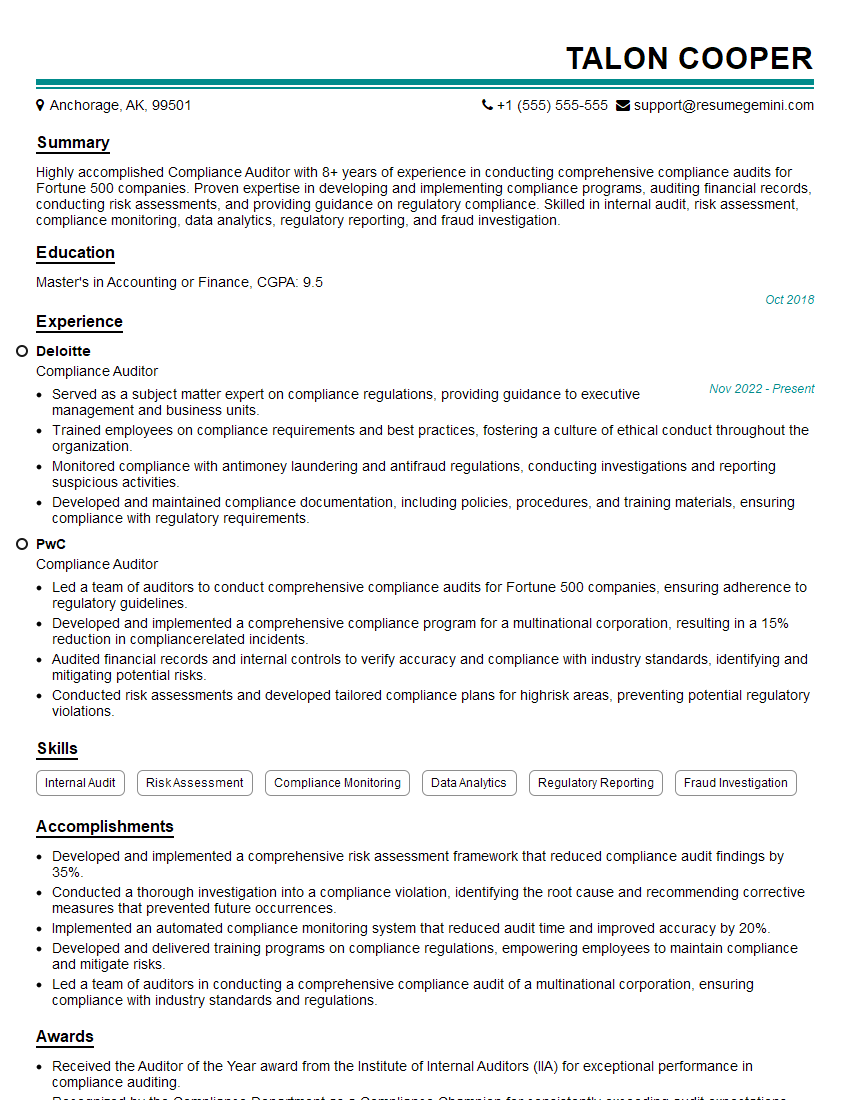
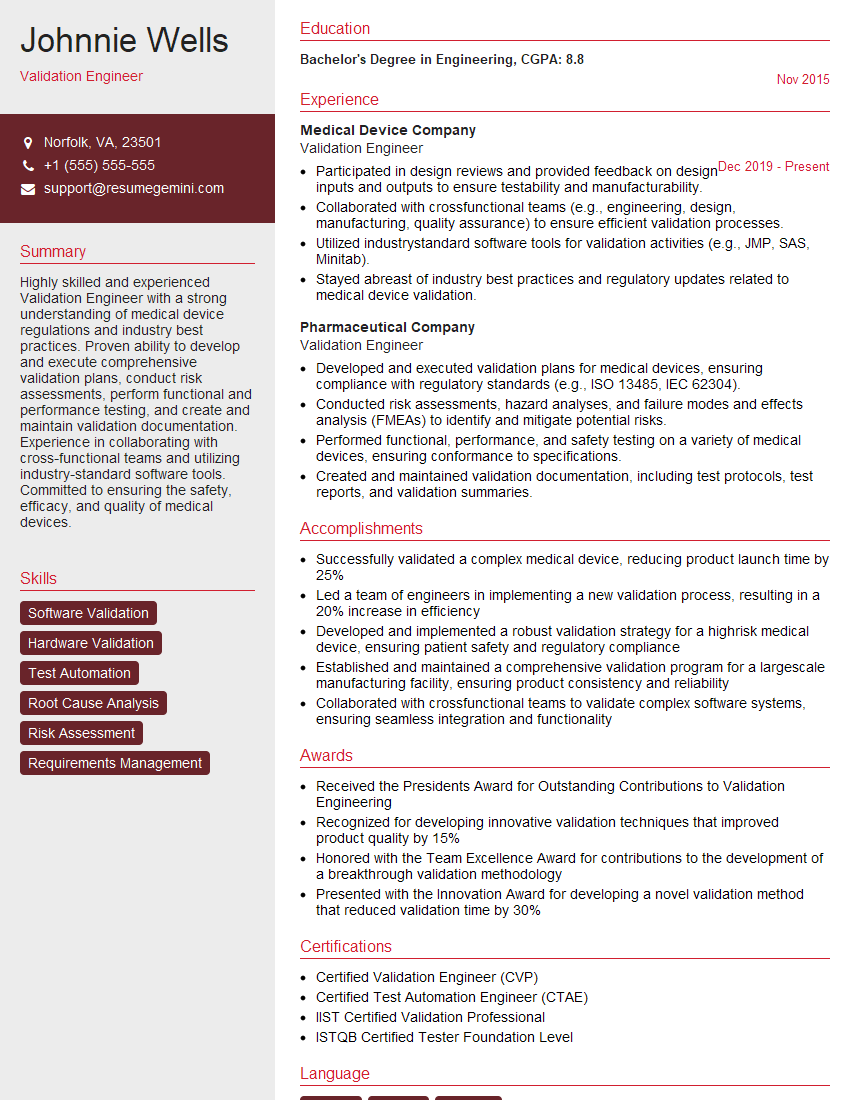
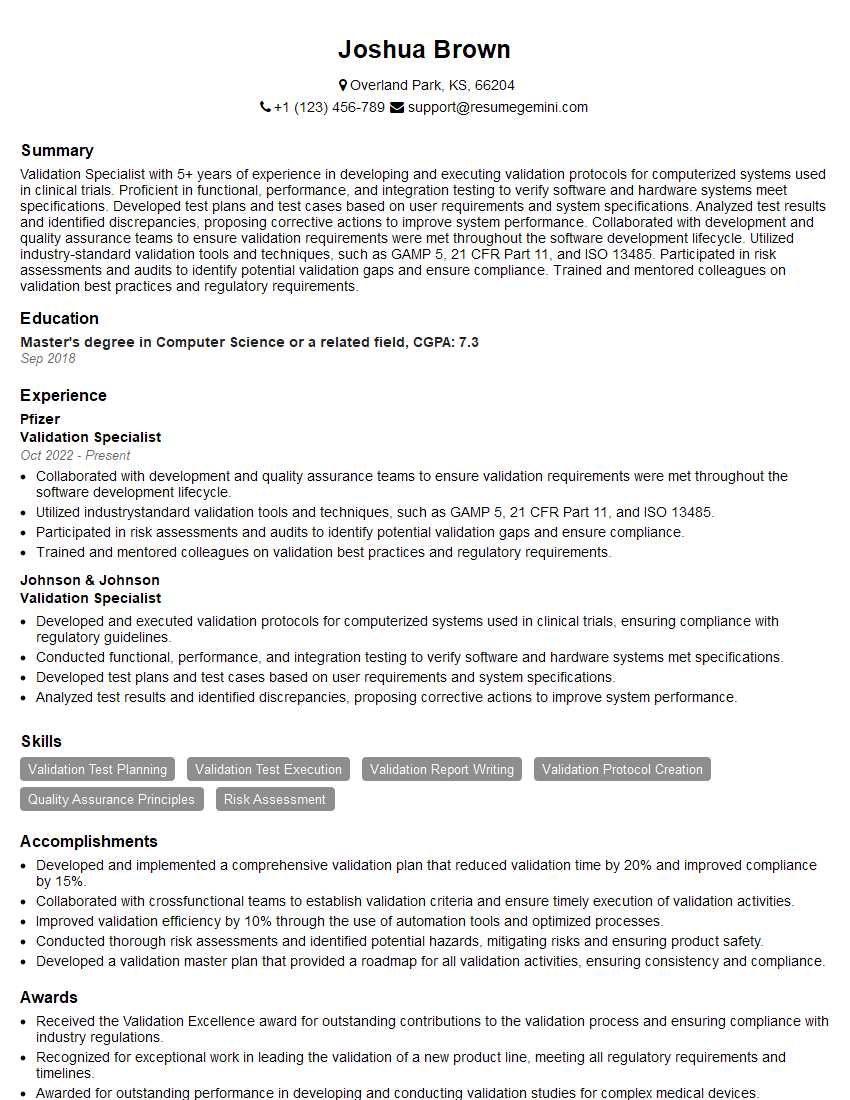
Mastering Validation Auditing significantly enhances your career prospects within the regulated industries (Pharmaceutical, Biotech, Medical Device). A strong understanding of these concepts is highly sought after, opening doors to senior roles and increased earning potential. To maximize your job search success, create an ATS-friendly resume that highlights your skills and experience effectively. ResumeGemini is a trusted resource to help you build a professional and impactful resume tailored to the Validation Auditing field. Examples of resumes specifically crafted for Validation Auditing professionals are available to guide you. Invest in crafting a compelling resume – it’s your first impression to potential employers.
Explore more articles
Users Rating of Our Blogs
Share Your Experience
We value your feedback! Please rate our content and share your thoughts (optional).
What Readers Say About Our Blog
Attention music lovers!
Wow, All the best Sax Summer music !!!
Spotify: https://open.spotify.com/artist/6ShcdIT7rPVVaFEpgZQbUk
Apple Music: https://music.apple.com/fr/artist/jimmy-sax-black/1530501936
YouTube: https://music.youtube.com/browse/VLOLAK5uy_noClmC7abM6YpZsnySxRqt3LoalPf88No
Other Platforms and Free Downloads : https://fanlink.tv/jimmysaxblack
on google : https://www.google.com/search?q=22+AND+22+AND+22
on ChatGPT : https://chat.openai.com?q=who20jlJimmy20Black20Sax20Producer
Get back into the groove with Jimmy sax Black
Best regards,
Jimmy sax Black
www.jimmysaxblack.com
Hi I am a troller at The aquatic interview center and I suddenly went so fast in Roblox and it was gone when I reset.
Hi,
Business owners spend hours every week worrying about their website—or avoiding it because it feels overwhelming.
We’d like to take that off your plate:
$69/month. Everything handled.
Our team will:
Design a custom website—or completely overhaul your current one
Take care of hosting as an option
Handle edits and improvements—up to 60 minutes of work included every month
No setup fees, no annual commitments. Just a site that makes a strong first impression.
Find out if it’s right for you:
https://websolutionsgenius.com/awardwinningwebsites
Hello,
we currently offer a complimentary backlink and URL indexing test for search engine optimization professionals.
You can get complimentary indexing credits to test how link discovery works in practice.
No credit card is required and there is no recurring fee.
You can find details here:
https://wikipedia-backlinks.com/indexing/
Regards
NICE RESPONSE TO Q & A
hi
The aim of this message is regarding an unclaimed deposit of a deceased nationale that bears the same name as you. You are not relate to him as there are millions of people answering the names across around the world. But i will use my position to influence the release of the deposit to you for our mutual benefit.
Respond for full details and how to claim the deposit. This is 100% risk free. Send hello to my email id: lukachachibaialuka@gmail.com
Luka Chachibaialuka
Hey interviewgemini.com, just wanted to follow up on my last email.
We just launched Call the Monster, an parenting app that lets you summon friendly ‘monsters’ kids actually listen to.
We’re also running a giveaway for everyone who downloads the app. Since it’s brand new, there aren’t many users yet, which means you’ve got a much better chance of winning some great prizes.
You can check it out here: https://bit.ly/callamonsterapp
Or follow us on Instagram: https://www.instagram.com/callamonsterapp
Thanks,
Ryan
CEO – Call the Monster App
Hey interviewgemini.com, I saw your website and love your approach.
I just want this to look like spam email, but want to share something important to you. We just launched Call the Monster, a parenting app that lets you summon friendly ‘monsters’ kids actually listen to.
Parents are loving it for calming chaos before bedtime. Thought you might want to try it: https://bit.ly/callamonsterapp or just follow our fun monster lore on Instagram: https://www.instagram.com/callamonsterapp
Thanks,
Ryan
CEO – Call A Monster APP
To the interviewgemini.com Owner.
Dear interviewgemini.com Webmaster!
Hi interviewgemini.com Webmaster!
Dear interviewgemini.com Webmaster!
excellent
Hello,
We found issues with your domain’s email setup that may be sending your messages to spam or blocking them completely. InboxShield Mini shows you how to fix it in minutes — no tech skills required.
Scan your domain now for details: https://inboxshield-mini.com/
— Adam @ InboxShield Mini
support@inboxshield-mini.com
Reply STOP to unsubscribe
Hi, are you owner of interviewgemini.com? What if I told you I could help you find extra time in your schedule, reconnect with leads you didn’t even realize you missed, and bring in more “I want to work with you” conversations, without increasing your ad spend or hiring a full-time employee?
All with a flexible, budget-friendly service that could easily pay for itself. Sounds good?
Would it be nice to jump on a quick 10-minute call so I can show you exactly how we make this work?
Best,
Hapei
Marketing Director
Hey, I know you’re the owner of interviewgemini.com. I’ll be quick.
Fundraising for your business is tough and time-consuming. We make it easier by guaranteeing two private investor meetings each month, for six months. No demos, no pitch events – just direct introductions to active investors matched to your startup.
If youR17;re raising, this could help you build real momentum. Want me to send more info?
Hi, I represent an SEO company that specialises in getting you AI citations and higher rankings on Google. I’d like to offer you a 100% free SEO audit for your website. Would you be interested?
Hi, I represent an SEO company that specialises in getting you AI citations and higher rankings on Google. I’d like to offer you a 100% free SEO audit for your website. Would you be interested?